


Engine layout directly impacts labor time, with inline engines requiring 6-14 hours for major repairs, V6 engines needing 14-18 hours, and V8 configurations demanding 14-22 hours due to component accessibility and design complexity. The fundamental difference stems from cylinder arrangement: inline engines feature straightforward single-bank designs with superior accessibility, while V-type configurations use dual banks that create physical barriers requiring extensive disassembly for even routine maintenance tasks.
Understanding why V6 and V8 engines require substantially more labor begins with their physical architecture. V-type engines position cylinders in two separate banks angled between 60 and 90 degrees, creating a compact footprint that sacrifices accessibility. Mechanics face challenges reaching rear bank components, often requiring specialized tools and removal of ancillary systems just to access spark plugs or perform basic diagnostics. This complexity translates directly into higher flat-rate billing and increased repair estimates.
The cost implications extend beyond simple hourly calculations. When labor rates range from $80 to $120 per hour across different markets, the differential between an 8-hour inline engine service and an 18-hour V6 repair represents $800 to $1,200 in additional labor costs alone. These figures don’t account for the dual cylinder heads, separate exhaust manifolds, and duplicated timing components that V-type engines require, each adding parts costs and service complexity.
Engine mounting orientation creates another critical variable that mechanics must factor into labor estimates. Transverse-mounted engines common in front-wheel-drive vehicles often require subframe removal, adding 2-4 hours to standard repair times regardless of cylinder configuration. Below, we’ll examine each engine layout’s specific labor requirements, accessibility challenges, and cost differentials to help mechanics provide accurate estimates and vehicle owners understand maintenance realities.
What is Engine Layout and Why Does It Affect Labor Time?
Engine layout refers to the physical arrangement of cylinders within an engine block, primarily categorized as inline (straight) or V-type configurations, and it affects labor time because cylinder positioning determines component accessibility, the number of separate systems requiring service, and the amount of disassembly needed to reach critical parts. Specifically, inline engines place all cylinders in a single straight row sharing one cylinder head, while V-type engines split cylinders into two banks requiring dual heads and creating physical barriers that mechanics must work around.
To better understand this relationship, consider how engine design creates practical service challenges. The inline configuration provides direct top-down access to most components because nothing sits behind or beneath other parts. A mechanic can typically reach spark plugs, injectors, and valve covers without removing auxiliary equipment. The single cylinder head means timing components run in one straight line, valve adjustments affect one unified system, and coolant passages follow simple paths.
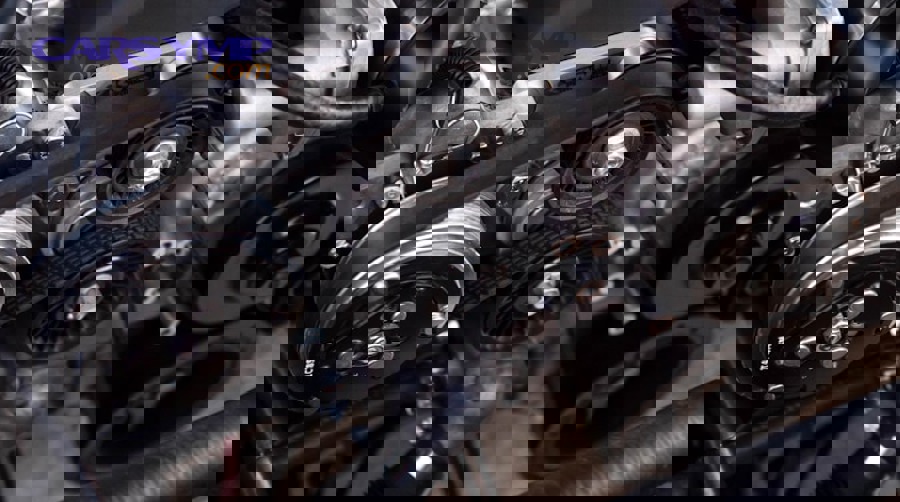
V-type engines present contrasting accessibility. The dual-bank arrangement creates front and rear cylinder groups, with the rear bank positioned behind intake manifolds, wiring harnesses, and sometimes even against the firewall. Accessing rear components often requires removing the intake plenum, fuel rails, ignition coils, and various sensors. This explains why spark plug replacement on a V6 might take 2-3 hours compared to 45 minutes for an inline-four, even though both tasks involve the same basic operation.
How Do Inline and V-Type Engine Configurations Differ?
Inline engines arrange cylinders sequentially along a single crankshaft axis, creating a long, narrow profile with one cylinder head covering all combustion chambers. This design spans the engine bay lengthwise, requiring more front-to-back space but minimizing width. The crankshaft runs the full length beneath all cylinders, connecting to pistons arranged in a perfectly straight line. Mechanics encounter a unified valve train, single camshaft assembly (or dual cams running parallel), and one exhaust manifold collecting gases from all cylinders.
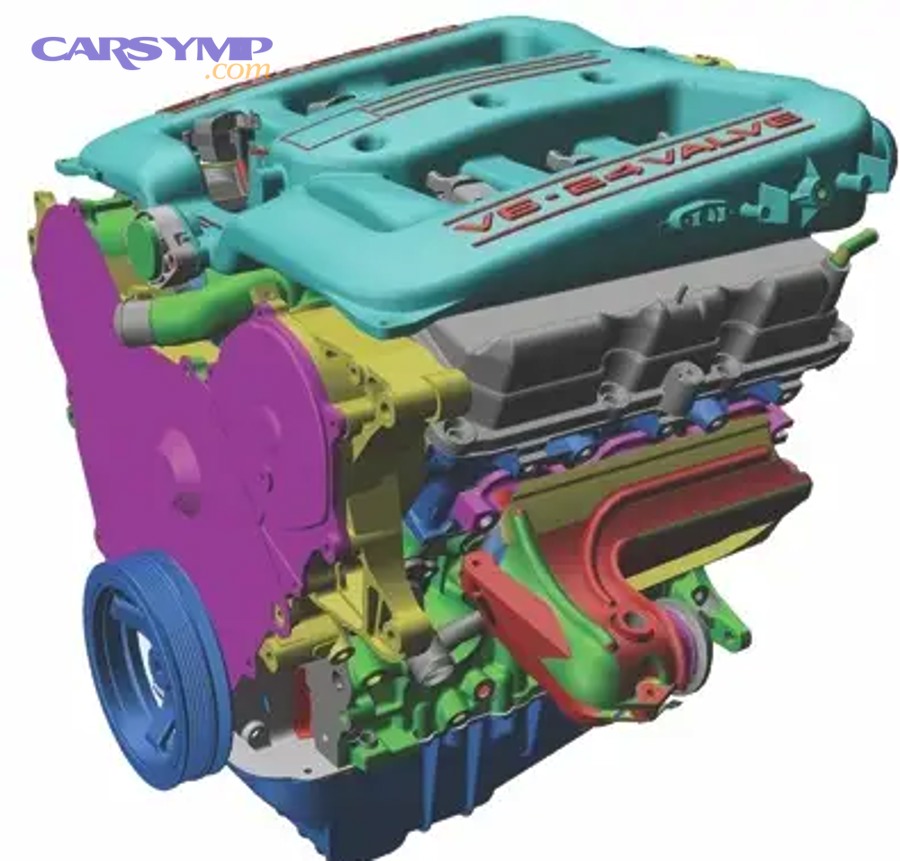
V-type configurations split cylinders into two banks positioned at angles typically ranging from 60 to 90 degrees, sharing a common crankshaft positioned at the valley between banks. Each bank functions almost as an independent inline engine, requiring its own cylinder head, valve train, camshaft, and exhaust manifold. The V6 essentially combines two inline-three configurations, while the V8 mirrors two inline-four setups. This arrangement creates a shorter, wider engine footprint that fits better in modern compact engine bays but introduces service complications.
The component count differences prove substantial. An inline-six uses one cylinder head with approximately 12 valves (or 24 in DOHC configurations), one head gasket, one valve cover, and typically one exhaust manifold. A comparable V6 requires two cylinder heads, two head gaskets, two valve covers, two exhaust manifolds, and potentially two separate camshaft assemblies. Each duplicated component represents additional failure points, more complex diagnostics, and increased labor for replacement procedures.
What Are the Most Common Engine Layouts in Modern Vehicles?
The inline-four (I4) dominates modern automotive production, appearing in approximately 60% of new light-duty vehicles sold globally, favored for front-wheel-drive applications where transverse mounting maximizes cabin space. Manufacturers like Honda, Toyota, and Volkswagen have refined I4 designs to produce 150-300+ horsepower through turbocharging and direct injection, making them suitable for everything from economy sedans to performance hatchbacks. The compact width allows easy fitment sideways across the engine bay, though longitudinal mounting remains common in rear-drive sports cars and luxury sedans.
Inline-six (I6) engines have experienced a renaissance after years of decline, with BMW maintaining continuous production and Mercedes-Benz, Mazda, and Stellantis recently reintroducing straight-six configurations. These engines deliver silky-smooth operation thanks to perfect primary and secondary balance, eliminating vibrations without requiring balance shafts. Modern turbocharging makes I6 engines competitive with V8 power outputs while offering superior fuel efficiency, explaining their return in premium vehicles and performance applications where longitudinal mounting accommodates the longer block.
V6 engines represent the automotive industry’s versatile workhorse, appearing in mid-size sedans, crossovers, SUVs, and trucks where their compact length enables both transverse and longitudinal installation. The configuration balances power delivery (typically 250-350 horsepower) with reasonable packaging constraints. Toyota, Honda, Ford, and General Motors produce millions of V6 engines annually, leveraging shared manufacturing processes across multiple vehicle platforms to reduce production costs. Despite growing competition from turbocharged four-cylinders, V6 engines continue dominating the family SUV and mid-size truck segments.
V8 configurations persist primarily in full-size trucks, SUVs, and performance vehicles where displacement and cylinder count still matter for towing capacity and power delivery character. Modern V8 engines increasingly incorporate cylinder deactivation, running on four cylinders during light-load cruising to improve fuel economy. Ford’s modular V8 family, General Motors’ small-block V8 variants, and Chrysler’s HEMI engines each serve specific market niches where customers prioritize capability over efficiency. Premium brands like Mercedes-AMG and BMW M Division continue developing high-performance V8s for flagship sports sedans and luxury cruisers.
How Much Labor Time Does Each Engine Layout Require?
Inline engines require 6-10 hours for I4 complete removal and replacement and 10-14 hours for I6 configurations, while V6 engines demand 14-18 hours and V8 powerplants need 14-22 hours depending on vehicle platform, drivetrain layout, and specific repair procedures beyond basic removal and installation. These figures represent “book time” standards from Mitchell1 and Chilton labor guides, which mechanics use to calculate flat-rate billing for customers seeking repair estimates.
Moreover, actual labor time varies significantly based on working conditions and technician experience. A seasoned mechanic working in a well-equipped shop might complete an I4 engine swap in 6 hours, while the same job could take a less-experienced technician 10 hours. Environmental factors matter too—working in a professional bay with vehicle lifts, air tools, and proper lighting differs dramatically from a home garage with jack stands and hand tools. The labor guide times assume average conditions with competent technicians using appropriate equipment.
What Are the Standard Labor Hours for Inline Engine Repairs?
Inline-four engine removal and replacement typically ranges from 6 to 10 hours under standard conditions, with transverse-mounted front-wheel-drive applications falling toward the upper range and longitudinal rear-drive configurations completing faster. The single cylinder head simplifies bolt patterns and reduces torque sequence complexity. Mechanics can typically access engine mounts, transmission bellhousing bolts, and wiring harnesses without extensive preliminary disassembly. Front-drive I4 engines often require subframe dropping or partial lowering, which adds 2-3 hours but remains straightforward with proper equipment.
Inline-six engines demand 10-14 hours for complete removal and installation, primarily because the extended block length complicates extraction angles and clearance requirements. The longer crankshaft requires careful support during removal to prevent flexing or damage. However, the straight-line design maintains excellent accessibility throughout the process. Mechanics appreciate that all cylinders face upward or to one side, making preliminary tasks like draining coolant, disconnecting fuel lines, and removing accessories relatively simple compared to V-configurations.
Common repair procedures beyond complete engine replacement show similar time advantages. Head gasket replacement on an I4 typically requires 8-12 hours since mechanics remove one head, resurface one mating surface, and reinstall one assembly. Timing belt or chain service ranges from 3-6 hours depending on interference engine design and whether water pump replacement accompanies the job. Spark plug replacement remains one of the quickest operations, usually completed in 0.5-1.5 hours since all plugs sit directly accessible in the cylinder head top surface.
Valve cover gasket replacement demonstrates the inline advantage perfectly. The single cover comes off with 8-12 bolts, exposing the entire valve train immediately. Total time rarely exceeds 1-2 hours including gasket scraping and sealant application. Coil pack replacement follows similar simplicity, with individual coils pulling straight up from each spark plug well. These routine maintenance items keep I4 and I6 engines economical to maintain throughout their service life.
What Are the Standard Labor Hours for V-Type Engine Repairs?
V6 engine removal and replacement requires 14-18 hours on average, reflecting the increased complexity of dual cylinder banks, additional wiring harnesses spanning both sides, and the need to disconnect two separate exhaust systems before extraction. The compact engine length seems like an advantage, but the width creates challenges in tight engine bays. Mechanics must often remove power steering pumps, air conditioning compressors, and alternators from both sides of the engine rather than just one side as with inline configurations.
V8 powerplants demand 14-22 hours for complete removal and installation, with variation depending heavily on vehicle platform. Full-size truck V8 engines with longitudinal mounting and generous engine bay space fall toward the lower range (14-16 hours), while performance car V8s shoehorned into compact chassis with complex exhaust routing push toward the upper limits. The additional two cylinders mean more connections to document and disconnect: four more spark plug wires or coils, four more fuel injectors, additional sensors, and often more complex variable valve timing systems.
The rear bank accessibility challenge fundamentally explains V-configuration labor premiums. Accessing rear spark plugs on many V6 and V8 engines requires removing intake manifolds, fuel rails, throttle bodies, and sometimes even engine mounts to tilt the engine forward. A straightforward spark plug replacement becomes a 3-5 hour job compared to under an hour for inline engines. When mechanics quote spark plug replacement costs that seem excessive, this accessibility barrier drives the estimate.
Head gasket replacement on V-engines doubles or triples compared to inline equivalents because two separate heads require removal, resurfacing, and reinstallation. A V6 head gasket job typically runs 16-24 hours, while V8 head gasket replacement can reach 20-28 hours. Each head has its own bolt pattern, torque sequence, and timing alignment requirements. Mechanics must carefully mark timing chain or belt positions for both banks, remove dual valve covers, disconnect two sets of wiring harnesses, and manage two separate coolant circuits.
Timing component service illustrates the multiplication factor clearly. A V6 with dual overhead cams features four camshafts total (two per bank), two timing chains or belts, and complex tensioner systems. Replacing timing components might require 12-18 hours versus 4-8 hours for a comparable inline-six. The job essentially doubles because mechanics perform the same operations twice, once per bank, with the added complication of maintaining synchronization between both sides.
How Do Different Repairs Compare Across Engine Layouts?
Engine replacement costs vary dramatically by configuration, with inline-four labor typically costing $480-$1,200 at standard shop rates, inline-six running $800-$1,680, V6 reaching $1,120-$2,160, and V8 climbing to $1,120-$2,640 based on labor time differentials and regional rate variations. These figures represent labor only, excluding the replacement engine cost, new gaskets, fluids, and miscellaneous hardware that accompany major engine work. The comparison assumes similar-year vehicles from mainstream manufacturers rather than exotic or luxury brands with premium labor rates.
Head gasket repair costs demonstrate even more dramatic spreads. An inline-four head gasket replacement runs $640-$1,440 in labor, while inline-six configurations cost $960-$1,680. V6 head gasket jobs jump to $1,280-$2,880 when both heads require service, and V8 repairs reach $1,600-$3,360. These estimates assume both cylinder banks need attention; if only one bank shows failure, mechanics might address just that side, though many recommend servicing both simultaneously since labor represents the dominant cost and preventing future failure on the untouched bank makes economic sense.
Spark plug replacement costs seem trivial by comparison but reveal the accessibility penalty clearly. Inline-four plug changes cost $40-$180 in labor (0.5-1.5 hours), while inline-six runs $80-$240. V6 applications jump to $160-$600 as mechanics navigate rear bank access challenges, and V8 plug replacement can reach $240-$720 depending on specific vehicle design. These costs assume quality spark plugs at $8-$25 each, with labor representing the dominant expense on V-configurations. After replacement, misfire code verification becomes essential, requiring technicians to clear diagnostic trouble codes and perform test drives to confirm proper ignition across all cylinders.
The table below compares common repair labor times and estimated costs across engine layouts:
| Repair Type | I4 Labor Hours | I4 Labor Cost | I6 Labor Hours | I6 Labor Cost | V6 Labor Hours | V6 Labor Cost | V8 Labor Hours | V8 Labor Cost |
|---|---|---|---|---|---|---|---|---|
| Engine R&R | 6-10 | $480-$1,200 | 10-14 | $800-$1,680 | 14-18 | $1,120-$2,160 | 14-22 | $1,120-$2,640 |
| Head Gasket | 8-12 | $640-$1,440 | 12-16 | $960-$1,920 | 16-24 | $1,280-$2,880 | 20-28 | $1,600-$3,360 |
| Spark Plugs | 0.5-1.5 | $40-$180 | 1.0-2.0 | $80-$240 | 2.0-5.0 | $160-$600 | 3.0-6.0 | $240-$720 |
| Timing Service | 3-6 | $240-$720 | 4-8 | $320-$960 | 8-14 | $640-$1,680 | 10-16 | $800-$1,920 |
| Valve Cover | 1-2 | $80-$240 | 1.5-3 | $120-$360 | 3-6 | $240-$720 | 4-8 | $320-$960 |
This comparison assumes $80/hour shop rates; premium shops charging $120/hour would see proportionally higher costs.
Timing belt or chain replacement follows similar patterns but introduces additional variables. Interference engines require more careful procedures to prevent valve-to-piston contact during service, adding time regardless of configuration. Water pump replacement commonly accompanies timing service since mechanics have already accessed the components, making combined replacement economically sensible. Inline engines complete timing service in 3-8 hours, while V-configurations demand 8-16 hours for dual-bank systems.
Why Do V-Type Engines Require More Labor Time Than Inline Engines?
V-type engines require more labor time than inline engines because their dual-bank architecture creates rear cylinder accessibility barriers, doubles the number of major components requiring service, and positions critical parts behind intake manifolds and wiring harnesses that must be removed before mechanics can reach basic maintenance items. The fundamental design compromise favors compact engine length at the expense of service accessibility, directly translating design efficiency into labor hour penalties.
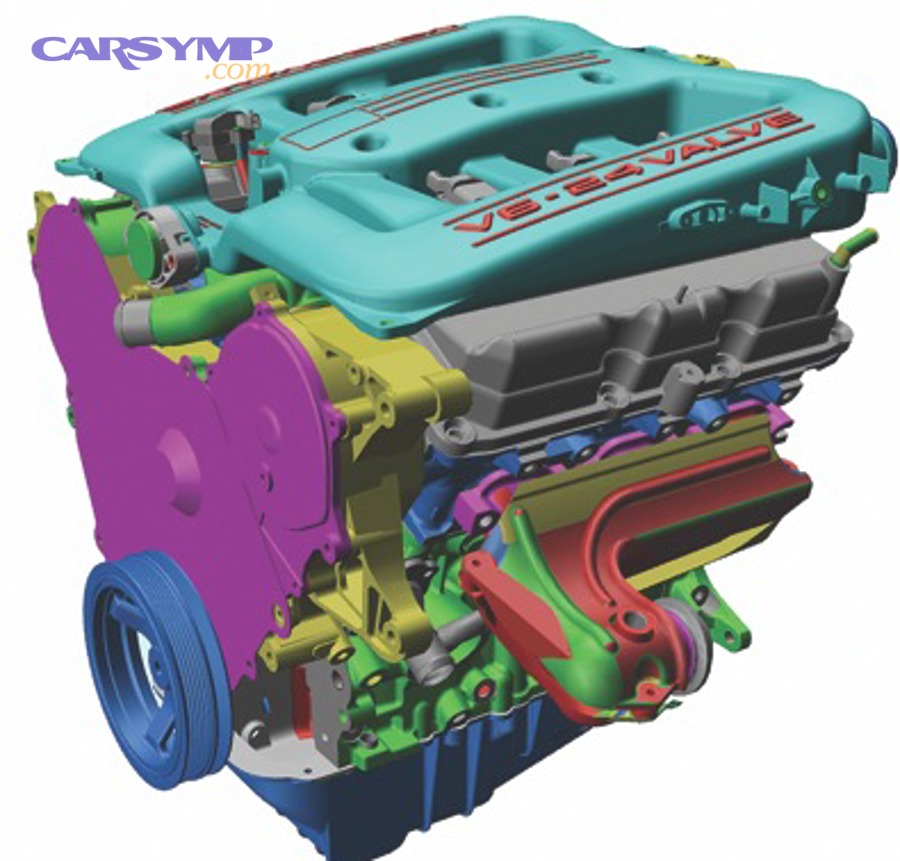
Specifically, the challenge manifests in everyday repair scenarios that inline engines handle simply. Consider a routine ignition coil failure—a common issue on higher-mileage vehicles. On an inline engine, the coil sits directly atop its corresponding spark plug, accessible by removing one bolt or releasing one clip. The mechanic pulls the coil straight up, tests it, installs the replacement, and moves on. Total time: 15-30 minutes including diagnostic confirmation. The same failure on a rear bank V6 cylinder might require removing the intake manifold (1.5-2 hours) just to access the coil, making a simple part replacement a half-day job.
What Makes V-Type Engines More Complex to Service?
Dual cylinder heads create the first layer of complexity, requiring mechanics to manage two separate valve trains, two timing systems, and two independent sealing surfaces during major service operations. Each cylinder head contains its own camshaft assembly (or dual camshafts in DOHC designs), valve springs, retainers, and adjustment mechanisms. During head gasket replacement, mechanics must remove both heads, send both to a machine shop for resurfacing, install new gaskets on both sides, and torque two complete sets of head bolts following manufacturer-specific sequences. The inline equivalent removes one head, resurfaces one surface, and installs one gasket set.
Dual exhaust manifolds compound the accessibility challenge because they occupy significant space on each side of the engine. Many V-configurations route exhaust manifolds directly against the firewall on the rear bank, requiring removal before mechanics can access nearby sensors, spark plugs, or mounting bolts. The front bank manifold might interfere with steering components, air conditioning lines, or power steering systems. Removing both manifolds for access adds 2-4 hours to repair procedures that wouldn’t require manifold removal on inline engines.
The valley between cylinder banks creates a third complication. This space houses the intake manifold, which distributes air to both cylinder banks through runners spanning over the valley. Modern engines pack this area with additional components: fuel injectors, fuel rails, vacuum lines, PCV systems, and various sensors. The intake manifold itself becomes a major obstacle—removing it requires disconnecting throttle bodies, mass airflow sensors, dozens of vacuum lines, wiring harnesses, and fuel connections. This preliminary work adds 2-3 hours before mechanics even begin the primary repair task.
Wiring harness routing introduces diagnostic and service complications. Inline engines run harnesses along one side, making visual inspection and testing straightforward. V-engines route harnesses across both banks, over the valley, and around obstacles. Tracing wiring problems requires more time because connectors hide behind components. When replacement becomes necessary, the harness must thread through complex paths rather than laying along an accessible side panel. Engine control modules receive inputs from sensors scattered across both banks, making diagnostic troubleshooting less intuitive.
Component count directly drives parts costs and failure probability. A V6 uses two valve covers (versus one), two head gaskets (versus one), potentially two oxygen sensors per bank (versus one or two total), and duplicate ignition components across both banks. When rubber seals and gaskets age, twice as many items fail, requiring twice the replacement labor. This multiplication effect compounds over a vehicle’s lifetime, making V-configured vehicles measurably more expensive to maintain in the long term.
Which Engine Components Are Hardest to Access by Layout?
Rear bank spark plugs on V6 and V8 engines represent the most commonly encountered accessibility nightmare in routine maintenance, often requiring intake manifold removal, ignition coil bracket disassembly, and sometimes even partial engine mount loosening to tilt the powerplant forward for adequate reach. The rear cylinders sit against the firewall with minimal clearance, positioned beneath intake runners and surrounded by wiring. Standard spark plug sockets can’t reach the plugs; mechanics need special swivel extensions, magnetic retrieval tools for dropped components, and patience to fish the new plugs into position without cross-threading.
Coil pack replacement mirrors the spark plug challenge since coils sit directly atop plugs. Front bank coils pull out easily, but rear bank coils hide beneath intake components. When to replace ignition wires with plugs becomes an important consideration on older V-engines with plug wire systems rather than individual coils—if the intake manifold requires removal for plug access, spending an extra $100 on quality wires makes sense since the labor’s already committed. Modern coil-on-plug systems eliminate wires but still suffer the same accessibility penalties.
Rear exhaust manifold and catalytic converter service creates another substantial barrier. The rear manifold bolts directly to the cylinder head with studs positioned against the firewall, accessible only with special low-profile sockets or box-end wrenches. Manifold studs frequently seize or break during removal, requiring drilling, extraction, or helicoil installation that adds hours to straightforward jobs. The catalytic converter on the rear bank often requires transmission mount removal or even partial transmission lowering for adequate working room.
Valley components including starter motors, alternators, and various sensors occupy the space between cylinder banks on many V8 designs. These components sit beneath the intake manifold, requiring substantial disassembly for replacement. The starter motor removal might necessitate exhaust manifold removal, transmission bellhousing access, and patience threading the unit through tight clearances. What should be a 1-hour starter replacement becomes a 4-6 hour ordeal on certain V8 platforms.
Timing components on rear cylinder banks present challenges during service intervals. Many V-configured engines position one timing chain or belt on each bank, with the rear chain running against the firewall. Accessing the rear chain requires removing the front chain first, then navigating limited space to install the new rear chain without damaging guides or tensioners. Single-bank timing systems on V-engines still complicate access because the compact width leaves minimal working room on either side of the block.
Oil pan removal demonstrates another manifestation of the accessibility penalty. Inline engines typically allow oil pan access from beneath with the vehicle raised on a lift. Many V-engines require engine mount loosening and engine lifting to create sufficient clearance between the oil pan and the front subframe or steering rack. Some designs mandate complete engine removal just to replace the oil pan gasket, turning a theoretical 3-hour job into an all-day affair.
How Does Engine Layout Impact Repair Costs for Different Services?
Engine layout impacts repair costs by creating labor hour differentials that multiply across all major services throughout a vehicle’s lifetime, with V6 and V8 configurations consistently costing 40-150% more than inline equivalents for identical repairs due to accessibility challenges, component duplication, and increased service complexity. These cost differences compound over years of ownership, making engine configuration a significant factor in total cost of ownership calculations for mechanics advising customers and fleet managers making purchasing decisions.
To illustrate the practical implications, consider a vehicle reaching 100,000 miles requiring typical major services: spark plug replacement, timing component service, valve cover gasket replacement, and head gasket repair for one bank. An inline-four completing these services might incur $1,200-$2,400 in labor costs. A comparable V6 reaching the same mileage would see $2,400-$4,800 in labor for identical service needs, while a V8 could reach $3,200-$6,000. The engine itself performs similar work—propelling the vehicle down the road—but the maintenance penalty stems purely from design architecture.
What Is the Cost Difference Between Inline and V-Engine Repairs?
Labor rate multiplied by time determines the fundamental cost equation, with typical independent shops charging $80-$120 per hour and dealerships often exceeding $120-$150 per hour in metropolitan markets, meaning the 8-12 hour differential between an inline-four and V8 engine replacement translates to $640-$1,800 in additional labor cost before considering parts. Regional variations matter significantly—rural areas with lower business overhead might charge $60-$80 per hour, while major cities routinely see $140-$180 rates at premium shops. The percentage differential remains consistent across markets, though absolute dollar amounts scale with local economics.
Engine replacement costs provide the most dramatic comparison. An inline-four engine swap averaging 8 hours at $100/hour costs $800 in labor. Adding the replacement engine ($1,500-$3,000 for a quality remanufactured unit), fluids, gaskets, and miscellaneous hardware brings the total to $2,500-$4,200. A comparable V6 requiring 16 hours runs $1,600 in labor, and with similar parts costs reaches $3,400-$5,200 total. The V8 demanding 18 hours costs $1,800 in labor and totals $3,800-$5,800. These figures assume short-block or long-block replacement rather than complete rebuilds, which would add substantially more to all configurations.
Head gasket repair demonstrates even wider cost spreads due to the dual-head requirement on V-engines. An inline-four head gasket job might cost $1,200 total ($800 labor, $400 parts including machining). The same repair on a V6 reaches $2,400-$3,000 ($1,800-$2,400 labor, $600-$800 parts) when addressing both banks. Many mechanics recommend replacing both head gaskets simultaneously even if only one shows failure, since the labor to access the second head adds minimal time once the first head is removed. This “while we’re in there” economics makes sense mathematically but increases the immediate repair bill.
Routine maintenance items show similar percentage increases. Timing belt replacement on an inline-four costs $400-$800 total (parts and labor), while a V6 timing service reaches $800-$1,600. Adding water pump replacement during timing service makes economic sense because the pump sits behind the timing cover—adding the pump costs perhaps $150 in parts with only 0.5-1.0 additional labor hours since access is already established. The combined service ($1,000-$2,000 on V6 versus $500-$1,000 on I4) prevents future water pump failure that would require repeating the entire timing belt removal process.
Spark plug and ignition system service reveals the accessibility tax most clearly. Quality platinum or iridium spark plugs cost $8-$25 each regardless of engine configuration. An inline-four needs four plugs ($32-$100) plus 1 hour labor ($80-$120), totaling $112-$220. A V6 needs six plugs ($48-$150) plus 3-4 hours labor ($240-$480), totaling $288-$630. The V8 requires eight plugs ($64-$200) plus 4-5 hours labor ($320-$600), totaling $384-$800. The plug cost increases modestly with cylinder count, but labor multiplies dramatically due to rear bank access requirements.
Valve cover gasket replacement follows the same pattern. The gasket itself costs $15-$50 for inline engines and $30-$100 for V-engines (dual gaskets). Labor runs 1-2 hours ($80-$240) for inline versus 3-6 hours ($240-$720) for V-configurations. The job requires removing ignition coils, wiring harnesses, and various attached components—tasks that double on V-engines with two valve covers. Total costs run $95-$290 for inline engines and $270-$820 for V-engines, a difference of $175-$530 for functionally identical repairs.
Parts costs themselves increase modestly on V-engines due to component duplication, but the increase rarely matches the labor differential. Two valve covers cost perhaps 50-80% more than one, but the labor to remove and install both costs 200-300% more due to accessibility challenges and the need to perform the operation twice. This labor multiplication explains why mechanics emphasize labor over parts costs when discussing V-engine service premiums.
Which Engine Layout Is Most Cost-Effective for Long-Term Maintenance?
Inline-four engines prove most cost-effective for long-term maintenance, with average ownership costs over 150,000 miles ranging $4,000-$7,000 for major services compared to $6,500-$11,000 for V6 and $8,000-$14,000 for V8 powerplants, making I4 configurations the clear winner for budget-conscious owners prioritizing mechanical simplicity and minimal repair expenses. The cumulative advantage stems from every service interval—spark plugs every 30,000-60,000 miles, timing components every 60,000-100,000 miles, valve cover gaskets every 80,000-120,000 miles—each costing substantially less on inline engines.
Inline-six engines occupy a middle ground, offering refined performance and durability while maintaining single-bank accessibility advantages. Maintenance costs run 20-40% higher than inline-fours due to the additional cylinders and longer block, but the lack of dual heads and superior accessibility keeps costs below V6 equivalents. The I6 represents the optimal balance for enthusiasts wanting smooth power delivery without the V-engine maintenance penalty. BMW owners accepting I6 maintenance costs as reasonable would find comparable V6 ownership notably more expensive.
V6 engines deliver versatility and reasonable performance at moderate long-term costs, making them suitable for families needing more power than I4 configurations provide but unwilling to accept V8 fuel consumption and maintenance expenses. The dual-bank complexity ensures higher service costs, but modern V6 reliability has improved substantially. Honda and Toyota V6 engines frequently exceed 200,000 miles with primarily routine maintenance, suggesting that higher per-service costs don’t necessarily indicate poor reliability—just more expensive upkeep when work becomes necessary.
V8 configurations impose the highest maintenance costs while delivering unmatched power delivery smoothness and towing capability for owners who prioritize capability over economy. Full-size truck buyers choosing V8 engines accept the maintenance premium as part of the ownership equation. The engines themselves often prove quite durable—many V8 trucks exceed 250,000 miles—but accumulated service costs over that lifespan significantly exceed inline or V6 alternatives. When mechanics counsel customers on total ownership costs, the V8 premium deserves candid discussion.
Fleet operators and commercial users face different calculations. A delivery company running vehicles to 200,000+ miles benefits substantially from I4 maintenance savings, potentially justifying slightly less capable vehicles to reduce lifetime costs. Conversely, a construction company needing maximum towing capacity can’t compromise on engine choice; they accept V8 maintenance costs as a necessary business expense. Understanding the client’s use case helps mechanics recommend appropriate service intervals and budget planning.
The table below compares estimated lifetime maintenance costs across engine layouts for typical services through 150,000 miles:
| Service Category | I4 Total Cost | I6 Total Cost | V6 Total Cost | V8 Total Cost |
|---|---|---|---|---|
| Spark Plugs (3x) | $300-$600 | $400-$900 | $800-$1,800 | $1,100-$2,400 |
| Timing Service (2x) | $800-$1,600 | $1,200-$2,400 | $1,600-$3,200 | $2,000-$3,800 |
| Valve Covers (2x) | $180-$580 | $300-$900 | $500-$1,600 | $640-$1,920 |
| Head Gaskets (1x)* | $1,200-$2,400 | $1,800-$3,200 | $2,400-$4,800 | $3,000-$6,000 |
| Oil Changes (15x) | $450-$750 | $600-$1,000 | $600-$1,000 | $750-$1,250 |
| Total Range | $2,930-$5,930 | $4,300-$8,400 | $5,900-$12,400 | $7,490-$15,370 |
*Head gasket costs represent potential failure requiring service; not all vehicles need this repair.
This comparison assumes standard service intervals and average failure rates. Individual results vary based on driving conditions, maintenance quality, and specific vehicle design.
Does Engine Mounting Orientation Affect Labor Time?
Yes, engine mounting orientation significantly affects labor time, with transverse-mounted engines typically requiring 2-4 additional hours for major repairs compared to longitudinal installations because transverse configurations often demand subframe lowering, CV axle removal, and extensive disassembly of front suspension components to create adequate clearance for engine extraction. The orientation choice stems from drivetrain layout—front-wheel-drive vehicles predominantly use transverse mounting to minimize driveline length and maximize cabin space, while rear-wheel-drive and all-wheel-drive platforms favor longitudinal mounting for direct driveshaft connection.

Beyond the basic removal and installation time difference, mounting orientation affects accessibility for routine service. Longitudinally mounted engines typically provide superior top-side access to components like alternators, power steering pumps, and air conditioning compressors because these accessories mount on the sides of the engine facing the fenders, leaving the top relatively clear. Transverse engines pack accessories tightly across the front-facing side of the engine, often positioning them against the radiator support or frame rails where working room proves minimal.
How Does Transverse Mounting Impact Repair Labor?
Transverse mounting increases repair labor primarily through required preliminary disassembly, with subframe lowering alone adding 1.5-2.5 hours to engine removal procedures as mechanics must disconnect steering linkages, suspension control arms, stabilizer bar links, and brake line brackets before the subframe can drop and create vertical clearance for engine extraction. Modern unibody construction integrates the front subframe as a structural cradle supporting the engine, transmission, and front suspension. Unlike body-on-frame vehicles where the powertrain sits above a separate chassis, unibody designs sandwich the engine between the subframe below and the hood above.
The physical constraints become apparent when examining typical front-wheel-drive compact cars. The engine sits transversely with the transmission bolted to one side, CV axles extending to both front wheels. Above the engine sits the hood, below sits the subframe, in front rests the radiator and cooling system, behind lies the firewall. No clear extraction path exists without removing multiple surrounding components. The transmission typically must separate from the engine, requiring transaxle fluid drainage, axle shaft disconnection, and shift linkage removal. Some designs allow engine-and-transmission removal as a unit, but this increases weight and complicates the extraction angle.
CV axle removal introduces its own labor requirements and potential complications. The inner CV joints must pull from the transmission side gears, a process requiring careful prying without damaging seals or damaging the gears. Once removed, transmission fluid drains from the open ports, necessitating collection and replacement. The outer CV joints disconnect from the wheel hubs by removing large axle nuts (often torqued to 150-200 ft-lbs) and pressing the splined shaft from the hub bearing. Each side requires these operations, and reassembly demands precise torque procedures to prevent bearing damage or axle retention issues.
Subframe lowering procedures vary by manufacturer but generally follow similar patterns. Mechanics support the subframe with transmission jacks or specialized subframe support stands, then remove the mounting bolts connecting the subframe to the chassis. The frame lowers several inches, creating vertical clearance for the engine to lift upward. This seems straightforward, but attached components complicate the process: power steering hoses remain connected to the steering rack mounted on the subframe, brake lines route along the subframe to the front brakes, and various wiring harnesses cross from the chassis to subframe-mounted components.
Many designs require complete subframe removal rather than just lowering, adding another hour to the procedure. Removing the subframe entirely means disconnecting every attached system: steering rack removal, front sway bar disconnection, lower control arm separation from ball joints, and brake line bracket removal. The subframe weighs 50-100 pounds depending on design, requiring careful handling to prevent injury or damage. After the engine work completes, the entire reassembly process reverses these steps, with critical torque specifications for subframe mounting bolts (often 80-120 ft-lbs) and precise alignment requirements for steering geometry.
Working space limitations compound these challenges. Mechanics must perform all these operations while leaning over fenders, reaching down into the engine bay, and navigating around radiator supports and brake components. The cramped quarters slow every task compared to the generous working room around longitudinally mounted engines in rear-drive platforms. This explains why transverse engine replacement often approaches or exceeds the upper labor time estimates even for inline-four configurations that theoretically should complete quickly.
How Does Longitudinal Mounting Impact Repair Labor?
Longitudinal mounting reduces repair labor by providing superior access from above and alongside the engine, allowing mechanics to remove accessories, disconnect wiring harnesses, and access mounting points without extensive preliminary disassembly, though transmission removal or separation sometimes becomes necessary depending on extraction path and engine-to-transmission bell housing design. The engine sits in-line with the vehicle’s direction of travel, typically with plenty of space on both sides for tool access and component removal.
Rear-wheel-drive platforms demonstrate the accessibility advantage clearly. The engine mounts longitudinally with the transmission bolted to the rear of the engine, connecting through a driveshaft to the rear differential. This configuration creates clear working zones: engine accessories mount on the sides, the top remains relatively open, and the front of the engine bay provides unobstructed access. Mechanics can stand beside the engine and reach components comfortably rather than leaning over fenders.
The transmission question determines labor time variation in longitudinal applications. Some repairs require complete engine removal, necessitating transmission separation. The bellhousing bolts must be removed (typically 6-8 bolts), the torque converter unbolted from the flexplate (automatic transmissions), or the clutch assembly addressed (manual transmissions). The transmission then slides rearward off the engine’s input shaft. This adds 2-3 hours compared to repairs where the engine can tilt or lift without transmission separation.
All-wheel-drive vehicles with longitudinal mounting face additional complications. The transfer case bolts to the transmission, and driveshafts extend to both front and rear differentials. Engine removal might require transfer case separation or complete removal of the engine-transmission-transfer case assembly as a unit. The increased weight and complexity add labor time, though the longitudinal orientation still maintains better accessibility than transverse configurations. Mercedes-Benz, BMW, and Audi all-wheel-drive platforms demonstrate these characteristics.
Front suspension components rarely interfere with longitudinal engine removal. The engine sits well behind the front axle centerline, meaning control arms, CV axles (on AWD), and steering components don’t obstruct the upward extraction path. This eliminates the subframe-lowering requirement that plagues transverse installations. Mechanics can typically support the transmission with a jack, unbolt engine mounts, disconnect all hoses and wiring, then lift the engine straight upward using an engine hoist or overhead crane.
The longer engine bay required for longitudinal mounting provides additional benefits during component replacement. Alternators, power steering pumps, and air conditioning compressors mount on engine sides with adequate clearance from fenders and inner structure. Replacing these components becomes straightforward compared to transverse engines where the same components might nestle against radiator supports or frame rails. This accessibility advantage extends across routine maintenance and major repairs alike.
Inline-six engines particularly benefit from longitudinal mounting. The already-long engine block fits naturally in the front-to-back orientation, with the extended length presenting no particular disadvantage. BMW has maintained longitudinal inline-six mounting for decades, creating a refined service architecture that mechanics appreciate. The combination of inline cylinder arrangement and longitudinal mounting represents the optimal configuration for service accessibility, explaining why enthusiast communities often cite this combination as mechanically ideal.
What About Specialized and Hybrid Engine Layouts?
Specialized and hybrid engine layouts including boxer/flat engines, VR6 configurations, W-engines, and turbocharged variants introduce unique labor considerations that fall outside standard inline and V-type comparisons, with repair times ranging from competitive to extremely expensive depending on specific design features, manufacturer implementation, and technician familiarity with unusual architectures. These alternative configurations serve niche markets or specific engineering goals, prioritizing characteristics like low center of gravity, extreme power density, or packaging efficiency over service accessibility.
Mechanics encountering these specialized layouts must invest time understanding manufacturer-specific service procedures, specialized tool requirements, and unique diagnostic approaches. A technician proficient with standard V6 engines might struggle initially with a Subaru boxer-four, not because the fundamental principles differ but because component locations, service sequences, and access points follow unfamiliar patterns. This learning curve affects labor time until familiarity develops, potentially making initial repairs more time-consuming than standard configurations.
How Do Boxer/Flat Engines Compare for Labor Time?
Boxer engines position cylinders horizontally opposite each other at a 180-degree angle, creating a wide, flat profile that lowers the engine’s center of gravity and improves vehicle handling characteristics, but this layout places critical components beneath and alongside the engine where access requires vehicle lifting, extensive undercarriage work, and often engine tilting or partial removal for major services. Subaru has built its brand around boxer engines in all applications, while Porsche maintains boxer engines in its iconic 911 sports cars, making these manufacturers the primary sources of boxer engine service experience.
The horizontal cylinder arrangement means spark plugs, valve covers, and cylinder heads sit on the sides of the engine rather than the top. Accessing these components requires removal of wheel well liners, fender shields, or complete engine tilting to create adequate working room. Spark plug replacement on many Subaru boxer engines requires removing the battery, air intake components, and sometimes coolant reservoirs just to reach the plugs on one bank. The opposite bank might require similar preliminary work from the other side. Total time for spark plug replacement often reaches 2-3 hours compared to under an hour for traditional inline engines.
Head gasket failure represents a notorious issue in certain Subaru EJ-series boxer engines, with replacement labor reaching 15-20 hours due to the complete engine removal typically recommended for adequate access and quality work. While the engine can theoretically remain in the vehicle with extensive tilting and support, most experienced Subaru mechanics recommend complete removal. This allows proper machining of the heads, thorough cleaning of all mating surfaces, and confident reassembly without fighting access constraints. The labor cost at typical rates reaches $1,200-$2,400 before parts, making head gasket replacement on boxer engines one of the most expensive common repairs in the automotive world.
The low-mounted design creates oil leakage visibility challenges. Leaking valve covers or oil pans drip directly onto the ground rather than running down the exterior block surfaces where they’re easily spotted. Owners might not notice oil consumption until significant leakage develops. When repairs become necessary, the horizontal positioning means oil drains slowly from the engine during service, requiring patience and proper drainage points to ensure complete fluid removal before opening components.
Timing component access requires front-engine cover removal, a process that sounds straightforward but requires disconnecting front-mounted accessories like alternators, air conditioning compressors, and power steering pumps. The timing components themselves lie horizontally, meaning gravity doesn’t assist in keeping parts positioned during reassembly. Mechanics must carefully support chains, guides, and tensioners while aligning timing marks on both banks. The symmetrical horizontal layout means timing procedures affect both banks simultaneously, requiring precise coordination.
Despite these challenges, boxer engines offer real benefits that owners accept as worthwhile. The low center of gravity improves handling and reduces rollover risk in SUV applications. The engine’s width actually proves advantageous in head-on collisions, as the horizontally opposed cylinders can slide beneath the passenger compartment rather than intruding into the cabin. Subaru and Porsche enthusiasts accept the maintenance premiums as part of the ownership experience, valuing the driving dynamics that boxer engines enable.
What Are VR6 and W-Configuration Labor Considerations?
VR6 engines use a narrow-angle V-configuration (typically 10-15 degrees between banks) that allows a single cylinder head to cover both banks, creating a hybrid between inline and V-type designs that reduces component count while maintaining the compact length of V-engines, though service access suffers from the tight bank spacing and unconventional component placement. Volkswagen developed the VR6 in the 1990s to fit six-cylinder power into compact engine bays designed for four-cylinder engines, creating a unique architecture that continues in modern applications.
The single cylinder head represents the VR6’s primary advantage over standard V6 engines. Head gasket replacement requires removing one head, resurfacing one surface, and reinstalling one assembly rather than addressing dual heads. Labor time runs 12-16 hours, falling between standard V6 and inline-six estimates. However, the narrow bank angle creates extremely tight working conditions. The cylinders sit so close together that accessing individual components proves challenging. Spark plug replacement requires carefully threading plugs into restricted wells without cross-threading, and extracting plugs requires long, flexible socket extensions.
The compact design forces compromises in accessory placement. The alternator, power steering pump, and air conditioning compressor nestle tightly against the block with minimal clearance to surrounding structure. Replacing any of these components requires removing others first, creating cascading labor increases. The serpentine belt system routes through tight spaces, making belt replacement more time-consuming than on conventional engines. Mechanics familiar with VR6 engines develop specialized techniques and tool selections, but technicians encountering these engines occasionally face steep learning curves.
W-configuration engines take the VR concept further, essentially combining two VR-bank engines side-by-side to create W8, W12, or W16 powerplants offering extreme power density in compact packages. Volkswagen/Audi developed these configurations for flagship vehicles like the Volkswagen Phaeton (W12), Audi A8 (W12), and Bentley Continental (W12), while Bugatti’s Veyron and Chiron hypercars use W16 engines. The extreme complexity makes these engines extremely expensive to service, with major repairs easily exceeding $10,000-$20,000 in labor alone.
W-engine service requires specialized training that few technicians possess outside of manufacturer dealerships and high-end specialty shops. The four-bank configuration (essentially two narrow-V arrangements) creates four separate timing systems, four banks of cylinders, and incredibly complex component packaging. Spark plug replacement might require 6-8 hours as mechanics carefully access each of the 12 or 16 spark plug wells positioned throughout the compact engine architecture. The labor times for major services can reach 30-40 hours for timing component replacement or head gasket work, making these engines essentially uneconomical to repair outside of warranty coverage.
Parts costs for VR6 and especially W-engines compound the labor expenses. The specialized components often carry premium pricing, and the unusual configurations mean limited aftermarket support. Owners accept these costs as part of the exclusive ownership experience, but mechanics should carefully educate customers about repair expense reality before undertaking major services on these engines.
How Do Turbocharged Layouts Affect Repair Labor Time?
Turbocharged engines add 1-4 hours to standard labor times depending on turbocharger placement, with hot-vee configurations (turbos mounted in the valley between banks) requiring complete turbo removal before accessing many engine components while cold-vee designs (turbos mounted outboard on exhaust manifolds) allow some accessibility around the turbochargers though still complicating disassembly sequences and increasing preliminary work. The turbocharging trend has accelerated dramatically as manufacturers downsize engines while maintaining power, making turbocharged inline-four and V6 engines increasingly common across vehicle segments.
Hot-vee turbocharger placement represents the ultimate accessibility challenge. Mercedes-AMG pioneered this configuration in production applications, positioning the turbocharger(s) in the valley between cylinder banks with intake manifolds routing to the outside of the engine. This arrangement reduces turbo lag through shortened exhaust paths and allows better insulation of intake air from exhaust heat, improving performance. However, mechanics must remove the turbochargers before accessing spark plugs, ignition coils, fuel injectors, or valve covers. A simple spark plug replacement becomes a major service requiring 6-8 hours as the turbos come out, plugs get replaced, and turbos reinstall with new gaskets and fasteners.
Cold-vee turbo placement proves more service-friendly, positioning turbos on the outside of each cylinder bank where they bolt to exhaust manifolds in conventional locations. This maintains traditional accessibility to the top of the engine while the turbos occupy space outboard. However, the turbos still create obstacles when removing exhaust manifolds, accessing transmission bellhousing bolts, or performing other tasks in the spaces they occupy. Turbo removal might add 2-3 hours to jobs that would otherwise not involve the turbocharging system.
Inline turbocharged engines generally maintain better accessibility than V-type turbos because the single-bank architecture leaves more space for turbocharger mounting without creating the severe packaging constraints of dual-bank V-engines. Many modern inline-four turbocharged engines mount the turbo on the exhaust manifold side of the engine with relatively clear access. Turbo replacement itself might take only 3-5 hours including coolant and oil line disconnection, exhaust system separation, and wastegate/control system removal.
Turbocharger failure introduces additional diagnostic and repair complexity beyond naturally aspirated engines. Failed turbos often damage other components—metal fragments can enter the intake system, excessive oil consumption from failed turbo seals can cause engine damage, and broken turbine blades might recirculate through the exhaust system. Comprehensive turbo replacement therefore includes intake system inspection and cleaning, verifying engine oil consumption rates remain normal, and confirming exhaust system integrity. These checks add 1-2 hours to basic turbo replacement labor.
Oil and coolant line routing for turbo lubrication and cooling creates another service consideration. These lines must disconnect and reconnect during turbo replacement, requiring careful attention to fitting torque specifications and leak testing. Some turbos use integrated electrical actuators for variable geometry or wastegate control, adding electrical diagnostics and calibration requirements. After replacement, misfire code verification becomes important if spark plug or ignition work accompanied the turbo service, ensuring the engine runs smoothly across all cylinders.
Is Labor Time Different for Diesel Engine Layouts?
Yes, diesel engine layouts typically require 20-40% more labor time than gasoline equivalents due to heavier component weights, higher-pressure fuel systems requiring specialized procedures, and more robust construction necessitating greater torque values and careful assembly sequences to handle compression ratios of 15:1 to 20:1 versus gasoline’s 9:1 to 11:1. The fundamental differences between diesel and gasoline combustion require substantive design changes that directly impact service requirements and labor time.
Diesel inline-four and inline-six engines maintain the accessibility advantages of their gasoline counterparts but introduce weight considerations. Diesel engines use much heavier blocks, heads, and internal components to withstand the extreme cylinder pressures of compression ignition. An inline-four diesel cylinder head might weigh 60-80 pounds versus 40-50 pounds for a gasoline equivalent, requiring two technicians or lifting equipment for safe removal and installation. This weight adds handling time and safety procedures to standard operations.
High-pressure fuel injection systems in modern diesels require specialized tools and careful procedures. Common rail diesel systems operate at 20,000-30,000 PSI, demanding precise injector installation, careful line routing, and thorough bleeding procedures to prevent air infiltration. Injector replacement might add 1-2 hours compared to gasoline port injection because diesel injectors must torque to exact specifications, O-rings must seal perfectly against combustion pressures, and the high-pressure system requires complete bleeding. Fuel contamination concerns also mandate extreme cleanliness during any fuel system work.
Diesel V6 and V8 engines compound the weight and accessibility challenges. The dual-bank configuration creates the same rear-bank access problems as gasoline V-engines, but the heavier components make preliminary disassembly more time-consuming and physically demanding. Intake manifold removal on a diesel V8 might require two technicians due to weight, adding labor time for coordinated two-person lifts. The turbochargers (virtually all modern diesels use turbocharging) add another layer of preliminary work before accessing core engine components.
Timing systems on diesel engines often use gear-driven configurations rather than chains or belts, creating extremely robust systems that rarely fail but require significant labor when service becomes necessary. Gear-driven timing means removing front covers, carefully separating gears without damage, and precisely timing gear alignment during reassembly. The process takes longer than chain or belt service, though the extended service intervals (often 150,000+ miles) offset the higher individual service cost.
Emissions equipment on modern diesel engines introduces substantial additional complexity. Diesel particulate filters (DPF), selective catalytic reduction (SCR) systems with diesel exhaust fluid (DEF) injection, and exhaust gas recirculation (EGR) systems all require maintenance, monitoring, and occasional replacement. These systems add components throughout the engine bay and exhaust system, creating potential interference with engine removal and component access. Mechanics must understand these systems’ operation to avoid contamination or damage during unrelated repairs.
Despite the higher labor times, diesel engines often prove more durable than gasoline equivalents, with properly maintained diesel trucks routinely exceeding 300,000-500,000 miles. The higher per-service costs spread across longer service intervals and extended vehicle lifetimes, potentially making total ownership costs competitive with gasoline engines. Fleet operators particularly favor diesels for this longevity despite the service complexity. For more comprehensive automotive diagnostic information and repair guides, resources like carsymp.com provide detailed technical content covering various engine configurations and repair procedures.
Understanding labor time differences across engine layouts empowers mechanics to provide accurate estimates, helps vehicle owners budget appropriately for maintenance, and informs purchasing decisions when choosing between different engine options. The fundamental principle remains consistent: simpler designs with better accessibility require less labor time, directly translating into lower service costs throughout a vehicle’s lifetime. Whether choosing a vehicle for personal use or advising customers on repair versus replacement decisions, engine configuration represents a critical factor deserving careful consideration alongside power output, fuel economy, and initial purchase price.