


When your vehicle suddenly stalls while driving, executing the correct safety response within the first few seconds can prevent accidents, injuries, and further vehicle damage. The seven critical steps include maintaining steering control despite power loss, applying proper braking techniques without power assistance, activating hazard warnings immediately, positioning the vehicle safely away from traffic flow, communicating your situation to emergency services, attempting restart only when safe, and adapting your response based on specific stall locations like highways, intersections, or railroad crossings.
Understanding how to maintain control during the initial moments of a stall is essential because power steering and power brakes lose effectiveness within seconds, requiring significantly more physical force to operate. The first three to five seconds after a stall occurs determine whether you can safely navigate your vehicle to a protected position or become stranded in active traffic lanes where secondary collisions are most likely to occur.
Knowing the proper stopping procedures and warning signal protocols protects both you and surrounding drivers from the hazards created by a stationary vehicle in roadways designed for continuous traffic flow. Immediate hazard light activation, strategic positioning on shoulders or emergency lanes, and deployment of additional warning devices create crucial visibility that gives other drivers time to react and navigate around your disabled vehicle.
Learning when to attempt restart procedures, how to summon appropriate assistance, and how to modify your response based on whether you’ve stalled on a highway, at an intersection, or in other critical locations ensures you make decisions that prioritize safety over convenience. Below, we’ll explore each of these seven critical steps with specific techniques, timing considerations, and scenario-based applications that prepare you to respond effectively when vehicle stalling occurs.
What Should You Do Immediately When Your Vehicle Stalls?
When your vehicle stalls, immediately grip the steering wheel firmly with both hands, avoid panic braking, and quickly assess your surroundings to identify the safest path forward while your vehicle still has forward momentum. These actions preserve your ability to control the vehicle during the critical window before power steering and power brakes lose their residual hydraulic pressure.
To better understand the immediate response sequence, consider that modern vehicles rely on engine-driven hydraulic pumps to provide power assistance for steering and braking systems. When the engine stops, these pumps stop generating pressure, though existing pressure in the lines provides a brief grace period of easier control. This window typically lasts only three to five seconds, making your immediate actions crucial for maintaining directional control and avoiding obstacles.

Should You Try to Restart the Engine Right Away?
No, you should not attempt to restart the engine immediately after a stall because looking down at the ignition, shifting gears, and manipulating the key diverts your attention from controlling the vehicle and navigating to safety while momentum remains. Your primary focus during the first moments must be steering control and hazard avoidance, not engine restart.
Specifically, attempting an immediate restart creates three distinct safety risks. First, you remove at least one hand from the steering wheel precisely when maintaining directional control requires maximum attention and physical force. Second, your eyes shift from the road to the instrument panel and ignition area, creating dangerous blind spots to obstacles, merging traffic, or changes in road conditions ahead. Third, if your restart attempt succeeds while you’re in gear or haven’t properly assessed your position, you may lurch forward unexpectedly into traffic, pedestrians, or fixed objects.
The appropriate time to attempt restart comes only after you’ve successfully navigated to a safe location, activated hazard warnings, shifted to park or neutral, and assessed why the stall occurred. This sequencing prioritizes collision avoidance over the convenience of getting moving again quickly. According to the National Highway Traffic Safety Administration, secondary collisions involving stalled vehicles account for approximately 15% of highway accidents, with the majority occurring when drivers prioritize restart attempts over safe positioning.
How Do You Maintain Control Without Power Steering?
Maintaining control without power steering requires gripping the wheel firmly at the 9 o’clock and 3 o’clock positions and applying significantly more force than normal—often three to five times greater—to execute turns or maintain direction. This technique compensates for the loss of hydraulic assistance that normally multiplies your steering input force.
However, the increased difficulty varies substantially based on vehicle design and speed. Larger vehicles with wider tires and heavier front ends require more force to turn without power assistance, while smaller cars with narrower tires offer somewhat easier manual steering. At highway speeds, the aerodynamic forces acting on your vehicle actually reduce the force needed to make small directional corrections, whereas at low speeds or when stopped, turning the wheel becomes extremely difficult without power assistance.
Your immediate goal should be making gentle, gradual steering inputs rather than sharp corrections. Sudden turning movements without power assistance may prove physically impossible to complete, potentially sending you into adjacent lanes or off the road. If you need to change lanes to reach a shoulder or emergency lane, begin your transition early while you still have momentum and can apply the necessary force to turn the wheel. Maintain a firm grip and use your upper body strength—not just your arms—by pulling down on one side of the wheel while pushing up on the other to leverage your core muscles for greater force generation.
How Do You Safely Stop a Stalled Vehicle?
To safely stop a stalled vehicle, immediately begin applying steady brake pressure using a pumping motion if needed, shift to neutral to allow free rolling while maintaining steering control, and guide the vehicle toward the rightmost shoulder or emergency lane while avoiding abrupt movements. This method maximizes your remaining momentum to reach a protected position before losing all forward motion.
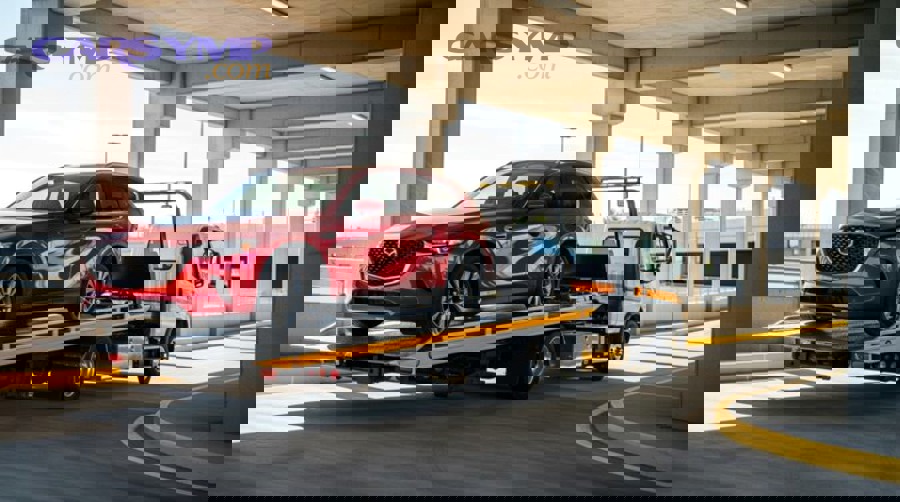
Moreover, understanding how to brake without power assistance fundamentally changes your stopping approach. The brake pedal will feel much harder and require substantially more force to achieve the same stopping power you’re accustomed to with power brakes. Many drivers instinctively give up when they encounter this unexpected resistance, assuming their brakes have failed completely, when in reality the braking system still functions mechanically—it simply requires much greater force to activate.
What Braking Technique Works When Power Brakes Fail?
The pump braking technique works when power brakes fail by pressing and releasing the brake pedal in rapid succession rather than applying constant pressure, which can rebuild some hydraulic pressure in the system and provide more effective stopping power. Each pump generates a small amount of residual pressure that accumulates with repeated applications.
For example, start by applying firm, decisive pressure to the brake pedal—using both feet if necessary to generate sufficient force—then release slightly and press again in a rhythmic pattern. This pumping action can create enough pressure variation to engage the braking system more effectively than a single sustained press. The technique works because brake systems contain residual valves that retain small amounts of pressure between applications, allowing multiple pumps to create cumulative braking effect.
If pumping proves insufficient to slow your vehicle adequately, gradually engage the parking brake (also called the emergency brake) while holding the release button to prevent the ratchet mechanism from locking. Pull the parking brake lever up smoothly and progressively, or if you have an electronic parking brake, press and hold the button. Sudden full engagement can lock the rear wheels and cause the vehicle to skid or spin, particularly on wet or slippery surfaces. The parking brake acts mechanically on the rear wheels through a cable system independent of the hydraulic power brake system, making it your backup stopping method when hydraulic assistance fails.
Combining both techniques—pumping the brake pedal while progressively engaging the parking brake—provides maximum stopping power. Downshifting to a lower gear (for manual transmissions) or shifting to a lower range (for automatic transmissions with manual shift modes) adds engine braking that helps slow the vehicle without relying solely on brake friction. According to vehicle safety research from the Insurance Institute for Highway Safety, drivers who employ combined braking techniques during power brake failure reduce their stopping distance by approximately 30% compared to those who rely on brake pedal pressure alone.
Where Should You Position Your Stalled Vehicle?
You should position your stalled vehicle on the far right shoulder or emergency lane as far from active traffic as possible, angled slightly toward the roadside with wheels turned away from the travel lanes. This positioning minimizes the risk of intrusion into traffic flow if your vehicle is struck from behind and creates maximum distance between you and passing vehicles.
Specifically, aim for a position that places at least three feet of clearance between your vehicle and the nearest traffic lane, though greater distance is always preferable. On highways with paved shoulders, move completely off the travel surface onto the shoulder. On roads without shoulders, move as far right as road conditions permit, even if this means positioning partially on grass, gravel, or dirt surfaces. The slight risk of getting stuck in soft ground is far less dangerous than remaining in or near active traffic lanes.
Once stopped, turn your front wheels toward the roadside (to the right in countries with right-hand traffic). This wheel position ensures that if your vehicle is struck from behind, the impact will push it further away from traffic rather than into oncoming lanes. Apply the parking brake firmly to prevent rolling, and shift automatic transmissions to “Park” or manual transmissions to first gear (on uphill grades) or reverse (on downhill grades) for additional security against movement.
Avoid stopping in certain high-risk locations whenever possible. Never stop on curves where approaching drivers have limited sight distance to see your vehicle. Avoid stopping just beyond hills or crests where vehicles topping the rise may not see you in time to react. Do not stop in narrow lanes, construction zones, or on bridges unless you have absolutely no alternative, as these locations offer no escape path and create severe hazards for both you and passing traffic.
What Warning Signals Must You Activate During a Stall?
During a vehicle stall, you must immediately activate your hazard warning lights, raise your vehicle hood if you can do so safely, and deploy warning triangles or flares at appropriate distances behind your vehicle. These three warning layers create visual alerts at different distances, giving approaching drivers maximum time to identify the hazard and take evasive action.

In addition, timing is critical for warning signal effectiveness. Activate hazard lights the moment you recognize your vehicle has stalled—ideally before you’ve even come to a complete stop—so drivers behind you immediately understand you’re experiencing an emergency rather than simply slowing down. The hazard light switch is typically located on the steering column or center console and activates all four turn signals simultaneously to create a distinctive flashing pattern that signals distress.
When Should You Exit Your Vehicle After It Stalls?
No, you should not exit your vehicle after it stalls in high-traffic situations where standing outside exposes you to greater danger than remaining inside, but yes, you should exit when safely positioned on wide shoulders or when remaining inside poses specific threats. The decision depends on evaluating traffic density, shoulder width, and environmental factors.
To illustrate, remaining inside your vehicle provides protection from passing traffic that may drift onto the shoulder or lose control. Modern vehicles include crumple zones, airbags, and structural reinforcements designed to protect occupants during collisions, making the passenger compartment generally the safest location. However, this protection only applies if your vehicle is struck from behind or the side—it offers no protection if you’re inside a vehicle that’s on fire, filling with smoke, positioned on railroad tracks, or at immediate risk of being struck head-on.
Exit your vehicle and move to a protected location beyond any guardrails or barriers in these specific situations: when positioned on railroad tracks regardless of whether you see or hear a train approaching, when you smell fuel or see smoke indicating fire risk, when positioned on a blind curve or hill crest where approaching drivers cannot see you in time, when on a narrow shoulder of a high-speed highway with heavy truck traffic, or when flooding or rising water surrounds your vehicle. Always exit from the passenger side when possible to maximize distance between you and passing traffic.
When you do exit, move at least 100 feet away from your vehicle and position yourself behind a guardrail, barrier, or on an embankment above road level. Never stand directly behind or in front of your vehicle where an impact could crush you against it. Never attempt to perform repairs or investigate engine problems while positioned in a traffic lane or on a narrow shoulder. According to Federal Highway Administration data, pedestrian fatalities involving disabled vehicles occur most frequently when occupants exit inappropriately or position themselves between their vehicle and active traffic.
How Do You Get Help When Your Vehicle Stalls?
To get help when your vehicle stalls, call roadside assistance or emergency services using your mobile phone, providing specific location information including highway numbers, mile markers, exit numbers, and distinctive landmarks to ensure responders can locate you quickly. Clear communication of your exact position and situation enables appropriate help to reach you efficiently.
Furthermore, the method you use to summon help should match the severity of your situation. For routine stalls where you’re safely positioned and face no immediate danger, calling your vehicle manufacturer’s roadside assistance program, motor club like AAA, or your insurance company’s roadside service typically provides appropriate help. These services can dispatch tow trucks, deliver fuel if you’ve run out, or provide jump-starts for electrical system failures.
For situations involving immediate danger—stalls in active traffic lanes, on railroad tracks, in tunnels, or during severe weather—call 911 or your local emergency number immediately. Emergency dispatchers can send police to provide traffic control, ensuring your safety until a tow truck arrives. They can also coordinate with railroad companies if you’re stalled on tracks, arrange for emergency lane closures on highways, or dispatch fire services if you report fuel leaks or other fire hazards.

What Information Should You Provide to Emergency Services?
When calling emergency services, provide your exact location using highway numbers and direction of travel, the closest mile marker or exit number, cross streets, and any distinctive landmarks visible from your position. This location data enables emergency responders to dispatch help to your precise location without confusion or delays.
For example, a complete emergency call should include: “I’m on Interstate 95 northbound, just past Exit 42, near the blue water tower on the right side. My vehicle is a silver Honda Accord positioned on the right shoulder. I have my hazard lights on.” This description provides highway identification (I-95), direction (northbound), reference point (Exit 42), landmark (blue water tower), vehicle description, and current safety measures.
Also include the nature of your emergency in your initial call. Explain whether you’re safely positioned or in immediate danger, whether traffic is heavy or light, weather conditions if they’re a factor, whether anyone is injured, and any hazards like fluid leaks or smoking. This information helps dispatchers prioritize your call appropriately and send resources that match your specific needs.
If you don’t know mile markers or exit numbers, use your smartphone’s GPS or mapping application to identify your coordinates, which you can relay to emergency services. Many modern vehicles include automatic emergency call systems that transmit your exact GPS location when activated. Highway callboxes, still present on many major routes, provide direct connections to highway patrol or emergency services and automatically identify your location when you use them. According to the American Automobile Association, providing precise location information reduces emergency response time by an average of 12 minutes compared to vague location descriptions.
Can You Restart a Stalled Vehicle Safely?
Yes, you can restart a stalled vehicle safely, but only after you’ve navigated to a protected location, activated warning signals, shifted to park or neutral, and verified no immediate mechanical hazards like fuel leaks exist. Attempting restart under these controlled conditions minimizes risks while maximizing your chance of successfully getting the engine running again.
Importantly, successful restart depends on identifying why the stall occurred. Momentary stalls caused by brief fuel delivery interruptions, temporary sensor glitches, or driver error (like releasing the clutch too quickly in manual transmissions) often resolve with a simple restart attempt. However, stalls caused by serious mechanical failures—complete fuel system failure, seized engines, broken timing belts, or catastrophic electrical failures—will not respond to restart attempts and may cause additional damage if you persist.
What Steps Should You Follow to Restart Without Risk?
To restart a stalled vehicle without risk, first shift to park (automatic) or neutral (manual), turn the ignition key to the “off” position, wait three to five seconds, then turn the key to “start” while avoiding prolonged cranking that can damage the starter motor or drain the battery. This sequence allows engine sensors to reset and fuel pressure to normalize before restart.
Specifically, the brief pause with the ignition in the “off” position serves several purposes. It allows the engine control computer to complete its shutdown sequence and reset error codes that may have triggered the stall. It permits residual fuel pressure in the injection system to stabilize, ensuring proper fuel delivery when you restart. It also gives you a moment to listen for unusual sounds, check warning lights on the instrument panel, and smell for fuel or burning odors that might indicate restart should not be attempted.
When you turn the key to “start,” crank the engine for no more than 10-15 seconds. If the engine doesn’t start within this time, stop and wait at least 30 seconds before trying again. Prolonged cranking can overheat the starter motor, flood the engine with excessive fuel, or drain the battery to the point where subsequent restart attempts become impossible. After two or three failed restart attempts, discontinue trying and call for professional assistance, as continuing will likely worsen whatever problem caused the initial stall.
If the engine starts successfully, don’t immediately drive away. Allow it to idle for at least 30 seconds while you observe the instrument panel for warning lights, listen for abnormal sounds, and feel for unusual vibrations. Test the accelerator gently to ensure the engine responds smoothly without hesitation or roughness. Only after confirming the engine runs normally should you attempt to re-enter traffic, and do so cautiously in case the problem recurs.
What Are the Most Common Stall Scenarios and Responses?
The most common stall scenarios—highway stalls, intersection stalls, and railroad crossing stalls—each require distinct response strategies, with highway stalls demanding maximum use of momentum to reach shoulders, intersection stalls requiring rapid hazard communication to other drivers, and railroad crossing stalls necessitating immediate vehicle evacuation regardless of restart possibilities. Understanding these location-specific protocols ensures appropriate responses that match the unique hazards each scenario presents.

Moreover, recognizing that stall location dramatically affects both your immediate danger level and your available response options helps you prioritize actions correctly. A highway stall at 65 mph provides momentum and usually shoulder space, making controlled coasting to safety possible. An intersection stall eliminates momentum but occurs at lower speeds with multiple escape directions. A railroad crossing stall creates extreme time pressure regardless of other factors, making evacuation the only acceptable response.
How Do You Handle a Stall at High Speed on the Highway?
To handle a highway stall at high speed, immediately activate hazard lights while maintaining your lane position, use remaining momentum to coast toward the right shoulder while scanning mirrors for safe lane-changing opportunities, and execute gradual lane changes using increased steering force to compensate for power steering loss. This approach capitalizes on forward motion to reach protected areas before stopping.
For instance, a vehicle traveling at 65 mph when the engine stalls can coast for approximately a quarter to a half mile before friction and air resistance slow it to a stop, depending on road grade, vehicle weight, and aerodynamic drag. This distance provides substantial opportunity to navigate across multiple lanes if necessary to reach the shoulder, provided you begin the maneuver immediately and make smooth, progressive lane changes rather than delayed, abrupt movements.
Signal your lane changes even though hazard lights are already flashing, as the additional turn signal provides specific directional information to drivers around you. Check your blind spots carefully before each lane change, as the physical effort of turning your head while managing heavy steering may be greater than usual. Avoid braking unless necessary to prevent rear-ending vehicles ahead of you, as preserving momentum is your primary asset for reaching safety. If you must brake, use the pumping technique to maximize effectiveness without power assist.
Once on the shoulder, continue coasting as far as possible before coming to rest, ideally positioning yourself past curve exits or beyond hills where approaching traffic has maximum visibility of your stationary vehicle. If the shoulder narrows ahead or ends entirely, stop before reaching that restriction rather than continuing into a position where you’ll be partially in the traffic lane. According to the National Safety Council, highway shoulder stalls result in secondary collisions approximately 40% less frequently than stalls that leave vehicles partially in travel lanes, demonstrating the critical importance of reaching fully protected positions.
What Should You Do If Your Car Stalls in an Intersection?
If your car stalls in an intersection, immediately activate hazard lights, attempt one quick restart while in neutral if you can do so within five seconds, and if unsuccessful, signal other drivers using hand gestures and steering wheel waves to indicate you need assistance pushing the vehicle clear. Quick communication prevents confusion and enlists immediate help from nearby drivers.
Specifically, intersection stalls create traffic flow disruptions that can rapidly escalate into dangerous situations as frustrated drivers attempt to navigate around you, traffic signals change creating new conflicts, and vehicles behind you stack up blocking cross traffic. Your priority sequence is: activate hazards (one second), attempt quick restart (five seconds), exit vehicle if safe (three seconds), and signal for pushing assistance (ongoing).
When signaling for help, make broad, clear hand gestures toward the direction you need the vehicle moved—typically straight ahead to clear the intersection or toward the nearest curb. Many drivers will quickly understand your situation and exit their vehicles to help push. Accept this assistance gratefully, as even two or three people can move most passenger vehicles the short distance needed to clear the intersection. Steer from inside the vehicle while others push, keeping the windows down so you can communicate about obstacles or direction changes.
If pushing assistance doesn’t materialize within 30-45 seconds or traffic conditions are too chaotic, call 911 immediately and report that you’re blocking an intersection. Police can quickly respond to provide traffic control and either assist with pushing your vehicle clear or arrange for rapid tow truck response. Never leave your vehicle unattended in an intersection, as it creates a severe hazard without anyone present to steer it if it begins rolling or if it needs to be moved.
What Is the Emergency Protocol for Stalling on Railroad Tracks?
If your vehicle stalls on railroad tracks, immediately exit the vehicle with all passengers, move at least 100 feet away from the tracks at a 45-degree angle in the direction the train is approaching from, and call 911 plus the railroad emergency number posted at the crossing to report the obstruction. Never attempt to restart the vehicle or remain inside, as trains cannot stop quickly enough to avoid collisions even when engineers see an obstruction ahead.
To illustrate the extreme danger, freight trains traveling at 55 mph require approximately one mile to come to a complete stop after the engineer applies emergency braking—far beyond the distance at which crossing obstructions become visible. Passenger trains at higher speeds require even greater stopping distances. This physics reality means that any train you can see or hear approaching a crossing where you’re stalled will reach and strike your vehicle before stopping, regardless of the engineer’s immediate response.
The 45-degree angle evacuation is crucial because debris from the collision—including parts of your vehicle and portions of the train—typically scatter in both directions along the track. Moving perpendicular to the tracks only provides minimal safety distance from this debris field. Moving at a 45-degree angle in the direction the train is coming from ensures that when the train strikes your vehicle, you’re both away from the tracks and positioned where the train will push debris away from your location rather than toward it.
Railroad crossing emergency numbers are posted on blue signs at most crossings, typically displaying a six-digit crossing identifier and an emergency phone number. When calling, provide this crossing identifier if possible, as it allows railroad dispatchers to immediately identify the exact location and alert any approaching trains. If you can’t locate the emergency number, call 911 and provide the nearest cross streets, milepost markers, or other location identifiers. According to Federal Railroad Administration statistics, vehicle-train collisions result in fatality rates approximately 20 times higher than typical highway accidents, making immediate evacuation non-negotiable regardless of whether a train is visible or audible.
What Causes Vehicles to Stall and How Can You Prevent It?
Vehicles stall due to fuel system failures, electrical system malfunctions, ignition component problems, idle air control issues, and transmission-related complications, with prevention strategies centered on regular maintenance schedules, prompt attention to warning lights, and avoiding driving habits that stress critical engine systems. Understanding these root causes enables proactive measures that dramatically reduce stall probability.
Furthermore, stalling rarely occurs without preceding warning signs that attentive drivers can recognize and address before complete failure happens. Rough idling, hesitation during acceleration, intermittent misfires, dashboard warning lights, unusual sounds from the engine compartment, and difficulty starting all indicate developing problems that maintenance can resolve before they progress to roadside stalls. Responding to these early indicators through stalling diagnosis at a qualified repair facility prevents the inconvenience and danger of unexpected stalls.
What Are the Most Common Mechanical Causes of Vehicle Stalling?
The most common mechanical causes of vehicle stalling include failed fuel pumps that cannot deliver adequate fuel pressure, clogged fuel filters that restrict fuel flow, malfunctioning mass airflow sensors that provide incorrect air-fuel mixture data, failing idle air control valves that cannot maintain proper idle speed, worn spark plugs that cause misfires, and weak alternators that cannot maintain electrical system charge. Each of these components plays a critical role in maintaining engine operation, and failure of any single component can cause stalling.
For example, fuel pump failure typically manifests as stalling during acceleration when fuel demand increases or stalling after extended driving when heat causes an already-weak pump to fail completely. Drivers often notice sputtering or hesitation before complete stall occurs, and the vehicle typically will not restart until the fuel pump cools or is replaced. Repair cost estimates for fuel pump replacement typically range from $400 to $800 depending on vehicle make and model, as the pump is often located inside the fuel tank requiring tank removal for access.
Idle air control and throttle body stalling issues present differently, typically causing stalls at idle—such as at stoplights or when coasting to a stop—while the engine may run normally at higher RPMs. Carbon buildup in the throttle body restricts the idle air passage, preventing the engine control computer from maintaining proper idle speed. Cleaning the throttle body costs approximately $150-$300 and often resolves the issue, though severely damaged idle air control valves may require replacement at $200-$500.
Mass airflow sensor failure creates stalling during deceleration or when transitioning from acceleration to coasting, as the sensor provides incorrect information about air intake volume that causes the computer to supply improper fuel amounts. This sensor can often be cleaned with specialized cleaner for under $50, though replacement costs $200-$400 for most vehicles. According to automotive service data from RepairPal, fuel system and sensor-related stalling causes account for approximately 60% of all stall-related repairs, with electrical system issues comprising most remaining cases.
How Does Regular Maintenance Prevent Stalling Incidents?
Regular maintenance prevents stalling incidents by replacing wear-prone components before failure, cleaning systems that accumulate performance-reducing deposits, and identifying developing problems through diagnostic checks that catch issues in early stages. Following manufacturer-recommended maintenance schedules reduces stall risk by approximately 70% compared to reactive maintenance approaches that address only obvious failures.
Specifically, routine oil changes maintain proper lubrication that prevents excessive engine wear, while clean oil also helps keep engine sensors and solenoids functioning correctly. Replacing air filters according to schedule ensures proper air intake volume that prevents rich fuel mixtures and carbon buildup. Changing fuel filters prevents debris from reaching fuel injectors and fuel pumps, extending their service life and maintaining proper fuel pressure. Replacing spark plugs at recommended intervals ensures consistent ignition that prevents misfires and incomplete combustion.
Beyond component replacement, regular maintenance includes diagnostic scans that read engine control computer codes, often identifying sensor drift, marginal battery capacity, or developing electrical issues before they cause roadside failures. Many stalling problems show up as “pending” diagnostic codes during routine maintenance—indicating the computer has detected abnormal operation but the problem hasn’t yet become severe enough to trigger dashboard warning lights. Addressing these pending codes proactively prevents the majority of stall events.
An Engine stalling diagnostic checklist used during routine maintenance typically examines fuel pressure, battery voltage and alternator output, spark plug condition and gap, idle speed stability, mass airflow sensor readings, throttle position sensor response, oxygen sensor operation, and the presence of any stored trouble codes. Comprehensive diagnostic scans during scheduled maintenance typically add $50-$100 to service costs but can identify problems that would cost thousands to repair if allowed to progress to catastrophic failure.
What Driving Habits Increase Stall Risk?
Driving habits that increase stall risk include consistently running the vehicle on low fuel levels which allows sediment in the tank to clog filters and damage fuel pumps, excessive short-trip driving that prevents the engine from reaching optimal operating temperature, aggressive clutch release in manual transmissions that stresses engine mounts and idle control systems, ignoring dashboard warning lights that indicate developing problems, and delaying oil changes that allows sludge accumulation affecting sensors and valves. Each of these behaviors accelerates component wear or creates conditions that promote failures.
For instance, operating consistently on the bottom quarter of the fuel tank causes the fuel pump to work harder and run hotter since fuel surrounding the pump normally serves as coolant. The pump draws more sediment and water that has settled at tank bottom, sending contaminants through the fuel system that clog filters and injectors. Vehicles operated regularly near empty experience fuel pump failure rates approximately 40% higher than those maintained above half-tank, and the sediment-related issues often cause stalling even before complete pump failure occurs.
Short trips where the engine doesn’t fully warm up create multiple stall risks. Cold engines produce incomplete combustion that creates carbon deposits on intake valves, throttle bodies, and oxygen sensors—all components whose degraded performance can cause stalling. Condensation forms inside the fuel tank during temperature cycles, introducing water into the fuel system that can freeze in cold weather or cause injector and pump corrosion. Batteries operated primarily on short trips never fully recharge, leading to progressive capacity loss that eventually causes insufficient power for fuel pump operation or ignition system function.
Manual transmission drivers who release the clutch too abruptly or fail to downshift appropriately during deceleration subject the engine to excessive load at low RPM, creating conditions where the engine cannot maintain idle speed. This habit particularly causes stalls in older vehicles or those with marginal idle air control valve function. Practicing smooth, progressive clutch release and downshifting to maintain engine speed above 1500 RPM during deceleration dramatically reduces manual transmission stalling.
How Do Weather Conditions Affect Stalling Probability?
Weather conditions affect stalling probability significantly, with cold temperatures increasing battery failure and fuel vaporization issues, hot temperatures causing vapor lock and electrical component heat stress, and high humidity creating moisture contamination in ignition systems that causes misfires and stalling. Understanding these weather-related factors enables preventive measures that reduce temperature-induced stall risk.
Specifically, cold weather below freezing creates multiple stall mechanisms. Battery capacity decreases approximately 35% at 32°F and 60% at 0°F compared to capacity at 80°F, reducing available power for starter motors and fuel pumps. Diesel fuel can gel at low temperatures, blocking fuel filters and preventing flow to injectors. Gasoline volatility decreases in cold temperatures, making cold starts more difficult and causing rough running that can progress to stalling. Moisture in fuel systems can freeze, completely blocking fuel delivery until temperatures rise.
Hot weather above 90°F creates different stalling mechanisms. Vapor lock occurs when fuel in lines or the fuel pump vaporizes due to heat, creating gas bubbles that block liquid fuel flow and cause stalling. Electrical components including ignition coils, fuel pump controllers, and engine sensors can fail temporarily when overheated, causing stalls that resolve after cooling but recur in continued hot conditions. Battery fluid evaporation in hot weather accelerates battery aging and reduces capacity, creating starting and electrical system problems.
Preventive measures for weather-related stalling include battery testing and replacement before winter in cold climates or before summer in hot climates, using fuel additives appropriate for extreme temperatures (antifreeze additives for winter diesel, fuel system cleaners that reduce vapor lock tendency for summer), parking in shaded or covered locations during temperature extremes, and scheduling maintenance inspections before seasonal temperature shifts to identify marginally functioning components that may fail under temperature stress. According to automotive climate research from SAE International, vehicles maintained with seasonal preparation protocols experience approximately 45% fewer temperature-related stalling incidents than those receiving identical year-round maintenance approaches.