


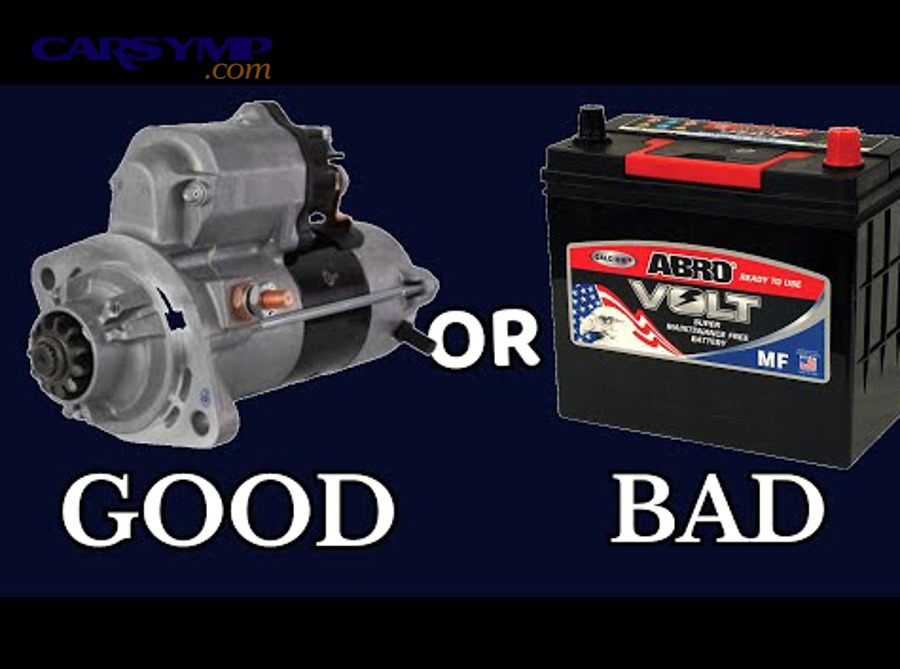
When a car won’t start, dead battery vs bad starter symptoms can look confusing at first—but the quickest tell is what the car can still power and how the engine reacts when you turn the key or press Start. A dead battery typically causes weak or inconsistent electrical power, while a bad starter often leaves the lights and accessories mostly normal but fails to crank the engine.
Next, you can narrow the cause by listening: a rapid clicking pattern, a single click, slow cranking, or a dead-silent no-crank each points to a different part of the starting chain (battery → cables/grounds → starter relay/solenoid → starter motor).
Then, simple at-home checks—a voltage reading, a jump-start trial, and a basic voltage-drop mindset—can confirm what’s failing without guessing or swapping parts unnecessarily.
Introduce a new idea: once you identify the likely culprit, the best fix isn’t just “replace something”—it’s choosing the right next step (charge vs replace, clean connections vs replace starter, or diagnose a hidden drain) so the same no-start doesn’t come back tomorrow.
Is it a dead battery or a bad starter? (Fast symptom check)
Yes—you can usually tell dead battery vs bad starter symptoms in under two minutes by checking (1) electrical power strength, (2) crank behavior, and (3) what changes when you try a jump start. Next, use this quick check to avoid misdiagnosing a starter when the real issue is weak battery power delivery.
Do the headlights and interior electronics look strong or weak?
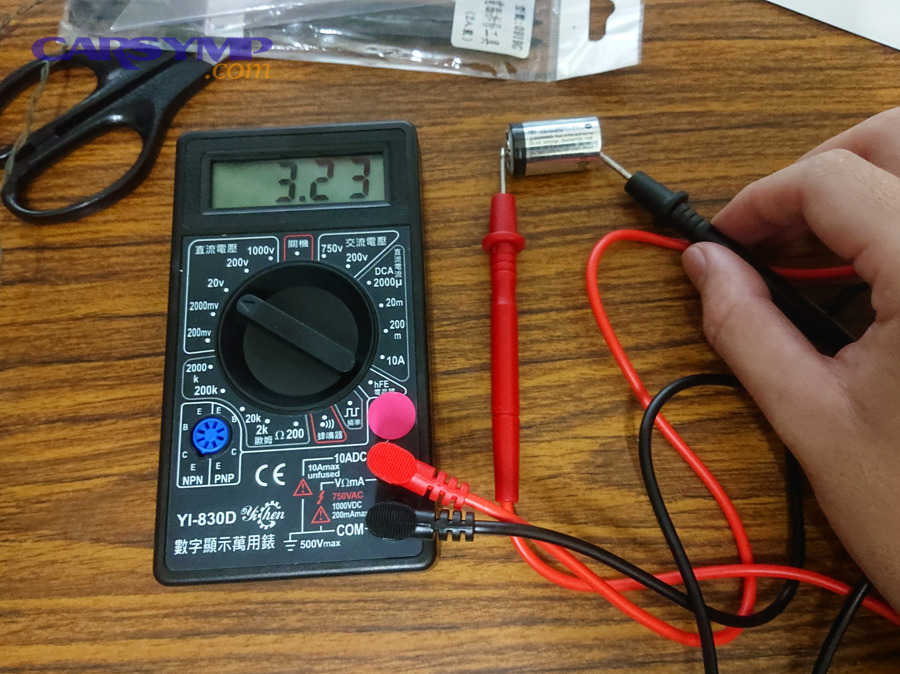
If the headlights are noticeably dim, the cabin lights fade, the radio resets, or the dash flickers, that pattern leans heavily toward battery power delivery—either the battery is discharged, internally weak, or the connections are starving the car of voltage. In real life, many drivers first notice dead battery symptoms as “everything looks tired,” not as a clean no-start.
A helpful mental model is this: starting the engine is the biggest electrical demand your car makes. If the battery cannot support smaller loads (lights, blower fan, infotainment) without obvious weakness, it’s unlikely to spin the starter at full force.
Practical things to look for:
- Headlights that brighten when you rev (if it’s running) usually point to charging system behavior, but when it’s not running, dim lights point to low stored energy or bad connections.
- A dash that goes black the moment you try to crank can indicate a battery that collapses under load or a high-resistance connection that can’t carry starter current.
This is why “Headlights dim and electrical signs” are one of the most reliable early indicators: they show you the battery’s ability to deliver stable voltage before you even focus on cranking.
Does the engine crank strongly, slowly, or not at all?
Crank behavior is the second fast filter:
- Strong crank that doesn’t start: often not battery or starter (think fuel, spark, immobilizer).
- Slow crank (rr…rr…rr…): commonly weak battery, cold-thick oil, or high resistance in cables/grounds.
- Single click or no crank: could be battery too weak to pull in the solenoid, a bad connection, a failed solenoid/starter motor, or a control issue (relay, safety switch).
What matters is consistency. A battery issue often shows “it tries, but gets worse fast.” A starter issue often shows “power seems fine, but it can’t mechanically crank.”
What happens if you try a jump start?
A jump start is a powerful discriminator:
- If a jump start makes the engine crank normally and start, that strongly supports a battery problem (discharged, aged, or drained).
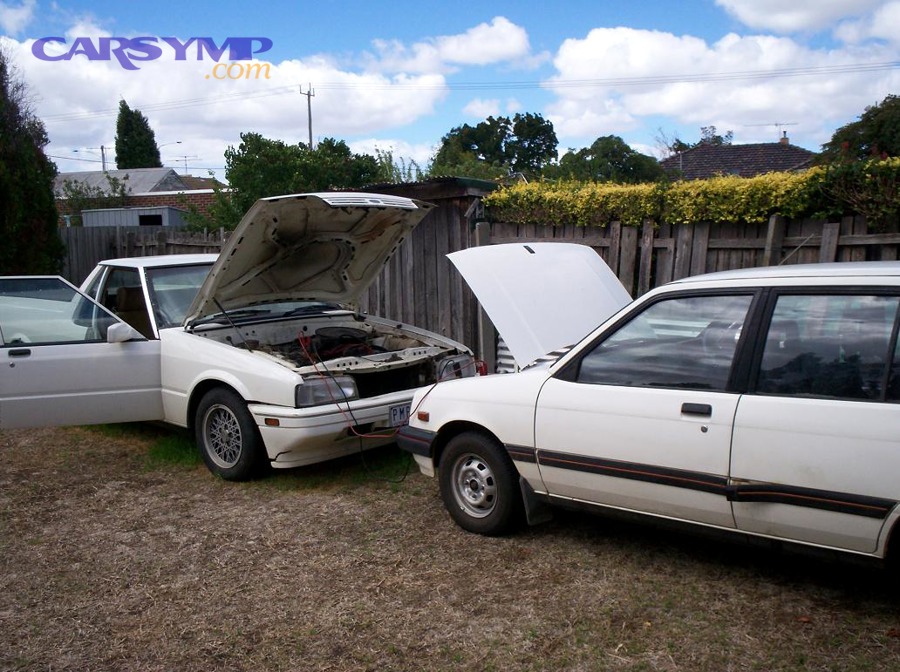
- If a jump start changes nothing—lights are still normal but the engine still won’t crank—suspect starter circuit (starter solenoid/motor) or a control/safety interlock.
- If it improves only slightly (still slow crank), suspect weak battery plus resistance in terminals/grounds, or an engine that’s hard to crank (cold weather, thick oil).
Keep the logic simple: a jump start adds available current and stabilizes voltage. If added current fixes it, the original system lacked usable current—most often the battery or its connections.
What do no-start sounds mean: clicks, no crank, slow crank, or a single clunk?
No-start sounds are a diagnostic shortcut: rapid clicks usually mean low voltage/current delivery, a single click often means the solenoid engages but the starter can’t turn, and a dead-silent no-crank points to control/interlock or power path failure. Then, map what you hear to what the starter system is physically trying (and failing) to do.
What does rapid clicking usually indicate?
Rapid clicking is commonly the starter solenoid chattering because voltage drops when it tries to engage—classic low battery power delivery or excessive resistance. Here’s what’s happening mechanically:
- The solenoid tries to engage the starter.
- Current demand spikes.
- Voltage collapses.
- Solenoid drops out.
- Voltage rebounds.
- Repeat → click-click-click.
That pattern is why rapid clicking correlates so strongly with weak battery capacity, poor terminal contact, or a failing battery under load.
What does a single click (or clunk) usually indicate?
A single click can mean:
- The solenoid is receiving the command and engaging, but the starter motor can’t spin (worn starter motor, seized bearings, internal electrical failure).
- The starter motor is trying, but the battery cannot supply enough current to turn it even once (especially if the lights also dim hard).
- The engine is hard to turn (rare, but possible), making the starter “hit” and stop.
If your lights and accessories stay bright and stable yet you get a solid single click, starter/solenoid becomes more likely than battery—because the system voltage appears healthy until the moment the starter should rotate.
What does slow cranking suggest compared to no cranking?
Slow cranking usually points to insufficient current flow or increased mechanical resistance. The most common causes are:
- Battery is weak (age, discharge, internal resistance).
- High resistance at terminals or grounds.
- Cold oil making the engine harder to spin.
- Starter motor wearing out and drawing too much current for the torque it produces.
No cranking (with normal lights) shifts suspicion toward:
- Starter solenoid/starter motor failure,
- Relay/fuse/control issues,
- Neutral safety switch / clutch interlock,
- Immobilizer or start authorization problem.
In other words: slow crank is usually “power delivery is inadequate,” while no crank is often “the start command isn’t turning into starter rotation.”
Which symptoms point to a dead battery vs a bad starter ?
Dead battery wins in “weak electrical system” clues, while bad starter wins in “normal electronics but no crank” clues. However, the fastest correct diagnosis comes from comparing (1) voltage behavior, (2) sound pattern, and (3) response to jump-starting. Next, use this side-by-side comparison to reduce guesswork.

What are the most common dead battery symptoms?
The most common dead battery symptoms show up before you even reach the starter:
- Dim headlights, weak interior lights, or lights that fade quickly
- Slow window movement or a blower fan that sounds “tired”
- Clicking from the starter relay/solenoid (often rapid clicking)
- Dash lights that flicker or reset when you attempt to start
- Key fob or push-start behavior getting inconsistent (depending on vehicle)
Battery behavior is also progressive in many cases: the car cranks slower over days/weeks until it finally won’t. That “getting worse steadily” story is more battery-like than starter-like.
Also consider Cold weather dead battery behavior: lower temperatures increase internal resistance and reduce usable output, which is why a borderline battery often fails on the first cold morning of the season. A battery can look “fine” at midday and struggle at dawn.
Evidence: According to a study by the University of Illinois at Urbana-Champaign from the PHYS 398DLP course in 2020, battery performance trends show meaningful changes in effective energy output as temperature deviates from room conditions, with colder environments producing lower usable output in tested conditions.
What are the most common bad starter symptoms?
A starter problem usually looks like this:
- Dash lights and accessories seem normal (radio, lights, screens come on strongly)
- You hear a single click, a clunk, or sometimes nothing, but the engine does not crank
- Sometimes it starts after multiple tries, then worsens over time
- In some cases, you hear grinding, whining, or a free-spinning sound (starter drive/engagement issues)
The key difference is that a failing starter often doesn’t “brown out” the whole car the way a weak battery does—because the battery still has enough power for normal accessories. The failure occurs at the moment of converting electrical power into mechanical cranking.
Evidence: According to a study by the University of Dayton from its engineering research on engine cranking systems in 2013, starter systems can be evaluated by measuring how torque output relates to starter motor current draw during cranking, supporting the idea that starter health is tied to how effectively it turns current into cranking performance.
Can alternator problems or parasitic drain mimic either one?
Yes—and this is where many “battery vs starter” diagnoses go wrong.
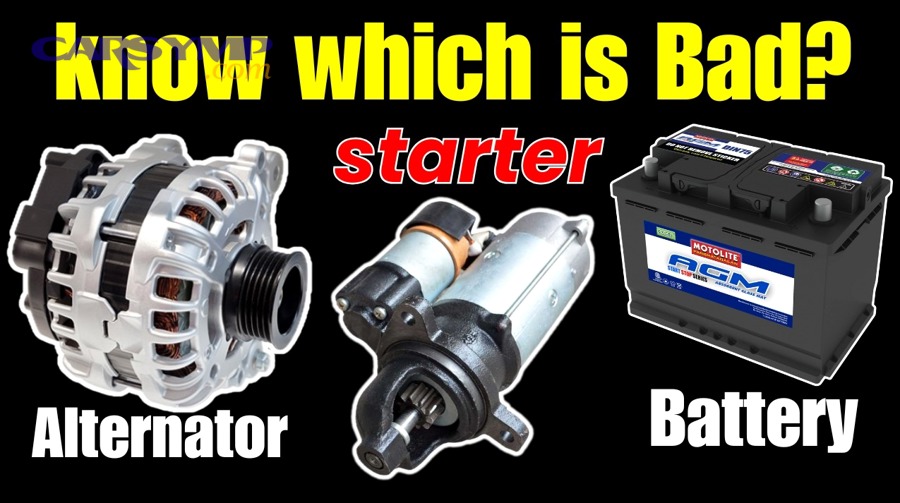
- A bad alternator can leave you with a dead battery tomorrow even if the car started today. You might jump-start it successfully, drive, then find it dead again later.
- A parasitic drain (something staying on when the car is off) can repeatedly discharge a healthy battery overnight.
- Corroded terminals can make a healthy battery act dead by choking current flow.
So if you replace a battery and the car still dies overnight, the battery may not have been the root cause—just the first visible failure.
To keep the logic clean:
- Battery is storage.
- Alternator is replenishment.
- Parasitic draw is leakage.
- Terminals/grounds are the delivery path.
Quick comparison table: battery vs starter clues
The table below summarizes the most practical “in-the-moment” clues drivers can use to separate battery-related no-starts from starter-related no-starts.
| Symptom/Clue | More likely dead battery | More likely bad starter |
|---|---|---|
| Headlights are dim before cranking | ✅ | ❌ |
| Rapid clicking when trying to start | ✅ | ❓ (possible, but less common if battery is strong) |
| Single click with normal bright dash | ❓ | ✅ |
| Jump start makes it crank normally | ✅ | ❌ |
| Accessories are strong, engine won’t crank | ❌ | ✅ |
| Problem appears suddenly without warning | ❓ | ✅ (often) |
| Slow crank that worsens in cold | ✅ | ❓ |
How can drivers test battery and starter at home with basic tools?
The best at-home method is a 3-step approach—voltage check, jump-start behavior, and connection sanity checks—to confirm dead battery vs bad starter symptoms without replacing parts blindly. To begin, you only need a basic multimeter (or a battery tester) and safe jump-start practice.
How do you check battery voltage correctly with a multimeter?
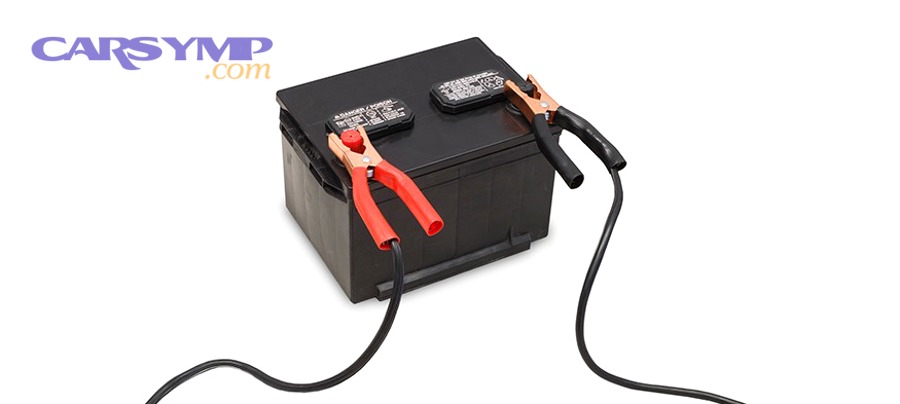
A simple battery voltage reading is not a perfect health test, but it’s a strong starting point.
Steps (simple and safe):
- Set the multimeter to DC volts.
- Place red lead on the positive terminal, black on negative.
- Read voltage with the car off (resting voltage).
- Watch voltage while someone attempts to crank (cranking voltage behavior).
How to interpret it in real life:
- If resting voltage is low and drops dramatically during a crank attempt, the battery is likely discharged or weak.
- If resting voltage looks normal but drops hard the moment the starter is commanded, the battery may have high internal resistance or the connections may be poor.
- If voltage stays reasonably stable but the engine doesn’t crank, suspect starter/solenoid/control issues.
This is also where “Headlights dim and electrical signs” align with numbers: dim lights often correlate with low or unstable voltage delivery.
How does a jump-start test separate battery vs starter issues?
A jump-start test is essentially a controlled experiment:
- You add a known-good power source.
- You observe whether cranking performance changes.
Interpretation:
- Big improvement = battery/connection problem.
- No improvement = starter or control path.
- Slight improvement = mixed issue (battery weak and resistance, or engine hard to crank).
Safety reminders:
- Connect clamps securely.
- Avoid sparking near battery vents.
- Follow correct cable order for your vehicle.
What quick connection checks prevent false diagnoses?
Before you conclude “dead battery” or “bad starter,” eliminate high-resistance delivery problems:
- Look for visible corrosion, loose terminals, damaged clamps.
- Wiggle-test only when the car is off (don’t short anything).
- Check the ground connection from battery negative to chassis/engine.
- If terminals are heavily crusted, clean them properly and retest.
Even a strong battery can fail to start the car if the current can’t flow through the terminals or ground path.
What to do after you confirm the cause: next steps and safety tips
After you identify the likely cause, you should act immediately in a way that prevents repeat no-starts: (1) restore reliable power, (2) correct the underlying reason it failed, and (3) verify with a retest. Next, use the appropriate path below based on what your tests showed.
What to do after a dead battery event
If your tests support a dead/discharged battery, focus on recovery and prevention. This is the practical “What to do after a dead battery event” checklist:
- Recharge correctly
- If the battery is simply discharged, a proper charger can restore it more gently than repeated jump starts.
- Decide whether the battery is still trustworthy
- If it repeatedly dies, cranks slowly even after charging, or fails load-like behavior, replacement is often more cost-effective than repeated rescues.
- Find the reason it died
- Was it lights left on? A parasitic drain? An alternator not charging? Cold weather exposure?
If the battery is older and the first cold snap triggers failure, that matches common Cold weather dead battery behavior—a borderline battery crosses the threshold where it can’t deliver sufficient current.
What to do if it’s a bad starter (or starter circuit)
If power seems strong but the engine won’t crank, and jump-starting doesn’t change the symptom, treat it as starter-system diagnosis:
- Check for a relay click and starter solenoid engagement sound.
- Verify battery terminals and grounds (because a bad ground can mimic a starter failure).
- If you have access, a shop can measure starter current draw and voltage drop precisely.
If you hear grinding or inconsistent engagement, avoid repeated attempts—starter damage can escalate, and in some cases repeated grinding can damage the flywheel/ring gear.
When should you stop DIY and get professional diagnosis?
Get professional help if:
- The car is intermittently starting with no consistent pattern.
- You suspect immobilizer/security/start authorization issues.
- The vehicle requires battery registration/coding (common in some modern vehicles).
- You see swelling, leaking, or damaged battery casing (safety hazard).
A good technician can confirm with proper load testing and circuit measurements—especially important when the symptom is “no crank but voltage looks okay,” where hidden resistance can trick simple tests.
What other issues mimic dead battery or starter problems?
Yes—several faults can imitate dead battery vs bad starter symptoms, especially connection resistance, safety interlocks, and temperature-related drag that changes cranking load. Then, use these “look-alikes” to avoid replacing the wrong part.
Can corroded or loose battery terminals cause a no-start even with a good battery?
Absolutely. Corrosion acts like a bottleneck: the battery may be fine internally, but the car can’t access its current. This can produce rapid clicking, dimming, or a total no-crank depending on where resistance is highest.
Can a bad ground strap look like a dead battery?
Yes. A weak or loose engine ground can cause:
- Strange electrical behavior,
- Starter clicking,
- Intermittent no-crank,
- Voltage readings that look confusing because the return path is compromised.
Can safety switches or immobilizers mimic a starter failure?
Yes—neutral safety switch, clutch interlock, push-start authorization, immobilizer issues can produce a dead-silent no-crank with normal lights, which many drivers mistake for a failed starter.
Can cold weather or thick oil make it seem like the battery or starter is failing?
Yes. Cold thickens oil and increases engine cranking resistance, which can turn a marginal battery into an apparent “dead battery” and can also expose a weak starter that can’t produce enough torque under higher load. This is why no-start complaints cluster during cold snaps—even when the root cause is “borderline components + cold conditions,” not a single part that’s completely broken.