


A humming or whirring sound that rises with vehicle speed is most often tied to the rotating parts at the corners of your car—tires, wheels, and bearings—so the fastest path to a fix is figuring out whether the noise is coming from wheel alignment, wheel balancing, or a wheel bearing.
The next step is to separate noise (a steady drone/roar that changes with road speed) from vibration (a shake you feel in the steering wheel, seat, or floor), because wheel balancing problems usually “announce” themselves by vibration before they become a true hum.
Then you’ll want to match the sound to the most common physical “fingerprints”: alignment-related wear like feathering, balance/suspension-related cupping, or a bearing that gets louder when the load shifts during gentle turns.
Introduce a new idea: once you can place your symptoms into the right bucket, you can use a simple road-test checklist and a sensible repair order to stop the noise—without paying for guesswork.
Is a humming/whirring noise more likely caused by wheel alignment or wheel balancing?
Yes—wheel alignment is more likely than wheel balancing to be the root cause of a true humming/whirring road noise because (1) misalignment creates uneven tread wear that “sings,” (2) that wear persists even after rebalancing, and (3) the sound often grows gradually as the wear pattern develops.
Next, because the wrong fix wastes time and money, you’ll get the clearest answer by separating “alignment wear noise” from “balance vibration” and “bearing hum.”
Does wheel imbalance usually cause humming, or mostly vibration?
Wheel imbalance mostly causes vibration, not a pure hum, because the heavy spot in the tire/wheel assembly creates a repeating force as the wheel spins—so you feel shaking at certain speeds rather than hearing a steady drone.
Specifically, imbalance tends to show up in a predictable speed band: the steering wheel may shimmy (front imbalance), or the seat/floor may shake (rear imbalance), and the sensation strengthens as speed rises. (continental-tires.com)
That said, imbalance can still lead to a humming noise indirectly. If the tire is hopping and bouncing because it’s out of balance (or because the suspension can’t control that bounce), the tread can develop cupping/scalloping. Once that irregular tread pattern is established, the tire itself becomes a noise generator—so even after you rebalance, the tire may continue to produce a rhythmic hum.
Practical takeaway for a humming noise at speed:
- If you feel the problem strongly (shake/wobble) at a specific speed, suspect balance first.
- If you hear a steady drone that gradually increases with speed, suspect tire wear or a bearing first.
Can poor alignment directly cause a hum, or does it cause tire wear that later hums?
Poor alignment usually causes a hum by creating tire wear that later hums, not by instantly producing noise the moment the alignment goes out.
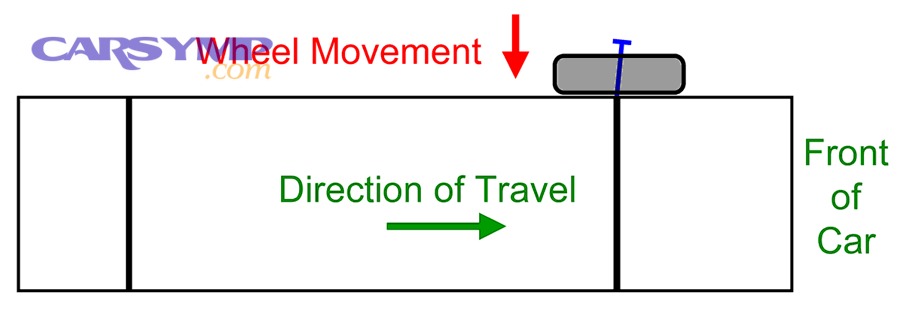
To better understand why, think of alignment as how the tire “tracks” down the road: when toe, camber, or caster is out of spec, the tread scrubs in a slightly wrong direction on every rotation. Over thousands of rotations, that scrubbing builds a repeating pattern—like feathered edges or heel-toe wear—so the tire starts generating a whirring tone.
Toe is the classic culprit for feathering. In plain terms, toe out of spec scuffs the tread blocks in a consistent direction, leaving one edge sharp and the other edge smooth. (goodyear.com)
This is why an alignment “fixes the cause,” but it may not instantly silence the sound if the tire has already been shaped into a noisemaker. Alignment stops the wear from getting worse; tire rotation or replacement may be needed to remove the sound.
If the hum started right after tire service, which is more likely: balance, alignment, or something else?
There are 3 main buckets of “right after service” humming causes—setup issues, existing wear revealed by rotation, and new vibration from imbalance—and the best match depends on what changed that day.
Below, you’ll see why immediate-onset cases often aren’t true alignment failures.
Bucket A: Setup issues (immediate, obvious)
- Tire pressure far from the door-jamb spec (over/underinflation can change noise quickly)
- Lug nuts torqued unevenly (can cause wobble/rotational issues)
- A wheel weight fell off (new vibration that can feel like “noise”)
Bucket B: Existing wear revealed by rotation (immediate, surprising)
- You had mild cupping/feathering on the rear tires, and rotating them to the front made the sound louder in the cabin.
- Directional tires were installed/rotated incorrectly (tread designed to roll one way can get noisier when reversed).
Bucket C: New imbalance (immediate, speed-sensitive)
- The car feels smooth at low speed, then shakes/hums on the highway—classic “balance” pattern. (tablet.lesschwab.com)
If your hum began right after rotation, don’t skip the simplest experiment: drive on the same road, then swap front-to-rear again (or have the shop do it) to see if the noise moves.
What does “humming tire noise” mean and how is it different from vibration?
“Humming tire noise” is a steady, speed-related drone produced by the tire-road interface or rotating hardware, while vibration is a physical shaking you feel through the steering wheel, seat, or floor—often from imbalance or runout.
Then, because “hum” and “shake” can happen together, you’ll use three quick comparisons to avoid mixing up the source.
Is the noise proportional to speed, engine RPM, or road surface?
There are 3 main types of patterns—wheel-speed, engine-RPM, and road-surface—based on what the sound “follows.”
More specifically, this is the fastest way to decide whether you should look at tires/bearings or something under the hood.
1) Wheel-speed noise (most common for hum)
- Increases smoothly as you go faster
- Usually unchanged by shifting gears
- Often points to tires, wheel bearings, or drivetrain components near the wheels
2) Engine-RPM noise
- Changes when you rev the engine in neutral or when the transmission shifts
- More likely engine/exhaust/accessories than alignment/balance
3) Road-surface-dependent noise
- Quiet on fresh asphalt, louder on rough concrete
- Often tire tread pattern + pavement texture interacting
At highway speeds, tire/pavement noise becomes a dominant contributor to what you hear, which is why a small change in tread wear or surface can sound dramatic. (vtechworks.lib.vt.edu)
Does the humming change when you turn left or right?
Yes—if the hum changes noticeably during gentle left/right steering inputs, that is a strong clue that load-sensitive components (especially wheel bearings) may be involved.
However, because tires can also change tone slightly when their contact patch shifts, you want a clear, repeatable change, not a one-time coincidence.
Use this simple interpretation:
- Bearing-style clue: the drone gets louder when you load one side (gentle turn), and quieter when you unload it. (timken.com)
- Tire-style clue: the sound changes more with pavement type and tire position (after rotation) than with gentle steering.
This is where the phrase Wheel bearing hum diagnosis matters: your goal is not to “guess bearing,” but to confirm the sound is load-sensitive and stays with the corner even after tire swaps.
Can tire tread patterns and tire age create humming even with perfect alignment and balance?
Yes—tread pattern, compound, and tire age can create humming even when alignment and balance are correct, for at least three reasons: (1) some patterns pump air and strike pavement texture more loudly, (2) harder rubber transmits more noise, and (3) partial, uneven wear can amplify certain frequencies.
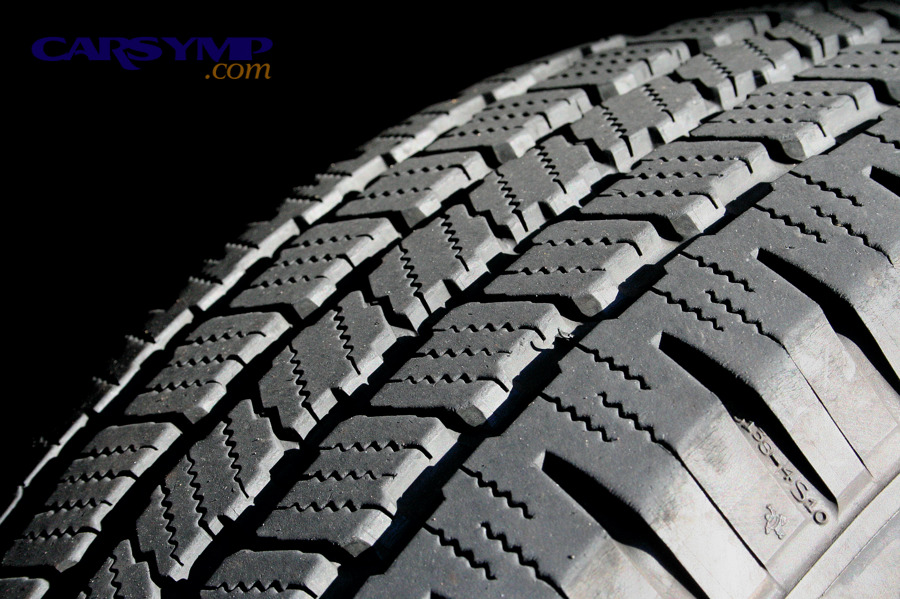
Moreover, directional and winter-oriented patterns can be especially sensitive to how the tread is randomized, which is why two “healthy” tires can sound very different on the same road.
Evidence matters here because “it’s just the tires” can sound like a brush-off. A Virginia Tech research group in mechanical engineering tested multiple tires and used on-board sound intensity techniques to isolate tread-pattern-related noise, showing that tread pattern contributes to tire noise and can be more noticeable for special-purpose designs. (researchgate.net)
According to a study by Virginia Tech from the Department of Mechanical Engineering, in 2020, researchers testing multiple tread patterns using on-board sound intensity methods concluded that tread pattern contributes to tire noise and can be more pronounced for special-purpose tires such as snow or strongly directional designs. (researchgate.net)
Which tire wear patterns point to alignment problems that create a hum?
There are 3 main tire wear patterns that strongly suggest alignment-related hum—feathering (toe wear), heel-toe wear, and one-sided shoulder wear (camber-related)—because they create repeating tread edges that generate a consistent road-speed tone.
In addition, once you can identify the wear pattern, you can choose a fix that stops the wear and tells you whether the tire can be saved.
Is feathering/heel-toe wear a “toe” problem that often sounds like a whine?
Yes—feathering is commonly a toe problem and it often produces a whine or hum because each tread block develops a sharp edge that repeatedly slaps the road.
To better understand it, use the hand test: with the car safely parked, run your palm lightly across the tread blocks. If one direction feels smooth and the other feels sharp, you’re feeling feathering.
Why toe does this:
- Toe-in or toe-out forces the tire to scrub sideways as it rolls
- Scrubbing “leans” the leading edges of blocks, creating the sawtooth feel
- Sawtooth edges generate a steady tone at road speed
Goodyear notes that toe out of specification can cause the scuffing that leads to feathering, and suspension wear can let toe/camber/caster shift while driving. (goodyear.com)
What this means for a “Humming at speed causes checklist”:
- Feathering present + no strong vibration = prioritize alignment + inspect steering/suspension joints.
- Feathering present + strong pull = alignment is likely overdue, and the tires may already be noisy.
Does cupping/scalloping suggest balance issues, bad shocks, or both?
Cupping/scalloping can point to both balance and worn damping components, but it frequently involves suspension control (shocks/struts) because uncontrolled bouncing creates alternating high/low wear spots.
Meanwhile, imbalance can start the bouncing, and misalignment can worsen how fast the pattern develops—so the “right” answer is often “a combination,” not a single villain.
A useful way to read cupping:
- If cupping is mild and you also feel a speed-sensitive shake, suspect balance/runout.
- If cupping is severe and the ride feels floaty or bouncy over bumps, suspect shocks/struts.
Goodyear describes tire cupping as associated with suspension issues and notes that misalignment and worn shocks/struts can contribute to this uneven wear. (goodyear.com)
If only one tire is noisy, does that rule out alignment?
No—one noisy tire does not rule out alignment, because alignment angles can be uneven side-to-side, and tire history matters (previous rotations, repairs, or a single tire with a manufacturing or impact issue).
Especially, a single corner can develop abnormal wear faster if a bushing is loose or if a toe setting drifts under load—so the tire on that corner becomes the “speaker.”
Use a quick confirmation sequence:
- Inspect the noisy tire for feathering/cupping compared to the others.
- Rotate the tire to a different corner (if your drivetrain and tire type allow it).
- Re-test on the same road.
If the noise follows the tire, you’ve found a tire/wear problem. If the noise stays at the same corner, move your suspicion toward bearings or drivetrain.
What tests can drivers do to tell “alignment vs balance vs wheel bearing”?
There are 4 practical tests drivers can use—(1) speed-band feel test, (2) gentle load-shift turn test, (3) tire rotation “noise moves” test, and (4) visual/tactile tread inspection—because each one isolates a different failure signature.
Next, you’ll combine the results to avoid the common trap of replacing parts that were never bad.
To make the checklist easy to apply, the table below shows what each symptom tends to indicate (not a guarantee, but a strong directional guide).
| Symptom pattern (what you notice) | Most likely source | Why it points there |
|---|---|---|
| Hum increases smoothly with speed; little/no shake | Tire wear or wheel bearing | Noise signature dominates over vibration |
| Strong shake at a certain speed band | Wheel balance / runout | Rotational force peaks at certain speeds (continental-tires.com) |
| Noise changes clearly when turning left/right | Wheel bearing | Load-sensitive bearing noise intensifies under load (timken.com) |
| Noise moves after rotating tires | Tire/tread wear | The “speaker” moved with the tire |
Does the hum move after rotating tires front-to-back or side-to-side?
Yes—if the hum moves after rotation, that strongly suggests a tire/tread cause, because the noise generator traveled with the tire.
Then, once you confirm the noise is tire-based, you can decide whether it’s a reversible situation (minor wear that quiets down after rotation) or a permanent pattern (cupping/feathering that stays loud).
How to do it safely:
- Rotate according to your owner’s manual (directional/asymmetric tires have rules).
- Re-test on the same stretch of road at the same speeds.
- Note whether the sound shifts forward/backward in the cabin.
If the sound changes location or intensity significantly right after rotation, don’t panic—rotation can reveal existing wear that was masked at the rear.
Can a balance issue be confirmed by a “specific speed” vibration pattern?
Yes—wheel imbalance is often confirmed by a vibration that appears around a particular speed range and gets stronger as you go faster, for at least three reasons: (1) the heavy spot creates a repeating force each rotation, (2) the suspension transmits that force differently as speed changes, and (3) certain speeds excite resonance.
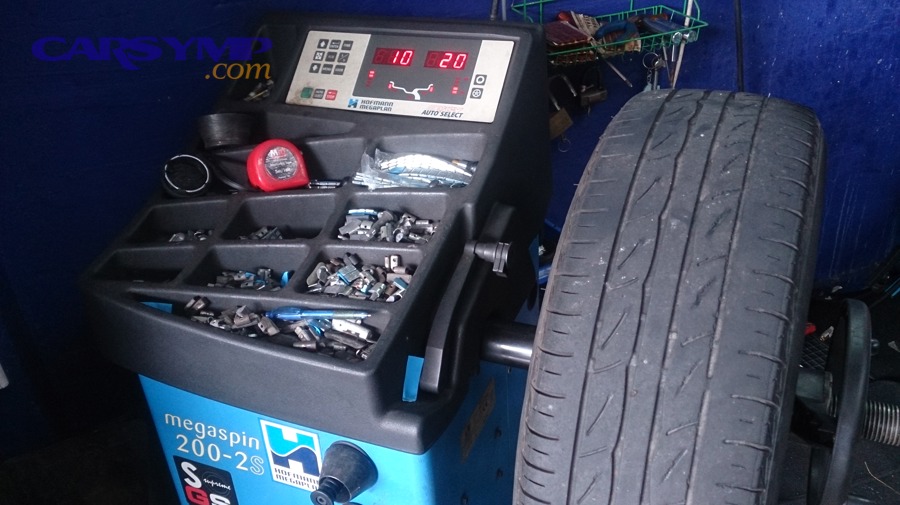
However, you should still verify with a balancer because bent wheels, separated belts, and runout can mimic imbalance.
A credible manufacturer explanation is that the goal of balancing is to distribute weight equally, and out-of-balance assemblies cause uncomfortable vibrations and premature wear. (continental-tires.com)
What simple signs point to wheel bearing noise instead of alignment/balance?
There are 3 main signs that point to wheel bearing noise: (1) a humming/growling that increases with speed, (2) a clear change in noise when lightly turning left or right, and (3) the noise stays at the same corner even after tire rotation.
More importantly, bearing problems are a “don’t ignore” category because they can worsen quickly and affect safety.
Timken notes that humming/rumbling/growling can indicate wheel bearing damage and that bearing-related noise may intensify when slightly turning the steering wheel due to load changes. (timken.com)
This is the heart of Safe-to-drive guidance with humming noise:
- If the sound is mild, unchanged in turns, and clearly follows the tire, you can often drive cautiously to a tire shop.
- If the sound grows rapidly, changes in turns, or you feel play/wobble, reduce driving and get the vehicle inspected promptly.
What fixes stop humming road noise—and what order should you do them in?
There are 5 fix steps that stop humming road noise in the most cost-effective order: (1) verify pressures and tire condition, (2) rotate to see if the noise moves, (3) balance to remove vibration forces, (4) align to stop uneven wear, and (5) replace tires or repair bearings/suspension if the pattern is permanent.
Below, you’ll see how this order prevents you from “paying twice” for the same outcome.
Should you balance or align first when chasing a hum?
Wheel balancing wins first when the symptom is primarily vibration, alignment wins first when the symptom is primarily uneven wear or a drift/pull, and tire replacement becomes the priority when the wear pattern is already loud and irreversible.
However, because many “humming noise at speed” complaints involve both wear and vibration, the most practical sequence is:
1) Balance first if:
- You feel steering shake or seat shake at a repeatable speed band.
- The tires are relatively new and wear looks even.
2) Align first if:
- You see feathering/one-sided wear or the car pulls.
- You just replaced steering/suspension parts that change geometry.
3) Inspect for bearing/suspension first if:
- The hum changes in turns and does not follow the tire after rotation (classic bearing direction).
This “right-first-time” approach also keeps you from aligning a car with a bent wheel or bad bearing—because those conditions can make an alignment “look fine on paper” but still drive noisy.
When is tire replacement the only real fix even after alignment and balance?
Yes—tire replacement is sometimes the only real fix after alignment and balance because once severe cupping/feathering is carved into the tread, the tire continues to generate noise even when the underlying cause is corrected, and because the remaining tread depth may be too low to “wear back” into a quiet pattern.
In addition, some wear patterns get louder as they age, especially on harder rubber compounds.
A clear clue replacement is likely:
- The tire is near the wear bars and the hum is pronounced.
- You can feel deep scallops or sharp, repeating edges across much of the circumference.
- Rotation changes the noise location but does not reduce the overall volume.
When you replace, treat replacement as a system fix, not a single-part fix:
- Replace in matched pairs (or all four when required by AWD systems).
- Balance the new tires.
- Align the vehicle to protect the new tread.
How do you prevent the hum from coming back after the fix?
Preventing hum comes down to 3 habits: maintain correct inflation, rotate on a consistent schedule, and verify alignment after impacts or suspension work, because those actions stop the uneven wear patterns that generate road noise.
To sum up, prevention is less about perfection and more about catching drift before it becomes tread damage.
Use this practical routine:
- Monthly: check pressures cold (especially when seasons change).
- Every rotation interval: inspect for feathering/cupping by hand.
- After pothole/curb impacts: watch for new pull, steering off-center, or rapid wear.
- After suspension/steering repair: align to reset toe/camber/caster targets.
If you keep a simple Humming at speed causes checklist in mind—pressure, wear pattern, vibration, and load-sensitive turning changes—you’ll usually find the cause early, before the tire becomes permanently noisy.
What uncommon issues can mimic alignment/balance humming, and how do you confirm them?
There are 4 uncommon but important mimics—tire uniformity problems, wheel runout/bent rims, weak shocks/struts, and diagnostic “blind spots” without NVH tools—because each one can leave you with a hum even after a normal balance and alignment.
Next, you’ll confirm these edge cases with targeted tests so you don’t keep repeating the same service hoping for a different result.
Can road-force balancing or tire uniformity testing reveal a “good balance, still noisy” tire?
Yes—road-force balancing and uniformity testing can reveal a tire that is “balanced” by weight but still causes noise or vibration because the tire’s stiffness or shape varies around its circumference.
Specifically, a tire can be dynamically balanced yet still have a high road-force variation that makes it roll like a slightly lumpy drum, creating a repeating input into the suspension.
When to ask for it:
- The shop balanced your tires twice and the symptom remains.
- You have a persistent high-speed issue with otherwise even tread wear.
- The problem began soon after installing a new tire that may be out-of-round.
The expected outcome is clarity: either the test shows an abnormal uniformity condition (pointing to tire replacement), or it rules tires out so you can focus on bearings/suspension.
Can bent wheels or tire/wheel runout create a hum even with correct alignment specs?
Yes—runout or a bent wheel can create a hum or drone because the tire doesn’t roll perfectly round, so it repeatedly loads and unloads the contact patch and excites suspension components.
Meanwhile, alignment can be perfectly within spec and the car can still be noisy, because alignment measures angles, not wheel roundness.
Common confirmation methods at a shop:
- Dial indicator measurement of radial/lateral runout
- Visual check for a wobble on the balancer
- Swapping wheels front-to-rear or side-to-side to see if the symptom follows
If the noise follows the wheel (not the tire), you’re dealing with a wheel-related geometry problem rather than an alignment angle problem.
Do worn shocks/struts or bushing play amplify humming by causing irregular tire contact?
Yes—worn shocks/struts and loose bushings amplify humming by allowing the tire to bounce and “skip” across the road, which accelerates cupping and creates a repeating noise pattern.
In addition, worn suspension components can cause your alignment angles to shift while driving, meaning a static alignment reading may not reflect what happens at speed.
Goodyear notes that worn shocks/struts can contribute to cupping because the wheel/tire bounces more than designed, creating uneven scooped wear spots. (goodyear.com)
If you fix the tires but ignore damping, the new tires may become noisy again—so when you see cupping, it’s smart to treat it as a tire-and-suspension conversation, not a tire-only conversation.
Can NVH tools (frequency checks/chassis ears) pinpoint the source faster than guesswork?
Yes—NVH tools can pinpoint the source faster because they convert “a vague hum” into a measurable signal tied to a corner or frequency band, helping you separate tire noise from bearing noise without repeated trial-and-error services.
For example, chassis-ear microphones placed near each hub can help identify which corner produces the strongest sound, while frequency analysis can show whether the noise aligns with wheel rotation harmonics.
This matters most when:
- Rotation does not change the sound.
- Balance/alignment are confirmed but the hum remains.
- The hum changes in turns and you want to confirm a bearing before replacement.
In short, if your Wheel bearing hum diagnosis is “strong suspicion but not proven,” NVH confirmation can save you from replacing the wrong side—or replacing a bearing when the real culprit is an irregular tire.
Evidence (if any)
According to a study by Virginia Tech from the Department of Mechanical Engineering, in 2020, researchers testing multiple tread patterns using on-board sound intensity methods concluded that tread pattern contributes to tire noise and can be more pronounced for special-purpose tires such as snow or strongly directional designs. (researchgate.net)