


Coolant loss causes a sweet smell because antifreeze contains ethylene glycol or propylene glycol, which produces a distinctive syrup-like odor when heated by engine components. When coolant leaks from your vehicle’s cooling system, it either evaporates on hot surfaces creating sweet-smelling vapor, or burns inside the combustion chamber producing white exhaust smoke. This correlation between coolant loss and sweet smell serves as your car’s early warning system, signaling that somewhere within the cooling system—whether visible or hidden—a leak is allowing this vital fluid to escape and vaporize.
Understanding the seven most commonly overlooked leak sources helps you diagnose the problem before minor seepage escalates into catastrophic engine damage. These hidden culprits range from the heater core tucked deep inside your dashboard to micro-cracks in radiator cores that only leak under pressure. Each source produces the same sweet smell but requires different diagnostic approaches and repair strategies. Identifying which component is failing determines whether you’re facing a simple $20 cap replacement or a $2,000 head gasket repair.
Beyond identifying leak sources, knowing how to locate the exact failure point saves both diagnostic fees and repair costs. Professional mechanics use pressure testing and UV dye detection to pinpoint leaks invisible to the naked eye, but car owners can perform preliminary inspections using visual cues like colored puddles, white crusty residue, and steam patterns. These DIY diagnostic techniques help you communicate more effectively with repair shops and avoid unnecessary service recommendations.
The urgency of addressing coolant loss with sweet smell varies dramatically based on which component is leaking and how rapidly coolant levels drop. While a loose reservoir cap might wait for your next scheduled maintenance, a blown head gasket requires immediate attention to prevent permanent engine damage. Next, let’s examine exactly what creates that distinctive sweet odor and why it appears in some leak scenarios but remains absent in others.
What Causes the Sweet Smell When Coolant Leaks?
The sweet smell from coolant leaks originates from ethylene glycol or propylene glycol—the primary chemical compounds in antifreeze—which release a candy or maple syrup-like odor when vaporized by heat. Modern coolant formulations use these glycol-based compounds because they effectively lower water’s freezing point and raise its boiling point, protecting engines in extreme temperatures. When coolant escapes from the pressurized cooling system and contacts surfaces hotter than 200°F, the glycol molecules break down and evaporate, releasing their characteristic sweet fragrance into the air.
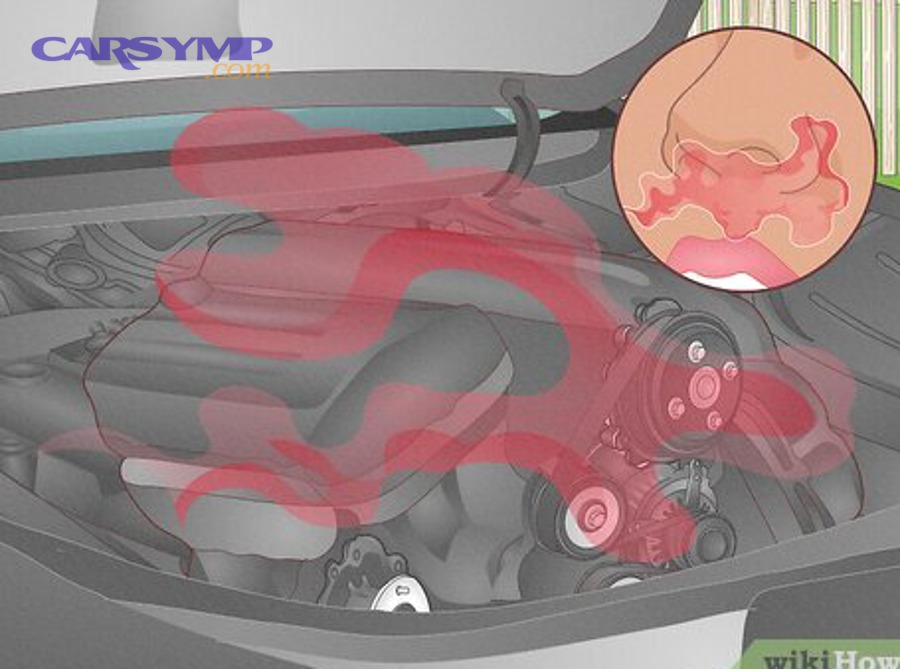
To better understand this chemical reaction, consider how coolant behaves differently depending on where it leaks. External leaks deposit coolant onto engine components like exhaust manifolds, cylinder heads, or radiator surfaces where temperatures commonly exceed 300°F during normal operation. The intense heat causes rapid evaporation, creating visible steam combined with the sweet smell that permeates your engine bay and eventually drifts into the passenger cabin through the ventilation system.
Internal leaks present a distinctly different scenario where coolant enters the combustion chamber through a compromised head gasket or cracked cylinder head. In this situation, the coolant burns alongside fuel during the combustion process, producing thick white smoke from the exhaust that carries the sweet smell. This white smoke differs significantly from normal water vapor condensation you see on cold mornings—it’s dense, continuous, and smells noticeably sweet even from several feet away.
The intensity of the sweet smell correlates directly with leak severity and heat exposure. A small seep from a radiator hose clamp might produce only a faint odor detectable when you open the hood after driving, while a cracked heater core flooding your cabin with hot coolant vapor creates an overwhelming sweet smell that permeates upholstery and carpeting. Understanding these variations helps you gauge leak severity before professional diagnosis.
Coolant composition also affects odor strength. Traditional green antifreeze using ethylene glycol produces the strongest sweet smell, while newer extended-life coolants using propylene glycol emit a slightly less pronounced but still distinctly sweet odor. Some manufacturers add bittering agents to coolant to prevent accidental ingestion by children and pets, which can subtly alter the smell profile but doesn’t eliminate the characteristic sweetness. According to research published by the Society of Automotive Engineers in 2023, ethylene glycol vapor becomes detectable to the human nose at concentrations as low as 5 parts per million, making it an excellent natural leak detector for vehicle owners.
Is Coolant Loss Always Accompanied by a Sweet Smell?
No, coolant loss is not always accompanied by a sweet smell—the odor only becomes noticeable when leaked coolant contacts hot engine components or evaporates under specific temperature and pressure conditions. Extremely slow leaks that allow coolant to drip directly onto cool pavement during overnight parking produce no detectable smell because the glycol compounds never reach vaporization temperature. Similarly, internal combustion leaks that burn coolant completely within the cylinders may generate white exhaust smoke without the sweet smell penetrating the passenger cabin, especially if ventilation settings draw fresh outside air rather than recirculated cabin air.
Understanding when you will and won’t detect the sweet smell helps narrow diagnostic focus to specific leak types. The presence or absence of odor provides critical clues about leak location, severity, and operating conditions.
When You WILL Smell Coolant Leaks
External leaks onto hot engine surfaces consistently produce the sweet smell because temperatures in the engine bay create ideal vaporization conditions. When coolant seeps from water pump seals, thermostat housing gaskets, or radiator end tanks onto nearby exhaust manifolds or engine blocks, the 350°F+ surface temperatures instantly vaporize the glycol, sending sweet-smelling steam upward through hood vents and into the HVAC fresh air intake. You’ll notice this smell most strongly immediately after shutting off the engine when underhood temperatures peak and cooling fans stop providing ventilation.
Heater core leaks produce the most obvious and persistent sweet smell inside the vehicle because the failed core sits directly behind your dashboard, surrounded by the HVAC blower assembly. When the heater core develops leaks through corrosion or physical damage, hot pressurized coolant sprays directly into the airflow that feeds your cabin vents. The blower fan then distributes sweet-smelling coolant vapor throughout the passenger compartment, often leaving a sticky film on the windshield and a damp carpet under the dashboard. This scenario creates such strong odor that passengers frequently report the smell even before noticing reduced heating performance.
Reservoir overflow conditions create intermittent sweet smells that appear and disappear based on engine temperature and driving conditions. When cooling systems develop excess pressure from combustion gas contamination or when reservoir caps lose their pressure-holding ability, hot coolant vaporizes and escapes through the cap’s relief valve. This produces brief episodes of sweet smell during hard acceleration or immediately after highway driving when engine temperatures and pressures peak.
When You WON’T Smell Coolant Leaks
Very slow seepage leaks that lose less than a cup of coolant per week rarely produce detectable odors because the small amount of coolant evaporates gradually over hours rather than vaporizing immediately on contact. These micro-leaks from radiator cores with pinhole porosity or slightly weeping water pump seals only become apparent through gradual coolant level decline in the reservoir. You might discover these leaks only during routine fluid level checks or when mechanics perform pressure testing during scheduled maintenance.
Internal combustion leaks sometimes burn so completely that minimal sweet smell escapes the exhaust system. When head gaskets fail in ways that allow tiny amounts of coolant to seep into cylinders during engine shutdown, the coolant burns off entirely during the next cold start, producing brief white smoke without sustained sweet odor. The catalytic converter’s high operating temperature (up to 1,200°F) also breaks down glycol molecules into carbon dioxide and water, potentially eliminating the sweet smell before exhaust gases exit the tailpipe, though this scenario is less common with significant coolant consumption.
Cold weather conditions suppress sweet smell detection because lower ambient temperatures reduce vapor pressure and evaporation rates. A leak that produces obvious sweet smell during summer driving may become virtually undetectable in winter when underhood temperatures run lower and cold air rapidly disperses any vapor before it concentrates enough for human noses to detect. This seasonal variation explains why some car owners first notice coolant loss problems during warmer months even though the leak existed through previous winter.
According to diagnostic data compiled by the Automotive Service Association in 2024, approximately 23% of coolant system leaks go undetected by smell alone, requiring pressure testing or UV dye diagnosis to locate. This statistic underscores the importance of regular coolant level monitoring regardless of whether you detect the characteristic sweet odor.
What Are the 7 Hidden Leak Sources That Cause Sweet Smell?
The seven hidden leak sources that cause sweet smell are heater core failures, radiator micro-cracks, deteriorated hoses and clamps, water pump seal degradation, head gasket breaches, thermostat housing cracks, and faulty reservoir caps, each producing distinctive symptom patterns based on location and failure mechanism. These components fail through different mechanisms—corrosion, thermal cycling, pressure stress, or age-related material degradation—but all share the common outcome of allowing pressurized coolant to escape and vaporize. Understanding each source’s unique characteristics, typical failure patterns, and diagnostic indicators enables targeted inspection rather than expensive trial-and-error parts replacement.
Below, we’ll examine each leak source in detail, covering why it fails, how to recognize its specific symptoms, and what diagnostic approaches work best for confirmation.
1. How Does a Leaking Heater Core Create Sweet Smell Inside Your Car?
A leaking heater core creates sweet smell inside your car because it releases hot pressurized coolant directly into the HVAC airflow, which the blower fan then distributes throughout the passenger cabin at concentrations much higher than external leaks. The heater core functions as a miniature radiator positioned behind your dashboard, warming cabin air by transferring heat from hot coolant flowing through its aluminum or copper fins. When this component develops leaks through internal corrosion, electrolysis damage, or physical stress cracks, coolant sprays into the confined space of the HVAC housing where it immediately vaporizes and gets forced through dashboard vents.
Heater core leaks produce unmistakable symptoms that distinguish them from other coolant loss sources. The sweet smell intensifies dramatically when you activate the heater or defroster because increased coolant flow through the leaking core releases more vapor into the airflow. You’ll notice your windshield develops a greasy film that resists normal cleaning and requires alcohol-based cleaners to remove—this sticky residue is vaporized coolant condensing on the cool glass surface. The passenger side floor carpet becomes damp or soaking wet as leaked coolant drips from the HVAC housing drain, often pooling under the floor mats where it remains hidden until thorough inspection.
Additional diagnostic indicators include reduced heating performance despite proper engine temperature, as lost coolant means less heat transfer capacity in the core. The coolant reservoir level drops noticeably over days or weeks, yet you see no puddles under the parked vehicle. In severe cases, you might hear gurgling sounds from behind the dashboard when starting the engine or during acceleration, caused by air bubbles entering the heater core due to low coolant levels.
Confirming heater core failure requires checking for wet carpet on the passenger side and observing whether the sweet smell intensifies with heater operation. Placing white paper towels under the dashboard overnight can capture dripping coolant for visual confirmation—coolant appears as green, orange, pink, or yellow liquid depending on your vehicle’s antifreeze type. Professional diagnosis may involve pressure testing the cooling system while monitoring the HVAC housing for leakage, though accessing the heater core typically requires extensive dashboard disassembly.
Repair complexity makes heater core replacement one of the more expensive cooling system repairs, with labor costs often exceeding parts cost due to the 6-12 hours required to remove dashboard components for access. This explains why some owners initially attempt temporary solutions using coolant stop-leak additives, though these rarely provide permanent fixes and can clog other cooling system passages.
2. Can a Damaged Radiator Cause Coolant Loss Without Visible Leaks?
Yes, a damaged radiator can cause coolant loss without visible leaks through micro-cracks and internal porosity that only allow seepage under pressure and heat conditions. Modern aluminum radiators develop these failure modes through thermal cycling stress, road salt corrosion, and electrolysis reactions between dissimilar metals. The ultra-fine leaks weep coolant so slowly that it evaporates on the radiator’s hot surface before accumulating into drips, making conventional visual inspection ineffective for detection.
Radiator porosity occurs when corrosion creates microscopic pathways through the thin aluminum tubes that carry coolant. These pathways measure mere micrometers in diameter—far too small to produce steady dripping but large enough to allow pressurized coolant to seep through when the system reaches operating temperature and pressure (typically 15-18 PSI). The seeping coolant immediately contacts the radiator’s 180-200°F external surface and evaporates, creating sweet-smelling steam that rises from the radiator area. This phenomenon intensifies after shutting off the engine when coolant temperature briefly spikes before the thermostat closes.
End tank leaks represent another hidden radiator failure where plastic or crimped aluminum end tanks separate slightly from the radiator core. These separation gaps may measure only fractions of a millimeter but create sufficient pathways for pressurized coolant to escape as fine mist rather than dripping liquid. The mist immediately vaporizes in the engine bay heat, producing sweet smell without telltale puddles. You might observe slight wetness around the end tank seams or notice small amounts of dried white or colored residue that marks coolant evaporation points.
Detecting these subtle radiator leaks requires systematic diagnostic approaches beyond simple visual inspection. UV dye added to the coolant provides the most reliable detection method—after driving to operating temperature, a UV flashlight reveals fluorescent dye traces at leak points invisible under normal lighting. Pressure testing isolates radiator leaks by maintaining system pressure while the engine is cold, allowing you to observe whether pressure drops over 15-30 minutes indicate leakage. Temperature-sensitive leak detection shows damp spots when you spray suspected areas with water and then observe where it evaporates fastest, indicating hot spots from leaking coolant.

Monitoring your coolant reservoir level provides the simplest ongoing diagnostic tool. If the level consistently drops below the minimum mark over two-week periods but you observe no puddles under the parked vehicle, suspect hidden radiator porosity. The coolant loss accelerates during summer heat or after extended highway driving when higher operating temperatures and pressures force more seepage through the compromised areas.
Radiator replacement becomes necessary once porosity develops because internal corrosion cannot be reversed. Temporary solutions like external sealant applications or radiator stop-leak additives rarely succeed with porosity issues since the leak points distribute throughout the core rather than concentrating at a specific gasket or joint. According to warranty claim data analyzed by the Automotive Parts Manufacturers Association in 2023, radiator failures account for 18% of all cooling system leaks, with porosity-related failures comprising approximately 40% of those claims.
3. Why Do Hoses and Clamps Fail and Produce Sweet Odor?
Hoses and clamps fail and produce sweet odor because rubber compounds degrade through heat cycling, ozone exposure, and age-related hardening, while metal clamps corrode and lose tension, creating gaps that leak pressurized coolant onto hot engine surfaces. Coolant hoses endure extreme operating conditions—internal pressures reaching 18 PSI combined with temperatures cycling between ambient cold and 250°F operating heat—which gradually breaks down the rubber’s molecular structure. This degradation manifests as surface cracking, internal delamination, soft spots from oil contamination, or complete hardening that prevents the hose from maintaining proper seal with metal fittings.
Upper and lower radiator hoses fail most frequently because they carry the highest coolant flow volumes and experience the most dramatic temperature swings. The upper radiator hose connects the engine thermostat housing to the radiator’s top tank, carrying coolant at its hottest temperature (typically 195-220°F) immediately after leaving the engine. This consistent exposure to peak temperatures accelerates rubber degradation, particularly at the curved sections where the hose bends and stress concentrates. When these hoses develop cracks or separation at the connection points, hot coolant sprays onto nearby engine components and instantly vaporizes, creating obvious sweet smell and visible steam.
Heater hoses present particularly troublesome leak scenarios because they often run along the firewall or under the intake manifold where visual inspection proves difficult. These smaller diameter hoses (typically 5/8″ or 3/4″) carry coolant between the engine and heater core, maintaining constant pressure even when the heater is off. Age-related cracking at the hose ends or along bend points allows fine mist leaks that coat surrounding components with sticky coolant residue. The confined engine bay areas trap the sweet-smelling vapor, making the odor persistent even after the engine cools.
Clamp failure modes differ between traditional worm-gear clamps and spring-type constant-tension clamps. Worm-gear clamps lose holding force when the screw mechanism corrodes or when overtightening cuts into the hose material, creating channels for leakage. Spring clamps weaken as corrosion reduces the spring’s tension or as repeated heat cycles cause metal fatigue. Both failure types allow the hose to pull slightly away from the metal fitting, creating a gap that leaks under pressure. Since these leaks occur at connection points adjacent to hot engine components, the escaping coolant vaporizes immediately rather than dripping visibly.
Identifying hose and clamp failures requires both visual inspection and physical testing. Look for these diagnostic indicators: surface cracks visible under bright lighting (especially at bends and curves), soft spongy spots when squeezing the hose indicating internal deterioration, hardened inflexible areas suggesting advanced aging, dried coolant residue appearing as white crusty deposits or colored stains near clamp locations, and visible swelling or ballooning indicating internal pressure damage. During engine operation, steam wisps from specific hose locations confirm active leaks.
The squeeze test provides valuable assessment—healthy coolant hoses feel firm yet slightly pliable when squeezed with moderate hand pressure, while failed hoses either collapse easily (too soft from oil contamination) or resist compression entirely (hardened from age). Check hoses when the engine is cold to avoid burns, focusing on areas closest to the engine where heat exposure is greatest.
Preventive replacement schedules recommend changing coolant hoses every 60,000-80,000 miles or 8-10 years, whichever comes first, regardless of visible condition. This interval addresses the reality that internal deterioration precedes external symptoms. Clamps should be replaced simultaneously since new hoses’ smooth surfaces may not seal properly against old clamps worn to fit the previous hose’s profile.
4. What Role Does the Water Pump Play in Coolant Leaks?
The water pump plays a critical role in coolant leaks because its mechanical shaft seal must contain pressurized coolant while rotating at engine speed, and seal failure releases coolant through the weep hole designed to prevent bearing contamination. Water pumps use a spring-loaded ceramic and carbon seal assembly to prevent coolant from leaking along the spinning shaft that drives the impeller. This seal assembly operates in demanding conditions—constant rotation at 2,000-4,000 RPM combined with pressure and temperature stress—which inevitably wears the seal faces over time.
When water pump seals begin failing, coolant escapes past the seal and reaches the weep hole, a small drainage opening positioned beneath the pump body. Manufacturers intentionally include this weep hole to route leaking coolant away from the pump’s bearing assembly, preventing coolant contamination that would cause premature bearing failure. Fresh leaks from the weep hole appear as steady dripping or small puddles forming under the pump area, while established leaks leave dried white crusty residue or colored coolant stains radiating downward from the hole. The sweet smell becomes noticeable when leaked coolant contacts hot engine surfaces adjacent to the pump or when engine heat vaporizes coolant trapped in crevices around the pump housing.
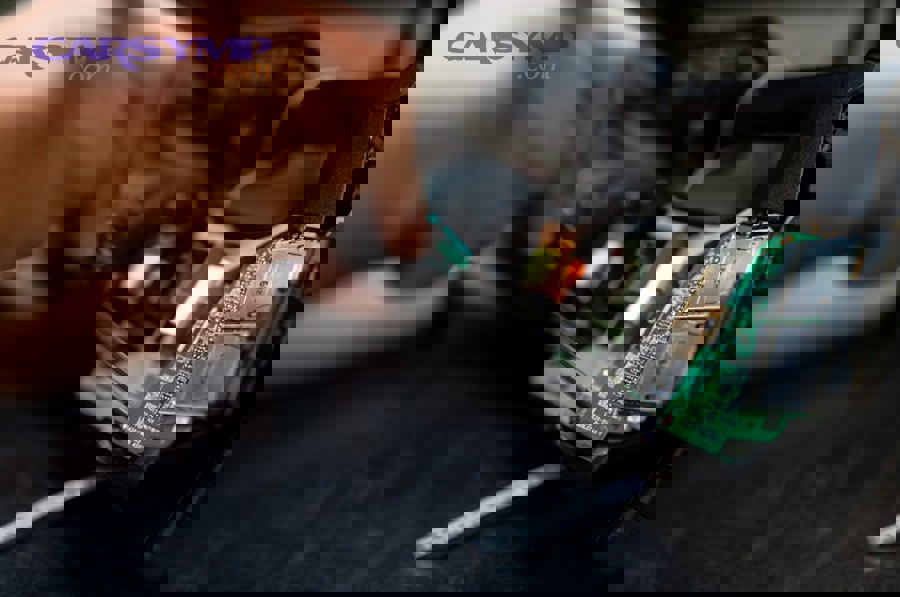
Location-specific challenges complicate water pump leak diagnosis on many modern engines. Manufacturers increasingly mount water pumps internally beneath timing covers or intake manifolds to reduce accessory belt complexity and improve packaging efficiency. These hidden installations make visual inspection impossible without partial engine disassembly. On engines where the water pump drives from the timing chain or belt rather than an external serpentine belt, detecting leaks requires removing timing covers—a procedure that can require 4-6 hours of labor. This explains why some water pump leaks go undiagnosed until coolant loss becomes severe enough to cause overheating.
External water pump installations on traditional V6 and V8 engines allow easier diagnosis through visual inspection and observation. Look for these telltale signs: coolant residue streaking downward from the pump body, white crusty deposits forming around the weep hole area, coolant dripping from the pump mounting area during or immediately after operation, and steam or sweet smell intensifying near the pump location when the engine reaches operating temperature. Some pumps develop shaft seal leaks that bypass the weep hole entirely, allowing coolant to spray onto the serpentine belt system and get flung throughout the engine bay, creating widespread coolant mist that makes pinpointing the source challenging.
Bearing failure often accompanies or precedes seal failure in water pumps. Listen for grinding, whirring, or squealing noises from the pump area, particularly during cold starts. Grasp the pump pulley and attempt to rock it perpendicular to the shaft axis—any perceptible movement indicates bearing wear that will soon lead to seal failure and coolant leaks. This physical check works only on externally mounted pumps with accessible pulleys.
Confirming water pump leaks in hidden installations requires pressure testing the cooling system while monitoring coolant level and observing whether pressure holds steady. A pressure drop of more than 2 PSI over 15 minutes suggests leakage, though this method cannot specifically isolate the water pump as the source without eliminating other potential leak points. Professional technicians may use thermal imaging cameras to detect temperature anomalies around suspected water pump areas, as escaping coolant creates localized cooling that shows as temperature variations.
Water pump replacement typically coincides with timing belt service intervals (60,000-100,000 miles) on engines with belt-driven pumps because the labor to access the pump is already required for belt replacement. Replacing the pump preventively during belt service costs minimal additional labor compared to replacing it separately after failure. According to service interval analysis published by Consumer Reports in 2024, water pumps have a median service life of 90,000 miles, with failures accelerating after 100,000 miles.
5. Is a Head Gasket Leak Always Serious?
Yes, a head gasket leak is always serious because it compromises the critical seal between the engine block and cylinder head, allowing coolant to enter the combustion chamber, mix with engine oil, or escape externally, any of which can cause catastrophic engine damage if not addressed immediately. The head gasket performs the essential function of sealing combustion chambers, coolant passages, and oil galleries while withstanding cylinder pressures exceeding 1,000 PSI and temperatures above 2,000°F during normal operation. When this gasket fails, it creates pathways between systems that must remain isolated, leading to rapid engine degradation.
Head gasket failure modes vary in severity but all require urgent attention. Internal leaks into the combustion chamber produce the most dramatic symptoms—thick white smoke from the exhaust that persists after engine warmup, not just brief condensation visible during cold starts. This white smoke carries the distinctive sweet smell because coolant burns within the cylinders and exhausts as steam. Engine performance suffers noticeably with power loss, rough idling, and potential misfires as coolant displaces air in the combustion process. The coolant reservoir shows rapid level drops, sometimes losing a quart every 50-100 miles, yet you observe no external puddles or leaks.
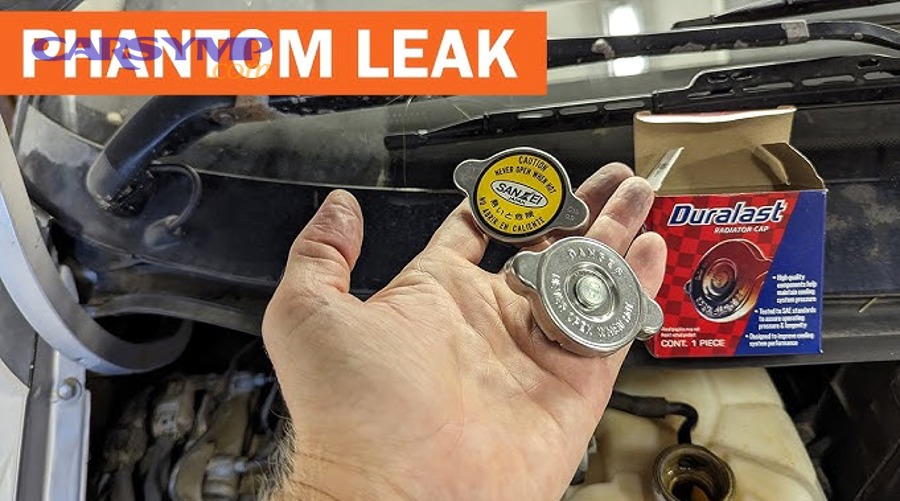
Coolant-to-oil leaks create equally severe but less obvious damage. When combustion pressure forces coolant into the oil passages through a breached head gasket, the resulting contamination appears as milky brown substance on the oil dipstick and oil filler cap—resembling chocolate milk or coffee with cream. This coolant-oil emulsion destroys the oil’s lubricating properties, accelerating bearing wear and potentially causing engine seizure within hundreds of miles. The cooling system may show bubbles in the reservoir or radiator when the engine runs, indicating combustion gases entering the coolant—a condition that also causes erratic temperature gauge readings and overheating.
External head gasket leaks prove less catastrophic but still demand prompt repair. These leaks occur when the gasket fails at coolant passages along the block-to-head mating surface, allowing coolant to seep externally from the engine. You’ll notice coolant residue or puddles forming at the junction where the cylinder head meets the engine block, typically on one side of the engine. The sweet smell intensifies near the leak point as coolant evaporates on the hot cylinder head surface. While external leaks don’t immediately contaminate oil or combustion chambers, they indicate gasket compression failure that will likely progress to internal leakage if not repaired.
Comparing external versus internal head gasket failures reveals different urgency timelines. External leaks may allow several weeks of continued operation if coolant levels are monitored and maintained, though continuing to drive risks complete gasket failure and sudden overheating. Internal combustion chamber leaks require immediate cessation of driving because each operating cycle introduces more coolant into cylinders, increasing the likelihood of hydro-lock (where accumulated coolant prevents piston movement) or catastrophic bearing damage from diluted oil. Coolant-to-oil leaks fall between these extremes but trend quickly toward the severe end as contamination progresses.
Diagnosing head gasket failure employs multiple confirmation methods. Combustion gas test kits detect exhaust gases in the coolant using chemical indicators that change color when exposed to combustion byproducts. Pressure testing may show rapid pressure loss, though some head gasket failures only leak under operating temperature and won’t reveal themselves during static pressure tests. Compression testing across cylinders can reveal low compression in adjacent cylinders, suggesting gasket failure between them. Oil analysis showing coolant contamination (glycol presence) confirms internal leakage.
Repair costs for head gasket replacement range from $1,200-$3,000 depending on engine configuration, with V6 and V8 engines requiring removal of more components for access. The repair involves complete engine disassembly from the cylinder heads upward, machining the head surface to ensure flatness, and replacing the gasket along with associated seals and bolts. Many engines require replacing cylinder head bolts because they use torque-to-yield designs that permanently deform during installation and cannot be reused.
6. How Can Thermostat Housing Cracks Go Unnoticed?
Thermostat housing cracks go unnoticed because they often develop as hairline fractures in plastic components that only leak when the cooling system reaches full operating pressure and temperature, making them invisible during cold engine inspection. Modern vehicles increasingly use plastic thermostat housings to reduce weight and cost compared to traditional cast aluminum or brass housings. These plastic housings endure constant thermal cycling between ambient temperature and 200°F+ coolant temperature, which causes gradual material embrittlement and stress crack formation.
The cracks typically initiate at stress concentration points—around bolt holes where housing mounts to the engine, at sharp corners in the housing design, or at the seam where the thermostat seats. These fractures measure fractions of a millimeter wide when first formed, far too small to leak under ambient conditions. However, when the engine reaches operating temperature and the cooling system pressurizes to 15-18 PSI, the combination of thermal expansion and internal pressure opens these cracks sufficiently to allow fine coolant mist to escape. The mist immediately vaporizes on the surrounding hot engine components, creating sweet smell without visible dripping.
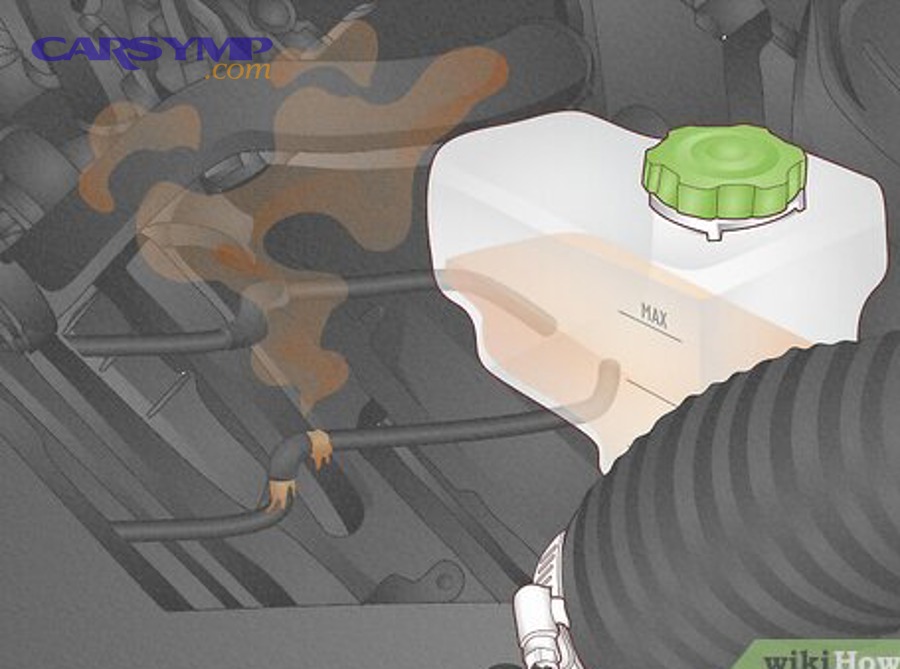
Detection challenges arise because the leaks self-seal when the engine cools and pressure drops. By the time you open the hood for inspection, the housing has contracted, the cracks have closed, and any leaked coolant has evaporated, leaving minimal evidence. You might notice slight discoloration or very faint coolant residue around the housing area, but these subtle signs are easily overlooked amid the visual complexity of a modern engine bay. The reservoir level gradually drops over weeks, suggesting a leak exists somewhere, yet conventional visual inspection reveals nothing obvious.
Diagnostic approaches for thermostat housing cracks require catching the leak during operation. Start the engine and allow it to reach full operating temperature while observing the thermostat housing area closely. Look for steam wisps, fine mist, or the appearance of wetness that wasn’t visible when cold. A flashlight directed at the housing from various angles can reveal coolant film reflecting light. The sweet smell often intensifies significantly near the housing when a crack opens under pressure and temperature.
Pressure testing provides more definitive diagnosis. With the engine cold, pressurize the cooling system to 15 PSI and spray the thermostat housing with water or spray cleaner. Watch for bubbles forming at crack locations as pressurized air or coolant escapes through the fractures. Some mechanics apply UV dye to the coolant and then use a UV flashlight to inspect the housing after a heat cycle—dye traces appear fluorescent at leak points even when the cracks have closed upon cooling.
Understanding why plastic housings fail helps predict which vehicles face higher risk. Engines with thermostat housings positioned near exhaust manifolds or turbochargers experience accelerated degradation due to extreme heat exposure beyond normal coolant temperature. Vehicles operated in regions with severe winters undergo more dramatic thermal cycling as housings contract in sub-zero temperatures and then expand to operating temperature, accelerating crack development. Age alone causes embrittlement—plastic housings over seven years old show significantly higher failure rates regardless of mileage.
Replacement represents the only reliable repair since plastic cracks cannot be permanently sealed or repaired. Upgraded metal thermostat housings are available for many vehicles with chronic plastic housing failures, offering superior durability at 2-3 times the cost of plastic replacements. Complete replacement typically requires draining the cooling system, removing the housing bolts, cleaning the mating surface, installing a new thermostat and gasket simultaneously, and refilling with fresh coolant—a procedure that takes 1-2 hours.
According to component failure tracking data from warranty claim databases analyzed in 2023, thermostat housing failures account for 8% of all cooling system leaks, with plastic housings failing at 3.2 times the rate of metal equivalents. The median failure mileage for plastic thermostat housings is approximately 85,000 miles, though some designs prove notably less durable.
7. Does a Faulty Reservoir Cap Really Cause Coolant Loss?
Yes, a faulty reservoir cap really causes coolant loss because it fails to maintain proper system pressure, allowing coolant to vaporize at lower temperatures and escape through the cap’s relief mechanism rather than remaining liquid within the closed system. The reservoir cap (or radiator cap on older systems without separate expansion tanks) performs the critical function of pressurizing the cooling system to 15-18 PSI, which raises water’s boiling point from 212°F at atmospheric pressure to approximately 265°F at 16 PSI. This elevated boiling point prevents coolant from vaporizing under normal operating temperatures, keeping it liquid for effective heat transfer.
When the cap’s pressure spring weakens or the sealing gasket degrades, the cap releases pressure prematurely at lower PSI thresholds. This pressure loss allows coolant to boil at temperatures well below the intended operating range. As coolant converts to vapor, it escapes through the cap’s overflow tube into the catch tank or onto the ground, creating visible steam and strong sweet smell near the reservoir location. The problem intensifies during high-load conditions—climbing hills, towing, or hot weather driving—when coolant temperatures approach the reduced boiling point created by inadequate cap pressure.

Intermittent sweet smell patterns characterize reservoir cap failures and distinguish them from continuous leaks from other components. You notice the smell primarily after extended highway driving or hard acceleration when engine temperatures peak and approach the lowered boiling point. The smell may disappear entirely during gentle city driving when temperatures remain moderate. After shutting off the engine, you might observe coolant bubbling in the reservoir or hear hissing as pressure releases through the faulty cap—symptoms absent when the cap functions properly.
Visible evidence of cap failure appears as coolant residue around the cap threads or on the reservoir exterior, where escaping vapor condenses and leaves dried colorful stains. The reservoir itself shows coolant level fluctuations inconsistent with actual consumption—levels may drop significantly during a drive but partially recover after the engine cools as vapor condenses back into liquid. Some vehicles display coolant trails from the overflow tube where vapor condenses and drips, creating small puddles that don’t correspond to any direct leak point.
Testing reservoir cap function requires a pressure cap tester, an inexpensive tool available at auto parts stores. The tester attaches to the cap and allows you to pump it to the rated pressure stamped on the cap’s top (typically 16 PSI or 1.1 bar). A functioning cap holds this pressure for at least 60 seconds without dropping. Failed caps either won’t reach the rated pressure because the relief valve opens prematurely, or they lose pressure within 10-20 seconds indicating seal degradation. This simple test definitively confirms or eliminates the cap as a leak source.
Visual inspection of the cap’s components reveals degradation even without pressure testing. Remove the cap (only when the engine is cold to avoid pressure burns) and examine the rubber sealing gasket for cracks, hardening, or deformation. A healthy gasket feels pliable and shows no visible damage, while a failed gasket appears stiff, cracked, or permanently compressed. Check the pressure spring for corrosion or deformation—the spring should provide firm resistance when compressed and return to full height when released. Corroded springs lose tension and fail to maintain proper pressure.
Replacement caps are inexpensive ($10-$25) and universally available, making this the easiest cooling system repair. However, ensure you purchase a cap rated for your specific vehicle’s pressure specification. Installing a cap with incorrect pressure rating either provides insufficient pressurization (too low) or overstresses the cooling system components (too high), potentially causing failures elsewhere.
False cap failures occur when other cooling system problems create symptoms that mimic cap failure. Combustion gas contamination from a head gasket leak forces excess pressure into the cooling system, making even a functional cap release pressure and vent coolant repeatedly. Air pockets trapped in the system after coolant changes can cause burping and overflow that appears like cap failure. Before condemning the cap, verify through pressure testing that it meets specifications and investigate whether other system faults create the pressure abnormalities.
How Can You Locate the Exact Source of Your Coolant Leak?
You can locate the exact source of your coolant leak through systematic visual inspection, pressure testing, and UV dye detection, which together reveal leak points invisible to casual observation. Professional mechanics combine these three diagnostic approaches to pinpoint failures within complex cooling systems where multiple components hide beneath covers, brackets, and accessory equipment. Each method offers distinct advantages—visual inspection costs nothing but requires accessible leak locations, pressure testing isolates leaks under controlled conditions, and UV dye makes invisible seepage visible under ultraviolet light.
Successful leak location requires understanding that not all diagnostic methods work equally well for all leak types. Small seepage leaks undetectable through visual inspection respond well to UV dye tracing, while intermittent leaks that only occur under specific temperature and pressure conditions require pressure testing during operation. Combining methods provides comprehensive diagnosis that accounts for the varied ways cooling systems fail.
What Are the Visual Signs of Coolant Leaks You Can Check Yourself?
The visual signs of coolant leaks you can check yourself include colored puddles under the vehicle, white crusty residue formations, steam or vapor locations, and declining coolant reservoir levels, all observable without special tools or mechanical knowledge. These indicators provide preliminary diagnosis that narrows the search area and helps you communicate effectively with repair shops about your vehicle’s symptoms.
Puddle color identification offers the first diagnostic clue since modern coolants come in distinct colors that differ from other automotive fluids. Green coolant indicates traditional ethylene glycol antifreeze, orange or red suggests Dex-Cool or Asian vehicle formulations, pink or purple indicates European long-life coolant, and yellow may appear in some Ford and Mercedes applications. Compare any puddle against the coolant in your reservoir to confirm it matches. Coolant puddles feel slippery or slimy when rubbed between fingers, unlike water which feels clean, and unlike oil which feels greasy. The sweet smell confirms identification when you’re uncertain about fluid type.
Puddle location under the parked vehicle indicates general leak areas. Front-center puddles beneath the radiator area suggest radiator, hose, or water pump leaks. Passenger-side puddles (particularly soaking the carpet) indicate heater core failure. Puddles appearing only after highway driving that disappear during city driving suggest pressure-related leaks from caps or connections that seal adequately at lower pressures. Document puddle size and frequency—a fist-sized puddle appearing daily indicates significant leakage requiring immediate attention, while occasional dampness suggests slower seepage.

White crusty residue patterns reveal evaporative leak locations where coolant seeps onto hot surfaces and vaporizes, leaving behind dried mineral deposits and coolant additives. This residue appears as white, tan, or rust-colored crusty deposits radiating from leak points. Check these high-probability areas: around the radiator cap and filler neck, at hose connection clamps and fittings, near the water pump weep hole beneath the pump body, along thermostat housing seams and bolt holes, and at the head gasket mating line between cylinder head and engine block. The residue feels gritty or crusty when touched and often flakes off in chunks, distinctly different from oil residue which remains sticky.
Steam or vapor observation requires running the engine to operating temperature while watching specific areas. Position yourself safely away from moving belts and fans, then observe for: wisps of steam rising from particular components, visible mist spraying from hose connections under pressure, coolant film appearing on surfaces that were dry when cold, and concentrated sweet smell emanating from specific locations rather than general engine bay odor. Turn off all accessories and listen for hissing sounds that indicate pressurized coolant escaping through small openings—this auditory clue often pinpoints leak locations obscured from visual inspection.
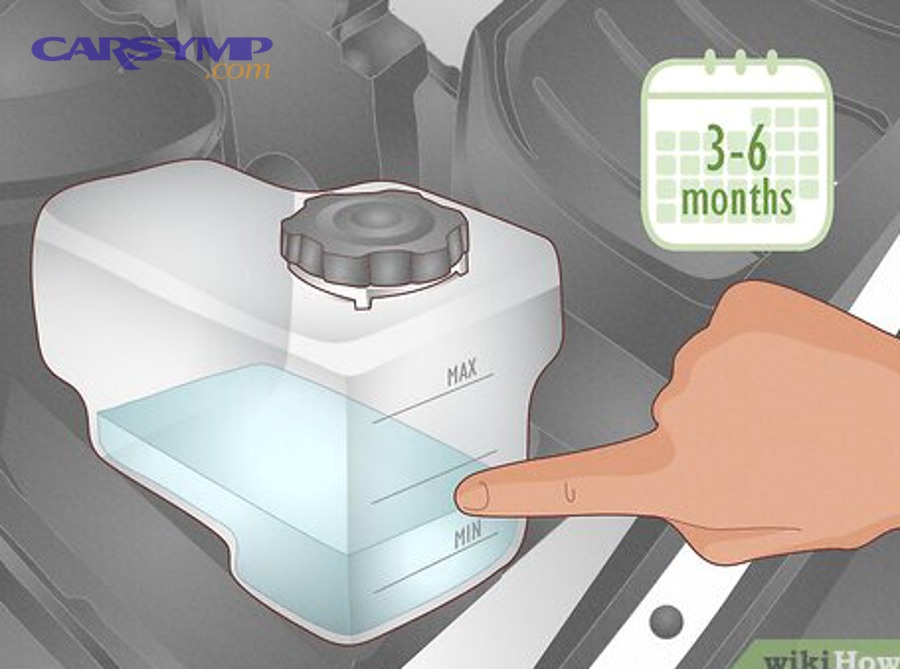
Coolant reservoir level monitoring provides ongoing leak detection even when other signs remain subtle. Mark the current level on the reservoir with a grease pencil or photograph it for reference. Check daily for one week, always when the engine is cold to ensure consistent measurements. Coolant loss exceeding 1/4 inch per week indicates active leakage requiring diagnosis. Compare loss rates under different driving conditions—faster loss during highway driving suggests pressure-related leaks, while consistent loss regardless of driving type indicates steady seepage.
Dashboard warning lights supplement visual inspection. The engine temperature warning light (thermometer symbol) illuminates when coolant loss causes insufficient cooling capacity. The low coolant warning light (if equipped) directly alerts you to reservoir level drops. Some vehicles display “Check Coolant Level” messages on information screens. Never ignore these warnings, as continued operation with low coolant causes exponentially increasing engine damage.
Performing thorough visual inspection requires good lighting and systematic approach. Use a flashlight to illuminate dark engine bay areas, focusing on underside surfaces where coolant drips accumulate. Inspect when the engine is both cold (for safe handling) and warm (to observe active leaks), comparing observations between states. Place clean cardboard or white paper under the vehicle overnight to capture any leaking fluids for identification. Document findings with photos showing leak locations relative to surrounding components, which helps mechanics during diagnosis or provides records for warranty claims.
When Should You Use Pressure Testing vs. UV Dye Detection?
You should use pressure testing when you need immediate leak location confirmation or when diagnosing intermittent leaks that don’t occur during static conditions, while UV dye detection works best for very small seepage leaks invisible to other methods and when you can wait 10-50 miles of driving for dye circulation. These complementary diagnostic methods serve different scenarios based on leak characteristics, urgency, and accessibility of potential leak locations.
Pressure testing excels at forcing leaks to reveal themselves under controlled conditions by artificially maintaining system pressure without requiring engine operation. The procedure involves cooling the engine completely, removing the reservoir or radiator cap, attaching a pressure tester to the filler neck, and pumping the system to its rated pressure (typically 15-18 PSI as marked on the cap). With the system pressurized, coolant is forced through any leak points at rates similar to operating conditions. You can then carefully inspect all cooling system components, hoses, and connections for wetness, dripping, or mist formation that indicates the leak source.
Pressure testing offers several key advantages: immediate results without waiting for engine warmup or dye circulation, ability to test when other repair work requires draining the cooling system anyway, safety since testing occurs with the engine off and cool, and quantifiable results since pressure gauge drop-rate indicates leak severity. A system losing more than 2 PSI over 15 minutes has significant leakage, while stable pressure confirms system integrity or indicates leaks so small they don’t affect pressure during the test duration.
However, pressure testing has limitations that affect diagnostic effectiveness. It cannot replicate the thermal expansion and contraction that opens cracks in thermostats housings or other components—these temperature-dependent leaks only appear when hot and seal when cold. Internal combustion chamber leaks from head gaskets may not pressurize externally during static testing. Hidden leaks underneath intake manifolds or behind timing covers can’t be observed even when pressurized. Pressure testing works best for accessible external leaks from radiators, hoses, water pumps, and connections.
UV dye detection provides superior results for microscopic seepage leaks that escape visual inspection and pressure testing. The process involves adding fluorescent dye concentrate to the cooling system (typically 1 oz per gallon of system capacity), driving the vehicle 10-50 miles to circulate the dye throughout all components and allow it to seep through any leak points, and then inspecting the entire cooling system with a UV flashlight in low-light conditions. The fluorescent dye glows bright yellow-green under UV illumination, making even tiny leak traces visible against dark engine components.
UV dye excels at revealing: radiator porosity and micro-cracks that only weep minute amounts of coolant, hairline cracks in plastic thermostat housings or reservoir tanks, weeping hose connections that don’t drip but show dye traces at the clamp areas, and water pump seal seepage before it progresses to obvious dripping. The dye remains in the system for thousands of miles, allowing future leak diagnosis if new problems develop, though this persistence means you cannot use dye color as a diagnostic tool if previous dye additions created mixed colors.
Dye detection disadvantages include: requiring driving time before inspection (delaying diagnosis), needing UV flashlight equipment ($15-50), potential for false positives if old dye from previous leak repairs still marks formerly failed components, and reduced effectiveness in bright daylight conditions where UV fluorescence becomes difficult to see. Some mechanics prefer dedicated dye viewing glasses that block ambient light while highlighting fluorescent dye, improving visibility during daytime inspection.
Choosing between methods depends on your diagnostic scenario. Use pressure testing when: you need immediate diagnosis without driving delay, you’re already performing cooling system service requiring draining, the suspected leak appears significant enough to show under static pressure, or you want to confirm system integrity after repairs. Use UV dye when: visual inspection and pressure testing revealed nothing but coolant loss continues, the suspected leak is very small and intermittent, you want ongoing leak monitoring capability, or you have time to allow dye circulation before inspection.
Combining both methods provides comprehensive diagnosis for stubborn leak cases. Add UV dye, perform pressure testing to check for obvious leaks, drive the vehicle through varied conditions to circulate dye, then perform UV inspection to locate seepage points missed by pressure testing. This thorough approach identifies virtually all leak sources, though it requires more time and effort than single-method diagnosis.
Cost and accessibility considerations affect method selection. Pressure testing requires a $30-70 pressure tester available at auto parts stores with loaner tool programs, making it accessible to DIY owners. UV dye bottles cost $8-15 and UV flashlights $15-50, representing minimal investment for continued diagnostic capability. Professional shops typically charge $75-125 for pressure testing and $50-80 for UV dye diagnosis, with some offering combined services at package pricing.
Is Coolant Loss With Sweet Smell an Emergency?
Coolant loss with sweet smell is an emergency when accompanied by white exhaust smoke, rapid fluid loss, or engine overheating, but represents a less urgent concern when loss occurs slowly without temperature or performance changes. The distinction between emergency and non-emergency coolant leaks depends on leak severity, leak location, and whether the leak allows continued safe operation without risking catastrophic engine damage. Understanding which symptoms indicate immediate danger versus scheduled repair needs helps you make informed decisions about driving safety and repair timing.
Assessment requires considering multiple factors simultaneously rather than relying on a single symptom. A small external seep from a radiator producing faint sweet smell but stable coolant levels differs dramatically from a head gasket leak consuming a quart every 50 miles while producing white smoke. Below, we’ll examine specific symptom combinations that demand immediate action versus those permitting continued driving with close monitoring.
What Symptoms Indicate You Should Stop Driving Immediately?
The symptoms indicating you should stop driving immediately are heavy white smoke from the exhaust, rapid coolant loss exceeding one cup per 20 miles, engine temperature warning light illumination, and complete loss of cabin heat during winter operation. Each symptom signals cooling system failure severe enough to cause permanent engine damage if operation continues, making safe vehicle shutdown and professional diagnosis essential regardless of convenience or location.
Heavy white smoke from the exhaust that persists after engine warmup indicates coolant burning in the combustion chamber through a compromised head gasket or cracked cylinder head. This differs from brief white vapor visible during cold starts, which dissipates within 30 seconds as condensation clears. Coolant combustion smoke appears thick and continuous, resembling fog or steam, and carries the distinctive sweet smell detectable even from inside the following vehicle. Continuing to drive with this symptom forces additional coolant into cylinders with each revolution, increasing the risk of hydro-lock where accumulated liquid prevents piston movement and can bend connecting rods or crack the engine block.
Stop immediately if you observe persistent white smoke, even if the temperature gauge reads normal. The gauge may lag behind actual conditions or the thermostat position may prevent accurate temperature sensing despite overheating occurring locally around the head gasket failure. Park safely, shut off the engine, and arrange for towing rather than attempting to drive to a repair shop. Explain the white smoke symptom clearly to the towing service so they understand not to run the engine even briefly during loading.
Rapid coolant loss visible as rapidly dropping reservoir levels demands immediate cessation of driving because it indicates a major leak that will quickly deplete the cooling system. If you must add coolant more than once during a single drive, or if the reservoir empties completely within 20-30 miles, the leak exceeds the threshold for safe continued operation. Major leaks typically result from burst radiator hoses, cracked radiator end tanks, or complete head gasket failures that allow coolant to escape at rates measured in cups per minute rather than ounces per week.
Monitor your coolant level compulsively if you must continue driving with a known leak. Pull over every 10-15 minutes to check the reservoir level when cool enough to safely remove the cap. If the level drops visibly between checks, find safe parking and arrange towing. Never attempt to add coolant while the engine remains hot—wait for complete cooling (30-45 minutes after shutdown) to avoid pressure burns from residual steam. Continuing to drive with an empty cooling system guarantees overheating damage, often resulting in warped cylinder heads requiring $2,000-4,000 in machining and reassembly beyond the initial repair costs.
Engine temperature warning light illumination signals that coolant loss has progressed far enough to compromise cooling capacity, creating imminent overheating risk. Modern engines feature sophisticated temperature monitoring with warning lights that illuminate when coolant temperature exceeds approximately 240-250°F, well above the normal 195-220°F operating range but before the catastrophic damage threshold near 280°F. The warning provides a brief window—typically 30-60 seconds—to safely pull over before temperature rises into the damage zone.
Respond to temperature warning lights by immediately reducing engine load: turn off the air conditioning (which adds heat load), turn the heater to maximum hot setting and fan to high (this extracts heat from the coolant into the cabin), and coast to a safe pullover location if possible. Never ignore the warning to reach a preferred destination—each additional minute of operation at excessive temperature exponentially increases repair costs. After parking, shut off the engine immediately and allow 45-60 minutes of cooling before attempting to check coolant levels or add fluid.
Complete loss of cabin heat during winter operation warns of critically low coolant level because the heater core sits at the highest point in many cooling systems and loses flow first when air enters the system. If your heater blows cold air despite the engine reaching normal operating temperature, suspect that coolant loss has introduced air pockets preventing circulation through the heater core. This symptom often precedes temperature warning light illumination by several minutes, providing earlier warning of dangerous coolant depletion.
Test heater function by monitoring dashboard temperature gauge position and heater output simultaneously. If the gauge shows normal operating temperature (center position) but the heater blows cold air, coolant level has dropped critically low. Add coolant at the earliest safe opportunity and investigate leak source before continuing to drive. The combination of normal temperature gauge with no heat output can also indicate a stuck-closed thermostat, though sweet smell usually confirms coolant loss as the primary issue.
Which Coolant Leaks Can Wait for Scheduled Repair?
Coolant leaks that can wait for scheduled repair include slow reservoir cap seepage, minor hose weepage without overheating, very small radiator leaks with stable coolant level, and light seepage from water pump weep holes when coolant loss remains under 1/4 inch per week. These minor leaks allow continued safe operation provided you maintain coolant levels through regular monitoring and schedule repair within 2-4 weeks before deterioration progresses to emergency status.
Slow reservoir cap seepage manifests as gradual coolant level decline (1/4 to 1/2 inch per week) with faint sweet smell after highway driving but no other symptoms. Test the cap using a pressure cap tester to confirm it holds rated pressure, and if it fails, replace immediately with a $10-25 cap—this simple fix may completely resolve the issue. If cap replacement doesn’t stop the seepage, schedule diagnosis for other sources, but the slow loss rate permits continued driving while arranging service. Check and top off coolant weekly to prevent air pocket formation.
Minor hose weepage appears as slight dampness or very small amounts of dried residue at hose clamp locations without active dripping or puddle formation. This seepage typically results from aged hose material that’s slightly compressed at clamps or from clamps losing tension after years of thermal cycling. If the hose shows no cracks, soft spots, or swelling, and if coolant loss remains minimal (under 1/2 inch reservoir drop per week), you can schedule hose replacement during your next maintenance interval. Monitor the leak closely since hose failures can progress rapidly from weeping to bursting, particularly on upper radiator hoses carrying the hottest coolant.
Upgrade to new constant-tension spring clamps when replacing standard worm-gear clamps, as the spring design maintains secure clamping force despite thermal cycling and hose material compression. Replace all cooling system hoses simultaneously when one fails since they age identically and multiple failures typically cluster within months of each other.
Very small radiator leaks with stable coolant level represent the borderline between immediate and scheduled repair. If UV dye reveals radiator porosity but coolant level remains stable over two weeks without topping off, and if no overheating occurs during normal driving, the leak rate falls within acceptable tolerance for scheduled repair. However, radiator leaks often accelerate as corrosion expands the compromised area, so schedule replacement within two weeks rather than months. Avoid hard driving, towing, or extended highway trips that might stress the weakened radiator and precipitate sudden failure.
Temporary radiator leak sealants can extend the timeline for scheduled replacement by 1-3 months, though professional mechanics debate their efficacy and potential for clogging heater cores or radiator tubes. Use these products only as bridge solutions while arranging replacement, never as permanent repairs. Follow dosage instructions precisely and monitor whether the product slows or stops the leak—if leakage continues unchanged after sealant addition, proceed immediately with replacement since the product may be circulating through your system without benefit while potentially settling in problematic locations.
Light water pump weep hole seepage showing only dried residue without active dripping can wait for scheduled repair if coolant loss stays minimal. Water pump bearings often develop some weepage before seal failure progresses to heavy dripping, giving weeks or months of warning. However, schedule replacement within 3-4 weeks since bearing failure can occur suddenly, leaving you stranded with a seized pump. Listen for bearing noise (grinding or whirring) during cold starts, which indicates accelerating failure requiring immediate attention despite minimal leakage.
Coordinate water pump replacement with timing belt service if your engine uses a timing belt-driven pump, as the labor overlap makes simultaneous replacement cost-effective. Replacing the pump separately after belt service means paying full labor charges twice for overlapping work.
Important caveat: All coolant leaks should be repaired—the question is timing urgency, not whether repair is necessary. “Scheduled repair” means within 2-4 weeks, not indefinite delay. Coolant system integrity is essential for engine longevity, and even slow leaks eventually progress to serious failures. Use the grace period to research repair options, obtain multiple estimates, and arrange convenient service timing, but don’t interpret “can wait” as “can ignore.” Monitor coolant levels at every fuel fill-up and watch for symptoms indicating leak acceleration that moves your repair into emergency status.
How Can You Prevent Coolant Leaks Before They Start?
You can prevent coolant leaks before they start through timely coolant replacement, proactive component inspection, protective additive use, and preventive part replacement based on age and mileage milestones. Cooling system failures rarely occur without warning—most develop gradually through corrosion, thermal cycling damage, or age-related material degradation that preventive maintenance can detect and address before leaks begin. Understanding maintenance intervals and inspection techniques allows car owners to catch deterioration in its early stages when replacement costs remain minimal and before failures cause collateral damage or leave you stranded.
Preventive maintenance proves far more cost-effective than emergency repairs. A $150 coolant flush and hose replacement performed on schedule prevents the $1,200 head gasket repair that results when neglected cooling systems overheat. Below, we’ll detail specific prevention strategies that protect your investment and maximize cooling system longevity.
What Is the Recommended Coolant Replacement Schedule?
The recommended coolant replacement schedule is every 30,000-50,000 miles or 3-5 years for conventional green ethylene glycol coolant, and every 100,000-150,000 miles or 10 years for extended-life orange or pink formulations. These intervals address the reality that antifreeze degrades over time regardless of mileage, losing its corrosion inhibitors and pH buffering capacity even when the vehicle sits unused. Following manufacturer-specified intervals prevents the internal corrosion that causes most cooling system component failures.
Conventional green coolant uses inorganic additive technology (IAT) with silicate and phosphate corrosion inhibitors that deplete relatively quickly through chemical reactions with metal surfaces and contamination from combustion byproducts. After 3-5 years or 30,000-50,000 miles, these inhibitors drop below protective concentrations, allowing rust formation in iron engine blocks, corrosion in aluminum radiators and heads, and electrolysis damage throughout the system. The degraded coolant becomes acidic (pH drops below 7.0), actively attacking metal surfaces rather than protecting them.
Extended-life coolants using organic acid technology (OAT) in orange formulations or hybrid organic acid technology (HOAT) in pink/purple colors provide significantly longer protection. The organic inhibitors resist depletion and maintain effectiveness for 5-10 years or 100,000-150,000 miles. However, even these advanced coolants require eventual replacement as they accumulate contaminants, lose pH stability, and gradually degrade from thermal stress. Never exceed the manufacturer’s recommended interval even if the coolant appears clean.
Why old coolant becomes corrosive and damages components relates to how corrosion inhibitors work chemically. Fresh coolant maintains alkaline pH (typically 8.0-11.0) that prevents acidic corrosion while suspended inhibitors coat metal surfaces to block oxidation. As the coolant ages, these inhibitors deplete through chemical bonding to metal surfaces, neutralizing contaminants, and breaking down from high temperatures. Once inhibitor concentration falls below critical thresholds, the coolant’s pH drops toward neutral and then acidic as contamination accumulates. Acidic coolant actively dissolves metal, creating the corrosion pits and cracks that eventually leak.
Electrolysis damage accelerates when coolant loses its protective properties. Dissimilar metals in the cooling system (aluminum radiator, cast iron block, brass fittings) create galvanic currents similar to a battery. Fresh coolant with proper inhibitors blocks these currents, but degraded coolant allows electrical flow that rapidly erodes metal, particularly aluminum. This explains why radiator end tanks and aluminum water pump housings develop pinhole leaks on vehicles with overdue coolant—the pits form from electrolytic erosion rather than chemical corrosion.
Testing coolant condition helps you determine whether replacement is urgent or can wait for the next service interval. Inexpensive test strips (available at auto parts stores for $5-10) measure pH and inhibitor concentration, showing green/good or red/replace results. Digital refractometers ($20-80) measure freeze protection and can indicate contamination through specific gravity readings. If testing shows your coolant has deteriorated before reaching the scheduled interval, replace it immediately regardless of mileage.
Professional coolant system flush procedures prove superior to simple drain-and-fill approaches. Flushing removes accumulated sediment, rust particles, and contamination that drain-and-fill leaves behind in the engine block and radiator. The process involves: draining the old coolant completely, filling with distilled water and flushing chemical, running the engine to operating temperature to circulate the flush solution, draining the flush water thoroughly, refilling with the correct coolant type mixed to proper concentration (typically 50/50 coolant to water), and bleeding air from the system following manufacturer procedures. This comprehensive approach restores cooling system cleanliness and maximizes new coolant effectiveness.
According to long-term vehicle reliability studies published by Consumer Reports in 2023, vehicles receiving coolant replacement at or before manufacturer intervals show 47% fewer cooling system failures over 10 years compared to vehicles with delayed or skipped coolant service. This statistical evidence confirms preventive coolant maintenance significantly reduces leak risk and extends component life.
Which Components Should You Inspect During Routine Maintenance?
The components you should inspect during routine maintenance are radiator hoses through squeeze testing, reservoir and radiator cap condition through visual examination, connection points for dried residue indicating seepage, and coolant level consistency through monthly monitoring. These inspection points take only 10-15 minutes but identify developing problems before they progress to leaks, providing advance warning that allows scheduled replacement rather than emergency roadside failure.
Hose squeeze testing reveals internal deterioration not visible externally. Perform this inspection when the engine is cold to avoid burns. Grasp each radiator hose (upper and lower), heater hoses, and bypass hoses at multiple points along their length and squeeze firmly with your hand. Healthy hoses feel firm yet slightly pliable, resisting compression but not feeling rock-hard. Failed or failing hoses display one of these conditions: excessive softness where they collapse easily under moderate hand pressure (indicates oil contamination or internal separation), complete hardness with no flexibility (indicates advanced age hardening), spongy or mushy areas that feel different from the rest of the hose (internal deterioration), or visible surface cracks, particularly at bends and near clamps.
Replace any hose showing abnormal squeeze test results, even if no leak has occurred. Hoses typically fail suddenly rather than gradually, and internal deterioration precedes external failure. The $20-40 hose replacement performed preventively costs far less than the $200-500 mobile mechanic charge plus towing fees when the hose bursts on the highway. Replace all cooling system hoses as a set when one fails since they age identically and multiple failures cluster together.
Visual inspection of reservoir and radiator cap condition identifies age-related degradation before complete failure. Remove the reservoir cap (when cold) and examine the rubber sealing gasket for cracks, permanent compression, or hardening. The gasket should feel pliable, not stiff or brittle. Check the pressure spring inside the cap for corrosion or deformation—a corroded spring loses tension and fails to maintain proper system pressure. Replace caps showing any degradation since new caps cost only $10-25 but prevent the coolant loss and overheating that results from pressure failure.
Inspect the reservoir itself for cracks, particularly around the mounting points and at the hot/cold level markings. Plastic reservoirs become brittle with age and develop stress cracks after 8-10 years regardless of mileage. Look for discoloration or cloudiness in the plastic that indicates ultraviolet damage from sun exposure. Replace aging reservoirs preventively since they cost $30-60 compared to the cleanup and collateral damage from sudden reservoir failure that dumps coolant throughout the engine bay.
Checking for dried residue around connections provides early leak detection. During each oil change or at least quarterly, inspect these areas with good lighting: all hose connection points and clamps, thermostat housing seams and bolt holes, water pump perimeter and weep hole, radiator end tank seams, heater core inlet/outlet connections at the firewall, and head gasket mating line where the cylinder head meets the block. White crusty deposits, colored stains matching your coolant color, or any mineral-like buildup indicates weeping that will progress to visible leaking. Photograph suspicious areas for comparison during the next inspection to determine whether the condition is worsening.
Address discovered weepage immediately through tightening loose clamps, replacing deteriorated hoses, or repairing failing components. Most weepage problems cost under $100 to repair when caught early but escalate to major failures requiring hundreds in repairs if ignored. The inspection itself costs nothing and takes only minutes when incorporated into existing maintenance routines.
Coolant level consistency monitoring provides ongoing leak surveillance between formal inspections. Check your coolant reservoir level monthly when the engine is cold, always under identical conditions for accurate comparison. Mark the level with a grease pencil or take a reference photo. Stable levels month-to-month confirm system integrity, while gradual decline indicates hidden leakage requiring diagnosis. Document the loss rate—levels dropping 1/4 inch per month suggest slow seepage, while 1/2 inch per week indicates significant leakage demanding immediate attention.
Combine level monitoring with underhood inspections for wet spots, steam, or sweet smell. Coolant loss without obvious leak points requires pressure testing or UV dye diagnosis to locate the source. Never ignore consistent coolant consumption even if you see no puddles, as internal leaks into the combustion chamber show no external evidence yet cause severe engine damage.
Can Coolant Additives Prevent or Stop Small Leaks?
Coolant additives can temporarily stop small leaks from radiators, water pumps, and minor hose seepage through particles that circulate through the system and seal leak points, but they cannot repair cracks in major components like head gaskets and often cause more harm than benefit when used incorrectly. These products work by introducing suspended particles—ceramic fibers, sodium silicate, or aluminum/copper flakes—that deposit at leak points where escaping coolant carries them. The particles accumulate and plug the leak similarly to how blood platelets clot wounds, potentially stopping or reducing coolant loss for weeks or months.
Temporary sealants versus permanent repair represents a critical distinction that affects when these products are appropriate. Sealant additives provide stopgap solutions that extend the timeline for proper repair by weeks or months, not permanent fixes that eliminate the need for component replacement. They work best for very small leaks—pinhole radiator leaks, minor weeping from water pump seals, or light hose connection seepage—where the leak opening measures small enough for particles to bridge and seal.
When leak-stop products prove appropriate: when you need to extend a failing cooling system’s life by 1-3 months while saving for proper repairs, when a small leak develops during a road trip and you need to reach your destination, when selling a vehicle and a minor leak appears that would cost more to repair than the vehicle’s value increase, or when testing whether a very minor seep constitutes an actual leak or simply residue from previous overfilling. Professional mechanics sometimes use these products after head gasket repairs to seal micro-porosity that pressure testing can’t detect but that might cause future seepage.
When additives cause more damage than benefit: attempting to seal major leaks (head gasket failures, large radiator cracks) that exceed particles’ sealing capability, using products with large particles that clog radiator tubes or heater cores, adding excessive amounts that create sludge deposits restricting coolant flow, leaving products in the system long-term (months to years) allowing particle accumulation in low-flow areas, or using sealants before attempting proper diagnosis, which may mask symptoms preventing accurate assessment of repair needs. Some aluminum-particle products cause severe clogs in modern thin-tube radiators designed for maximum efficiency but minimal flow clearance.
Professional mechanic perspectives vary on sealant appropriateness. Conservative mechanics advise against any use, arguing that products delaying inevitable repairs risk greater collateral damage, particularly in engines with plastic thermostat housings or narrow radiator passages where clogs cause overheating. Pragmatic mechanics accept their limited role for very minor leaks when proper repair isn’t immediately feasible but emphasize they supplement rather than replace repair. Few mechanics recommend long-term sealant use or treating major leaks with additives.
Product selection matters significantly when you decide to use leak-stop additives. Choose products specifically designed for your cooling system’s materials (aluminum radiators require different formulas than copper/brass), follow dosage instructions exactly (more is NOT better), use products compatible with your coolant type (OAT vs. HOAT compatibility varies), avoid products making unrealistic claims (“permanently seals head gaskets”), and select reputable brands with automotive industry acceptance (Bar’s Leaks, AlumAseal, BlueDevil). Read reviews focusing on actual leak types similar to yours rather than general ratings.
Application procedure affects success rates. Ensure coolant level is adequate before adding sealant, as products need complete circulation to reach leak points. Run the engine through several heat cycles while driving varied conditions (city and highway) to circulate the particles and allow them to find and seal leak points. Monitor whether the leak stops, slows, or continues unchanged over 2-3 days of normal driving. If the sealant provides no benefit after 50 miles of circulation, drain the system and proceed with mechanical repair to prevent particle accumulation.
According to independent product testing conducted by automotive consumer advocacy groups in 2024, leak-stop additives successfully sealed test radiator leaks under 0.5mm diameter in 67% of trials but showed only 12% success rate with simulated head gasket leaks and caused radiator or heater core clogging in 8% of applications. These results confirm that sealants offer limited utility for appropriate applications but pose real risks when misused.
What Are the Cost Differences Between DIY and Professional Coolant Leak Repair?
The cost differences between DIY and professional coolant leak repair range from 40-80% savings for simple fixes like cap and hose replacements to 10-30% savings for complex repairs requiring specialized tools and skills. Understanding repair complexity levels, parts costs versus labor costs, and when DIY becomes impractical helps you make informed decisions about handling repairs yourself or engaging professional mechanics. Cost analysis must also consider the value of your time, risk of misdiagnosis leading to unnecessary parts purchases, and potential for causing additional damage through improper procedures.
Simple fixes including reservoir cap, hose clamps, and accessible hose replacements offer the highest DIY savings potential. A faulty reservoir cap costs $10-25 for the part, requiring zero tools beyond your hands to replace—a task taking 60 seconds. Professional shops charge $50-75 for this service, representing mostly diagnostic and service-call fees rather than meaningful labor. Similarly, replacing radiator hoses and heater hoses requires only basic hand tools (screwdrivers, pliers, drain pan) and costs $20-40 per hose in parts. Professional replacement runs $150-250 per hose including labor, coolant refill, and system bleeding.
DIY savings on simple repairs: Reservoir cap DIY cost $10-25, professional cost $50-75, savings 50-67%; Radiator hoses DIY cost $20-40, professional cost $150-250, savings 84-92%; Hose clamps DIY cost $3-8, professional cost $40-75, savings 89-93%. These percentage savings justify DIY approaches for mechanically inclined owners with basic tools and free time. However, you must factor coolant disposal fees ($5-10 at recycling centers) and the cost of new coolant required to refill the system ($15-30 for premixed coolant).
Medium complexity repairs including water pump, thermostat housing, and accessible radiator replacements present mixed DIY economics. Water pump replacement requires draining the cooling system, removing accessory belts and pulleys, potentially removing timing covers, installing the new pump with proper gasket sealing, and thoroughly bleeding the system of air. Parts cost $60-150 for quality aftermarket pumps, while professional installation runs $400-700 including labor and coolant. DIY saves $250-500 but requires 3-5 hours and moderate mechanical skill.
Thermostat housing replacement costs $40-80 in parts but requires careful surface cleaning and gasket installation to prevent leaks. Professional service charges $150-300, offering modest DIY savings of $70-220. However, improper installation causing repeat leaks or air pocket formation may require professional re-service, eliminating your savings. Radiator replacement involves disconnecting transmission cooler lines (automatic transmissions), removing upper radiator mounts and cooling fans, and properly bleeding the system after installation. Parts cost $150-400 depending on quality, while shops charge $400-750 total, providing DIY savings of $200-400 for 2-4 hours of work.
Complex repairs including head gasket, heater core, and internal water pump replacements generally prove uneconomical for DIY attempts due to specialized tools, expertise requirements, and time investment. Head gasket replacement requires cylinder head removal, surface preparation and inspection, precise torque sequences with specialized angle-torque wrenches, and thorough knowledge of timing belt/chain positioning. Parts cost $100-300 (gasket set), but professional service ranges $1,200-3,000 reflecting 10-20 hours of skilled labor. DIY savings percentage appears attractive (60-80%), but attempting this repair without experience risks incomplete sealing, improperly torqued bolts causing repeat failure, or timing errors causing valve damage.
Heater core replacement requires extensive dashboard disassembly on most vehicles—a procedure taking 8-15 hours even for experienced technicians. Parts cost $80-200, while professional service ranges $800-1,500 with labor comprising 75-85% of the total. DIY saves $500-1,200 but demands patience, organization to track dozens of removed components, and comfort working in cramped dashboard areas. Most owners find this repair too time-intensive for DIY attempts.
When DIY is appropriate versus when professional service is essential depends on multiple factors: your mechanical skill level and experience (honest self-assessment), availability of proper tools and workspace, complexity of accessing the failed component, confidence in your diagnostic accuracy, available time to complete the repair without vehicle downtime pressure, and consequences of improper repair. Simple external leaks from hoses, caps, and accessible components suit DIY approaches, while internal leaks, hidden component failures, and repairs requiring major disassembly warrant professional service.
Consider that professional mechanics bring diagnostic expertise that prevents misdiagnosis—they pressure test systems, use UV dye detection, and leverage experience with common failure patterns to accurately identify leak sources rather than replacing parts speculatively. Their warranty on work (typically 12 months/12,000 miles) provides protection against repeat failures, while DIY repairs carry no warranty beyond the parts’ manufacturer coverage. For owners without mechanical confidence or proper tools, paying for professional diagnosis ($75-150) before attempting DIY repair ensures you fix the actual problem rather than guessing based on symptoms.
According to automotive repair cost surveys compiled by AAA in 2024, average cooling system repair costs breakdown as follows: hose replacement $135-250, water pump replacement $450-700, radiator replacement $525-850, thermostat housing $180-350, and head gasket $1,800-3,200. These professional service costs provide benchmarks for evaluating DIY economics and highlight where savings potential justifies the effort versus where complexity argues for professional service.