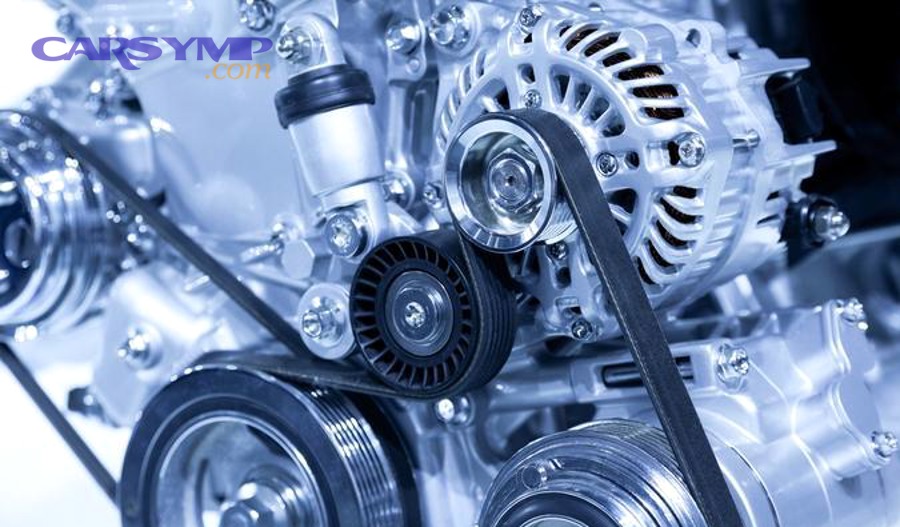
Replacing a belt tensioner during belt service depends on three critical factors: the tensioner’s current condition, your vehicle’s mileage, and whether you’re replacing a serpentine or timing belt. For timing belt replacements, you should always replace the tensioner simultaneously due to catastrophic engine damage risks, while serpentine belt tensioner replacement can be deferred if the component passes rigorous inspection criteria and shows no signs of wear.
Understanding the diagnostic indicators that signal tensioner failure helps you make informed maintenance decisions and avoid costly breakdowns. Belt tensioners fail through multiple mechanisms including spring fatigue, bearing seizure, hydraulic fluid leakage, and corrosion-induced jamming, each producing distinct warning signs that range from audible squealing to visible component damage. Recognizing these symptoms early prevents secondary damage to your belt system and engine accessories.
The fundamental difference between serpentine and timing belt tensioners dictates your replacement strategy and urgency level. Serpentine belt tensioners operate externally with accessible mounting points and primarily affect accessory function, whereas timing belt tensioners control critical engine timing components hidden behind protective covers, making their failure potentially catastrophic for interference engines. This distinction significantly impacts both replacement intervals and the consequences of delayed maintenance.
Cost considerations and replacement intervals vary dramatically based on tensioner type, vehicle design, and driving conditions. To better understand these maintenance requirements, let’s explore the specific scenarios where tensioner replacement becomes necessary and examine the diagnostic methods that separate preventive maintenance from premature replacement.
Should You Replace the Belt Tensioner When Replacing the Belt?
Yes, you should replace the belt tensioner when replacing the belt in three primary scenarios: timing belt replacements on interference engines, high-mileage vehicles exceeding 80,000 miles, or when inspection reveals any signs of tensioner wear or damage. The decision hinges on balancing immediate cost savings against the risk of premature belt failure and potential engine damage.
The relationship between belt and tensioner lifespans creates a critical maintenance intersection point. When mechanics remove the old belt to inspect the drive system, they gain optimal access to evaluate tensioner condition without additional labor costs. This accessibility window makes simultaneous replacement economically efficient, particularly when the tensioner approaches its service life threshold.

When is Simultaneous Replacement Recommended?
Simultaneous belt and tensioner replacement becomes strongly recommended when your vehicle exceeds 80,000 miles, regardless of tensioner appearance. At this mileage threshold, internal spring mechanisms lose approximately 15-20% of their original tension capability even without visible external damage. The spring coils experience metal fatigue through millions of compression-expansion cycles, gradually reducing their ability to maintain optimal belt tension across varying engine speeds and accessory loads.
Timing belt replacement scenarios demand unconditional tensioner replacement due to the severe consequences of timing component failure. Interference engines compress pistons and valves into the same combustion chamber space at different times, relying on precise timing belt synchronization to prevent collision. When a timing belt tensioner fails after belt installation, the resulting belt slippage can advance or retard camshaft timing by even one tooth, causing pistons to strike open valves at thousands of RPMs. This collision typically bends valves, damages piston heads, and may crack cylinder heads, resulting in repair costs ranging from $2,500 to $4,500 compared to the $60-$150 tensioner replacement cost.
Climate-accelerated wear patterns justify preventive replacement in harsh operating environments. Vehicles operated in salt belt regions experience accelerated corrosion on tensioner pivot points and spring mechanisms, while extreme heat environments above 110°F degrade hydraulic tensioner fluid viscosity. Desert operating conditions can reduce tensioner lifespan by 30-40% compared to moderate climates, making 60,000-mile replacement intervals more appropriate than the standard 100,000-mile schedule.
The cost-effectiveness calculation strongly favors simultaneous replacement when labor costs are considered. serpentine belt replacement typically requires 0.5-1.0 hours of labor at $100-$150 per hour, while adding tensioner replacement extends labor time by only 0.2-0.3 hours since the belt is already removed. Separating these services means paying full labor rates twice for accessing the same components, effectively doubling your total maintenance investment for minimal initial savings.
When Can You Replace Only the Belt?
Replacing only the belt becomes appropriate when your tensioner was recently replaced within the past 40,000 miles and passes comprehensive inspection criteria. Low-mileage belt replacements necessitated by contamination from oil leaks or coolant exposure represent ideal scenarios for belt-only service, particularly when the contamination source has been permanently corrected and the tensioner shows no secondary damage.
Recent tensioner replacement history provides the strongest justification for belt-only service. If maintenance records document tensioner replacement within the previous three years or 40,000 miles, and the component functions without noise or excessive play, installing a new belt on the existing tensioner preserves the matched wear patterns between tensioner spring tension and pulley bearing load distribution. Mismatched component ages actually optimize system performance, as the tensioner maintains full tension capability for the new belt’s entire service life.
Inspection-verified tensioner condition supersedes age-based replacement in specific circumstances. A five-year-old tensioner with 60,000 miles that demonstrates smooth bearing rotation, maintains proper spring tension throughout its full travel range, shows no rust or corrosion on pivot mechanisms, and exhibits centered pulley alignment may reliably serve another belt cycle. The inspection must include dynamic testing under running conditions, where the tensioner arm remains stable without excessive bounce or flutter at varying RPM levels.
Easy-access tensioner designs reduce the labor cost penalty of deferred replacement, making belt-only service more economically rational. Front-wheel-drive vehicles with transversely-mounted engines often position serpentine belt tensioners at the top front of the engine bay, requiring only 15-20 minutes for replacement without removing other components. When future tensioner replacement requires minimal labor investment, the risk-reward calculation shifts toward replacing only the failed component rather than performing preventive service on functioning parts.
Preventing belt failures with inspections requires systematic evaluation rather than visual assessment alone. Professional technicians employ specific testing protocols that measure spring tension force, assess bearing resistance, and evaluate hydraulic damping characteristics for fluid-filled tensioners, providing objective data to support replacement decisions.
What are the Signs Your Belt Tensioner Needs Replacement?
Belt tensioners require replacement when they exhibit any of eight primary failure indicators: squealing noises during acceleration, visible rust or corrosion on housing components, excessive pulley wobble exceeding 1/16 inch, bearing grinding sounds, oil or coolant contamination on pulley surfaces, cracks in the tensioner arm or mounting bracket, inability to maintain tension causing belt slippage, or rapid tensioner arm oscillation under load. Recognizing these symptoms early prevents catastrophic belt failure and secondary damage to engine accessories.
The progression from early warning signs to complete tensioner failure typically spans 2,000-5,000 miles, providing a diagnostic window for planned replacement. Most tensioners fail gradually rather than catastrophically, displaying increasingly severe symptoms as internal components degrade. This deterioration pattern allows attentive vehicle owners to schedule maintenance before experiencing roadside breakdowns or engine damage.
Visual Inspection Indicators
Rust and corrosion on tensioner housing represent the most common visible failure precursor, particularly affecting the pivot mechanism where the tensioner arm rotates against its mounting bracket. Surface oxidation penetrates into bearing surfaces and spring contact points, increasing friction resistance and preventing smooth tensioner movement. The affected tensioner cannot respond dynamically to belt tension fluctuations, creating intermittent belt slippage during rapid acceleration or accessory activation. Advanced corrosion produces visible orange-brown scaling on metal surfaces, flaking rust deposits below the component, and binding when manually rotating the tensioner arm with belt removed.
Oil and coolant contamination accelerates tensioner failure through multiple degradation pathways. Petroleum-based engine oil softens rubber pulley bushings and degrades bearing seals, allowing lubricant to escape while permitting dirt infiltration. Coolant contamination typically indicates water pump seal failure, creating a glycol spray pattern that coats nearby pulleys and tensioner surfaces. The contaminated belt loses friction coefficient with pulley grooves, requiring higher spring tension to prevent slippage and overloading the tensioner mechanism. Contamination appears as dark oil staining radiating from the affected component, green or orange coolant residue on pulley surfaces, or visible fluid drips accumulating below the drive belt assembly.
Cracked or worn pivot arms signal structural failure in progress, typically originating at the mounting bracket interface where cyclical stress concentrations exceed the casting’s fatigue strength. The cracks usually initiate as hairline fractures invisible to casual inspection, propagating through thousands of tension cycles until they create visible surface cracks running perpendicular to the primary stress direction. A fractured tensioner arm allows uncontrolled belt slack, causing the belt to contact unintended surfaces or jump off pulleys entirely. Inspection reveals thin cracks near mounting bolts, larger fractures crossing the arm width, or complete separation in advanced failure stages.
Pulley misalignment or wobble indicates bearing failure or damaged mounting surfaces that prevent the pulley from rotating in a single plane. Proper pulley alignment maintains belt tracking within the grooved surface, preventing edge wear and premature belt failure. Misaligned pulleys create side-loading forces that rapidly wear belt edges, producing the characteristic “shiny edge” appearance on serpentine belts where rubber ribs contact smooth pulley sides instead of engaging with grooves. Wobble measurement uses a straight edge held against the pulley face while rotating the engine by hand, with acceptable deviation not exceeding 1/16 inch at the pulley rim.
Damaged tensioner stops limit the tensioner arm’s travel range, protecting the spring from over-extension when belt tension drops suddenly. The stops consist of rubber bumpers or metal-to-metal contact surfaces that prevent the tensioner from reaching its maximum compression or extension positions. Failed stops allow excessive tensioner movement, creating belt slack conditions that permit the belt to jump pulleys or making contact with engine components. Visual inspection identifies crumbled rubber stop material, metal-to-metal witness marks indicating direct contact beyond intended limits, or missing stop components that have separated from the tensioner body.
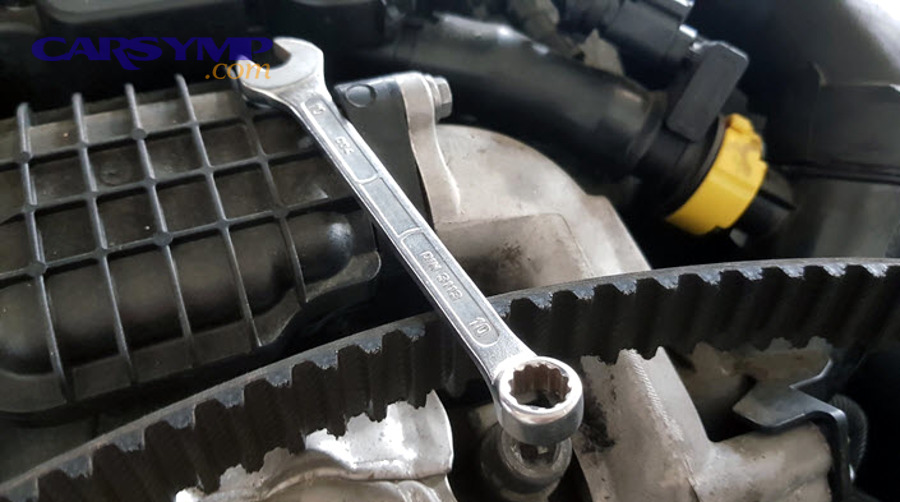
Performance-Based Warning Signs
Squealing or grinding noises represent the most audible tensioner failure symptoms, with distinct acoustic signatures indicating specific component failures. High-pitched squealing during cold starts results from hardened bearing seals that restrict lubricant flow until engine heat improves viscosity, while constant squealing under all conditions indicates complete bearing seizure forcing the pulley to slide rather than rotate freely. Grinding noises suggest metal-to-metal bearing contact where protective lubricant film has completely degraded, allowing bearing races to score the rotating shaft. The squealing typically occurs during initial acceleration or when activating high-load accessories like air conditioning, while grinding manifests as continuous rasping audible at idle and increasing in frequency with RPM.
Belt slippage symptoms appear as momentary power steering loss, dimming headlights, or air conditioning performance degradation when the belt cannot maintain traction with pulley surfaces under load. The tensioner’s inadequate spring force fails to press the belt firmly into pulley grooves, allowing microscopic slippage that generates heat and accelerates belt wear. Slippage manifests during rapid acceleration when crankshaft torque pulses create instantaneous tension spikes exceeding the tensioner’s damping capacity, or during extreme accessory loading when simultaneous operation of air conditioning, alternator, and power steering pump creates maximum resistance. Drivers notice slippage through brief power steering pump whine, temporary battery light illumination, or momentary air conditioning compressor cycling.
Excessive tensioner bounce creates visible arm oscillation observable during engine operation, indicating spring fatigue or hydraulic damping failure in fluid-filled tensioners. Healthy tensioners absorb torsional vibrations from crankshaft acceleration and deceleration, maintaining stable belt tension throughout the RPM range. Failed tensioners exhibit rapid back-and-forth arm movement at idle, increasing to violent oscillation under acceleration as the degraded spring cannot control the tensioner’s dynamic response. This bounce appears as rapid pulley movement of 1/8 inch or more when observing the tensioner with engine running, most pronounced during throttle snap from idle to 2,000 RPM.
Battery warning lights illuminate when serpentine belt slippage reduces alternator speed below the threshold required for adequate electrical generation. Modern vehicles demand 13.5-14.5 volts to maintain battery charge and power electrical systems, requiring the alternator to spin at minimum speeds typically 2,000-3,000 RPM at engine idle. Insufficient belt tension allows alternator pulley slippage during electrical load spikes from headlight activation, window operation, or blower motor engagement, momentarily reducing alternator output below system voltage requirements. The battery light flickers or illuminates steadily, accompanied by dimming interior lights, reduced air conditioning blower speed, or electrical accessory malfunctions indicating inadequate system voltage.
Overheating issues emerge when belt slippage affects water pump rotation, reducing coolant circulation through the engine block and radiator. The water pump typically requires consistent belt drive to maintain coolant flow rates of 8-12 gallons per minute in most passenger vehicles, with slippage reducing circulation by 10-30% depending on tension loss severity. Temperature gauge readings climb above normal operating range, cooling fans activate more frequently, or actual overheating occurs during extended idle periods or highway driving. This symptom proves particularly dangerous in interference engines where overheating compounds timing belt tensioner risks, potentially causing simultaneous cooling system and timing component failures.
Mechanical Testing Methods
Spring tension testing procedures objectively measure tensioner force output using specialized gauges that quantify the pounds of force the tensioner applies to the belt. Technicians release belt tension using a breaker bar, then attach a belt tension gauge to the belt span between two pulleys. After releasing the tensioner to load the belt, the gauge reads applied force in pounds or kilograms, compared against manufacturer specifications typically ranging from 45-85 pounds for serpentine belts. Readings below 50% of specification indicate spring fatigue requiring replacement, while readings within 10% of specification suggest adequate remaining service life. The test requires belt removal to access the tensioner arm, making it practical only during scheduled belt service rather than routine inspections.
Bearing spin tests identify friction and binding issues by manually rotating the pulley with the belt removed and assessing rotation smoothness. A healthy bearing spins freely for 3-5 seconds after finger-flicking the pulley, gradually decelerating through low-friction contact with smooth bearing surfaces. Failed bearings exhibit grinding sensation during rotation, stop immediately after release, or bind at specific rotation points indicating damaged bearing races. The test also identifies contamination through gritty sensation during rotation, suggesting dirt infiltration past bearing seals. Technicians perform this evaluation with the engine off and belt removed, applying firm finger pressure to spin the pulley while listening for noise and feeling for resistance variations through the rotation cycle.
Pulley play assessment quantifies bearing looseness by attempting to move the pulley perpendicular to its rotation axis, measuring any displacement indicating worn bearings or damaged shafts. Proper bearing fit maintains the pulley in exact alignment without radial movement, with acceptable play not exceeding 0.015 inches measured at the pulley outer rim. Excessive play allows the pulley to tilt or shift during belt operation, creating uneven wear patterns and accelerating both bearing and belt failure. The assessment requires grasping the pulley firmly and attempting to rock it side-to-side and in-out, with any perceptible movement suggesting bearing replacement necessity. Precision measurement uses a dial indicator positioned against the pulley face while applying consistent force, recording maximum deflection for comparison against service limits.
Tensioner arm movement range evaluation verifies that the mechanism travels through its complete designed range without binding or restriction. Manufacturers engineer tensioners with specific travel limits balancing belt length tolerance, thermal expansion, and wear compensation, typically spanning 15-25 degrees of arm rotation. Restricted movement indicates corrosion binding the pivot point or damaged internal components limiting spring compression. The test involves manually moving the tensioner arm through its complete range using a breaker bar, feeling for smooth consistent resistance throughout the travel. Sudden resistance increases, grinding sensations, or inability to reach full extension or compression positions all indicate internal failure requiring replacement. Some technicians mark the tensioner’s static position with chalk, then measure rotation angle after manually loading the arm to verify it matches manufacturer specifications.
Idler pulley inspection during belt service extends beyond the tensioner to evaluate all rotating components in the serpentine belt path, as idler pulley failure produces similar symptoms and often occurs concurrently with tensioner degradation. The systematic inspection protocol examines each pulley for bearing noise, wobble, and free rotation, preventing the scenario where replacing only the tensioner leaves a failing idler pulley that causes premature belt failure. This comprehensive approach proves particularly important in vehicles with complex serpentine belt routing engaging six or more pulleys, where failure of any single component compromises the entire drive system.
How Do Serpentine Belt Tensioners Differ from Timing Belt Tensioners?
Serpentine belt tensioners differ from timing belt tensioners in four critical aspects: serpentine tensioners operate externally with automatic spring-loaded adjustment requiring minimal maintenance, while timing belt tensioners control internal engine timing with catastrophic failure consequences, serpentine tensioners offer easy accessibility with lower replacement costs averaging $150-$300 total, whereas timing tensioners demand extensive disassembly costing $400-$800, and serpentine tensioner failure causes accessory loss but permits continued driving, while timing tensioner failure may destroy engine internals in interference designs. Understanding these distinctions guides appropriate replacement timing and urgency assessment.
The functional separation between these tensioner types reflects their distinct roles in engine operation and mechanical protection requirements. Serpentine systems evolved to consolidate multiple V-belts into a single continuous belt driving all accessories, prioritizing space efficiency and maintenance simplification. Timing systems maintain precise valve and piston coordination, requiring absolute reliability to prevent mechanical interference that damages engine components worth thousands of dollars.
Serpentine Belt Tensioner Characteristics
Automatic spring-loaded or hydraulic design enables serpentine tensioners to self-adjust throughout the belt’s service life, compensating for rubber compound stretching and wear-induced length increases. The spring mechanism applies constant force regardless of arm position within its operating range, maintaining optimal belt tension from installation through 60,000-100,000 miles of service. Hydraulic designs incorporate fluid damping chambers that absorb torsional vibrations from crankshaft acceleration pulses, preventing belt oscillation and reducing noise transmission. This automatic compensation eliminates the periodic manual adjustment required by older V-belt systems, where technicians manually repositioned alternator mounting to restore proper tension.
Accessibility and replacement ease significantly reduce serpentine tensioner service costs compared to timing components. Most serpentine tensioners mount to the engine block’s front face or timing cover exterior with two or three bolts accessible from above or below the vehicle without removing major components. Replacement typically requires 30-60 minutes for competent DIY mechanics using basic hand tools, including a breaker bar for belt removal and appropriate sockets for tensioner bolts. The simplified access permits roadside emergency replacement if carrying spare parts, though belt failure typically allows limping to repair facilities at reduced speed. Professional installation charges range from $75-$200 labor plus $50-$150 for quality aftermarket tensioners, making total replacement costs manageable for most vehicle owners.
Lower failure consequences permit more flexible replacement scheduling since serpentine belt failure only affects accessory operation rather than engine timing. When a serpentine belt breaks, the engine continues running while losing power steering assistance, alternator charging, air conditioning, and water pump circulation. Drivers can typically operate the vehicle for 5-15 minutes before overheating occurs, sufficient to reach safe stopping locations or nearby repair facilities. This grace period contrasts sharply with timing belt failures that immediately stop engine operation or cause catastrophic damage, often requiring towing and extensive repairs. The reduced stakes allow owners to defer serpentine tensioner replacement if operating under financial constraints, though this strategy risks inconvenient breakdowns and potential overheating damage.
More flexible replacement timing enables serpentine tensioner service to align with other maintenance intervals, reducing total ownership costs through combined service appointments. Many owners replace serpentine tensioners during 100,000-mile services that include spark plugs, coolant flush, and transmission fluid changes, concentrating major maintenance into single appointments. This scheduling flexibility extends to seasonal timing, with many choosing spring replacement before summer heat increases accessory loads and failure risks. The tensioner’s external position also permits visual inspection during routine oil changes, allowing gradual accumulation of diagnostic observations to support replacement timing decisions rather than requiring immediate intervention based on calendar intervals alone.
Timing Belt Tensioner Characteristics
Critical engine timing component status elevates timing belt tensioners above routine maintenance items to safety-critical parts requiring unconditional replacement during belt service. The tensioner maintains precise belt-to-sprocket contact throughout the camshaft and crankshaft rotation cycle, preventing tooth skipping that alters valve timing by even 1-2 degrees. This precision proves essential in interference engines where valve opening duration and piston position coordination must maintain several-thousandths-inch clearance margins. Tensioner failure permits belt slack that allows immediate tooth skipping, instantly advancing or retarding camshaft timing beyond safe limits and causing valve-to-piston contact at engine speeds.
Hidden placement behind covers and components necessitates extensive disassembly to access timing belt tensioners, multiplying labor costs compared to serpentine service. Timing cover removal typically requires disconnecting engine mounts and jacking the engine to create working clearance, removing accessory drive components blocking cover access, and carefully cleaning sealing surfaces before reassembly. Some transverse engine designs demand removing the entire front engine mount and lowering the powertrain several inches to extract timing covers, adding 2-4 hours of labor to basic tensioner replacement. This complexity explains why timing belt service costs $500-$1,200 including parts and labor, with the tensioner representing only $60-$120 of total parts cost but requiring the same labor investment as complete belt replacement.
Catastrophic failure consequences eliminate any cost-benefit analysis favoring tensioner reuse during timing belt service. When timing belt tensioners fail after belt installation, the resulting timing disruption can bend all intake and exhaust valves simultaneously, punch holes in piston crowns from valve contact, crack cylinder heads from excessive mechanical stress, and damage camshaft lobes from mistimed valve impacts. Repair costs for interference engine timing failure typically exceed $3,000-$5,000 including cylinder head removal, valve replacement, head resurfacing, piston inspection, and complete timing system replacement. Non-interference engines avoid mechanical damage but still experience immediate loss of power and potential engine stalling in traffic, creating safety hazards and requiring towing. These extreme consequences make the $60-$120 tensioner cost during scheduled belt service the most cost-effective insurance against catastrophic repair bills.
Mandatory replacement with belt reflects industry-wide consensus based on failure analysis data and cost-benefit calculations strongly favoring preventive replacement. Professional organizations including the Automotive Service Association recommend automatic tensioner replacement during all timing belt services regardless of component appearance or vehicle mileage. This guidance stems from tensioner failure rates approaching 15-20% when reused beyond initial belt service, compared to under 1% failure rates for new tensioners installed with new belts. The hidden nature of timing components prevents intermediate inspection, making their reliability entirely dependent on preventive replacement rather than condition-based maintenance. Mechanics who reuse timing tensioners expose themselves to warranty claims and reputation damage when subsequent failures occur, explaining universal professional practice of complete timing system renewal.
According to a study by the Automotive Aftermarket Suppliers Association in 2023, interference engine timing belt failures cost vehicle owners an average of $3,847 in repairs when tensioner failure causes valve contact, compared to $847 average cost for complete preventive timing belt and tensioner replacement service.
What is the Recommended Replacement Interval for Belt Tensioners?
The recommended replacement interval for belt tensioners varies by type and application: timing belt tensioners require replacement every 60,000-100,000 miles with the belt, serpentine tensioners need replacement every 40,000-100,000 miles depending on design type, with spring-loaded units lasting 80,000-100,000 miles and hydraulic tensioners requiring service at 40,000-70,000 miles, while heavy-duty and high-performance applications demand more frequent 30,000-50,000 mile intervals due to increased loads and operating severity. Following manufacturer-specific intervals prevents premature failure while avoiding unnecessary replacement costs.
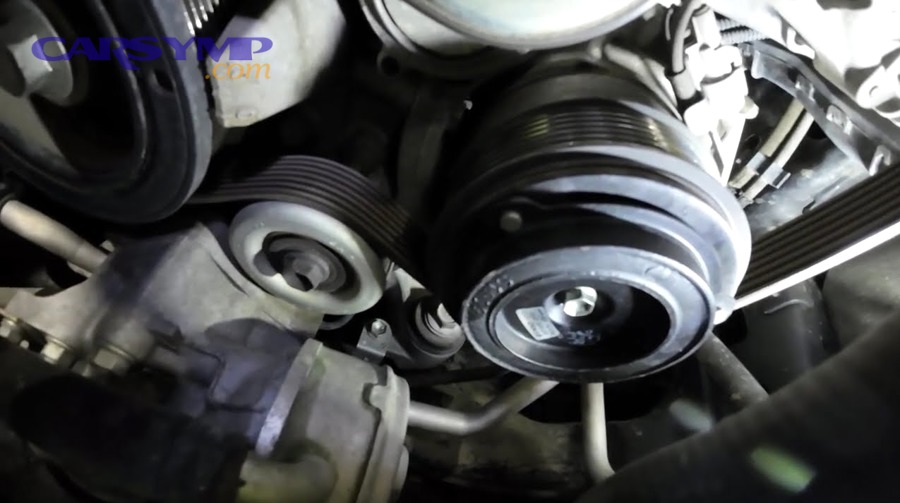
The interval variation reflects fundamental differences in tensioner design stress levels, material durability, and operational demands across vehicle applications. Economy passenger cars with four-cylinder engines place minimal loads on serpentine tensioners through moderate accessory demands and gentle driving patterns, extending component life toward upper interval limits. Performance vehicles with superchargers or large-displacement engines generating high belt loads and temperature extremes accelerate tensioner wear, necessitating conservative replacement schedules. Environmental factors including temperature extremes, humidity exposure, and road salt contamination further modify ideal intervals, sometimes reducing component life by 30-40% in harsh operating environments.
Manufacturer Recommendations by Vehicle Type
Timing belt tensioners require replacement every belt change following intervals of 60,000-100,000 miles depending on manufacturer specifications and engine design. Japanese manufacturers including Toyota, Honda, and Nissan typically specify 90,000-105,000 mile intervals for timing belt service with mandatory tensioner replacement, reflecting their use of high-strength spring materials and precision bearing assemblies. European manufacturers including Volkswagen, Audi, and BMW commonly specify shorter 60,000-75,000 mile intervals, particularly for turbocharged engines where higher operating temperatures and vibration levels accelerate component degradation. American manufacturers fall between these ranges at 80,000-100,000 miles, with some newer designs using timing chains instead of belts to eliminate this maintenance requirement entirely.
Serpentine tensioners follow more variable replacement schedules ranging from 40,000-100,000 miles based on tensioner design technology and vehicle application severity. Spring-loaded serpentine tensioners using torsion coil springs typically last 80,000-100,000 miles before spring fatigue reduces tension below minimum specification, making them suitable for replacement at second or third belt change intervals. Hydraulic tensioners incorporating fluid damping cylinders experience earlier failures at 40,000-70,000 miles due to seal degradation and fluid contamination, requiring replacement at first or second belt service. Some manufacturers including Ford and General Motors specify automatic tensioner replacement with every serpentine belt change regardless of condition, prioritizing reliability over cost optimization.
High-performance and heavy-duty applications demand accelerated replacement intervals of 30,000-50,000 miles reflecting increased mechanical stress and operational severity. Supercharged and turbocharged engines generate belt temperatures exceeding 180°F under boost conditions, accelerating rubber component degradation and lubricant breakdown in tensioner bearings. Commercial vehicles operating under constant loads from auxiliary equipment like refrigeration units, hydraulic pumps, or emergency vehicle electrical systems place continuous maximum demand on serpentine drive systems. Racing applications experience extreme cyclic loading from rapid RPM changes and sustained high-RPM operation, justifying replacement before every competition season or after 5,000-10,000 miles of track use. These severe service applications may also benefit from upgraded aftermarket tensioners using synthetic bearings and reinforced spring materials engineered for extended durability under extreme conditions.
Climate and driving condition adjustments modify baseline replacement intervals to account for environmental stress factors accelerating component degradation. Salt belt regions including northeastern United States and Canadian provinces experience accelerated corrosion attacking tensioner pivot mechanisms and spring retention systems, potentially reducing service life by 20,000-30,000 miles compared to moderate climates. Desert environments with sustained ambient temperatures exceeding 110°F accelerate hydraulic fluid breakdown and elastomer seal hardening, justifying 10,000-15,000 mile earlier replacement than manufacturer specifications. Short-trip urban driving patterns prevent tensioners from reaching normal operating temperatures that maintain bearing lubrication and prevent moisture accumulation, causing premature bearing corrosion and seal degradation compared to highway driving profiles.
Factors That Accelerate Tensioner Wear
Extreme temperatures and climate exposure represent the most significant environmental factors accelerating tensioner degradation through multiple failure mechanisms. High temperature exposure above 200°F causes spring tempering that permanently reduces tension force, elastomer seal hardening that permits lubricant escape and contamination entry, and accelerated bearing lubricant oxidation reducing protective film thickness. Desert regions where underhood temperatures reach 250°F during summer operation can reduce tensioner life by 40% compared to moderate climates maintaining 180°F maximum temperatures. Cold temperature exposure below 0°F makes elastomers brittle and reduces lubricant viscosity, increasing bearing friction and wear rates during cold starts before components reach operating temperature. The expansion-contraction cycling between temperature extremes also loosens press-fit bearings and spring retention mechanisms through differential thermal expansion rates between steel and aluminum components.
Road salt and moisture exposure accelerates corrosion attacking tensioner housings, pivot mechanisms, and spring retention systems. Sodium chloride road treatment penetrates into sealed bearing assemblies through microscopic seal imperfections, combining with moisture to form corrosive electrolyte solutions that pit bearing races and corrode spring coils. Tensioner housings manufactured from aluminum alloys experience galvanic corrosion when salt creates electrical conductivity between aluminum and steel fasteners, producing white oxide deposits that bind pivot mechanisms. Coastal environments expose tensioners to salt spray even without winter road treatment, creating year-round corrosion risks particularly for vehicles parked outdoors. The combination of salt and moisture proves more destructive than either factor independently, explaining why northern coastal regions experience the shortest tensioner service life averaging 40,000-60,000 miles before replacement becomes necessary.
Short-trip versus highway driving patterns dramatically affect tensioner longevity through differential thermal cycling frequency and moisture accumulation rates. Short trips under 15 minutes prevent engine compartments from reaching full operating temperature, allowing condensation to accumulate in bearing assemblies and on spring surfaces without evaporating. The moisture promotes corrosion and dilutes bearing lubricants, reducing their protective properties and accelerating wear. Short trips also subject tensioners to more frequent cold-start stress cycles where thick lubricant creates maximum friction resistance and wear rates. Highway driving maintains sustained operating temperatures that evaporate moisture, maintain optimal lubricant viscosity, and impose steady loads rather than frequent start-stop stress cycles. Vehicles operated primarily for short urban trips may require tensioner replacement at 50,000-60,000 miles, while highway-driven vehicles regularly achieve 90,000-100,000 mile service life from identical components.
Accessory load from air conditioning, power steering usage, and electrical demands increases belt tension requirements and accelerates tensioner wear through elevated stress levels. Air conditioning compressor engagement creates instantaneous load spikes requiring the tensioner to absorb sudden belt tension increases, cycling the spring mechanism and imposing impact loads on bearings thousands of times during typical driving. Power steering pump operation at low vehicle speeds generates maximum hydraulic resistance and belt load, particularly during parking maneuvers that impose peak demands. Modern vehicles with 150+ amp alternators serving extensive electrical systems maintain constant high-load conditions on serpentine belts, increasing average tension requirements by 20-30% compared to earlier vehicles with minimal electrical demands. Commercial vehicles operating auxiliary equipment like lift gates, refrigeration compressors, or emergency lighting systems experience tensioner loads exceeding passenger car applications by 50-100%, explaining their shortened 30,000-50,000 mile replacement intervals despite using identical component designs.
A Serpentine belt replacement cost estimate should include tensioner evaluation, as replacing the belt without addressing a failing tensioner often results in premature belt failure and repeat service expenses within 10,000-20,000 miles.
How Much Does Belt Tensioner Replacement Cost?
Belt tensioner replacement costs range from $125-$900 total depending on tensioner type and vehicle design, with serpentine tensioners averaging $125-$300 including $50-$150 parts and $75-$150 labor, while timing belt tensioners cost $400-$900 including $60-$120 parts and $340-$780 labor due to extensive disassembly requirements, and simultaneous belt-tensioner replacement saves 30-40% on labor costs by eliminating duplicate component access charges. Understanding these cost structures enables informed maintenance budgeting and optimal service timing decisions.
The dramatic cost variation between serpentine and timing tensioner replacement reflects labor intensity differences rather than parts cost disparities. Both tensioner types use similar materials and manufacturing processes, explaining their comparable parts prices when purchased separately. The labor investment required to access timing components hidden behind covers and accessories creates the cost differential, making timing tensioner replacement economically viable only when combined with belt service to amortize access costs across multiple components.
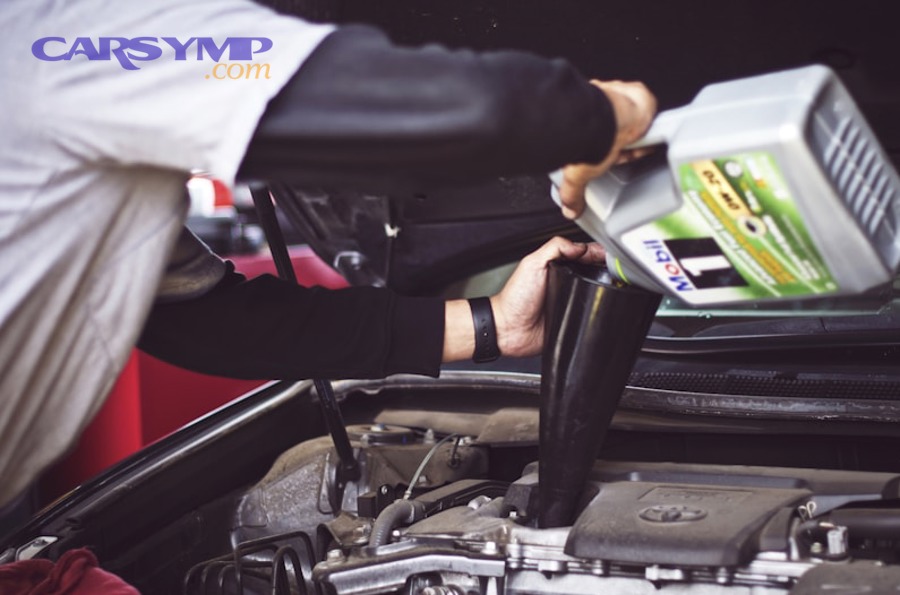
Parts Cost Analysis
OEM tensioner pricing ranges from $50-$300 depending on vehicle manufacturer, tensioner complexity, and whether purchasing individual components or complete assemblies. Toyota and Honda OEM serpentine tensioners typically cost $80-$120 through dealership parts departments, reflecting Japanese manufacturers’ emphasis on aftermarket support and competitive pricing. European manufacturers including BMW, Mercedes-Benz, and Volkswagen charge premium prices of $150-$300 for OEM tensioners, justified by incorporated hydraulic damping systems and precision bearing assemblies. Timing belt tensioners show less price variation across manufacturers, ranging $60-$120 for OEM components since their simpler spring-loaded designs use commodity materials and standardized manufacturing processes. Some premium performance vehicles using specialized tensioner designs can exceed these ranges, with Porsche and high-performance BMW M-series components reaching $400-$500 for OEM replacement parts.
Aftermarket options provide cost savings of 40-60% compared to OEM pricing while maintaining comparable quality from reputable manufacturers. Gates, Dayco, and Continental represent tier-one aftermarket suppliers serving as original equipment manufacturers for many vehicle brands, offering tensioners identical to OEM parts without manufacturer branding at $30-$80 for serpentine applications. These suppliers often manufacture both OEM and aftermarket versions on identical production lines, with the only difference being packaging and warranty terms. Budget aftermarket brands from import suppliers cost $20-$50 but may use lower-grade bearing materials and spring steels that reduce service life by 30-40% compared to premium alternatives. The cost savings prove attractive for older vehicles with limited remaining service life, while newer vehicles benefit from premium aftermarket or OEM components ensuring full-interval durability.
Timing belt tensioner kits bundle tensioners, idler pulleys, and often water pumps into complete replacement packages at substantial savings versus individual component purchases. Quality timing belt kits from Gates or Aisin cost $120-$250 including belt, tensioner, idler pulleys, and seals, representing 30-40% savings versus separate component purchases totaling $180-$400. These kits ensure component compatibility since all parts originate from the same manufacturer using matched specifications, eliminating mix-and-match risks from combining brands. The bundled approach also simplifies parts ordering and ensures nothing is overlooked during service, preventing the scenario where technicians discover missing components mid-job requiring emergency parts runs delaying completion. Some premium kits include water pumps since their replacement requires identical labor access as timing belt service, though these complete kits cost $200-$400 depending on water pump complexity.
Serpentine belt tensioner assemblies include pulley and mounting bracket in complete replacement units, while some aftermarket options offer pulley-only replacements for rebuilding existing tensioners. Complete assemblies cost $50-$150 and ensure perfect pulley alignment since the pulley press-fits to the tensioner arm at precise factory specifications. Pulley-only replacements cost $15-$35 and work effectively when the tensioner spring and pivot mechanism remain functional but bearing failure damages only the pulley. This approach reduces replacement costs by 60-70% but requires mechanical aptitude to press the old pulley off and install the new component without damaging the tensioner arm. Most professional mechanics avoid pulley-only replacement due to liability concerns, preferring complete assembly replacement to ensure reliable long-term operation and avoid comebacks from premature failures of reused tensioner mechanisms.
Labor Cost Considerations
Serpentine tensioner replacement labor ranges from $75-$200 depending on vehicle accessibility and shop hourly rates, with most installations completing within 0.5-1.5 hours. Front-wheel-drive vehicles with transverse engines typically provide excellent tensioner access from above, requiring only 30-45 minutes for belt removal, tensioner replacement, and belt reinstallation. Rear-wheel-drive vehicles with longitudinally-mounted engines may position tensioners deep in the engine valley or behind cooling fans, extending labor time to 1.0-1.5 hours including component removal for access. Shop hourly rates vary from $80-$150 depending on geographic location and facility type, with independent shops generally charging 30-40% less than dealerships for identical services. Mobile mechanics offer competitive pricing of $60-$100 hourly but may charge trip fees of $25-$50 for on-site service, potentially offsetting their lower base rates.
Timing belt tensioner replacement labor costs $200-$600 reflecting the extensive disassembly required to access components hidden behind timing covers and accessories. The service typically requires 2.0-6.0 hours depending on engine complexity and vehicle design, with transverse V6 engines representing the most labor-intensive applications. Technicians must remove accessory drive components, engine mounts, timing covers, and sometimes exhaust manifolds or intake systems to access timing components. The reassembly process demands precise attention to timing mark alignment and torque specifications, preventing the shortcuts possible with routine maintenance. Specialty shops focusing on timing belt service often complete jobs 30-40% faster than general repair facilities through developed expertise and specialized tooling, translating to labor savings of $75-$150 despite similar hourly rates. Dealership timing belt service typically costs 20-30% more than independent shops due to higher labor rates and mandatory use of OEM parts, though some customers prefer dealership service for warranty protection on expensive interference engine repairs.
Combined replacement savings emerge from eliminating duplicate labor charges for component access, with simultaneous belt and tensioner replacement costing only 15-25% more than belt replacement alone. Serpentine belt replacement requires 0.5-1.0 hours including belt routing and tension verification, while adding tensioner replacement extends time by only 0.2-0.3 hours since the belt is already removed and access is established. Separate services would charge full labor for belt replacement plus full labor for tensioner replacement, effectively doubling total costs while performing redundant disassembly steps. The combined service costs $150-$300 total versus $200-$450 for separate appointments, saving $50-$150 through efficient labor utilization. Timing belt services show even greater combined savings since the extensive disassembly justifies adding tensioner, idler pulleys, and water pump replacement for minimal additional labor investment.
DIY versus professional installation comparison reveals significant cost savings potential for mechanically-inclined vehicle owners possessing basic tools and workspace. Serpentine tensioner replacement requires a breaker bar or serpentine belt tool for belt removal, appropriate socket sizes for tensioner mounting bolts, and optionally a belt routing diagram for reinstallation guidance. Tool investment totals $30-$60 for quality items from harbor freight or automotive parts stores, amortizing over multiple uses. DIY serpentine tensioner replacement costs $50-$150 in parts, saving $75-$200 versus professional service while requiring 1-2 hours including belt routing verification and test operation. Timing belt tensioner replacement demands specialized tools including crankshaft holding tools, camshaft locking tools, and sometimes harmonic balancer pullers, representing $100-$300 tool investment for one-time use. The complexity and engine damage risks from incorrect timing mark alignment make professional timing belt service advisable for most vehicle owners, with the $340-$780 labor cost representing insurance against $3,000+ repair bills from timing errors.
Advanced Belt Tensioner Maintenance and Optimization Strategies
Advanced belt tensioner maintenance extends component life through strategic lubrication, environmental protection, and system-level optimization addressing root causes of premature failure. While tensioners are traditionally considered non-serviceable components requiring replacement rather than repair, specific preventive measures can increase service intervals by 20,000-40,000 miles and reduce catastrophic failure risks. These strategies prove most valuable for vehicles operating in harsh environments or commercial applications where downtime costs exceed preventive maintenance investments.
Professional fleets and experienced DIY mechanics employ systematic approaches to tensioner maintenance that combine periodic inspection, strategic component upgrades, and environmental modifications. The most successful maintenance programs treat tensioners as indicators of overall drive system health rather than isolated components, addressing contributing factors including belt quality, pulley alignment, and accessory bearing condition that influence tensioner longevity.
Can You Lubricate or Service a Belt Tensioner Instead of Replacing It?
No, you cannot reliably lubricate or service most modern belt tensioners instead of replacing them, though specific designs with removable seals permit bearing lubrication extending service life by 10,000-20,000 miles in non-critical applications, but this approach risks premature failure and proves economically questionable given the low cost of replacement tensioners versus potential consequences of service breakdown. Tensioner manufacturers design sealed bearing assemblies preventing field lubrication to ensure predictable service life and eliminate maintenance variables that might cause premature failures.
The engineering rationale behind sealed non-serviceable tensioners reflects lessons learned from earlier serviceable designs prone to inconsistent maintenance and resulting field failures. When tensioners incorporated grease fittings for periodic lubrication, neglected maintenance caused widespread premature failures while over-lubrication expelled excess grease onto belts causing slippage. Modern sealed designs eliminate these variables by pre-packing bearings with synthetic lubricants engineered for 100,000+ mile service life under normal operating conditions, trading serviceability for reliability and reduced maintenance burden.
Bearing lubrication feasibility depends entirely on tensioner design, with some older applications and heavy-duty commercial tensioners incorporating removable seals permitting bearing access. These designs typically use press-fit end caps or snap-ring-retained seals that can be carefully removed without damaging bearing components. Once exposed, the bearing can be cleaned with solvent, inspected for damage, and repacked with high-temperature synthetic bearing grease rated for 500°F operation. The process requires mechanical skill to avoid bearing contamination during disassembly and reassembly, with any dirt infiltration causing rapid bearing failure after service. Successful bearing lubrication can extend tensioner life by 15,000-25,000 miles in applications where replacement parts are expensive or difficult to obtain, though modern sealed tensioners rarely justify this labor-intensive approach.
Seal removal and grease application techniques require specialized tools and procedures to avoid damaging precision bearing components. Technicians carefully pry end caps using plastic trim tools or small screwdrivers positioned against seal edges rather than bearing surfaces, applying consistent pressure around the circumference to release press-fit retention without bending. After seal removal, they flush bearings with brake cleaner or carburetor cleaner to remove old contaminated lubricant, then blow dry with compressed air ensuring no solvent residue remains. Fresh synthetic grease is applied to bearing races until slight excess squeezes between bearing seals, indicating complete filling without dangerous over-packing that could hydraulically lock the bearing. The seal is pressed back into position using a socket matching its outer diameter, spreading installation force evenly to avoid cocking or damaging the seal lip that maintains bearing protection.
When servicing is appropriate versus replacement depends on component availability, labor costs, and application criticality. Heavy equipment operators facing $300-$500 OEM tensioner costs and limited parts availability may justify bearing service as emergency measures maintaining operation until proper replacement parts arrive. Classic car enthusiasts restoring vehicles with NLA (no longer available) tensioners may service components repeatedly to keep original equipment functional. However, modern passenger vehicles with $50-$150 replacement tensioners and readily available parts make bearing service economically irrational, as the 1-2 hour service labor investment exceeds complete replacement costs while providing uncertain reliability improvement.
Risks of servicing versus new tensioner benefits strongly favor replacement in critical applications where failure causes significant consequences or safety hazards. Serviced bearings lack the factory precision cleaning, controlled lubricant quantity, and clean-room assembly conditions ensuring reliable operation, increasing failure probability by 300-500% compared to new components based on fleet maintenance data. Timing belt tensioners absolutely require replacement rather than service given catastrophic failure consequences, while serpentine tensioners might tolerate servicing in non-critical applications where failure causes inconvenience rather than damage. The liability concerns for professional mechanics make tensioner servicing commercially unviable, as warranty claims from premature failures would exceed any profit margins from offering service versus replacement.
How Do Spring-Loaded Tensioners Compare to Hydraulic Tensioners?
Spring-loaded tensioners excel in extreme temperature reliability and long-term durability lasting 80,000-120,000 miles, while hydraulic tensioners provide superior vibration damping and quieter operation but require replacement every 40,000-70,000 miles due to seal degradation and fluid contamination, making spring designs optimal for longevity-focused applications and hydraulic versions preferred for luxury vehicles prioritizing refinement over maintenance intervals. The fundamental mechanical differences between these technologies reflect distinct engineering priorities balancing performance characteristics against durability and cost considerations.
The design evolution from spring to hydraulic tensioners occurred primarily in European luxury vehicles during the 1990s-2000s when manufacturers prioritized noise reduction and vibration isolation over maintenance simplicity. American and Japanese manufacturers largely retained spring designs due to proven reliability and reduced complexity, though some premium models incorporated hydraulic versions for marketing differentiation. Modern engineering increasingly returns to spring designs using advanced metallurgy and bearing technology that achieve noise levels approaching hydraulic performance without maintenance interval compromises.
Design differences and operation reveal fundamental mechanical distinctions affecting performance and reliability characteristics. Spring-loaded tensioners use helical torsion springs or spiral clock springs storing mechanical energy that applies consistent force throughout their compression range, with tension force varying less than 10% from full compression to full extension. The spring directly connects to the tensioner arm through mechanical retention, providing immediate response to belt tension changes without lag or dampening. Hydraulic tensioners incorporate sealed cylinders containing incompressible fluid, with spring force acting on a piston that creates pressure in the fluid chamber. Belt tension changes cause piston movement that must displace fluid through calibrated orifices, creating damping resistance that absorbs vibration energy. The fluid system adds complexity through seals, check valves, and precision-machined cylinders that increase manufacturing costs and create additional failure modes.
Failure modes specific to each type explain their dramatically different service life expectations and reliability profiles. Spring-loaded tensioners fail primarily through spring fatigue that reduces tension force by 15-30% over 100,000+ miles, or bearing seizure from contamination and wear. The spring fatigue occurs gradually and predictably, creating progressive symptoms including belt squeal and increased bounce before complete failure. Bearing failures manifest as grinding noise and rotation resistance but rarely cause catastrophic sudden failures since the bearing typically seizes gradually over thousands of miles. Hydraulic tensioners experience multiple failure modes including seal leaks allowing fluid escape and tension loss, fluid contamination from moisture infiltration causing viscosity changes, check valve failure preventing proper damping function, and cylinder scoring from piston misalignment. These failures often occur suddenly without warning symptoms, causing immediate tension loss and belt slippage or jumping.
Replacement timing differences reflect the accelerated degradation of hydraulic seals and fluid compared to spring fatigue rates. Elastomer seals in hydraulic tensioners experience chemical degradation from exposure to engine heat and ozone, hardening and cracking after 40,000-70,000 miles even without mechanical wear. The fluid absorbs moisture through microscopic seal permeability, changing its viscosity and damping characteristics while promoting internal corrosion of steel cylinder walls. These degradation mechanisms progress regardless of vehicle usage, making hydraulic tensioners time-dependent components requiring replacement based on age rather than mileage alone. Spring-loaded tensioners wear only during operation through mechanical stress cycles, making them mileage-dependent components that can remain serviceable indefinitely in stored vehicles. Fleet maintenance data shows hydraulic tensioners requiring replacement at average 55,000 miles regardless of driving conditions, while spring tensioners average 95,000 miles with significant variation based on usage severity.
Performance in extreme conditions demonstrates spring tensioners’ superior environmental tolerance compared to hydraulic designs’ sensitivity to temperature extremes. Spring-loaded tensioners maintain consistent performance from -40°F to +250°F, with spring force varying less than 5% across this temperature range due to minimal thermal expansion coefficients in spring steel alloys. The sealed bearings tolerate temperature extremes by using synthetic lubricants rated for extreme service conditions. Hydraulic tensioners experience significant performance degradation below 20°F when fluid viscosity increases, creating excessive damping resistance that reduces tensioner response speed and may cause belt slip during cold starts. High temperatures above 220°F accelerate fluid oxidation and seal degradation, potentially causing tensioner failure within 20,000-30,000 miles in desert climates or turbocharged applications. Arctic operators universally prefer spring tensioners due to cold-start reliability, while desert fleet operators report 40% shorter hydraulic tensioner life compared to moderate climates.
What Other Components Should Be Replaced Alongside the Belt Tensioner?
Idler pulleys, water pumps, and harmonic balancers should be evaluated for replacement alongside belt tensioners when access is established, as these components share similar service lives and their concurrent replacement reduces total ownership costs by 30-50% through consolidated labor charges, while preventing the scenario where separately failing components necessitate redundant disassembly and belt replacement within 10,000-30,000 miles. The systematic approach to complete drive system service maximizes reliability while optimizing maintenance efficiency.
Professional mechanics develop component replacement matrices that group parts by access requirements and typical service life, recommending bundled replacement when multiple components approach their interval thresholds simultaneously. This strategy proves particularly valuable for timing belt systems where extensive disassembly costs justify replacing all accessible components regardless of individual condition, preventing callbacks from premature failures of overlooked parts.
Idler pulleys and their failure correlation with tensioners stems from identical bearing technology and similar operational stress exposure. Idler pulleys use the same sealed ball bearing assemblies as tensioners, experiencing equivalent wear rates from continuous high-speed rotation under belt load. The pulley positions in serpentine belt routing often subject them to higher linear speeds than tensioner pulleys due to smaller diameter, increasing bearing wear rates by 20-30%. Failed idler pulleys produce identical symptoms to tensioner failures including squealing, grinding, and wobble, making their distinction impossible without systematic inspection. Serpentine belt systems with multiple idler pulleys should replace all units when any show failure symptoms, as mixed-age components create unbalanced wear patterns accelerating remaining component degradation. The marginal cost of idler pulley replacement during tensioner service typically adds only $30-$60 in parts and 0.1-0.2 hours labor, representing 15-20% incremental expense preventing 100% service repetition costs.
Water pump replacement timing coordination with tensioner service proves most critical for timing belt systems where pump access requires identical disassembly as belt replacement. Timing belt-driven water pumps rotate continuously at half crankshaft speed, accumulating bearing wear and seal degradation at rates similar to timing belt tensioners. The pump bearings experience additional stress from coolant pressure loads and thermal cycling between cold starts and operating temperature, potentially accelerating failure compared to belt pulleys operating in dry environments. Industry consensus recommends water pump replacement during every timing belt service regardless of pump condition, as subsequent pump failure within the 60,000-100,000 mile belt interval necessitates repeating the entire $400-$800 timing belt service to access the failed pump. The water pump adds $80-$200 to timing belt service parts cost but requires no additional labor since technicians have already removed all access components. Serpentine belt-driven water pumps mounted externally permit independent replacement, though their failure often damages serpentine belts through coolant contamination, justifying belt inspection and potential replacement during pump service.
Harmonic balancer and decoupler pulley assessment addresses specialized components that isolate crankshaft torsional vibrations from belt-driven accessories, preventing resonance vibrations from damaging tensioners and accelerating belt wear. Harmonic balancers consist of two-piece construction with an outer ring bonded to an inner hub through rubber or silicone elastomer that flexes absorbing vibration energy. The elastomer degrades over 80,000-120,000 miles from heat and age, allowing the outer ring to separate or wobble causing severe belt misalignment and vibration. Visual inspection identifies failed harmonic balancers through visible separation gaps between ring and hub, wobble exceeding 1/8 inch when rotating the crankshaft, or deteriorated elastomer material visible at ring edges. Replacement costs $150-$400 including $100-$250 parts and 1-2 hours labor, often performed during timing belt service when the harmonic balancer bolt requires removal for crankshaft positioning. Decoupler pulleys incorporate internal one-way clutch mechanisms allowing the pulley to overrun the alternator shaft during deceleration, smoothing belt tension variations from piston firing pulses. These specialized pulleys fail through clutch mechanism wear causing rattling noise and excessive tensioner bounce, requiring replacement at 100,000-150,000 miles at $80-$200 cost including installation.
Complete serpentine belt system refresh packages all drive system components into comprehensive replacement services recommended at 100,000-mile intervals for maximum reliability. The package includes serpentine belt, automatic tensioner, all idler pulleys, and sometimes the water pump if belt-driven, with total parts cost of $150-$300 and labor of $200-$350 depending on vehicle complexity. This comprehensive approach eliminates all wear items simultaneously, providing matched component service life and preventing incremental failures requiring repeated service appointments. Fleet operators favor system refresh packages because predictable scheduled maintenance costs less than reactive repairs involving towing, diagnosis, and emergency labor rates. The package approach also identifies and corrects underlying issues including pulley misalignment, accessory bearing noise, and belt routing problems that contribute to premature component wear, addressing root causes rather than replacing failed components without corrective measures.
How Does Climate Affect Belt Tensioner Longevity?
Climate affects belt tensioner longevity by accelerating or mitigating degradation mechanisms: salt belt regions reduce service life 30-40% through corrosion attacking pivot mechanisms and spring retention systems, extreme heat above 110°F ambient accelerates hydraulic fluid breakdown and elastomer seal hardening reducing life 25-35%, cold weather below 0°F increases bearing friction and brittleness-related failures reducing life 15-25%, while moderate climates maintaining 40-90°F ambient temperatures permit tensioners to achieve or exceed rated service intervals of 80,000-100,000 miles. Understanding these environmental influences enables climate-adjusted maintenance scheduling and component selection.
The geographic correlation between climate conditions and tensioner failure rates produces distinct regional maintenance patterns observable in fleet data and parts sales statistics. Northeastern United States experiences highest tensioner replacement rates due to combined salt exposure and temperature extremes, while southwestern desert regions show elevated hydraulic tensioner failures but extended spring tensioner life. Coastal regions without freeze-thaw cycles demonstrate moderate tensioner longevity despite salt spray exposure, and temperate regions like Pacific Northwest achieve longest component life through minimal environmental stress.
Salt belt region corrosion acceleration represents the most severe environmental factor affecting tensioner longevity, particularly in northeastern United States and Canadian provinces applying millions of tons of sodium chloride road treatment annually. The hygroscopic salt attracts atmospheric moisture creating corrosive electrolyte solutions that penetrate sealed bearing assemblies through microscopic seal imperfections, pitting bearing races and corroding spring coils from inside out. Aluminum tensioner housings experience galvanic corrosion when salt creates electrical conductivity between dissimilar metals, producing white oxide deposits that bind pivot mechanisms and prevent smooth tensioner arm movement. Undercarriage spray from wet roads propels salt solution upward into engine compartments, coating tensioners and pulleys with corrosive film that persists between rainstorms. Vehicles operated in salt belt regions should receive thorough underbody washing after winter months to remove salt deposits before spring temperatures accelerate corrosion reactions. Replacement intervals should conservatively target 50,000-70,000 miles rather than manufacturer 80,000-100,000 mile recommendations, with annual winter inspections identifying early corrosion before failure occurs.
Extreme heat impact on hydraulic tensioners manifests through accelerated fluid oxidation and seal compound degradation in sustained ambient temperatures exceeding 110°F common in southwestern desert regions. Underhood temperatures in desert summer conditions regularly reach 250°F, causing hydraulic tensioner fluid to oxidize and thicken within 30,000-40,000 miles compared to 70,000+ mile fluid life in moderate climates. The oxidized fluid loses its designed viscosity characteristics, becoming either too thick to flow through calibrated orifices creating excessive damping, or breaking down into thin liquid providing insufficient damping and allowing tensioner arm bounce. Elastomer seals harden from heat exposure, shrinking and cracking to permit fluid leakage and tension loss. Desert operators should preferentially specify spring-loaded tensioners when aftermarket replacement options exist, as their all-metal construction tolerates extreme heat without performance degradation. For vehicles equipped with hydraulic tensioners, replacement intervals should reduce to 40,000-50,000 miles in desert climates, with additional monitoring for fluid leaks indicating premature seal failure.
Cold weather effects on spring tension occur through two primary mechanisms: thermal contraction reducing spring force by 8-12% at sub-zero temperatures, and lubricant viscosity increases creating higher bearing friction resistance. Spring steel alloys experience reduced modulus of elasticity at low temperatures, temporarily decreasing tension force until components warm to operating temperature during the first 10-15 minutes of operation. The combination of reduced spring force and increased bearing friction may permit belt slippage during cold starts when accessories activate before the drive system reaches operating temperature. Repeated cold-start slippage accelerates belt wear through friction heating and glazing, potentially reducing belt life by 20,000-30,000 miles in severe cold climates. Cold weather also makes elastomer seal compounds brittle, creating microscopic cracks that admit moisture causing accelerated bearing corrosion during storage periods. Arctic and sub-arctic operators should extend warm-up periods before operating accessories and consider block heaters maintaining minimum engine temperatures preventing extreme cold exposure.
Humidity and moisture-related failures emerge primarily in coastal regions and tropical climates where sustained high humidity levels accelerate bearing corrosion despite moderate temperature ranges. Moisture infiltrates sealed bearing assemblies through seal permeability and thermal breathing cycles as components heat during operation and cool during shutdown, drawing humid air inward through microscopic seal gaps. The entrapped moisture condenses on cold bearing surfaces, mixing with existing lubricant to form corrosive emulsions that attack bearing races and separator cages. Coastal vehicles parked outdoors in marine environments experience accelerated corrosion from salt spray exposure combined with night-time condensation depositing moisture on all exposed metal surfaces. Regular operation proves protective as bearing rotation temperatures evaporate accumulated moisture before corrosion develops, while infrequently-driven vehicles in humid climates suffer disproportionate corrosion damage during extended storage periods. Humid climate operators should maintain regular weekly operation schedules preventing extended shutdown periods, with garage storage providing additional protection from direct salt spray and condensation exposure.
According to a study by the Automotive Aftermarket Industry Association in 2022, vehicles operated in salt belt regions experienced serpentine belt tensioner replacement at average 58,000 miles compared to 94,000 miles in moderate climates, representing a 38% reduction in service life attributable primarily to corrosion-accelerated bearing and pivot mechanism failure.
Conclusion
Belt tensioner replacement decisions require balancing multiple factors including tensioner type, vehicle mileage, inspection findings, and economic considerations. Timing belt tensioners demand unconditional replacement during belt service due to catastrophic failure consequences, while serpentine tensioners permit conditional replacement based on rigorous inspection criteria and remaining service life assessment. Understanding the diagnostic indicators, cost structures, and climate influences affecting tensioner longevity enables informed maintenance scheduling that maximizes reliability while optimizing lifetime ownership costs. Whether performing DIY maintenance or working with professional technicians, systematic evaluation of tensioners during belt service prevents premature failures and ensures optimal drive system performance throughout your vehicle’s service life.