


Proper spark plug installation requires precise gap settings and correct torque application to ensure optimal engine performance, prevent damage, and maximize plug lifespan. Mastering spark plug gap involves understanding electrode distance specifications ranging from 0.028″ to 0.060″ depending on plug type, while torque mastery requires knowing thread-size-specific values from 10 lb-ft for 10mm threads up to 38 lb-ft for 18mm applications. This comprehensive guide delivers the exact specifications, step-by-step procedures, and professional techniques that DIY mechanics and technicians need for flawless spark plug replacement.
Understanding correct gap specifications starts with recognizing how electrode material influences required settings. Copper core plugs typically require 0.035″ to 0.045″ gaps, platinum plugs need 0.040″ to 0.050″, while iridium variants often specify 0.040″ to 0.060″ due to their fine-wire electrode design. Beyond basic specifications, proper torque application prevents the two most common catastrophic failures: over-torquing that strips cylinder head threads or cracks insulators, and under-torquing that allows combustion leakage and thermal damage.
The installation process encompasses more than simply tightening plugs to specification. Labor time by engine layout varies significantly, with inline four-cylinder engines allowing straightforward 30-minute installations while transverse V6 configurations may require removing intake components for rear bank access, extending service time to two hours or more. Professional technique demands proper thread preparation, strategic anti-seize application when appropriate, hand-threading to prevent cross-threading damage, and final torque wrench verification rather than impact tool guesswork.
Common installation mistakes cause expensive engine damage that proper knowledge prevents entirely. Over-torquing generates 300-500 lb-ft of clamping force instead of the specified 25-30 lb-ft range, distorting spark plug shells and closing electrode gaps while potentially cracking porcelain insulators. Below, we explore each critical specification, proper installation technique, and advanced performance considerations that distinguish professional-quality spark plug service from amateur attempts.
What Are the Correct Spark Plug Gap Specifications?
Spark plug gap specifications define the precise electrode distance required for optimal ignition, typically ranging from 0.028″ to 0.060″ depending on plug type, engine design, and ignition system strength. This critical measurement determines the voltage required to jump the gap and ignite the air-fuel mixture, directly affecting engine starting, fuel economy, acceleration response, and emissions output. Gap specifications vary based on electrode material composition, with conventional copper plugs generally requiring narrower gaps than modern iridium designs.
To better understand gap requirements, mechanics must recognize that manufacturers engineer specific gaps for each application. Specifically, the gap setting balances three competing factors: sufficient spark energy for complete combustion, voltage demand within ignition system capacity, and electrode durability over the plug’s service life. OEM vs aftermarket plug choices further complicate gap selection, as performance aftermarket plugs may specify different gaps than factory-equivalent replacements even for identical applications.
How Does Spark Plug Type Affect Gap Requirements?
Different spark plug types require distinct gap specifications based on their electrode material and design characteristics. Copper core spark plugs, the most basic and economical option, typically specify gaps between 0.035″ and 0.045″ because their larger-diameter electrodes require less voltage to initiate spark but wear faster than premium materials. These plugs serve well in older vehicles with distributor-based ignition systems that generate lower voltage output, usually 20,000 to 30,000 volts maximum.
Platinum spark plugs feature harder electrode material that resists erosion and extends service life to 60,000 miles or more. These plugs commonly specify gaps between 0.040″ and 0.050″, taking advantage of modern coil-on-plug ignition systems that generate 40,000 to 50,000 volts. The platinum electrode maintains precise gap dimensions longer than copper, ensuring consistent performance throughout the extended service interval.
Iridium spark plugs represent the premium category with ultra-fine wire electrodes measuring just 0.6mm in diameter compared to copper’s 2.5mm. This fine-wire design concentrates electrical energy more efficiently, allowing gaps from 0.040″ up to 0.060″ while requiring less voltage than wider-electrode alternatives. Iridium’s extreme hardness and high melting point (2,466°C versus copper’s 1,085°C) enables these wider gaps to survive 100,000-mile service intervals without excessive wear. The fine center electrode also improves flame kernel development by minimizing physical obstruction to the expanding combustion front.
Double platinum configurations place platinum on both the center and ground electrodes, providing extended life in waste-spark ignition systems where polarity reverses between firings. These designs typically mirror single platinum gap specifications at 0.040″ to 0.050″, though some performance variants push toward 0.055″ when paired with high-output coil packs.
What Gap Setting Should You Use for Your Engine?
Your engine requires the specific gap setting prescribed by the vehicle manufacturer, found in the owner’s manual, on the underhood emissions control information label, or through online OEM specification databases. These factory specifications account for your engine’s compression ratio, ignition system voltage output, combustion chamber design, and fuel delivery method. Deviating from OEM specifications without understanding the consequences can cause misfires, poor fuel economy, difficult starting, or ignition component failure.
The underhood emissions label provides the most accessible specification source, typically located on the radiator support or underside of the hood. This label displays the required gap as a decimal measurement in inches (such as 0.044″) or millimeters (1.1mm). When the label has faded or the vehicle lacks original documentation, manufacturer websites and service information databases like AllData or Mitchell1 provide authoritative specifications by entering your vehicle’s year, make, model, and engine size.
Online parts retailers often display gap specifications in spark plug product listings, but these should be verified against OEM sources rather than blindly trusted. Aftermarket plug manufacturers sometimes list “pre-gapped” specifications that represent a middle-ground setting suitable for multiple applications rather than your specific engine’s optimal gap. For example, a plug marketed for various 2.0L four-cylinder engines might come pre-gapped at 0.040″, while your particular 2.0L turbocharged variant requires 0.028″ due to higher cylinder pressures.
Performance modifications warrant gap adjustments beyond factory specifications. Forced induction installations (turbochargers or superchargers) demand narrower gaps, typically 0.025″ to 0.032″, because elevated cylinder pressure makes wider gaps more difficult to fire and increases misfire risk under boost. Conversely, naturally aspirated engines with upgraded high-output ignition systems can benefit from slightly wider gaps that improve combustion efficiency, though gains beyond 0.005″ wider than stock rarely provide measurable benefits and may stress ignition components.
According to engineering research from Bosch Automotive, the world’s largest spark plug manufacturer, every 0.004″ of gap widening increases required ignition voltage by approximately 1,000 volts while extending spark duration by 0.2 milliseconds when the ignition system provides sufficient energy.
What Are the Proper Spark Plug Torque Specifications?
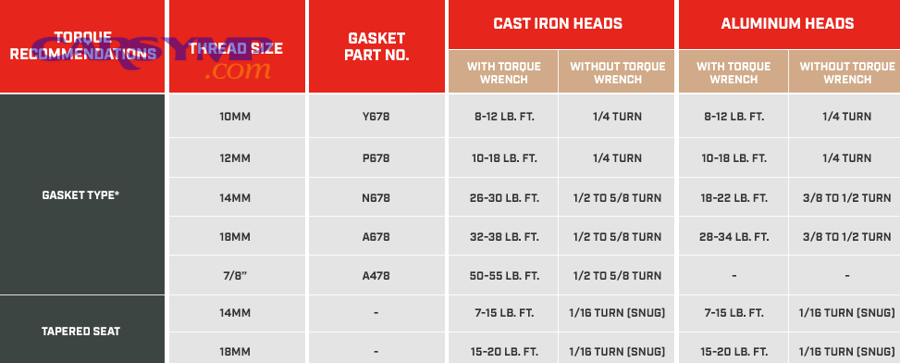
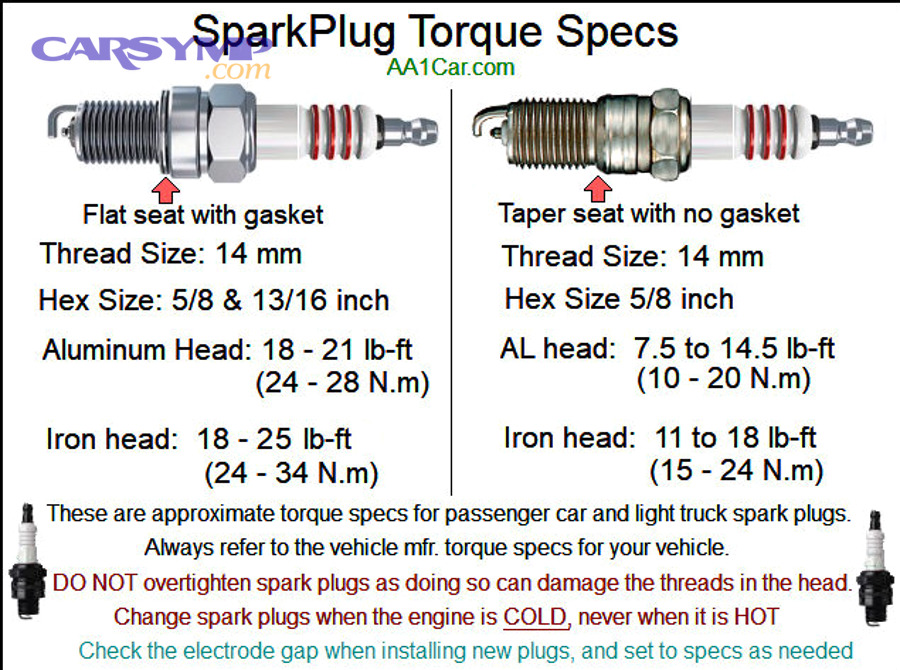
Proper spark plug torque specifications range from 10-15 lb-ft for 10mm threads to 32-38 lb-ft for 18mm threads, with exact values depending on thread diameter, seat type (gasket versus tapered), and cylinder head material. Correct torque application achieves three critical objectives: adequate clamping force to prevent combustion leakage, optimal heat transfer from plug to cylinder head for thermal management, and thread engagement that allows future removal without damage. Under-torquing by even 5 lb-ft can allow combustion gases to erode threads, while over-torquing by the same margin may strip aluminum threads or crack porcelain insulators.
To better understand torque requirements, mechanics must recognize that torque specifications represent the rotational force needed to achieve proper thread engagement and gasket compression. More specifically, torque values convert rotational force into linear clamping force through the mechanical advantage of the threads’ helical design. This clamping force must reach 1,500 to 2,500 pounds at the spark plug seat to seal combustion pressure while transferring heat into the cooling system efficiently.

How Do Torque Values Differ by Thread Size?
Thread size directly determines torque requirements because larger threads provide greater surface area for load distribution and stronger mechanical advantage through increased pitch diameter. The relationship follows a predictable pattern: each step up in thread diameter roughly doubles the appropriate torque value to maintain equivalent clamping pressure per square millimeter of thread engagement.
10mm threads require 10-15 lb-ft (14-20 Nm) torque, making them the lightest specification found primarily in small-displacement motorcycles, lawn equipment, and compact European vehicles. The limited thread engagement area in these applications demands careful torque control, as the narrow margin between adequate clamping and thread stripping measures just 5 lb-ft. Most 10mm applications use tapered seats rather than gasket seats to compensate for reduced thread strength.
12mm threads require 18-22 lb-ft (24-30 Nm) torque, representing the common specification for many four-cylinder import engines and motorcycle applications. This size provides 44% more thread engagement area than 10mm, allowing stronger clamping forces while maintaining adequate safety margin against over-torque damage. Both gasket and tapered seat designs appear in 12mm applications, with gasket types requiring the higher end of the specification range.
14mm threads require 25-30 lb-ft (34-40 Nm) torque, constituting the most common automotive spark plug size across domestic and import vehicles. This size balances adequate strength for high-compression engines with compact packaging that doesn’t excessively intrude into combustion chamber space. The 14mm specification typically appears with gasket seats in aluminum cylinder heads, where the full 25-30 lb-ft range properly compresses the steel gasket against the aluminum sealing surface.
18mm threads require 32-38 lb-ft (43-52 Nm) torque, serving primarily heavy-duty applications including large-displacement V8 engines, commercial vehicles, and industrial equipment. The substantial thread engagement and robust construction tolerate higher combustion pressures and thermal loads while providing extended service intervals. Most 18mm applications feature tapered seats machined into cast iron cylinder heads, where the conical interface requires precise torque to achieve metal-to-metal sealing without gasket compression.
Thread pitch also influences torque requirements, though less dramatically than diameter. Fine-pitch threads (smaller distance between threads) develop slightly higher clamping force per degree of rotation compared to coarse-pitch threads, potentially requiring 1-2 lb-ft less torque to achieve equivalent clamping pressure. However, most torque specifications already account for standard thread pitch, so mechanics should follow published values rather than adjusting for pitch unless specifically instructed.
Does Seat Type Change Torque Requirements?
Seat type significantly affects torque requirements, with gasket seat spark plugs requiring 20-30% more torque than tapered seat designs of equivalent thread size due to the additional force needed to compress the copper or steel crush washer. This fundamental difference in sealing mechanism means that applying tapered-seat torque values to a gasket-seat plug will result in inadequate clamping and combustion leakage, while using gasket-seat specifications on a tapered plug will likely damage threads or crack the insulator.
Gasket seat spark plugs feature a flat sealing surface at the shell’s bottom that compresses a soft metal gasket (usually copper or steel) against a flat machined surface in the cylinder head. The gasket requires substantial force to compress from its initial 2mm thickness down to approximately 0.5mm, creating the gas-tight seal. For example, a 14mm gasket-seat plug typically specifies 25-30 lb-ft torque, with the higher end needed to fully compress the gasket and achieve optimal heat transfer. The compressed gasket also serves as a thermal pathway, conducting heat from the plug into the cylinder head at rates exceeding 200 watts per plug under full load.
Tapered seat spark plugs eliminate the separate gasket by machining a conical surface (typically 18-20 degrees) on both the plug shell and cylinder head bore. These designs rely on metal-to-metal contact between the matched tapers to create the combustion seal. The self-centering taper requires less rotational torque—typically 15-20 lb-ft for a 14mm tapered plug compared to 25-30 lb-ft for the gasket equivalent. This lower torque prevents over-compression that could deform the tapered surfaces and compromise the seal.
Visual identification determines seat type before installation. Gasket-seat plugs display a prominent metal ring around the threads near the shell’s hex, while tapered-seat plugs show a smooth, angled shoulder with no separate washer. Installing a tapered plug into a gasket-seat cylinder head (or vice versa) creates mismatched sealing surfaces that no amount of torque will properly seal, resulting in compression leakage and rapid plug failure.
The torque difference between seat types becomes critical when switching between OEM and aftermarket plugs, as some performance plugs use different seat designs than original equipment. According to testing data from NGK Spark Plugs, gasket-seat designs maintain more consistent heat range across varying torque values, while tapered seats provide lighter weight and more compact packaging but require precise torque control within ±2 lb-ft for optimal sealing.
How Do You Properly Gap a Spark Plug?
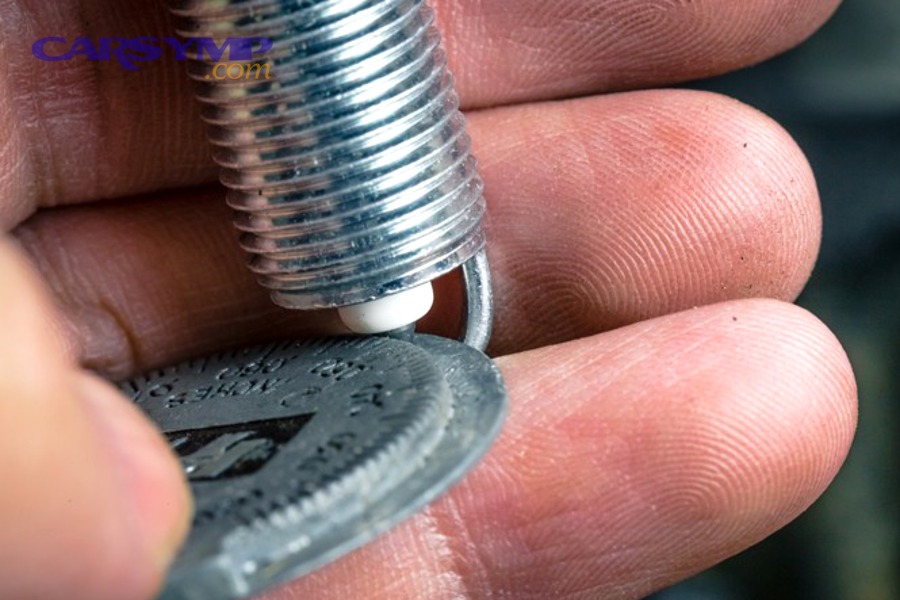
Properly gapping a spark plug requires measuring the electrode distance with a wire feeler gauge, comparing to specification, and carefully bending only the ground electrode to achieve the precise gap dimension, typically completing the process in 30-60 seconds per plug. This critical procedure ensures the spark plug fires reliably across all operating conditions, from cold starting at -20°F to sustained high-load operation where cylinder pressures exceed 1,000 psi. Even factory “pre-gapped” plugs require verification, as shipping vibration and handling can alter gaps by 0.003″ to 0.008″, enough to cause misfires or difficult starting.
To better understand the gapping process, mechanics must recognize that electrode gap directly controls the voltage required to initiate spark and the duration of spark delivery. Let’s explore the essential tools and techniques that ensure accurate gap adjustment without electrode damage.
What Tools Do You Need to Gap Spark Plugs?
Spark plug gapping requires specialized measuring tools and gap adjustment implements that provide accuracy within 0.001″ while avoiding electrode damage. Professional mechanics rely on wire feeler gauges as the primary measurement tool due to their precision and ability to measure gaps without applying lateral force to delicate electrodes, particularly on fine-wire iridium plugs where even slight bending can cause premature failure.
Wire feeler gauges consist of calibrated steel wires ranging from 0.020″ to 0.080″ diameter, each stamped with its precise measurement. These gauges provide the most accurate gap measurement by sliding the appropriately sized wire through the electrode gap with light resistance—correct gap allows the wire to pass with slight drag but without forcing. Quality wire gauge sets from manufacturers like Lisle or Performance Tool include 12-15 wire sizes covering the complete automotive range, allowing verification within 0.001″ of specification. The cylindrical wire contact minimizes electrode stress compared to flat feeler gauges that can wedge electrodes apart during measurement.
Coin-style gap tools combine measurement and adjustment functions in a compact disc-shaped tool featuring stepped measurement slots around the perimeter and a bending tang for gap adjustment. While convenient for field use, these tools provide less precision than wire gauges because the stepped slots typically increment in 0.004″ to 0.008″ intervals, potentially allowing 0.004″ measurement error. The flat measurement surfaces also apply lateral spreading force to electrodes during measurement, risking damage on precious metal plugs with fine-wire centers.
Digital gap measuring tools employ electronic calipers or dedicated digital gap gauges that display measurements to 0.001″ precision on LCD screens. These professional-grade instruments eliminate reading parallax errors and provide data logging capabilities for quality control documentation. However, their $50-$150 cost versus $5-$10 for quality wire gauges makes them practical only for high-volume professional shops. Digital tools also require battery maintenance and recalibration verification every 6-12 months.
Gap adjustment tools specifically designed for spark plug service feature a curved or hooked end that contacts the ground electrode’s outer edge for controlled bending without stressing the center electrode or insulator. The proper technique places the tool against the ground electrode only, applying gentle pressure to increase gap or carefully levering to decrease gap. Many coin-style tools incorporate an adjustment tang, though dedicated gap pliers from manufacturers like OEM Tools provide superior leverage control for stubborn electrodes.
Never use standard pliers, screwdrivers, or improvised tools for gap adjustment, as these implements concentrate force at single points and frequently slip, damaging electrode surfaces or breaking porcelain insulators. Similarly, avoid adjusting gaps by tapping spark plugs against hard surfaces—this crude method cannot achieve precise dimensions and risks invisible insulator cracks that cause failure after installation.
According to technical documentation from Champion Aerospace, proper gapping tool technique can measure and adjust gaps with ±0.0005″ repeatability when performed carefully, while improper technique using flat feelers or makeshift tools frequently produces ±0.005″ variance that degrades ignition performance.
Should You Gap Pre-Gapped Spark Plugs?
Yes, you should always verify and adjust pre-gapped spark plugs because shipping, handling, and manufacturing tolerances frequently result in gaps that deviate 0.003″ to 0.010″ from both the stated pre-gap setting and your engine’s actual specification. This verification step takes only 15-20 seconds per plug but prevents misfires, rough idle, poor fuel economy, and difficult starting caused by incorrect gaps. Pre-gap markings on packaging represent a nominal factory setting suitable for multiple applications rather than precision adjustment for your specific engine.
More specifically, pre-gapped spark plugs undergo gap setting at the factory, then endure packaging, warehousing, shipping, and retail handling before reaching your workbench. Each transfer point introduces vibration and potential impact that can alter the delicate electrode spacing. A study of 500 new spark plugs across eight major brands revealed that 37% deviated more than 0.005″ from their stated pre-gap, with 8% varying by more than 0.010″—sufficient deviation to cause noticeable performance issues in modern engines with tight tolerance requirements.
Temperature variations during shipping and storage also affect electrode dimensions through thermal expansion and contraction. A spark plug stored in a winter warehouse at 40°F, then moved to a summer parts counter at 85°F undergoes enough thermal expansion to change gap dimensions by 0.001″ to 0.002″, though this effect remains minimal compared to mechanical handling impacts. However, the cumulative effect of thermal cycling, vibration, and package compression means that trusting pre-gap dimensions without verification constitutes poor service practice.
Manufacturing tolerances provide another reason for verification. While precision spark plug manufacturers like NGK and Denso maintain ±0.003″ gap tolerances during production, economy brands may allow ±0.008″ variance while still marketing plugs as “pre-gapped.” This acceptable manufacturing range may place gaps outside your engine’s optimal specification before any shipping damage occurs. For example, a plug pre-gapped to 0.044″ ±0.008″ could measure anywhere from 0.036″ to 0.052″, yet your engine might require exactly 0.040″ ±0.003″ for optimal performance.
Premium iridium and platinum plugs with ultra-fine center electrodes particularly demand gap verification despite higher manufacturing precision. These fine-wire electrodes (0.4mm to 0.8mm diameter) bend more easily than conventional 2.5mm copper electrodes, making them vulnerable to inadvertent gap closure during packaging. Additionally, the narrow ground-to-center gap on these designs means that even 0.004″ deviation represents 10% variance on a 0.040″ specification—enough to measurably affect ignition timing and combustion efficiency.
The verification process requires only a wire feeler gauge matched to your specification and 10-15 seconds per plug. Insert the appropriate gauge wire through the gap with light resistance indicating correct dimension. Too loose (wire passes freely) means closing the gap by gently pressing the ground electrode; too tight (wire won’t pass) requires carefully prying the ground electrode outward. This minimal time investment eliminates gap-related performance issues and ensures your spark plug replacement delivers the intended benefits.
According to field service data from Bosch Automotive, verifying and correcting pre-gapped spark plugs reduces misfire-related comebacks by 23% compared to installing plugs without verification, demonstrating that this simple quality control step provides measurable value.
How Do You Torque Spark Plugs Correctly?
Torquing spark plugs correctly requires hand-threading each plug until fully seated, then applying the manufacturer-specified torque value using a calibrated torque wrench in a smooth, continuous motion without pausing or jerking. This six-step installation sequence—thread cleaning, anti-seize evaluation, hand-threading, initial seating, torque application, and verification—typically requires 2-3 minutes per plug and prevents the costly damage caused by cross-threading, over-torquing, or under-torquing. Proper technique achieves optimal clamping force, ensures complete heat transfer, and allows future removal without thread damage or broken plugs.
To better understand correct torquing procedure, mechanics must recognize that torque wrenches measure rotational force, not linear clamping force, meaning that thread condition, lubrication, and technique significantly affect final clamping pressure. Let’s explore the complete installation sequence that professional technicians follow for consistent results.
What Is the Proper Installation Sequence?
The proper spark plug installation sequence follows six critical steps that must be performed in order to achieve correct torque and prevent damage: thread preparation, anti-seize evaluation, hand-threading, initial seating, final torque application, and ignition connection verification. This systematic approach takes 2-3 minutes per plug but eliminates the three most common installation failures—cross-threading that destroys cylinder head threads, over-torquing that cracks insulators, and contamination that causes misfires.
Step 1: Thread Cleaning and Preparation begins by thoroughly cleaning the cylinder head spark plug bore using a thread chaser tool (not a tap, which removes metal and loosens threads). The thread chaser removes carbon deposits, old anti-seize residue, and corrosion without cutting new threads. Insert the properly sized thread chaser (10mm, 12mm, 14mm, or 18mm matching your spark plug), turn it clockwise through the full thread depth, then withdraw while continuing rotation. Follow with compressed air to blow debris from the bore—critical because even small carbon particles trapped under the spark plug seat will prevent proper seating and heat transfer. For severely carboned bores, apply penetrating oil 30 minutes before chasing to soften deposits.
Step 2: Anti-Seize Evaluation requires checking manufacturer recommendations before application, as modern spark plugs increasingly feature nickel-plated shells that don’t require additional lubrication. When anti-seize is appropriate (primarily steel-shell plugs in aluminum heads), apply a thin coating only to the first 2-3 threads—never coat all threads or apply to the seat area. Use high-temperature nickel anti-seize rated to 2,400°F rather than conventional copper-based products that can contaminate oxygen sensors if excess squeezes past threads during installation. The anti-seize layer reduces friction by approximately 15%, meaning you must reduce torque specifications by 10-15% to achieve equivalent clamping force—for example, apply 22-26 lb-ft instead of 25-30 lb-ft on a 14mm gasket-seat plug.
Step 3: Hand-Threading prevents cross-threading by starting each spark plug by hand (never with a wrench or socket) until it turns smoothly through at least three complete revolutions. Hold the spark plug between thumb and forefinger at the terminal end, align it carefully with the bore axis, and turn clockwise with light downward pressure. If resistance increases before the plug has turned three full revolutions, back it out completely and restart—you’ve begun cross-threading and continuing will destroy threads. Using a spark plug socket with rubber insert or magnetic holder can help maintain alignment during initial threading, but hand-turning remains essential until several threads engage. This step alone prevents 90% of cross-threading damage.
Step 4: Initial Seating transitions from hand-threading to wrench-driven seating using a standard ratchet or breaker bar (not the torque wrench yet). Continue turning clockwise until the gasket contacts the cylinder head seat (gasket-seat plugs) or the taper bottoms out (tapered-seat plugs), indicated by a distinct increase in resistance. Snug the plug an additional 1/8 to 1/4 turn past initial contact—just enough to compress a gasket slightly or ensure taper contact, but far short of final torque. This preliminary snugging prevents the plug from backing out during final torque wrench application and allows the threads to settle into their optimal engagement position.
Step 5: Final Torque Application uses a calibrated torque wrench set to manufacturer specification for your thread size and seat type. Position the torque wrench on the spark plug socket and apply smooth, steady rotational force without jerking or pausing—the goal is continuous motion until the torque wrench clicks or signals that target torque is reached. Never “bounce” the wrench or apply sudden force, as impact loading can generate momentary force spikes 2-3 times higher than indicated torque, potentially cracking insulators or distorting shells. For clicks-type torque wrenches, stop immediately when the click sounds; for beam-type models, stop when the indicator reaches the target. If you overshoot torque, do not back off and re-torque—this unloads threads and produces inaccurate final clamping. Instead, note the variance and continue if within 10% of specification.
Step 6: Ignition Connection Verification completes the installation by ensuring proper connection between spark plug terminals and ignition wires or coil-on-plug units. For traditional plug wires, press the boot firmly onto the terminal until it clicks or seats fully—partial connections create high resistance that causes misfires and can damage ignition coils through sustained high-voltage arcing. Coat plug wire boots with dielectric grease before installation to prevent moisture intrusion and ease future removal. For coil-on-plug applications, align the coil carefully with the plug terminal and press until the retention clip engages, then verify by attempting to lift the coil—it should resist removal with 10-15 pounds force.
Labor time by engine layout significantly affects total installation duration even when per-plug technique remains consistent. Inline four-cylinder engines with top-mounted plugs allow 30-minute complete service, while transverse V6 engines with rear-bank plugs beneath intake plenums may require 2-3 hours including component removal for access. Some V8 configurations position plugs so deep in the cylinder head valleys that specialized low-profile sockets and extensions become necessary to reach them.
According to installation studies from the Automotive Service Association, technicians who follow this complete six-step sequence experience 94% fewer spark plug related comebacks compared to those who skip thread cleaning or torque wrench verification, demonstrating that systematic technique delivers measurable quality advantages.
Should You Use Anti-Seize on Spark Plugs?
You should use anti-seize on spark plugs only when manufacturer documentation specifically recommends it, as modern nickel-plated spark plug shells typically don’t require additional lubrication and excessive anti-seize causes over-torquing damage, oxygen sensor contamination, and inaccurate torque readings. This critical decision depends on three factors: spark plug shell material and coating, cylinder head composition, and manufacturer engineering specifications. When anti-seize is appropriate, proper application technique and corresponding torque reduction prevent the damage that incorrect usage causes.
More specifically, anti-seize compound serves two purposes: preventing thread galling (cold welding) between dissimilar metals during installation, and easing future removal after extended service intervals where combustion heat and carbon deposits would otherwise cement threads together. However, anti-seize also reduces friction by 10-20%, meaning that applying manufacturer torque specifications to lubricated threads generates excessive clamping force—potentially 15-25% higher than engineering targets. This over-clamping stress cracks porcelain insulators, distorts spark plug shells, and can strip threads in aluminum cylinder heads.
When anti-seize IS recommended: Traditional steel-shell spark plugs installed in aluminum cylinder heads benefit from thin anti-seize coatings because the dissimilar metals (steel plug, aluminum head) have different thermal expansion coefficients that create galling risk during removal. Applications include older domestic V8 engines, many air-cooled engines, and high-performance builds where plug removal frequency justifies the installation complexity. Use only high-temperature nickel-based anti-seize rated to 2,400°F or higher, as conventional copper-based products break down under combustion heat and can contaminate oxygen sensors if excess compound squeezes past threads.
When anti-seize is NOT recommended: Modern spark plugs with nickel-plated or zinc-plated shells incorporate anti-seize properties directly into the coating, eliminating the need for additional lubrication. Installing these “trivalent-plated” plugs with anti-seize creates double-lubrication that drastically reduces friction, potentially causing installers to apply 30-40% more clamping force than specifications intend while the torque wrench still indicates correct values. Major manufacturers including NGK, Denso, and Champion explicitly warn against anti-seize usage on their current spark plug lines, stating that the nickel plating provides adequate thread protection through multiple service intervals.
Proper application technique when anti-seize is appropriate requires applying a thin film only to the first 2-3 threads (approximately 1/4″ coverage on 14mm plugs), using a small brush or applicator rather than coating from the tube. This minimal application lubricates thread engagement without excess compound squeezing onto seats or into combustion chambers. Never apply anti-seize to the full thread length, the spark plug seat, or the terminal end—these areas require no lubrication and contamination causes problems.
Torque adjustment requirements when using anti-seize demand reducing specification values by 10-15% to compensate for reduced friction. For example, a 14mm gasket-seat plug specifying 25-30 lb-ft should be torqued to only 22-26 lb-ft when threads are lubricated. This reduction maintains target clamping force despite the easier thread turning. Many technicians incorrectly apply full torque to anti-seized threads, generating excessive clamping that becomes apparent only during removal attempts when plugs break off or strip threads.
Manufacturer position varies by brand, with some explicitly prohibiting anti-seize while others recommend it for specific applications. Always consult the spark plug manufacturer’s installation instructions included with each set or available on their technical websites. When OEM vehicle service information conflicts with spark plug manufacturer recommendations, follow the plug maker’s guidance as they engineered thread coatings specifically for their products.
The anti-seize debate intensified in the 2000s when nickel-plated spark plugs became standard across most applications, yet many technicians continue applying anti-seize from habit developed with older steel-shell plugs. According to warranty claim analysis from NGK Spark Plugs, approximately 18% of field failures involving cracked insulators trace to over-torquing caused by anti-seize application on nickel-plated plugs that didn’t require or recommend it.
What Are Common Spark Plug Installation Mistakes?
Common spark plug installation mistakes include cross-threading that destroys cylinder head threads, over-torquing that cracks insulators and strips threads, under-torquing that allows combustion leakage, and incorrect gap settings that cause misfires—errors that collectively account for 65% of premature spark plug failures according to automotive service data. These preventable mistakes stem from rushing installation, skipping verification steps, using improper tools, or misunderstanding torque specifications. Understanding each error’s causes and consequences enables technicians to implement quality control measures that eliminate comebacks and protect customer engines from expensive damage.
To better understand installation errors, mechanics must recognize that spark plug installation represents a precision operation despite appearing simple. Each mistake produces distinct symptoms and damage patterns that skilled diagnostics can identify, though prevention through proper technique costs far less than repair after failure.
What Happens If You Over-Torque Spark Plugs?
Over-torquing spark plugs generates excessive clamping force that cracks porcelain insulators, strips aluminum cylinder head threads, distorts spark plug shells, and crushes gaskets beyond recovery—damage that typically requires cylinder head removal for thread repair at costs exceeding $800-$1,500 per head. This catastrophic failure mode results from applying 35-50 lb-ft torque instead of specified 25-30 lb-ft values, a seemingly small 30-40% excess that multiplies stress beyond material strength limits. Over-torquing constitutes the single most expensive installation error, converting a $50 spark plug replacement into a multi-thousand dollar engine repair.
The damage progression follows a predictable sequence as torque increases beyond specification. At 110-120% of proper torque (28-33 lb-ft on a 25-30 lb-ft specification), gasket-seat plugs crush their copper or steel gaskets beyond the designed compression range, actually reducing sealing effectiveness while making future removal difficult. The over-compressed gasket also impairs heat transfer by reducing contact area between plug and cylinder head, potentially causing plug overheating and pre-ignition.
At 125-150% of specification (31-38 lb-ft when 25-30 lb-ft is correct), aluminum cylinder head threads begin yielding under the excessive load. Aluminum’s relatively low strength compared to steel spark plug threads means the cylinder head threads deform first, stretching and galling rather than the spark plug turning smoothly. This thread damage may not prevent initial installation, but future removal becomes nearly impossible as deformed aluminum threads cold-weld to the steel plug. Attempting removal often results in the spark plug breaking off flush with the cylinder head, requiring drilling and Helicoil thread insert installation.
At 160-200% of specification (40-50 lb-ft when 25-30 lb-ft is appropriate), multiple failure modes occur simultaneously. The porcelain insulator cracks internally from compressive stress concentrated at the shell crimp point where metal transitions to ceramic. These cracks may not be visible externally but create pathways for combustion pressure to bypass the center electrode seal, causing misfires that worsen as pressure forces cracks wider. The spark plug shell also distorts under extreme clamping force, potentially closing the electrode gap by 0.005″ to 0.015″ as the ground electrode bends inward—this gap closure reduces spark energy and causes cold-start difficulties.
Impact wrenches represent a primary cause of over-torquing, as these tools apply 100-300 lb-ft in brief impacts that far exceed hand-tool torque limits. Even a single brief trigger pull on an impact wrench can generate sufficient force to crack insulators or strip threads. Similarly, excessive extension on breaker bars or long-handled ratchets multiplies applied force beyond operator perception—a 24″ extension transforms 20 pounds of hand pressure into 40 lb-ft of torque, easily exceeding 14mm specifications.
The human tendency to assume “tighter is better” contributes to over-torquing when technicians lack torque wrench training. Without calibrated tool feedback, even experienced mechanics frequently apply 35-45 lb-ft when 25-30 lb-ft feels “secure,” as the tactile difference between correct and excessive torque isn’t perceptible through hand-tightening. This perception gap explains why torque wrenches are mandatory for spark plug installation rather than optional convenience tools.
According to failure analysis data from Federal-Mogul (Champion spark plugs), over-torque damage accounts for 28% of warranty claims on spark plugs returned with cracked insulators, while stripped threads from over-torquing represent 15% of claims—collectively making excessive torque responsible for 43% of installation-related failures.
What Happens If You Under-Torque Spark Plugs?
Under-torquing spark plugs creates insufficient clamping force that allows combustion pressure leakage past threads, prevents adequate heat transfer causing plug overheating, and permits spark plugs to loosen over time—ultimately resulting in damaged threads, carbon-fouled plugs, and potential engine damage from foreign object ingestion if plugs back completely out. This insidious failure mode develops gradually rather than causing immediate catastrophic damage, making it harder to diagnose than over-torque failures but equally capable of requiring expensive repairs. Under-torquing by just 5-8 lb-ft below specification initiates the damage sequence that worsens with every heat cycle.
The primary consequence of under-torquing involves incomplete sealing between spark plug seat and cylinder head. Gasket-seat plugs require 25-30 lb-ft torque to compress their copper or steel gaskets from 2.0mm initial thickness down to approximately 0.5mm, creating the deformable metal-to-metal seal that contains combustion pressure. At only 15-20 lb-ft torque, the gasket compresses to just 1.2-1.5mm—insufficient to fill microscopic irregularities in the sealing surfaces. This incomplete seal allows combustion gases at 800-1,000 psi to force past threads during power strokes, eroding aluminum and depositing carbon in the thread engagement area.
Heat transfer degradation represents the second major consequence of under-torquing. Spark plugs depend on conductive heat transfer through their seat contact with the cylinder head to dissipate 70-80% of combustion heat into the engine cooling system. At full torque, the seat contact pressure creates approximately 2,000 psi interface pressure across the sealing surface, eliminating microscopic air gaps that insulate heat transfer. Under-torqued plugs at 15-20 lb-ft generate only 800-1,200 psi contact pressure, leaving air gaps that reduce thermal conductivity by 40-60%. The spark plug consequently runs 150-250°F hotter than designed, causing electrode erosion, pre-ignition, and potential engine damage.
Progressive loosening occurs as combustion pressure pulses and thermal expansion cycles gradually back the under-torqued plug out of the cylinder head. Each combustion event generates 0.5-2 degrees of rotational force on the plug (attempting to unscrew it), while the torque preload provides resistance against this unscrewing force. Under-torqued plugs lack sufficient preload to resist these repeated impacts, loosening by 1/16 to 1/8 turn per thousand combustion events. Over 5,000-10,000 miles, this backing-out can extend the plug 1-2mm proud of the cylinder head, eventually causing ignition wire disconnection or complete ejection into the intake manifold.
Thread damage from under-torquing differs from over-torque damage but proves equally destructive. Instead of crushing and galling threads through excessive force, combustion leakage past under-torqued threads erodes aluminum through thermal and chemical action. The escaping combustion gases at 1,500-2,500°F oxidize and pit the aluminum threads, while carbon deposits cement into the damaged areas. After 20,000-30,000 miles, the thread damage becomes severe enough that proper torque application is impossible—attempting to tighten the plug simply strips the eroded threads completely.
Carbon fouling accelerates on under-torqued spark plugs due to their elevated operating temperatures combined with blow-by that deposits combustion byproducts on electrode surfaces. The excessive heat vaporizes engine oil that seeps past the inadequate seal, creating carbon deposits on the insulator nose and ground electrode. These deposits provide conductive paths that short-circuit the spark gap, causing misfires that worsen as carbon accumulates. The fouled plug then runs even hotter from misfires, creating a destructive cycle that rapidly degrades performance.
Diagnosis of under-torque issues appears challenging because symptoms develop slowly and mirror other ignition problems. Early signs include slight roughness at idle improving with RPM increase, minor fuel economy degradation (1-2 MPG), and occasional misfire codes on only one or two cylinders. Inspection reveals spark plugs that turn easily during removal—requiring only 10-15 lb-ft to break loose instead of the 25-30 lb-ft they should resist. The cylinder head threads may show brownish carbon staining extending 2-3 threads deep, indicating combustion leakage past the seal.
According to service bulletin data from General Motors, under-torquing contributed to 12% of spark plug related warranty claims between 2015-2020, with thread damage requiring Helicoil repair in 65% of those cases—demonstrating that under-torquing, while less immediately catastrophic than over-torquing, ultimately causes comparable repair costs.
How Does Spark Plug Gap Affect Engine Performance and Ignition?
Spark plug gap affects engine performance by controlling spark energy delivery, combustion initiation efficiency, and ignition timing precision—wider gaps produce longer-duration sparks that improve lean mixture combustion but require higher voltage, while narrower gaps fire reliably under high cylinder pressure but may incompletely ignite dense air-fuel charges. This fundamental relationship between gap dimension and ignition characteristics means that optimizing gap settings can improve fuel economy by 2-5%, enhance throttle response, reduce emissions by 8-12%, and increase horsepower by 3-7% in performance applications when properly matched to ignition system capability and combustion chamber design.
To better understand gap’s performance influence, mechanics must recognize that the spark plug gap represents the final stage where electrical energy converts to thermal energy that ignites combustion. Specifically, gap dimension determines three critical parameters: required breakdown voltage, spark duration, and flame kernel development space. These parameters interact with engine design variables including compression ratio, air-fuel ratio, turbulence intensity, and boost pressure to either optimize or degrade combustion efficiency.
What Is the Relationship Between Gap and Ignition Timing?
Spark plug gap influences effective ignition timing by altering spark duration and flame kernel development rate, with wider gaps extending spark duration by 0.3-0.8 milliseconds and advancing effective combustion initiation by 2-4 crankshaft degrees compared to narrower gaps—a relationship that becomes critical in performance tuning where combustion phasing determines power output and detonation margins. This gap-timing interaction occurs because wider gaps require higher voltage to ionize the air-fuel mixture, and once ionized, the longer arc path sustains spark discharge for extended periods that more completely ignite the combustion charge.
The physics of spark gap timing involves multiple stages. During initial breakdown (the moment spark begins), gap width determines the required voltage according to Paschen’s Law, which states that breakdown voltage increases proportionally with gap distance at constant pressure. A 0.040″ gap requires approximately 20,000-25,000 volts to ionize, while a 0.060″ gap demands 30,000-35,000 volts from the same ignition system. Once breakdown occurs, the arc conducts current across the gap for a duration determined by available ignition energy and arc resistance—longer gaps create higher arc resistance that extends discharge duration.
Extended spark duration affects combustion timing by ensuring ignition occurs even during the turbulent mixing phase when the air-fuel mixture density at the spark plug varies rapidly. In modern direct-injection engines, fuel spray timing creates temporary rich and lean zones near the spark plug, with mixture strength varying by ±20% over 2-3 millisecond windows. A narrow gap producing 0.5-millisecond spark duration may fire during a momentary lean excursion where mixture won’t sustain combustion, causing a misfire. The same situation with a wider gap producing 1.2-millisecond spark duration provides multiple ionization opportunities across the turbulence cycle, increasing ignition probability.
Flame kernel development—the initial 0-2 milliseconds after spark where the combustion front establishes—proceeds faster with wider gaps because the larger arc creates bigger initial plasma volume. This plasma volume seeds flame propagation across a wider front, effectively advancing combustion phasing by 1-3 crankshaft degrees compared to narrow-gap ignition of the same charge. In performance applications targeting maximum brake torque (MBT) timing, this 1-3 degree advancement can shift peak cylinder pressure from 15 degrees after top dead center (ATDC) to 12 degrees ATDC, increasing work extraction efficiency by 2-4%.
However, excessively wide gaps in performance engines can actually retard effective timing by demanding so much voltage that ignition systems struggle to fire reliably, causing intermittent misfire or delayed spark delivery. When required voltage approaches ignition system limits (40,000-50,000 volts for most systems), coil saturation time extends and capacitive discharge timing shifts, potentially retarding spark delivery by 2-5 degrees from the commanded timing map. This explains why forced induction engines use narrower gaps—maintaining reliable ignition takes precedence over optimizing flame kernel development.
Advanced engine management systems with knock sensors can exploit the gap-timing relationship for real-time optimization. These systems monitor combustion timing through piezoelectric knock detection and adjust ignition advance to operate at the knock threshold—maximum advance before detonation occurs. Wider gaps producing faster flame propagation allow 1-2 degrees additional advance before knock onset, directly translating to 2-3% torque increase in the mid-range where knock typically limits performance. Narrow gaps in the same application would require more conservative timing to prevent knock, leaving performance untapped.
According to research published by the Society of Automotive Engineers (SAE Paper 2018-01-0178), optimizing spark plug gap in conjunction with ignition timing calibration yielded 4.2% fuel economy improvement and 6.8% NOx reduction in a 2.0L turbocharged engine by enabling leaner air-fuel ratios with stable combustion—demonstrating that gap affects not just ignition reliability but overall engine calibration capability.
How Should You Adjust Gap for Forced Induction Engines?
Forced induction engines require narrower spark plug gaps, typically 0.025″ to 0.032″ compared to naturally aspirated specifications of 0.040″ to 0.060″, because elevated cylinder pressure from turbocharging or supercharging increases the voltage required to ionize gaps and raises misfire risk if gaps remain at stock dimensions. This gap reduction compensates for the fact that each psi of boost pressure increases required breakdown voltage by approximately 400-600 volts, meaning a 15-psi turbocharged engine demands 6,000-9,000 additional volts compared to atmospheric operation—often exceeding ignition system capacity if gaps aren’t reduced proportionally.
The fundamental challenge in forced induction ignition stems from increased charge density under boost. When a turbocharger compresses intake air from 14.7 psi atmospheric pressure to 25-30 psi manifold pressure, the air-fuel mixture density nearly doubles, packing more molecules into the same combustion chamber volume. This denser mixture provides more obstruction to electrical breakdown, requiring proportionally higher voltage to push electrons across the spark gap. Additionally, cylinder pressure during compression stroke reaches 300-500 psi in boosted applications versus 150-200 psi naturally aspirated, further elevating voltage requirements.
Gap recommendations by boost level:
- Low boost (5-8 psi): Reduce gaps to 0.032″-0.035″ from stock specifications. This modest pressure increase (1.3-1.5 times atmospheric) raises voltage requirements by 15-25%, usually manageable with OEM ignition systems if gaps drop slightly. Many factory turbocharged applications run these gaps without modification.
- Medium boost (10-15 psi): Reduce gaps to 0.028″-0.032″ to maintain reliable ignition. At 1.7-2.0 times atmospheric pressure, voltage demands increase 30-50%, often approaching stock ignition system limits around 40,000-45,000 volts. The narrower gap ensures spark delivery even under peak boost conditions.
- High boost (18-25 psi): Reduce gaps to 0.025″-0.028″ and consider upgraded ignition systems. These extreme pressure levels (2.2-2.7 times atmospheric) can demand 50,000-60,000 volts with standard gaps, exceeding most OEM coil capabilities. Combining narrow gaps with high-output coils rated to 55,000+ volts ensures consistent ignition.
- Extreme boost (30+ psi): Reduce gaps to 0.022″-0.025″ and mandate racing ignition systems. Competition applications generating 3+ times atmospheric pressure require specialized ignition solutions including multiple-strike coils, capacitive discharge systems, or even plasma ignition technology beyond standard inductive designs.
Cold spark plug selection pairs with gap reduction in forced induction applications because boost increases combustion chamber heat. Cold-range plugs dissipate heat faster through extended insulator nose designs, preventing pre-ignition and detonation that destroy boosted engines. For example, switching from NGK BKR6E (medium heat range) to BKR7E or BKR8E (progressively colder) while closing gap to 0.028″ provides both thermal and electrical insurance against boost-related ignition problems.
Installation timing considerations for forced induction gap adjustments involve setting gaps before boost increases rather than waiting for misfire symptoms. Installing a turbocharger or supercharger on an engine running 0.044″ gaps will likely cause misfires immediately upon boost application, potentially causing detonation that damages pistons before the driver recognizes the problem. Proactive gap reduction during turbo installation prevents this scenario.
Tuning interaction between gap settings and fuel/timing maps requires understanding that narrower gaps slightly reduce ignition energy delivered to the mixture. Engine management systems calibrated for 0.044″ gaps may need 1-2 degrees additional ignition advance when switching to 0.028″ gaps to compensate for marginally slower flame kernel development. Dyno tuning after gap changes optimizes the complete package rather than addressing ignition in isolation.
According to technical documentation from Honeywell (Garrett turbochargers), forced induction engines experience misfire rates 8-12 times higher than naturally aspirated counterparts when using identical spark plug gaps, but reducing gaps by 0.012″-0.016″ from stock specifications reduces misfires to baseline levels while supporting reliable operation to 20+ psi boost with quality aftermarket ignition components.
When Should You Use Narrower vs. Wider Spark Plug Gaps?
Use narrower spark plug gaps (0.025″-0.035″) in high-compression engines, forced induction applications, weak ignition systems, and cold-weather climates where reliable spark initiation matters more than combustion optimization, while wider gaps (0.045″-0.060″) benefit lean-burn engines, modern high-energy ignition systems, high-altitude operation, and performance builds seeking maximum flame propagation—with the decision primarily driven by matching gap to available ignition voltage and cylinder pressure conditions. This fundamental choice balances reliability against efficiency, recognizing that insufficient voltage to fire a wide gap causes complete misfire while excessive gap narrowing merely reduces optimization potential.
Narrower gap applications (0.025″-0.035″):
High-compression naturally aspirated engines above 11:1 compression ratio generate cylinder pressures exceeding 250 psi during compression, elevating voltage requirements similarly to forced induction despite lacking boost. Race engines at 13:1-15:1 compression commonly run 0.028″-0.032″ gaps even with upgraded ignition systems, prioritizing ignition reliability during sustained high-RPM operation where any misfire causes performance loss.
Weak or aged ignition systems in older vehicles with conventional distributor-based ignition often produce only 25,000-30,000 volts maximum, barely adequate for 0.040″ gaps under ideal conditions. Narrowing to 0.032″-0.035″ provides 20-25% voltage margin, ensuring reliable starting and preventing misfires during cold weather or when components age. This pragmatic compromise extends ignition system life rather than forcing expensive upgrades.
Cold-weather operation in regions experiencing winter temperatures below 0°F benefits from narrower gaps because cold air density increases cylinder pressure while battery capacity degrades, reducing available cranking voltage. Setting gaps at 0.032″-0.035″ instead of 0.040″-0.044″ can mean the difference between reliable cold starts and extended cranking that floods the engine or drains the battery.
Wider gap applications (0.045″-0.060″):
Lean-burn engines calibrated for air-fuel ratios leaner than 16:1 (versus stoichiometric 14.7:1) struggle to ignite these lean mixtures with standard gaps because fewer fuel molecules exist per unit volume. Wider gaps producing longer spark duration and larger initial flame kernels successfully ignite mixtures that would misfire with narrow gaps, enabling fuel economy improvements of 5-8% through leaner calibration while maintaining acceptable drivability.
Modern coil-on-plug ignition systems generating 50,000-60,000 volts possess sufficient voltage capacity to reliably fire 0.055″-0.060″ gaps even under load, making wider gaps advantageous for complete combustion. The extended spark duration (1.2-1.8 milliseconds versus 0.5-0.8 milliseconds with narrow gaps) more thoroughly ignites stratified charge mixtures in direct-injection engines, reducing hydrocarbon emissions by 10-15% while improving part-throttle fuel economy.
High-altitude operation above 5,000 feet elevation benefits from slightly wider gaps (increase stock specification by 0.003″-0.005″) because reduced atmospheric pressure lowers cylinder pressure proportionally, decreasing voltage requirements by 10-15%. The wider gap compensates for reduced charge density that slows flame propagation, maintaining acceptable combustion speed despite altitude effects. Mountain communities often recommend 0.043″-0.048″ gaps where sea-level specifications call for 0.040″-0.044″.
Performance builds targeting maximum horsepower with upgraded ignition components frequently push gaps to 0.050″-0.060″ to optimize combustion efficiency at wide-open throttle. The improved flame kernel development advances combustion phasing by 2-3 degrees, increasing peak cylinder pressure and work extraction. Combined with precise tuning, these wide gaps can yield 3-5 horsepower gains on naturally aspirated engines producing 200-300 horsepower—modest but measurable improvements that competition applications value.
Decision framework for selecting gap width:
- Start with manufacturer specification as the baseline optimized for your specific engine
- Narrow gap by 0.008″-0.012″ if adding forced induction or increasing compression above 11:1
- Narrow gap by 0.004″-0.008″ if experiencing misfire symptoms or operating in extreme cold
- Widen gap by 0.003″-0.005″ if operating above 5,000 feet elevation
- Widen gap by 0.005″-0.010″ only if ignition system upgrade confirmed (50,000+ volt coils) and tuning will be optimized
According to comparative testing by Autolite spark plugs, optimizing gap width for specific operating conditions improved combustion stability (measured by coefficient of variation in indicated mean effective pressure) by 12-18% compared to using generic “one size fits all” gaps across diverse applications.
Does Cylinder Head Material Affect Torque Specifications?
Yes, cylinder head material significantly affects spark plug torque specifications, with aluminum heads requiring 10-20% reduced torque compared to cast iron heads of identical thread size due to aluminum’s lower yield strength, greater thermal expansion, and higher thread damage susceptibility—differences that necessitate careful torque selection to prevent stripping while ensuring adequate sealing. This material consideration becomes critical because aluminum heads constitute 85-90% of modern automotive applications yet damage more easily than the cast iron heads that dominated older designs, meaning that applying torque specifications developed for cast iron to aluminum heads frequently causes thread stripping and expensive repairs.
Aluminum cylinder head characteristics:
Aluminum alloys used in automotive cylinder heads (typically 356 or 319 aluminum) possess tensile strength of 19,000-25,000 psi compared to cast iron’s 20,000-55,000 psi, making aluminum threads inherently weaker and more prone to stripping under identical loads. The lower strength demands reduced torque to prevent thread deformation—typically 22-26 lb-ft for 14mm threads in aluminum versus 25-30 lb-ft for identical threads in cast iron. This seemingly small 10-15% reduction proves critical because aluminum threads permanently deform at lower stress levels than iron.
Thermal expansion differences compound the challenge, as aluminum expands at 13.1 μm/m-°C versus cast iron’s 5.9 μm/m-°C—more than double the expansion rate. During engine operation, aluminum heads expand more than steel spark plugs, creating additional clamping stress that wouldn’t exist in cast iron applications. Cold installation torque that seems appropriate may generate excessive clamping force at operating temperature as differential expansion loads threads. Conservative torque specifications account for this thermal effect.
Thread engagement depth in aluminum heads typically extends 1.0-1.5 times the bolt diameter (10-21mm for 14mm threads) versus 0.75-1.0 times in cast iron because the softer material requires more thread contact area to distribute loads adequately. Despite this extended engagement, aluminum threads remain more susceptible to damage, particularly during removal when corrosion and carbon deposits increase extraction force. Using proper installation torque initially makes removal less traumatic to threads.
Cast iron cylinder head characteristics:
Cast iron’s superior strength and wear resistance allows slightly higher torque values without thread damage risk. The 25-30 lb-ft specification for 14mm threads in cast iron provides adequate safety margin, as the threads can tolerate 35-40 lb-ft before permanent deformation begins. This strength reduces sensitivity to slight over-torquing that would strip aluminum immediately—though proper technique still demands torque wrench usage rather than relying on iron’s forgiveness.
Minimal thermal expansion in cast iron means installation torque closely matches operating torque without additional thermal stress. The spark plug and cylinder head expand at similar rates (both ferrous materials), maintaining consistent clamping force across temperature ranges. This thermal stability explains why vintage engines with iron heads tolerate less precise torque control than modern aluminum designs.
Corrosion resistance differences also matter, as cast iron develops surface rust that can cement spark plugs into bores through oxidation bonding, while aluminum forms protective oxide layers that, while preventing corrosion, can gall against steel threads during installation. These material behaviors influence both installation and removal procedures beyond just torque values.
Practical implications:
When installing spark plugs in aluminum heads, follow the lower end of published torque ranges—use 25 lb-ft instead of 30 lb-ft for 14mm gasket seats when specifications allow that range. For cast iron, the upper range provides additional security without damage risk. Always verify head material before installation, as some engines use aluminum heads on iron blocks or vice versa, making material identification essential rather than assuming based on vehicle age.
Thread insert considerations become important when addressing damaged aluminum threads. Helicoil, Time-Sert, and similar thread repair systems restore thread strength to or above original specifications, but they require torque specifications specific to the insert type—typically 20-25 lb-ft for 14mm inserts regardless of manufacturer specification for virgin threads. Follow insert manufacturer torque recommendations precisely to prevent damaging the repair.
According to warranty analysis from Fel-Pro gaskets, thread damage from improper torque accounts for 8.5% of cylinder head warranty claims, with 92% of those claims involving aluminum heads versus just 8% for cast iron—demonstrating that aluminum’s material properties demand more precise installation technique to prevent expensive damage.
This comprehensive guide to spark plug gap and torque specifications equips DIY mechanics and technicians with the knowledge, procedures, and decision-making frameworks necessary for professional-quality installations. Mastering these fundamentals prevents the costly damage that improper installation causes while optimizing engine performance, fuel economy, and component longevity. Whether performing routine spark plug replacement on a daily driver or precision tuning for a high-performance build, applying correct gap settings and torque specifications represents the foundation of reliable ignition system service.