


Road noise diagnosis is most accurate when you start with the wear pattern, not the sound alone: tire cupping (scalloping) usually creates a repeating, speed-linked drone that matches an uneven “dip-and-peak” tread surface you can often feel with your hand.
Next, you can separate tire-related noise from a wheel-bearing hum by using a simple, driver-friendly checklist: how the sound changes with gentle lane loading, whether it migrates after tire rotation, and what your tread looks and feels like.
Then, once you’ve identified cupping, the practical goal becomes stopping it from returning: you’ll connect the wear to likely causes such as worn dampers, imbalance, or alignment drift, and choose the right fix sequence.
Introduce a new idea: by the end of this guide, you’ll also know how to avoid common misdiagnoses like feathering, heel-toe wear, and flat-spotting—so you can act confidently instead of guessing.
Is the road noise you hear likely caused by tire cupping (scalloping)?
Yes—tire cupping (scalloping) is a likely cause of your road noise if the sound is rhythmic at steady speed, the tread feels “wavy” in one direction, and the noise changes location or tone after rotation.
Next, to confirm you’re hearing cupping and not something else, you’ll connect the sound you hear to the tread you can inspect.
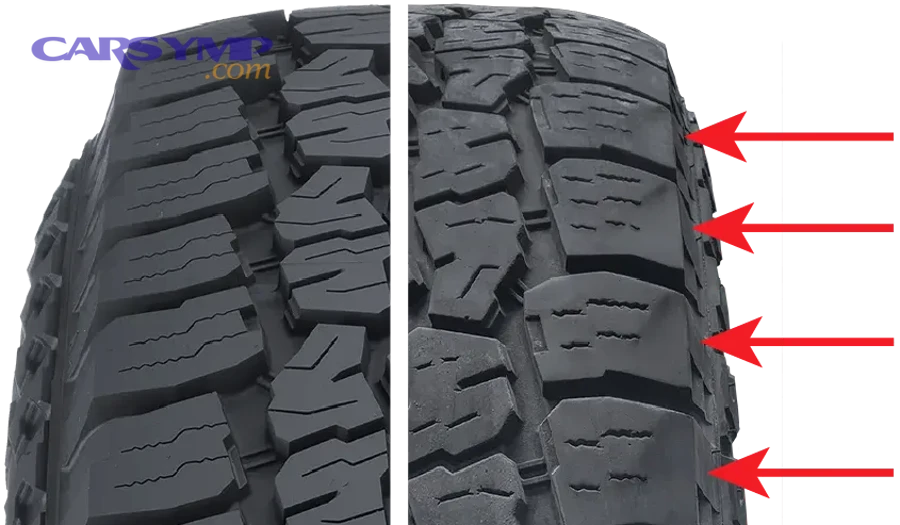
Does the noise get louder with speed and feel “rhythmic” rather than random?
A “yes” answer is meaningful because cupping noise is typically periodic—it rises and falls with tire rotation rather than appearing as random bursts.
To begin, listen for the classic “wub-wub,” “helicopter,” or droning pattern that becomes more noticeable as speed increases. Many drivers describe it as a humming noise at speed that seems to come from one corner but can fill the cabin like a low-frequency resonance.
Here’s what to listen for in real driving:
- Steady throttle, steady road: the noise holds a consistent pitch and cadence.
- Smooth pavement: the noise often becomes clearer because the road surface adds less “texture noise.”
- Speed sensitivity: as you go from 30 → 50 → 70 mph, the noise gets louder and the pitch tightens.
- Vibration pairing: you may feel a faint tremor in the steering wheel or seat, especially if the cupping is advanced.
Why this happens is simple: a cupped tire has alternating high and low spots. Each time a “high” spot hits the pavement, it creates a tiny impact and pressure pulse. Repeated hundreds of times per mile, those pulses become a repeating sound pattern you can recognize.
Can you confirm cupping by touch and sight on the tread surface?
Yes—your hands can often confirm what your ears suspect because cupping produces a repeatable, scalloped texture you can feel.
Then, do a safe, parked inspection with the car in Park (or in gear with the parking brake engaged) on level ground.
Step-by-step tactile check (no special tools):
- Find the noisiest axle first: if you suspect the rear, start there (rear cupping often sounds louder inside many cabins).
- Run your palm over the tread along the circumference.
- Sweep both directions (forward and backward).
- Notice whether it feels:
- Smooth one way, choppy the other, or
- A repeating dip/peak pattern like shallow scoops.
Visual cues that support cupping:
- Dips that repeat around the tire, often on the inner or outer shoulder
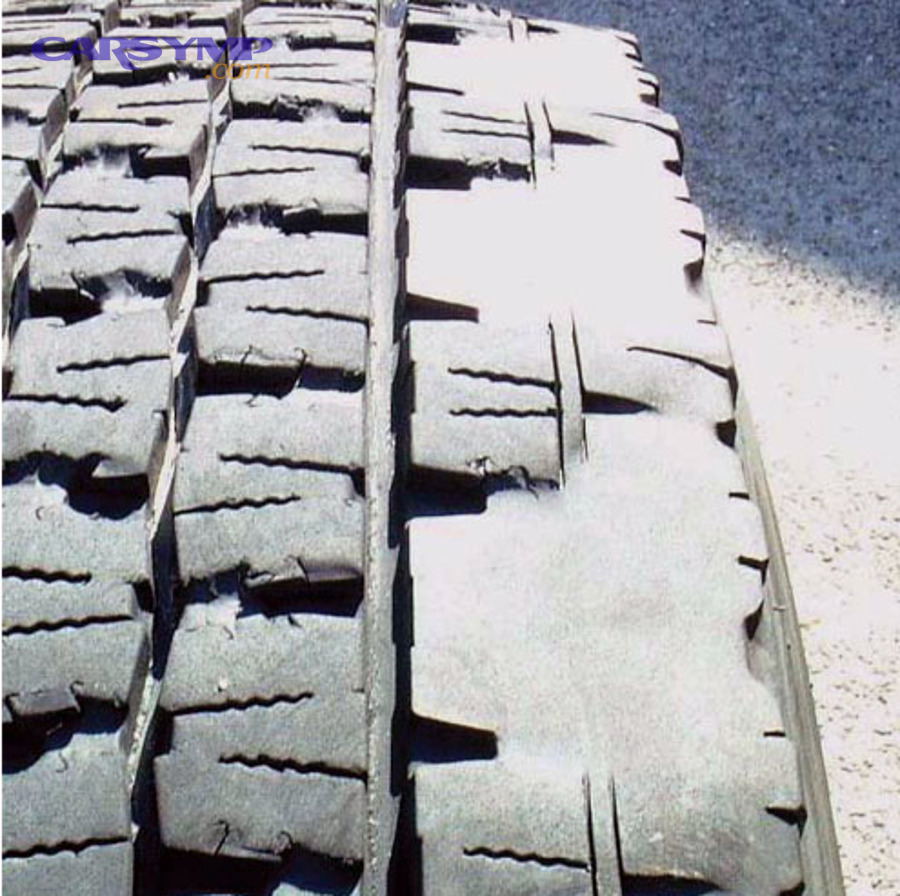
- A “scalloped” look where blocks are worn unevenly
- A pattern that looks like the tire tread was lightly “chiseled” in arcs
If your hand detects a wave-like feel and your eyes see repeating dips, you’ve moved from “maybe” to “probable.”
Does the noise change after rotating tires front-to-back?
Yes—if the noise changes location or character after a proper rotation, that strongly suggests the tires are the source rather than a fixed component like a wheel bearing.
More importantly, this is a practical confirmation step because it uses a basic mechanical principle: move the suspected noise generator, and the noise signature should move too.
What to expect:
- Noise gets quieter or changes pitch: the most worn tire moved to a different position with different cabin acoustics and load.
- Noise “moves” from rear to front (or vice versa): tire-related noise often migrates with the tire.
- No meaningful change: could still be tire-related (all four may be affected), or it could point toward bearings/suspension.
Caution: Rotation is diagnostic, but it is not a cure by itself if the underlying cause (worn shocks, imbalance, alignment) remains.
What is tire cupping (scalloping) and why does it create a humming/roaring road noise?
Tire cupping (scalloping) is an uneven wear pattern where repeating dips form around the tread due to inconsistent contact or bouncing, and those dips create a droning or roaring sound because the tread impacts the pavement in a periodic cycle.
To better understand the noise, you’ll connect the wear shape (the “dips”) to the sound mechanism (impact + resonance + air movement).
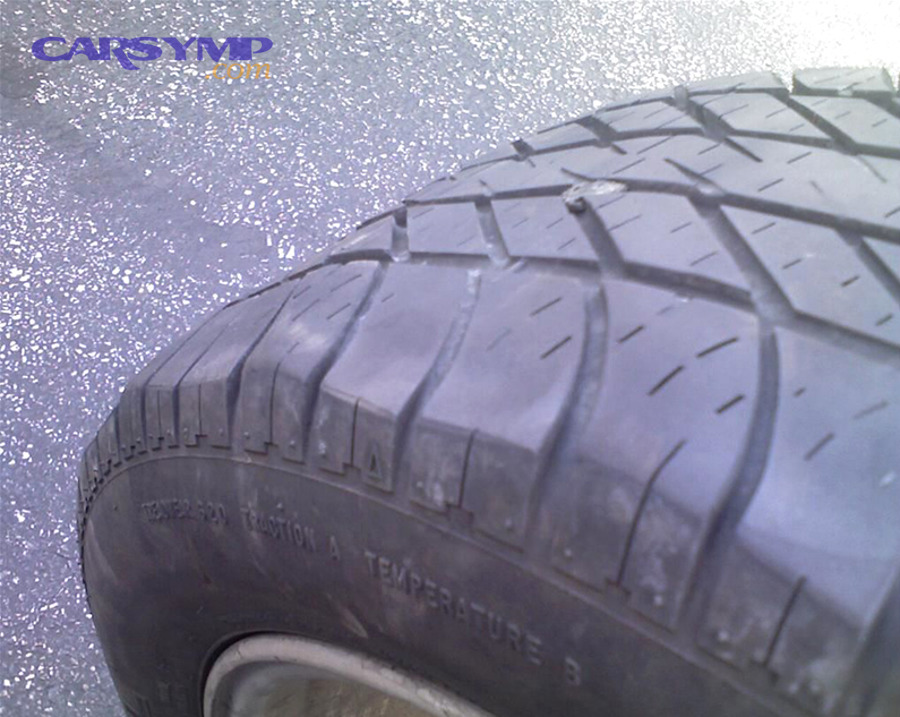
What does cupped tread look like compared with normal tread wear?
Cupped tread looks scalloped—like shallow bowls—while normal tread wear looks even and flat across the contact patch.
Specifically, normal wear reduces tread depth gradually and consistently. Cupping creates a repeating pattern where one area is worn deeper than the next.
Normal wear characteristics:
- Even tread depth across the tire (left to right)
- Smooth block edges
- No repeating dips
Cupping characteristics:
- Repeating dips around the circumference
- Often more pronounced on shoulders
- Block edges may look “stepped”
- The wear can appear in “segments,” not as a smooth fade
A quick rule: if the tire looks like it has “waves” instead of a consistent surface, you are looking at a wear abnormality—cupping is a top candidate.
What does tire cupping sound like compared with “normal” tire noise?
Cupping sounds like a structured drone, hum, or thump, while normal tire noise sounds like a consistent hiss that mainly changes with pavement type.
However, both can overlap, which is why you pair sound with tread inspection.
Normal tire noise:
- Smooth “shhhh”
- Changes dramatically with road surface (rough asphalt louder, smooth concrete quieter)
Cupping noise:
- Low-frequency “whoom-whoom” or drone
- Often stays present even on smoother surfaces
- Intensifies steadily with speed
- Can feel like a subtle vibration through the seat or steering wheel
Why the difference matters: normal tire noise is mostly road texture + airflow. Cupping adds periodic mechanical excitation (each high spot strikes and releases), which creates a repeatable rhythm your brain detects as a “pattern.”
What symptoms typically show up together with cupping?
There are 3 main symptom groups that commonly appear with tire cupping: sound changes, feel changes, and wear confirmation, based on what you can sense while driving and verify during inspection.
Besides the sound itself, these clusters help you avoid diagnosing only by ear.
1) Sound symptoms
- Drone or roar that grows with speed
- More noticeable at certain steady speeds
- Sometimes louder when the cabin is quiet (no music, no HVAC fan)
2) Feel symptoms
- Mild steering wheel vibration (front tire cupping)
- Seat or floor vibration (rear tire cupping)
- Slight “buzz” on smooth pavement
3) Wear confirmation
- Scalloped tread you can feel by hand
- Shoulder dips that repeat around the tire
- One tire often worse than the others
According to a study by Virginia Tech from the Department of Mechanical Engineering, in 2016, tire noise data collected across multiple speeds (including 45–65 mph) showed tire/pavement interaction noise varies by tread characteristics and speed, supporting why periodic tread conditions can produce a distinct noise signature.
How do you identify tire cupping vs wheel-bearing hum using a driver-friendly checklist?
Tire cupping wins for “noise that moves with tires,” wheel-bearing hum is best identified by “noise that changes with cornering load,” and other sources become likely when neither pattern fits consistently.
Meanwhile, a structured checklist keeps you from replacing parts based on a sound alone—especially when both conditions can create a similar “roar.”
Does the noise change when you gently weave or change lanes (bearing load test)?
Yes—if the noise changes noticeably when you gently shift the car’s weight left and right, that leans toward wheel-bearing hum; if it stays mostly tied to speed and doesn’t change with load, cupping is more likely.
Next, do this carefully on a safe, open road with light traffic.
How to perform the test safely:
- Drive at a steady speed where the noise is clear (often 40–60 mph).
- Make very gentle lane-position changes (not abrupt swerves).
- Listen for a change when weight transfers.
Interpretation:
- Bearing-likely: noise increases when loading one side and decreases when unloading it.
- Cupping-likely: noise stays steady in pattern and volume, mostly changing with speed rather than lateral load.
Why this works: a worn bearing often gets louder under increased load, while a cupped tread pattern “plays” like a rotating drum regardless of small load changes.
Does the noise change when you turn the steering wheel slightly or take a long curve?
Yes—bearing hum often changes on a sustained curve because load stays shifted longer; cupping may change slightly but usually keeps its rhythmic “rotation-linked” character.
However, tires can also change pitch on different pavement or as tread blocks flex on a curve, so you use this test as a weight-of-evidence clue, not a single verdict.
What to focus on:
- On a long right-hand curve: does the noise rise consistently, then fall when you straighten?
- On a long left-hand curve: does it do the opposite?
If the pattern is clear and repeatable, bearing becomes more likely. If the noise remains a steady drone that simply gets louder with speed, cupping remains in the lead.
Which “quick checks” separate tires from bearings without tools?
There are 4 main quick checks to separate tire cupping from bearings without tools: tread feel, rotation behavior, load sensitivity, and symptom location, based on what you can verify in minutes.
Especially if you’re chasing a persistent hum, these checks reduce expensive guesswork.
Quick check #1: Tread feel (parked)
- Cupping: scalloped waves and dips you can feel by hand.
Quick check #2: Rotation behavior
- Cupping: noise often changes or moves after rotation.
Quick check #3: Load sensitivity (gentle weave)
- Bearing: noise often changes with side load.
Quick check #4: Location logic
- Front tire cupping: more steering vibration.
- Rear tire cupping: more cabin drone and seat/floor vibration.
According to a study by Hanyang University from the Department of Mechanical Engineering, in 2022, experimental measurements of wheel-bearing assemblies showed distinct noise and vibration characteristics during rotation, supporting why bearing faults can produce identifiable sound signatures separate from tire tread issues.
What are the most common causes of tire cupping that drivers should check first?
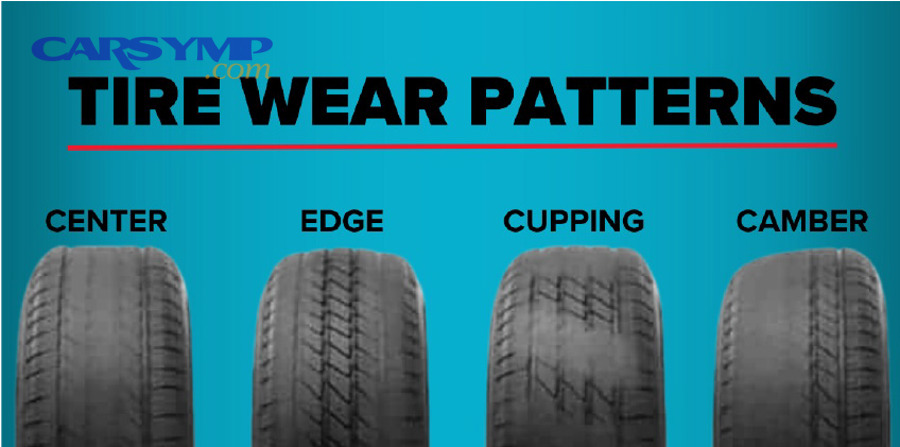
There are 4 main cause groups behind tire cupping: worn dampers, wheel imbalance, alignment or geometry drift, and maintenance factors (rotation/pressure), based on how quickly small irregularities grow into repeating wear.
More importantly, this is where the phrase Wheel alignment and balance relation to humming becomes real: when alignment and balance are off, the tire can develop uneven wear that later amplifies road noise into a persistent drone.
Can worn shocks/struts cause cupping and a droning noise?
Yes—worn shocks/struts can cause cupping and a droning noise because poor damping lets the wheel bounce, reducing consistent tread contact and carving repeating dips that later create a loud, rhythmic sound.
Then, you confirm this by pairing tread evidence with ride-control symptoms.
Common damper-related clues:
- The vehicle feels “floaty” after bumps.
- The car takes extra time to settle after a dip.
- Tires show scalloping that is worse on one axle.
- The noise gradually worsens over months.
Why it matters: damping controls how firmly the tire stays pressed into the road. When the tire skips, it wears in a repeating pattern—cupping is the visible result, and the drone is the audible result.
Can wheel imbalance or misalignment cause cupping-like noise?
Yes—imbalance and misalignment can contribute to cupping-like noise because they add vibration and irregular contact forces, and over time that uneven force can translate into uneven wear that sounds like a humming noise at speed.
However, imbalance more commonly causes vibration first, while alignment issues often cause edge wear or feathering that can coexist with cupping.
Imbalance:
- Often felt as steering shake at specific speeds
- Can accelerate uneven wear if ignored
- Often improves after balancing, but wear may remain
Misalignment (toe/camber issues):
- Can scrub tread and create uneven patterns
- May show as inside-edge wear, feathering, or shoulder wear
- Often needs correction before new tires or the pattern returns
A practical takeaway: imbalance and alignment don’t just change feel—they can indirectly become the “starter motor” for the wear pattern that later becomes the noise.
Which maintenance factors make cupping worse over time?
There are 3 maintenance factors that most commonly make cupping worse: delayed rotations, incorrect tire pressure, and ignoring early vibration, based on how quickly small irregularities grow into repeating wear.
In addition, mismatched tires (different tread designs or uneven tread depths across an axle) can amplify noise and accelerate abnormal wear.
1) Delayed rotation
- Tires develop “habits” in one position; wear becomes entrenched.
- When finally rotated, the noise can become more obvious.
2) Incorrect pressure
- Underinflation increases shoulder load and heat.
- Overinflation can reduce contact stability and worsen certain wear patterns.
3) Ignoring early vibration
- Small imbalance or suspension looseness can become a long-term wear pattern.
If you want a simple prevention rule: rotate on schedule, keep pressure correct, and treat new vibration as a maintenance signal—because it often becomes noise later.
What should you do next if you confirm tire cupping—and when is it time for a shop?
If you confirm tire cupping, the best next step is a fix sequence—inspect suspension, correct balance/alignment, then decide on tire replacement—because treating only the noise won’t stop the wear mechanism that created it.
Next, you’ll use Safe-to-drive guidance with humming noise to decide whether this is “monitor and schedule service” or “stop and inspect now.”
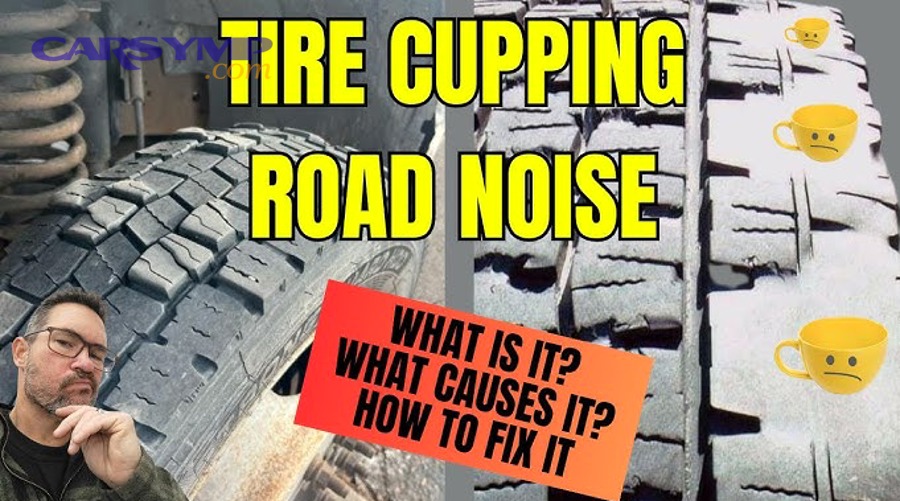
Can cupped tires be fixed, or do they need to be replaced?
Cupped tires can sometimes be managed, but replacement is often the best solution when cupping is severe because the tread surface itself has become uneven, and balancing/alignment can’t restore rubber that’s already worn into dips.
However, the right answer depends on severity and safety.
You may be able to “manage” (not fully reverse) cupping when:
- Tread depth is still healthy and even enough for traction
- The cupping is mild and newly discovered
- The underlying cause (damper/balance/alignment) is corrected quickly
- Noise is tolerable and the car drives smoothly
Replacement becomes the smarter choice when:
- The scallops are deep enough to feel like steps
- Noise dominates the cabin or worsens rapidly
- Wet traction feels reduced
- The tire shows other defects (cracks, bulges, cords)
A realistic expectation: even after the root cause is fixed, a cupped tire may remain noisy because the tread geometry is already altered. Fixing the cause prevents new cupping; it doesn’t “unwear” existing dips.
What service checklist should you ask for to stop the noise from coming back?
There are 5 key service items to request so the noise doesn’t return: damper check, suspension joint inspection, balance, alignment, and tire match/rotation plan, based on the most common drivers of repeating wear.
More specifically, ask your shop to treat it like a system issue, not just a tire issue.
Service checklist (what to ask for):
- Shock/strut condition (leaks, bounce test interpretation, mileage context)
- Suspension components (bushings, ball joints, tie rods, control arms)
- Wheel balance (including checking for bent wheels or abnormal runout)
- Alignment (toe/camber/caster within spec; correct “pull” conditions)
- Rotation + inflation plan (set interval, verify pressures, re-check after repairs)
This sequence matters because balance/alignment without fixing worn dampers can lead to a repeat pattern—new tires, same noise a few months later.
Is it safe to keep driving with cupped tires?
It depends, but often “yes for short-term driving” and “no for long-term ignoring,” because cupped tires can reduce ride stability, increase braking distance on wet roads, and mask other issues—especially if the vibration grows.
Thus, use these safety thresholds as your decision line.
Generally safer to drive briefly (schedule service soon) if:
- No bulges, cords, or sidewall damage
- Vibration is mild and stable
- Tread depth remains safe
- The car tracks straight and braking feels normal
Stop driving and get inspected ASAP if:
- Vibration becomes strong or sudden
- The car pulls, wanders, or feels unstable
- You see bulges, exposed cords, or rapid tread loss
- Noise is accompanied by grinding (possible bearing risk)
This is the practical version of Safe-to-drive guidance with humming noise: if the noise is new and worsening quickly, treat it as urgent; if it’s stable but confirmed cupping, schedule a repair plan before it becomes a traction problem.
According to a study by Purdue University from the School of Mechanical Engineering, in 2017, tire noise and vibration research highlighted how tire structural/acoustic behavior contributes to measurable NVH across frequency ranges, supporting why uneven tread conditions can produce persistent noise that may not disappear without addressing the tire and its root cause.
What other tread and noise patterns are commonly mistaken for tire cupping ?
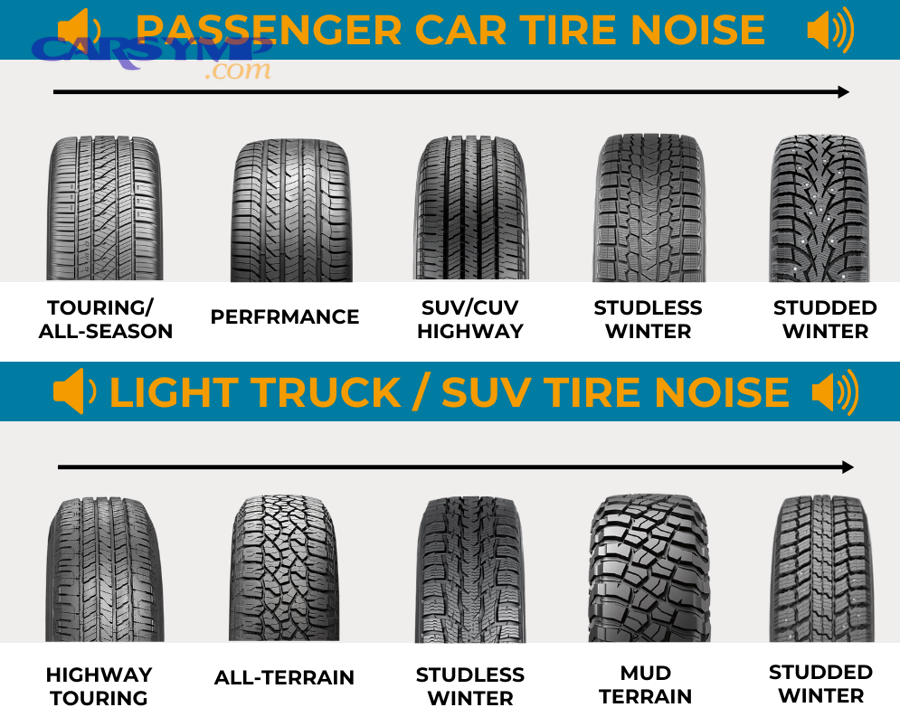
There are 4 common “cupping lookalikes”—tire chop terminology overlap, feathering, heel-toe wear, and flat-spotting/aggressive tread resonance—based on how each creates noise or uneven feel that can mimic scalloping.
Especially when you’re chasing a persistent hum, this section prevents false conclusions that lead to the wrong repair.
Is “scalloping” the same as “cupping” and “tire chop”?
Mostly yes: scalloping and cupping are commonly used as synonyms for the same repeating-dip wear pattern, and tire chop is often a casual term shops use for a similar choppy, noisy wear condition.
Next, focus less on the label and more on the geometry: repeating highs and lows around the tread create repeating noise.
Practical translation:
- If a tech says “cupping,” “scalloping,” or “chop,” ask them to show you the wear on the tire.
- Confirm with your hand: can you feel repeating dips? That’s the core concept.
How is cupping different from feathering or heel-toe wear?
Cupping is defined by dips around the circumference, feathering is defined by sharp edges across tread ribs, and heel-toe wear is defined by stepping on tread blocks, often felt as a sawtooth pattern.
However, they can coexist, which is why you diagnose by the dominant pattern.
Cupping (scalloping):
- Repeating dips like shallow bowls
- Strong periodic drone
Feathering (often toe-related alignment issue):
- Tread feels smooth one direction and sharp the other across ribs
- Can create a “sizzle” or whine, sometimes a hum
Heel-to-toe wear (block stepping):
- Each tread block wears unevenly from leading edge to trailing edge
- Often heard as a hum that changes with speed and pavement
If your hand feels “sharp edges” more than “dips,” alignment may be the bigger player than damping. If it feels like repeated bowls, cupping remains the best fit.
Could “flat-spotting” or aggressive tread patterns mimic cupping noise?
Yes—temporary flat spots and aggressive tread designs can mimic cupping noise because both can create repeating contact disturbances that sound like a hum or thump, especially when cold or at certain speeds.
On the other hand, these often change differently over time than true cupping.
Flat-spotting clues:
- Worst after the car sits overnight
- Improves after a few miles as tires warm up
- Often felt as a rhythmic thump that fades
Aggressive tread resonance clues:
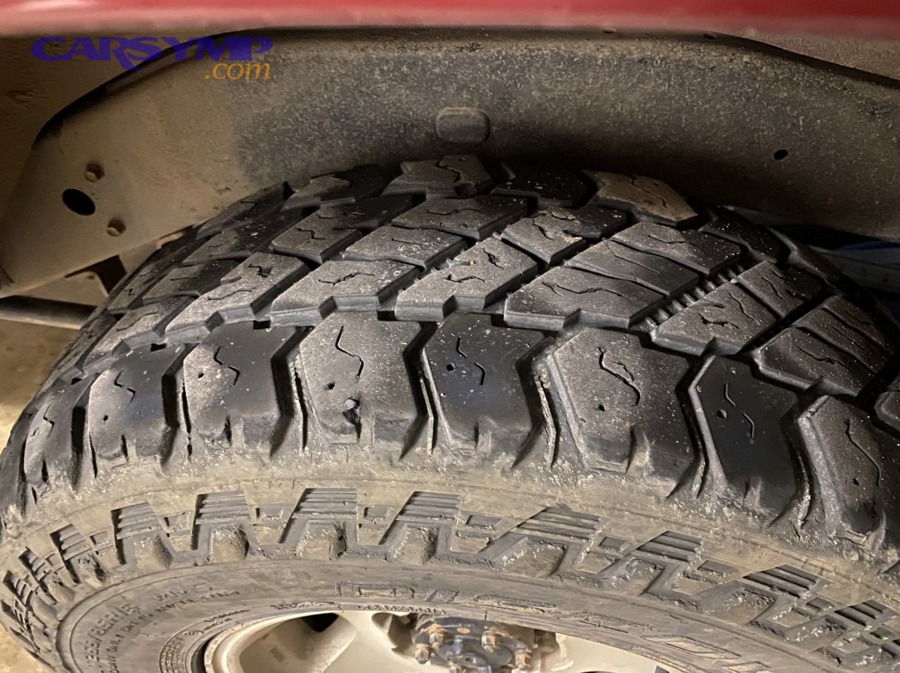
- More “normal” on off-road, winter, or blocky patterns
- Strongly dependent on pavement type
- May be present even with even wear
If the noise fades with warm-up, suspect flat-spotting more than cupping. If the noise stays and tread shows dips, cupping climbs back to the top.
Why does cupping sometimes get loud only at a specific speed range?
Cupping can peak at a specific speed because the periodic impacts and air pumping from uneven tread can match a resonance in the tire, suspension, or cabin structure at that speed band.
To illustrate, a pattern might be loudest at 52–58 mph, then feel less intense at 65 mph—not because the problem is gone, but because resonance shifts.
What you can do with this knowledge:
- Note the loudest speed band and the road surface where it’s clearest.
- Share that “noise map” with your shop—it helps them confirm the source.
- Don’t assume “it gets quieter at higher speed” means it’s safe; traction and wear issues still exist.
According to a study by Virginia Tech from the Department of Mechanical Engineering, in 2017, tire–pavement interaction research reported that tire noise becomes a dominant source above typical road speeds and varies by tread and frequency content, supporting why certain tread irregularities can become most audible in specific speed bands.