


If your cabin air isn’t cold, “condenser vs evaporator vs compressor diagnosis” is the fastest way to stop guessing and start isolating the real failed part. The three components fail differently because they live in different pressure/temperature zones of the same refrigerant circuit.
Next, you’ll learn symptom patterns that point to each component—what “warm at idle but cold at speed” usually means, why musty odor often isn’t a compressor problem, and how high-side/low-side behavior separates heat-rejection issues from heat-absorption issues.
Also, you’ll get a practical workflow: quick checks without gauges, then confirmation checks with gauges (or scan tool data), so you can decide whether to clean, repair a leak, or replace a major part.
To begin, we’ll map the system physics to real-world symptoms so every later check feels obvious instead of random.
How do condenser, evaporator, and compressor roles create different symptoms?
The condenser rejects heat, the evaporator absorbs heat, and the compressor moves/pressurizes refrigerant—so each failure changes temperature, pressure, airflow feel, and noise in a distinct way. Next, use this “role → symptom” logic to avoid replacing the wrong component.
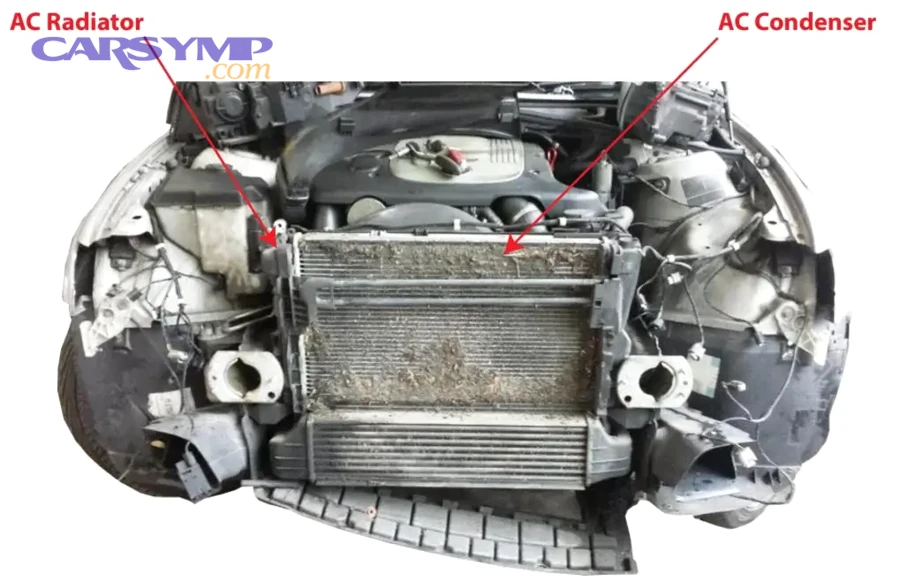
What does a failing condenser usually look like at the vents?
A condenser problem most often shows up as weak cooling when the car is stopped or moving slowly, then partial recovery at highway speed because airflow across the condenser improves. Next, confirm by looking for heat rejection issues rather than airflow-in-cabin issues.
Specifically, a clogged fin pack, bent fins, or an inoperative fan can raise high-side pressure and reduce cooling capacity. According to a study by Applied Thermal Engineering, in 2014, experiments with 30–50% airflow restriction upstream of an automotive condenser showed measurable deterioration in condenser and overall system performance.
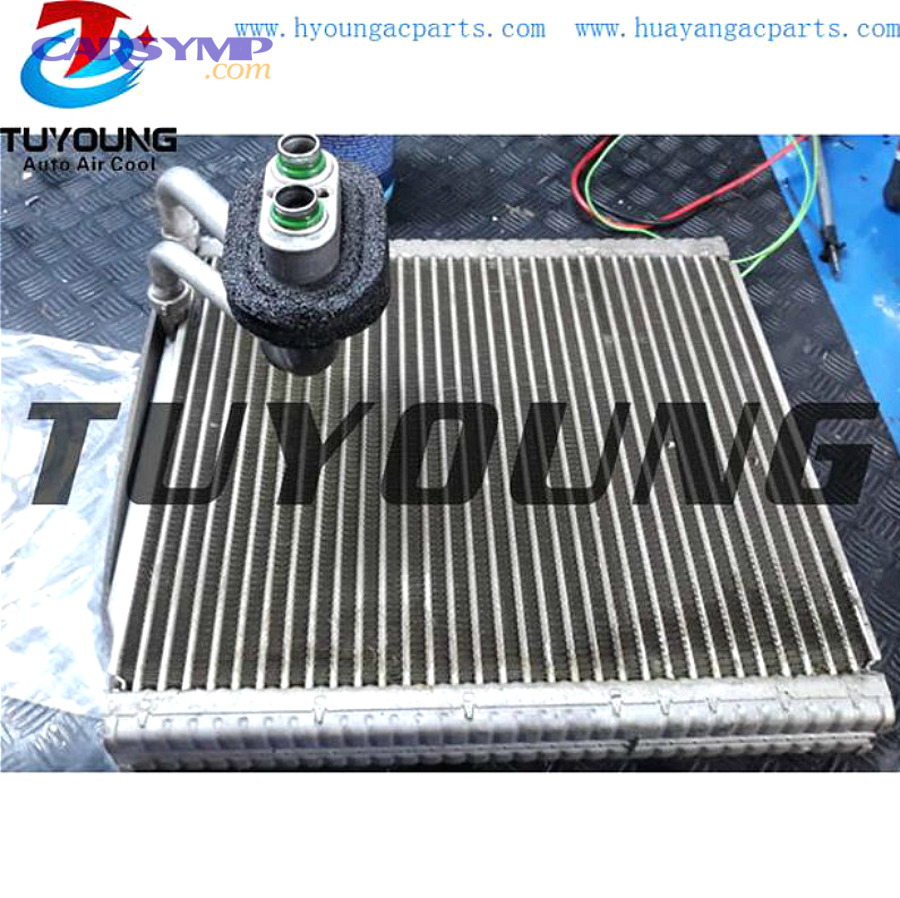
What does a failing evaporator usually feel like inside the cabin?
An evaporator issue often feels like reduced airflow from the vents, inconsistent temperature, foggy windows, or musty odor—because the evaporator sits in the damp, cold part of the HVAC box. Next, separate “air not moving” from “air moving but not cold.”
More concretely, an evaporator can be cold but starved of airflow (dirty cabin filter, debris on the face), or it can be iced up due to low charge or a stuck expansion device—both mimic “evaporator failure” unless you test. According to research by Simmons and colleagues published in 1999, bacterial biofilms were found on automobile evaporator fins and were recoverable over long periods, linking evaporator contamination to unpleasant cabin air quality.
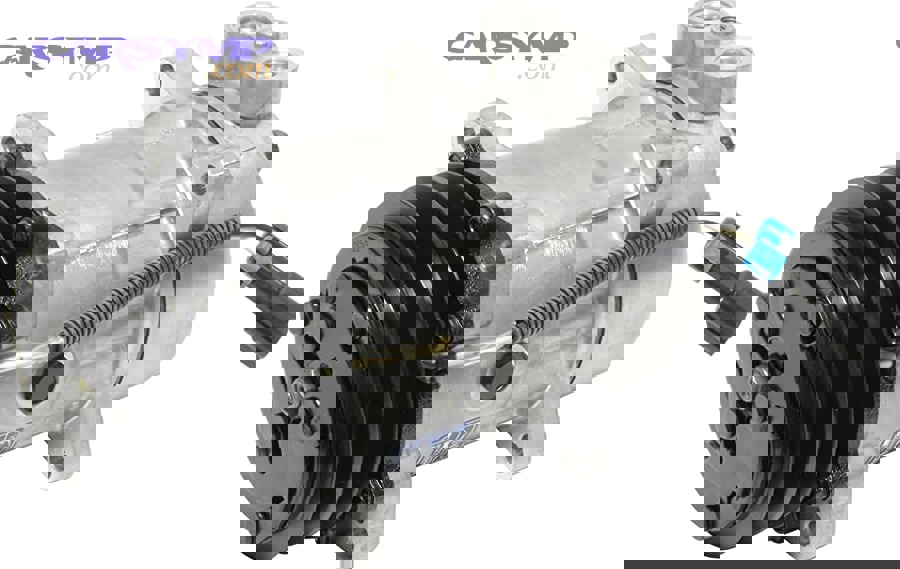
What does compressor trouble typically change first?
Compressor trouble most often changes sound (grind, squeal, knock) or pressure behavior (low-side not pulling down, high-side not rising), sometimes before vent temperature fully collapses. Next, listen and measure before assuming the condenser or evaporator is the culprit.
In detail, a compressor can fail mechanically, lose pumping efficiency, or be prevented from engaging by electrical controls—each produces a different “pressure signature.” According to an SAE technical paper on failed A/C systems and flushing (2017), system failures can introduce contaminants into the refrigerant circuit, increasing risk of further component damage if not addressed.
Is the condenser the problem when A/C is warm at idle but colder while driving?
Yes, that pattern often implicates condenser airflow or fan control because heat rejection improves with vehicle speed—but it’s not guaranteed. Next, you’ll confirm or rule it out with simple under-hood observations that cost nothing.
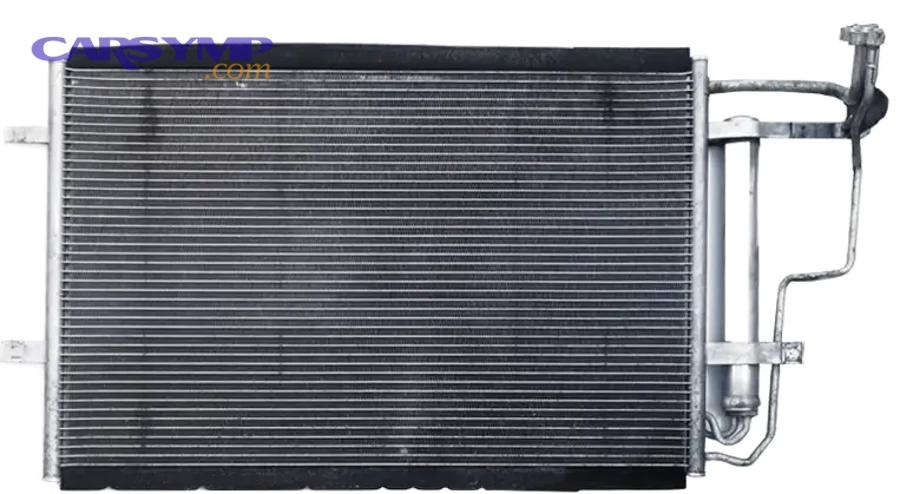
What quick airflow checks point to a condenser issue?
If the radiator/condenser fans don’t ramp up with A/C on, or the condenser face is packed with bugs/dirt, a condenser-side problem becomes likely. Next, inspect airflow pathways before touching refrigerant.
- Fan operation: With A/C on MAX, fans should usually run (strategy varies by vehicle and ambient conditions).
- Condenser face condition: Look for debris, bent fins, mud, leaves, or aftermarket screens reducing airflow.
- Heat plume: With A/C running, you should often feel warm air exiting behind the condenser/radiator stack.
According to an ASME paper (1995) examining condenser airflow blockage effects, restricted airflow across condensers can meaningfully change performance and is relevant for estimating savings from restoring normal airflow.
When does “warm at idle” actually come from something else?
Warm-at-idle can also be caused by overcharge, non-condensable gases, a weak compressor, or a stuck expansion valve—so don’t stop at airflow. Next, use temperature and pressure relationships to avoid a false condenser diagnosis.
Specifically, if the compressor can’t build head pressure, airflow won’t fix it; conversely, if the compressor is fine but condenser airflow is poor, cooling often improves as speed increases. That contrast is your first diagnostic fork.
How can you tell an evaporator issue from a simple airflow restriction?
You tell by separating “cold coil” problems from “air can’t pass the coil” problems using airflow feel, condensation behavior, and icing signs. Next, you’ll do checks in the cabin first because they are safer and faster.
What cabin symptoms strongly suggest evaporator-side trouble?
Musty odor, intermittent cooling, and a wet passenger footwell often point toward evaporator housing moisture, drain problems, or biofilm—not condenser failure. Next, confirm the moisture pathway and airflow pathway.
- Odor after start-up: Often worse after humid parking or after shutting off A/C without drying the coil.
- Fogging windows: Can happen when the evaporator isn’t dehumidifying effectively.
- Water drip absence: No condensate dripping under the car on humid days may indicate a blocked drain.
According to a 2020 study available via PubMed Central, microbial communities in automobile evaporator cores can strongly influence cabin air quality and malodor, with notable dominance of certain biofilm-forming bacteria across multiple countries.
How do you spot evaporator icing without disassembly?
You suspect icing when airflow from the vents slowly drops during operation and then “comes back” after the system rests, often with water discharge afterward. Next, relate that to temperature control and refrigerant charge behavior.
More specifically, low refrigerant charge or restricted metering can drop evaporator temperature below freezing, creating ice that blocks airflow; the cabin feels warmer even though the system may still be trying to cool. A thermometer at the center vent plus timing (how symptoms change over 10–20 minutes) helps you recognize this pattern.
How do you diagnose compressor problems without guessing?
You diagnose compressor issues by combining engagement behavior, noise, and pressure response—because compressors fail in mechanical, electrical, and efficiency modes. Next, start with “does it engage and pump?” before blaming the condenser or evaporator.
What engagement patterns separate electrical control from mechanical failure?
If the compressor never engages, it may be commanded off due to low pressure, sensor input, or a clutch/coil/power issue rather than internal compressor damage. Next, verify the “why” before replacing expensive parts.
- No engagement + no click: Check fuses/relays, request signal, pressure switch logic, and clutch coil power/ground.
- Engages briefly then cycles fast: Often low charge, pressure instability, or control strategy reacting to readings.
- Engages steadily but weak cooling: Consider low pumping efficiency, restrictions, or heat-rejection issues.
According to an EPA report on refrigerant quality in mobile air conditioners, moisture contamination was present above military specification in more than 95% of sampled analyses, suggesting that contamination control (vacuum, drying, correct service) matters for long-term reliability.
What noises are most meaningful for compressor diagnosis?
Grinding/knocking that changes with compressor load is more meaningful than generic belt squeal, because it can indicate internal damage or debris. Next, interpret sound together with cooling performance and pressure behavior.
In detail, internal compressor wear can create metal debris that circulates through the system, risking expansion device blockage and condenser restrictions; that’s why contamination management and correct servicing are critical after failure. According to an SAE paper (2017), failed systems often introduce contaminants that servicing procedures aim to address.
What can you check safely without gauges to narrow condenser vs evaporator vs compressor?
You can do a safe triage using vent temperature, fan behavior, condensate dripping, and line temperature feel—without opening the refrigerant circuit. Next, treat this as “probability ranking,” not a final verdict.
Which under-hood temperature clues help the most?
The best clue is whether the high-side line leaving the compressor gets hot and whether the low-side suction line gets cool/sweaty—because that indicates compression and evaporation are happening. Next, compare both lines after 3–5 minutes of operation.
- Both lines near ambient: Compressor not pumping or not engaging.
- High-side very hot + low-side not very cool: Possible restriction, overcharge, or condenser airflow problem.
- Low-side very cold + airflow weak: Possible evaporator icing or airflow restriction in the HVAC box.
Be careful: line feel is qualitative and can mislead in extreme ambient temperatures, so use it as a directional cue, not the final answer.
What cabin checks are most discriminating?
Airflow strength and consistency are the fastest cabin-side discriminators because evaporator/airbox problems often change airflow, while condenser problems often do not. Next, perform these checks in the same drive session for consistency.
- Airflow strong but not cold: Points away from blower/filter and toward refrigerant-side performance.
- Airflow weak or varies over time: Points toward cabin filter, blower, evaporator icing, or door/housing issues.
- Musty odor + humidity issues: Points toward evaporator moisture/biofilm or drain concerns.
According to research on automobile evaporator biofilms (1999), persistent microbial communities on evaporator fins can be associated with disagreeable air quality—supporting why odor symptoms deserve evaporator-side attention.
How do gauge readings differentiate condenser vs evaporator vs compressor diagnosis?
Gauge readings differentiate by showing whether the system can build high-side pressure, pull down low-side pressure, and maintain stable superheat/evap temperature behavior. Next, use the table as a pattern guide, then confirm with conditions (ambient temp, fan speed, engine RPM).
This table helps you translate “numbers” into likely fault zones (condenser/evaporator/compressor) so you don’t chase the wrong component.
| Observed Pattern (Typical) | Most Likely Zone | Why it Happens | Best Next Confirmation |
|---|---|---|---|
| High-side higher than expected + cooling worse at idle | Condenser airflow/heat rejection | Heat can’t leave the refrigerant fast enough | Verify fan strategy, condenser cleanliness, airflow path |
| Low-side abnormally high + high-side low/normal | Compressor weak/not pumping | Compression ratio too low to move heat effectively | Verify engagement, noise, and pressure rise with RPM |
| Low-side very low + evaporator freezing/airflow drops | Evaporator icing or restriction near metering | Evaporator temperature falls below freezing point | Check for ice pattern, sensor/thermostat behavior, charge level |
| Both sides low + weak cooling | Low refrigerant charge (leak) | Not enough mass flow to absorb/reject heat | Leak check (dye/UV/electronic), evacuate & recharge by spec |
| High-side very high + low-side low | Restriction (condenser, drier, expansion valve) | Flow bottleneck increases head pressure and starves evaporator | Temperature drop across components, inspect for debris/contamination |
Why does condenser trouble push high-side pressure up?
Condenser trouble raises high-side pressure because the refrigerant can’t condense efficiently when airflow or heat transfer is compromised. Next, combine high-side pressure with fan status and condenser face condition to confirm.
According to experimental research on automotive condenser airflow restriction (2014), performance changes were observed when airflow upstream of the condenser was obstructed—supporting why “blocked fins” can present as high head pressure and poor idle cooling.
Why can evaporator-side issues create very low low-side pressure?
Evaporator-side issues create very low low-side pressure when refrigerant flow is restricted or when the system is undercharged, making the evaporator run colder than intended. Next, relate low-side pressure to icing risk and airflow changes.
More specifically, a restriction starves the evaporator, which reduces pressure and temperature; moisture/contamination can worsen restrictions and sensor control stability. According to an EPA report on mobile A/C refrigerant evaluation, moisture contamination was frequently found above specification—highlighting why correct evacuation and drying are central to stable evaporator behavior.
What should you expect after a condenser is replaced, and what problems can remain?
After condenser replacement, cooling can return immediately—but only if airflow, charge amount, and contamination control are correct; otherwise performance may still be poor. Next, treat “it’s new” as a hypothesis to test, not proof the problem is solved.
Which post-repair symptoms suggest the root cause wasn’t the condenser?
If the A/C is still warm at idle with a clean, new condenser and verified fan operation, the remaining suspects are charge errors, compressor efficiency, or restrictions. Next, verify pressures and vent temperature stability across RPM.
In practice, many comebacks happen because the underlying leak wasn’t found, the system wasn’t evacuated properly, or debris from an earlier failure remained. According to an SAE paper on refrigerant flushing of failed A/C systems (2017), failures can introduce contaminants that should be addressed during servicing to prevent repeat issues.
What “good practices” protect performance and reliability?
The most protective practices are correct evacuation (vacuum), correct oil type/amount, correct refrigerant charge by specification, and contamination control. Next, treat service quality as part of diagnosis, because poor service can mimic component failure.
In the real world, AC condenser replacement, AC performance after condenser replacement, and AC condenser replacement labor time are often discussed as if the condenser alone determines success, but diagnosis and process quality decide whether the system stays cold for months or fails again quickly.
According to a European Commission-related report on mobile A/C leakage measurements (2003), field measurements of HFC-134a leakage were conducted across many vehicles and conditions, supporting why leak detection and prevention are central to long-term cooling consistency.
When should you stop DIY checks and get professional diagnosis?
You should stop and get professional diagnosis when pressures are abnormal, the compressor is noisy, refrigerant is leaking, or the system requires opening—because refrigerant handling and contamination control need specialized tools. Next, use the criteria below to protect safety and avoid costly cascade failures.
Which red flags make the compressor a “don’t wait” item?
Metallic noise, seized pulley behavior, or rapidly worsening performance are red flags because they can spread debris through the entire system. Next, avoid repeated operation if mechanical damage is suspected.
- Grinding/knocking with A/C on that disappears with A/C off
- Smoke/burnt smell near clutch or wiring
- Belt squeal + pulley heat suggesting bearing/pulley issues
According to an SAE paper discussing failed system servicing (2017), contamination introduced during failure is a key concern—supporting early intervention to prevent multi-component damage.
Which signs indicate a leak that needs proper equipment?
Oily residue at fittings, repeated loss of cooling over weeks, or UV dye evidence indicates a leak that should be repaired and then evacuated/recharged correctly. Next, remember that topping off without fixing leaks often worsens moisture contamination risks.
According to an EPA report evaluating refrigerant from mobile air conditioners, moisture contamination was commonly detected above specification—reinforcing that repeated “open air” exposure and incomplete service can degrade system health.
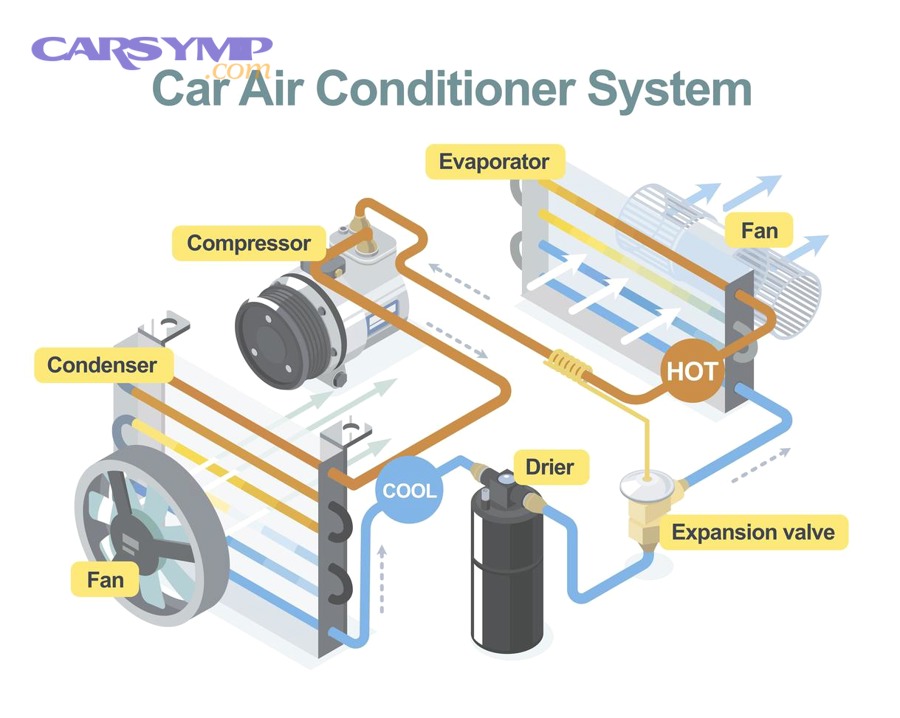
How does the whole A/C cycle work, and why does that matter for diagnosis?
Understanding the cycle matters because diagnosis is simply spotting which stage (compression, condensation, expansion, evaporation) isn’t behaving as it should. Next, use the short video to visualize what’s happening when you see “warm at idle,” “icing,” or “no engagement.”
In short: the compressor raises pressure and temperature, the condenser dumps heat to ambient air, the expansion device drops pressure, and the evaporator absorbs cabin heat and moisture. As a result, “hot high-side / cold low-side” is the normal diagnostic backbone—and deviations point to where the fault lives.
Supplementary: What rare edge cases mimic condenser/evaporator/compressor failure?
Several less-obvious faults can imitate condenser, evaporator, or compressor problems by changing airflow direction, sensor logic, or refrigerant quality rather than the component itself. Next, treat these as the “contextual border” checks when the common diagnosis doesn’t fit the data.
Can blend-door or actuator faults look like a bad compressor?
Yes—if the blend door leaks hot air into the airflow stream, vent temperature stays warm even when the refrigerant circuit is working. Next, compare left/right vents and check whether temperature changes when you switch modes.
A telltale sign is normal pressures and cold suction line, yet the cabin remains warm; this often points away from condenser and compressor and toward air-mixing control inside the HVAC case.
Can moisture and non-condensable gases mimic a condenser restriction?
Yes—moisture and air in the system can raise pressure instability and reduce heat transfer, acting like a heat-rejection problem. Next, consider service history (was the system opened, topped off repeatedly, or not vacuumed properly?).
According to an EPA report evaluating refrigerant from mobile air conditioners, moisture contamination was detected above specification in most samples—supporting why evacuation and correct service practices matter diagnostically.
Can microbial evaporator biofilm be the root cause of “bad A/C” complaints?
Yes—biofilm can drive odor and perceived discomfort even when temperature performance is acceptable. Next, address drain function, filter condition, and evaporator cleaning strategies when odor dominates the complaint.
According to a 2020 study on evaporator core biofilms, microbial communities in evaporator cores can significantly impact malodor and indoor air quality, with notable dominance of certain bacteria in biofilms.
Can a partially restricted expansion valve imitate a weak compressor?
Yes—partial restriction can reduce mass flow so cooling is weak, and pressures may look abnormal in a way that confuses diagnosis. Next, look for temperature drops across the metering device and consider contamination history after prior failures.
According to an SAE paper on failed A/C system servicing (2017), contaminants introduced during failure are a known concern—supporting why restrictions often trace back to debris rather than “random valve failure.”
Frequently Asked Questions
These FAQs summarize the most common decision points so you can act quickly when the symptom is clear. Next, use them as a final check before committing to a major repair.
Can a bad condenser cause the compressor to fail?
Yes—high head pressure can increase compressor load and heat, which can accelerate wear; however, the compressor usually fails faster when lubrication is compromised or contamination is present. Next, treat condenser airflow as a reliability factor, not just a cooling factor.
Does a musty smell mean the evaporator is “bad” and needs replacement?
No—odor often means moisture retention and biofilm, which can often be improved with drain correction, filter replacement, and evaporator cleaning rather than replacing the evaporator core. Next, confirm whether cooling capacity is actually reduced or if the complaint is primarily odor.
If the compressor engages, does that mean it’s good?
No—engagement only proves the clutch/control path works; the compressor can still be weak internally and fail to build the pressure difference needed for cooling. Next, use pressure response and vent temperature behavior to assess pumping efficiency.
What single symptom most strongly points to condenser airflow trouble?
Cooling that improves noticeably with vehicle speed, especially after sitting in traffic, strongly points to condenser airflow/fan issues. Next, confirm by observing fan behavior and inspecting the condenser face for blockage.
What single symptom most strongly points to evaporator icing?
Airflow that slowly diminishes during A/C operation and returns after shutting the system off (often with water discharge) strongly suggests icing. Next, investigate charge level, metering behavior, and any sensor/thermostat control issues.
Tóm lại, accurate diagnosis comes from matching symptoms to component roles: condenser problems tend to be heat-rejection/airflow-at-front issues, evaporator problems often show as airflow/odor/icing-in-cabin patterns, and compressor problems show as pressure and noise abnormalities. With that map, each test becomes a logical “next step” rather than a guess.