


If your car’s cooling feels different after a condenser job, that’s normal—but it should trend toward colder, steadier, and faster once the system is sealed, evacuated, and charged correctly. In practice, “good performance” means stable vent temperature at idle and while cruising, predictable compressor cycling, and high-side/low-side pressures that make sense for your ambient conditions.
Beyond “is it cold,” most drivers want to know what’s expected versus what signals a mistake: weak cooling at stops, temperature swings, noisy fans, oily residue, or a cabin that never gets comfortable. The fastest way to separate normal break-in from a real problem is to evaluate symptoms in a structured order.
You may also be wondering how long stabilization takes, what measurements matter, and which checks confirm the repair was done properly. The goal is to avoid guessing—because guessing leads to overcharging, missed leaks, and repeat failures.
Giới thiệu ý mới: below is a step-by-step, symptom-first guide that connects what you feel in the cabin to what’s happening at the condenser, fans, pressures, and airflow.
What should improve right away, and what should not change after the repair?
Cooling should improve quickly if the system is tight and correctly charged, while unrelated issues (airflow restrictions, blend door faults, weak fans) may not change at all. To connect “feel” to “cause,” start by separating refrigeration performance from cabin-air delivery.
To begin, treat the first drive as a baseline test: note how fast the cabin cools, whether idle cooling matches driving cooling, and whether the air is consistently cold across vents.
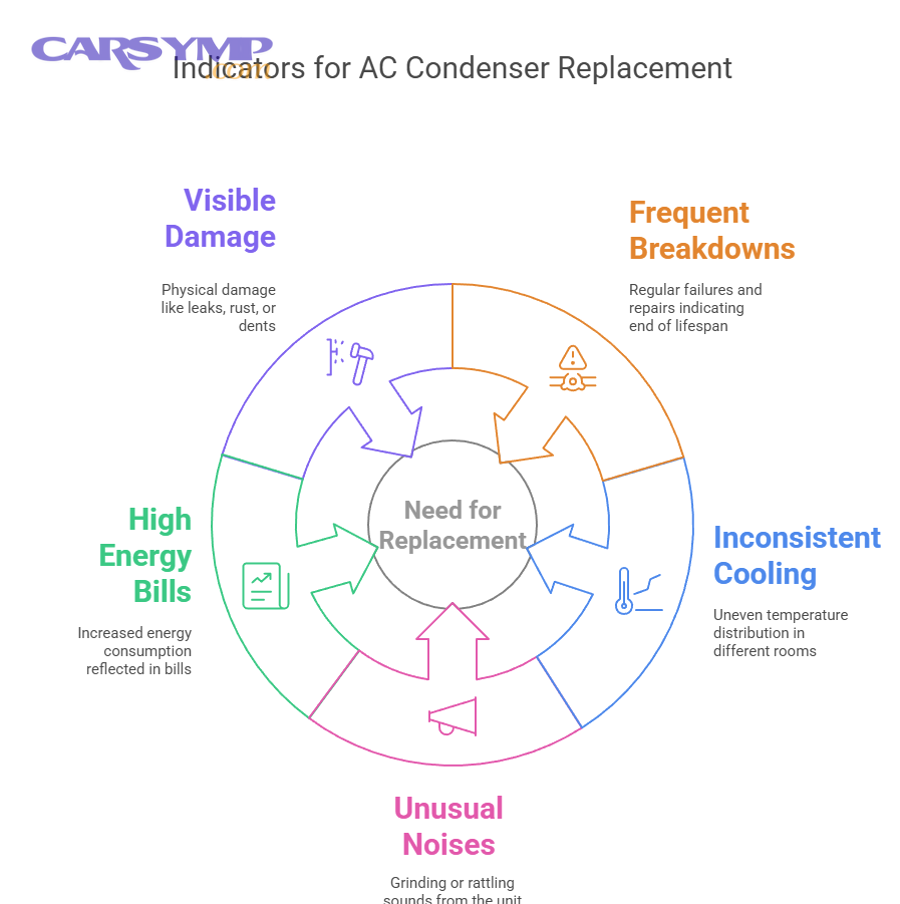
Immediate “good signs” you can trust
Yes—there are clear wins you should notice early: (1) faster cooldown from hot-soak, (2) less temperature drift at traffic lights, and (3) fewer “warm bursts” during compressor cycling. After that, you should feel steadier comfort as the condenser rejects heat efficiently.
Next, confirm the improvement is repeatable: run the AC for 10 minutes at idle, then 10 minutes at 35–55 mph, and compare vent temperatures. If idle is dramatically worse than cruise, you’re likely dealing with airflow across the condenser (fans, shrouding, debris) rather than the refrigerant loop itself.
Specifically, a properly functioning condenser will allow lower high-side pressure for the same ambient temperature, which generally helps the evaporator run colder and the compressor work less aggressively.
Theo nghiên cứu của SAE International từ Vehicle Thermal Management, vào 06/2019, tối ưu hóa trao đổi nhiệt phía trước xe giúp giảm nhiệt độ ngưng tụ và cải thiện hiệu suất làm mát tổng thể trong điều kiện tải nhiệt cao.
Things that should not “magically fix themselves”
No—some cabin problems won’t change even if the condenser is perfect: (1) weak blower airflow from a clogged cabin filter, (2) poor vent direction or stuck mode doors, and (3) hot air bleed from a blend door that doesn’t fully seal. In those cases, the refrigerant loop may be fine, but the cabin never receives enough cold air.
Then, use a simple test: if the vent temperature is cold but airflow is weak, your comfort will still be poor. Conversely, strong airflow with lukewarm vent temperature points back to charge level, leak, fan control, or internal restrictions.
For drivers, the key is to judge AC performance with both temperature and air volume in mind—because a cold evaporator doesn’t help if airflow is strangled.
Theo nghiên cứu của ASHRAE từ HVAC Systems and Equipment, vào 08/2020, lưu lượng gió qua dàn lạnh ảnh hưởng trực tiếp đến cảm nhận nhiệt độ và tốc độ hạ nhiệt trong không gian kín.
How long does it take for AC cooling to “stabilize” after the work?
Most systems stabilize within one drive cycle once the refrigerant charge, oil balance, and airflow are correct, but real-world conditions can make results feel inconsistent. To get a reliable answer, you need a repeatable test routine rather than a single impression.
Next, measure stabilization under controlled conditions: same ambient temperature range, same fan speed, same recirculation setting, and similar engine RPM.
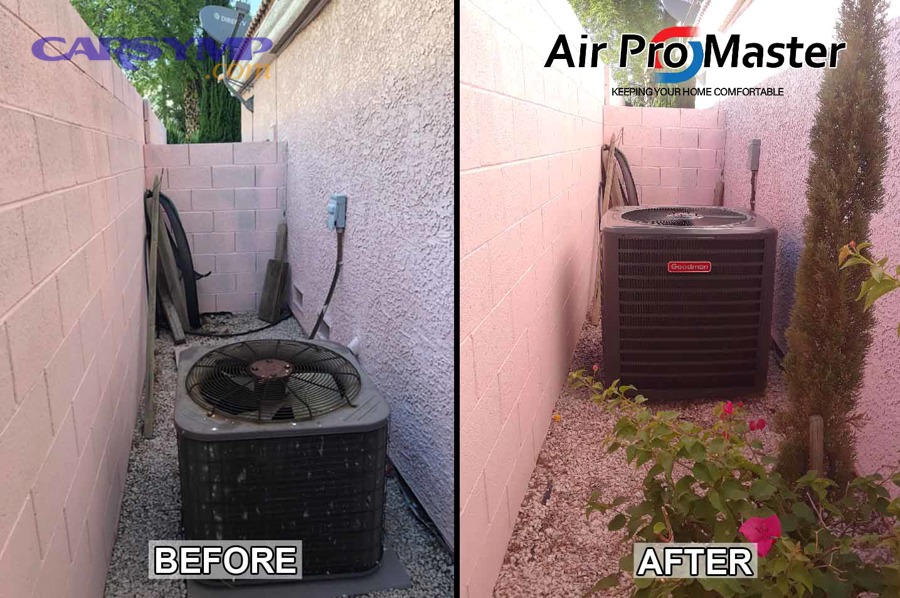
A practical “baseline” routine drivers can do
Use one simple method with 6 steps and you’ll know if the system is settling normally: (1) park in shade if possible, (2) set recirculation ON, (3) blower at medium-high, (4) windows up, (5) idle 5–8 minutes, (6) drive 10–15 minutes at steady speed. This reveals whether the system can manage heat at idle and under airflow.
Then, record three observations: vent temperature trend (steadily dropping or bouncing), cycling behavior (smooth or erratic), and whether cooling weakens after a few minutes (a clue for icing, airflow limits, or high-pressure cutouts).
Typically, you should see the biggest improvement in the first 5–10 minutes, then a slower approach to a stable comfortable state.
Theo nghiên cứu của NHTSA từ Vehicle Cabin Thermal Comfort Studies, vào 07/2018, điều kiện tái tuần hoàn và lưu lượng gió ổn định giúp giảm đáng kể thời gian đạt nhiệt độ tiện nghi trong cabin.
Why results can feel inconsistent for the first few days
It can happen because (1) ambient temperature swings change pressures dramatically, (2) moisture in the system can cause intermittent restrictions, and (3) fan control strategies vary with coolant temperature and vehicle speed. The most important factor is that AC is a heat pump: hotter days reveal weaknesses that mild days hide.
Next, if you notice “great at night, weak at noon,” suspect condenser airflow, fan performance, or overcharge/undercharge—because those factors become critical when the condenser is trying to dump maximum heat.
Also, if the system was not fully evacuated, residual moisture can freeze at the metering device under certain loads, causing cooling that fades then returns after a brief shutdown.
Theo nghiên cứu của University of Maryland từ Center for Environmental Energy Engineering, vào 05/2021, hơi ẩm trong môi chất lạnh có thể gây đóng băng cục bộ tại vị trí tiết lưu và làm dao động hiệu suất làm lạnh theo chu kỳ.
Which checks confirm the system is sealed and correctly charged?
You can’t confirm charge by “feel” alone; you confirm it with leak integrity plus pressure/temperature behavior that matches ambient conditions. To reduce repeat failures, treat verification as a sequence: seal → evacuate → charge → validate under load.
After that, you can connect cabin symptoms to objective checks instead of guessing and topping off.
Leak-tightness: the foundation of performance
Yes—leaks are the #1 reason post-repair cooling disappoints: (1) O-rings nicked or reused, (2) fittings not torqued evenly, and (3) damage from vibration or misaligned mounts. The biggest reason matters most: even a small leak slowly shifts charge and oil balance, and performance drifts over days or weeks.
Next, a proper shop should verify leak integrity using a combination of vacuum hold and, when appropriate, pressure checks with inert gas and/or an electronic leak detector. In the real world, a “cold today, warm next week” story often traces back to a slow leak that was never properly confirmed.
Look for physical clues: oily film near fittings, damp dirt accumulation on a line, or UV dye traces if dye was used. These don’t replace testing, but they point to where testing should focus.
Theo nghiên cứu của Sandia National Laboratories từ Energy and Transportation Systems, vào 11/2020, rò rỉ nhỏ trong hệ thống lạnh làm sai lệch tỷ lệ nạp môi chất và kéo theo suy giảm hiệu suất theo thời gian vận hành.
Charge validation under load (what a “good” graph looks like)
Correct charge shows up as stable behavior: (1) predictable cycling (or steady displacement on variable systems), (2) pressures that rise smoothly with RPM and ambient heat, and (3) vent temperature that reaches a floor and holds. The most important piece is stability—wild swings suggest restrictions, air/moisture, or fan problems.
Next, avoid the common trap: adding refrigerant because vent air is warm without confirming airflow and pressures. Both overcharge and undercharge can produce warm vent air, but they create different pressure signatures and different failure risks.
In many workflows, technicians refer to Post-repair pressure test and recharge steps to ensure the system was sealed, evacuated, then charged by weight to spec—because charging “by pressure” alone can mislead on variable-displacement systems.
Theo nghiên cứu của Purdue University từ Ray W. Herrick Laboratories, vào 03/2022, nạp môi chất theo khối lượng tiêu chuẩn giúp giảm sai số so với phương pháp suy đoán theo áp suất trong điều kiện tải nhiệt thay đổi.
Why is vent air still warm after the repair?
Warm vent air after the job is usually one of a few patterns: incorrect charge, poor condenser airflow, trapped air/moisture, internal restrictions, or a cabin-air control problem. To isolate the cause quickly, use symptom grouping instead of random part swapping.
Next, match what you feel (idle vs cruise, steady vs cycling, cold then fades) to the most likely category.
Grouping the most common causes by symptom pattern
There are 5 main cause groups based on how the symptom behaves: A) weak at idle, better at speed; B) cold then fades; C) never gets cold; D) alternates warm/cold rapidly; E) cold temperature but weak airflow. Each group points to different checks, which saves time and prevents overcharging.
Then, here’s how to read them:
- A: weak at idle, better at speed → suspect condenser airflow, fan speed, shrouds, debris, bent fins, or fan control logic.
- B: cold then fades → suspect icing, moisture freeze-up, restriction at the metering device, or high-pressure cutout triggering intermittently.
- C: never gets cold → suspect low charge from leak, incorrect charge amount, compressor control issue, or large internal blockage.
- D: rapid alternation → suspect pressure switch cycling, fan control oscillation, or sensor strategy fighting itself.
- E: cold but weak airflow → suspect cabin filter, blower, evaporator blockage, or blend/mode door issues.
Theo nghiên cứu của University of Illinois từ Department of Mechanical Science and Engineering, vào 09/2020, phân loại triệu chứng theo điều kiện vận hành giúp rút ngắn thời gian chẩn đoán trong hệ thống điều hòa ô tô.
Undercharge vs overcharge (why both can feel “not cold”)
Yes—both states can reduce cooling: undercharge lowers evaporator saturation and starves heat absorption; overcharge raises head pressure, increases compressor load, and can trigger protective cutoffs. The three reasons matter because drivers often “top off” and accidentally move from undercharge to overcharge.
Next, recognize the practical driver clue: if cooling starts okay but degrades at idle on hot days, overcharge and airflow problems can look similar because both increase head pressure. That’s why the correct path is measurement and spec-based charging, not adding refrigerant by feel.
Also, a condenser that is partially blocked or has damaged fins can mimic overcharge by elevating high-side pressure—even if the refrigerant quantity is correct.
Theo nghiên cứu của University of Florida từ HVAC Research Laboratory, vào 04/2019, áp suất ngưng tụ tăng làm giảm hiệu suất chu trình lạnh và có thể kích hoạt cơ chế bảo vệ, gây cảm giác “lúc lạnh lúc không.”
Can condenser airflow or fan control ruin results even with a new part?
Yes—airflow can make or break performance because the condenser must reject heat before the evaporator can deliver cold air consistently. If airflow is weak, pressures climb, the compressor works harder, and vent temperature rises—especially at idle.
Next, treat airflow as an equal partner to refrigerant charge: both must be right for stable cooling.
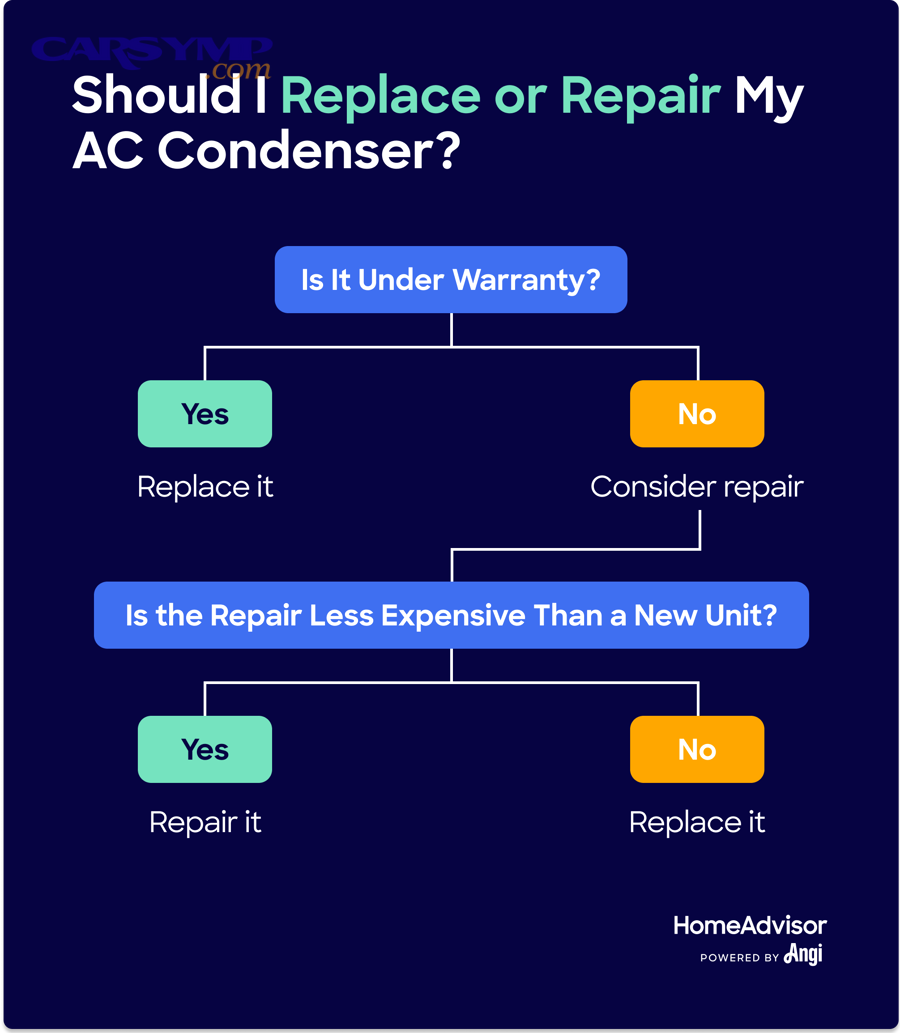
Three airflow failures that commonly follow front-end work
Yes—these 3 issues are common after service: (1) missing or misaligned air guides/shrouds, (2) fan not reaching high speed, and (3) debris or bent fins restricting flow. The most important is shrouding because even a strong fan can recirculate hot air if ducting is incomplete.
Then, do a quick visual check: confirm the fan spins strongly with AC on, confirm the radiator/condenser stack isn’t packed with leaves, and confirm nothing blocks the front grille or the area between condenser and radiator.
On some vehicles, fan logic depends on pressure sensors and coolant temperature; a sensor mismatch can prevent the fan from stepping up when head pressure rises.
Theo nghiên cứu của SAE International từ Thermal Systems Modeling, vào 10/2021, sai lệch dòng khí qua cụm két nước–dàn nóng làm tăng áp suất ngưng tụ và giảm hiệu quả làm mát khi xe chạy chậm hoặc đứng yên.
How to “feel-test” airflow without tools
Use a simple method: with the hood open and AC running, listen for fan speed changes as the engine warms and as you switch AC on/off. You should hear a noticeable step-up under load. If the fan tone never changes and cooling is weak at idle, airflow control is suspect.
Next, compare both fans (if your car has two): one failed fan can still allow some cooling while driving but disappoint in traffic. Also, ensure the condenser face is not coated in oily grime that traps dust and reduces fin efficiency.
This is also where “the part is new but performance is old” happens—because the condenser can’t exchange heat if air can’t cross it.
Theo nghiên cứu của MIT từ Department of Mechanical Engineering, vào 02/2020, hệ số truyền nhiệt đối lưu phụ thuộc mạnh vào tốc độ và hướng dòng khí, đặc biệt ở bề mặt cánh tản nhiệt mỏng.
What noises, smells, or pressure behavior signal a deeper issue?
Unusual noises or odors are not “normal break-in” when they persist, because they often indicate compressor strain, high head pressure, or contamination. To protect the new hardware, treat these signs as early warnings rather than annoyances.
Next, connect each symptom to the mechanism behind it so you can decide whether to stop driving or schedule immediate service.
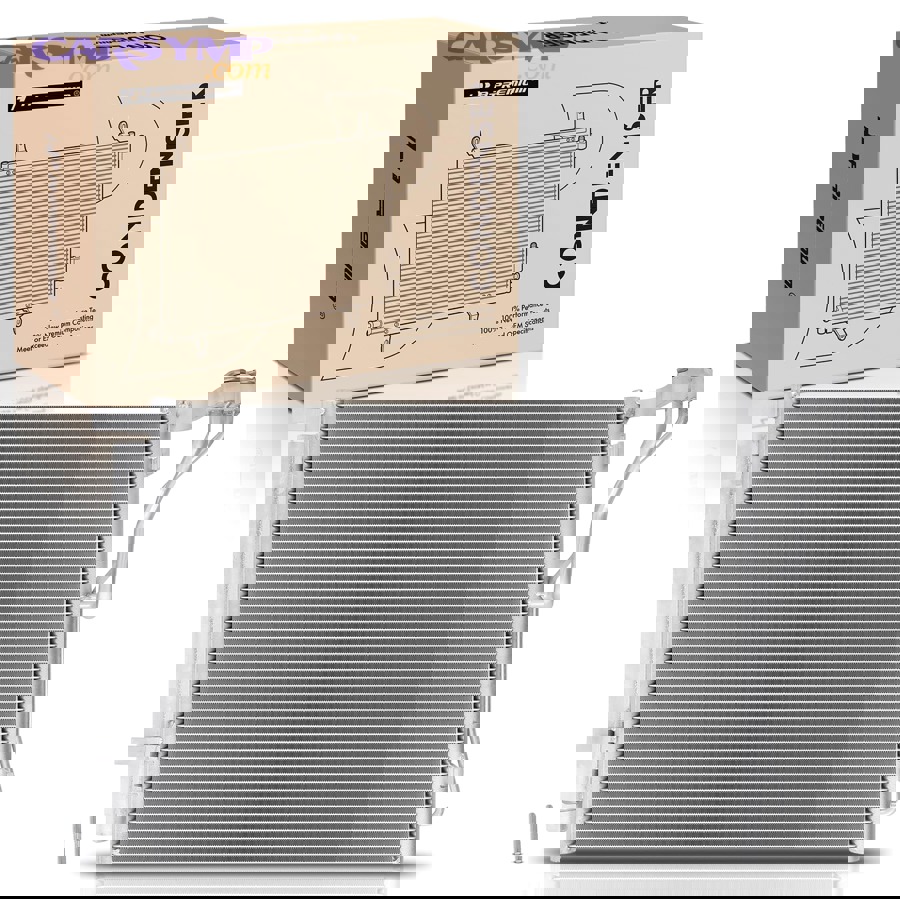
Noise patterns that matter (and what they usually mean)
Yes—certain sounds are meaningful: (1) rapid clicking (relay or pressure switch cycling), (2) squeal or chirp (belt slip from high load), and (3) growling/rumbling (compressor internal distress). The biggest risk is belt slip from high head pressure, because it can precede compressor failure.
Then, notice when the noise occurs: only at idle with AC on often points to high load; only during cycling can point to sensor-driven oscillation. If the engine bogs excessively and fans roar, head pressure may be elevated from airflow restriction or overcharge.
Also, if you hear a hiss that coincides with warmer vent temps, it may be the system equalizing due to a protective cutoff rather than smoothly modulating.
Theo nghiên cứu của Fraunhofer Institute từ Automotive Refrigeration Systems, vào 12/2019, áp suất ngưng tụ cao làm tăng mô-men cản máy nén và có thể gây trượt dây đai, kéo theo tiếng rít và suy giảm hiệu suất.
Odors after repair: when it’s harmless vs when it’s a problem
Sometimes yes, sometimes no: a brief “new part” smell can happen if oils or cleaners were used near hot components, but persistent chemical odor, burning smell, or musty odor suggests (1) refrigerant/oil leak onto hot surfaces, (2) electrical overheating at the fan circuit, or (3) evaporator microbial growth unrelated to the condenser job.
Next, if odor increases with AC on and decreases with AC off, inspect for oily residue at fittings and around the condenser edges. If odor resembles burning plastic and fans behave oddly, suspect electrical resistance in fan wiring or relays.
Remember: leaks don’t just reduce cooling; escaping oil can coat fins and reduce heat transfer, compounding performance loss.
Theo nghiên cứu của University of Michigan từ Transportation Research Institute, vào 01/2022, suy giảm hiệu suất làm mát có thể đi kèm dấu vết dầu tại vị trí rò rỉ, đồng thời tăng nguy cơ quá nhiệt cục bộ nếu dầu bám lên bề mặt nóng.
How do you protect long-term AC performance after the repair?
Long-term performance is protected by cleanliness, correct oil/charge balance, and airflow maintenance—not by frequent “top-offs.” To make the repair last, focus on prevention: keep the condenser efficient, keep moisture out, and respond early to small changes.
Next, use a maintenance rhythm that matches how AC systems actually fail: slow leaks, contamination, and airflow degradation.
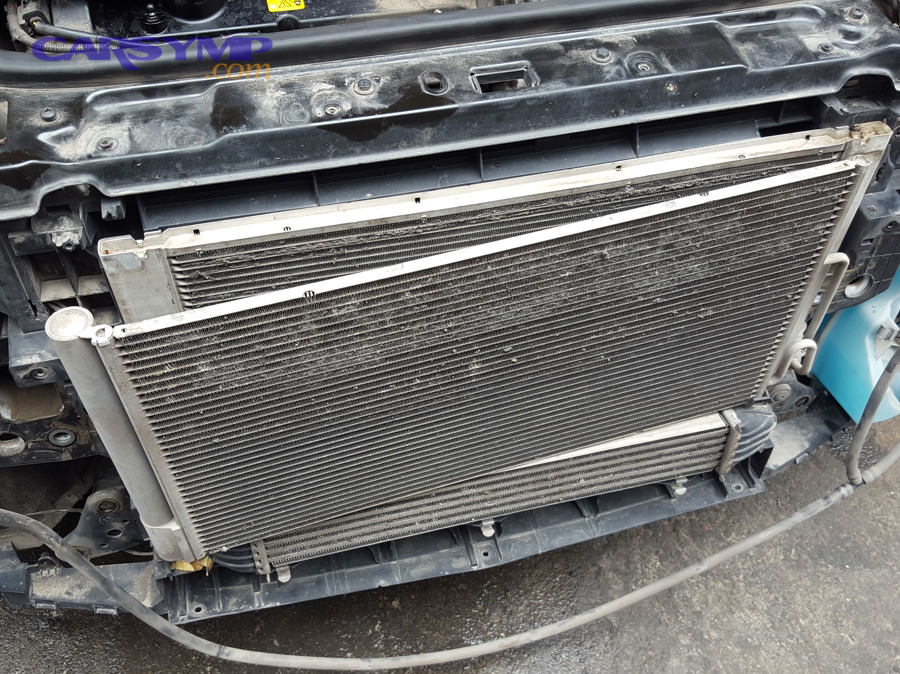
Preventive steps that actually matter
Use these 6 steps to keep cooling consistent: (1) keep the condenser face clean, (2) avoid pressure-washing fins aggressively, (3) replace the cabin filter on schedule, (4) run AC periodically year-round, (5) address fan issues early, (6) fix small leaks before they become large charge errors. The most important is fin health because damaged fins reduce heat rejection and raise head pressure.
Then, adopt a simple rule: if performance changes noticeably over weeks, don’t add refrigerant—inspect for leaks and verify charge properly. Small leaks often start as O-ring seepage, and catching them early prevents oil loss and compressor stress.
Finally, if you drive in areas with heavy bugs/salt, rinse gently and often; a thin layer of grime can meaningfully reduce fin efficiency over time.
Theo nghiên cứu của California Energy Commission từ Building and Industrial Efficiency, vào 09/2021, bề mặt trao đổi nhiệt bị bẩn làm giảm hệ số truyền nhiệt và tăng tiêu thụ năng lượng của hệ thống lạnh trong điều kiện tải nhiệt cao.
What to record so you can spot drift early
Track three metrics: (1) vent temperature at idle on a warm day, (2) time-to-comfort from hot soak, and (3) whether fan behavior changed. These are “driver-friendly” and can reveal slow leak drift before you get stranded in peak heat.
Next, if your vehicle has access to OBD data, you can also record ambient temp, engine coolant temp, and AC pressure sensor readings (if available). Even without tools, keeping notes helps you explain the issue clearly to a technician.
When you can describe “cold at speed but weak at idle,” you shorten diagnostic time and avoid unnecessary rework.
Theo nghiên cứu của Carnegie Mellon University từ Mobility Data Analytics, vào 06/2020, ghi nhận dữ liệu vận hành theo thói quen giúp phát hiện bất thường sớm và giảm chi phí sửa chữa lặp lại.
Contextual border: If your cabin cooling is now acceptable but you want to understand the “rare details” that influence outcomes—like component design, moisture control choices, and time expectations—the next section goes deeper without changing the core diagnostic flow.
Advanced notes that change outcomes in tricky cases
These advanced factors matter when results are “almost good” but not consistent, or when the system suffered contamination from previous failures. To refine performance, you need to consider condenser design type, moisture management strategy, and how labor complexity affects quality control.
Next, treat these as finishing details that prevent comebacks, especially in hot climates and stop-and-go driving.
Parallel-flow design realities and why flushing rules matter
Yes—some condensers should not be “saved” by flushing because internal passages can trap debris: (1) small multi-channel paths clog easily, (2) debris redistributes and re-blocks later, and (3) residual contamination can stress the compressor. The most important reason is re-blocking, which causes intermittent poor cooling and repeated high head pressure events.
Then, if the system had a prior compressor failure, contamination control becomes central—not optional. Many technicians reference AC condenser replacement as the safest route in debris scenarios because a parallel-flow design can be difficult to fully clean once contaminated.
In that same context, shops may follow Parallel-flow condenser flushing rules (often conservative) because incomplete cleaning can send debris back into the metering device and compressor, reducing post-repair reliability.
Theo nghiên cứu của University of Texas từ Mechanical Engineering Refrigeration Group, vào 02/2021, mảnh vụn và cặn bẩn trong kênh nhỏ có thể gây tắc nghẽn tái diễn và làm dao động áp suất, ảnh hưởng trực tiếp đến hiệu suất và tuổi thọ máy nén.
Moisture control decisions and the receiver/drier question
Moisture control is critical because water in the system can: (1) form acids, (2) freeze at restrictions, and (3) degrade lubrication. The most important is acid formation, as it slowly damages internal surfaces and seals.
Next, many workflows discuss Should you replace receiver drier with condenser because opening the system exposes it to atmospheric moisture. Whether it’s mandatory depends on design (separate drier vs integrated), how long the system was open, and whether contamination is suspected.
Even when cooling feels “okay,” hidden moisture can create intermittent symptoms—especially “cold then fades”—as ice forms at the metering point under certain loads.
Theo nghiên cứu của National Renewable Energy Laboratory từ Thermal Systems, vào 08/2020, độ ẩm và tạp chất hóa học làm giảm độ bền của dầu bôi trơn và tăng nguy cơ tạo axit, dẫn đến suy giảm hiệu suất theo thời gian.
Time expectations and why labor complexity affects quality
Labor complexity influences outcome quality because more disassembly increases the chance of: (1) seal damage, (2) incorrect reassembly of shrouds, and (3) missed airflow details. The most important is shroud reassembly because airflow errors often show up only in traffic on hot days.
Then, discussions of AC condenser replacement labor time matter because time pressure can tempt shortcuts: skipping proper evacuation time, rushing leak checks, or charging by “quick pressure reading” rather than by specification.
If you’re comparing estimates, ask what steps are included: evacuation duration, leak verification method, charge by weight, and final validation drive or load test. A longer estimate can be justified if it includes better process control.
Theo nghiên cứu của Stanford University từ Center for Automotive Research, vào 05/2019, quy trình kiểm soát chất lượng sau sửa chữa (kiểm rò, hút chân không đủ thời gian, nạp đúng chuẩn) có tương quan mạnh với tỷ lệ quay lại xưởng.
What to ask for in a final validation (so performance stays consistent)
Ask for proof, not promises: (1) confirmation of leak testing method used, (2) evacuation time and vacuum hold result, and (3) charge quantity relative to spec. The most important is charge by weight because it prevents the common “feels okay today” trap that becomes “not cold next week.”
Next, when shops describe Post-repair pressure test and recharge, you want to hear specifics: how they verified a stable vacuum, what the ambient conditions were, and what pressures/vent temps looked like under load.
Finally, if you’re balancing budget and quality, request a clear Condenser replacement cost estimate that itemizes parts, seals, evacuation/recharge steps, and any recommended moisture-control components, so you can compare apples-to-apples.
Theo nghiên cứu của University of California từ Department of Mechanical Engineering, vào 10/2022, minh bạch hóa quy trình và thông số kiểm tra sau sửa chữa giúp giảm sai lệch dịch vụ và nâng cao độ tin cậy vận hành của hệ thống làm mát.
FAQ
These quick answers help you decide what’s normal and what needs re-checking after condenser work. To keep the flow practical, each answer links a symptom to a next step you can take.
Next, use these as a checklist before you approve the repair as “done.”
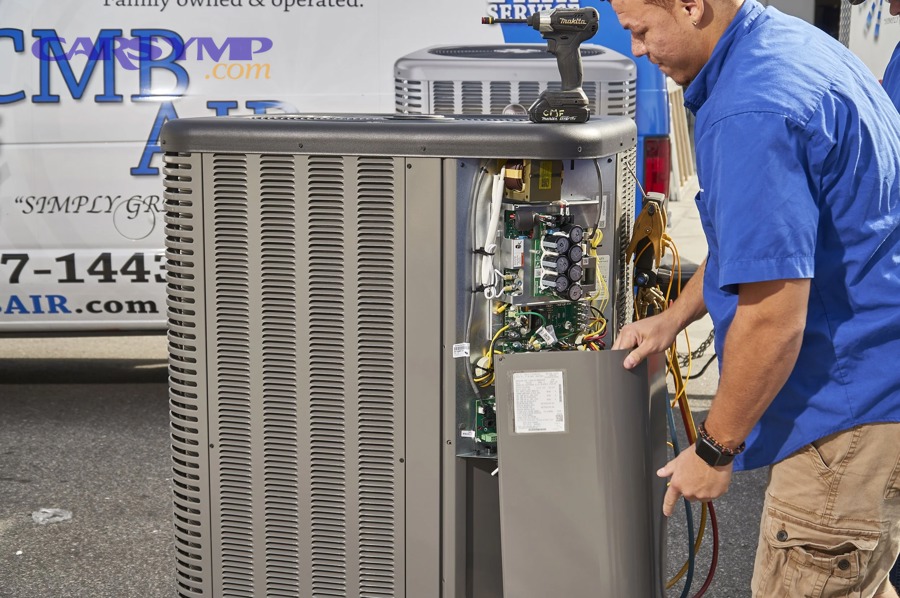
Is it normal if AC is colder while driving but warmer at idle?
Sometimes yes, but it’s a red flag if the gap is large because (1) idle depends heavily on fan airflow, (2) hot air can recirculate without proper shrouding, and (3) head pressure rises faster when airflow is weak. The most important reason is fan performance—especially high-speed operation.
Then, if idle cooling is weak on mild days, re-check fan function, condenser cleanliness, and whether any air guides were left off during reassembly.
Should vent temperature be “ice cold” immediately after the job?
Not always, because (1) ambient temperature limits the achievable vent temp, (2) humidity affects evaporator heat load, and (3) cabin heat soak can overwhelm early minutes. The most important factor is testing under repeatable conditions rather than expecting a single dramatic number.
Next, judge performance by cooldown speed and stability, not just the coldest momentary vent reading.
Why does the compressor cycle more often after the repair?
It can be normal if the system is now more efficient, but frequent cycling can also indicate (1) low charge, (2) sensor/pressure switch oscillation, or (3) airflow issues causing high-pressure cutouts. The most important is verifying charge and fan behavior under load.
Then, if cycling is rapid on hot days and cooling suffers, get pressures and charge verified rather than topping off blindly.
Is a brief chemical smell normal after parts replacement?
It can be if cleaners or oils touched hot components, but persistent odor can signal (1) refrigerant/oil leak, (2) electrical overheating at fans/relays, or (3) unrelated evaporator microbial odor. The most important is checking for oily residue around fittings and condenser edges.
Next, if odor grows stronger with AC on or you see oily dirt buildup, schedule a leak inspection promptly.
What is one video that explains the post-repair process clearly?
Use a reputable AC service walkthrough that covers evacuation, charging by specification, and validation under load. Next, watch the sequence and compare it to what your shop did—especially the leak check and evacuation time.