


A fuel pressure test is the fastest “basics-first” way to confirm whether your fuel system can build and hold the pressure your engine needs—using a simple gauge, a safe connection point, and a spec comparison that tells you if the numbers are truly normal.
Next, you’ll learn how to connect a fuel pressure gauge correctly, run the key-on and engine-running checks, and avoid the common mistakes that create misleading readings or unsafe fuel spills.
In addition, you’ll get a clear interpretation framework—what low, high, unstable, or fast-dropping pressure usually means—so you can separate guesswork from evidence before buying parts.
Introduce a new idea: once you can test and interpret fuel pressure, you can decide what to check next (like leak-down, flow, or simple electrical checks) to confirm the exact cause.
What is a fuel pressure test, and what does it prove about your fuel system?
A fuel pressure test is a fuel-system diagnostic check that measures fuel rail pressure (usually in PSI) at specific operating conditions to confirm whether the pump and regulation system can meet the engine’s required specification without unsafe drops or unstable fluctuations.
To better understand what the test “proves,” it helps to separate pressure from delivery .
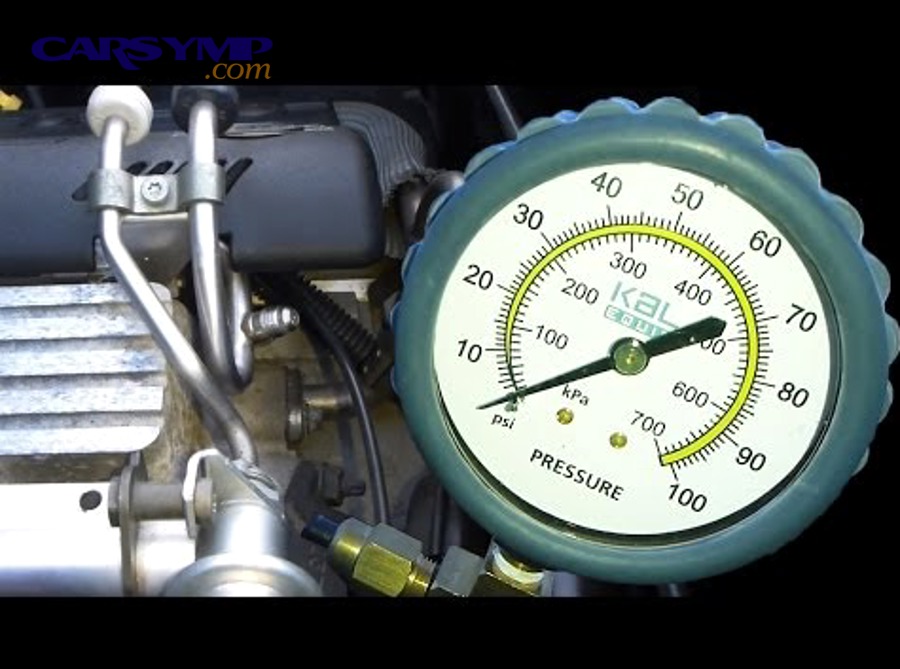
In practical terms, a fuel pressure test can confirm:
- Whether pressure reaches spec during prime (key-on) and while running.
- Whether pressure stays stable at idle and during brief throttle changes.
- Whether pressure holds after shutdown (leak-down behavior).
But it does not automatically prove:
- The injectors are flowing correctly (pressure can be fine while an injector is clogged).
- The engine is getting correct air and spark (you can have perfect fuel pressure and still have a no-start).
- The pump can deliver enough volume under heavy load (pressure-only tests can miss low flow).
What is “fuel pressure” in PSI, and why does it matter for starting, idling, and acceleration?
Fuel pressure is the force per unit area that pushes fuel through the fuel rail and toward the injectors, most often expressed in PSI (pounds per square inch).
Specifically, fuel pressure matters because injectors rely on a consistent pressure differential to deliver a predictable amount of fuel when they open. If pressure is too low, the engine can crank longer, idle rough, or stumble under load; if it’s too high, the engine can run rich, foul plugs, or trigger fuel-trim issues.
Here’s the key “beginner anchor”:
- Starting is sensitive to pressure build-up during priming.
- Idling is sensitive to pressure stability.
- Acceleration/load is where weak pumps or restrictions often reveal themselves because demand rises quickly.
According to a study by Universidad de Castilla-La Mancha from the Aerospace Engineering and Mechanics area, in 2023, varying fuel supply pressure in multi-point injection testing was linked to changes in spray behavior and atomization, which directly affects mixture formation and combustion quality.
Does a fuel pressure test diagnose a bad fuel pump by itself?
No—a fuel pressure test alone does not guarantee the fuel pump is bad, because low pressure can come from multiple causes, including restrictions, regulation issues, and electrical supply problems.
More specifically, “low pressure” can be caused by:
- A weak pump (worn internals, overheated pump, cavitation).
- A clogged fuel filter or restricted line (pressure can drop most under load).
- A bad regulator or control strategy (especially in returnless systems).
- Voltage supply problems (relay, fuse, corroded connector, weak ground).
This is why the best practice is: measure pressure → compare to spec → interpret the pattern before replacing parts.
Do you need a fuel pressure test, and what symptoms justify doing one?
Yes—you usually need a fuel pressure test when the engine shows consistent fuel-delivery symptoms, because it quickly confirms whether pressure meets spec, it helps separate fuel issues from ignition/air problems, and it prevents costly “parts darts” with pumps, filters, and injectors.
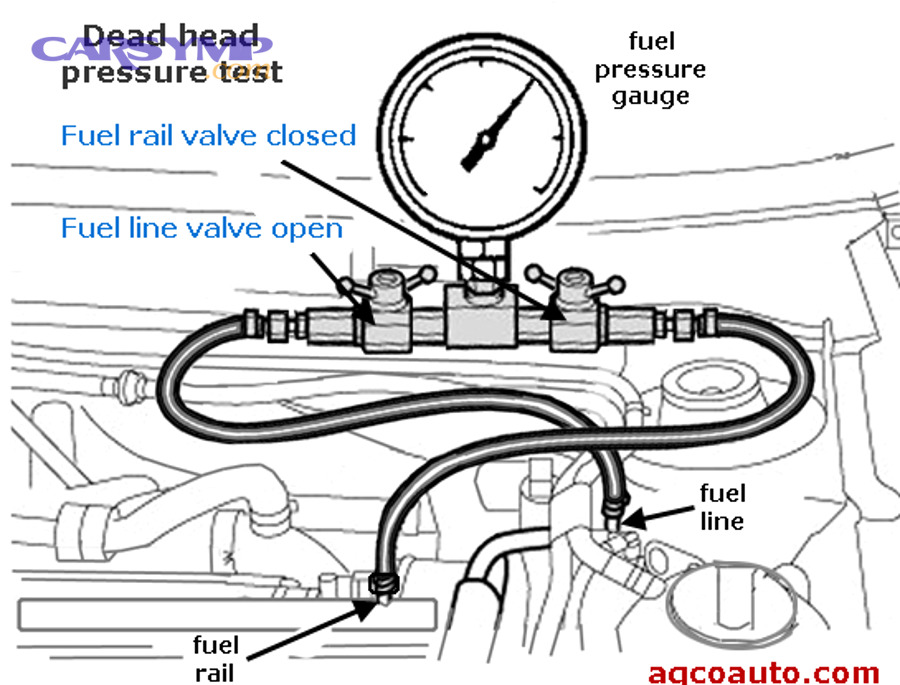
Next, use symptoms as your trigger—not guesses—because the same complaint (like rough running) can come from several systems.
Common triggers include:
- Extended crank / hard start
- Stall at idle or after a hot soak
- Hesitation under acceleration
- Misfires under load
- Lean fuel trims or lean codes (not always, but often a clue)
When people search “fuel pump symptoms,” they often mean these same real-world drivability issues—and a pressure test is the most direct way to confirm whether the fuel supply side is keeping up.
Is a fuel pressure test the right first step for a crank-no-start or hard-start complaint?
Yes, in many cases—especially when the engine cranks normally but won’t start, or it starts after multiple key cycles, because the pressure test quickly tells you whether the rail is building pressure during prime.
Then, use a simple decision rule:
- Cranks fast + no start + no fuel smell → pressure test is a strong early step.
- Cranks + occasional sputter → pressure test still useful, but also consider spark and air.
- No crank → that’s not fuel pressure; start with battery/starter.
A beginner-friendly check before the gauge:
- Turn key to ON (not start) a few times and listen: a short pump prime sound is common.
- If the engine starts better after cycling the key, it can hint at slow pressure build—but you still need the gauge to confirm.
Which symptoms most strongly point to low fuel pressure vs. other issues?
There are 6 common symptom groups that most strongly suggest low fuel pressure when they repeat consistently and worsen under load:
- Hard starting / long crank, especially after sitting.
- Stumble or hesitation when you press the accelerator.
- Loss of power under load (hills, high speed, towing).
- Surging (fuel supply can’t maintain stable pressure).
- Random misfire under load (often mistaken for ignition).
- Lean fuel trims on a scan tool (not required, but supportive).
However, some issues imitate low pressure:
- Vacuum leaks can mimic lean conditions.
- Ignition coil issues can mimic load misfires.
- Dirty injectors can mimic weak supply.
And one very specific clue that people ask about is Whining noise from tank diagnosis: a loud, persistent whine from the fuel tank area can occur when a pump is struggling, running dry, or pushing against a restriction. It’s not proof by itself, but it’s a reason to test pressure instead of guessing.
What tools and safety steps do beginners need before checking fuel pressure?
There are 5 must-have basics for a beginner fuel pressure check: a compatible fuel pressure gauge kit, correct adapters, eye/hand protection, spill-control materials, and a safe pressure-relief plan—because fuel systems can remain pressurized even with the engine off.
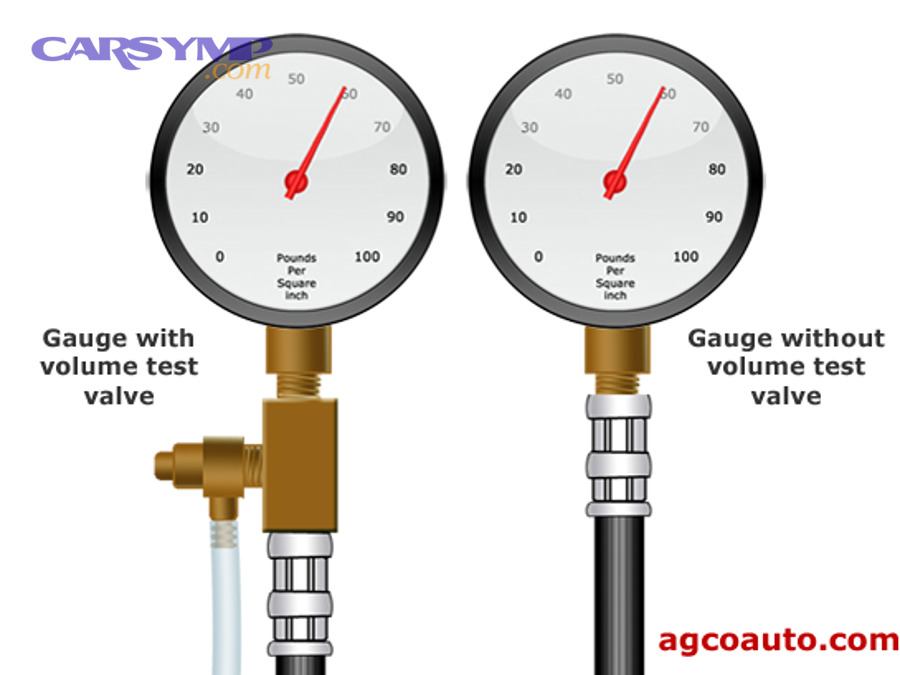
To begin, treat safety as part of the method, not as “extra,” because the most common beginner mistake is cracking a fitting with residual pressure.
A practical tool checklist:
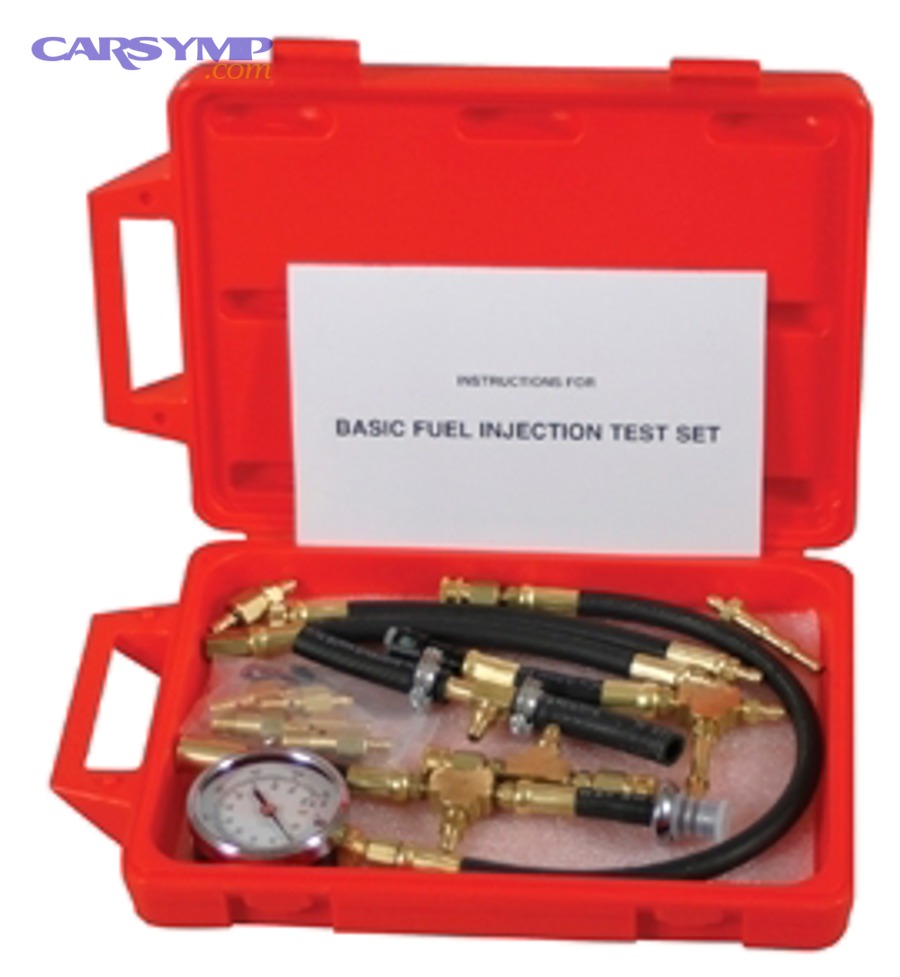
- Fuel pressure gauge/test kit (with the right adapters)
- Safety glasses + gloves
- Shop towels/rags + a small catch container
- Fire extinguisher rated for flammable liquids (recommended)
- Vehicle service information to find the correct test point and spec
Safety steps that keep you out of trouble:
- Work in a well-ventilated area, away from ignition sources.
- Keep sparks, smoking, and heat away from the engine bay.
- Relieve pressure before disconnecting fuel lines or adapters whenever the procedure requires it.
NHTSA safety documents for fuel system service repeatedly warn that the fuel system can be under pressure and that pressure should be released before servicing fuel rail components.
What’s in a fuel pressure test kit, and which gauge range/fittings are most practical?
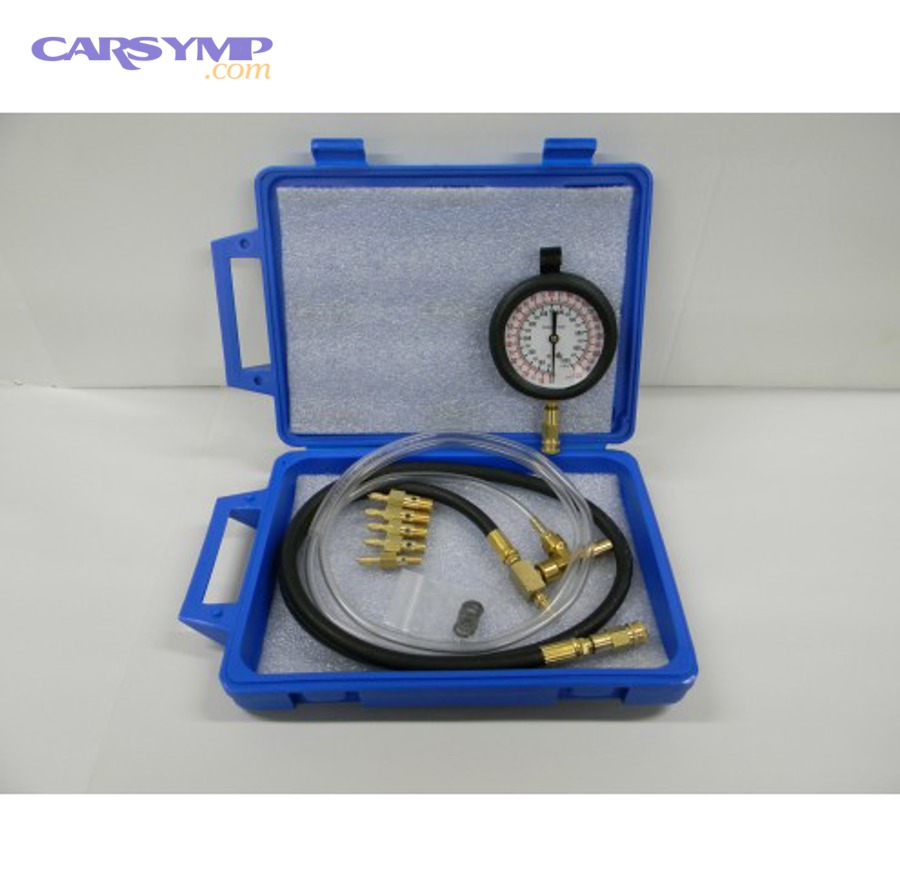
A fuel pressure test kit typically includes a PSI gauge, a hose, and a set of adapter fittings designed to connect to a service port (often a Schrader valve) or inline fuel fittings.
More specifically, a beginner-friendly setup usually includes:
- A gauge that reads comfortably beyond typical gasoline port-injection pressures (so you’re not pegging the needle)
- Schrader valve adapter (common on many fuel rails)
- Quick-connect/inline adapters for vehicles without a service port
A good “practical” rule: choose a kit with multiple adapters so you’re not forced into unsafe improvisation.
Is relieving fuel pressure required before connecting a gauge?
Yes—relieving fuel pressure is required in most cases because it reduces spray risk, prevents fuel from forcing past seals during connection, and makes the hookup more controlled and safer.
Then, follow a safe approach rather than “popping” a line:
- Use the method recommended in reputable how-to guidance (for example, disabling the pump and cranking briefly to bleed pressure), and always contain any fuel with towels.
- If you’re working from a manufacturer service procedure, follow that exact method. Some procedures explicitly describe reducing pressure at a sensor or fitting in a controlled way.
Where do you connect a fuel pressure gauge, and what if there is no test port?
You connect a fuel pressure gauge at the fuel rail service port (often a Schrader valve) when available, and if there is no test port, you use the correct inline/quick-connect adapter method designed for your fuel line type rather than forcing an unsafe connection.
Next, focus on “correct connection” first, because a wrong adapter or a loose seal can create both leaks and false readings.
Where is the Schrader valve on the fuel rail, and how do you identify it quickly?
The Schrader valve is typically a small, capped valve on the fuel rail that looks similar to a tire valve stem, positioned where a technician can attach a gauge.
To identify it quickly:
- Look along the fuel rail on top or side of the engine.
- Find a small cap (often plastic) that covers the valve.
- Confirm with service info if you’re unsure.
Some vehicles have the port on one end of the rail; others place it near the middle. Auto repair how-to guidance commonly describes it as a small valve on the fuel rail and notes that some vehicles won’t have one.
How do you test fuel pressure if your vehicle has no Schrader valve?
If your vehicle has no Schrader valve, you test fuel pressure by using an inline adapter that matches your fuel line connection style (quick-connect, banjo, or other system-specific fittings) so the gauge reads rail/feed pressure safely and without leaks.
More specifically:
- Identify the fuel feed line location where an adapter is intended to be installed.
- Use the correct quick-connect release tool (if applicable).
- Install the adapter and confirm seals before cycling the key.
A reputable diagnostic workflow notes that some vehicles require disconnecting fuel lines and using an adapter hose when no test port is present.
How do you perform the fuel pressure test step-by-step (key-on and engine-running)?
The basic method is a two-part fuel pressure test—KOEO (key-on engine-off) and engine-running checks—performed in a clear sequence so you can record stable readings, compare them to spec, and spot patterns like slow build, unstable pressure, or drop under demand.
Then, use consistent conditions (same key cycles, same idle state) so your results are repeatable and meaningful.
Before you start, do two quick setup checks:
- The gauge is firmly attached (no wobble, no seepage).
- You have the manufacturer’s spec ready (normal PSI is only “normal” if it matches spec).
What is the correct “Key-On Engine-Off” (KOEO) fuel pressure check?
KOEO is the prime-pressure test: you cycle the key to build pressure without the engine running, then record the peak and stabilized PSI to see whether the system can quickly reach specification.
Specifically, follow this step-by-step:
- Disable ignition sources and confirm ventilation.
- Relieve residual pressure as required for safe connection.
- Connect the gauge to the Schrader port or your inline adapter.
- Turn the key to ON (do not start) and let the pump prime.
- Record:
- Peak pressure during prime
- Stabilized pressure after a few seconds
- Cycle the key ON again 2–3 times and observe:
- Does pressure build faster?
- Does it reach the same peak each time?
- Compare the reading to the manufacturer spec.
If KOEO pressure never reaches spec, that’s a strong sign to investigate supply, restriction, or electrical feed before assuming injectors are the issue.
What is the correct “Engine-Running” fuel pressure check at idle and during a brief throttle snap?
The engine-running test confirms whether pressure remains stable at idle and reacts appropriately to brief changes in demand without dropping below spec or fluctuating wildly.
More specifically, do this:
- Start the engine and let it stabilize at idle.
- Record idle pressure and watch for:
- A steady needle (stable regulation)
- Rapid oscillation (possible control or supply issue)
- Perform a brief throttle snap (short, controlled) and observe:
- Does pressure dip sharply and recover slowly?
- Does it sag and stay low under throttle?
- Shut the engine off and proceed to leak-down checks (if you plan to evaluate holding behavior).
A diagnostic workflow from a major component supplier emphasizes installing a gauge, running the pump/engine, recording pressure, and comparing to manufacturer specification—and then moving to volume testing if pressure is sufficient.
What is “normal PSI,” and how do you interpret low, high, or unstable readings?
Normal PSI is the manufacturer-specified fuel pressure range for your exact engine and fuel system, and you interpret results by comparing your readings to spec while looking at patterns—low, high, unstable, or dropping pressure—because each pattern points toward different causes.
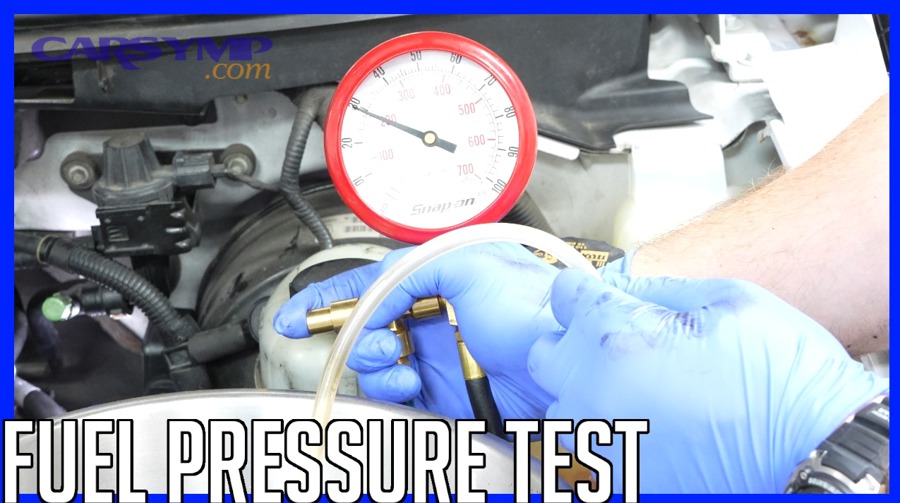
Next, use interpretation as a structured process, not a guess, because “a number” without context can mislead you.
Here’s the most useful interpretation mindset:
- One reading is a clue.
- A pattern across KOEO, idle, throttle, and shutdown is a diagnosis direction.
To make interpretation easier, the table below summarizes common readings and what they typically suggest. (This table helps you map a pressure pattern to the most likely system area before you start swapping parts.)
| Pressure pattern | What it often indicates | Typical next check |
|---|---|---|
| Low KOEO and low running | Weak supply or restriction | Filter history, pump voltage, line restriction |
| KOEO okay but drops under throttle | Low volume/flow under demand | Flow/volume test, electrical supply under load |
| High pressure | Regulation/return problem or control fault | Regulator behavior, return restriction, sensor/control logic |
| Fluctuating/unstable at idle | Control instability, aeration, supply inconsistency | Look for air leaks, control strategy, pump noise |
| Fast drop after shutdown | Leak-down issue (injector, check valve, regulator) | Leak-down test, pinpoint leak source |
Is there a universal “normal fuel pressure PSI,” or must you match the manufacturer spec?
No—there is no universal “normal PSI” that applies to all vehicles, because fuel system design (return vs returnless, injector type, control strategy) changes the required pressure and how it is regulated.
Then, treat any generic PSI number you see online as background only—your pass/fail outcome should come from the spec for your vehicle.
What does low fuel pressure usually indicate compared to high fuel pressure?
Low pressure usually indicates insufficient supply (weak pump, restriction, voltage drop), while high pressure more often indicates a regulation/return-side issue (stuck regulator, restricted return path, control fault).
However, the best interpretation comes from context:
- Low pressure + whining sound + worse under load often points toward a pump struggling or a restriction increasing pump workload (a useful angle for Whining noise from tank diagnosis).
- High pressure + rich running can suggest regulation problems that prevent pressure from bleeding off correctly.
This is also where “Fuel pump vs injector vs filter diagnosis” becomes clearer:
- A filter restriction often shows up as pressure problems that get worse under demand.
- A pump weakness can show slow build, low peak, or sagging under load.
- An injector problem can exist with normal pressure (pressure tests don’t prove injector flow quality).
What does fluctuating or dropping pressure under throttle suggest?
Fluctuating or dropping pressure under throttle suggests the system can’t maintain stable delivery as demand rises—commonly due to low fuel volume/flow, pump weakness, restriction, or electrical supply limits that prevent the pump from sustaining output when it matters most.
More specifically, if pressure is steady at idle but drops quickly under throttle, that’s a classic pattern where a pressure-only “idle check” would miss the real issue—so you document the drop and plan the next confirmation test (often flow/volume or electrical supply checks).
What should you do next based on your results (quick diagnosis checklist)?
There are 3 next-step paths after a fuel pressure test—confirm the spec match, isolate the likely system area, and validate with a focused follow-up check—because this prevents unnecessary part replacement, speeds up accurate repair, and reduces the chance of returning symptoms.
Next, think of this as a checklist you can follow based on what you measured.
A simple, beginner-friendly next-step order:
- Confirm your spec and your test conditions (KOEO vs running).
- Decide which pattern you have (low, high, unstable, dropping, fast leak-down).
- Do the most direct follow-up check for that pattern.
This is also a good point to note that many fuel issues overlap with “Car Symp” style drivability complaints—so your goal is to narrow the system first, not to chase every possible cause at once.
If fuel pressure is low, what checks should you do first before replacing parts?
If fuel pressure is low, start with the checks that most often change the result without replacing major components: confirm spec, inspect restriction history, and verify electrical supply to the pump—because low pressure is frequently caused by restriction or voltage drop rather than an instantly “dead” pump.
Specifically, follow this order:
- Confirm the spec for your vehicle/engine.
- Review fuel filter history (if serviceable): an overdue filter can restrict flow.
- Listen for abnormal pump behavior:
- Quiet prime can be normal.
- Loud or inconsistent sounds can support your “fuel pump symptoms” concern, but still confirm with numbers.
- Perform Fuel pump relay and fuse troubleshooting:
- Check the pump fuse condition.
- Swap the relay with a known-good identical relay (if safe/appropriate) or test relay output.
- Look for corrosion or heat damage at connectors.
A practical takeaway: a pump can test “bad” simply because it’s not receiving stable power. That’s why relay/fuse checks are part of a smart low-pressure workflow—not an afterthought.
If fuel pressure is high, what are the safest beginner checks to confirm a regulator/return issue?
If fuel pressure is high, the safest beginner checks are to confirm you are reading the correct test point, verify the manufacturer spec, and inspect for obvious return/regulation problems—because improper connections and misread specs are common causes of “false high pressure.”
More specifically:
- Re-check that the gauge is connected correctly and not restricted by a kinked hose.
- Confirm the pressure spec and whether your system is returnless or return style.
- Inspect visible fuel lines for pinches or damage (do not clamp lines as a “test” unless a manufacturer procedure explicitly allows it).
- If the system uses electronic control, consider whether a sensor/control fault is influencing commanded pressure.
If you’re not sure whether your system is returnless or electronically controlled, that becomes a reason to shift toward professional diagnostics—especially if fuel leaks, high-pressure systems, or direct injection components are involved.
What additional fuel delivery tests can confirm the diagnosis after a fuel pressure check?
Additional fuel delivery tests include leak-down testing, flow/volume testing, and system-type specific validation, because these micro-checks confirm whether the issue is pressure holding, fuel quantity under demand, or control strategy differences in returnless and direct-injection systems.

In addition, these tests expand your accuracy when the basic pressure test gives you a “maybe” rather than a clear pass/fail.
What is a fuel pressure leak-down (pressure-hold) test, and what does a fast drop mean?
A leak-down test is a pressure-hold check after shutdown that tracks how quickly fuel pressure drops, and a fast drop typically suggests a leak path such as a leaking injector, a failing pump check valve, or a regulator issue (depending on system design).
More specifically:
- You run the engine or prime the system to reach spec.
- You shut the engine off.
- You observe the gauge for a specified time interval.
If pressure falls rapidly, you’re not just dealing with “low pressure”—you may be dealing with “can’t hold pressure,” which explains hard-start after sitting (pressure bleeds off and the system must re-prime every time). A leak-down style process is commonly included alongside basic pressure testing in instructional resources.
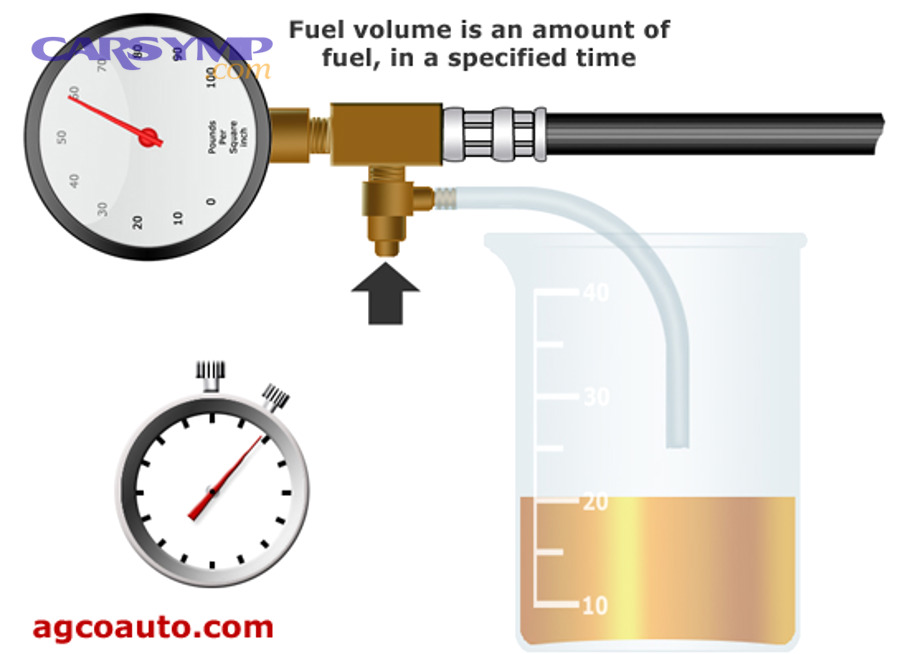
How is a fuel volume/flow test different from a pressure test?
A pressure test measures force, while a flow/volume test measures quantity delivered over time, and flow testing is often the better confirmation when pressure looks acceptable at idle but fails under load because the pump can’t move enough fuel when demand rises.
However, the two tests work best as a pair:
- Pressure test answers: “Can it reach and regulate spec?”
- Flow test answers: “Can it deliver enough fuel volume under demand?”
A supplier diagnostic workflow explicitly recommends moving to a fuel volume test when pressure is sufficient, because correct pressure does not always guarantee correct delivery volume.
How do returnless systems and fuel pressure sensors change what “normal” looks like?
Returnless systems and fuel pressure sensors change “normal” because fuel pressure may be regulated by the pump module and ECU strategy rather than a simple vacuum-referenced regulator and return line, so the pressure behavior can differ across operating conditions even when the system is working correctly.
More specifically, returnless systems may:
- Show different prime behavior.
- Use sensor feedback to control pump output.
- Require scan-tool data to confirm commanded vs actual pressure.
This is why “match the manufacturer spec” is the constant rule—even when the hardware layout looks different.
Do gasoline direct injection (GDI) engines require a different approach than port injection?
Yes—GDI engines often require a different approach because they use a low-pressure feed system and a high-pressure pump/rail system, and testing the high-pressure side can require specialized tools, procedures, and safety steps beyond beginner-level gauge kits.
Then, keep your approach safe and staged:
- A beginner can often test the low-pressure feed side.
- High-pressure testing should follow manufacturer procedure and tools.
According to a study by Michigan Technological University from the Department of Mechanical Engineering–Engineering Mechanics, in 2016, gasoline direct-injection spray research was conducted at high injection pressures (e.g., 172 bar) under engine-like conditions, highlighting how pressure levels in GDI operate far beyond typical port-injection test ranges.