


A fuel pump relay or fuel pump fuse problem can absolutely cause a no-start—but the fastest fix is not “replace parts until it runs.” The fastest fix is a simple power-path check that proves whether the relay is switching, the fuse is feeding, and the pump is actually receiving voltage and ground.
Next, you’ll learn how to separate relay vs fuse vs something else using quick tests that don’t require a scan tool. This keeps you from misdiagnosing normal fuel pump symptoms caused by a dead crank signal, a bad ground, or a failed pump.
Then, you’ll follow a No-start fuel pump checklist that starts at the easiest checks (fuse, relay swap) and moves to the most conclusive checks (voltage drop and commanded power at the pump). That sequence also supports a clean Fuel pump vs injector vs filter diagnosis when the car cranks but won’t fire.
Introduce a new idea: once you understand what each part does in the circuit, troubleshooting becomes a decision tree—every test result tells you exactly where to go next.
What does the fuel pump relay and fuse do in a no-start diagnosis?
The fuel pump fuse protects the circuit and the fuel pump relay switches power to the pump, so a no-start diagnosis uses them to confirm the pump is being fed and commanded instead of guessing at Bad fuel pump signs.
To begin, think of the fuel system as a chain: battery → fuse → relay → wiring → pump → ground, and your job is to find the first broken link.
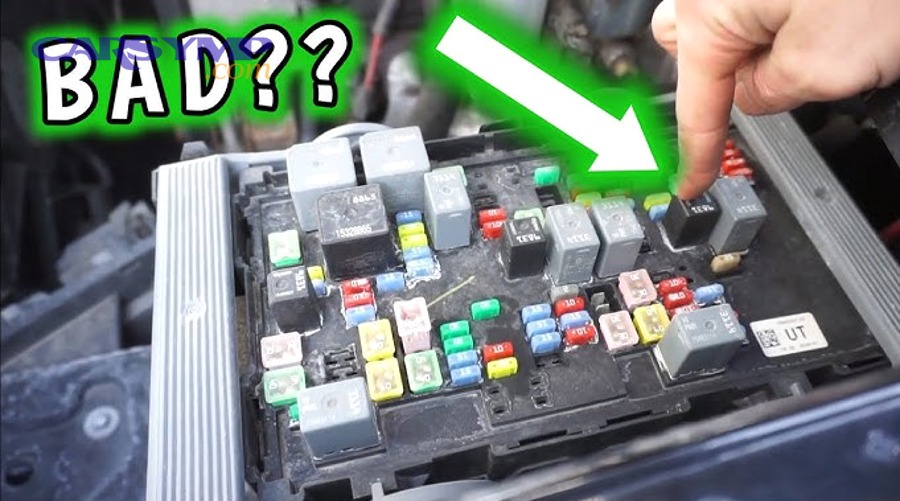
What is the fuel pump fuse, and what happens when it blows?
A fuel pump fuse is a calibrated “weak link” that opens when current exceeds its rating, which prevents melted wiring and fire risk in the pump feed circuit.
Specifically, when the fuse blows, the relay can still click and the ECU can still command fuel—but the pump never receives power.
Key ways a blown fuel pump fuse shows up in real diagnosis:
- No prime sound (often no 2–3 second hum at key-on, if the vehicle normally primes).
- Crank-no-start with no fuel pressure (if you test it).
- Fuse blows again immediately (points to a short-to-ground, pinched harness, melted connector, or failed pump drawing excessive current).
Important: a blown fuse is not “the root cause”—it is the result. If you replace the fuse and it pops again, the diagnosis shifts from “replace fuse” to “find the overcurrent.”
What is the fuel pump relay, and how does it control pump power?
A fuel pump relay is an electrically controlled switch that lets a low-current command circuit control a higher-current pump circuit.
More specifically, the ECU (or fuel pump control module) energizes the relay coil, the relay closes its contacts, and battery power flows to the pump.
This matters because relay failures can be deceptive:
- A relay can click but still have burned contacts, so the pump gets little to no voltage.
- A relay can pass power intermittently when hot or vibrating, causing random stalling—classic fuel pump symptoms that look like a “weak pump.”
- A relay coil can fail, so it never closes, causing a consistent no-start.
According to a study by Poznan University of Technology from the Institute of Electric Power Engineering, in 2019, relay contact resistance changed significantly during switching events and switching at maximum supply voltage could lead to contact welding—showing why “it clicks” is not proof the relay is healthy.
Where are the fuel pump relay and fuse usually located?
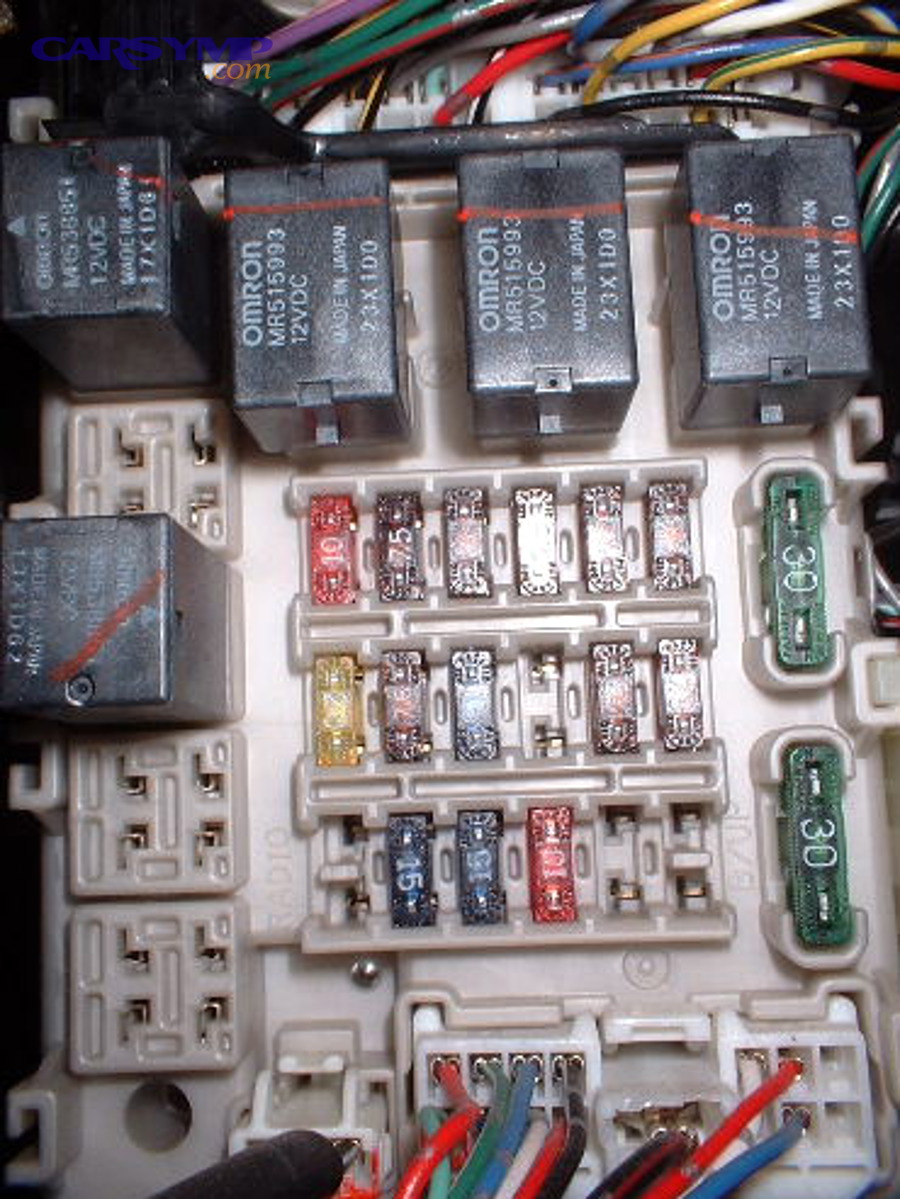
Fuel pump relays and fuses are usually located in the under-hood fuse box, an interior fuse panel, or a dedicated power distribution box—often labeled “F/P,” “FUEL PUMP,” “ECM-B,” or similar.
However, the tricky part is that some vehicles split protection and control across multiple boxes (for example: a fuse under the hood, a relay in the cabin, and a module near the tank).
Practical location tips that reduce wasted time:
- Check the fuse box lid diagram first (many manufacturers print relay and fuse maps).
- Look for a relay cluster: relays are usually square/rectangular and taller than fuses.
- If the vehicle has a fuel pump control module, the relay may be integrated elsewhere.
Is the problem the relay, the fuse, or something else?
No—the relay and fuse are not automatically “the problem”; the correct answer depends on whether the pump is missing power, ground, or command, and you can prove that in minutes with a structured test.
Then, use the results to avoid replacing a pump when the real issue is wiring resistance or a missing ECU trigger.
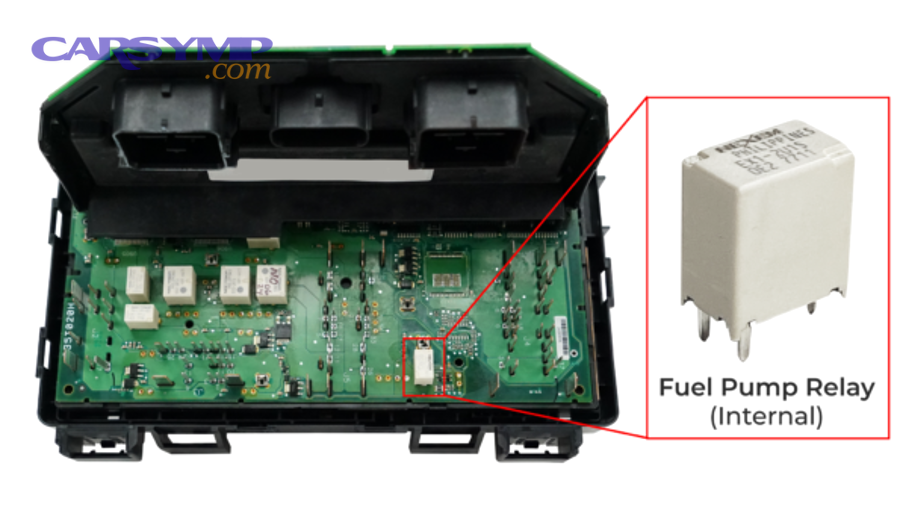
What symptoms suggest a relay/fuse issue vs a bad fuel pump?
Relay/fuse issues usually create on/off behavior (dead or intermittent), while a bad pump often creates pressure/volume weakness before total failure—though overlap is common.
More specifically, use these patterns to guide your first test:
More consistent with fuse/relay/power delivery
- No prime sound at key-on (on vehicles that normally prime)
- Sudden stall and immediate restart after relay cool-down (intermittent relay contact)
- Repeated blown fuse after replacement (short or overcurrent)
- Pump runs only when you tap/replace relay (not a “fix,” just a clue)
More consistent with pump wear/failure
- Long crank before start, especially hot
- Loss of power under load (high demand exposes low pressure)
- Whining from tank that changes with fuel level
- Fuel pressure below spec even with full battery voltage at pump
This is where many people misread Bad fuel pump signs: a weak pump can look like clogged filter symptoms, and a voltage drop can make a good pump look weak.
How can you tell if the issue is power, ground, or pump command?
You can tell by measuring voltage at the pump connector while cranking and comparing it to battery voltage—because the pump must have power and ground and command to run.
However, don’t jump straight to the pump connector until you do the quick upstream checks (fuse and relay), because they’re faster and safer.
A fast way to sort the three categories:
- Power problem: Low/zero voltage on the pump power wire during prime/crank.
- Ground problem: Good power voltage entering pump, but high voltage drop on ground side (or pump runs when you add a temporary ground).
- Command problem: Power and ground circuits can work, but relay never receives trigger (ECU isn’t commanding pump due to immobilizer, crank signal, crash shutoff, etc.).
Your goal is to identify which category you’re in before you buy anything.
When should you suspect something else (immobilizer, inertia switch, ECU, wiring)?
You should suspect “something else” when the fuse is intact and the relay tests good, yet the pump still has no commanded power—or when the pump runs on a direct feed but the vehicle still won’t start.
Moreover, several common “no-start” causes mimic a fuel pump failure:
- Immobilizer/anti-theft: engine cranks but injector pulse is disabled or pump command is inhibited.
- Inertia/crash switch (some vehicles): opens power path after impact.
- No crank sensor signal: ECU may not command pump after initial prime.
- Corroded connectors or melted pigtails: create voltage drop under load.
- Fuel pump control module failure: relay may be fine, but module never powers pump correctly.
If you’re doing Fuel pump vs injector vs filter diagnosis, remember: no fuel pressure is not the same as no injector pulse, and you need at least one direct test (pressure gauge or electrical verification) to avoid guessing.
How do you troubleshoot the fuel pump fuse step-by-step?
Fuel pump fuse troubleshooting is a 6-step process—verify the correct fuse, test it under load, confirm power on both sides, and only then chase shorts or overcurrent—so you can restore pump power without repeat failures.
To illustrate, this sequence prevents the common mistake of “fuse looks okay” when it’s actually cracked or making poor contact.
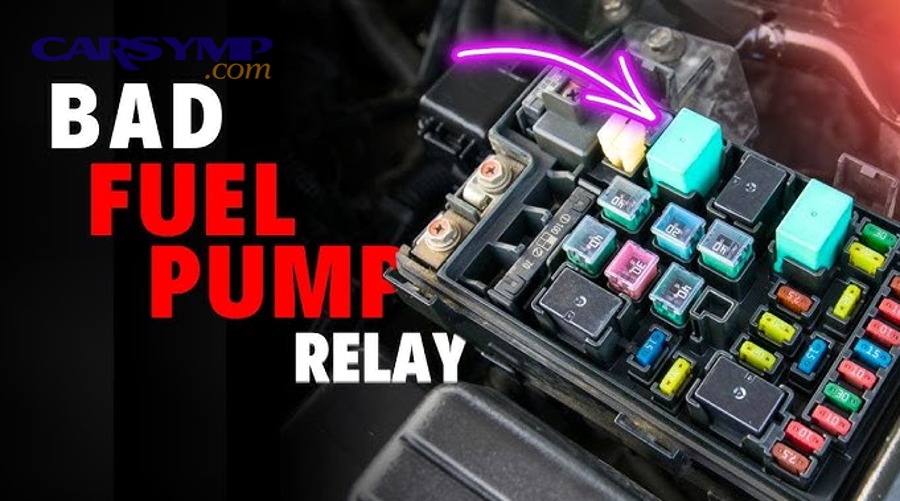
Step 1: Identify the correct fuse and circuit rating
You should identify the correct fuse by matching the fuse box diagram and the amperage rating, because many vehicles have multiple fuel-related fuses (ECU, injectors, pump, module).
Specifically, look for labels like:
- F/P, FUEL PUMP, FP
- ECM-B, EFI, INJ, FUEL SYS
- FPCM (fuel pump control module)
Then confirm the amp rating matches the diagram. Installing a higher-rated fuse is unsafe and can turn a short into a melted harness.
Step 2: Test the fuse with a test light (not just visual inspection)
You should test the fuse with a test light or multimeter because visual checks miss hairline breaks and poor terminal contact.
More specifically, with the key in the appropriate position (often key-on), touch both fuse test points:
- Light on both sides: fuse has power and is intact.
- Light on one side only: fuse is blown (or not seated) even if it looks fine.
- No light on either side: power isn’t reaching the fuse (upstream issue).
If your vehicle only powers the pump circuit briefly during prime, you may need a helper to cycle the key while you test.
Step 3: If the fuse is blown, diagnose why it blew before replacing again
If the fuse is blown, the correct diagnosis is to find the overcurrent source—because replacing the fuse alone rarely fixes the real problem.
Especially in repeated-blow cases, focus on these high-probability causes:
- Chafed harness near the tank, along frame rails, or near exhaust heat
- Water intrusion into connectors
- Pump drawing excessive current due to internal wear or binding
- Aftermarket wiring splices with poor insulation
If you replace the fuse and it pops immediately, stop and isolate the circuit (unplug pump, check if fuse still blows) to distinguish shorted wiring from shorted pump.
How do you test the fuel pump relay step-by-step (swap, bench, and in-circuit)?
Fuel pump relay testing is a 3-method process—swap test, bench test, and in-circuit voltage-drop testing—and the best method is the one that proves the relay can carry current under load, not just click.
However, start with the fastest method first because it often solves the problem immediately.
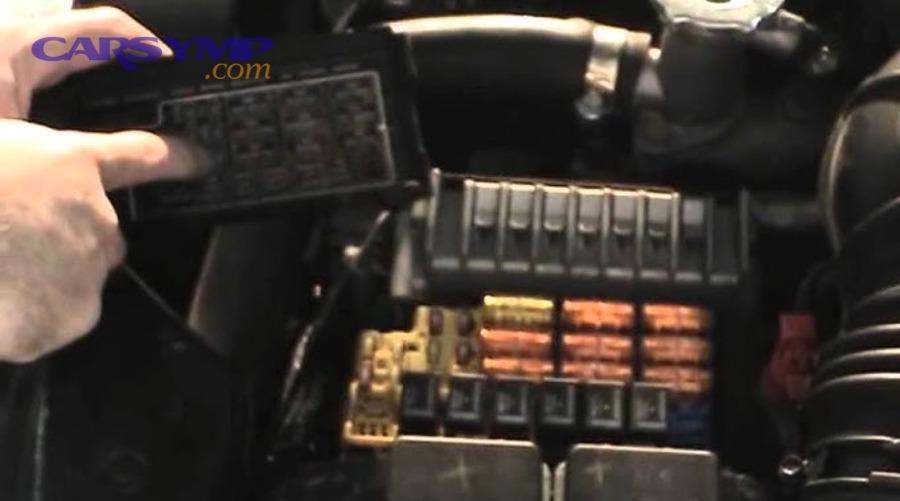
Method 1: Relay swap test (fastest confirmation)
A relay swap test works when you swap the suspected fuel pump relay with an identical relay from a non-critical circuit, and the symptom changes—because that proves the relay is a variable in the failure.
Specifically:
- Find an identical part number relay in the fuse box (horn, A/C clutch, fog lights—varies by vehicle).
- Swap relays.
- Cycle key and attempt start.
Interpretation:
- If the car starts with the swapped relay, the original relay is highly suspect.
- If nothing changes, you still haven’t proven the relay is good—only that swapping didn’t immediately fix it.
Tip: Don’t swap with a relay that could strand you or cause safety issues (like ABS or main power).
Method 2: Bench test with a multimeter (coil + contact function)
A bench test confirms the relay coil and contacts operate, but it doesn’t always prove load performance.
More specifically, you test:
- Coil resistance: typically shows continuity (exact values vary by relay).
- Contact continuity: should switch from open to closed when energized.
Basic bench procedure:
- Identify terminals (often 85/86 for coil, 30 common, 87 output, 87a normally closed if present).
- Measure coil resistance across 85–86 (should not be open or dead short).
- Apply 12V to coil (with fused jumper).
- Check continuity between 30 and 87 when energized.
If the relay clicks but continuity is unstable, the contacts may be damaged.
Here’s one quick visual relay-testing demo you can reference:
Method 3: In-circuit test (best for real-world diagnosis)
An in-circuit test is the best method because it measures whether the relay delivers near-battery voltage to the pump circuit during prime/crank.
Meanwhile, this is where you catch the “clicking but not carrying” failure.
In-circuit steps:
- Backprobe the relay output (terminal 87 circuit) or the pump feed wire at an accessible connector.
- Command the pump (key-on prime, crank, or scan tool output test if available).
- Measure voltage and compare to battery voltage.
Results:
- Near battery voltage present: relay output is likely okay; move downstream.
- Low voltage under load: relay contacts or socket terminals may be resistive (heat, corrosion, looseness).
- No voltage: relay not being energized or no feed power to terminal 30.
According to a study by Poznan University of Technology from the Institute of Electric Power Engineering, in 2019, relay contact resistance was observed to change significantly during switching and switching conditions could contribute to contact welding—supporting why voltage-drop style testing is essential, not optional.
If the relay and fuse are good, where should you check next in the fuel pump power circuit?
If the relay and fuse test good, you should check the wiring, connectors, grounds, and pump current draw next—because the most common “still no-start” causes are hidden resistance and poor connections, not the obvious protection parts.
More importantly, this is the step that separates a clean electrical fault from a true pump failure.
Check 1: Voltage at the pump connector during prime and crank
You should check voltage at the pump connector because it’s the fastest way to confirm the pump is actually being fed while the vehicle is trying to start.
Specifically, backprobe the power and ground pins and test during:
- Key-on prime (often a brief window)
- Crank (usually the longest command window)
Interpretation:
- 12V present and stable, pump silent: strong sign of failed pump motor or failed internal module connection.
- Low voltage (e.g., 8–10V) during crank: high resistance in feed or ground.
- 0V: relay output not reaching pump (open circuit, module issue, cut-off switch, or command logic).
This is where your no-start fuel pump checklist becomes decisive: if you see correct voltage at the pump and it still won’t run, you’ve essentially “proven” the pump side of the diagnosis.
Check 2: Ground integrity and voltage drop (the overlooked failure)
You should check ground integrity with a voltage drop test because a ground can look connected but fail under load, and that creates classic fuel pump symptoms like long crank and random stall.
For example, a ground strap can be corroded under the bolt head even if the bolt is tight.
Quick ground voltage drop method:
- Put the meter on DC volts.
- Place one lead on battery negative, the other on pump ground wire (backprobed).
- Command the pump (prime/crank).
- A high reading indicates the ground path is resistive.
A good diagnostic habit: if the pump runs when you add a temporary ground (with a safe jumper), your fix is in the ground path—not in the pump.
Check 3: Current draw / pump load vs wiring resistance
You should consider current draw because a pump can fail by drawing too much current (blowing fuses) or too little current (open windings, dead spots), and both conditions change how the circuit behaves.
Especially when you suspect overcurrent, current draw helps you avoid replacing the wrong component.
What current draw can tell you (general logic, varies by vehicle):
- Fuse blows + high draw: pump binding or shorted wiring.
- Normal voltage but low draw + no pressure: pump motor failing internally.
- Low voltage + odd behavior: wiring resistance (connector heat damage, undersized repairs).
According to a study by South Ural State University from the Automobile and Tractor Faculty, in 2021, researchers discussed using electrical parameters (including current rate, voltage, and resistance) as diagnostic indicators while simulating faults like clogging and leaks—reinforcing why electrical measurements can reflect mechanical load conditions inside the pump.
What is the correct fix once you confirm the cause?
The correct fix is the one that eliminates the proven failure point—replace a failed relay or fuse holder, repair high-resistance wiring/grounds, or replace the pump module when voltage and ground are correct but output is not—so the no-start does not return.
In addition, you should finish with verification tests so you know the repair solved the original fault, not just today’s symptom.
Fix path: Replace relay/fuse/holder when the tests prove failure
You should replace the relay, fuse, or fuse holder when you’ve proven the component cannot carry load or cannot maintain contact integrity.
Specifically, choose the fix based on what you measured:
- Blown fuse with no downstream short: replace fuse and verify current draw (the “why” still matters).
- Relay fails swap test or shows low voltage at output under load: replace relay.
- Melted fuse socket or relay socket: repair/replace the connector body and terminals, because a new relay in a burned socket will fail again.
A best-practice repair detail: if you see heat damage, replace terminals with correct crimping tools and sealed connectors—twist-and-tape repairs create future resistance.
Fix path: Repair wiring/grounds or replace pump module when the circuit proves it
You should repair wiring/grounds when voltage drop testing proves resistance, and you should replace the pump module when correct voltage and ground are present but the pump won’t run or won’t build pressure.
More specifically, align the fix with the failure mode:
If wiring resistance is the issue
- Clean and tighten grounds
- Replace corroded connectors and pigtails
- Repair chafed harness sections and add proper loom protection
If the pump is the issue
- Replace the pump module (often includes strainer and sending unit components)
- Replace the fuel filter if it’s serviceable and recommended
- Verify fuel pressure and leak-down after installation
This is where Fuel pump vs injector vs filter diagnosis becomes clean: once the pump has verified pressure, you can move to injector pulse and engine management without mixing problems together.
What vehicle-specific and rare issues can affect fuel pump relay and fuse troubleshooting?
Vehicle-specific designs and rare faults can change the test path—because some cars use a fuel pump control module, ECU logic, or safety cutoffs that make the relay and fuse look “good” while the pump still won’t run.
Next, treat these as “branch checks” you only enter after you’ve completed the core relay/fuse checklist.
How do fuel pump control modules change relay and fuse testing?
A fuel pump control module can pulse-width modulate pump voltage, shut the pump off for protection, or receive commands from the ECU that bypass traditional relay behavior.
Specifically, this can create confusing results like “good fuse + good relay + low pump voltage,” which is normal on some systems and a failure on others.
Diagnostic adaptation:
- Check whether the module is the actual power switch (relay may only enable the module).
- Look for trouble codes related to fuel pump control (if you have scanning access).
- Measure module input vs module output to locate the dropout.
Can a bad oil pressure switch or crash cut-off stop the fuel pump?
Yes—some vehicles use an oil pressure switch backup path or an inertia/crash cut-off that interrupts pump power, and that can cause a no-start even when the fuse and relay are fine.
However, the tell is usually “power disappears after prime” or “power never reaches the pump despite relay command.”
Practical checks:
- Locate and reset inertia switch if equipped.
- Verify oil pressure switch wiring only if the vehicle’s design actually uses it for pump logic.
What rare connector and terminal failures mimic a bad fuel pump relay?
Rare connector failures—like fretting corrosion, terminal spread, or heat-softened plastic—can behave like an intermittent relay or weak pump because they only fail under vibration and current load.
For example, a relay socket terminal can look normal but lose spring tension, creating intermittent contact that shows up as random stalling.
What to look for:
- Discoloration or melted plastic around terminals
- “Loose feel” when inserting relay or fuse
- Evidence of moisture or green corrosion
When does fuel contamination create misleading electrical symptoms?
Fuel contamination can create misleading symptoms because the engine may crank and “almost start,” making you chase electricity when the real problem is pressure/flow under load.
Especially when you see mixed fuel pump symptoms—stalling, poor acceleration, and inconsistent starts—confirm fuel pressure and consider filter restriction before you blame the relay again.
This is the practical bridge back to the main diagnosis: once your electrical feed is verified, any remaining no-start points you toward fuel delivery performance, injector control, or engine management—not the relay and fuse you already proved.