


A whining (humming) noise from the fuel tank is diagnosable if you treat it like a systems problem: confirm when the sound happens, match it to fuel-demand events, and then prove (or eliminate) the fuel pump with a few targeted checks.
Many drivers immediately assume “fuel pump,” but that’s only one branch of the decision tree; some tank-area noises are normal, intermittent, or caused by EVAP components and pressure changes rather than a failing pump.
To narrow it down quickly, you’ll want to understand what the sound typically means, what the most common root causes are, and which symptoms reliably separate a true pump whine from look-alikes.
Introduce a new idea: once you connect the noise to a repeatable trigger (key-on prime, idle, acceleration, hot soak, refueling), the rest of the diagnosis becomes a step-by-step process instead of guesswork.
Is a whining (humming) sound from the fuel tank always a bad sign?
No—a whining (humming) noise from the fuel tank is not always a bad sign because (1) many pumps make a brief prime noise at key-on, (2) EVAP venting can create tank-area sounds without failure, and (3) fuel level/temperature can change how normal flow sounds transmit through the body.
To better understand what’s “normal” versus “warning,” start by linking the sound to a repeatable moment, because timing is your fastest filter.
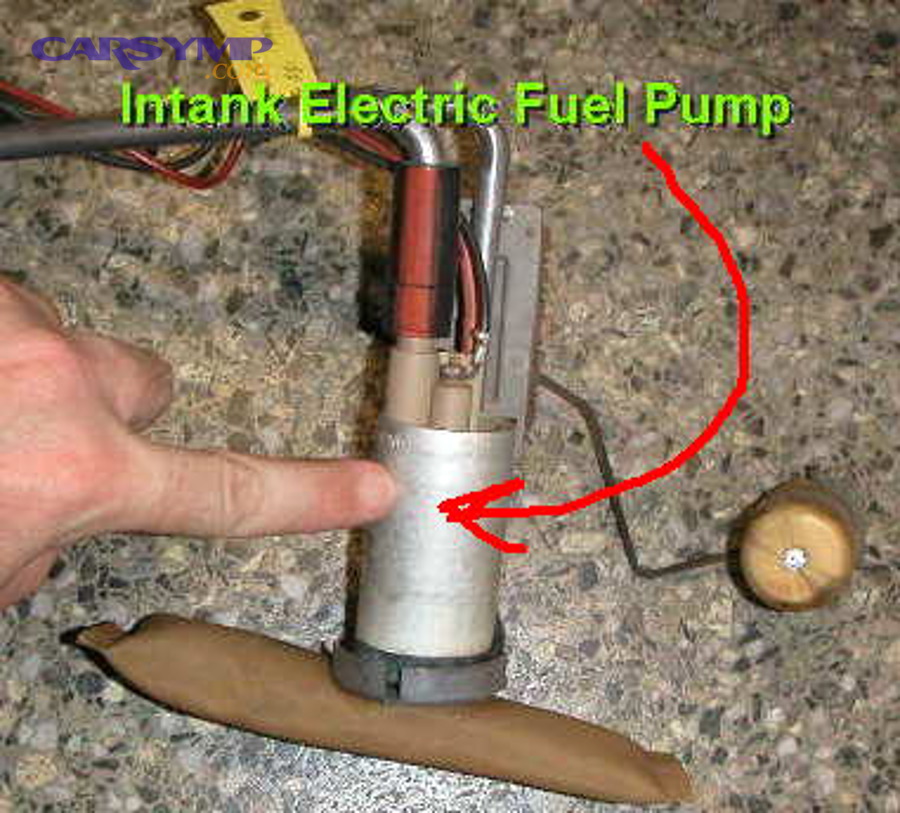
When is fuel tank whining considered normal?
A short, steady hum for 2–5 seconds right after turning the key to ON (engine off) is often the pump’s prime cycle. Many vehicles run the pump briefly to build pressure before cranking. If the noise is:
- Brief
- Consistent
- Not getting louder over time
- Not paired with drivability issues
…it can be normal.
When does the sound become a “bad fuel pump signs” warning?
A pump-related whine becomes more concerning when it changes in volume, pitch, or duration, or when it appears with classic fuel pump symptoms such as:
- Hesitation under load
- Loss of power at highway speed
- Hard starts or extended cranking
- Surging at steady throttle
- Stalling after warming up
If the noise gets noticeably louder as the tank gets low, treat that as a stronger clue—not a verdict—because low fuel reduces cooling and can increase cavitation-like sounds.
What’s the fastest safety check if you’re unsure?
If the car is losing power, stalling, or has a fuel smell, treat it as urgent:
- Avoid hard acceleration and long drives.
- Do not ignore fuel leaks or strong vapor odors.
- If the vehicle won’t start, jump straight to a No-start fuel pump checklist in the diagnosis section below.
What does a “whining fuel tank noise” mean in plain English?
A whining fuel tank noise is a high-pitched hum produced by fuel flow, pump motor load, or tank pressure movement, most noticeable when the pump is working harder or when the tank/lines transmit vibration into the cabin.
Next, it helps to translate “whine” into the mechanical story your car is telling—because the same sound can come from different mechanisms.
What the sound is “saying” mechanically
Most tank-area whining fits one of these patterns:
- Electric motor whine (pump motor load)
The pump is an electric motor. When it works harder (restriction, low voltage, wear), it can sing at a higher pitch. - Hydraulic whine (cavitation / aeration / restriction)
If fuel supply is restricted (clogged filter/sock, kinked line) or the pump is starved (very low fuel), tiny bubbles and turbulence can create a sharper “whirring” tone. - Pressure equalization sounds (EVAP / tank venting)
EVAP systems move vapors and manage tank pressure. Valves opening/closing can sound like hiss, chirp, or brief hum depending on location and resonance.
Why the cabin can amplify the noise
The tank, rear seat pan, and trunk floor act like a speaker cone. A normal pump can sound loud if:
- rear seats are folded down,
- sound deadening is missing,
- aftermarket exhaust changes vibration paths,
- a new pump design is louder than the old one.
So the goal isn’t to “panic at any hum,” but to verify whether the sound correlates with fuel pressure stability and drivability.
What are the most common causes of whining near the fuel tank?
There are 6 main causes of whining near the fuel tank—fuel pump wear, restricted fuel pickup/filter, low fuel level or aeration, low voltage/ground issues, EVAP purge/vent activity, and vibration/resonance from mounts or lines—grouped by whether the noise is created by fuel delivery or tank pressure control.
Below, we’ll classify each cause by what it sounds like, when it happens, and what else you’ll usually notice.
1) Worn or struggling in-tank fuel pump
A pump that’s aging may still run, but it can get louder as internal clearances change. Typical clues:
- Whine grows louder during acceleration
- Noise persists longer than normal prime
- More noticeable hot or after long drives
This is where “noise” becomes part of a bigger cluster of fuel pump symptoms, especially if power delivery feels inconsistent.
2) Restricted pickup sock or clogged filter (or restricted line)
Restrictions force the pump to work harder, which often raises pitch. Common restriction sources:
- clogged in-tank sock (pickup screen),
- clogged inline filter (if equipped),
- pinched/kinked fuel line,
- debris in the module housing.
Restriction can mimic pump failure because the pump is complaining about what it’s being asked to do.
3) Low fuel level, aeration, or heat-related starvation
If the noise is most obvious below 1/4 tank, consider:
- reduced fuel cooling around the pump,
- slosh uncovering the pickup during turns,
- hot fuel returning to tank increasing vapor formation.
Low fuel doesn’t automatically mean “bad pump,” but it increases stress and can make marginal components louder.
4) Low voltage supply or poor ground at the pump
Electric motors get noisy when voltage is unstable. Signs include:
- headlights dimming at idle,
- intermittent no-start / stalls,
- noise changing when electrical loads change (blower motor, rear defrost).
A voltage drop test can be more revealing than replacing parts.
5) EVAP venting / purge events near the tank
EVAP can create:
- short buzzes,
- clicking/solenoid chatter,
- hiss-like pressure equalization.
These often occur:
- after refueling,
- during hot soak or shortly after shutdown,
- at idle with purge commanded.
6) Resonance from mounts, straps, or contacting lines
Sometimes the “whine” isn’t created by the pump—it’s transmitted or amplified:
- tank straps loose,
- fuel lines contacting body,
- heat shields vibrating,
- aftermarket components changing resonance.
This category is common when the sound changes with bumps or road vibration more than engine load.
How can you diagnose fuel pump vs “other causes” step-by-step?
A step-by-step diagnosis uses 7 checks—sound timing, fuel level sensitivity, key-on prime behavior, drivability correlation, basic scan data, Fuel pressure test basics, and electrical verification—to identify whether the fuel pump is the true source and to avoid replacing parts on a guess.
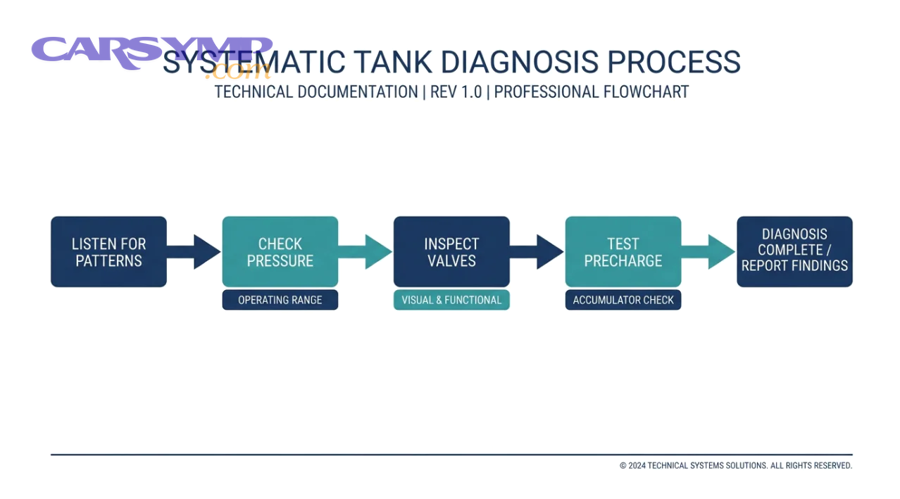
Then, once you capture a repeatable pattern, you can move from “noise” to measurable proof.
Step 1: Pin down exactly when the noise happens
Write down one sentence that matches reality:
- “Only for 3 seconds at key-on.”
- “Constant at idle, louder when I rev.”
- “Louder on hills / when merging.”
- “Right after refueling, then fades.”
This single observation will steer the rest of the process.
Step 2: Do the key-on prime test (fast, high-value)
With the car quiet:
- Turn key to ON (do not start).
- Listen near rear seat/trunk for 2–5 seconds.
- Repeat once more.
Interpretation:
- Brief prime only: often normal or mild.
- Long prime / repeated cycling: pressure bleed-down, restriction, weak pump, or check valve issues.
- No prime sound + no start: go to the no-start checklist.
Step 3: Check fuel level sensitivity (simple but telling)
Drive (or safely idle) with:
- Above half tank (if possible)
- Below quarter tank (if safe and practical)
If the noise is dramatically louder low on fuel, you may be seeing pump starvation behavior (low fuel cooling, aeration, pickup uncovering).
Step 4: Correlate the sound with drivability (the “cluster” method)
A noise alone is weak evidence. Combine it with behavior:
- Power loss at higher RPM → supports fuel delivery problem
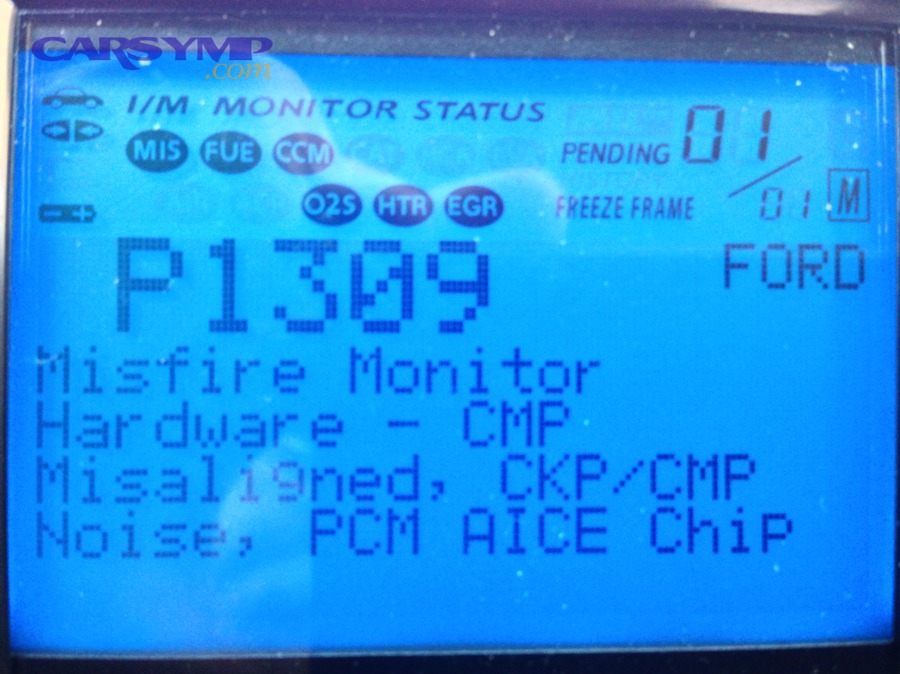
- Random misfire codes → could be ignition or lean fuel delivery
- Surging → could be pressure regulation or airflow issues
This is where you explicitly list Bad fuel pump signs and verify whether they match your car’s symptoms.
Step 5: Scan for clues (even if there’s no check engine light)
Use a scan tool and look for:
- pending codes,
- fuel trim trends (LTFT/STFT),
- misfire counters.
If trims are strongly positive under load, the engine may be compensating for low fuel delivery.
Context: The table below maps common observations to the most likely cause so you can choose the next test instead of jumping to replacement.
| What you observe | Most likely category | Why it points there |
|---|---|---|
| Loud whine + power loss on hills | Fuel delivery (pump/restriction) | Demand increases under load; weak supply shows up |
| Loud after refuel / hot soak, then fades | EVAP venting / pressure behavior | Tank pressure events cluster around refueling/heat |
| Noise changes with electrical loads | Voltage/ground issue | Motor tone shifts with available voltage |
| Noise tracks bumps more than throttle | Resonance/contact | Sound transmission, not source strength |
| Long crank + whine persists | Pressure bleed-down / weak supply | Pressure not holding or building efficiently |
Step 6: Fuel pressure test basics (the proof step)
If your vehicle has a service port or you can tee in safely, measure:
- Key-on prime pressure
- Idle pressure
- Pressure under snap throttle / load (as feasible)
General interpretation:
- Low pressure → weak pump, restriction, regulator issue
- Pressure drops under load → supply limitation (pump, filter, wiring)
- Pressure correct but noise remains → consider EVAP or resonance
If you don’t have equipment, a shop can often test quickly—this is usually cheaper than replacing a pump blindly.
Step 7: Electrical verification (don’t skip this)
Before condemning a pump, verify power delivery:
- Check battery health and charging.
- Inspect pump ground points for corrosion.
- Perform a voltage drop test under pump load if possible.
A pump can whine because it’s failing—or because it’s being underfed electrically.
No-start fuel pump checklist (quick triage)
If the engine won’t start:
- Confirm you hear a prime at key-on.
- Check fuel pump fuse and relay.
- Verify inertia switch (if equipped).
- Verify power and ground at the pump connector (safely).
- If pressure is zero and power/ground are correct, the pump/module becomes the primary suspect.
Evidence: According to a study by Jiangsu University’s Research Center of Fluid Machinery Engineering and Technology, in 2022, vibration and noise signals were used to diagnose pump cavitation, and the authors reported measurable signal changes (for example, liquid-borne noise at an inlet position reduced by about 14% at NPSHr and motor current dropped by about 12% during severe cavitation), supporting why “noise + measurement” is a valid diagnostic approach.
Fuel pump whine vs EVAP venting: how do you tell the difference?
Fuel pump whine wins in consistency with fuel-demand events, EVAP venting is best matched to after-refuel and hot-soak timing, and neither is the optimal explanation if the sound primarily follows bumps, body resonance, or exhaust vibration rather than fuel system operation.
Next, you can separate them by timing, duration, and triggers—without special tools.
Timing: the strongest separator
Fuel pump whine commonly appears:
- at key-on prime,
- during acceleration,
- during sustained high load (hills, passing),
- when the tank is low.
EVAP venting/purge sounds commonly appear:
- shortly after refueling,
- during hot soak or shortly after shutdown,
- at idle/cruise when purge is commanded.
Sound character: hum vs hiss/click
While not perfect:
- Pump sounds are often smooth, electric-motor hum/whine.
- EVAP often includes clicking (solenoids) or brief hiss/buzz as pressure equalizes.
Trigger test you can do today
Ask and answer these:
- Does it happen only after adding fuel? → EVAP rises on the list.
- Does it get louder when you accelerate hard? → pump/restriction rises.
- Does it change with fuel level? → fuel delivery rises.
- Does it happen with engine off (after parking)? → EVAP is more likely.
What about “both”?
It’s possible to have a mildly noisy pump and normal EVAP activity. That’s why your best strategy is to identify which sound is the dominant, repeatable one—and then verify fuel pressure and voltage before replacing parts.
What should you do next, and what does a repair plan look like?
There are 4 practical next steps after diagnosing a whining fuel tank noise: confirm severity and drivability risk, test before replacing, repair the verified root cause, and retest under the original trigger conditions to ensure the noise and symptoms are gone.
Then, you can choose the right fix with the least wasted cost.
1) If it’s mild and there are no drivability problems
- Keep the tank above 1/4 as a temporary risk reducer.
- Monitor whether the sound is getting louder over weeks.
- Plan a fuel pressure check at your next service interval.
2) If there are clear fuel pump symptoms
If you have power loss, surging, or hard starting:
- Prioritize Fuel pressure test basics to confirm supply.
- Inspect filter/lines where applicable.
- If pressure is low and power/ground are good, the pump/module becomes the likely repair.
3) If it’s a no-start situation
Use the No-start fuel pump checklist:
- power/ground confirmation,
- fuse/relay checks,
- pressure confirmation where possible.
This prevents replacing a pump when the real issue is a relay, wiring, or ground.
4) After any fix, retest using the same trigger
Retest the exact condition that originally revealed the noise:
- key-on prime,
- low fuel level,
- hill pull,
- post-refuel hot soak.
If you don’t recreate the trigger, you can’t confidently declare success.
Practical note on “replace vs repair”: Fuel pumps are often part of a module assembly. If the module includes the level sender and strainer, replacing the complete module is commonly the durable repair—but only after you verify the pump is the failing element.
What vehicle-specific and rare issues can cause a whining fuel tank noise even when the pump is “okay”?
There are 4 vehicle-specific (rarer) causes of a whining fuel tank noise even when the pump is okay: PWM pump control behavior, returnless system resonance, aftermarket component interactions, and pressure-management edge cases (cap/venting)—grouped by whether the noise is created by control strategy or sound transmission.
In addition, these cases explain why two identical models can sound different without either being “broken.”
PWM fuel pump control: can electronics make a “normal” whine?
Yes. Many modern vehicles use pulse-width modulation (PWM) to vary pump speed. PWM can shift the audible pitch into a range you notice more, especially:
- at idle,
- during warmup,
- with certain replacement pumps.
If fuel pressure and trims are normal, PWM-related tonal noise becomes more plausible.
Returnless fuel systems and resonance: why pressure stability can still be noisy
Returnless systems regulate pressure near the tank or in the module, and certain line routings can transmit vibration. A pump can be healthy, but the cabin hears it more due to:
- line contact points,
- missing isolators,
- tank strap tension differences,
- body panel resonance.
Aftermarket changes that amplify tank noise
- Exhaust changes can alter low-frequency vibration that “excites” the rear floor.
- Missing trunk trim/sound deadening increases perceived pump noise.
- Non-OE pump modules can have different acoustic signatures.
Gas cap and venting edge cases (rare but real)
A damaged seal, restricted vent path, or unusual tank pressure behavior can create odd sounds around refueling or temperature swings. If your noise strongly tracks refueling/hot soak but fuel delivery is normal, pressure management becomes a stronger suspect.
Evidence: Research on vibroacoustic diagnostics shows measurable changes in vibration-energy bands and signal behavior when fuel-system components and pressures change, supporting the idea that sound patterns become meaningful only when tied to measured operating conditions.