


A crank-no-start often can be diagnosed quickly by treating the fuel pump system like a simple chain: power → command → pump → pressure → injectors. This checklist walks you through that chain so you can confirm (or rule out) a fuel delivery failure without guessing or swapping parts.
Next, you’ll use a fast triage routine to decide whether you’re truly dealing with fuel—or whether a non-fuel issue is mimicking the same symptom. That early “yes/no” decision is what keeps your troubleshooting tight and prevents unnecessary towing or parts spending.
Then, you’ll gather the minimum tools and follow safety steps that let you test fuel pressure and electrical supply without creating a fuel spray or a wiring short. Those two hazards—fuel mist and sparks—are the reason a structured checklist matters more than speed.
Introduce a new idea: once the basics are proven, you’ll learn how to interpret the results and what to do next, including system variations (returnless vs. return-style, pump driver modules, immobilizers) that can make one car behave very differently from another.
Is this a fuel pump problem or something else causing the crank-no-start?
Yes—this can be a fuel-pump-related crank-no-start when at least three clues line up: normal cranking speed, no fuel pressure/prime behavior, and consistent “fuel-starvation” Car Symptoms like long cranking or stalling before the no-start.
Next, because many faults imitate fuel starvation, you’ll confirm the cranking condition and prime behavior before touching a relay or gauge.
Is the engine actually cranking normally (not a battery/starter issue)?
If the starter spins the engine at a steady, normal speed, you can treat “cranks-but-won’t-start” as a true diagnostic category; if it cranks slowly or inconsistently, fuel testing becomes unreliable because the engine may not generate the signal timing it needs to run.
Then, do this quick “crank quality” check before you think about fuel:
- Normal crank: steady rhythm, no dramatic slowing, headlights don’t dim hard → move on to fuel/spark checks.
- Slow crank: “rrr… rrr…” with dimming lights → battery state, terminals, ground straps, starter draw can be the real cause.
- Click/no crank: not a fuel problem yet; it’s electrical/start system.
Specifically, a weak battery can create a false fuel diagnosis: the pump may still run, but the ECU may not command injectors correctly, and the engine may not reach the RPM threshold needed for ignition timing. More importantly, if you don’t fix the crank speed first, every later step becomes “maybe.”
Do you hear the fuel pump prime for 2–3 seconds when you turn the key ON?
If you hear a short humming/whirring sound from the rear (or near the tank area) when the key turns to ON, the pump is at least receiving a command and some power during the prime cycle.
To illustrate, “prime” is the car’s way of building pressure before cranking. Here’s how to check it cleanly:
- Turn everything off (radio/fan).
- Open the driver door or remove distractions.
- Key to ON (not START) and listen for 2–3 seconds.
- Repeat once or twice (some vehicles prime only on the first key cycle).
However, a “yes” doesn’t prove the pump is healthy—quiet pumps can still be weak, and noisy pumps can still make pressure. Meanwhile, a “no” is a strong clue, but not a conclusion yet, because a relay, fuse, wiring, or control module can silence the pump.
What are the most common non-fuel causes that mimic a fuel pump failure?
There are 5 common non-fuel categories that can look exactly like fuel starvation: spark loss, injector pulse loss, air/compression issues, sensor timing issues, and security/immobilizer intervention—and they all create the same “it cranks but won’t start” story.
Besides, you don’t need to diagnose them fully here; you only need to recognize when fuel isn’t the best first bet:
- Spark loss: no ignition spark = no start even with perfect fuel pressure.
- No injector pulse: ECU isn’t firing injectors (security, crank sensor, wiring) = dry plugs and no start.
- Flooding: too much fuel (stuck injector, incorrect sensor data) can cause long crank/no start that feels like “not enough fuel.”
- Major air leak: huge vacuum leak can make starting extremely hard.
- Timing signal loss: crank/cam sensor faults often produce a clean crank-no-start with zero “catch.”
More importantly, if you smell raw fuel strongly during cranking, don’t assume “bad pump”—that can be the opposite problem (flooding).
Should you stop now for safety (fuel leak, strong fuel odor, overheating wiring)?
Yes—you should stop immediately if you have a fuel leak, strong fuel odor, smoke, or hot electrical smells, because fuel vapor and electrical sparks can ignite quickly and turn a diagnosis into a fire.
Then, take these safety steps before continuing:
- Work outdoors or in a well-ventilated area.
- Keep ignition sources away (no smoking, no space heaters).
- Keep a fire extinguisher nearby if you have one.
- If fuel is dripping, do not crank the engine “one more time.”
According to a study by South Ural State University from the Automobile and Tractor Faculty, in 2021, researchers noted that the fuel system can account for about 25–50% of vehicle failures, which is exactly why systematic diagnosis—and safe handling—matters before replacing parts.
What tools and safety steps do you need to test a fuel pump circuit and fuel pressure?
There are 5 essential tool-and-safety elements you need—listening/inspection, electrical testing, pressure testing, leak control, and reference specs—because fuel pump diagnosis fails when you can’t confirm voltage and pressure in the same troubleshooting session.
Then, once you have the right basics, you’ll avoid the most common mistakes: testing the wrong circuit window (prime vs crank) and assuming “some fuel” equals “enough pressure.”
What is the minimum tool list for a DIY fuel pump checklist?
There are 7 practical “minimum” tools for DIY drivers, grouped by what they prove:
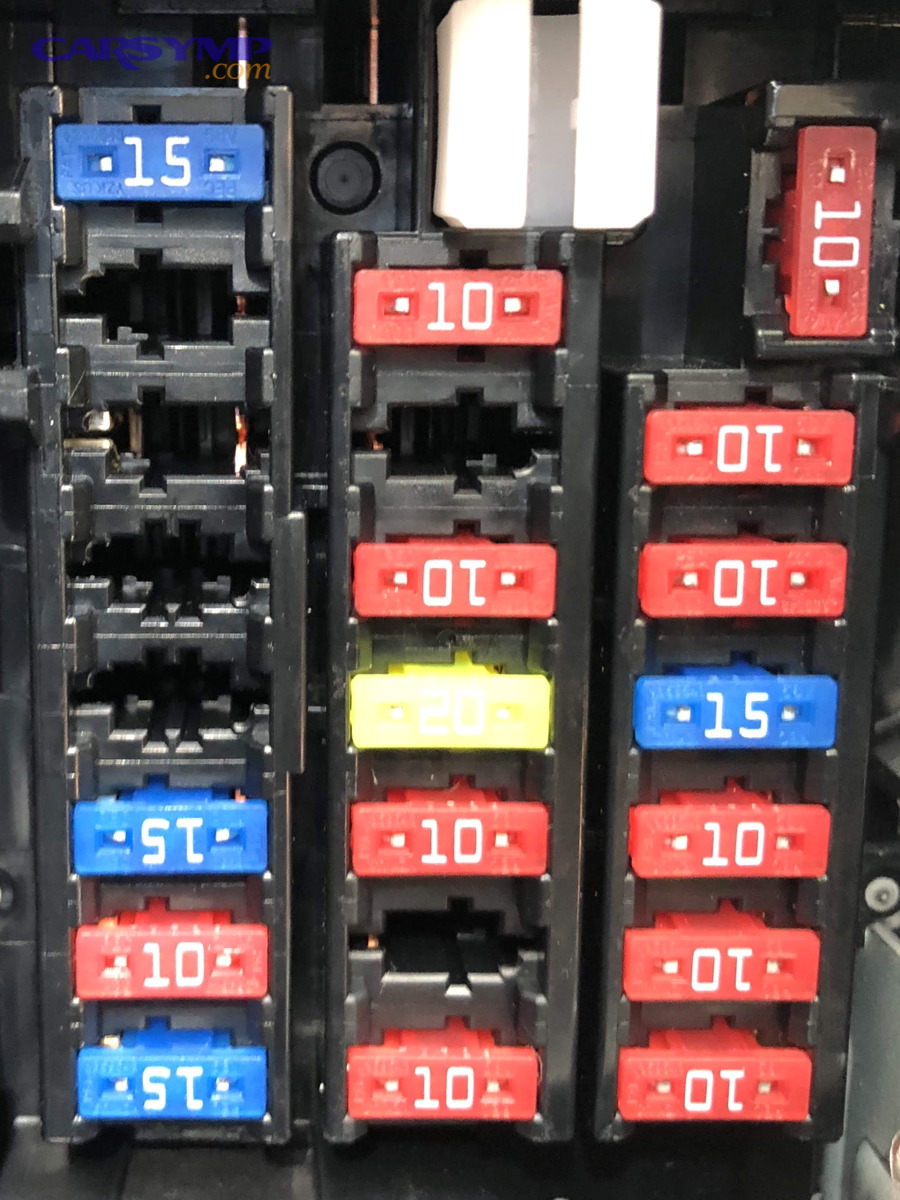
- Flashlight (inspection): see fuse labels, connectors, corrosion.
- Fuse tester or test light (power presence): faster than guessing a fuse is “fine.”
- Multimeter (voltage/ground verification): confirms pump voltage during prime/crank.
- Basic hand tools (access): sockets/screwdrivers to reach relay box and pump connector area.
- Fuel pressure gauge (pressure proof): the decisive test on most gasoline systems.
- Rags + catch container (fuel control): prevents spray and mess.
- Vehicle info/source of specs (reference): owner manual/service info for fuse/relay location and pressure specification.
More specifically, the gauge is the difference between “maybe” and “yes/no.” If your vehicle has no Schrader valve on the rail, you may need a tee fitting adapter—still doable, but worth knowing before you begin.
How do you test the fuel pump safely without spraying fuel?
You test the fuel pump safely by controlling pressure, controlling ignition sources, and controlling where fuel can go, so the diagnostic work never turns into fuel mist near electrical connections.
Next, use this safety routine:
- Depressurize if you’re opening the fuel system. Many cars hold pressure even with the engine off.
- Wrap the test point (Schrader valve area) with a rag before connecting/disconnecting.
- Point away from hot engine components and electrical terminals.
- Disconnect the battery if you’re doing connector repairs; reconnect only when ready to test.
- Never crank continuously while a fuel line is open.
To better understand why this matters, remember that pressure systems can release fuel faster than you expect, and a small spray becomes a large vapor cloud—especially in warm weather.
How do you check the fuel pump fuse, relay, and power supply step-by-step?
Use Fuel pump relay and fuse troubleshooting in 6 steps—identify, inspect, test for power, confirm relay behavior, verify voltage at the pump during prime/crank, and validate ground—so you can separate a dead pump from a dead circuit without replacing parts blindly.
Then, because the pump circuit is time-based (prime window vs crank window), you’ll test at the right moment instead of seeing “0 volts” and drawing the wrong conclusion.
Is the fuel pump fuse blown—and what does it usually mean if it keeps blowing?
Yes, a blown fuel pump fuse can directly cause a crank-no-start, and if it keeps blowing it usually points to at least one of three problems: a shorted pump motor, damaged wiring insulation, or moisture/corrosion inside the fuse/connector path.
Next, test the fuse instead of eyeballing it:
- Use a fuse tester/test light on both test points (key ON).
- Replace with the exact rating only (never “one size bigger”).
- If it blows immediately again, stop and inspect wiring—repeated replacement can overheat the circuit.
Specifically, a fuse that blows only while cranking can indicate a load issue when the pump draws higher current, while a fuse that blows as soon as key ON can indicate a hard short.
How do you test or swap the fuel pump relay correctly?
You test a fuel pump relay correctly by confirming it has power, confirming it receives a control signal, and confirming it passes power through the switched terminals, because a relay can click and still fail electrically.
Then, follow this clean relay routine:
- Locate the correct relay (owner’s manual, under-hood diagram).
- Swap test (fastest): swap with an identical relay used for a non-critical circuit (only if identical part number/pinout).
- Touch test: feel for a click during key ON (not proof, but a clue).
- Meter test: confirm 12V at the relay feed and 12V at the output when commanded.
However, don’t stop at “it clicks.” A relay can have burned contacts and pass low/unstable voltage—enough to make the pump whine but not enough to make pressure.
Do you have battery voltage at the pump (and a good ground) during prime/crank?
Yes, you need battery-level voltage at the pump and a solid ground during prime or cranking—otherwise the pump cannot build pressure—and three common reasons for low voltage are corroded connectors, weak grounds, and failing relay contacts.
Next, measure it correctly:
- Back-probe the pump connector (don’t pierce insulation if you can avoid it).
- Have a helper key ON (prime) and then crank briefly.
- Watch voltage during the prime window and while cranking.
Specifically, “low voltage” is one of the most overlooked causes of weak pump output. Many DIYers report classic fuel pump symptoms (long crank, hesitation, stalls) when the pump is fine but the circuit is dropping voltage under load.
According to a study by South Ural State University from the Automobile and Tractor Faculty, in 2021, researchers described how changing electrical conditions (including supply voltage) influences pump behavior and diagnostic indicators like current draw and pressure response during fault simulation.
How do you verify fuel pressure (and what numbers matter) to confirm a pump issue?
Verify fuel pressure by measuring prime pressure, measuring cranking pressure, and checking pressure hold/bleed-down, because that three-part test tells you whether you have no pressure, low pressure, or pressure that won’t stay—each points to a different fix.
Then, once pressure is known, you stop guessing and start interpreting.
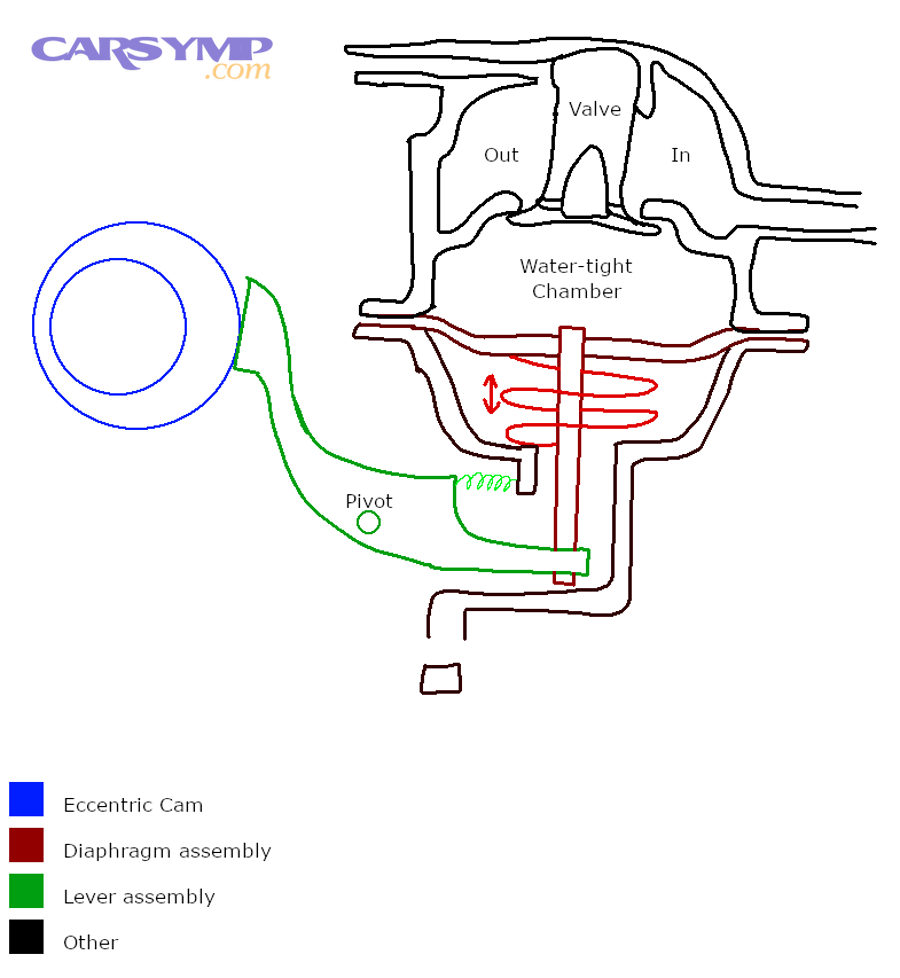
What is fuel pressure, and why is “some fuel” not the same as “enough pressure”?
Fuel pressure is the controlled force that pushes fuel through injectors at a predictable rate, and “some fuel” is not enough because injectors need a stable pressure difference to atomize and deliver the correct amount during cranking.
Next, connect this to your symptom: during a crank-no-start, the engine needs an efficient fuel spray pattern and consistent delivery while RPM is low. If pressure is weak, the engine may cough, catch briefly, or never fire—even if fuel is technically reaching the rail.
More specifically, “fuel at the Schrader valve” is a misleading DIY test because you can still have fuel presence with pressure far below what the system requires. That’s why the gauge is the centerpiece of the checklist.
Is fuel pressure within spec during key-on prime and while cranking?
Yes, fuel pressure must be within your vehicle’s specification during prime and cranking, and if it isn’t, three likely reasons are a weak pump, a restricted filter/strainer, or a pressure control/regulator issue (system dependent).
Next, use a spec-aware routine:
- Look up spec in service information or under-hood label (varies widely).
- Record prime pressure (key ON).
- Record cranking pressure (while starting).
- Note whether pressure rises slowly, peaks then drops, or never rises.
To illustrate typical baselines, many EFI systems use a regulated base pressure around 43.5 psi (3 bar) at the regulator in many setups, while other designs may run higher or be controlled differently. (Your vehicle’s spec still wins—use this only as context, not as your final target.)
Does the system hold pressure after the pump stops, or does it bleed down quickly?
Yes, the system should hold pressure for a period after priming, and a fast bleed-down commonly points to one of three issues: a leaking injector, a failed check valve in the pump, or a leak/regulator fault depending on system design.
Then, do a simple “hold test”:
- Prime the system (key ON) and observe peak pressure.
- Key OFF and watch the gauge.
- Note how quickly it drops and whether it drops to zero.
More importantly, pressure hold connects directly to real-world Car Symptoms: hard hot starts, extended cranking after sitting, or “starts on the second key cycle” are classic patterns when pressure bleeds off quickly.
According to a study by South Ural State University from the Automobile and Tractor Faculty, in 2021, the researchers reported that under certain test conditions the pump showed a steady-state pressure of about 310 kPa (3.1 bar), highlighting how measurable pressure behavior is central to evaluating pump condition.
What should you do based on your test results (relay vs wiring vs pump vs filter/regulator/injectors)?
There are 4 main result paths—(1) no power, (2) power but no/low pressure, (3) correct pressure but still no-start, (4) pressure bleed-down—and each path tells you the next repair step without swapping random parts.
Then, once you choose the right path, your diagnosis stays tight and your fix becomes predictable.
If there’s power and ground but zero/low pressure, is the pump bad or could it be a clogged filter?
A weak pump usually shows power present + low/unstable pressure, while a restriction often shows pressure that behaves oddly under load (for example, pressure that rises but collapses during cranking) and may come with drivability issues before the no-start.
Next, separate pump weakness from restriction using practical clues:
- Pump weakness clues
- Noisy pump (whine) that changed recently
- Pressure that never reaches spec even with good voltage
- Classic fuel pump symptoms like long crank, stumble under acceleration, or random stalls
- Restriction clues
- History of overdue filter service
- Pressure that rises slowly
- Symptoms that worsen under high demand (uphill, acceleration)
Specifically, many modern vehicles use an in-tank module with a strainer; contamination can reduce flow and make the pump work harder. If you have power/ground verified and pressure is clearly below spec, the pump/module is a primary suspect—but always consider restriction if the vehicle’s maintenance history is unknown.
Can you drive with weak fuel pump? No—driving with a weak fuel pump is risky because (1) it can leave you stranded unpredictably, (2) a lean condition under load can cause misfires and drivability hazards, and (3) the pump can overheat and fail completely as it struggles to keep pressure.
If there’s no power at the pump, is it the relay/fuse, wiring, or ECU control?
No power at the pump usually comes from one of three categories: supply failure (fuse/feed), switching failure (relay/driver module), or command/ground/control failure (ECU trigger, inertia switch, wiring faults).
Then, follow a “from simple to deep” order:
- Confirm fuse power (key ON) at both sides.
- Confirm relay feed power and relay output power.
- Confirm pump connector voltage during prime/crank.
- Confirm ground integrity (voltage drop test if possible).
- Only then suspect control modules or ECU command issues.
More specifically, wiring faults often appear as intermittent no-starts: the car starts sometimes, then suddenly doesn’t—especially after vibration, rain, or temperature swings. That’s why connector inspection (green corrosion, heat discoloration, loose pins) is not optional.
If pressure is correct, why can it still be a no-start (spark/injectors/immobilizer)?
Correct fuel pressure means fuel delivery is likely not the limiting factor, so a crank-no-start with good pressure typically points to spark loss, injector pulse loss, or security/immobilizer intervention.
Next, use pressure as your pivot: once pressure is confirmed, you can stop looping on fuel and move to the next system with confidence.
Practical next checks (without turning this into a full no-start guide):
- Spark test: verify spark at a plug or coil output (safe procedure).
- Injector pulse test: noid light or scan tool data can confirm injector command.
- Security indicator: watch immobilizer lights/messages; some systems crank but inhibit fuel/injectors.
- Codes/data: scan for crank/cam sensor signals and RPM while cranking.
More importantly, this is where many DIY diagnostics fail: people replace the pump because it’s “common,” but the checklist’s real value is knowing when to stop chasing fuel.
Contextual Border: At this point, you’ve completed the core fuel-pump checklist—power, relay/fuse integrity, and verified pressure behavior. The section below expands into design differences and rare edge cases that change how the same “crank-no-start” must be tested.
What vehicle-specific fuel system designs can change how you diagnose a no-start fuel pump issue?
There are 4 common design variations—returnless vs return-style regulation, in-tank module differences, pump driver modules/ECU-controlled pumps, and immobilizer logic—and each one changes what “normal” pressure and command behavior look like during diagnosis.
Then, by matching your car’s design to the right expectations, you’ll avoid false conclusions like “pump is dead” when the system is simply controlled differently.
Is your car returnless or return-style—and how does that change pressure testing and interpretation?
Return-style systems typically use a regulator and a return line to the tank, while many returnless systems control pressure differently (often in-tank regulation or ECU modulation), so the same gauge reading can mean different things depending on design.
Next, use these practical interpretation hints:
- Return-style (common older layouts)
- Regulator may be on the rail
- Return line present
- Pressure behavior may be more “stable” with a clear base reference
- Returnless / regulated in-tank / controlled systems
- May not have a return line on the rail
- Pressure can be managed by module/ECU strategies
- Some systems change pump output based on demand
More specifically, don’t treat a “higher than expected” reading as automatically good; a stuck regulator or control fault can make pressure abnormal and still create a no-start.
Do you have a fuel pump driver module or ECU-controlled pump—and can you command the pump ON?
Yes, many vehicles use a pump driver module or ECU control, and you can often confirm this by (1) wiring diagrams showing a module, (2) scan tool data, or (3) a pump that does not run continuously with key ON but responds to ECU logic.
Then, the best confirmation method—if available—is to command the pump ON with a scan tool that supports bi-directional controls, because it bypasses guesswork about whether the ECU is commanding the relay.
More specifically, ECU-controlled pumps may run at variable duty cycles (PWM). That means voltage readings can look “weird” if you measure them incorrectly—so you may need a meter that can interpret duty cycle or you may need to test in a way that matches the system’s control strategy.
Could an immobilizer/security system be cutting fuel or injector pulse ?
Yes, an immobilizer can cause a crank-no-start that looks like fuel failure, and three common tells are a flashing security indicator, no injector pulse despite good fuel pressure, and stored security-related fault codes.
Next, treat immobilizer suspicion as a “stop and verify” moment:
- If fuel pressure is normal and there’s no injector pulse, security becomes more likely.
- If you have a spare key, try it (a surprisingly effective test).
- Scan for codes even if the check engine light is off.
More importantly, don’t keep cycling the ignition for long periods; repeated crank attempts can drain the battery and distort your diagnostic results.
Should you use amp-draw testing to confirm a failing pump motor before replacement?
Yes, amp-draw testing can be a decisive confirmation because a failing pump often shows abnormal current draw, and three reasons to do it are catching a pump that still runs but is weak, diagnosing restrictions vs leaks, and validating a marginal electrical supply.
Then, keep it realistic for DIY drivers:
- Amp testing is most useful when you’re on the fence: pressure is low-ish, voltage is borderline, or the pump sound is inconsistent.
- It’s also helpful when you suspect contamination/restriction because current draw can shift with load conditions.
According to a study by South Ural State University from the Automobile and Tractor Faculty, in 2021, researchers emphasized that electrical parameters like current draw change measurably with simulated clogging and leakage conditions, supporting amp-draw as a diagnostic indicator rather than a “nice-to-have.”