


If you hear a steady noise that changes when you gently steer left or right, the steering-input (swerving) noise test can quickly narrow the source by using weight transfer to make one side of the car “work harder” than the other. Done correctly, it often points you toward a specific corner (like a wheel bearing) or away from the wheels and toward steering assist problems.
Next, you’ll learn what the test actually diagnoses and how to match the sound you hear—hum, howl, whine, groan, click, or clunk—to the most likely system so you stop guessing and start confirming. The key is to listen for repeatable changes that track with steering input rather than random road noise.
Then, you’ll get a safe, step-by-step procedure to run the test on a real road without putting yourself or others at risk, plus a clear interpretation method that explains what “louder on left” really means and why it matters for Wheel bearing hum diagnosis versus power steering noise.
Finally, you’ll learn the best follow-up checks to confirm your result and the most common false positives (like tire wear). Introduce a new idea: once you can separate true mechanical noise from tire-related noise, your diagnosis becomes faster, safer, and far more accurate.
What is the steering-input (swerving) noise test and what does it diagnose?
The steering-input (swerving) noise test is a quick on-road diagnostic method that uses gentle left-right steering to shift vehicle load and reveal whether a noise is tied to a specific wheel/hub (often a bearing) or to steering/drive components. Specifically, it works because the “outside” wheels carry more load during a turn, which can amplify certain failures.
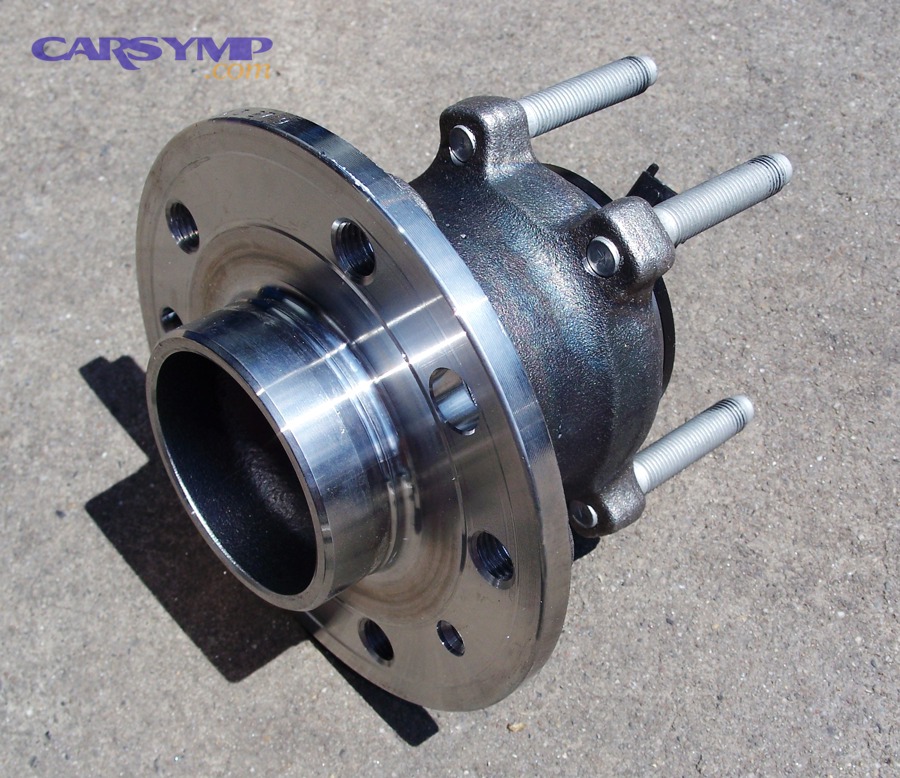
To better understand what it diagnoses, think in terms of “load-sensitive” noise versus “effort-sensitive” noise:
- Load-sensitive noise changes when the vehicle’s weight shifts from side to side. Wheel bearings and some tire problems often behave this way.
- Effort-sensitive noise changes when steering effort changes, even at low speed or while stopped. Power steering pumps (hydraulic) and some steering rack issues often behave this way.
This distinction matters because many drivers describe different problems with the same words—“humming noise at speed,” “whining when turning,” “groaning in parking lots”—but those descriptions belong to different systems. The swerving test gives you a repeatable trigger (steering input) so you can map the noise to a mechanical cause instead of a feeling.
Does this test actually work for finding wheel bearing noise?
Yes—the steering-input noise changes with steering input test works for wheel bearing diagnosis because (1) wheel bearing noise often rises under increased side-load, (2) the change is repeatable left versus right, and (3) the sound usually tracks vehicle speed rather than engine RPM. However, it works best when the bearing is already worn enough to produce a consistent hum or growl.
To illustrate why, consider what a wheel bearing does: it supports the hub and allows the wheel to spin with minimal friction. When the bearing’s rolling surfaces pit or wear, the bearing can “sing” under load—often as a low hum, growl, or howl. During a gentle left turn, the vehicle’s weight shifts to the right-side wheels (they become the “outside” wheels), which can increase the load on a failing right bearing and make it louder. During a gentle right turn, the opposite happens.
In practice, this means the test is a strong triage tool for a Humming at speed causes checklist. If the sound is steady at 40–70 mph and reliably changes with steering input, a wheel bearing rises near the top of the list. If the sound does not change at all with steering input but changes with throttle or gear selection, you may be dealing with drivetrain whine instead.
Evidence: According to a study by Case Western Reserve University from the Bearing Data Center, in 2012, documented bearing fault experiments showed that bearing condition can be identified from measured vibration patterns under controlled test conditions, supporting the idea that bearing defects produce repeatable signals rather than random noise. ([engineering.case.edu](https://engineering.case.edu/bearingdatacenter?))
What kinds of noises should you listen for during the test (hum, howl, whine, groan, click, clunk)?
There are 6 main types of steering-related noises you should listen for during the swerving test—hum, howl, whine, groan, click, and clunk—based on the criterion of sound character plus when it changes. More specifically, the same steering input can “activate” different systems depending on whether the car is moving, accelerating, or simply steering under load.
- Hum: a low, steady “airplane cabin” sound that rises with speed; often linked to tire pattern noise or wheel bearing hum diagnosis.
- Howl: louder and more hollow than a hum, sometimes described as “windy” or “drone-y”; can be a bearing or tire issue depending on repeatability.
- Whine: higher pitch, often tied to engine RPM or hydraulic pump activity; more suggestive of power steering pump, alternator, or drivetrain gears.
- Groan/Moan: a strained, low-frequency sound during steering effort; often points to low/contaminated power steering fluid or pump/rack strain.
- Click: rhythmic clicking during turns (especially accelerating); commonly associated with outer CV joint wear.
- Clunk: a single knock or repeated thud when steering changes direction or over bumps; often suspension/steering linkage play (tie rods, ball joints, sway links, strut mounts).
When you run the steering-input test, the goal is not to label the sound perfectly on the first try. The goal is to identify the sound’s “rules”: Does it rise with speed? Does it change left vs right? Does it appear at full-lock only? Those rules are far more diagnostic than the label.
What’s the difference between “steering-input noise” and “turning-only noise”?
Steering-input noise is best tested at steady speed with gentle left-right inputs, while turning-only noise typically shows up at low speed, at higher steering angles, or at full-lock in parking maneuvers. Meanwhile, the causes differ because one is about load transfer at speed and the other is about maximum joint articulation or maximum steering effort.
Here’s the practical difference:
- Steering-input noise at speed (gentle sway): excellent for wheel bearings and some tire noises because the outside wheel load changes clearly.
- Turning-only noise (tight turns, full-lock, parking): better for CV joints, strut mounts, steering rack end play, and power steering groan.
If you only test in a parking lot, you might miss a wheel bearing that only complains under sustained speed. If you only test on the highway, you might miss a CV joint that only clicks when the axle is sharply angled. The best DIY diagnosis uses both contexts, but the swerving test is the fastest way to triage a humming noise at speed.
How do you perform the steering-input (swerving) noise test safely and correctly?
The safest way to perform the steering-input (swerving) noise test is a controlled method with 6 steps—choose a safe road, stabilize speed, make gentle lane-position shifts, hold each direction briefly, repeat, and record observations—so you create a repeatable result without aggressive steering. In addition, your safety margin matters more than the diagnosis.
Before you start, set expectations: this is not a “swerve hard” maneuver. It’s closer to a smooth lane-position drift that loads one side and then the other. If you are not comfortable doing it on-road, skip the on-road test and move to the confirmation checks later.
Do you need a specific speed, road surface, or tire pressure for accurate results?
Yes—you need a consistent setup for accurate results because (1) speed affects how audible bearing/tire noise becomes, (2) rough pavement can mask or mimic the sound, and (3) incorrect tire pressure can change tire noise and steering feel enough to confuse the result. Besides, consistency makes your observations trustworthy.
Use this baseline setup:
- Speed: typically 40–70 mph (or where the noise is most noticeable), held steady.
- Road: smooth asphalt if possible; avoid grooved concrete or heavily patched sections.
- Tire pressure: ensure all tires are reasonably close to the door-jamb specification; big differences can add noise and pull.
If your noise only appears above a certain speed, start below it and gently climb until it appears—then hold there. If the road surface is noisy, the test becomes guesswork. In that case, repeat on a different road before you conclude anything.
What are the exact “left-load vs right-load” steps to follow?
The exact method is a 6-step process: stabilize speed, lightly steer left to load the right side, hold, return to center, lightly steer right to load the left side, then repeat until the sound change is consistent. To better understand, you’re comparing two controlled conditions—right-side load versus left-side load.
Follow these steps:
- Find a safe stretch of road with light traffic and good visibility.
- Hold a steady speed where the noise is obvious.
- Gently steer left (a smooth lane-position shift, not a sharp turn) and hold for ~2–3 seconds.
- Return to center and hold for ~2–3 seconds.
- Gently steer right and hold for ~2–3 seconds.
- Repeat at least 3 cycles and note whether the noise reliably gets louder in one direction.
If you can, have a passenger take notes, or record audio (hands-free) so you don’t rely on memory. Many noises seem “obvious” in the moment and become vague later.
Should you avoid doing this test in rain, snow, heavy traffic, or with ESC warnings?
Yes—you should avoid doing this test in those conditions because (1) reduced traction increases risk during lateral load transfer, (2) heavy traffic removes your safety buffer, and (3) stability control or brake intervention can change the vehicle’s behavior and mask the sound you’re trying to interpret. More importantly, a safe diagnosis beats a perfect diagnosis.
Skip the on-road test if:
- Roads are wet/icy, visibility is poor, or wind is strong enough to move the vehicle.
- Traffic density forces you to make quick reactions.
- Warning lights suggest stability, brake, or steering issues that could make lateral moves unpredictable.
- You feel any sudden pull, severe vibration, or steering looseness.
In these cases, go straight to the follow-up checks: visual inspection, tire evaluation, fluid checks, and (if safe) a controlled jack-up test. If the symptom feels dangerous, stop driving and get professional help.
How do you interpret results from the swerving test to pinpoint the likely component?
You interpret the swerving test by comparing which direction makes the noise louder and linking that to which side is loaded, then separating wheel-speed noises (bearings/tires) from steering-effort noises (power steering/rack). However, interpretation works only when the change is repeatable across multiple left-right cycles.
The simplest mental model is: outside wheels carry more load during a turn. So when you steer left, the right-side wheels are “outside” and carry more load; when you steer right, the left-side wheels carry more load.
To make interpretation easier, the table below summarizes what most DIY drivers are trying to answer: “Which side is it, and is it the wheel area or the steering assist system?”
What this table contains: a quick mapping between swerving direction, load transfer, and the most likely noise category to investigate first.
| Observation during test | What changes mechanically | Most likely direction | Best next check |
|---|---|---|---|
| Noise gets louder when steering left | Right side becomes outside/load increases | Right wheel bearing or right-side tire noise | Inspect right-front/right-rear tire wear + hub play/spin test |
| Noise gets louder when steering right | Left side becomes outside/load increases | Left wheel bearing or left-side tire noise | Inspect left-front/left-rear tire wear + hub play/spin test |
| Noise changes with steering effort at low speed or at idle | Hydraulic/electric assist load changes | Power steering system or steering rack | Check fluid level/condition, leaks, belt (if hydraulic) |
| Noise changes with throttle, not steering | Torque load changes, not lateral load | Drivetrain/differential/axle-related | Test on accel vs coast; inspect CV/gear whine pattern |
If the noise gets louder when swerving left, is it the right wheel bearing?
Yes—if the noise reliably gets louder when you steer left, it often indicates a problem on the right side because (1) the right wheels are loaded as the outside wheels, (2) a failing bearing typically gets noisier under increased load, and (3) the change is usually speed-related and repeatable across cycles. However, tire noise can mimic this pattern, so you must confirm.
Here’s how to apply it without overconfidence:
- If the sound is a steady “airplane” hum that rises with speed and gets louder when steering left, the right-side bearing becomes a prime suspect for wheel bearing hum diagnosis.
- If the sound is more like a rhythmic roar that changes with road surface, a right-side tire wear pattern (including cupping) may be the culprit.
To begin narrowing further, note whether the sound changes instantly with steering input (bearing/tire often does) or lags and feels tied to steering effort (steering assist often does). A bearing-related sound usually “follows the load” smoothly.
Evidence: According to a study by Case Western Reserve University from the Bearing Data Center, in 2012, bearing fault conditions were carefully documented in test data that researchers use to distinguish normal versus faulty bearing behavior, reinforcing that bearing faults produce consistent, diagnosable patterns. ([engineering.case.edu](https://engineering.case.edu/bearingdatacenter?))
What results point to power steering (pump/fluid) instead of a wheel bearing?
Wheel bearing noise wins in “speed-linked hum/howl,” power steering is best identified by “effort-linked groan/whine,” and tire noise is optimal when “road surface changes the sound more than steering does.” On the other hand, the swerving test alone can’t confirm power steering—your follow-up checks matter.
Power steering clues that pull you away from wheel bearings:
- Noise at idle or near-idle when turning the wheel (especially when stopped).
- Groan/moan that increases with steering effort rather than vehicle speed.
- Whine that can change with engine RPM (revving) even when the vehicle is not moving.
- Steering feel symptoms like heaviness, notchiness, or intermittent assist.
If you hear a groan while parking and also notice stiff steering, think fluid level/condition or pump strain before you blame a bearing. If the noise appears mostly on the highway and disappears at low speeds, think bearing/tire before you blame the pump.
Evidence: According to a study by Loughborough University from the Institutional Repository, in 2007, research on reducing power-assisted steering noise described how steering systems can transmit structure-borne and air-borne noise, supporting the idea that steering assist noise has distinct propagation behavior compared with wheel-end noise. ([repository.lboro.ac.uk](https://repository.lboro.ac.uk/articles/conference_contribution/Reduction_of_vehicle_power_assisted_steering_noise/9222872?))
Which symptoms suggest CV joint, tie rod, ball joint, strut mount, or sway bar links instead?
There are 5 main symptom groups that suggest non-bearing, non-power-steering causes—CV joint, tie rod, ball joint, strut mount, and sway bar links—based on the criterion of when the sound occurs and what motion triggers it. More specifically, these faults tend to produce discrete clicks or clunks rather than a smooth hum.
- CV joint: clicking during turns, especially while accelerating; often more pronounced in tight turns than gentle swerves.
- Tie rod: clunk or knock when changing steering direction; may come with steering play or uneven tire wear.
- Ball joint: clunk over bumps or during steering/braking transitions; may also show uneven wear and looseness.
- Strut mount: pop/clunk when turning at low speed; may feel like a “bind and release.”
- Sway bar links/bushings: clunk over small bumps, especially when one wheel hits a bump and the other doesn’t.
Use the swerving test as a first filter: if the noise is a clean hum that follows speed, bearings/tires stay on top. If the noise is a click or clunk that appears mainly at low speed or when steering reverses direction, move your attention to joints and linkages.
What are the best next checks to confirm your diagnosis after the swerving test?
The best confirmation approach is a 3-part method—verify wheel-end condition, verify steering assist condition, and verify safety/urgency—so you don’t mistake tire noise for a bearing or ignore a steering issue that needs immediate attention. Especially with a humming at speed causes checklist, confirmation is what turns “likely” into “actionable.”

Before you lift anything, do a simple “baseline” walk-around:
- Look for obvious tire issues: uneven wear, scalloping, bulges, or exposed cords.
- Check for fluid leaks under the front of the car and around the steering rack area.
- Note whether the steering wheel feels centered and whether the car pulls.
Can you confirm a wheel bearing with a jack-up test (shake/spin) and what are its limits?
Yes—you can confirm many wheel bearings with a safe jack-up shake/spin test because (1) looseness can reveal bearing or hub wear, (2) spinning can expose roughness or grinding, and (3) comparing sides can highlight the abnormal corner. However, some bad bearings stay tight and only make noise under real load, so a “pass” does not guarantee the bearing is good.
Use a safe lifting method (level ground, proper jack points, jack stands). Then:
- 12-and-6 test: grip the tire at the top and bottom and rock it. Movement can indicate bearing or suspension play.
- 9-and-3 test: grip left and right and rock it. Movement often points to tie rod or steering linkage play (though bearings can also contribute).
- Spin test: rotate the wheel by hand and listen/feel for roughness. A failing bearing may feel gritty or sound like a faint scrape.
Limits you must respect:
- Brake drag can mask bearing noise during spinning.
- Some sealed hub bearings don’t develop obvious play until late stages.
- Rear bearings on some vehicles can be harder to “hear” by hand.
If the swerving test strongly points to one side and the tire looks normal, but the jack-up test is inconclusive, don’t force certainty. Move to additional confirmation .
Evidence: According to a study by Case Western Reserve University from the Bearing Data Center, in 2012, bearing faults were documented under controlled conditions and used as benchmarks for diagnostic methods, supporting that reliable diagnosis often requires comparing signals and conditions rather than relying on a single observation. ([engineering.case.edu](https://engineering.case.edu/bearingdatacenter?))
What quick checks confirm a power steering issue (fluid, leaks, belt, noise at idle)?
There are 4 quick checks that confirm many power steering issues—fluid level/condition, leak inspection, belt inspection (hydraulic systems), and idle steering noise behavior—based on the criterion of whether noise follows steering effort and hydraulic load. Moreover, these checks are fast and reduce the risk of replacing the wrong part.
Run these checks in order:
- Fluid level and condition: low fluid can introduce air and cause groan/whine; dark or contaminated fluid can increase noise and wear. (Follow the manufacturer’s fluid type.)
- Leak inspection: check the reservoir, hoses, pump body, and rack boots for wetness or drips.
- Belt check (if hydraulic pump is belt-driven): glazing, cracking, or squeal under load suggests slip that can sound like whine.
- Idle steering behavior: with the car stationary, turn the wheel slowly. If the noise appears and intensifies near steering stops, steering assist is implicated more than wheel bearings.
A simple rule helps: wheel bearing noise rarely appears while stopped; power steering noise often does. If you hear the noise in your driveway while turning the wheel, put wheel bearings lower on your list and focus on steering assist.
Evidence: According to a study by Loughborough University from the Institutional Repository, in 2007, research into reducing power-assisted steering noise highlighted factors that influence steering noise transmission, supporting the value of focusing on system-level checks (fluid condition, mounting, transmission paths) rather than wheel-end parts when noise follows steering effort. ([repository.lboro.ac.uk](https://repository.lboro.ac.uk/articles/conference_contribution/Reduction_of_vehicle_power_assisted_steering_noise/9222872?))
When is it unsafe to keep driving and you should stop immediately?
Yes—there are situations where you should stop driving immediately because (1) severe wheel-end failure can lead to loss of control, (2) steering assist failure can suddenly increase steering effort, and (3) overheating or mechanical damage can escalate quickly into unsafe conditions. Thus, urgency assessment is part of diagnosis, not an afterthought.
Stop driving and seek help if you notice:
- Grinding or metal-on-metal sounds that get rapidly worse.
- Strong steering wheel shake or the car feels like it’s wandering or “floating.”
- Sudden steering heaviness, especially if accompanied by whining/groaning and low fluid.
- Burning smell, smoke, or visible fluid spraying/leaking.
- Heat at one wheel after a short drive (carefully check near the wheel area without touching hot components).
- Warning lights related to steering, stability control, or brakes that appear alongside the noise.
If your symptom is “only a hum,” you may be tempted to keep driving. But a hum that quickly becomes a growl, then a grind, can signal a bearing progressing toward failure. Treat worsening symptoms as a safety signal, not just an afterthought.
What can mimic wheel bearing noise that changes with steering input ?
Several issues can mimic wheel bearing noise that changes with steering input—especially uneven tire wear and certain drivetrain whines—so you must confirm with targeted checks that separate tire-road sound from hub/bearing sound. In addition, this is where many DIY diagnoses go wrong, because tire noise can be as loud as a bad bearing.
The most common false positives cluster into three buckets:
- Tire-related noise: tread cupping/scalloping, feathering from alignment, aggressive tread patterns, or uneven balance.
- Road-surface effects: grooved pavement, worn asphalt, or concrete texture that creates a steady drone.
- Drivetrain noise: differential/transfer case whine that may seem to change with steering because of subtle load changes or cabin resonance.
If your main complaint is a humming noise at speed, you should actively test the tire hypothesis. That’s where Tire cupping and road noise identification becomes the difference between a correct repair and an expensive guess.
Can tire cupping or aggressive tread “fake” a bad wheel bearing in the swerving test?
Yes—tire cupping or aggressive tread can fake a bad wheel bearing because (1) uneven tread blocks create a rhythmic hum/roar that rises with speed, (2) the noise can shift with lateral load and steering input, and (3) the sound can change dramatically with pavement type, making it feel mechanical when it’s actually tire-road interaction. However, tire noise often leaves clues that bearings do not.
Use this quick tire noise differentiator:
- Road-surface test: if the sound changes a lot between smooth asphalt and coarse concrete, suspect tires/road texture first.
- Visual tread scan: look for scalloped “cups,” high-low patches, or feathered edges across the tread blocks.
- Hand feel test (parked): run your hand lightly over the tread; cupping can feel like alternating high and low spots.
- Rotation test: if you rotate tires front-to-rear and the noise location/character changes, the tires are implicated.
When you build your Humming at speed causes checklist, treat tires as a first-class possibility, not a footnote. A worn bearing is serious, but a cupped tire is common—and both can sound like a steady drone.
Evidence: According to a study by Washington State Department of Transportation from its Research Office, in 1992, measurements showed tire/road noise changes as pavement ages and wears, supporting that road texture and tire interaction can meaningfully change perceived noise even when mechanical components are fine. ([wsdot.wa.gov](https://www.wsdot.wa.gov/research/reports/fullreports/276.1.pdf?))
How is differential/transfer case whine different from wheel bearing hum at speed?
Wheel bearing hum wins in “pure speed-linked drone that shifts with left/right load,” differential/transfer case whine is best for “throttle-dependent pitch changes,” and tire roar is optimal when “road surface changes the sound more than steering does.” Meanwhile, drivetrain whine often has a sharper pitch than a bearing hum.
Use these comparisons to separate them:
- Accelerate vs coast: drivetrain whine often changes noticeably between acceleration and coasting; wheel bearings often do not.
- Pitch vs volume: drivetrain whine frequently changes pitch with speed/load; wheel bearing hum often changes mostly in volume.
- Steering input sensitivity: wheel bearing noise commonly changes with gentle left/right load transfer; drivetrain noise may change less consistently.
If your noise becomes louder on acceleration and quieter on coast (or vice versa) with minimal steering effect, drivetrain moves up your list. If your noise is mostly steady with speed but clearly changes left vs right, wheel bearing hum diagnosis remains the stronger path.
Which advanced tools help when the test result is unclear (chassis ears, stethoscope, IR temp)?
There are 3 main advanced tools—chassis ears, a mechanic’s stethoscope, and infrared temperature checks—based on the criterion of whether you need to isolate sound, vibration, or heat. More importantly, these tools reduce ambiguity when both a tire and a bearing seem plausible.
- Chassis ears (wireless microphones): you place sensors near suspected corners and listen through a receiver while driving; the loudest channel often reveals the source.
- Mechanic’s stethoscope: best used in the shop with the vehicle safely lifted; you listen near hubs, differentials, or pumps while components rotate (only with proper safety procedures).
- Infrared temperature comparison: after a similar drive, compare temperatures near each hub area; an overheating bearing can run hotter than the others.
These tools are not mandatory for DIY diagnosis, but they are powerful when your results are “almost” clear. If you’re stuck between “right-front tire roar” and “right-front bearing hum,” chassis ears can end the debate quickly.
What should you write down to tell a mechanic so they can diagnose faster?
You should write down a clear diagnostic note that includes the noise type, speed range, steering direction effect, road-surface sensitivity, throttle sensitivity, and any recent tire/alignment work so a mechanic can reproduce the symptom quickly and avoid replacing parts by guesswork. In short, you are handing them your test data.
Use this simple checklist (copy/paste style):
- Noise description: hum/howl/whine/groan/click/clunk (and whether it’s continuous or rhythmic).
- Speed range: “Starts at 45 mph, loudest at 60–70 mph.”
- Steering-input result: “Louder when steering left; quieter when steering right; repeatable 3+ cycles.”
- Throttle effect: “No change on accel vs coast” or “whine increases on accel.”
- Road effect: “Much louder on coarse concrete; quieter on smooth asphalt.”
- Recent work: tire rotation, new tires, alignment, suspension work, curb impact, pothole hit.
- DIY checks performed: tire pressure verified, fluid checked, jack-up test results.
If possible, record a short hands-free audio clip at the speed where the noise is strongest and note the exact moment you steer left versus right. That single piece of information often shortens the diagnostic time dramatically—especially when the shop is trying to separate tire noise from a wheel bearing hum diagnosis.