


If you’re hearing a low, steady hum or boom in the cabin, you can usually pinpoint the source by testing what the sound “follows”: engine RPM and throttle (typical of exhaust resonance/drone) or vehicle speed and wheel load (typical of wheel hum from bearings/tires). The goal of this guide is to help you diagnose it quickly and confidently—before you replace parts that aren’t broken.
The first step is understanding what each noise actually is. Exhaust resonance (often called “drone”) is a low-frequency booming that builds inside the cabin when exhaust pulses line up with the car’s acoustic “sweet spot.” Wheel hum is a rolling, speed-linked roar or hum that often strengthens as you drive faster, and it may change when you turn.
Next, you’ll use simple, repeatable road tests—gear changes, coast tests, and steering-load tests—to separate “engine-order” noise from “wheel-order” noise. These checks take minutes, require no special tools, and work for most cars, SUVs, and trucks.
Introduce a new idea: once you identify which system is responsible, you’ll also know what to do next—whether that’s reducing drone with resonators and fitment fixes, or treating wheel bearing noise as a safety-priority repair.
What is exhaust resonance (exhaust drone) and what does it sound like?
Exhaust resonance (drone) is a low-frequency cabin boom caused by exhaust pulse energy amplifying at certain RPM ranges, creating a steady “pressure-like” hum even when the exhaust isn’t extremely loud. Then, because it feels constant and body-filling, drivers often confuse it with a wheel-related hum—especially on highways.
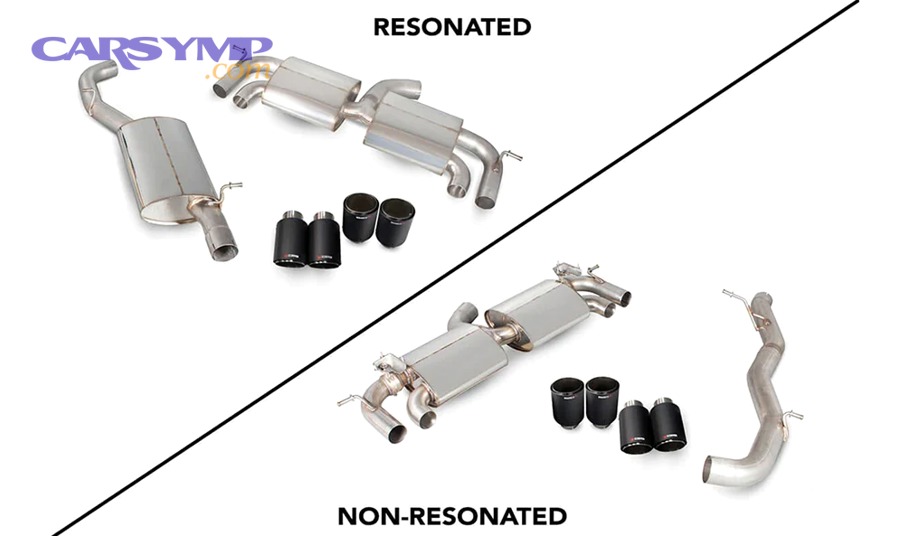
Exhaust drone typically shows up during steady cruising (light throttle) in a narrow band—often when the engine sits at the same RPM for a long time. You may notice a cabin “boom” that’s more obvious in the rear seats, trunk area, or hatchback cargo zone. It can also feel like a mild vibration through the floor or seat rather than a sharp sound near a specific corner.
Is exhaust drone usually tied to RPM more than vehicle speed?
Yes—exhaust drone is usually tied to RPM more than vehicle speed because it is driven by exhaust pulse frequency (engine order), the exhaust system’s acoustics, and the cabin’s resonance response. The three most reliable reasons are: (1) the noise appears at a consistent RPM band, (2) it changes when you shift gears at the same road speed, and (3) it often changes with throttle/load even if your speed barely changes.
Next, here’s how to turn that into a simple test: hold a steady speed and change gears (where safe). If the “boom” moves with RPM (for example, it gets worse at ~1,800 RPM in any gear), that points strongly to drone. If the “boom” stays the same at the same road speed even when RPM changes significantly, that points away from drone and toward wheels/tires.
A practical example:
- You’re cruising at 65 mph and hear a booming hum.
- You downshift one gear: RPM rises by ~400–700 RPM.
- Drone case: the sound changes immediately—either louder, quieter, or shifting in tone.
- Wheel hum case: the sound stays nearly the same, because the wheels are still rotating at the same speed.
What are the most common causes of exhaust resonance in everyday cars?
There are 6 main causes of exhaust resonance (drone): (1) missing/ineffective resonator, (2) muffler design that doesn’t target the drone band, (3) exhaust diameter changes, (4) leaks or poor joints that alter pressure waves, (5) hanger/clearance issues transmitting vibration, and (6) cabin/body coupling that amplifies low frequencies. These causes are grouped by one criterion: they either change the exhaust pulse energy or they change how the vehicle amplifies it.
Then, to make the causes actionable, here’s what each one looks like in real life:
- Resonator removed or too small
A resonator’s job is often to “cancel” specific frequency bands. If it’s deleted (common with aftermarket setups), the cabin may suddenly develop a steady boom at cruising RPM. - Muffler type mismatch
Some mufflers reduce overall volume but don’t suppress the low-frequency band that causes drone. That’s why a car can sound “not that loud” outside but still feel boomy inside. - Pipe diameter or routing changes
Changing pipe diameter changes gas velocity and acoustic behavior. Long straight sections can also encourage standing waves. - Small leaks or poor clamp/joint fit
Leaks can shift the sound character and sometimes add harshness. They can also change how pulses reflect and reinforce in the system. - Hangers, shields, or contact points
An exhaust that lightly contacts a crossmember, heat shield, or body panel can transmit vibration into the cabin and mimic a droning hum. - Cabin/body amplification
Hatchbacks, SUVs, and wagons often have larger cavities that can amplify certain low frequencies.
Evidence: According to a study by Hanyang University from the Department of Mechanical Engineering, in 2023, structural changes aimed at reducing low-frequency booming noise showed a 13.8% reduction in maximum deformation in an improved configuration, supporting how body/cabin dynamics can materially affect perceived boom. (mdpi.com)
How is exhaust resonance different from an exhaust leak noise?
Exhaust resonance wins in “steady booming at a narrow RPM band,” while an exhaust leak is best identified by “sharp, localized puff/tick sounds,” and wheel hum is optimal for “speed-linked rolling roar.” Next, this comparison helps prevent a common mistake: chasing drone with leak fixes (or vice versa).
- Resonance/drone:
- Low-frequency, smooth “boom” or “pressure” sensation
- Peaks at certain RPM (often during light throttle cruise)
- Often louder inside than outside
- Exhaust leak:
- More “tick,” “puff,” or raspy hiss
- Stronger near the leak location (manifold, flex pipe, joint)
- Often worsens under acceleration/load when exhaust pressure rises
- Wheel hum:
- humming noise at speed that grows with road speed
- Often unchanged by engine RPM when you keep speed constant
- May shift when turning (load transfer)
What is wheel hum (wheel bearing noise) and what does it sound like?
Wheel hum (especially wheel bearing noise) is a speed-related humming or roaring sound produced by rotating wheel-end components under load, often becoming louder as vehicle speed increases. Then, because it can be low-frequency and steady, it’s frequently mistaken for exhaust drone—especially on long highway drives.
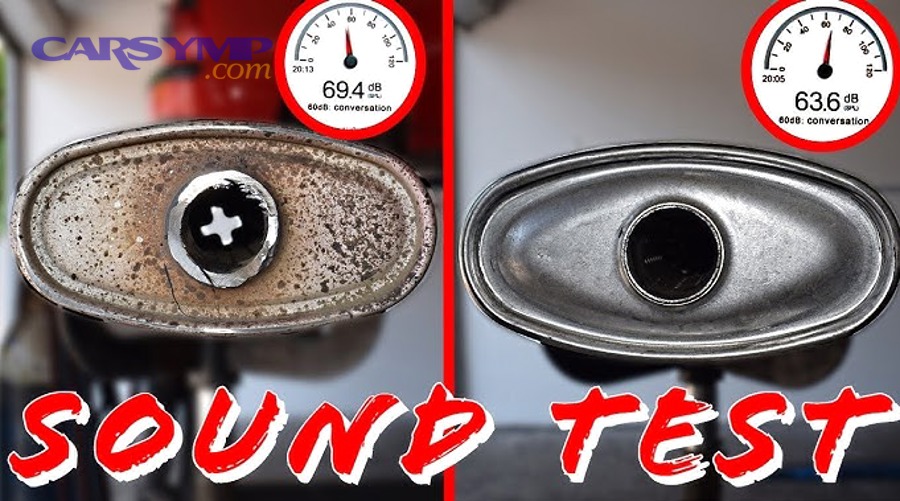
Wheel bearing hum often feels like a smooth roar that builds gradually. Unlike exhaust drone, it tends to be more “mechanical” and may feel like it’s coming from one corner—front left, rear right, etc.—even if the sound echoes through the cabin.
Does wheel bearing hum typically get louder with vehicle speed even if RPM stays low?
Yes—wheel bearing hum typically gets louder with vehicle speed even if RPM stays low because the bearing rotates faster, load cycles increase, and vibration energy rises with wheel speed. The three strongest reasons are: (1) the sound scales with speed, (2) it can persist on coast in neutral, and (3) it often changes during turns due to load transfer.
Next, confirm with a simple coast check (only where safe): at the same road speed, lightly reduce throttle or coast. If the noise remains nearly unchanged, that supports a wheel-end source. If it fades with throttle changes and returns at a specific RPM band, that supports exhaust resonance.
What other wheel-end issues can mimic wheel bearing hum?
There are 5 main wheel-end mimics of wheel bearing hum: tire cupping, uneven tire wear, aggressive tread patterns, brake drag, and bent wheels—grouped by whether they create periodic road-contact noise or rotational vibration. Then, separating these mimics is critical because tires can sound exactly like a failing bearing.
This is where Tire cupping and road noise identification becomes a must-do skill. Cupped tires can create a repeating “whum-whum” that gets worse with speed and can feel like a drone. You’ll often see scalloped wear blocks on the tread, and the noise may change dramatically on different pavement textures.
Quick differentiators:
- Tire-related noise often changes on different road surfaces (smooth asphalt vs rough concrete).
- Brake drag may come with heat, odor, or a pulling sensation.
- Bent wheels may add steering shake or vibration at certain speeds.
How does tire noise compare to wheel bearing hum?
Wheel bearing noise wins for “load/turn sensitivity,” tire noise is best for “road surface sensitivity,” and exhaust drone is optimal for “RPM-band booming.” Next, use this comparison to avoid guessing when you hear a steady hum on the highway.
- Bearing hum: louder when turning one direction (loading the bad side), often consistent across road surfaces.
- Tire noise: changes noticeably with pavement type; may rise and fall in a rhythmic pattern if cupped.
- Drone: locks onto RPM; often most noticeable at steady cruise throttle.
To make this concrete, do a surface test: drive the same speed on two different surfaces (where possible). If the noise changes a lot, suspect tires. If it stays consistent, suspect bearings (or, less commonly, drivetrain components).
Evidence: According to a study by Hanyang University from the Department of Mechanical Engineering, in 2022, researchers experimentally measured wheel-bearing noise and vibration during rotation to identify noise characteristics and radiating sources—supporting the use of vibration/noise behavior as a valid diagnostic path. (mdpi.com)
How can drivers quickly compare exhaust drone vs wheel hum on the road?
Exhaust drone wins in “RPM-linked boom,” wheel hum is best for “speed-linked roar,” and tire noise is optimal for “surface-linked changes,” so the fastest diagnosis is to test RPM, speed, throttle, and steering-load in that order. Then, you’ll stop treating the sound as mysterious and start treating it as measurable behavior.
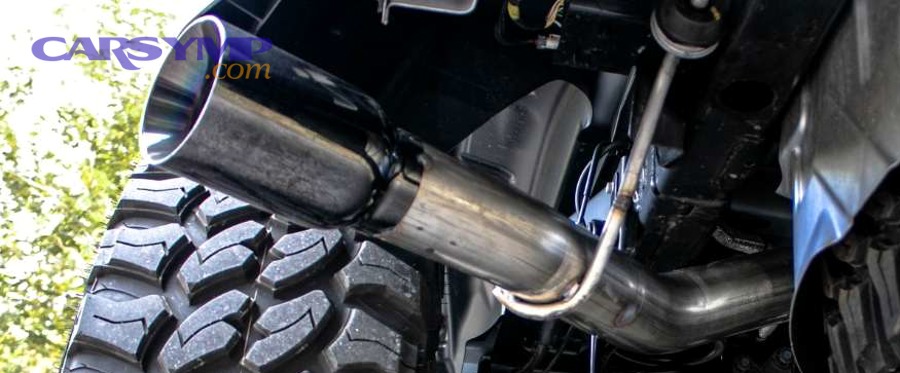
Below is a simple comparison table. It’s designed to help you map what you hear to what it most likely is.
| What the noise “follows” | Most likely source | What it usually means |
|---|---|---|
| Engine RPM (same RPM = same noise) | Exhaust resonance (drone) | Cabin boom from exhaust pulse frequency + resonance |
| Vehicle speed (faster = louder) | Wheel bearing / tires | Rotational noise from bearings or tread/road interaction |
| Road surface (changes on different pavement) | Tires | Tread pattern, cupping, or texture-driven noise |
| Steering load (changes when turning) | Wheel bearing (often) | Load transfer amplifies a worn bearing on one side |
If you shift gears or hold the same speed in a different gear, does the noise change?
Yes—if the noise changes clearly when you change gears at the same speed, it’s far more likely to be exhaust drone than wheel hum, because the key variable you changed was RPM and exhaust pulse frequency. The three reasons are: (1) gear changes shift RPM quickly, (2) drone responds to engine order, and (3) wheel hum primarily responds to wheel speed, not engine speed.
Then, treat this as your first “fork in the road.” If gear changes don’t matter but speed does, shift your attention to tires/bearings. If gear changes matter a lot, keep analyzing the exhaust path.
Which “pattern clues” most strongly point to exhaust drone vs wheel bearing hum?
There are 6 main pattern clues—RPM band, speed scaling, throttle sensitivity, coast behavior, steering-load response, and road-surface response—used to classify the noise as drone, bearing hum, or tire noise. Next, combine at least three clues before you decide, so you don’t get fooled by one misleading symptom.
- Drone pattern: narrow RPM band + steady throttle + cabin boom sensation
- Bearing hum pattern: speed scaling + persists on coast + changes with turning load
- Tire pattern: surface sensitivity + rhythmic “wub” + visible cupping/uneven wear
This is also where the phrase Noise changes with steering input test becomes more than a tip—it becomes a diagnostic lever. If the sound gets louder when you turn left, you’re loading the right-side bearings. If it gets louder when you turn right, you’re loading the left-side bearings (general rule; exact behavior can vary).
How does turning left/right help confirm wheel bearing hum?
Turning left/right confirms wheel bearing hum by shifting vehicle weight (lateral load transfer) onto one side, which increases bearing load and often amplifies a worn bearing’s vibration. Then, because the test is behavior-based, it works even when you can’t pinpoint the corner by ear.
How to do it safely:
- Choose a wide, low-traffic road at a steady speed.
- Make gentle, smooth lane-position changes (no abrupt swerves).
- Listen for a consistent increase/decrease in the hum.
Interpretation:
- Noise louder during left turn tendency → right side is more suspect
- Noise louder during right turn tendency → left side is more suspect
Safety note: if you feel wobble, grinding, or steering instability, stop testing and inspect immediately.
How does accelerating vs coasting help separate drone from wheel noise?
Exhaust drone wins for “changes with throttle/load,” while wheel hum is best for “stays similar during coast at the same speed,” and tire noise is optimal for “changes with road surface regardless of throttle.” Next, this test becomes your second fork after the gear/RPM test.
Try this sequence at a steady speed:
- Lightly accelerate (increase load).
- Hold steady throttle.
- Coast gently (reduce load).
Typical outcomes:
- Drone: changes with load; may peak at a steady cruise condition.
- Bearing: remains similar across accel/coast if speed stays close.
- Tires: mostly unaffected by throttle; strongly affected by road texture.
What is a step-by-step diagnostic checklist to confirm the cause?
A reliable diagnosis uses a 5-step checklist—(1) RPM/gear test, (2) speed scaling test, (3) coast test, (4) steering-load test, and (5) inspection/lift confirmation—to identify the noise source with high confidence. Then, you move from “I think” to “I know,” which saves money and time.
Step 1: RPM/Gear test
- Same speed, different gear (safe conditions).
- Noise changes with RPM → likely drone.
- Noise unchanged → likely wheels/tires.
Step 2: Speed scaling test
- Increase speed gradually.
- Noise steadily rises with speed → wheels/tires more likely.
Step 3: Coast test
- Coast at the same speed range.
- Noise persists strongly → wheels/tires.
- Noise fades quickly with load reduction → drone (often) or exhaust leak behavior.
Step 4: Steering-load test
- Gentle left/right load changes.
- Noise changes with turning → bearings (often) more likely.
Step 5: Physical confirmation
- Inspect tires for cupping/uneven wear.
- Check exhaust clearance/hangers/shields.
- Confirm bearing roughness/play if safely lifted.
Can you confirm wheel bearing issues with a safe at-home inspection?
Yes—you can often confirm wheel bearing issues with a safe at-home inspection if you use proper lifting practices and look for (1) play, (2) roughness/noise when spinning, and (3) abnormal heat, which are three direct signs of bearing distress. Then, you’ll know whether the hum is worth immediate repair planning.
A safe, practical approach:
- Park on level ground, parking brake engaged, wheel chocks used.
- Lift one corner at a time with a rated jack and stands.
- Check for play by rocking the wheel at 12-and-6 and 9-and-3 (some play can also come from suspension joints, so interpret carefully).
- Spin the wheel slowly and listen/feel for roughness.
Heat check (with caution):
- After a short drive, compare hub area temperatures side-to-side (do not burn yourself). A significantly hotter hub can support a bearing/brake drag suspicion.
If you’re not confident with lifting safety, skip the lift check and move straight to a shop confirmation.
What exhaust checks help confirm resonance vs hardware problems?
There are 5 main exhaust checks—(1) hanger integrity, (2) clearance/contact points, (3) heat shield rattle points, (4) joint/leak inspection, and (5) resonator/muffler configuration review—grouped by whether they cause resonance or transmit vibration. Next, you’ll stop treating “drone” as only a muffler issue, because many cases are actually fitment and contact.
What to look for:
- Hangers: cracked rubber, sagging sections, metal-to-metal contact.
- Clearance: shiny rub marks where pipes contact body or crossmembers.
- Heat shields: loose fasteners that buzz under load.
- Leaks: soot marks near flanges, flex pipe, clamps.
- Configuration: recent modifications (resonator delete, different muffler) that correlate with when the drone started.
When should you stop driving and get the car checked immediately?
Yes—you should stop driving and get the car checked immediately if the noise is paired with (1) grinding, (2) steering instability, or (3) abnormal heat/smell, because these signs indicate potential wheel-end failure or brake drag that can escalate quickly. Then, treat the diagnosis as a safety decision, not just a comfort issue.
Red flags:
- Grinding or scraping that worsens quickly
- Steering pull, wobble, or vibration that suddenly increases
- Burning smell near a wheel, smoke, or extreme heat
- Warning lights paired with new mechanical noise (context matters)
What should you do after you identify the source—fixes, urgency, and next steps?
Exhaust drone wins for “comfort/NVH fixes,” wheel bearing hum is best treated as “repair-priority for safety,” and tire noise is optimal for “tread/rotation/alignment corrections,” so your next steps should match the risk and the root cause. Then, you avoid spending money on the wrong fix.
Is wheel bearing hum more urgent than exhaust drone?
Yes—wheel bearing hum is generally more urgent than exhaust drone because (1) bearing wear can progress to unsafe play or failure, (2) it can affect braking/handling stability, and (3) it can damage related components if ignored. Next, that urgency is exactly why wheel hum should be confirmed and scheduled promptly.
Drone is usually uncomfortable but not immediately dangerous—unless it’s tied to an exhaust leak (fumes risk) or exhaust contact (possible heat damage). Wheel bearing issues, however, are often a “repair soon” item even when the car still feels drivable.
What are the most common fixes for exhaust drone (resonance) without replacing everything?
There are 4 main fixes for exhaust drone without replacing everything: add a tuned resonator, change a single muffler component, correct fitment/contact points, and add targeted damping/insulation—based on whether you’re reducing the sound energy or reducing cabin amplification. Then, you can choose the least invasive option first.
- Add a resonator (or Helmholtz-style solution)
A properly selected resonator targets the frequency band that causes booming. - Swap only the most influential component
Sometimes replacing a rear muffler (or adding a mid resonator) is enough. - Fix contact and hanger issues
If the exhaust touches the body, you can get a “fake drone” that’s really vibration transfer. - Add damping strategically
Trunk and hatch area damping can reduce cabin boom perception in some vehicles.
Evidence: According to a study by Hanyang University from the Department of Mechanical Engineering, in 2023, researchers linked booming noise to structural mode behavior and demonstrated measurable improvement through stiffness/connection changes, supporting the strategy of reducing cabin/body amplification rather than only changing exhaust loudness. (mdpi.com)
What’s the typical repair path for wheel bearing hum?
Wheel bearing hum is typically repaired by confirming the noisy corner, replacing the hub/bearing assembly (or bearing), and verifying the fix with a post-repair road test—because the bearing’s rolling elements and races cannot be “tuned out” like resonance. Then, you can also prevent the noise from returning by checking tires and alignment factors that load the wheel end.
A practical repair path:
- Confirm with road tests (speed scaling + steering-load change).
- Confirm with inspection (roughness/play/temperature differences).
- Replace the hub/bearing assembly (common on many modern cars).
- Test drive to verify the hum is gone.
- Inspect tires for cupping and correct alignment/suspension issues if needed.
Optional but useful: rotate tires and re-check for remaining noise. This helps catch cases where a tire problem was “stacked” on top of a bearing problem.
How can you diagnose low-frequency noise more precisely in tricky cases?
You can diagnose tricky low-frequency noise more precisely by combining (1) frequency-based recording, (2) rare-misdiagnosis checks, and (3) body-coupling inspection—because some noises overlap in loudness but differ in frequency behavior and transmission paths. Then, you move beyond “seat-of-the-pants” diagnosis when the usual tests aren’t decisive.
Can a smartphone spectrum (FFT) app help distinguish exhaust drone from wheel hum?
Yes—a smartphone FFT app can help distinguish exhaust drone from wheel hum because (1) drone often shows a stable dominant frequency at a specific RPM band, (2) wheel hum tends to shift with speed, and (3) you can compare recordings across gear changes and turns. Next, use it as a supporting tool—not as the only proof.
How to do it:
- Record 10–20 seconds at steady cruise where the noise is strongest.
- Repeat at the same road speed in a different gear (RPM changes).
- Repeat while lightly loading left vs right (safe steering input test).
Interpretation:
- If the dominant tone “locks” to RPM (same RPM = similar frequency peak), suspect drone.
- If the dominant tone “slides” with speed and strengthens during loading turns, suspect bearing/wheel.
What rare drivetrain noises are often confused with wheel bearing hum?
There are 4 main rare drivetrain noises that mimic wheel bearing hum: differential bearings, axle bearings, CV joints under load, and driveshaft carrier bearings—grouped by whether they track vehicle speed or load changes. Then, when your wheel tests are inconclusive, these become the next suspects.
Clues that point beyond wheel bearings:
- Noise seems centered, not corner-specific
- Noise changes with drivetrain torque (on/off throttle) more than with turning
- AWD/4WD vehicles where drivetrain components add additional rotating sources
Evidence: According to a systematic review of bearing diagnostics research (covering vibration-based methods), axle/bearing condition monitoring commonly relies on vibration analysis as a primary diagnostic pathway, reinforcing why frequency and load-response patterns matter when sounds overlap. (sciencedirect.com)
How do cabin resonance and body coupling make exhaust drone seem like a “wheel noise”?
Cabin resonance and body coupling make exhaust drone seem like wheel noise by transmitting low-frequency vibration through mounts, panels, and cavities, so the sound feels like it’s “everywhere” rather than from the tailpipe. Then, the driver perceives it as a rolling hum even when the source is exhaust pulse energy.
This is especially common in:
- SUVs and hatchbacks (large rear cavities)
- Cars with stiff exhaust hangers or poor clearance
- Vehicles where added sound deadening changes what frequencies are most noticeable
A quick reality check: if passengers describe it as “pressure in the cabin” or “my ears feel it,” that leans toward resonance behavior more than a pure wheel bearing roar.
If the noise disappears on certain road surfaces, is it more likely tires than exhaust or bearings?
Yes—if the noise changes dramatically or disappears on certain road surfaces, it’s more likely tire/road noise than exhaust or bearings because (1) tread-road interaction is texture sensitive, (2) tire cavity and tread block patterns amplify certain pavements, and (3) exhaust/bearing sources usually don’t care about pavement type. Next, this is one of the fastest ways to confirm tire influence when you’re chasing a highway hum.
This is also where Tire cupping and road noise identification becomes decisive:
- If the hum is much louder on concrete than asphalt, suspect tires.
- If rotating the tires changes the noise location or intensity, suspect tires.
- If the tires show scalloping/cupping and the hum matches the rotation rhythm, suspect tires first.
Evidence: Research on tire/road noise shows that pavement texture and roadway condition influence tire noise levels, supporting why a “surface sensitivity” test is meaningful when diagnosing highway hum. (wsdot.wa.gov)