


If you’re trying to compare average mechanic labor rates by region and state, the fastest way to get oriented is to treat the “labor rate per hour” as a benchmark, then compare your local quote against the typical high vs low patterns across the U.S. In practice, rates cluster within broad ranges, but metro areas, shop type, and vehicle specialty can shift the “normal” number up or down.
Next, it helps to understand what you’re actually paying for when a shop quotes an hourly labor rate, because invoices often include diagnostic charges, shop supplies, and flat-rate labor hours that can make the final bill feel higher than the posted rate—even when the math is correct.
Then, once you see why labor rates vary, you can make better decisions about when a higher rate is worth it and when it’s simply a pricing mismatch for the service level you need—especially as vehicle technology pushes more work into diagnostics, calibration, and specialized tooling.
Introduce a new idea: below is a clear, step-by-step framework that explains hourly labor rates, compares regional and state patterns, shows what drives high and low prices, and helps both drivers and shop managers use benchmarks to estimate real-world repair costs.
What is an “auto repair hourly labor rate,” and what does it include or exclude?
An auto repair hourly labor rate is the shop’s price for one hour of technician time, calculated to cover technician wages plus the facility’s operating costs and profit—not just the technician’s paycheck.
To better understand why your invoice doesn’t always “look like” the posted number, it helps to separate the rate itself from the way labor hours are billed and from the add-on fees that may appear on the estimate.
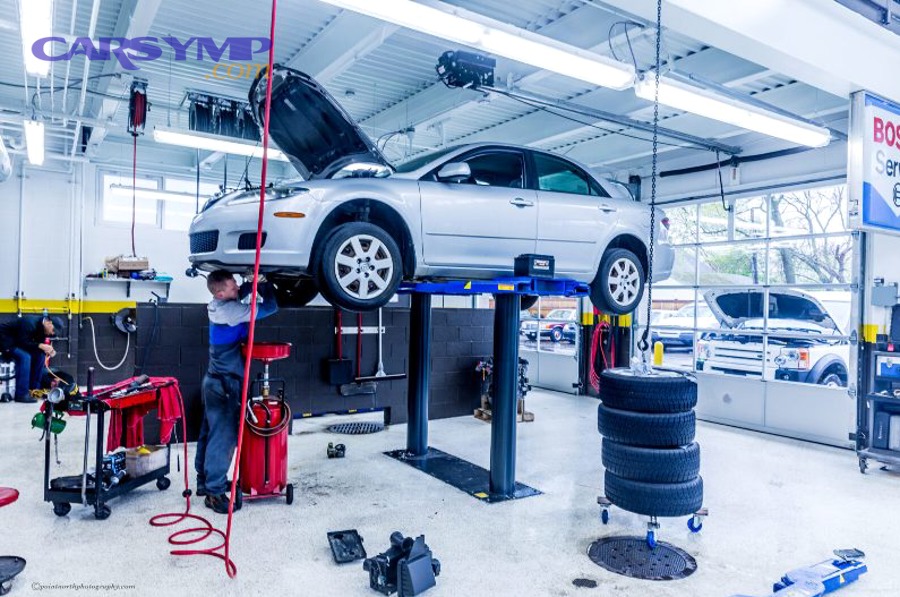
Is the labor rate the same as the total labor charge on my invoice?
No—your labor rate is only one part of the labor charge, because (1) shops bill labor hours (often flat-rate hours) that may not match clock time, (2) diagnostics can be billed separately, and (3) minimum charges and shop fees can change the final total.
More specifically, most invoices calculate labor like this:
- Labor charge = billed labor hours × labor rate per hour
- Plus diagnostic fees (if billed separately)
- Plus shop supplies / environmental fees (varies by shop)
- Plus taxes (varies by state and what is taxable)
The part that confuses people is the “billed labor hours.” Many shops don’t charge “minutes actually spent”; they charge standardized hours for a given job so estimates are consistent and predictable.
According to the AAA “Guide to Auto Repair,” shops commonly use flat-rate labor times and multiply those times by the shop’s hourly labor rate to calculate the labor charge. (aaa.com)
What’s the difference between “posted rate,” “book rate,” and “effective labor rate”?
Posted rate wins in transparency, book rate is best for consistent estimating, and effective labor rate is the most accurate way to measure what customers truly paid per billed hour after discounts and mix.
However, these terms get mixed up, so here’s a simple comparison you can apply to any estimate:
Posted rate (door rate):
- The headline hourly labor rate the shop advertises or tells you.
Book rate (flat-rate hours):
- The standardized labor time from a labor guide/software that represents an average time for an experienced technician to complete a repair.
Effective labor rate (realized rate):
- The “after everything” rate the shop actually collects per billed hour once you factor in discounts, menu pricing, and any blending across different job types.
To illustrate the difference, the table below shows what changes and what stays constant when the same repair is priced using different approaches.
| Pricing concept | What it describes | What the customer sees | What can change it |
|---|---|---|---|
| Posted rate | Headline price per hour | “$X/hr” on estimate | Shop positioning, region, overhead |
| Book/flat-rate hours | Standardized time for the job | “Labor: Y hours” | Labor guide choice, job complexity |
| Effective labor rate | Collected revenue ÷ billed hours | Not always shown | Discounts, bundles, mix of work |
A key takeaway is that even when the posted labor rate stays the same, the labor hours and discounts can move the final price up or down.
Do dealerships always charge more than independent shops for labor?
No—dealerships often charge more, but not always, because (1) some independents specialize in high-end brands and price accordingly, (2) dealers sometimes run competitive service specials, and (3) warranty and parts availability can shift the overall value even if the hourly rate is higher.
Meanwhile, the more useful question is not “dealer or independent,” but “what capability are you buying?” That’s where When higher labor rates are worth it becomes practical:
- You’re paying for factory-level scan tools and programming (common for late-model vehicles).
- You need ADAS calibration after certain repairs (windshield, suspension, alignment-related work).
- You want brand-specific expertise for recurring issues on a specific make/model.
According to the AAA “Guide to Auto Repair,” labor rates reflect technician pay plus a portion of the facility’s expenses, and modern diagnostic equipment can require a major investment—helping explain why higher-capability shops often price higher. (aaa.com)
How do average mechanic labor rates vary by U.S. region and state (high vs low)?
Average mechanic labor rates vary widely by region and state, with higher-cost metro areas and higher-overhead markets trending “high,” while lower cost-of-living and rural markets trend “low.”
Next, instead of memorizing one national number, you’ll get a better answer by using a comparison framework: region → state → metro vs rural → shop type → vehicle specialty.

Which regions typically have the highest and lowest labor rates—and why?
The Northeast and parts of the West often skew higher, the South and parts of the Midwest often skew lower, and the “why” usually comes down to labor costs, rent, insurance, and demand density.
Specifically, higher-cost regions tend to share these traits:
- Higher technician wage expectations
- Higher commercial rent and property costs
- Higher volume of late-model vehicles needing advanced diagnostics
- More competition on convenience and customer experience (which costs money to deliver)
Lower-cost regions tend to share the opposite traits:
- Lower overhead for facilities and staffing
- More price-sensitive markets
- Fewer specialty-only shops in some areas (though this can also raise prices in remote markets due to scarcity)
The AAA “Guide to Auto Repair” notes that auto repair labor rates can vary widely across the country and even within the same city, driven largely by the shop’s cost of doing business. (aaa.com)
How should I compare my local rate to the state average without misreading the data?
You should compare your local rate to the state average only after you match for shop type and location (metro vs rural), because a “state average” can hide big local swings.
To illustrate, a shop in a high-rent urban corridor can charge far above the state average, while a rural shop in the same state can be far below it—and both can be “normal” for their market.
Use this quick checklist to avoid apples-to-oranges comparisons:
- Compare metro to metro (or rural to rural) first.
- Compare similar shop categories (dealer vs independent vs chain).
- Compare similar service complexity (basic maintenance vs diagnostics vs specialty).
- Confirm what’s included (some shops bundle supplies/fees; others separate them).
A helpful mindset is: state averages are for orientation; your ZIP-code market is for decision-making.
Are labor rates higher in cities than in rural areas within the same state?
Yes—labor rates are usually higher in cities than rural areas within the same state because (1) facility overhead is higher, (2) technician wage competition is stronger, and (3) customer demand density supports higher pricing for convenience and faster turnaround.
Moreover, there are a few common exceptions:
- Remote scarcity markets: fewer shops and longer supply chains can push rates up despite being rural.
- Tourist or resort areas: costs behave “city-like” even outside major metros.
- Specialty hubs: a rural-area specialty diesel or off-road shop may price above a nearby metro generalist.
As a reality check, the AAA “Guide to Auto Repair” explicitly notes that rates can vary “even within the same city,” which implies the same logic holds within a state across different local markets. (aaa.com)
What factors drive higher or lower mechanic labor rates in a given area?
There are 6 main drivers of mechanic labor rates—technician labor costs, facility overhead, equipment and software costs, service complexity, market demand, and shop positioning—because the hourly rate must cover both labor and the business costs of delivering reliable repairs.
In addition, once you understand the drivers, you’ll also understand Why labor rates vary by specialty, which is often the hidden reason a “simple” number isn’t comparable across different kinds of shops.

Which shop-level costs most strongly influence hourly labor rates?
The biggest shop-level costs that shape labor rate per hour are wages/benefits, rent/mortgage, insurance, equipment/tooling, and training/software—because they’re recurring and hard to avoid.
To begin, here’s how each cost shows up in the real world:
- Technician wages + benefits: competitive pay is necessary to recruit and retain techs, especially in tight labor markets.
- Facility costs: rent, utilities, and compliance costs vary heavily by region and by neighborhood.
- Equipment and tools: modern scan tools, programming interfaces, and calibration equipment can require major investment.
- Training: late-model vehicles change fast; training is not optional if a shop wants to diagnose correctly.
- Software subscriptions: labor guides, wiring diagrams, OEM service info, and shop management tools add monthly costs.
According to the AAA “Guide to Auto Repair,” labor rates reflect technician pay plus facility business expenses, and it highlights the high cost of diagnostic tools and equipment needed to service modern vehicles. (aaa.com)
Do specialty services (European, diesel, hybrid/EV) justify higher labor rates?
Yes—specialty services often justify higher labor rates because (1) they require specialized tools and training, (2) diagnostic time is more complex and riskier, and (3) the shop’s opportunity cost is higher when a bay is occupied by specialized work.
Especially for newer hybrids/EVs and advanced driver assistance systems, the shop may need:
- OEM subscriptions and programming access
- High-voltage safety procedures and equipment
- Calibration targets and alignment-grade floors
- More time in diagnosis and verification (test plans, data capture, road tests)
This is the practical answer to Why labor rates vary by specialty: specialty is not just “branding”—it’s a different cost structure and capability set.
For context on technician labor markets, the U.S. Bureau of Labor Statistics reports the occupation’s median pay and provides state/area wage resources, which helps explain why labor cost differences across locations can pressure shop rates. (bls.gov)
Does “cheap” labor always mean lower total repair cost?
No—cheap labor does not always mean lower total repair cost because (1) inaccurate diagnosis can create repeat visits, (2) lower-capability shops may need more billed hours to reach the same outcome, and (3) parts quality and warranty terms vary.
More importantly, the total cost equation looks like this:
- Total cost = parts + (labor hours × labor rate per hour) + fees/taxes + risk premium
The “risk premium” is what you pay when a job is likely to come back due to misdiagnosis or incomplete repair.
That’s why When higher labor rates are worth it often comes down to reducing risk:
- You’re paying for a shop that can diagnose correctly the first time.
- You’re paying for warranty-backed workmanship.
- You’re paying for a process that includes verification and calibration, not just part replacement.
According to AAA guidance on repair estimates and process consistency, flat-rate estimating exists to provide fair and consistent estimates, while diagnostics can be inherently variable because troubleshooting processes differ by problem. (aaa.com)
How can car owners and shop managers use regional labor-rate benchmarks to estimate repair costs?
You can use regional labor-rate benchmarks by estimating labor cost as “billed hours × local labor rate per hour,” then comparing that total to typical market ranges and adjusting for diagnostics, shop type, and vehicle specialty.
Then, once the math is clear, the next step is communication: drivers need to ask the right questions, and shop managers need to present estimates in a way that matches how customers actually compare value.

How do I estimate a repair’s labor cost from the hourly rate and labor hours?
To estimate labor cost, multiply the billed labor hours by the labor rate per hour, then add diagnostics (if separate) and any disclosed fees.
Specifically, follow this simple 3-step method:
- Identify the billed labor hours on the estimate (often taken from a labor guide).
- Multiply that number by the shop’s hourly labor rate.
- Add diagnostic fees, shop supplies, and taxes if they apply.
Example:
- Labor hours: 2.5
- Labor rate: $150/hr
- Labor charge: 2.5 × 150 = $375
- Diagnostic fee: $120 (if separate)
- Total labor-related cost before tax/fees: $495
This is also where Flat-rate vs hourly billing explained matters: even if a technician finishes faster, the billed hours may still reflect the standardized time used for estimating.
According to the AAA “Guide to Auto Repair,” shops commonly multiply flat-rate time by the shop’s hourly labor rate to determine total labor charges. (aaa.com)
What questions should I ask a shop to confirm the labor rate and hours are fair?
To confirm the labor rate and hours are fair, ask questions that reveal the rate, the time basis, and what’s included—because fairness is mostly about transparency and fit, not just a single number.
More specifically, ask these questions in this order (it keeps the conversation constructive):
- “What is your posted hourly labor rate?”
- “Are the labor hours flat-rate/book time or actual time?”
- “Does the estimate include diagnostics, or is that separate?”
- “What’s included in shop supplies/environmental fees?”
- “What warranty do you provide on labor and parts?”
- “Is any calibration/programming required after the repair?” (especially on newer vehicles)
If the shop can answer clearly, you can compare them to your regional benchmarks with confidence.
For budgeting context, AAA notes many owners struggle to absorb maintenance and repair expenses, and it encourages saving monthly toward routine and unexpected repairs—reinforcing why clear estimates matter for decision-making.
How should shop managers set or adjust labor rates using regional benchmarks?
Shop managers should set or adjust labor rates by comparing to regional benchmarks, then aligning rate strategy with costs, capacity, and positioning—because a “market rate” is meaningless if it doesn’t cover your real overhead and technician payroll.
To illustrate, a practical rate-setting workflow looks like this:
- Step 1: Benchmark your market. Compare your current door rate to local competitors and broader region/state patterns (high vs low).
- Step 2: Know your effective rate. Track what you actually collect per billed hour after discounts and menu pricing.
- Step 3: Align with shop capability. If you invest in diagnostics, programming, and specialty tooling, price accordingly—and explain the value.
- Step 4: Protect retention. Rates that can’t support technician pay and training will create turnover, which quietly destroys productivity and quality.
A useful workforce signal: the U.S. Bureau of Labor Statistics reports the occupation’s median pay and provides state and area wage resources, which can help shops anticipate wage pressure and adjust rates strategically. (bls.gov)
What hidden or separate fees can change the “real” hourly cost of repair (beyond the posted labor rate)?
Hidden or separate fees can raise the “real” cost beyond the posted labor rate because diagnostics may be billed separately, shop supplies and environmental charges may apply, and some shops use tiered pricing (a labor matrix) rather than one flat number.
In addition, seeing these line items clearly is the fastest way to stop feeling like the quote is “mysteriously higher” than expected—because most surprises are simply unrecognized categories.

What is the difference between a diagnostic fee and a labor rate—and should they be separate?
A diagnostic fee pays for structured troubleshooting, while a labor rate pays for repair execution; they should be separate when diagnosis is uncertain or time-variable, but bundled when the job is standardized and predictable.
More specifically, diagnostics often include:
- Scan tool data capture and interpretation
- Pin testing, wiring checks, and service information research
- Road testing and verification
- Developing a repair plan (not just “guessing a part”)
The AAA “Guide to Auto Repair” explains that diagnostic work often does not fit flat-rate estimating well because each troubleshooting process is unique, so shops may quote a basic diagnostic charge with a time limit and then request authorization for additional diagnostic time if needed. (aaa.com)
How do “shop supplies,” environmental fees, and disposal charges affect the final bill?
Shop supplies and environmental/disposal charges affect the final bill by adding small, itemized costs for consumables and regulated waste handling—often as a percentage or capped fee—so the invoice can rise even when the labor hours are unchanged.
For example, these fees commonly cover:
- Gloves, rags, cleaners, lubricants, thread locker
- Brake cleaner and chemicals
- Used oil, coolant, and parts disposal procedures
If you want to evaluate fairness, the best approach is not “are fees allowed,” but “are fees disclosed and reasonable for the job size?”
Do mobile mechanics have lower hourly rates than repair shops?
Yes—mobile mechanics often advertise lower hourly rates because (1) they can run with lower facility overhead, (2) they focus on a narrower menu of services, and (3) they may price travel and convenience differently than a shop.
However, the total cost can still be higher when you factor in:
- Travel/service-call fees
- Limits on diagnostics and programming
- Limits on lifts, alignment, and calibration capabilities
- The risk of needing a shop anyway for certain jobs
So the practical rule is: mobile service can be a value win for standardized maintenance, but not always for complex diagnostics.
What is a labor matrix (tiered labor pricing), and why do some shops use it?
A labor matrix is a tiered pricing system where a shop charges different labor rates for different job categories, because quick standardized services, complex diagnostics, and high-risk calibrations don’t consume the same resources or require the same expertise.
More specifically, a shop may set tiers like:
- Maintenance tier: oil service, basic replacements
- Mechanical tier: brakes, suspension, cooling system
- Diagnostic tier: electrical, drivability, intermittent faults
- Programming/calibration tier: modules, keys, ADAS calibration
This is another place where Flat-rate vs hourly billing explained becomes essential: a matrix changes the “one number” expectation, but it can be fair if the shop explains what tier your repair falls into and why.
Evidence: According to a report by the University of Vermont from the Vermont Legislative Research Service, in December 2024, flat-rate systems pay technicians based on predetermined times and may not compensate additional hours when jobs take longer—one reason pay structure and billing structure can become a policy and transparency issue for the industry. (uvm.edu)
Evidence: According to a report by the University of Vermont from the Vermont Legislative Research Service, in December 2024, the District of Columbia had a mean hourly wage of $31.44 for automotive service technicians and mechanics, while West Virginia had $18.28, illustrating how labor-cost differences by area can feed into regional pricing pressure. (uvm.edu)
Evidence (supporting sources used)
- AAA “Guide to Auto Repair” explains labor-rate drivers, flat-rate estimating, and diagnostic fee logic. (aaa.com)
- U.S. Bureau of Labor Statistics provides occupational pay context and state/area wage resources for automotive technicians. (bls.gov)
- University of Vermont (Vermont Legislative Research Service) summarizes flat-rate pay mechanics and cross-state wage differences relevant to labor-cost pressure. (uvm.edu)
- AAA budgeting guidance highlights consumer budgeting pressure for repairs, reinforcing why transparent estimates matter.
- A regional association survey example (Oregon) shows labor-rate movement over time in a specific market. (aftermarketmatters.com)