Calculate the Hourly Labor Rate (Labor Rate per Hour): Definition, Fully-Burdened Formula & Pricing Examples for Contractors and Small Businesses
Knowing a labor rate per hour is the fastest way to predict your real car service cost before you approve a repair, because labor is usually the largest “variable” line item on an estimate. In this guide, you’ll learn how to calculate an hourly labor rate from the numbers you can see (or request) and how that rate translates into what you pay.
Next, you’ll get a clear definition of what a labor rate is and what it isn’t, so you can tell the difference between an hourly wage, a shop’s posted rate, and the “book time” used in modern estimating systems. That clarity helps you spot inflated time, missing details, or mismatched pricing logic.
Then, you’ll learn a practical method to estimate a fully burdened labor rate (the shop’s true labor cost) and understand why it matters for pricing—especially when you’re Negotiating and comparing repair quotes between a dealership, an independent shop, and a specialist.
Introduce a new idea: once you understand the math behind labor rates, you can read any estimate with confidence, decide When higher labor rates are worth it, and avoid the most common billing traps—without guessing.
What is a labor rate per hour (hourly labor rate)?
A labor rate per hour is the shop’s hourly price used to convert estimated labor time into a labor charge, and it reflects technician pay plus the business costs required to perform safe, consistent repairs. Next, because labor rates can mean different things to customers and shops, it helps to separate what you’re paying for from how a technician is paid.

What costs are included in an hourly labor rate (and what is excluded)?
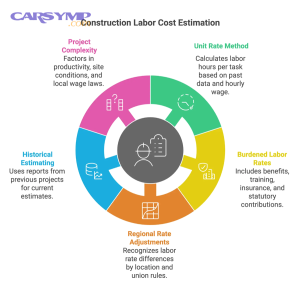
There are 3 main buckets that explain What labor rate includes: (1) technician compensation, (2) labor burden, and (3) shop overhead—based on whether the cost is required to employ a tech and keep the repair operation running.
Then, to make that practical for estimate-reading, use this breakdown:
Included in (or supported by) the labor rate
- Technician compensation: wage or flat-rate pay equivalent, training time, skill premium for diagnostics
- Labor burden: payroll taxes, paid time off, workers’ comp, health/retirement benefits, uniforms
- Shop overhead: service writer/admin time, rent/mortgage, utilities, scan tools, lifts, calibration tools, software subscriptions, waste handling, insurance, compliance
Usually excluded (often separate line items)
- Parts and fluids (and parts markup)
- Shop supplies (sometimes separate: “supplies” or “materials”)
- Disposal/environmental fees (oil, tires, refrigerant handling)
- Towing and some sublet services (alignments, programming, glass)
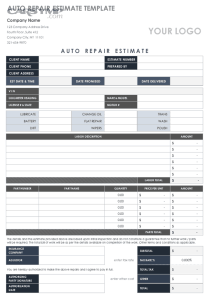
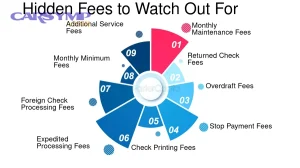
To illustrate how this shows up on a real estimate, focus on the labor section and the “misc” lines that sit near it—those are where Hidden fees to watch for often appear.
Is labor rate per hour the same as hourly wage?
No—labor rate per hour is not the same as an hourly wage, because the labor rate funds (1) the technician’s pay, (2) the labor burden costs, and (3) the overhead required to deliver the repair safely and consistently. Then, once you stop equating “rate” with “wage,” estimate math becomes clearer: you’re paying for a repair capability (tools, process, warranty, expertise), not just the hands-on minutes.
Here’s a simple example that shows why the numbers diverge:
- A technician might earn $35/hour (wage)
- The employer may add labor burden (taxes/insurance/benefits) that pushes the true employment cost higher
- The business must also cover overhead (facility, equipment, admin)
- The posted/customer rate can easily be 2–4× the wage in many markets, especially for diagnostics and specialty work
That’s also why a shop can quote the same posted rate even though two technicians have different pay structures.
How do you calculate a fully burdened labor rate per hour?
To calculate a fully burdened labor rate per hour, add total labor compensation + labor burden + allocated overhead, then divide by realistic productive hours so you get a true hourly cost that supports accurate pricing and sustainable repairs. Then, because “productive hours” is where most people miscalculate, you’ll want a step-by-step method you can repeat.

What is the standard formula for fully burdened labor rate per hour?
A standard formula is:
Fully Burdened Labor Rate ($/hr) = (Annual Wages + Annual Labor Burden + Annual Overhead Allocation) ÷ Annual Productive Hours
Next, here’s what each variable means in plain terms:
- Annual Wages: total pay you want to fund for technicians (or for yourself if you’re an owner-operator)
- Annual Labor Burden: payroll taxes, benefits, workers’ comp, PTO, training, uniforms
- Annual Overhead Allocation: the shop cost to operate (rent, utilities, tools, admin, software, insurance)
- Annual Productive Hours: hours actually available to bill or apply to jobs (not just hours on payroll)
This formula is consistent with how labor burden is described as the “true cost” of employing a worker beyond base pay. (velocityglobal.com)
How do you estimate productive hours (billable/chargeable hours) correctly?
Yes—productive hours matter because (1) not every paid hour is billable, (2) interruptions reduce wrench time, and (3) warranty/comebacks consume capacity without adding revenue. Then, to avoid underestimating your true hourly cost (or misunderstanding a shop’s rate), apply a realistic hours model.
A practical approach for a single full-time tech:
- Start with paid hours: 40 hours/week × 52 = 2,080 hours/year
- Subtract non-productive time: holidays, PTO, meetings, training, cleanup, tool setup
- Subtract operational drag: waiting on parts, approvals, interruptions, test drives, documentation
- Estimate realistic utilization: many shops treat 60–80% as a working range depending on role and workflow
For customers reading a quote, this matters because a shop’s posted rate has to cover all that non-billable time, too—especially in diagnostics-heavy work.
How do you calculate labor burden (taxes, insurance, benefits) per hour?
There are 4 main types of labor burden costs—payroll taxes, benefits, paid time off, and insurance—because they’re recurring costs directly tied to employing a technician. Then, to convert them into an hourly burden, you translate annual burden into “per productive hour” terms.
Step-by-step burden conversion
- Add annual burden items (example categories below)
- Divide by annual productive hours
- Add that $/hr burden to the base wage to see the true labor cost before overhead
Typical burden categories
- Payroll taxes
- Health insurance and retirement benefits
- Paid time off and holiday pay
- Workers’ compensation insurance
This aligns with common labor burden definitions and calculation logic used in workforce cost modeling. (velocityglobal.com)
Evidence: According to a study by The University of Texas at Austin from the Center for Transportation Research, in 2009, maintenance cost modeling for heavy vehicles included measurable per-mile maintenance costs that vary by operating context, showing why accurate cost accounting matters when you translate labor and maintenance into real operating expenses. (library.ctr.utexas.edu)
How do you turn your labor rate into what you should charge per hour?
To turn a labor cost into what you should charge per hour, calculate your true hourly cost and then add margin for profit, reinvestment, and risk so the rate supports consistent quality, warranty coverage, and tool/technology upgrades. Then, because customers see only the final number, it’s useful to understand the pricing logic that shapes it—especially when you’re comparing shops.

What markup should you add to a labor rate to set an hourly charge-out rate?
There are 3 common markup approaches for setting an hourly charge-out rate: (1) cost-plus target margin, (2) market-anchored pricing, and (3) tiered/matrix labor pricing—based on how the shop balances sustainability and competitiveness. Then, because “markup” can be misunderstood, treat these as strategies rather than one magic percent.
1) Cost-plus target margin
- Compute true hourly cost (wage + burden + overhead ÷ productive hours)
- Add a target margin for profit and reinvestment
- Best when you want pricing that is defensible and repeatable
2) Market-anchored pricing
- Use local competition and customer expectations as a reference point
- Adjust operations if your cost-based number is far above market
- Best in high-competition areas where customers call multiple shops
3) Tiered/matrix pricing
- Different labor rates for different tasks (maintenance vs diagnostics vs specialty)
- Helps align price with complexity and tool investment
- Often used to make simple services feel fair while protecting margins on complex work
In collision/repair industry reporting, labor rate growth is frequently discussed as a driver of total repair cost changes, which is why shops refine pricing systems over time. (cccis.com)
What’s the difference between markup and margin when pricing labor?
Markup wins for “how much you add,” while margin is best for “what you keep,” because markup is calculated on cost and margin is calculated on the final price. Then, since labor pricing mistakes often come from mixing these terms, a simple example prevents undercharging.
Example
- True labor cost = $100/hr
- If you add 50% markup, price = $150/hr
- Margin on $150 is $50 ÷ $150 = 33% margin
So if you want a 50% margin, you can’t just add 50% markup—you need a higher price. This one distinction can change your total car service cost dramatically over a multi-hour job.
Should you use different hourly rates for different roles or crews?
Yes—different rates often make sense because (1) skill levels vary, (2) specialty tools/software costs differ, and (3) diagnostics time behaves differently than routine maintenance time. Then, when you look at a repair quote, role-based pricing helps explain why the same shop charges one rate for brakes and a higher rate for advanced diagnostics.
Common role/task-based structures:
- Maintenance rate (predictable jobs, lower complexity)
- Mechanical/repair rate (moderate complexity)
- Diagnostic/specialty rate (advanced troubleshooting, programming, ADAS calibration)
- European specialist rate (often higher due to tooling, training, and parts workflows)
This is also the simplest explanation for Why labor rates vary by specialty: the shop’s capability costs are not equal across every type of work.
What are common labor rate per hour examples for contractors and small businesses?
There are 3 practical examples that show how hourly labor rate math works—solo operator, small crew, and mixed time (travel/admin/callbacks)—because these scenarios cover the most common ways labor gets priced and billed. Then, once you see the numbers, you can interpret an estimate without guessing whether the quote is structurally fair.
Before the examples, here’s a quick table to show what you’re “paying for” inside a labor rate. This table is a component map you can use when How to read a labor estimate line-by-line.
| Component | What it covers | Where you’ll see it |
|---|---|---|
| Technician pay | wages or flat-rate equivalent | rarely itemized; embedded in rate |
| Labor burden | taxes, benefits, PTO, workers’ comp | embedded in rate |
| Overhead | building, tools, software, admin, insurance | embedded in rate |
| Profit & reinvestment | growth, warranty risk, equipment upgrades | embedded in rate |
| Fees (sometimes separate) | supplies, disposal, shop fees | may appear as separate lines |
Example: How do you calculate a solo contractor’s fully burdened hourly rate?
A solo operator can calculate a fully burdened hourly rate by totaling annual personal compensation needs, adding annual burden/overhead costs, and dividing by realistic productive hours to produce a defensible charge-out rate. Then, to connect that to a small auto service business, think of the “solo operator” as a mobile mechanic or a one-tech independent shop.
Scenario (illustrative numbers)
- Target personal pay: $80,000/year
- Burden-like costs: $12,000/year (insurance, PTO planning, taxes/fees equivalents)
- Overhead: $30,000/year (tools, subscriptions, vehicle, rent portion, phone, admin)
- Productive hours: 1,300/year (after non-billable time)
Fully burdened cost per hour
($80,000 + $12,000 + $30,000) ÷ 1,300 ≈ $94/hr cost
To stay in business, the operator then prices above that cost (profit + reinvestment + risk). That’s why a “posted rate” can be materially higher than a wage.
Example: How do you calculate a small crew’s blended labor rate per hour?
A small crew’s blended labor rate combines role-specific wages and burden costs, allocates overhead across crew-hours, and produces one average “crew-hour” cost that simplifies estimating for multi-person jobs. Then, in an auto shop context, this resembles blending rates across A-techs and B-techs or averaging bay utilization across multiple lifts.
Illustrative blending
- Tech A cost (wage+burden): $55/hr
- Tech B cost (wage+burden): $40/hr
- Overhead allocation: $35/hr per productive hour across the shop
- Blended “effective cost”: average labor + overhead
This method explains why two shops with the same posted rate can have very different profitability: the internal mix and overhead efficiency decide the true cost.
Example: How do you price labor when travel time, admin time, or callbacks exist?
There are 3 fair ways to price mixed time: (1) bill those hours explicitly, (2) embed them into the hourly rate via utilization, or (3) package them into a fixed diagnostic or service fee—based on how predictable the time is. Then, this is where quote comparisons often go wrong, because one shop itemizes time while another hides it in the rate.
Option 1: Itemize
- Travel, admin, and diagnostic time appear as separate lines
- Great for transparency during Negotiating and comparing repair quotes
Option 2: Embed
- Higher posted rate covers “lost time”
- Quotes look simpler, but comparisons are harder
Option 3: Fixed fees
- Common for diagnostics or inspections
- Works best when the shop has consistent process
This is also where a resource like carsymp.com can help consumers build a checklist of questions to ask, so you compare quotes based on the same assumptions rather than just the final total.
What mistakes cause contractors and small businesses to underprice labor per hour?
Underpricing usually happens because (1) productive hours are overestimated, (2) burden/overhead is missing or double-counted, and (3) profit and risk are treated like “optional” add-ons even though they fund warranty and capability. Then, whether you’re a shop owner setting rates or a driver judging an estimate, these mistakes show up as confusing labor lines and surprise charges.
Are you accidentally using paid hours instead of productive hours?
Yes—this mistake is common because (1) payroll hours are easy to count, (2) non-billable time is invisible, and (3) modern repairs include research and documentation that reduce pure wrench time. Then, the fix is simple: estimate utilization honestly and build your labor rate (or your evaluation of a quote) around that reality.
Customer-side signal:
- The shop’s posted rate looks “high,” but the shop is busy and has strong warranty policies
- The estimate time seems reasonable, but the hourly rate feels inflated
That often indicates the shop is covering real non-billable workload (diagnostics, tooling, admin).
Are you double-counting (or missing) overhead and burden categories?
Yes—double-counting happens because (1) some expenses look like “supplies” and “overhead,” (2) insurance can appear in multiple places, and (3) vehicles/tools can be split across personal and business use. Then, to keep your math clean, map each cost to exactly one bucket: wage, burden, overhead, or fees.
Customer-side signal:
- A quote includes a high labor rate and multiple add-on fees with vague names
This is where Hidden fees to watch for matters: ask what each fee covers and whether it duplicates overhead already embedded in the labor rate.
Is your hourly rate ignoring profit, risk, and capacity constraints?
Yes—ignoring profit is risky because (1) warranty work costs time, (2) modern vehicles require expensive tools and software, and (3) capacity constraints force prioritization, which changes pricing. Then, if a shop cannot reinvest, quality drops over time—even if the rate looks “cheap” today.
This is also the logic behind When higher labor rates are worth it: if a higher rate buys stronger diagnostic capability, OEM-level procedures, better warranty terms, or specialty expertise, the total cost can be lower because you avoid repeat visits.
How does labor rate per hour compare to billable rate, shop rate, and prevailing wage?
Labor rate wins for calculating repair labor charges, billable rate is the customer-facing pricing output, and shop rate is the posted hourly number that often varies by work type, because each term describes a different layer of estimating and pricing. Then, once you understand these terms, you can compare a dealership quote to an independent quote on equal footing.
What is the difference between labor rate per hour and billable rate per hour?
Labor rate per hour is the hourly “engine” used in estimating systems, while billable rate per hour is the final price you’re charged after the shop applies its pricing strategy . Then, this distinction matters most when a shop quotes a flat-rate job: the time may be fixed, but the rate still controls the final labor charge.
AAA explains that many shops use flat-rate manuals (book time) and then multiply that flat-rate time by the shop’s hourly labor rate to produce the labor charge. (aaa.com)
To make that comparison concrete, here’s what Flat-rate vs hourly billing explained looks like:
- Flat-rate (book time): labor hours are predetermined for the job; your price doesn’t change if the tech finishes faster or slower
- Straight time (hourly billed): you pay for the actual time spent (more common for complex diagnostics or unusual jobs)
What is a shop rate and when should it differ from field labor rates?
A shop rate is the posted hourly labor rate used to price work in that facility, and it should differ when the cost and complexity differ across work types (routine maintenance vs diagnostics vs specialty programming). Then, if you see multiple rates on one quote, that can be a sign of a more accurate pricing model—not automatically a ripoff.
Common “rate tiers” you may see:
- Maintenance rate
- Mechanical repair rate
- Diagnostic/electrical rate
- Programming/calibration rate (often highest due to tooling)
Does prevailing wage or union pay change how you calculate labor rate per hour?
Yes—prevailing wage or union structures can change your labor cost math because (1) base pay floors rise, (2) fringe benefits and classifications become formalized, and (3) compliance/administrative time increases. Then, while most consumer auto repair isn’t priced like public-works contracts, the principle is the same: wage structure changes the fully burdened cost, which can change the posted rate.
Should you match market averages or price from your own costs?
Cost-based pricing wins for sustainability, market-based pricing is best for competitiveness, and hybrid pricing is optimal when you must stay profitable while meeting local expectations. Then, the practical answer is: know both numbers—your cost-based minimum and your market-based reality.
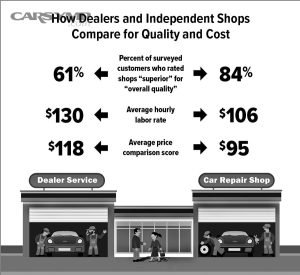
To help with the “market side,” sources like AAA describe labor rates varying widely (including ranges from under $100 to over $200 per hour depending on location and shop type). (aaa.com)
And for a quick consumer-facing lens, here’s a simple comparison table you can use for Dealer vs independent labor rate comparison and for thinking through Why labor rates vary by specialty (this table summarizes typical patterns, not guarantees):
| Shop type | Typical strength | Typical tradeoff | Best fit |
|---|---|---|---|
| Dealer | OEM tools/procedures; brand expertise | Often higher posted rate | Warranty work, brand-specific issues |
| Independent generalist | Price/value balance | May sublet rare programming | Maintenance + common repairs |
| Specialist (e.g., Euro) | Deep platform expertise | Higher rate can be normal | Complex issues on specific makes |
If you’re specifically comparing Labor rate for European vs domestic cars, it’s common to see higher rates at European specialists because tooling, training, and parts workflows can be more demanding—so the “expensive shop” can be the cheaper outcome if it reduces misdiagnosis.
Evidence (if any)
According to a study by The University of Texas at Austin from the Center for Transportation Research, in 2009, vehicle operating-cost modeling quantified maintenance costs in ways that vary by operating context, reinforcing that labor and maintenance costs are real, measurable drivers that must be accounted for accurately when translating time and work into pricing. (library.ctr.utexas.edu)
According to a study by Texas A&M University from the Texas A&M Transportation Institute, in 2014, fleet cost guidance emphasized operating-cost drivers and structured cost allocation methods, supporting the idea that labor pricing must reflect true costs rather than only visible wages. (static.tti.tamu.edu)