


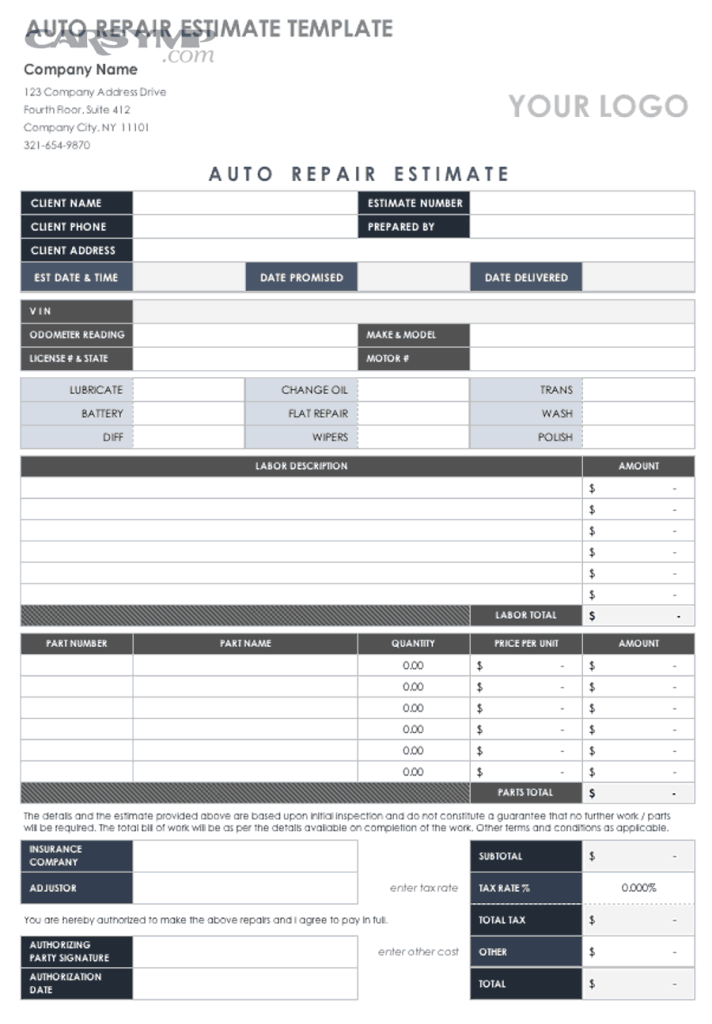
Paying a higher shop rate is worth it when it reduces total risk and total cost, not when it simply raises the bill—because the real question is whether a higher labor rate per hour buys you better diagnostics, better execution, and fewer repeat repairs than a cheaper option.
Next, the smartest way to judge “premium” is to look for value signals you can verify—process, documentation, tools, warranty terms, and clarity—so you’re not paying extra for a nicer lobby or a vague promise.
Then, comparing premium vs cheaper only works when you compare the same scope: identical parts quality, the same labor operations, and the same billing model—because a lower hourly number can still produce a higher final invoice.
Introduce a new idea: once you can decide when to pay more, you can use a simple checklist to evaluate quotes and avoid the most common traps that make “cheap” repairs expensive.
Are premium mechanic labor rates worth it for most car owners?
Yes—premium mechanic labor rates can be worth it for most car owners because they (1) reduce misdiagnosis and repeat visits, (2) improve repair quality on complex systems, and (3) protect you with stronger documentation and warranty support.
Next, the key is to match the shop’s capability to the job’s risk—because the “best” rate depends on what you’re trying to prevent.

A higher hourly rate makes sense when the job has high consequence (safety, reliability, expensive components) or high uncertainty (intermittent faults, multiple possible causes). In those cases, “cheap” often becomes expensive through delays, guesswork, and parts replaced that did not fix the root problem.
Here’s the simplest mental model:
- Premium is worth it when it lowers your total cost of ownership over the next 6–18 months.
- Cheaper is fine when the job is routine, well-defined, and easy to verify (and the shop is transparent).
To keep your decision grounded, focus on three practical outcomes:
- First-time fix rate (fewer comebacks): A shop that verifies root cause and validates the repair reduces the chances you pay twice.
- Diagnostic accuracy: Proper testing prevents “parts cannon” repairs—replacing multiple parts until the symptom changes.
- Quality control and validation: Test drives, scan reports, measurements, and re-checks catch issues before you pick up the car.
According to a study by the U.S. Department of Transportation from the Auto Repair and Maintenance Task Force, in 1979, consumers lost about $20 billion annually due to improper or unnecessary repair and maintenance practices. (This is an older figure, but it illustrates why avoiding wrong repairs can outweigh saving a little per hour.)
Is paying more per hour worth it when the repair affects safety or reliability?
Yes—paying more per hour is worth it for safety or reliability repairs because (1) precision matters, (2) quality parts and procedures reduce failure risk, and (3) validation protects you from dangerous “almost fixed” outcomes.
Then, treat safety work like aviation: you want correct diagnosis, correct torque/fitment, and documented verification.
Safety and reliability categories where the “premium” decision often pays off:
- Brakes (hydraulics, ABS issues, pulsation, uneven wear): A higher-skill shop is more likely to measure rotor thickness/variation correctly, identify seized calipers, and confirm brake balance.
- Steering and suspension (clunks, instability, uneven tire wear): Proper diagnosis includes checking bushings, ball joints, tie rods, and performing alignment verification—not just replacing the loudest part.
- Cooling system and overheating: Correct diagnosis distinguishes a thermostat issue from fan control, water pump, head gasket symptoms, or coolant leaks that only appear under pressure.
- Timing-related engine work: The penalty for a wrong call is huge—mis-timed components can cause severe engine damage on many vehicles.
- Tires and vibration (safety + drivability): A shop with road-force balancing and alignment printouts can prevent repeated tire replacement.
A practical rule: if a failure could cause a crash, a breakdown, or engine damage, prioritize capability over the lowest quote.
Is a higher labor rate worth it when you’re chasing an intermittent or hard-to-diagnose problem?
Yes—a higher labor rate is worth it for intermittent problems because (1) testing time matters, (2) better tools find root causes faster, and (3) correct diagnosis prevents unnecessary parts replacement.
Moreover, intermittent faults reward process: data capture, reproduction steps, and proof-based conclusions.
Intermittent issues that benefit from premium diagnostics:
- Random misfires, stalling, “sometimes” no-start
- Electrical drain (battery keeps dying)
- Sporadic warning lights (ABS, traction control, ADAS warnings)
- Noise/vibration that changes by speed, load, temperature
- HVAC problems that come and go
Premium shops tend to invest in:
- OEM-level scan tools or software subscriptions
- Oscilloscopes, smoke machines, pressure transducers
- Data logging and structured test plans
That investment is exactly what you’re buying when the rate is higher—if the shop actually uses it and documents it.
What does “premium labor rate” actually mean on a repair estimate?
A premium labor rate is a higher posted shop charge per labor hour that reflects a shop’s operating costs, technician skill, and diagnostic capability—and it only matters when it changes the final outcome or total bill.
To better understand it, separate “rate” from “hours,” because both determine what you pay.
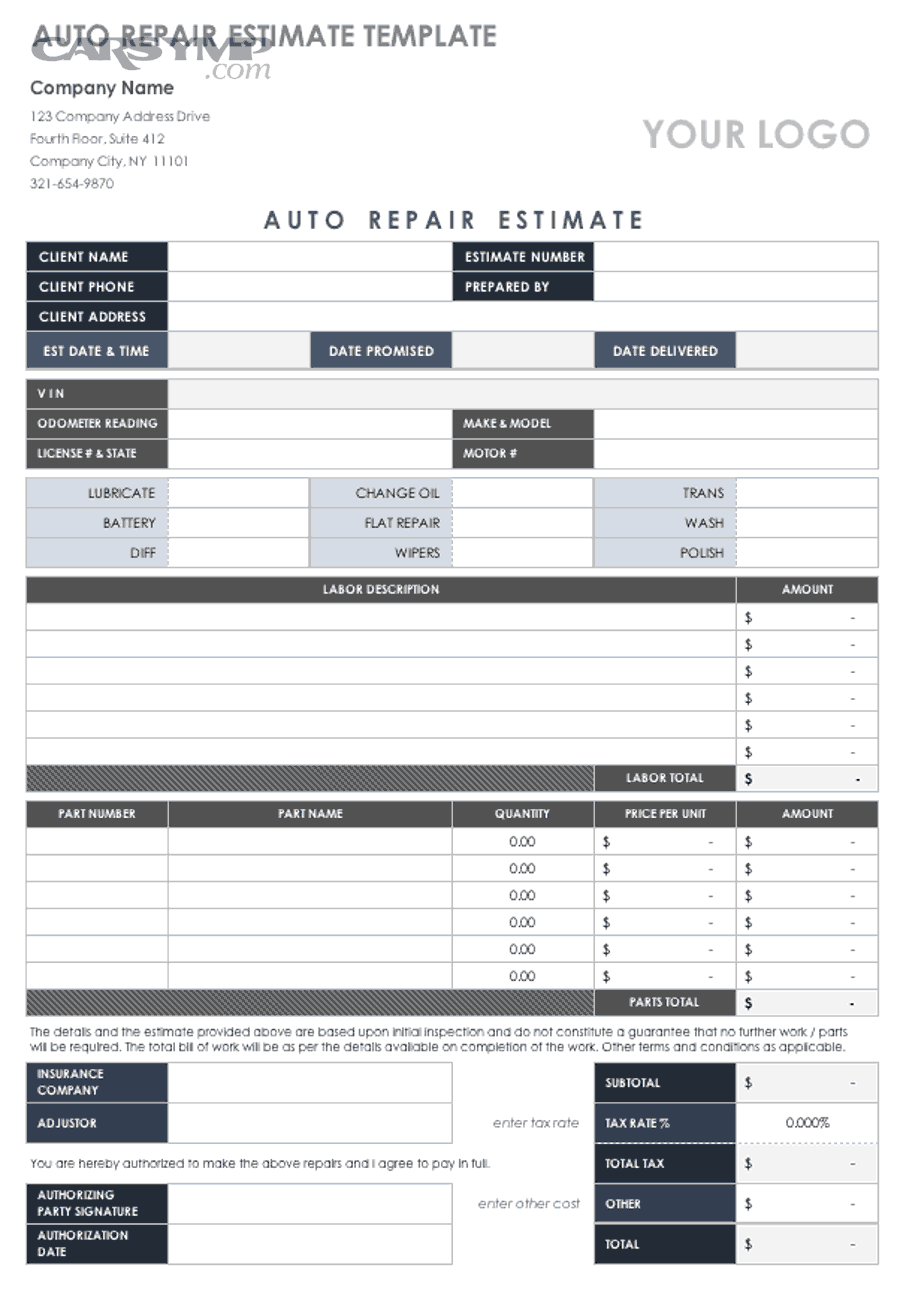
A repair estimate typically combines:
- Labor (rate × hours)
- Parts (price and markup)
- Fees (shop supplies, disposal, sublet services, etc.)
- Taxes (often on parts and some fees; varies)
Two shops can show the same final price with different structures:
- Shop A: lower labor rate, more hours, higher parts markup
- Shop B: higher labor rate, fewer hours, lower markup, better warranty
This is why “How to read a labor estimate line-by-line” matters: you’re not evaluating a single number—you’re evaluating a system.
How to read a labor estimate line-by-line (quick method):
- Identify the concern (the symptom or requested service).
- Find the labor operations (diagnosis, remove/replace, calibration, programming).
- Check labor hours (are they book hours, actual time, or a flat package?).
- Check the parts list (brand/quality tier, quantity, warranty).
- Check add-ons (shop supplies, disposal, sublet, environmental fees).
- Check warranty terms (months/miles, parts and labor coverage, exclusions).
- Check documentation (scan report, measurements, photos, road-test notes).
A “premium” rate is justified when the shop can show a professional process behind it—especially in diagnostics and validation.
What’s the difference between flat-rate vs hourly billing explained—and why does it change “worth it”?
Flat-rate vs hourly billing differs because flat-rate charges a standardized labor time for a job while hourly billing charges actual time—and flat-rate can be cheaper for you on efficient, routine work but riskier on complex diagnostics unless the shop’s process is transparent.
However, the billing model changes how you judge value, so you should ask the shop which model they’re using for each line item.
Flat-rate basics:
- The shop charges a “book” time for a repair operation.
- If the technician is efficient, the job may finish faster than the billed time.
- If complications arise, some shops still charge book time; others add time with approval.
Hourly basics:
- The shop bills actual time spent.
- Diagnostic work is often billed hourly because it’s uncertain by nature.
- The quality of notes and proof matters a lot.
Where it affects “worth it” most:
- Diagnostics: Hourly diagnostic time is reasonable if the shop provides test results and a clear conclusion.
- Routine replacement work: Flat-rate can be fair if the scope is clear and parts quality is comparable.
If you feel confused by the estimate, ask for a one-sentence summary for each labor line: “What test or procedure does this pay for, and what proof do I get at the end?”
What “hidden fees to watch for” can make a cheaper shop cost more overall?
There are 6 common hidden-fee categories to watch for: shop supplies, disposal/environmental fees, diagnostic add-ons, sublet services, inflated parts packages, and unapproved supplemental labor—based on how shops itemize overhead and uncertainty.
Specifically, these fees aren’t automatically “bad,” but they should be disclosed, reasonable, and consistent with the job.
Hidden fees checklist (and what to ask):
- Shop supplies fee: “What does this cover, and is it capped?”
- Disposal/environmental fee: “What is being disposed (oil, coolant, tires)?”
- Diagnostic fee + separate ‘inspection’ fee: “Are these overlapping?”
- Sublet charges: “Who performs the service (alignment, calibration), and what’s the invoice?”
- Miscellaneous labor lines: “Which specific operation does this cover?”
- Parts ‘kits’ with no details: “What brand/tier, and what warranty?”
A cheaper shop becomes expensive when it’s unclear and reactive. A premium shop becomes worth it when it’s clear and proactive.
Which repair jobs justify a higher labor rate most often?
There are 4 main types of repairs that justify a higher labor rate most often: (1) software/programming-related, (2) calibration/precision-related, (3) complex diagnostics, and (4) high-risk mechanical work—based on consequence, uncertainty, and tooling requirements.
Next, you can map your job into one of these groups to decide whether paying more per hour is rational.

To make the grouping practical, here’s a table that shows what “premium” buys you and when it matters.
This table contains common repair categories, what makes them difficult, and the capability signals you should expect from a higher-rate shop.
| Repair category | Why it can justify premium labor | Capability signals to look for |
|---|---|---|
| Programming / modules | Wrong coding can cause new faults | OEM scan access, coding notes, before/after scan report |
| ADAS calibration | Small misalignment can affect safety features | Calibration equipment, documented procedure, printouts |
| Intermittent electrical | Symptoms hide unless tested correctly | Data logging, scope/smoke tests, clear test plan |
| Timing/engine internal | High consequence if done wrong | Experienced tech, torque specs, parts quality proof, warranty |
According to a study by AAA Automotive Engineering (in a 2018 analysis of repairs involving advanced safety features), minor collisions affecting ADAS can drive repair costs far higher than similar damage on vehicles without those systems, showing how complexity increases the stakes of “getting it right.”
Which repairs require specialized tools or programming that lower-rate shops may not have?
There are 5 common repair areas that require specialized tools or programming: module replacement, key/immobilizer work, ADAS calibration, EV/high-voltage service, and manufacturer-specific diagnostics—based on software access and equipment needs.
Then, the question becomes: does your shop have proof of access and procedure?
Examples where tool access matters:
- Module replacement and coding (ECU, ABS, BCM, transmission control modules)
- Security systems and key programming (often requires manufacturer authorization)
- ADAS calibration after windshield replacement, bumper work, alignment changes
- EV systems (high-voltage safety, insulation checks, battery service procedures)
- Brand-specific functions (software updates, relearns, guided tests)
This is also where Why labor rates vary by specialty shows up in real life. A general shop may be excellent at brakes and suspension but not set up for OEM coding or EV procedures.
Which jobs benefit from higher-skill diagnostics and quality control processes?
There are 6 job types that benefit most from higher-skill diagnostics and quality control: drivability faults, electrical drains, HVAC performance issues, noise/vibration, repeated warning lights, and post-repair validation work—based on testing depth and verification needs.
Moreover, these are the jobs where paying for a structured process saves money.
What “quality control” looks like in practice:
- A written test plan (“We will reproduce, measure, isolate, confirm.”)
- Before/after scan reports
- Measurements and thresholds (voltage drop, pressure readings, alignment angles)
- Road test notes
- Final verification that the symptom is gone
If a shop cannot describe how it validates the fix, a high hourly rate is hard to justify.
How can you tell if the higher rate reflects higher value—not just a higher price?
You can tell a higher rate reflects higher value when the shop provides (1) verifiable proof of diagnosis, (2) a documented repair process, and (3) a clear warranty and communication standard—because those three signals predict fewer comebacks and better outcomes.
Next, use the checklist below to compare premium vs cheaper quotes on facts, not vibes.

A premium rate is not automatically “good,” but it becomes defensible when the shop can show:
- What they tested
- What they found
- Why the proposed repair addresses the root cause
- How they verify the fix
- What warranty backs the work
What proof should you ask for before approving a premium-rate repair?
There are 7 proof items you should ask for before approving a premium-rate repair: a clear problem statement, test results, before/after scan data, photos or measurements, a written scope, parts quality details, and warranty terms—based on transparency and accountability.
Specifically, this proof helps you avoid paying premium dollars for guesswork.
Proof checklist you can request politely:
- Problem statement in plain English (one sentence)
- What tests were performed (not just “we checked it”)
- What the tests showed (numbers, codes, readings)
- Before/after scan report (especially for warning lights)
- Photos/measurements where relevant (leaks, wear, corrosion, runout)
- Parts brand/tier and why chosen
- Warranty terms in writing (parts and labor, time/miles, exclusions)
If a shop is truly premium, they usually welcome this because it aligns with their process.
What shop signals predict fewer comebacks and better outcomes?
There are 8 shop signals that predict fewer comebacks: clear estimates, documented diagnostics, specialized tools, technician training, a defined QC process, strong warranty, consistent communication, and realistic timelines—based on operational maturity.
More importantly, these signals correlate with your real goal: one repair, done right.
High-value signals you can observe:
- The estimate lists labor operations clearly (no vague “misc labor”)
- The shop explains the root cause and the fix
- The shop has modern diagnostic equipment visible and used
- The service writer can summarize the plan without dodging
- The shop provides updates proactively
- The shop has a consistent warranty policy
- The shop encourages questions and provides documentation
- The shop’s reviews mention “diagnosed correctly” and “fixed first try,” not just “friendly staff”
If a shop has none of these, a high rate looks like a price premium—not a value premium.
Premium vs cheaper shops: what’s the real tradeoff for common situations?
Premium wins in diagnostic complexity, cheaper shops are best for routine maintenance, and specialty shops are optimal for brand-specific or system-specific work—because each shop type is built for different problems and different levels of uncertainty.
However, the real tradeoff is not “dealer vs independent” in general—it’s “capability match vs mismatch” for your exact repair.

Use these common situations to decide:
- Routine service (fluids, filters, brakes with clear symptoms): Cheaper can be fine if the shop is reputable and the estimate is transparent.
- Complex drivability / electrical / warning lights: Premium is often worth it because the diagnostic path matters more than the wrench time.
- Brand-specific quirks: Specialists can be the sweet spot: not dealership-priced, but equipped and experienced for that brand.
This is also where Labor rate for European vs domestic cars often shows up. European vehicles frequently require more specialized tools, more complex packaging (harder access), and more software interactions, which can push both labor time and shop rate higher. That doesn’t mean every European-car job must go to a dealer—but it does mean you should prioritize a shop with the right tooling and experience for that platform.
Dealer vs independent vs specialty: which is worth paying more for—and when?
Dealers win in OEM software access and warranty/TSB work, independents are best for cost-effective general repairs, and specialists are optimal for complex issues on specific brands—because each has different tooling, training focus, and parts workflows.
Meanwhile, price differences only matter after you confirm you’re comparing the same scope.
A grounded way to choose:
- Choose a dealer when: the car is under warranty, you need a recall/TSB-related fix, or the job requires tightly controlled OEM programming and documentation.
- Choose a reputable independent when: the job is straightforward, you want lower overhead costs, and you can verify parts quality and warranty.
- Choose a specialist when: the vehicle is European/performance/hybrid/EV or the problem is complex and recurring.
Is a higher rate still worth it if parts prices differ a lot between shops?
A higher rate is still worth it when the shop’s diagnosis and process reduce repeat repairs, but a cheaper shop can win when its parts sourcing and transparency lower the total invoice without reducing quality.
In addition, parts pricing is where many “cheap labor” quotes quietly make up margin.
How to compare parts fairly:
- Confirm whether parts are OEM, OEM-equivalent, or economy
- Ask if the shop warranties the parts and labor
- Compare whether the quote includes related items (gaskets, fluids, hardware, calibrations)
- Look for bundled “kits” that hide brand and quality
If a shop is vague about parts quality, the labor rate is not your biggest risk.
How do you make the final “worth it” decision using a simple cost-risk checklist?
You make the final “worth it” decision by using a 5-step cost-risk checklist—risk level, diagnostic uncertainty, proof quality, warranty protection, and quote comparability—so you choose the option with the lowest total downside, not the lowest sticker price.
To sum up, this checklist turns premium vs cheaper into a rational decision.
The 5-step worth-it checklist:
- Risk: What happens if this repair is wrong or fails? (safety, breakdown, engine damage)
- Uncertainty: How confident is the diagnosis? (clear failure vs intermittent symptom)
- Proof: What evidence supports the repair plan? (test results, scans, measurements)
- Warranty: What protection do you get if it’s not fixed? (terms in writing)
- Comparability: Are you comparing the same scope? (parts tier, labor operations, fees)
A simple rule that works:
- If risk + uncertainty is high, pay for capability.
- If risk + uncertainty is low, pay for transparency and fair pricing.
What questions should you ask to compare two repair quotes fairly?
There are 10 questions to compare two repair quotes fairly: scope, labor operations, hours, billing type, diagnostic policy, parts tier, warranty, fees, sublet work, and validation steps—based on apples-to-apples comparison.
Below are the exact questions that keep you in control:
- What is the exact problem statement on the repair order?
- What labor operations are included (diagnosis, R&R, programming, calibration)?
- How many labor hours are billed, and are they book time or actual time?
- Is this flat-rate vs hourly billing explained for each line item?
- Is the diagnostic fee credited if I proceed with the repair?
- What brand/tier are the parts, and what’s the warranty?
- What fees are included—any hidden fees to watch for?
- Is any work sublet (alignment, calibration), and can I see the sublet invoice?
- What validation is performed after the repair (scan, road test, measurements)?
- What is the warranty in writing, and what does it exclude?
If a shop answers these clearly, it is already acting “premium” in the ways that matter.
When should you walk away from a high labor rate—and choose a cheaper shop?
Yes—you should walk away from a high labor rate when (1) the shop can’t explain the scope, (2) it can’t provide proof of diagnosis, and (3) the warranty and documentation are weak—because the rate isn’t buying verifiable value.
Besides, many drivers overpay not because the rate is high, but because the process is unclear.
Walk-away signals:
- The estimate is vague (“repair as needed,” “misc labor,” no specifics)
- The shop refuses to state parts brand/tier
- The shop cannot describe how it diagnosed the issue
- The shop pushes expensive parts without test results
- The shop discourages questions
- The shop won’t put warranty terms in writing
And when a cheaper shop is often fine:
- Oil service, basic fluid changes, filters
- Straightforward brake pad/rotor replacement with clear wear
- Simple suspension component replacement when the failure is obvious
- Battery replacement and basic electrical checks
- Routine maintenance with documented service intervals
In short, pay premium for uncertainty and consequence, not for routine work you can verify.
Why do labor rates vary so much—and how can you benchmark a “fair” premium rate?
Labor rates vary because shops have different overhead, tooling, training, and specialization—and you benchmark a fair premium rate by comparing equal scopes (same parts tier, same operations, same warranty) rather than chasing the lowest posted number.
Next, this is where understanding the market helps you avoid both overpaying and under-buying capability.

A fair premium rate is not a universal number. It depends on:
- Local operating costs (rent, wages, insurance)
- Technician availability and skill level
- Investment in tools, scanners, calibrations, subscriptions
- Shop type (dealer, independent, specialty)
- Vehicle complexity and specialization
According to a study by AAA’s Approved Auto Repair network analysis, in 2017, posted labor rates across that network ranged from $47 to $215 per hour, showing how widely rates can vary even within one quality-focused network.
What shop costs and capabilities are you actually funding when the rate is higher?
A higher rate funds capability: trained technicians, diagnostic equipment, software subscriptions, insurance, and quality-control time—because modern cars require ongoing investment to repair correctly.
For example, the higher rate often supports the “invisible” parts of a correct repair: testing and validation.
Common premium-cost drivers:
- OEM tool subscriptions and software access
- Training and certifications
- Specialized equipment (alignment racks, scopes, smoke machines)
- Time for structured diagnostics and documentation
- Liability and insurance costs
This is the legitimate side of Why labor rates vary by specialty: a shop that invests in EV safety training or ADAS calibration equipment has a different cost structure than a quick-service shop.
How do specialty services like ADAS calibration or EV repair change labor pricing?
Specialty services raise labor pricing because they require specialized equipment, controlled procedures, and documented validation—so the labor is not just “time,” it is process and liability management.
More specifically, this is why advanced safety systems can push repair costs higher even for minor work.
A common example: windshield replacement on vehicles with camera-based safety systems. Calibration may be required, and it may add both labor steps and specialized equipment time.
According to a study by the University of Michigan Transportation Research Institute, summarized in 2020 reporting on the hidden costs of safety features, vehicles with camera-based systems can require calibration and additional procedures after repairs like windshield replacement—adding complexity and cost to what used to be simple work.
What’s a practical way to benchmark rates in your area without being misled?
There are 4 practical ways to benchmark rates without being misled: compare three written estimates, standardize parts tiers, standardize labor operations, and verify warranty/validation steps—based on apples-to-apples scope control.
Then, you can judge fairness based on what you’re actually buying.
Benchmarking steps:
- Get 3 written estimates for the same problem statement.
- Specify parts tier: OEM vs equivalent vs economy.
- Confirm the labor operations include the same steps (diagnosis, programming, calibration).
- Compare warranty terms and documentation deliverables.
If you do this, the “right” shop often becomes obvious, because the best shops are consistently clear.
What rare estimate details (coding, validation reports, sublet work) should appear when the shop is truly premium?
There are 4 rare-but-important estimate details that often appear at truly premium shops: coding/programming line items, before/after scan reports, calibration documentation, and disclosed sublet invoices—based on accountability and validation.
Especially on European and advanced-tech vehicles, these details separate premium process from premium pricing.
Look for:
- A specific labor line for programming/coding (not hidden as “misc”)
- A promised before/after scan report
- Calibration documentation for ADAS-related work
- Transparent sublet relationships with proof of what was done
When these items exist—and the shop explains them clearly—the higher rate often buys you the one thing that matters most: a correct repair the first time.