


Successfully replacing your vehicle’s shocks at home requires the right tools and strict adherence to safety protocols to prevent serious injury and ensure proper installation. DIY shock replacement demands specific hand tools including socket sets, breaker bars, and torque wrenches, along with critical lifting equipment such as a quality floor jack rated for at least 2 tons and properly rated jack stands. Beyond tools, personal protective equipment including ANSI-rated safety glasses, cut-resistant gloves, and steel-toe boots are non-negotiable requirements that protect you from compressed spring forces, falling components, and chemical exposure during the replacement process.
Understanding what specialized tools you need separates a successful DIY project from a dangerous situation. Spring compressors become essential when working with strut assemblies, while penetrating oils and rust removal tools address the reality of corroded fasteners on older vehicles. The difference between professional-grade and consumer tools directly impacts both your safety and the quality of your shock absorber replacement, particularly when dealing with torque-critical mounting bolts that secure your suspension components.
Preparing your workspace and vehicle properly creates the foundation for safe Shock replacement labor time. Environmental factors including adequate lighting, ventilation, and a flat stable surface aren’t optional considerations—they’re mandatory safety requirements. Vehicle preparation follows a specific sequence: parking brake engagement, wheel chock placement, identifying manufacturer-specified jack points, and load-testing jack stands before ever positioning yourself underneath the vehicle.
Recognizing critical safety hazards before they become emergencies protects both you and your vehicle. Compressed springs store tremendous energy that can cause severe injury if released improperly, while vehicle collapse from failed jack stands represents the most catastrophic risk in DIY automotive work. Moreover, understanding How worn shocks affect braking and tires provides context for why proper installation matters—improperly torqued shock mounts compromise handling and safety. Below, we’ll systematically cover every tool, safety measure, and procedure you need to complete this project safely and successfully.
What Tools Are Essential for DIY Shock Replacement?
DIY shock replacement requires three categories of essential tools: basic hand tools including socket sets and wrenches, specialized equipment such as spring compressors and torque wrenches, and lifting equipment including a floor jack and jack stands rated for your vehicle’s weight. To begin, you’ll need a comprehensive socket set ranging from 14mm to 21mm (or equivalent SAE sizes), a breaker bar for initial loosening of torqued fasteners, and both standard and deep-well sockets to access recessed shock mounting bolts.

What Hand Tools Do You Need to Replace Shocks?
Your basic hand tool collection must include metric and SAE socket sets covering 10mm through 24mm sizes, as shock mounting hardware varies significantly between manufacturers and vehicle types. A 1/2-inch drive ratchet provides the leverage needed for tight fasteners, while a 3/8-inch drive works well for smaller bolts and confined spaces. You’ll need combination wrenches in matching sizes for holding bolt heads while turning nuts, particularly on through-bolt shock mounts common on many vehicles.
A breaker bar between 18 and 24 inches long delivers the initial force required to break loose shock mounting bolts that may have been torqued to 70-100 ft-lbs and corroded in place for years. Dead blow hammers prevent damage to threads and mounting surfaces when persuading stubborn components, while standard ball-peen hammers help with rust removal. Needle-nose and channel-lock pliers assist with retaining clips, while pry bars carefully positioned provide leverage for component separation without damaging surrounding parts.
Penetrating oil such as PB Blaster or Liquid Wrench should be applied to all fasteners at least 24 hours before beginning work—this single step prevents countless rounded bolt heads and broken studs. Wire brushes remove surface rust from threads and mounting surfaces, ensuring accurate torque readings during reassembly. A magnetic parts tray keeps track of small fasteners, washers, and hardware that’s easy to lose in a cluttered workspace.
What Specialized Tools Are Required for Shock Replacement?
A spring compressor becomes mandatory when replacing strut assemblies where the shock absorber and coil spring form an integrated unit—attempting to disassemble these without proper compression equipment creates an extreme injury risk from sudden spring release. Coil spring compressors come in two styles: threaded rod compressors that cost $30-60 for consumer versions, and the safer but more expensive ($150-300) claw-style compressors used by professionals.
Your torque wrench represents the most critical tool for proper shock installation, as shock mounting bolts require precise torque specifications typically ranging from 65-100 ft-lbs for lower mounts and 15-25 ft-lbs for upper mounts. Click-type torque wrenches in the 25-150 ft-lb range provide audible and tactile feedback when reaching the specified torque, preventing both under-tightening that allows movement and over-tightening that damages threads or washers.
Ball joint separators or pickle forks may be required on vehicles where shock replacement necessitates disconnecting steering or suspension links, though many shock designs allow replacement without disturbing these components. A tie rod end puller provides controlled separation force without the collateral damage that hammering can cause to ball joint boots and seals. Quality penetrating oil and a propane torch (used carefully and away from fuel lines or rubber components) address severely corroded fasteners that resist normal removal methods.
What Lifting Equipment Is Necessary for Safe Shock Access?
A floor jack rated for at least 2 tons (4,000 pounds) provides the minimum lifting capacity for compact cars, while trucks and SUVs require 3-ton or larger jacks to safely handle their weight. Low-profile jacks with extended reach become necessary for lowered vehicles or those with minimal ground clearance, while high-lift jacks serve lifted trucks where standard jacks cannot reach the frame.
Jack stands rated for your vehicle’s weight represent your primary safety equipment—the jack exists only to lift the vehicle, while jack stands support it during work. Four jack stands rated for at least 3 tons each provide redundancy and stability, allowing you to work on multiple corners simultaneously or rotate work between front and rear suspension. Jack stands must contact the vehicle at manufacturer-specified support points, typically frame rails, pinch welds, or dedicated jacking pads designed to handle concentrated loads.
Wheel chocks prevent vehicle movement by blocking the wheels that remain on the ground—place chocks on both sides of at least one wheel to prevent rolling in either direction. Heavy-duty rubber or metal wheel chocks rated for your vehicle’s weight ensure they won’t slip or compress under load. Optional equipment including vehicle ramps provides alternative access for initial inspection, while a transmission jack or adjustable jackstand helps support components during removal and installation.
According to the National Highway Traffic Safety Administration, improper vehicle support during maintenance causes an average of 4,500 injuries annually in the United States, with jack failure representing the leading cause of vehicle collapse incidents.
What Safety Equipment Must You Have Before Starting?
Essential safety equipment for DIY shock replacement includes ANSI Z87.1-rated safety glasses, cut-resistant work gloves rated ANSI level A4 or higher, steel-toe boots meeting ASTM F2413 standards, and a properly ventilated workspace with adequate lighting of at least 50 foot-candles. Beyond these items, you need a fire extinguisher rated for Class B and C fires within immediate reach, a comprehensive first aid kit, and respiratory protection when working with rust, penetrating oils, or brake dust.
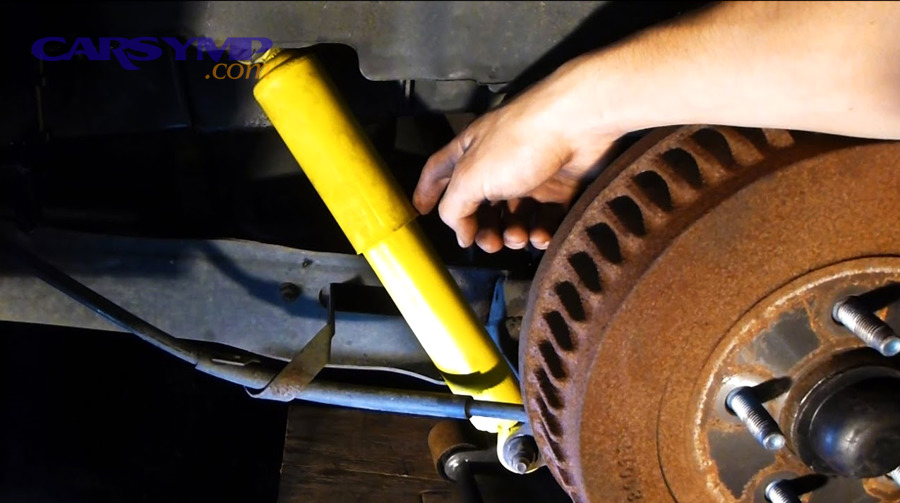
Personal protective equipment creates your last line of defense against the physical hazards inherent in suspension work. However, PPE only functions effectively when combined with proper environmental controls and workspace preparation that minimize hazard exposure before it occurs.
What Personal Protective Equipment (PPE) Is Required?
Safety glasses or goggles certified to ANSI Z87.1 standards protect your eyes from metal particles, rust flakes, and chemical splashes that commonly occur when breaking loose corroded fasteners or cleaning mounting surfaces. Glasses must include side shields to prevent debris entry from peripheral angles, while goggles provide superior protection when working overhead or using chemical rust removers. Prescription safety glasses with corrective lenses ensure you maintain visual acuity while staying protected.
Heavy-duty work gloves rated for cut resistance (ANSI level A4 minimum) protect your hands from sharp metal edges, hot components, and chemical exposure while maintaining enough dexterity to handle fasteners and tools. Mechanics gloves with padded palms reduce hand fatigue during extended tool use, while nitrile-coated palms provide grip on oily components. Keep a second pair of lighter gloves for precision work where maximum tactile feedback matters more than maximum protection.
Steel-toe boots meeting ASTM F2413-18 standards with impact resistance ratings of I/75 and compression resistance of C/75 protect your feet from dropped components—shock assemblies typically weigh 10-30 pounds, and springs or complete strut units can weigh significantly more. Boots with puncture-resistant soles prevent injuries from sharp objects on shop floors, while slip-resistant treads maintain traction on potentially oil-contaminated surfaces. Long pants and long-sleeved shirts protect skin from cuts, chemical splashes, and the ultraviolet radiation exposure that occurs when using torches for stubborn fasteners.
Respiratory protection rated N95 or P100 filters airborne rust particles, brake dust containing asbestos in older vehicles, and chemical vapors from penetrating oils and cleaners. Disposable N95 masks provide adequate protection for light dust, while reusable half-face respirators with replaceable P100 cartridges serve heavy-duty applications or frequent shop use.
What Environmental Safety Measures Should You Take?
Your workspace requires adequate ventilation with a minimum of four complete air changes per hour to prevent carbon monoxide accumulation if running engines, and to dissipate chemical fumes from penetrating oils, brake cleaners, and rust removers. Outdoor work provides optimal ventilation, while garage work demands open doors and additional fans to maintain airflow. Never work in enclosed spaces without forced air movement, as chemical fumes accumulate to dangerous concentrations in still air.
A flat, stable working surface prevents vehicle movement during shock replacement—concrete or asphalt provides ideal support, while gravel, dirt, or grass creates unstable conditions where jack stands can sink or shift. The surface should slope less than 2 degrees in any direction, and you should verify flatness using a level across multiple points where jack stands will be positioned. Parking on pavement that’s cracked, uneven, or deteriorating compromises jack stand stability and creates tipping hazards.
Proper lighting of at least 50 foot-candles (approximately 500 lux) at work surface level allows you to clearly see fasteners, identify damaged components, and read torque wrench scales accurately. Portable work lights with guards prevent bulb breakage if knocked, while LED lights generate minimal heat and won’t burn skin during accidental contact. Position lights to eliminate shadows in the wheel well and under the vehicle, using multiple light sources from different angles rather than a single bright source that creates harsh shadows.
A fire extinguisher rated for Class B (flammable liquids) and Class C (electrical) fires must be positioned within 10 feet of your work area and fully charged with a current inspection tag. The OSHA-recommended 2A:10B:C rating handles the petroleum products, electrical systems, and ordinary combustibles present in automotive work. Mount the extinguisher at chest height on a wall or stable support rather than setting it on the floor where it can be knocked over or blocked by tools.
A comprehensive first aid kit stocked for automotive injuries should include pressure dressings for severe bleeding, burn gel for thermal injuries from hot components or torches, eye wash solution for chemical splashes, and a CPR face shield. Keep a charged cell phone with emergency contacts programmed—working alone without communication capability leaves you unable to summon help if injured.
How Do You Safely Prepare Your Vehicle for Shock Replacement?
Safely preparing your vehicle for shock replacement requires parking on a flat surface, engaging the parking brake, placing wheel chocks, identifying manufacturer-specified jack points, lifting one corner at a time, and securing the vehicle on properly rated jack stands before removing any suspension components. This preparation sequence prevents the two most common DIY suspension work hazards: vehicle collapse from inadequate support and jack stand failure from improper placement.
Rushing through preparation or skipping steps to save time creates the conditions for catastrophic failure. The fifteen minutes invested in proper vehicle preparation prevents the life-altering injuries that occur when multi-ton vehicles fall on people working beneath them.
What Is the Proper Sequence for Lifting and Securing Your Vehicle?
Begin by parking on the flattest available surface and testing stability by attempting to rock the vehicle side-to-side and front-to-back—any movement indicates unsuitable ground conditions. Engage the parking brake firmly until you feel resistance, which locks the rear wheels on most vehicles or all four wheels on vehicles with electronic parking brake systems. Place wheel chocks on both sides of the wheel diagonally opposite to the corner you’ll lift first: if lifting the front passenger corner, chock both sides of the rear driver’s wheel.
Locate your vehicle’s designated jack points by consulting the owner’s manual—these reinforced areas distribute lifting force properly without damaging body panels, fuel lines, or brake components. Common jack points include pinch welds with molded notches, frame rails with stamped dimples, or dedicated jacking pads on unibody vehicles. Position your floor jack’s saddle directly under the jack point, ensuring full contact across the saddle’s surface rather than balanced on an edge or corner.
Lift slowly and steadily, watching the jack stand placement point as the vehicle rises—stop when you achieve sufficient height to slide jack stands into position with 2-3 inches of adjustment range remaining. Position jack stands under manufacturer-specified support points, which may differ from jack points and are typically located on frame rails or subframe members capable of supporting the vehicle’s weight for extended periods. Extend jack stands to contact the support point firmly, then raise an additional 1-2 clicks to transfer weight from the jack to the stands.
Lower the jack slowly until the vehicle’s full weight rests on jack stands—you should see the stands compress slightly and the jack’s pressure gauge drop to zero or near-zero. Attempt to rock the vehicle gently to verify stability, but keep your body clear of the potential fall zone. Only after confirming solid contact on all jack stands should you position yourself under the vehicle. Place the wheels you’ve removed under the vehicle’s frame as a backup support system—this creates a secondary failure barrier if jack stands collapse.
Should You Disconnect the Battery Before Starting?
You should disconnect the battery’s negative terminal before shock replacement if your vehicle has electronically controlled adaptive or air suspension, active safety systems that monitor suspension sensors, or if you’ll be working near electrical components or airbag wiring harnesses. Modern vehicles with electronic suspension actively adjust damping rates using sensors and actuators that can activate unexpectedly during component removal, creating both safety hazards and the potential for system damage.
Vehicles with conventional passive shocks and struts typically don’t require battery disconnection for basic shock replacement, as you won’t be disturbing electrical systems. However, disconnecting the negative battery cable eliminates the small but real risk of electrical shorts if tools contact exposed terminals or wiring, and prevents airbag deployment if you accidentally disturb crash sensors or wiring near the suspension mounting points.
To disconnect safely, use a 10mm wrench or socket to loosen the negative terminal clamp (marked with a minus sign and typically black), then lift the cable completely clear of the battery post and secure it away from metal surfaces. Wait at least 15 minutes after disconnection before beginning work near airbag components, allowing residual electrical charge in the airbag system to dissipate fully. Mark or photograph electrical connectors before disconnecting any sensors or actuators, ensuring correct reassembly.
Be aware that battery disconnection erases radio presets, seat position memory, and may require certain systems to relearn parameters after reconnection. Some vehicles enter a “security” mode requiring dealer intervention after battery disconnection, though this is rare on vehicles from the 2010s and newer. Consult your owner’s manual for vehicle-specific electrical precautions before disconnecting the battery to avoid unexpected complications.
What Are the Critical Safety Hazards During Shock Replacement?
The three critical safety hazards during shock replacement are compressed spring energy that can cause severe injury during disassembly, vehicle collapse from failed or improperly placed jack stands, and chemical exposure combined with physical injuries from rust, sharp edges, and heavy component handling. Compressed coil springs store potential energy equivalent to several hundred pounds of force concentrated in a single component, while vehicle collapse hazards stem from the fact that you’re working directly beneath thousands of pounds of metal supported only by mechanical stands.
Understanding these hazards before beginning work allows you to implement specific countermeasures rather than relying on general caution. Each hazard demands distinct safety protocols and specialized equipment for mitigation.
What Are the Dangers of Compressed Springs?
Compressed coil springs in strut assemblies store potential energy ranging from 200 to over 500 pounds of force depending on vehicle weight and suspension design—sudden release of this energy propels components at velocities sufficient to cause fractures, lacerations, or fatal injuries if striking the head or torso. The spring compression force increases exponentially as the spring compresses, meaning a spring compressed to installation length stores far more energy than the force required to compress it suggests.
Spring compressor failure occurs through three mechanisms: thread stripping when using undersized or worn compressors, uneven compression causing the spring to slip sideways out of the compressor, and tool breakage from metal fatigue in low-quality consumer-grade compressors. Professional-grade claw-style compressors with self-tightening mechanisms distribute force more evenly and resist slippage, while threaded rod compressors require careful attention to equal compression on both sides of the spring.
Before compressing any spring, inspect the compressor for bent rods, stripped threads, damaged claws, or cracks in metal components—any visible damage makes the tool unsafe for use. Compress springs slowly and evenly, alternating between sides to maintain equal compression and prevent spring cocking at an angle. Measure compression progress on both sides frequently, and never exceed the spring’s compression rating or the tool’s rated capacity.
Position your body to the side of the compressed spring assembly rather than in line with either end, as springs typically release along their axis. Wear face protection in addition to safety glasses when compressing or releasing springs, as metal fatigue in springs can cause coil fracture with projectile fragments. Consider purchasing pre-assembled “quick strut” assemblies that include the shock, spring, and mounting hardware already assembled—while more expensive than components alone, they eliminate spring compression risks entirely.
How Do You Prevent Vehicle Collapse While Working Underneath?
Prevent vehicle collapse by using jack stands rated for at least 1.5 times your vehicle’s corner weight, placing stands on manufacturer-specified support points, verifying solid contact before loading, and implementing redundant support such as placing removed wheels under the frame rails. Calculate your vehicle’s corner weight by dividing its total weight (found on the driver’s door placard) by four, then add 50% to account for uneven weight distribution and safety margin—a 4,000-pound vehicle requires jack stands rated for at least 1,500 pounds each.
Jack stand failure modes include base settling into soft ground, saddle slippage from angled contact surfaces, ratchet teeth disengaging under vibration, and catastrophic structural failure in cheaply manufactured stands. Verify the ground surface is solid concrete or asphalt without cracks or deterioration, and consider placing stands on broad steel plates or thick plywood if working on any questionable surface. Ensure the stand’s saddle contacts the support point fully across its entire surface—partial contact creates stress concentrations that can bend or break support points.
Before positioning yourself under the vehicle, physically shake the car to verify stability—grab the frame rail or rocker panel and attempt to rock the vehicle side-to-side and front-to-back. Stable vehicles will resist movement completely, while vehicles with inadequate stand placement will rock noticeably. Adjust jack stands and retest until the vehicle is completely stable before crawling underneath.
Implement the “wheels under the frame” safety protocol by positioning removed wheels with their tread surface facing up, placed strategically under frame rails or subframe members near where you’ll be working. This creates a secondary support system that limits downward travel if jack stands fail, potentially providing just enough clearance to escape from under a falling vehicle. Never rely solely on a floor jack to support a vehicle—jacks are lifting devices, not support devices, and hydraulic seals can fail without warning.
According to the Bureau of Labor Statistics, approximately 70% of automotive technician fatalities involve vehicle collapse, with improper jack stand usage cited as the primary contributing factor in these incidents.
What Chemical and Physical Hazards Should You Expect?
Rust and corrosion on shock mounting hardware, crossmembers, and suspension components create jagged metal edges that easily lacerate skin and produce airborne metal oxide particles when disturbed with wire brushes or impact tools. Rust particles become particularly hazardous when working overhead on upper shock mounts, as grinding or brushing dislodges debris directly into your face and eyes. Always wear safety glasses and consider a face shield for overhead rust removal, and use respiratory protection rated N95 minimum to prevent inhalation of metal dust.
Hydraulic fluid from leaking shocks contains petroleum distillates and chemical additives that irritate skin and eyes, while some gas-charged shocks use nitrogen under pressure that can spray residual fluid when disconnected. Wear chemical-resistant gloves when handling leaking shocks, and point shock bodies away from your face when removing mounting bolts. Dispose of old shocks properly at automotive recycling facilities—they contain materials that shouldn’t enter landfills and some jurisdictions classify them as hazardous waste.
Sharp metal edges exist on shock body welds, mounting brackets, spring ends, and crossmembers—particularly on vehicles with significant corrosion or impact damage. Heavy-duty cut-resistant gloves rated ANSI level A4 or higher provide protection during handling, while long sleeves prevent forearm lacerations when reaching into confined spaces. Deburr or file sharp edges on mounting points before installing new shocks to prevent damage to rubber bushings and boots.
Heavy component drop risks range from minor bruises to severe crush injuries depending on the component and drop height—complete strut assemblies weigh 15-35 pounds, while individual shocks weigh 5-15 pounds. These components often release suddenly when the last mounting bolt comes free, dropping onto whatever is below them. Support components with one hand while removing the final fastener, and use a helper or mechanical support to control descent of particularly heavy assemblies. Position yourself so a dropped component will fall beside you rather than onto you, and never place any body part directly beneath a component that’s being removed.
How Do You Use Each Tool Safely and Correctly?
Using tools safely and correctly for shock replacement requires following manufacturer instructions for each tool, inspecting equipment before use, applying force in controlled directions away from your body, and understanding the specific hazards associated with spring compressors, torque wrenches, and impact tools. Proper tool use combines mechanical knowledge with physical technique—knowing what a tool does matters less than knowing how it can injure you when used incorrectly.
Tool-related injuries during suspension work typically result from using the wrong tool for the application, using damaged tools that fail under load, or applying force in unstable positions where slippage causes falls or impact injuries.
What Is the Correct Way to Use a Spring Compressor?
Using a spring compressor correctly requires inspecting the tool for damage, positioning compression fixtures symmetrically opposite each other on the spring coil, compressing gradually while alternating sides to maintain even pressure, and compressing only until the spring separates from its upper mount with minimal additional compression. Before beginning, examine threaded rods for bent threads or damaged sections, inspect claws or hooks for cracks or deformation, and verify that all adjustment mechanisms operate smoothly without binding or excessive play.
Position the compressor fixtures so they engage at least 2-3 coil loops on each end for threaded rod compressors, or ensure claw-style compressors fully seat in the spring valleys without contacting upper or lower mounting plates. Fixtures positioned too close to spring ends or on an angle create uneven loading that can cause the spring to cock sideways and release violently. Mark initial positions with paint or tape to verify symmetric placement before beginning compression.
Compress the spring slowly by alternating between compression points—turn one side two full rotations, then turn the opposite side two full rotations, maintaining equal compression on both sides throughout the process. Check frequently that the spring remains centered and hasn’t shifted toward one side. Continue compressing until the spring fully separates from the upper mount plate with approximately 1/4 inch to 1/2 inch clearance—excessive compression beyond this point adds unnecessary risk without benefit.
When reinstalling springs with the compressor attached, ensure the spring seats properly in both the lower mount and upper mount before beginning decompression. Release pressure very gradually using the same alternating pattern, watching for proper spring seating throughout the release process. If the spring begins to cock at an angle or not seat properly, stop immediately, re-compress slightly, and reposition before continuing.
Alternative option: Many auto parts stores and tool rental centers offer pre-assembled strut assemblies or “quick struts” that include the shock absorber, spring, and mounting hardware already assembled and ready to install. While these cost $50-150 more than buying components separately, they eliminate spring compression risks entirely and reduce shock replacement labor time by 30-50%, making them the safest option for DIY installers uncomfortable with spring compressor operation.
How Do You Properly Use a Torque Wrench for Shock Installation?
Properly using a torque wrench requires setting the wrench to the manufacturer’s specified torque value found in your vehicle’s service manual, pulling the wrench smoothly in a continuous motion rather than jerking or bouncing, and stopping immediately when the wrench clicks or indicates you’ve reached the target torque without applying additional force. Click-type torque wrenches provide both an audible click and a tactile release sensation when the preset torque is reached—continuing to pull after this point applies unknown additional torque that can damage threads, stretch bolts, or crush washers and bushings.
Before use, verify your torque wrench is within its calibration interval—professional tools require annual calibration, while consumer tools should be calibrated every 2-3 years or after any impact or drop. Store torque wrenches at their lowest setting after use to prevent spring fatigue that causes calibration drift. Never use a torque wrench as a breaker bar for initial loosening, as this immediately damages the precision mechanism.
Set the torque wrench by unlocking the handle, rotating to the specified value, and locking it in place—double-check your setting before applying the wrench to fasteners. Common shock mounting torque specifications range from 65-100 ft-lbs for lower mounting bolts that attach to the suspension control arm or axle, and 15-35 ft-lbs for upper mounting nuts that secure to the shock tower or body. Using incorrect torque values compromises shock performance and creates safety hazards: under-torqued mounts allow movement and impact loads that damage mounting points, while over-torqued fasteners crush rubber bushings, reducing their ability to isolate vibration and road noise.
Apply torque wrenches by pulling smoothly toward yourself rather than pushing away, maintaining control throughout the stroke. Position your body so that if the wrench slips or releases, the handle won’t impact your face or body. For fasteners requiring high torque in confined spaces, use a short extension or crowfoot adapter—remember that using extensions changes the effective length and may require torque value calculations depending on extension type and length.
Re-torque critical fasteners after driving 50-100 miles, as initial settling can cause torque loss of 10-15% on shock mounting hardware. This is particularly important for upper mounting nuts where shock movement during driving can work fasteners loose. Follow the service manual’s torque sequence if specified—some vehicles with multiple upper mounting bolts require a specific tightening pattern to prevent misalignment.
What Advanced Considerations Enhance DIY Shock Replacement Success?
Advanced considerations that enhance DIY shock replacement success include replacing shocks and struts simultaneously when both show wear, understanding when professional-grade tools justify their cost over consumer options, researching vehicle-specific tool requirements before purchasing equipment, and determining whether wheel alignment is necessary after your particular shock replacement. These considerations move beyond basic competency to optimization, helping you avoid common mistakes that create additional work or expense.
While the basic process of removing old shocks and installing new ones remains straightforward, these advanced factors determine whether your replacement performs properly long-term and whether you’ll need professional intervention to correct problems.
Should You Replace Shocks and Struts at the Same Time?
You should replace shocks and struts simultaneously when replacing shocks on one axle if they have similar mileage and operating conditions, as mixing new and worn shocks creates handling imbalances with different damping rates that compromise vehicle stability and braking performance. Shocks and struts wear gradually over 50,000-100,000 miles, and while failure of one component doesn’t automatically mean others have failed, similar age and mileage indicates similar wear levels that will manifest as noticeable problems within months if not addressed together.
Replacing only one shock creates a vehicle that leans during cornering as the new shock with higher damping force resists body roll more effectively than the worn shock on the opposite side. This asymmetric damping also affects braking, as worn shocks allow more weight transfer and suspension compression than new shocks, creating uneven brake force distribution and longer stopping distances. Modern vehicles with anti-lock brake systems and electronic stability control calibrate these systems based on expected suspension characteristics—mismatched shocks can trigger false ABS activation or stability interventions.
Replace shocks in axle pairs at minimum (both front or both rear), and consider replacing all four simultaneously on vehicles approaching 75,000-100,000 miles or showing wear indicators such as excessive bouncing, nose-diving during braking, or cupping wear patterns on tires. The cost differential between replacing one axle and all four often amounts to less than 30% additional parts expense, while labor savings from performing all work at once reduce total cost significantly.
Strut replacement carries additional considerations beyond shock replacement, as struts serve as structural suspension components that locate the wheel and support vehicle weight in addition to providing damping. Strut replacement typically requires spring compression unless you purchase pre-assembled strut assemblies, and always necessitates wheel alignment afterward as strut removal disconnects components that determine camber and caster angles. Budget an additional $80-150 for alignment when replacing struts, and understand that ignoring alignment leads to rapid tire wear that costs far more than the alignment itself.
According to data from the Car Care Council, vehicles with shocks and struts in good condition demonstrate 30% shorter stopping distances in emergency braking tests compared to vehicles with worn dampers, highlighting how worn shocks affect braking performance beyond just comfort concerns.
How Do Professional-Grade Tools Differ from Consumer Options?
Professional-grade tools differ from consumer options in materials quality, precision tolerances, duty cycle ratings, and warranty coverage—professional spring compressors use heat-treated alloy steel with safety factors of 5:1 or higher, while consumer compressors often use mild steel with safety factors of 2:1, creating higher failure risks under maximum load. Professional torque wrenches maintain calibration accuracy of ±3% over thousands of cycles, while consumer torque wrenches typically offer ±4-6% accuracy that degrades after several hundred uses.
Professional spring compressors feature self-tightening claw mechanisms that grip progressively tighter as spring force increases, preventing the slippage issues common with consumer threaded rod designs. Professional tools also provide higher capacity ratings—a professional compressor rated for 2,000 pounds safely handles any automotive coil spring, while consumer compressors rated for 1,000 pounds approach their limits with truck or SUV springs. Tool rental represents the optimal solution for DIY installers who need professional-grade spring compressors for a single project: rental costs of $20-40 per day provide access to $300-500 professional equipment without the long-term investment.
Professional torque wrenches with digital displays eliminate reading errors common with mechanical scales, and offer additional features such as torque angle measurement (critical for torque-to-yield fasteners), programmable presets for multiple specifications, and data logging. However, quality click-type consumer torque wrenches from reputable manufacturers like Craftsman, Tekton, or Pittsburgh Pro deliver perfectly acceptable accuracy for DIY shock replacement at 1/3 the cost of professional digital units.
When professional tools justify investment: If you perform suspension work on multiple vehicles annually, own vehicles with high-performance or adjustable suspension systems, or plan to work on suspension components professionally, invest in professional-grade tools. For one-time or occasional DIY shock replacement, quality consumer tools or tool rental provides adequate capability and safety at reasonable cost. Avoid bottom-tier no-name tools from discount retailers, as these often fail catastrophically under loads well below their stated ratings.
What Vehicle-Specific Tool Requirements Should You Research?
Research vehicle-specific tool requirements by consulting factory service manuals, enthusiast forums dedicated to your vehicle make and model, and professional technician resources to identify specialized sockets, Torx bits, triple-square drivers, or proprietary tools required for your particular vehicle’s shock mounting hardware. European manufacturers including BMW, Mercedes-Benz, Audi, and Volkswagen frequently use triple-square (XZN) fasteners on suspension components, requiring specialized driver sets unavailable in standard tool collections.
Some vehicles use top-mount shock designs that require special sockets or tools to access the upper mounting nut while preventing the shock shaft from rotating—these tools feature hex cutouts that engage the shock shaft while the outer socket drives the mounting nut. Attempting to hold the shock shaft with pliers or standard tools while turning the nut often results in damaged shock shafts or rounded fastener heads. Aftermarket “shock service tool” sets containing these specialized sockets cost $30-60 and prevent damage to new shocks during installation.
Luxury and performance vehicles with electronic adaptive suspension systems require scan tools or dedicated diagnostic equipment to access service modes, retract actuators to neutral positions before removal, and recalibrate systems after installation. Attempting shock replacement on vehicles with Magnetic Ride Control (GM), Adaptive M Suspension (BMW), or Air Suspension systems without proper service information and tools can damage expensive electronic components or leave the system non-functional. Professional service may be cost-effective for these vehicles compared to purchasing specialized diagnostic equipment for one-time use.
Japanese vehicles including Toyota, Honda, Nissan, and Mazda typically use metric fasteners with standard hex heads, requiring only basic metric socket sets. American manufacturers use a mix of metric and SAE fasteners depending on model year and platform, requiring both socket sets. Before purchasing tools, verify your specific vehicle’s requirements to avoid discovering mid-project that you lack critical specialty items.
Is Post-Replacement Wheel Alignment Always Necessary?
Post-replacement wheel alignment is not always necessary after shock replacement, but is mandatory after strut replacement and recommended if you disturb any adjustable suspension components, steering linkages, or camber/caster adjustment points during shock access. Conventional shock absorbers that mount between the suspension control arm and body/frame do not affect alignment angles when replaced, as they don’t locate the wheel or determine suspension geometry—removing and installing shocks on these designs leaves alignment specifications unchanged.
Strut replacement always requires alignment because struts serve as the upper suspension locating point that determines camber (tire tilt viewed from front) and caster (steering axis angle viewed from side). Disconnecting struts changes these angles by amounts ranging from minimal (0.1-0.3 degrees) to significant (0.5+ degrees) depending on how precisely the new strut seats in its mounting position. Even small alignment changes cause accelerated tire wear, with 0.5 degrees of excess camber wearing through tire tread in as little as 10,000-15,000 miles.
Signs that alignment is needed after shock or strut replacement include vehicle pulling to one side, steering wheel off-center when driving straight, squealing tires during turns, or uneven tire wear patterns developing after installation. Schedule alignment within the first week after strut replacement to establish baseline measurements and prevent tire damage. Four-wheel alignment costs $80-150 at most shops and typically includes measurements of all angles with before-and-after printouts showing any corrections made.
Vehicles with no adjustable suspension components (common on many economy cars and older vehicles) may have alignment angles that cannot be corrected even if they’ve shifted—these vehicles use shims, eccentric bolts, or slotted mounting points for adjustment, and if your vehicle lacks these features, alignment shops can only measure and report angles without correction capability. Research your vehicle’s adjustment capabilities before paying for alignment, as “alignment check” services costing $40-60 provide measurements without adjustment for vehicles where adjustment isn’t possible.