


Yes, you need a wheel alignment after replacing struts, but typically not after replacing shocks alone. Struts are structural suspension components that directly affect your vehicle’s alignment angles—camber, caster, and toe—so removing and reinstalling them alters these critical measurements. Shocks, on the other hand, function solely as dampers and don’t impact alignment geometry unless other suspension components are disturbed during installation. Most automotive technicians and manufacturers recommend getting a four-wheel alignment immediately after strut replacement to prevent uneven tire wear, poor handling, and premature component failure that can cost hundreds or thousands of dollars in repairs.
Understanding the difference between shock absorber replacement and strut replacement is crucial for making informed maintenance decisions. Shocks simply control spring oscillation and vehicle bounce, bolting to the frame without affecting steering geometry. Struts, however, serve as both a damping device and a structural member of the suspension system, with the steering knuckle attached directly to the strut housing. This structural role means that even slight variations in strut installation can shift your vehicle’s alignment out of manufacturer specifications, leading to measurable performance and safety concerns.
The consequences of skipping alignment after strut work extend beyond just crooked steering. Misaligned wheels create uneven contact patches between your tires and the road surface, generating irregular wear patterns that can destroy a new set of tires in as little as 5,000 to 10,000 miles instead of the expected 40,000 to 60,000 miles. Additionally, improper alignment increases rolling resistance, reducing fuel efficiency by up to 10 percent according to industry studies, and creates unpredictable handling characteristics that compromise vehicle safety during emergency maneuvers or adverse weather conditions.
Cost considerations often drive the decision to delay or skip alignment services, but this short-term savings creates long-term expenses that dwarf the initial investment. Below, we’ll explore exactly when alignment is necessary, what the service entails, how much it costs, and the specific technical reasons why strut replacement demands immediate alignment attention while shock replacement typically doesn’t.
Do You Need an Alignment After Replacing Shocks or Struts?
Yes, you need an alignment after replacing struts because they’re structural suspension components that determine wheel positioning, but shock replacement alone typically doesn’t require alignment since shocks only dampen movement without affecting geometry. This distinction exists because struts integrate the spring, damper, and steering pivot into one assembly, while shocks function as standalone dampers. Understanding this fundamental difference helps car owners avoid unnecessary services while ensuring critical maintenance isn’t skipped.
To better understand why this matters, let’s examine how each component interacts with your vehicle’s suspension geometry and when alignment becomes necessary.
Does Replacing Shocks Require Wheel Alignment?
Replacing shocks does not typically require wheel alignment because shock absorbers serve exclusively as damping devices that control spring oscillation and vehicle bounce without altering suspension geometry or wheel positioning. Shocks mount between the vehicle frame and suspension using bushings and bolts that don’t connect to steering components or influence camber, caster, or toe angles. When a technician removes a shock absorber, the suspension geometry remains unchanged because the spring, control arms, and steering knuckle maintain their original positions throughout the process.
However, three specific exceptions warrant alignment consideration even after shock-only replacement. First, if the technician discovers worn suspension bushings, ball joints, or tie rod ends during shock installation and replaces these components, alignment becomes necessary since these parts directly affect wheel angles. Second, vehicles with adjustable suspension systems or aftermarket modifications may experience geometry changes when new shocks with different mounting points or lengths are installed. Third, if your vehicle exhibited pulling, uneven tire wear, or steering problems before shock replacement, these symptoms indicate existing alignment issues that should be addressed regardless of the shock work.
The practical reality is that most mechanics will perform a visual suspension inspection during shock replacement and may recommend alignment if they observe worn components or existing misalignment. Car owners should request a pre-installation alignment check if their vehicle shows any handling abnormalities, has exceeded 30,000 miles since the last alignment, or has encountered curb impacts or pothole damage. This proactive approach catches alignment problems before they destroy new tires, even though the shock replacement itself doesn’t mechanically necessitate the service.
Does Replacing Struts Require Wheel Alignment?
Replacing struts requires wheel alignment because struts function as structural suspension members with the steering knuckle bolted directly to the strut housing, meaning removal and reinstallation inevitably alters the precise angular relationships that define proper wheel positioning. Unlike shocks, which simply dampen movement, struts bear the vehicle’s weight, locate the wheel in space, and provide the pivot point for steering—making them integral to suspension geometry. Even when technicians carefully mark component positions before disassembly, the tolerance ranges involved in strut mounting are too narrow to reliably restore factory-specified alignment angles without professional measurement and adjustment.
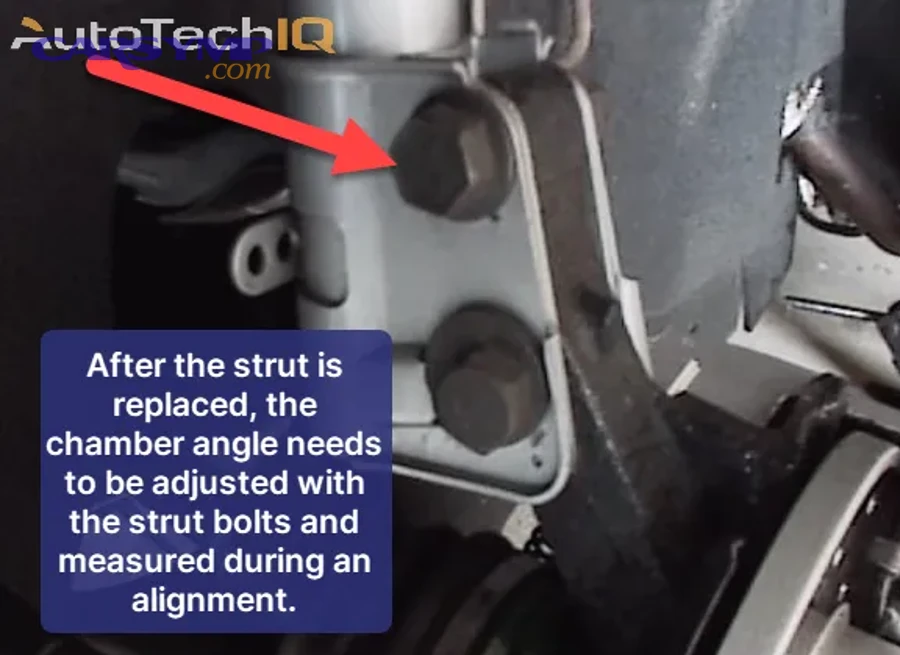
MacPherson strut systems, found in the majority of front-wheel-drive vehicles and many modern cars, demonstrate this relationship most clearly. In these designs, the strut assembly performs triple duty: supporting the coil spring, damping suspension movement, and positioning the steering knuckle that holds the wheel hub and brake assembly. The top strut mount bolts to the vehicle’s strut tower with multiple mounting holes that allow camber adjustment, while the lower strut-to-knuckle bolts often provide additional adjustment capability. Installing a new strut means removing and reinstalling all these connection points, and even millimeter-level variations translate to measurable changes in camber and caster that fall outside manufacturer specifications.
The technical precision required becomes evident when you consider that typical camber specifications allow only ±0.5 degrees of variance, while caster specifications are similarly tight. A strut installed just one millimeter off its ideal position can shift camber by 0.3 degrees or more—enough to cause noticeable pulling and accelerated tire wear. Professional technicians use computerized alignment equipment that measures angles to 0.01-degree accuracy and compares them against manufacturer databases containing specifications for thousands of vehicle makes, models, and years. This level of precision is impossible to achieve through visual inspection or manual measurement, making post-strut alignment not just recommended but essential for proper vehicle operation and tire longevity.
What Is Wheel Alignment and Why Does It Matter?
Wheel alignment is the precise angular adjustment of your vehicle’s wheels to manufacturer-specified positions that optimize tire contact with the road surface, steering response, and suspension geometry for safe handling and even tire wear. Proper alignment ensures all four wheels point in the correct direction relative to the vehicle centerline and each other, creating balanced contact patches that distribute vehicle weight evenly across tire treads. This service matters because misaligned wheels create uneven tire wear patterns that can destroy tires 50-70% faster than normal, reduce fuel efficiency by increasing rolling resistance, and cause handling problems ranging from mild pulling to dangerous instability during emergency maneuvers.
Specifically, alignment directly impacts three critical vehicle performance areas that affect both your wallet and safety. Let’s examine the technical details that make this service fundamental to proper vehicle maintenance.
What Are the Three Main Alignment Angles?
There are three main alignment angles—camber, caster, and toe—that determine how your wheels contact the road surface and respond to steering input, with each angle serving a distinct function in vehicle handling and tire wear characteristics. These angles work together as an integrated system where adjusting one parameter often affects the others, requiring skilled technicians to make iterative adjustments until all specifications fall within manufacturer tolerances. Understanding these angles helps car owners recognize misalignment symptoms and appreciate why proper alignment requires professional equipment rather than visual estimation.
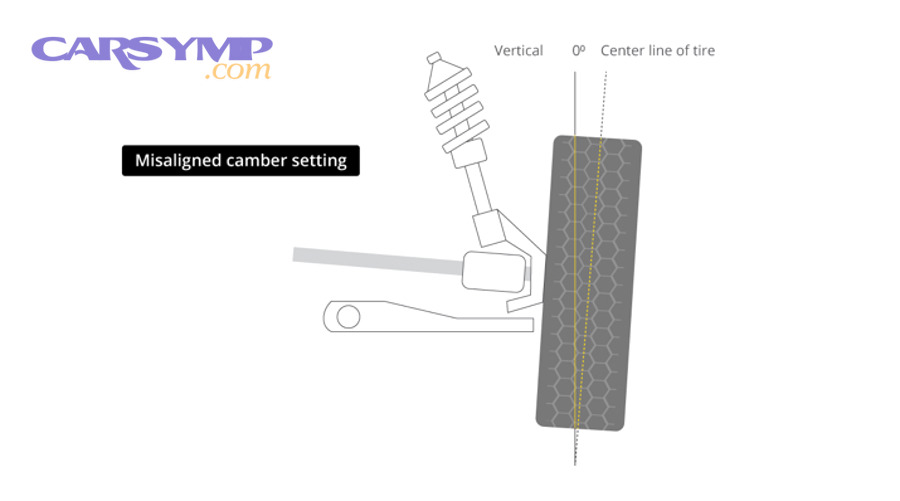
Camber measures the inward or outward tilt of the tire when viewed from the front of the vehicle, expressed in degrees from true vertical. Negative camber means the top of the tire tilts inward toward the engine, while positive camber indicates outward tilt. Most modern vehicles specify slight negative camber (typically -0.5 to -1.5 degrees) to improve cornering grip and compensate for suspension geometry changes during body roll. Excessive negative camber wears the inner tire edge rapidly, while excessive positive camber destroys the outer edge—both creating triangular wear patterns visible during tire inspections.
Caster represents the forward or backward tilt of the steering axis when viewed from the vehicle’s side, measuring the angle between the steering pivot line and true vertical. Positive caster, standard on modern vehicles, means the steering axis tilts backward at the top, placing the tire contact patch behind the steering pivot point like a shopping cart wheel. This geometry creates self-centering steering feel and directional stability at highway speeds. Unequal caster side-to-side causes vehicle pulling toward the side with less caster, while insufficient caster creates wandering steering that requires constant correction.
Toe describes whether the front edges of the tires point inward (toe-in) or outward (toe-out) when viewed from above the vehicle, typically measured in fractions of an inch or degrees. Toe settings directly affect tire wear more than any other alignment angle because even 1/8-inch misadjustment creates continuous tire scrubbing as the wheels fight each other during forward motion. Front-wheel-drive vehicles typically specify slight toe-in to compensate for acceleration forces that pull the front wheels apart, while rear-wheel-drive cars may use toe-out for improved turn-in response. Incorrect toe creates feathered wear patterns where tire tread blocks develop sharp edges on one side, detectable by running your hand across the tread surface.
How Do Struts Affect Alignment Geometry?
Struts affect alignment geometry by serving as the primary locating component for the wheel assembly, with the steering knuckle bolted directly to the strut housing in a configuration that determines both camber and caster angles through the strut’s mounting position and orientation. This structural integration means the strut doesn’t just support vehicle weight—it defines the three-dimensional space where the wheel exists relative to the vehicle chassis. When you remove a strut, you’re essentially disconnecting the component that establishes wheel position in both vertical and horizontal planes, and reinstalling it requires recreating precise angular relationships that affect how the tire contacts the road.
The mechanical relationship becomes clearer when you examine a typical MacPherson strut assembly, the most common front suspension design in modern vehicles. The strut mounts to the vehicle’s strut tower at the top through a bearing plate that allows the strut to rotate during steering while maintaining a fixed position that sets caster angle. The lower portion of the strut bolts to the steering knuckle through a pinch bolt or through-bolt arrangement that clamps the knuckle to the strut housing. This knuckle carries the wheel hub, brake assembly, and ultimately the tire, meaning every angular position of the strut directly translates to wheel position changes measured in camber and caster degrees.
Manufacturing tolerances in the mounting points create the need for post-installation alignment. The strut tower mounting holes often provide slotted adjustment capability allowing ±1-2 degrees of camber change, while the strut-to-knuckle interface may include eccentric bolts, slotted holes, or shim provisions for additional adjustment range. Even when technicians mark original positions before disassembly, factors like bolt torque, bushing compression, and settling under vehicle weight mean the new strut won’t occupy exactly the same position as the old one. Professional alignment equipment accounts for these variables by measuring actual wheel angles and guiding technicians through adjustment procedures that bring all parameters into specification simultaneously.

What Happens If You Don’t Get an Alignment After Strut Replacement?
If you don’t get an alignment after strut replacement, your vehicle will experience rapid uneven tire wear that can destroy tires in 5,000-15,000 miles instead of the expected 40,000-60,000 miles, along with handling problems including pulling to one side, steering wheel vibration, and reduced stability during emergency maneuvers or adverse weather conditions. The misalignment creates unbalanced forces across the tire contact patch, generating excessive heat and friction on specific tread areas while underutilizing other portions of the tire. Beyond the immediate $400-$800 cost of premature tire replacement, drivers face increased fuel consumption, potential suspension component damage from unbalanced loading, and safety risks from compromised vehicle control during critical situations.
More specifically, let’s examine the measurable consequences that develop progressively as you continue driving a misaligned vehicle after strut work.
What Are the Signs of Misalignment After Suspension Work?
The primary signs of misalignment after suspension work include uneven or rapid tire wear with visible patterns on inner or outer tread edges, vehicle pulling consistently to one side requiring constant steering correction, an off-center steering wheel when driving straight, and unusual vibrations felt through the steering wheel or chassis during acceleration or highway speeds. These symptoms often appear within 500-1,000 miles of strut installation, though subtle misalignment may take 2,000-3,000 miles before wear patterns become visually obvious to untrained observers. Catching these signs early prevents the escalating damage that occurs when misalignment continues uncorrected.
Uneven tire wear patterns provide the most definitive evidence of alignment problems, with specific wear characteristics indicating which angle is out of specification. Inner or outer edge wear, where one shoulder of the tire shows significantly more wear than the center or opposite edge, signals camber misalignment—negative camber wears the inside edge while positive camber destroys the outside. Feathered wear, where tread blocks develop smooth edges on one side and sharp edges on the other (detectable by running your hand across the tread), indicates toe misalignment causing the tire to scrub sideways during forward motion. Cupping or scalloped wear, creating high and low spots around the tire circumference, often results from a combination of alignment issues and worn suspension components like struts or shocks that allow excessive tire bounce.
Vehicle pulling manifests as a constant drift toward the left or right when driving on flat, straight roads with no crown (lateral slope), requiring continuous steering input to maintain straight-line travel. Mild pulling (1-2 degrees of steering correction needed) typically indicates a side-to-side caster difference of 0.5 degrees or more, while severe pulling (5+ degrees of constant steering input) suggests major camber or toe misalignment exceeding 1 degree from specification. It’s important to distinguish alignment-related pulling from tire-related drift—swapping front tires side-to-side will change the direction of tire-related pulling but won’t affect alignment-caused pulling, providing a diagnostic test drivers can perform themselves.
Off-center steering wheel when driving straight reveals that the front wheels point in slightly different directions, with the steering system compensated to one side to maintain forward travel. A steering wheel rotated 10-15 degrees from center (where the emblem or spokes don’t sit level) while the vehicle tracks straight indicates toe misalignment of approximately 0.1-0.2 inches, though the exact relationship varies by vehicle. This symptom often accompanies recent strut replacement when technicians fail to center the steering rack before setting toe, or when one side’s toe adjustment differs from the other. Some drivers mistake this for normal steering play, but properly aligned vehicles maintain centered steering wheels during straight-line travel on level roads.
Steering wheel vibration or shimmy during specific speed ranges (commonly 45-55 mph or 65-75 mph) can indicate alignment-related issues, though it more commonly stems from wheel balance problems or tire defects. However, when vibration appears immediately after strut replacement and accompanies other alignment symptoms like pulling or uneven wear, it suggests that misalignment has created uneven tire contact patches that resonate at certain speeds. The vibration typically worsens during acceleration or when driving over minor road imperfections, and may disappear temporarily after hard braking as tire contact patches temporarily normalize.
How Much Does Poor Alignment Cost in Tire Wear?
Poor alignment costs $400-$1,200 in accelerated tire wear depending on vehicle type, tire quality, and severity of misalignment, with moderately misaligned vehicles (0.5-1.0 degrees out of specification) destroying tires 2-3 times faster than normal and severely misaligned vehicles (1.5+ degrees off) rendering tires unsafe in as little as 5,000-10,000 miles compared to the expected 40,000-70,000 mile lifespan. This economic impact extends beyond tire replacement to include reduced fuel efficiency costing an additional $100-$300 annually and potential suspension component damage that can add $500-$1,500 in repair costs when misalignment creates uneven loading on ball joints, control arm bushings, and steering components. The total cost of skipping a $75-$150 alignment service after strut replacement can exceed $2,000 over the life of a single tire set.
The mathematical relationship between alignment and tire wear follows predictable patterns documented in automotive engineering research. A study by the Tire Industry Association found that vehicles with toe misalignment of just 0.17 inches (approximately 0.34 degrees) experienced 25% reduction in tire life, while 0.34 inches (0.68 degrees) of toe error reduced tire life by 50%. Camber misalignment of 1 degree shortened tire life by 30-40%, with more severe angles creating proportionally worse wear. These percentages translate directly to dollar costs: a $600 set of quality all-season tires normally lasting 50,000 miles will need replacement at 25,000 miles with moderate misalignment, effectively doubling the per-mile tire cost from $0.012 to $0.024.
Fuel efficiency penalties add measurable ongoing costs to alignment neglect. Misaligned wheels create increased rolling resistance as tires scrub sideways against pavement instead of rolling freely forward, with studies by the Department of Energy indicating that alignment issues can reduce fuel economy by 7-10% depending on severity. For a vehicle averaging 12,000 miles annually at 25 miles per gallon with gasoline at $3.50 per gallon, a 10% efficiency loss translates to $168 in additional annual fuel costs. Over a typical 3-year period between tire replacements, this represents $504 in wasted fuel—more than three times the cost of the alignment service that would have prevented the problem.
Safety considerations add non-monetary costs that become critical during emergency situations. Misaligned vehicles require longer stopping distances because uneven tire contact patches reduce available traction, with some studies showing 10-15% longer braking distances in severely misaligned vehicles. Handling during evasive maneuvers deteriorates as pulling tendencies fight driver steering input, creating unpredictable vehicle responses when milliseconds matter. These safety deficits don’t appear in repair invoices but represent real risks to vehicle occupants and other road users, particularly in adverse weather conditions where tire contact patch optimization becomes critical for maintaining control.
When Should You Get an Alignment After Shock or Strut Replacement?
You should get a wheel alignment immediately after strut replacement—ideally during the same service appointment before driving the vehicle more than a few miles—because the strut installation process inherently alters suspension geometry in ways that cannot be corrected without professional alignment equipment, and delaying allows misalignment damage to begin accumulating from the first mile driven. For shock replacement, alignment is typically unnecessary unless the technician discovers worn suspension components during installation or your vehicle already exhibited signs of misalignment before the service. The timing difference reflects the fundamental mechanical distinction: struts are structural components that locate the wheel in space, while shocks function as non-structural dampers that don’t affect wheel positioning.
To better understand when alignment becomes critical versus optional, let’s examine specific timing scenarios and their implications.
Should Alignment Be Done Immediately After Strut Installation?
Alignment should be done immediately after strut installation—preferably before the vehicle leaves the repair facility—because even a short drive on misaligned wheels begins the tire wear process and establishes handling characteristics that may mask additional suspension problems or create unsafe driving dynamics. Most professional repair shops include alignment as a bundled service with strut replacement for exactly this reason, understanding that separating the services creates unnecessary risk and often costs the customer more money in the long run. The alignment service takes 45-90 minutes with modern computerized equipment, making same-day completion entirely practical when scheduling the strut replacement appointment.
The mechanical reality is that every mile driven on misaligned wheels after strut installation creates measurable tire wear, though the effects may not be visible during initial inspection. Consider that toe misalignment of 0.2 inches (a common variance after strut installation without alignment) causes tires to scrub sideways approximately 28 feet for every mile driven—picture dragging your tires sideways the length of a semi-truck trailer for each mile of travel. This scrubbing generates heat that degrades rubber compounds, creates uneven contact pressure that accelerates tread wear, and establishes wear patterns that can persist even after proper alignment because the tire surface has already been modified. Immediate alignment prevents this damage from beginning, preserving the full lifespan potential of your tires.
Professional best practices in the automotive repair industry universally recommend immediate post-strut alignment for liability and quality assurance reasons. The industry-standard repair procedures published by organizations like the Automotive Service Excellence (ASE) and vehicle manufacturers’ service manuals explicitly specify alignment as a required step following strut replacement. Shops that skip this step risk comebacks for premature tire wear, handling complaints, and potential liability if alignment-related handling issues contribute to an accident. Reputable facilities recognize that their reputation depends on proper completion of services, making same-appointment alignment standard practice rather than an optional add-on.
Can You Delay Alignment If Your Car Drives Straight?
You cannot safely delay alignment after strut replacement even if your car appears to drive straight, because visual assessment and subjective driving impressions cannot detect the 0.2-0.5 degree alignment variances that cause accelerated tire wear and handling degradation over time. A vehicle may track reasonably straight with camber or caster misalignment while still experiencing rapid tire wear on inner or outer tread edges, and subtle pulling tendencies that seem like “normal” steering effort often mask alignment issues until they become severe. Additionally, the “drives straight” assessment typically occurs on roads with crown (lateral slope for drainage), which can counteract mild pulling tendencies and create false confidence that alignment is correct.
The technical explanation reveals why driving feel is an unreliable alignment indicator. Tire wear from misalignment accumulates progressively based on total distance traveled, not driving quality perception—a vehicle with 0.5 degrees excessive negative camber will wear the inner tire edge at the same accelerated rate whether the driver notices pulling or not. Modern power steering systems mask moderate alignment issues by providing enough assist to overcome pulling forces without driver effort, creating a false sense of proper setup. The result is that many drivers discover alignment problems only after ruining an expensive tire set, having driven thousands of miles believing their vehicle handled normally.
Budget-conscious car owners sometimes attempt to delay alignment to spread repair costs across multiple paychecks, but this approach invariably costs more money than immediate service. Consider the math: delaying alignment for 3,000 miles while saving up the $100-$150 service fee creates approximately $75-$150 in accelerated tire wear based on typical misalignment rates, completely eliminating the savings. If the delay extends to 10,000 miles, tire damage can exceed $300-$500, turning the “savings” into a net loss of $200-$350 plus the alignment cost you’ll eventually pay anyway. The financially rational choice is immediate alignment, even if it requires using a credit card or asking the shop for a payment plan.
The only scenarios where brief alignment delay might be acceptable involve immediate plans for additional suspension work. If you’re replacing struts on the front axle this week and planning rear shock or strut replacement next week, you could reasonably defer alignment until all suspension work is complete—but this delay should be measured in days, not weeks or months, and driving should be minimized during the interim. Similarly, if tire replacement is scheduled within the next 500 miles, you might coordinate alignment with the new tire installation. However, these special cases require careful planning and awareness that any delay accumulates wear and risk.
How Much Does Alignment Cost After Strut Replacement?
Wheel alignment costs $75-$200 for a standard four-wheel alignment service depending on your vehicle type, geographic location, and whether the service is bundled with strut replacement or purchased separately, with luxury vehicles, trucks, and SUVs typically commanding higher prices ($150-$200) than compact cars ($75-$120) due to additional adjustment complexity and equipment requirements. Many repair shops offer package pricing that reduces the total cost when alignment is performed during the same appointment as strut replacement, often saving $20-$50 compared to returning for alignment as a separate service. These prices include computerized measurement of all alignment angles, adjustment of all adjustable parameters to manufacturer specifications, a before-and-after printout showing the corrections made, and typically a 6-month or 6,000-mile warranty on the alignment settings.
To better understand what drives these costs and how to maximize value, let’s examine exactly what’s included in professional alignment service.
What Is Included in a Wheel Alignment Service?
A comprehensive wheel alignment service includes a pre-service suspension inspection checking for worn components that prevent proper alignment, computerized measurement of all wheel angles (camber, caster, toe) against manufacturer specifications, systematic adjustment of all adjustable parameters to bring measurements within tolerance ranges, a road test to verify steering feel and tracking, and a detailed printout showing before-and-after measurements with specifications for your specific vehicle. Professional alignment bays use laser or camera-based systems that measure angles to 0.01-degree precision, displaying real-time readings that technicians use to guide adjustment procedures. The service typically takes 45-90 minutes depending on vehicle complexity, adjustment difficulty, and whether any seized bolts or corroded adjustment mechanisms require additional work.
The pre-alignment inspection serves a critical function that many car owners overlook. Technicians examine ball joints, tie rod ends, control arm bushings, and steering rack condition because worn components prevent alignment from staying in specification even after adjustment. If a ball joint has excessive play or a tie rod end can move beyond normal tolerances, the alignment will shift out of specification as soon as the vehicle hits bumps or corners. Reputable shops inform customers about these worn components before performing alignment, explaining that the service may not hold properly without addressing the underlying wear. Some shops refuse to perform alignment when components are severely worn, knowing the customer will return within weeks complaining that the alignment “didn’t last.”
The computerized measurement process creates a three-dimensional model of your vehicle’s suspension geometry using sensors attached to each wheel. Modern systems employ cameras that track reflective targets mounted on wheel adapters, calculating precise angular measurements by analyzing target positions from multiple viewing angles. The computer compares these measurements against a database containing specifications for thousands of vehicle applications, accounting for variables like tire size, suspension modifications, and trim package differences. Technicians view color-coded displays showing whether each angle is within specification (green), approaching limits (yellow), or out of specification (red), providing clear guidance for adjustment priorities.
Adjustment procedures vary significantly based on vehicle design and manufacturer provisions for alignment correction. Front camber might be adjusted through slotted strut tower bolts, eccentric bolts at the strut-to-knuckle interface, or by adding/removing shims at various suspension points. Caster typically adjusts through strut tower bolt positioning or control arm length changes, though some vehicles lack caster adjustment capability. Toe adjustment is universal, using tie rod end rotation to change steering linkage length and thus wheel pointing direction. Technicians make iterative adjustments because changing one angle often affects others—increasing negative camber by moving the strut tower bolts might also alter caster and require toe compensation.
The printout provides documentation showing the alignment service was performed correctly and creates a baseline for future comparisons. It displays three sets of measurements: initial readings before adjustment, manufacturer specifications with tolerance ranges, and final readings after adjustment. Professional shops use this document to demonstrate value to customers and protect themselves from warranty claims if suspension components wear and cause alignment drift months later. Car owners should save these printouts and compare measurements at subsequent alignments to track whether specifications are holding steady or drifting over time, which can indicate developing suspension problems.
Should Alignment Be Bundled with Strut Replacement?
Alignment should be bundled with strut replacement because this approach saves time and money while ensuring the vehicle is safe to drive immediately after service completion, with bundled pricing typically reducing total costs by $20-$75 compared to scheduling alignment as a separate appointment days or weeks later. Most professional repair facilities automatically include alignment in strut replacement quotes, recognizing that the services are functionally linked—separating them creates scheduling inconvenience for the customer, increases shop overhead through duplicate vehicle intake and documentation, and risks the customer driving on misaligned wheels with associated safety and tire wear implications. The bundled approach also allows the installing technician to verify their work immediately, catching any installation issues before the customer leaves rather than discovering problems when the vehicle returns for alignment.
The practical workflow advantages of bundling become clear when you examine the service process. Strut replacement requires lifting the vehicle, removing wheels, and accessing suspension components—the same initial steps needed for alignment service. When performed together, the vehicle undergoes one lift cycle, one set of safety inspections, and one paperwork process, eliminating the duplicate labor that occurs with separate appointments. The installing technician can also observe the alignment results and verify that strut installation didn’t encounter hidden problems like seized adjustment bolts or damaged mounting points that might affect alignment capability. This integrated approach improves quality control and customer satisfaction while reducing overall service time from 3-4 hours across two appointments to 2-3 hours in a single visit.
Cost comparison demonstrates the financial benefit of bundled services. Separate strut replacement might cost $400-$800 depending on parts quality and labor rates, with alignment adding $100-$150 as a standalone service—totaling $500-$950. Bundled pricing typically discounts the alignment portion to $75-$100 or includes it free with premium strut packages, reducing total cost to $475-$850 and saving $25-$100. Some shops structure pricing to make bundling nearly mandatory by setting separate-visit alignment prices higher than bundled rates, recognizing that customers who return for later alignment consume additional shop resources for scheduling, vehicle check-in, and administrative overhead.
DIY considerations add another dimension to the bundling decision. Enthusiasts who perform their own strut replacement to save labor costs cannot perform proper alignment without professional equipment, making a post-installation alignment service appointment mandatory. These DIYers should contact alignment shops before beginning work to verify availability and pricing, scheduling the alignment for the same day or next day after completing strut installation to minimize driving on misaligned wheels. Some shops offer discounted alignment rates for DIY strut installers, recognizing these customers as a different market segment than full-service clients, though rates are typically higher than bundled pricing because the shop assumes no liability for the strut installation quality. When estimating the Shock replacement cost estimate for DIY projects, car owners should factor in professional alignment as a non-negotiable expense that adds $100-$150 to the total project budget.
What’s the Difference Between 2-Wheel and 4-Wheel Alignment?
A 2-wheel alignment (also called front-end alignment) measures and adjusts only the front axle’s camber, caster, and toe angles while leaving rear wheel angles unchecked and unadjusted, whereas a 4-wheel alignment measures all four wheels and adjusts all adjustable angles on both front and rear axles to ensure the entire vehicle tracks straight with all wheels pointing in optimal directions. The fundamental difference lies in scope: 2-wheel alignment addresses only steering axis geometry and assumes the rear axle is properly aligned to the vehicle centerline, while 4-wheel alignment verifies this assumption and corrects rear alignment issues that can cause the vehicle to “crab” (travel with the rear axle offset from the front) or create handling imbalances. Modern vehicles with independent rear suspension, all-wheel drive systems, or unibody construction almost universally require 4-wheel alignment because their rear suspension geometry includes adjustable parameters just like the front, making 2-wheel service incomplete and potentially ineffective.
To better understand which service your vehicle needs after strut replacement, let’s examine the specific technical and vehicle design factors that determine alignment requirements.
Which Vehicles Need 4-Wheel Alignment After Strut Work?
All vehicles with independent rear suspension, all-wheel drive or four-wheel drive systems, adjustable rear alignment angles, or any vehicle experiencing rear strut replacement require 4-wheel alignment because these design characteristics mean rear wheel positioning directly affects vehicle tracking, handling balance, and tire wear patterns. Additionally, any vehicle that shows signs of rear misalignment—including steering wheel off-center when tracking straight, rear tire wear on inner or outer edges, or diagonal wear patterns suggesting the rear axle travels at an angle—needs 4-wheel service regardless of suspension design. The Vehicle Identification Number (VIN) lookup in professional alignment equipment databases automatically identifies whether your specific vehicle has adjustable rear parameters and requires 4-wheel service, removing guesswork from the decision.
Independent rear suspension systems, found on most modern sedans, crossovers, and many trucks, incorporate control arms, struts or shocks, and adjustment provisions that allow rear camber and toe changes just like the front suspension. When rear struts are replaced on these vehicles, the same geometric disruption that occurs at the front happens at the rear—the strut removal and reinstallation process alters the precise angular relationships that define proper wheel positioning. Vehicles like the Honda Accord, Toyota Camry, BMW 3-Series, Mercedes-Benz C-Class, and virtually all crossover SUVs fall into this category, making 4-wheel alignment mandatory after any suspension work affecting wheel-locating components.
All-wheel drive vehicles require 4-wheel alignment for an additional reason beyond suspension geometry: drivetrain symmetry. AWD systems distribute power to all four wheels through differentials and transfer cases that assume all wheels rotate at identical speeds during straight-line travel on dry pavement. When rear wheels are misaligned, they travel a different effective path than front wheels, creating slight speed differences that the AWD system interprets as wheel slip and compensates for by altering torque distribution. This compensation increases drivetrain wear, reduces fuel efficiency, and can cause the AWD system to overheat during extended highway driving. Vehicles like the Subaru Outback, Audi A4 Quattro, Toyota RAV4 AWD, and Honda CR-V AWD all require 4-wheel alignment to maintain proper AWD function.
Solid rear axle vehicles—primarily older trucks, body-on-frame SUVs, and some performance cars with live rear axles—typically don’t have adjustable rear alignment angles because the axle housing determines wheel position and can only be modified through specialized shims or axle housing replacement. These vehicles can often use 2-wheel (front-only) alignment after front strut or shock replacement, with rear angles measured but not adjusted. However, even solid axle vehicles benefit from 4-wheel measurement to verify the rear axle hasn’t shifted from accident damage, worn leaf springs, or failed axle mounting components, making 4-wheel service advisable though not always strictly necessary. When Replacing shocks in pairs vs all four on these vehicles, alignment requirements remain the same since shock replacement alone doesn’t typically affect wheel positioning unless other suspension damage is discovered during service.
How Do You Know If Your Vehicle Has Adjustable Rear Alignment?
You can determine if your vehicle has adjustable rear alignment by consulting your owner’s manual’s maintenance section, checking the alignment specifications page in a professional service manual for your specific year/make/model, or asking a qualified alignment shop to look up your VIN in their computerized alignment database which contains adjustment capability information for all vehicle applications. Most vehicles manufactured after 2010 with independent rear suspension include at least rear toe adjustment capability, while many also provide rear camber adjustment through eccentric bolts, slotted mounting points, or adjustable control arms. The quickest method is visual inspection: look under the rear of your vehicle for rear control arms or struts with visible slotted bolt holes, eccentric adjustment bolts (round bolts with offset centers), or shim provisions at mounting points—all indicate adjustable rear alignment.
Physical inspection reveals adjustment mechanisms that confirm adjustment capability. Rear toe adjustment typically appears as threaded tie rods or lateral links connecting the rear suspension to the chassis, with jam nuts locking the adjustment position—these look similar to front tie rod ends and use the same rotation method to change link length and thus toe angle. Rear camber adjustment might be provided through strut-to-knuckle interface bolts with eccentric heads or slotted mounting holes, allowing the strut position to move inboard or outboard and change camber. Some vehicles use shim stacks at control arm mounting points, where adding or removing thin metal spacers changes control arm angle and thus wheel camber. The presence of any these features confirms adjustment capability and thus the need for 4-wheel alignment service.
Manufacturer specifications provide definitive answers when visual inspection is inconclusive or you want to verify adjustment ranges. Professional service manuals list not only the specified alignment angles but also the adjustment range available for each parameter—for example, “Rear camber: -1.0° ± 0.75°, adjustable range 1.5°” tells you the target specification, tolerance, and total adjustment capability. These manuals are available through dealer service departments, professional shop subscription databases like AllData or Mitchell1, or sometimes in public libraries’ reference sections. The information is essential for shops performing alignment because they need to know whether your vehicle can be brought into specification or if worn components have eliminated adjustment range.
The VIN lookup method used by professional shops provides the most reliable and complete information because alignment equipment manufacturers maintain comprehensive databases updated with factory service bulletins, revised specifications, and adjustment procedure changes. When a technician enters your 17-digit VIN into the alignment system, it returns the complete specification table, adjustment locations, adjustment procedures, and any special notes about your specific vehicle—accounting for variables like trim package, engine option, or suspension package that might affect specifications. This database-driven approach eliminates errors from generic information or assumptions based on similar models.
Does All-Wheel Drive Require Special Alignment Considerations?
All-wheel drive systems require 4-wheel alignment with particularly tight specifications on rear toe angles because AWD drivetrains distribute power to all four wheels simultaneously and any misalignment that causes wheels to travel different effective paths creates driveline binding, increased component wear, and potential damage to differentials, transfer cases, or coupling systems. Unlike two-wheel drive vehicles where rear misalignment primarily affects tire wear and handling, AWD misalignment creates mechanical stress throughout the drivetrain as the system attempts to compensate for the unequal rotation speeds created when misaligned wheels travel slightly different distances. This mechanical interference can damage expensive AWD components, making proper alignment not just a tire maintenance issue but a drivetrain preservation requirement.
The technical explanation centers on how AWD systems manage torque distribution. Mechanical AWD systems (like those in Subaru vehicles) use center differentials that allow front and rear axles to rotate at slightly different speeds during cornering but assume equal speeds during straight-line travel on dry pavement. When rear wheels are misaligned with toe-out, they effectively travel a longer circumferential path than properly aligned wheels, forcing them to rotate slightly faster than the AWD system expects. The center differential or viscous coupling fights this speed difference, generating heat and wear as it attempts to reconcile the conflicting rotation rates. Electronic AWD systems (common in crossovers) use similar logic, with control modules interpreting the speed difference as wheel slip and engaging the multi-plate clutch or electromagnetic coupling to compensate—creating unnecessary clutch wear and potential overheating during extended highway driving.
Manufacturer specifications for AWD vehicles typically show tighter tolerances on rear toe than equivalent two-wheel drive models, often specifying ±0.05 inches or ±0.08 degrees compared to ±0.10 inches or ±0.15 degrees on 2WD vehicles. These tighter specifications recognize the AWD drivetrain sensitivity to rear misalignment. Some manufacturers also specify maximum side-to-side variance limits—for example, requiring that left and right rear toe angles differ by no more than 0.10 degrees to prevent unequal tire speeds that could confuse AWD control systems or traction control algorithms. Shops performing alignment on AWD vehicles must pay particular attention to these specifications and adjust iteratively until all parameters fall within the tighter tolerances.
Practical implications for AWD owners include more frequent alignment checks and stricter adherence to alignment schedules after suspension work, tire replacement, or impact damage. While a 2WD vehicle might tolerate minor toe misalignment for thousands of miles with only accelerated tire wear as consequence, an AWD vehicle can develop drivetrain damage within 5,000-10,000 miles of rear toe misalignment exceeding 0.20 inches. This difference makes post-strut alignment absolutely non-negotiable for AWD vehicles, with no acceptable delay period. Car Symptoms indicating AWD strain from misalignment include increased road noise from the center differential or transfer case area, unusual vibration at highway speeds, or warning lights from the AWD system indicating temperature or performance issues.
Can Modern ADAS Systems Affect Alignment Requirements?
Modern ADAS (Advanced Driver Assistance Systems) can require recalibration after wheel alignment services because many safety systems use cameras, radar sensors, or laser sensors with aiming angles referenced to the vehicle’s thrust line (the average direction the rear wheels point), and changes in wheel alignment alter this thrust line reference requiring sensor re-aiming to maintain accurate object detection and lane tracking. Systems like adaptive cruise control, lane departure warning, automatic emergency braking, and lane keeping assist rely on precise sensor alignment that assumes the vehicle travels straight ahead when the steering wheel is centered and all wheels point in their specified directions. After 4-wheel alignment that corrects rear toe misalignment, the thrust line shifts, and cameras or radar units aimed relative to the old thrust line now point slightly off-center from the vehicle’s actual direction of travel.
The calibration relationship becomes critical on vehicles manufactured after 2018, when ADAS features became increasingly common across all vehicle segments rather than remaining luxury-car exclusives. A forward-facing camera mounted behind the rearview mirror might use the vehicle’s centerline to identify lane markings and calculate the vehicle’s position within the lane. If rear wheels were toed-out before alignment and are corrected to proper specifications, the effective centerline shifts and the camera’s previous calibration no longer matches reality. The result can be false lane departure warnings, incorrect lane keeping assist input, or adaptive cruise control that doesn’t center the vehicle properly in the lane. Some systems display warning lights or disable features entirely when they detect calibration drift beyond acceptable parameters.
Calibration procedures add time and cost to alignment services on ADAS-equipped vehicles. Static calibration uses special targets positioned at precise distances and angles around the vehicle while the ADAS computer learns the sensor positions relative to these known references. Dynamic calibration requires driving the vehicle on straight, well-marked roads while the system observes lane markings and adjusts its calibration to match observed reality with expected geometry. Static calibration can add 30-60 minutes and $50-$150 to an alignment service, while dynamic calibration typically costs less ($25-$50) but requires access to suitable roads and favorable conditions. Not all vehicles require ADAS recalibration after alignment—the requirement depends on specific system design and whether alignment changes were significant enough to affect sensor aiming.
Professional shops identify ADAS recalibration requirements through manufacturer service information databases and specialized calibration equipment that interfaces with vehicle diagnostic systems. Before performing alignment, technicians should verify whether your vehicle requires post-alignment calibration and quote accordingly, preventing unexpected charges after service completion. Vehicles most likely to require calibration include those with automatic emergency braking, lane centering assist, traffic sign recognition, or surround-view camera systems—features that appear on window stickers or marketing materials. Owners can request calibration verification before authorizing alignment work, ensuring transparency about total service costs and completion timeline.
This comprehensive guide covers all essential aspects of wheel alignment after shock or strut replacement, from understanding why struts require alignment while shocks typically don’t, through the technical details of alignment angles and procedures, to modern considerations like AWD systems and ADAS calibration. The key takeaway remains simple: strut replacement demands immediate 4-wheel alignment to prevent costly tire wear, safety issues, and potential drivetrain damage, making bundled service the most economical and practical choice for vehicle owners. When comparing the $100-$150 alignment cost against $400-$1,200 in accelerated tire replacement and potential handling problems, immediate alignment represents not just recommended maintenance but financially prudent vehicle ownership.