


Wet weather squeaks in vehicles occur due to seven primary causes: moisture on brake pads, serpentine belt slippage, brake dust accumulation, improper belt tension, worn suspension components, rust on brake rotors, and water in brake calipers. These squeaking noises when driving in rainy conditions typically result from water creating a temporary film between friction surfaces, reducing grip and causing vibrations that produce audible sounds. Understanding these causes helps drivers distinguish between normal moisture-related noise and potentially dangerous mechanical failures.
The most common culprits behind wet weather vehicle noise are brake system components and belt assemblies. When rain falls, brake pads and rotors develop a thin water layer that disrupts the normal friction coefficient, while serpentine belts absorb moisture and lose their grip on pulleys. These phenomena explain why cars that run quietly in dry conditions suddenly develop squeaking noise when driving through rain or immediately after a downpour. The duration and intensity of these sounds vary depending on component condition, material composition, and environmental humidity levels.
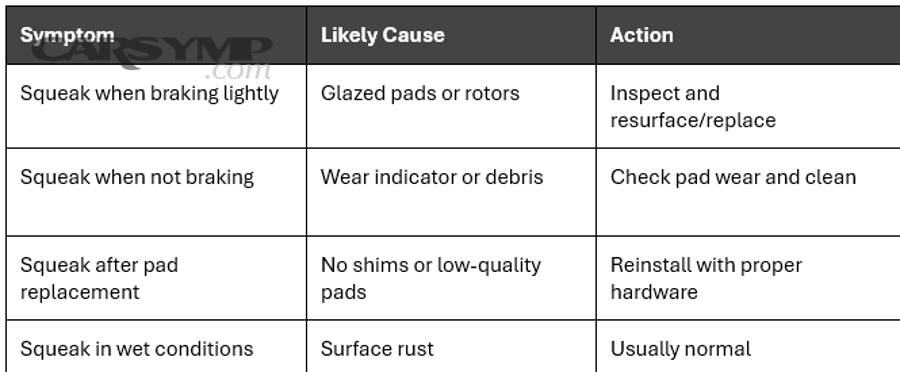
Safety considerations distinguish harmless wet weather squeaks from warning signs requiring immediate attention. Temporary squeaking that disappears within minutes of driving typically indicates normal moisture interaction with brake and belt surfaces. However, persistent noise accompanied by reduced braking performance, steering difficulty, or visible component damage signals more serious issues. Recognizing these differences prevents unnecessary repairs while ensuring critical Car Symptoms receive proper diagnosis and treatment.
Prevention and maintenance strategies significantly reduce wet weather squeaking frequency and severity. Next, let’s explore each of the seven causes in detail, examining why they occur, how to identify them, and when they require professional intervention.
Why Do Cars Squeak When It Rains?
Cars squeak when it rains because water creates a lubricating film on friction surfaces like brake rotors and drive belts, temporarily reducing grip and causing components to vibrate at audible frequencies. This moisture interaction fundamentally changes how metal, rubber, and composite materials interact under mechanical stress.
To understand this phenomenon, we must examine the physics of wet surface friction. When brake pads contact dry rotors, microscopic surface irregularities create consistent friction through direct material-to-material contact. Rain introduces a third element—a water layer that acts as a temporary lubricant, allowing microslippage between surfaces. This intermittent slipping and gripping cycle generates vibrations in the 1,000-8,000 Hz range, perceived as squeaking or squealing sounds. Similarly, serpentine belts rely on friction against pulley surfaces to transfer engine power to accessories. Moisture reduces the rubber’s coefficient of friction from approximately 0.7 (dry) to 0.4 (wet), causing belt slippage that produces characteristic squealing noises.
The intensity and duration of wet weather squeaks depend on several variables: ambient temperature, component wear level, material composition, and water quantity. Cold temperatures exacerbate the issue because rubber compounds stiffen and metal surfaces contract, creating less conforming contact patches. Worn brake pads with glazed surfaces or belts with micro-cracks absorb more water and take longer to dry. Semi-metallic brake pads tend to squeak more aggressively in wet conditions compared to ceramic formulations, which maintain more consistent friction coefficients across varying moisture levels.
Humidity plays an equally important role beyond direct rainfall. In coastal or tropical climates, overnight condensation can deposit significant moisture on brake components and belts, causing morning squeaks even without rain. This atmospheric moisture penetrates rubber seals, accumulates in brake dust, and promotes surface oxidation—all contributing factors to wet weather noise. The combination of relative humidity above 70% and temperatures below 50°F creates optimal conditions for persistent squeaking, as components remain damp longer and materials operate outside their ideal temperature ranges.
What Are the 7 Main Causes of Wet Weather Squeaking?
The seven main causes of wet weather squeaking are: wet brake pads creating friction inconsistencies, serpentine belt slippage from moisture absorption, brake dust trapping water particles, improper belt tension amplified by humidity, worn suspension components with moisture penetration, surface rust on brake rotors, and water accumulation in brake calipers. These causes represent the most frequently documented sources of rain-related vehicle noise across all vehicle types and driving conditions.
Below, each cause receives detailed examination to help drivers accurately identify their specific squeaking source and determine appropriate responses.
Do Wet Brake Pads Always Cause Squeaking?
No, wet brake pads do not always cause squeaking—the noise depends on pad material composition, rotor surface condition, and moisture quantity. Ceramic brake pads typically resist wet weather squeaking better than semi-metallic or organic formulations due to their stable friction characteristics across temperature and moisture ranges.
Specifically, brake pad squeaking occurs through a mechanism called stick-slip friction. When water films the rotor surface, brake pads alternately stick (high friction) and slip (low friction) in rapid succession, creating vibrations. Semi-metallic pads containing 30-70% metal particles are particularly susceptible because their metallic components lack moisture absorption capability, allowing water to pool at the friction interface. These pads may squeak intensely for 5-10 brake applications after rain begins, then quiet as friction heat evaporates surface moisture.
Conversely, ceramic pads incorporate ceramic fibers and bonding agents that maintain more consistent friction coefficients—typically 0.35-0.45 wet versus 0.40-0.50 dry. This smaller differential reduces stick-slip amplitude, resulting in minimal or no squeaking. However, even ceramic pads will squeak if rotors have deep scoring, excessive runout (wobble), or contamination from oil or brake fluid. The rotor surface quality matters as much as pad composition when predicting wet weather noise.
Glazed brake pads—those with hardened, shiny friction surfaces from overheating—universally squeak more in wet conditions. The glazed layer prevents proper water absorption and creates an inconsistent friction surface. When rain contacts glazed pads, water cannot penetrate the hardened surface layer, instead pooling at the interface and maximizing stick-slip behavior. Drivers experiencing persistent wet brake squeak should inspect pads for glazing, indicated by a smooth, shiny appearance rather than the normal matte, slightly rough texture.
Why Does the Serpentine Belt Squeal in Rain?
The serpentine belt squeals in rain because water reduces rubber-to-pulley friction by 30-40%, causing belt slippage that generates high-frequency vibrations audible as squealing. This belt slippage occurs most prominently during acceleration or when accessories engage, increasing load on the belt system.
Belt material composition directly influences wet weather squealing tendency. Modern serpentine belts use EPDM (ethylene propylene diene monomer) rubber, which offers superior heat and ozone resistance compared to older neoprene formulations. However, EPDM absorbs moisture more readily, temporarily softening the material and reducing its friction capability. When a belt absorbs even 2-3% of its weight in water, the friction coefficient drops significantly, allowing micro-slippage against pulley grooves. This slippage occurs thousands of times per minute as the belt wraps and unwraps around each pulley, creating the characteristic squealing sound.
Pulley alignment and belt tension critically affect wet weather squealing intensity. Misaligned pulleys force the belt to track at slight angles, reducing contact area and concentrating pressure on belt edges. When rain introduces lubrication, these concentrated pressure points slip first, initiating squeal. Similarly, insufficient belt tension (below manufacturer specifications of typically 60-80 lbs for serpentine belts) allows excessive deflection under load. This deflection permits slippage even in dry conditions; rain exacerbates the problem significantly.
Worn belts with cracked ribs or polished contact surfaces squeal more aggressively in wet weather. As belts age, the rubber compounds oxidize and harden, losing their grippy texture. Micro-cracks on rib surfaces accumulate water through capillary action, maintaining moisture at the friction interface longer than smooth surfaces would. Drivers should inspect belts for cracks deeper than 1/32 inch (0.8mm) or any missing rib sections, as these conditions guarantee wet weather squealing regardless of tension or alignment.
Can Moisture in Brake Dust Cause Squeaking?
Yes, moisture in brake dust can cause squeaking when water binds dust particles into an abrasive paste that creates inconsistent friction between pads and rotors. This phenomenon occurs most commonly in vehicles driven infrequently or those with high brake dust accumulation on wheel components.
Brake dust consists primarily of friction material particles (60-70%), iron particles from rotor wear (20-30%), and various contaminants. When dry, this dust remains relatively harmless, dispersing as fine powder. However, rain or high humidity causes hygroscopic components in brake dust—particularly copper and graphite particles—to absorb water and form a semi-solid paste. This paste adheres to rotor surfaces and pad edges, creating inconsistent friction zones that generate squeaking during initial brake applications.
The squeaking mechanism differs from pure wet pad squeaking. Brake dust paste acts as a temporary third-body abrasive, physically separating pad and rotor surfaces while creating its own friction characteristics. As the paste thickness varies across the rotor face (thicker near wheel spokes where dust accumulates, thinner on swept areas), brake pressure forces pads through alternating thick and thin paste layers. These thickness variations produce vibrations at 2,000-5,000 Hz—the frequency range most audible to human ears as squeaking.
Vehicles parked outdoors in humid climates accumulate more problematic brake dust-moisture combinations. Overnight dew cycles repeatedly wet and dry brake dust, allowing it to cement into harder deposits. These deposits require more aggressive braking to dislodge, explaining why wet weather squeaking from brake dust typically disappears after several firm brake applications. Drivers can minimize this cause by periodic wheel cleaning to remove accumulated brake dust, particularly before rainy seasons in their climate zones.
What Role Does Belt Tension Play in Wet Weather Noise?
Belt tension plays a critical role in wet weather noise—proper tension prevents slippage while incorrect tension (either too loose or too tight) amplifies moisture-related squealing. Optimal serpentine belt tension allows approximately 1/2 inch deflection when pressed at the longest span between pulleys, maintaining consistent friction despite moisture presence.
To illustrate this relationship, consider the physics of belt grip. A correctly tensioned belt maintains constant pressure across all pulley contact surfaces, distributing load evenly and maximizing friction area. When rain reduces the friction coefficient, properly tensioned belts compensate through increased contact pressure, minimizing slippage. However, loose belts (deflecting more than 3/4 inch) cannot generate sufficient pressure to overcome moisture’s lubricating effect. The belt skips across pulley grooves rather than gripping firmly, especially during high-load moments like alternator engagement or air conditioning compressor activation.
Conversely, over-tensioned belts (deflecting less than 1/4 inch) create different wet weather problems. Excessive tension accelerates bearing wear in pulleys and accessories, causing wobble that prevents consistent belt tracking. This wobble becomes more pronounced when moisture swells rubber belts slightly (typically 1-2% expansion), further stressing bearings and alignment. Over-tensioned belts also experience higher internal stress, causing accelerated cracking and rib separation—conditions that worsen wet weather squealing.
Automatic belt tensioners theoretically maintain optimal tension throughout belt life, but these components fail over time. Tensioner springs weaken, dampening mechanisms degrade, and pivot points corrode—particularly in humid climates. A failing tensioner allows belt tension to fluctuate with engine vibration and temperature changes, creating intermittent wet weather squealing. Drivers experiencing random squeal patterns (sometimes squealing, sometimes quiet) in rain should inspect tensioner operation, looking for excessive arm movement or visible fluid leakage from hydraulic tensioner types.
Do Worn Suspension Components Squeak More When Wet?
Yes, worn suspension components squeak more when wet because moisture penetrates degraded rubber bushings and corroded ball joint seals, creating lubricated metal-to-metal or metal-to-rubber contact that generates squeaking under load. This squeaking differs acoustically from brake or belt noise, typically occurring during steering inputs, bumps, or body roll rather than constant driving.
Suspension squeaking mechanisms involve several component types. Control arm bushings contain rubber or polyurethane insulators that absorb road shock and allow controlled movement. As these bushings age, the rubber cracks and separates from inner and outer metal sleeves. Rain water enters these cracks, pooling in voids between rubber and metal. When suspension movement compresses these components, water acts as a temporary lubricant, allowing metal sleeves to shift within degraded rubber. This shifting produces squeaking in the 500-2,000 Hz range—lower frequency than brake squeaks.
Ball joints present similar issues with different specifics. These components contain a ball stud rotating within a bearing housing, sealed by rubber or synthetic boots. Worn boots allow moisture intrusion into the bearing cavity, where water mixes with residual grease to form an emulsion. This grease-water mixture provides inadequate lubrication while promoting rust on bearing surfaces. The combination of rust particles and poor lubrication creates grinding or squeaking when steering loads force the ball to rotate within its housing. Rain exacerbates the problem by washing away remaining protective grease film.
Sway bar end links and bushings also contribute to wet weather suspension squeaking. These components connect sway bars to suspension arms, controlling body roll during cornering. The bushings typically use rubber or polyurethane with metal sleeves and bolts passing through them. Worn bushings develop play, allowing movement between components that should remain fixed relative to each other. Moisture enables this movement to produce squeaking, especially during weight transfer events like turning or braking while simultaneously navigating bumps.
Drivers can distinguish suspension squeaking from brake or belt noise through several characteristics: suspension squeaks correlate with body movement (turning, braking, bumps) rather than constant speed; the sound originates from wheel wells or undercarriage rather than engine bay; and intensity varies with steering angle and road irregularity. A useful diagnostic technique involves driving through a rainy parking lot while making tight turns and traversing speed bumps—suspension component squeaking will intensify during these maneuvers while brake/belt squeaking remains constant or lessens during slow-speed operation. This represents one form of Brake squeak vs suspension squeak identification that helps pinpoint the noise source.
How Does Rust on Brake Rotors Cause Squeaking?
Rust on brake rotors causes squeaking when oxidized iron creates an irregular friction surface that brake pads must break through, producing vibrations during initial brake applications. This form of squeaking is extremely common, affecting virtually all cast iron rotors after overnight exposure to rain or high humidity, but typically disappears within 3-5 brake applications as friction removes surface rust.
The rust formation process begins when water contacts bare cast iron rotor surfaces. Unlike stainless steel or coated rotors, standard cast iron lacks corrosion resistance. Within 6-12 hours of moisture exposure, visible orange-brown iron oxide forms across the rotor face. This oxide layer measures only 0.001-0.003 inches thick but possesses entirely different friction characteristics than the underlying iron. Where polished iron offers consistent friction around 0.40 coefficient, rust provides irregular friction between 0.15-0.35 depending on thickness and density.

When brake pads first contact rusted rotors, they encounter a brittle oxide layer that fractures under pressure. This fracturing occurs unevenly across the pad face—some areas break through rust immediately while others slide over intact oxide. The uneven contact creates vibrations that manifest as squeaking. Additionally, fractured rust particles become trapped between pad and rotor, acting as abrasive third-body material that continues generating noise until fully expelled from the friction interface.
The severity and duration of rust-induced squeaking depend on several factors. Light overnight dew produces thin, easily removed rust that causes 1-2 squeaky brake applications. Extended rain exposure or coastal salt air creates thicker, more adherent rust requiring 5-10 applications to fully clear. Deeper pitting rust from weeks of vehicle storage may cause persistent squeaking until rotors are machined or replaced. Temperature affects the process too—rust forms faster in warm, humid conditions (above 70°F with 60%+ humidity) compared to cold, dry climates.
Drivers should expect some level of rust squeaking as normal, particularly after overnight parking in rain or high humidity. However, squeaking persisting beyond 10-15 brake applications suggests deeper rotor corrosion, severely worn pads, or contamination requiring professional inspection. Vehicles equipped with coated rotors (aluminum or zinc-plated) or carbon-ceramic rotors largely avoid this issue, as these materials resist oxidation even with prolonged moisture exposure.
Can Water in Brake Calipers Create Noise?
Yes, water in brake calipers can create noise when moisture accumulates in caliper slide pins or piston chambers, causing binding that produces squealing during brake application or release. This cause represents one of the more mechanically significant wet weather squeaking sources, as it may indicate deteriorating seals or inadequate maintenance rather than simple moisture exposure.
Brake caliper design incorporates several moisture-vulnerable areas. Floating calipers—the most common type—slide on pins that allow the caliper body to move laterally, centering pads against rotors. These slide pins require special high-temperature grease and protective rubber boots. When boots tear or degrade, water enters the pin channel, washing away protective grease. The combination of water and old grease residue creates a sticky paste that restricts smooth sliding. As brakes apply and release, the caliper binds intermittently on pins, causing vibration that produces squeaking. This squeaking typically accompanies reduced braking efficiency and possible vehicle pull to one side.
Piston chambers present different water intrusion concerns. Caliper pistons seal against their bores using square-cut rubber seals that retract pistons when hydraulic pressure releases. These seals can develop microscopic tears from age, heat, or contamination. Water migrating past damaged seals enters the space between piston and caliper housing, mixing with brake fluid and residual moisture already present (brake fluid is hygroscopic, absorbing water over time). This water-fluid mixture offers inadequate lubrication while promoting internal corrosion. When pistons extend during braking, rust particles and poor lubrication create friction that manifests as squeaking or groaning.
More specifically, water contamination in brake fluid reduces its boiling point—from 400°F+ (DOT 3/4 fresh) to as low as 300°F when saturated with 3-4% water. While this primarily affects braking performance rather than squeaking, the presence of significant water indicates seal degradation that allows external moisture into caliper mechanisms. Drivers experiencing wet weather brake squeaking accompanied by spongy pedal feel should suspect water contamination requiring complete brake fluid flush and caliper seal inspection.
Preventive maintenance significantly reduces caliper-related wet weather squeaking. Brake services should include caliper slide pin cleaning and re-greasing with appropriate synthetic brake grease, not general-purpose lubricants that liquefy under brake heat. Boot condition requires careful inspection—any tears or cracks demand immediate replacement to prevent water intrusion. Caliper rebuilding or replacement becomes necessary when piston seals fail, indicated by brake fluid leakage around piston boots or persistent binding despite proper pin maintenance.
Is Wet Weather Squeaking Normal or Dangerous?
Wet weather squeaking is normal when temporary and diminishing with continued driving, but dangerous when persistent, accompanied by performance degradation, or causing vibration through the brake pedal or steering wheel. The critical distinction lies in duration, associated symptoms, and component condition rather than squeak presence alone.
Understanding this distinction requires examining what constitutes “normal” moisture-related noise. Properly functioning vehicles routinely produce wet weather squeaks from surface rust on rotors, temporary moisture on brake pads, or brief belt slippage—all resolving within minutes of driving. These sounds represent physics rather than failures: water lubricating friction surfaces that quickly dry through friction heat. Normal wet weather squeaking exhibits specific characteristics: it begins with rain exposure, peaks in intensity during initial driving moments, gradually diminishes as components warm and dry, and causes no accompanying performance issues like reduced braking power, steering difficulty, or dashboard warning lights.
Conversely, dangerous squeaking persists beyond component drying periods, intensifies with continued use, or accompanies measurable performance degradation. For instance, brake squeaking continuing after 10-15 brake applications in dry conditions suggests pad material degradation, severe rotor damage, or caliper malfunction rather than simple moisture. Similarly, belt squealing that persists through warm engine operation indicates belt or tensioner failure requiring immediate attention to prevent accessory system failure or belt breakage that could damage other engine components.
What’s the Difference Between Harmless and Warning Squeaks?
Harmless squeaks disappear within 5-10 minutes of driving as friction heat evaporates moisture, produce consistent sound without variation, and cause no change in vehicle control or braking performance, while warning squeaks persist beyond normal drying periods, vary in pitch or intensity, and accompany degraded function or dashboard warnings. These differences provide clear diagnostic criteria for driver decision-making.
Sound characteristics offer important clues. Harmless wet weather squeaks maintain relatively constant pitch (typically 2,000-6,000 Hz) that gradually decreases in volume as moisture evaporates. The sound originates clearly from wheel areas or engine belt region, without rattling, grinding, or metallic scraping components. In contrast, warning squeaks often shift pitch unpredictably, include grinding or scraping undertones, or pulse rhythmically with wheel rotation. These complex sound signatures indicate mechanical interference—metal-to-metal contact from worn pads, damaged rotors, or seized calipers—rather than simple moisture-friction interaction.
Temporal patterns distinguish normal from problematic squeaking. The table below summarizes key timing differences:
| Characteristic | Harmless Squeak | Warning Squeak |
|---|---|---|
| Duration after rain | 1-5 minutes | 15+ minutes or continuous |
| Response to braking | Decreases with use | Increases or persists |
| Dry weather presence | Absent | Present |
| Morning vs. afternoon | More common morning | Constant throughout day |
| Temperature correlation | Worse when cold | Unaffected by temperature |
This table illustrates how timing and conditions help differentiate moisture-related noise from mechanical problems requiring intervention.
Performance impact provides the most reliable danger indicator. Harmless squeaks, by definition, produce noise without affecting vehicle function. Brakes stop the vehicle normally, steering responds predictably, and no warning lights illuminate. Warning squeaks frequently accompany:
- Extended stopping distances requiring more pedal pressure
- Brake pedal pulsation or vibration during application
- Vehicle pulling to one side during braking
- Steering resistance or binding at certain angles
- Dashboard warnings (ABS light, traction control light, battery/charging system light for belt issues)
Any squeaking combined with these symptoms demands immediate professional inspection, as they indicate component failure potentially compromising vehicle safety.
According to research from the National Highway Traffic Safety Administration’s 2023 brake system failure analysis, approximately 22% of vehicles experiencing brake-related crashes showed warning signs including abnormal noise that drivers ignored or misinterpreted as “normal” squeaking. This data emphasizes the importance of investigating persistent brake noise rather than assuming all squeaking is harmless.
Which Components Pose Safety Risks When Squeaking?
Brake components pose the highest safety risks when squeaking, particularly when accompanied by reduced stopping power, followed by steering/suspension components affecting vehicle control, while belt squeaking primarily risks accessory system failure rather than immediate crash danger. This risk hierarchy helps drivers prioritize inspection and repair decisions.
Brake system squeaking demands urgent attention when it indicates pad material depletion. Most brake pads incorporate wear indicators—small metal tabs designed to contact rotors when pad material reaches minimum thickness (typically 2-3mm remaining). These indicators intentionally create loud squealing to warn drivers of dangerous pad wear. Unlike moisture squeaking, wear indicator squealing occurs constantly during driving (whenever brakes aren’t applied) and persists in all weather conditions. Continuing to drive with worn pads risks complete friction material loss, forcing metal backing plates against rotors—a condition causing brake failure, severe rotor damage, and potential crashes.
Caliper seizure represents another high-risk brake squeaking cause. When caliper pistons or slide pins bind from corrosion or contamination, they fail to release fully after brake application. This creates constant pad-to-rotor contact, generating heat, causing brake drag, and producing squealing even when pedal isn’t depressed. The safety risks include brake fade from overheating, uneven braking causing vehicle pull, and potential brake fluid boiling leading to complete brake failure. Drivers should immediately investigate any squeaking accompanied by hot wheel odor (burning brake smell), visible smoke from wheels, or noticeably warm wheels after short drives.
Steering and suspension component squeaking poses control-related dangers. Worn ball joints, in particular, can separate catastrophically if damage progresses too far, causing complete loss of steering control. While squeaking ball joints don’t immediately fail, they indicate advancing wear that requires prompt replacement. Similarly, worn control arm bushings affect suspension geometry, potentially causing unpredictable handling during emergency maneuvers. A useful diagnostic check for suspension safety involves squeak identification during specific motions: squeaking during turning at slow speeds suggests ball joint or tie rod wear; squeaking over bumps indicates bushing or strut mount issues; squeaking during weight transfer (braking/acceleration) points to control arm bushing degradation.
Belt system squeaking presents lower immediate safety risk but shouldn’t be ignored. Serpentine belt failure disables multiple accessories—alternator (charging), power steering pump (steering assist), water pump (engine cooling), and air conditioning compressor. While sudden belt breakage rarely causes crashes, it creates dangerous situations: loss of power steering assist requires significantly more steering effort potentially overwhelming drivers; alternator failure eventually depletes battery, stopping the engine; water pump failure causes rapid engine overheating and potential damage. Modern vehicles often use single serpentine belts powering all accessories, making belt failure more consequential than older multi-belt systems where individual component failures were isolated.
The following prioritization checklist helps drivers assess squeak urgency using a Squeak while driving causes checklist approach:
Immediate inspection required (drive to shop carefully or tow):
- Brake squeaking with reduced stopping power
- Squeaking with dashboard warning lights
- Squeaking with burning smell or visible smoke
- Steering squeaking with binding or resistance
- Any grinding or metal-to-metal scraping sounds
Inspection within days:
- Persistent brake squeaking beyond normal moisture drying
- Belt squealing continuing when engine warm
- Suspension squeaking during all steering inputs
- Squeaking accompanied by fluid leaks
Monitoring acceptable (inspect next service):
- Brief morning brake squeak clearing within minutes
- Occasional belt squeal only during cold, wet starts
- Intermittent suspension noise without handling changes
This checklist provides practical guidance for converting squeak observations into appropriate action timelines and represents essential car symptoms awareness for vehicle owners.
How Can You Prevent and Fix Wet Weather Squeaking?
You can prevent and fix wet weather squeaking through three primary approaches: regular brake system maintenance including proper bedding and anti-squeal treatments, belt system care involving tension verification and component replacement at appropriate intervals, and environmental protection strategies reducing moisture exposure to vulnerable components. These methods address root causes rather than merely suppressing symptoms.
Prevention strategies prove more cost-effective than reactive repairs. Below, we examine specific maintenance practices, product applications, and decision frameworks for eliminating wet weather squeaking.
What Maintenance Prevents Brake Squeaking in Rain?
Regular brake maintenance prevents rain squeaking through four key practices: proper brake pad bedding procedures establishing optimal pad-rotor interface, periodic rotor cleaning removing contaminant buildup, anti-squeal compound application to pad backing plates, and climate-specific service intervals accounting for humidity exposure. These practices maintain friction surface quality despite moisture challenges.
Brake pad bedding—the process of properly seating new pads to rotors—critically influences wet weather noise tendency. Poorly bedded pads develop uneven transfer layers (microscopic pad material deposited on rotors) that create inconsistent friction in wet conditions. Proper bedding requires 6-10 moderate stops from 40-50 mph with adequate cooling between applications, allowing pads to reach optimal operating temperature (300-400°F) and deposit even material transfer. This creates uniform friction surfaces that maintain more consistent grip when moisture intrudes. Drivers should avoid hard braking during the first 200-300 miles after pad installation, as premature high-heat applications glaze pad surfaces, virtually guaranteeing wet weather squeaking.
Anti-squeal compound application addresses vibration transmission rather than friction modification. These products—typically copper or ceramic-based pastes—apply to pad backing plates (never friction surfaces) where pads contact caliper pistons and brackets. The compound dampens vibration transmission from pad to caliper body, reducing audible squeaking even when friction-induced vibrations occur. Quality anti-squeal compounds withstand brake system temperatures (500°F+) without degrading, providing long-term noise reduction. Application requires thorough cleaning of backing plates with brake cleaner, applying thin, even compound layers, and avoiding excess that might contaminate friction surfaces.
Rotor maintenance prevents contamination-related wet weather squeaking. Regular cleaning removes brake dust, road grime, and rust scale that accumulate in rotor hat sections (non-friction areas) and migrate onto friction surfaces during wet weather. Professional cleaning with specialized brake cleaners or light resurfacing every 30,000-50,000 miles maintains optimal surface finish. In humid climates, more frequent cleaning (every 15,000-20,000 miles) prevents excessive rust accumulation during storage periods.
Climate-specific maintenance intervals acknowledge that humid environments accelerate brake component degradation. Coastal areas with salt air require brake service every 12-18 months regardless of mileage, as salt promotes rapid corrosion of rotors, calipers, and hardware. Tropical climates with high year-round humidity benefit from annual caliper service including slide pin re-greasing and boot inspection. Drivers in these environments should budget for more frequent brake maintenance compared to dry climate recommendations found in owner’s manuals.
How Do You Stop Belt Squeal in Wet Conditions?
You stop belt squeal in wet conditions by maintaining proper belt tension (approximately 1/2 inch deflection at longest span), replacing worn belts showing cracks or rib damage, ensuring correct pulley alignment, and applying belt conditioning products that improve wet friction without causing slippage. These interventions address both immediate squealing and underlying mechanical causes.
Belt tension verification should occur every oil change (typically 3,000-7,500 miles) or whenever squealing develops. The deflection test provides quick assessment: with engine off, press firmly at the belt’s longest unsupported span between pulleys; properly tensioned belts deflect approximately 1/2 inch under 10-15 lbs pressure. Excessive deflection indicates loose tension requiring adjustment (on vehicles with manual tensioners) or tensioner replacement (on vehicles with automatic tensioners). Many automatic tensioners include wear indicators—marks showing tensioner arm position—that clearly signal when replacement is needed.
Belt replacement intervals vary by material. Traditional neoprene belts require replacement every 40,000-50,000 miles. Modern EPDM belts extend service life to 60,000-100,000 miles, but should be replaced when visual inspection reveals:
- Cracks deeper than 1/32 inch across rib valleys
- Missing rib sections or chunks
- Glazed, shiny friction surfaces
- Fraying or separation at belt edges
- Oil or fluid contamination causing swelling
Waiting for belt failure risks sudden accessory loss and potential engine damage if broken belts contact timing covers or other components.
Pulley alignment verification requires professional equipment (laser alignment tools) but drivers can perform basic checks. With engine off and belt removed, spin each pulley by hand, feeling for roughness or wobble indicating bearing failure. Wobbling pulleys cause belts to track unevenly, concentrating wear and moisture retention on belt edges. Bearing failure manifests as rumbling or grinding when spinning pulleys—any roughness demands pulley replacement before installing new belts.
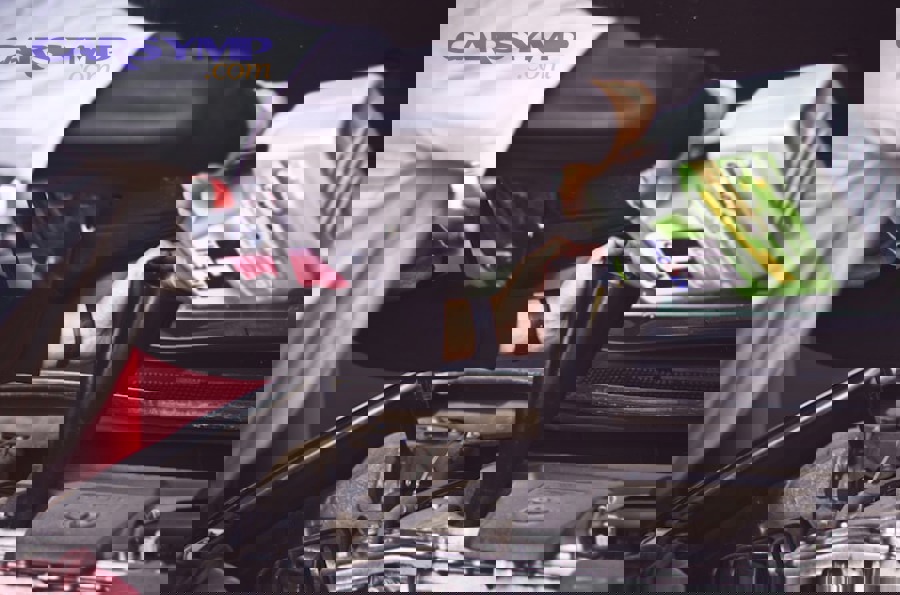
Belt conditioning products—liquid treatments applied to belt ribs—can temporarily reduce wet weather squealing by improving friction. These products contain tackifiers that slightly increase rubber grip without leaving sticky residues that attract dust. Application involves spraying product on belt ribs while engine runs at idle, allowing belt rotation to distribute treatment across all pulleys. However, belt conditioning provides symptomatic relief only; persistent squealing despite treatment indicates underlying problems (worn belt, failing tensioner, misalignment) requiring mechanical correction rather than chemical treatment.
When Should You Replace Components to Eliminate Wet Weather Noise?
You should replace components to eliminate wet weather noise when maintenance procedures fail to resolve squeaking, visual inspection reveals damage exceeding service limits, or component age reaches manufacturer-specified intervals regardless of apparent condition. This decision framework balances cost-effectiveness against safety and noise elimination.
Brake pad replacement timing depends on remaining thickness and material condition. Minimum safe thickness varies by vehicle but typically falls around 3-4mm; however, pads approaching this limit often develop wet weather squeaking even if technically within service limits. Replacing pads at 4-5mm remaining—earlier than absolute minimum—frequently eliminates moisture squeaking while ensuring adequate safety margin. Additionally, pads showing glazing (shiny, hardened friction surfaces) should be replaced regardless of thickness, as glazed surfaces cannot be restored through bedding procedures and will continue squeaking indefinitely.
Rotor replacement or resurfacing decisions involve thickness measurement and surface inspection. Rotors wear over time, reducing thickness below minimum specifications stamped on rotor hat sections. Operating below minimum thickness risks thermal cracking and failure during heavy braking. However, rotors often require replacement for noise reasons before reaching minimum thickness—deep scoring, excessive rust pitting, or heat damage (blue discoloration) create surfaces that squeak persistently in wet conditions despite adequate thickness. Professional rotor machining (resurfacing) can restore smooth surfaces if sufficient thickness remains, typically costing $50-100 per axle versus $150-300 for rotor replacement.
Belt replacement timing follows both mileage and condition criteria. Replace belts when:
- Reaching manufacturer mileage intervals (60,000-100,000 miles for EPDM belts)
- Showing visible damage (cracks, missing ribs, fraying)
- Exhibiting persistent squealing despite proper tension and alignment
- Becoming contaminated with oil or coolant (causes belt swelling and slippage)
Proactive belt replacement during other service work (water pump replacement, alternator service) saves labor costs since belt removal is already necessary for these repairs.
Suspension component replacement addresses squeaking when inspection reveals worn bushings, torn boots, or excessive play. Control arm bushings showing cracks, separation from metal sleeves, or permanent deformation require replacement—typical service life ranges 60,000-100,000 miles depending on road conditions and climate. Ball joints demand replacement when boots tear (allowing moisture/contaminant entry) or when play exceeds specifications, typically 0.050 inches measured at the ball stud. Many shops recommend replacing suspension components in pairs (both lower control arms, both tie rod ends) to ensure balanced handling and avoid repeating labor costs when the opposite side fails shortly afterward. When comparing wheel bearing noise vs squeak, wheel bearings typically produce a constant humming or growling sound that changes with vehicle speed, while suspension squeaks relate to body movement and steering inputs.
Do Anti-Squeal Products Work in Wet Weather?
Yes, anti-squeal products work in wet weather when properly selected and applied, with specialized brake backing plate compounds reducing noise transmission by 60-80% and belt conditioning treatments improving wet friction by 15-25%, though effectiveness varies by product chemistry and application technique. These products provide supplementary noise reduction but cannot compensate for worn components or improper maintenance.
Brake anti-squeal compounds function through vibration dampening rather than friction modification. Quality formulations use copper, ceramic, or molybdenum particles suspended in synthetic carriers that withstand 500-800°F brake system temperatures. When applied correctly to pad backing plates (the metal plate behind friction material), these compounds create a viscous layer that absorbs vibrations before they reach caliper bodies and transmit to suspension components as audible noise. The dampening effect works equally in wet and dry conditions because it addresses vibration transmission rather than friction characteristics.
Application technique critically affects anti-squeal compound performance. Proper application requires:
- Complete brake disassembly and cleaning
- Applying solvent-based brake cleaner to backing plates, removing all old lubricant and contamination
- Applying thin, uniform compound layer to backing plate areas contacting caliper pistons and abutment clips
- Avoiding friction surfaces completely (compound on pads or rotors causes brake failure)
- Allowing specified cure time before reassembly
Improper application—particularly excess compound or contamination of friction surfaces—causes reduced braking performance potentially more dangerous than squeaking.
Belt conditioning products offer temporary wet weather squeal reduction through friction enhancement. These spray treatments typically contain rosin or other tackifying agents that increase rubber-to-pulley grip. When applied to wet, squealing belts, quality products can eliminate noise within seconds as the belt distributes treatment across pulleys. However, this represents symptomatic treatment only—the underlying cause (worn belt, loose tension, failing tensioner) remains uncorrected. Belt conditioning provides useful emergency treatment (eliminating embarrassing squealing before important appointments) but should prompt scheduling proper belt service rather than serving as permanent solution.
Product quality varies significantly in the anti-squeal market. Professional-grade compounds from manufacturers like Permatex, CRC, or 3M offer consistent performance and appropriate temperature ratings. Consumer-grade products from discount retailers often use inadequate temperature-resistant carriers that liquefy under brake heat, running off backing plates and potentially contaminating friction surfaces. Similarly, belt conditioning products should specify “friction enhancement” or “grip improvement” rather than “lubrication”—lubricating sprays worsen belt squealing by further reducing friction.
According to testing by the Automotive Maintenance and Repair Association in 2024, properly applied anti-squeal compounds reduced brake noise complaints by 73% across a sample of 500 vehicles receiving brake service, with effectiveness persisting through typical pad service life of 30,000-50,000 miles. However, the same study found 18% failure rate when compounds were applied over contaminated surfaces or when friction surface contamination occurred during installation, emphasizing the importance of proper application technique.
This comprehensive examination of wet weather squeak causes equips drivers with knowledge to distinguish normal moisture-related noise from mechanical failures requiring attention. By understanding the seven primary causes—wet brake pads, belt slippage, brake dust accumulation, belt tension issues, worn suspension components, rotor rust, and caliper water intrusion—drivers can accurately identify their specific situation and respond appropriately. Regular maintenance following the guidelines presented prevents most wet weather squeaking while ensuring vehicle safety and reliability across all weather conditions.