


The safety of driving with car squeaking noises depends on the source and severity—brake-related squeaking requires immediate attention, while minor belt squeaks may allow cautious driving to a repair shop. Determining whether you can safely continue driving requires identifying which of the seven critical warning signs your vehicle is exhibiting, as some squeaking noises indicate imminent component failure that could compromise your safety on the road.
Understanding what different car squeaking noises mean is essential for making informed decisions about your vehicle’s drivability. Squeaking when braking typically signals worn brake pads approaching their service limit, while squeaking from under the hood often points to serpentine belt issues or pulley problems. Squeaking when turning usually indicates power steering fluid deficiencies or suspension component wear that affects handling stability.
Diagnosing where your car’s squeaking originates involves systematic testing under various driving conditions and visual inspection of key components. By varying your speed, applying brakes at different pressures, making turns of different sharpness, and driving over various road surfaces, you can narrow down whether the noise stems from brakes, belts, suspension, or steering systems.
Knowing what immediate actions to take when squeaking starts can prevent minor issues from escalating into dangerous situations or costly repairs. Next, we’ll explore each aspect of car squeaking noises to help you make safe, informed decisions about driving your vehicle.
Is It Safe to Drive With a Squeaking Car?
No, it is not universally safe to drive with a squeaking car because the safety depends entirely on three factors: the squeaking source (brakes vs. belts vs. suspension), the severity level (intermittent vs. continuous), and whether the noise is accompanied by performance degradation (reduced braking power, steering difficulty, or warning lights).
Understanding the risk framework helps you make immediate safety decisions. Brake-related squeaking represents the highest risk category because your stopping ability directly affects collision avoidance. When brake pads wear down to their metal wear indicators, they produce a high-pitched squeaking noise when driving that serves as an audible warning before complete pad failure. If you continue driving with metal-on-metal contact between the brake pad backing plate and rotor, you risk catastrophic brake failure, extended stopping distances, and potential accidents.
Belt-related squeaking occupies a medium risk category because serpentine belt failure can disable multiple vehicle systems simultaneously. The serpentine belt powers your alternator, water pump, power steering pump, and air conditioning compressor. A squealing belt that suddenly snaps while driving causes immediate loss of power steering assistance, battery charging cessation, and engine overheating within minutes. You may lose steering control, especially at low speeds in parking lots, and your engine temperature will climb rapidly without the water pump circulating coolant.
Suspension and steering squeaking falls into varying risk levels depending on specific component involvement. Power steering fluid leaks that cause squeaking when turning reduce your ability to maneuver quickly in emergency situations. Ball joint failure, often preceded by squeaking over bumps, can cause complete wheel detachment at highway speeds. Control arm bushings that squeak typically allow continued driving but indicate deteriorating handling precision that becomes dangerous in emergency maneuvers.
The critical distinction between safe and unsafe squeaking lies in accompanying symptoms. Squeaking accompanied by vibration, pulling to one side, warning lights, fluid leaks, or reduced system performance always requires immediate professional inspection. Squeaking that occurs only under specific conditions without performance changes may allow careful driving to a repair facility, but should never be ignored for extended periods.
According to research from the National Highway Traffic Safety Administration conducted in 2023, brake system failures contribute to approximately 22% of vehicle crashes where mechanical defects were cited as contributing factors, with worn brake components being detected in 68% of those cases.
What Do Different Car Squeaking Noises Mean?
Different car squeaking noises indicate specific component issues: brake squeaking signals worn pads or contaminated rotors, under-hood squealing points to belt or pulley problems, and turning squeaks reveal steering or suspension wear based on when and where the noise occurs during vehicle operation.
Identifying the precise meaning of squeaking requires listening carefully to timing, location, and conditions. Specifically, the relationship between when you hear the noise and what action you’re performing provides diagnostic clues that narrow down the failing component. A squeaking noise when driving that changes with vehicle speed versus one that changes with engine RPM tells you whether the problem involves wheel-mounted components or engine-driven accessories.
What Does Squeaking When Braking Mean?
Squeaking when braking means your brake pads have worn to the point where the metal wear indicator tab contacts the brake rotor, or that brake dust, rust, or contamination has accumulated on the braking surfaces creating friction noise during pad-to-rotor contact.
The brake pad wear indicator represents an intentional design feature that automotive engineers incorporate for driver safety. Brake pads contain a small metal tab positioned at a specific depth within the friction material. As the pad wears down through normal use, this tab gradually approaches the rotor surface. When approximately 2-3mm of friction material remains—the point where replacement becomes necessary—the tab makes intermittent contact with the spinning rotor, producing a distinctive high-pitched squeak or squeal that’s most noticeable during light braking.
Brake dust accumulation creates a different squeaking character that drivers often confuse with wear indicators. As brake pads shed microscopic particles during normal operation, this dust settles on the rotor surface and within the caliper assembly. When moisture combines with this metallic dust, it forms a temporary layer that causes squeaking during the first few brake applications after the vehicle has been parked. This type of squeaking typically disappears after several stops as the braking action clears the contamination.
Contaminated brake pads produce persistent squeaking that doesn’t follow the wear indicator pattern. When oil, grease, or brake fluid contacts the friction material, it alters the surface characteristics and creates inconsistent friction that manifests as squeaking or squealing. This condition requires immediate pad replacement because contaminated friction material cannot be cleaned effectively and compromises braking performance.
Glazed brake pads and rotors develop from excessive heat during aggressive braking or prolonged brake dragging caused by stuck calipers. The extreme temperatures crystallize the friction material surface and create a hard, smooth finish on both pads and rotors that produces squeaking similar to rubbing glass surfaces together. This condition reduces braking effectiveness and requires resurfacing rotors and replacing pads to restore proper function.
What Does Squeaking From Under the Hood Indicate?
Squeaking from under the hood indicates serpentine belt slippage, worn belt material developing cracks, misaligned pulleys causing uneven belt tension, or failing pulley bearings in components like the alternator, water pump, or air conditioning compressor that the belt drives.
The serpentine belt system operates under constant tension and drives multiple engine accessories simultaneously. Modern vehicles typically use a single serpentine belt instead of the multiple V-belts found in older designs. This belt routes around numerous pulleys in a specific path, maintained at proper tension by either a spring-loaded automatic tensioner or a manually adjustable tensioner pulley. When any component in this system develops wear, the belt can slip against pulley surfaces, producing the characteristic squealing sound that often increases with engine RPM.
Belt material degradation occurs gradually through exposure to heat, oil, and mechanical stress. Serpentine belts typically last 50,000-100,000 miles depending on driving conditions and engine compartment temperatures. As the belt ages, the rubber compound hardens and develops surface cracks perpendicular to the belt’s length. These cracks reduce the belt’s ability to grip pulley surfaces effectively, causing slippage that produces squeaking, especially during cold starts when the belt material is less flexible.
The timing belt presents a more serious concern when it produces squeaking noises. Unlike the serpentine belt that powers accessories, the timing belt synchronizes the crankshaft and camshaft rotation, controlling valve timing that’s critical for engine operation. A squeaking timing belt often indicates misalignment, worn tensioner bearings, or impending belt failure. Because timing belt failure causes catastrophic engine damage in interference engines—where pistons and valves occupy the same space at different times—any timing belt noise requires immediate professional inspection.
Pulley bearing failure creates squeaking that persists regardless of belt condition. The alternator pulley, water pump pulley, air conditioning compressor pulley, and idler pulleys all contain bearings that allow smooth rotation. When these bearings wear out, they develop friction and roughness that produces squeaking or grinding noises. A failing water pump bearing, for example, creates squeaking that intensifies as engine temperature rises and bearing lubrication breaks down, potentially leading to engine overheating if the pump seizes.
Alternator pulley problems specifically produce squeaking that may vary with electrical load. Modern vehicles use overrunning alternator decouplers (OAD) or one-way clutch pulleys that allow the alternator to spin freely during engine deceleration, reducing belt stress. When these specialized pulleys fail, they create a rattling or squeaking sound that changes when you turn on electrical accessories like headlights, air conditioning, or the rear defroster, which increase alternator load.
What Does Squeaking When Turning Mean?
Squeaking when turning means low power steering fluid is causing pump cavitation, worn suspension components like ball joints or control arm bushings are binding under lateral load, or the steering column coupler is rubbing against the interior trim during wheel rotation.
Power steering systems operate under high hydraulic pressure to amplify your steering input and reduce the effort needed to turn the wheels. The power steering pump draws fluid from a reservoir, pressurizes it, and sends it to the steering rack or gearbox. When fluid levels drop due to leaks in hoses, rack seals, or pump seals, the pump begins drawing air along with fluid—a condition called cavitation. This air-fluid mixture cannot transmit pressure effectively, causing the pump to work harder and produce a distinctive whining or squeaking sound that increases with steering wheel rotation speed and angle.
Ball joint squeaking indicates wear in these critical suspension components that connect control arms to steering knuckles. Ball joints allow multi-directional movement while supporting the vehicle’s weight. Each ball joint contains a spherical bearing surface that rotates inside a socket, typically lubricated by grease sealed within a rubber boot. When the boot tears, moisture and contaminants enter while grease escapes, causing the metal-on-metal contact that produces squeaking during turns. Because ball joints carry suspension loads while steering, failure can cause wheel separation and loss of vehicle control.
Control arm bushings provide cushioned pivot points between suspension control arms and the vehicle frame. These bushings typically consist of rubber bonded between inner and outer metal sleeves. As the rubber deteriorates from age, road salt, and mechanical stress, it loses flexibility and may separate from the metal sleeves. This deterioration causes binding during suspension articulation when turning, producing squeaking that often accompanies a harsh, uncomfortable ride quality. The Belt squeal vs wheel squeak differences become apparent here—belt squealing comes from the engine compartment and changes with RPM, while wheel squeaking relates to vehicle speed and suspension movement.
Steering column components occasionally create squeaking that drivers perceive as coming from the suspension or steering system. The steering column coupler—a flexible joint that connects the steering shaft to the steering rack or gearbox—contains rubber elements that allow slight angular misalignment. When these rubber elements harden or the coupler mounting bolts loosen, the assembly can rub against the dashboard or firewall insulation during steering inputs, creating squeaking that seems to originate from the front wheels.
Sway bar links and bushings represent another common source of squeaking during turns. The sway bar (also called anti-roll bar) reduces body roll during cornering by connecting the left and right suspension components. Sway bar end links attach the bar to the control arms or struts using ball joints or bushings. When these components wear, they produce squeaking during weight transfer that occurs when turning. The Squeak over bumps diagnosis often overlaps with turning squeaks because both involve suspension articulation that stresses worn components.
What Are the 7 Warning Signs That Make Squeaking Unsafe to Drive?
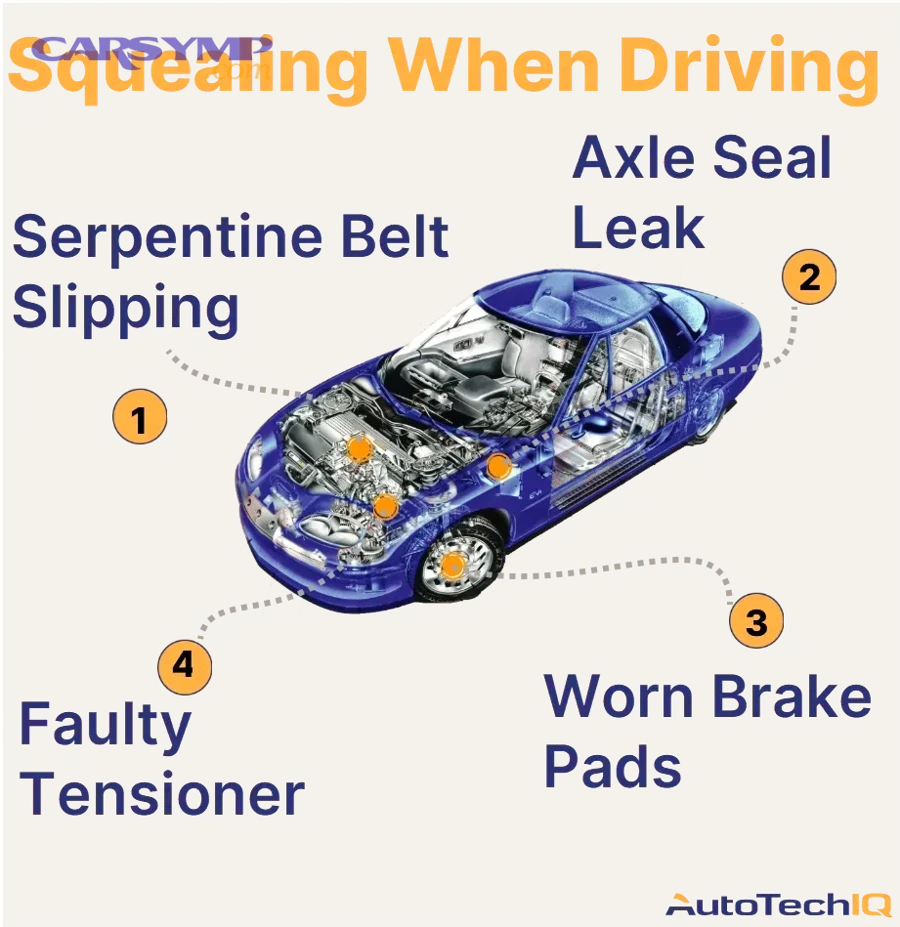
The 7 warning signs that make squeaking unsafe to drive are: metal-on-metal grinding with squeaking, squeaking with reduced braking power, continuous brake squeaking without pedal pressure, squeaking with loss of steering control, loud squeaking over bumps with handling changes, high-pitched squealing with dashboard warning lights, and squeaking accompanied by overheating or power loss.
These specific warning signs represent the transition from maintenance-level concerns to safety-critical situations requiring immediate action. More importantly, understanding the distinction between squeaking that allows continued driving and squeaking that demands immediate vehicle stoppage can prevent accidents, injuries, and catastrophic vehicle damage.
Warning Sign #1-3: Brake System Squeaking (Critical)
Warning signs 1-3 involve brake system squeaking that indicates imminent brake failure: grinding sounds accompanying squeaking mean brake pads are completely worn through, squeaking with spongy pedal feel or increased stopping distance indicates hydraulic system compromise, and continuous squeaking without brake pedal application suggests caliper seizure or dragging brake components.
Metal-on-metal grinding mixed with squeaking represents the most dangerous brake condition. When brake pads wear completely through their friction material, the metal backing plate contacts the rotor directly. This creates a grinding or scraping sound that overlays the initial squeaking. The metal-to-metal contact rapidly damages the rotor, creating deep grooves that reduce braking surface area and heat dissipation capacity. Driving even short distances in this condition can increase stopping distances by 30-50% and may cause complete brake failure if the damaged rotor cracks under thermal stress.
Squeaking accompanied by reduced braking power indicates multiple possible failures within the hydraulic system. When you hear brake squeaking combined with a brake pedal that sinks to the floor, feels spongy, or requires excessive pressure to achieve normal stopping, the master cylinder may be leaking internally, brake lines may have developed leaks, or air has entered the hydraulic system. This condition creates unpredictable braking response where stopping distance varies between applications, making collision avoidance extremely difficult.
Continuous brake squeaking when you’re not applying the brakes signals a stuck caliper or parking brake mechanism that hasn’t released fully. A seized caliper keeps brake pads in constant contact with the rotor, generating excessive heat that can boil brake fluid, warp rotors, and potentially ignite brake components or nearby materials. You’ll notice this condition by the vehicle pulling to one side, a burning smell, excessive heat from the affected wheel, and significantly reduced fuel economy due to the constant drag. The affected brake can fail completely when the pad material disintegrates from excessive heat or when brake fluid boils and creates vapor lock.
Warning Sign #4-5: Steering and Suspension Squeaking (Urgent)
Warning signs 4-5 involve steering and suspension squeaking with performance degradation: squeaking combined with difficulty turning the steering wheel indicates power steering pump failure or severe fluid deficiency, while loud squeaking over bumps accompanied by wandering or pulling suggests imminent suspension component separation.
Squeaking with steering control loss creates immediate danger in traffic, parking lots, and emergency maneuvers. When power steering assistance fails completely, the steering wheel becomes extremely difficult to turn, especially at low speeds or while stationary. This typically results from complete power steering pump failure, a snapped serpentine belt that drives the pump, or a severe fluid leak that has drained the system. Modern vehicles with electric power steering may experience complete steering lock if the electric motor or control module fails. The sudden transition from power-assisted to manual steering can cause drivers to under-steer in corners because they cannot apply sufficient force to turn the wheels adequately.
Loud suspension squeaking paired with handling changes indicates worn or failing ball joints, tie rod ends, or control arm bushings approaching catastrophic failure. When you hear pronounced squeaking during normal driving combined with the vehicle pulling to one side, wandering within the lane, or requiring constant steering corrections, suspension components have worn beyond safe tolerances. Ball joint failure is particularly dangerous because it allows the wheel and suspension to separate from the vehicle. This typically occurs when lateral forces during cornering or impact loads from potholes exceed the weakened joint’s capacity, causing instant loss of control.
The squeak over bumps diagnosis becomes critical when accompanied by clunking sounds, as this progression indicates components have developed excessive play. Shock absorbers and struts that have lost their damping ability produce squeaking as internal seals wear and allow oil to bypass pistons. When these components fail, the vehicle bounces excessively after bumps, exhibits nose-dive during braking, and experiences body roll during cornering—all conditions that reduce tire contact with the road and extend stopping distances.
Warning Sign #6-7: Belt and Engine Squeaking (Important)
Warning signs 6-7 involve belt and engine squeaking with system failures: high-pitched squealing accompanied by battery warning lights indicates alternator belt failure and impending electrical system shutdown, while squeaking combined with temperature gauge rising or steam from the engine signals water pump belt failure and imminent engine overheating.
Belt squealing with illuminated warning lights creates a cascading failure scenario. When the serpentine belt snaps or slips completely off its pulleys, the alternator stops generating electricity, causing the battery warning light to illuminate. The vehicle now operates solely on battery power, which typically lasts 30-60 minutes depending on electrical load. As the battery depletes, electronic systems begin failing in sequence: fuel injection computers, ignition systems, power steering (if electric), and finally the engine itself when insufficient voltage prevents fuel injector and ignition coil operation. Modern vehicles with electronic throttle control may experience sudden loss of throttle response as battery voltage drops below minimum thresholds.
Squeaking followed by engine temperature increase indicates water pump belt or pulley failure affecting coolant circulation. The water pump circulates coolant through the engine block, cylinder heads, and radiator to maintain optimal operating temperature. When belt slippage reduces pump speed or belt failure stops the pump completely, coolant circulation ceases and engine temperature climbs rapidly. Most modern engines reach damaging temperatures within 2-5 minutes without coolant circulation. Continued operation causes head gasket failure, cylinder head warping, and potential engine seizure when thermal expansion creates metal-to-metal contact between pistons and cylinders. The repair costs for overheating damage typically range from $1,500 for head gasket replacement to $5,000+ for complete engine replacement.
Power loss accompanying squeaking indicates belt slippage under load, often caused by oil contamination from valve cover gasket leaks, power steering leaks, or crankshaft seal leaks. When engine oil contacts the serpentine belt, it swells the rubber material and reduces friction against pulleys. The belt slips during acceleration when accessory loads increase, producing squealing sounds and reducing power available for vehicle propulsion. This condition progressively worsens as oil exposure continues, eventually leading to complete belt failure.
According to data from the Automotive Maintenance and Repair Association’s 2024 vehicle failure analysis, serpentine belt-related failures account for 14% of roadside assistance calls, with 73% of those failures occurring without prior warning sounds that drivers recognized as significant.
How Can You Diagnose Where Your Car’s Squeaking Is Coming From?
You can diagnose where your car’s squeaking is coming from by systematically testing under different driving conditions (varying speed, braking, and turning), performing visual inspections of brake pads, belts, and suspension components, and isolating the noise location through controlled reproduction while stationary or at low speeds.
Effective diagnosis requires methodical observation that correlates specific actions with noise occurrence. To better understand the diagnostic process, you need to create conditions that either trigger or eliminate the squeaking, which narrows down potential sources.
How to Identify Squeaking by Driving Conditions?
Identifying squeaking by driving conditions involves conducting speed variation tests on smooth roads, braking tests at different pressures, turning tests with varying steering angles, and surface tests over different road conditions to determine which specific vehicle action triggers the noise.
Speed variation testing reveals whether squeaking relates to vehicle speed or engine RPM. Drive on a smooth, level road and gradually accelerate from 20 mph to 60 mph while listening carefully. If squeaking pitch increases proportionally with vehicle speed, the source involves wheel-mounted components like wheel bearings, brake dust shields rubbing rotors, or tire issues. If squeaking increases with engine RPM regardless of vehicle speed—which you can test by accelerating in different gears or coasting in neutral—the source involves engine-driven components like belts, pulleys, or accessories.
Braking tests should occur in a safe location with no following traffic. Apply brakes gently at various speeds, then repeat with moderate and firm pressure. Squeaking only during brake application confirms brake pad wear indicators or rotor contamination. Squeaking that disappears when braking suggests worn suspension components that unload when the vehicle’s weight transfers forward, or loose heat shields that stop vibrating when brake force stabilizes the wheel assembly.
Turning tests require both low-speed parking lot maneuvers and higher-speed lane changes. Execute sharp, slow-speed turns in both directions while listening for squeaking. Power steering pump noise intensifies during slow, tight turns when hydraulic pressure peaks. Ball joint and tie rod squeaking often appears during the initial turn-in phase when lateral loads first transfer to these components. Perform highway-speed lane changes to test whether squeaking appears under high-speed lateral acceleration, which would suggest control arm bushings or sway bar components stressed by body roll.
Surface condition testing involves driving over various road imperfections to trigger suspension-related squeaking. Find a road with gentle bumps, speed bumps, or railroad crossings and drive over them at controlled speeds. Suspension squeaking over bumps diagnosis indicates shock absorber mounts, strut bearings, coil spring seats, or jounce bumper deterioration. Note whether squeaking occurs during compression (hitting the bump), rebound (recovering after the bump), or both phases of suspension travel.
Temperature-dependent squeaking provides additional diagnostic information. Note whether squeaking is worse during cold starts and diminishes as the vehicle warms up, which suggests belt material stiffness or brake rotor surface condensation. Squeaking that appears only after the vehicle has warmed up indicates components experiencing thermal expansion, such as exhaust system heat shields or brake components affected by heat cycling.
How to Perform a Visual Inspection for Squeaking Sources?
Performing a visual inspection for squeaking sources involves checking brake pad thickness through wheel spokes, examining serpentine belt condition for cracks or glazing, verifying fluid levels in power steering and brake reservoirs, and inspecting suspension components for torn boots, leaking shock absorbers, or worn bushings.
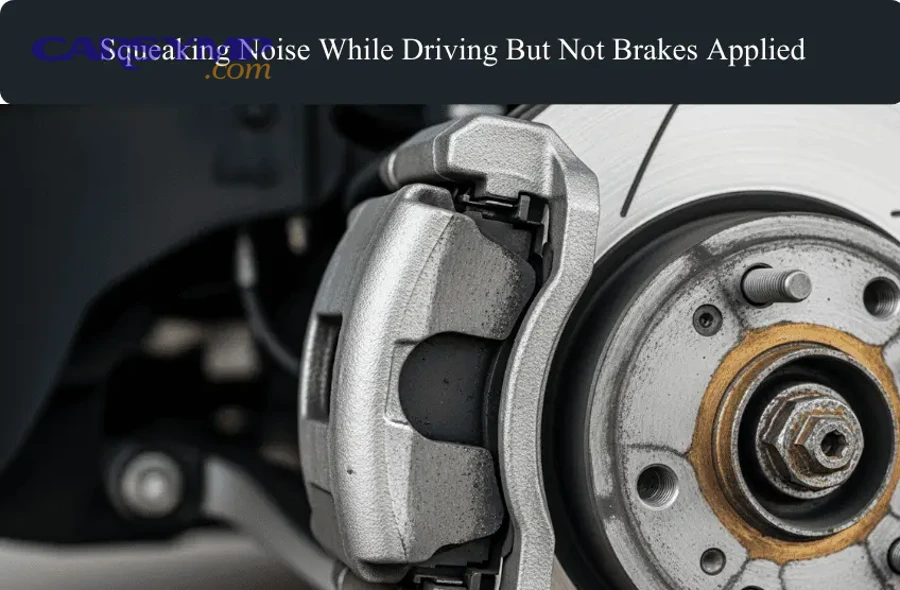
Brake pad inspection provides immediate insight into pad wear status on most vehicles. Look through the wheel spokes at the brake caliper assembly where it clamps the rotor. The brake pad is the friction material sandwiched between the caliper and the rotor. Measure the pad thickness visually by comparing it to your finger width—pads should have at least 1/4 inch (6mm) of friction material remaining. If you see less than 1/8 inch (3mm), replacement is urgent. Also check for uneven wear across the pad surface, which indicates caliper malfunction, and look for scored or grooved rotors that suggest metal-on-metal contact has already occurred.
Serpentine belt examination requires engine shutdown and key removal for safety. Open the hood and locate the belt routing through various pulleys. Inspect the belt’s ribbed surface that contacts pulleys for cracks running perpendicular to the belt length. More than 3-4 cracks per inch of belt length indicates replacement is needed. Check for glazing, which appears as a shiny, smooth surface on the belt ribs instead of a slightly textured rubber appearance. Glazing results from belt slippage and reduces friction. Examine the belt edges for fraying or chunks of missing material. Press the belt between pulleys to check tension—you should be able to deflect it approximately 1/2 inch with moderate finger pressure.
Fluid level verification addresses hydraulic systems that produce squeaking when deficient. Locate the power steering fluid reservoir, typically a translucent plastic container near the engine’s front with a steering wheel symbol on the cap. Check the fluid level against minimum and maximum markings with the engine cold. Low fluid appears dark or contains bubbles, indicating air in the system. The brake fluid reservoir, usually located near the firewall on the driver’s side, should show fluid between minimum and maximum marks. Significantly low brake fluid suggests either worn brake pads (normal reservoir drop as pads wear) or system leaks requiring immediate attention.
Suspension component inspection requires looking underneath the vehicle, preferably on a lift or with the vehicle safely supported on jack stands. Examine ball joint boots—the rubber covers that seal the ball joint—for tears, cracks, or grease leakage. A torn boot allows lubricant to escape and contaminants to enter, causing squeaking and accelerated wear. Check shock absorbers and struts for oil leakage down their bodies, which indicates failed internal seals that compromise damping ability. Inspect control arm bushings where they attach to the frame, looking for rubber that has separated from metal sleeves, exhibits cracking, or shows excessive movement when you push on suspension components.
Tie rod end inspection involves grasping each tie rod and attempting to move it perpendicular to its axis. Excessive play or squeaking during this test indicates worn tie rod ends requiring replacement. Check sway bar end link bushings for deterioration and sway bar frame bushings for cracking or separation.
What Should You Do When Your Car Starts Squeaking?
When your car starts squeaking, you should immediately assess the severity by noting when the noise occurs, reduce speed and avoid aggressive driving if the noise suggests brake or steering issues, schedule professional inspection within 24-48 hours for persistent squeaking, and pull over immediately if you experience brake fade, steering difficulty, or warning lights.
The appropriate response depends entirely on accurately categorizing the squeaking into safe-to-monitor versus requires-immediate-action categories. Let’s explore the specific action protocols for different severity levels.
What Are the Immediate Steps for Critical Squeaking?
The immediate steps for critical squeaking involve pulling over safely to a wide shoulder or parking area when you hear grinding with squeaking, experience brake pedal changes, or notice steering difficulty; turning on hazard lights and shutting off the engine; calling for towing service rather than attempting to drive to a repair shop; and documenting the symptoms to relay to the mechanic.
When brake-related squeaking escalates to grinding or occurs with reduced braking effectiveness, continuing to drive creates collision risk that escalates with every mile. Execute a safe pullover by checking mirrors, signaling early, and gradually reducing speed without abrupt braking that might overstress compromised brake components. Select the widest available shoulder, preferably on flat ground away from traffic flow. Once stopped, shift to park, engage the parking brake (unless you suspect rear brake failure), and turn off the engine to prevent further damage.
Activate hazard lights immediately to increase visibility to approaching traffic, especially important if the pullover location has limited sight distance. If you have reflective warning triangles or flares, place them 200-300 feet behind your vehicle to provide advanced warning. Exit the vehicle only if you can do so safely away from traffic, and remain outside the vehicle behind a guardrail if available.
Contact roadside assistance or a towing service rather than attempting to restart and drive the vehicle. Explain the symptoms specifically—”grinding noise from front brakes with soft pedal” or “complete loss of power steering”—so the service can send appropriate equipment. Professional towing typically costs $75-150 for local transport but prevents the $2,000-5,000 in additional damage that driving with failed components can cause.
While waiting for assistance, document the incident including when the noise first appeared, what you were doing when it intensified, any warning lights illuminated, and unusual smells or visible smoke. Take photos of the wheel area if you can do so safely. This information helps mechanics diagnose issues more quickly and may be valuable for warranty or insurance claims if component failure caused an accident.
What Are the Safe Driving Practices Until Repair?
Safe driving practices until repair include reducing maximum speed to 45 mph or below, avoiding highway driving and high-traffic areas, increasing following distance to 4-6 seconds, minimizing brake use through early deceleration, testing brakes in safe areas before entering traffic, and limiting driving to essential trips only.
When squeaking appears non-critical but repair cannot occur immediately, implementing precautionary measures reduces the risk of squeaking progressing to component failure. Reduce your maximum speed to 45 mph even on roads with higher limits. Lower speeds decrease braking force requirements, reduce heat generation in brake and bearing components, and allow more reaction time if a component fails suddenly.
Avoid highway driving completely when experiencing any brake or suspension squeaking. Highway speeds create sustained high loads on components and provide minimal safe pullover locations if failure occurs. The high speeds also generate substantial heat in brake and bearing assemblies that accelerates wear on compromised components. Plan routes using surface streets where lower speeds and more frequent stops allow component cooling and provide better access to repair facilities if conditions deteriorate.
Increase your following distance to 4-6 seconds instead of the normal 3-second rule. This extended spacing reduces brake application frequency and allows gentler, more gradual stops that minimize stress on squeaking brake components. Practice identifying stopping points early—when approaching red lights or stop signs, begin coasting to decelerate much sooner than normal, using engine braking to reduce speed before applying brakes.
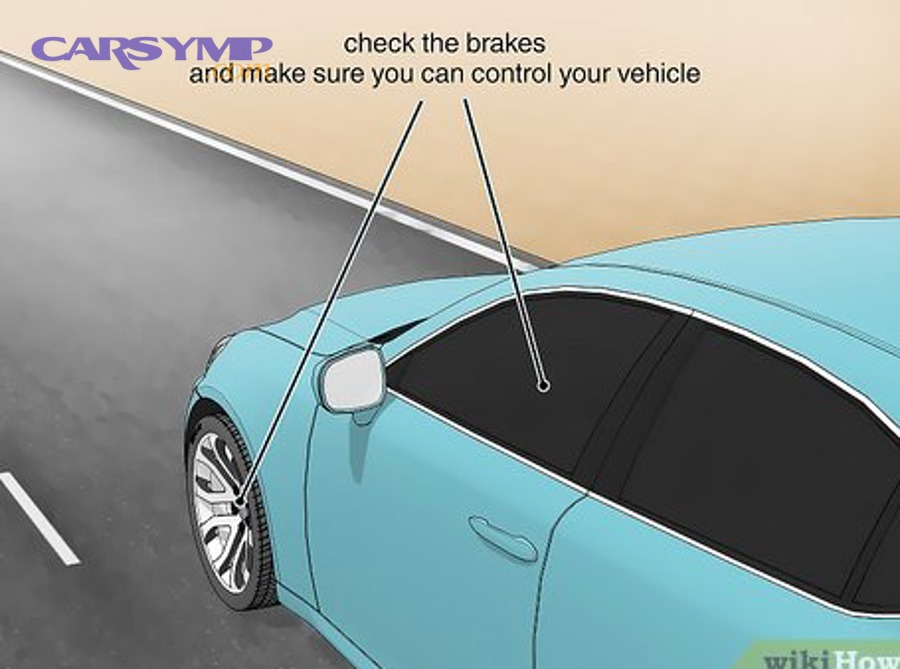
Test brake responsiveness in a safe, empty parking area before each trip. Apply brakes gradually from 15-20 mph and note pedal feel, stopping distance, and any pulling to one side. If you detect deterioration from the previous test, postpone the trip and arrange alternative transportation. This testing protocol provides early warning if brake component wear has progressed overnight or between drives.
Schedule the shortest possible route to your destination and the repair facility. Each mile driven with squeaking components accumulates additional wear that can transform a $200 brake pad replacement into a $600 rotor and pad replacement, or progress from a $150 belt replacement to a $1,200 water pump and timing belt service if belt failure causes overheating.
According to a 2024 study by the Vehicle Safety Research Institute, vehicles driven more than 500 miles after brake warning sounds appear experienced repair costs averaging 2.4 times higher than vehicles serviced within the first 100 miles of symptom onset, with 18% requiring rotor replacement versus 4% in the early-service group.
How Can You Prevent Car Squeaking Noises Before They Start?
You can prevent car squeaking noises before they start by following manufacturer-recommended maintenance schedules for brake pad replacement (typically 25,000-70,000 miles), serpentine belt replacement (50,000-100,000 miles), suspension component inspection (annually), and fluid level checks (monthly), combined with gentle driving habits that minimize component stress.
Prevention-focused maintenance costs significantly less than emergency repairs and eliminates the safety risks associated with component failure. Specifically, proactive replacement of wear items before they produce warning sounds prevents the cascade of damage that occurs when drivers ignore initial squeaking symptoms.
What Maintenance Schedule Prevents Squeaking Issues?
The maintenance schedule that prevents squeaking issues includes brake pad inspection every 12,000 miles with replacement at 3-4mm remaining thickness, serpentine belt inspection every 30,000 miles with replacement based on manufacturer intervals (typically 60,000-100,000 miles), suspension component inspection annually or every 15,000 miles, and power steering fluid replacement every 50,000 miles or per manufacturer specifications.
Brake pad replacement timing prevents the wear indicator from ever contacting the rotor and eliminates the risk of metal-on-metal damage. Most brake pads begin with 10-12mm of friction material and should be replaced when approximately 3-4mm remains. This provides a safety margin before the wear indicator activates and prevents the rotor damage that occurs when pads wear below 2mm. During brake service, mechanics should also resurface or replace rotors if they show scoring, measure below minimum thickness specifications, or exhibit excessive runout that causes pedal pulsation.
Brake service intervals vary significantly based on driving patterns. City driving with frequent stops wears pads much faster than highway driving. Mountainous terrain requires more braking than flat regions. Aggressive drivers who brake hard at the last moment wear pads faster than drivers who anticipate stops and brake gradually. Track your mileage between brake services to establish your specific wear pattern—if you’ve replaced pads at 30,000-mile intervals twice, plan for service around 25,000 miles the third time to avoid wear indicator activation.
Serpentine belt replacement should occur based on visual inspection findings or manufacturer intervals, whichever comes first. Modern EPDM (ethylene propylene diene monomer) rubber belts last significantly longer than older neoprene belts but still degrade from heat cycling and ozone exposure. Inspect belts every oil change for cracks, fraying, or glazing. Replace the belt if you observe more than 4 cracks per inch of length, any chunks missing from ribs, or shiny glazed surfaces. Even if the belt appears intact, follow manufacturer replacement intervals because internal cord degradation isn’t visible externally.
When replacing the serpentine belt, also inspect all pulleys and the belt tensioner. Spin each pulley by hand to check for bearing roughness or wobble. Replace any pulley that doesn’t rotate smoothly or shows lateral movement. The automatic belt tensioner wears over time and may not maintain proper tension, so replace it if the belt is more than 5 years old or shows wear patterns suggesting tension problems.
Suspension component inspection should occur at least annually, preferably during wheel alignment service when the vehicle is on a lift allowing full undercarriage access. Mechanics should check all ball joint boots for tears, test ball joints for excessive play, inspect bushings for deterioration, examine shock absorbers for leakage, and assess sway bar links for wear. Many shops include this inspection with oil changes, providing early warning before components fail.
Seasonal maintenance considerations affect squeaking development in regions with temperature extremes. Cold weather hardens rubber components in belts, bushings, and mounts, making them more prone to cracking and squeaking. Before winter, have belts inspected and consider replacement if they’re more than 5 years old, even if mileage hasn’t reached replacement intervals. Hot climates accelerate belt degradation through increased under-hood temperatures, suggesting more frequent inspection intervals.
How Does Driving Style Affect Squeaking Development?
Driving style affects squeaking development because aggressive braking generates excessive heat that glazes brake pads and warps rotors, rapid acceleration stresses serpentine belts causing slippage, and poor road navigation impacts suspension loads—gentle driving reduces component stress by 40-60% and extends service life proportionally.
Braking technique directly influences pad wear rate and squeaking tendency. Drivers who brake hard at the last moment create high temperatures in brake components from the rapid conversion of kinetic energy to heat. These temperature spikes can exceed 800°F (427°C), which glazes organic brake pad material and creates the hard, smooth surface that squeaks. In contrast, drivers who begin braking earlier and apply pressure gradually generate lower peak temperatures, allowing heat to dissipate through the rotor and caliper rather than concentrating in the pad material.
The “engine braking” technique extends brake life and reduces squeaking by using engine resistance to slow the vehicle. When descending hills, shift to a lower gear (or use manual mode in automatic transmissions) to allow engine compression to control speed rather than riding the brakes continuously. This prevents brake overheating that leads to glazing and reduces the total brake applications by 20-30% on hilly terrain.
Acceleration patterns affect belt longevity and squeaking tendency. Rapid acceleration from stops increases the instantaneous load on the serpentine belt as the alternator works harder to recharge the battery and accessories draw maximum power. This loading can cause belt slippage and squealing, especially if the belt has slight wear or contamination. Smooth, gradual acceleration allows the belt to transfer power efficiently without slippage.
Cornering speed impacts suspension component wear significantly. Drivers who enter corners at excessive speed and brake while turning create combined lateral and longitudinal forces that stress ball joints, bushings, and tie rods beyond normal operating loads. This accelerated wear leads to early development of play in joints and squeaking. Slowing to appropriate speeds before corners and then maintaining steady throttle through the turn distributes forces more evenly across suspension components.
Pothole and obstacle navigation affects suspension squeaking development. Drivers who strike potholes, speed bumps, and road debris at high speeds create impact loads that damage shock absorber seals, crack bushings, and tear ball joint boots. Reducing speed for road imperfections and steering around potholes when safe to do so prevents this impact damage. Even a single severe pothole strike can damage a shock absorber mount or crack a control arm bushing, initiating squeaking that progressively worsens.
Load management influences component wear rates. Consistently carrying heavy loads or towing near maximum capacity increases stress on brake components, suspension bushings, and wheel bearings. If you regularly carry heavy loads, increase maintenance frequency by 25-30% to compensate for accelerated wear. Consider upgrading to heavy-duty brake pads and suspension components designed for higher loads.
What Are the Differences Between Squeaking in New vs. Old Cars?
The differences between squeaking in new versus old cars are that new cars develop squeaking primarily from break-in processes, manufacturing defects, or initial component bedding (typically temporary and resolving within 500-1,000 miles), while old cars develop squeaking from component wear, age-related rubber deterioration, and accumulated maintenance deficiencies that require repair.
New vehicle squeaking often results from break-in phenomena that resolve naturally. Brake pads require a bedding process where the pad material transfers a thin layer onto the rotor surface, creating the proper friction interface. During the first 200-300 miles, brakes may squeak intermittently as this transfer occurs unevenly. Manufacturers typically include break-in instructions recommending gentle braking for the first few hundred miles to allow proper bedding without glazing.
New car belt squeaking may occur if protective coatings applied during manufacturing haven’t fully worn off pulley surfaces, reducing belt-to-pulley friction. This typically resolves within the first few hundred miles as normal operation removes these coatings. However, persistent belt squeaking in new vehicles might indicate pulley misalignment from assembly errors, requiring dealer correction under warranty.
New suspension components contain fresh lubrication and tight tolerances but may produce temporary squeaking as bushings seat into their mounts and rubber components compress to their operating dimensions. This “settling” squeaking typically disappears after 500-1,000 miles and several thermal cycles that allow components to reach equilibrium dimensions.
Manufacturing defects cause persistent squeaking in new vehicles that doesn’t resolve with mileage. Brake pad formulations occasionally create batches that squeak regardless of proper installation and bedding. Improperly machined brake rotors with excessive runout or thickness variation cause uneven pad contact that squeaks. These defects should be addressed under warranty by the dealership.
Old vehicle squeaking stems primarily from wear and age-related deterioration. Brake pads in older vehicles squeak when worn to their service limits, indicating they’ve completed their useful life of typically 30,000-70,000 miles depending on driving conditions. Unlike new car break-in squeaking that resolves, old car brake squeaking progressively worsens until pads are replaced.
Belts in older vehicles develop squeaking from rubber compound aging even if mileage remains moderate. A 10-year-old vehicle with only 50,000 miles may need belt replacement based on age rather than wear because ozone exposure and heat cycling degrade rubber over time. The rubber loses elasticity, develops surface cracks, and loses grip on pulleys regardless of actual use.
Suspension components in older vehicles squeak from rubber bushing deterioration and grease depletion in ball joints and tie rods. Bushings harden and crack from age, road salt exposure (in cold climates), and repeated compression cycles. Ball joint boots tear from age-related rubber cracking, allowing lubricant to escape and contaminants to enter. This wear-based squeaking requires component replacement and cannot be resolved through adjustment or lubrication.
How Does Squeaking Differ Between Vehicle Types?
Squeaking differs between vehicle types because electric vehicles experience different brake wear patterns from regenerative braking causing surface rust that squeaks but rarely require pad replacement, performance vehicles use harder brake pad compounds that squeak more but provide better stopping power, and trucks/SUVs stress suspension components more from additional weight creating accelerated bushing wear and squeaking.
Electric vehicle (EV) brake squeaking differs fundamentally from conventional vehicles due to regenerative braking systems that use electric motors to slow the vehicle and recharge the battery. EVs apply friction brakes much less frequently than gas vehicles, which seems beneficial but actually creates unique squeaking issues. The brake rotors and pads develop surface rust from sitting unused, causing squeaking when friction brakes finally engage. This surface rust squeaking is normal in EVs and typically clears after several brake applications that clean the rotor surface. However, because EVs rarely use friction brakes, the pads and rotors may never wear out, lasting 100,000-150,000 miles or more.
EV brake pad manufacturers formulate materials specifically for the EV use pattern, with compounds that resist rust formation and maintain friction characteristics despite infrequent use. Some EVs implement periodic automatic brake application during low-speed driving to maintain clean rotor surfaces and prevent rust accumulation that leads to squeaking.
Hybrid vehicles exhibit a middle ground between conventional and electric vehicles, using regenerative braking to supplement friction brakes. Squeaking patterns depend on the hybrid system aggressiveness—strong hybrids with substantial regenerative capacity show EV-like squeaking from underused brakes, while mild hybrids more closely resemble conventional vehicles.
Performance and sports car brake squeaking results from specialized pad compounds optimized for high-temperature operation. Performance brake pads use semi-metallic or carbon-ceramic materials that maintain friction at temperatures exceeding 1000°F (538°C) but squeak at normal operating temperatures because these materials don’t reach their optimal friction temperature during gentle street driving. This squeaking is normal and considered an acceptable trade-off for superior emergency stopping power. Performance car owners typically accept brake squeaking as characteristic of high-performance pads.
Some performance vehicles use cross-drilled or slotted brake rotors that create additional squeaking tendencies. The holes or slots evacuate brake dust and gases during hard braking but create interrupted contact between pad and rotor that produces squeaking, particularly when pads are cold. Performance brake systems often require specific bedding procedures different from standard brakes—aggressive stops from high speed to properly heat-cycle the pads and transfer material to the rotor surface.
Truck and SUV suspension squeaking develops faster than in lighter vehicles due to additional weight stressing bushings, ball joints, and shock absorbers. A truck carrying 1,000 pounds of cargo or towing a trailer experiences suspension loads 2-3 times higher than an unloaded passenger car, accelerating bushing deterioration. The larger suspension components in trucks may use greaseable ball joints with fittings for periodic lubrication, which can prevent squeaking if maintained properly. Many car ball joints are sealed for life but truck ball joints often allow grease injection every 10,000-15,000 miles.
Four-wheel-drive and all-wheel-drive vehicles develop additional squeaking sources from transfer case components, front differential operation, and axle shaft joints that 2WD vehicles don’t experience. CV (constant velocity) joints in front-wheel-drive and AWD vehicles produce clicking sounds that can be misidentified as squeaking when the protective boots tear and contamination enters the joint.
According to research from the Society of Automotive Engineers published in 2023, electric vehicles average 2.3 times longer brake pad life than equivalent internal combustion vehicles, but report squeaking complaints 1.7 times more frequently due to surface corrosion from infrequent brake use—creating a paradox where longer-lasting brakes produce more nuisance noise.
Understanding car squeaking noises and when they compromise safe driving requires attention to the specific warning signs, systematic diagnosis, and appropriate immediate response. The seven critical warning signs—metal-on-metal grinding, reduced braking power, continuous squeaking without pedal application, steering control loss, handling changes with suspension noise, squealing with warning lights, and squeaking with overheating—demand immediate action rather than delayed repair. By correlating squeaking timing with vehicle operations, performing visual inspections of key components, and implementing safe driving practices until professional repair, you protect both your safety and your vehicle from catastrophic damage. Prevention through scheduled maintenance based on manufacturer intervals, gentle driving habits that reduce component stress, and understanding how your specific vehicle type develops squeaking ensures you catch problems early when repair costs remain minimal and safety risks are eliminated.