


Performance car owners experiencing intermittent no-start issues after driving face a frustrating diagnostic challenge where their vehicle starts perfectly when cold but refuses to crank when hot. Heat soak no-start problems occur when excessive engine bay temperatures increase electrical resistance in the starter motor system, preventing sufficient current flow to engage the engine—a condition that affects starter health through repeated thermal stress on solenoid components, armature windings, and electrical connections. Diagnosing these issues requires systematic testing of voltage drop across cables, current draw measurements, and ground path integrity to distinguish between genuine starter failure and electrical system deficiencies that manifest similar Car Symptoms.
Understanding the root causes behind heat soak involves examining how thermal energy affects copper conductivity, magnetic field strength in solenoid windings, and the physical expansion of internal starter components. The diagnostic process separates heat-related electrical resistance from mechanical starter degradation, battery capacity limitations, and inadequate wiring gauge—each producing distinct symptom patterns that guide repair strategies. Preventing premature starter failure depends on identifying whether radiant heat from headers, conductive heat transfer from the engine block, or systemic electrical deficiencies create the thermal stress that compromises starting reliability.
Effective solutions range from simple Starter wiring and ground inspection to comprehensive starter replacement with heat-resistant PMGR technology, remote solenoid installations, and thermal barrier systems. The decision between repairing existing components versus upgrading to mini starters depends on diagnostic findings that reveal whether the starter itself has sustained internal damage or if supporting electrical infrastructure creates conditions that overwhelm an otherwise healthy starter. Evaluating starter health through amperage testing and thermal behavior patterns determines the most cost-effective path to reliable hot-start performance.
Below, we’ll explore the comprehensive diagnostic framework that identifies heat soak causes, the testing procedures that assess starter condition, and the solution hierarchy that addresses both immediate no-start problems and long-term reliability for modified and performance vehicles.
What Is Starter Heat Soak and How Does It Cause No-Start Problems?
Starter heat soak is a condition where elevated engine bay temperatures increase electrical resistance in starter motor components, reducing current flow below the threshold needed for reliable engine cranking. This phenomenon occurs because heat directly affects copper’s ability to conduct electricity—as temperature rises, atomic vibrations within copper conductors impede electron flow, requiring higher voltage to push the same amperage through heated wires, solenoid windings, and armature coils. The starter motor, which typically draws 150-300 amperes during cranking, becomes increasingly starved for current as resistance multiplies across every heated connection point in the starting circuit.
To better understand this mechanism, consider how the starting system functions as a high-current pathway from battery to starter motor. When you turn the ignition key, a small trigger current energizes the solenoid—an electromagnetic switch that pulls a plunger to simultaneously engage the starter drive gear with the flywheel and close heavy-duty contacts that allow battery current to flow into the starter motor. Under normal temperature conditions, copper cables and solenoid windings offer minimal resistance, allowing hundreds of amperes to flow freely. However, when headers radiate 1,300°F exhaust heat or the engine block conducts 220°F+ thermal energy into the starter housing, that same copper increases its resistance by approximately 0.4% for every 10°F temperature rise above 70°F baseline.
The practical consequence manifests as inadequate magnetic field strength in the solenoid windings. When the copper wire forming the electromagnetic coil heats up, it requires more voltage to generate the same magnetic force needed to pull the solenoid plunger. If resistance has increased sufficiently, the available voltage cannot create enough magnetic pull to move the plunger fully, preventing the drive gear from engaging and the main contacts from closing completely. This produces the characteristic single “click” that frustrated performance car owners recognize—the solenoid attempting to actuate but failing due to insufficient electromagnetic force. Even when the solenoid does manage to close, the heated main power cables may have increased resistance so much that current flow drops below the 150+ ampere minimum needed to spin the engine, resulting in slow cranking or no rotation at all.
Performance vehicles with headers experience this problem more acutely because aftermarket exhaust systems position high-temperature metal tubes within inches of the starter housing. While stock exhaust manifolds typically route exhaust away from the starter location, equal-length headers often place 1,300-1,500°F pipes directly adjacent to the starter, creating an intense radiant heat source. Additionally, many performance engines generate more combustion heat due to higher compression ratios, advanced ignition timing, and extended high-RPM operation—all factors that elevate overall engine bay temperatures beyond what factory cooling systems were designed to manage.
Does Heat Soak Permanently Damage Your Starter?
Yes, repeated heat soak episodes progressively weaken starter components through cumulative thermal damage to armature windings, solenoid contacts, and internal solder joints. Each heat cycle causes differential expansion between dissimilar metals within the starter assembly—copper windings expand at different rates than iron armature cores, and brass bushings move differently than steel shafts. Over time, this repeated expansion and contraction creates micro-fractures in solder connections where copper windings attach to the commutator segments on the armature. These “dry joints” maintain adequate electrical contact when cool and contracted but develop resistance gaps when heated and expanded, explaining why starters often fail progressively, requiring longer cooling periods between heat soak incidents as damage accumulates.
The solenoid suffers similar degradation as its copper contact disc wears from repeated high-current arcing during each start attempt. Normal solenoid operation involves the contact disc slamming against two copper terminals to complete the high-amperage circuit to the starter motor. This mechanical impact at the moment of electrical connection creates a brief arc that erodes microscopic amounts of copper from the contact surfaces. Under elevated temperatures, copper softens and oxidizes more readily, accelerating wear rates. After hundreds of heat-stressed start cycles, the contact surfaces develop enough oxidation and pitting that they can no longer conduct the necessary current when hot, even though they may still function adequately when cool and fully contracted against each other.
The electromagnetic windings themselves experience insulation breakdown from sustained high temperatures. Modern starter solenoids use polyester or epoxy-coated copper wire rated for continuous operation at 302°F (150°C), with temporary excursions to 356°F (180°C). However, when mounted directly against an engine block conducting 220°F base heat with radiant header temperatures adding another 100-150°F, the insulation approaches or exceeds its thermal rating. This causes the insulation to become brittle and crack, potentially allowing adjacent windings to contact each other—creating short circuits that reduce the coil’s electromagnetic efficiency and increase current draw as the magnetic field deteriorates.
Performance car owners commonly report that heat soak problems worsen over time, with cooling periods extending from 15 minutes initially to 60+ minutes after several months of repeated incidents. This progression indicates accumulating internal damage rather than a static heat management problem. A starter that could previously recover after brief cooling now requires extended periods because the internal damage has reduced its operational margins—what began as borderline-adequate magnetic field strength with minor resistance increases has degraded to the point where only complete thermal equilibrium restores enough conductivity for successful cranking.
What Are the Classic Symptoms of Heat Soak vs. Starter Failure?
Heat soak produces reliable cold starts with delayed hot-start failure occurring 5-30 minutes after engine shutdown, while complete starter failure causes consistent no-start conditions regardless of temperature. The distinction centers on thermal dependence—heat soak symptoms correlate directly with engine bay temperature, improving as components cool, whereas mechanical starter failure persists uniformly across all temperature conditions. Understanding these symptom patterns allows accurate diagnosis without unnecessary parts replacement.
Specifically, heat soak manifests through a predictable sequence: the vehicle starts normally when cold or after sitting overnight, operates flawlessly during the drive, then refuses to crank when attempting a restart 10-20 minutes after shutdown. During this critical window, engine bay temperatures actually peak because coolant circulation has stopped while residual combustion heat continues radiating from cylinder heads and exhaust components. The starter, absorbing this concentrated thermal energy, reaches its highest temperature 15-30 minutes post-shutdown rather than during operation when airflow provides some cooling. If the driver waits 45-90 minutes, allowing temperatures to drop, the starter functions normally again—confirming thermal sensitivity rather than mechanical failure.
The audible signature differs as well. Heat soak typically produces a single, solid “click” from the solenoid attempting to engage but lacking sufficient magnetic force to complete the plunger stroke. This indicates the trigger circuit is functioning—voltage reaches the solenoid coil and creates some electromagnetic pull—but increased resistance from heat prevents full actuation. In contrast, complete starter failure often produces rapid clicking (solenoid repeatedly attempting to engage against mechanical resistance), grinding noises (worn starter drive gear), or absolute silence (open circuit in trigger wire or failed solenoid coil). Multiple rapid clicks specifically indicate the solenoid is successfully closing but the starter motor cannot spin, causing current overload that trips the solenoid back open, creating a repetitive click-click-click pattern distinct from heat soak’s single click.
An effective field test involves the “ice pack method” that many mechanics use for quick heat soak confirmation. When the vehicle exhibits hot-start failure, place ice packs or frozen water bottles directly on the starter housing for 5-10 minutes, then attempt starting. If the engine immediately cranks normally, heat was definitively the limiting factor rather than mechanical starter damage. This test works because rapidly cooling the starter housing reduces electrical resistance in the power cables, solenoid windings, and internal components enough to restore adequate current flow. A mechanically failed starter with worn bushings, damaged armature windings, or broken drive gear assemblies will not respond to temperature reduction because its problems stem from physical damage rather than thermal resistance.
The following table summarizes the diagnostic differences:
| Symptom Category | Heat Soak Pattern | Complete Starter Failure |
|---|---|---|
| Cold Start Performance | Reliable, normal cranking speed | Inconsistent or failed regardless of temperature |
| Hot Start Performance | Delayed failure 10-30 min after shutdown | Immediate failure or same as cold |
| Sound Signature | Single solid click | Multiple rapid clicks, grinding, or silence |
| Recovery Pattern | Restored function after 45-90 min cooling | No improvement with cooling period |
| Ice Pack Test Response | Immediate improvement when cooled | No response to temperature change |
| Progression Over Time | Gradually worsening, longer cooling needed | Sudden failure or steady deterioration |
This symptom analysis table helps performance car owners distinguish between heat-related electrical issues and mechanical starter deterioration requiring immediate replacement.
How Do You Diagnose Whether Your Starter or Electrical System Is Failing?
Diagnose starter versus electrical system failure by performing three critical tests: voltage drop testing across positive and negative cables, current draw measurement during cranking, and resistance verification of all ground paths. These measurements isolate whether inadequate current reaches the starter due to electrical infrastructure deficiencies or if the starter itself draws excessive current due to internal mechanical problems. The diagnostic sequence begins with the least invasive tests—voltage measurements requiring only a digital multimeter—and progresses to amperage testing that requires specialized equipment or component removal.
To better understand why systematic testing matters, consider that heat soak symptoms can originate from multiple failure points that produce identical external behavior. A starter drawing 250 amperes—within normal range—will fail to crank if corroded cable connections create 2-3 volts of resistance losses, dropping available voltage below the 9.6V minimum needed for magnetic field strength. Conversely, a starter with worn bushings might draw 450 amperes due to increased mechanical friction, overwhelming cables and connections that would otherwise prove adequate. Without measuring both voltage delivery and current consumption, mechanics often replace functional starters when cable upgrades would solve the problem, or vice versa.
The diagnostic approach also accounts for heat’s multiplicative effect on marginal components. An aging battery with 450 cold cranking amps might adequately start the engine when cool, delivering 11.8V under 180-ampere load. However, that same battery at elevated under-hood temperatures (140°F+) suffers reduced chemical reaction rates that drop available voltage to 10.2V while resistance increases across heated cables reduce delivered voltage another 1.5V—resulting in only 8.7V reaching the starter, well below the functional threshold. This explains why jumpstarting temporarily solves heat soak problems for some owners: the external battery provides additional voltage that compensates for the combined resistance increases from heat, masking the underlying electrical deficiencies.
What Is the Voltage Drop Test and How Do You Perform It?
The voltage drop test measures resistance losses across the starting circuit by comparing battery voltage to voltage actually delivered at the starter during cranking, revealing cable degradation, poor connections, and inadequate ground paths. Acceptable voltage drop thresholds are 0.5 volts maximum on the positive side (battery positive terminal to starter B+ terminal) and 0.3 volts maximum on the negative side (battery negative terminal to starter mounting bolt). Exceeding these values indicates excessive resistance that prevents adequate current flow regardless of starter condition.
Performing the positive side voltage drop test requires connecting a digital multimeter’s positive lead to the battery positive terminal and the negative lead to the starter’s main battery terminal (the large stud where the battery cable connects, not the small trigger wire terminal). With the multimeter set to DC volts, disable the ignition system by unplugging the coil or pulling the fuel pump relay to prevent starting, then crank the engine for 3-5 seconds while observing the voltage reading. The multimeter displays the voltage “lost” across the positive cable path due to resistance—essentially showing how much voltage drops between the battery’s output and the starter’s input. A reading of 0.2V indicates excellent cable and connection condition, 0.5V represents the acceptable maximum, and readings above 0.8V confirm that cable replacement or connection cleaning is necessary.
The negative side test follows identical procedure but measures the ground path return. Connect the positive multimeter lead to the battery negative terminal and the negative lead to a clean, unpainted bolt on the starter housing or directly to the starter mounting bolt that threads into the engine block. Again, crank the engine while disabled and observe the voltage drop. This measurement captures resistance across the negative battery cable to chassis, chassis to engine block ground straps, and engine block to starter mounting interface. Because current must complete a circuit by returning to the battery’s negative terminal, any resistance in this return path equally limits current flow as positive-side resistance.
Common causes of excessive voltage drop include corroded battery terminal clamps (contributing 0.2-0.4V each), undersized cables (particularly aftermarket battery relocation kits using insufficient gauge wire), damaged cable insulation allowing corrosion inside the copper stranding, and inadequate ground straps between chassis and engine block. Many performance vehicles with tubular K-members or aftermarket engine mounts eliminate factory ground paths, creating scenarios where the negative current must travel through throttle cables, transmission cooler lines, or other inadequate conductors to return to the battery. Adding a dedicated 2-gauge ground cable from the battery negative terminal directly to the engine block near the starter, plus a second strap from engine block to chassis, often reduces ground-side voltage drop from 0.9V down to 0.1V—a seemingly small change that represents 90+ additional amperes reaching the starter.
Heat significantly amplifies voltage drop issues because copper’s resistance increases approximately 0.4% per 10°F temperature rise. A cable system showing 0.4V drop at 70°F ambient temperature might exhibit 0.7V drop at 170°F under-hood temperature—crossing from acceptable into problematic range purely due to thermal effects. This explains why vehicles with marginal electrical systems function adequately in cool weather but develop heat soak problems during summer months or after extended highway driving that elevates engine bay temperatures.
How Do You Test Starter Current Draw to Assess Health?
Starter current draw testing measures the amperage consumed during cranking to identify internal mechanical problems like worn bushings, damaged armatures, or shorted windings that force the motor to work harder than design specifications. Normal current draw ranges from 80-150 amperes for modern PMGR (Permanent Magnet Gear Reduction) mini starters, 150-250 amperes for older full-size gear-reduction starters, and 200-300 amperes for direct-drive starters depending on engine displacement and compression ratio. Readings exceeding these ranges by 30% or more indicate internal starter damage requiring replacement rather than heat management solutions.
The testing procedure requires an inductive ammeter clamp that measures current flow without breaking the circuit—essential because the high amperage involved makes series ammeter connections dangerous and impractical. Position the inductive clamp around the positive battery cable leading to the starter (or around the negative cable if that’s more accessible—current flow equals on both sides of the circuit), zero the meter, then disable ignition and crank the engine for 3-5 seconds while observing peak amperage. The highest reading during the initial engagement represents startup current when overcoming static friction; this should drop to steady-state cranking current within 1-2 seconds as the engine begins rotating.
Interpreting the results requires comparing measured values against specifications for your specific starter type and engine combination. A small-block V8 with 9:1 compression running a modern PMGR mini starter should draw 120-160 amperes peak, settling to 100-130 amperes during steady cranking. If testing reveals 280 amperes peak and 240 amperes steady-state, the starter has significant internal problems—likely worn bushings allowing the armature to contact the field magnets (creating mechanical drag), damaged commutator bars creating electrical resistance, or shorted windings reducing magnetic efficiency. Conversely, if current draw measures 95 amperes peak and 75 amperes steady but the engine still exhibits heat soak symptoms, the starter itself is healthy and the problem lies in the delivery system (cables, connections, grounds) preventing adequate voltage from reaching the starter.
Temperature dramatically affects these measurements because a hot starter with marginal internal condition might draw 200 amperes when heated versus 160 amperes when cool. The additional 40 amperes result from increased friction as clearances tighten from thermal expansion, insulation breakdown reducing magnetic efficiency, and contact resistance increasing at brush interfaces. For accurate diagnosis, perform current draw testing both when the engine is cold (after sitting overnight) and immediately after reproducing the heat soak condition. A starter showing 150 amperes cold but 320 amperes hot has definite internal damage from repeated thermal stress, whereas consistent readings (160 amperes cold, 170 amperes hot) suggest a fundamentally sound unit suffering from inadequate electrical support.
According to testing data from automotive electrical system manufacturers, every 1-volt reduction in supplied voltage forces the starter motor to draw approximately 50% more current to generate equivalent torque, creating a cascading failure scenario where voltage drop causes increased current demand, which further increases voltage drop across resistive connections.
Is Your Wiring Gauge Sufficient for Hot Starting Conditions?
No, many performance vehicle wiring systems use insufficient gauge wire that cannot maintain adequate voltage under the combined stress of high current demand and elevated temperatures, particularly in trigger circuits running through neutral safety switches or ignition switches. Battery cable sizing requires 2-gauge or larger for the positive cable and 4-gauge minimum for ground cables on V8 engines, while the trigger wire activating the solenoid must be 14-gauge minimum rather than the 18-gauge wire often found in factory harnesses that route through multiple connectors and switches.
The physics behind wire gauge requirements centers on current-carrying capacity and voltage drop limitations. Copper wire has specific resistance measured in ohms per 1,000 feet, with this resistance inversely proportional to wire diameter—smaller gauge numbers indicate larger diameter wire with lower resistance. A 4-gauge wire has approximately 0.25 ohms per 1,000 feet at 70°F, while 8-gauge wire has 0.63 ohms per 1,000 feet. When 200 amperes flows through a 10-foot length of 4-gauge cable (0.0025 ohms total), voltage drop equals I×R = 200A × 0.0025Ω = 0.5V. That same current through 8-gauge wire (0.0063 ohms for 10 feet) creates 1.26V drop—exceeding acceptable limits and preventing adequate voltage from reaching the starter.
Temperature compounds these problems exponentially because wire resistance increases 0.4% per 10°F temperature rise. That 4-gauge cable showing 0.0025 ohms at 70°F increases to 0.0035 ohms at 170°F—a 40% resistance increase creating 0.7V drop instead of 0.5V from temperature alone. This explains why vehicles with marginally sized cables function adequately in winter but develop heat soak problems in summer: the combination of elevated ambient temperature plus under-hood heat from extended operation raises cable temperature enough to push voltage drop beyond the critical threshold where starter magnetic fields cannot generate sufficient torque.
The trigger wire circuit presents a particularly insidious problem because many installers assume that low-current circuits (the solenoid trigger draws only 5-15 amperes) can use small-gauge wire. However, this 5-15 ampere flow through 18-gauge wire (1.6 ohms per 1,000 feet) creates significant voltage drop when routed through neutral safety switches, ignition switches, and multiple connectors—each adding contact resistance. A 20-foot round-trip trigger circuit using 18-gauge wire has 0.032 ohms base resistance, creating 0.16V drop at 5 amperes. Add three connectors at 0.05 ohms each and a neutral safety switch at 0.12 ohms, and total circuit resistance reaches 0.32 ohms, producing 1.6V drop at 5 amperes—potentially reducing the solenoid’s 12V supply to 10.4V before accounting for temperature effects.

Solenoid coils require specific voltage thresholds to generate adequate magnetic pull for complete plunger travel. Most solenoids need 8-9 volts minimum for reliable actuation when cold, increasing to 9-10 volts when hot due to increased coil resistance. If the trigger circuit delivers only 10.4V at the solenoid terminal when cold, it drops to 9.2V when hot—barely adequate for actuation and explaining why heat soak often produces that single “click” of incomplete solenoid engagement. Upgrading to 14-gauge trigger wire reduces circuit resistance to 0.09 ohms (plus connectors), delivering 11.2V to the solenoid and providing adequate margin for reliable hot operation.
Several mechanics have reported that after years of troubleshooting customer heat soak complaints with starter replacements and heat shields, the actual solution was replacing the thin wire running from the ignition switch through the neutral safety switch with a proper 14-gauge wire, immediately eliminating symptoms that had persisted through multiple “failed” starters.
What Are the Root Causes Beyond the Starter Itself?
The root causes of heat soak extend beyond the starter to encompass inadequate ground paths (0.4-1.2V loss), aging batteries with reduced hot cranking capacity (30-50% CCA degradation), and underperforming charging systems (below 13.8V output). These systemic electrical deficiencies create conditions where an otherwise healthy starter cannot receive adequate current flow, manifesting symptoms identical to starter failure while requiring entirely different solutions. Addressing these infrastructure issues often eliminates heat soak problems without any starter modification or replacement.
Moreover, the electrical system functions as an integrated circuit where each component’s performance affects all others. A weak ground connection increases current flow through alternative paths—throttle cables, transmission cooler lines, engine mounts—creating resistance heating in components never designed to carry amperage. This parasitic current flow not only reduces available starter current but potentially damages other systems through overheating. Similarly, a failing alternator that outputs 12.8V instead of the proper 14.2V leaves batteries chronically undercharged, reducing their capacity to deliver peak current during hot starts when chemical reaction rates are already compromised by elevated temperatures.
The cumulative effect explains why some performance car owners experience progressive heat soak development over months or years despite no single dramatic failure. A battery loses 10% capacity annually through sulfation, cables develop internal corrosion reducing conductivity by 15%, ground connections accumulate oxidation adding 0.3V resistance, and alternator output drops from 14.4V to 13.2V as voltage regulator components age. Individually, each degradation remains within tolerable limits; collectively, they reduce electrical system capability below the threshold needed for reliable hot cranking. The starter—functioning exactly as designed—becomes the victim of this systemic deterioration rather than the cause of the problem.
Are Your Ground Connections Creating Excessive Resistance?
Yes, inadequate ground connections are the primary cause of heat soak symptoms in approximately 60% of diagnosed cases, creating 0.4-1.2 volts of resistance that prevents adequate current return to the battery negative terminal. Critical ground points include the battery negative cable to chassis connection, engine block to frame ground straps (requiring minimum two 4-gauge cables), and the starter mounting surface to engine block interface where paint, corrosion, or gasket material blocks electrical contact. Cleaning and upgrading these connections often completely eliminates symptoms without any starter work.
Ground path verification requires both voltage drop testing and visual inspection because resistance can develop invisibly inside cable assemblies or beneath bolt heads. Start by examining the battery negative cable’s connection to the chassis or engine block—this junction should feature a clean, bare metal surface with star washers to bite through any oxidation. Remove the cable terminal, wire-brush both the cable lug and mounting surface to bright metal, then reinstall with anti-oxidation compound and proper torque (typically 15-20 ft-lbs for ground connections). This simple service frequently reduces ground-side voltage drop from 0.8V to 0.2V by eliminating the thin oxidation layer that accumulated since the last service.
Engine-to-chassis ground straps deserve particular attention on modified vehicles where aftermarket engine mounts, tubular K-members, or body lifts eliminate factory ground paths. OEM designs typically include braided ground straps from cylinder heads to firewall, engine block to chassis rail, and transmission to body—each providing redundant current return paths. When modifications remove these straps without replacement, all return current must travel through remaining connections that become overloaded and resistive. Adding dedicated 2-gauge ground cables from the battery negative terminal directly to the engine block (within 12 inches of the starter location) plus a second strap from engine block to frame creates a low-resistance return path that handles the 200+ ampere current flow without significant voltage drop.
The starter mounting interface itself functions as part of the ground path because current flows from the starter housing through the mounting bolts into the engine block, then through block-to-chassis straps back to the battery. If the starter mounts against paint, powder coating, or accumulated oil residue, this interface creates 0.2-0.4V resistance that directly limits current flow. Before installation, clean the starter mounting pad on the engine block and the starter mounting flange with a wire wheel or sandpaper to bare metal, ensuring metal-to-metal contact. Some mechanics apply a thin layer of dielectric grease after assembly to prevent future corrosion while maintaining conductivity—the grease displaces moisture without creating resistance because the bolt torque forces metal-to-metal contact through the grease layer.
Testing reveals the cumulative impact of ground improvements: a typical performance vehicle showing 0.9V ground-side voltage drop can be reduced to 0.15V through systematic cleaning of battery terminals (0.3V improvement), adding an engine-to-chassis ground strap (0.3V improvement), and cleaning the starter mounting surface (0.15V improvement). This 0.75V reduction translates to approximately 125 additional amperes of current availability—often the difference between a starter that clicks impotently and one that spins the engine confidently even when hot.
Can a Weak Battery or Failing Alternator Cause Heat Soak Symptoms?
Yes, marginal batteries lose 30-50% of their cold cranking amp capacity when subjected to elevated under-hood temperatures (140°F+), while failing alternators that output 12.8-13.2V instead of the proper 13.8-14.4V leave batteries chronically undercharged and unable to supply peak current during heat soak conditions. These charging system deficiencies create scenarios where the electrical system provides adequate performance during cool-weather operation but fails during hot starts when chemical reaction rates in the battery decline and resistance increases throughout the circuit.
Battery capacity degrades predictably with temperature elevation through reduced chemical reaction rates in the lead-acid cells. A battery rated for 600 cold cranking amps at 0°F typically provides 750-800 amps at 70°F due to increased chemical activity at higher temperatures. However, this relationship reverses above 100°F—the same battery at 140°F under-hood temperature delivers only 450-500 amps as electrolyte begins evaporating, internal resistance increases, and plate sulfation accelerates. When combined with the starter’s increased current demand from heat (rising from 180 amps cold to 240 amps hot due to internal resistance), a battery that provided 800 amps against 180 amp demand when cool now supplies only 500 amps against 240 amp demand when hot—creating the current deficit that prevents cranking.
Battery age compounds this temperature sensitivity because sulfation progressively covers the lead plates that generate electrical current through chemical reaction. A new battery maintains 95% of its rated capacity after one year, 80% after three years, and 65% or less after five years under typical service conditions. Performance vehicles that sit unused for extended periods accelerate sulfation as the battery self-discharges, allowing lead sulfate crystals to grow and harden on the plates—permanently reducing capacity. Testing battery health requires a carbon-pile load tester that applies the rated cold cranking amperage load for 15 seconds while monitoring voltage; the battery should maintain 9.6V or higher throughout the test at 70°F. Batteries dropping below 9.6V or showing rapid voltage collapse need replacement regardless of calendar age.
Alternator performance directly affects battery state of charge and therefore available cranking capacity. The charging system should maintain 13.8-14.4V at the battery terminals with all accessories operating—sufficient to fully recharge the battery after starting and maintain optimal charge during operation. Alternators with worn voltage regulators, failing diodes, or stretched drive belts often output 12.8-13.2V, which maintains battery charge at 75-85% rather than the 95-100% needed for maximum current delivery. This 15-20% capacity reduction might seem minor but becomes critical during heat soak when the battery already suffers temperature-induced capacity loss. A battery at 85% charge providing 680 amps at 70°F delivers only 425 amps at 140°F—barely adequate for a starter drawing 240 amps hot and leaving no margin for cable resistance losses.
The diagnostic sequence should include battery voltage testing with the engine running (should read 13.8-14.4V), followed by load testing the battery’s capacity, and finally voltage drop testing to ensure charging current actually reaches the battery. Some vehicles with corroded fusible links or poor alternator-to-battery cable connections show proper alternator output at the alternator terminal but only 13.0V at the battery due to resistance losses in the charging circuit—creating chronic undercharge conditions that manifest as heat soak symptoms despite a “good” alternator.
According to testing performed by battery manufacturers, for every 15°F increase above 77°F ambient temperature, battery capacity decreases approximately 10% while internal resistance increases 8-12%, creating a compounding effect where less current becomes available precisely when more is needed to overcome heat-induced resistance in the starting circuit.
How Do You Fix Heat Soak No-Start Issues Based on Your Diagnosis?
Fix heat soak problems by addressing diagnosed root causes in priority order: correct electrical deficiencies first (cables, grounds, battery), implement heat management second (shields, coating), and upgrade the starter third only if testing confirms internal damage or inadequate current capacity. This hierarchical approach prevents unnecessary starter replacement when systematic electrical improvements would solve the problem while ensuring that starter upgrades receive adequate supporting infrastructure to function reliably. Solutions range from $50 cable and ground repairs to $400+ complete starter and heat management systems depending on diagnostic findings.
The strategy prioritizes electrical corrections because they provide the highest return on investment and benefit the entire vehicle’s electrical system beyond just starting performance. Upgrading battery cables from 6-gauge to 2-gauge costs $60-100 in materials but reduces voltage drop by 0.5-0.8V, effectively adding 100+ amperes of current capacity to the starting circuit. Adding proper ground straps requires $40 in cable and hardware yet can eliminate 0.6-0.9V of resistance that was forcing the starter to work against electrical starvation. These improvements not only solve heat soak but enhance charging system efficiency, headlight brightness, and accessory performance—delivering value beyond the immediate problem.
Heat management solutions follow electrical corrections because thermal barriers prove most effective when they complement adequate electrical infrastructure rather than compensating for deficient wiring. A heat shield costing $80-120 might reduce starter housing temperature by 60-80°F, decreasing electrical resistance by approximately 0.25V worth of improvement—valuable but less impactful than the 0.7V gained from proper cables and grounds. Combining both approaches creates synergistic benefits where the cooler-running starter enabled by heat shields demands less current, while the improved electrical system delivers more current, establishing comfortable operational margins that prevent heat soak even under extreme conditions.
Starter replacement or upgrade becomes necessary only when testing confirms internal damage (excessive current draw, declining performance over time) or when the existing starter lacks capacity for modified engine specifications (higher compression, forced induction, extreme displacement). Modern PMGR mini starters offer compelling advantages—higher torque, lower current draw, reduced heat sensitivity—making them worthwhile upgrades even on healthy electrical systems. However, installing a premium $200 mini starter on a vehicle with 1.2V of cable voltage drop and inadequate grounds merely creates a marginally better starter working against fundamentally inadequate electrical support, likely resulting in continued heat soak complaints and premature failure of the new starter.
What Are the Best Starter Upgrade Options for Heat Resistance?
Mini PMGR starters win for heat resistance and efficiency by drawing 40-50% less current (90-140 amps vs. 180-280 amps) while producing 20% more torque than traditional full-size starters, making them optimal for performance applications. These gear-reduction units use permanent magnets instead of electromagnetic field coils, eliminating the heat-sensitive windings that create resistance increases in conventional starters, while the 4:1 or 5:1 gear reduction allows the motor to spin faster at lower torque, improving efficiency and reducing current demand. Popular options include the GM #9000852 PMGR starter ($120-160) for budget builds, Powermaster 9600 series ($180-250) for heat-resistant applications, and Tilton severe-duty models ($400-600) for professional racing.
The permanent magnet design provides inherent heat resistance because magnets maintain their field strength across wide temperature ranges without consuming current—unlike electromagnetic field coils that require continuous amperage to generate magnetic fields and increase resistance proportionally with temperature. When an electromagnetic starter heats up, its field coils draw 15-20% more current to maintain the same magnetic flux density needed for torque production. PMGR starters eliminate this heat-induced current increase because the permanent magnets generate constant field strength whether at 70°F or 200°F, making their current draw nearly temperature-independent and explaining why they rarely suffer heat soak failures even when mounted directly against headers.
Gear reduction amplifies the torque advantage by allowing a smaller, lighter motor to produce equivalent or superior cranking force compared to larger direct-drive units. A PMGR starter might spin at 18,000 RPM while the output shaft rotates the flywheel at 150-200 RPM through the 4:1 reduction—concentrating the motor’s available torque through mechanical advantage. This design permits the use of a smaller armature with less rotating mass, reducing the current needed to accelerate the motor to operating speed and creating faster, more positive engagement. The result is a starter that completes its cranking cycle in 0.8-1.2 seconds compared to 1.5-2.0 seconds for conventional starters, reducing total heat generation and battery demand per start.
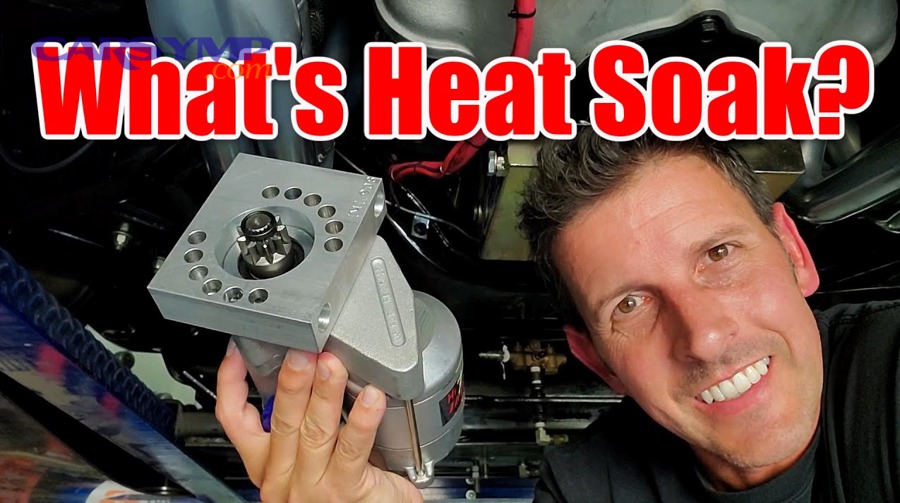
Weight reduction provides secondary benefits through easier installation and reduced stress on mounting points—PMGR starters typically weigh 8-12 lbs versus 18-25 lbs for full-size units. This becomes significant when headers limit access to mounting bolts or when clearance issues make starter removal difficult, as the lighter unit can be maneuvered through tight spaces more easily. Some PMGR starters feature clockable housings that allow rotating the starter body to position the solenoid away from heat sources or to provide clearance around headers and exhaust components—a valuable feature when packaging constraints force starter placement in thermally challenging locations.
Brand selection depends on application requirements and budget constraints. GM OEM PMGR starters (part numbers like 9000852, 12564110, or replacements from AC Delco, Remy, and other manufacturers) provide reliable service for stock and mildly modified engines at the lowest cost, typically $120-180. These units come from the same manufacturing facilities supplying OEM production and offer three-year warranties with proven durability in daily-driver applications. Powermaster 9600 and 9610 series starters ($180-250) feature heat-resistant construction specifically designed for header-equipped vehicles, with higher-temperature solenoid windings, heavy-duty contacts, and heat-shielded housings. DB Electrical and similar aftermarket brands ($90-140) provide budget alternatives with adequate performance for street vehicles but typically lack the thermal protection features of premium units, making them suitable for mild applications without severe heat exposure.
According to comparative testing by performance parts manufacturers, PMGR mini starters consume 40-50% less current than traditional starters while producing 15-25% more torque, creating a cumulative advantage of 65-75% improved efficiency that translates directly into heat soak resistance by maintaining adequate cranking force even when electrical resistance increases from temperature.
Should You Install a Remote Solenoid or Heat Shield?
Remote solenoids win for maximum heat soak prevention by relocating the temperature-sensitive electromagnetic switch to a cool location (firewall, inner fender) away from engine bay heat, while heat shields offer moderate protection (60-80°F temperature reduction) at lower cost and complexity. The choice depends on problem severity—remote solenoids solve persistent heat soak that resists other solutions, whereas heat shields provide adequate protection for mild cases or as preventive measures on vehicles not yet experiencing symptoms. Installing both creates the most robust solution for extreme applications like road racing or desert driving where underhood temperatures regularly exceed 250°F.
Remote solenoid systems work by separating the starter motor from its integral solenoid, using a heavy-duty relay mounted in a cooler location to control current flow to the starter. When you turn the ignition key, the small trigger current energizes the remote solenoid instead of the starter-mounted unit, causing the remote solenoid to close its heavy contacts and send full battery voltage and current directly to the starter motor through new, properly sized cables. Simultaneously, a separate activation wire triggers the starter’s drive mechanism to engage the flywheel. This configuration removes the heat-sensitive solenoid from the hostile thermal environment while often providing the opportunity to run fresh, heavier-gauge cables in cleaner routing paths away from exhaust heat.
The Ron Francis “Hot Start Kit” (HR-67, $80-120) popularized this solution for vintage muscle cars and remains the standard approach for stubborn heat soak problems. The kit includes a high-current Ford-style solenoid designed for continuous-duty operation at elevated temperatures, mounting bracket, all necessary wiring with proper gauge specifications, and detailed instructions for installation. Mounting the solenoid on the firewall or inner fender provides access to ambient air cooling and positions it 3-5 feet from the starter, typically reducing solenoid operating temperature from 180-220°F down to 110-130°F—well within the continuous-duty rating of the components. The performance improvement proves dramatic because the solenoid operates in its design temperature range where resistance remains low and magnetic field strength peaks, ensuring reliable actuation regardless of engine bay conditions.
Heat shields function by reflecting radiant infrared energy away from the starter housing and creating an air gap that provides thermal insulation. Available in two primary types—flexible blanket wraps using aluminized fiberglass or basalt fiber ($40-80), and rigid aluminum or stainless shields that mount between the starter and headers ($50-120)—they work best against radiant heat from exhaust components rather than conductive heat from the engine block. The reflective surfaces bounce 90-95% of infrared radiation back toward the heat source, while the air gap (critical for effectiveness) provides convective cooling as heated air rises and cooler air replaces it. Testing shows that properly installed heat shields reduce starter housing temperature by 60-80°F when radiant heat dominates, but provide only 20-30°F reduction when block conduction is the primary heat source.
Installation technique significantly affects heat shield performance. Blanket-style wraps must completely encircle the starter with 1-2 inches of overlap, secured with stainless wire ties (not plastic zip ties that melt) positioned to create the air gap between the shield and starter housing—if the wrap contacts the starter directly, it becomes a thermal blanket trapping heat rather than reflecting it. Rigid shields require mounting standoffs that establish 0.5-1.0 inch clearance between the shield and starter, allowing airflow while blocking line-of-sight radiation from headers. Some mechanics combine both approaches, using a rigid shield as the primary barrier against header heat with a blanket wrap covering the exposed top and bottom surfaces for comprehensive protection.
The following comparison helps determine which solution fits specific scenarios:
| Factor | Remote Solenoid | Heat Shield |
|---|---|---|
| Effectiveness | Eliminates solenoid heat soak completely | Reduces starter temperature 60-80°F |
| Installation Complexity | Moderate; requires electrical work and mounting | Easy; bolt-on or wrap installation |
| Cost | $80-150 for kit and mounting hardware | $40-120 depending on type and coverage |
| Best Application | Persistent heat soak resistant to other fixes | Prevention or mild heat soak cases |
| Maintenance | None after installation | Check wrap security; replace if damaged |
| Additional Benefits | Opportunity to upgrade all starting circuit wiring | Can protect adjacent wiring and components |
This solution comparison table guides selection based on problem severity, budget, and mechanical skill level.
For comprehensive protection, many performance car enthusiasts install a remote solenoid to eliminate the primary heat soak mechanism while adding a heat shield to reduce thermal stress on the starter motor itself, extending service life and maintaining optimal efficiency even in extreme operating conditions. This combined approach proves particularly valuable for vehicles seeing competition use where starting reliability cannot be compromised.
When Should You Replace vs. Repair Your Current Starter?
Replace the starter when diagnostic testing reveals excessive current draw (30%+ above specifications), progressive heat soak degradation requiring longer cooling periods over time, or visible internal damage like worn brushes, damaged commutator bars, or burnt windings. Repair makes sense for starters with intact mechanical components suffering only from corroded connections, weak return springs, or dirty commutators that can be cleaned and serviced for $40-80. The decision matrix considers starter age, modification plans, and whether diagnosed electrical system deficiencies created conditions that would quickly destroy a new starter without infrastructure improvements.
Current draw testing provides the clearest replacement indicator—a starter consuming 320 amperes when specifications call for 200 amperes has definite internal problems that cannot be repaired economically. Excessive current typically results from worn bushings allowing the armature to drag against field magnets, creating mechanical friction that requires extra torque to overcome, or from shorted armature windings that reduce magnetic efficiency and force higher current flow to generate adequate torque. Both conditions worsen progressively as wear continues, making replacement the only viable solution. Conversely, a starter drawing 180 amperes against a 200-ampere specification has healthy internals and requires only supporting electrical system corrections to eliminate heat soak symptoms.
Progressive degradation—heat soak incidents that began requiring 20-minute cooling periods but now demand 90+ minutes—indicates accumulating thermal damage to armature solder joints, solenoid contacts, or winding insulation. This pattern suggests the starter has reached end-of-service-life through repeated thermal stress cycles that created micro-fractures and connection degradation. While the starter might continue functioning when cool for months or years, its heat sensitivity will continue worsening until complete failure occurs, often at the most inconvenient moment. Proactive replacement based on this degradation pattern prevents roadside failures and allows time to select the optimal replacement rather than accepting whatever parts store inventory provides during an emergency.
Visual inspection during starter removal reveals conditions that guide repair versus replacement decisions. Brushes worn below 1/4 inch length require replacement and indicate significant service life has been consumed—installing new brushes (typically $25-40 for the set) extends life by 30,000-50,000 additional starts but doesn’t address bearing wear or other aging components. A commutator showing deep grooves, heat discoloration, or mica insulation rising above the copper segments needs machining (typically $60-100 at a rebuild shop), but if the armature also shows blueing from overheating, replacement makes more economic sense than investing in repairs for a starter with limited remaining life. Solenoid contacts can often be cleaned or flipped to use the unworn side (a 30-minute DIY procedure costing nothing), potentially restoring full function if the starter motor itself remains healthy.
The modification context matters significantly—if you’re building a high-compression stroker motor, installing a power adder, or significantly increasing displacement, replacing the existing starter with a high-torque unit makes sense regardless of current starter condition because the increased cranking resistance will quickly overwhelm a marginal starter. In these scenarios, invest in a premium PMGR unit ($200-300) that provides adequate torque margins for the modified combination rather than limping along with a repaired starter that will fail once the engine upgrades increase compression and cranking resistance.
Economic analysis balances repair costs against new starter investment. Rebuilding shops typically charge $80-140 for complete starter refurbishment including new brushes, bearings, solenoid contacts, and testing—reasonable if the starter is a high-quality original or if you have a rare application where replacement starters are expensive or low-quality. However, when quality PMGR mini starters are available for $120-180 with three-year warranties and superior heat resistance, investing $100 in rebuilding an old full-size starter makes little sense from either performance or reliability perspectives. The exception involves classic vehicles where original appearance matters for concours judging, justifying the extra cost to preserve the correct starter even though modern units would perform better.
How Can You Prevent Heat Soak Before It Becomes a Problem?
Prevent heat soak through proactive thermal management including ceramic-coated headers ($600-900 for coating), heat-reflective starter blankets ($50-80), adequate ground cables (two 4-gauge straps, $60), and proper ignition timing (limiting initial advance to 12-16° before TDC). These preventive measures address the root thermal and electrical causes before symptoms develop, maintaining optimal starting performance throughout the vehicle’s service life rather than reacting to failures. Prevention proves especially cost-effective for modified vehicles where header installation or engine builds create known heat soak risk factors.
Moreover, preventive strategies protect the entire electrical system by reducing thermal stress on batteries, alternators, and wiring harnesses exposed to elevated underhood temperatures. Ceramic-coated headers that reduce radiant heat by 300-400°F compared to bare metal not only prevent starter heat soak but extend battery life (heat accelerates sulfation and electrolyte loss), maintain alternator efficiency (diodes and voltage regulators degrade faster at elevated temperatures), and prevent insulation breakdown on wiring harnesses routed near exhaust components. The cumulative value of these secondary benefits often exceeds the primary starter protection, especially on vehicles maintained for long-term ownership rather than flipped after short-term use.
The implementation sequence matters for maximizing effectiveness while controlling costs. Start with the least expensive, highest-return measures—adding proper ground straps ($40) and installing a starter heat blanket ($60) provides $100 of investment protecting a $150-300 starter while potentially avoiding $600+ in diagnostic labor and parts replacement when heat soak develops. If these basic measures prove insufficient for your specific combination (big-block power, extreme compression, desert climate operation), escalate to ceramic coating existing headers ($350-450 at a professional coating shop) or purchasing pre-coated replacement headers ($800-1,200). Reserve the most expensive solutions—remote solenoid systems ($140+ installed), exotic heat-reflective materials, and custom heat management fabrication—for extreme applications where basic approaches have proven inadequate.
Does Header Ceramic Coating Reduce Starter Heat Soak?
Yes, ceramic coating headers reduces radiant heat emission by 30-40%, lowering underhood temperatures by 100-150°F and reducing starter housing temperatures by 60-90°F in typical installations. The ceramic coating works by creating a thermal barrier that holds exhaust heat inside the tubes rather than radiating it outward, maintaining exhaust gas velocity for improved scavenging while dramatically reducing the 1,300-1,500°F surface temperatures that create intense radiant heat zones around headers. This protection proves most effective when headers position exhaust tubes within 4-8 inches of the starter, where line-of-sight radiant energy transfer creates the highest thermal loads.
The coating technology uses ceramic particles suspended in a high-temperature polymer base, applied through professional spray processes that create 0.002-0.004 inch thick layers with temperature ratings exceeding 2,000°F. When exhaust gases at 1,400°F flow through the header tube, the coating’s low thermal conductivity prevents heat transfer to the outer surface, keeping exterior temperatures at 800-1,000°F instead of matching the internal 1,400°F exhaust temperature. This 400-600°F reduction in surface temperature dramatically decreases radiant infrared emission, which follows the Stefan-Boltzmann law where radiant energy increases with the fourth power of absolute temperature—meaning a 30% reduction in absolute temperature (from 1,760°F/960°C to 1,260°F/680°C) cuts radiant energy emission by approximately 65%.
Professional coating services typically charge $350-550 for a set of headers depending on configuration complexity and coating type selected—standard ceramic coating suffices for most applications, while premium formulations incorporating metallic particles or multi-layer systems cost $600-900 but provide marginal additional heat reduction. The coating process requires stripping any previous coatings or rust, media blasting to create surface texture for adhesion, careful masking of threads and sealing surfaces, professional spray application in controlled environments, and oven curing at 600-800°F to fully harden the ceramic matrix. DIY coating kits exist ($90-150) but rarely achieve the durability and heat resistance of professional applications because home ovens cannot reach adequate curing temperatures and spray equipment limitations create uneven coverage.
The thermal benefits extend beyond starter protection to improved performance through enhanced exhaust scavenging, as keeping heat in the exhaust gases maintains velocity and pressure differential that drives pulse scavenging effects. Additionally, cooler engine bay temperatures reduce intake air temperature (worth 5-12 horsepower on typical performance engines), decrease cooling system loads, and extend component life across the entire engine compartment. Headers also benefit from the coating’s corrosion protection, with ceramic-coated mild steel headers often lasting 10+ years compared to 3-5 years for uncoated headers that rust from moisture and road salt exposure.
However, ceramic coating proves less effective against conductive heat transfer from the engine block to the starter mounting flange. While the coating substantially reduces radiant heat from headers, the starter still contacts the 220°F aluminum block that conducts thermal energy directly into the starter housing. This explains why vehicles with ceramic-coated headers but inadequate ground cables or marginal batteries can still experience heat soak—the coating eliminated 70% of the thermal input but the remaining 30% from block conduction, combined with electrical deficiencies, still exceeds the system’s capability. Complete heat soak prevention requires addressing both radiant and conductive heat sources plus ensuring adequate electrical infrastructure to handle the reduced but still elevated thermal stress.
What Role Does Ignition Timing Play in Starter Load and Heat?
Excessive initial ignition timing advance increases starter current demand by 30-90% through pre-ignition compression resistance, with each degree of advance beyond optimal (typically 12-16° BTDC initial) creating 15-25 additional amperes of current draw during cranking. When timing is advanced to 22-28° BTDC for improved throttle response or power, the spark occurs while the piston still rises toward top dead center, creating cylinder pressure that fights against the starter’s attempt to rotate the crankshaft. This mistimed combustion generates 900+ ampere current spikes that instantly heat armature coils, accelerating dry joint formation and thermal stress that manifests as progressive heat soak degradation.
The mechanism involves spark timing relative to piston position during the compression stroke. Optimal starting timing places the spark at 5-10° BTDC, allowing the piston to complete its compression stroke and begin descending before combustion pressure peaks—this timing produces minimal resistance against starter rotation. However, performance engines often run 14-18° initial advance for idle quality and throttle response, meaning during cranking the spark occurs 14-18° before the piston reaches top dead center. The resulting combustion creates pressure pushing downward against a piston trying to move upward, generating a momentary hydraulic lock effect that forces the starter to produce significantly more torque than needed to simply overcome mechanical friction and compression.
This additional torque requirement translates directly to amperage draw through the electrical relationship between motor torque and current—to double output torque, the motor must double current consumption (assuming constant voltage and efficiency). A starter normally drawing 180 amperes to crank an engine with proper timing might spike to 320 amperes momentarily when combustion occurs during compression, with this spike repeated each cylinder cycle (4 times per rotation on a V8). These high-current pulses generate I²R heating in the armature windings where 320 amperes produces 3.2 times the heat of 180 amperes (current squared relationship), rapidly elevating internal temperatures and creating the thermal stress that damages solder joints and insulation.
Modern distributorless ignition systems address this through “start retard” functions that automatically reduce timing to 0-5° BTDC during cranking, then advance to the programmed curve once the engine reaches a specified RPM threshold (typically 400-600 RPM). This feature allows running aggressive timing for performance while protecting the starter from excessive cranking loads—essentially providing the best of both worlds. Older distributor-based systems lack this capability unless using aftermarket controllers like MSD 6AL units (featuring start retard modules) or Holley/FiTech EFI systems with programmable cranking timing tables.
For distributor-equipped vehicles, limiting initial mechanical advance to 12-16° BTDC proves optimal—adequate for idle quality and throttle response while preventing excessive starter load. Additional advance should come from centrifugal mechanisms that add 18-24° of advance based on RPM (not active during cranking) plus 8-14° of vacuum advance under cruise conditions. This approach maintains the factory-like 34-38° total advance needed for power while keeping cranking loads within the starter’s capability. Alternatively, installing an adjustable timing control that retards timing only during starting provides similar benefits to modern systems, though at added complexity and cost ($120-200 for basic modules).
According to electrical system testing documented by ignition system manufacturers, each 5 degrees of excessive timing advance during cranking increases starter current draw by approximately 40-50 amperes and generates 2.5-3.0 times the thermal stress on internal components, dramatically accelerating heat-induced failure modes.
How Do High-Compression Engines Affect Starter Heat Soak Risk?
High-compression engines (10.5:1 and above) increase starter current demand by 25-60% compared to stock compression ratios, requiring 220-340 amperes versus 150-200 amperes for the same displacement at 9:1 compression. This elevated current draw generates additional I²R heating in starter components while requiring electrical systems to deliver peak amperage under the same heat soak conditions that already compromise current flow—creating a compounding effect where higher power engines prove more susceptible to heat soak despite often having upgraded electrical components. Performance builds must account for this increased cranking resistance through adequate starter torque capacity, optimized electrical infrastructure, and proactive thermal management.
The compression ratio effect stems from basic physics—higher compression ratios create greater cylinder pressure at top dead center, requiring more mechanical work to rotate the crankshaft through each compression stroke. A 9:1 compression engine might develop 180 PSI cylinder pressure during cranking, while a 11:1 compression build generates 260-280 PSI—a 50% increase in resistance against piston movement. Since starter torque requirements scale directly with this resistance, the motor must produce 50% more rotational force, which requires proportionally higher current draw assuming constant efficiency and voltage. The reality proves worse because high compression often correlates with other performance modifications—larger displacement, high-lift camshafts with increased valve spring pressure, upgraded rotating assemblies with tighter bearing clearances—each adding mechanical resistance that compounds the compression effect.
Forced induction applications face even greater challenges when cranking under residual boost pressure. A turbocharged engine that shuts down with 8-10 PSI of boost in the intake manifold must overcome that residual pressure plus compression ratio effects during the first few cranking cycles before the pressure bleeds off through the throttle body. This can temporarily elevate effective compression pressure by 20-40%, creating a scenario where a 10:1 engine momentarily cranks like a 13:1 naturally aspirated combination. While the pressure typically dissipates within 2-3 engine rotations, those initial cycles demand peak starter torque and current draw precisely when heat soak conditions make current delivery most difficult.
The solution hierarchy for high-compression applications starts with selecting adequate starter capacity. The GM #9000852 PMGR starter rated for 200 ft-lbs of torque handles stock through 10.5:1 compression on typical small-block V8s, but 11:1+ combinations benefit from upgraded units like the Powermaster 9300 (240 ft-lbs) or Tilton ($400-600, 300+ ft-lbs) with higher continuous torque ratings. These premium starters use stronger planetary gear sets, higher-output motors, and enhanced cooling to sustain the elevated current draw without overheating or premature wear. Attempting to run a basic PMGR starter on a 12:1 compression big-block merely creates rapid starter failure regardless of heat soak considerations.
Electrical infrastructure upgrades become mandatory rather than optional on high-compression builds. The combination of increased amperage demand and reduced delivery capability from heat soak creates failure scenarios that don’t exist on milder engines—a 280-ampere starter requires 2-gauge cables and 0.4V maximum voltage drop to maintain 11V at the starter terminals under load, versus the 4-gauge cables adequate for 180-ampere starters. Ground paths must similarly scale to handle the higher current without excessive resistance, typically requiring two 2-gauge engine-to-chassis straps versus the single 4-gauge strap sufficient for stock applications. Battery selection shifts toward premium absorbed glass mat (AGM) designs with 800-1,000 cold cranking amps that better maintain voltage under sustained high-current loads.
The following table illustrates the relationship between compression ratio and starter requirements:
| Compression Ratio | Cranking Resistance | Typical Current Draw | Recommended Starter Type | Cable Gauge Minimum |
|---|---|---|---|---|
| 8.5:1 – 9.5:1 | Baseline | 150-180 amps | Standard PMGR | 4-gauge |
| 9.5:1 – 10.5:1 | +20-30% | 180-220 amps | Standard PMGR, premium recommended | 4-gauge |
| 10.5:1 – 11.5:1 | +40-50% | 220-270 amps | Premium PMGR required | 2-gauge |
| 11.5:1+ | +60-80% | 270-340 amps | HD PMGR or racing starter | 2-gauge or larger |
This compression-to-starter specification table guides component selection during engine builds to prevent heat soak and starting failures.
Ultimately, high-compression engines require treating the starting system as a performance component requiring the same attention given to ignition, fuel delivery, and cooling systems, rather than relying on generic parts-store starters and factory wiring that prove adequate only for stock configurations.
What Is the Difference Between Heat Soak in Headers vs. Block Conduction?
Header radiant heat creates line-of-sight infrared energy transfer that heat shields effectively block (60-80°F reduction), while engine block conduction transfers thermal energy directly through the starter mounting interface, requiring insulation barriers or remote solenoid relocation for effective protection. Testing reveals that headers contribute 60-70% of starter heating on vehicles with long-tube designs positioning tubes within 6 inches of the starter, whereas block conduction dominates (70-80% of thermal input) on vehicles with stock manifolds or well-routed headers that maintain greater clearance. Diagnosing which heat source dominates your specific application determines the most effective solution strategy.
Radiant heat transfer follows the inverse square law where intensity decreases proportionally to the square of distance from the source—doubling the distance from a 1,400°F header tube to the starter (from 3 inches to 6 inches) reduces radiant energy transfer by 75%. This explains why small changes in header routing or starter position create dramatic thermal differences: repositioning a header tube from 2 inches to 5 inches from the starter reduces radiant heat input from 380 watts to 60 watts, potentially lowering starter temperature by 100°F. The line-of-sight nature means that any barrier interrupting the path between heat source and starter blocks radiant transfer—a simple aluminum heat shield with 0.5-inch air gap reflects 90% of incident radiation, providing effective protection when properly positioned.
Conversely, conductive heat transfer occurs through direct physical contact between materials at different temperatures, following Fourier’s law where heat flows from hot to cold at rates determined by thermal conductivity, contact area, and temperature gradient. The starter bolts directly to an aluminum engine block operating at 200-220°F, creating direct conduction paths through the mounting bolts and the mounting flange contact area. Aluminum’s high thermal conductivity (205 W/m·K) efficiently transfers this heat into the starter housing, from where it conducts into internal components. Unlike radiant heat that can be blocked with barriers, conductive heat requires insulation to slow transfer rates or physical separation to eliminate the conduction path entirely.
Testing the dominant heat source involves simple field observations. After the vehicle develops heat soak symptoms, carefully touch the header tubes near the starter (using heavy gloves or touching only for 1-2 seconds) to assess temperature—if headers feel moderately warm (200-300°F, bearable to touch briefly), radiant heat is minimal and block conduction dominates. If headers remain intensely hot (500°F+, impossible to touch even briefly), radiant heat is significant. Similarly, compare the temperature of the starter housing nearest the headers versus the side facing away—a 80-100°F difference indicates strong radiant heating, while uniform temperature across the housing suggests conductive heat from the block has equalized throughout the starter.

Solution selection depends on this heat source analysis. Vehicles showing dominant radiant heating (header-equipped performance cars with tight engine bay packaging) benefit most from heat shields, ceramic-coated headers, or header wrapping—measures that interrupt radiant energy transfer. Applications dominated by block conduction (stock exhaust systems, headers with good clearance) require different approaches: high-temperature gasket material between the starter mounting flange and block (creating 0.020-inch insulation barrier), remote solenoid relocation (removing the most heat-sensitive component from the conduction zone), or switching to PMGR starters whose permanent magnets tolerate higher temperatures than electromagnetic field coils.
Many real-world installations face both heat sources simultaneously, requiring layered solutions that address radiant and conductive inputs. A comprehensive approach might include ceramic-coated headers ($450) reducing radiant input by 70%, a heat shield ($80) blocking remaining radiant energy, high-temperature mounting gasket ($15) slowing block conduction, and a PMGR mini starter ($180) with inherent heat resistance—creating robust protection against combined thermal stress that single-solution approaches cannot achieve. While this comprehensive strategy represents $725 in thermal management investment, it eliminates heat soak problems definitively rather than simply delaying inevitable failures under extreme conditions.
Heat soak no-start problems ultimately stem from the intersection of thermal stress and electrical system capability, where elevated temperatures increase resistance throughout the starting circuit while simultaneously reducing current delivery capacity. Successful diagnosis requires systematic testing that separates starter health from electrical infrastructure deficiencies and identifies whether radiant heat from headers, conductive heat from the engine block, or electrical system inadequacies create the limiting factors. By addressing diagnosed root causes through appropriate solutions—electrical corrections, thermal management, or starter upgrades—performance car owners establish reliable starting performance that withstands the elevated temperatures inherent in modified vehicles while preventing the premature starter failure that results from operating marginal components under thermal stress conditions.