


Inspecting starter wiring and ground connections requires systematic visual examination of battery terminals, ground straps, and mounting surfaces, followed by multimeter testing to measure voltage drop (≤0.50V acceptable) and resistance (≤5 ohms) across the complete ground circuit from battery negative terminal to starter housing. Proper inspection identifies poor contacts, corroded connections, undersized wiring, and internal starter ground failures that cause no-crank, slow-crank, or clicking symptoms during engine starting attempts.
Understanding what components make up the starter ground circuit helps mechanics trace current flow from the starter motor back through the engine block ground strap, chassis connection, and battery negative cable. When any point in this ground path develops excessive resistance due to corrosion, loose hardware, painted mounting surfaces, or inadequate wire gauge, the starter cannot draw sufficient amperage to crank the engine effectively. Professional technicians recognize that ground failures often mimic battery or starter motor problems, leading to unnecessary component replacement when simple connection cleaning or ground strap installation would solve the issue.
Testing starter ground connections with a digital multimeter provides objective measurements that visual inspection alone cannot reveal. Voltage drop testing during cranking reveals hidden resistance in cables, connections, and internal starter components, while resistance testing with an ohmmeter identifies high-resistance ground paths before problems escalate. These diagnostic procedures require minimal equipment—a quality digital multimeter with MIN/MAX capture function and adequate test leads—but deliver definitive answers about ground circuit integrity.
Repairing and installing proper starter ground connections involves preparing bare metal mounting surfaces, selecting appropriate wire gauge based on amperage and length calculations, and using quality hardware including star washers and properly crimped ring terminals. Below, we’ll explore each inspection, testing, and repair procedure in detail to help you diagnose and fix starter grounding problems efficiently.
What Is a Starter Ground Connection and Why Does It Matter?
A starter ground connection is the negative current return path from the starter motor housing through the engine block, chassis ground strap, and battery negative cable back to the battery negative terminal, completing the electrical circuit required for starter operation. Without a low-resistance ground path, the starter cannot draw the 150-300 amperes typically required to crank an engine, resulting in no-start conditions, slow cranking, or rapid clicking sounds from the starter solenoid.
To better understand starter ground importance, consider how electrical current flows in a complete circuit. Current travels from the battery positive terminal through heavy-gauge cable to the starter solenoid, then through the starter motor windings where it produces the electromagnetic force that turns the engine. However, this current must return to the battery negative terminal to complete the circuit. The ground connection provides this return path, and any restriction in that path creates resistance that limits current flow just as effectively as a restriction on the positive side.
What Components Make Up the Starter Ground Circuit?
The starter ground circuit consists of five critical components that must all maintain low electrical resistance: the starter motor housing that contacts the engine block or transmission bellhousing, the engine block itself that serves as a large conductor, the engine-to-chassis ground strap (typically a braided cable or flat copper strap), the chassis or frame that connects to the battery, and the battery negative cable that completes the path back to the battery negative terminal.
Each connection point in this ground path represents a potential failure location where resistance can develop:
- Starter housing to mounting surface: Paint, rust, or dirt between the starter mounting flange and engine block creates insulation that blocks current flow
- Engine block to chassis ground strap: This strap often bolts to the cylinder head or engine block on one end and the firewall, frame rail, or body on the other end; corrosion at either connection point increases resistance
- Chassis ground points: Body-on-frame vehicles ground the battery negative cable to the frame, which must then connect to the body for accessories; unibody vehicles typically ground directly to the chassis structure
- Battery negative terminal: Corrosion buildup on the battery post or cable terminal creates a high-resistance connection that affects the entire electrical system
- Internal starter ground path: Inside the starter motor, current must flow through the housing, internal mounting structures, and reach the negative brushes—corrosion or poor metal-to-metal contact in this internal path causes ground failures that external testing may not immediately reveal
The complete ground circuit forms a series connection, meaning total resistance equals the sum of all individual resistances. A technician might find 0.1 ohms at the battery terminal, 0.5 ohms in the negative cable, 1.2 ohms at the engine ground strap, 0.8 ohms at the starter mounting surface, and 0.3 ohms internally in the starter—totaling 2.9 ohms. While each individual resistance seems small, the combined effect significantly reduces starter performance, especially when the starter attempts to draw 200+ amperes.
What Happens When Starter Grounds Fail?
When starter grounds fail, the most common symptoms include complete no-crank conditions where nothing happens when the ignition key turns, slow cranking where the engine turns over sluggishly, rapid clicking from the starter solenoid engaging and immediately dropping out, or intermittent starting problems that worsen when the engine is hot. These symptoms occur because inadequate ground current forces voltage to drop at the starter motor, reducing the electromagnetic field strength in the motor windings and decreasing torque output.
More specifically, electrical current follows the path of least resistance. When the designed ground path through proper cables and straps develops excessive resistance, current seeks alternative return routes to the battery. This phenomenon explains several unusual symptoms mechanics sometimes encounter:
- Burned or melted cables: Clutch cables, throttle cables, speedometer cables, or shift linkages may show melted housings or seized operation because starter current traveled through these components trying to reach the battery ground, generating intense heat in cables never designed to carry such amperage
- Damaged electrical components: Current flowing through unexpected paths can damage electronic modules, sensors, or wiring harnesses
- Erratic accessory behavior: Lights, gauges, radio, or other accessories may flicker, dim, or malfunction when the starter engages because voltage drops throughout the electrical system when the starter draws high amperage through a restricted ground
- starter replacement doesn’t solve the problem: Many technicians install a new starter only to find the same symptoms persist because the real problem was ground circuit resistance, not a defective starter motor
The severity of symptoms often varies with temperature. Cold engines require more cranking torque to overcome increased oil viscosity and tighter tolerances between internal components. A marginally adequate ground circuit might successfully start a warm engine but fail when ambient temperature drops or after the vehicle sits overnight. Conversely, some ground problems worsen with heat as thermal expansion increases resistance at corroded connection points or as electrical load from cooling fans and air conditioning adds to total system demand.
According to diagnostic data from the Automotive Maintenance and Repair Association, approximately 35% of no-start conditions initially diagnosed as failed starters actually result from poor ground connections, representing significant unnecessary parts replacement and labor costs when proper testing procedures aren’t followed.
How Do You Perform a Visual Inspection of Starter Wiring and Ground Connections?
Performing a visual inspection of starter wiring and ground connections requires examining the battery negative terminal for tightness and corrosion, checking all ground straps between engine and chassis for physical damage or looseness, verifying bare metal contact at all ground mounting points, and looking for evidence of overheating such as melted insulation, burned cable housings, or discolored hardware. This inspection identifies obvious problems before investing time in multimeter testing and often reveals issues that testing alone might not detect.
Professional mechanics begin every starter diagnosis with visual inspection because many ground problems show clear physical evidence. A loose battery cable, corroded terminal, missing ground strap, or painted mounting surface takes seconds to spot but might require extensive testing to identify if you skip the visual check. Moreover, visual inspection reveals the overall condition of the electrical system, helping technicians anticipate potential failures even if current symptoms haven’t appeared yet.
What Should You Check at the Battery Ground Connection?
At the battery ground connection, check that the negative cable terminal clamps tightly onto the battery post with no movement when hand pressure is applied, examine the cable terminal for white, blue, or green corrosion buildup that indicates chemical reaction between the lead and copper, verify the cable insulation shows no cracking or damage near the terminal, and confirm the other end of the negative cable connects securely to a clean, unpainted surface on the chassis or engine block.
The battery negative terminal represents the first link in the ground chain, and problems here affect the entire electrical system:
- Terminal tightness: A loose terminal creates resistance and allows vibration to worsen the connection over time; terminals should require a wrench to remove and should not rotate on the battery post by hand
- Corrosion patterns: White or light blue crusty deposits indicate electrolyte leakage from the battery; green oxidation shows copper corrosion from moisture exposure; either condition requires cleaning with a battery terminal brush and baking soda solution
- Cable end condition: Pull back the cable insulation slightly to inspect the copper strands inside the terminal; green or black discoloration indicates moisture has wicked into the cable, causing internal corrosion that may require cable replacement even if the exterior appears intact
- Ground point location: Some vehicles ground the battery negative cable to the chassis or frame, relying on a separate engine ground strap to complete the path to the engine and starter; other vehicles ground the battery directly to the engine block; verify the factory configuration matches what’s installed
Check both ends of the battery negative cable, not just the battery terminal. The chassis or engine block end may show corrosion, loose hardware, or poor metal-to-metal contact even when the battery terminal appears perfect.

How Do You Inspect the Engine and Starter Ground Straps?
Inspecting the engine and starter ground straps involves locating all ground straps between the engine and chassis (typically one from cylinder head or engine block to firewall and possibly additional straps to frame rails), checking each strap for secure bolt connections at both ends, examining the strap itself for broken strands in braided cables or cracks in flat copper straps, and verifying that mounting surfaces show bare shiny metal rather than paint or corrosion. Ground straps complete the critical connection between the moving engine assembly and the stationary chassis, and these straps frequently fail due to vibration, corrosion, or engine work where mechanics forget to reinstall them.
Common ground strap inspection points include:
- Location identification: Check from the back of the cylinder head to the firewall, from the engine block to the frame rail, from the transmission housing to the body, and in some vehicles, from the intake manifold or accessories to chassis ground points
- Physical integrity: Braided ground straps should show no broken individual strands; flat copper straps should not have cracks, tears, or severe bending; corrosion should not penetrate more than surface deep
- Connection hardware: Bolts should be tight (typically 15-25 ft-lbs depending on size), star washers should be present to bite through any surface oxidation, and lock washers or thread locker should prevent loosening from vibration
- Mounting surface preparation: Both surfaces where the strap connects must show bare metal; use a flashlight to check that paint, powder coating, or anodizing hasn’t been installed over the ground point; even a thin layer of paint creates an insulating barrier
Many engine compartments accumulate oil, grease, and road grime that can hide ground connections. Clean suspected areas with brake cleaner or degreaser before making a final assessment. Additionally, ground straps installed during previous repairs may not match factory specifications—check that added or replacement straps use adequate wire gauge (typically 4-gauge minimum, 1-gauge or 0-gauge preferred for high-output starters).
What Are the Signs of Poor Ground Contact?
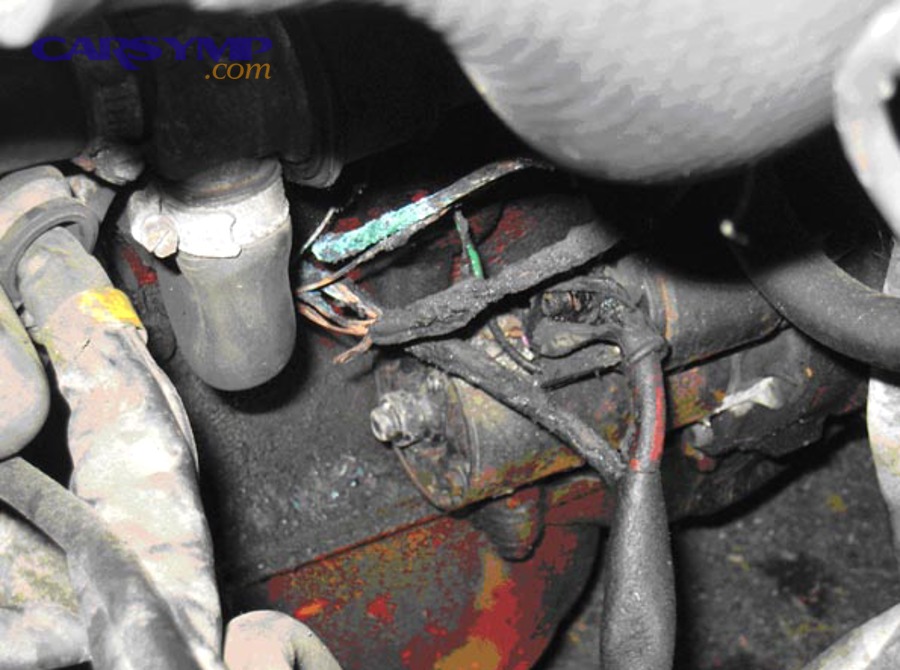
Signs of poor ground contact include burned, melted, or blistered insulation on ground cables or nearby wiring, green or white corrosion visible on copper strands when insulation is pulled back, seized or damaged mechanical cables (clutch, shift, throttle, speedometer) that show evidence of electrical current passage, scorch marks or heat discoloration on metal surfaces near ground connection points, and loose or missing hardware at critical ground locations. These visual indicators often provide the first clue that starter current has been seeking alternative return paths due to inadequate designed ground circuit resistance.
Specific evidence to look for during inspection:
- Cable insulation damage: Starter current flowing through inadequate or failed grounds generates significant heat; look for melted, bubbled, or discolored insulation on the main negative cable, engine ground strap, or surprisingly, on nearby cables not designed to carry ground current
- Mechanical cable failure: If clutch cables, shift cables, or throttle cables show burned housings, seized operation, or repeated failure without obvious mechanical cause, suspect that these cables have been carrying starter ground current through their metal cores and wire braid shields
- Oxidation patterns: Copper turns green when oxidized; pull back cable boots and insulation to check for green discoloration that indicates moisture intrusion and chemical breakdown of the copper conductor
- Hardware condition: Bolts, nuts, and washers at ground connections should be clean and tight; loose hardware shows movement witness marks (shiny metal rings where parts have shifted); corroded hardware may appear rusty, green, or white with oxidation
- Unusual wear: Ground straps that carry excessive current due to other failed ground paths may show accelerated wear, overheating, or failure even when properly sized for their intended circuit
In custom builds, race cars, or extensively modified vehicles, also check that ground connections use appropriate materials. Chromoly tubing, commonly used in race car chassis construction, conducts electricity poorly compared to mild steel; fiberglass body panels provide no ground path; powder coating and anodizing create insulating surfaces. These applications require dedicated ground wires rather than relying on chassis structure.
How Do You Test Starter Ground Connections with a Multimeter?
Testing starter ground connections with a multimeter involves performing a voltage drop test while cranking the engine to measure resistance in the complete ground circuit (acceptable reading ≤0.50 volts) and conducting a resistance test with the engine off to check continuity from battery negative terminal to starter housing (acceptable reading ≤5 ohms). These objective measurements reveal hidden problems that visual inspection cannot detect, including internal cable damage, poor crimped connections, and excessive resistance at contact surfaces that appear clean.
Multimeter testing provides definitive answers about ground circuit quality. While visual inspection identifies obvious problems like missing straps or corroded terminals, many ground failures develop inside cables where copper strands corrode, at crimped connections that appear intact but have poor electrical contact, or at mounting surfaces that look clean but have microscopic oxidation layers blocking current flow. Voltage drop testing under load conditions simulates actual starter operation and reveals how the ground circuit performs when carrying real cranking amperage.
Before beginning multimeter testing, ensure the battery is in good condition and fully charged. A weak battery cannot deliver adequate cranking amperage, which produces misleading test results that might indicate ground circuit problems when the real issue is insufficient battery capacity. Test battery voltage with the engine off (should be ≥12.4 volts) and perform a load test if voltage is marginal.

How Do You Perform a Voltage Drop Test on the Starter Ground Circuit?
Performing a voltage drop test on the starter ground circuit requires disabling the ignition or fuel system so the engine won’t start, setting a digital multimeter to DC volts auto-range and enabling the MIN/MAX capture function, connecting the negative meter lead to the battery negative post, connecting the positive meter lead to the starter motor housing, cranking the engine for approximately 5 seconds, and reading the maximum voltage displayed (acceptable result is 0.50 volts or less). This test measures total resistance across the entire ground path under actual load conditions, revealing problems that might not appear during static testing.
Detailed voltage drop testing procedure:
Preparation steps:
- Disable the vehicle so it won’t start during testing (pull the fuel pump relay, disconnect the ignition coil, or remove the fuel injector fuse—easiest method varies by vehicle)
- Ensure the battery is fully charged (≥12.4 volts no-load)
- Gain access to the starter motor (may require raising the vehicle and removing splash shields)
- Have adequate test lead length to reach from battery to starter (often requires 6-10 feet total length)
Meter setup:
- Set multimeter to DC volts
- Enable auto-range function (eliminates need to select voltage scale)
- Activate MIN/MAX capture mode (records peak voltage during test so you don’t need to watch the meter while cranking)
- Verify meter is functioning by testing a known voltage source
Connection technique:
- Connect the negative (black) meter lead firmly to the battery negative post, not to the cable terminal (testing from the post ensures you measure the complete circuit including the battery connection)
- Connect the positive (red) meter lead securely to the starter motor housing using a large alligator clip or by clamping to a starter mounting bolt (good metal-to-metal contact is essential for accurate readings)
- Verify connections are tight and won’t fall off during cranking
Testing procedure:
- Have an assistant crank the engine for 5 seconds (or remote-start if working alone)
- Observe the multimeter display during cranking or check MAX reading after cranking stops
- Record the voltage drop measurement
- Repeat the test 2-3 times to verify consistency
Interpreting results:
- 0.00-0.50 volts: Acceptable ground circuit resistance; if starter problems persist, investigate positive side of circuit or starter motor itself
- 0.50-1.00 volts: Marginal ground circuit; may cause slow cranking, especially in cold weather or with high-compression engines; locate and repair resistance
- 1.00+ volts: Excessive ground circuit resistance; will cause no-crank or very slow cranking; indicates significant problem requiring immediate repair
If voltage drop exceeds acceptable limits, perform additional tests to isolate the problem location. Test from battery negative post to chassis ground point, from chassis to engine block, from engine block to starter housing, and finally from starter housing to negative cable on the starter itself if equipped. Each segment test helps pinpoint where excessive resistance exists.
How Do You Test Ground Circuit Resistance with an Ohmmeter?
Testing ground circuit resistance with an ohmmeter involves setting the multimeter to the ohms (Ω) resistance scale, connecting one meter lead to the battery negative terminal and the other lead to the starter motor housing, and reading the resistance measurement (acceptable result is less than 5 ohms, preferably less than 1 ohm). This static test measures total ground path resistance without engine cranking and helps identify problems before attempting voltage drop testing.
Resistance testing procedure and interpretation:
Setup and connections:
- Ensure the ignition is off and no electrical loads are active
- Set multimeter to resistance (Ω) mode; auto-range function works well for this test
- Touch meter leads together to verify zero resistance (some meters require zeroing or lead resistance compensation)
- Connect meter leads to battery negative terminal and starter housing, maintaining firm contact
Taking measurements:
- Read the resistance value displayed on the meter
- Move or wiggle connections slightly to check for intermittent high resistance
- Test multiple times to ensure consistent readings
- Record results for comparison with acceptable standards
Resistance benchmarks:
- 0-1 ohm: Excellent ground circuit; no repair needed
- 1-5 ohms: Acceptable for most applications; may cause issues with very high current draw starters
- 5-10 ohms: Marginal; will likely cause starting problems, especially when cold
- 10+ ohms: Excessive resistance; repair required before starter will operate reliably
Resistance testing helps identify problems in specific circuit segments:
- Test from battery negative terminal to chassis ground point
- Test from chassis ground point to engine block ground strap connection
- Test from engine block to starter mounting surface
- Test across individual ground straps from end to end
Comparing these individual segment measurements against total circuit resistance helps locate the highest resistance points. For example, if total resistance measures 8 ohms but you find 7 ohms across the engine ground strap alone, that strap clearly requires replacement. If multiple segments each show 2-3 ohms, the cumulative effect creates the problem and multiple improvements may be needed.
What Tools and Equipment Do You Need for Proper Testing?
Proper starter ground testing requires a professional-grade digital multimeter with auto-range capability and MIN/MAX capture function (minimum specifications: DC voltage to 20V, resistance to 200Ω, update rate ≥3 times per second), test leads at least 6-10 feet total length to reach from battery to starter motor, large heavy-duty alligator clips capable of gripping starter housing or terminals firmly, wire brushes for cleaning connection points before testing, and optionally a carbon pile load tester to verify battery condition before diagnosing ground circuits. Quality tools ensure accurate measurements and eliminate false readings that lead to incorrect diagnoses.
Recommended tool specifications and selection criteria:
Digital multimeter requirements:
- Auto-range function: Automatically selects appropriate voltage or resistance scale, eliminating user error and simplifying testing
- MIN/MAX capture: Records minimum, maximum, and average readings during test period; essential for voltage drop testing during cranking when watching the meter is impractical
- Update rate: Fast display updates (3+ per second) capture rapid voltage changes during starter engagement
- Accuracy: ±0.5% or better for DC voltage measurements in the 0-20V range
- Durability: Automotive environment requires rugged construction, protected from drops and fluid exposure
- Common brands: Fluke 87V, Klein MM600, Snap-on EEDM504D provide professional-grade accuracy and durability
Test lead considerations:
- Length: Standard multimeter leads (3-4 feet) rarely reach from battery to starter; purchase extension leads or longer primary leads totaling 6-10 feet
- Wire gauge: 14-16 gauge test leads minimize resistance in the meter circuit itself
- Insulation quality: Silicone rubber insulation remains flexible in cold weather and resists automotive fluids
- Connector compatibility: Banana plug connections should fit meter securely without looseness
Alligator clips and accessories:
- Size matters: Standard small clips that come with multimeters often cannot grip starter housing or large battery terminals; purchase heavy-duty clips with 1-inch+ jaw opening
- Tooth design: Serrated teeth bite through surface oxidation for better electrical contact
- Spring tension: Strong springs maintain grip during vibration from engine cranking
- Insulation: Insulated clip bodies prevent accidental shorts
Supporting equipment:
- Wire brushes: Battery terminal brush (combination post and cable end cleaner) removes corrosion before testing
- Contact cleaner: Electrical contact cleaner spray dissolves oxidation and improves connection quality
- Battery load tester: Carbon pile or electronic load tester verifies battery can deliver cranking amperage; weak battery produces misleading ground circuit test results
- Work light: LED work light allows inspection and testing in engine compartment or under vehicle
Investing in quality diagnostic tools pays dividends through accurate testing, faster diagnosis, and reduced comeback repairs. A $200 professional multimeter that provides reliable readings for 10+ years costs far less than the labor hours wasted chasing incorrect diagnoses from a $20 hardware store meter that gives inconsistent results.
How Do You Diagnose Internal Starter Ground Problems?
Diagnosing internal starter ground problems requires performing external ground circuit tests to verify adequate connection to the starter housing, then using a direct jumper cable from battery negative terminal to starter housing to bypass all external ground paths—if cranking improves with the jumper but external tests showed acceptable resistance, the problem exists in the internal starter ground path from housing through internal mounting structures to the negative brushes. This distinction prevents unnecessary wiring repairs when the starter motor itself requires service or replacement.
Internal starter ground failures represent a diagnostic challenge because standard external testing may not reveal the problem. The starter housing might show perfect continuity to the battery when tested statically, yet fail to provide adequate ground during actual cranking when internal components carry high current. Understanding the internal ground path helps mechanics recognize when starter replacement or rebuild becomes necessary despite apparently good external ground connections.
What Is the Internal Starter Ground Path?
The internal starter ground path consists of the starter mounting flange that contacts the engine block or transmission bellhousing, the main starter housing that encloses the armature and field windings, internal mounting ears or brackets that support the brush plate assembly, the brush plate itself that holds the negative brushes, and finally the negative brushes that contact the armature commutator to complete the electrical circuit. Each metal-to-metal contact point in this internal path must maintain low resistance, but corrosion, paint, assembly errors, or worn components can create high-resistance connections that prevent adequate current flow.
Detailed examination of internal starter components reveals potential failure points:
Mounting flange to housing interface:
- The starter mounts to the engine through a machined flange on the starter housing
- This flange must make direct metal contact with the engine block or bellhousing
- Paint, rust, gasket material, or shims between the flange and mounting surface create insulation
- Some starters use the mounting bolts as part of the ground path; others require metal-to-metal contact at the flange
Housing conductivity:
- Starter housings may be steel, cast iron, or aluminum alloy
- Multiple housing pieces typically bolt together with the brush end cap
- Joints between housing sections must conduct current; corrosion, paint, or loose bolts create resistance
- Cast aluminum housings can develop internal oxidation that increases resistance over time
Brush plate mounting:
- The brush plate assembly bolts into the end cap or main housing
- Small mounting screws carry ground current from the housing to the brush plate
- These screws may be steel into aluminum, creating a potential for galvanic corrosion
- Loose screws, corroded threads, or insulating washers (if accidentally installed) block current flow
Brush and commutator contact:
- Negative brushes press against the armature commutator through spring pressure
- Worn brushes, weak springs, contaminated commutator, or glazed commutator surfaces increase contact resistance
- This represents the final connection in the ground path before current flows through the armature windings
When mechanics encounter starters that test properly for external grounds but still crank slowly or fail intermittently, internal ground path resistance should be suspected. Disassembly often reveals corroded mounting screw threads, oxidized aluminum housing surfaces, or contaminated brush contact areas that create high resistance under load conditions.
How Do You Test for Internal vs. External Ground Faults?
Testing for internal vs. external ground faults involves first performing standard voltage drop and resistance tests on the external ground circuit, then applying a temporary jumper cable directly from the battery negative terminal to the starter motor housing—if external tests showed acceptable resistance but cranking performance significantly improves with the jumper cable, the problem lies in the internal starter ground path requiring starter service or replacement. This comparative testing isolates whether problems exist in the wiring and connections you can repair or in the starter motor itself requiring different corrective action.
Step-by-step differential diagnosis procedure:
Phase 1—External circuit verification:
- Perform voltage drop test from battery negative post to starter housing (should be ≤0.50V)
- Measure resistance from battery negative terminal to starter housing (should be ≤5Ω)
- If either test fails, repair external ground circuit and retest
- If both tests pass, proceed to internal ground testing
Phase 2—Direct jumper test:
- Use a heavy jumper cable (2-gauge or larger, 3-6 feet long)
- Connect one jumper end firmly to battery negative post
- Connect other jumper end directly to starter motor housing (to a mounting bolt or clean metal surface)
- This jumper bypasses all normal ground paths
- Attempt to start the engine with jumper in place
- Observe cranking speed and behavior
Phase 3—Result interpretation:
- No improvement with jumper: Problem not related to grounds; test positive side circuit, verify battery capacity, or suspect internal starter motor failure (worn brushes, weak armature, etc.)
- Slight improvement: Marginal external ground circuit; jumper adds parallel path reducing total resistance; repair or upgrade external grounds
- Significant improvement: Either external grounds inadequate despite test results (hidden resistance under load) or internal starter ground path failing; proceed to Phase 4
Phase 4—Isolating internal vs. external:
- With jumper still connected, repeat voltage drop test from battery negative to starter housing
- If voltage drop now measures higher than initial test, internal resistance is drawing more current than test conditions revealed
- Remove starter for bench testing and disassembly
- Inspect mounting flange for paint, rust, or poor contact
- Check internal brush plate mounting screws for tightness and corrosion
- Examine brushes, springs, and commutator condition
- Test continuity from mounting flange to brush plate; should be near zero ohms
Common internal starter ground failures include:
- Paint or coating applied to mounting flange during engine rebuilding
- Corroded brush plate mounting screws (especially aluminum housings with steel screws)
- Broken or damaged ground connection between housing sections in multi-piece starter designs
- Contaminated or glazed commutator preventing brush contact
- Worn brushes not maintaining adequate pressure on commutator
According to a study by the Society of Automotive Engineers in 2022, internal starter ground failures account for approximately 12% of all starter-related no-crank conditions, with the majority traced to corroded brush plate mounting screws in aluminum housing starters commonly used in modern vehicles.
When internal ground problems are confirmed, mechanics face a decision: replace the complete starter motor or disassemble, clean, and reassemble. In most cases, complete starter replacement proves more cost-effective than cleaning and rebuilding, especially for economy vehicles where remanufactured starters cost less than the labor to properly rebuild. However, high-performance starters, expensive OEM units, or rare applications may justify rebuild efforts.
What Wire Gauge and Specifications Are Required for Starter Grounds?
Starter ground wiring requires wire gauge equal to or larger than the positive battery cable feeding the starter, typically 2-gauge to 0-gauge depending on starter amperage draw and cable length, with voltage drop not exceeding 5% (0.60V on a 12V system) across the total cable run to ensure adequate current delivery for reliable starting performance. Undersized ground wiring causes slow cranking, starter overheating, and connection degradation even when all connections appear clean and tight.
Wire sizing for starter grounds follows the same electrical principles as positive cables. Many mechanics mistakenly believe ground wires can be smaller since they “only carry return current,” but ground cables actually carry identical amperage to positive cables—current flow is equal in both directions of a complete circuit. Inadequate ground wire gauge creates resistance that limits total circuit current just as effectively as undersized positive wiring.
How Do You Calculate Proper Ground Wire Size for Your Starter?
Calculating proper ground wire size requires determining starter amperage draw (typically 150-300A for passenger vehicles, 300-500A for diesel or high-compression engines), measuring total ground path cable length from battery negative terminal through chassis and engine grounds to starter housing, consulting a wire gauge ampacity chart that factors both amperage and length, and selecting wire gauge that maintains voltage drop below 0.60V (5% of 12V) or 0.30V (2.5%) for optimal performance. This calculation ensures adequate copper cross-section to carry starter current without excessive resistance heating or voltage loss.
Wire sizing calculation process and reference data:
Step 1—Determine starter amperage:
- Check starter motor specifications (manufacturer data or aftermarket documentation)
- Typical passenger car starters: 150-200A
- High-torque truck/SUV starters: 200-300A
- Diesel engine starters: 300-500A
- High-compression racing engines: 400-600A
- If unknown, use multimeter with inductive amp clamp to measure actual cranking current
Step 2—Measure cable length:
- Measure total one-way distance from battery negative terminal to chassis ground point
- Add distance from chassis to engine ground strap connection point
- Add distance from engine block to starter mounting location
- Round up to next foot for safety margin
- Example: 2 feet battery to chassis + 1.5 feet chassis to engine + 1 foot engine to starter = 5 feet total
Step 3—Consult wire gauge chart:
| Wire Gauge | Max Amperage @ 3ft | Max Amperage @ 6ft | Max Amperage @ 10ft | Copper Cross-Section |
|---|---|---|---|---|
| 4 AWG | 150A | 100A | 75A | 21.15 mm² |
| 2 AWG | 225A | 150A | 100A | 33.62 mm² |
| 1 AWG | 275A | 200A | 125A | 42.41 mm² |
| 1/0 AWG | 350A | 250A | 175A | 53.49 mm² |
| 2/0 AWG | 425A | 300A | 225A | 67.43 mm² |
| 4/0 AWG | 600A | 450A | 325A | 107.2 mm² |
Step 4—Apply sizing guidelines:
- Ground wire should equal or exceed positive cable gauge
- For distances under 6 feet with 200A starter: 2-gauge minimum
- For distances 6-10 feet with 200A starter: 1-gauge or 1/0-gauge
- For high-output starters (300A+): 1/0-gauge or larger regardless of length
- Racing applications: typically use 2/0 or 4/0 gauge for minimal voltage drop
Voltage drop verification:
Using Ohm’s Law (V = I × R) and wire resistance tables:
- 2-gauge wire = 0.000159Ω per foot
- 200A starter with 6-foot total ground path
- Resistance = 6 feet × 0.000159Ω = 0.000954Ω
- Voltage drop = 200A × 0.000954Ω = 0.19V
- Result: 0.19V is well below 0.60V maximum, confirming 2-gauge is adequate
This calculation assumes single continuous cable. When ground path includes multiple connections (battery to chassis, chassis to engine via strap, engine to starter via mounting), each connection adds resistance. Factor an additional 0.10-0.20V total for connection resistance when calculating voltage drop.
What Type of Wire Should You Use for Starter Grounds?
Starter ground wiring should use pure copper welding cable or marine-grade battery cable with fine-strand construction for flexibility, never use CCA (Copper Clad Aluminum) cables that have aluminum cores with thin copper coating, avoid car audio cables that optimize for AC signal transmission rather than DC high-current applications, and select cable with thick, durable insulation rated for automotive temperature extremes and fluid exposure. Cable construction significantly affects conductivity, durability, and long-term reliability in starter ground applications.
Detailed wire type specifications and selection criteria:
Welding cable (recommended for most applications):
- Extra-fine stranded copper construction (thousands of thin strands)
- Extremely flexible, resists fatigue from vibration
- Excellent conductivity (pure copper throughout)
- Temperature rating typically 105°C (221°F) or higher
- Durable rubber insulation resistant to oil, fuel, and abrasion
- Available in all common gauges from 4AWG to 4/0AWG
- Cost: moderate ($2-8 per foot depending on gauge)
Marine-grade battery cable:
- Tinned copper strands resist corrosion in moisture and salt exposure
- Heavier insulation than standard battery cable
- Meets ABYC (American Boat and Yacht Council) standards
- Excellent for vehicles in coastal areas or harsh environments
- Slightly more expensive than welding cable
- Cost: $3-10 per foot depending on gauge
Standard automotive battery cable:
- Coarser strand construction than welding cable
- Less flexible, more susceptible to vibration fatigue
- Adequate for factory-type installations
- Lower cost option for budget repairs
- Cost: $1.50-5 per foot depending on gauge
Materials to AVOID:
CCA (Copper Clad Aluminum) cable:
- Aluminum core with thin copper coating to appear like solid copper
- Weighs significantly less than pure copper cable of same gauge
- Approximately 40% less conductive than pure copper
- Requires larger gauge to match copper cable performance
- Aluminum corrodes readily, especially at connection points
- Often sold as “budget” battery cable; avoid for starter applications
- Identify by weight (much lighter than copper) or by cutting end to reveal aluminum core
Car audio power cable:
- Designed for lower-current, higher-frequency AC power distribution
- Often CCA construction marketed with inflated amperage ratings
- May use thinner insulation inadequate for engine compartment heat
- Acceptable for audio systems but unsuitable for starter grounds
Hardware store “battery cable”:
- May be CCA or low-grade copper
- Often lacks proper temperature rating
- Insulation may not resist automotive fluids
- Buy from reputable automotive or industrial electrical suppliers
Verifying cable quality:
- Pure copper cable is heavy (copper weighs 555 lb/ft³)
- Cut end should show uniform copper color throughout
- Flexible with no memory (doesn’t hold bent shape)
- Professional cable suppliers provide specification sheets
- Buy from known brands: Ancor (marine), TEMCo (welding), Deka (battery), Waytek (automotive)
For custom installations or “The Big 3” upgrade projects, welding cable provides the best combination of conductivity, flexibility, durability, and cost. Marine-grade tinned copper cable is worth the premium in corrosive environments. Always avoid CCA cable regardless of price savings—the performance and reliability penalties far exceed the cost difference.
How Do You Repair and Install Proper Starter Ground Connections?
Repairing and installing proper starter ground connections requires preparing all mounting surfaces to bare, clean metal using wire wheels or abrasive pads, installing appropriately sized pure copper cable with properly crimped and heat-shrunk ring terminals, using star washers at all connection points to bite through surface oxidation, torquing all fasteners to specification, and applying dielectric grease to exposed terminals (not contact surfaces) to prevent future corrosion. These installation standards ensure low-resistance connections that maintain performance over years of service despite vibration, temperature cycling, and environmental exposure.
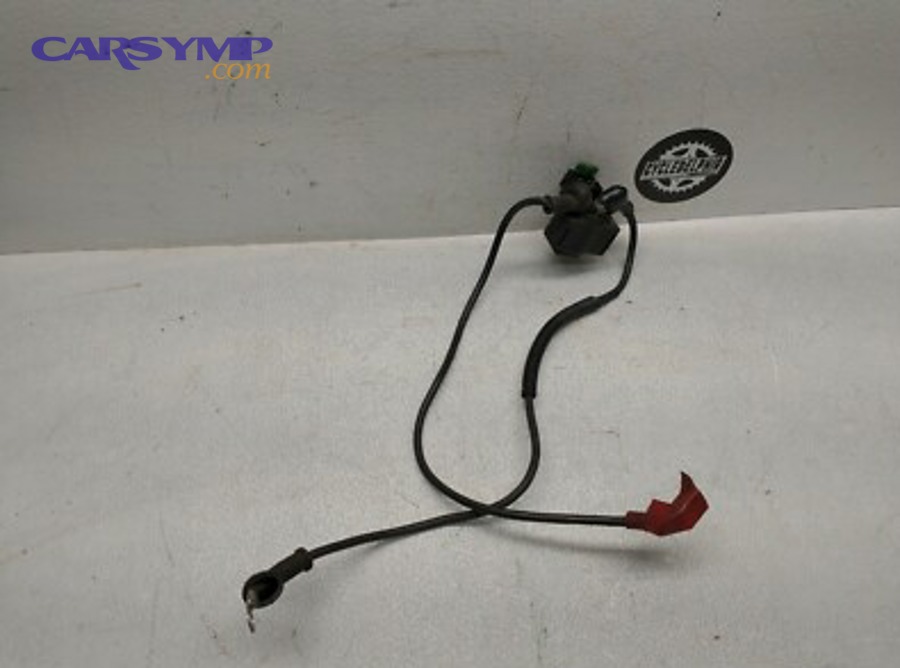
Professional installation differs dramatically from casual “bolt it together” approaches. A properly installed ground connection maintains resistance below 0.001 ohms per connection point, while poorly installed grounds may measure 0.1-1.0 ohms or higher—resistance that severely degrades starter performance. Attention to surface preparation, hardware selection, and connection techniques separates reliable installations from problem-prone assemblies.
How Do You Prepare Mounting Surfaces for Optimal Ground Contact?
Preparing mounting surfaces for optimal ground contact involves using a wire wheel on a drill or grinder to remove paint, rust, and oxidation down to bright, shiny base metal at all ground connection points, cleaning the prepared surface with brake cleaner or electrical contact cleaner to remove grinding residue and oils, avoiding the temptation to merely scuff painted surfaces (paint must be completely removed), and preparing both the bolt/stud mounting area and the surrounding metal where cable terminals or ground straps will make contact. Surface preparation represents the single most important factor determining ground connection resistance and long-term reliability.
Detailed surface preparation procedures for different ground locations:
Battery terminal preparation:
- Remove cable from battery
- Clean battery post with battery post cleaning brush (wire brush specifically designed for battery terminals)
- Clean inside of cable terminal with terminal brush end tool
- Neutralize any acid residue with baking soda solution (1 tablespoon per cup water)
- Rinse with clean water and dry thoroughly
- Light coat of dielectric grease or anti-corrosion spray on terminal after connection
Chassis ground point preparation:
- Identify ground stud or bolt location on frame rail, firewall, or body
- Remove existing ground cables and hardware
- Use wire wheel on drill to remove paint, rust, powder coating, or corrosion in 2-3 inch area around mounting point
- If grinding through powder coat or thick paint, expand cleaning area to prevent paint edge from touching terminal
- Clean threads on stud or tapped hole with wire brush or thread chaser
- Spray with contact cleaner and wipe with clean rag
- Bare metal should be shiny and show no discoloration
Engine block ground strap connection:
- Locate bolt holes or studs on cylinder head or engine block where ground strap mounts
- Wire brush or grind paint from mounting area (many engine blocks are painted)
- Clean bolt threads if threading into block
- Prepare similar area on chassis/firewall side of ground strap
- Some mechanics tap new mounting holes in unpainted locations for optimal contact
Starter mounting flange preparation:
- CRITICAL: Remove paint from starter mounting surface on engine block or bellhousing
- Many mechanics overlook this step when installing starters on rebuilt or painted engines
- Use die grinder, wire wheel, or hand file to bare metal where starter flange contacts block
- Clean starter mounting flange itself (usually bare metal but may have protective coating)
- This contact provides the critical ground connection from starter housing to engine block
Tips for effective surface preparation:
- Work on clean bench or shop floor to avoid contaminating prepared surfaces with dirt
- Prepare surfaces immediately before installation; don’t prepare days in advance as oxidation forms quickly
- Use compressed air to blow away grinding dust before final cleaning
- Wear safety glasses when using wire wheels (flying wire bristles are common)
- Consider using flap disc on angle grinder for large areas; more aggressive than wire wheel
- Don’t use sandpaper or emery cloth on electrical contact surfaces; these leave abrasive residue that increases resistance
After surface preparation, install connections immediately before oxidation forms. If you must delay installation, spray prepared surfaces with contact cleaner or light oil to prevent oxidation, then clean again before final assembly.
What Hardware Ensures Reliable Ground Connections?
Reliable ground connections require external tooth lock washers (star washers) under bolt heads and nuts to penetrate surface oxidation and maintain contact under vibration, split lock washers or thread locking compound to prevent fastener loosening, properly sized ring terminals crimped and soldered to cable ends rather than clamp-on terminals, heat shrink tubing over crimped connections to seal against moisture, and appropriate torque specifications applied to all fasteners (typically 10-15 ft-lbs for 1/4″ hardware, 15-25 ft-lbs for 5/16″-3/8″ hardware). Quality hardware and proper installation techniques ensure ground connections maintain low resistance through years of thermal cycling and vibration.
Hardware selection and installation best practices:
Star washers (external tooth lock washers):
- Serrated teeth bite through microscopic oxidation layers
- Maintain electrical contact as joints compress or vibrate
- Install under both bolt head and nut when possible
- Position teeth against the terminal or strap being grounded
- Use stainless steel or zinc-plated versions for corrosion resistance
- Common sizes: #10, 1/4″, 5/16″, 3/8″ match bolt sizes
Split lock washers:
- Provide mechanical lock against loosening
- Do NOT provide significant electrical contact improvement (minimal surface area)
- Use in combination with star washers, not as replacement
- Position between star washer and nut
Ring terminals:
- Properly sized for wire gauge (must match cable gauge)
- Barrel must accommodate all cable strands without crushing
- Ring opening must fit bolt size (1/4″, 5/16″, 3/8″ common)
- Seamless design preferred over open-ended lugs
- Crimping procedure:
- Strip cable insulation 1/2″ to 3/4″ depending on terminal barrel length
- Insert cable fully into terminal barrel until insulation touches barrel entry
- Use correct size crimping die (hexagonal or indent style)
- Crimp barrel with heavy pressure (should require significant force)
- Pull test: cable should not pull out of terminal with 50+ pounds force
- Optional: solder connection by heating terminal and flowing solder into barrel from opposite end until solder appears at insulation
- Cover connection with adhesive-lined heat shrink tubing, shrink with heat gun
- Properly crimped and soldered connection has lower resistance than the cable itself
Self-tapping screws and riv-nuts:
- Use when adding new ground points where no factory provision exists
- Self-tapping screws cut threads in sheet metal (body panels, firewall)
- Size: #10 to 1/4″ with star washers
- Riv-nuts (rivet nuts) install threaded insert in thin material
- Provide more secure mounting than self-tapping screws
- Useful for fiberglass bodies or thin metal where threads might strip
Dielectric grease application:
- Apply AFTER connection is made, not on contact surfaces
- Coat exposed terminal areas to seal against moisture
- Do not apply between contact surfaces (creates insulating barrier)
- Use real dielectric grease, not petroleum jelly which attracts moisture
- Popular brands: Permatex, CRC, Sta-Lube
Fastener torque specifications:
- Under-torquing allows vibration and loosening
- Over-torquing crushes terminals or strips threads
- General guidelines:
- #10 hardware: 5-8 ft-lbs
- 1/4″ hardware: 10-15 ft-lbs
- 5/16″ hardware: 15-25 ft-lbs
- 3/8″ hardware: 25-35 ft-lbs
- Use torque wrench for critical connections
- Re-torque after 50-100 miles of operation as connections seat
Installing connections without proper hardware invites problems. The mechanic who simply bolts a cable to painted metal without surface preparation or star washers creates a high-resistance connection that will fail within months. The technician who uses all appropriate hardware on properly prepared surfaces builds a connection that may last the life of the vehicle.
Should You Install a Dedicated Starter Ground Strap?
Yes, installing a dedicated starter ground strap directly from the starter motor housing to the battery negative terminal or dedicated junction point eliminates dependence on engine-to-chassis ground paths that may have inadequate conductivity due to rubber engine mounts, painted surfaces, chromoly chassis construction, or missing factory ground straps. Dedicated starter grounds provide a reliable current return path independent of chassis grounding, dramatically improve starting reliability in custom builds and modified vehicles, and represent best practice for racing applications where consistent performance is critical.
Benefits and installation guidance for dedicated starter grounds:
Why dedicated grounds improve performance:
- Eliminates current flow through rubber engine mounts which insulate engine from chassis
- Bypasses potentially poor factory ground straps that may be undersized, corroded, or missing
- Provides shortest, most direct path from starter back to battery
- Especially important in vehicles with:
- Chromoly tube chassis (poor electrical conductivity compared to steel)
- Aluminum block or cylinder heads (higher resistance than cast iron)
- Aftermarket engine mounts with minimal metal-to-metal contact
- Bodies or frames with powder coating, paint, or anodizing
- High-output starters drawing 300+ amperes
Installation guidelines:
- Use 1-gauge to 2/0-gauge pure copper welding cable depending on starter amperage
- Route cable as directly as possible from starter housing to battery or junction point
- Avoid sharp bends that stress cable
- Secure cable every 12-18 inches with cable clamps to prevent vibration damage
- Protect cable from heat sources (exhaust manifolds, turbochargers)
- Use high-quality ring terminals at both ends, properly crimped and soldered
- Connect at starter housing:
- Some starters have dedicated ground stud or terminal
- Others require connecting to mounting bolt or clean area on housing
- Use star washer and ensure good metal-to-metal contact
- Connect at battery or junction:
- Can run to battery negative post if length permits
- Or to ground junction block/distribution point
- Or to dedicated chassis ground stud
- Use existing factory ground location if adequately sized and prepared
Dedicated ground in racing applications:
- Professional drag cars, road race cars, and circle track vehicles universally use dedicated starter grounds
- Typical setup: 2/0-gauge cable from starter directly to negative junction on firewall
- Battery negative also connects to same junction
- Eliminates starting issues in staging lanes or hot pit stops
- Reduces chance of current seeking alternative paths through transmission, clutch cables, etc.
- Some teams run dual grounds (dedicated starter ground plus traditional engine-to-chassis strap) for redundancy
When dedicated grounds are essential:
- Any vehicle with fiberglass body (no ground path through body panels)
- Vehicles with extensively painted or powder-coated frames
- Custom tube chassis construction
- Engine swaps where factory ground provisions don’t exist
- High-compression or diesel engines with very high starter loads
- Competition vehicles where starting reliability is critical
- Street rods or customs with minimal metal-to-metal chassis contact
Installing a dedicated starter ground costs minimal time and money (typically $30-60 in cable and terminals, 30-60 minutes labor) but provides significant reliability improvement. Many professional builders install dedicated grounds on every project as standard practice, recognizing the insurance value against future starting problems. For street vehicles with factory ground systems in good condition, dedicated grounds may not be necessary but still provide benefits. For modified or custom vehicles, dedicated grounds transition from “nice to have” to “essential for reliable operation.”
What Are Common Starter Grounding Mistakes and How Do You Avoid Them?
Common starter grounding mistakes include using undersized wiring that creates excessive voltage drop under load, relying solely on painted or powder-coated chassis for ground return paths, neglecting to clean mounting surfaces before installing connections, using low-quality CCA cables instead of pure copper, and failing to account for non-conductive materials like chromoly tubing or rubber engine mounts in the ground circuit. Avoiding these errors requires understanding electrical principles, following professional installation standards, and verifying ground circuit performance through testing rather than assuming adequate grounding based on visual appearance.
These mistakes account for a significant percentage of starter problems diagnosed by professional mechanics. Technicians report that ground-related issues often go unrecognized by vehicle owners and even some repair shops, leading to unnecessary starter replacement, battery replacement, or alternator replacement when simple ground circuit repairs would solve the problem. Learning to recognize and avoid common grounding errors prevents diagnostic dead ends and ensures repairs actually address root causes.
What Problems Does Undersized Wiring Cause in Starter Circuits?
Undersized wiring in starter circuits causes excessive voltage drop that reduces voltage available at the starter motor (slow cranking or no-crank), generates heat in the cable from I²R losses that degrades insulation and connections over time, forces current to seek alternative return paths through unintended circuit elements, and creates misleading diagnostic symptoms where the starter appears weak when the real problem is inadequate current delivery. Wire gauge selection based on length and amperage requirements, not arbitrary size choices or “it looks big enough” judgments, prevents these performance and reliability problems.
Specific problems created by undersized ground wiring:
Voltage drop and reduced starter performance:
- Starter motors are DC series-wound devices; torque output directly correlates with current flow
- Undersized wire increases circuit resistance
- Ohm’s Law (I = V/R) shows that increased resistance reduces current
- Example: 200A starter with ideal 0.1Ω total circuit resistance draws 120A with 1.0Ω resistance added by undersized wire
- Reduced current = reduced electromagnetic field strength = reduced torque output = slow cranking
- In severe cases, voltage drop is so extreme starter barely turns or clicks but won’t engage
Heat generation and accelerated aging:
- Power dissipated as heat in resistance: P = I²R
- 200A through 1.0Ω resistance generates 40,000 watts of heat
- This heat concentrates in undersized cable and connections
- Insulation becomes brittle and cracks
- Copper strands oxidize internally
- Crimped terminals heat-cycle and loosen
- Connection points show discoloration, melting, or burning
- Cable may feel hot to touch after cranking attempts
Alternative current paths:
- Current always follows path of least resistance
- When designed ground path has high resistance, current seeks alternatives
- Possible alternative paths:
- Throttle cable (if metal core and housing connect starter area to firewall)
- Shift linkage (if mechanical connections provide continuity)
- Clutch cable (hydraulic systems don’t conduct; mechanical cables may)
- Transmission cooler lines (rare but possible if corrosion provides contact)
- Heater hoses with grounded metal fittings
- These components aren’t designed to carry starter current
- Result: burned cables, seized linkages, damaged hoses
Case study—4-gauge wire in frame rail:
A common mistake in custom car builds: running 4-gauge battery cable through frame rails for “clean” appearance. While 4-gauge appears substantial, resistance calculations show problems:
- Distance: 10 feet from battery to starter through frame routing
- 4-gauge copper: 0.000253Ω per foot = 0.00253Ω total
- 250A starter draw
- Voltage drop = 250A × 0.00253Ω = 0.63V (5.25% of 12V)
- This exceeds 5% target maximum
- Proper wire for this application: 2-gauge or 1/0-gauge
- 2-gauge at 10 feet: 0.000159Ω per foot = 0.00159Ω total = 0.40V drop (3.3%)
- Lesson: appearance and convenience shouldn’t override electrical requirements
Why Relying on Chassis Ground Alone Can Fail?
Relying on chassis ground alone can fail because modern vehicle construction uses rubber engine mounts that electrically isolate the engine from chassis, painted or powder-coated frames create insulating barriers at connection points, chromoly steel tubing used in racing chassis has significantly higher electrical resistance than mild steel, fiberglass or carbon fiber body panels provide no conductivity, and multiple connection points in series between engine and battery create cumulative resistance that degrades performance. Dedicated ground straps from engine to chassis and from starter to battery ensure adequate grounding regardless of chassis construction or condition.
Specific chassis grounding challenges:
Rubber engine mounts:
- Virtually all modern vehicles use rubber or polyurethane engine mounts
- These materials are electrical insulators
- Engine “floats” in chassis without metal-to-metal contact
- Ground current cannot flow through rubber
- Requires dedicated metal ground strap bridging engine to chassis
- Problem: these straps often corrode, break, or get removed during repairs and not reinstalled
Painted and coated surfaces:
- Paint creates insulating layer blocking current flow
- Powder coating particularly problematic (thick, durable insulation)
- Anodizing on aluminum components also insulates
- E-coating (electrodeposition coating) now common on frames, seals all metal surfaces
- Even “bare” metal may have protective coatings invisible to eye
- Solution: grind to bare metal at all connection points
Chromoly chassis material:
- Chromoly (chrome-molybdenum alloy steel) popular in racing for strength-to-weight ratio
- Electrical conductivity approximately 10-15% that of mild steel
- A chromoly tube that would conduct adequately if mild steel creates significant resistance
- Example: 1-inch diameter chromoly tube, 3 feet long ≈ 0.050Ω resistance
- Same dimensions in mild steel ≈ 0.005Ω resistance
- Ten times higher resistance makes chassis unusable as ground path
- Solution: always run dedicated ground wires in chromoly chassis vehicles; never rely on frame
Multiple connection points:
- Series resistance adds: R_total = R1 + R2 + R3…
- Typical chassis ground path: battery to chassis (0.1Ω) + chassis to frame connection (0.2Ω) + frame to engine mount area (0.3Ω) + engine block to starter (0.1Ω) = 0.7Ω total
- Each connection point adds resistance
- Paint, corrosion, or looseness at any point degrades entire circuit
- Direct dedicated ground eliminates multiple connection points
Non-conductive body materials:
- Fiberglass bodies common in kit cars, custom builds, corvettes
- Carbon fiber increasingly used in performance vehicles
- These materials provide zero electrical conductivity
- Cannot use body panels as ground return
- Must run dedicated wiring for all ground needs
Best practice for reliable grounding:
Instead of relying on uncertain chassis paths, professional builders implement “The Big 3” upgrade:
- Heavy-gauge cable from battery positive to alternator output
- Heavy-gauge cable from battery negative to engine block
- Heavy-gauge cable from engine block to chassis ground
These three cables ensure adequate current delivery regardless of factory grounding adequacy.
How Does Corrosion and Environmental Exposure Affect Starter Grounds?
Corrosion and environmental exposure degrade starter grounds by forming copper oxide layers on exposed conductor surfaces that increase electrical resistance, allowing moisture intrusion into cable assemblies where it wicks between copper strands causing progressive internal conductor failure, creating galvanic corrosion at dissimilar metal junctions especially aluminum-to-copper connections, and accelerating deterioration through chemical attack from road salt, battery acid, and automotive fluids. Regular inspection and preventive maintenance including terminal cleaning, connection sealing, and protective coatings preserve ground circuit integrity in harsh operating environments.
Environmental factors and corrosion mechanisms:
Copper oxidation:
- Copper exposed to air and moisture forms copper oxide (green patina)
- Copper oxide has approximately 1000× higher resistance than pure copper
- Even microscopic oxide layers significantly increase contact resistance
- Oxide forms rapidly on clean copper; protective coating essential
- Green discoloration on cable ends, terminals, or battery posts indicates advanced oxidation
- Prevention: dielectric grease on exposed conductors, heat shrink tubing on connections, periodic cleaning
Moisture intrusion and wicking:
- Water enters damaged cable insulation through cracks or cuts
- Capillary action draws moisture between copper strands
- Internal corrosion progresses along cable length away from entry point
- Affected cable section shows increased resistance despite normal external appearance
- Signs: cable feels stiff or rigid in areas (corrosion cements strands together), green staining visible under insulation
- Prevention: quality heat shrink with adhesive lining seals cable ends, replace damaged insulation immediately
Road salt and chemical attack:
- Winter road salt (sodium chloride, calcium chloride, magnesium chloride) accelerates corrosion
- Salt spray reaches undercarriage components including cables and connections
- Creates conductive brine that promotes galvanic corrosion between dissimilar metals
- Particularly destructive to aluminum components and aluminum-copper junctions
- Coastal vehicles experience similar issues from salt air
- Prevention: regular undercarriage washing especially after winter, protective coatings on connections, marine-grade tinned copper cable in severe environments
Battery acid exposure:
- Sulfuric acid electrolyte escapes battery through overflow vents, cracks, or loose caps
- Acid attacks copper terminals creating sulfates (blue-white crusty deposits)
- Even vapor from battery charging can deposit acid residue on nearby components
- Acid neutralizes with baking soda solution (1 tablespoon per cup water)
- Prevention: maintain proper battery fluid level, inspect for leaks, clean terminals regularly, consider sealed AGM or gel batteries
Galvanic corrosion:
- Occurs when dissimilar metals contact in presence of electrolyte (moisture)
- Common pairs: aluminum housing/copper terminal, steel bolt/copper ring terminal
- More noble metal (copper) protected; less noble metal (aluminum, steel) corrodes
- Accelerated by salt exposure
- Prevention: use proper washers to isolate materials, apply anti-seize compound, use stainless hardware
Seasonal maintenance for cold climates:
According to the Automotive Maintenance and Repair Association’s 2023 survey of northern climate repair shops, corrosion-related electrical failures increase 300% during winter months compared to summer, with starter and ground circuit problems representing 40% of these failures. Recommended preventive maintenance includes:
- Fall preparation (October-November):
- Remove, clean, and reinstall all major ground connections
- Inspect cables for insulation damage
- Apply fresh dielectric grease to terminals
- Spray connections with corrosion inhibitor
- Spring maintenance (March-April):
- Wash undercarriage thoroughly to remove salt residue
- Re-inspect all connections cleaned in fall
- Replace any cables showing damage or excessive corrosion
- Test voltage drop across ground circuits
What Is “The Big 3” Wiring Upgrade and When Do You Need It?
“The Big 3” wiring upgrade involves replacing or supplementing three critical cables in the vehicle electrical system with larger gauge wire: the positive cable from battery to alternator output, the negative cable from battery to chassis ground point, and the engine block-to-chassis ground strap, typically upgrading all three to 1/0-gauge or larger pure copper cable to reduce resistance and improve current delivery throughout the electrical system. This upgrade becomes necessary when adding high-demand accessories like powerful audio systems or winches, upgrading to higher-output alternators, installing performance starters on modified engines, or experiencing electrical symptoms like dimming lights during starting that indicate inadequate factory wiring capacity.
Detailed explanation and implementation of The Big 3 upgrade:
The three critical cables explained:
Cable 1—Battery positive to alternator:
- Factory cable: typically 4-gauge to 2-gauge
- Upgrade: 1/0-gauge or 2/0-gauge
- Purpose: delivers charging current from alternator to battery
- Why upgrade helps: reduces voltage drop from alternator to battery, allows alternator to charge at full rated output, prevents voltage droop when high-demand accessories operate
- Installation: run new cable from alternator B+ terminal to battery positive post
Cable 2—Battery negative to chassis:
- Factory cable: typically 4-gauge to 2-gauge
- Upgrade: 1/0-gauge or 2/0-gauge
- Purpose: provides ground return path for all chassis-mounted accessories and completes charging circuit
- Why upgrade helps: lower resistance improves ground reference for entire vehicle, reduces chance of ground faults affecting sensitive electronics, supports higher current flow from upgraded alternator
- Installation: run new cable from battery negative terminal to main chassis ground point (usually on frame rail or firewall)
Cable 3—Engine block to chassis ground:
- Factory strap: often 4-gauge or smaller braided strap
- Upgrade: 1/0-gauge or 2/0-gauge welding cable
- Purpose: grounds engine block to chassis for starter operation and to complete alternator charging circuit
- Why upgrade helps: provides adequate current path for high-output starters, ensures good ground for engine-mounted sensors and ECU, reduces electrical noise in vehicle systems
- Installation: run from engine block or cylinder head to firewall or chassis ground point; use both a traditional flat ground strap AND a heavy cable for optimal results
When The Big 3 upgrade is necessary:
High-power audio systems:
- Large amplifiers draw 100+ amps during bass notes
- Factory wiring causes voltage sag, resulting in dimming lights and reduced amplifier performance
- Upgraded Big 3 maintains stable voltage under load
- Common in competition audio vehicles or systems exceeding 1000 watts
High-output alternator installation:
- Upgrading from 100-amp factory alternator to 200+ amp unit
- Factory wiring cannot deliver high alternator output without excessive voltage drop
- Prevents alternator from achieving full output capacity
- Essential for vehicles with winches, auxiliary lighting, air compressors, or multiple high-draw accessories
Performance engine builds:
- High-compression engines with gear-reduction starters may draw 400+ amps
- Modified engines often have aluminum heads and blocks (higher resistance than iron)
- Upgraded grounds ensure adequate cranking performance
- Particularly important for drag racing where consistent fast cranking is critical
Electrical symptom indicators:
- Headlights dim significantly when starting engine
- Dashboard lights flicker during accessory operation
- Voltage gauge shows large swing during starting or high-load conditions
- Audio system performance varies with electrical load
- Intermittent electrical gremlins without clear cause
Installation best practices:
- Use pure copper welding cable, avoid CCA
- Properly crimp and solder all terminals
- Heat shrink all connections
- Prepare mounting surfaces to bare metal
- Use star washers at all connections
- Route cables away from heat and moving parts
- Secure cables every 12-18 inches to prevent vibration damage
- Label cables for future reference
Comparison with factory wiring:
Factory electrical systems design balances cost against adequate performance for stock configuration. Engineers specify minimum wire size to handle stock alternator output and starter requirements with acceptable voltage drop margins. When owners modify vehicles by adding accessories or upgrading components, these margins disappear and factory wiring becomes inadequate.
The Big 3 upgrade costs approximately $150-250 in materials (cable, terminals, heat shrink) and requires 2-4 hours to install. This investment prevents damage to expensive electrical components, eliminates frustrating electrical symptoms, and provides foundation for future modifications without electrical system constraints.
This comprehensive guide equips mechanics and DIY enthusiasts with the knowledge to properly inspect, test, diagnose, and repair starter wiring and ground connections. By following the systematic procedures outlined—from visual inspection through multimeter testing to proper installation techniques—you can eliminate ground-related starting problems and ensure reliable engine cranking in all conditions. Remember that Starter replacement labor time decreases significantly when you diagnose ground issues first rather than replacing starters unnecessarily. Proper Starter vs battery vs alternator diagnosis requires checking grounds thoroughly before condemning major components, saving time and money while achieving lasting repairs.