


Replacing sway bar links typically takes between 30 minutes to 1.5 hours for professional mechanics working on both sides, with labor costs ranging from $75 to $300 depending on your vehicle type and location. The actual time varies significantly based on factors like vehicle accessibility, rust conditions, and whether you’re replacing front or rear links. Most mechanics charge between $110 and $220 per hour, making labor the dominant cost component in this suspension repair.
Understanding the cost breakdown helps vehicle owners make informed decisions between professional service and DIY approaches. Parts alone cost $20 to $100 per link for aftermarket options, while OEM components range from $40 to $100 each. When combined with labor, the total replacement cost for both front links typically falls between $150 and $500, though luxury vehicles with active suspension systems can exceed $1,000 due to complexity and specialized components.
DIY enthusiasts can complete sway bar link replacement in 30 minutes to 2 hours per side, depending on experience level and vehicle conditions. This approach eliminates labor charges entirely, potentially saving $100 to $400 on a typical repair. However, success requires proper tools including jack stands, socket sets, torque wrenches, and sometimes cutting equipment for seized bolts in rust-prone regions.
Recognizing when replacement becomes necessary protects both safety and wallet. Common warning signs include clunking noises over bumps, excessive body roll during cornering, and visible wear during inspection. Next, let’s explore the specific labor time requirements that determine your total repair duration and cost.
How Long Does It Take to Replace Sway Bar Links?
Professional mechanics typically complete sway bar link replacement in 0.7 to 1.5 hours total when replacing both front links, while DIY projects take 30 minutes to 2 hours per side depending on experience and conditions. The industry “book time” represents the standard labor estimate mechanics use for billing, though actual time varies based on bolt accessibility, corrosion levels, and vehicle design.
To better understand these timeframes, consider how different scenarios affect the replacement process. Clean hardware in moderate climates comes off quickly, while salt-belt vehicles often require additional time for penetrating oil application and potentially cutting seized fasteners.
What Is the Average Labor Time for Professional Mechanics?
Professional mechanics work within established book time standards of 0.7 to 1.5 hours for replacing both front sway bar links on most passenger vehicles. This estimate assumes standard working conditions where bolts remove cleanly without excessive corrosion or complications. Experienced technicians with proper lift access often complete straightforward replacements toward the lower end of this range, while more complex vehicles push toward the upper limit.
The actual shop time can exceed book time when complications arise. Rust-belt vehicles frequently require an additional 30 to 60 minutes for penetrating oil soak time and careful extraction of corroded fasteners. Some mechanics apply heat or use cutting tools on severely seized bolts, adding 15 to 45 minutes per stubborn connection point. Dealerships typically charge based on book time regardless of actual duration, while independent shops may adjust billing for unusual complications.
Vehicle-specific factors significantly impact professional labor duration. Compact sedans with generous wheel well access allow fastest completion, often finishing in 45 minutes to 1 hour. SUVs and trucks require more time due to larger suspension components and tighter working spaces, typically ranging from 1 to 1.5 hours. Luxury vehicles equipped with active anti-roll systems like BMW’s Active Roll Stabilization or Toyota’s KDSS can require 2 to 4 hours due to electronic disconnection procedures and specialized calibration requirements.
How Long Does DIY Sway Bar Link Replacement Take?
DIY sway bar link replacement requires 30 minutes to 1 hour per side for experienced home mechanics, while first-time DIYers should allocate 1 to 2 hours per side to account for the learning curve and careful torque specification adherence. The time investment increases substantially when dealing with corroded hardware, potentially adding another 30 to 90 minutes for bolt extraction challenges.
Home mechanics face different time constraints than professionals with lift access. Working from jack stands requires additional safety setup time, typically 10 to 15 minutes for proper vehicle elevation and wheel removal. Counter-holding link studs while loosening nuts demands patience and sometimes an extra set of hands, particularly when ball joints bind or threads resist separation. Many DIY guides recommend soaking rusty bolts overnight with penetrating oil, effectively adding 12 to 24 hours to the project timeline even though active work time remains unchanged.
Tool familiarity dramatically affects DIY completion time. Experienced mechanics with organized toolboxes and familiarity with torque wrench operation complete work efficiently, while beginners spend additional time identifying correct socket sizes, locating torque specifications, and understanding proper tightening procedures. The first side typically takes longer as you develop technique, with the second side proceeding 20 to 40 percent faster using lessons learned.
What Factors Affect Sway Bar Link Replacement Time?
Multiple factors influence sway bar link replacement duration, including vehicle type, suspension design complexity, corrosion levels, and bolt accessibility, with time variations ranging from 30 minutes for simple replacements to 4+ hours for complicated systems. Understanding these variables helps set realistic expectations and explains why quotes vary significantly between different vehicles and geographic regions.
Specifically, the most impactful factors fall into three categories: vehicle-specific design characteristics, environmental and condition factors, and technician capabilities. Each category contributes unique challenges that either streamline or complicate the replacement process.
Does Vehicle Type Impact Labor Time?
Yes, vehicle type significantly impacts labor time, with compact sedans requiring 0.5 to 1 hour, standard SUVs and trucks needing 1 to 2 hours, and luxury vehicles with active suspension systems demanding 2 to 4 hours due to design complexity and component accessibility. The fundamental difference stems from suspension architecture, component size, and manufacturer engineering choices that prioritize performance over serviceability.
Compact and mid-size sedans offer the most straightforward sway bar link access. Models like Honda Civic, Toyota Camry, and Ford Fusion feature open wheel wells with minimal obstructions between the link mounting points and the wheel opening. Mechanics can often reach both attachment points with standard ratchets and sockets without removing additional components. The smaller suspension components and lighter springs exert less binding force on the links during removal, reducing the physical effort and time required for separation.
SUVs and pickup trucks present moderate complexity increases. The elevated ride height provides better working space underneath but larger diameter sway bars and longer links require more substantial fasteners that resist removal. Ford F-150, Chevrolet Silverado, and Toyota 4Runner models typically feature 18mm to 21mm nuts on link studs compared to 14mm to 17mm on sedans, requiring larger tools and more torque for removal. The additional ground clearance sometimes eliminates lift requirements for professional shops, potentially offsetting the size-related time increase.
Luxury and performance vehicles introduce significant complications. BMW, Mercedes-Benz, Audi, and Land Rover models frequently incorporate active anti-roll systems with electronic actuators, hydraulic components, or adjustable sway bars. These systems require electrical disconnection, fluid line consideration, and sometimes recalibration after replacement. Some Land Rover models with Terrain Response systems require diagnostic tool connection to place the suspension in service mode before safely removing links. Additionally, certain Mercedes and BMW platforms necessitate subframe lowering to access rear sway bar links, transforming a simple job into a 3 to 5 hour procedure.
How Does Rust and Corrosion Affect Replacement Time?
Rust and corrosion can increase replacement time by 30 to 90 minutes per vehicle, transforming straightforward bolt removal into challenging extraction procedures requiring penetrating oil, heat application, or cutting tools. Salt-belt states including Michigan, Ohio, Pennsylvania, New York, and northeastern regions experience the most severe corrosion impact due to winter road salt application and moisture retention in suspension components.
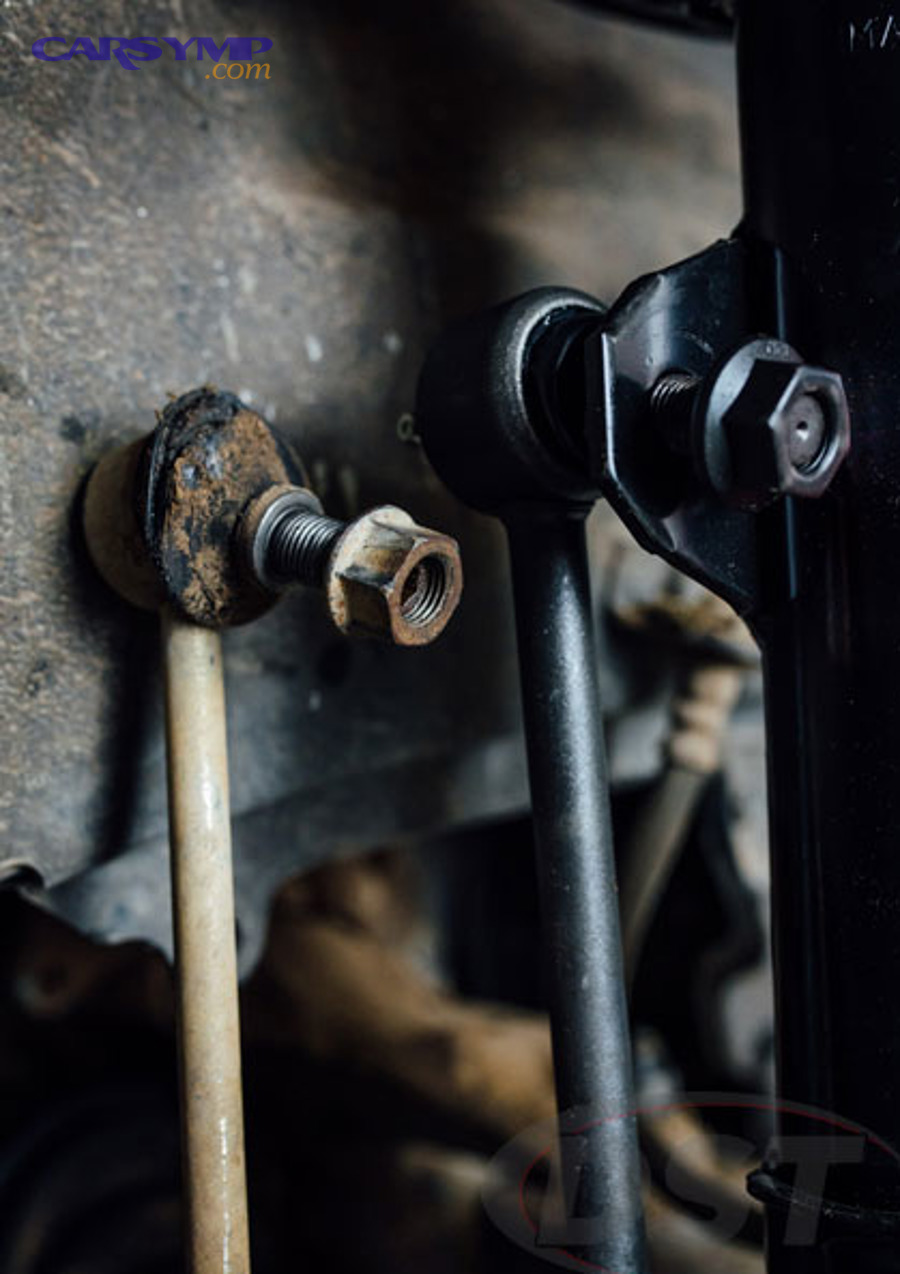
The chemical process of corrosion creates metal oxide bonds between threaded fasteners and link studs, effectively welding components together. This galvanic corrosion proves particularly problematic when steel fasteners contact aluminum components or when dissimilar metals interact in the presence of salt-laden moisture. The result manifests as nuts that refuse to turn, studs that spin without releasing, or threads that strip during removal attempts.
Professional mechanics employ a progressive escalation strategy for corroded fasteners. The process begins with liberal penetrating oil application (PB Blaster, Liquid Wrench, or similar products) followed by 15 to 30 minute soak time. If initial removal attempts fail, technicians apply additional penetrant and extend soak time to several hours or overnight when shop scheduling permits. Heat application using propane or acetylene torches comes next, expanding metal and breaking corrosion bonds, though this risks damaging rubber bushings and requires careful technique. The final resort involves cutting seized nuts with angle grinders or reciprocating saws, then drilling out remaining stud material—a process adding 30 to 60 minutes per stubborn link.
Regional variation in corrosion severity creates predictable time differences. California, Arizona, Nevada, and southern states typically see minimal corrosion delays, with most links removing in 5 to 10 minutes per connection point. Midwest and northeastern mechanics routinely budget extra time for corrosion complications, with some shops charging higher labor rates specifically for undercarriage work on older vehicles. Coastal regions experience moderate corrosion from salt air but generally less severe than winter salt exposure creates.
What Is the Labor Cost for Sway Bar Link Replacement?
Labor costs for sway bar link replacement range from $75 to $300 for both links, calculated by multiplying the mechanic’s hourly rate ($110 to $220 nationally) by the book time (0.7 to 1.5 hours), with significant regional and shop-type variations. This labor component typically represents 40 to 60 percent of the total replacement bill, making it the dominant cost factor in most sway bar link repairs.
Moreover, understanding how shops calculate labor charges helps vehicle owners evaluate quotes and identify fair pricing. The relationship between book time and actual time creates interesting dynamics in repair billing.
What Do Mechanics Charge Per Hour for This Job?
Mechanics charge between $110 and $220 per hour for sway bar link replacement, with dealerships averaging $150 to $220, independent shops ranging from $90 to $150, and chain service centers falling between $80 and $130 per hour. Geographic location creates the most dramatic rate variations, with major metropolitan areas commanding premium prices while rural regions offer more affordable labor.
Dealership service departments justify higher rates through manufacturer-specific training, OEM parts access, and specialized diagnostic equipment. A BMW dealership in Los Angeles or New York might charge $180 to $220 per hour, while the same brand’s dealership in a smaller Midwest city charges $140 to $170 per hour. These facilities typically work strictly from book time estimates, charging 1.0 hour labor even if an experienced technician completes the work in 40 minutes, or conversely, not charging extra if complications extend actual time to 2 hours.
Independent repair shops offer competitive advantages through lower overhead costs and flexible pricing structures. These businesses often charge $90 to $150 per hour depending on regional economics and shop reputation. A well-established independent shop in suburban Chicago might charge $120 per hour compared to $85 per hour at a similar shop in rural Tennessee. Some independent mechanics adjust billing based on actual time when complications arise, providing more transparent pricing than rigid book time adherence.
Chain service centers like Pep Boys, Firestone, and Midas typically position themselves in the middle tier at $80 to $130 per hour. These facilities compete on convenience, warranties, and promotional pricing rather than premium service. They frequently offer package deals or discounts that effectively reduce the per-hour rate, making them attractive for straightforward repairs on common vehicles.
Is Labor Included When Replacing Both Sides at Once?
Yes, labor is included when replacing both sides at once, and doing so typically costs only 10 to 30 percent more than single-side replacement because the labor steps largely overlap, making paired replacement significantly more cost-effective than two separate service visits. The book time for both links (0.7 to 1.5 hours) compares favorably against performing the job twice (potentially 1.4 to 3.0 hours total if done separately).
The labor overlap occurs because fundamental steps remain identical regardless of replacing one or both links. The mechanic must lift and secure the vehicle, remove wheels, access the suspension components, and perform final torque verification whether replacing one link or two. These preparation and completion steps consume approximately 30 to 40 percent of total labor time. Adding the second side only requires repeating the actual link removal and installation steps, adding perhaps 15 to 30 minutes to the total job.
Cost comparison demonstrates the financial advantage clearly. Replacing a single front sway bar link might cost $125 total ($75 labor at $150/hour for 0.5 hours plus $50 parts). Replacing both sides simultaneously typically costs $200 total ($125 labor at $150/hour for 0.83 hours plus $75 for two links). If you returned later for the second link, you’d pay another $125, totaling $250 instead of $200—a 25 percent premium for splitting the work.
Mechanics universally recommend paired replacement for several compelling reasons beyond labor efficiency. Sway bar links wear at similar rates due to identical operating conditions and mileage exposure. When one link fails, the opposite side typically approaches failure within 5,000 to 15,000 miles. Replacing both simultaneously prevents the frustration and expense of returning for the predictably failing second link. Additionally, replacing only one link creates asymmetric handling characteristics, though subtle, that compromise the sway bar’s ability to evenly distribute cornering forces.
How Much Do Sway Bar Link Parts Cost?
Sway bar link parts cost between $20 and $100 per link for aftermarket options and $40 to $100 per link for OEM components, with most passenger vehicles requiring two front links for complete replacement. The wide price range reflects quality variations, brand reputation, vehicle application, and whether you choose economy, standard, or premium-grade components.
For example, a pair of aftermarket links for a 2018 Honda Accord might cost $45 total from an economy brand, $75 from a quality aftermarket manufacturer like Moog, or $140 for genuine Honda OEM parts. The price differences correlate with manufacturing standards, material quality, and warranty coverage.
What Is the Price Difference Between OEM and Aftermarket Links?
OEM sway bar links cost 40 to 150 percent more than quality aftermarket alternatives, with OEM parts ranging from $40 to $100 per link while aftermarket options span $20 to $60 per link, though both types perform adequately for most non-performance applications. The premium for OEM parts purchases brand assurance and guaranteed fitment rather than superior engineering in most cases.
Original Equipment Manufacturer parts come directly from the vehicle maker or their contracted suppliers. A genuine Toyota sway bar link for a 2020 RAV4 costs approximately $45 to $55 per link at dealership parts counters, while the identical part might cost $38 to $48 when ordered online from OEM parts discount suppliers. These components guarantee perfect fitment, meet original design specifications, and typically include manufacturer warranties. Luxury brands command higher OEM pricing—BMW, Mercedes-Benz, and Audi OEM links often cost $80 to $100 per link compared to $40 to $60 for mainstream brands.
Aftermarket manufacturers offer compelling alternatives across multiple quality tiers. Premium aftermarket brands like Moog, TRW, and Lemförder produce links meeting or exceeding OEM specifications, often incorporating design improvements like greaseable ball joints or polyurethane bushings for extended life. These premium aftermarket links cost $30 to $60 per link, positioning between economy aftermarket and OEM pricing. Standard aftermarket brands provide acceptable quality at $25 to $40 per link, suitable for typical daily drivers with normal use patterns. Economy options from discount brands start at $20 to $30 per link but may sacrifice longevity and precision tolerances.
Material and construction differences justify price variations. Higher-quality links use forged steel construction, heat-treated ball studs, and premium rubber or polyurethane bushings resistant to ozone degradation and temperature extremes. Budget options may employ thinner stamped steel, lower-grade bushings that deteriorate faster, and less precise manufacturing that creates slight play even when new. For performance vehicles or drivers prioritizing handling precision, the premium tier makes sense. For budget-conscious owners maintaining older commuter vehicles, mid-tier aftermarket parts deliver satisfactory performance and value.
Do You Need Additional Parts Beyond the Links?
Yes, you may need additional parts including sway bar bushings ($10 to $25 per set), new fastener hardware ($5 to $15), penetrating oil ($6 to $12 per can), and potentially cutting tools or replacement studs if corrosion causes removal complications. Comprehensive repair planning accounts for these supplementary items to avoid mid-project delays and ensure proper installation.
Sway bar bushings wear independently from links but merit inspection during link replacement. These D-shaped rubber or polyurethane components mount the sway bar to the vehicle frame and commonly develop cracks, tears, or compression after 60,000 to 100,000 miles. When replacing links, the sway bar becomes accessible for bushing inspection with minimal additional labor. Replacing worn bushings simultaneously costs $20 to $50 for parts plus perhaps 15 to 30 minutes additional labor, versus $100 to $200 if addressed separately later. Signs of bushing wear include visible cracking, abnormal sway bar movement when manually manipulated, or clunking noises that persist after link replacement.
Fastener hardware replacement improves reliability and safety. Many mechanics replace link mounting nuts with new hardware rather than reusing potentially stretched or corroded originals. This practice costs $5 to $15 for a complete fastener set but prevents future complications. Some vehicles use specialized locking nuts, star washers, or thread-locking compounds that shouldn’t be reused. Additionally, when cutting seized bolts becomes necessary, you’ll need replacement studs and nuts, adding $10 to $25 to parts costs.
DIY projects require consumables and tools beyond the actual replacement components. Penetrating oil proves essential for rust-belt repairs, with products like PB Blaster or Liquid Wrench costing $6 to $12 per can. Budget $15 to $25 for a quality can of spray lubricant if you don’t already stock it. Severe corrosion may require cutting disc purchases for angle grinders ($8 to $15 for a pack) or reciprocating saw blades ($10 to $20). Factor these consumables into total project costs when comparing DIY savings against professional service.
Can You Replace Sway Bar Links Yourself?
Yes, you can replace sway bar links yourself if you possess basic mechanical skills, proper safety equipment including jack stands, and essential tools like socket sets and torque wrenches, with potential savings of $100 to $400 in labor costs. DIY sway bar link replacement ranks as a moderate-difficulty task accessible to home mechanics comfortable working under vehicles and following torque specifications.
However, success requires careful attention to safety protocols and proper techniques. The project demands more than enthusiasm—it requires methodical approach and appropriate equipment.
What Tools Are Required for DIY Replacement?
DIY sway bar link replacement requires a hydraulic floor jack ($50 to $150), two jack stands rated for your vehicle weight ($40 to $100 per pair), a socket set including 14mm to 21mm sizes ($30 to $80), a torque wrench ($40 to $120), penetrating oil ($6 to $12), and potentially a breaker bar ($20 to $40) for stubborn fasteners. This $186 to $502 tool investment pays for itself immediately on the first job by eliminating $100 to $400 in labor charges.
Safety equipment forms the foundation of any undercar work. The hydraulic floor jack lifts the vehicle but never serves as the sole support—jack stands provide the critical safety backup preventing catastrophic injury if hydraulic failure occurs. Position jack stands on designated frame points or pinch welds according to your vehicle’s owner manual specifications. Never work under a vehicle supported only by a jack, regardless of jack quality or reputation. Additional safety items include wheel chocks ($10 to $20) preventing vehicle rolling and safety glasses ($5 to $15) protecting eyes from falling debris and rust particles.
Socket tools remove and install link fasteners. Most passenger vehicles use 14mm, 15mm, 16mm, 17mm, or 19mm nuts on sway bar link studs, while trucks may employ 18mm to 21mm sizes. A standard metric socket set covers these sizes adequately. However, sway bar links often require counter-holding the ball stud to prevent spinning during nut removal. This technique demands hex or Torx bits fitting the stud’s shaped shaft—common sizes include 5mm, 6mm, or T40, T45 Torx. Some links use external hex heads requiring Allen keys. Inspect your specific link design before beginning to ensure you have the appropriate counter-hold tool.
Torque wrenches ensure proper fastener tightening critical for safety and longevity. Over-tightening crushes bushings and damages threads while under-tightening allows components to work loose. Manufacturers specify torque values typically ranging from 35 to 75 lb-ft for link nuts. A quality torque wrench costs $40 to $120 but prevents expensive mistakes and ensures professional-grade installation. Click-type torque wrenches offer reliability and affordability for occasional use, while beam-type models provide budget alternatives at $20 to $40 though requiring more careful reading.
Specialty tools address specific challenges. A breaker bar provides the leverage necessary for extremely tight or corroded fasteners that resist standard ratchet force. Budget $20 to $40 for this occasionally essential tool. Penetrating oil spray dissolves rust and corrosion, dramatically easing removal in salt-belt regions. Wire brushes ($3 to $8) clean threads before installation. In worst-case scenarios, you may need cutting tools—angle grinders ($40 to $100) or reciprocating saws ($60 to $150)—though these represent last-resort solutions for severely seized hardware.
What Is the Step-by-Step DIY Process?
The DIY sway bar link replacement process involves eight key steps: vehicle preparation and lifting, wheel removal, link inspection and measurement, old link removal using proper counter-holding technique, installation area cleaning, new link installation, torque specification application, and final testing, with the entire procedure taking 1 to 3 hours for both sides. Following systematic methodology ensures safe, successful completion without damaging components or compromising handling performance.
Step 1: Prepare the vehicle and establish safe working conditions. Park on level ground, engage the parking brake, and place wheel chocks behind the rear wheels if working on front links (or front wheels if working on rear links). Loosen the wheel lug nuts approximately one full turn while the vehicle remains on the ground—this prevents wheel spinning during removal. Position your hydraulic jack under the manufacturer-specified jacking point, typically a reinforced frame section or pinch weld location illustrated in your owner’s manual. Raise the vehicle until the tire clears the ground by 3 to 4 inches, then immediately place jack stands under designated support points. Lower the vehicle onto the stands and verify stability before proceeding. Remove the wheel completely and set aside.
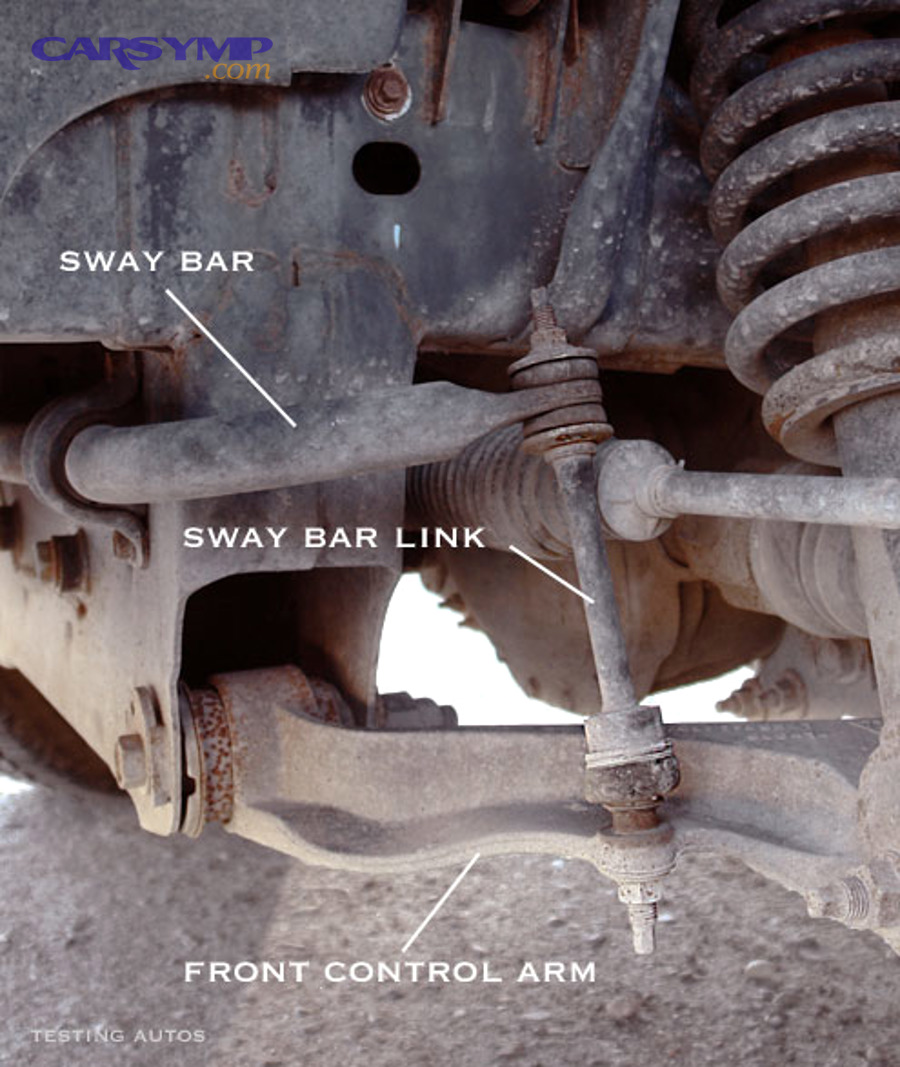
Step 2: Locate and inspect the sway bar link. The sway bar link appears as a short vertical or diagonal rod connecting the sway bar (the thick horizontal bar running across the vehicle’s width) to either the lower control arm or strut assembly. Visually inspect for obvious damage including torn boots, separated ball joints, or bent studs. Take a reference photo with your phone to ensure correct reassembly orientation. If the link uses castle nuts and cotter pins, remove the cotter pin using needle-nose pliers before attempting nut removal.
Step 3: Remove the old sway bar link using counter-holding technique. Spray both link attachment points generously with penetrating oil and allow 10 to 15 minutes soak time for corroded fasteners. Position a wrench or socket on the upper mounting nut while using an Allen key, hex bit, or Torx bit to counter-hold the ball stud’s shaped shaft, preventing rotation. Apply steady force to the nut while maintaining counter-hold pressure. If the nut refuses to move after reasonable effort, apply additional penetrating oil and wait another 15 minutes. Severe corrosion may require heat application using a propane torch on the nut (never on the ball joint itself) or ultimately cutting the nut with an angle grinder. Once the upper nut releases, repeat the process for the lower mounting point. Some vehicles allow link removal without separating both ends—evaluate whether you can flex the link out after removing just one attachment.
Step 4: Clean the mounting areas and inspect mating surfaces. Use a wire brush to remove rust, dirt, and corrosion from the sway bar mounting hole and control arm or strut mounting point. Check for thread damage on remaining studs or mounting points. Examine the sway bar and control arm for cracks, excessive wear, or damage that might require additional repairs. Apply a light coating of anti-seize compound to threads where dissimilar metals contact, particularly on vehicles operated in corrosive environments. This facilitates future removal and prevents galvanic corrosion.
Step 5: Install the new sway bar link in correct orientation. Compare the new link to the old removed component, verifying identical length and stud positioning. Most links install with ball studs pointing upward and downward, though some designs vary. Insert the upper stud into the sway bar mounting hole, then maneuver the lower stud into the control arm or strut mounting point. You may need to use a pry bar to align holes or manipulate suspension position by raising or lowering the jack under the control arm. Thread the mounting nuts by hand until finger-tight, ensuring threads engage smoothly without cross-threading. Install any washers in the correct sequence per the replacement parts instructions.
Step 6: Torque the fasteners to manufacturer specifications. Consult your vehicle’s service manual or the installation instructions included with quality replacement parts for proper torque values—typical specifications range from 35 to 75 lb-ft depending on vehicle size and link design. Some manufacturers specify tightening rubber-bushed links at normal ride height rather than while suspended, requiring you to set the vehicle on the ground before final torquing. This prevents bushing preload that causes premature wear. Use your torque wrench on the nut while counter-holding the ball stud to prevent rotation. Apply torque gradually in two stages—first to 50 percent of specification, then to full specification—ensuring even pressure and proper seating.
Step 7: Reinstall the wheel and lower the vehicle. Mount the wheel onto the hub, threading lug nuts by hand to prevent cross-threading. Tighten lug nuts in a star pattern to initial snugness using a lug wrench. Raise the vehicle slightly with your jack to unload the jack stands, remove the stands, and carefully lower the vehicle to the ground. Once full weight rests on the wheels, torque the lug nuts to manufacturer specification (typically 80 to 100 lb-ft for passenger cars, 100 to 140 lb-ft for trucks and SUVs) using the star pattern to ensure even wheel seating.
Step 8: Test the repair and verify proper operation. Start the vehicle and turn the steering wheel fully left and right while stationary, listening for any unusual noises indicating improper installation or interference. Drive slowly over speed bumps or rough pavement at 5 to 10 mph, confirming the elimination of previous clunking or rattling sounds. Take a test drive including moderate cornering at normal speeds to verify improved handling and absence of unusual suspension behavior. Recheck torque specifications after driving 50 to 100 miles as bushing compression may affect fastener tension.
Common mistakes to avoid include: working under an improperly supported vehicle (always use jack stands), over-tightening fasteners and crushing bushings, failing to counter-hold ball studs and spinning the joint, tightening rubber-bushed components while suspended instead of at ride height, reusing damaged or stretched fasteners, and neglecting to inspect related components like sway bar bushings during the repair.
When Should You Replace Sway Bar Links?
You should replace sway bar links when experiencing clunking noises over bumps, excessive body roll during cornering, uneven tire wear, or when visual inspection reveals torn boots, separated ball joints, or excessive play exceeding 1/8 inch of movement. Most sway bar links last 75,000 to 150,000 miles under normal conditions, though harsh driving environments, aggressive driving styles, and corrosive climates accelerate wear.
Specifically, understanding the warning signs allows proactive replacement before complete failure compromises vehicle control or causes secondary damage to related suspension components.
What Are the Warning Signs of Worn Sway Bar Links?
The primary warning signs of worn sway bar links include clunking or rattling noises when driving over bumps or rough roads, knocking sounds during turning maneuvers, excessive vehicle lean or body roll in corners beyond normal characteristics, and rattling that occurs specifically when transitioning from smooth to rough pavement. These symptoms occur because worn links lose their ability to maintain rigid connection between the sway bar and suspension, allowing abnormal movement and metal-to-metal contact.
Audible clunking represents the most common and noticeable symptom. The sound originates from the front suspension area and increases in frequency over progressively rougher surfaces. Unlike wheel bearing noise (which changes with vehicle speed regardless of road surface) or CV joint clicking (which occurs primarily during tight turns), sway bar link noise correlates directly with suspension articulation over irregular surfaces. The clunking often sounds like someone tapping metal with a wrench—sharp, distinct, and repetitive. Some drivers describe it as a “rattling” or “knocking” rather than clunking, but all descriptions reference the same worn component movement.
Handling degradation manifests as excessive body roll or lean during cornering. The sway bar system reduces body roll by transferring force from the compressed outside suspension to the extended inside suspension during turns. When links wear and introduce play, this force transfer occurs less effectively or with delay, allowing the vehicle to lean more dramatically than normal. Drivers familiar with their vehicle’s handling characteristics notice this change most readily. The degradation typically develops gradually rather than suddenly, making it easy to unconsciously adapt without realizing performance has deteriorated.
Visual indicators provide concrete evidence during inspection. Torn or split rubber boots expose the ball joint to contamination and moisture, accelerating wear. Separated ball joints appear detached from their sockets or show visible gaps where none should exist. Rust stains or corrosion around connection points suggest advanced deterioration. Missing nuts or loose connections indicate previous failure that someone attempted to address improperly. Any of these visual cues warrants immediate replacement regardless of whether symptoms have appeared.
Uneven tire wear sometimes accompanies failing sway bar links, though this symptom proves less specific and may indicate multiple different suspension problems. When links fail to properly connect the sway bar, uneven weight distribution during cornering accelerates wear on outside tire edges. However, alignment issues, worn ball joints, damaged control arm bushings, or improper inflation create similar wear patterns, requiring comprehensive diagnosis to identify the true cause.
How Do You Inspect Sway Bar Links for Wear?
You inspect sway bar links for wear by raising the vehicle on jack stands, grasping each link firmly and attempting to move it in all directions while observing for play exceeding 1/8 inch, checking for torn boots or separated components visually, and listening for clicking sounds when manipulating the link through its range of motion. Professional mechanics perform these inspections during routine service, but vehicle owners can conduct preliminary assessments with basic tools.
The physical movement test provides the most reliable diagnostic information. With the vehicle properly supported on jack stands and wheels removed, locate the sway bar link connecting the sway bar to the lower control arm or strut. Wear heavy gloves to protect against sharp edges and corrosion. Grasp the link firmly with both hands and attempt to move it up, down, left, and right relative to its mounting points. A healthy link exhibits zero to minimal play—perhaps 1/16 inch of slight movement but nothing more. Worn links demonstrate obvious looseness, moving 1/8 inch or more in various directions. You may hear clicking or clunking sounds during this manipulation, confirming worn ball joints or bushings. Compare both sides, as asymmetric movement clearly indicates the worn component.
Visual inspection reveals obvious damage without physical manipulation. Examine the rubber or plastic boot covering each ball joint for cracks, tears, or complete separation. These boots retain grease and exclude contaminants; damaged boots lead to accelerated ball joint wear. Look for rust stains or corrosion indicating moisture intrusion. Check both mounting points for bent studs, damaged threads, or elongated mounting holes in the sway bar or control arm—these conditions suggest impact damage or long-term wear requiring replacement. Verify that mounting nuts remain tight and haven’t backed off partially.
Dynamic testing supplements static inspection. With the vehicle on the ground and an assistant behind the wheel, have them rock the steering wheel left and right approximately 20 degrees in each direction while you observe the link movement from a safe position outside the vehicle. Excessive play appears as delayed movement or looseness between the control arm motion and sway bar response. You can also perform a slow roll test by driving over a speed bump at 2 to 3 mph while listening carefully for clunking—the slow speed amplifies noises and helps pinpoint the exact location.
Professional mechanics use additional diagnostic techniques. They often use pry bars to apply more force during play testing than manual manipulation provides, revealing wear that might escape casual inspection. Some shops employ chassis ears—wireless microphones placed near suspected components—to isolate noise sources during test drives. Alignment racks reveal whether sway bar issues contribute to alignment problems or handling complaints.
Inspection frequency recommendations vary by driving conditions. Vehicles operated in harsh environments including salt-belt winter regions, frequent rough road exposure, or heavy load carrying should receive sway bar link inspection every 20,000 to 30,000 miles. Standard passenger vehicles under normal conditions warrant inspection at 40,000 to 50,000 mile intervals or whenever suspension work occurs for other reasons. Any time you hear new suspension noises or notice handling changes, immediate inspection proves prudent regardless of mileage or schedule.
How Does Sway Bar Link Replacement Time Compare Across Vehicle Types?
Sway bar link replacement time varies dramatically across vehicle types, with compact sedans requiring 30 to 60 minutes, standard SUVs and trucks needing 1 to 1.5 hours, luxury vehicles with active suspension demanding 2 to 4 hours, and specialized off-road vehicles potentially requiring 1.5 to 3 hours due to lifted suspensions and aftermarket modifications. These variations reflect fundamental differences in suspension design philosophy, component accessibility, and engineering complexity.
More specifically, understanding these vehicle-type differences helps explain quote variations and sets realistic expectations when seeking service. The disparities extend beyond simple size differences to encompass engineering approaches and intended vehicle purposes.
Sedan vs SUV vs Truck Labor Time Differences
Compact and mid-size sedans deliver the fastest sway bar link replacement times at 30 to 60 minutes for both front links because their suspension designs prioritize serviceability and use smaller, lighter components with generous wheel well access. Models like Honda Civic, Toyota Corolla, Mazda3, and Volkswagen Jetta feature MacPherson strut front suspensions where links attach directly to easily accessible strut tubes and small-diameter sway bars. The open wheel well design allows technicians to reach both mounting points with standard tools without removing additional components.
Standard SUVs and crossovers require moderately more time at 1 to 1.5 hours for both front links due to larger suspension components, increased fastener sizes, and sometimes tighter packaging within wheel wells. Vehicles like Honda CR-V, Toyota RAV4, Ford Explorer, and Chevrolet Traverse use heavier-duty links with larger ball joints and thicker mounting hardware resisting removal with greater force. The elevated ride height provides better underneath access for professional lifts but the larger sway bar diameter (typically 25-30mm versus 20-24mm on sedans) creates more binding force during link removal. Some SUV designs position links behind brake components or steering linkage, requiring careful tool angling or slight component repositioning.
Full-size pickup trucks present similar time requirements to SUVs at 1 to 2 hours despite their body-on-frame construction that theoretically provides better access. Ford F-150, Chevrolet Silverado, Ram 1500, and Toyota Tundra models use substantial sway bars (30-35mm diameter) and correspondingly large link hardware requiring significant breakaway torque. The truck’s solid front axle or independent front suspension with larger control arms creates different access challenges than sedan unibody construction. Additionally, truck owners more frequently operate in harsh conditions creating corrosion complications that extend removal time.
Luxury sedans and SUVs introduce complexity through active and adaptive suspension systems. BMW 5-Series with Active Roll Stabilization, Mercedes-Benz E-Class with Active Body Control, Audi Q7 with adaptive air suspension, and Lexus LS with Active Stabilizer systems incorporate electronic actuators, hydraulic lines, or adjustable sway bars requiring disconnection procedures before link replacement. These systems demand diagnostic tool connection to place the suspension in service mode, electrical connector disconnection, and post-replacement calibration. Even without active systems, luxury vehicles often use more complex multi-link suspension designs with tighter component packaging extending labor time to 1.5 to 2.5 hours for straightforward link replacement.
Performance vehicles add another dimension. Sports cars like Porsche 911, Chevrolet Corvette, or Nissan GT-R use stiff sway bars with polyurethane bushings and adjustable links that require additional attention during installation. The low ride height complicates lift point access and working space. Some performance applications use rose joints or spherical bearings instead of conventional ball joints, requiring different removal techniques and specialized tools.
Which Vehicles Have the Fastest/Slowest Replacement Times?
The fastest sway bar link replacements occur on compact Japanese and Korean sedans including Honda Civic (25-40 minutes), Toyota Corolla (30-45 minutes), Mazda3 (30-45 minutes), and Hyundai Elantra (30-50 minutes) because these vehicles prioritize straightforward maintenance access and use simple MacPherson strut suspensions with minimal complications. Experienced technicians working on clean, rust-free examples in moderate climates complete these jobs in under 40 minutes routinely.
American compact and mid-size vehicles follow closely with Ford Focus (35-50 minutes), Chevrolet Cruze (40-55 minutes), and Dodge Dart (40-60 minutes) providing similarly accessible designs. These vehicles use conventional front suspension layouts with generous wheel well openings and standard fastener sizes allowing efficient servicing. The slightly longer times compared to Japanese competitors reflect marginally tighter component packaging and occasionally more corrosion-prone fastener materials.
European mainstream vehicles occupy the middle ground. Volkswagen Jetta and Golf (45-70 minutes), Ford Focus European models (40-65 minutes), and Volvo S60 (50-75 minutes) feature well-engineered suspensions but sometimes use less common fastener sizes or positions that challenge less-experienced technicians. Quality engineering generally means components remove cleanly when proper technique applies, though parts costs run higher than Asian competitors.
The slowest replacement times occur on luxury vehicles with active suspension systems and models requiring subframe access. Land Rover Range Rover with air suspension (2.5-4 hours) tops the difficulty list because link replacement sometimes requires air spring deflation, electronic system service mode activation, and extensive component repositioning. Mercedes-Benz S-Class with Active Body Control (2-3.5 hours) demands hydraulic system depressurization, electrical disconnection, and specialized diagnostic tool access. BMW 7-Series with Active Roll Stabilization (2-3 hours) requires similar procedures plus post-installation calibration.
Certain platforms require subframe lowering for rear sway bar link access, dramatically extending service time. Mercedes-Benz E-Class W212 generation rear links (2.5-3.5 hours) exemplify this challenge—the rear subframe must lower 2-3 inches to create sufficient clearance for link removal. This procedure involves supporting the subframe with a transmission jack, removing multiple mounting bolts, carefully lowering the assembly without damaging brake lines or electrical connections, performing the link replacement, then reversing the entire process with proper torque sequences.
Off-road vehicles with lifted suspensions present unique challenges. A Jeep Wrangler with a 6-inch lift kit and aftermarket links (1.5-3 hours) requires more time than stock because aftermarket suspension components use non-standard mounting positions, may require adjustment after installation, and frequently develop corrosion from trail exposure. Toyota Tacoma with aftermarket long-travel suspension (2-4 hours) similarly demands extended service time due to custom link lengths and adjustment procedures.
Does Front vs Rear Sway Bar Link Replacement Take Different Times?
Front and rear sway bar link replacement typically require similar time investments at 0.7 to 1.5 hours total, though rear links occasionally prove faster when positioned away from steering components and provide better underneath access, while some vehicles lack rear sway bars entirely. The time difference when it exists stems from component proximity and accessibility rather than fundamental complexity differences.
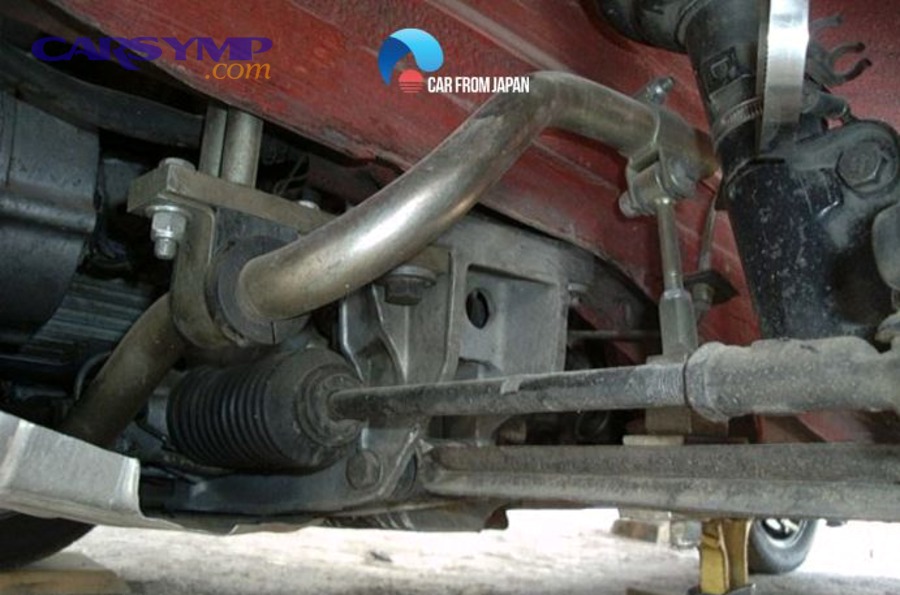
Front sway bar links occupy busier real estate within the suspension system. They share wheel well space with steering knuckles, tie rod ends, brake calipers, ABS sensors, and CV axles on front-wheel-drive vehicles. This crowded environment sometimes requires careful tool positioning or slight component manipulation to access link mounting points. The steering linkage occasionally blocks direct access to lower link mounting points, forcing mechanics to approach from awkward angles or partially remove splash shields for better visibility.
Rear sway bar links benefit from simpler surroundings in most vehicle designs. The rear suspension typically contains fewer components competing for space—shock absorbers, control arms or trailing arms, and the differential on rear-wheel-drive vehicles constitute the primary neighbors. This cleaner environment often allows faster access and easier tool positioning. Additionally, rear suspension components generally experience less road spray and de-icing salt exposure than front components, resulting in less corrosion and easier fastener removal in salt-belt regions.
However, certain vehicle designs complicate rear link replacement. Mercedes-Benz, BMW, and some Audi models position rear sway bars within complex multi-link independent rear suspensions with limited access from above or below. These designs may require partial exhaust system removal, heat shield relocation, or the subframe lowering procedures mentioned earlier. In such cases, rear link replacement extends to 2 to 3.5 hours while front links complete in 1 to 1.5 hours—reversing the typical relationship.
Many economy vehicles and light-duty trucks omit rear sway bars entirely, eliminating rear link replacement concerns. Most Toyota Corollas, Honda Civics, and entry-level compact sedans use rear sway bars only on sport trim levels. Light-duty pickup trucks frequently install rear sway bars as towing package components rather than standard equipment. When a vehicle lacks rear sway bars, total suspension maintenance focuses exclusively on front links, bushings, and related components.
When both front and rear sway bars exist, mechanics often recommend inspecting and replacing links as complete sets when any failure occurs. The reasoning parallels the front-pair replacement logic—similar age and wear patterns suggest remaining links approach failure. However, the different loading patterns between front (heavily stressed during steering input) and rear (stressed primarily during body roll) mean rear links sometimes outlast front links by 20,000 to 40,000 miles. Replacement timing should follow actual condition assessment rather than automatic paired service.
How Do Regional Factors Affect Labor Time and Cost?
Regional factors impact labor time by 20 to 100 percent and costs by 30 to 150 percent through variations in corrosion severity, shop labor rates, parts availability, and mechanic experience with specific vehicle types, with salt-belt states experiencing the most dramatic time increases and urban centers commanding premium labor pricing. Understanding these geographic influences helps vehicle owners anticipate appropriate pricing and select optimal service timing.
Salt-belt states including Michigan, Ohio, Pennsylvania, New York, Illinois, Wisconsin, Minnesota, and throughout the northeastern United States experience severe corrosion impacting labor time substantially. Winter road salt application combined with freeze-thaw cycles creates aggressive galvanic corrosion between dissimilar suspension metals. A straightforward 1-hour link replacement in Arizona or California becomes a 1.5 to 2.5 hour ordeal in Detroit or Buffalo when dealing with seized fasteners. Shops in these regions routinely apply penetrating oil, heat, and cutting techniques as standard procedure rather than exception. Some northeastern mechanics charge 1.5x to 2x book time specifically for undercarriage work on vehicles over 5 years old, acknowledging the corrosion reality. Vehicle owners in salt-belt regions should budget extra time and money for suspension work and consider preventative undercoating or frequent undercarriage washing to minimize corrosion.
Coastal regions experience moderate corrosion from salt air exposure. Florida, California coastal areas, and Gulf Coast states see deterioration rates between salt-belt extremes and desert dryness. The constant humidity combined with occasional salt spray creates oxidation without the severe freezing action that makes northeastern corrosion particularly destructive. Labor time in coastal areas typically adds 10 to 30 percent versus dry-climate equivalents.
Geographic labor rate variations create the most dramatic cost differences independent of actual work time. Major metropolitan areas command premium hourly rates reflecting higher overhead costs, expensive real estate, and elevated wage expectations. Dealership service rates in Manhattan, Los Angeles, San Francisco, or Boston range from $180 to $220 per hour compared to $120 to $160 per hour in smaller cities and $90 to $130 per hour in rural areas. A 1.5-hour link replacement costing $180 total ($120 labor at $80/hour rate plus $60 parts) in rural Tennessee costs $330 in urban California ($270 labor at $180/hour plus $60 parts) for identical work.
Parts availability affects costs through regional market dynamics. Urban areas with multiple dealerships and auto parts stores create competitive pricing on common components. Rural locations or regions dominated by particular brands face limited parts competition and higher prices. Internet ordering equalizes pricing somewhat, but shipping delays may extend repair timelines. Additionally, vehicles popular in specific regions develop local parts expertise—Honda and Toyota parts flow readily in California, Detroit specializes in domestic brands, and European vehicles find better support in northeastern urban centers.
Mechanic experience with specific vehicle types varies regionally. A BMW specialist in Connecticut completes sway bar link replacement on German vehicles faster than a generalist shop because familiarity with common complications (specific torque requirements, electronic system quirks, corrosion patterns) prevents diagnostic delays. Conversely, that same BMW specialist might struggle with a lifted Jeep or modified truck common in rural western states. Seeking shops familiar with your vehicle type optimizes efficiency regardless of location.
Climate extremes beyond corrosion influence labor approaches. Extremely cold winter temperatures make outdoor work uncomfortable and slow, potentially extending shop time when heated bays fill with higher-priority work. Desert heat creates different challenges—rubber components become brittle and plastic fasteners crack easily, requiring more careful removal. Seasonal demand fluctuations affect scheduling, with suspension work peaking in spring after winter damage assessment and fall before winter preparation.
Handling improvements after replacement manifest immediately after installing new sway bar links, with drivers noticing reduced body roll during cornering, elimination of clunking noises over bumps, and more precise steering response within the first 50 miles of driving. The sway bar system’s restored rigidity allows proper force transfer between suspension sides, limiting excessive lean and maintaining tire contact patch optimization throughout corner transitions.
When to replace links in pairs becomes clear when understanding wear patterns and cost efficiency—mechanics universally recommend simultaneous replacement of both left and right links because they experience identical mileage exposure and similar wear rates, making paired replacement 25 to 40 percent more cost-effective than separate service visits while ensuring symmetric handling characteristics. The modest additional parts cost ($20 to $60 for the second link) proves insignificant compared to duplicated labor charges ($100 to $400) for returning later when the predictably failing opposite link requires attention.
Understanding sway bar link replacement labor time empowers vehicle owners to evaluate service quotes, plan maintenance budgets, and make informed decisions between professional service and DIY approaches, ultimately saving hundreds of dollars while maintaining vehicle safety and handling performance.