


Replacing sway bar links yourself is a manageable DIY project that takes 30 minutes to 2 hours per side, requires basic hand tools like wrenches and sockets, and can save you $125 to $400 in labor costs while improving your vehicle’s handling and eliminating clunking noises. This comprehensive guide walks home mechanics through the complete sway bar link replacement process, from identifying the right tools and parts to executing proper installation techniques that ensure professional-quality results. Understanding this repair empowers you to maintain your vehicle’s suspension system confidently and cost-effectively.
Before starting any DIY sway bar link replacement, you need to gather the essential tools including jack stands, penetrating oil, torque wrench, and appropriately sized wrenches or sockets—plus the replacement links themselves, which come in ball joint-type or bolt-type configurations depending on your vehicle. Proper preparation ensures the job progresses smoothly and safely, minimizing complications from seized hardware or improper lifting procedures. The removal process requires specific techniques to deal with rusted bolts, prevent spinning hardware, and safely extract worn components without damaging surrounding suspension parts.
Installation demands careful attention to assembly order, bushing orientation, and torque specifications to guarantee the new links function correctly and last for years. Many home mechanics underestimate the importance of proper torque values and alignment verification, which directly impact handling performance and component longevity. Post-installation verification through road testing and noise checks confirms the repair’s success and ensures your vehicle’s safety.
Beyond the basic replacement procedure, understanding when to choose professional help over DIY, how to handle complications like severely corroded hardware, and whether to replace related components like sway bar bushings simultaneously adds valuable context to your decision-making process. Next, let’s examine exactly what tools and parts you’ll need to complete this suspension repair successfully.
What Tools and Parts Do You Need for DIY Sway Bar Link Replacement?
You need a floor jack, two jack stands, wheel chocks, penetrating oil, appropriately sized wrenches (typically 14mm-18mm), socket set, Allen keys, torque wrench, replacement sway bar links, and safety equipment including gloves and safety glasses to complete this repair properly. To ensure a successful sway bar link replacement, gathering all necessary equipment before starting prevents mid-project delays and frustration.
What Are the Essential Hand Tools for This Job?
The core hand tools for sway bar link replacement include box-end wrenches, socket sets with ratchets, Allen or hex keys, vice grips, and a breaker bar for stubborn fasteners. Specifically, you’ll typically need 14mm, 15mm, and 18mm wrenches depending on your vehicle’s make and model, along with corresponding socket sizes. A 5mm Allen key commonly fits the recessed bolt heads on many sway bar links, preventing the bolt from spinning while you loosen the nut.
Vice grips or locking pliers become essential when dealing with seized links, as they can grasp the link body or shoulder area to hold it steady during disassembly. For extremely corroded or stripped fasteners, an angle grinder with cut-off wheels provides the last-resort solution, though this destroys the old hardware. A breaker bar extends your leverage for initial loosening of tight nuts, while a torque wrench ensures proper tightening specifications during installation—typically ranging from 55 to 100 ft-lbs depending on vehicle specifications.
Wire brushes help clean mounting surfaces and exposed threads, improving your ability to remove hardware and ensuring clean contact surfaces for new components. Penetrating oils like PB Blaster, Kroil, or WD-40 should be applied liberally 24 hours before starting the job for best results on rusted fasteners.
Which Replacement Parts Should You Purchase?
Replacement sway bar links are available in OEM (Original Equipment Manufacturer) and aftermarket varieties, with aftermarket brands like MOOG and Mevotech offering enhanced features such as greaseable fittings and heavier-duty construction. Always replace sway bar links in pairs—even if only one side shows obvious failure—to maintain balanced suspension performance and prevent premature wear on the new link.
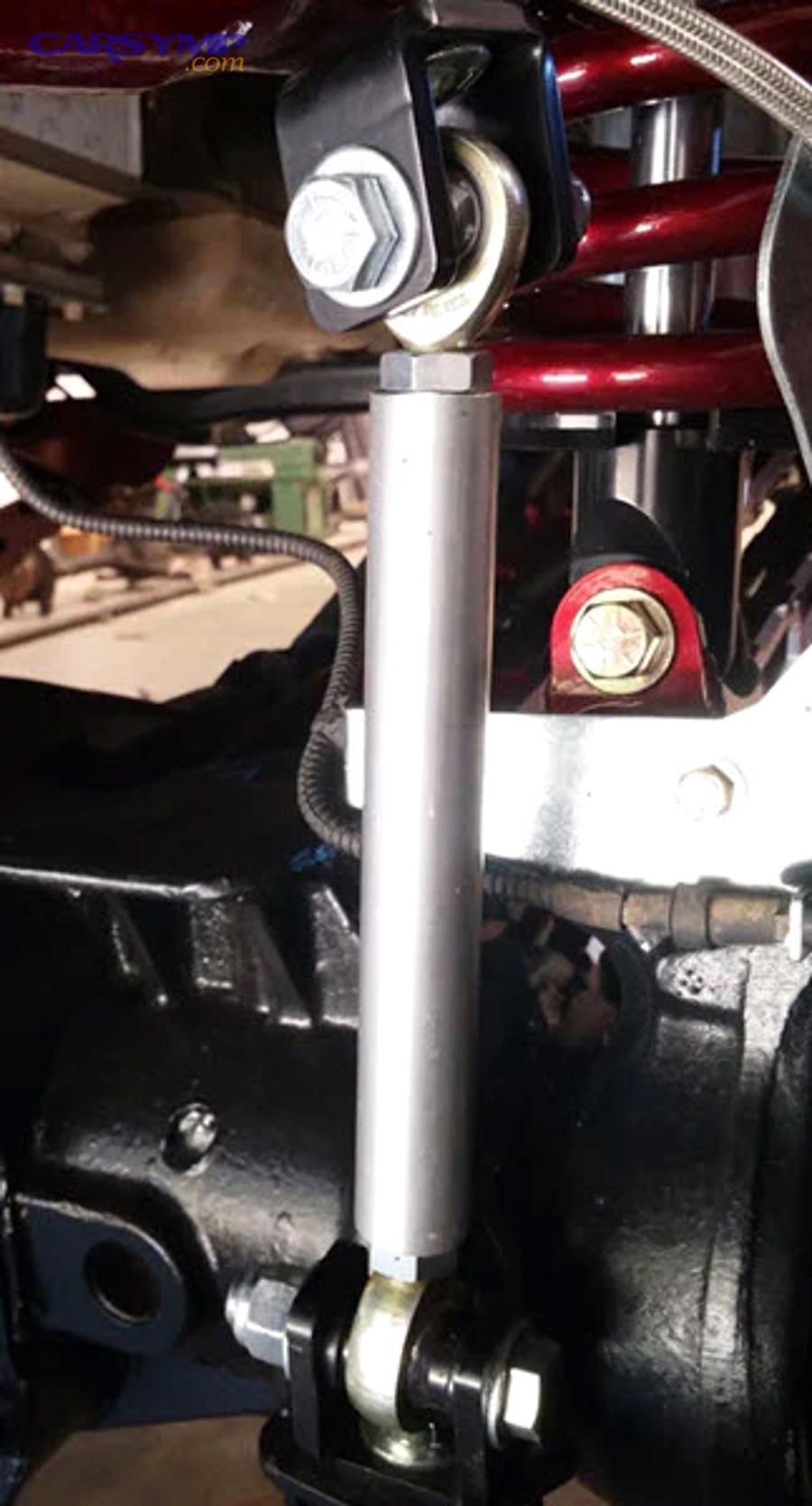
Ball joint-type links feature sealed ball-and-socket joints on both ends with threaded studs, while bolt-type links use a long bolt passing through bushings, washers, and a center spacer sleeve. Identifying your vehicle’s link type before purchasing ensures compatibility. MOOG links are popular among DIYers for their greaseable Zerk fittings that allow periodic maintenance, solid steel construction that’s significantly more robust than OEM plastic components, and competitive pricing typically ranging from $25 to $50 per pair.
When selecting replacement links, verify they match your vehicle’s year, make, and model using online fitment tools or consulting with parts specialists. Some links are symmetrical and can be installed on either left or right sides, while others are side-specific—compare the new links to your old ones before removal to confirm correct fitment. Consider purchasing sway bar bushings simultaneously if you hear squeaking noises in cold weather or experience thuds during hard acceleration or braking, as these symptoms often indicate bushing wear that compounds link problems.
Hardware kits typically include new nuts, bolts, washers, and bushings—always use the manufacturer-supplied hardware and never reuse prevailing torque (lock) nuts, as they lose their locking ability after initial use. Budget $25 to $100 for a quality pair of replacement links depending on vehicle application and brand choice.
How Do You Safely Prepare Your Vehicle for Sway Bar Link Replacement?
You must lift both front wheels simultaneously using a floor jack and support the vehicle securely on jack stands placed at manufacturer-specified jacking points, apply wheel chocks to the rear wheels, engage the parking brake, and work on level ground to safely prepare your vehicle for sway bar link replacement. Proper vehicle preparation forms the foundation for safe and efficient sway bar link replacement work.
Safety protocols cannot be compromised during suspension work, as working underneath an improperly supported vehicle poses life-threatening risks. The preparation phase also involves positioning tools within easy reach, ensuring adequate lighting in the work area, and wearing appropriate personal protective equipment throughout the job.
Should You Lift Both Sides of the Vehicle Simultaneously?
Yes, you must lift both front wheels off the ground simultaneously because the sway bar connects both sides of the suspension, and attempting to replace links with only one side elevated creates extreme tension that makes removal and installation nearly impossible. The sway bar’s design purpose is to resist body roll by transferring force between opposite wheels—when one side remains grounded, this creates a torsional load that binds the link hardware.
Lifting both sides allows the sway bar to rest in a neutral, unstressed position where links can be removed and installed without fighting against spring tension. Use a floor jack positioned at the center of the front subframe or crossmember to lift both wheels together, then immediately place jack stands under the designated jacking points on each side. These jacking points are typically reinforced sections of the frame or pinch welds located just behind the front wheels, marked by V-notches or designated pads.
Never rely solely on a hydraulic jack to support your vehicle during the repair, as jacks can fail or slowly leak down, creating catastrophic collapse risk. Jack stands rated for your vehicle’s weight (typically 2-3 tons per stand) with rubber pads or hockey pucks to protect the frame provide stable, reliable support. Position stands so they won’t interfere with your access to the sway bar links, which typically mount between the control arms or struts and the sway bar itself.
Verify stability by gently rocking the vehicle before beginning work—any movement indicates improper stand placement that must be corrected. Place wheel chocks behind the rear tires and engage the parking brake to prevent any possibility of the vehicle rolling during the repair.
Do You Need to Remove the Wheels?
Yes, removing the front wheels is necessary for most vehicles to provide adequate access to sway bar links, which are typically located in tight spaces between the control arms or struts and the sway bar. While some vehicles with particularly open suspension designs might allow link replacement without wheel removal, this is rare and generally impractical for thorough work.
Before lifting the vehicle, loosen (but don’t remove) the lug nuts while the wheels are still on the ground and the brakes engaged—this prevents the wheel from spinning when you apply torque to the lug nuts. A 19mm socket with breaker bar or impact wrench makes quick work of lug nut removal. Once the vehicle is safely supported on jack stands, remove the lug nuts completely by hand and pull the wheels straight off the hubs.
Store removed wheels under the vehicle’s frame as an additional safety measure—if the jack stands somehow fail, the wheels provide a backup that prevents the vehicle from crushing you completely. This redundant safety approach is standard practice among professional mechanics and serious DIY enthusiasts.
With wheels removed, you gain clear visual and physical access to the sway bar link mounting points, making it easier to apply penetrating oil, position tools, and observe the link’s condition. The extra space also allows you to maneuver wrenches and sockets without fighting against the wheel barrel’s interference. For vehicles with particularly tight wheel well clearances, wheel removal transforms an extremely difficult job into a manageable one.
What Is the Step-by-Step Process to Remove Old Sway Bar Links?
The removal process involves spraying penetrating oil on all fasteners 24 hours beforehand, using a wrench to hold the link bolt or stud steady while using a socket to remove the nut, separating the link from both mounting points, and cutting seized fasteners with an angle grinder only as a last resort. To successfully remove old sway bar links, you must work systematically and patiently, especially when dealing with rust and corrosion.
The removal phase tests your patience more than your mechanical skill, as seized hardware and corroded mounting points create the primary challenges. Understanding different link types and their specific removal techniques prevents damage to surrounding suspension components and minimizes frustration.
How Do You Deal with Seized or Rusted Bolts?
Begin by liberally applying penetrating oil to all fasteners at least 24 hours before attempting removal, reapply immediately before starting work, and use heat from a propane torch on severely seized nuts while protecting nearby rubber components with wet rags. Penetrating oils work through capillary action, slowly seeping into microscopic gaps between threads to break down rust and corrosion—rushing this process significantly reduces effectiveness.
For stubborn fasteners, alternate between tightening slightly and loosening, which can break the corrosion bond more effectively than simply forcing in one direction. When nuts begin to round off from excessive force, immediately switch to vice grips clamped onto the nut’s flats before damage becomes complete. If you must apply heat, focus the torch flame on the nut itself rather than the bolt, as thermal expansion of the nut often breaks the corrosion seal.
When penetrating oil and heat fail to free seized hardware, cutting becomes necessary to avoid damaging mounting threads in the control arm or sway bar. An angle grinder with thin cut-off wheel can slice through the bolt between mounting points, though this generates significant heat and sparks—wear face protection and clear flammable materials. On severely rusted vehicles, cutting both upper and lower mounting bolts may prove faster than struggling for hours with penetration methods.
Some mechanics cut seized nuts crosswise with a Dremel or die grinder, then use a punch and hammer to split the nut open along the cut line. This preserves the bolt threads if you need to reuse the mounting points for any reason. After removing the old link, use a wire brush to thoroughly clean all mounting threads and surfaces, improving the installation experience with new components.
What Are the Differences Between Ball Joint and Bolt-Type Link Removal?
Ball joint-type sway bar links feature threaded studs with ball sockets that require removing two nuts (upper and lower), using a wrench on the stud’s hex section to prevent spinning while loosening nuts with a socket—start with the lower nut first for easier access. These links typically have a hexagonal section machined into the stud just below the ball socket specifically for wrench engagement during removal and installation.
Position a box-end wrench on the hex section, then use a ratchet with appropriate socket on the nut—applying force to both tools simultaneously prevents stud rotation. The lower connection typically attaches to the control arm or frame mount, while the upper connection attaches to the sway bar end. After removing the lower nut completely, the link pivots downward, providing better access to the upper mounting nut.
Ball joint links with severely worn sockets may spin freely regardless of wrench positioning, requiring vice grips clamped onto the ball joint housing itself. Once both nuts are removed, the link simply pulls free from the mounting points—no bushings or spacers to track.
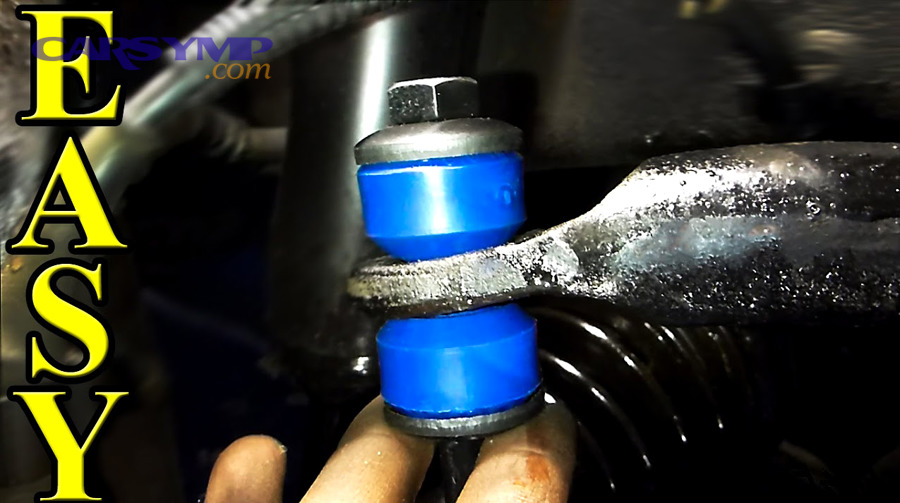
Bolt-type sway bar links use a long bolt passing through rubber bushings, metal washers, and a center spacer sleeve, requiring you to hold the bolt head with an Allen key (typically 5mm) while removing the nut from the opposite end with a socket wrench. The assembly order matters significantly: outer bushing, washer, mounting point (sway bar or control arm), washer, inner bushing, spacer, inner bushing, washer, second mounting point, washer, outer bushing, and nut.
Insert the Allen key into the recessed hex socket at the bolt head, then apply a socket wrench to the nut—coordinate your efforts to prevent bolt spinning. If the Allen key strips or the bolt begins spinning anyway, clamp vice grips onto the link shoulder (the area between the rubber boot and mounting point) to provide additional holding force. After removing the nut, pull the bolt upward through all components, keeping track of the assembly order for easier installation.
Some bolt-type links have the bolt threaded from below upward, while others thread from above downward—note your vehicle’s configuration before disassembly. On severely corroded links, the bolt may be frozen inside the center sleeve, requiring the entire assembly to be cut free and discarded.
How Do You Install New Sway Bar Links Correctly?
Install new sway bar links by pre-assembling bolt-type components to verify correct order, sliding them into position with bushings oriented nipple-side into mounting holes, hand-tightening all hardware before final torquing, and using a torque wrench to tighten nuts to manufacturer specifications—typically 55 to 100 ft-lbs depending on vehicle application. Proper installation technique ensures your new links function correctly and last for their intended service life.
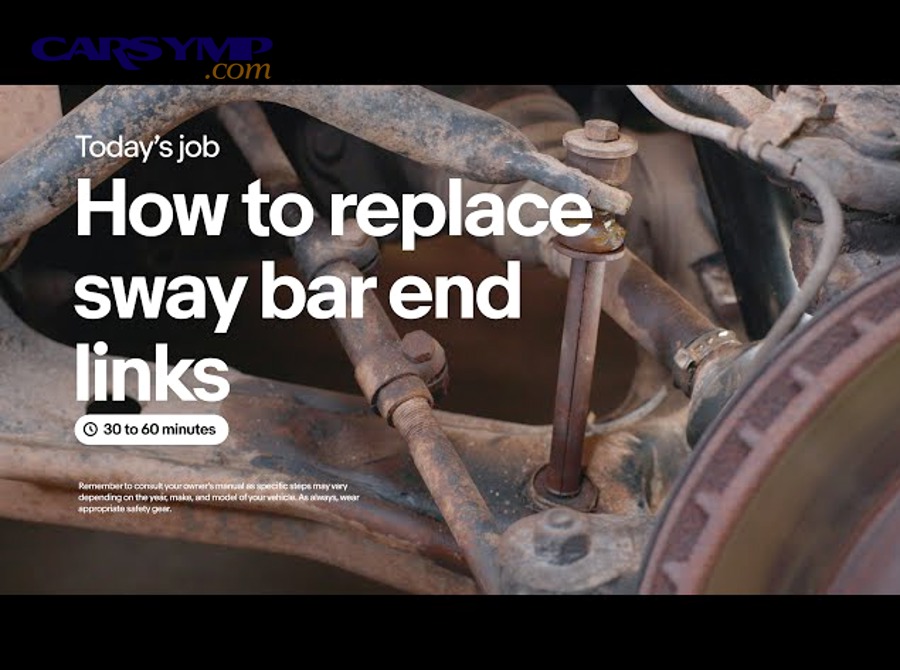
Installation proceeds much more smoothly than removal because new hardware isn’t corroded, threads are clean, and components fit together as designed. However, rushing the installation or ignoring proper torque specifications can lead to premature failure, noise issues, or handling problems.
What Is the Correct Assembly Order for Bushing-Type Links?
Pre-assemble the entire bolt-type sway bar link before installation to visualize the correct component order: the rounded nipple side of each bushing faces into mounting holes in the sway bar and control arm, with cupped washers positioned directly against each bushing’s flat side. The complete assembly order from bottom to top is: bolt head, outer lower bushing (nipple down), lower washer (cupped up), lower mounting point, upper washer (cupped down), inner lower bushing (nipple up), center spacer sleeve, inner upper bushing (nipple down), lower washer (cupped up), upper mounting point, upper washer (cupped down), outer upper bushing (nipple up), and nut.
This seems complex, but the pattern is consistent—bushings always orient with nipples toward metal mounting surfaces, washers always cup away from bushings, and the spacer sleeve maintains proper spacing between the two mounting points. Most replacement link kits include pre-assembled components or clear diagrams showing the correct order.
Thread the assembly through the lower mounting point first (typically the control arm), pushing the lower bushing nipple firmly into the mounting hole until it seats completely. Then align the upper portion with the sway bar mounting hole, compressing the assembly slightly if necessary to align both mounting points simultaneously. Some mechanics find it easier to thread the bolt from above downward, while others prefer the opposite approach—use whichever method provides better access on your specific vehicle.
After the bolt passes through both mounting points with all components properly positioned, thread the nut onto the bolt by hand as far as possible. Don’t fully tighten yet—hand-tight ensures proper alignment before final torquing. Apply a small amount of anti-seize compound to the bolt threads, which prevents future corrosion and makes your next replacement job significantly easier.
For links with greaseable fittings, install the Zerk fittings into the ball joint housings hand-tight plus about one-eighth turn with a 3/8-inch wrench—overtightening strips these small threads easily. Pump 2-3 shots of grease into each fitting immediately after installation to ensure proper lubrication of the ball sockets.
What Are the Proper Torque Specifications?
Sway bar link torque specifications vary by vehicle make and model, ranging from 55 ft-lbs on compact cars to 100 ft-lbs on trucks and SUVs, with the manufacturer’s service manual providing exact values for your specific application. Proper torque ensures the link stays securely fastened without overstressing components or stripping threads.
Under-torquing allows movement and wear that creates the same clunking noises you’re trying to eliminate, while over-torquing can crush bushings, strip threads, or crack mounting points. A torque wrench eliminates guesswork by providing precise, measurable tightening force. Click-type torque wrenches are most common among DIYers, producing an audible click and tactile release when reaching the preset torque value.
To use a torque wrench correctly, set the desired torque value on the handle, position the socket on the nut, and pull smoothly and steadily—don’t jerk or use the torque wrench as a breaker bar, which damages its internal calibration mechanism. When you hear and feel the click, stop immediately—additional tightening provides no benefit and may cause damage.
For the Jeep Liberty example mentioned in research data, the upper bolt requires 100 ft-lbs while the lower bolt needs 80 ft-lbs—this variation accounts for different mounting point strengths and load paths through the suspension. Always torque the link nuts with the vehicle’s weight on the suspension (vehicle lowered onto wheels) rather than with wheels hanging, as this prevents pre-loading the bushings in a twisted position that accelerates wear.
Some vehicles specify torque values in Newton-meters (Nm) rather than foot-pounds (ft-lbs)—most torque wrenches display both units, or you can convert using the formula: 1 ft-lb = 1.356 Nm. Lock nuts (prevailing torque nuts) provide additional security by incorporating a nylon insert or deformed threads that create friction resistance—these work effectively even at proper torque values without requiring excessive tightening.
After torquing, double-check all fasteners are secure, verify no tools remain under the vehicle, and complete a visual inspection of your work before lowering the vehicle from jack stands.
How Long Does DIY Sway Bar Link Replacement Take?
DIY sway bar link replacement typically takes 30 minutes to 1 hour per side for experienced home mechanics with rust-free vehicles, 1 to 2 hours per side for first-time DIYers or moderately corroded vehicles, and up to 3 hours per side when dealing with severely seized hardware requiring cutting and extraction techniques. Understanding realistic time expectations prevents frustration and helps you plan accordingly.
The actual time required varies dramatically based on your mechanical experience, tool quality, vehicle age, and regional climate factors. Vehicles from rust-belt states where road salt is used extensively take significantly longer due to corroded fasteners, while vehicles from mild climates with minimal corrosion complete much more quickly.
What Factors Increase Replacement Time?
Severely corroded or seized hardware represents the primary time multiplier for sway bar link replacement, potentially adding 1 to 2 hours per side when penetrating oil and heat fail to free fasteners, requiring cutting and extraction techniques. When you encounter a seized fastener, the temptation to force it creates broken studs, rounded nuts, and damaged mounting points that transform a simple repair into a complex one requiring additional parts and techniques.
First-time DIYers naturally work more slowly than experienced mechanics, taking time to reference instructions, verify procedures, and work carefully through unfamiliar steps—this learning curve is normal and expected, representing time well-spent developing skills rather than wasted time. Your second sway bar link replacement will proceed significantly faster than your first as you internalize the process and develop muscle memory for tool positioning and fastener manipulation.
Vehicle-specific access challenges dramatically impact repair time, with some vehicles providing generous working space around sway bar links while others bury them behind steering components, exhaust systems, or subframe structures. Vehicles requiring subframe lowering or steering component removal to access links can add 1 to 3 hours to the job beyond the basic link replacement time—research your specific vehicle beforehand to identify these complications.
Climate and regional factors create predictable time variations: vehicles operated in northern states with heavy winter salt application typically show extensive corrosion by 5-7 years old, while vehicles from southern or western states may have minimal corrosion at 15+ years old. According to data from automotive repair shops, Sway bar link replacement labor time estimates range from 0.5 to 2.0 hours per side, with rust-belt vehicles consistently landing at the high end of these ranges.
Tool quality and availability also affect efficiency—having the correct size wrench eliminates time wasted struggling with poorly fitting tools, while an impact wrench can reduce fastener removal time by 50% compared to manual wrenches. Adequate lighting transforms a frustrating groping-in-the-dark experience into straightforward mechanical work where you can see what you’re doing.
How Can You Verify the Replacement Was Successful?
Verify successful sway bar link replacement by grasping the installed link and attempting to move it vertically and laterally (you should feel zero play or looseness), completing a road test over bumps and rough pavement while listening for clunking or rattling noises (properly installed links eliminate these sounds), and evaluating handling improvements through moderate-speed cornering where body roll should be noticeably reduced. Post-installation verification ensures your work meets professional standards and identifies any issues before they become safety problems.
Skipping verification steps represents false economy—spending 10 minutes testing your work can prevent hours of comebacks and re-work if something wasn’t installed correctly. Professional mechanics always verify their suspension work through physical inspection and road testing before returning vehicles to customers.
Start with a stationary tightness check immediately after installation while the vehicle remains on jack stands. Firmly grasp each new link with both hands and attempt to move it in all directions—properly installed links should feel absolutely solid with no detectable play. Any movement indicates loose hardware, missing components, or improper assembly that must be corrected before lowering the vehicle.
Lower the vehicle to the ground and tighten the lug nuts in a star pattern to manufacturer specifications (typically 80-100 ft-lbs for passenger vehicles). Before driving, bounce each corner of the vehicle by pushing down firmly on the fender and releasing—listen carefully for any clunking, clicking, or rattling sounds that indicate loose suspension components. New sway bar links should eliminate these noises completely.
Conduct a low-speed test drive in a parking lot or quiet street, deliberately driving over speed bumps, potholes, and uneven pavement while listening for suspension noises. Clunking over bumps that occurred before the repair should be completely eliminated—if the noise persists, either the links weren’t the cause, or the installation has issues requiring inspection. Pay attention to both front corners independently, as noises can migrate from side to side through the vehicle structure.
Progress to moderate-speed cornering tests on curved roads or freeway entrance ramps, noting improvements in handling precision and body roll control. Properly functioning sway bar links allow the sway bar to resist body lean effectively, creating a more planted, controlled feel through corners. If the vehicle still exhibits excessive body roll or wallowing sensations, the links may not be properly tightened, or additional suspension problems exist beyond just worn links.
According to ASE-certified master technicians, a successful sway bar link replacement delivers immediately noticeable improvements in both noise elimination and handling characteristics—if you don’t perceive clear improvements, investigation is warranted. Re-torque all fasteners after the first 50 miles of driving, as new components may settle slightly during initial use.
When Should You Choose Professional Replacement Over DIY?
Choose professional replacement over DIY when you lack proper lifting equipment or a safe workspace, when initial removal attempts reveal severely rounded fasteners or damaged mounting points requiring specialized extraction tools, when multiple suspension components show simultaneous wear requiring comprehensive diagnosis, or when your skill level and experience don’t match the job’s complexity based on vehicle-specific access challenges. Understanding your limitations prevents injury and failed repair attempts that cost more than hiring professionals initially.
While sway bar link replacement is accessible to most home mechanics, certain situations favor professional service. Honest self-assessment of your capabilities, equipment, and situation leads to better outcomes whether you choose DIY or professional approaches.
What Are the Warning Signs That Professional Help Is Needed?
Hardware that has rounded off beyond the grip of standard tools, mounting points with stripped threads or elongated holes, control arms or struts showing signs of impact damage or severe wear, and steering components interfering with link access all indicate professional help may be necessary to complete the repair properly. When you encounter these conditions during disassembly, continuing with improvised solutions often creates additional damage that increases overall repair costs.
Rounded fasteners require specialized extraction sockets with reverse-spiral grips, left-hand drill bits, or even welding techniques that most home garages don’t accommodate. Professional shops have pneumatic impact tools, hydraulic presses, and extraction equipment that make quick work of situations that stop home mechanics cold. Similarly, stripped mounting threads require thread repair inserts (Helicoils) or oversized fasteners that demand precision installation for proper holding strength.
When suspension mounting points show elongated holes rather than round ones, the metal has worn beyond specifications and requires replacement of the control arm, strut housing, or even subframe components—these repairs extend far beyond simple link replacement. Signs of collision damage including bent control arms, cracked sway bars, or misaligned mounting points indicate comprehensive suspension work is necessary rather than simple link replacement.
Vehicles requiring steering component removal, subframe lowering, or exhaust system displacement to access sway bar links present significant complexity increases that may exceed DIY capabilities. Professional mechanics complete these tasks routinely with the appropriate lift equipment, specialty tools, and experience to work efficiently without damaging surrounding components. If your preliminary research reveals your vehicle requires any of these access procedures, seriously consider professional service unless you have advanced mechanical skills and proper equipment.
How Much Does Professional Replacement Cost vs DIY?
Professional sway bar link replacement costs typically range from $150 to $400 per pair including parts and labor, with labor charges accounting for $125 to $300 of this total at shop rates of $75 to $150 per hour, while DIY replacement costs only $25 to $100 for parts plus tool investment if you lack basic equipment. The cost comparison strongly favors DIY when you already own basic tools and have a safe workspace.
Labor time billed by professional shops typically ranges from 0.5 to 2.0 hours depending on vehicle complexity and regional labor rates, with rust-belt vehicles consistently requiring maximum time allowances. Parts markup at professional shops averages 25% over retail prices, though this varies by shop business model—dealerships typically charge higher parts prices than independent shops, while providing OEM components with warranty coverage.
Breaking down DIY costs reveals minimal investment for this particular repair: replacement links ($25-$100 per pair), penetrating oil ($8-$15 per can), and potentially anti-seize compound ($10-$15 per tube) represent the consumable costs. If you already own a floor jack, jack stands, basic wrenches, and sockets, no additional tool investment is required. First-time DIYers might need to purchase these tools, adding $150 to $300 to the initial job cost—however, these tools serve numerous future repairs, amortizing their cost across many projects.
The break-even analysis favors DIY even with full tool purchase for anyone planning to perform multiple maintenance and repair tasks over their vehicle’s lifetime. The time investment for DIY averages 1 to 4 hours total for both sides, while professional service requires scheduling an appointment, dropping off your vehicle, and returning to pick it up—often consuming similar calendar time despite shorter actual repair duration.
According to AAA data, professional automotive labor rates range from $47 to $215 per hour across different regions and shop types, with urban areas and dealerships commanding premium rates. DIY eliminates this entire cost category, retaining that money for other priorities or higher-quality replacement parts.
Should You Replace Sway Bar Bushings at the Same Time?
Yes, replace sway bar bushings simultaneously with sway bar links when you hear squeaking noises over bumps in cold weather, experience thuds during hard acceleration or braking, or when the bushings show visible cracking, drying, or enlargement during inspection, as worn bushings compound link problems and replacing both components together saves future labor duplication. Sway bar bushings cost only $20 to $65 for a complete set, making simultaneous replacement cost-effective.
Sway bar bushings mount the sway bar to the vehicle frame or subframe through U-shaped brackets, with rubber or polyurethane bushings absorbing movement while allowing the bar to rotate during suspension articulation. These bushings wear through the same mechanisms as sway bar links—age, weather exposure, road salt, and constant flexing cycles—often failing on similar timelines.
Visual inspection reveals bushing condition: healthy bushings show smooth surfaces with no cracks or voids, while failed bushings display dry, cracked surfaces, visible separations, or flattened sections indicating loss of elasticity. Comparing worn bushings to new ones reveals the extent of deterioration—worn bushings often measure 10-20% larger in diameter than new ones due to material expansion and deformation.
Replacing bushings requires slightly more work than link replacement alone, as you must loosen or remove the bushing bracket bolts and potentially lower the sway bar slightly to remove old bushings. Some vehicles require partial subframe lowering to access rear bushing bracket bolts, adding complexity and time. However, the incremental effort of replacing bushings while you already have the vehicle lifted and the sway bar links disconnected is minimal compared to performing this work as a separate job later.
Apply a light coating of grease or silicone lubricant to new bushings before installation, which prevents squeaking and allows smooth rotation within the mounting brackets. Position the split side of the bushing correctly according to manufacturer instructions—improper orientation can cause premature failure or noise issues. Many mechanics apply red or orange paint marks on one side of new bushings to maintain proper rotational alignment during installation.
What Is the Difference Between Aftermarket and OEM Sway Bar Links?
Aftermarket sway bar links often provide enhanced features like greaseable Zerk fittings for ongoing maintenance, heavier-gauge steel construction for improved durability, and lower prices ($25-$50 per pair) compared to OEM links, while OEM links guarantee exact fitment, match original specifications, and typically include manufacturer warranties but cost more ($50-$100 per pair) without additional features. The comparison between aftermarket and OEM sway bar links involves evaluating quality, features, price, and warranty considerations.
OEM (Original Equipment Manufacturer) links are produced by the vehicle manufacturer or their contracted suppliers, ensuring exact dimensional specifications, materials, and engineering that match the vehicle’s original design. These links fit precisely without modification, meet all original performance standards, and carry manufacturer warranties typically ranging from 12 to 36 months. However, OEM links rarely include enhancements beyond original specifications—if the original design used sealed ball joints without grease fittings, the OEM replacement will match this design.
Aftermarket manufacturers like MOOG, Mevotech, TRW, and ACDelco engineer replacement links that meet or exceed OEM specifications while often adding enhanced features. MOOG’s greaseable sway bar links include Zerk fittings on the ball joints, allowing periodic re-lubrication that extends service life significantly—original sealed links cannot be maintained and must be replaced when worn. The ability to pump fresh grease into the joints every oil change or annually prevents internal corrosion and maintains smooth articulation.
Material quality often exceeds OEM specifications in premium aftermarket links, with many featuring thicker steel components, reinforced bushings, and upgraded hardware. This addresses known weak points in original designs—for example, plastic-bodied OEM links on certain Chevrolet Cruze models have poor durability records, while MOOG’s all-metal replacements eliminate this weakness entirely.
Price comparisons consistently favor aftermarket options, with quality aftermarket links costing 25-50% less than OEM equivalents while often providing superior features and materials. This price advantage stems from competition among multiple aftermarket manufacturers versus the monopoly OEM suppliers enjoy through dealership parts departments.
Warranty coverage varies significantly: budget aftermarket brands may offer minimal or no warranty, mid-tier brands typically provide 1-3 year warranties, and premium brands like MOOG often include lifetime warranties against defects. OEM warranties run 12-36 months depending on the manufacturer. Reading warranty terms carefully reveals important distinctions—some warranties cover only manufacturing defects, while others include wear-related failures.
Installation differences between aftermarket and OEM links are minimal, as dimensional specifications match closely enough to use identical installation procedures and torque specifications. Occasionally, aftermarket links may have slightly different bushing configurations or mounting hardware that requires minor adaptation, though quality manufacturers minimize these differences to ensure seamless replacement.
According to automotive parts industry data, aftermarket manufacturers command approximately 75% of the replacement parts market due to superior value propositions combining lower prices with enhanced features. The remaining 25% of consumers choose OEM parts primarily for warranty coverage on newer vehicles or personal preference for original-specification components.
For most DIY mechanics, quality aftermarket sway bar links from established brands like MOOG, Mevotech, or TRW represent the optimal choice, delivering enhanced features, proven durability, competitive pricing, and adequate warranty coverage. Reserve OEM links for situations requiring exact original specifications, warranty work on newer vehicles, or personal preference despite the price premium.
This comprehensive guide has walked you through every aspect of DIY sway bar link replacement, from understanding what tools and parts you need through proper installation techniques and post-work verification. The time and cost savings combined with the satisfaction of maintaining your own vehicle make this an ideal project for home mechanics seeking to expand their automotive repair skills. Whether you choose to tackle the replacement yourself or hire a professional, understanding the process helps you make informed decisions about your vehicle’s maintenance and ensures quality results that restore proper handling and eliminate annoying suspension noises.