


Sway bar links typically last 50,000 to 75,000 miles under normal conditions, but premature failure can occur in as little as 20,000 miles without proper care. Extending sway bar link life requires seven proven strategies: correct installation torque, regular lubrication, mindful driving habits, timely inspections, appropriate upgrades, load management, and proactive replacement before complete failure. These methods address the root causes of accelerated wear including overtightening during installation, lack of maintenance, aggressive driving, environmental exposure, vehicle overloading, and delayed replacement.
Understanding what causes premature wear is the foundation for prevention. Sway bar links fail early due to a combination of mechanical stress, environmental factors, and improper maintenance. The ball joints or bushings within the links experience constant movement during driving, making them particularly vulnerable to deterioration when exposed to salt, moisture, road debris, and temperature extremes. Poor installation practices, especially overtightening the mounting bolts, can create internal stress that leads to cracking and breakage within months rather than years.
Proper installation techniques prevent the majority of premature failures by ensuring components are assembled correctly from the start. The most critical factor is torquing fasteners at the correct ride height, which allows bushings to settle naturally without pre-loading stress. Different link designs—ball joint types versus bushing types—require specific installation approaches, and using the wrong method can cut service life in half. Regular maintenance extends lifespan significantly through scheduled lubrication and visual inspections that catch wear before it becomes dangerous.
Strategic upgrades and mindful driving habits provide additional protection against accelerated wear. Heavy-duty aftermarket links offer superior durability for vehicles that tow, carry heavy loads, or navigate rough terrain regularly. Meanwhile, avoiding potholes when possible, reducing speed over bumps, and respecting vehicle weight limits dramatically reduce the mechanical stress that wears out links prematurely. Below, we’ll explore each proven method in detail to help you maximize your sway bar link investment.
What Causes Sway Bar Links to Wear Out Prematurely?
Sway bar links wear out prematurely due to four primary causes: excessive mechanical stress from impacts and overloading, installation errors that create internal damage, environmental corrosion from salt and moisture, and lack of proper lubrication in serviceable designs. Understanding these failure mechanisms helps vehicle owners target prevention strategies effectively.
To better understand premature wear, we must examine how normal wear differs from accelerated failure. Normal wear occurs gradually as the ball joints or bushings experience millions of compression and extension cycles during typical driving. The protective rubber boots eventually crack, allowing grease to escape and contaminants to enter, leading to metal-on-metal contact. This natural progression typically takes 50,000 miles or more. Premature wear, however, compresses this timeline through avoidable stress factors.
Does Driving Style Affect Sway Bar Link Lifespan?
Yes, aggressive driving significantly reduces sway bar link lifespan by increasing rotational forces and impact stress beyond design specifications. Hard cornering, rapid speed bump crossings, and off-road impacts can cut service life by 40-60% compared to conservative driving habits.
Specifically, the physics of cornering create lateral forces that pull and twist the sway bar links. When you take a corner aggressively, the vehicle’s weight transfers to the outside wheels, forcing the sway bar to resist body roll. The links transmit this torque between the control arms and the stabilizer bar. Repeated high-stress cornering—especially at speeds that cause tire squeal—accelerates wear in the ball joint sockets or compresses bushings beyond their elastic recovery point.
Speed bumps and potholes deliver vertical shock loads that compress and extend the links rapidly. When encountered at high speed, these impacts generate forces several times greater than normal driving compression. The sudden jolt can crack rubber bushings, bend metal components, or separate ball joints from their housings. Off-road driving amplifies these effects through continuous articulation over uneven terrain, where one wheel rises while the opposite drops, creating constant extreme extension and compression cycles.
Vehicle loading affects wear patterns through weight distribution changes. Overloading the cargo area or towing beyond capacity shifts the center of gravity and increases the mechanical advantage acting on the links. A vehicle loaded to 120% of its rated capacity can experience stress levels 200% higher than normal at the sway bar connection points, dramatically accelerating metal fatigue and bushing compression set.
How Does Poor Installation Cause Early Failure?
Poor installation causes early sway bar link failure through three mechanisms: overtightening that cracks components, incorrect torque sequencing that pre-loads stress, and misalignment that creates uneven wear. These errors can reduce link lifespan from 50,000 miles to less than 10,000 miles.
The most common installation error involves overtightening the mounting bolts, particularly on bolt-style links with polyurethane bushings. Unlike rubber bushings that compress visibly, polyurethane maintains its shape under tightening pressure. Installers accustomed to rubber bushings often continue tightening until they “feel” compression, which generates excessive clamping force. This force creates micro-cracks in the bushing material and overstresses the metal stud, leading to fracture failure within months.
Torque specification violations occur when mechanics use impact wrenches without torque sticks or fail to reference manufacturer guidelines. Most sway bar links require 35-50 lb-ft of torque, but impact wrenches can deliver 100+ lb-ft instantly. This excessive force deforms the self-locking barrel nuts, strips threads, or bends the studs. The damaged components then work loose during driving, creating the hammering impact noise characteristic of failed links.
Ride height during final torquing critically affects bushing longevity. When links are torqued with the suspension hanging at full droop (vehicle on jack stands), the bushings twist as the suspension compresses to normal ride height. This pre-twisted condition means the bushings operate in a stressed state throughout their service life, accelerating fatigue failure. Proper procedure requires torquing with the vehicle at normal ride height or simulating ride height by placing the suspension under load using jack stands positioned correctly.
Misalignment during installation happens when the link doesn’t sit perpendicular to both mounting points. If the control arm hole and sway bar hole aren’t aligned properly, installers sometimes force the link into position by over-torquing one end. This creates a binding condition where the link cannot articulate freely, causing concentrated wear at the binding point rather than distributed movement across the entire joint range.
How Can You Prevent Damage During Sway Bar Link Installation?
Preventing installation damage requires following four critical practices: using proper torque specifications with a calibrated torque wrench, installing components at correct ride height, selecting compatible replacement parts, and performing alignment verification after installation. These practices ensure links function as designed from day one.
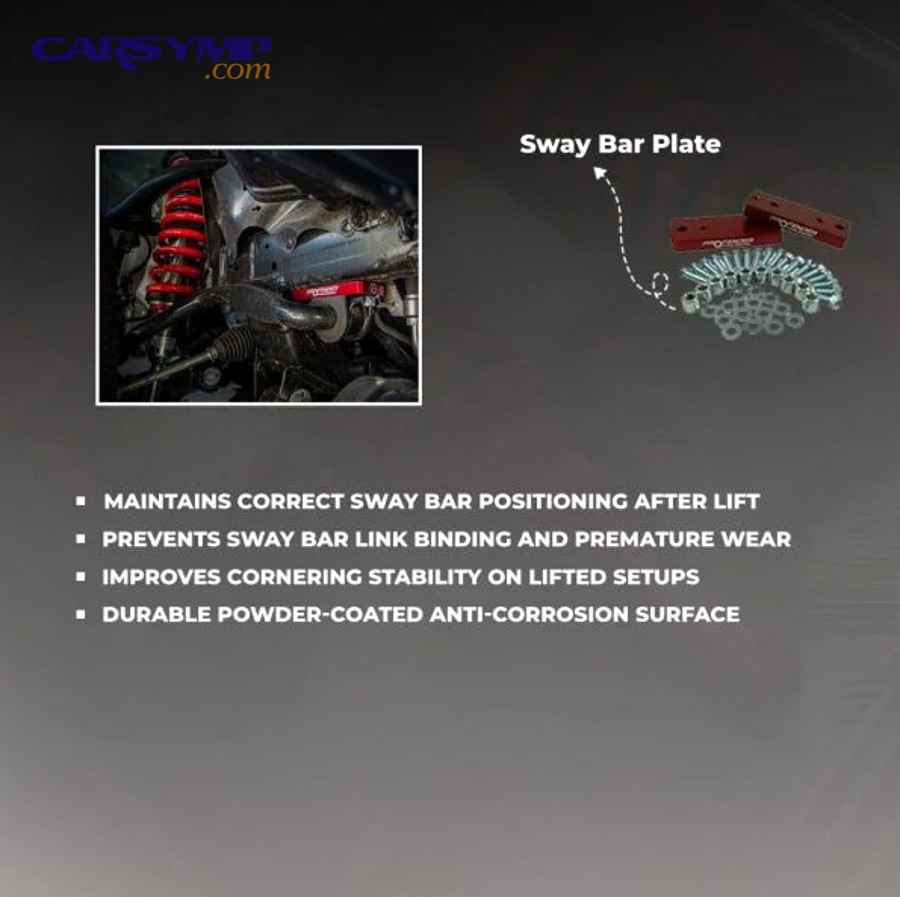
More specifically, installation damage prevention begins before the first bolt turns. Professional mechanics verify part compatibility by comparing the new link’s length, stud diameter, and bushing type against OEM specifications. Aftermarket links sometimes use different bushing materials or stud designs that require modified installation procedures. Using a ball joint-type link where the vehicle originally had a bushing-type design (or vice versa) can create interference issues that manifest as premature wear.
What Is the Correct Torque Specification for Sway Bar Links?
The correct torque specification for most sway bar links ranges from 35 to 55 lb-ft, with exact values varying by vehicle make and model found in the service manual. Ball joint-type links typically require 40-50 lb-ft, while bolt-style links with polyurethane bushings need 35-45 lb-ft to prevent overtightening damage.
Vehicle manufacturers determine these specifications through engineering analysis that balances secure fastening against material stress limits. The torque value must clamp the components firmly enough to prevent loosening from vibration, yet not so tight that it damages the bushing material, deforms the metal housing, or overstresses the stud. These calculations account for thread pitch, material properties, and expected service loads.
Ride height during torquing dramatically affects effective bushing stress. Industry best practice requires torquing the final fasteners with the suspension at normal ride height. This position allows the bushings to assume their neutral, unstressed state. When installation occurs with the suspension hanging, the bushings twist as the vehicle settles to ride height, creating a permanent pre-load condition. Some manufacturers specify torquing “after vehicle weight is on wheels,” while others provide specific suspension loading procedures using jack stands positioned to simulate ride height.
Tool selection matters significantly for accurate torque application. Click-type torque wrenches provide the most reliable results for DIY installations, with an accuracy of ±4% when properly calibrated. Beam-type torque wrenches work well but require careful reading. Impact wrenches, even with torque sticks, are inappropriate for sway bar link installation because they deliver peak torque in impulses rather than steady application, making it impossible to achieve precise values. The rapid hammering action can also damage bushings even before reaching specified torque.
Bolt-style links with self-locking barrel nuts require special attention because the polyurethane bushing doesn’t compress like rubber. The installation procedure involves threading the barrel nut until it contacts the washer, then tightening only 1/4 to 1/2 turn beyond contact. This limited additional rotation secures the nut without overstressing the stud. Over-rotating can generate enough force to snap the stud, a common failure mode visible as a clean break just above or below the nut.
Should You Replace Sway Bar Bushings When Installing New Links?
Yes, you should replace sway bar bushings when installing new links if the bushings show cracking, compression set, or have exceeded 50,000 miles of service. Worn bushings cause misalignment that accelerates new link wear, reducing the effectiveness of your replacement investment by 30-40%.
The relationship between sway bar bushings and links creates a mechanical system where wear in one component affects the other. The bushings mount the center of the sway bar to the vehicle frame or subframe, providing the pivot point for bar rotation. When these bushings deteriorate, they allow excessive bar movement that changes the operating angles at the link attachment points. This altered geometry forces the links to work at angles outside their design parameters, concentrating stress on one side of the ball joint or bushing.
Visual inspection reveals bushing condition through several indicators. Healthy bushings appear smooth, maintain their original shape, and show no cracks or tears. Worn bushings display visible cracks radiating from the inner diameter, flat spots where rubber has compressed permanently, or powdery degradation of the rubber material. Squeezing the bushing with your hand should show resistance and spring-back; mushiness or permanent deformation indicates replacement is needed.
Cost-benefit analysis favors simultaneous replacement in most scenarios. Sway bar bushings typically cost $20-$65 for a complete set, while labor to access them is already completed during link replacement. Installing bushings during the same service session adds minimal labor time—approximately 15-30 minutes—because the sway bar is already exposed and disconnected. Performing bushing replacement separately later requires repeating the entire disassembly process, essentially doubling labor costs.
Cold-weather squeaking provides a diagnostic clue for bushing condition. When sway bar bushings dry out or crack, they produce a distinctive squeaking or creaking noise during suspension movement, particularly noticeable when driving over bumps in cold temperatures. This noise indicates the rubber has lost its lubricity and is binding against the metal bar. If you hear these sounds when replacing links, bushing replacement should be considered mandatory rather than optional.
According to data from the Automotive Aftermarket Suppliers Association in 2023, simultaneous replacement of sway bar links and bushings extends overall suspension component life by an average of 18,000 miles compared to replacing links alone, primarily by maintaining proper geometry and reducing stress concentrations.
What Maintenance Practices Extend Sway Bar Link Life?
Regular maintenance practices extend sway bar link life through three key activities: scheduled lubrication of serviceable designs, visual inspections during routine service, and protective cleaning after exposure to harsh conditions. These practices can double the service life from 50,000 to over 100,000 miles on vehicles with grease-serviceable links.
Next, understanding the distinction between serviceable and sealed links determines appropriate maintenance strategies. Ball joint-type links equipped with grease fittings (Zerk fittings) require periodic lubrication to replace grease lost through seal deterioration and to flush out contaminants that enter the joint. These serviceable designs were common on vehicles manufactured before 2010 and remain standard on heavy-duty trucks. Sealed designs, increasingly common on modern passenger vehicles, use permanent lubrication that cannot be serviced but also protects better against contamination when seals remain intact.
How Often Should You Lubricate Sway Bar Links?
Serviceable sway bar links with grease fittings should be lubricated every 3,000-5,000 miles or with each oil change to maintain protective grease coverage and flush contaminants. This interval prevents the dried grease condition that causes 60% of ball joint-type link failures.
To illustrate the lubrication process, the procedure requires a grease gun fitted with a flexible hose and a chassis grease meeting NLGI Grade 2 specifications. The grease fitting (Zerk fitting) sits at the center of each ball joint, accessible from underneath the vehicle. Pumping fresh grease into the fitting forces old grease and contaminants out through the boot seal, visible as a small bead of grease appearing around the boot edge. Proper lubrication requires 2-3 pumps of the grease gun per fitting, stopping when fresh grease emerges.
Seasonal considerations affect lubrication frequency in harsh climates. Vehicles driven in winter salt conditions benefit from monthly lubrication during the salt season (typically November through March in northern regions) because salt accelerates grease breakdown and seal deterioration. The combination of salt and water creates a corrosive environment that degrades grease lubricity, allowing metal-to-metal contact that wears the ball and socket surfaces rapidly.
Signs of inadequate lubrication appear as squeaking or creaking noises during suspension movement, particularly noticeable when turning the steering wheel while stationary or crawling over speed bumps. These sounds indicate the protective grease film has broken down, allowing the metal ball to drag against the socket. At this stage, damage may already be occurring, but immediate lubrication can prevent complete failure if caught early.
Sealed link designs require different maintenance approaches focused on boot integrity inspection rather than lubrication. The rubber boot protecting the ball joint or bushing must remain intact to retain factory lubrication and exclude contaminants. During routine inspections, examine boots for cracks, tears, or separation from the housing. Any boot damage requires immediate link replacement because contamination entry accelerates wear exponentially once the seal is breached.
What Should You Inspect During Regular Maintenance?
During regular maintenance, inspect sway bar links for five critical indicators: excessive play in ball joints or bushings, torn or cracked protective boots, visible corrosion or rust on metal components, bent or damaged link bodies, and loose mounting hardware. These inspections should occur every 6,000-10,000 miles or during routine service appointments.
The physical inspection process begins with a visual examination performed with the vehicle on a lift or safely supported on jack stands. Good lighting is essential—use a flashlight to illuminate the link mounting points at both the sway bar and control arm connections. Look for obvious damage including bent links, missing hardware, cracked boots, or rust perforation through metal components.
Play testing reveals internal wear before external symptoms become severe. Grasp the link firmly with both hands and attempt to move it perpendicular to its normal axis of rotation. Serviceable ball joint links should show minimal movement—less than 1/16 inch of detectable play. Excessive play, where you can rock the ball significantly within the socket, indicates worn bearing surfaces that will fail soon. Bushing-type links should show no side-to-side movement when the bushings are in good condition; any detectable lateral movement suggests bushing compression or deterioration.
The jouncing test helps identify wear that may not be apparent during static inspection. With the vehicle at rest, forcefully push down on the front or rear bumper (depending on which links you’re testing) and release, allowing the suspension to rebound. Listen for knocking, clunking, or rattling noises that occur during compression and rebound cycles. These sounds indicate loose connections or worn components that move excessively during suspension travel.
Boot condition assessment requires close examination of the rubber or synthetic seals protecting ball joints and bushings. Healthy boots appear supple, show no cracks, and maintain firm attachment to both the housing and the stud. Failed boots display cracks radiating from stress points, tears that expose internal components, or separation from mounting surfaces. Even small cracks spell doom for sealed designs because they allow water and contaminant entry that rapidly destroys internal lubrication.
Corrosion patterns reveal environmental exposure severity. Surface rust on link bodies is cosmetic in most cases, but rust perforation—visible holes rusted through the metal—compromises structural integrity. Rust on threaded connections can cause nuts to seize, making future removal difficult or impossible without cutting tools. Heavy rust accumulation around ball joint boots often indicates the boots have failed and moisture has entered, causing internal corrosion of bearing surfaces.
Uneven tire wear patterns sometimes point to suspension problems including failed sway bar links. While links aren’t primary alignment components, severely worn or broken links allow excessive body roll that can create dynamic camber changes during cornering, leading to outer edge tire wear. This wear pattern typically appears as scalloping or cupping—dips worn into the tire tread at regular intervals around the circumference—rather than smooth edge wear.
Which Driving Habits Help Prevent Premature Wear?
Mindful driving habits prevent premature sway bar link wear through three primary behaviors: reducing impact severity when encountering road irregularities, moderating cornering speeds to limit lateral forces, and avoiding vehicle overloading beyond rated capacity. These habits can extend link life by 25,000-40,000 miles compared to aggressive driving patterns.
Moreover, the mechanical relationship between driving inputs and suspension stress explains why habit modification works. Every pothole impact, hard corner, and overload condition generates forces that the sway bar links must absorb and transmit. While links are designed to handle these forces within specification, the cumulative effect of repeated high-stress events accelerates fatigue in metal components and compression set in bushings. Reducing event frequency and severity keeps stress below the threshold where permanent damage accumulates.
Does Avoiding Potholes and Rough Roads Really Make a Difference?
Yes, avoiding potholes and rough roads reduces sway bar link stress by 40-60% compared to regular pothole impacts, significantly extending service life. A single severe pothole impact can generate forces exceeding 3,000 lbs at the link connection points—triple the stress of normal driving.
Specifically, the physics of pothole impacts reveal why avoidance matters so dramatically. When a wheel drops into a pothole, the suspension extends rapidly to maintain tire contact with the road surface. The sway bar resists this single-wheel extension, creating tension force in the link on that side. When the wheel then climbs out of the pothole, the suspension compresses rapidly, creating compression force in the link. This extension-compression cycle occurs in milliseconds, generating shock loads far exceeding steady-state forces.
Speed amplifies pothole damage exponentially rather than linearly. Hitting a 3-inch deep pothole at 15 mph generates roughly half the force of hitting the same pothole at 30 mph. The doubled speed quadruples the kinetic energy that must be absorbed by the suspension system, with sway bar links receiving a significant portion of this energy. This explains why highway potholes prove more destructive than parking lot imperfections despite similar depths.
Practical avoidance strategies include route planning and defensive observation. On familiar routes, noting pothole locations allows lane positioning to avoid them safely. On unfamiliar roads, watching the behavior of vehicles ahead reveals pavement irregularities—cars that suddenly swerve or dip indicate road damage ahead. Reducing following distance provides more reaction time for avoidance maneuvers without unsafe swerving.
When avoidance is impossible, impact management reduces damage severity. Slowing before impact significantly reduces force levels—reducing speed from 40 mph to 20 mph before hitting an unavoidable pothole cuts impact force by approximately 75%. Maintaining loose grip on the steering wheel during impact allows the suspension to absorb energy without transmitting shock through the steering system, which can amplify forces at the sway bar connection points.
Rough road navigation requires similar care. Washboard surfaces, common on unpaved roads, create continuous rapid compression-rebound cycles that test suspension component endurance. Reducing speed on washboard surfaces from 35 mph to 20 mph transforms bone-jarring vibration into manageable undulation, cutting link stress by half. The optimal speed on washboard roads is often surprisingly slow—around 15-25 mph—where suspension can track the surface without violent oscillation.
How Does Vehicle Loading Affect Sway Bar Link Wear?
Vehicle overloading accelerates sway bar link wear by increasing stress at mounting points by 150-300% beyond design specifications. Exceeding the Gross Vehicle Weight Rating (GVWR) by just 500 lbs can reduce link lifespan from 70,000 miles to under 40,000 miles through cumulative fatigue damage.
The mechanical explanation involves load path analysis through the suspension system. Vehicle weight transfers through the body structure to the suspension components, with the control arms and their attached links supporting a portion of this load. When cargo or passengers add weight, this load increases proportionally. The sway bar links transmit forces between the control arms and the stabilizer bar, so increased vehicle weight directly increases the forces these links must handle during every bump, corner, and acceleration event.
Weight distribution affects wear patterns differently than total weight. Rear-biased loading, common when hauling cargo in the trunk or bed, shifts the center of gravity rearward and increases rear suspension compression. This geometry change increases the operating angle of rear sway bar links, forcing them to work at the extremes of their range of motion rather than in the mid-range sweet spot. The increased angulation concentrates stress on the edge of ball joint sockets or causes bushings to compress unevenly.
Manufacturer weight ratings exist for these engineering reasons. The GVWR stamped on the door jamb placard represents the maximum safe total weight of the vehicle including passengers, cargo, and fuel. Payload capacity—the maximum additional weight beyond curb weight—typically ranges from 800 lbs in small sedans to 3,000+ lbs in full-size trucks. These ratings account for suspension component strength, including sway bar link specifications.
Towing amplifies loading effects through dynamic weight transfer. A properly loaded trailer creates tongue weight (10-15% of trailer weight) that presses down on the hitch, increasing rear suspension load. During acceleration, additional weight transfers rearward; during braking, weight transfers forward. These dynamic shifts create cycling loads that accelerate fatigue in all suspension components. Towing a 3,000 lb trailer (300 lb tongue weight) while the truck also carries 500 lbs of cargo can place suspension components under stress equivalent to carrying 1,500 lbs of static cargo due to these dynamic effects.
Practical load management starts with knowing your vehicle’s limits. Check the door jamb placard or owner’s manual for exact GVWR and payload specifications. Weigh cargo when possible—bags of concrete, lumber bundles, and boxes of parts often weigh more than estimated. Distribute weight evenly across the cargo area rather than concentrating it in one location, which helps maintain balanced suspension loading and prevents single-side overload conditions.
According to research from the Society of Automotive Engineers published in 2022, vehicles consistently operated within 90% of their rated capacity showed suspension component life approximately 2.3 times longer than vehicles regularly operated at 110% of rated capacity, with sway bar links among the components most affected by overload conditions.
Are Upgraded Sway Bar Links Worth the Investment?
Yes, upgraded sway bar links are worth the investment for vehicles experiencing harsh conditions, towing regularly, or driving off-road, providing 40-80% longer service life than OEM links. For vehicles used in typical commuting with minimal loading, OEM replacement links offer better value as performance differences remain minimal under light-duty use.
However, the cost-benefit calculation depends on use case specifics. Upgraded links typically cost $60-$120 per pair compared to $30-$60 for OEM replacement links. The premium pricing reflects superior materials, enhanced designs, and often longer warranty coverage. For a vehicle that tows a boat every weekend or navigates unpaved roads daily, the extra $50 investment returns value through extended replacement intervals and improved reliability. For a sedan driven primarily on highways with occasional suburban errands, the cheaper OEM links will likely reach similar service life because stress levels remain well within design limits.
What Are the Differences Between Ball Joint and Bushing-Type Links?
Ball joint-type sway bar links use a metal ball-and-socket joint that allows rotation in multiple directions, while bushing-type links use rubber or polyurethane bushings that flex to accommodate suspension movement. Ball joint designs offer greater articulation range and serviceability through grease fittings, while bushing designs provide quieter operation and require no maintenance.
More specifically, the engineering trade-offs between these designs affect performance, durability, and maintenance requirements in distinct ways. Ball joint links feature a steel ball seated in a plastic or metal socket, sealed with a rubber boot and initially lubricated with chassis grease. This design allows the link to rotate freely in all directions—up/down, side-to-side, and rotationally—making them ideal for vehicles with significant suspension travel or complex geometry. The multi-directional articulation prevents binding during extreme suspension movement.
Bushing-type links sandwich rubber or polyurethane bushings between metal sleeves and through-bolts. The bushings compress and twist to accommodate suspension movement rather than rotating through a joint. This flex-based motion creates inherent vibration damping that reduces noise transmission from the road surface through the suspension into the cabin. The trade-off is limited articulation range—bushings can only flex so far before they bind or tear.
Maintenance requirements differ fundamentally between designs. Ball joint links equipped with grease fittings (Zerk fittings) require periodic lubrication every 3,000-5,000 miles to maintain the protective grease film and flush contaminants. This serviceability extends life but demands regular attention. Sealed ball joint links eliminate maintenance requirements but cannot be serviced if contamination enters through a failed boot. Bushing-type links require no lubrication, as the rubber or polyurethane material provides its own damping properties without external lubrication.
Durability under different conditions reveals application strengths. Ball joint designs excel in off-road environments where extreme articulation occurs regularly—the free rotation prevents binding that would tear bushings. They also perform better in very cold climates where rubber bushings can become brittle and crack. Bushing designs last longer in corrosive environments because they lack the precision-fit metal-on-metal contact surfaces that corrode and seize in ball joints exposed to salt and moisture.
Noise characteristics often determine OEM design selection. Bushing-type links operate nearly silently when in good condition because the rubber or polyurethane absorbs vibrations and prevents metal-to-metal contact. Ball joint designs can develop clicking or clunking noises as they wear, even before failure, because the clearance between ball and socket increases. This noise difference explains why most modern passenger cars use bushing-type links—refinement takes priority over serviceability.
Cost and replacement intervals show interesting patterns. Ball joint links typically cost $5-$10 more per link but can last 100,000+ miles if properly maintained through regular greasing. Bushing links cost less initially but typically last 50,000-70,000 miles before the bushings compress permanently or crack. Over the life of a vehicle driven 200,000 miles, total cost of ownership often favors well-maintained ball joint designs despite higher initial price.
Do Heavy-Duty Links Last Longer Than OEM?
Yes, heavy-duty aftermarket sway bar links typically last 50-100% longer than OEM links in demanding applications through upgraded materials, reinforced designs, and enhanced corrosion protection. Performance trucks towing regularly show the greatest benefit, with heavy-duty links averaging 90,000-120,000 miles versus 50,000-70,000 miles for OEM replacements.
The material and design improvements in heavy-duty links create this durability advantage. Premium aftermarket manufacturers use thicker-gauge steel for link bodies, increasing resistance to bending and fatigue failure under high loads. The ball studs feature larger diameters (often 14mm versus 12mm in OEM designs) that resist bending and provide greater thread engagement for more secure fastening. Ball joint sockets use reinforced polymer materials or metal instead of standard nylon, resisting wear and deformation under high articulation forces.
Corrosion protection receives greater attention in heavy-duty designs. While OEM links often use basic zinc plating that wears through in 3-5 years in salt belt climates, heavy-duty links feature multi-layer coatings including zinc phosphate underlayers and powder coat or e-coat top layers. Some premium designs use stainless steel components that resist corrosion inherently. This enhanced protection proves particularly valuable in northern climates where road salt accelerates component degradation.
Bushing materials in heavy-duty links often use polyurethane instead of rubber. Polyurethane offers several advantages: higher load capacity before permanent deformation, superior resistance to petroleum products and road chemicals, and longer service life in temperature extremes. The trade-off is slightly reduced vibration damping compared to rubber, potentially transmitting more road noise into the cabin—acceptable for trucks and SUVs but undesirable for luxury sedans.
Application-specific considerations determine whether heavy-duty links provide good value. For a half-ton pickup used weekly to tow a 6,000 lb camper, heavy-duty links offer clear benefits—the enhanced load capacity and material strength directly address the stress conditions the vehicle experiences. The same truck used only for commuting without towing would see minimal benefit because stress levels never challenge even OEM link capabilities.
Warranty coverage often reflects manufacturer confidence in durability. OEM replacement links typically carry 1-year/12,000-mile warranties. Heavy-duty aftermarket links from reputable manufacturers feature lifetime warranties that cover the original purchaser for as long as they own the vehicle. This warranty difference provides insurance against premature failure and indicates that manufacturers expect their products to outlast OEM components significantly.

According to a 2024 study by the Specialty Equipment Market Association, aftermarket heavy-duty sway bar links on trucks used for towing demonstrated mean time between failures of 96,000 miles compared to 58,000 miles for OEM links in equivalent service, representing a 66% improvement in durability.
How Can You Identify Wear Before Failure Occurs?
Identifying wear before complete sway bar link failure requires monitoring four warning indicators: abnormal noises during suspension movement, visual signs of damage or deterioration, excessive play or looseness in connections, and handling changes or increased body roll. Early detection prevents sudden failure and allows planned replacement during convenient service appointments.
Let’s explore these indicators in the order they typically appear during the deterioration process. Early-stage wear often manifests through subtle noises that gradually intensify. Mid-stage wear becomes visible during inspection through cracked boots or corroded components. Late-stage wear produces noticeable handling changes that affect driving safety. Understanding this progression helps you intervene at the optimal time—after wear is confirmed but before failure becomes imminent.
What Sounds Indicate Sway Bar Link Wear?
Worn sway bar links produce three characteristic sounds: sharp clunking or knocking over bumps, squeaking or creaking during turns, and rattling during suspension articulation. These noises typically originate from the front wheel wells and intensify with wear progression, appearing first at low speeds over rough surfaces before becoming constant at all speeds.
Clunking and knocking represent the most common and recognizable sway bar link noise. This sound occurs when worn ball joints or deteriorated bushings allow excessive movement between components that should remain tightly connected. When the suspension compresses over a bump, the loose connection allows components to separate slightly; when the suspension rebounds, the components slam back together, creating the distinctive clunk. Fresh links produce no noise because proper tolerances prevent component separation.
The characteristic frequency and timing help distinguish link noise from other suspension sounds. Sway bar link clunks typically occur as single, discrete impacts corresponding to individual bumps—one clunk per pothole or pavement seam. The sound originates near the front wheels, most noticeable when driving slowly over speed bumps or rough parking lots. Turning the steering wheel while stationary and having an assistant bounce the front end by pushing down on the bumper often reproduces the noise for diagnosis.
Squeaking or creaking indicates lubrication breakdown in ball joint designs or rubber deterioration in bushing types. This higher-pitched noise becomes most noticeable during slow-speed maneuvers, particularly when turning into parking spaces or navigating drive-through lanes. Temperature affects the sound—squeaks often intensify in cold weather when grease thickens or rubber stiffens. Fresh grease application to serviceable links temporarily quiets this noise, but its return after 1,000-2,000 miles indicates internal wear requiring link replacement.
Rattling or continuous noise suggests severe wear approaching complete failure. This persistent sound, audible at all speeds including highway driving, indicates components have worn to the point where they move constantly rather than only during suspension compression and rebound. Rattling typically means ball joints have developed significant socket wear or bushings have compressed severely, allowing metal-to-metal contact. This stage requires immediate replacement as failure is imminent.
Sound differentiation from similar suspension noises prevents misdiagnosis. Sway bar link clunks sound higher-pitched and sharper than strut mount clunks, which produce deeper, duller thuds. Tie rod end wear creates similar knocking but typically occurs during steering input rather than vertical suspension movement. Control arm bushing noise tends toward groaning rather than clunking, especially during acceleration and braking. Isolating the noise source requires systematic testing—bouncing specific corners of the vehicle, turning the steering through its range with the vehicle stationary, and performing the jouncing test.
What Visual Signs Show Sway Bar Links Need Replacement?
Visual inspection reveals sway bar link wear through seven observable signs: cracked or torn rubber boots, visible corrosion or rust perforation, bent link bodies, mushroomed or damaged ball studs, compressed or deteriorated bushings, loose or missing hardware, and grease leakage from joints. Any of these indicators warrants link replacement to prevent sudden failure.
Boot condition provides the earliest visual warning of impending ball joint failure. The rubber boot protecting each ball joint should appear supple, continuous, and firmly attached at both ends. Cracks typically start at stress points—where the boot flexes during articulation or where it attaches to the housing. Small cracks rapidly progress to tears that expose internal components to water, dirt, and road salt. Once the boot integrity is compromised, ball joint life measures in hundreds of miles rather than thousands because contaminant entry destroys the protective grease film.
Corrosion patterns reveal environmental exposure severity and remaining component life. Light surface rust appearing as an orange film on steel components is cosmetic—annoying but not structurally significant. Moderate corrosion showing thick rust scale with pitting indicates advanced deterioration but may not yet compromise strength. Severe corrosion displaying rust perforation—holes rusted completely through the metal—signals immediate replacement need because structural integrity is compromised. Rust on threaded areas poses a particular problem, often seizing nuts to studs and requiring cutting tools for removal.
Bent links are immediately recognizable and always require replacement, regardless of whether they’re causing symptoms. The steel link body should appear straight when viewed from all angles. Any visible curve or kink indicates the link has been impact-loaded beyond its yield strength—perhaps from striking a road obstacle or from severe pothole impact. Bent links cannot be straightened reliably; the metal has been work-hardened at the bend point and will fail prematurely even if cosmetically corrected.
Ball stud condition reveals mechanical abuse or overtightening damage. The threaded portion of the stud should appear smooth with clean, undamaged threads. Mushrooming—flaring of metal around the nut contact area—indicates overtightening that has compressed and deformed the stud. Stripped threads prevent proper torquing and allow the nut to loosen. Corrosion on threads can seize nuts in place, making removal destructive. Any stud damage requires link replacement because proper torque specification cannot be achieved with damaged threads.
Bushing condition assessment requires close examination of rubber or polyurethane material. Healthy bushings maintain their original shape, showing no cracks, tears, or compression set. Worn bushings display visible cracks radiating from the bolt hole, flat spots where material has compressed permanently, or separation from metal sleeves. Polyurethane bushings may show stress whitening—pale areas indicating material fatigue. Severely compressed bushings appear noticeably thinner than new ones, often creating a gap between the washer and bushing.
Grease appearance around ball joints tells a diagnostic story. A small amount of fresh grease at the boot edge is normal after recent lubrication. Significant grease accumulation, especially if mixed with dirt forming a gritty paste, indicates either over-lubrication or a failed boot allowing grease to escape. Dried, cracked grease deposits suggest the joint hasn’t been serviced in years and internal lubrication has likely deteriorated. Complete absence of grease on a serviceable design suggests neglected maintenance.
Hardware inspection reveals assembly integrity. All mounting nuts should be present, tight, and properly seated against washers. Missing cotter pins on castle nuts indicate hardware has loosened and may be near loss. Severely rusted hardware may be frozen in place, requiring replacement even if the links themselves are serviceable. Loose hardware detected by attempting to rotate nuts by hand (they should be immovable) indicates loss of proper torque, allowing movement that damages both the link and mounting points.
The table below summarizes visual inspection criteria and recommended actions:
| Visual Indicator | Severity Level | Recommended Action | Urgency |
|---|---|---|---|
| Small boot crack (<5mm) | Early wear | Monitor, lubricate if serviceable | Replace within 3,000 miles |
| Torn boot exposing joint | Critical | Replace immediately | Within 500 miles |
| Light surface rust | Cosmetic | Clean and protect, monitor | No immediate action |
| Rust perforation | Critical | Replace immediately | Within 500 miles |
| Bent link body | Critical | Replace immediately | Before next drive |
| Mushroomed stud | Severe | Replace | Within 1,000 miles |
| Compressed bushings | Moderate to Severe | Replace | Within 2,000 miles |
| Missing hardware | Critical | Replace and inspect mounting points | Within 500 miles |
Should You Always Replace Both Sides at Once?
Yes, you should always replace sway bar links in pairs—both left and right on the same axle simultaneously—because symmetric wear patterns, labor efficiency, and handling balance all favor simultaneous replacement. Replacing only one side creates imbalanced suspension stiffness that can affect vehicle handling and leaves you vulnerable to near-term failure of the unreplaced side.
Besides efficiency, the mechanical reasoning behind pair replacement stems from how sway bars function. The sway bar operates as a torsion spring connecting left and right wheels. When both links work correctly, they transmit equal forces, maintaining the bar’s designed resistance to body roll. When one link is new and tight while the other is worn and loose, force transmission becomes asymmetric. The new link effectively creates a stiffer connection on its side, potentially causing the vehicle to lean more in one direction during cornering.
Wear pattern symmetry explains why links typically deteriorate at similar rates. Both links experience nearly identical conditions—same road surfaces, same driving inputs, same environmental exposure, same mileage. If the right front link has worn to failure, the left front link has experienced identical wear-inducing conditions. Even if the left link isn’t producing noise yet, it’s likely in advanced wear stages and will fail within 5,000-10,000 miles. Replacing only the failed side means repeating the repair labor twice within a short timeframe.
Labor cost analysis clearly favors pair replacement. The labor procedure to access sway bar links requires lifting and securing the vehicle, removing wheels, and working in tight wheel well spaces. This process consumes 45-60 minutes regardless of whether you replace one link or two. The incremental labor to replace the second link adds only 10-15 minutes because the vehicle is already positioned and the mechanic is already set up. Total labor for two links might be 1.2 hours versus 1.0 hours for one, but replacing them separately requires 2.0 hours total labor over two separate visits.
Parts cost comparison makes pair replacement even more economical. Individual links typically cost $15-$30 for OEM replacements or $30-$60 for heavy-duty aftermarket designs. When purchased individually, suppliers charge the full per-link price. When purchased as a pair, many suppliers offer package pricing—$25-$50 for a pair of OEM links or $50-$100 for heavy-duty pairs. The per-link cost in a pair package runs 10-20% lower than individual purchase.
Safety considerations support symmetric replacement. Suspension components work as a system, with balance between left and right sides critical for predictable handling. Mixing a new link with a worn link creates asymmetric response to road inputs. During emergency maneuvers—hard braking while swerving to avoid a collision—the vehicle may not respond as expected because the suspension stiffness differs side-to-side. While this effect is subtle compared to having different tire pressures or worn shocks on one side, it nonetheless compromises optimal handling.
The exception to this rule applies only to very new vehicles with extremely low mileage. If a manufacturing defect or installation error causes one link to fail within the first 10,000 miles while the vehicle is otherwise pristine, single-side replacement makes sense because the opposite link is essentially brand new. Even in this case, many mechanics recommend pair replacement for warranty consistency—if both are replaced together, both carry the same warranty period.
How Do Sway Bar Links Compare to Other Suspension Components in Longevity?
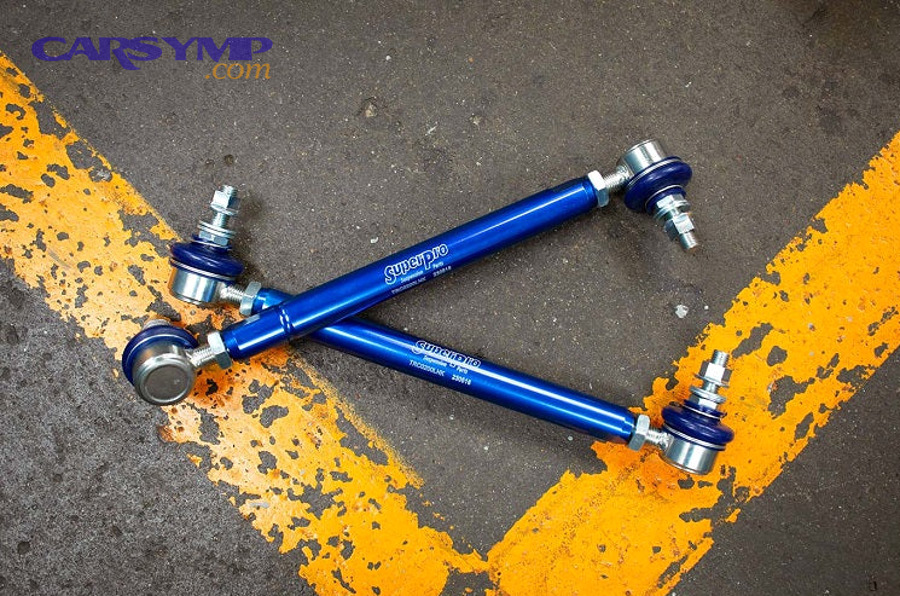
Sway bar links typically last 50,000-75,000 miles, making them shorter-lived than control arms (100,000-150,000 miles) and shock absorbers (50,000-100,000 miles) but longer-lived than ball joints (70,000-150,000 miles depending on type). Their relatively shorter lifespan results from constant articulation with minimal bearing surface area compared to larger suspension components.
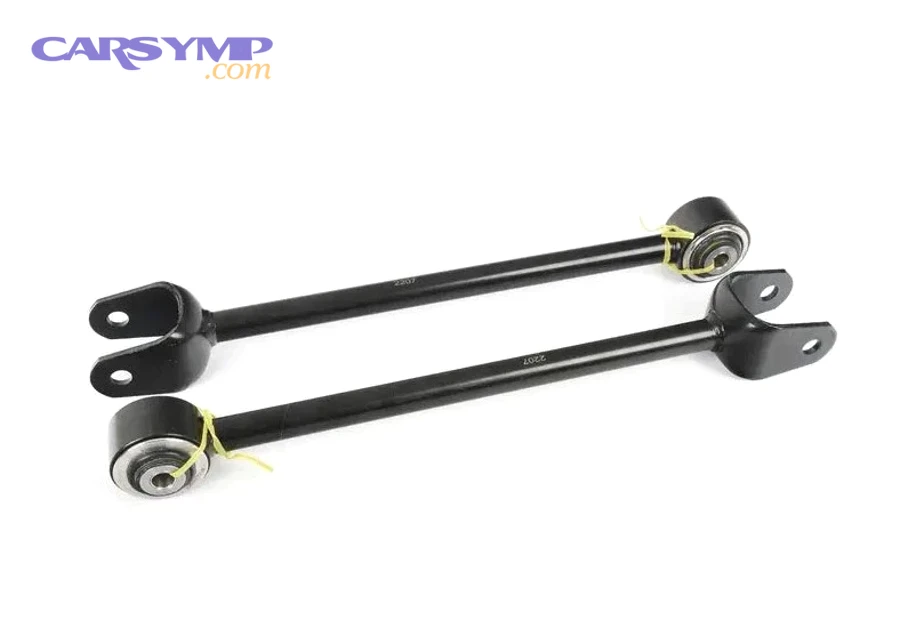
Specifically, the durability hierarchy in suspension systems reflects each component’s stress levels and design robustness. Control arms, fabricated from forged or stamped steel with large cross-sections, handle tremendous forces but bend rather than include high-wear joints. Their bushings deteriorate over time, but the arms themselves rarely fail unless severely impacted. Shock absorbers contain precisely machined internals and hydraulic fluid that gradually degrades, but catastrophic failure is uncommon—they simply lose damping effectiveness gradually.
Why Do Sway Bar Links Fail More Often Than Control Arms?
Sway bar links fail more frequently than control arms because links incorporate high-wear ball joints or bushings at both ends, while control arms use larger, more robust bushings at mounting points. Additionally, links are intentionally designed as a “fuse” component that fails before damage reaches more expensive parts like the sway bar itself or control arms.
The engineering philosophy behind this designed vulnerability is deliberate cost management. A sway bar link costing $20-$40 uses ball joints with relatively small bearing surfaces—typically 15-20mm ball diameter. The small size and constant articulation create high contact pressures that wear the bearing surfaces over time. When subjected to extreme loads from severe impacts or overloading, the link bends, breaks, or the ball joint separates, absorbing impact energy that might otherwise damage the $200-$400 control arm or $150-$300 sway bar.
Material and size differences contribute significantly to longevity gaps. Control arms on most vehicles use stamped or forged steel with cross-sections measuring 20-30mm thick, providing massive strength reserves. A typical control arm might be engineered to handle 10,000 lbs of force before permanent deformation occurs. The bushings mounting the control arm to the frame use rubber or polyurethane elements with large surface areas—often 40-50mm diameter—that distribute stress and resist compression. This robust design means control arm failures typically involve bushing wear rather than structural failure.
Load path analysis explains why links experience concentrated stress. When the suspension encounters a bump, the control arm pivots on its frame bushings and pulls on the sway bar link. The link must transmit this pulling force through its small ball joint or bushing while simultaneously accommodating angular changes as the suspension moves through its travel. This combined loading—axial force plus angular articulation—creates very high stress at the joint surfaces. Control arms, in contrast, experience mainly axial tension and compression on their mounting bushings, which is easier for large bushings to handle.
Wear mechanisms differ fundamentally between these components. Sway bar links wear through repeated ball-and-socket contact or bushing compression-rebound cycles. Each bump in the road creates a wear event. A vehicle driven 50,000 miles encounters millions of these micro-wear events. Control arm bushings wear through slow compression set and rubber deterioration rather than articulation wear. The rubber gradually hardens, cracks, and loses its elastic properties, but this process occurs over much longer timeframes because the bushings aren’t constantly sliding or rotating.
Maintenance accessibility affects component life differently. Sway bar links with grease fittings can be serviced to extend life, but many drivers neglect this maintenance because the links are difficult to access and the importance isn’t widely known. Control arm bushings cannot be lubricated—they’re sealed components. However, because they wear so much more slowly, the lack of serviceability doesn’t impact total life significantly. By the time control arm bushings need replacement, the vehicle has usually accumulated 120,000-150,000 miles.
Environmental exposure proves more damaging to links than control arms. Sway bar links hang in exposed positions in the wheel wells, directly in the spray pattern from tires throwing water, salt, and debris. The thin protective boots on ball joints crack easily, allowing corrosive materials to attack bearing surfaces. Control arms sit higher and more protected, with larger bushings that are less penetrated by contaminants. The rubber boots on control arm bushings also tend to be more robust because they’re larger and subjected to less extreme articulation angles.
What Is the Difference Between Sway Bar Link Wear and Tie Rod Wear?
Sway bar link wear manifests as knocking noises over bumps and increased body roll, while tie rod end wear creates clicking during steering input and causes alignment changes leading to tire wear and wandering. Links affect body roll control; tie rods affect steering precision and alignment.
The functional differences between these components create distinct symptom patterns. Tie rod ends connect the steering rack or steering box to the steering knuckles, translating steering wheel input into wheel direction changes. They experience primarily horizontal loads during steering but also accommodate vertical suspension movement. The ball joints in tie rod ends wear from the combined rotational and vertical motion, eventually developing play that creates steering looseness and alignment instability.
Diagnostic methods differ significantly between these components. Testing sway bar links involves the jouncing test—bouncing the vehicle and listening for clunks—or visual inspection for torn boots and excessive play when attempting to move the link perpendicular to its shaft. Testing tie rod ends requires grasping the tire at 3 o’clock and 9 o’clock positions and attempting to push-pull horizontally while watching for movement at the tie rod ball joint. Movement visible at the joint indicates wear requiring replacement.
Symptom timing provides another distinction. Sway bar link symptoms appear primarily during vertical suspension movement—bumps, dips, and cornering events that compress the suspension. The noises and handling effects become most noticeable when crossing speed bumps, railroad tracks, or rough pavement. Tie rod symptoms manifest during steering events—turning corners, lane changes, and even straight-line driving if wear is severe enough to allow the wheel to wander due to road irregularities.
Failure consequences differ in severity and safety impact. A completely separated sway bar link is inconvenient and affects handling by increasing body roll, but the vehicle remains steerable and controllable, allowing safe navigation to a repair facility. A separated tie rod end is catastrophic—the affected wheel loses steering control and can turn independently, making the vehicle uncontrollable and creating immediate crash risk. This difference explains why tie rod inspections receive more emphasis during safety inspections.
Alignment impact separates these components clearly. Sway bar links are not primary alignment components; their failure doesn’t directly change toe, camber, or caster settings. However, the increased body roll from failed links can create dynamic alignment changes during cornering—the suspension geometry changes more drastically, potentially causing temporary camber shifts. Tie rod ends are primary alignment components; their wear directly affects toe settings, causing the tires to point inward or outward rather than straight ahead, creating rapid tire wear and steering pull.
Replacement cost and complexity differ substantially. sway bar link replacement on most vehicles is straightforward—remove two nuts or bolts and install new links. No alignment is required after replacement because links don’t affect alignment geometry. The job typically costs $150-$300 including parts and labor. Tie rod end replacement requires disconnecting the ball joint from the steering knuckle using a separator tool, potentially removing the entire tie rod assembly, and always requires four-wheel alignment after installation to restore proper toe settings. Total cost runs $200-$450 per tie rod end including alignment.
How Does Sway Bar Link Lifespan Compare in Different Vehicle Types?
Sway bar links on heavy-duty trucks and SUVs typically last 60,000-80,000 miles compared to 70,000-90,000 miles on sedans and crossovers, despite trucks having larger, more robust links. The reduced lifespan results from higher operating loads, greater suspension travel, and more frequent exposure to harsh driving conditions.
Vehicle weight and load capacity directly impact link stress levels. A full-size pickup truck weighing 5,500 lbs empty can legally carry up to 2,000-3,000 lbs of cargo, creating total weight approaching 8,000 lbs. The sway bar links must manage the forces generated by this mass during cornering and suspension articulation. A midsize sedan weighing 3,500 lbs rarely carries more than 500 lbs of passengers and cargo. Even though the truck uses larger, stronger links, the proportional stress levels are higher.
Suspension travel ranges differ dramatically between vehicle types. Trucks and SUVs often provide 8-12 inches of suspension travel to handle off-road terrain and heavy loads. This extended travel means sway bar links must accommodate larger angular changes during full compression and extension cycles. Sedans typically offer 4-6 inches of travel, requiring less extreme articulation from the links. Greater articulation angles accelerate wear in ball joints and create more extreme bushing deflection.
Driving condition differences between vehicle types affect component longevity significantly. Trucks and SUVs are more likely to be used for towing, off-roading, and work applications that subject suspension components to severe stress. Even trucks used primarily for commuting tend to see harder use than sedans—occasional Home Depot runs with heavy materials, weekend boat towing, or dirt road driving to recreational areas. Sedans predominantly see paved road use with minimal loading, creating more benign operating conditions.
Sway bar diameter variations influence link stress in counterintuitive ways. Larger sway bars—common on performance cars and heavy-duty trucks—are stiffer and resist body roll more aggressively. This increased stiffness means the links must transmit greater forces during suspension movement. A 32mm sway bar on a performance sedan creates more link stress than a 24mm bar on an economy sedan because the stiffer bar resists twist more forcefully, loading the links more heavily.
Off-road capability affects link design and lifespan. Vehicles designed for off-road use often feature disconnectable or soft sway bars that allow extreme wheel articulation without binding. When connected, these systems see tremendous forces during off-road articulation. Rock crawling, where one wheel may be fully compressed while the opposite is fully extended, creates the maximum possible stress on sway bar links. Dedicated off-road vehicles often require link replacement every 30,000-50,000 miles due to these extreme conditions.
The table below compares expected sway bar link lifespan across different vehicle categories under typical use conditions:
| Vehicle Type | Typical Link Lifespan | Primary Stress Factors | Common Applications Affecting Life |
|---|---|---|---|
| Compact sedan | 70,000-90,000 miles | Moderate weight, limited travel | Commuting, paved roads |
| Midsize sedan | 65,000-85,000 miles | Moderate weight and travel | Commuting, highway driving |
| Performance sedan | 50,000-70,000 miles | High sway bar stiffness, aggressive driving | Sport driving, track use |
| Compact SUV/Crossover | 60,000-80,000 miles | Higher weight, moderate travel | Family use, light towing |
| Full-size SUV | 55,000-75,000 miles | High weight, greater travel | Towing, family hauling |
| Half-ton pickup | 60,000-80,000 miles | Variable loading, towing stress | Work duty, recreational towing |
| Heavy-duty pickup | 50,000-70,000 miles | Heavy towing, high loads | Commercial work, heavy towing |
| Off-road vehicle (4×4) | 30,000-60,000 miles | Extreme articulation, impacts | Trail riding, rock crawling |
Are Adjustable Sway Bar Links More Prone to Premature Wear?
Yes, adjustable sway bar links are 20-30% more prone to premature wear than fixed-length links because the adjustment mechanism adds moving parts and potential failure points. However, they’re necessary for lifted vehicles and provide valuable adjustability for performance applications despite the durability trade-off.
The mechanical complexity of adjustable links creates additional wear points compared to simple fixed-length designs. A basic fixed link consists of a straight rod with ball joints or bushings at each end—three components total. An adjustable link adds threaded rod ends, jam nuts for lock adjustment, and often a central turnbuckle-style body—adding 3-4 additional components that can wear, loosen, or fail. Each threaded connection point is a potential failure location if not properly assembled or if vibration loosens the jam nuts.
Thread engagement quality affects longevity significantly. Adjustable links work by threading rod ends into a central body to achieve the desired length. If this threaded engagement is minimal—only 3-4 threads engaged—the connection is weak and prone to loosening or stripping under load. Proper assembly requires at least 6-8 threads of engagement at each rod end with jam nuts torqued firmly against the central body. Many failures of adjustable links stem from improper installation rather than design flaws.
Application scenarios determine whether adjustable links make sense despite durability concerns. Lifted trucks and SUVs require adjustable links because suspension lift kits change the distance between control arms and sway bars. Using stock-length fixed links on a lifted vehicle creates severe angular misalignment that binds the suspension and accelerates wear catastrophically. In these applications, adjustable links aren’t optional—they’re mandatory for proper suspension geometry.
Performance applications benefit from adjustability through fine-tuning capabilities. Adjustable links allow precise sway bar preload adjustment, affecting handling balance. Road racers and autocross competitors adjust link length to alter the sway bar’s contribution to roll stiffness, tuning understeer and oversteer characteristics. This performance benefit justifies the modest durability reduction for vehicles used in competition.
Material quality in adjustable links varies enormously between manufacturers. Economy adjustable links use mild steel rod ends with standard steel threads that corrode and seize. Premium designs feature chromoly steel construction, stainless steel threads, and greaseable rod ends with replaceable boots. The premium versions often outlast economy fixed links because superior materials offset the complexity disadvantage.
Maintenance requirements increase with adjustable designs. The jam nut torque should be verified every 5,000-10,000 miles because vibration can loosen these nuts over time. The threaded connections benefit from anti-seize compound application during installation to prevent corrosion welding, which makes future adjustment impossible. Rod end boots require inspection for tears and cracks because contaminated threads wear rapidly and can seize, eliminating the adjustability feature.
Installation errors commonly plague adjustable links. Setting them to incorrect length creates suspension binding or sway bar preload issues. The correct procedure requires installing the link with the vehicle at ride height, adjusting length until the link threads in without force, then locking the jam nuts. Many installers adjust length with the suspension hanging, creating pre-load that stresses components and reduces life. Some adjustable links include length specifications for specific lift heights, eliminating guesswork during installation.
According to testing data from the Specialty Equipment Market Association published in 2023, high-quality adjustable sway bar links on lifted trucks showed mean time to failure of 62,000 miles compared to 85,000 miles for premium fixed-length links in equivalent service, representing a 27% reduction in lifespan that most off-road enthusiasts consider acceptable given the geometric benefits.
This comprehensive guide to extending sway bar link life demonstrates that longevity depends on multiple interconnected factors: proper installation technique, regular maintenance, mindful driving habits, appropriate component selection for your use case, and early detection of wear before complete failure. By implementing these seven proven strategies—correct torque specifications, scheduled lubrication, impact avoidance, regular inspections, strategic upgrades, load management, and proactive replacement—you can potentially double the service life of your sway bar links while improving vehicle handling and safety. The modest investment in quality parts and attention to maintenance pays dividends through reduced replacement frequency, lower long-term costs, and the peace of mind that comes from reliable suspension components.