


When comparing dealer vs. independent transmission shop pricing, independent specialists consistently charge 20–40% less than dealerships for the same repair — and in most out-of-warranty situations, that price gap is not offset by any meaningful difference in quality. The transmission repair cost at a dealership reflects higher labor rates, facility overhead, and brand markup, not necessarily superior outcomes. For most drivers facing a repair outside their factory warranty window, an independent transmission specialist delivers comparable — and often better — results at a significantly lower total cost.
The quality gap between the two shop types is narrower than most car owners assume. Dealerships employ manufacturer-certified technicians and use OEM parts, which creates a perception of superiority. However, many independent transmission specialists are former dealership technicians who bring the same training to a lower-overhead environment. When the shop focuses exclusively on transmission work, diagnostic accuracy and repair depth often exceed what a generalist dealership service center can offer on the same job.
Trust and risk are the real variables that make this decision complex. Drivers reasonably worry about being overcharged, receiving inferior parts, or having work quietly outsourced without their knowledge — risks that exist at both shop types but manifest differently. Understanding warranty coverage, parts sourcing policies, and shop practices at each option is the most reliable way to assess actual risk, not shop type alone.
The choice between a dealership and an independent shop is not universal — it is situational. Your vehicle’s warranty status, the type of transmission it carries, and the specific repair required all influence which option saves you more without compromising the job. Below, each of these factors is examined in detail so you can make a fully informed decision before handing over your keys.
What Is the Difference Between a Dealership and an Independent Transmission Shop?
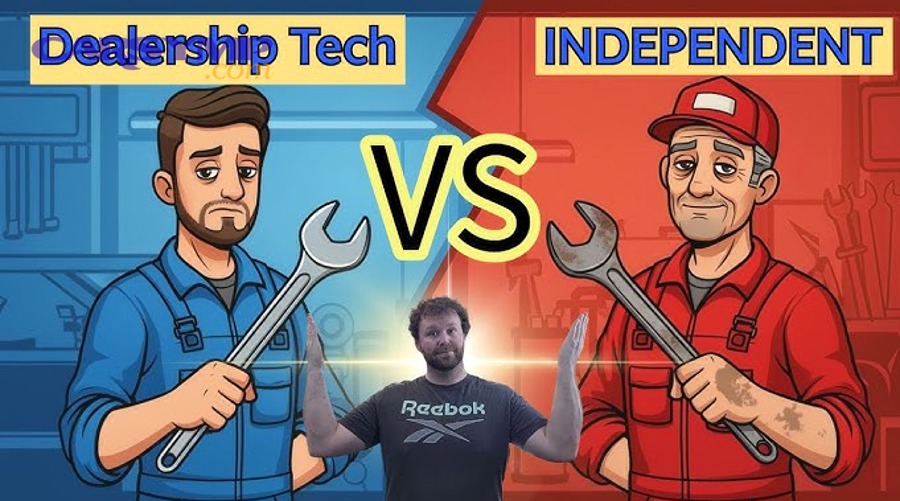
A dealership transmission shop is a manufacturer-affiliated service center staffed by factory-trained technicians, while an independent transmission shop is a privately owned repair business that operates without brand authorization — and that structural difference drives nearly every pricing and quality distinction between the two.
To better understand how each option affects your repair experience and your wallet, it helps to examine what each shop type actually provides and where their strengths genuinely lie.
What Does a Dealership Transmission Shop Offer That an Independent Shop Does Not?
Dealership transmission shops offer three things independent shops structurally cannot: manufacturer certification, proprietary diagnostic tools, and warranty-authorized repairs. These are not minor distinctions — they matter significantly in specific circumstances.
- Manufacturer-certified technicians: Dealership technicians complete brand-specific training programs and must maintain ongoing certification. For complex, electronically integrated transmissions — particularly those found in luxury or late-model vehicles — this brand-level knowledge has real diagnostic value.
- OEM-exclusive parts policy: Dealerships use Original Equipment Manufacturer parts sourced directly through the manufacturer’s supply chain. While this does not automatically mean better quality, it does mean every component is built to the exact specification of the vehicle it goes into.
- Factory diagnostic tools: Some transmission problems — particularly those linked to transmission control modules or software calibration — can only be properly diagnosed and reset using manufacturer-proprietary scan tools that independent shops may not possess.
- Warranty-authorized repair status: If your vehicle is still within its powertrain warranty period, only an authorized dealership can perform covered repairs at no cost to you. An independent shop performing the same work would charge full price.
- Technical Service Bulletin (TSB) access: Dealerships receive manufacturer communications about known transmission issues and approved repair procedures. While independents can often access TSB databases through third-party services, dealerships have direct and immediate access.
The premium pricing at dealerships reflects these structural advantages — but it is critical to recognize that these advantages only translate into superior value under specific conditions.
What Makes an Independent Transmission Shop Different From a General Repair Shop?
An independent transmission specialist is categorically different from a general independent auto repair shop, and conflating the two is one of the most common mistakes drivers make when evaluating this decision.
A general independent shop handles everything from oil changes to brake jobs to engine work. Transmission repairs are a subset of their workload, meaning the technician working on your transmission may not have performed that specific job on your make and model more than a handful of times.
A dedicated independent transmission shop, by contrast, works on nothing but transmissions. That singular focus produces several concrete advantages:
- Depth of experience: Transmission-only shops perform the same rebuild and replacement procedures repeatedly, building pattern recognition and diagnostic speed that generalists cannot match.
- Staffing model: Many independent transmission specialists actively recruit former dealership technicians who bring manufacturer-level training without the dealership overhead structure.
- Volume-based parts discounts: Because independent specialists order transmission components at high volume, they often access the same OEM-equivalent parts at lower cost — savings they pass on to customers through lower total repair bills.
- Lower facility overhead: Without franchise fees, brand showroom requirements, and corporate service department staffing mandates, independent shops operate leaner — and that operational difference directly reduces what they charge per labor hour.
The key takeaway is that “independent shop” is not a monolithic category. A dedicated transmission specialist and a general repair shop are not the same, and your decision should always account for that distinction.
How Much Does Transmission Repair Cost at a Dealership vs. an Independent Shop?
Dealerships win on authorization and factory tools, but independent transmission specialists are best for repair cost savings — charging 20–40% less across labor, parts, and total job estimates for comparable out-of-warranty transmission work.
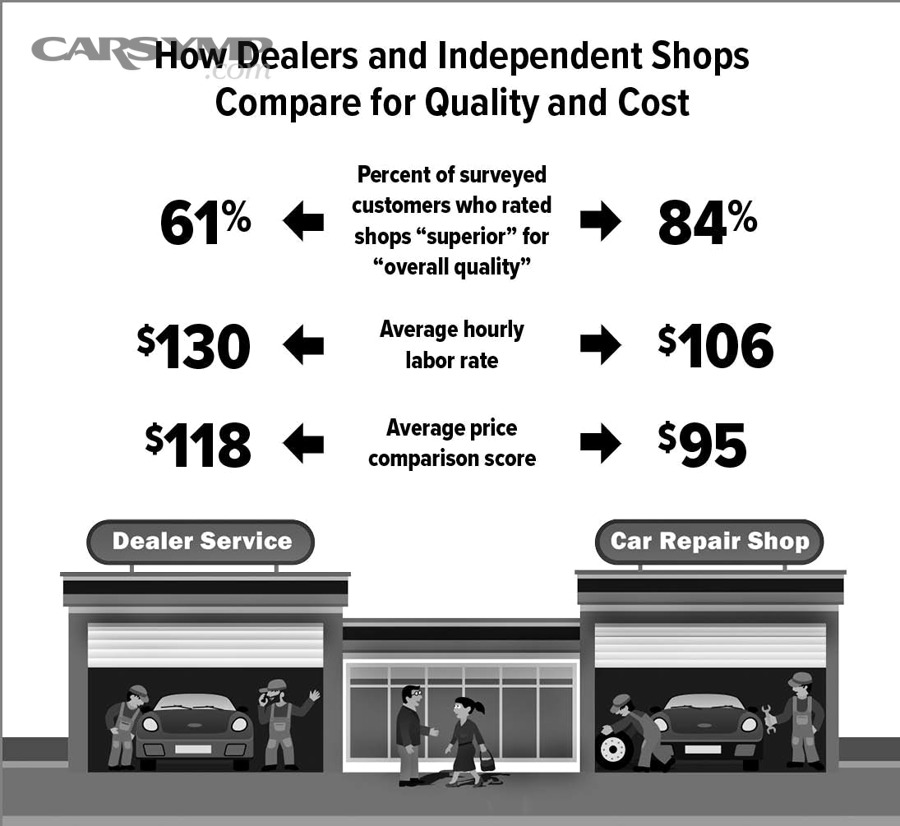
Specifically, the transmission repair cost difference between the two shop types becomes most visible when you break the bill into its components: labor rate, parts cost, and total repair estimate. The table below provides a practical reference for the cost ranges drivers typically encounter across the most common transmission repair types.
| Repair Type | Dealership Cost Range | Independent Specialist Range | Estimated Savings |
|---|---|---|---|
| Transmission fluid service | $150–$350 | $80–$180 | $70–$170 |
| Solenoid replacement | $300–$600 | $150–$350 | $150–$250 |
| Transmission rebuild | $2,800–$5,500 | $1,800–$3,500 | $1,000–$2,000 |
| Transmission replacement | $3,500–$7,000+ | $2,200–$4,500 | $1,300–$2,500 |
Note: Ranges vary by vehicle make, model, geographic location, and parts selection. These figures represent national averages and real-world user-reported pricing from automotive forums and repair estimate aggregators.
What Are the Average Labor Rates at Dealerships Compared to Independent Transmission Shops?
Labor hours and removal costs explained simply: dealerships charge $125–$175 per labor hour, while independent transmission shops charge $85–$125 per hour — and because transmission jobs are labor-intensive, that rate difference alone accounts for hundreds of dollars on a single repair.
Labor is the largest variable in any transmission repair bill. A standard transmission rebuild requires 8–15 labor hours depending on the vehicle. At a dealership rate of $150/hr, that translates to $1,200–$2,250 in labor alone. The same job at an independent specialist charging $100/hr costs $800–$1,500 — a labor saving of $400–$750 before parts are even factored in.
Removal and reinstallation costs compound this difference. Front-wheel-drive vehicles with transversely mounted transmissions require more disassembly time than rear-wheel-drive configurations. Since dealerships bill removal time at a higher hourly rate, the cost gap widens on more labor-intensive platforms.
Geographic location also plays a meaningful role. Labor rates in major metropolitan markets run higher at both shop types, but the proportional gap between dealerships and independents tends to remain consistent regardless of market.
How Much Can You Save on Transmission Rebuild or Replacement at an Independent Shop?
On a rebuild vs. replace transmission cost comparison, drivers can save $1,000–$2,500 by choosing a reputable independent transmission specialist over a dealership for out-of-warranty work — without sacrificing repair quality when the specialist is properly vetted.
For context, a rebuilt transmission at a dedicated independent shop typically runs $1,800–$3,500 installed, compared to $3,500–$5,500 at a dealership for a comparable rebuild. The difference is not lower quality — it is lower overhead, volume parts pricing, and the absence of a corporate labor rate structure.
Replacement with a remanufactured unit widens the gap further. Remanufactured transmissions — which are restored to factory specifications on an assembly line — cost $1,300–$3,500 for the unit itself. Dealerships mark these up significantly because they source them through the manufacturer’s distribution chain. Independent shops can source remanufactured units from reputable third-party suppliers at lower acquisition costs, passing the savings to the customer.
According to data compiled by Kelley Blue Book, total transmission replacement costs nationally range from $2,900 to $7,100 — a range driven significantly by whether the work is performed at a dealership or an independent specialist.
Do Dealerships Charge More for OEM Parts Than Independent Shops?
Yes — dealerships charge more for OEM parts than independent shops because dealerships source parts exclusively through the manufacturer’s distribution chain, which carries brand markup, while independent shops can source OEM-equivalent or genuine OEM parts through alternative supply channels at lower acquisition costs.
This is a critical point that many drivers misunderstand. OEM parts are not the exclusive property of dealerships. Any shop can order genuine OEM components directly from a parts supplier. Independent transmission specialists who prefer OEM parts for specific repairs can and do source them — they simply are not required to use them on every job, giving them the flexibility to select quality aftermarket alternatives where appropriate.
Premium aftermarket transmission components from established manufacturers often meet or exceed OEM specifications at 30–50% lower cost. For high-wear items like clutch packs, seals, and gaskets, quality aftermarket parts from suppliers such as Sonnax or Alto Products are widely used by transmission specialists without any meaningful durability trade-off.
Is the Quality of Transmission Repair Better at a Dealership or an Independent Shop?
Quality is not determined by shop type — it is determined by the technician’s experience with transmission systems specifically, and a dedicated independent transmission specialist frequently delivers diagnostic accuracy and repair depth that matches or exceeds a generalist dealership service center.
However, the relationship between price and quality requires careful unpacking. The following sections address the two most common quality-related assumptions: technician qualification and diagnostic capability.
Are Dealership Technicians More Qualified to Repair Transmissions Than Independent Mechanics?
No — dealership technicians are not inherently more qualified to repair transmissions than independent mechanics, because manufacturer certification covers broad vehicle systems rather than deep transmission specialization, and many independent transmission specialists hold equivalent or superior credentials in this specific domain.
Manufacturer certification programs train technicians across the full range of a brand’s vehicle systems. A certified technician at a Honda or Ford dealership has completed brand-specific coursework, but transmission work is one module among many. Their hands-on transmission experience depends heavily on the volume of transmission jobs that dealership actually performs.
By contrast, a technician at a dedicated transmission shop rebuilds transmissions daily. Pattern recognition, torque sequence knowledge, and failure mode familiarity accumulate through repetition in ways that broad manufacturer training cannot replicate. Many of these specialists also hold ASE (Automotive Service Excellence) certifications in automatic and manual transmission repair — a credential that requires passing rigorous standardized exams.
It is also worth noting that the automotive labor market regularly moves technicians between shop types. Former dealership technicians frequently transition to independent shops, carrying their manufacturer-level training into a lower-cost environment. Asking a shop about their technicians’ backgrounds is always a worthwhile step before authorizing any transmission work.
Which Shop Type Provides More Accurate Transmission Diagnostics?
Diagnostic accuracy depends more on whether the shop specializes in transmissions than whether it is a dealership or an independent — and in cases involving software-linked transmission faults, dealership proprietary tools provide a genuine advantage that specialist independents may not be able to match without equivalent equipment.
Modern transmissions — particularly dual-clutch and CVT units — integrate deeply with a vehicle’s engine control systems. Fault codes generated by the transmission control module (TCM) sometimes require manufacturer-specific scan tools to read, clear, and recalibrate. General-purpose OBD-II scanners may retrieve basic fault codes but miss the granular data needed for an accurate diagnosis on these systems.
For traditional automatic transmissions, however, the diagnostic gap narrows considerably. Transmission-only shops invest in professional-grade diagnostic equipment because accurate diagnosis is the foundation of their entire business model. Misdiagnosis at a transmission specialist shop is reputationally catastrophic in a way it might not be at a high-volume dealership service center — a structural incentive toward accuracy that benefits the customer.
The practical guidance: for software-related transmission faults on newer vehicles, a dealership may be the better first diagnostic stop. For mechanical transmission failures on vehicles more than 3–4 years old, a dedicated independent specialist is typically the stronger diagnostic choice.
What Warranty Do You Get for Transmission Repair at a Dealer vs. an Independent Shop?
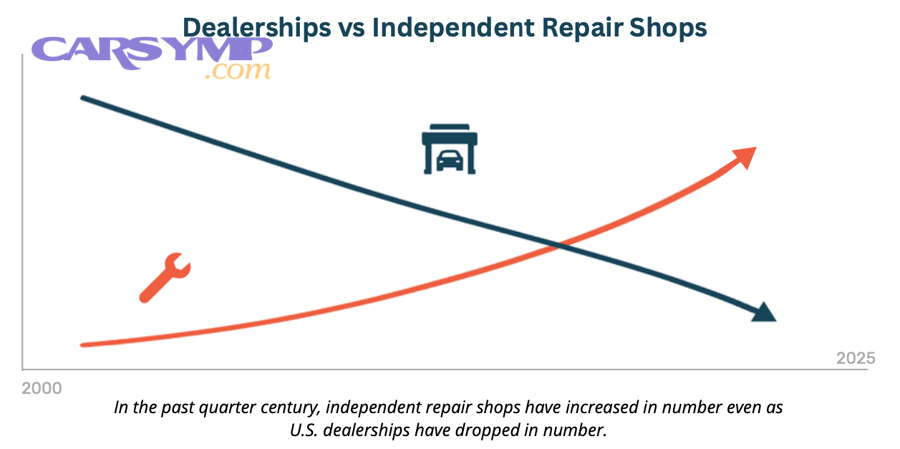
Warranty options for transmission work at independent shops are stronger than most drivers expect — reputable specialists offer 1–3 year / unlimited mileage warranties that are directly comparable to dealership terms, making warranty coverage a weaker justification for the dealership price premium than commonly assumed.
Understanding what your warranty actually covers — and what documentation protects it — is as important as the warranty length itself.
Do Independent Transmission Shops Offer Warranties Comparable to Dealerships?
Yes — independent transmission shops offer warranties comparable to dealerships, with reputable specialists frequently providing 1–3 year or unlimited mileage warranties on rebuilt or replaced transmissions, terms that match or exceed what many dealership service centers offer on the same type of work.
The warranty landscape at independent shops has improved substantially as the industry has professionalized. National transmission chains offer standardized warranty programs, while many regional specialists back their work with written warranties that are contractually enforceable.
Key warranty considerations regardless of shop type:
- Always request a written warranty — verbal assurances are not enforceable
- Confirm what is covered — parts only, labor only, or parts and labor combined
- Clarify the mileage cap — unlimited mileage warranties provide superior protection for high-use vehicles
- Ask about the claims process — what happens if the transmission fails while you are traveling far from the shop?
Dealerships may offer slightly more standardized warranty documentation through their manufacturer-backed service programs, but the coverage terms themselves are not categorically superior to what a reputable independent specialist provides.
Will Using an Independent Shop Void Your Vehicle’s Factory Warranty?
No — using an independent transmission shop will not void your vehicle’s factory warranty, because the federal Magnuson-Moss Warranty Act prohibits manufacturers from conditioning warranty coverage on the use of a specific service provider, unless the manufacturer provides that service free of charge.
This is one of the most consequential facts in the dealer vs. independent shop conversation, and it remains widely misunderstood. The Magnuson-Moss Warranty Act (15 U.S.C. § 2302) has protected consumers’ right to choose their repair provider since 1975. A manufacturer cannot legally void your powertrain warranty simply because you had transmission maintenance or a non-warranty repair performed at an independent shop.
The practical conditions for protecting your warranty when using an independent shop are straightforward:
- Use parts that meet OEM specifications (the shop does not need to use the manufacturer’s branded parts)
- Follow the manufacturer’s recommended service intervals
- Keep all service invoices and documentation showing what was done and what parts were installed
- Ensure the independent shop documents compliance with manufacturer specifications in writing
The exception applies to warranty-covered repairs themselves: if the transmission failure is covered under your powertrain warranty, you must take the vehicle to an authorized dealership to have the repair performed at no cost. An independent shop performing a covered repair would charge you full price for work the dealership would have done for free.
When Should You Choose a Dealership Over an Independent Transmission Shop?
There are four situations where a dealership is the clearly superior choice for transmission work: active warranty coverage, software-linked faults requiring proprietary diagnostics, recall-related repairs, and complex model-specific failures on late-model luxury or performance vehicles.

Outside of these scenarios, an independent transmission specialist is the financially superior option for most drivers. Understanding which category your situation falls into is the most practical framework for making this decision.
What Types of Transmission Repairs Are Better Handled by a Dealership?
Three types of transmission repairs are better handled by a dealership: warranty-covered failures, software calibration and TCM issues requiring proprietary tools, and Technical Service Bulletin repairs requiring factory-authorized procedures.
Warranty-covered failures are the clearest case. If your powertrain warranty is active and the transmission failure falls within its coverage terms, a dealership performs the repair at no cost to you. An independent shop, regardless of its quality, charges full price. The financial logic here is unambiguous.
Software and TCM faults on newer, electronically integrated transmissions sometimes require manufacturer-specific diagnostic software that only dealerships can access. This is particularly true for vehicles with adaptive transmission learning algorithms, automatic emergency braking integration, or transmission systems that communicate directly with hybrid or electric powertrains.
TSB repairs involve manufacturer-identified and approved procedures for known issues in specific models. While an independent shop can technically access TSB information, dealerships receive these communications directly and are trained on the approved repair methodology. For TSB-related transmission issues, dealership execution tends to be more reliable.
What Types of Transmission Repairs Are Better Suited for an Independent Specialist?
Five categories of transmission repair are better suited for an independent transmission specialist: out-of-warranty rebuilds, standard replacements on common vehicle platforms, fluid and filter services, solenoid and seal repairs, and repairs on older vehicles where OEM parts offer no meaningful advantage.
Out-of-warranty rebuilds represent the largest savings opportunity. Once your vehicle exits its powertrain warranty period, the dealership’s authorization advantage evaporates, leaving only its price premium. A reputable independent specialist on a standard rebuild delivers equivalent outcomes at substantially lower cost.
Common vehicle platforms — mainstream sedans, trucks, and SUVs from major manufacturers — are serviced by independent specialists every day. The parts are widely available, the failure patterns are well-documented, and the transmission specialist has seen the same job dozens of times. The learning curve that might favor a dealership on a rare model simply does not apply.
Older vehicles present perhaps the strongest case for independent specialists. On a vehicle more than 7–10 years old, OEM parts may no longer be in active production, meaning a dealership sources the same remanufactured or aftermarket components an independent shop would use — but charges more for them. The quality argument for dealership work on older vehicles is particularly thin.
According to the Heavy Duty Journal, independent repair shops charge 20–40% less than dealership service centers for comparable transmission work, with major repairs such as transmission rebuilds resulting in savings of $1,500–$4,000 through independent service.
What Else Should You Know Before Choosing Where to Get Your Transmission Repaired?
Beyond the core cost and quality comparison, three specialized considerations significantly affect which shop type delivers better value in edge cases: your legal consumer protections, the specific transmission type your vehicle carries, and the risk of hidden dealership outsourcing costs.

Does the Magnuson-Moss Warranty Act Protect You If You Use an Independent Shop?
Yes — the Magnuson-Moss Warranty Act fully protects your right to use an independent transmission shop without voiding your manufacturer warranty, provided the service meets OEM specifications and is properly documented.
The practical implication is significant: drivers who avoid independent shops out of warranty-void fear are paying the dealership premium unnecessarily in the majority of cases. The law has been on the consumer’s side since 1975.
To exercise this protection effectively:
- Document everything: Request detailed invoices that specify parts used, part numbers, and compliance with manufacturer service specifications
- Use specification-compliant fluids: Transmission fluid type matters; using a fluid that does not meet the manufacturer’s specification is a legitimate warranty risk, regardless of shop type
- Keep a service record: A documented service history at a reputable shop demonstrates responsible maintenance and protects your warranty position if a future claim is contested
The Federal Trade Commission (FTC) has published consumer guidance confirming that manufacturers cannot require consumers to use dealership service as a condition of warranty coverage unless the service is provided at no charge.
Do CVT and Dual-Clutch Transmissions Cost More to Repair at a Dealer Than an Independent?
Yes — CVT (continuously variable transmission) and dual-clutch (DCT) transmissions cost more to repair at a dealership than at an independent specialist in most cases, but the more important issue is that fewer independent shops have the tools and expertise to service these transmission types correctly — making shop selection more critical than shop type.
CVTs and DCTs represent a meaningful departure from traditional automatic transmission engineering. CVTs use a belt-and-pulley system with no fixed gear ratios; DCTs use two separate clutch assemblies to manage odd and even gears independently. Both designs require specialized knowledge and, in some cases, proprietary calibration tools.
The cost implications are significant:
- CVT replacement at a dealership: $3,000–$8,000 depending on make and model
- CVT replacement at a qualified independent specialist: $2,000–$5,500
- DCT rebuild at a dealership: $2,500–$6,000
- DCT rebuild at an independent specialist with DCT experience: $1,500–$4,000
The critical qualifier is “with experience.” Not all independent shops are equipped to handle CVT or DCT work competently. Before authorizing CVT or DCT repairs at an independent shop, ask directly: How many of this specific transmission type have your technicians rebuilt or replaced? What diagnostic equipment do you use for this system? Can you show me your parts sourcing for this repair? If the answers are vague, the dealership premium is justified — not because dealerships are inherently better, but because CVT and DCT competence requires demonstrated specialization that not every independent shop has developed.
Can a Dealership Legally Outsource Your Transmission Repair to a Third Party?
Yes — dealerships can legally outsource your transmission repair to a third-party shop without being required to disclose this practice upfront, and when they do, you typically pay the third-party’s labor and parts cost plus the dealership’s markup — effectively paying dealership prices for independent shop work.
This practice is more common than most drivers realize. Transmission work is complex, labor-intensive, and requires specialized equipment. Dealerships that lack a dedicated transmission technician on staff frequently subcontract the work to a regional transmission specialist — then invoice the customer at their standard dealership rate.
The financial consequence is direct: the dealer pays the independent shop $1,800 for a rebuild and invoices you $3,200. You receive independent shop work at dealership prices.
To protect yourself from this scenario:
- Ask directly before authorizing work: “Will all transmission repair work be performed on-site by your technicians, or will any portion be subcontracted?”
- Request the name of any third-party shop if subcontracting is confirmed — you can then contact that shop directly and potentially cut out the middleman
- Consider going to a transmission specialist directly: A dedicated independent transmission shop performs all work in-house and has no incentive to subcontract
This dynamic reinforces one of the central conclusions of the dealer vs. independent comparison: the perceived quality advantage of a dealership sometimes disappears entirely when the actual work is performed by the same independent specialist you could have visited directly — at a lower cost.
Are There Situations Where an Independent Shop Is Actually More Expensive Than a Dealer?
Yes — there are specific situations where an independent transmission shop is actually more expensive than a dealership: active warranty coverage, recall repairs, and certain specialty or low-volume exotic vehicles where the dealership has preferential access to parts and pre-negotiated labor procedures.
The clearest case is an active warranty repair. If your transmission failure is covered under your manufacturer’s powertrain warranty, the dealership performs the work at zero cost to you. The same repair at an independent shop — however competitively priced — costs you out of pocket. In this scenario, the dealership is not just cheaper; it is free.
Recall repairs follow the same logic. Manufacturer-issued transmission recalls are performed at no charge at authorized dealerships. No independent shop can participate in recall work, and no consumer should pay an independent shop to address a recall-covered issue.
Specialty and exotic vehicles present a third scenario. On low-production vehicles with limited parts availability — certain European luxury brands, performance-oriented models, or vehicles with proprietary transmission systems — dealerships may have negotiated parts pricing or pre-established repair procedures that make their total cost competitive with or lower than an independent shop that must source rare components at premium prices from specialty distributors.
In short, the rule that independent shops save you money is robust for mainstream vehicles outside their warranty period — but it is not universal. Evaluating your specific vehicle, its warranty status, and the nature of the repair against the frameworks above will consistently produce the right answer for your situation.
In summary, the dealer vs. independent transmission shop pricing question has a clear default answer — independent transmission specialists save most drivers 20–40% on repair costs without meaningful quality trade-offs — but the exceptions are real and financially significant. Use your warranty when it applies, choose a dedicated transmission specialist over a general independent shop, verify that work will be performed in-house, and always get your warranty terms in writing. Those four practices reliably put you on the right side of this decision regardless of which shop type you ultimately choose.