


Evaluating a transmission repair quote correctly can save you hundreds — sometimes thousands — of dollars and protect you from dishonest shop practices. The process comes down to knowing what a legitimate quote must contain, how to benchmark the price you’re given against real market data, and how to verify that the recommended repair type is actually appropriate for your vehicle’s condition. Car owners who approach this process armed with the right questions consistently make better decisions, avoid unnecessary upsells, and choose shops that stand behind their work.
The transmission repair cost on any quote is shaped by several concrete variables — your vehicle’s make and model, the type of transmission it uses, the extent of the damage, and the labor rates in your area. A quote that looks cheap on the surface may be stripping out parts quality, diagnostic rigor, or warranty coverage. Understanding which factors legitimately drive price higher helps you distinguish between a shop that is charging fairly and one that is padding the bill.
Beyond the numbers themselves, red flags embedded in how a shop presents a quote are just as revealing as the dollar amount. Shops that refuse to diagnose before disassembly, that offer a single phone quote without inspecting the vehicle, or whose estimate falls dramatically below every competitor are signaling problems that no amount of smooth customer service can fix. Knowing these warning patterns in advance gives you a structured filter to apply before you authorize any work.
Next, even a quote that passes the red-flag test requires one more layer of scrutiny: does the recommended service — repair, rebuild, or full replacement — actually match what your vehicle needs? A shop that jumps straight to replacement when a targeted rebuild would suffice is not giving you a fair quote, regardless of the price. The sections below walk through each of these evaluation layers in full, giving you a repeatable framework you can apply immediately.
What Is a Transmission Repair Quote and What Should It Include?
A transmission repair quote is a formal, itemized cost estimate — typically written — that details the parts, labor, diagnostic fees, and warranty terms associated with servicing or replacing a vehicle’s transmission. It is the foundational document that allows a car owner to understand, compare, and authorize repair work with confidence.
Specifically, understanding exactly what belongs in a legitimate quote is the starting point for any fair evaluation. A quote that is missing key line items is not just incomplete — it is a structural warning sign.

What Are the Standard Components of a Legitimate Transmission Quote?
A complete, trustworthy transmission repair quote should always break down into these distinct components:
- Parts cost — listed by part name and whether OEM, aftermarket, or remanufactured parts are being used
- Labor hours and hourly rate — transmission removal, disassembly, repair or rebuild, reassembly, and reinstallation should each be itemized or at minimum grouped with an hour count
- Transmission fluid and gaskets — often listed as a consumables line; a shop that buries these costs in a lump sum is reducing transparency
- Diagnostic fee — the charge for the inspection and road test that preceded the quote; a reputable shop typically waives this if the repair proceeds
- Warranty terms — minimum acceptable coverage is 12 months or 12,000 miles; the warranty should appear in writing, not be stated verbally
- Total installed cost — the final number that reflects everything required to return the vehicle to the road
“Installed cost” is an important distinction. Some shops quote parts-only pricing, which dramatically understates what you will actually pay. Always confirm that the figure you are comparing across shops represents the full installed price, labor included.
Should a Transmission Quote Always Be in Writing?
Yes — a transmission repair quote should always be in writing, for three critical reasons: it is legally enforceable, it prevents scope creep, and it gives you a concrete document to compare against competing estimates.
A verbal quote, no matter how specific it sounds, gives you no protection if the final bill is higher. More importantly, a written quote forces the shop to commit to a defined scope of work. If the shop later discovers an additional problem during the repair, they are obligated — in most states under consumer protection laws — to contact you and get written or recorded approval before exceeding the quoted amount. Without a written document establishing the original scope, that protection disappears. Always walk away from any shop that will only provide a verbal estimate for transmission work.
What Key Factors Affect the Price on a Transmission Quote?
There are five primary factors that legitimately influence a transmission repair quote: transmission type, vehicle make and model, repair scope, parts selection, and regional labor rates. Understanding each one allows you to determine whether a quoted price reflects genuine cost drivers or padding.

To better understand how these variables interact, it helps to examine the two most impactful — transmission type and parts choice — in detail before addressing the labor component.
How Does Transmission Type (Automatic, Manual, CVT) Change the Quote?
Automatic transmissions cost more to quote than manual transmissions, and CVT or dual-clutch systems cost more than either — primarily because complexity drives labor hours and parts pricing.
Here is a practical benchmark table to calibrate against when reviewing any quote you receive:
| Transmission Type | Typical Repair Range | Typical Rebuild Range | Typical Replacement Range |
|---|---|---|---|
| Manual | $150 – $600 | $800 – $1,500 | $1,500 – $3,000 |
| Automatic | $300 – $1,200 | $1,500 – $3,500 | $3,000 – $5,500 |
| CVT | $500 – $1,500 | $2,500 – $4,500 | $4,000 – $8,000+ |
| Dual-Clutch (DCT) | $600 – $2,000 | $3,000 – $5,000 | $5,000 – $9,000+ |
The table above reflects 2025 U.S. market averages inclusive of parts and labor. Use these ranges as a calibration benchmark — not a ceiling — since luxury European vehicles and trucks frequently exceed the upper bounds.
Manual transmissions have fewer components and straightforward disassembly, which keeps both parts cost and labor hours lower. Automatic transmissions involve complex valve bodies, torque converters, and electronic solenoids, pushing labor time into the 8–12 hour range for a full rebuild. CVTs use proprietary belts and pulleys with tightly toleranced components that many independent shops lack the equipment to rebuild, which is why CVT quotes frequently default to full replacement rather than a targeted fix.
How Do Parts Choices (OEM vs. Aftermarket vs. Remanufactured) Impact the Quote?
OEM parts deliver the highest reliability but carry the highest price; aftermarket parts cost less but vary widely in quality; remanufactured units offer a middle path — factory-rebuilt to OEM specification — at a cost below new OEM.
The parts line on your quote is where the most significant hidden quality differences live. A shop using low-grade aftermarket friction clutches or non-OEM solenoids can undercut a competitor’s quote by $400–$800 while building a transmission that fails within 18 months. When reviewing any quote, ask explicitly: which brand of parts is being used, and are they OEM, aftermarket, or remanufactured? A shop unwilling to answer that question clearly is a shop to avoid.
Remanufactured transmissions, sourced from reputable suppliers and installed with new gaskets, seals, and fluid, often represent the best value in a full-replacement scenario. The warranty on a quality remanufactured unit typically runs 12–36 months and is frequently transferable — a meaningful advantage if you sell the vehicle.
Why Does Labor Cost Vary So Much Between Shops?
Labor rate variation in transmission repair stems from three sources: regional cost of living, shop specialization, and the mechanical difficulty of removing and reinstalling the specific transmission in your vehicle.
Regional labor rates across the U.S. range from approximately $75 per hour in rural markets to $180+ per hour in major metropolitan areas. A full transmission rebuild requiring 12 labor hours will swing by $1,260 or more on labor alone based purely on geography. Beyond region, a dedicated transmission specialist typically charges a higher hourly rate than a general mechanic, but often completes the work in fewer hours due to greater familiarity with the job — meaning the total labor cost may be comparable or lower despite the higher rate.
Vehicle design also plays a measurable role. Vehicles like the Subaru Outback, Volvo XC90, and many front-wheel-drive crossovers require significant disassembly of surrounding components to access the transmission, adding 2–4 labor hours to any job. A shop quoting a lower rate on a vehicle with a complex drivetrain layout may still produce a higher final bill than a specialist quoting a higher rate on the same car.
What Are the Red Flags in a Transmission Repair Quote?
There are four primary red flags in a transmission repair quote: a requirement to disassemble before diagnosing, a suspiciously low outlier price, an absence of itemization, and no written warranty. Each of these signals a shop practice that puts your vehicle — and your wallet — at risk.
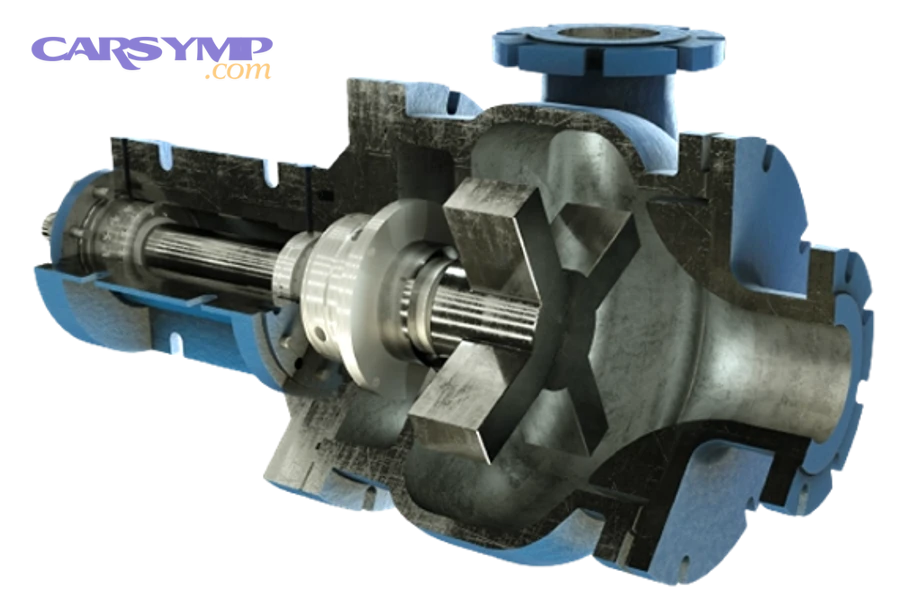
These warning signs are important precisely because they can appear in isolation, each one easily rationalized away individually. Together, or even singly, they indicate that the Diagnostic process to avoid wrong repairs has either been skipped or weaponized against you.
Is a Transmission Quote That Requires Disassembly First a Scam?
Yes — a shop that insists the only way to diagnose your transmission is to disassemble it first is using a well-documented bait-and-switch tactic, and you should decline and seek a second opinion.
A qualified transmission technician can diagnose the vast majority of transmission problems through a combination of a computerized diagnostic scan (reading transmission fault codes), a road test, and a visual inspection of fluid condition and external components. These steps are sufficient to identify whether the problem is a slipping clutch pack, a failed solenoid, a damaged valve body, or a broader internal failure requiring rebuild or replacement — all before any teardown occurs.
The reason some shops insist on disassembly first is mechanical leverage: once the transmission is apart, you cannot easily transport it to another shop for a second opinion. You are, at that point, committed. A trustworthy shop has no need for this tactic. The diagnostic process to avoid wrong repairs is entirely achievable with the vehicle intact, and any shop claiming otherwise is either poorly equipped or counting on your inability to leave once the work has begun.
What Does It Mean If One Quote Is Much Lower Than the Others?
An outlier-low transmission quote almost always signals one of three problems: the shop intends to use substandard parts, the quote excludes significant labor components that will be added later, or the shop is deliberately underpricing to get you through the door before presenting the real number.
The pattern works as follows: a low phone quote attracts the customer. Once the vehicle is in the shop and partially inspected — or partially disassembled — the shop reveals that the job is “more complex than anticipated” and presents a revised figure much closer to market rate. At that stage, the customer faces a psychological sunk cost: they’ve already taken time off work, dropped the car off, and begun the process. Most people approve the higher number rather than start over.
The practical defense against this is straightforward: get at least three quotes from shops that have inspected the vehicle in person, verify that each quote is written and itemized to the same scope of work, and treat any quote that is more than 20–25% below the median of the group with deep skepticism regardless of how the difference is explained.
What Questions Should You Ask Before Accepting a Transmission Quote?
There are eight essential questions to ask before accepting any transmission repair quote, each targeting a specific point of vulnerability in the evaluation process:
- Is this quote written and itemized by parts and labor separately? — Non-negotiable; decline any quote that is not.
- What brand and grade of parts are being used — OEM, aftermarket, or remanufactured? — Determines long-term reliability.
- What warranty do you offer, and is it in writing? — Minimum acceptable: 12 months / 12,000 miles.
- Is the diagnostic fee waived if I proceed with the repair? — Most reputable shops say yes.
- Will you contact me for approval before performing any work not listed in this quote? — Protects against scope creep.
- Can you diagnose the issue without disassembling the transmission first? — Tests the shop’s technical competence and integrity.
- Does this quote represent the full installed cost, including fluid, gaskets, and seals? — Prevents hidden add-ons at pickup.
- How long have your technicians been working specifically on transmissions? — Specialization correlates with diagnostic accuracy and rebuild quality.
A shop that answers all eight questions clearly and without hesitation is demonstrating the transparency that separates a trustworthy operation from one that relies on customer confusion.
How Do You Compare Multiple Transmission Quotes Fairly?
Fairly comparing transmission quotes requires evaluating five dimensions simultaneously — price, scope of work, parts quality, warranty coverage, and shop reputation — rather than treating price as the primary or only variable.

However, making that comparison effectively is only possible if each quote covers the same defined scope of work. Comparing a quote for a transmission rebuild against a quote for a partial repair is not a price comparison — it is an apples-to-oranges exercise that will mislead you into a false conclusion.
What Is a Fair Price Range for a Transmission Repair, Rebuild, or Replacement?
A fair transmission repair cost in 2025 falls between $150 and $800 for minor repairs, $1,500 and $3,500 for a rebuild, and $3,000 and $7,000 or more for a full replacement, with CVT and European luxury vehicles consistently sitting at the upper end of each range.
Use these benchmarks as a reference floor and ceiling when reviewing quotes. A quote for an automatic transmission rebuild at $900 is almost certainly understating the scope, parts quality, or labor. A quote at $5,500 for the same rebuild on a standard domestic sedan is almost certainly inflated. When a quote falls near the upper boundary, ask the shop to justify the specific line items that push it there — legitimate cost drivers will be explained clearly; padding will not.
How Does Warranty Coverage in a Quote Affect Its Overall Value?
Warranty options for transmission work are a direct proxy for the shop’s confidence in the quality of their rebuild or replacement — and a longer, more comprehensive warranty is genuinely worth paying more for.
A 12-month / 12,000-mile warranty is the minimum credible standard. Shops offering 24 months / 24,000 miles are signaling higher parts quality and tighter rebuild tolerances. The best independent transmission specialists offer 36-month warranties on full rebuilds, which in practice means they expect their work to outlast the warranty period by a wide margin.
Warranty options for transmission work vary not just in duration but in what they cover. A narrow warranty that only covers parts — not labor — leaves you exposed to a $600–$900 reinstallation bill if a part fails at month 11. Always confirm that the warranty covers both parts and labor for the full duration, and ask whether it is honored at other locations if you move or travel. A nationwide warranty network, like those offered by AAMCO or Mister Transmission franchises, adds meaningful value that a single-location shop cannot match.
According to the National Institute for Automotive Service Excellence (ASE), transmission-related repairs represent one of the highest categories for consumer complaints in the auto repair industry, with warranty disputes being among the most common — underscoring why written warranty options for transmission work are not optional documentation but essential consumer protection.
Should You Repair, Rebuild, or Replace — and Does the Quote Reflect the Right Option?
Yes — verifying that the recommended service in your quote actually matches your vehicle’s condition is a required step in the evaluation process, and the repair-rebuild-replace decision is one that should be driven by diagnostic findings, not by which option generates the most revenue for the shop.

This is the final and most consequential layer of quote evaluation, because a technically correct and fairly priced quote for the wrong service is still a bad quote.
What Is the Difference Between a Transmission Repair, Rebuild, and Replacement?
A transmission repair addresses a specific, isolated fault; a rebuild involves disassembling the entire unit and replacing worn internal components while retaining the original casing; a replacement installs a different transmission — new, remanufactured, or used — in place of the original.
Each option serves a different severity of damage:
- Repair is appropriate for isolated issues: a failed solenoid, a fluid leak from a gasket, a broken shift cable, or a sensor fault. These are targeted fixes that do not require removing the transmission from the vehicle in most cases. Cost range: $150–$800.
- Rebuild is appropriate when internal wear is widespread — multiple worn clutch packs, a damaged valve body, worn planetary gears — but the transmission casing and major structural components remain sound. The entire unit is removed, cleaned, disassembled, and reassembled with new friction material, seals, and gaskets. Cost range: $1,500–$3,500.
- Replacement is appropriate when the transmission casing is cracked, when internal damage is so severe that rebuild cost approaches replacement cost, or when the vehicle is newer and a remanufactured unit with a factory warranty represents better value than a labor-intensive in-shop rebuild. Cost range: $3,000–$7,000+.
How Do You Know If a Shop Is Recommending a More Expensive Option Than Necessary?
Yes — a shop recommending a more expensive service than your vehicle’s condition warrants is a recognizable pattern, and the clearest signal is a recommendation for full replacement without first presenting a rebuild estimate.
The standard upsell pattern looks like this: a diagnostic scan reveals a solenoid fault code or a soft fault in the valve body. Rather than quoting a targeted repair or a focused rebuild, the shop recommends full replacement, citing the vehicle’s mileage or the “age of the internal components” as justification. Without a second opinion, most car owners accept this framing.
The practical defense is a 50% rule: if the cost of the recommended repair or rebuild exceeds approximately 50% of the vehicle’s current market value, full replacement or a different vehicle becomes worth considering. Below that threshold, targeted repair or rebuild almost always represents better financial value than replacement. If a shop skips past repair and rebuild options entirely without explanation, ask directly: “Why is repair or rebuild not viable for my specific diagnosis?” A shop that cannot answer that question with reference to specific diagnostic findings has not justified the recommendation.
What Else Should You Know Before Approving a Transmission Quote?
There are four additional considerations — vehicle age and value, CVT-specific quote dynamics, quote negotiation, and repair financing — that fall outside the core evaluation framework but can materially affect the final decision you make.
These factors expand the evaluation into the broader financial and logistical context of vehicle ownership, moving from is this a fair quote to is approving this quote the right decision overall.
Is It Ever Worth Getting a Transmission Quote on a High-Mileage Vehicle?
Yes — getting a transmission quote on a high-mileage vehicle is worth doing, but the quote must be evaluated against the vehicle’s current market value before any approval is given.
The standard financial threshold used by most automotive advisors is this: if the quoted repair cost exceeds 50–80% of what the vehicle would sell for in its current condition (transmission problem included), the mathematics favor purchasing a replacement vehicle rather than repairing the existing one. For example, a vehicle worth $4,500 in running condition but currently worth $1,800 with a failed transmission does not justify a $3,200 rebuild quote.
That said, market value is not the only variable. If the vehicle is fully paid off, has low insurance costs, and the owner’s alternative is financing a replacement, the monthly cost comparison often still favors the repair. The key is performing the calculation explicitly — comparing total out-of-pocket for repair versus total 12-month cost of vehicle replacement — rather than reacting emotionally to a large quoted number.
How Is a CVT Transmission Quote Different from a Standard Automatic Quote?
A CVT transmission quote differs from a standard automatic quote in three significant ways: the labor skill requirement is higher, rebuild options are often unavailable, and the default recommendation is frequently outright replacement rather than a targeted fix.
CVTs use proprietary belt-and-pulley systems with extremely tight manufacturing tolerances that most independent shops are not equipped to rebuild. This means that when a CVT develops an internal fault, the realistic repair options narrow quickly to either a targeted component replacement (if the fault is isolated and accessible) or a full unit replacement with a remanufactured CVT. Many independent shops will acknowledge upfront that they do not rebuild CVTs in-house and will quote only a remanufactured replacement — which is a sign of honest competence, not a limitation.
When evaluating a CVT replacement quote, prioritize warranty length and the supplier reputation for the remanufactured unit over raw price. A $4,800 quote with a 3-year warranty from a Tier 1 remanufacturer outperforms a $3,900 quote backed by a 90-day parts-only guarantee on every meaningful dimension.
Can You Negotiate a Transmission Repair Quote?
Yes — transmission repair quotes are negotiable, particularly at independent shops, and the most effective negotiation levers are competing quotes, parts sourcing flexibility, and warranty terms.
Presenting a written competing quote is the single most effective negotiation tool. Most independent shops have meaningful margin flexibility in their labor rates and can often source equivalent parts at lower cost if the customer is transparent about their budget. Asking “Is there any flexibility on the labor rate if I approve the work today?” is a direct and entirely legitimate question. Many shop owners would rather discount slightly and close the job than lose it to a competitor.
Parts sourcing is the second negotiation lever. If the shop is quoting OEM parts and you are comfortable with a reputable aftermarket alternative, asking whether an aftermarket substitution is available — and what the price difference would be — is a reasonable and commonly accepted request. Always confirm, however, that the warranty terms do not change when substituting parts.
How Does Financing a Transmission Repair Affect the True Cost of the Quote?
Financing a transmission repair through a shop’s in-house plan or a third-party financing provider can increase the true total cost of the quoted work by 15–40%, depending on the interest rate and repayment term selected.
A $2,800 rebuild quote financed at 24.99% APR over 18 months results in a total payment of approximately $3,430 — a $630 premium over the quoted price. At 29.99% APR over 24 months, that same repair costs closer to $3,780 in total payments. This is a significant hidden cost that is easy to overlook when monthly payment amounts feel manageable.
Before accepting financing, compare the total repayment amount against two alternatives: a personal loan from a bank or credit union (which typically carries a lower APR for borrowers with good credit) and a 0% introductory APR credit card for borrowers who can repay the balance within the promotional window. For repairs under $3,000, the credit card option frequently produces the lowest true cost. The core principle is to evaluate the quoted transmission repair cost as a cash number first — and treat financing as a separate, secondary decision with its own cost-benefit calculation.
Evaluating a transmission repair quote is not a single question with a single answer — it is a layered process that moves from document review to price benchmarking, red-flag detection, repair-type verification, and finally broader financial context. Car owners who work through each of these layers systematically are the ones who avoid paying thousands more than necessary, who choose shops that stand behind their work, and who make repair or replacement decisions grounded in real data rather than shop pressure. The next time a transmission quote lands in front of you, use this framework as your checklist — and take as much time as you need before signing anything.