


When your transmission fails, you face one of the most expensive repair decisions in automotive ownership — and the choice between a used transmission and a remanufactured (reman) transmission will directly determine how much you spend, how long the fix lasts, and whether you end up back in the shop six months later. A used transmission is pulled from a salvage vehicle and installed with no refurbishment, while a remanufactured transmission is completely disassembled, rebuilt to OEM specifications, and dyno-tested before it ever reaches your vehicle. In most cases, a remanufactured transmission is worth the extra cost — but the right answer depends on your vehicle’s value, your budget, and how long you plan to keep driving it.
Understanding what separates these two options goes well beyond price. The parts quality, the process involved, and the warranty protection each option carries are dramatically different — and those differences have real consequences for your wallet over time. A used transmission may appear to solve the problem cheaply on day one, but without any knowledge of how the donor vehicle was maintained, you are essentially buying an unknown risk and paying full labor costs to install it.
The cost comparison between used and remanufactured transmissions is rarely as straightforward as it first appears. transmission repair cost extends beyond the sticker price of the part itself — installation labor, the likelihood of a second failure, and warranty coverage all factor into the true total. A used unit that fails after 60 days leaves you paying for removal and reinstallation all over again, turning what looked like a bargain into one of the most expensive mistakes in auto repair.
Beyond cost and reliability, there are specialized scenarios — certain transmission types, collector vehicles, and specific buying situations — where the decision becomes more nuanced. Whether you are comparing prices at a dealer vs independent transmission shop, evaluating a Rebuild vs replace transmission cost comparison, or deciding whether a used CVT is ever acceptable, this guide covers every factor you need to make an informed, confident decision. Let’s explore each one in full detail.
What Is a Used Transmission and What Is a Remanufactured (Reman) Transmission?
A used transmission is a salvaged drivetrain component pulled directly from a donor vehicle, while a remanufactured transmission is a fully rebuilt unit restored to OEM factory specifications through a comprehensive industrial process.
To better understand which option fits your situation, it helps to know exactly what you are getting with each — and where the definitions diverge most sharply.
A used transmission, also called a salvage or junkyard transmission, comes straight off a wrecked or retired vehicle. Auto recyclers remove it, check that it spins, and sell it largely as-is. There is no internal inspection, no parts replacement, and no testing under load. The mileage on the odometer of the donor car tells you very little — it cannot reveal whether the transmission fluid was ever changed, whether the unit overheated, or whether it was slipping before the vehicle was totaled. What you see is what you get, and what you get is largely unknown.
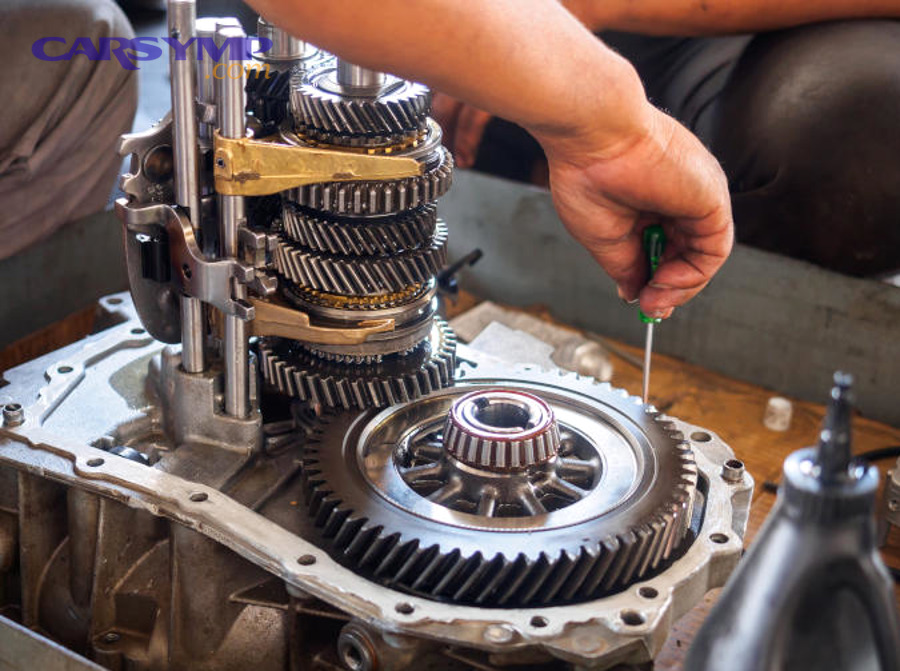
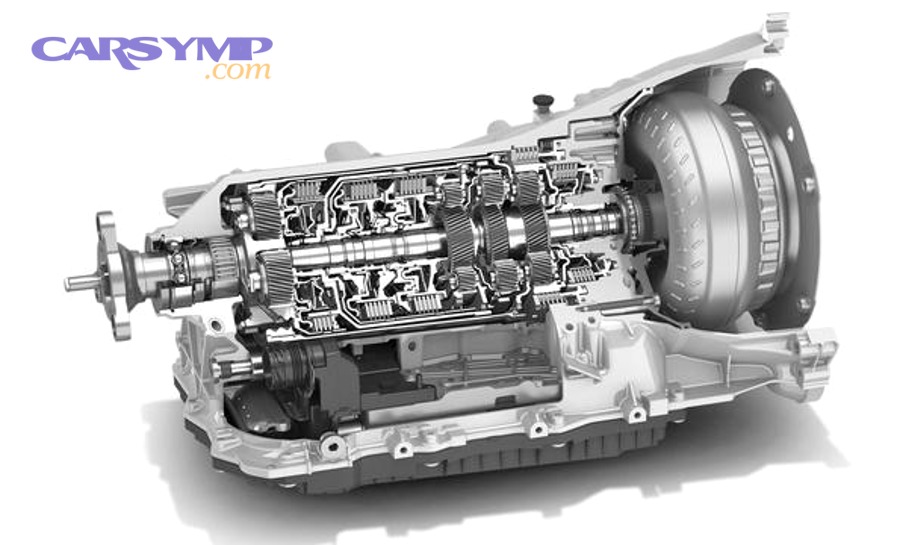
A remanufactured transmission, by contrast, is rebuilt from the ground up in a factory setting. The unit is fully disassembled, every component is cleaned, all wear-prone parts are replaced with new OEM-quality components, and the transmission is reassembled to the same mechanical tolerances it had when it left the original factory. Before shipping, it is tested on a dynamometer — a machine that simulates real road load conditions — to verify it performs correctly under stress. Leading reman companies use proprietary programs like CARS (Computer-Aided Road Simulation) to ensure every unit passes before it is sealed and boxed.
How Is a Remanufactured Transmission Different from a Rebuilt Transmission?
A remanufactured and a rebuilt transmission are not the same thing, even though these terms are used interchangeably by many shops and online listings — and that confusion costs buyers money.
- Rebuilt transmission: A mechanic disassembles your existing transmission, identifies which parts are broken or worn, replaces only those specific components, and reassembles the unit. Worn-but-still-functional parts are often left in place. The quality of a rebuild depends entirely on the skill and honesty of the individual doing the work, and warranties are typically limited to 90 days to 12 months.
- Remanufactured transmission: Every wearable component is replaced — not just the ones that are visibly broken. The unit is machined back to OEM tolerances using factory-grade equipment that most local shops cannot afford. It is then load-tested on a dynamometer before leaving the facility. Warranties run 2 to 3 years, and some manufacturers offer unlimited-mileage coverage.
The practical difference is significant: a rebuilt transmission is a patched version of a used unit, while a reman is functionally equivalent to a new transmission at a fraction of new-transmission pricing.
What Does the Remanufacturing Process Actually Involve?
The remanufacturing process is far more involved than most vehicle owners realize, and understanding it explains why reman units command a higher price — and justify it.
The full remanufacturing sequence works as follows:
- Full teardown — the transmission is completely disassembled to its individual components
- Deep cleaning — parts are soaked in high-pressure, high-heat industrial washing tanks to remove all contaminants from even the narrowest passages and channels
- Inspection and machining — each component is measured against OEM specifications; components outside tolerance are machined or replaced
- OEM part replacement — all wear-prone parts (clutch packs, seals, gaskets, solenoids, valves) are replaced with new components; many reman facilities incorporate manufacturer updates that were released after the original build date
- Reassembly — the transmission is rebuilt in a controlled environment to factory tolerances
- Dynamometer testing — the finished unit is tested under cold, hot, and loaded conditions that simulate real road use
- Sealed packaging — the completed transmission ships in a sealed box, similar to a new crate engine
This process ensures the reman transmission that arrives at your shop has a known, verified history — something a used unit can never offer.
What Are the Pros and Cons of a Used Transmission?
There are three meaningful advantages to a used transmission — lower upfront cost, broad availability, and faster sourcing — but these benefits come with a set of significant disadvantages that every buyer must weigh carefully.
Specifically, understanding both sides of the used transmission equation is critical before signing any repair order. The table below summarizes the key pros and cons at a glance.
| Factor | Used Transmission |
|---|---|
| Upfront Cost | Lowest of all options |
| Availability | Wide — salvage yards, online, private sellers |
| Sourcing Speed | Fast for common makes/models |
| Reliability | Unknown — depends on donor vehicle history |
| Warranty | 30–90 days, parts only (often no labor) |
| Professional Shop Acceptance | Low — many shops refuse to install used units |
| Long-Term Value | High risk of repeat failure and double labor costs |
What Are the Advantages of Buying a Used Transmission?
There are four primary advantages that make a used transmission appealing to certain buyers under certain circumstances.
- Lower upfront cost. A used transmission is typically the least expensive replacement option available. For a common domestic automatic, a used unit from a salvage yard may run $200–$800 before installation, compared to $1,300–$3,400 for a reman.
- Wide availability. Auto recyclers, online dismantlers, and private sellers stock used transmissions for a broad range of vehicle makes and models. For popular platforms, finding a matching unit is rarely difficult.
- Faster sourcing. Unlike a reman unit that must sometimes be ordered and shipped, a local salvage yard may have a matching transmission available same-day or next-day, reducing vehicle downtime.
- Cost-justified for low-value vehicles. If the vehicle is worth $1,500 and a reman transmission costs $2,500 installed, the economics simply do not support the higher-quality option. In this scenario, a used unit may be the only financially rational choice.
What Are the Disadvantages and Risks of a Used Transmission?
The disadvantages of a used transmission are significant and go beyond the obvious reliability concerns — they extend into legal and financial risk that many buyers do not anticipate.
- Unknown maintenance history. The mileage shown on a donor vehicle tells you how far the car traveled, not how it was treated. A transmission from a 60,000-mile vehicle that was never serviced, routinely overheated, or subjected to towing stress may be in far worse internal condition than one from a 120,000-mile vehicle that was properly maintained.
- No pre-sale testing. Auto recycling centers do not test transmissions before selling them. They are sold as-is, and you assume all risk the moment you take possession.
- Limited and inadequate warranties. Most used transmissions come with a 30-day warranty at best — and that warranty typically covers parts only, not the labor required to remove and reinstall the unit if it fails. A failed used transmission that requires a second installation can add $800–$1,500 in repeat labor costs alone.
- Contaminants and hidden damage. Old fluid breakdown, debris in the torque converter, and damage to the transmission cooling system can all be lurking inside a used unit with no visible external signs.
- Legal and fraud risks. Salvage yards may unknowingly sell stolen inventory. Private sellers may misrepresent mileage or condition. Legal recourse after the fact is limited and difficult to pursue.
- Professional shop refusal. Most reputable transmission shops will not warranty their labor on a used transmission installation, because they cannot control the quality of what they are installing. If the used unit fails, the customer pays for removal and reinstallation out of pocket.
What Are the Pros and Cons of a Remanufactured Transmission?
A remanufactured transmission offers four major advantages — comprehensive parts replacement, OEM-spec restoration, industry-leading warranty coverage, and verified dyno testing — with two meaningful disadvantages in upfront cost and availability timelines.
However, when those advantages are weighed against the risks inherent in a used unit, the reman option consistently delivers better outcomes for most vehicle owners. The following sections break down each side in detail.
What Are the Advantages of a Remanufactured Transmission?
The advantages of a remanufactured transmission stem directly from the depth and rigor of the process used to build it.
- All wear-prone parts replaced. Unlike a rebuild that patches broken components, a reman replaces everything subject to wear — clutch packs, seals, solenoids, gaskets, valves, and more. No semi-worn part is left to fail six months after installation.
- OEM-spec tolerances restored with manufacturer updates. When a transmission is remanufactured, it is rebuilt to the specifications the original manufacturer used — and in many cases, engineering updates that were released after the original production date are incorporated into the new build, making the reman unit more reliable than the original.
- Industry-leading warranty coverage. Reman transmissions typically carry a 2–3 year warranty that covers both parts and labor, compared to 30–90 days (parts only) for used units. Some manufacturers, such as ETE Reman, offer 3-year/unlimited-mile warranties. Many of these warranties are also transferable to a new vehicle owner, which adds resale value to the car.
- Includes a remanufactured torque converter. Most quality reman suppliers include a freshly rebuilt torque converter with every unit — an additional component that would otherwise cost $150–$400 separately and that is a common failure point in transmissions with unknown history.
- Dyno-tested before shipping. Every reman unit is tested under simulated real-world load conditions before it leaves the factory. The unit that arrives at your shop has a verified performance record — something no used transmission can provide.
What Are the Disadvantages of a Remanufactured Transmission?
Despite its clear quality advantages, a remanufactured transmission is not the right choice in every scenario, and its disadvantages deserve honest evaluation.
- Higher upfront cost. Reman transmissions typically cost $1,300–$3,400 for the unit itself, before installation labor. For vehicles with low market value, this investment may not be recoverable in the vehicle’s remaining useful life.
- Lead time for ordering. Unlike a salvage unit that may be available locally the same day, a reman transmission must often be ordered from the manufacturer and shipped. Depending on the transmission model and supplier, this can add several days to the repair timeline.
- Limited availability for uncommon or exotic transmissions. While reman units are widely available for common domestic and import platforms, rare or low-volume transmissions may have few or no reman options. In these cases, a specialist rebuild may be the only alternative to a used unit.
- Core charge requirement. Most reman suppliers require a core deposit — typically $75–$300 — which is refunded when the old transmission is returned. While this is ultimately cost-neutral, it adds a step to the purchasing process and requires the buyer to ship or deliver the old unit.
How Do Used and Remanufactured Transmissions Compare Across Key Factors?
In a direct comparison, a remanufactured transmission wins on reliability, warranty coverage, and long-term cost-per-mile, while a used transmission wins only on upfront price and immediate availability.
To better understand this comparison across all key decision factors, the table below provides a structured head-to-head breakdown.
| Comparison Factor | Used Transmission | Remanufactured Transmission |
|---|---|---|
| Upfront Cost | $200–$800 (unit only) | $1,300–$3,400 (unit only) |
| Installation Labor | $500–$1,200 | $500–$1,200 |
| Warranty | 30–90 days, parts only | 2–3 years, parts + labor |
| Lifespan | Unknown | Up to 36+ months guaranteed |
| Parts Quality | Unknown/as-is | New OEM-spec components |
| Dyno Tested | No | Yes |
| Torque Converter Included | Rarely | Often included |
| Risk of Second Failure | High | Very low |
| Long-Term Value | Poor | Excellent |
Which Is Cheaper — Used or Remanufactured Transmission?
A used transmission is cheaper upfront, but a remanufactured transmission is almost always cheaper over the full life of the repair when installation labor, warranty coverage, and failure risk are factored in.
More specifically, the true transmission repair cost calculation must include more than the part price. Consider this scenario: a used transmission costs $500 for the unit plus $900 for installation labor — a total of $1,400. If it fails after 45 days, the labor cost repeats in full, bringing the actual total to $2,300 — more than many reman options with three years of warranty protection. When evaluating a rebuild vs replace transmission cost comparison, the reman route consistently produces lower per-mile costs once long-term failure probability is factored in.
Pricing also varies depending on where the work is done. Dealer vs independent transmission shop pricing can differ substantially: dealerships often charge $150–$250 per labor hour, while independent shops may charge $75–$125 per hour for the same work. Choosing an independent shop for reman transmission installation can bring the total cost of the higher-quality option in line with or below what a dealer would charge to install a used unit.
Which Lasts Longer — a Used or Remanufactured Transmission?
A remanufactured transmission lasts significantly longer than a used transmission in the vast majority of cases, because its condition at installation is known and verified while a used unit’s condition is entirely unknown.
A reman unit begins its life in your vehicle as close to mile-zero as possible — all wear components replaced, all tolerances restored, and a warranty that typically covers 2–3 years of normal driving. Many drivers get well beyond 100,000 additional miles from a quality reman transmission in a well-maintained vehicle.
A used transmission, by contrast, begins its life in your vehicle at an unknown point in its deterioration curve. A unit pulled from a 70,000-mile donor vehicle may have 20,000 miles of usable life remaining — or it may have been severely stressed and be weeks from failure. There is simply no reliable way to know.
Which Has a Better Warranty — Used or Remanufactured?
A remanufactured transmission carries dramatically superior warranty protection compared to a used transmission, covering both parts and labor for years rather than weeks.
Used transmission warranties are typically:
- 30 days (most salvage yards)
- Parts only — labor costs are the buyer’s responsibility
- Non-transferable
- Offered by sellers with no knowledge of what they are actually warranting
Remanufactured transmission warranties are typically:
- 2–3 years, with some brands offering lifetime or unlimited-mileage coverage
- Parts and labor covered at any certified installation facility
- Transferable to a new vehicle owner in many cases, adding resale value
- Backed by companies with reputations and quality control processes to protect
The warranty transferability feature deserves special attention. If you sell your vehicle within the warranty period, the reman transmission warranty transfers to the new owner — a meaningful selling point that no used transmission can match.
Is a Remanufactured Transmission Worth the Extra Cost Over a Used One?
Yes, a remanufactured transmission is worth the extra cost over a used one in most situations, for three primary reasons: it delivers a verified, like-new performance baseline, it carries warranty coverage that genuinely protects the investment, and it eliminates the catastrophic risk of paying double labor when a used unit fails.
However, a nuanced answer requires acknowledging the cases where a used transmission may be the more rational choice.
When a reman is clearly worth it:
- The vehicle is intended for long-term ownership (2+ years)
- The transmission type is known to be problematic or expensive to repair again (e.g., CVTs, ZF automatics)
- You want a shop to warranty their labor — most reputable shops will only do this with a reman or rebuild
- The vehicle’s market value is greater than the cost of the reman installation
When a used transmission may be acceptable:
- The vehicle’s market value is low and the reman cost exceeds what the car is worth
- You plan to sell or retire the vehicle within 12 months
- The transmission is a known, simple, and highly reliable design (e.g., a Toyota or Honda manual in excellent donor-vehicle condition)
- Budget constraints make the used option the only immediately viable path
In all other scenarios, the remanufactured transmission is the correct long-term choice. The peace of mind that comes with a 3-year warranty, a dyno-tested unit, and a shop willing to stand behind their labor is worth a great deal more than the apparent savings on a salvage unit whose history is permanently unknown.
What Else Should You Know Before Choosing Between a Used or Remanufactured Transmission?
Beyond the core comparison, there are four specialized factors — transmission type, core charge mechanics, classic vehicle considerations, and used-unit vetting — that can materially affect the right decision for your specific situation.

These micro-level details are where many buyers make costly mistakes, either by choosing the wrong option for their transmission type or by failing to ask the right questions when a used unit is their only realistic option.
Does the Type of Transmission (Automatic, Manual, CVT) Affect Which Option You Should Choose?
Yes, the type of transmission significantly affects which replacement option you should choose — particularly for CVTs, where the risk profile of a used unit is dramatically higher than for conventional automatics.
- CVT (Continuously Variable Transmission): CVTs — particularly those used in Nissan, Subaru, and some Honda models — are notoriously prone to failure and have narrow reliability windows. A used CVT from a donor vehicle with 60,000 miles may already be approaching the end of its usable life. For CVTs, a remanufactured or fully rebuilt unit is strongly preferred; the used-CVT gamble is one of the highest-risk decisions in transmission repair.
- Automatic transmissions: Standard hydraulic automatics are somewhat more tolerant of mileage variation, but the unknown maintenance history problem still applies. A reman remains the more reliable choice; a used automatic is only acceptable when the donor vehicle’s full service history can be verified.
- Manual transmissions: Manual gearboxes have simpler internal mechanics and tend to be more tolerant of wear variation. A used manual transmission from a verified low-mileage donor vehicle with a clean accident history is a more acceptable risk than a used automatic or CVT — though a reman still provides more certainty.
What Is a Core Charge and How Does It Affect the Total Cost of a Reman Transmission?
A core charge is a refundable deposit — typically $75 to $300 — that reman suppliers require when selling a remanufactured transmission, collected to ensure the old unit is returned so it can be used as a basis for future remanufacturing.
Here is how the core charge process works in practice:
- You purchase a reman transmission and pay the unit price plus the core charge
- Your shop installs the reman unit and removes your old transmission
- The old (core) transmission is shipped back to the reman supplier, either by you or your shop
- The supplier inspects the returned core and issues a refund for the core charge amount
The core charge effectively reduces the net cost of the reman unit once refunded, and it is important to factor this into your rebuild vs replace transmission cost comparison from the beginning. Some buyers are quoted a reman price that includes the core charge and mistakenly compare it to a used transmission price that carries no such deposit — inflating the apparent cost difference between the two options.
Additionally, reman companies often pay slightly above the standard refund rate for units in good remanufacturable condition, meaning a well-preserved old transmission can generate a small additional rebate that further closes the price gap.
Can a Remanufactured Transmission Be the Right Choice for a Classic or Collector Car?
Yes, for vehicles over 25 years old or collector cars, a remanufactured transmission is often the only truly reliable replacement option — and in some cases, it is the only option that maintains period-correct mechanical authenticity.
Used transmissions for older vehicles carry an even greater unknown-history risk than those for modern cars, because the pool of available donor vehicles is smaller, older, and often less well-documented. A salvage unit pulled from a 1978 muscle car or a vintage European sedan may have been sitting in a yard for years, with degraded seals, contaminated fluid, and internal corrosion that external inspection cannot detect.
Several specialist remanufacturing companies focus specifically on classic and vintage transmission models. For historic vehicles where the transmission is a non-negotiable part of the driving experience and resale value, a reman from a specialist shop — while expensive — preserves both reliability and authenticity in a way no salvage unit can match.
How Do You Verify the History and Condition of a Used Transmission Before Buying?
If budget constraints make a used transmission your only viable option, there are five specific steps you should take to reduce — though never eliminate — the risk before purchasing.
- Request the donor vehicle’s VIN. Run it through a vehicle history report (Carfax or AutoCheck) to check for accident history, odometer rollbacks, flood damage, and maintenance records. A salvage yard that refuses to provide the donor VIN is a red flag.
- Ask specifically how the donor vehicle was retired. A car totaled in a rear-end collision with no drivetrain damage is a far safer transmission source than one that was retired due to mechanical failure or fire.
- Request the transmission mileage in writing. Verbal assurances are unenforceable. Get mileage documentation on the receipt or invoice.
- Inspect for external damage and fluid condition. Ask to see the unit before purchase. Look for cracks in the case, evidence of leaks, burnt or dark fluid at the dipstick tube, and any missing components or brackets.
- Confirm the warranty terms in writing before payment. Know exactly what is covered (parts vs. parts and labor), the duration, and the return process if the unit fails after installation. Be skeptical of any seller who will not provide written warranty terms.
Even with all these precautions, a used transmission carries inherent uncertainty that a remanufactured unit eliminates entirely. These steps reduce the risk — they do not remove it.
The decision between a used and a remanufactured transmission ultimately comes down to a single honest question: how much certainty is your repair worth? A used transmission offers a lower number on the invoice and little else. A remanufactured transmission offers a verified, warranted, like-new drivetrain component that a qualified shop will stand behind for years. For most vehicle owners in most situations, that certainty is exactly what the extra cost is buying — and it is worth every dollar.