


Shift solenoid and valve body issues are among the most disruptive transmission shift problems an automatic transmission driver can face — and they rarely announce themselves with a single, obvious sign. These two components form the hydraulic heart of your automatic transmission: the shift solenoid acts as an electrically controlled gate that directs pressurized fluid on command from the Transmission Control Module (TCM), while the valve body serves as the master routing center that channels that fluid to the correct clutch packs and bands to execute each gear change. When either component begins to fail, the entire shift sequence is compromised — often producing symptoms that are easy to misread as unrelated mechanical problems.
Recognizing the warning signs early is what separates a straightforward solenoid swap from a full transmission rebuild. Drivers who catch the problem at the first symptom — whether that is a hesitation between gears, an unexpected check engine light, or a sudden drop into limp mode — can typically resolve the issue for a few hundred dollars. Those who ignore the signs and continue driving risk accelerating wear across the clutch pack assembly, torque converter, and planetary gear sets, turning a contained electrical fault into a catastrophic hydraulic failure.
Understanding what causes these failures is equally important. Contaminated or degraded transmission fluid is the single most preventable cause of solenoid screen blockage and valve body passage restriction, yet it remains one of the most overlooked items in routine vehicle maintenance. Electrical faults in the wiring harness, thermal wear on aluminum valve body bores, and TCM signal degradation round out the causal landscape — each requiring a different diagnostic approach and a different repair path.
Once the cause is identified, drivers face a critical decision: replace the individual solenoid, swap the solenoid pack, or resurface and replace the full valve body assembly. Cost, vehicle age, fault code history, and fluid condition all factor into this decision — and getting it right the first time can save thousands. Next, this guide walks through all nine warning signs, their root causes, the correct diagnostic steps, and your full range of repair and cost options so you can approach this problem with confidence and clarity.
What Are Shift Solenoids and Valve Bodies in an Automatic Transmission?
A shift solenoid is an electro-hydraulic valve — and a valve body is the hydraulic control manifold that houses it — and together they form the primary gear-change execution system in every modern automatic transmission.
To better understand why failures in these components cause such far-reaching transmission shift problems, it helps to examine how each component functions independently before examining how they interact as a system.
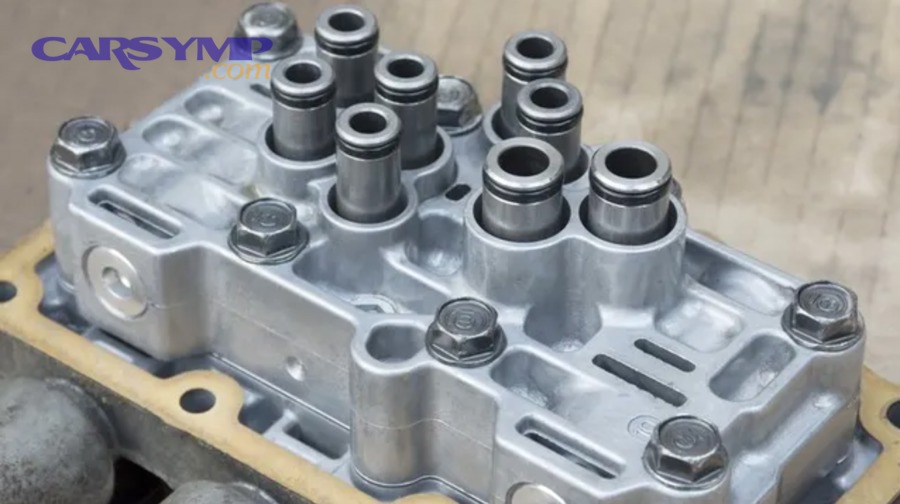
How Does a Shift Solenoid Control Gear Changes?
A shift solenoid controls gear changes by receiving a voltage signal from the TCM, which causes its internal coil to generate a magnetic field, pulling open a small plunger that allows pressurized transmission fluid to flow through a specific circuit — triggering a gear engagement event.
Specifically, the TCM monitors vehicle speed sensors, throttle position, engine load, and driver input to calculate the precise moment a gear change should occur. It then sends a pulse-width modulated (PWM) electrical signal to the appropriate solenoid. The solenoid responds within milliseconds, opening or closing its valve to redirect fluid pressure toward the target clutch pack or band. This hydraulic pressure mechanically locks the relevant gear set into engagement, completing the shift. The entire sequence — from TCM signal to completed gear change — happens in a fraction of a second under normal operating conditions. When the solenoid coil is degraded, its plunger sticks, or its screen is blocked by fluid debris, this precise timing breaks down, producing the delayed, harsh, or absent shifts that drivers report as their first noticeable symptom.
What Role Does the Valve Body Play in Transmission Hydraulics?
The valve body plays the role of a hydraulic switchboard — a cast aluminum manifold machined with an intricate network of fluid passages, check balls, separator plates, and individual solenoid bores that collectively route transmission fluid to precisely the right circuit at precisely the right pressure for every gear event.
More specifically, every solenoid in the transmission sits within or directly feeds into the valve body. When a solenoid opens, it directs fluid into a specific valve body passage, which channels that fluid to the corresponding clutch pack or band servo. The valve body also houses pressure regulator valves that maintain system-wide hydraulic pressure within the operating range required for firm, consistent shifts. Worn check balls, a warped separator plate, or corroded passages inside the valve body can bleed pressure from the wrong circuit simultaneously — producing symptoms that look identical to a failed solenoid but require a completely different repair approach. This is why accurate diagnosis must distinguish between a solenoid fault, a valve body fault, or a combination of both before any parts are ordered.
What Are the 9 Warning Signs of Shift Solenoid and Valve Body Issues?
There are 9 primary warning signs of shift solenoid and valve body issues, identifiable by abnormal shifting behavior, electronic fault codes, and protective system responses that the TCM triggers when it detects hydraulic or electrical irregularities.
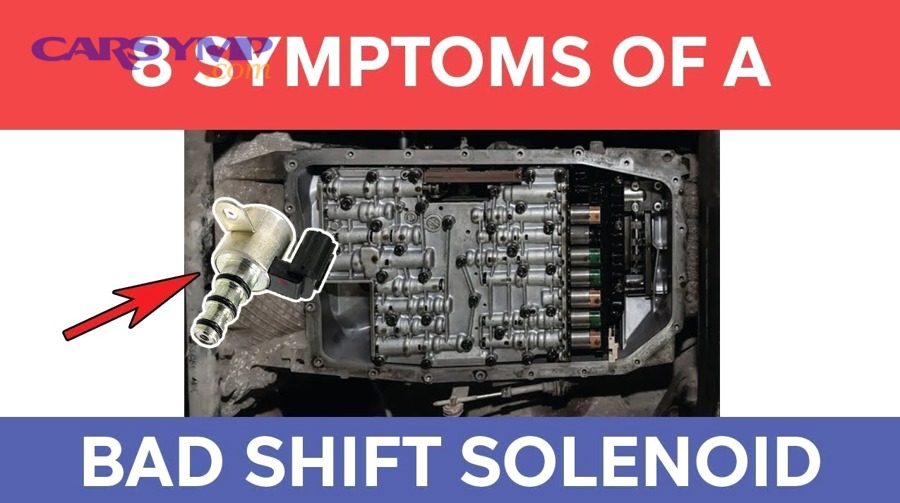
Below is a structured overview of all nine warning signs, followed by detailed coverage of the four most critical symptoms.
The table below summarizes all nine warning signs, their primary cause, and the urgency level associated with each:
| # | Warning Sign | Primary Cause | Urgency |
|---|---|---|---|
| 1 | Check Engine Light (CEL) | Solenoid circuit fault / pressure sensor | Moderate — scan immediately |
| 2 | Transmission stuck in gear | Solenoid stuck closed / valve body blockage | High |
| 3 | Gear skipping | Solenoid stuck open / passage crossflow | High |
| 4 | Erratic or delayed shifting | Solenoid response degradation | Moderate–High |
| 5 | Harsh or clunking shifts | Pressure spike from blocked valve body | Moderate |
| 6 | Limp mode activation | TCM protective response to fault codes | High |
| 7 | Transmission slipping | Low clutch pack pressure from solenoid failure | High |
| 8 | Overheating transmission | Fluid restriction from contaminated valve body | High |
| 9 | Unusual noises during shifting | Hydraulic pressure imbalance | Moderate |
Does a Check Engine Light Always Indicate a Shift Solenoid Problem?
No — a check engine light does not always indicate a shift solenoid problem specifically, but OBD2 fault codes in the P0750–P0770 range and P0841, P0868, or P2714 are direct indicators of solenoid circuit faults, pressure sensor failures, or valve body hydraulic performance issues.
However, the CEL is the gateway to accurate diagnosis, and ignoring it because the vehicle still drives is one of the most common mistakes automatic transmission drivers make. Scanning the fault codes with an OBD2 reader immediately after the CEL illuminates gives you the specific circuit (solenoid A, B, C, or D) or pressure control solenoid that the TCM has flagged. Without this step, all subsequent diagnosis is guesswork. It is important to note that a solenoid-related fault code does not automatically confirm the solenoid itself is the failed component — the wiring harness, connector, or the TCM generating the signal must also be ruled out. Treat the CEL and its associated code as the starting point of a diagnostic chain, not a definitive diagnosis.
Why Does the Transmission Get Stuck in Gear or Skip Gears?
A transmission gets stuck in gear or skips gears because a shift solenoid stuck in the closed position prevents fluid from reaching the next gear’s clutch pack, while a solenoid stuck open can inadvertently pressurize the wrong circuit and cause the transmission to jump multiple gear positions.
Specifically, each forward gear requires a unique combination of solenoid states — some open, some closed — to produce the correct hydraulic pressure routing through the valve body. If solenoid B, for example, fails in the closed position on a six-speed automatic calibrated to open it during the 3-to-4 upshift, the transmission cannot complete that shift and remains locked in third gear regardless of vehicle speed or throttle input. Conversely, if a solenoid fails in the open position, it continuously pressurizes its assigned circuit, which may cause the transmission to behave as though it is receiving upshift commands it was never given — producing gear skipping. Valve body passage blockage from contaminated fluid produces an identical symptom, because restricted fluid flow to a clutch pack produces the same outcome as a closed solenoid: insufficient pressure to execute the shift.
What Causes Erratic or Delayed Gear Shifting in Automatic Transmissions?
Erratic or delayed gear shifting is caused by degraded solenoid response time — where a worn solenoid coil responds to TCM signals too slowly or inconsistently — combined with valve body pressure inconsistencies that produce unpredictable fluid delivery timing across the shift event.
More specifically, a healthy solenoid responds to a TCM pulse within approximately 50–100 milliseconds. As the solenoid coil degrades through heat cycling and age, its magnetic response weakens, causing it to open partially or with variable delay. The result from the driver’s seat is a shift that feels like it “searches” for the gear — a brief, unsettling hesitation before engagement — or a shift that arrives with a soft, incomplete feel, as though the clutch pack never fully locked. On the valve body side, partially worn check balls or scored separator plate surfaces allow fluid to bleed between adjacent passages during the shift event, further disrupting the pressure timing. This combination of solenoid response lag and hydraulic pressure bleed is the mechanical explanation behind the erratic shifting behavior that many drivers describe as their vehicle “not knowing what gear it wants to be in.”
What Is Transmission Limp Mode and Is It Caused by Solenoid Failure?
Yes — transmission limp mode is directly caused by solenoid and valve body faults in the majority of cases, and it is defined as a TCM-triggered fail-safe state that locks the transmission in a single gear, typically second or third, to allow the vehicle to be driven safely to a repair facility without causing further internal damage.
Limp mode activates when the TCM detects a fault severe enough that continuing normal shift operations would risk mechanical damage to the transmission’s internal components. Solenoid circuit faults, pressure control solenoid failures, and valve body hydraulic performance codes are among the most common triggers. While limp mode is alarming to experience — the vehicle suddenly loses the ability to upshift, and performance feels severely restricted — it is a protective function, not a failure state in itself. The critical guidance here for safe-to-drive situations: limp mode means drive directly to a shop or home, do not continue operating the vehicle normally, and do not attempt to “reset” the fault by disconnecting the battery and resuming normal driving without diagnosis. Clearing the code without addressing the underlying fault will cause the TCM to re-enter limp mode, often within miles, and repeated thermal cycling in this state accelerates clutch pack wear significantly.
What Are the Most Common Causes of Shift Solenoid and Valve Body Failure?
There are four primary categories of shift solenoid and valve body failure causes: fluid degradation and contamination, electrical faults, thermal and mechanical wear, and TCM-related signal errors — each producing a distinct failure signature that informs the correct repair approach.
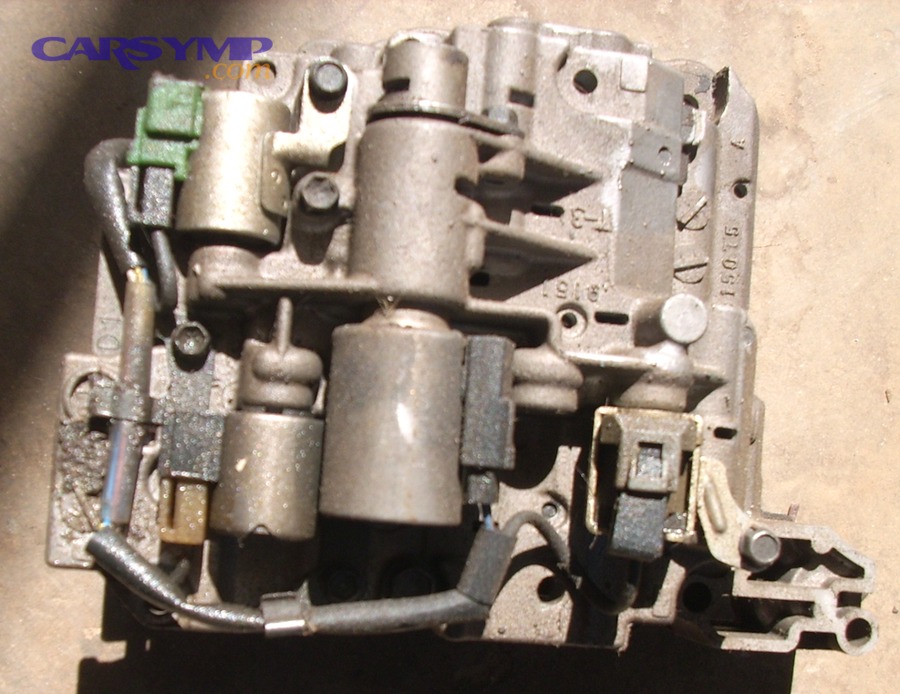
Let’s explore each cause category in detail, beginning with the most preventable one.
Can Dirty or Low Transmission Fluid Damage the Solenoid and Valve Body?
Yes — dirty or low transmission fluid is the leading cause of premature shift solenoid and valve body failure, because contaminated fluid deposits varnish and metallic debris onto solenoid screens and inside valve body passages, restricting fluid flow and disrupting the hydraulic pressure balance required for clean gear changes.
Specifically, each shift solenoid has a fine mesh inlet screen designed to filter debris from the fluid before it enters the solenoid body. As transmission fluid degrades past its service interval — typically every 30,000 to 60,000 miles depending on vehicle and fluid type — it begins to break down into acidic compounds and carries increasing concentrations of clutch material and metallic wear particles. These particles accumulate on solenoid screens until flow is sufficiently restricted that the solenoid cannot generate adequate hydraulic pressure to complete a shift. Inside the valve body, degraded fluid leaves varnish deposits on the walls of fluid passages and on check ball seats, causing check balls to stick in partially open or closed positions. Low fluid level compounds this by introducing air into the hydraulic circuit, producing pressure surges and drops that manifest as harsh, inconsistent shifts. Checking fluid level and condition — it should be red or pink, not brown or burnt-smelling — is the correct first diagnostic step before any electronic testing.
What Electrical Faults Cause Shift Solenoid Failure?
Electrical faults that cause shift solenoid failure include wiring harness chafing or damage, corroded solenoid connector pins, broken solder joints inside the solenoid coil itself, and TCM output driver failures that prevent the correct voltage signal from reaching the solenoid.
More specifically, the transmission wiring harness runs through the transmission pan and is immersed in or adjacent to hot transmission fluid throughout its service life. Heat cycling causes the harness insulation to become brittle over time, and vibration can cause individual wires to chafe against the transmission case, creating intermittent short circuits or open circuits in the solenoid control wires. Corrosion on the solenoid electrical connector — particularly in vehicles exposed to road salt in northern climates — increases contact resistance, which reduces the effective voltage reaching the solenoid coil and weakens its magnetic response. For DIY-oriented drivers, resistance testing across the solenoid connector terminals with a digital multimeter is a valid first electrical test: most shift solenoids exhibit a coil resistance between 20 and 30 ohms at room temperature. A reading significantly outside this range — or an open circuit (OL) reading — confirms an internal coil failure, while a correct resistance reading shifts suspicion to the wiring harness or TCM. This forms part of a practical Hard shifting causes checklist that any technically capable owner can work through before committing to shop labor.
Does Normal Wear and Heat Cause Valve Body Deterioration?
Yes — normal wear and heat cause measurable valve body deterioration over time, because the aluminum alloy used in most valve body castings expands and contracts with every heat cycle, and repeated thermal stress gradually distorts the precisely machined bores that house the shift solenoids and pressure regulator valves.
Specifically, automatic transmission fluid operating temperature typically ranges from 175°F to 225°F under normal driving conditions, and can spike above 300°F under heavy load or towing. Each temperature cycle causes the valve body casting to expand and then contract as it cools. Over tens of thousands of cycles across a vehicle’s lifespan, this produces microscopic dimensional changes in the solenoid bores and valve galleries — enough to allow fluid to bypass the solenoid valve seat rather than waiting for the solenoid to open. Worn check balls — small steel spheres that act as one-way valves within the valve body passages — lose their seating force over high mileage, allowing pressure to bleed backward through circuits during shift events. Separator plate wear is another high-mileage failure mode: the thin steel plate that divides fluid circuits within the valve body develops worn orifices that alter the calibrated flow rates the transmission was designed to operate within. These wear-related failures typically appear gradually, producing progressive shift quality deterioration rather than sudden failure, which is why many drivers attribute early valve body wear to “the transmission getting old” rather than recognizing it as a repairable mechanical fault.
How Do You Diagnose Shift Solenoid and Valve Body Issues?
Diagnosing shift solenoid and valve body issues involves a structured three-stage process — OBD2 fault code retrieval, live data monitoring, and electromechanical component testing — that progressively narrows the fault from the transmission system level down to the specific failed component.
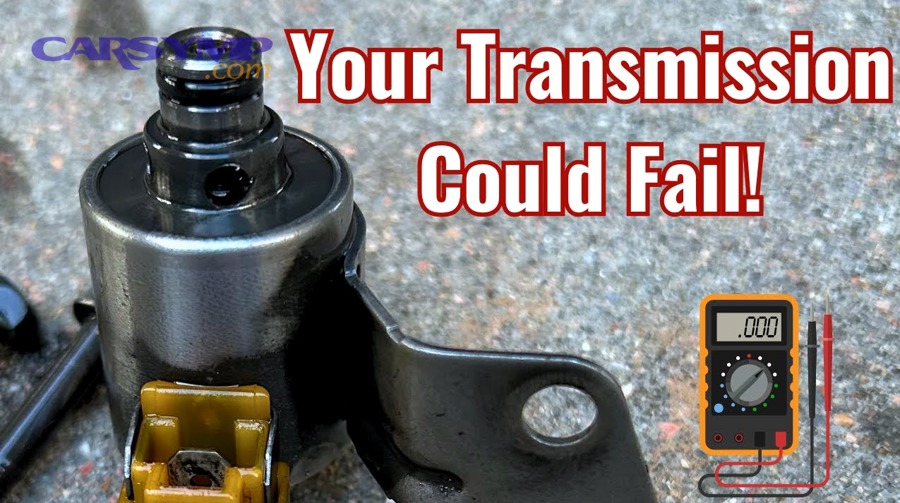
To begin, the correct diagnostic sequence matters as much as the individual tests.
Which OBD2 Fault Codes Point to Solenoid or Valve Body Problems?
There are specific OBD2 P-code ranges that directly indicate shift solenoid or valve body issues — primarily the P0750–P0770 series for solenoid circuit faults and the P0841, P0868, and P2714 codes for transmission fluid pressure sensor and pressure control solenoid performance failures.
The table below maps the most clinically significant transmission fault codes to their specific component implications to help drivers and technicians prioritize diagnosis:
| OBD2 Code | Description | Component Implicated |
|---|---|---|
| P0750 | Shift Solenoid A — Malfunction | Solenoid A coil / circuit |
| P0755 | Shift Solenoid B — Malfunction | Solenoid B coil / circuit |
| P0760 | Shift Solenoid C — Malfunction | Solenoid C coil / circuit |
| P0765 | Shift Solenoid D — Malfunction | Solenoid D coil / circuit |
| P0770 | Shift Solenoid E — Malfunction | Solenoid E coil / circuit |
| P0841 | Trans Fluid Pressure Sensor A — Range/Performance | Pressure sensor / valve body |
| P0868 | Trans Fluid Pressure Low — Solenoid | Pressure control solenoid |
| P2714 | Pressure Control Solenoid D — Performance | Solenoid D / valve body |
Specifically, codes in the P075X series ending in “1” (e.g., P0751) indicate a “stuck off” condition — the solenoid is not opening when commanded — while codes ending in “2” (e.g., P0752) indicate “stuck on,” meaning the solenoid is not closing when commanded. This distinction matters because a stuck-off solenoid typically causes a specific upshift to be absent, while a stuck-on solenoid can cause unintended downshifts or gear overlap. Using an advanced OBD2 scanner that reads live transmission data — not just stored codes — allows the technician to observe solenoid command vs. actual hydraulic response in real time, which is the fastest way to differentiate between a solenoid fault, a wiring fault, and a valve body hydraulic fault.
Can You Test a Shift Solenoid at Home Without a Mechanic?
Yes — you can test a shift solenoid at home without a mechanic using a digital multimeter and basic hand tools, and the test provides reliable data on whether the solenoid coil has failed electrically before any disassembly of the transmission is required.
Specifically, the home testing procedure works as follows:
- Step 1: Drain transmission fluid and remove the transmission pan to access the solenoids (on most vehicles, solenoids are located on the valve body inside the pan).
- Step 2: Disconnect the electrical connector from the solenoid you want to test.
- Step 3: Set your multimeter to the resistance (Ohms) setting.
- Step 4: Place the multimeter probes on the two solenoid terminals.
- Step 5: Read the resistance value. Most shift solenoids should read between 20 and 30 ohms at room temperature. Consult your vehicle’s service manual for the exact specification.
- Step 6: An “OL” (overload/open circuit) reading confirms an open coil — the solenoid has internally failed and requires replacement. A reading near zero ohms indicates a shorted coil — also a confirmed failure.
- Step 7: If resistance is within spec, visually inspect the solenoid screen for debris blockage and inspect the electrical connector for corrosion or bent pins.
This test reliably confirms or rules out an internal solenoid coil failure. It does not, however, test the solenoid’s mechanical plunger operation under hydraulic pressure, which requires a transmission-mounted pressure gauge or a scan tool with live solenoid command data. If the solenoid passes the resistance test but symptoms persist, the fault investigation should move to the wiring harness, connector, and then the valve body hydraulic passages.
What Are the Repair and Replacement Options for Shift Solenoid and Valve Body Issues?
There are three primary repair and replacement options for shift solenoid and valve body issues: individual solenoid replacement, solenoid pack replacement, and full valve body replacement — each appropriate for a different fault severity level, vehicle age, and cost tolerance.
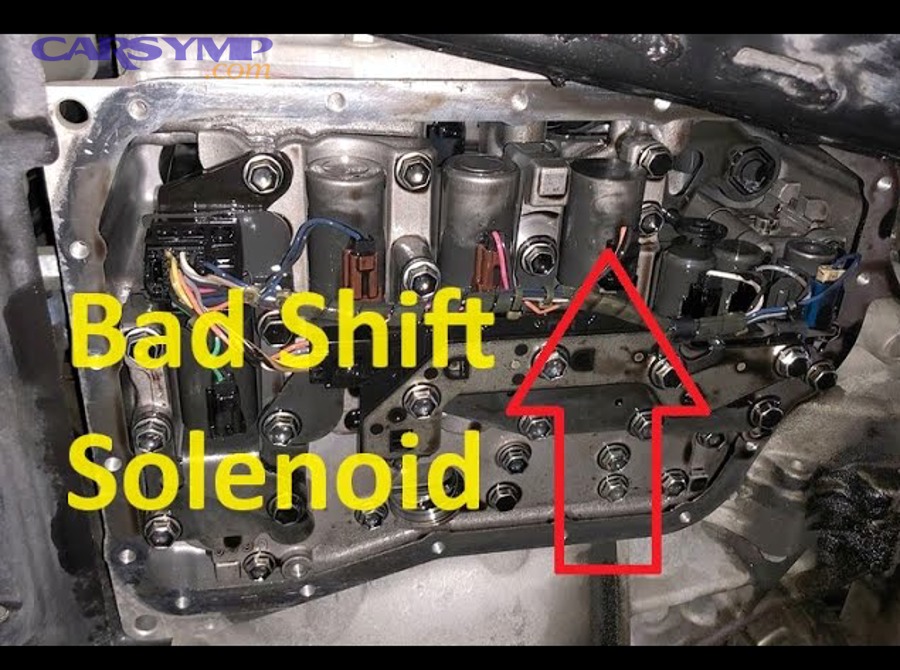
In addition to the repair type decision, drivers must also determine whether the repair is within DIY capability or requires professional shop labor, which significantly affects total cost.
Should You Replace Just the Shift Solenoid or the Entire Valve Body?
Individual solenoid replacement wins for isolated single-code failures on vehicles with clean fluid history; solenoid pack replacement is best when multiple solenoid codes are present or fluid has been neglected; full valve body replacement is optimal when hydraulic performance codes co-exist with mechanical wear symptoms.
More specifically, the decision framework works as follows. If your OBD2 scan returns a single solenoid circuit code (e.g., P0755 only), the fluid is clean and red, and the vehicle has fewer than 100,000 miles with a good service history, a single solenoid replacement is clinically appropriate and cost-effective. If two or more solenoid codes are present, or if the fluid is brown and has a burnt odor indicating extended neglect, replacing the entire solenoid pack — which includes all solenoids mounted on the valve body as a pre-assembled unit — eliminates the risk of a second solenoid failing shortly after the first is replaced. Full valve body replacement becomes the correct option when pressure performance codes (P0841, P0868, P2714) accompany solenoid codes, when live data shows hydraulic pressure inconsistency even after solenoid replacement, or when the vehicle has very high mileage and the valve body’s mechanical components (check balls, separator plate, bores) are dimensionally worn beyond the service limits that cleaning and solenoid replacement can address.
How Much Does It Cost to Replace a Shift Solenoid or Valve Body?
Shift solenoid and valve body replacement costs range from approximately $150 to over $1,500 depending on the scope of repair, with individual solenoid replacement at the low end and complete valve body assembly replacement with professional installation at the high end.
The table below provides current cost estimates across repair types and service approaches:
| Repair Type | Parts Cost | Labor Cost (Shop) | DIY Total |
|---|---|---|---|
| Single Solenoid Replacement | $15–$100 | $150–$300 | $15–$100 |
| Solenoid Pack Replacement | $100–$350 | $200–$400 | $100–$350 |
| Valve Body Replacement (remanufactured) | $300–$800 | $300–$700 | $300–$800 |
| Valve Body Replacement (OEM new) | $800–$1,200 | $300–$700 | $800–$1,200 |
Specifically, labor costs vary significantly by vehicle because valve body accessibility differs widely across transmission designs. Some vehicles — particularly front-wheel-drive platforms with transaxle transmissions — require significant disassembly to access the valve body, while rear-wheel-drive applications with pan-accessible valve bodies are more straightforward. Transmission fluid and filter replacement should always be included in the repair cost estimate regardless of which component is being serviced, as fresh fluid is essential to the long-term performance of any repaired solenoid or valve body assembly.
Can You Drive with a Faulty Shift Solenoid or Valve Body?
No — you should not drive normally with a confirmed faulty shift solenoid or valve body, because continued operation under load accelerates damage to the clutch pack assembly, torque converter, and planetary gear sets at a rate that can convert a $300 solenoid repair into a $3,000 or greater transmission rebuild within a relatively short driving distance.
This is a critical element of Safe-to-drive guidance with shift issues: the answer is conditional on the symptom severity. If the transmission is in limp mode, driving directly to a repair facility or home at reduced speed is acceptable — limp mode was specifically designed to allow this. If the transmission is slipping, skipping gears, or producing abnormal noises, stopping driving is the correct response. Transmission slipping means clutch packs are engaging without full hydraulic pressure — the friction material is being consumed with every slip event. Continued driving under these conditions can destroy clutch pack material within dozens of miles. The economic case is unambiguous: a single shift solenoid costs between $15 and $100 in parts. A transmission rebuild or replacement on the same vehicle costs between $2,500 and $5,000 or more. Early diagnosis and prompt repair is the only rational course of action when shift solenoid or valve body warning signs appear.
How Do Shift Solenoid and Valve Body Issues Differ Across Transmission Types and Vehicles?
Shift solenoid and valve body issues differ across transmission types and vehicle platforms in three key ways: the solenoid architecture used (step-gear vs. ratio-control), the specific failure patterns associated with high-incidence vehicle makes and models, and the diagnostic complexity introduced when TCM failure mimics solenoid symptoms.
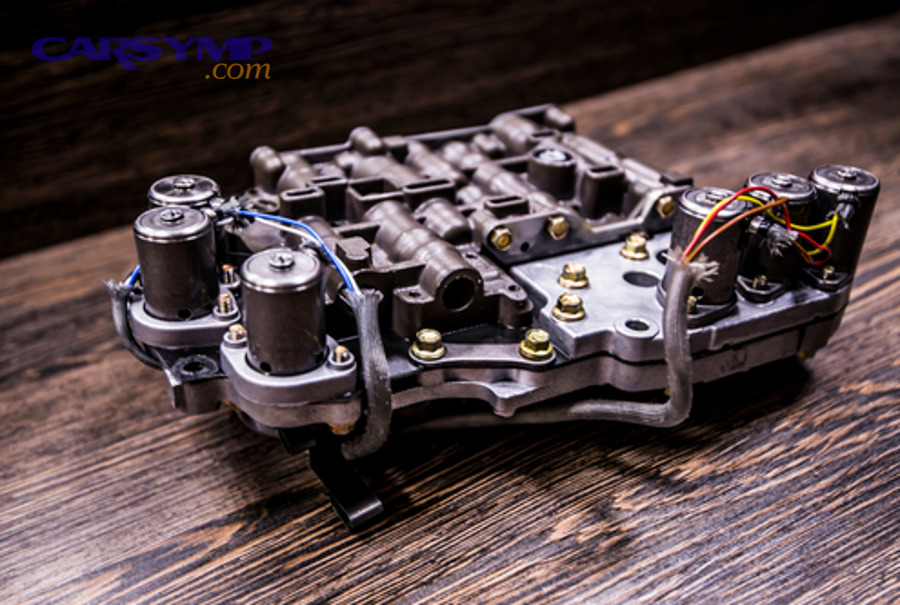
Understanding these differences prevents misdiagnosis and helps drivers identify whether their specific vehicle is in a known high-risk category for these failures.
Are Shift Solenoid Problems Different in CVT Transmissions vs. Traditional Automatics?
Yes — shift solenoid problems in CVT transmissions are fundamentally different from those in traditional step-gear automatics because CVTs use pressure control solenoids to regulate the clamping force and ratio position of a continuously variable steel belt or chain on two variable-diameter pulleys, rather than directing fluid to discrete clutch packs for fixed gear engagement.
Specifically, a CVT solenoid failure does not produce “stuck in gear” or “gear skipping” symptoms as experienced in conventional automatics, because there are no discrete gears to stick in. Instead, CVT solenoid failure typically presents as belt slippage — felt as a sudden loss of drive force under acceleration — or “ratio hunting,” where the engine RPM rises and falls in an oscillating pattern without a corresponding change in vehicle speed, because the CVT cannot maintain a stable pulley ratio. Harsh engagement from a standing start and a whining or grinding noise during acceleration are also common CVT solenoid failure signs. The repair approach is also different: CVT pressure control solenoids are often integrated into a transmission control valve assembly that is specific to the CVT design, and replacement typically requires factory-level scan tool calibration after installation to teach the TCM the new component’s pressure-response characteristics.
Which Vehicle Makes and Models Are Most Prone to Valve Body and Solenoid Failures?
Several specific vehicle platforms and transmission families show disproportionately high rates of valve body and solenoid failures, based on documented technical service bulletins (TSBs), owner-reported patterns, and transmission specialist case volume.
The following platforms have well-documented solenoid and valve body failure histories that drivers should be aware of:
- Honda/Acura 5-speed automatic (BAXA/MAXA family): Known for 3rd gear clutch pack wear combined with linear solenoid failure, producing delayed shifts and fault codes. Honda issued multiple TSBs on transmission fluid type compatibility for these units.
- Ford 6F35 (Focus, Escape, Fusion, Edge): High incidence of solenoid body assembly failure causing P0741, P0961, and P0963 codes. Ford issued TSB 11-7-5 addressing solenoid body replacement for this transmission.
- GM 6L80/6L90 (Silverado, Tahoe, Camaro, CTS): Pressure control solenoid (PCS) wear is a known failure mode, producing TCC slip codes and harsh downshifts. Updated PCS solenoid designs from ACDelco are available as replacements.
- ZF 8HP (BMW, Audi, Chrysler, Jaguar Land Rover): Valve body mechatronic sleeve failure causes a range of shift quality complaints and is a widespread issue across all brands using this transmission. Remanufactured mechatronic units are the standard repair.
Knowing whether your vehicle falls into one of these categories allows you to approach diagnosis with the correct component in mind from the outset, rather than working through the full diagnostic tree from scratch.
How Does the Transmission Control Module (TCM) Failure Mimic Solenoid Issues?
TCM failure mimics shift solenoid issues because the TCM is the source of the electrical command signals that activate each solenoid — when the TCM’s output driver circuits degrade or fail, they produce solenoid circuit fault codes and shift quality symptoms that are indistinguishable from an actual solenoid failure without live data comparison testing.
Specifically, if the TCM’s internal output driver for solenoid B fails, it will generate a P0755 code and produce the same “stuck in gear” symptom as a failed solenoid B coil. The standard multimeter resistance test at the solenoid connector will return a normal reading — because the solenoid itself is electrically intact — but the vehicle will continue to exhibit shift faults. The distinguishing test is measuring voltage at the solenoid connector harness while commanding the solenoid to activate through a scan tool’s bidirectional control function. A healthy TCM output driver will produce approximately 12V at the connector during a command cycle. A failed output driver will produce 0V or a degraded voltage signal even though the command is being sent. This TCM vs. solenoid differentiation test is one of the most important steps in the diagnostic chain for vehicles where solenoid replacement has failed to resolve the fault — and it prevents the frustrating and expensive scenario of replacing multiple solenoids before discovering the TCM was the root cause throughout.
What Long-Term Drivetrain Damage Can Unresolved Valve Body Issues Cause?
Unresolved valve body issues cause progressive, cascading drivetrain damage that extends well beyond the transmission itself — beginning with accelerated clutch pack friction material wear, advancing through torque converter lockup clutch failure, and ultimately producing planetary gear set damage that can render the entire transmission beyond economic repair.
More specifically, every mile driven with inadequate or misdirected hydraulic pressure from a faulty valve body is a mile of clutch slippage. Clutch friction material has a defined service life measured in engagement cycles under correct clamping pressure — when that pressure is insufficient due to valve body passage restriction or solenoid failure, the clutch disc engages under reduced force and slips against the steel reaction plate with each shift event, generating heat and consuming friction material at a dramatically accelerated rate. The torque converter lockup clutch — which relies on precise pressure control solenoid operation to lock and release cleanly — begins to exhibit shudder and then hard-part contact wear when its control solenoid is malfunctioning. Planetary gear sets experience shock loading when clutch packs engage abruptly due to pressure spikes from blocked valve body passages — the sudden hydraulic pressure surge that occurs when a restricted passage finally opens produces an engagement shock that the planetary carrier and pinion pins were not designed to absorb repeatedly. The financial consequence of delayed repair is stark: a solenoid pack replacement at $300–$700 total becomes a rebuilt transmission at $2,500–$5,000 or a replacement transmission at $3,000–$6,500 when these cascading failures are allowed to complete their progression. Early intervention is not just mechanically correct — it is the most economical decision an automatic transmission driver can make.