


Resetting TCM adaptive memory after transmission service is essential to prevent harsh shifting, premature component wear, and recurring transmission fault codes. When a technician replaces solenoids, a valve body, clutch packs, or completes a full rebuild, the Transmission Control Module still holds learned pressure and timing values calibrated to the old hardware. Driving with mismatched adaptive data forces new components to operate under incorrect parameters — a leading cause of transmission shift problems that misdiagnose perfectly good repairs as failures.
Understanding what TCM adaptive memory actually stores helps clarify why a reset is non-negotiable after major service. The TCM continuously builds a profile of shift timing, line pressure corrections, solenoid duty cycles, and clutch fill times specific to the vehicle’s wear state and driving history. After new hardware is installed, that stored profile is no longer accurate — it reflects a transmission that no longer exists inside the vehicle.
The tools required to perform a proper TCM reset vary significantly by vehicle make, model, and year. A professional-grade OBD2 scan tool with bi-directional capability can handle most modern vehicles, while manufacturer-specific platforms such as Ford IDS, GM GDS2, or Toyota Techstream are required for OEM-locked procedures. Knowing which tool applies to a specific vehicle prevents wasted time and incomplete resets that leave adaptive values partially intact.
Once the reset is complete, the TCM must rebuild its adaptive tables through a structured drive cycle — and this step is just as critical as the reset itself. A vehicle driven aggressively immediately after a reset will build a poor adaptation profile, resulting in shift quality that never fully settles. Next, this guide walks through every stage of the process: what TCM adaptive memory is, when a reset is required, how to perform it correctly, and how to verify the relearn is complete.
What Is TCM Adaptive Memory and How Does It Affect Shift Quality?
TCM adaptive memory is a learned data set stored within the Transmission Control Module that continuously adjusts shift timing, hydraulic pressure, and solenoid behavior to match the specific mechanical state of the transmission over time.
To better understand why this matters after service, it helps to examine exactly what data the TCM stores and how long it takes to rebuild that data from zero.
What Data Does the TCM Store in Adaptive Memory?
The TCM stores a layered set of calibration values that go far beyond simple gear-change commands. These values are not static — they evolve over thousands of miles to compensate for mechanical wear, fluid degradation, and component-specific behavior.
The primary categories of adaptive data include:
- Shift timing tables: The precise moment in RPM and throttle position at which each upshift and downshift should occur
- Line pressure corrections: Adjustments to hydraulic pressure that ensure firm but smooth clutch engagement across all gear ranges
- Solenoid duty cycle values: Fine-tuned electrical pulse widths that control how quickly and precisely each shift solenoid opens and closes
- Clutch fill times: The duration required to fill each clutch pack with fluid before apply pressure is released — one of the most mechanically critical values
- Torque converter lockup thresholds: The speed and load conditions at which the torque converter clutch (TCC) engages and releases
Each of these values is specific to the mechanical tolerances of the components installed in the transmission at the time they were learned. After a solenoid pack replacement or valve body service, the new components will have slightly different flow characteristics, electrical resistance, and hydraulic response — making the previously stored adaptive values not just inaccurate, but potentially damaging.

How Long Does It Take for TCM Adaptive Memory to Build?
The TCM does not fully relearn its adaptive tables in a single drive. Most manufacturers design the relearn process to complete across 50 to 200 miles of varied driving, depending on how many shift events occur across different load and temperature conditions.
The relearn period unfolds in stages:
- Initial adaptation (0–20 miles): The TCM sets rough baseline values. Shifts may feel firmer or softer than expected during this phase.
- Mid-range adaptation (20–80 miles): Pressure and timing values begin to stabilize as the TCM collects data across multiple drive cycles.
- Full adaptation (80–200 miles): Clutch fill times and solenoid duty cycles reach stable learned values. Shift quality becomes consistent and smooth.
Driving aggressively during the early relearn window — full-throttle acceleration, hard braking, or sustained towing loads — forces the TCM to log extreme operating data as representative of normal driving. This skews the adaptation profile and can produce shift quality that never fully settles, even after hundreds of miles. Smooth, moderate driving during the first two to three drive cycles produces the most accurate and durable adaptive profile.
Does the TCM Need to Be Reset After Every Transmission Service?
Yes — the TCM adaptive memory must be reset after any transmission service involving internal component replacement, hydraulic system modification, or control module reprogramming, because the existing learned values will no longer match the new hardware installed.
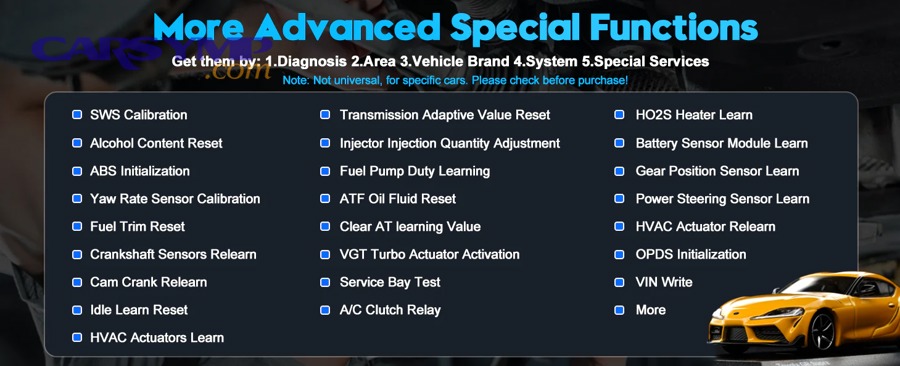
However, not every transmission service carries the same requirement. Below is a clear breakdown of which services mandate a reset and what happens if the reset is skipped.
What Transmission Services Require a TCM Adaptive Reset?
The following table outlines the most common transmission service events and whether a TCM adaptive reset is required. This reference is intended to help both technicians and vehicle owners determine when a reset is mandatory versus optional.
| Service Type | TCM Reset Required? | Notes |
|---|---|---|
| Valve body replacement | ✅ Yes — Mandatory | New valve body has different hydraulic flow characteristics |
| Solenoid pack replacement | ✅ Yes — Mandatory | New solenoids have different electrical and flow resistance |
| Individual solenoid replacement | ✅ Yes — Mandatory | Even a single solenoid affects shift timing data |
| Clutch pack replacement | ✅ Yes — Mandatory | Clutch fill times must be relearned from scratch |
| Full transmission rebuild | ✅ Yes — Mandatory | All adaptive data is invalid after a complete overhaul |
| Remanufactured unit installation | ✅ Yes — Mandatory | Unit has zero miles of learned data |
| TCM or PCM replacement/reflash | ✅ Yes — Mandatory | New module contains only base calibration, no adaptive data |
| Transmission fluid flush | ⚠️ Recommended | Fluid viscosity change can affect shift feel; reset is best practice |
| External filter replacement only | ❌ Not required | No internal component changes |
| Fluid top-off | ❌ Not required | No service event affecting hydraulic parameters |
Shift solenoid and valve body issues are among the most common reasons technicians encounter poor shift quality after a service that did not include a TCM reset. The repair itself is often correct — the omission of the adaptation reset is what causes the comeback.
What Happens If You Don’t Reset TCM Adaptive Memory After Service?
Skipping the TCM adaptation reset after a qualifying service event creates an immediate and compounding set of problems. The new components are asked to operate under pressure and timing values calibrated to hardware that no longer exists in the transmission.
The most immediate consequence is harsh, unpredictable shifting — particularly on the 1-2 and 2-3 upshifts where line pressure differences are most noticeable to the driver. In cases involving clutch pack replacement, operating with incorrect clutch fill times can cause slip on apply, which generates heat and friction that accelerates wear on the new clutches within the first few hundred miles.
Over time, the incorrect adaptive values can push solenoid duty cycles outside their design range, triggering P0700-series DTCs and shift performance codes that appear to indicate an ongoing fault when the mechanical work is actually sound. This creates diagnostic confusion and unnecessary repair cost estimates for common shift faults that are entirely preventable with a proper reset procedure.
What Tools Are Needed to Reset TCM Adaptive Memory?
Three primary methods exist for resetting TCM adaptive memory: a professional OBD2 scan tool with bi-directional capability, a dealer-level OEM scan tool, or a battery disconnect — with the appropriate method determined by the vehicle’s platform, model year, and the type of service performed.

Specifically, the tool selection is not optional — using the wrong method on the wrong vehicle produces an incomplete reset that leaves portions of the adaptive table intact.
Can You Reset TCM Adaptive Memory with an OBD2 Scanner?
Yes — on the majority of post-2010 vehicles, a professional-grade OBD2 scan tool that supports bi-directional transmission functions can successfully clear TCM adaptive values and return all learned parameters to factory baseline.
Not all OBD2 scanners are equal in this capability. Basic code readers that only read and clear DTCs do not have access to the transmission’s special functions menu. The adaptation reset function requires a tool capable of two-way communication with the TCM — sending active commands to the module rather than simply reading data from it.
Scan tools commonly confirmed to support TCM adaptation reset include:
- Autel MaxiSYS series (MS906, MS908, Ultra)
- Launch X431 series (Pro, Pro3, PAD VII)
- XTOOL D7, D8, and D9 series
- Foxwell NT series (NT510 Elite, NT710)
- Snap-on ZEUS and SOLUS Edge (professional shop tier)
The navigation path varies by scanner brand but follows a consistent structure: Diagnostics → Select Vehicle → Transmission → Special Functions → Adaptation Reset / Clear Adaptive Values → Confirm.
After executing the reset, verify success by accessing the transmission live data stream and confirming that adaptive pressure and timing values have returned to their factory default figures. Any values still showing learned offsets indicate an incomplete reset.
When Do You Need a Dealer Scan Tool to Reset TCM Adaptations?
Certain vehicle platforms lock the adaptation reset function behind OEM proprietary software that aftermarket scan tools cannot access, even at the professional tier. In these cases, a dealer-level tool is the only path to a complete and verified reset.
OEM scan tool requirements by manufacturer:
- Ford: IDS (Integrated Diagnostic System) or FDRS (Ford Diagnostic and Repair System) for 2018+ vehicles. The “Transmission Adaptive Strategy Reset” is a guided routine within IDS.
- General Motors: GDS2 (Global Diagnostic System 2) with MDI2 interface. The “Transmission Adaptive Pressure Reset” function is required after any rebuild or remanufactured unit installation on 6L80, 8L90, and 10L90 family transmissions.
- Hyundai/Kia: GDS Mobile or Hi-Scan Pro for TCM adaptation reset on dual-clutch (DCT) and traditional automatic transmissions.
- Toyota/Lexus: Techstream — required for transmission initialization on models including the A960E, U660E, and AB60F.
When TCM reprogramming (reflash) is included as part of the service — such as after an updated TCM software release — the adaptation reset is typically integrated as the final step of the flash procedure. In those cases, the dealer tool handles both functions in sequence automatically.
How to Reset TCM Adaptive Memory Step by Step
The TCM adaptation reset is completed in five to seven steps using a compatible OBD2 or OEM scan tool, with the expected outcome being a full return of all learned transmission parameters to factory baseline values.

Before beginning the reset procedure, the following preconditions must be verified:
- Vehicle is at normal operating temperature (coolant temp above 160°F / 71°C)
- No active DTCs unrelated to the transmission adaptation (resolve mechanical faults first)
- Parking brake is engaged and vehicle is in Park
- Battery voltage is stable above 12.4V (low voltage can interrupt the reset sequence)
- If diagnosing a comeback, document the pre-reset live data values for the technician’s record
How to Reset TCM Adaptive Memory Using an OBD2 Scanner
The following procedure applies to most vehicles using a professional-grade OBD2 scanner with bi-directional transmission capability. Always verify the vehicle-specific procedure in the scan tool’s guided function menu before beginning.
Step 1: Connect the scan tool to the OBD2 port (located beneath the driver’s side dashboard). Turn the ignition to the ON position — do not start the engine.
Step 2: Navigate to Diagnostics → Select Make/Model/Year → Transmission Control Module (TCM).
Step 3: Open the Special Functions, Active Tests, or Service Functions menu. Menu naming varies by scan tool brand.
Step 4: Select “Reset Adaptive Values,” “Clear Transmission Adaptations,” or “Transmission Adaptation Reset” — the function name varies by vehicle manufacturer.
Step 5: Follow the on-screen prompts to confirm the reset. Some vehicles require the engine to be running during this step — the scan tool will indicate if this is the case.
Step 6: After the reset is confirmed, navigate to the TCM live data stream and verify that adaptive pressure correction values, clutch fill time offsets, and shift timing corrections have all returned to zero or factory default figures.
Step 7: Clear any transmission-related DTCs that may have been stored during the service event. These should not be present after a successful reset, but clearing confirms a clean baseline for the relearn phase.
How to Reset TCM Adaptive Memory Without a Scanner (Battery Disconnect Method)
The battery disconnect method clears volatile RAM stored in the TCM by removing power long enough for the memory to discharge. On older vehicles — generally pre-2003 — the TCM stores adaptive values in volatile memory, meaning a power interruption fully clears the learned data.
Procedure for vehicles where this method applies:
- Turn the ignition off and remove the key
- Disconnect the negative battery terminal
- Wait a minimum of 15 to 30 minutes to allow full capacitor discharge
- Reconnect the negative terminal and perform a drive cycle
Critical limitation: On virtually all post-2005 vehicles, TCM adaptive values are stored in non-volatile EEPROM or Flash memory — types of memory that retain data without power. A battery disconnect on these vehicles clears only the volatile RAM (which holds temporary fault codes and some sensor data) but leaves the transmission adaptive tables entirely intact.
This means that performing a battery disconnect on a modern vehicle after a transmission rebuild and assuming the adaptation has been reset is a diagnostic error. The TCM will continue to apply the old learned values to the new hardware. A scan tool with bi-directional capability is the only reliable method for modern vehicles.
How to Complete the TCM Relearn Procedure After Reset
The TCM relearn procedure is completed through a structured drive cycle of two to three repetitions covering cold start, gentle acceleration through all gear ranges, sustained highway cruise, and low-speed stop-and-go driving — with the expected outcome being stable adaptive values and consistent shift quality within 50 to 100 miles.

The reset clears the slate. The relearn procedure fills it back in correctly. Skipping or rushing the relearn phase is just as problematic as skipping the reset — and it is the step most often overlooked after a successful adaptation clear.
What Is the TCM Relearn Drive Cycle and How Do You Perform It?
The drive cycle sequence below represents the general relearn procedure applicable to the majority of rear-wheel-drive and front-wheel-drive automatic transmissions. OEM-specific drive cycles may include additional steps or temperature requirements — always reference the vehicle’s service information for manufacturer-specific procedures.
Stage 1 — Cold Start Idle (2–3 minutes)
Start the engine from cold or warm-up temperature. Allow the vehicle to idle without moving. This allows transmission fluid to reach operating viscosity and the TCM to initialize its baseline sensor readings.
Stage 2 — Gentle Acceleration Through All Gears
From a stop, accelerate smoothly at 25–30% throttle. Allow the transmission to shift through each gear without manual intervention. Avoid kickdowns. The goal is for the TCM to log clean, low-load shift events for each gear pair as its first adaptation data points.
Stage 3 — Steady Highway Cruise (5–10 minutes)
Maintain a steady speed of 45–55 mph. This allows the torque converter lockup clutch to engage and the TCM to begin building its TCC lockup adaptation values. Maintain consistent throttle — avoid cruise control variations that cause rapid TCC cycling.
Stage 4 — Light Deceleration
Reduce speed gradually from highway speed to approximately 20 mph using light brake pressure. This triggers TCC unlock and downshift events that the TCM logs as part of its deceleration adaptive profile.
Stage 5 — Stop-and-Go Low-Speed Driving (5–10 minutes)
Drive in light urban traffic or simulate it with repeated slow accelerations and stops. This targets first and second gear adaptation — the range most affected by clutch fill time and line pressure values.
Repeat this sequence two to three times across separate drive events, allowing the vehicle to cool fully between cycles where possible.
How Do You Know When TCM Relearn Is Complete?
The relearn is considered complete when three conditions are simultaneously satisfied:
1. Shift quality is smooth and consistent across all gear ranges. Upshifts and downshifts should feel firm but not harsh. There should be no hesitation, flare, or shudder during normal driving.
2. Live scanner data confirms stabilized adaptive values. Using a scan tool, monitor the transmission adaptive data stream across two consecutive drive cycles. When the adaptive pressure correction values, clutch fill time offsets, and shift timing adjustments show no significant change between drives, the TCM has completed its relearn.
3. No new shift-related DTCs appear after three or more drive cycles. A fully relearned TCM operating with correctly installed hardware will not generate shift performance codes during normal driving. The presence of new codes after three drive cycles indicates either an incomplete reset, a mechanical fault, or an adaptation that has hit its correction limit.
Is Rough Shifting After Service a Sign That TCM Relearn Is Needed?
Yes — rough or harsh shifting immediately after a transmission service is the primary indicator that TCM adaptive memory has either not been reset or has not yet completed its relearn cycle, and this symptom should be evaluated before any further diagnostic or mechanical work is performed.

Specifically, distinguishing between an adaptation issue and a genuine mechanical fault is a critical diagnostic step that prevents unnecessary disassembly and incorrect repair cost estimates for common shift faults.
What Are the Symptoms of TCM Adaptive Memory Not Being Reset After Service?
The symptom profile of an incomplete TCM adaptation reset is recognizable and distinct from mechanical transmission failures. The following symptoms, appearing immediately after a service event, strongly indicate an adaptation issue:
- Hard or jerky 1-2 upshift — The most common complaint; caused by incorrect line pressure or clutch fill time being applied to a new component
- Delayed engagement from Park or Neutral into Drive or Reverse — Particularly on cold starts; clutch fill time value does not match the new pack’s requirements
- Transmission hunting between gears at steady cruise — The TCM applies conflicting shift timing values, causing the transmission to cycle between two adjacent gears
- Torque converter shudder at lockup speed — TCC adaptive values are mismatched; shudder typically occurs at 40–50 mph during light throttle cruise
- Inconsistent shift points — Upshifts occurring too early at light throttle or too late under moderate load compared to pre-service behavior
- Possible DTCs: P0700 (Transmission Control System MIL Request), P0750–P0770 series (Shift Solenoid Performance), P17xx series (Transmission Pressure Control)
Shift solenoid and valve body issues are frequently misidentified at this stage because the fault codes generated by incorrect adaptation data overlap with codes produced by genuine solenoid failure. A reset and relearn cycle must be completed before solenoid replacement is recommended based on code presence alone.
How Do You Tell the Difference Between an Adaptation Problem and a Mechanical Transmission Fault?
An adaptation problem and a mechanical transmission fault can produce nearly identical symptoms immediately after service. The key diagnostic differentiator is the behavior pattern over time and mileage.
The following table provides a side-by-side comparison of the two fault types across critical diagnostic criteria.
| Diagnostic Criterion | Adaptation Issue | Mechanical / Hydraulic Fault |
|---|---|---|
| Onset timing | Immediate — first drive after service | Can be immediate or develop gradually |
| Symptom progression | Improves noticeably within 50–100 miles | Remains constant or worsens with mileage |
| Response to reset + relearn | Symptoms resolve fully | Symptoms persist after full relearn cycle |
| DTCs present | Shift performance codes (P0750–P0770, P17xx) | Same code range, but also pressure or range codes |
| Specific symptom timing | Consistent across all similar shift events | May be intermittent or load/temperature dependent |
| Hydraulic pressure test result | Within specification | Pressure readings outside specification |
| Solenoid resistance test | Within specification | Out of range or intermittent |
Recommended diagnostic protocol:
- Perform a complete TCM adaptation reset using a compatible scan tool
- Complete two to three structured relearn drive cycles as outlined above
- Re-evaluate shift quality and rescan for active DTCs
- If symptoms persist and DTCs return after the full relearn cycle, escalate to hydraulic pressure testing and solenoid resistance measurement
- Only recommend solenoid or valve body replacement after confirming that adaptation is complete and values have stabilized within the TCM’s correction range
This protocol prevents the most common post-service diagnostic error: recommending a second mechanical repair for a problem that is entirely adaptive in origin.
How Does TCM Adaptive Relearn Differ Across Vehicle Makes and Models?
TCM adaptive relearn procedures differ significantly across vehicle manufacturers because each OEM programs its transmission control strategy, adaptation table structure, and reset authorization requirements independently — meaning a procedure that works correctly on a General Motors platform may be incomplete or inaccessible on a Ford or Toyota using the same aftermarket scan tool.

In addition to tool requirements, some modern platforms require accounting for co-adaptation between the TCM and the Powertrain Control Module (PCM/ECM) — a layer of complexity that is absent on older single-module transmission control systems.
How Do You Reset TCM Adaptive Memory on a Ford Vehicle?
Ford’s transmission control strategy on vehicles equipped with the 6R80, 10R80, and SelectShift transmissions uses a dedicated adaptive strategy routine managed through IDS (Integrated Diagnostic System) for pre-2018 vehicles and FDRS (Ford Diagnostic and Repair System) for 2018 and newer models.
The Ford-specific procedure follows this sequence:
- Connect IDS or FDRS to the vehicle and navigate to Transmission → Adaptive Learn Reset or Transmission Adaptive Strategy Reset
- The tool will prompt the technician to confirm operating conditions (fluid temperature above threshold, no active DTCs)
- IDS executes the reset and provides a confirmation screen when adaptive values have returned to baseline
- For 10R80 transmissions specifically, Ford’s service documentation recommends a minimum of three complete drive cycles following the reset before evaluating final shift quality
Ford 10-speed transmission shift problems following rebuild are frequently traced to incomplete adaptation resets, particularly because the 10R80’s ten-speed architecture has a larger and more complex adaptive table than six-speed predecessors.
How Do You Reset TCM Adaptive Memory on a GM (Chevrolet/GMC) Vehicle?
General Motors uses the Transmission Adaptive Pressure (TAP) reset function within GDS2 (Global Diagnostic System 2), accessed via the MDI2 (Multiple Diagnostic Interface) hardware. This procedure is mandatory — not optional — after any remanufactured or rebuilt transmission is installed on a GM vehicle.
The GM TAP reset procedure:
- Connect GDS2 with MDI2 and navigate to Transmission Control Module → Special Functions → Transmission Adaptive Pressure Reset
- The system will confirm the reset is complete and display baseline TAP values
- GM’s service documentation for 6L80 and 8L90 transmissions specifically states that operating a rebuilt unit without performing the TAP reset first risks damage to new clutch packs within the first 500 miles
This guidance is particularly relevant for Preventing shift problems with maintenance intervals where the transmission fluid is changed at the same time as a rebuild — the combination of new fluid viscosity and new hardware makes an accurate TCM adaptation reset even more critical.
How Does TCM Relearn Interact With PCM and ECM Adaptation on Modern Vehicles?
On modern vehicle platforms — particularly those from GM, Ford, and the Volkswagen/Audi Group — the TCM does not operate in isolation. The Powertrain Control Module (PCM) actively coordinates with the TCM on torque management, throttle reduction during shift events, and torque converter lockup strategy. Both modules maintain their own adaptive tables, and those tables reference each other during operation.
This creates a co-adaptation relationship that has an important practical implication: resetting the TCM without accounting for the PCM’s own adaptive data can produce drivability symptoms that appear transmission-related but are actually caused by a mismatch between the newly reset TCM’s baseline values and the PCM’s existing learned torque reduction strategy.
In major powertrain service scenarios — transmission rebuild combined with engine work, TCM replacement combined with PCM reflash, or torque converter replacement on a high-mileage vehicle — best practice is to reset both the TCM adaptation and the PCM’s long-term fuel trim and torque management learned values. This ensures both modules rebuild their adaptive tables simultaneously and produce a cohesive adaptation profile that reflects the current state of the entire powertrain.
Can TCM Adaptive Memory Become Corrupted and What Are the Signs?
Yes — TCM adaptive memory can become corrupted, and when it does, it produces a specific symptom pattern that does not respond to standard reset and relearn procedures.
Corruption occurs when stored adaptive values move outside the boundaries of the TCM’s acceptable correction range. The most common causes include:
- Electrical fault during a previous reset or reflash (power interruption mid-procedure)
- TCM replacement without proper programming (module contains mismatched base calibration)
- Flash procedure failure (partial write leaving the calibration in an inconsistent state)
- Prolonged operation with a mechanical fault that pushed adaptive values to their correction limit
The symptom signature of adaptive corruption is distinct from normal post-reset shift harshness: shifts are erratic and unpredictable, the pattern does not improve after multiple relearn drive cycles, and the TCM stores DTCs referencing “Adaptation at Limit,” “Learned Value Out of Range,” or similar fault descriptions. Standard shift performance codes (P0750 series) may also be present, but the defining feature is that a complete reset and full relearn cycle produces no improvement in shift quality.
The resolution path for confirmed adaptive corruption is a full TCM reflash using the latest OEM calibration file, which restores the module to a clean factory base calibration with no residual adaptive data. Following the reflash, the adaptation reset is performed again (the reflash procedure integrates this step on most platforms), and the vehicle is then put through the structured relearn drive cycle from Stage 1. In most cases, shift quality normalizes within one to two complete relearn cycles after a successful reflash.
Understanding how to reset TCM adaptive memory and complete the relearn procedure correctly — from selecting the right tool to verifying that adaptation is stable through live data monitoring — is the difference between a transmission service that holds and one that generates a preventable comeback. Whether the service involved a solenoid replacement, a full rebuild, or a remanufactured unit installation, the TCM reset and relearn cycle is the final and essential step that allows every other part of the repair to perform as intended.