


Drivetrain vibration usually means a rotating or load-bearing part in the power-delivery system is no longer moving smoothly, so the correct starting point is to match the symptom to when it happens: under acceleration, at highway speed, during deceleration, or only under braking. In most cases, the real causes cluster around the driveshaft, U-joints, CV axle assemblies, driveline angles, mounts, or related hardware rather than a random shake with no pattern. That is why good vibration diagnosis always begins with symptom timing, component location, and load behavior rather than replacing parts blindly. (4xshaft.com)
The first layer of the problem is understanding what drivetrain vibration actually is and how it differs from other vehicle shakes. A vibration from the drivetrain often changes with throttle input, torque load, or road speed, while a brake-related shake, tire imbalance, or engine misfire tends to follow a different pattern. This distinction matters because many drivers feel a vibration through the seat, floor, or center tunnel and assume the tires are at fault when the driveshaft or CV axle is actually the source. (gsplatinamerica.com)
The second layer is identifying which parts are most likely involved. A worn U-joint, a damaged driveshaft, a failing inner CV axle joint, a center support bearing, or incorrect pinion angle can all create similar symptoms, but they do so in different conditions. When you know whether the shake appears under load, at steady cruise, or only in a narrow speed range, you can narrow the field fast and avoid misdiagnosis. (gsplatinamerica.com)
Some vibrations also cross over into safety. A minor buzz at one road speed may be inconvenient, but a heavy shudder, loud clunk, or worsening vibration can signal joint wear, angle error, or shaft damage that should not be ignored. Introduce a new idea: the sections below move from definition to causes, timing, diagnosis, repair, and then advanced edge cases so the article follows the same logic a good technician would use. (moderndriveline.com)
What is drivetrain vibration?
Drivetrain vibration is a shake or shudder caused by uneven torque transfer, rotating imbalance, or incorrect operating geometry in parts that send power from the transmission to the wheels.
To better understand the issue, it helps to separate drivetrain vibration from other forms of vehicle vibration before looking at individual parts.
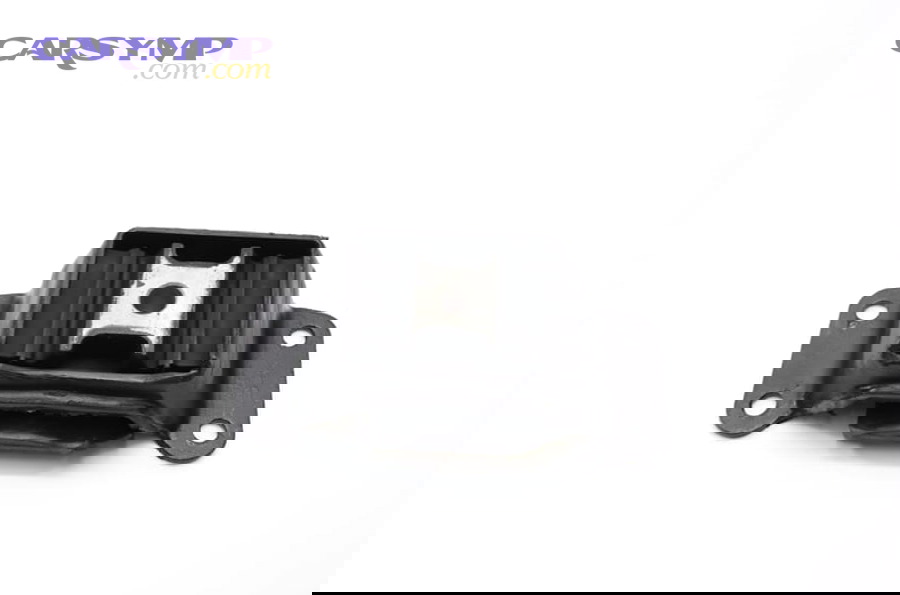
A drivetrain exists to transfer power. In a rear-wheel-drive vehicle, that path commonly includes the transmission, driveshaft, U-joints, differential, and axle shafts. In many front-wheel-drive vehicles, the same job falls mainly to the transaxle and CV axle assemblies. When one of these parts develops wear, loses alignment, runs at the wrong angle, or rotates out of balance, vibration can pass through the chassis and into the cabin. That is why drivers often feel the symptom through the seat base, floor pan, pedals, or center tunnel rather than only through the steering wheel. (spicerparts.com)
Is drivetrain vibration the same as general car vibration?
No, drivetrain vibration is not the same as general car vibration because it usually changes with torque load, often follows rotating driveline speed, and commonly appears through the floor or seat instead of acting like a broad whole-car shake.
However, the confusion is understandable because several common faults can feel similar from the driver’s seat.
A tire imbalance usually becomes more noticeable as vehicle speed climbs and often remains present whether you are lightly accelerating, coasting, or maintaining speed. A brake problem behaves differently: the classic symptom appears during brake application, and the steering wheel, pedal, or front end may pulse or shudder. Engine misfire vibration is different again because it can appear at idle or under load even when the vehicle is not moving at highway speed. By contrast, drivetrain vibration often reacts strongly to throttle position, joint angle, shaft speed, or torque transfer.
This difference is especially important in vibration diagnosis. A driver may say, “The car shakes at 60 mph,” but that statement is still incomplete. Does it shake only on acceleration, only on deceleration, or all the time? Does it pulse under braking, which points more toward Brake rotor vibration under braking causes such as rotor thickness variation or runout? Or does it hum through the body only when the drivetrain is loaded? Those questions create the hook that leads directly into the component-level diagnosis below. (gsplatinamerica.com)
Which parts of the drivetrain can cause vibration?
There are 7 main groups of drivetrain parts that commonly cause vibration: driveshafts, U-joints, CV axle assemblies, center support bearings, differential components, transfer-case outputs, and transmission or driveline mounts.
Next, each group matters for a different reason, which is why symptoms should be matched to the part instead of guessed.
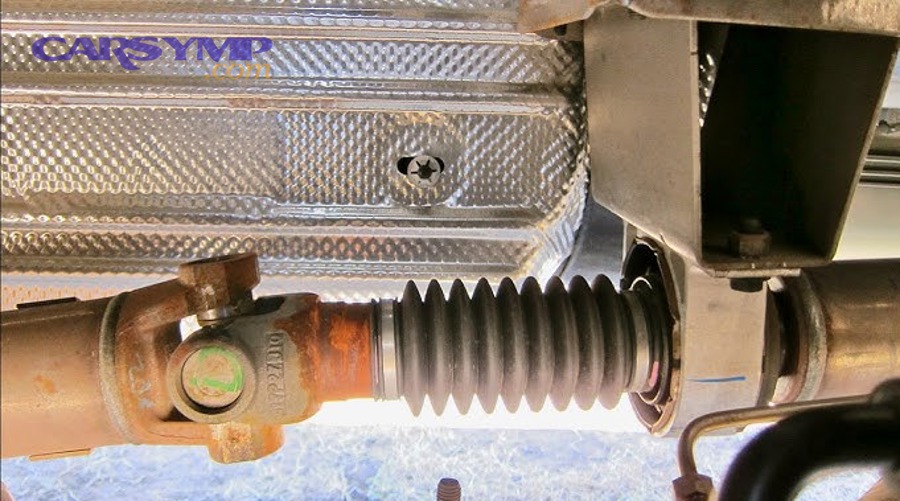
The driveshaft is the obvious rotating shaft in many rear-wheel-drive and four-wheel-drive layouts, so imbalance, dents, missing weights, phasing errors, or excessive runout can create a regular speed-related vibration. U-joints add angular flexibility, but incorrect operating angles or wear in the needle bearings can create a twice-per-revolution speed fluctuation that feels like a shudder or cyclical buzz. Dana’s Spicer technical guidance notes that excessive universal-joint operating angles reduce life and can create vibration, especially as driveshaft speed rises. (spicerparts.com)
In front-wheel-drive and many all-wheel-drive vehicles, the CV axle often takes center stage. Inner CV joints can produce a distinct vibration under acceleration because torque exposes play inside the joint. Outer joints are more famous for clicking on turns, but axle damage or wear can still create vibration. Center support bearings on multi-piece driveshaft systems matter too because they hold shaft alignment; if the support degrades, the shaft can run at the wrong angle and transmit noise, vibration, and harshness into the body. (gsplatinamerica.com)
According to Spicer engineering guidance, any universal-joint operating angle greater than 3 degrees can lower joint life and may cause vibration, while matching driveline angles within about 1 degree of each other helps cancel speed fluctuation in the shaft system. (spicerparts.com)
What are the most common causes of drivetrain vibration?
The most common causes of drivetrain vibration are driveshaft imbalance, worn U-joints, failing inner CV axle joints, misaligned driveline angles, damaged support bearings, and out-of-phase or worn spline connections.
More specifically, these faults become easier to separate once you connect them to how the vehicle is being driven.
If the vibration is strong at one speed band and grows with road speed, the driveshaft itself becomes a major suspect. Imbalance, dents, missing balance weights, or shaft damage can produce a smooth but persistent shake. If the symptom increases under acceleration, especially uphill or when starting from a stop, the problem often points toward a worn inner CV axle joint or a driveline geometry issue that appears only under load. If the vehicle has been lifted, lowered, or repaired recently, wrong operating angles or phasing should move high on the suspect list. (4xshaft.com)
Can a bad driveshaft cause drivetrain vibration?
Yes, a bad driveshaft can cause drivetrain vibration because imbalance increases with speed, dents or runout disturb rotation, and phasing or support-bearing problems change how torque travels through the shaft.
For example, a shaft can be “good enough” at low speed and still become very noticeable on the highway.
A driveshaft rotates thousands of times per minute. Even a small distribution-of-mass problem can become a real cabin vibration as shaft speed increases. That is why damaged tubes, missing balance weights, bent sections, or worn slip splines often create a vibration that feels smooth and rhythmic rather than random. Technical driveline sources consistently identify out-of-balance components, worn slip splines, and yokes out of phase as common vibration causes. (moderndriveline.com)
On multi-piece shafts, center support bearing condition matters as much as the shaft itself. If the bearing sags or the mount deteriorates, the driveshaft no longer runs on the intended path. Dana notes that proper center-bearing alignment is a direct factor in controlling noise and vibration. In practical terms, that means replacing only the shaft without addressing the support can leave the original problem untouched. (danaaftermarket.com)
What drivetrain parts most often create vibration under acceleration?
There are 5 common acceleration-related causes of drivetrain vibration: inner CV axle wear, U-joint angle problems, mount movement, differential lash issues, and driveshaft angle changes under load.
Besides that, acceleration is especially revealing because torque loads every weak point in the system.
An inner CV axle joint is one of the best-known causes of a vibration that appears under throttle and eases off when cruising lightly. Under load, the worn internal surfaces no longer transfer power smoothly, so the axle shudders. Several technical repair sources describe this pattern as a classic sign of inner CV wear, especially when the problem appears from a stop, during hill climbing, or when the throttle opens more aggressively. (gsplatinamerica.com)
Rear-wheel-drive vehicles add another layer: the rear axle can rotate slightly under torque, which changes pinion angle. If the static angle was already incorrect, acceleration can push the U-joints outside their happy range and create a vibration or shudder that feels much worse under load than at cruise. That is one reason modified vehicles, lifted trucks, and vehicles with worn bushings develop symptoms immediately after changes in ride height or rear suspension geometry. (reeldriveline.com)
What is the difference between U-joint vibration and CV joint vibration?
U-joint vibration wins as the likely cause in angle-related rear-driveline problems, CV joint vibration is best matched to front axle load-related shudder, and driveshaft imbalance is optimal when speed alone makes the symptom grow.
Meanwhile, the pattern of the vibration usually tells you which path to follow first.
A worn or badly angled U-joint often creates a cyclical vibration that relates closely to driveshaft angle and shaft speed. It may come with clunks when shifting from drive to reverse, rust powder around bearing caps, or a harsh shudder that worsens with incorrect pinion geometry. A failing inner CV axle typically behaves differently: the car may feel smoother at steady light cruise, then shake under stronger acceleration as torque loads the joint. In many front-wheel-drive cars, that torque-sensitive shudder is one of the clearest indicators that the CV axle deserves inspection. (4xshaft.com)
The quick comparison below shows what the driver usually notices first.
| Symptom pattern | More likely source | Why it happens |
|---|---|---|
| Stronger at one road-speed band, even without heavy throttle | Driveshaft imbalance | Rotating mass error increases with shaft speed |
| Worse under load or hard acceleration | Inner CV axle or pinion-angle/U-joint issue | Torque exposes play or changes working angle |
| Shudder plus clunking on gear changes | U-joint or spline wear | Clearance creates impact and non-smooth transfer |
| Pulsation only during braking | Brake rotor or brake system issue | Rotor thickness variation or runout affects pad contact |
This table compares driver-observed patterns with the component most likely to be responsible, so readers can separate drivetrain vibration from brake or wheel issues before replacing parts. The comparison is grounded in the same field logic used in shop-level vibration diagnosis. (gsplatinamerica.com)
According to a Nissan brake diagnosis bulletin filed with NHTSA, rotor thickness variation causes pads to move in and out as they follow high and low spots on the disc, creating pulsation and, in severe cases, steering oscillation; that makes braking-only vibration a different diagnostic branch from a true drivetrain problem. (static.nhtsa.gov)
When does drivetrain vibration happen, and what does the timing mean?
Drivetrain vibration can happen during takeoff, acceleration, cruising, deceleration, or at a narrow speed range, and the timing often reveals whether the issue is load-related, speed-related, angle-related, or brake-related.
Below, the timing of the symptom becomes the fastest route to narrowing the cause.
Does drivetrain vibration only happen during acceleration?
No, drivetrain vibration does not happen only during acceleration because some faults respond to shaft speed, others respond to load, and others appear only when driveline geometry changes during coast or suspension movement.
However, acceleration remains one of the most useful triggers because it loads the entire system.
A worn inner CV axle may shake hardest under acceleration. A driveshaft imbalance may stay present across steady-speed driving and gradually intensify with speed. An angle problem may appear most clearly under acceleration on a lifted or modified rear-drive vehicle because axle wrap changes the working relationship between the transmission output, driveshaft, and pinion. A worn support bearing can hum or buzz at certain speeds whether you are accelerating or not. (gsplatinamerica.com)
This is why the best question is never simply, “Does it vibrate?” The better question is, “When exactly does it vibrate?” In real-world diagnosis, that timing often narrows the problem faster than a random underbody inspection. (4xshaft.com)
How do vibrations at low speed, highway speed, and deceleration compare?
Low-speed vibration points more toward severe wear or binding, highway-speed vibration is often linked to imbalance or critical-speed behavior, and deceleration vibration can expose angle mismatch, backlash, or unloaded joint problems.
To illustrate, each speed condition changes what the rotating parts are being asked to do.
At low speeds, a badly worn joint or mount can produce obvious clunks, harsh takeoff shudder, or movement you can feel immediately from a stop. At highway speeds, the driveshaft becomes more suspicious because even small imbalance issues grow as shaft rpm climbs. Spicer’s critical-speed guidance also explains that certain shaft-speed relationships can create vibration if the driveshaft operates near critical-speed-related zones. That is why some vehicles feel fine at 45 mph, buzz at 60 mph, and then partially smooth out at another speed. (spicerparts.com)
During deceleration, the torque path reverses. Clearances in U-joints, splines, or differential components can behave differently when the shaft unloads. An angle that just barely works under load may become troublesome on coast. Drivers often describe this as a “comes and goes with throttle” vibration, which is a valuable clue because tires and brake rotors do not usually react to throttle that way unless braking force is applied. (reeldriveline.com)
What symptoms help identify whether the vibration is load-related or speed-related?
Load-related vibration changes with throttle input, while speed-related vibration follows vehicle or shaft speed more consistently regardless of throttle.
More importantly, this difference turns vague complaints into usable diagnostic evidence.
A load-related vibration may appear when climbing a hill, passing on the highway, or accelerating out of a corner. Ease off the throttle and the symptom reduces quickly. That pattern strongly supports a worn inner CV axle, a mount allowing excess movement, or an angle problem that worsens under torque. A speed-related vibration behaves differently: it appears at a repeatable road-speed range and remains even if the driver holds a constant light throttle or briefly coasts. That pattern points more toward balance, runout, or critical-speed-related behavior in the driveshaft system. (gsplatinamerica.com)
Braking creates yet another category. If the vibration arrives only when the brake pedal is pressed, especially with pedal pulsation or steering-wheel shake, the diagnostic path moves toward the braking system. That is why “Safe-to-drive guidance with severe vibrations” must begin with identifying when the symptom occurs: a driveline shudder under power and a brake shudder under deceleration can carry different immediate risks and different repair priorities. (static.nhtsa.gov)
How can drivers diagnose drivetrain vibration step by step?
The most effective way to diagnose drivetrain vibration is a 5-step method: identify timing, note where the vibration is felt, inspect recent repairs, check visible driveline parts, and road-test for load-versus-speed behavior.
Let’s explore this in the same order a careful technician would use.

A good diagnosis starts before the car is raised. Write down four things: the speed range, whether the throttle changes the symptom, whether braking changes it, and where the vibration is felt. Those notes instantly tell you whether the problem acts like a brake issue, a wheel-speed issue, or a drivetrain load issue. After that, check whether the symptom began after a lift kit, lowering springs, axle replacement, U-joint service, transmission work, or a collision. Many driveline vibrations begin immediately after geometry or parts alignment changes. (spicerparts.com)
What should you check first when diagnosing drivetrain vibration?
There are 6 first checks that matter most: recent repairs, visible shaft damage, joint play, mount condition, support-bearing alignment, and whether braking changes the symptom.
First, these checks eliminate common causes before expensive parts are replaced.
Start with the obvious. If the vehicle recently received a replacement CV axle, driveshaft service, suspension lift, transmission removal, or differential work, inspect those areas first. Look for torn boots, leaking grease, dented driveshaft tubes, missing balance weights, rusty U-joint caps, loose flange bolts, or a center support bearing sitting at an odd angle. A driveline that was quiet before repair and noisy after repair often points to installation, geometry, or part-quality issues rather than normal wear. (gsplatinamerica.com)
Then isolate the symptom. If light brake application changes the shake significantly, expand the inspection to the brake system because brake rotor vibration under braking causes can mimic a front-end or floor vibration. If the symptom changes mostly with throttle, stay focused on the drivetrain. This simple split prevents a lot of wasted money. (static.nhtsa.gov)
Can you diagnose drivetrain vibration without taking the vehicle apart?
Yes, you can diagnose much of drivetrain vibration without major disassembly because road-test patterns, visual checks, angle measurement, and joint-play inspection reveal many faults before parts are removed.
Still, the limit of driveway diagnosis is that some issues only appear under load or on a balancing machine.
Visual and hands-on inspection can go surprisingly far. You can inspect CV boots, look for grease sling, rotate the shaft by hand to check for free play, inspect U-joint caps for rust dust, confirm flange bolts are tight, and look for dents or missing weights on the driveshaft. You can also measure driveline angles with a simple angle tool. Spicer specifically recommends checking angles at normal ride height and notes that high angles combined with high rpm produce serious vibration problems, while matching angles within about 1 degree improves cancellation of speed fluctuation. (spicerparts.com)
What you cannot easily do in the driveway is dynamically balance a shaft, confirm subtle runout, or fully assess a joint that only binds under real torque. That is why the goal of home diagnosis is not always final proof; it is often narrowing the problem enough to know which system needs professional confirmation. (heavydutyjournal.com)
How do drivetrain vibration and wheel vibration differ?
Drivetrain vibration wins when throttle changes the symptom, wheel vibration is best matched to repeatable road-speed shake, and brake vibration is optimal when pedal application creates pulsation or shudder.
In short, the trigger is usually more revealing than the sound.
Wheel-related vibrations often show up as a shake that begins at a certain speed and continues regardless of acceleration or deceleration, assuming the road is smooth and braking is not applied. Tire balance, wheel runout, or bent wheels are classic examples. Drivetrain vibration, by contrast, often intensifies under load and may be felt more through the chassis than the steering wheel. Brake vibration is the easiest to separate because it appears during brake application, often with pedal pulsation. NHTSA-linked service literature repeatedly ties brake judder and pedal pulsation to rotor thickness variation and runout rather than driveline faults. (static.nhtsa.gov)
According to Spicer engineering material, non-uniform velocity between the input source, driveshaft, and axle can cause vibration and damage in the drivetrain, which explains why a true driveline fault often follows torque flow and operating angle rather than acting like a wheel-only disturbance. (spicerparts.com)
What fixes solve drivetrain vibration?
The fix that solves drivetrain vibration depends on the failed cause, but the most common successful repairs are replacing worn joints, correcting driveline angles, balancing or replacing the driveshaft, renewing support bearings, and tightening or aligning related hardware.
Thus, the real repair goal is not to “reduce” vibration; it is to remove the source of non-smooth torque transfer.
If a worn U-joint creates clearance or binding, replace the U-joint and inspect the yokes for wear. If the driveshaft is bent, missing weights, or out of balance, have it professionally balanced or replace it. If the inner CV axle is worn, replace the axle assembly with a quality part and inspect engine or transmission mounts that may have allowed excess movement. If the problem began after a lift or suspension change, correct the operating angles before buying more rotating parts. When a center support bearing sags, replace it and restore correct shaft alignment rather than assuming the shaft tube is at fault. (gsplatinamerica.com)
Will replacing a worn U-joint or CV joint stop the vibration?
Yes, replacing a worn U-joint or CV axle can stop the vibration if that joint is the true source, the related hardware is sound, and the underlying angle or alignment problem is also corrected.
However, part replacement alone fails when a second cause remains in the system.
A U-joint can wear because of age, contamination, or excessive operating angle. If you install a new joint but leave the shaft at the wrong angle, the symptom may quickly return. The same logic applies to a CV axle: a new axle can reduce load-related shudder, but if a mount is collapsed, the replacement may not cure the vibration completely. Quality control also matters. Poorly built replacement axles can introduce their own imbalance or fit issues, so the repair should always include a post-installation road test. (spicerparts.com)
What repairs are most common for driveshaft-related vibration?
There are 6 common driveshaft-related repairs: balancing, tube replacement, U-joint replacement, center support bearing replacement, phasing correction, and pinion-angle adjustment.
Next, the right choice depends on whether the issue is mass, wear, geometry, or resonance.
Balancing addresses pure rotational imbalance. U-joint replacement addresses wear at the articulating joint. Center support bearing replacement restores alignment in multi-piece shafts. Phasing correction matters when yokes are assembled incorrectly and the joint motions no longer cancel as intended. Pinion-angle adjustment solves cases where the shaft geometry itself is wrong, often after ride-height changes. If the shaft operates too close to critical-speed behavior, a different shaft diameter, length, or design may be needed rather than another balancing attempt. (machineservice.com)
Is it safe to keep driving with drivetrain vibration?
No, it is not always safe to keep driving with drivetrain vibration because worsening wear can escalate quickly, rotating parts can fail, and severe shudder can affect control, comfort, and secondary component life.
More importantly, the severity and trigger determine how urgently the vehicle needs attention.
A mild vibration that appears only in a narrow speed window may allow careful short-term driving to a repair facility, but a heavy shake, sudden onset after impact, metal-on-metal noises, visible driveshaft damage, or a CV axle that is already clicking and shuddering under load should be treated as urgent. If the vibration worsens rapidly, stop driving until the vehicle is inspected. A failing driveshaft or joint can damage surrounding components and, in extreme cases, create a loss-of-propulsion or underbody strike risk. This is the practical heart of Safe-to-drive guidance with severe vibrations: do not normalize a symptom that is growing, clunking, or clearly tied to damaged rotating parts. (gsplatinamerica.com)
According to Spicer’s angle guidance, excessive U-joint operating angle reduces universal-joint life and may cause vibration, which means ignoring a geometry-driven shake does not just preserve the problem; it actively accelerates wear. (spicerparts.com)
What advanced or less common drivetrain vibration problems should drivers know about?
The advanced drivetrain vibration problems drivers should know about are incorrect pinion angle after suspension changes, driveshaft critical-speed issues, phasing errors, and vibration amplified by resonance rather than simple wear alone.
Moreover, these edge cases matter because they often defeat trial-and-error repairs.
Drivers and even shops sometimes replace obvious wear items and still feel the same vibration. That usually happens when the problem is not only “a bad part” but a geometry or system-behavior issue. A lifted truck may have brand-new joints and still vibrate because the shaft angles are wrong. A balanced shaft may still buzz because its operating speed lives too close to a critical-speed zone. A rebuilt shaft may still shake if it is assembled out of phase. These are not mainstream explanations for every car, but they matter enough to deserve their own section once the basic diagnostic path is covered. (qa1.net)
Can incorrect pinion angle cause drivetrain vibration after a lift or suspension change?
Yes, incorrect pinion angle can cause drivetrain vibration after a lift or suspension change because the axle rotates, the U-joint working angles change, and the joints no longer cancel speed fluctuation correctly.
Especially after modification, this cause deserves attention early.
QA1 explains that most driveline companies recommend operating angles of 3 degrees or less for maximum U-joint life, with some minimum angle needed so the needle bearings rotate properly. Spicer also emphasizes both angle magnitude and angle matching. In practice, that means a lifted truck with poor pinion setup may vibrate under acceleration even when the shaft is straight and the joints are new. This is why driveline complaints that begin immediately after ride-height changes so often trace back to geometry rather than failed parts. (qa1.net)
What is driveshaft critical speed, and why does it create vibration at certain speeds?
Driveshaft critical speed is the rpm range where the shaft approaches a resonant whipping behavior, and it creates vibration because the rotating shaft begins to amplify its own motion instead of staying stable.
For that reason, a vehicle can feel fine below one speed, shake strongly at another, and then change character again.
Spicer’s critical-speed material notes that certain twice-per-revolution characteristics and shaft-speed relationships can create vibration if the shaft operates near critical-speed-related zones. This matters most on long shafts, altered driveline layouts, or vehicles that see unusually high shaft rpm. When a symptom appears in a very narrow road-speed band, especially after modifications, critical speed becomes a smarter suspect than random parts replacement. (spicerparts.com)
How does driveshaft phasing affect drivetrain smoothness?
Driveshaft phasing affects smoothness by controlling whether the angular speed changes created at one joint are cancelled correctly by the next joint in the shaft system.
In addition, phasing problems can mimic angle problems and confuse otherwise logical diagnosis.
If a multi-joint shaft is assembled out of phase, the speed fluctuations from one joint do not cancel properly. The result can feel like a rhythmic vibration that resembles wrong operating angles even if the angles themselves are within range. Technical driveline sources describe out-of-phase yokes as a common cause of persistent driveshaft vibration. This is one reason a shaft should not be reassembled casually without preserving orientation marks. (moderndriveline.com)
What is the difference between drivetrain vibration and harmonic resonance?
Drivetrain vibration is the direct result of a mechanical fault or geometry problem, while harmonic resonance is the amplification of that disturbance by the vehicle structure or rotating system at a specific frequency.
To sum up, one is the source and the other can be the amplifier.
A worn joint, an imbalanced driveshaft, or a bad CV axle creates the original disturbance. Harmonic resonance explains why that disturbance may feel far worse at one exact speed than at slightly lower or higher speeds. The distinction helps because some vehicles need both source repair and system correction. A shaft that is technically balanced but poorly matched to the driveline layout can still create resonance-related complaints. That is why advanced driveline diagnostics sometimes use torsional or angle analysis instead of simple part replacement. (spicerparts.com)
According to Spicer’s torsional-analysis materials, driveline installation can be checked for torsional and inertial problems through system analysis, which supports the broader point that some vibration complaints come from installation behavior and resonance, not just obvious wear. (spicerparts.com)