


Brake rotor vibration under braking is usually caused by disc thickness variation, lateral runout, uneven pad deposits, overheating, or related brake hardware faults rather than a rotor that is simply “warped” in the casual sense. For drivers, the real goal is not just naming the symptom but understanding why the steering wheel, brake pedal, or floor starts shaking during a stop and which fault pattern is most likely. Source
That same braking shake also creates a second search need: drivers want to separate rotor-related vibration from caliper drag, hub contamination, wheel-bearing issues, suspension faults, or normal ABS pedal pulsation. This is where good vibration diagnosis matters, because replacing rotors without checking the underlying cause often brings the symptom back. Source
A third intent sits just below the surface. Many readers want to know what the symptom feels like in real life: whether steering wheel shake points to the front axle, whether brake pedal pulsation signals disc thickness variation, and whether heat, recent brake work, or downhill driving changes the diagnosis. Those details help convert a vague complaint into a practical inspection path. Source
The final piece is action. Drivers need a clear way to inspect the system, avoid misdiagnosis, and understand when a brake service mistake, poor bedding-in, or dirty hub face is the hidden trigger. Introduce a new idea: the sections below move from cause to symptom pattern to inspection order, then finish with the less common issues that broaden the topic and strengthen the full Road test checklist to isolate vibration for a real-world repair decision.
What causes brake rotor vibration under braking?
Brake rotor vibration under braking is usually caused by uneven rotor thickness, rotor runout, uneven pad material transfer, or heat-related surface problems that create fluctuating braking force as the wheel rotates. Specifically, the issue under this heading is not just “a shaky car,” but a repeated change in clamp force that the driver feels as pulsation or judder through the brake system and suspension. Source
Is brake rotor vibration under braking usually caused by warped rotors?
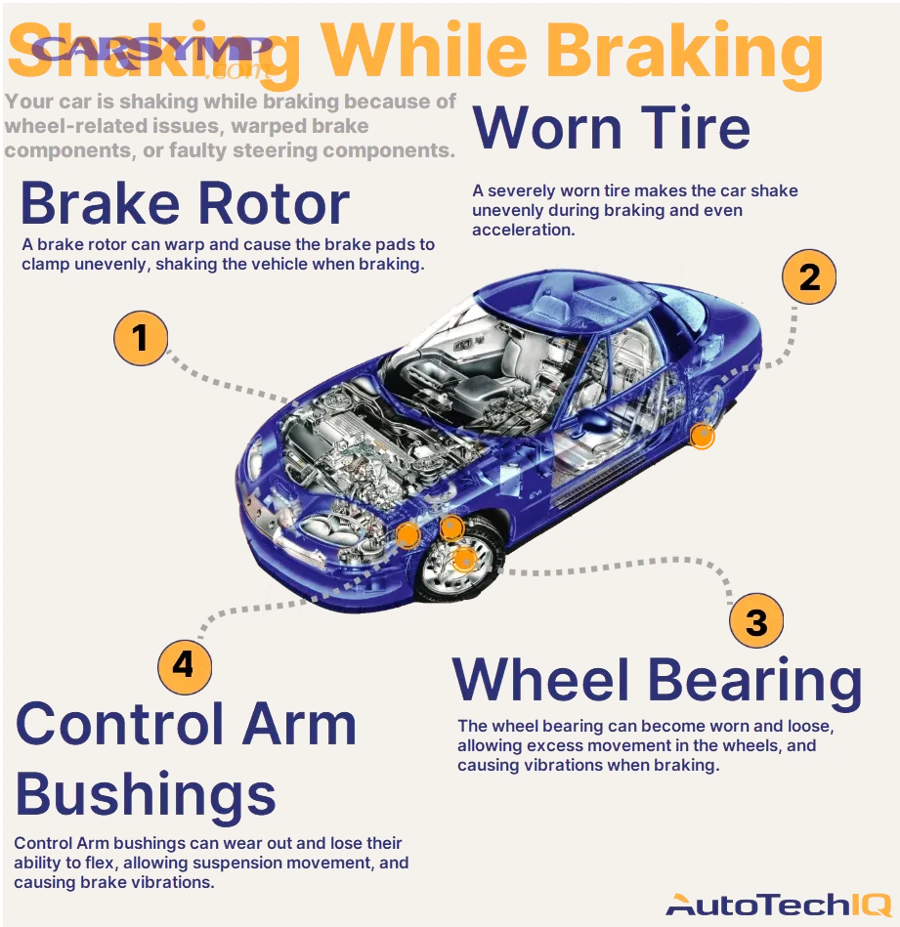
Yes, brake rotor vibration under braking is often described as warped rotors, but the more accurate causes are usually disc thickness variation, lateral runout, and uneven pad deposits rather than a dramatically bent disc. More specifically, this matters because the common phrase “warped rotor” simplifies several different mechanical conditions into one label. Delphi notes that modern discs supplied new are very rarely warped out of the box, and that braking vibration is more often linked to DTV or runout. Source
In practice, a rotor does not need to look visibly distorted to create a noticeable brake shake. If one section of the friction surface is slightly thicker, thinner, or coated with more transferred pad material than another, the brake pads lose and regain pressure as the rotor turns. The driver then feels this cyclic force as pedal pulsation, wheel shake, or a low-frequency judder. That is why many cars exhibit braking vibration even when the rotor appears visually normal at first glance. Source
The distinction matters for repairs. A driver who assumes “warped rotors” may replace discs without checking hub condition, caliper movement, or lug torque. If runout, contamination, or hardware drag remains, the new rotor can develop the same pattern again. That is one reason experienced technicians treat warped rotors as a symptom label first and a root-cause diagnosis second. This is also the right place to reinforce Preventing vibrations with maintenance: correct fitment and inspection matter as much as the replacement part itself. Source
What is brake judder and how does it create vibration when braking?
Brake judder is the vibration felt during brake application when uneven rotor thickness, runout, or intermittent pad contact creates fluctuating braking torque through the wheel, suspension, and hydraulic system. To better understand the issue from this heading, think of judder as a repeated force event that happens once per wheel rotation or at another consistent interval during braking. Source
Ferodo describes brake judder as vibration felt through the steering wheel and suspension when the brakes are applied at certain speeds and pressures. Toyota’s service information similarly explains that uneven rotor thickness or runout changes pad-to-rotor clearance during braking and transmits vibration through the pedal, floor, or steering wheel. This explains why one driver complains of a pulsing pedal while another complains of a shaky steering wheel even though both may have the same underlying brake-disc problem. Source
Judder can stay mild for a long time, especially when it is most noticeable only from higher speeds. However, once the friction surface becomes more uneven or heat spots develop, the vibration often becomes easier to feel under light brake pressure and may start showing up in more everyday stops. According to a study by the PHM Society in 2020, brake rotor thickness variation may result in unpleasant brake pulsation and vehicle vibration during braking, underscoring why even small geometric changes can produce a noticeable driver complaint. Source
What are the most common rotor-related and brake-related causes of vibration under braking?
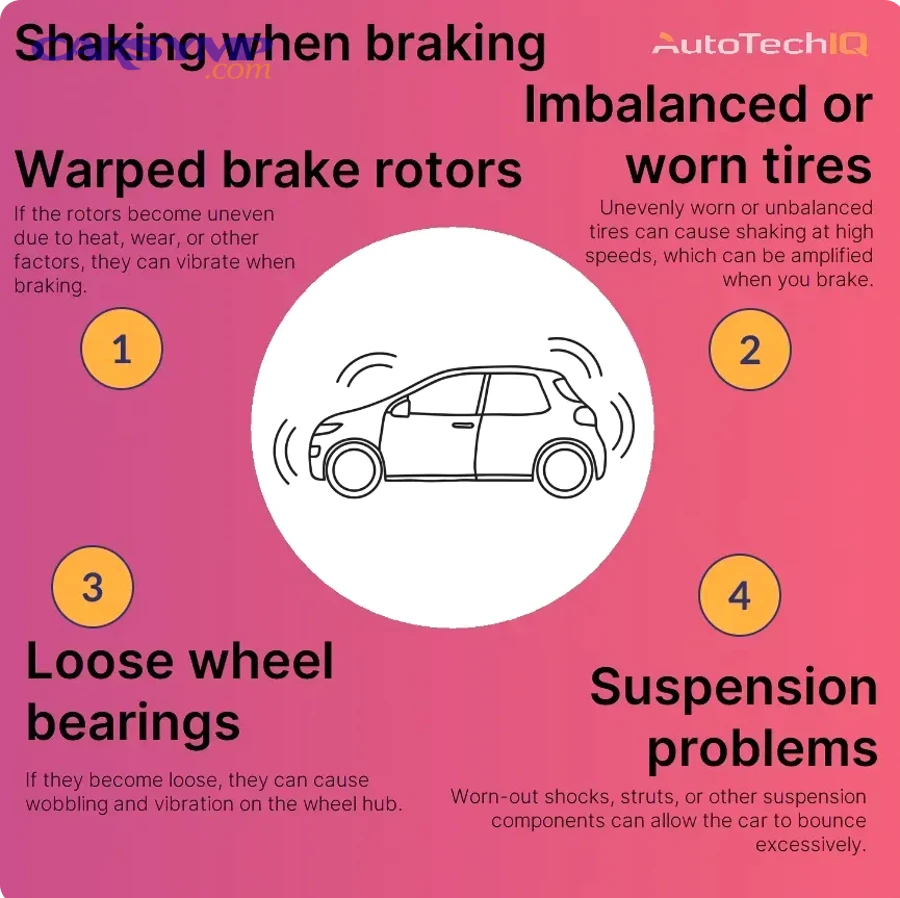
There are five main cause groups of brake vibration under braking: rotor thickness variation, rotor runout, uneven pad deposits, heat damage, and brake hardware faults such as seized calipers or contaminated hub faces. Next, the issue becomes classification, because grouping the causes makes vibration diagnosis much more accurate than treating every pulsation as the same failure. Source
Which rotor and pad faults commonly cause braking vibration?
There are four common rotor-and-pad fault types that create braking vibration: disc thickness variation, excessive lateral runout, uneven pad material transfer, and heat-damaged rotor surfaces. More specifically, each of these faults changes the friction relationship between pad and disc, but they do so in slightly different ways. Source
Disc thickness variation means the rotor is not the same thickness all the way around its friction surface. Even a very small difference can cause the pad to move in and out as the rotor rotates. That repeated motion shows up as a pulsing brake pedal or a rhythmic vibration during braking. Delphi explains DTV as a condition in which the front and rear rotor faces are no longer consistently flat and parallel, while Wagner notes that runout beyond specification can lead to DTV over time. Source
Lateral runout is the side-to-side wobble of the rotor as it spins. A rotor with too much runout may contact the pads unevenly even when the brakes are not being applied hard, which gradually wears the disc into a thickness-variation pattern. This is why runout is often a precursor cause and DTV is the symptom that the driver eventually feels. Once that pattern is established, the judder can worsen quickly. Source
Uneven pad deposits create a different but related problem. If pad material transfers inconsistently to the disc face, the friction coefficient changes around the rotor. The driver then feels a grab-release cycle under braking. Delphi notes that improper bedding can create uneven deposits and localized heat build-up, while Apec’s technical guide explains that too little or too much bedding heat can trigger a stick-slip pattern. Source
Heat damage adds another layer. Severe overheating can create hard spots, blue spots, or structural changes in the disc. Ferodo states that hot spots cause intermittent contact between pad and disc, leading to judder, and Toyota notes that excessive heat damage may include cracking and is a reason for replacement rather than simple resurfacing. Source
Which brake hardware or installation faults can create the same symptom?
There are at least six common hardware and installation faults that can create the same symptom: seized caliper slide pins, sticking caliper pistons, dirty hub faces, improper lug torque, seized pads in the bracket, and wheel or hub centering problems. In addition, these faults often explain why new rotors and pads still vibrate after recent brake work. Source
A seized caliper or slider pin is one of the most important examples. Wagner explains that a seized caliper piston or sliding pin applies uneven force to each side of the rotor, creating uneven wear and eventually DTV. The symptom often begins as a pull, drag, smell, or hotter wheel before it becomes a formal vibration complaint. When that caliper is not repaired, the next rotor can suffer the same fate. Source
Dirty hub mounting surfaces are another major cause. Delphi states that even a tiny particle of rust or debris between the hub and disc can create measurable axial runout, which then produces uneven wear. Ferodo similarly warns that rust or dirt causes poor contact between hub and disc. This is why careful cleaning of the mounting face is one of the simplest and most important maintenance habits for Preventing vibrations with maintenance. Source
Improper tightening can also create trouble. Ferodo notes that excessive tightening torque can distort the contact relationship and create vibration, while incorrect wheel centering or damaged spacers on some alloy wheel setups can add runout once the wheel is installed. In real-world terms, that means a brake job can look correct on the lift and still produce a vibration on the road after the wheel is torqued down. Source
According to Delphi’s brake training material, a single speck of rust measuring only 0.05 mm can create more than 0.1 mm of axial runout at the braking surface, showing how a tiny installation error can become a driver-perceived vibration after only a short period of use. Source
How can drivers tell whether the vibration is coming from the rotors or from another fault?
Drivers can usually identify the likely source by noting where the vibration is felt, when it appears, and whether it happens only under braking or also while cruising. Then, once the symptom is mapped correctly, the issue under this heading becomes separation: rotor faults have patterns, and so do tire, suspension, wheel-bearing, and ABS-related events. Source
Does steering wheel shake, pedal pulsation, or body vibration point to different causes?
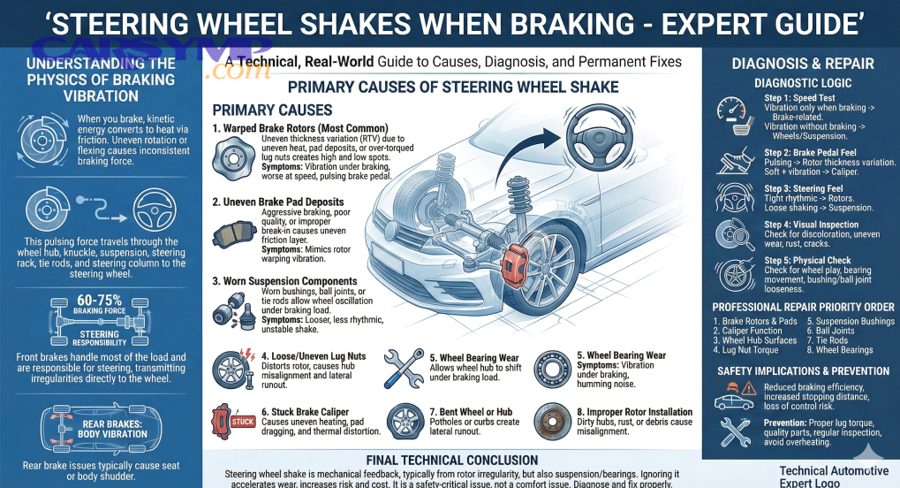
Yes, steering wheel shake, pedal pulsation, and body vibration often point to different locations or force paths, although none of them alone proves the exact fault without inspection. Specifically, symptom location helps narrow the search because front brake issues more often speak through the steering system, while rear brake or chassis vibration may be felt elsewhere. Source
Steering wheel shake commonly suggests that the vibration is being transmitted through the front suspension and steering linkage. That does not automatically mean the front rotors are the only cause, but it makes them a high-priority check. Ferodo’s definition of brake judder centers on steering wheel and suspension feel, which matches the typical front-axle complaint many drivers describe after highway-speed braking. Source
Brake pedal pulsation is strongly associated with disc thickness variation or runout because the pad and caliper piston physically move with the changing rotor surface. The driver feels that hydraulic response in the pedal. If the pedal stays smooth but the steering wheel shakes, the problem may still be in the front discs, but the force may be traveling more through the chassis than through the hydraulic feedback path. Source
Seat, floor, or whole-body vibration can point toward rear brake contribution, broader suspension movement, or another component that resonates during deceleration. Toyota’s bulletin specifically notes that brake judder can be felt through the pedal, vehicle floor, and steering wheel, which is a reminder that symptom location is a clue, not a verdict. A careful road test checklist to isolate vibration should therefore record exactly what the driver feels, at what speed, and under what pedal pressure. Source
How is brake rotor vibration different from tire imbalance, suspension shake, or ABS pulsation?
Brake rotor vibration is usually limited to brake application, tire imbalance is usually speed-related even off the brakes, suspension shake often reacts to bumps or looseness, and ABS pulsation is a brief normal pedal event during near-lock braking. However, these symptoms overlap enough that careless testing causes misdiagnosis. Source
A tire imbalance typically appears as a vibration at a certain cruising speed whether the driver is braking or not. Braking may make it feel worse as weight transfers forward, but the root pattern exists outside brake application. Rotor judder, by contrast, tends to appear predictably as the brake pedal is applied and fade as the pedal is released. That timing difference is one of the simplest field tests in vibration diagnosis.
Suspension shake behaves differently again. Worn control arm bushings, loose steering components, or bad wheel bearings can let brake forces excite the front end during deceleration, so the vehicle may feel unstable or loose. Toyota’s bulletin lists a seized wheel bearing among the conditions that can appear during judder diagnosis, which shows why brake symptoms should not be analyzed in isolation from the rest of the corner assembly. Source
ABS pulsation is the easiest to mistake if the driver is unfamiliar with it. U.S. Department of Transportation ABS guidance explains that during ABS operation, drivers should expect to feel the brake pedal pulsating and should continue applying pedal pressure as required. The key distinction is that ABS pulsation normally happens during hard stops or low-traction events, whereas rotor-related pulsation repeats during ordinary deceleration once the disc condition has deteriorated. Source
When does brake vibration happen, and what does the timing reveal about the cause?
Brake vibration timing often reveals the fault pattern: light-brake pulsation suggests early surface irregularity, high-speed braking makes judder easier to feel, and heat-related worsening points toward deposits, drag, or thermal damage. Next, the heading shifts from parts to conditions, because when the symptom shows up is often as useful as what component is involved. Source
Can vibration under light braking and hard braking indicate different rotor problems?
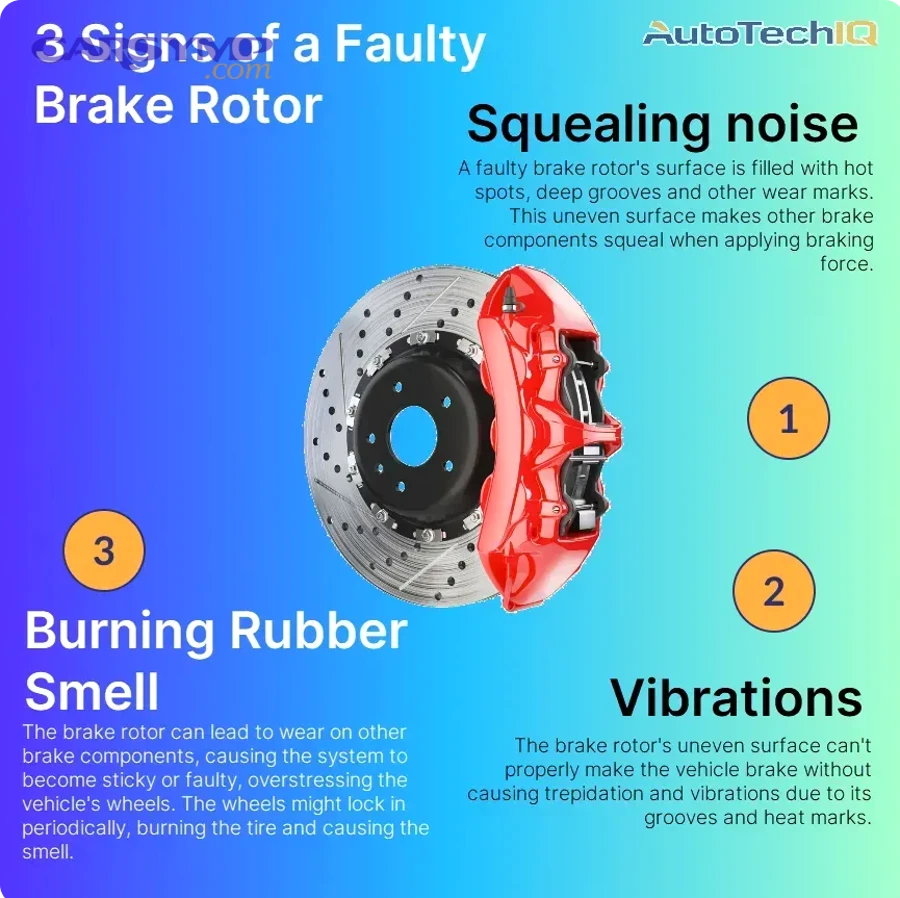
Yes, vibration under light braking and hard braking can indicate different stages or types of rotor-related problems because pedal pressure changes how the pad contacts the disc and how much heat enters the system. More specifically, light-brake vibration often exposes subtle thickness variation or deposit patterns before heavy stops make them obvious. Source
A vehicle that pulses gently during a light highway slowdown may have early DTV, mild runout-derived wear, or light deposit buildup. Under a harder stop, the same vehicle may feel worse simply because clamping force rises and the driver notices the oscillation more. In contrast, some cars feel relatively smooth in gentle braking but shake sharply when brake temperature rises during repeated or aggressive stops. That pattern pushes the diagnosis toward thermal spots, bedding problems, or caliper drag. Source
This is why a useful road test checklist to isolate vibration includes more than one stop style. A technician or informed driver should note whether the vibration appears during gentle deceleration from 60 mph, during moderate city-speed stops, or only after repeated braking. Capturing that sequence helps prevent the classic mistake of diagnosing a heat-sensitive issue from one cold test drive.
Does brake vibration that gets worse when hot suggest rotor thickness variation, pad deposits, or caliper drag?
Yes, brake vibration that worsens as the brakes heat up often suggests pad deposits, thermal hot spots, caliper drag, or DTV that becomes more noticeable with repeated heat cycles. More importantly, heat-sensitive judder is one of the clearest signs that the surface condition and hardware condition should be checked together rather than separately. Source
Delphi explains that improper bedding can cause uneven pad deposits and local hot spots, and that repeated braking without enough cooling can overheat discs and change their structure. Ferodo similarly points to severe temperature increase as a cause of disc distortion and judder. When a caliper piston or slide pin sticks, the rotor may also run hotter on one side or one wheel, accelerating surface change. Source
Drivers can often describe this pattern clearly: the first stop of the day is acceptable, but the vibration grows stronger after traffic, a downhill descent, or several highway exits in a row. That description is highly valuable during vibration diagnosis because it ties the complaint to thermal loading rather than a purely geometric fault. According to Delphi’s service guidance, disc temperatures at high spots can exceed 650°C when uneven deposits and overheating combine, which is severe enough to alter disc structure and worsen uneven wear. Source
What should drivers inspect first when diagnosing brake rotor vibration under braking?
Drivers should inspect the complaint pattern first, then the rotor surface, pad wear, hub cleanliness, caliper movement, and rotor measurements in that order to avoid replacing parts before confirming the cause. To better understand this heading, think of inspection as a funnel: start broad with symptoms and finish narrow with measurements. Source

What visual signs suggest the rotors or pads are causing the vibration?
The most useful visual signs are blue spots, darker hot areas, scoring, uneven pad wear, taper wear, cracked surfaces, and obvious contamination or rust on the contact surfaces. Specifically, visual inspection does not replace measuring, but it often points immediately toward the right branch of the diagnosis tree. Source
Blue spots or hard spots suggest overheating. Toyota’s bulletin flags blue spots as a sign of excessive heat damage, while Ferodo states that blue spots or darker localized areas are strong indicators that the disc has overheated and should be replaced with the pads if damage is severe. That visual evidence supports a heat-based explanation rather than a simple installation-only issue. Source
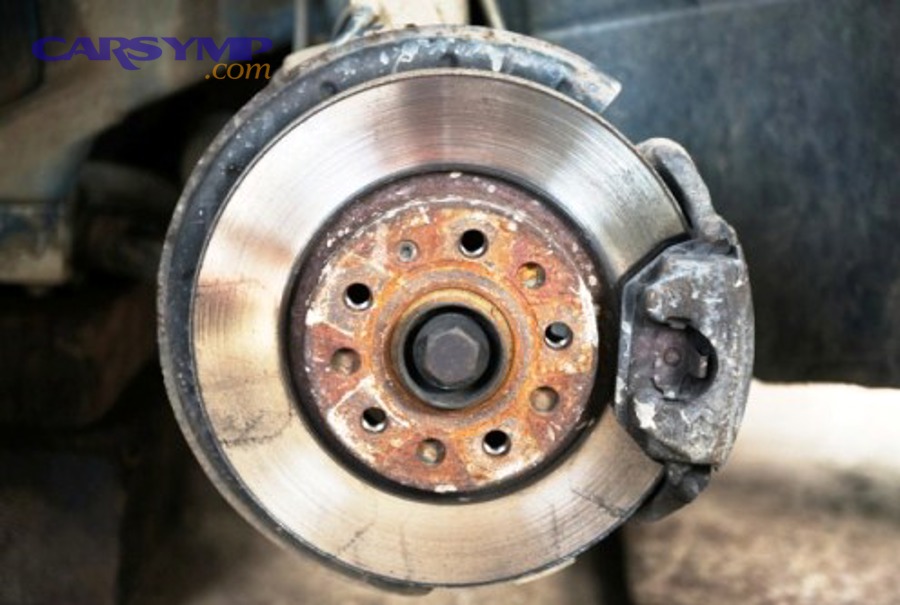
Uneven pad wear or taper wear points toward caliper or guide-pin problems. If one pad is much thinner than its mate, the rotor may already be wearing unevenly. Rust on the hub face or rotor hat area can hint at poor seating. Surface streaking or uneven friction coloration can indicate transferred pad material rather than metal distortion. These are all clues that should be written into the inspection record, especially if the vehicle recently had brake work. A smart carsymp.com-style symptom note would log side-to-side heat difference, wear pattern, and whether the rotor face shows hot spotting or irregular film transfer.
What checks confirm rotor-related vibration before replacing parts?
The confirming checks are rotor thickness measurement at multiple points, runout measurement with a dial indicator, minimum-thickness verification, hub-face inspection, and caliper movement testing. Besides visual clues, these checks convert a symptom report into a repair decision that can be defended technically. Source
Volkswagen service guidance available through NHTSA states that technicians should measure rotor thickness in four locations using a caliper or micrometer and verify that the disc remains above minimum thickness after machining. Wagner’s service checklist also says to inspect the rotor for lateral runout, parallelism, and minimum thickness specification. These checks matter because a rotor can look acceptable yet still be outside tolerance. Source
Runout measurement is especially important after recent brake service. If the rotor sits against rust, debris, or a distorted hub face, the resulting wobble can quickly wear the disc into DTV. Hub cleanliness, wheel torque, and caliper freedom should be checked before blaming the disc alone. This is why an effective road test checklist to isolate vibration should always be paired with a lift inspection checklist: one explains when the symptom occurs, and the other explains why.
According to Volkswagen’s 2023 brake-rotor vibration bulletin, rotor thickness must be measured in four locations and must remain above minimum specification after machining to be reused, reinforcing that brake repair decisions should be based on measurement, not guesswork. Source
What related brake service mistakes and edge-case issues can worsen brake judder?
The most important supporting issues are dirty hub faces, incorrect lug torque, poor pad bedding, runout-versus-DTV confusion, and false positives such as ABS pulsation or suspension movement. In addition, this supplementary section expands the topic beyond direct cause identification so the article builds stronger semantic depth without losing focus on the original search intent. Source
Can improper lug nut torque or dirty hub surfaces cause rotor vibration after brake service?
Yes, improper torque or dirty hub surfaces can cause rotor vibration after brake service because both conditions can prevent the disc from seating true against the hub. More specifically, they create or amplify runout, which later wears into thickness variation. Source
This is one of the most frustrating failure patterns for drivers because the symptom often appears soon after “new brakes.” In reality, the new parts may not be the problem. Rust scale, corrosion flakes, or trapped debris can tilt the rotor imperceptibly at installation. Overtightening or uneven tightening can then worsen the alignment error. Once the wheel rotates thousands of times, the disc surface develops an uneven wear pattern and the pulsation begins. Source
For that reason, Preventing vibrations with maintenance starts with cleaning the mounting face, checking hub condition, and torquing hardware correctly in sequence and to specification. Many repeat brake-vibration complaints are really installation-quality complaints in disguise.
Does improper brake pad bedding create uneven pad deposits and brake judder?
Yes, improper pad bedding can create uneven friction transfer, heat concentration, and brake judder, especially when new pads and rotors are subjected to abuse or inconsistent use too early. More importantly, bedding errors explain why a system can vibrate even when all parts are technically new and within spec at installation. Source
Proper bedding establishes a stable friction layer between pad and disc. Delphi recommends avoiding hard and excessive braking for roughly the first 100 miles after new pad installation so that material transfers evenly. When that process is interrupted by repeated heavy stops, feathering, or incompatible pad/disc behavior, the transfer layer can become patchy. Those patches generate uneven braking torque and hot spots. Source
This point broadens the article’s semantic coverage in a useful way: not every vibration begins as a damaged part. Some begin as an incorrect break-in process. Drivers who understand that link are more likely to protect fresh brake work and less likely to assume that the brand-new rotor itself was defective.
What is the difference between rotor runout and disc thickness variation?
Rotor runout is side-to-side wobble during rotation, while disc thickness variation is a difference in rotor thickness around the friction surface; runout often causes DTV over time, but the two are not identical. Meanwhile, separating these two terms improves both technical accuracy and repair quality. Source
Runout is a mounting or rotational-trueness problem. If the disc does not spin in a perfectly consistent plane, one point may touch the pad more than the rest. Over time, that contact bias wears the rotor unevenly. DTV is the resulting thickness inconsistency that the driver feels most directly during braking. Delphi states that DTV is caused by uneven disc wear, while Wagner explains that runout beyond specification can lead to DTV. Source
This distinction is valuable because a shop that measures only thickness may miss the runout source, and a shop that machines only the disc may fail to correct the hub or hardware condition that caused the runout. Strong vibration diagnosis therefore depends on measuring both.
Can ABS activation or suspension wear be mistaken for brake rotor vibration?
Yes, ABS activation or suspension wear can be mistaken for brake rotor vibration because all three can create shaking or pulsation during deceleration, but their triggers and feel patterns differ. In short, context separates them. Source
ABS pulsation is normal during hard or low-traction braking and usually feels like rapid pedal feedback while the system prevents wheel lock. U.S. DOT guidance says drivers should expect pedal pulsation during ABS operation and keep pressure applied. That behavior is event-based rather than chronic. Rotor-related judder, by contrast, tends to appear in repeatable everyday braking once the disc condition deteriorates. Source
Suspension wear creates another false trail. Loose bushings or joints may let brake forces shake the chassis during deceleration, especially at higher speeds. The vehicle may dart, feel loose over bumps, or vibrate at speed even before braking begins. That is why the best road test checklist to isolate vibration records three comparisons: braking versus cruising, smooth road versus rough road, and light stop versus hard stop. When those notes are combined with rotor measurement and brake inspection, the diagnosis becomes far more reliable.
According to the U.S. Department of Transportation’s ABS guidance, drivers should expect brake pedal pulsation during ABS operation and continue applying pressure, which helps distinguish normal ABS feedback from a chronic rotor-induced vibration complaint. Source
A practical way to apply that distinction is to document the symptom in a simple test sequence before any parts are ordered. Start with a smooth, low-traffic road. Note whether the vehicle cruises smoothly at 40 to 60 mph with no pedal input. Then apply light brake pressure from the same speed and record whether the steering wheel trembles, the pedal pulses, or the body shudders. Repeat with a firmer stop, and then repeat again after several stops once brake temperature rises. That pattern often tells more than a driver’s first impression because it separates constant-speed vibration from brake-only vibration and cold behavior from hot behavior. This is the most useful version of a road test checklist to isolate vibration because it links symptom, speed, temperature, and pedal force in one chain.
A concise field checklist can help organize those observations:
| Road test point | What to observe | What it may suggest |
|---|---|---|
| Cruise at steady speed without braking | Vibration present or absent | If present, tire, wheel, bearing, or suspension causes move higher on the list |
| Light braking from moderate speed | Pedal pulse, steering tremor, body shake | Early DTV, runout, or mild deposit pattern |
| Harder braking from the same speed | Symptom becomes stronger or stays the same | More severe disc irregularity, heat sensitivity, or caliper contribution |
| Several repeated stops | Vibration grows with temperature | Pad deposits, hot spots, dragging caliper, or thermal distortion pattern |
| Emergency-style braking on a safe surface | Rapid pulsation only during near-lock event | Normal ABS intervention rather than chronic rotor judder |
The table above helps connect symptom timing with likely causes rather than relying on guesswork. In many cases, the driver’s description becomes much clearer once the complaint is broken into repeatable conditions.
Another useful checkpoint is service history. If the vibration appeared soon after rotor or pad replacement, installation quality moves toward the top of the list. If the symptom appeared gradually over months, wear-related DTV, heat cycling, and caliper drag become more likely. If the complaint happens only after mountain driving, towing, or repeated highway exits, thermal stress and pad transfer deserve extra attention. This kind of timeline analysis strengthens vibration diagnosis because it ties the symptom to real operating conditions rather than to a single oversimplified cause such as “bad rotors.”
Maintenance habits also shape the long-term outcome. Preventing vibrations with maintenance means cleaning hub faces thoroughly, checking rotor mounting surfaces, lubricating slide pins where specified, confirming free caliper movement, using correct torque procedures, and bedding pads properly after service. Drivers do not need to perform every measurement themselves to benefit from this approach. They only need to understand that brake vibration is often a system issue, not a disc-only issue. When that mindset changes, repeat failures become much less common. Source
For readers who want a practical summary, the most reliable logic chain looks like this: if the car is smooth while cruising but shakes during braking, inspect the brake system first; if the shake worsens with heat, check for deposits, hot spots, or caliper drag; if the vibration began after brake work, verify hub cleanliness and torque; if the pedal pulses but the symptom also exists off-brake, expand the inspection to tires, bearings, and suspension. That approach keeps the article’s hook chain intact from title to diagnosis to action.
In short, brake rotor vibration under braking usually comes from disc thickness variation, runout, uneven pad transfer, heat damage, or hardware faults that change how braking force is applied. The best answer is not to assume the rotor is simply warped, but to identify when the vibration occurs, where it is felt, and what inspection evidence confirms the real cause. That is the difference between replacing parts and solving the problem.
According to Toyota service information published through NHTSA, brake judder can be felt through the steering wheel, brake pedal, and vehicle floor, and diagnosis should include checking rotor thickness variation, runout, hub condition, and related components rather than assuming a single-cause failure. Source