


Engine misfire vibration symptoms usually show up as shaking, rough idle, jerking, hesitation, and uneven power delivery because one or more cylinders stop contributing normal combustion. When that happens, the engine no longer produces smooth, balanced power, so the car can tremble at idle, stumble during acceleration, or feel noticeably weaker on the road.
Many drivers do not struggle to notice the vibration itself; they struggle to identify what kind of vibration they are feeling. Some vibrations come from the engine, while others come from tires, wheels, mounts, or driveline parts. That is why the most useful approach is not to ask only, “Is my car vibrating?” but also, “When does it vibrate, how does it change, and what other symptoms appear with it?”
The next important question is severity. A mild intermittent shake may feel annoying but manageable, while a harder shudder with a flashing check engine light can signal a misfire serious enough to damage the catalytic converter or create unsafe driveability. The problem often gets worse when drivers keep using the car without identifying the pattern early. (static.nhtsa.gov)
Introduce a new idea: the clearest way to understand engine misfire vibration symptoms is to break them down by feel, companion symptoms, driving conditions, comparison points, severity, first checks, and the related faults that often confuse the diagnosis.
What are engine misfire vibration symptoms?
Engine misfire vibration symptoms are engine-related shaking sensations caused by uneven combustion, usually felt as roughness at idle, jerking in motion, and inconsistent power delivery.
To better understand the issue, you need to connect the vibration to combustion behavior, not just to the feeling in the cabin. An engine runs smoothly when each cylinder fires in sequence with enough spark, fuel, air, and compression. When one cylinder misses that event or contributes less power than it should, the crankshaft no longer rotates with the same smooth rhythm. That imbalance creates the vibration drivers notice through the seat, steering wheel, dashboard, or floor. Tires Plus describes a misfire as something that can feel subtle at first or severe enough to feel like a major drivability event, while Firestone notes that a misfiring engine typically runs poorly, shakes, and vibrates while idling and may jerk or sputter while moving. (firestonecompleteautocare.com)

What does engine misfire vibration feel like in a car?
Engine misfire vibration usually feels like an uneven shake, a repeating shudder, or a loping roughness that seems tied to engine rhythm rather than road speed.
Specifically, the sensation often changes with operating condition. At idle, the car may tremble in place as if the engine cannot settle into a stable rhythm. Under light throttle, the car may hesitate, stumble, or feel like it briefly loses and regains power. Under stronger acceleration, the shake can become sharper, and the engine may sound uneven, flat, or strained. Many drivers describe the feeling as though the car is “missing a beat,” because the power pulses no longer arrive evenly. That description matters in vibration diagnosis because it points toward an engine event instead of a wheel-speed event. (firestonecompleteautocare.com)
The location of the sensation also helps. Engine misfire vibration often comes through the body of the car as a general roughness, especially when the vehicle is stopped or moving slowly. It may not feel concentrated in the steering wheel the way some front-end tire issues do. Instead, it often feels like the engine itself is unhappy and passing that roughness through the chassis. If the vibration becomes stronger exactly when the engine struggles, hesitates, or sounds uneven, that pattern supports an engine-origin diagnosis rather than a simple ride-quality problem.
Does an engine misfire always cause vibration?
No, an engine misfire does not always create an obvious vibration, but it often does because combustion imbalance disrupts smooth engine rotation, becomes easier to feel at low speed, and grows more noticeable under load.
However, the absence of a dramatic shake does not rule out a misfire. A mild or early-stage misfire can show up first as slight hesitation, lower fuel economy, or occasional roughness before the vibration becomes strong enough for every driver to notice. The number of affected cylinders, engine design, mount condition, idle speed, and driving load all influence how obvious the vibration feels. A powerful multi-cylinder engine can sometimes mask a small misfire better than a smaller or already-stressed engine.
The reverse is also true: not every vibration means misfire. A car can vibrate because of wheel imbalance, tire defects, worn mounts, drivetrain problems, brake issues, or even a rough-running engine caused by something other than a true cylinder misfire. That is why symptom overlap matters. The vibration alone starts the investigation, but the full symptom package helps confirm direction.
According to Firestone Complete Auto Care, a misfiring engine typically shakes and vibrates while idling and may jerk while moving, while AA1Car notes that a misfire can trigger a flashing check engine light during the event, confirming that the engine control system actively watches for this kind of combustion problem. (firestonecompleteautocare.com)
What symptoms usually appear with engine misfire vibration?
There are 7 common symptoms that usually appear with engine misfire vibration: rough idle, hesitation, jerking, power loss, uneven engine sound, check engine light activity, and poor fuel economy.

Next, once you move beyond the vibration itself, the symptom cluster becomes much easier to recognize. Most drivers do not report only shaking. They also report that the car idles badly, pulls weakly, responds late to the throttle, or feels inconsistent from one moment to the next. This grouped pattern matters because it separates engine misfire vibration symptoms from simple comfort-related vibrations that do not affect power delivery. (firestonecompleteautocare.com)
Which symptoms commonly happen together with misfire vibration?
The symptoms that most commonly happen together are rough idle, stumbling acceleration, jerking, reduced power, intermittent hesitation, a check engine light, and sometimes an exhaust note that sounds uneven or slightly popping.
For example, rough idle appears because the engine has the least rotational momentum when the car is stationary and the throttle is barely open. A weak cylinder has less help from overall engine speed, so the unevenness stands out. Jerking and hesitation appear because power delivery becomes inconsistent when the engine asks each cylinder to contribute and one of them fails or underperforms. Reduced power follows because total engine output drops when a cylinder stops doing its full share.
Poor fuel economy also fits the pattern because the engine must work less efficiently to produce the same result. Some drivers notice an erratic tachometer needle, a faint fuel smell, or a harsher exhaust note. Others notice the car seems fine for a few minutes and then starts running rough when cold, under load, or after sitting overnight. These combinations matter more than any single symptom on its own, which is why strong content clusters on sites such as carsymp.com often focus on patterns instead of isolated complaints.
Can rough idle, jerking, and power loss confirm a misfire?
Yes, rough idle, jerking, and power loss strongly support a misfire diagnosis because they point to uneven combustion, they often appear with vibration, and they reflect a direct loss of cylinder contribution.
More specifically, these symptoms are among the strongest practical clues a driver can observe without using tools. Rough idle tells you the engine cannot maintain smooth operation at low speed. Jerking tells you combustion quality is inconsistent when the drivetrain is being loaded. Power loss tells you one or more cylinders are not producing their expected output. When these signs arrive together, the probability of an engine-related issue rises sharply.
Even so, they do not “confirm” misfire in the strict mechanical sense until codes, live data, or targeted inspection support the suspicion. A fuel delivery fault, sensor problem, air metering issue, or mechanical compression problem can create the same outcome because all of them can lead to incomplete or uneven combustion. That is why you should treat these signs as a strong directional diagnosis rather than final proof.
According to Tires Plus, a misfire can feel like a punch to the gut when it becomes severe, while Firestone lists shaking at idle and jerking while moving among the typical signs of a misfiring engine. (firestonecompleteautocare.com)
When does misfire vibration happen most often?
Engine misfire vibration happens most often at idle, during acceleration, under load, during cold starts, and whenever the engine moves into conditions that expose a weak cylinder.
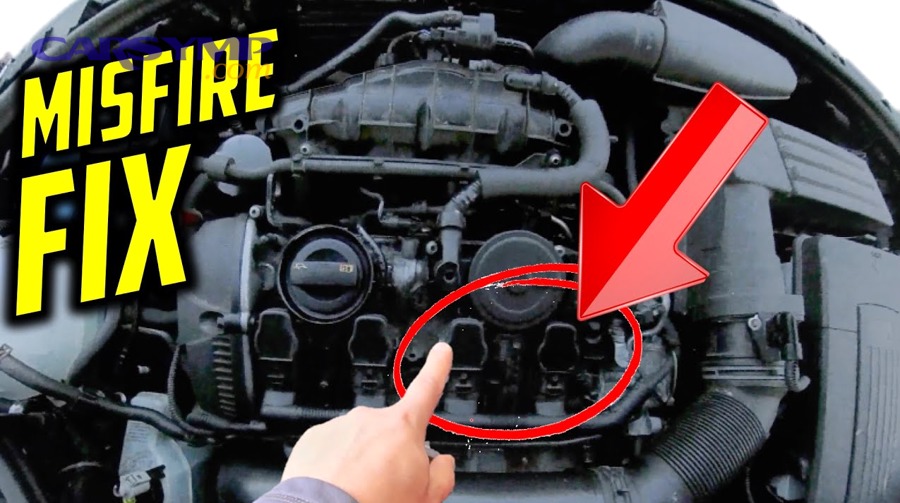
Then, the timing of the symptom becomes one of the most useful parts of diagnosis. Many people look only at how bad the shake feels, but the better question is when the shake shows up most clearly. Misfire behavior often changes with temperature, engine speed, throttle position, and load, so the pattern gives you information that a single road test sensation cannot. (tiresplus.com)
Is vibration at idle a common sign of engine misfire?
Yes, vibration at idle is a common sign of engine misfire because low engine speed exposes uneven combustion, the car is not masking the shake with motion, and weak cylinders stand out more at rest.
Specifically, idle is where drivers most often notice the raw texture of engine behavior. The cabin becomes quiet enough to notice a loping rhythm, and the body of the car can transmit the shake directly. Tires Plus notes that misfiring can cause rough idling and vibration, especially when the car is stopped and the engine is working at its most sensitive range. That is why a vehicle that shudders at a stoplight but feels slightly smoother once moving can still be suffering from a combustion problem rather than a suspension or tire issue. (tiresplus.com)
That said, idle vibration alone is not exclusive to misfires. Worn motor mounts, incorrect idle control, vacuum leaks, or air-fuel metering faults can create similar roughness. The difference is that true engine misfire vibration symptoms usually come with a clearer sense of uneven firing, stumble, or engine struggle.
Does misfire vibration get worse during acceleration or under load?
Yes, misfire vibration often gets worse during acceleration or under load because cylinder demand rises, ignition or fuel weaknesses become easier to expose, and torque gaps feel sharper through the drivetrain.
More specifically, acceleration increases cylinder pressure and energy demand. A marginal spark plug, weak ignition coil, fuel injector issue, or air-fuel problem may barely show up at idle but become obvious when the engine has to work harder. Drivers often report that the car feels acceptable while cruising lightly, then suddenly jerks, hesitates, or shakes when climbing a hill, merging, towing, or pressing the throttle harder. That change in severity strongly points toward a combustion or load-related problem. (firestonecompleteautocare.com)
This condition-sensitive pattern is one reason technicians ask detailed questions such as: Does it happen when the engine is cold? Does it happen only uphill? Does it happen in overdrive? Does it happen more in wet weather? Each answer narrows the likely cause.
Why does a car misfire more when cold than when warm?
A car may misfire more when cold because cold operation demands accurate fuel delivery, strong ignition, and stable air metering before the engine reaches normal temperature.
To illustrate, cold starts are harder on the combustion process. Fuel must atomize well, spark must remain strong, and the control system must enrich and stabilize the mixture correctly while the engine warms up. If spark plugs are tired, a coil is weak, air measurement is inaccurate, or fuel delivery is marginal, the engine can stumble and shake more when cold than when warm. Firestone notes that bad air metering issues can cause an engine to stumble or run erratically, especially when cold or under load, which explains why some misfire complaints seem to “go away” after a few minutes but still point to a real underlying problem. (firestonecompleteautocare.com)
A cold-only pattern does not make the problem harmless. It often means the weak component has not failed completely yet, but it already cannot perform well under the most demanding startup conditions.
How can you tell whether vibration is from an engine misfire or another problem?
Engine misfire wins when vibration matches engine behavior, wheel imbalance dominates by road speed, and mount-related vibration is most obvious when the engine’s movement transfers into the body without the same loss of power.
To better understand the differences, compare what changes the symptom: engine speed, load, temperature, or road speed. Misfire vibration tends to follow engine events and driveability changes. Wheel-related vibration tends to follow vehicle speed. Mount-related vibration tends to emphasize transmitted harshness without always creating the same stumble or loss of power. That comparison framework makes vibration diagnosis far more accurate than relying on feel alone.
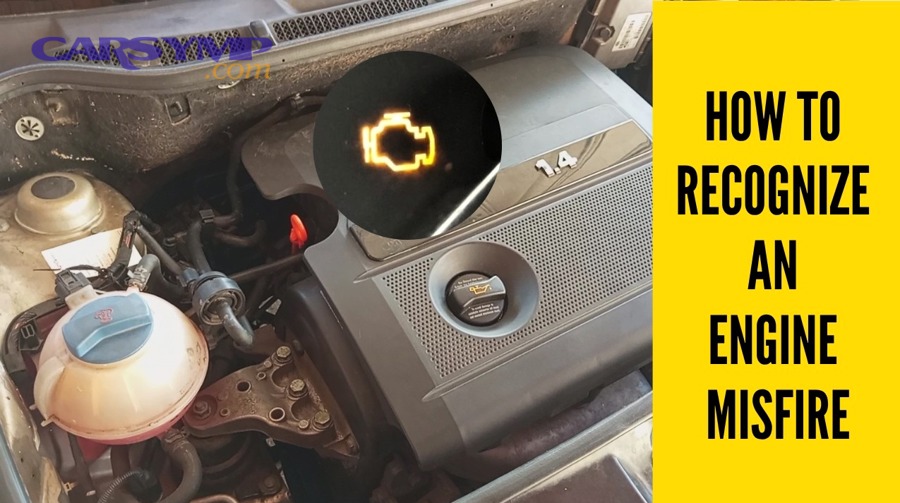
The table below summarizes the most useful clues in a practical Wheel balance vs alignment vibration comparison and shows how those issues differ from engine misfire vibration symptoms.
| Vibration source | When it shows up most | What it feels like | Power loss or hesitation | Typical clue |
|---|---|---|---|---|
| Engine misfire | Idle, load, acceleration, cold start | Rough, rhythmic shake tied to engine behavior | Common | Often accompanied by rough idle, jerking, MIL activity |
| Wheel imbalance | Specific road-speed ranges | Repeating shake that increases with speed | Uncommon | More noticeable at highway speeds |
| Alignment issue | While driving, especially with pull or uneven tire wear | Drift, pull, tire scrub, sometimes vibration | Uncommon | Steering pull and tire wear pattern stand out |
| Bad motor mounts | Idle, gear engagement, load transitions | Thump, harshness, body-transmitted vibration | Possible but not required | Engine movement or clunk may accompany it |
Is engine misfire vibration different from wheel balance or alignment vibration?
Yes, engine misfire vibration is different from wheel balance or alignment vibration because it follows combustion quality, it often changes with throttle or load, and it commonly appears with rough running or hesitation.
However, wheel imbalance usually becomes more obvious as road speed rises, especially in a consistent MPH range such as moderate or highway speed. The engine may feel normal, but the steering wheel, seat, or body begins to vibrate more as the wheels spin faster. Alignment issues, by contrast, are more likely to produce steering pull, uneven tire wear, or a sense that the car does not track straight. Vibration can be present, but alignment problems do not usually make the engine stumble, jerk, or lose power.
This is why a true Wheel balance vs alignment vibration comparison is useful only when you place engine misfire next to both. If the symptom appears while the car is parked and idling, wheel balance and alignment become much less likely. If the symptom strengthens exactly with a stumble in acceleration, an engine-origin fault becomes more likely.
How is misfire vibration different from bad motor mount vibration?
Misfire vibration differs from bad motor mount vibration because a misfire creates rough power production, while a bad mount mainly lets normal or slightly rough engine movement transfer more directly into the chassis.
Specifically, a worn mount can make the car shake more at idle, especially in gear, because the mount no longer isolates engine motion well. But the engine may still produce normal power. A true misfire, on the other hand, usually adds a drivability symptom: hesitation, jerking, reduced power, uneven exhaust note, or check engine light activity. When the car both shakes and clearly runs badly, the evidence leans toward combustion rather than simple isolation failure.
The overlap can confuse drivers because a car with both a weak cylinder and worn mounts can feel especially harsh. In those cases, the mount amplifies the symptom, but it is not the root cause of the misfire.
Is vibration with hesitation more likely to be an engine issue than a tire issue?
Yes, vibration with hesitation is more likely to be an engine issue than a tire issue because hesitation reflects interrupted power production, it often appears with misfire-related shaking, and tires do not normally cause throttle-response loss.
More importantly, hesitation is a performance symptom, not just a comfort symptom. Tires and wheels can shake the vehicle, but they do not generally cause the engine to stumble when you ask for power. When the shake arrives together with delayed throttle response, jerking, weak acceleration, or a flashing check engine light, the pattern points strongly toward combustion, ignition, fuel, or air metering faults rather than a rotating wheel problem. (firestonecompleteautocare.com)
According to AA1Car, a misfire will cause the check engine light to flash while it is occurring, and cylinder-specific misfires commonly set P030X codes, which ties hesitation-and-vibration complaints directly to monitored engine events. (aa1car.com)
How severe are engine misfire vibration symptoms, and when are they getting worse?
Engine misfire vibration symptoms become severe when the shake strengthens, power loss grows, the check engine light flashes, the engine struggles continuously, or the vehicle becomes unsafe or potentially catalyst-damaging.

In addition, severity is not measured only by how annoying the vibration feels. It is measured by risk: risk of being stranded, risk of poor throttle response in traffic, and risk of damaging emissions hardware. A slight intermittent roughness may give you time to schedule diagnosis. A strong, repeated, or flashing-warning-light event means the problem has moved beyond inconvenience. (static.nhtsa.gov)
What signs show that engine misfire vibration is getting worse?
The clearest signs are stronger shaking, more frequent jerking, worse idle quality, rising hesitation, harder starts, flashing warning lights, stronger fuel smell, and a growing sense that the engine cannot deliver steady power.
Specifically, progression often looks like this: first, an occasional rough idle or light stumble; then more frequent hesitation under load; then sharper shaking, more noticeable power loss, and a warning light that stops being occasional. Some drivers also notice exhaust popping, unstable RPM, or worsening fuel economy. Others discover the symptom is spreading from only cold starts to warm driving as well. The important idea is progression. When the symptom appears in more conditions and with greater intensity, the problem is no longer minor.
A flashing warning light deserves special attention because it signals that the misfire is active enough to threaten the catalytic converter. NHTSA-published owner manual language states that if the light is blinking, engine misfire is occurring and could damage the catalytic converter, and it warns that excessive exhaust temperatures under misfire conditions can damage nearby components and potentially create a fire risk. OBD-Codes also explains that the flashing malfunction indicator is intended to warn the driver about conditions that may lead to catalytic converter damage. (static.nhtsa.gov)
Is it safe to keep driving with engine misfire vibration symptoms?
No, it is not always safe to keep driving with engine misfire vibration symptoms because severe misfires can reduce control, increase stall or hesitation risk, and damage the catalytic converter if the condition stays active.
However, context matters. A very mild intermittent symptom that appears only briefly and does not include a flashing warning light may allow a short, cautious trip to a repair facility. A strong shake, obvious power loss, continuous jerking, or flashing check engine light means the safer choice is to stop pushing the car, avoid hard acceleration, and arrange prompt diagnosis. The reason is not only mechanical sympathy; it is driveability. A car that hesitates while merging or crossing traffic is a safety problem, not just a maintenance problem. (static.nhtsa.gov)
In short, the more the car runs badly, the less appropriate it is to continue normal driving. That practical rule protects both the driver and the hardware.
What should a driver check first when engine misfire vibration appears?
A driver should first check warning light behavior, note when the vibration happens, scan for trouble codes if possible, and review recent maintenance before replacing any parts.

Next, the first stage is not random parts replacement; it is pattern capture. The goal is to preserve clues before they disappear or become distorted by guesswork. Many misfire repairs become expensive because drivers replace spark plugs, coils, sensors, or injectors one by one without first noting the actual symptom pattern. A better method is to identify when it happens, how severe it is, and whether the car is signaling urgency. (aa1car.com)
What quick checks help confirm whether the vibration is a misfire?
The quickest helpful checks are observing idle behavior, noting load sensitivity, watching the check engine light, scanning for codes, and comparing symptom timing to cold starts, acceleration, or specific road speeds.
To illustrate, start with five simple observations:
- Check whether the car shakes while parked and idling.
- Notice whether acceleration makes the vibration worse.
- See whether the check engine light is steady or flashing.
- Use a scan tool if available to look for codes such as P0300 or P030X.
- Ask whether the symptom depends on cold starts, hills, or damp weather.
These checks matter because they divide the problem into categories. A parked-idle shake points away from wheels. A flashing warning light points toward active misfire risk. A cylinder code narrows the search area. A cold-only symptom suggests a marginal condition that becomes obvious under startup demand. A speed-only shake points you back toward wheels, tires, or driveline components instead.
This is also where practical maintenance history helps. If spark plugs are overdue, if the ignition system has not been serviced in a long time, or if air and fuel system issues have already been noted, the symptom pattern becomes easier to interpret. Preventing vibrations with maintenance is not a vague slogan here; it means keeping the combustion system healthy enough that weak links do not develop into full misfire events.
Should you diagnose misfire vibration before replacing parts?
Yes, you should diagnose misfire vibration before replacing parts because symptom patterns save money, codes provide direction, and the same misfire feeling can come from very different root causes.
More specifically, a misfire can come from spark, fuel, air, compression, or control issues. Replacing the wrong part may temporarily change the symptom without fixing the cause, or it may waste time and money entirely. Diagnosis begins with the pattern, continues with codes and visual checks, and only then moves toward targeted testing or repair. That approach is especially important when misfire appears under only one condition, such as cold starts or heavy load, because the condition itself is part of the evidence.
According to AA1Car, misfire monitoring is one of the continuous OBD checks because misfires can increase emissions and damage the catalytic converter, which reinforces why code-based diagnosis matters rather than guesswork. (aa1car.com)
What related issues can make engine misfire vibration symptoms easier to misunderstand?
The related issues most likely to confuse drivers are random vs single-cylinder misfires, flashing warning-light severity, cold-start-only behavior, and fuel-smell or exhaust-popping symptoms that overlap with broader running problems.

Besides the main diagnosis, these edge cases deepen understanding because they explain why one driver reports a mild shake and another reports a harsh bucking event even though both say the car is “misfiring.” The difference often lies in how many cylinders are involved, how active the fault is, and under what conditions the engine loses combustion stability. (static.nhtsa.gov)
What is the difference between a random misfire and a single-cylinder misfire?
A random misfire affects multiple combustion events across the engine, while a single-cylinder misfire repeatedly points to one cylinder that is failing to contribute properly.
Specifically, a random misfire may feel broader, less consistent, or more difficult for a driver to localize. It can come from shared causes such as fuel pressure problems, air metering faults, or broader ignition issues. A single-cylinder misfire may feel more rhythmic or repeatable and often sets a cylinder-specific code such as P0301 or P0302. The driver may still only feel “vibration,” but the scan data gives the structure that the seat-of-the-pants sensation cannot.
Can a flashing check engine light mean misfire vibration is damaging the catalytic converter?
Yes, a flashing check engine light can mean active misfire vibration is severe enough to threaten the catalytic converter because unburned fuel and abnormal exhaust heat can overload the converter rapidly.
More importantly, this is one of the clearest urgency markers a driver can recognize without tools. When the light flashes during rough running, the car is no longer simply requesting attention at your convenience. It is warning that continuing to drive hard may turn a drivability problem into a much more expensive exhaust-system repair. NHTSA-published owner manual content explicitly warns that a blinking light indicates engine misfire and possible catalytic-converter damage. (static.nhtsa.gov)
Why do cold-start misfires sometimes disappear after the engine warms up?
Cold-start misfires sometimes disappear after warm-up because heat improves fuel vaporization, stabilizes combustion, and helps weak components perform just well enough to hide the fault.
For example, a marginal spark plug, coil, injector behavior issue, or air-fuel control problem may be most obvious when the engine is cold and the mixture strategy is more demanding. Once the engine reaches normal temperature, the same weakness may still exist but no longer cross the threshold that creates an obvious stumble. This apparent improvement can mislead drivers into delaying repair, even though the underlying problem remains.
Can fuel smell or exhaust popping happen with engine misfire vibration symptoms?
Yes, fuel smell or exhaust popping can happen with engine misfire vibration symptoms because incomplete combustion can leave unburned mixture in the exhaust stream and disturb normal exhaust pressure pulses.
Specifically, these side symptoms are not required for a misfire diagnosis, but when they appear alongside rough idle, vibration, and hesitation, they strengthen the combustion-fault picture. Fuel smell suggests that some of the expected burn did not happen in the cylinder. Popping or an irregular exhaust note suggests the exhaust flow is no longer even and stable. In that sense, these are supporting symptoms rather than primary ones, but they help connect the mechanical event to the driver’s observations.
To sum up, the smartest way to identify engine misfire vibration symptoms is to track pattern before parts: note when the shake happens, what other symptoms appear with it, whether load or cold starts worsen it, and whether the warning light becomes active or flashes. That approach separates engine roughness from tire, wheel, alignment, and mount problems and helps you act before the condition becomes more expensive or less safe.