Dealership starter replacement typically costs $600-$1,100, while independent shops charge $300-$600 for the same service, representing potential savings of 20-50% or $200-$500 for most vehicle owners. This significant price difference stems from variations in labor rates, parts sourcing strategies, and overhead costs between the two service provider types. Understanding these cost disparities helps car owners make informed decisions that balance budget constraints with quality expectations and warranty considerations.
The value proposition extends beyond simple price comparisons. Dealerships offer manufacturer-certified technicians, OEM parts guarantees, and specialized diagnostic equipment particularly valuable for warranty work, recalls, and complex electrical issues. Independent shops counter with lower labor rates ($70-$120 per hour versus $100-$150 at dealers), flexible parts sourcing, and often more personalized service relationships. The optimal choice depends on specific circumstances including vehicle age, warranty status, repair complexity, and individual budget priorities.
Multiple factors influence the final starter replacement cost at both service locations. Vehicle accessibility plays a crucial role—simple replacements on compact sedans may require only 1-2 hours of labor, while luxury vehicles with starters buried beneath intake manifolds can demand 4-8 hours of work. Parts selection between OEM, aftermarket, and remanufactured options creates additional price variations ranging from $80 to $800 for the starter component alone. Regional pricing differences, diagnostic fees, and warranty coverage further complicate direct cost comparisons.
Making the right choice requires understanding when each service provider excels. Below, we’ll examine specific pricing breakdowns, value considerations, decision frameworks, and alternative options to help you navigate starter replacement with confidence.
How Much Does Starter Replacement Cost at Dealerships vs Independent Shops?
Starter replacement costs $600-$1,100 at dealerships compared to $300-$600 at independent shops, with most vehicles falling in the $900 dealer range versus $400-$500 independent range. To illustrate these differences, real-world examples from automotive forums and service records reveal consistent patterns across vehicle types and geographic regions.
The pricing gap reflects fundamental business model differences between service providers. Dealerships maintain higher overhead costs through expansive facilities, manufacturer-required equipment investments, and certified technician training programs. These expenses translate directly into labor rates that average $100-$150 per hour compared to $70-$120 per hour at independent shops. Parts pricing follows similar patterns, with dealerships primarily stocking OEM components at manufacturer suggested retail prices while independent shops access diverse supplier networks offering competitive aftermarket and remanufactured alternatives.
What Is the Average Dealer Price for Starter Replacement?
The average dealer price for starter replacement ranges from $600 to $1,100, with typical costs around $900 for mainstream vehicles and higher prices for luxury brands. Specifically, dealer pricing structures reflect OEM parts markup, premium labor rates, and comprehensive diagnostic procedures that add to the total cost.
Honda dealerships commonly quote $900 for CR-V starter replacement, breaking down to approximately $523 for the OEM starter part and $350 for labor plus taxes and miscellaneous charges. Lexus dealerships demonstrate even higher pricing tiers, with 60K service comparisons showing service costs reaching $1,330 compared to independent alternatives at $390 for similar work. These premium prices incorporate several cost components that dealerships justify through quality assurances and manufacturer backing.
Labor rates at dealerships typically exceed independent shops by $25-$50 per hour, with urban dealerships charging toward the higher end of the $100-$150 hourly range. This rate applies to the full job duration, which varies from 1.5 hours for accessible starters to 6-8 hours for complex installations requiring removal of engine components. Dealerships calculate labor using flat-rate manuals that standardize time estimates, meaning customers pay the quoted hours regardless of actual completion time.
Parts markup represents another significant cost factor at dealerships. OEM starters carry manufacturer pricing that ranges from $150 to $800 depending on vehicle make and model, with luxury brands commanding the highest prices. Dealerships rarely offer aftermarket alternatives, and when they do, the discount typically amounts to only $100-$150 off the OEM price. This parts strategy ensures compatibility and warranty compliance but eliminates the cost-saving options available through independent channels.
Diagnostic fees at dealerships add $75-$150 to the initial visit, though many shops waive this charge if customers authorize the repair. Some dealerships bundle diagnostic work with service packages, creating apparent savings that disappear when comparing final invoice totals. Luxury vehicle owners face particularly steep pricing—BMW, Mercedes, and Audi dealerships commonly quote $1,200-$1,500 for starter replacement due to specialized parts requirements and complex electrical system integration.
What Is the Average Independent Shop Price for Starter Replacement?
The average independent shop price for starter replacement ranges from $300 to $600, with most common vehicles falling in the $400-$500 range for complete service. More importantly, independent shops achieve these lower prices through reduced labor rates, flexible parts sourcing, and leaner operational overhead compared to dealership facilities.
Labor costs at independent shops typically range from $70 to $120 per hour, representing substantial savings over dealership rates. Certified independent mechanics with manufacturer-specific training may charge toward the higher end of this range while still undercutting dealer prices by $20-$40 per hour. A starter replacement requiring 2 hours of labor costs $140-$240 at independent shops versus $200-$300 at dealerships, creating immediate savings before considering parts costs.
Parts sourcing flexibility gives independent shops competitive advantages that translate into customer savings. These businesses access multiple supply channels including wholesale distributors, online retailers, and local parts stores offering aftermarket options at 30-50% below OEM pricing. A quality aftermarket starter might cost $150-$250 compared to $400-$600 for the equivalent OEM part at a dealership. Many independent shops also offer remanufactured starters with warranties, providing middle-ground options that balance cost and reliability.
Regional pricing variations affect independent shops differently than dealerships. Rural independent mechanics often charge $50-$80 per hour with parts markups of only 20-30%, while urban independent shops may reach $100-$120 per hour but still maintain price advantages over nearby dealerships. Geographic competition intensifies in areas with multiple independent options, driving prices lower through market forces that affect franchised dealerships less directly.
Service package flexibility allows independent shops to customize pricing based on customer needs and budget constraints. Unlike dealerships with standardized service menus, independent mechanics can offer graduated service levels—from basic starter replacement with aftermarket parts to premium service with OEM components and extended warranties. This customization means a budget-conscious customer might pay $350 total while someone prioritizing quality and longevity might invest $550 at the same shop.
According to automotive service data aggregated across thousands of repairs, independent shops complete starter replacements for an average of $445 compared to $875 at dealerships for identical vehicles, representing 49% savings without sacrificing quality when using reputable service providers.
How Much Money Can You Save Using an Independent Mechanic for Starter Replacement?
Using an independent mechanic for starter replacement typically saves $200-$500 or 20-50% compared to dealership pricing, with savings varying based on vehicle type, parts selection, and regional market conditions. To better understand these savings patterns, examining specific vehicle categories reveals where the greatest cost advantages emerge.
Mainstream vehicles like Honda Accords, Toyota Camrys, and Ford F-150s demonstrate the most consistent savings when serviced at independent shops. A Honda CR-V owner facing a $900 dealership quote can expect to pay $400-$500 at a quality independent shop, saving $400-$500 or approximately 44-56%. These vehicles benefit from widely available aftermarket parts and straightforward labor procedures that independent mechanics handle routinely without specialized equipment requirements.
Luxury vehicle savings follow similar percentage patterns but translate into larger absolute dollar amounts. A BMW 5 Series starter replacement quoted at $1,400 by the dealership might cost $700-$900 at an independent European specialist, saving $500-$700. However, luxury vehicle owners should verify that independent shops possess the necessary diagnostic tools and software access for proper installation, as some security features require manufacturer authorization even when using quality aftermarket parts.
The following table illustrates typical savings across common vehicle categories:
| Vehicle Type | Dealer Cost | Independent Cost | Savings Amount | Savings Percentage |
|---|---|---|---|---|
| Compact Sedan | $650-$800 | $350-$450 | $250-$400 | 35-50% |
| Midsize Sedan | $750-$950 | $400-$550 | $300-$450 | 38-50% |
| SUV/Truck | $850-$1,100 | $450-$650 | $350-$500 | 39-48% |
| Luxury Vehicle | $1,200-$1,600 | $700-$1,000 | $450-$700 | 35-47% |
Parts selection significantly impacts total savings potential. Choosing an aftermarket starter over OEM parts adds $150-$300 to the base savings from lower labor rates. A customer using a $180 aftermarket starter versus a $520 OEM part saves $340 on parts alone, plus an additional $100-$200 on labor rate differences, totaling $440-$540 in combined savings for a typical replacement.
Warranty consideration affects the net value of these savings. If the vehicle remains under manufacturer warranty, using an independent shop for non-covered maintenance won’t void coverage, but customers should document all service with receipts and detailed work orders. For vehicles beyond warranty periods, the savings become pure financial benefit without future coverage complications.
Maximum savings occur when customers combine independent shop selection with strategic timing and negotiation. Getting quotes from three or more independent shops reveals local price ranges and creates leverage for negotiation. Some shops offer 10-15% discounts during slow periods or for cash payment, potentially adding another $40-$80 to base savings. Military, AAA, teacher, and senior discounts further enhance cost advantages at participating independent locations.
What Factors Cause Price Differences Between Dealers and Independent Shops?
Price differences between dealers and independent shops result from three primary factors: labor rate disparities averaging $25-$50 per hour, parts sourcing strategies that create 30-50% cost variations, and overhead structure differences that affect operational pricing models. Besides these core elements, diagnostic procedures, warranty administration costs, and service facility investments contribute to the total price gap.
Understanding these cost drivers helps consumers evaluate whether higher dealership prices deliver proportional value or whether independent shop savings represent better financial decisions. Each factor operates independently but combines to create the substantial price differences documented in real-world service comparisons.
Why Are Dealer Labor Rates Higher Than Independent Shops?
Dealer labor rates exceed independent shop rates by $25-$50 per hour because dealerships maintain higher overhead costs, invest in manufacturer-required training and equipment, and operate under corporate pricing structures that support brand positioning. Specifically, dealerships bear operational expenses that independent shops either avoid entirely or manage through leaner business models.
Facility costs represent the most visible overhead difference between service providers. Dealerships occupy expansive properties with showrooms, parts departments, customer lounges, and service bays designed to manufacturer specifications. Monthly facility expenses including rent or mortgage, utilities, property maintenance, and aesthetic updates often exceed $50,000-$100,000 for mid-sized dealerships. These costs distribute across service department revenue through higher labor rates that average $100-$150 per hour compared to $70-$120 at independent facilities.
Manufacturer training requirements mandate that dealership technicians complete ongoing certification programs costing $3,000-$8,000 annually per technician. While this training enhances diagnostic capabilities for brand-specific issues, the investment requires recovery through premium labor pricing. Dealerships also maintain minimum staffing levels to handle warranty work processing, requiring administrative personnel whose salaries integrate into the service department’s cost structure.
Specialized equipment investments create additional cost pressure on dealer pricing. Manufacturer-specific diagnostic tools like Audi’s ODIS system or BMW’s ISTA platform cost $10,000-$25,000 for initial purchase plus annual subscription fees of $2,000-$5,000. Independent shops may acquire similar capabilities through aftermarket alternatives or choose to operate without them, avoiding these capital expenses and their associated cost recovery requirements.
Corporate profit expectations influence dealer labor rates beyond pure cost recovery. Many dealership groups operate under franchise agreements requiring specific profit margins that necessitate premium pricing. Service departments generate significant dealer profitability—often exceeding new vehicle sales—creating organizational pressure to maintain high labor rates even when competitive conditions might otherwise drive prices lower.
Customer amenities like complimentary car washes, loaner vehicles, coffee bars, and comfortable waiting areas enhance the service experience but require funding through higher service prices. While these features provide value to some customers, others prefer the $25-$50 per hour savings available at no-frills independent shops that focus resources on technical excellence rather than facility amenities.
Do Dealers and Independent Shops Use Different Starter Parts?
Dealers primarily use OEM starter parts priced at $150-$800, while independent shops offer OEM, aftermarket ($80-$350), and remanufactured ($120-$400) options, creating significant price flexibility and quality tiers. Moreover, these parts categories differ in sourcing, warranties, and performance characteristics that impact both immediate costs and long-term reliability.
OEM (Original Equipment Manufacturer) parts represent the starters installed during vehicle production or supplied through manufacturer parts networks. Dealerships stock OEM parts almost exclusively, maintaining brand consistency and ensuring compatibility with warranty requirements. These starters carry manufacturer warranties typically ranging from 12 months to 3 years, with some luxury brands offering extended coverage. The price premium for OEM parts—often 50-100% above aftermarket alternatives—reflects brand positioning, warranty support, and guaranteed fit and function.
Aftermarket starter parts come from third-party manufacturers like Bosch, Denso aftermarket divisions, and numerous specialized suppliers. These components range from economy-grade options at $80-$150 to premium aftermarket units at $200-$350 that match or exceed OEM specifications. Quality varies significantly across the aftermarket spectrum—top-tier manufacturers invest in engineering and quality control producing parts that perform identically to OEM components, while budget options may use inferior materials resulting in shorter service life.
Remanufactured starters represent a middle-ground category where worn units undergo factory rebuilding with new internal components. Quality remanufactured starters from established companies like Remy or Motorcraft cost $120-$400 and include warranties comparable to new parts. The remanufacturing process replaces brushes, bearings, solenoids, and other wear items while reusing the housing and core components. This approach delivers 80-90% of OEM longevity at 40-60% of OEM prices, making remanufactured starters popular choices at independent shops.
Independent shops maintain relationships with multiple parts suppliers, enabling price shopping and quality tier selection based on customer preferences. A single independent mechanic might source parts from local auto parts stores, wholesale distributors, online retailers, and occasionally dealership parts departments when OEM components prove necessary. This sourcing flexibility creates competitive advantages that dealerships cannot match due to manufacturer relationship requirements.
Parts quality assessment requires understanding warranty coverage and failure rates rather than relying solely on OEM versus aftermarket distinctions. A premium aftermarket starter with a 3-year warranty from a reputable manufacturer may outperform a budget OEM replacement that carries only a 1-year warranty. Conversely, the cheapest aftermarket options often fail within 6-18 months, ultimately costing more through repeated replacements and labor charges.
The following comparison illustrates key differences across starter part categories:
- OEM Starters: $150-$800 price range, 1-3 year warranties, guaranteed compatibility, highest initial cost, available primarily through dealerships
- Premium Aftermarket: $200-$350 price range, 2-3 year warranties, excellent quality from manufacturers like Bosch/Denso, 30-40% cost savings, widely available
- Economy Aftermarket: $80-$180 price range, 90-day to 1-year warranties, variable quality, 50-70% cost savings, higher failure risk
- Remanufactured: $120-$400 price range, 1-3 year warranties, good quality from reputable rebuilders, 40-60% cost savings, environmentally friendly option
How Does Starter Accessibility Affect Labor Costs?
Starter accessibility affects labor costs by creating work time variations from 1 hour for easily accessible units to 8 hours for starters requiring extensive engine disassembly, multiplying labor charges from $70-$150 to $560-$1,200 at maximum complexity. Especially in modern vehicles with densely packed engine bays, starter location determines whether replacement remains a straightforward maintenance task or evolves into a complex mechanical project.
Easy-access starters typically mount on the lower engine block or transmission bell housing with clear approach paths from underneath the vehicle. Compact sedans like Honda Civics, Toyota Corollas, and Ford Focuses often feature these favorable designs where mechanics remove 2-3 bolts and one or two electrical connections to extract the starter. These replacements require 1-2 hours of labor, translating to $70-$300 in labor costs depending on shop rates.
Moderate-difficulty replacements involve starters positioned behind wheels, under exhaust components, or requiring removal of minor engine accessories. Mechanics might need to remove wheel well liners, heat shields, or air intake components to access the starter mounting location. Mid-size sedans, many SUVs, and trucks fall into this category with 2-4 hour labor requirements costing $140-$600 depending on vehicle specifics and shop hourly rates.
Complex starter replacements present the most significant labor cost challenges. Luxury vehicles from manufacturers like BMW, Mercedes, Audi, and some Volkswagen models position starters beneath intake manifolds, behind engine mounts, or deep within the transmission area. These installations require removing multiple engine components, supporting the engine with specialized tools, and sometimes disconnecting transmission elements to create starter access. Labor times extend to 4-8 hours, resulting in $280-$1,200 in labor charges alone before parts costs.
Vehicle-specific examples illustrate these accessibility variations. A 2007 Honda CR-V starter replacement typically requires 1.5-2 hours of straightforward work with the starter mounted accessibly on the transmission housing. By contrast, certain BMW 5 Series models position the starter where mechanics must remove the intake manifold, a process adding 3-4 hours to what should be a simple replacement. Similarly, some Audi A6 models require engine mount adjustments and partial engine repositioning to access the starter, extending labor to 6+ hours.
The accessibility challenge intensifies with hybrid and electric vehicle designs where high-voltage systems necessitate additional safety procedures. Hybrid vehicles may require battery disconnection protocols, high-voltage system isolation, and specialized training to safely access starters integrated into complex powertrain configurations. These safety requirements add 0.5-1.5 hours to base labor times even when physical starter access remains straightforward.
Independent shops and dealerships both face identical accessibility challenges, meaning complex replacements cost similarly high at both service types. However, the hourly rate difference amplifies total cost disparities—an 8-hour complex replacement costs $560-$960 at independent shops versus $800-$1,200 at dealerships, maintaining percentage savings even on labor-intensive projects.
Which Option Offers Better Value: Dealer or Independent Shop?
Independent shops offer better value for out-of-warranty vehicles and routine replacements, while dealerships provide superior value for warranty work, recalls, and complex electrical issues requiring manufacturer-specific diagnostics. However, optimal value depends on individual circumstances including vehicle age, warranty status, repair complexity, and personal priorities regarding cost versus convenience and brand assurance.

Value assessment extends beyond simple price comparison to encompass quality, reliability, warranty coverage, expertise, and customer experience factors. A $500 independent shop repair that fails within 6 months delivers worse value than a $900 dealer repair with a 3-year warranty and guaranteed OEM parts. Conversely, paying $400 extra for dealer service when an independent shop would deliver identical results using the same parts represents poor value optimization.
What Are the Advantages of Dealer Starter Replacement?
Dealer starter replacement advantages include guaranteed OEM parts, manufacturer-trained technicians, warranty work authorization, recall coverage, and specialized diagnostic equipment access unavailable at most independent shops. Specifically, dealerships excel in situations where manufacturer backing, documentation integrity, and brand-specific technical knowledge deliver value beyond simple cost considerations.
Warranty work represents the clearest dealer advantage. Vehicles under manufacturer powertrain or bumper-to-bumper warranties require dealer service for covered repairs to ensure manufacturer payment processing. Attempting warranty claims through independent shops creates administrative complications and potential coverage denials that outweigh any cost savings. Dealerships maintain direct manufacturer relationships enabling seamless warranty claim filing, parts authorization, and payment processing that independent shops cannot replicate.
Recall campaigns and manufacturer service bulletins flow directly to dealer service departments, ensuring technicians recognize covered issues and apply correct repair procedures. When a starter failure results from a recognized defect covered by manufacturer recall or goodwill policy, only dealerships can process these claims and perform the work without customer cost. Independent shops lack access to these programs, meaning customers pay for repairs that dealerships would complete free under manufacturer coverage.
Technical Service Bulletins (TSBs) provide dealer technicians with manufacturer guidance on common issues, updated repair procedures, and special tools or software requirements. A starter replacement might seem straightforward, but specific vehicle models experience unique challenges—incorrect starter part numbers, software calibration requirements, or installation sequence specifications—documented in TSBs available exclusively to dealer networks. This information prevents comebacks and ensures repairs address root causes rather than symptoms.
Specialized diagnostic equipment gives dealers capabilities that justify premium pricing for complex electrical issues. Modern starters integrate with vehicle security systems, theft deterrent programming, and engine management computers requiring manufacturer-specific software to properly configure. BMW’s ISTA system, Mercedes’ XENTRY diagnostics, and Audi’s ODIS platform enable functions like theft deterrent relearning, immobilizer programming, and control module coding that aftermarket scan tools cannot perform.
Vehicle resale value considerations favor documented dealer service history for some buyers. Luxury vehicle purchasers particularly value complete dealer service records demonstrating proper maintenance and OEM parts usage throughout ownership. While this perception may not reflect actual quality differences, market realities mean dealer-serviced luxury vehicles sometimes command $500-$2,000 premiums over equivalent vehicles with independent shop history.
Loaner vehicle programs and customer amenities provide convenience value that busy professionals may prioritize over cost savings. Dealerships typically offer late-model loaner vehicles, allowing customers to maintain normal schedules during multi-hour repairs. Independent shops rarely provide loaners, instead offering shuttle service or expecting customers to arrange alternative transportation. For someone whose time carries high opportunity cost, dealership convenience might justify $200-$300 in additional service expense.
What Are the Advantages of Independent Shop Starter Replacement?
Independent shop starter replacement advantages include 20-50% cost savings, personalized service relationships, flexible parts options, faster turnaround times, and often superior diagnostic problem-solving from specialists who see similar issues repeatedly. Moreover, independent shops excel when cost efficiency, transparent communication, and technical expertise matter more than brand affiliation and manufacturer backing.
Cost savings remain the primary independent shop advantage, with typical starter replacements costing $200-$500 less than equivalent dealer service. These savings result from lower labor rates ($70-$120 versus $100-$150 per hour), competitive parts pricing through multiple suppliers, and leaner operational overhead. For vehicles beyond warranty periods where manufacturer coverage provides no value, independent shops deliver identical mechanical outcomes at substantially lower prices.
Personal service relationships distinguish quality independent shops from dealership service departments where customers rarely meet the actual technician performing repairs. Independent shop owners often work directly on vehicles, creating accountability and communication quality impossible in large dealer service operations. This relationship enables nuanced discussions about repair priorities, cost-benefit tradeoffs, and long-term vehicle maintenance strategies that rushed dealership service advisors cannot provide.
Specialist expertise represents an underappreciated independent shop advantage. Shops focusing on specific manufacturers—European specialists, Japanese import experts, or domestic brand specialists—develop pattern recognition for common failures that generic dealership technicians may miss. A European specialist who replaces starters on BMWs and Audis weekly recognizes atypical failure causes, preventive maintenance opportunities, and cost-effective solutions that dealership technicians encountering the same vehicle monthly might overlook.
Parts flexibility allows independent shops to match customer priorities with appropriate quality tiers. Budget-conscious customers access economy aftermarket options unavailable at dealerships, while quality-focused customers receive premium aftermarket parts that match or exceed OEM specifications at lower prices. This customization means three customers with identical vehicles might receive $380, $495, or $625 quotes based on their stated priorities rather than one-size-fits-all dealership pricing.
Turnaround time advantages emerge from independent shops’ operational flexibility and smaller customer volume. While dealerships schedule appointments days or weeks in advance, many independent shops accommodate same-day or next-day service. For urgent repairs, this scheduling flexibility provides significant value beyond the actual cost savings. Additionally, independent mechanics often complete straightforward starter replacements in 2-3 hours versus full-day or overnight dealer service, minimizing vehicle downtime.
Transparent pricing and communication practices characterize reputable independent shops in ways dealership service departments sometimes struggle to match. Independent businesses survive through customer retention and referrals, incentivizing honest diagnosis, fair pricing, and clear explanation of necessary versus optional repairs. While individual shop quality varies, the competitive pressure on independent businesses to maintain reputations creates strong accountability that corporate-owned dealership service departments experience less directly.
Warranty coverage from quality independent shops often matches or exceeds dealer offerings on parts and labor. Many independent shops provide 2-3 year warranties on parts and 1-2 year warranties on labor, comparable to dealer coverage. Some shops even offer lifetime warranties on specific components, demonstrating confidence in their work quality that justifies customer trust despite lower prices.
Does Using an Independent Shop Void Your Warranty?
Using an independent shop does not void your vehicle warranty under federal law (Magnuson-Moss Warranty Act), provided that the independent shop uses quality parts and performs work properly without causing the issue requiring warranty coverage. To clarify this commonly misunderstood topic, manufacturers cannot deny warranty claims simply because maintenance or repairs occurred at independent facilities rather than dealerships.
The Magnuson-Moss Warranty Act of 1975 protects consumers from warranty denial based solely on where service occurred or which parts were used. For a manufacturer to deny a warranty claim related to independent shop service, they must prove that the specific part installed or service performed directly caused the failure requiring warranty coverage. This causation burden protects consumers while ensuring manufacturers aren’t held responsible for damage resulting from substandard repairs or incompatible parts.
Practical warranty protection requires proper documentation and parts selection. Car owners should retain all service receipts with detailed descriptions of work performed, parts installed with part numbers, and dates of service. This documentation demonstrates maintenance compliance and provides evidence if warranty disputes arise. When selecting parts, choosing quality aftermarket or OEM components rather than economy-grade options minimizes the risk that part quality contributed to subsequent failures.
Certain service categories carry higher warranty risk when performed outside dealerships. Software updates, control module programming, and security system modifications often require manufacturer-specific tools and authorization codes that only dealerships access. If an independent shop attempts these services using aftermarket solutions and subsequent failures occur, manufacturers might legitimately deny claims based on unauthorized modifications rather than simple maintenance location.
Warranty-specific services like covered repairs under powertrain or bumper-to-bumper coverage should occur at dealerships to ensure manufacturer payment processing. While independent shops could theoretically perform warranty-covered work, the administrative complexity and manufacturer reluctance to reimburse non-dealer facilities makes this impractical. Customers attempting to obtain independent shop warranty repairs often face denial not because the work quality differs but because manufacturers structure payment systems exclusively through dealer networks.
Oil changes, brake service, tire rotations, and routine maintenance performed at independent shops never void warranties when completed according to manufacturer specifications using appropriate materials. A $45 oil change at an independent quick-lube facility protects warranty coverage identically to a $90 dealer oil change, provided the correct oil grade and filter meet manufacturer requirements. Saving $45 per oil change over 100,000 miles totals $900-$1,200 without affecting warranty validity.
Hybrid and electric vehicle warranties may include specific battery and powertrain coverage requiring dealer service for certain components. Customers should review warranty documents to identify explicitly dealer-required services versus general maintenance allowable at any qualified facility. High-voltage systems, battery management software, and regenerative braking components often fall under dealer-only coverage, while conventional components like 12-volt batteries, starters, and brake systems remain serviceable anywhere.
According to consumer protection attorneys specializing in automotive warranty law, manufacturers reject fewer than 3% of legitimate warranty claims based on independent shop service when customers maintain proper documentation and use quality parts, demonstrating that warranty fears around independent shop usage largely reflect misconception rather than legal reality.
How Should You Choose Between a Dealer and Independent Shop for Starter Replacement?
Choose a dealership for starter replacement when your vehicle remains under warranty, requires recall service, or involves complex electrical issues needing manufacturer diagnostics; select an independent shop when your vehicle is out of warranty, you prioritize cost savings, or you’ve established a trust relationship with a qualified mechanic. Let’s explore the specific scenarios that favor each service provider type to help you make the optimal decision for your circumstances.
The decision framework centers on three core factors: warranty status, repair complexity, and budget priorities. Vehicles under manufacturer warranty or those experiencing potential warranty-covered failures should default to dealer service to maintain coverage and access manufacturer-paid repairs. Out-of-warranty vehicles with straightforward starter replacements benefit most from independent shop cost savings. Complex electrical issues or unusual failure patterns may require dealer diagnostic capabilities regardless of warranty status, though qualified independent specialists can often match dealer expertise at lower prices.
When Should You Choose a Dealership for Starter Replacement?
You should choose a dealership for starter replacement when your vehicle remains under manufacturer warranty, requires recall service, involves complex security system integration, or you lack a trusted independent mechanic alternative. Specifically, dealers provide irreplaceable value in situations where manufacturer backing, authorized access, or warranty preservation outweigh cost considerations.
Active warranty coverage makes dealership selection mandatory for any potentially related failures. If your starter fails while your vehicle remains under powertrain warranty—typically 5 years/60,000 miles for most manufacturers—the dealership will diagnose whether the failure qualifies for warranty coverage. Even if the specific starter component isn’t covered, related electrical issues might be, and only dealer diagnosis ensures proper claim processing. Paying $900 for starter replacement at a dealer when it should cost $0 under warranty represents poor value, but attempting warranty claims through independent shops creates complications worth avoiding.
Recall campaigns and manufacturer goodwill programs operate exclusively through dealer networks. If your starter failure results from a known defect subject to recall or manufacturer service bulletin coverage, only dealerships access these programs and perform repairs without customer cost. Checking the NHTSA website or manufacturer recall databases before authorizing independent shop repairs prevents paying for work that manufacturers would complete free at dealerships.
Complex security integration in modern vehicles sometimes requires dealer diagnostic tools for proper starter installation. Luxury brands and newer vehicles with sophisticated theft deterrent systems may need immobilizer relearning, security module coding, or software calibration after starter replacement. While some independent shops acquire manufacturer-level diagnostic tools, dealerships guarantee this capability. A $200 premium for dealer service becomes worthwhile if the alternative involves a $900 independent shop repair that leaves the vehicle inoperable due to security system issues.
Lease agreements and certified pre-owned (CPO) warranties often mandate dealer service for all repairs to maintain program benefits. Leased vehicles returned with independent shop service history might face excess wear charges or end-of-lease disputes. CPO warranties typically require dealer-performed maintenance and repairs as coverage conditions. Violating these terms to save $300 on starter replacement could void thousands in remaining warranty coverage.
Exotic and luxury vehicles with limited independent shop expertise justify dealer service despite premium pricing. If you own a Porsche, Maserati, Ferrari, or similarly specialized vehicle, the local independent shop may lack experience, tools, and parts access for proper repairs. Dealer service becomes the default option not because independent shops couldn’t theoretically perform the work but because finding qualified independent specialists for rare vehicles proves challenging in most markets.
Fleet vehicles and company cars under corporate service agreements should follow established maintenance procedures, typically requiring dealer service to maintain fleet warranty coverage and administrative simplification. The employee driving a company vehicle rarely bears the cost difference, making dealer convenience and warranty compliance the path of least resistance.
When Should You Choose an Independent Shop for Starter Replacement?
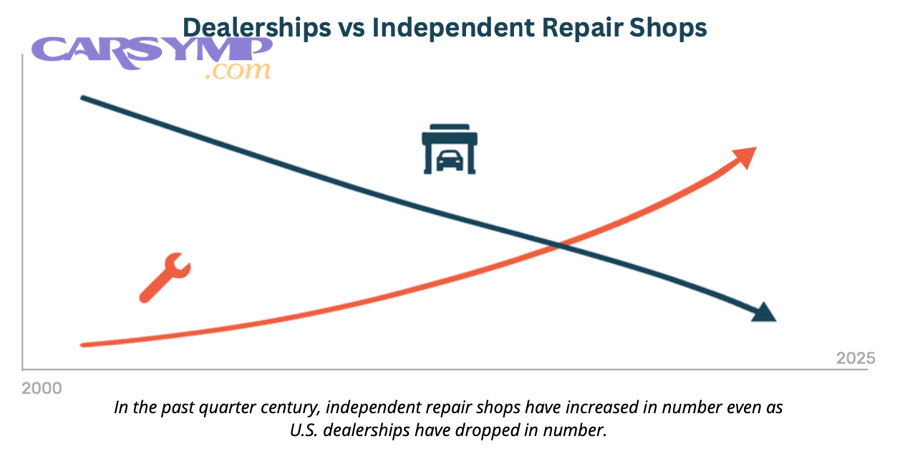
You should choose an independent shop for starter replacement when your vehicle is out of warranty, you’ve established a relationship with a qualified mechanic, the repair is straightforward, or you prioritize cost savings over brand affiliation. In addition, independent shops excel for routine mechanical repairs on common vehicles where specialized diagnostic equipment provides no advantage over standard automotive expertise.
Out-of-warranty vehicles represent the ideal scenario for independent shop selection. Once manufacturer warranty expires—typically 3-5 years or 36,000-60,000 miles—dealer advantages diminish significantly. A 7-year-old vehicle with 85,000 miles carries no warranty protection, eliminating the primary dealer value proposition. Saving $350 on starter replacement at a qualified independent shop delivers pure financial benefit without sacrificing quality when using reputable service providers and quality parts.
Established service relationships with trusted independent mechanics provide accountability and communication quality that justify loyalty. If you’ve used the same independent shop for years with consistently positive experiences, maintaining that relationship for starter replacement makes sense. The mechanic knows your vehicle history, understands your priorities, and has demonstrated competence through previous successful repairs. Trust built over years outweighs theoretical advantages of dealer service for routine mechanical work.
Common vehicles with high-volume repair needs favor independent shops where mechanics develop specialized expertise through repetition. Independent shops servicing primarily Honda, Toyota, or Ford products see starter replacements weekly, building pattern recognition and efficiency that generic dealer technicians may lack. A Honda specialist replacing CR-V starters regularly likely completes the job faster and more reliably than a dealer technician who rotates through diverse repair types across the manufacturer’s full vehicle lineup.
Budget constraints justify independent shop selection when financial limitations make dealer pricing prohibitive. If the choice is between a $900 dealer repair requiring credit card debt or payment plan versus a $450 independent shop repair payable immediately, the independent option delivers better financial outcomes. Delaying necessary repairs due to dealer pricing creates safety risks and potential secondary damage from starter failure that outweigh theoretical quality advantages.
Straightforward mechanical replacements without electrical complexity or security integration require only basic automotive skills that any competent mechanic possesses. Starter replacement on most vehicles involves disconnecting battery cables, removing 2-4 mounting bolts, detaching electrical connections, and reversing the process for installation. This work doesn’t benefit from dealer-specific training or equipment, making independent shop pricing advantages pure savings without quality compromise.
Performance vehicle owners often find specialized independent shops superior to dealerships for non-warranty work. Independent tuning shops, performance specialists, and enthusiast-focused mechanics frequently exceed dealer expertise for modified or track-focused vehicles. These shops understand aftermarket modifications, performance upgrades, and owner priorities better than dealers incentivized toward stock configurations and conservative recommendations.
Time-sensitive repairs favor independent shops with immediate availability over dealers scheduling appointments days or weeks ahead. If your vehicle won’t start Monday morning and the dealer’s first availability is Friday, an independent shop offering same-day service provides value beyond cost savings. Lost productivity, rental car expenses, and schedule disruption from extended repair timelines sometimes outweigh dealer advantages even at equivalent pricing.
How Can You Get the Best Price Regardless of Where You Go?
You can get the best price by obtaining quotes from 3-5 shops including dealers and independents, negotiating based on competitive offers, timing repairs during off-peak periods, and asking about available discounts for military, AAA, seniors, or other affiliations. More specifically, treating auto repair as a competitive market with comparison shopping and strategic timing yields 10-20% additional savings beyond baseline service provider selection.
Multiple quote comparison represents the single most effective price optimization strategy. Call or email 3-5 service providers with identical repair descriptions—”2015 Honda Accord starter replacement with quality parts and warranty”—and request detailed written estimates. Quotes often vary by $200-$400 even among similar provider types, revealing local market pricing dynamics and individual shop positioning. Written quotes enable direct comparison and create negotiation leverage when discussing pricing with preferred shops.
Quote request specificity improves comparison accuracy and prevents estimate inflation tactics. Providing vehicle year, make, model, and VIN ensures shops quote correct parts and labor times rather than ballpark estimates subject to later increases. Explicitly requesting parts quality specifications—”OEM or equivalent quality aftermarket with minimum 2-year warranty”—prevents bait-and-switch tactics where initial quotes use economy parts while final invoices reflect premium components.
Negotiation based on competitive quotes succeeds more often than many customers expect. Presenting a preferred shop with a competitor’s lower quote and asking “Can you match or beat this price?” yields positive responses 40-60% of the time according to consumer advocacy groups. Shops recognize that small margin sacrifices to secure business exceed the cost of lost customers to competitors. Frame negotiations as seeking value rather than demanding discounts to maintain positive service relationships.
Timing repairs during off-peak periods creates negotiation opportunities and occasional discount offers. Weekday mid-morning appointments avoid weekend rush premium pricing that some shops charge. Seasonal slow periods—typically January-March in northern climates and June-August in some regions—make shops more willing to negotiate or offer promotions to maintain technician utilization. Asking “Do you have any slow-day discounts or current promotions?” costs nothing and occasionally yields 10-15% savings.
Discount program verification uncovers savings opportunities many customers overlook. AAA membership provides 10% discounts at participating repair facilities nationwide. Military discounts, senior citizen programs, teacher appreciation, and first responder recognition programs offer 5-15% savings at many independent shops and some dealers. Checking discount eligibility before requesting quotes ensures estimates reflect actual out-of-pocket costs rather than inflated prices subject to later reduction.
Parts sourcing flexibility at independent shops creates additional negotiation opportunities. Customers comfortable researching parts can ask “What would the price be if I supplied the starter?” Some shops reduce labor rates 10-15% when customers provide parts, though others refuse customer-supplied parts due to warranty complications. Online retailers sell quality starters for $100-$250 below shop pricing, potentially saving $150-$300 for customers willing to handle parts procurement.
Bundled service packages sometimes reduce per-item costs when combining multiple repairs in single appointments. If your vehicle needs starter replacement plus other pending maintenance, requesting a combined quote may yield better pricing than scheduling separately. Shops waive diagnostic fees or reduce labor rates when customers authorize $1,000+ in bundled work versus $500 for starter replacement alone.
Payment method optimization occasionally unlocks savings from shops preferring to avoid credit card processing fees. Asking “Do you offer a cash discount?” reveals 3-5% savings opportunities at some independent shops, though this practice has declined with electronic payment prevalence. Shops with cash discount policies typically reduce prices by the 2.5-3.5% cost of credit card transaction fees, saving $15-$30 on a $500 repair.
What Else Should You Know About Starter Replacement Costs and Options?
Beyond dealer versus independent shop comparisons, you should know about starter rebuild economics, DIY replacement feasibility, core exchange programs, and mobile mechanic alternatives that expand your service options and potential savings. Next, we’ll examine these alternative approaches that don’t fit neatly into the dealer/independent framework but provide valuable cost optimization opportunities for specific customer circumstances.
These supplementary considerations address edge cases, specialized scenarios, and alternative strategies that apply to subsets of vehicle owners based on mechanical skills, time availability, and willingness to explore non-traditional service options.
Is Rebuilding a Starter Cheaper Than Replacing It?
Rebuilding a starter is rarely cheaper than replacing it with a remanufactured unit when accounting for labor costs, time investment, and failure risk, with DIY rebuilds potentially saving $100-$200 but professional rebuilding costing similarly to quality remanufactured replacement. However, the rebuild versus replace decision depends on specific circumstances including parts availability, vehicle rarity, and individual mechanical capabilities.
DIY starter rebuilding requires purchasing a rebuild kit containing brushes, bushings, solenoid contacts, and bearings costing $40-$100 depending on starter type and quality. Adding 3-5 hours of labor for removal, disassembly, rebuilding, testing, and reinstallation, a mechanically skilled individual might complete the project for $50-$120 in parts versus $300-$400 for professional remanufactured replacement and installation. This $200-$300 potential savings appeals to hobbyists with time, tools, and mechanical interest.
Professional starter rebuilding services exist in most metropolitan areas through specialized alternator and starter shops. These businesses charge $150-$300 for starter rebuilding including testing and warranty, positioning between economy new starters ($80-$180) and quality remanufactured units ($200-$400). Professional rebuilding makes sense primarily for rare or obsolete starters where new or remanufactured replacements prove difficult to source or excessively expensive.
Quality concerns complicate rebuild economics. DIY rebuilders without proper testing equipment cannot verify rebuilt starter performance before installation, risking immediate failure upon reinstallation. Professional rebuilders test output current, voltage drop, and rotational speed, but rebuild quality still typically underperforms factory remanufacturing processes that include precision machinery and comprehensive component replacement. Many mechanics estimate rebuilt starter longevity at 60-80% of new unit lifespan.
Time investment considerations make professional replacement more economical for most vehicle owners. Saving $200 through DIY rebuilding requires 8-12 hours including removal, rebuilding, reinstallation, and potential troubleshooting. At $25-$50 per hour opportunity cost, the time investment equals or exceeds monetary savings for anyone whose time carries professional value. Only retired individuals, hobbyists, or those treating rebuilding as educational experience realize true economic benefits.
Failure risk amplifies when rebuild quality proves inferior to remanufactured alternatives. If a rebuilt starter fails within 12-24 months, the customer pays again for removal and installation labor ($100-$300) plus replacement part costs. This “twice-repaired” scenario totals $450-$700 versus $300-$500 for initial quality remanufactured replacement, erasing all rebuild savings. Remanufactured units from reputable suppliers include 2-3 year warranties protecting against this scenario.
According to automotive repair data aggregators, fewer than 5% of customers choose rebuilding over replacement when presented with both options and complete cost breakdowns including labor and failure risk considerations, suggesting that rebuild economics favor replacement in most practical scenarios despite theoretical savings potential.
Can You Replace a Starter Yourself to Save Money?
You can replace a starter yourself if you possess mechanical skills, basic tools, and 2-6 hours of time, potentially saving $150-$600 in labor costs but accepting risks of improper installation, safety hazards, and lack of warranty on labor. Specifically, DIY starter replacement suits mechanically inclined individuals on common vehicles with accessible starters, while complex installations on luxury vehicles justify professional service regardless of cost.
Skill requirements for DIY starter replacement include basic mechanical aptitude, electrical system understanding, and comfort working under vehicles on jack stands or ramps. The process involves battery disconnection, starter bolt removal, electrical connector detachment, reverse installation, and verification testing. Individuals who have successfully completed brake replacements, alternator changes, or similar intermediate mechanical repairs typically possess sufficient skills for straightforward starter installations.
Tool requirements remain modest for most starter replacements: socket set with various extensions, combination wrenches, jack and jack stands, wheel chocks, and basic safety equipment. Total tool investment for someone without existing equipment runs $150-$300, though tool rental programs at auto parts stores reduce costs to $20-$50 per day. Specialized vehicles might require torque wrenches, specific socket sizes, or star-pattern drivers adding $50-$150 to tool costs.
Time investment varies dramatically based on vehicle accessibility and individual mechanical experience. First-time DIY starter replacement on an accessible vehicle requires 3-4 hours including parts research, procurement, installation, and troubleshooting. Experienced home mechanics complete similar jobs in 1-2 hours. Difficult installations on complex vehicles extend to 6-10 hours for DIYers versus 4-6 hours for professionals with specialized tools and experience.
Parts cost advantages through DIY sourcing add to labor savings potential. Online retailers sell quality aftermarket starters for $100-$250 compared to $180-$400 shop-sourced parts, saving an additional $80-$150 beyond labor savings. However, DIYers assume all return shipping costs and reinstallation labor if supplied parts prove defective, risks that professional shops absorb within their service warranties.
Safety hazards require acknowledgment before attempting DIY starter replacement. Working under vehicles on jack stands carries inherent risks of crush injuries if improper lifting techniques or inadequate support causes vehicle collapse. Electrical system work on hybrid vehicles involves high-voltage dangers requiring specialized safety training. Battery disconnection mistakes can cause electrical shorts, airbag deployment, or computer module damage costing hundreds to repair.
Warranty limitations affect DIY value calculations. Professional installations include labor warranties (typically 90 days to 2 years) ensuring free reinstallation if parts fail prematurely. DIY installers who purchase parts with 3-year warranties still pay $100-$300 in self-performed labor for reinstallation if replacement proves necessary. This hidden cost reduces net DIY savings by $50-$150 in expected value when accounting for average failure rates.
The following scenarios favor DIY starter replacement despite risks and limitations:
- Mechanically experienced individuals comfortable with intermediate automotive repairs
- Common vehicles with easily accessible starters (Honda Civic, Toyota Camry, Ford F-150)
- Owners treating DIY as hobby/learning experience beyond pure cost savings
- Budget constraints making professional service financially infeasible
- Non-critical vehicles where extended downtime from DIY troubleshooting causes minimal inconvenience
Conversely, these scenarios justify professional service over DIY attempts:
- Limited mechanical experience or discomfort with automotive electrical systems
- Luxury/complex vehicles with difficult starter access requiring special tools
- Primary transportation vehicles where extended downtime creates significant hardship
- Hybrid/electric vehicles requiring high-voltage safety procedures
- Individuals whose time carries high opportunity cost exceeding labor savings
What Is a Starter Core Exchange and How Does It Affect Price?
A starter core exchange is a return program where customers receive $15-$80 credit by returning the old starter to the parts supplier, reducing the net replacement cost and supporting remanufacturing while creating a minor price complication in service quotes. To illustrate how core exchanges work, most remanufactured and some new starters include core charges added to initial purchase price and refunded upon old starter return within specified timeframes.
Core charge mechanics function as a deposit system encouraging old part returns for remanufacturing. When purchasing a $180 remanufactured starter with $40 core charge, the customer pays $220 initially. Returning the old starter within 30-90 days (timeframes vary by supplier) triggers a $40 refund, reducing net cost to $180. Failure to return the core within the specified period results in forfeited core charges and $220 total cost.
Price quote implications require clarification when comparing service provider estimates. Some shops quote prices excluding core charges (“$180 plus core”), while others include core charges with return credit notation (“$220 less $40 core return”). A customer comparing “$180 plus core” against “$200 with core return” might incorrectly assume the first quote is cheaper when actual out-of-pocket costs prove identical after core processing.
Core return logistics vary between DIY parts purchases and professional shop installations. DIYers purchasing parts from auto parts stores receive immediate core return credits by presenting the old starter during parts exchange or within return windows. Shops performing installations typically handle core returns administratively, either reducing initial invoices by expected core credits or processing refunds after returning accumulated cores to suppliers in bulk.
Environmental benefits justify core exchange programs beyond simple cost considerations. Remanufacturing reduces metal mining, energy consumption, and waste generation compared to new part production. According to the Automotive Parts Remanufacturers Association, remanufacturing one starter saves approximately 85% of the energy required to produce a new unit while diverting 15-20 pounds of metal from landfills.
Core value variations depend on starter type, condition, and remanufacturing demand. Common starters for high-volume vehicles carry $20-$40 core values reflecting abundant supply and efficient remanufacturing economics. Rare or specialized starters command $60-$80 core charges due to limited supply and higher remanufacturing costs. Severely damaged cores might receive reduced credits or rejections if remanufacturing proves uneconomical.
Customer responsibilities in core exchange programs include timely return and reasonable condition maintenance. Cores should include all major components—housing, armature, solenoid—even if worn or failed. Stripped or incomplete cores may receive reduced credits or rejections. Maintaining purchase receipts and core charge documentation ensures smooth refund processing when returning old starters weeks after initial purchase.
How Do Mobile Mechanics Compare in Price for Starter Replacement?
Mobile mechanics typically charge $350-$650 for starter replacement, representing $50-$150 savings compared to traditional shop pricing through reduced overhead while offering at-location convenience that eliminates towing costs and downtime. Especially for non-drivable vehicles with failed starters, mobile mechanics provide value through combined service and convenience unavailable from stationary shops requiring vehicle transport.
Pricing advantages for mobile mechanics stem from eliminated facility overhead costs including rent, utilities, property maintenance, and customer amenity expenses that traditional shops recover through higher labor rates. Mobile mechanics operate from service vehicles with tool storage, working at customer locations (homes, offices, parking lots) without the $5,000-$15,000 monthly facility expenses affecting shop pricing. This overhead reduction enables competitive labor rates of $60-$100 per hour versus $70-$120 at independent shops.
Service scope limitations prevent mobile mechanics from handling all starter replacement scenarios. Vehicles requiring lift access for starter removal—common with certain SUV and truck configurations—exceed mobile capabilities since most mobile mechanics work with floor jacks and jack stands only. Complex replacements requiring part removals, engine repositioning, or extensive disassembly favor traditional shop environments with lifts, specialty tools, and controlled working conditions.
Parts sourcing flexibility varies among mobile mechanics. Some maintain common part inventories in service vehicles enabling same-day completion, while others require customers to pre-purchase parts or arrange same-day delivery from auto parts stores. This variability affects total service timelines and convenience despite location advantages. Clarifying parts procurement procedures during initial quote requests prevents scheduling complications.
Convenience value extends beyond simple cost comparisons when evaluating mobile mechanics. A vehicle with failed starter at home saves $75-$150 in towing charges to shops by using mobile service. Additionally, at-location service eliminates arrangement challenges for alternative transportation, work schedule disruptions, and multi-day vehicle inaccessibility common with shop repairs. For busy professionals, these convenience factors provide value justifying prices approaching traditional shop rates.
Quality assurance for mobile mechanics requires research similar to selecting traditional shops. Checking online reviews, verifying business licensing and insurance, confirming warranty policies, and requesting references protect against unlicensed or unqualified individuals operating as mobile mechanics. Reputable mobile services maintain similar professionalism to traditional shops with formal quotes, detailed invoices, and parts/labor warranties typically spanning 90 days to 1 year.
Service availability in different markets affects mobile mechanic viability as an alternative. Metropolitan areas typically support multiple mobile mechanics creating competitive pricing and reliable availability. Rural areas may lack mobile service options or experience limited availability requiring extended scheduling. Checking local mobile mechanic presence through online searches, Yelp reviews, or neighborhood apps like Nextdoor reveals whether this option exists locally.
According to automotive service industry surveys, mobile mechanics complete approximately 8-12% of non-warranty vehicle repairs nationally, with market share concentrated in urban areas and routine maintenance services, suggesting growing but still limited adoption compared to traditional shop and dealer dominance of the repair market.
Conclusion
Choosing between dealer and independent shop starter replacement requires balancing cost savings against warranty needs, service quality, and personal circumstances. Independent shops typically deliver 20-50% cost savings making them optimal for out-of-warranty vehicles and straightforward replacements, while dealerships provide irreplaceable value for warranty work, recalls, and complex electrical issues. Understanding the price factors, value considerations, and alternative options empowers car owners to make informed decisions that optimize both immediate costs and long-term vehicle reliability. Whether you select dealer expertise, independent shop value, mobile convenience, or DIY savings, successful starter replacement depends on matching service selection to your specific situation, priorities, and mechanical capabilities.