


A bad thermostat displays seven critical symptoms: engine overheating, erratic temperature gauge readings, prolonged engine warm-up, cold cabin air from the heater, coolant leaks around the thermostat housing, illuminated check engine light, and decreased fuel economy with poor performance. These symptoms occur because the thermostat fails to regulate coolant flow properly, either by sticking open or closed, preventing your engine from maintaining its optimal operating temperature of 195-220°F. Recognizing these warning signs early can save you from catastrophic engine damage, including warped cylinder heads, blown head gaskets, or even a cracked engine block that could cost thousands of dollars in repairs.
Understanding what causes these symptoms and how to differentiate them from other cooling system problems helps you take timely action. Each symptom provides specific clues about whether your thermostat is stuck open, stuck closed, or experiencing intermittent failure. A stuck closed thermostat traps coolant in the engine, causing rapid overheating and potential severe damage, while a stuck open thermostat allows constant coolant circulation, preventing the engine from reaching proper operating temperature and reducing efficiency. The severity and combination of symptoms you experience directly indicate the urgency of thermostat replacement.
Beyond identifying the symptoms, knowing how to test your thermostat without removing it and distinguishing thermostat failure from other cooling system issues saves both diagnostic time and money. Simple tests using a temperature gun or observing radiator hose temperatures can confirm thermostat malfunction before you commit to repairs. This diagnostic knowledge prevents unnecessary part replacements and helps you communicate effectively with mechanics about your vehicle’s specific problems.
The consequences of ignoring bad thermostat symptoms extend far beyond the thermostat itself, affecting your engine’s longevity, fuel efficiency, emissions compliance, and even your safety during winter months. Below, we’ll explore each symptom in detail, explain the underlying mechanical failures that cause them, and provide clear guidance on when immediate replacement becomes necessary to protect your vehicle investment.
What is a Car Thermostat and Why Does It Matter?
A car thermostat is a temperature-controlled valve located between the engine and radiator that regulates coolant flow to maintain optimal engine operating temperature between 195-220°F. This small but crucial component contains a wax pellet that expands when heated, mechanically opening the valve at a predetermined temperature to allow coolant circulation through the radiator for cooling. Understanding how your thermostat functions provides the foundation for recognizing when it fails and why each symptom occurs.
The thermostat’s role in your vehicle’s cooling system cannot be overstated, as it directly affects engine performance, fuel efficiency, emissions, and component longevity. Specifically, a properly functioning thermostat ensures your engine warms up quickly to reduce wear during cold starts, maintains consistent operating temperature for optimal combustion efficiency, and prevents overheating during heavy loads or hot weather conditions.
How Does a Thermostat Work in Your Vehicle?
The thermostat operates through a simple yet ingenious mechanical design that requires no electronic controls or external power. At the heart of this device sits a sealed copper cup containing a special wax pellet mixed with metal powder, which expands predictably when heated to a specific temperature. When your engine is cold, the wax remains solid, keeping the thermostat valve closed and blocking coolant flow to the radiator, which allows the engine to warm up rapidly by circulating coolant only within the engine block and cylinder head.
As engine temperature rises and reaches the thermostat’s rated opening temperature (typically 180-195°F for most vehicles), the wax pellet begins to melt and expand. This expansion pushes against a central pin connected to the valve, forcing it to open gradually and allowing hot coolant to flow into the radiator where it releases heat to the outside air. The valve continues to modulate its position based on coolant temperature, opening wider as temperature increases and partially closing as it decreases, maintaining precise temperature control throughout all driving conditions.
Modern thermostats include a small bypass hole or jiggle valve that allows a small amount of coolant to circulate even when the main valve is closed, preventing air pockets from forming in the cooling system and ensuring more even heating. This design detail becomes particularly important during coolant system service and bleeding procedures after thermostat replacement.
What Happens When a Thermostat Fails?
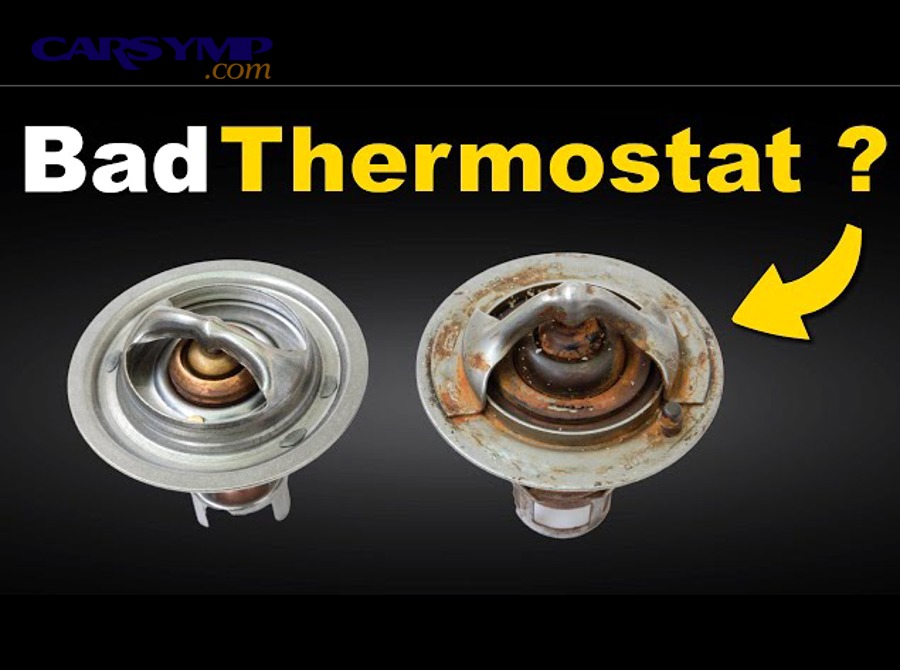
When a thermostat fails, it typically assumes one of two positions: stuck closed or stuck open, each creating distinctly different symptoms and severity levels. A stuck closed thermostat represents the more dangerous failure mode because it prevents coolant from circulating to the radiator, causing rapid engine overheating that can lead to head gasket failure, warped cylinder heads, or catastrophic engine damage within minutes of driving. This failure occurs when the wax pellet becomes contaminated, corroded, or when mineral deposits prevent the valve from opening despite proper wax expansion.
Conversely, a stuck open thermostat allows continuous coolant circulation even when the engine is cold, preventing the engine from ever reaching its designed operating temperature. While less immediately dangerous than a stuck closed condition, this failure reduces fuel efficiency by 10-15%, increases engine wear due to prolonged operation in cold enrichment mode, causes poor cabin heating, and may trigger emissions-related check engine lights. The engine management computer compensates for the lower operating temperature by running a richer fuel mixture, which wastes fuel and increases harmful emissions while reducing power output.
A third, less common failure mode involves intermittent operation where the thermostat opens and closes erratically due to partial wax pellet deterioration or debris interfering with valve movement. This condition produces the most confusing symptoms, including fluctuating temperature gauge readings, inconsistent heater performance, and intermittent overheating, making diagnosis more challenging without proper testing procedures.
What Are the 7 Critical Symptoms of a Bad Thermostat?
The seven critical bad thermostat symptoms include rapid engine overheating, erratic temperature gauge fluctuations, extended engine warm-up periods, cold cabin heater air, coolant leaks from the thermostat housing, an illuminated check engine light with specific diagnostic codes, and noticeably reduced fuel economy accompanied by poor engine performance. Each symptom provides diagnostic clues about the specific failure mode and urgency of repair, with some indicating immediate danger to your engine while others signal developing problems that will worsen over time.
Recognizing these symptoms requires attention to your vehicle’s normal operating patterns and awareness of subtle changes in performance or dashboard indicators. To better understand each symptom and its implications, let’s examine them individually with the specific mechanical causes and diagnostic indicators that confirm thermostat failure rather than other cooling system problems.
Does Your Engine Overheat Quickly or Frequently?
Rapid or frequent engine overheating represents the most dangerous bad thermostat symptom, typically caused by a stuck closed thermostat that prevents hot coolant from flowing to the radiator for cooling. When the thermostat valve remains closed, coolant temperature rises quickly because heat cannot escape the engine, causing your temperature gauge to climb into the red zone within 5-10 minutes of driving, especially during highway speeds or warm weather. This condition demands immediate attention because continued operation can cause irreversible engine damage costing thousands of dollars to repair.
The overheating pattern caused by a stuck closed thermostat differs from other cooling system failures in its rapid onset and the cool temperature of the radiator and upper radiator hose during the overheating event. If you can safely touch the upper radiator hose while the engine is overheating and it feels cool or only warm rather than hot, this confirms that hot coolant is not circulating through the radiator, pointing directly to thermostat failure. Additionally, the lower radiator hose will remain cold, and the radiator itself will feel cool to the touch despite the engine temperature gauge showing overheating conditions.
You may also notice that turning on the cabin heater produces extremely hot air initially, as the heater core still receives hot coolant from the blocked engine circulation. However, this is an emergency measure only and should not be relied upon to prevent engine damage, as it cannot dissipate sufficient heat to protect your engine during a stuck closed thermostat event. If your engine begins to overheat, pull over immediately, turn off the engine, and do not restart until the thermostat has been replaced and the cooling system has been properly inspected for damage.
According to automotive cooling system research conducted by the Society of Automotive Engineers in 2019, a stuck closed thermostat can cause engine temperatures to exceed 260°F within seven minutes of highway driving, well above the critical threshold where aluminum cylinder heads begin to warp and head gasket failure becomes likely.
Is Your Temperature Gauge Fluctuating Erratically?
Erratic temperature gauge fluctuations manifest as the needle rapidly moving up and down between normal and hot positions or oscillating between cold and normal ranges without corresponding changes in driving conditions or ambient temperature. This symptom indicates a thermostat that is opening and closing intermittently due to partial valve failure, debris interference, or deteriorating wax pellet that no longer responds consistently to temperature changes. Unlike the steady rise of a stuck closed thermostat or the constant cold reading of a stuck open thermostat, these fluctuations signal unpredictable thermostat behavior that will worsen progressively.
The intermittent operation occurs when the thermostat valve sticks partially open or closed, then suddenly releases and moves to a different position, causing rapid changes in coolant circulation and engine temperature. You’ll notice the temperature gauge needle moving more than usual, perhaps climbing toward the hot zone then suddenly dropping back to normal, or failing to stabilize at the usual midpoint position where it typically remains during normal operation. These fluctuations often correlate with changes in engine load, such as accelerating onto a highway or climbing a hill, which increase coolant temperature and may temporarily force a sticky valve to move.
Mechanics often describe this condition as a “fluttering” thermostat because the valve position becomes unstable rather than smoothly modulating based on coolant temperature. The underlying cause typically involves corrosion or mineral deposits on the valve mechanism, contaminated wax pellet that has partially degraded, or mechanical damage to the spring or pin assembly. While not immediately catastrophic like a stuck closed thermostat, this condition will eventually progress to complete failure in either the stuck open or stuck closed position, making timely thermostat replacement the prudent choice.
Is Your Engine Taking Too Long to Warm Up?
An engine that takes excessively long to reach normal operating temperature—often 15 minutes or more of driving compared to the typical 5-8 minutes—indicates a stuck open thermostat that allows continuous coolant circulation even when the engine is cold. When the thermostat valve fails in the open position, coolant immediately begins flowing through the radiator from the moment you start the engine, dissipating heat faster than the engine can generate it during warm-up, preventing the engine from reaching its designed operating temperature of 195-220°F. This condition is most noticeable during cold weather when ambient temperatures make the problem more severe.
You’ll observe several related symptoms accompanying slow warm-up: the temperature gauge needle rises very slowly and may never reach the normal center position, instead settling in the lower third of the gauge range even after extensive highway driving. The cabin heater produces lukewarm air at best because the coolant circulating through the heater core never reaches sufficient temperature, leaving you cold during winter driving. Additionally, you may notice reduced fuel economy as the engine management computer runs a richer fuel mixture to compensate for the lower operating temperature, a condition the computer interprets as continuous cold-start operation.
Testing for a stuck open thermostat involves monitoring both the upper and lower radiator hoses during engine warm-up. In a properly functioning system, the upper radiator hose should remain cool for the first 5-8 minutes as the thermostat stays closed, then rapidly become hot when the thermostat opens. With a stuck open thermostat, both radiator hoses begin warming immediately after engine start, and the lower hose temperature rises nearly as quickly as the upper hose rather than remaining significantly cooler, confirming that coolant is circulating prematurely through the radiator.
The long-term consequences of operating with a stuck open thermostat extend beyond comfort and fuel economy, as prolonged operation below optimal temperature increases engine wear, reduces oil effectiveness, and may cause carbon buildup on intake valves and pistons due to incomplete combustion.
Is Your Cabin Heater Blowing Cold Air?
Cold air from the cabin heater, especially after the engine has been running for several minutes, strongly indicates a stuck open thermostat preventing the engine from reaching sufficient temperature to heat the coolant flowing through the heater core. The heater core functions as a small radiator inside your dashboard that transfers heat from hot engine coolant to air blown into the cabin, requiring coolant temperatures above 150°F to produce comfortably warm air. When a stuck open thermostat allows constant coolant circulation through the main radiator, the coolant never reaches adequate temperature, resulting in lukewarm or cold heater output regardless of the heater control settings.
This symptom becomes particularly noticeable during winter driving and short trips where ambient temperatures and limited driving time prevent even marginal temperature buildup. You may find that the heater produces slightly warm air during extended highway driving when engine heat generation exceeds the cooling capacity of the radiator, but returns to cold air during city driving or idling. The heater fan continues to work normally, and adjusting temperature controls has no effect because the problem lies with coolant temperature rather than the heater system components.
To differentiate a thermostat problem from heater core or heater valve issues, monitor your temperature gauge while the heater blows cold air. If the gauge shows below-normal temperature readings, the thermostat is the likely culprit. However, if the temperature gauge reads normal but the heater still blows cold, suspect a plugged heater core, failed heater control valve, or air pocket in the heater core that prevents hot coolant circulation. Additionally, check that both heater hoses entering the firewall are equally hot; if one is hot and one is cool with normal engine temperature, the heater core may be restricted rather than the thermostat being stuck open.
Poor cabin heating affects more than just comfort—it represents a safety concern during winter driving when defrosting capability becomes essential for visibility, and the reduced engine operating temperature accelerates engine wear while decreasing fuel efficiency by up to 15%.
Are You Experiencing Coolant Leaks Around the Thermostat Housing?
Coolant leaks developing around the thermostat housing indicate gasket failure, housing corrosion, or cracking caused by thermal stress from overheating events or age-related deterioration. The thermostat housing—a metal or composite plastic component that contains the thermostat and connects the engine block to the upper radiator hose—relies on a rubber or paper gasket to seal the connection and prevent coolant from escaping. When this gasket deteriorates, hardens with age, or becomes damaged during a previous thermostat replacement, coolant begins seeping from the housing perimeter, appearing as green, orange, or pink fluid (depending on your coolant type) staining the engine block below the housing.
These leaks typically start small, appearing as dampness or minor discoloration around the housing mounting surface, then progress to visible drips or puddles beneath the vehicle as the gasket failure worsens. The leak may seem to vary in severity, appearing worse when the engine is hot and the cooling system is pressurized, then diminishing when the engine cools and pressure drops. Some leaks only appear during specific conditions, such as highway driving that creates maximum cooling system pressure of 15-18 PSI, making them difficult to diagnose during a brief visual inspection.
Thermostat housing cracks represent a more serious leak cause, particularly common with plastic housings found on many modern vehicles. Temperature cycling from repeated heating and cooling causes plastic to become brittle over time, developing hairline cracks that grow into significant failures. Metal housings can also crack or develop pinhole leaks from internal corrosion, especially when coolant service intervals have been neglected and corrosion inhibitors have depleted. If you notice white or green crusty deposits around the housing, this indicates long-term seepage that has evaporated, leaving mineral deposits behind.
Addressing Thermostat housing leak issues requires replacing both the thermostat and its gasket simultaneously, as reusing old gaskets guarantees leak recurrence, and many manufacturers sell thermostats with new gaskets included. When performing thermostat replacement, carefully inspect the housing itself for cracks or corrosion that would necessitate housing replacement to prevent future leaks and ensure reliable cooling system operation.
Has Your Check Engine Light Illuminated?
An illuminated check engine light accompanied by specific diagnostic trouble codes P0128 (Coolant Thermostat Temperature Below Regulating Temperature) or P0126 (Insufficient Coolant Temperature for Stable Operation) directly indicates thermostat failure detected by the engine control module. Modern vehicles continuously monitor coolant temperature using sensors and compare actual temperature data against expected warm-up patterns programmed into the engine computer. When the thermostat sticks open and prevents normal engine warm-up, the computer recognizes that coolant temperature remains below expected values for the duration of operation, setting these specific codes and triggering the check engine light.
The P0128 code specifically indicates that the engine has not reached its expected operating temperature within the programmed time frame, typically triggered when the engine fails to reach 195°F within 10-15 minutes of operation under normal driving conditions. This code almost exclusively points to a stuck open thermostat, though very low ambient temperatures (below -20°F) or extreme short-trip driving patterns can occasionally trigger false positives. The P0126 code similarly indicates insufficient coolant temperature for proper closed-loop operation where the computer uses oxygen sensor feedback to fine-tune the air-fuel mixture, a function that requires minimum coolant temperature to ensure proper combustion.
Beyond these thermostat-specific codes, an overheating condition caused by a stuck closed thermostat may trigger code P0217 (Engine Coolant Over Temperature Condition), though this code can also result from other cooling system failures like a bad water pump, clogged radiator, or failed cooling fan. Retrieving and analyzing these diagnostic trouble codes using an OBD-II scanner provides definitive diagnostic information that eliminates guesswork about thermostat condition, with P0128 being the most reliable indicator of stuck open thermostat failure.
Some vehicles also monitor coolant temperature for emissions compliance, as engines running too cold produce elevated hydrocarbon and carbon monoxide emissions that can cause emissions test failures. If your vehicle fails emissions testing with high hydrocarbon readings and you’ve noticed poor fuel economy or slow warm-up, a stuck open thermostat is the likely cause requiring replacement before retesting.
Are You Noticing Poor Fuel Economy and Performance?
Decreased fuel economy—typically a reduction of 10-20% from your normal mileage—combined with reduced engine performance indicates a stuck open thermostat forcing the engine to operate continuously in a cold, inefficient state. When the engine cannot reach proper operating temperature, the engine control module runs a cold enrichment program that increases fuel delivery to compensate for less efficient combustion, similar to how engines use extra fuel during the first few minutes after a cold start. However, with a failed thermostat, this fuel-wasting condition persists for the entire duration of operation rather than just the warm-up period.
The performance impact manifests as sluggish acceleration, reduced power output, and hesitation during acceleration because the engine computer retards ignition timing and runs richer fuel mixtures when operating below normal temperature. You may notice that the engine feels less responsive and requires more throttle input to maintain highway speeds or climb hills. Additionally, the engine may produce rougher idle quality and increased exhaust odor from incomplete combustion, with black smoke sometimes visible from the tailpipe due to the overly rich fuel mixture.
Fuel economy suffers because the cold-enrichment strategy dumps extra fuel into the cylinders to ensure reliable combustion when metal components haven’t expanded to their designed operating clearances and fuel atomization is less efficient. While necessary during genuine cold starts, this continuous enrichment when caused by a stuck open thermostat can reduce fuel efficiency from, for example, 28 MPG down to 22-24 MPG for highway driving, and even more dramatically for short trips where the engine never approaches normal temperature. The excess unburned fuel also washes oil from cylinder walls, accelerating engine wear and potentially contaminating engine oil with fuel dilution.
Tracking your fuel economy through several tanks provides concrete evidence of thermostat problems, especially when the decreased mileage correlates with other symptoms like slow warm-up or poor heater performance. According to the U.S. Department of Energy’s vehicle efficiency research in 2020, engines operating 40°F below their designed temperature use approximately 12% more fuel, with the penalty increasing to 20% or more during very cold weather or short-trip driving patterns.
How Can You Tell If It’s Really a Bad Thermostat?
You can confirm a bad thermostat through three diagnostic methods: monitoring temperature patterns during engine warm-up, comparing upper and lower radiator hose temperatures, and using an infrared temperature gun to measure coolant temperatures at key locations. These tests differentiate thermostat failure from other cooling system problems by identifying the characteristic temperature patterns of stuck open, stuck closed, or intermittent thermostat operation. Performing these diagnostic checks before thermostat replacement prevents unnecessary repairs and confirms the root cause of your symptoms.
The most reliable diagnostic approach combines multiple test methods because symptoms can occasionally overlap with water pump failure, air pockets in the cooling system, or failed coolant temperature sensors. However, thermostat failure creates unique temperature distribution patterns that remain consistent and predictable once you understand the normal operation sequence.
What Other Problems Can Mimic Bad Thermostat Symptoms?
Several cooling system failures produce symptoms that closely resemble bad thermostat issues, making differential diagnosis essential before committing to thermostat replacement. A failing water pump creates overheating symptoms similar to a stuck closed thermostat, but can be differentiated by inspecting for coolant leaks from the pump weep hole, bearing noise or wobble in the pump pulley, or using a temperature gun to verify that coolant is not circulating even when the thermostat should be open. If the upper radiator hose remains cool despite the engine overheating and sufficient time has passed for the thermostat to open (typically 8-10 minutes), water pump failure becomes more likely than thermostat failure.
Low coolant level or air pockets trapped in the cooling system can cause erratic temperature readings and poor heater performance that mimic thermostat problems, but these conditions typically present with visible low coolant in the reservoir, the need for frequent coolant additions, or gurgling sounds from the heater core or cooling system. Properly bleeding the cooling system and ensuring correct coolant level eliminates these possibilities. A clogged radiator restricts coolant flow similarly to a stuck closed thermostat, causing overheating, but usually develops gradually over time rather than suddenly, and manifests more severely during sustained highway speeds or hot weather when maximum cooling capacity is required.
Failed coolant temperature sensors can send incorrect temperature data to the gauge and engine computer, creating the false appearance of thermostat problems when the actual coolant temperature is normal. This condition can be identified by scanning for diagnostic trouble codes related to coolant temperature sensor circuit faults (P0115, P0117, P0118), or by comparing the temperature sensor reading using a scan tool against actual coolant temperature measured with an infrared thermometer. If the sensor reading differs significantly from measured temperature, sensor replacement rather than thermostat replacement solves the problem.
A stuck closed thermostat, on the other hand, creates a specific temperature pattern: rapid temperature rise on the gauge, cool upper radiator hose and radiator, extremely hot lower engine block, and normal coolant level. A stuck open thermostat produces equally distinctive patterns: slow or incomplete warm-up, both radiator hoses warming simultaneously, lower than normal temperature gauge reading, and poor heater output. Understanding these patterns allows you to confidently differentiate thermostat failure from the many other conditions that affect cooling system performance.
How Do You Test a Thermostat Without Removing It?
Testing a thermostat without removal requires monitoring coolant temperatures at specific locations during engine warm-up to verify proper opening and closing behavior. The most effective method involves using an infrared temperature gun to measure surface temperatures of the upper radiator hose, lower radiator hose, and engine block during the warm-up cycle. Start with a completely cold engine, then start the vehicle and immediately begin monitoring the upper radiator hose temperature every minute. The hose should remain cool (near ambient temperature) for approximately 5-8 minutes as the thermostat stays closed, then rapidly increase in temperature by 50-80°F within 1-2 minutes when the thermostat opens, confirming proper operation.
Simultaneously monitoring the lower radiator hose provides additional confirmation: it should remain significantly cooler than the upper hose during the closed thermostat phase, then begin warming (though remaining 20-40°F cooler than the upper hose) once the thermostat opens and coolant begins circulating. If both hoses warm simultaneously from engine start, the thermostat is stuck open. If the upper hose never warms despite the temperature gauge showing overheating, the thermostat is stuck closed. This test costs nothing if you have access to an infrared thermometer and provides definitive diagnostic information within 15 minutes.
An alternative method involves monitoring the temperature gauge behavior while noting the exact time of temperature rise and the ultimate gauge position reached. A properly functioning thermostat produces a characteristic warm-up pattern: the gauge remains in the cold zone for 5-8 minutes, then rises relatively quickly to the normal midpoint position (usually marked on the gauge) and stabilizes there. A stuck open thermostat causes the gauge to rise very slowly and settle below the normal position, while a stuck closed thermostat causes rapid rise into the hot zone. Erratic gauge movement indicates intermittent thermostat operation.
For the most conclusive test without removal, you can perform a cold engine warm-up observation where you carefully feel (with caution to avoid burns) the upper radiator hose while watching the temperature gauge. The hose should remain completely cool and flexible until the gauge reaches approximately the 1/3 position, at which point the hose should quickly become firm from pressure and hot to the touch as the thermostat opens. If you can feel hot coolant pulsing through the hose while the gauge is still in the cold zone, your thermostat is stuck open and requires replacement.
When Should You Replace a Bad Thermostat Immediately?
You must replace a bad thermostat immediately when experiencing rapid engine overheating, when the temperature gauge enters the red zone, when you see steam from the hood, or when the check engine light illuminates with coolant temperature codes. These critical symptoms indicate stuck closed thermostat operation that can cause catastrophic engine damage within minutes if you continue driving. Less urgent but still important replacement triggers include poor fuel economy exceeding 15% reduction, complete lack of cabin heat during winter, or confirmed diagnostic codes P0128 or P0126 that affect emissions compliance and drivability.
The decision to replace immediately versus scheduling near-term service depends on symptom severity and the specific failure mode affecting your vehicle. Understanding the potential damage scenarios helps you make informed decisions about repair urgency and whether the vehicle can be safely driven to a repair facility or requires towing.
What Damage Can a Failing Thermostat Cause to Your Engine?
A stuck closed thermostat causes the most severe engine damage by creating rapid overheating that warps aluminum cylinder heads, blows head gaskets, cracks engine blocks, damages pistons, and destroys catalytic converters through excessive exhaust temperatures. When coolant cannot circulate to the radiator, engine temperature quickly exceeds 260°F, well above the critical threshold where aluminum components lose structural integrity and gaskets fail. Cylinder head warping occurs because aluminum heads expand unevenly when overheated, creating permanent distortion that prevents proper sealing against the engine block even after cooling, necessitating expensive machining or replacement costing $1,500-$3,500 for parts and labor.
Head gasket failure follows closely behind warping, as the gasket material cannot withstand extreme temperatures and pressures created during overheating events. A blown head gasket allows combustion gases to enter the cooling system, coolant to enter the cylinders, or coolant to mix with engine oil, creating white smoke from the exhaust, mysterious coolant loss, milky oil appearance, and rough running from coolant-contaminated cylinders. Head gasket replacement typically costs $1,200-$2,500 due to the extensive labor required to disassemble the cylinder head, plus additional costs if the head requires machining to restore flatness.
Extreme overheating can crack the engine block itself, particularly in the thin sections between cylinders or around coolant passages where thermal stress concentrates. Block cracks usually render the engine unrepairable except through complete replacement costing $3,000-$8,000 depending on the vehicle. Additionally, sustained overheating destroys piston rings, scores cylinder walls from loss of oil lubrication as temperatures exceed oil’s functional limits, and can cause pistons to seize in the cylinders, requiring complete engine overhaul or replacement.
The catalytic converter suffers collateral damage when an overheating engine produces excessively hot exhaust gases that melt the ceramic honeycomb substrate inside the converter, destroying its emission-reducing capability and creating a restriction that further reduces engine performance. Catalytic converter replacement adds another $800-$2,500 to the repair bill. These cumulative damage costs—potentially exceeding $5,000-$10,000—far eclipse the modest $150-$300 cost of thermostat replacement, making immediate service when overheating symptoms appear the economically rational choice.
According to a 2018 study by the Automotive Engine Rebuilders Association, thermostat-related overheating ranks as the third most common cause of catastrophic engine failure in vehicles under 100,000 miles, with 73% of severe cases resulting from delayed repair after initial overheating symptoms appeared.
Can You Drive With a Bad Thermostat?
You should never drive with a stuck closed thermostat showing overheating symptoms, as engine damage begins within 5-10 minutes of operation and becomes catastrophic within 15-20 minutes of sustained overheating. If your temperature gauge enters the red zone or you see steam from the hood, pull over immediately, turn off the engine, and arrange for towing to a repair facility rather than attempting to drive. Even short-distance driving of 1-2 miles can cause head gasket failure or cylinder head warping when the thermostat is stuck closed, making the towing cost of $75-$150 trivial compared to potential engine damage costs.
Conversely, you can continue driving short-term with a stuck open thermostat while you schedule thermostat replacement within the next few days or week, as this condition does not create immediate danger of catastrophic failure. However, you should minimize driving distance because the poor fuel economy, increased emissions, and accelerated engine wear create ongoing costs and damage that worsen with continued operation. Avoid extended highway driving in very cold weather with a stuck open thermostat, as some engines may struggle to maintain even minimal operating temperature under these combined conditions, potentially causing computer-controlled engine protection systems to activate or creating such poor combustion that the engine runs roughly or stalls.
For intermittent thermostat operation causing erratic temperature fluctuations, assess your driving based on the gauge behavior: if fluctuations remain in the safe zone without entering the red, you can continue driving while monitoring the gauge closely and scheduling prompt repair. However, if fluctuations carry the gauge into the hot zone, treat the situation as a stuck closed failure and discontinue driving to prevent overheating damage. Keep in mind that an intermittently failing thermostat will eventually fail completely, usually progressing to the stuck closed position that creates immediate danger.
Emergency situations where you must move the vehicle short distances with a stuck closed thermostat require extreme caution and specific procedures: run the heater at maximum temperature and fan speed to help dissipate heat, avoid any acceleration or speed above 15-20 MPH, operate for no more than 2-3 minutes before stopping to let the engine cool for 15-20 minutes, and watch the temperature gauge constantly, stopping immediately if it approaches the red zone. These emergency measures cannot prevent damage during anything beyond moving the vehicle off a roadway or into a parking space and should never be considered a substitute for towing.
What Is the Difference Between a Stuck Open and Stuck Closed Thermostat?
A stuck open thermostat allows constant coolant circulation preventing the engine from reaching normal operating temperature, while a stuck closed thermostat blocks coolant flow causing rapid engine overheating; stuck closed failures create immediate danger of catastrophic engine damage, whereas stuck open failures cause inefficiency and gradual wear. These opposing failure modes produce completely different symptom patterns, require different urgency levels for repair, and result from distinct mechanical failure mechanisms within the thermostat assembly. Understanding these differences helps you assess the severity of your situation and communicate effectively with repair shops about your specific problem.
The fundamental distinction lies in valve position and consequent coolant flow patterns, which determine whether your engine runs too cold or too hot during operation. Both conditions indicate thermostat replacement necessity, but the stuck closed scenario demands immediate action while stuck open allows brief continued operation under careful monitoring.
How Does a Stuck Closed Thermostat Affect Your Vehicle?
A stuck closed thermostat traps hot coolant in the engine by preventing flow to the radiator, causing engine temperature to rise rapidly toward dangerous overheating levels of 250-280°F within 5-10 minutes of normal driving. When the thermostat valve fails to open at its rated temperature (typically 180-195°F), coolant cannot circulate through the radiator where heat would normally dissipate to the outside air, instead remaining trapped in the engine block and cylinder head where it absorbs more heat with each combustion cycle. The cooling system pressure increases dramatically as the trapped coolant expands from heating, potentially reaching 25-30 PSI instead of the normal 15-18 PSI operating pressure, which can blow hoses, rupture the radiator, or cause coolant to spray from the pressure cap.
You’ll observe several distinctive indicators during stuck closed operation: the temperature gauge rises quickly and enters the hot or red zone, the upper radiator hose remains cool or only warm to the touch despite the high gauge reading (confirming no hot coolant is reaching the radiator), the radiator itself feels cool, and the lower radiator hose stays cold. However, the heater core continues receiving hot coolant from the trapped engine circulation, so cabin heat output may actually increase to extremely hot levels just before the engine reaches critical overheating, creating the misleading impression that “everything is working” when severe damage is imminent.
The mechanical stress of overheating causes immediate and progressive damage starting with head gasket deterioration as temperatures exceed the gasket material’s design limits, followed by cylinder head warping as aluminum loses strength above 240°F. Metal components expand beyond their designed clearances, potentially causing pistons to scuff cylinder walls, valve stems to seize in their guides, and in extreme cases, pistons to seize completely, destroying the engine. The engine oil loses its lubricating properties when temperatures exceed 280°F, essentially creating an unlubricated metal-on-metal contact condition that can destroy bearing surfaces within minutes.
Modern vehicles may activate protective shutdown protocols when computer-monitored coolant temperature exceeds safe limits, forcing the engine into limp mode with severely reduced power or complete shutdown to prevent catastrophic damage. While frustrating when it prevents you from reaching your destination, this computer intervention can save your engine from complete destruction, making it a valuable safety feature that should never be overridden by resetting the system and continuing to drive.
How Does a Stuck Open Thermostat Affect Your Vehicle?
A stuck open thermostat allows coolant to circulate continuously through the radiator from the moment the engine starts, preventing the engine from ever reaching its designed operating temperature of 195-220°F and instead stabilizing at 140-170°F depending on ambient conditions and driving patterns. This constant circulation dissipates heat faster than the engine generates it during warm-up and light-load operation, essentially creating a perpetual cold-start condition where the engine management computer never transitions to its normal operating strategy. The engine may eventually reach near-normal temperature during extended highway driving or heavy loads in warm weather, but returns to cold operation during idling or city driving.
The performance and efficiency impacts of stuck open operation accumulate over time rather than creating immediate catastrophic failure: fuel economy decreases by 10-20% as the computer runs continuous cold enrichment to compensate for lower operating temperature, increasing fuel consumption from typical patterns of 28 MPG down to perhaps 22-24 MPG. Engine power output suffers because timing advance is limited and throttle response is dulled in cold-operation mode, creating sluggish acceleration and reduced passing power. The engine produces higher emissions of unburned hydrocarbons and carbon monoxide due to incomplete combustion at lower temperatures, potentially causing emissions test failures and contributing to spark plug fouling and carbon deposits.
Cabin heating becomes inadequate or nonexistent because the heater core never receives coolant hot enough to warm the passenger compartment effectively, leaving you without defrosting capability or comfortable heating during cold weather. This comfort issue transforms into a safety concern when inadequate defrosting prevents you from maintaining clear windshield visibility during rain or snow. Additionally, prolonged operation at below-normal temperature increases engine wear as oil viscosity remains higher and fuel washing past piston rings dilutes the oil, accelerating component degradation despite the absence of immediate failure symptoms.
The check engine light typically illuminates with code P0128 after several driving cycles at below-normal temperature, as the engine computer recognizes the failure to achieve proper warm-up and flags the condition for repair. While you can continue driving with this code present, the ongoing fuel waste, increased wear, and emissions impact make prompt thermostat replacement economically sensible, with typical payback through improved fuel economy occurring within 2,000-3,000 miles for vehicles driven regularly.
Which Thermostat Failure Mode Is More Dangerous?
A stuck closed thermostat represents significantly greater danger than stuck open failure because it creates rapid overheating that can destroy your engine within 10-20 minutes of driving, while stuck open operation causes gradual efficiency loss and increased wear over thousands of miles without immediate catastrophic risk. The severity difference stems from the nature of engine damage: overheating destroys expensive aluminum components through warping and gasket failure costing $2,000-$5,000 to repair, whereas cold operation primarily wastes fuel and increases emissions with only modest acceleration of long-term wear. Emergency response to these failure modes differs dramatically: stuck closed requires immediate engine shutdown and towing, while stuck open allows continued driving while scheduling convenient repair.
The stuck closed danger escalates with continued operation because temperature rise is exponential rather than linear—once the cooling system exceeds its pressure relief capacity and begins venting coolant through the pressure cap or overflow, the remaining coolant volume decreases, which accelerates temperature rise and damage progression. Loss of even 20% of coolant capacity through boiling and venting can advance head gasket failure from impending to complete within a few minutes. Additionally, driver awareness often lags behind actual damage because the temperature gauge may not immediately reflect localized hot spots in the cylinder head where warping initiates, meaning visible gauge movement into the red zone may indicate that damage has already begun.
Stuck open failures rarely progress to engine damage directly, though the secondary effects of poor fuel economy, increased emissions, and gradual wear accumulate costs over time. The primary risks involve failed emissions testing requiring expensive retesting after repair, accelerated spark plug fouling requiring early replacement, and potential engine oil contamination from fuel dilution necessitating premature oil changes. Cold operation also prevents proper function of positive crankcase ventilation systems and evaporative emissions controls that depend on reaching normal operating temperature, potentially causing related component failures.
From a pure safety perspective, stuck closed thermostat demands immediate response because the rapid temperature rise can catch drivers unaware, cause engine fires in extreme cases if oil or other fluids contact superheated components, or leave drivers stranded in dangerous locations if the engine seizes. Stuck open operation poses minimal immediate safety risk beyond poor heater performance affecting cold-weather comfort and defrosting capability.
What Causes a Thermostat to Stick in Either Position?
Thermostats stick closed or open due to wax pellet deterioration from age and heat cycling, corrosion of the valve mechanism from coolant contamination or neglected coolant service, or mechanical damage from debris or improper installation. The wax pellet—the temperature-sensitive component that expands to open the valve—gradually degrades over 80,000-100,000 miles of operation as repeated heating and cooling cycles cause the wax compound to separate, lose its expansion properties, or leak from the sealed copper cup housing. Once the wax pellet fails, the thermostat can stick in either position depending on whether the return spring force holds it closed or whether the valve was open during wax pellet failure and mechanical friction prevents the spring from closing it.
Corrosion represents the second most common cause, developing when coolant loses its corrosion inhibitor protection through age or contamination and begins attacking the valve assembly, pin, and housing. Corroded components develop surface roughness and scale buildup that increases friction and prevents smooth valve movement, causing the thermostat to stick at random positions or fail to fully open or close. Cooling systems using plain water instead of proper coolant mixture accelerate this corrosion dramatically, as do systems contaminated with combustion gases from head gasket leaks that introduce acidic compounds into the coolant. Most vehicle manufacturers recommend coolant replacement every 30,000-60,000 miles specifically to prevent this type of degradation.
Debris circulating in the cooling system—including rust particles, scale, deteriorated hose material, or sealant residue from previous repairs—can lodge in the thermostat valve mechanism and physically prevent it from moving. This contamination typically results from poor cooling system maintenance, use of stop-leak products that leave residue throughout the system, or degraded components shedding material into the coolant flow. Some thermostats include fine mesh screens to catch debris, but these screens can become clogged and create flow restrictions even if the thermostat itself would otherwise function properly.
Manufacturing defects, though less common with modern quality control, occasionally produce thermostats with improperly filled wax pellets, weak return springs, or misaligned valve components that fail prematurely. Additionally, improper DIY thermostat replacement safety and steps can damage the new thermostat during installation—over-tightening mounting bolts can distort the housing and bind the valve, while failing to properly bleed air from the system can create hot spots that damage the wax pellet during first operation. Following manufacturer-specified installation procedures and torque specifications prevents these installation-related failures and ensures the new thermostat provides its expected 80,000-100,000 mile service life.
According to automotive component failure analysis conducted by a major parts manufacturer in 2021, approximately 60% of premature thermostat failures result from coolant service neglect leading to corrosion, 25% from normal end-of-life wax pellet deterioration, 10% from debris contamination, and 5% from manufacturing defects or installation damage.
This comprehensive guide to bad thermostat symptoms helps you recognize warning signs early, understand the specific failure modes affecting your vehicle, and take appropriate action to prevent costly engine damage. Regular cooling system maintenance including timely coolant replacement, visual inspections for leaks, and attention to temperature gauge behavior during daily driving can detect developing thermostat problems before they progress to failure, protecting your engine investment and ensuring reliable vehicle operation.