


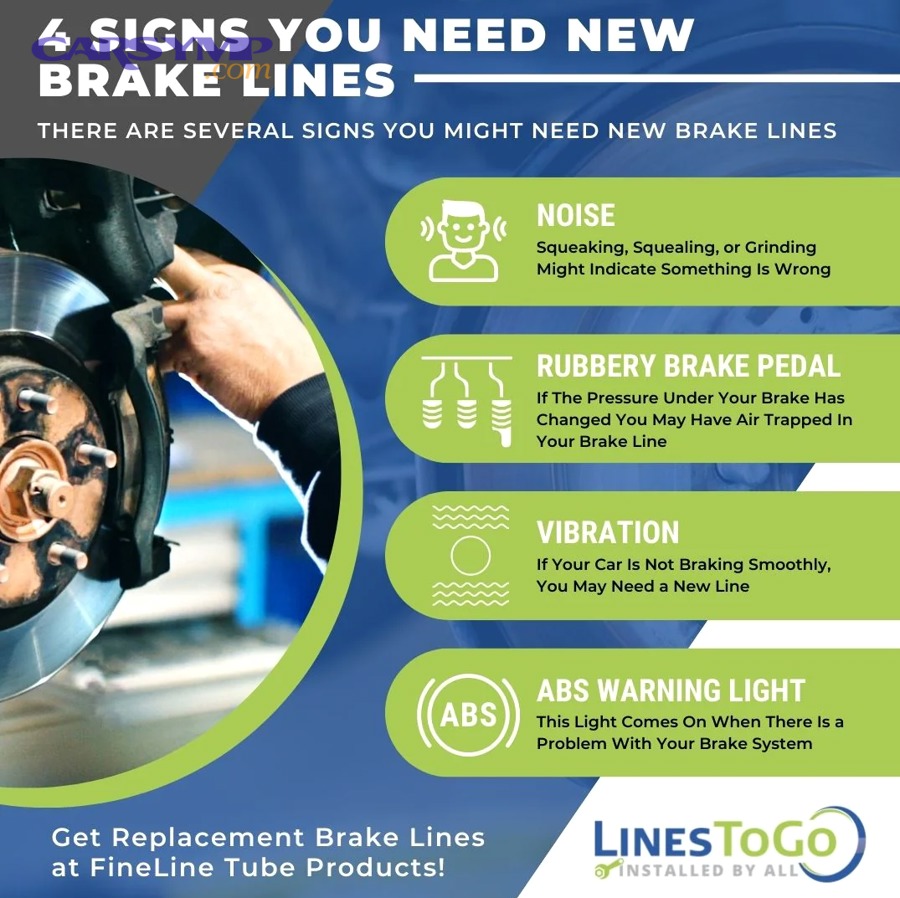
Signs of air in brake lines show up as a brake pedal that feels longer, softer, and less predictable because tiny bubbles compress under pressure instead of transmitting force cleanly to the calipers.
When that happens, you may notice spongy brakes, extra pedal travel, or a pedal that needs pumping before it feels “normal,” especially after recent brake work or a low-fluid event.
Beyond pedal feel, air can change how the vehicle behaves during stops—longer stopping distances, inconsistent bite, or braking that feels fine once and weak the next—so recognizing patterns matters for safety.
Giới thiệu ý mới: below are the most reliable ways to identify air-related symptoms, separate them from look-alike faults, and decide what to do next without guessing.
What does air in brake lines feel like when you press the pedal?
Air in brake lines usually feels like a longer, softer pedal stroke—often described as spongy brakes—because the pedal energy compresses bubbles before the pads clamp the rotors.
To make that sensation easier to spot, start with how the pedal behaves at rest and under steady pressure.

Soft initial bite and extra travel
The most common “tell” is extra pedal travel before the car starts to slow. Instead of a firm, immediate bite, the first part of the pedal stroke feels springy, and you may need to push farther than usual to get the same deceleration.
Cụ thể hơn, the pedal often feels like it has a cushion under it: you press, it moves, but braking builds more slowly than your muscle memory expects.
This happens because brake fluid is designed to be effectively incompressible in normal conditions, while air is compressible. When air is present, the hydraulic system spends part of your pedal force squeezing bubbles instead of moving pistons.
Pedal that firms up after pumping
If the pedal feels soft on the first press but improves after two or three quick pumps, that pattern strongly suggests compressible volume in the system—commonly air—temporarily being “packed” into a smaller space as pressure rises.
Để minh họa, you might get one low/spongy press at a stoplight, pump once or twice, and suddenly the pedal comes up higher and feels more solid for the next stop.
While that can also happen with rear drum adjustment issues or pad knock-back in some setups, the “pump-to-firm” behavior is a classic air-in-system clue to investigate.
Pedal slowly sinks: air vs. a leak vs. internal bypass
A slow sinking pedal while you hold steady pressure can mean different things, so the details matter. With air alone, the pedal may feel soft but typically stabilizes once the bubbles are compressed.
However, if the pedal continues creeping toward the floor, you must consider external leaks or internal master cylinder bypass. Both can be dangerous and need immediate diagnosis.
Quan trọng hơn, NHTSA recall documents describe soft/low pedal conditions where air bubbles trapped in fluid can increase pedal stroke and reduce braking performance, raising crash risk.
Why “spongy” feels different from “soft but solid”
Drivers often describe two different sensations as “soft.” Air-related softness tends to be springy (compress-and-rebound). Other issues can feel low (pedal sits lower but feels solid) or hard (little travel, high effort).
Hãy cùng khám phá: if it feels springy and improves with pumping, air climbs higher on the suspect list; if it is low but not springy, look harder at adjustment, wear, or hydraulic balance.
Which driving symptoms suggest air in brake lines is reducing braking power?
Beyond pedal feel, air in brake lines often causes inconsistent braking response—longer stopping distance, delayed bite, or a “first stop weak, second stop better” pattern—because bubble compression steals pressure early in the stroke.
Next, map what you feel at the pedal to what the car does on the road, because those combinations are more diagnostic than any single symptom.
Longer stopping distances and delayed engagement
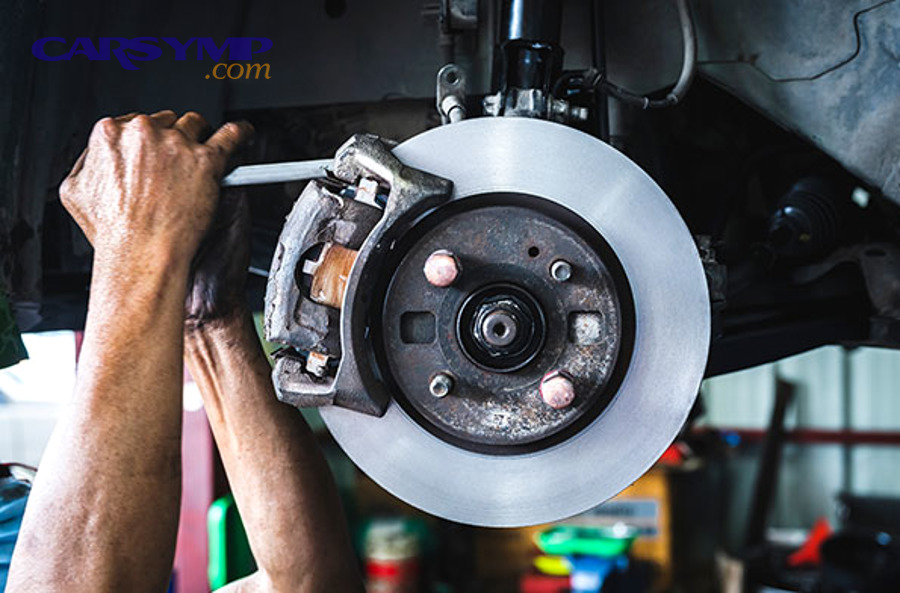
If you’re pressing farther and the vehicle still isn’t slowing as quickly as usual, that’s a functional sign—not just a “feel” issue. Air reduces the immediate hydraulic force available at the calipers, which can translate into longer stops.
Cụ thể, you may notice you have to “set up” the brakes earlier, especially at highway speeds or when descending grades.
Inconsistent bite from stop to stop
Air can make the brake response unpredictable: one stop feels acceptable, the next feels vague. That inconsistency is often more alarming than a consistently low pedal because it’s harder to anticipate.
Ngoài ra, inconsistent response after the vehicle has been parked can happen if bubbles migrate to high points, changing the compressible volume you’re dealing with on the first application.
Brake fade-like behavior after repeated stops
Sometimes air symptoms get worse during repeated braking because heat changes the system’s behavior. As components warm, any moisture-contaminated fluid is more likely to boil, creating vapor bubbles that act like air.
According to MISCO’s brake fluid guidance (Aug 2023), moisture accumulation of a few percent can significantly reduce boiling point, increasing the chance of vapor formation under heat.
Đặc biệt, the “it’s fine cold, scary hot” pattern can point to fluid condition as part of the story, not only a one-time bleeding error.
ABS activation or pulsation earlier than expected
Air can change pressure build-up rates and how the system responds to wheel slip events. While ABS pulsation alone does not prove air, early or unexpected ABS intervention combined with a spongy pedal can support the suspicion.
However, in modern vehicles, ABS modules can also trap air in ways that require specific bleeding sequences—so treat this symptom as a clue, not a conclusion.
Can you confirm air in brake lines with simple driveway checks?
You can’t “prove” air with one home test, but you can gather strong evidence by checking pedal behavior engine-off/engine-on, pumping response, and fluid level trends—without driving fast or taking risks.
To begin safely, do these checks on flat ground with the vehicle secured, and stop immediately if you find leaks or sudden pedal drop.
Engine-off firmness test
With the engine off, press the brake pedal several times to remove stored vacuum assist, then press and hold moderate pressure. A healthy hydraulic system typically feels firm and stable.
Cụ thể, if it feels springy and continues to compress noticeably with steady pressure, that suggests compressible volume (air/vapor) or internal bypassing—both worth professional diagnosis.
Engine-on booster change test
Start the engine while holding the pedal. The pedal should drop slightly as the brake booster adds assist; after that initial drop, the pedal should still feel solid when pressed.
Tuy nhiên, if the pedal becomes long and mushy once assist is present, you may be feeling how a small amount of air becomes more obvious when your foot can push farther with less effort.
Pump-to-firm response test
Press the pedal once, note travel and firmness, then pump it two to three times quickly and press again. If the pedal comes higher and firms up, air becomes a more likely explanation.
Ngược lại, if pumping makes no improvement and the pedal still drifts down, leaks or master cylinder issues rise on the list.
Visual checks: reservoir level, fluid condition, and leak clues
Check the brake fluid reservoir: low level can allow air entry, and dark/dirty fluid suggests age and contamination. Also look for wetness at calipers, wheel cylinders, hoses, and under the master cylinder.
Quan trọng hơn, if the fluid level is dropping over time, don’t focus only on “air”—find the leak first because air is usually the result, not the root cause.
What a professional pressure-hold test adds
Shops can perform controlled pressure testing and inspect for micro-leaks under load. They also know when a specific platform requires automated bleeding steps.
Some manufacturer procedures explicitly say to repeat bleeding if the brake pedal feels spongy after the first attempt, emphasizing that “spongy” is a recognized post-service symptom.
What common repairs or mistakes introduce air into brake lines?
Air most often enters brake lines after the system is opened (calipers, hoses, master cylinder), when the reservoir runs low, or when boiling creates vapor—so the timeline around recent work or overheating is highly diagnostic.
Next, match your symptom onset to what changed recently, because “when it started” often points to “how it got in.”
Letting the reservoir run low during service
If the fluid level drops below the port inside the master cylinder reservoir, the system can ingest air. This can happen during pad replacement, caliper replacement, or repeated bleeding attempts when the reservoir isn’t topped off correctly.
Cụ thể, even a short moment of air ingestion can spread bubbles through lines and ABS passages, making the final pedal feel inconsistent.
Opening a hydraulic connection without controlling fluid loss
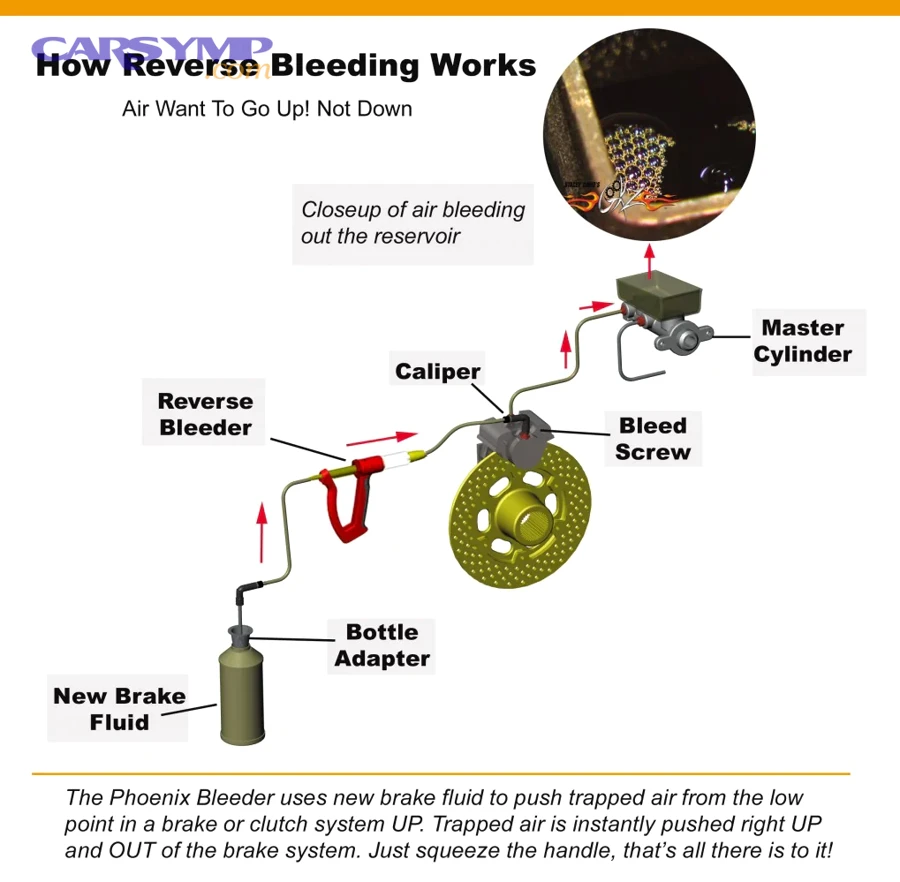
Cracking a brake line fitting, replacing a hose, swapping a caliper, or changing a wheel cylinder all open the system. Once open, gravity can drain fluid and pull air into the line, especially if the reservoir cap is off and the system is left to sit.
Ngoài ra, moving caliper pistons back without proper control can stir debris and complicate bleeding on some designs, which is why many service guides stress correct sequence and cleanliness.
Improper bleeding sequence or technique
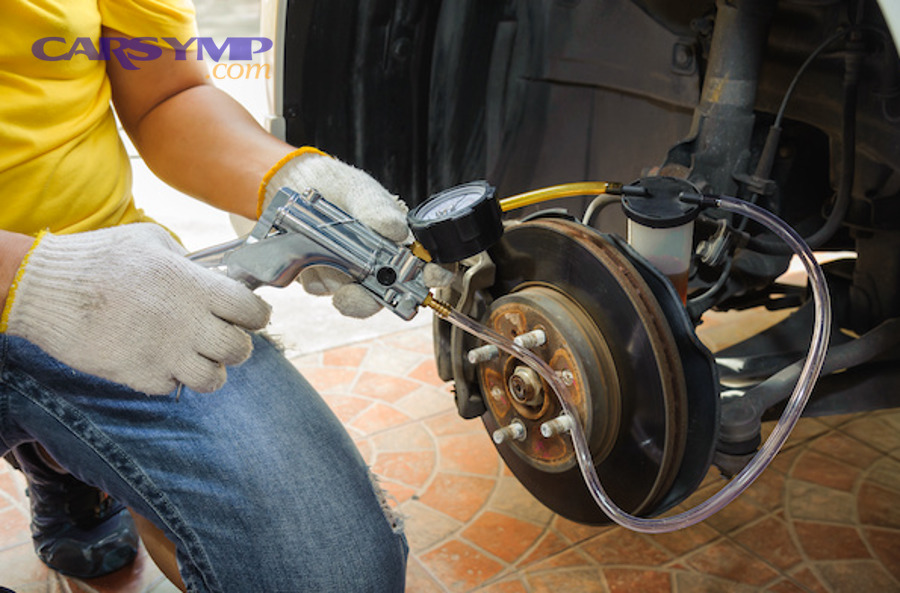
Different vehicles require different bleeding orders and methods (manual, pressure, vacuum, scan-tool). If the sequence is wrong or the technique introduces bubbles, the pedal can stay spongy.
For some systems, missing a step means you must restart the entire process, and service bulletins warn that trapped air can cause performance problems with or without obvious spongy pedal symptoms.
Heat events: boiling fluid creates vapor bubbles that mimic air
Severe braking heat (mountain descents, track use, towing) can boil contaminated fluid. Vapor bubbles behave like air because they compress under pressure, producing a long pedal.
According to the Institute of the Motor Industry’s brake fluid discussion (Nov 2021), wet boiling points are much lower than dry boiling points for common DOT fluids, which is why moisture matters for pedal consistency.
Đặc biệt, if the problem appears after heavy braking and improves when cooled, consider fluid condition as part of the cause.
Micro-leaks that “breathe” air without obvious dripping
A small seep at a flare fitting, banjo bolt, or rear wheel cylinder can allow air entry over time, especially during pedal release when pressure drops. You might see only slight dampness or a dusty wet ring, not a puddle.
Tóm lại, air is frequently a symptom of an underlying sealing issue—so don’t treat bleeding as the only fix until leaks are ruled out.
When are spongy brakes not caused by air in brake lines?
No, spongy brakes do not always mean air; worn components, flexible hoses, poor adjustment, pad knock-back, and hydraulic faults can mimic the same soft pedal feeling even after bleeding.
To avoid chasing the wrong fix, compare air-type springiness against other common “soft pedal” patterns below.

This table helps you connect a specific symptom pattern to the most likely category of cause so you can decide whether bleeding is the first move or just one step in a bigger diagnosis.
| What you feel/see | More consistent with air/vapor | More consistent with other issues |
|---|---|---|
| Springy pedal, improves after pumping | Yes (air/vapor compresses, pumping firms) | Sometimes (rear drum adjustment, pad knock-back) |
| Pedal is low but feels solid | Less likely | Pad wear, rear drum adjustment, caliper slide issues |
| Pedal sinks steadily while holding pressure | Possible (large air volume), but not typical once compressed | External leak or master cylinder internal bypass |
| Soft pedal after long downhill braking, better when cool | Yes (fluid vapor from boiling) | Also possible (overheated pads/rotors causing fade) |
| Bleeding attempts don’t change anything | Less likely | Hose expansion, caliper issues, master cylinder, adjustment |
Rubber hose expansion and “compliance” feels like softness
Aging rubber brake hoses can balloon under pressure. That expansion absorbs hydraulic force the same way air does—by consuming volume—so the pedal can feel soft even if the lines are perfectly bled.
Cụ thể, you may not feel pumping improvement, and the softness may be more consistent than air-related variability.
Rear drum brake adjustment can create long pedal travel
On vehicles with rear drums, excessive shoe-to-drum clearance can cause long pedal travel before the shoes contact the drum. The pedal can feel low, and pumping may temporarily improve it.
However, the “feel” is often more low-than-springy. The best clue is when the parking brake also feels weak or has excessive travel.
Master cylinder issues: bypass without external leaks
If internal seals bypass fluid, the pedal can sink with steady pressure. This may show up after a hard stop or as the vehicle ages, and it’s not solved by bleeding.
Some technical guidance notes that bleeding will not necessarily cure a soft/mushy pedal because compliance can come from other sources in the system.
Pad knock-back and wheel bearing play
If a rotor wobbles slightly due to wheel bearing play or runout, it can push caliper pistons back, so the next brake application has extra travel. This can feel like a momentary soft pedal after corners or rough roads.
Ngược lại, air usually affects braking more broadly and predictably across different driving situations, not only after a specific event like cornering.
How urgent is air in brake lines, and when should you stop driving?
It’s urgent when pedal travel becomes excessive, braking response is unpredictable, or the pedal approaches the floor, because air can reduce braking performance and increase stopping distance—making continued driving unsafe.
To decide quickly, use clear “stop now” thresholds rather than hoping the symptom stays mild.
Stop driving immediately if any of these happen
-
Pedal goes near the floor or you need two-foot pressure to slow normally.
-
Brake warning light or low-fluid warning appears, especially with a changing pedal feel.
-
Visible fluid leak at a wheel, under the master cylinder, or along a hose/line.
-
Braking becomes inconsistent—one stop normal, next stop weak—without explanation.
Quan trọng hơn, NHTSA recall language links soft/low pedal conditions and trapped air bubbles to increased pedal stroke and reduced braking performance, which increases crash risk.
If symptoms are mild, treat it as “drive only to diagnose”
If the pedal is slightly springy but braking still works and there are no leaks, you may be tempted to keep driving. The safer approach is to limit driving to a short, controlled route for diagnosis or to reach a shop—avoiding high speeds and heavy traffic.
Đặc biệt, any worsening trend (more travel each day, more pumping needed) should be treated as a stop-and-tow situation, not a “wait and see.”
Why it can worsen suddenly
Air pockets can migrate, expand with heat, or be joined by vapor bubbles when fluid boils. A system that felt “barely okay” in the morning can become unsafe after repeated braking or a long descent.
Tóm lại, unpredictability is the danger—brakes must be consistent to be safe.
What’s the safest next step after you suspect air is trapped?
The safest next step is to stop driving, check fluid level and obvious leaks, then have the brake system properly serviced and tested—because removing air requires correct method, sequence, and verification of pedal feel under controlled conditions.
Next, focus on fixing the root cause first (leak, low fluid, recent repair error) so the symptom doesn’t return.

Step 1: Verify fluid level and look for obvious leaks
Check the reservoir level against the MIN/MAX marks and inspect each wheel area for wetness. Also look at hoses and the master cylinder area for seepage.
Cụ thể, if fluid is low, top-off alone is not a fix—low fluid means something changed (wear or leak), and air may already be inside.
Step 2: Identify what triggered it (recent work, overheating, or low fluid)
Build a short timeline: Did this start after pad replacement, caliper work, a line repair, or a heavy braking event? Air after service points toward technique/sequence; air after overheating points toward fluid condition; air with low reservoir points toward leaks or wear.
Ngoài ra, if you recently opened any hydraulic connection, assume air is present until proven otherwise with a verified firm pedal test.
Step 3: Choose the right bleeding method for your vehicle
Some vehicles respond well to pressure bleeding; others need scan-tool steps to cycle valves. Manufacturer bulletins and service instructions often specify repeating the procedure if the pedal remains spongy and performing post-procedure road checks.
In plain terms, the system must be purged correctly, then confirmed. If you or a shop tries to bleed brakes without the correct sequence, it may leave air behind or even introduce more air.
Step 4: Confirm the fix with controlled testing
A proper repair ends with verification: a stable, firm pedal (engine off and on), consistent bite at low speed, and no warning lights. If anything feels uncertain, the system needs re-checking before normal driving.
Như vậy, the goal isn’t only “air removed,” but “repeatably firm pedal + consistent braking + no leaks.”
Step 5: If you must DIY, control risk and contamination
Brake fluid damages paint and absorbs moisture; spills and contamination can create bigger problems than the original symptom. Keep everything clean, use the correct fluid type, and never reuse old fluid that has been exposed to air.
To make DIY guidance easy to remember, here’s a simple phrase set you can use as a checklist: Safety tips for brake bleeding at home include stabilizing the vehicle, wearing eye protection, using correct jack stands, and keeping the reservoir from running low at all times.
Now that you can recognize the typical symptom patterns and the most common entry points for air, the remaining challenge is the “it came back” scenarios—where technique, ABS hardware, or fluid condition keeps reintroducing softness.
Why sponginess returns: ABS, fluid moisture, and micro-bubbles
Sponginess can return when air remains trapped in ABS passages, when moisture lowers boiling point and creates vapor under heat, or when micro-bubbles cling to calipers and slowly migrate—so prevention and verification are as important as the initial purge.
Next, use the four advanced checkpoints below to stop repeat failures and confirm true repair quality.
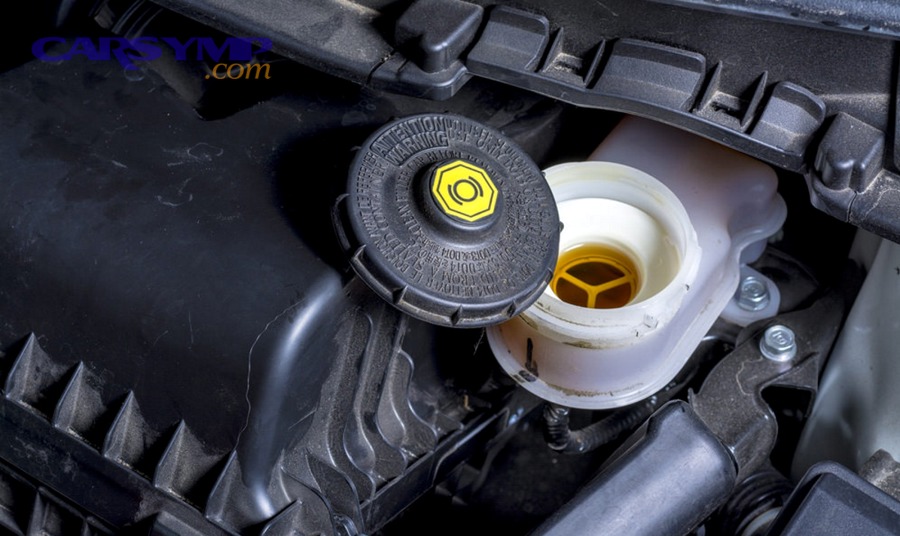
ABS and stability systems: why “normal bleeding” may not be enough
Modern ABS modules contain valves and channels that can trap air. Some vehicles require an automated bleed routine that cycles those valves to move trapped air to a bleedable location.
Service literature notes that trapped air can cause performance problems with or without obvious spongy pedal symptoms, and that missing a step can require restarting the procedure.
Để hiểu rõ hơn, if a shop or DIY process never cycles the ABS unit (when required), you can end up with a pedal that feels “almost good” but never truly firm—especially in panic stops when ABS is active.
Moisture and boiling: the hidden cause behind “spongy only when hot”
Brake fluid absorbs moisture over time, which lowers boiling point and increases the chance of vapor bubbles during hard braking. Vapor behaves like air, producing a long, compressible pedal under heat.
Theo nghiên cứu của MISCO (technical team), vào Aug/2023, chỉ 2% nước trong DOT3 có thể làm giảm điểm sôi khoảng 135°F (75°C), làm tăng nguy cơ tạo bọt hơi khi phanh nặng.
Trong khi đó, IMI’s reference list (Nov 2021) highlights much lower wet boiling points for common DOT fluids compared to dry ratings, reinforcing why moisture changes pedal consistency under stress.
Stubborn air traps: caliper angles, bleeder position, and micro-bubbles
Some calipers trap air if the bleeder isn’t the highest point during service. Micro-bubbles can cling to internal surfaces and release slowly, making the pedal feel fine initially and then soft later.
Cụ thể, if a caliper is installed on the wrong side (rare but real in DIY), the bleeder may end up low, making full air removal nearly impossible.
Also, certain recall documentation describes conditions where air bubbles can be released from components and become trapped in fluid, creating a soft pedal and increased pedal stroke.
Prevention + fast verification, including common questions
The best prevention combines correct method, clean fluid, and repeatable confirmation. Use these as “closing checks,” not optional extras: Post-bleed pedal feel checks should include engine-off firmness, engine-on stability, and a low-speed test stop in a safe area.
If you track symptoms digitally, note that some drivers search issues under brand-like shorthand; you might even see references like Car Symp in community discussions—useful for spotting patterns, but always confirm with proper diagnosis.
-
Q: How long should the pedal travel be after air is removed?
A: It should feel high and firm with consistent bite. Some travel is normal, but it should not feel springy or require pumping, and it should not drift down under steady pressure.
-
Q: If the pedal is spongy right after brake work, is that normal?
A: Mild change can happen before final bleeding, but a spongy pedal after service is a red flag. Many procedures explicitly instruct repeating the bleeding process if sponginess remains.
-
Q: Can I just add brake fluid to fix spongy brakes?
A: No. Low fluid may be a symptom of wear or leaks, and air may already be present. Topping off without fixing the cause can leave you with unpredictable braking.
-
Q: Why does the pedal feel worse after repeated stops?
A: Heat can create vapor bubbles if fluid is moisture-contaminated, and air pockets can expand. This makes the pedal feel longer and softer when hot, then better again when cool.
Tổng kết lại, the most reliable signs of air in brake lines combine spongy brakes, longer pedal travel, pump-to-firm behavior, and road symptoms like delayed bite or inconsistent stops—especially after brake work or low fluid. If any severe warning signs appear, stop driving and have the system inspected, repaired, and verified with firm pedal checks.