


A vibration at idle from mounts usually happens when the rubber (or hydraulic) inside an engine mount can’t isolate normal engine pulses anymore, so you feel a steady shake through the steering wheel, seat, or dash—especially at stop lights.
If you’re trying to confirm whether the mounts are the cause, you can narrow it down fast by matching the vibration “pattern” (idle vs in-gear vs on throttle) with a few safe checks, including a careful visual inspection and controlled load tests.
If the mounts aren’t the root cause, the next best suspects often mimic the same symptom—misfires, vacuum leaks, idle control issues, or exhaust contact—so you need a simple comparison path to avoid replacing parts that aren’t bad.
Introduce a new idea: the sections below walk you from “what mount-related idle vibration is” to “how to prove it” and finally “what to fix (and when)”.
What is vibration at idle from engine mounts?
Vibration at idle from engine mounts is a cabin shake caused by weakened mount isolation that allows engine oscillations to transmit into the chassis at low RPM, where the powertrain’s natural movement is most noticeable.
To connect the symptom to the root cause, it helps to understand what the mounts are supposed to do—and why idle makes failures easier to feel.
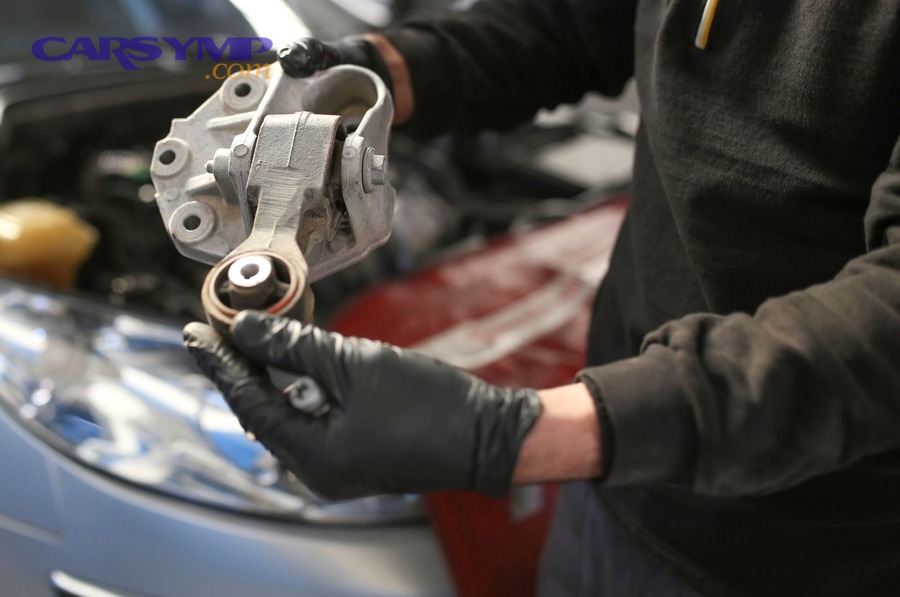
What do engine mounts do at idle?
Engine mounts secure the engine to the vehicle structure while isolating vibration and controlling engine roll (torque reaction). The rubber or fluid inside the mount acts like a tuned “filter”: it supports weight, limits motion, and absorbs vibration instead of passing it into the body.
At idle, the engine produces repeating pulses from combustion events and rotating imbalance. Healthy mounts damp those pulses so you hear the engine but don’t feel it. When the mount’s rubber hardens, cracks, or separates—or when a hydraulic mount leaks—those pulses travel straight into the chassis, and the cabin becomes the “amplifier.”
Why does vibration show up most at idle?
Idle is where engines produce relatively low-frequency vibration, and the drivetrain is lightly loaded, so you can detect small changes in isolation. You also have fewer competing noises (wind/road), so the sensation is clearer.
In many vehicles, idle vibration becomes worse with added idle load (A/C on, lights on, in Drive with foot on brake) because the engine produces more torque pulses while the mount is still trying—and failing—to isolate them.
According to a thesis by Concordia University from the Department of Mechanical and Industrial Engineering, in 2005, a coupled three-degree-of-freedom engine mount system (including elastomeric and hydraulic mounts) was modeled specifically to analyze how mount behavior affects vibration transmission across operating conditions. (spectrum.library.concordia.ca)
Can worn engine mounts cause vibration at idle?
Yes—worn engine mounts can cause vibration at idle because they lose damping and stiffness control, they allow excessive engine movement, and they transmit normal engine pulses directly into the body instead of isolating them.
To confirm it confidently, you need to separate “mount vibration” from “engine running rough,” because both can feel similar in the seat.
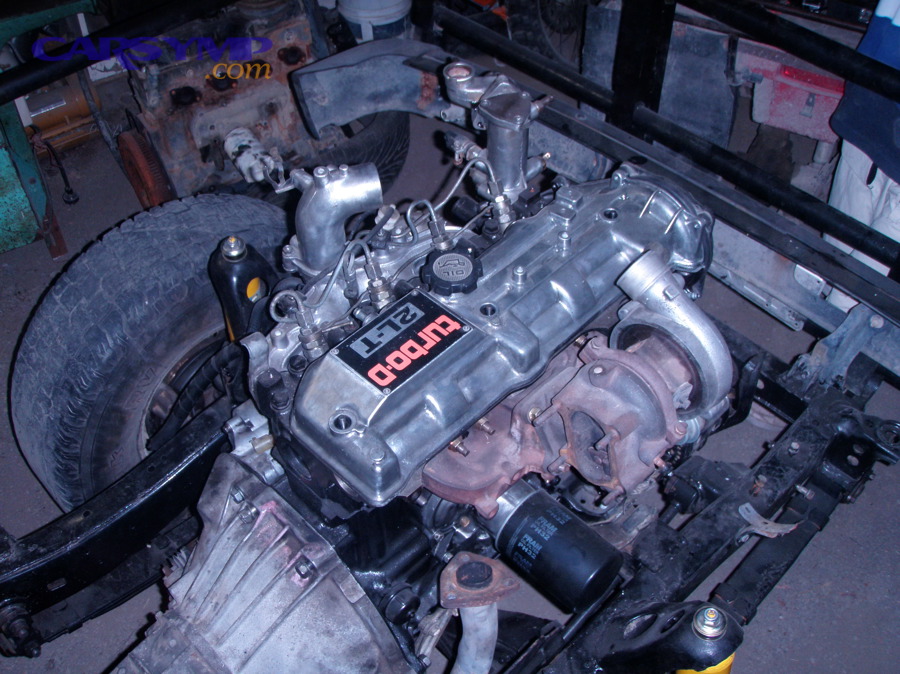
What symptoms point to mounts vs normal engine vibration?
Mount-related idle vibration usually has a “structure-borne” feel: a steady buzz or shake that seems to come from the car body itself. Common mount clues include:
- Vibration strongest at idle and improves noticeably when RPM rises slightly (e.g., 900–1,200 RPM).
- Clunk/thump when shifting between Park/Reverse/Drive (engine rocks and hits a stop).
- Visible engine movement (rocking/tilting) when lightly blipping the throttle.
- Vibration changes in-gear (Drive/Reverse) compared to Neutral/Park.
After a quick scan, a practical rule is: if the engine sounds smooth but the cabin shakes, mounts move up your suspect list; if the engine audibly misfires or stumbles, mounts may be secondary.
When is it NOT the mounts?
It’s less likely to be mounts when:
- The engine idles unevenly (audible misfire, fluctuating RPM).
- Vibration worsens with RPM steadily (often wheels/tires/driveline, not mounts).
- You have a check engine light with misfire or fuel trim codes and the engine runs rough.
- The vibration appears only while moving, not at a stop.
A helpful sanity check: AutoZone notes that excessive engine vibration at idle can be an early sign of failing motor mounts because worn mounts lose their ability to damp vibrations effectively. (autozone.com)
According to a study by Linköping University from the Department of Electrical Engineering (Division of Automatic Control), in 2003, researchers developed a parameterized model of an active hydraulic engine mount that showed good agreement with experimental behavior from 0 to about 300 Hz, highlighting how mount dynamics directly influence transmitted vibration. (rt.isy.liu.se)
How can you diagnose vibration at idle from mounts at home?
A practical diagnosis combines a careful inspection plus two controlled tests: visual condition checks, a safe load/torque observation, and a confirmation step that rules out “rough idle” causes.
Next, use a methodical sequence so you get a clear answer without guessing—or creating new damage.
How to inspect mounts visually
How to inspect mounts visually starts with locating each mount and then checking rubber, metal, and hydraulic fluid signs under good light with the engine off.
Use this checklist:
- Rubber condition: cracks, splitting, missing chunks, “crumbly” edges, or rubber separating from metal.
- Metal brackets: bent ears, shiny contact marks (engine hitting), broken welds, missing bolts.
- Mount alignment: mount sitting “collapsed” (engine looks low or shifted), uneven gaps.
- Hydraulic mount leaks: oily residue on mount body, wetness around seams, fluid trails.
Tips that reduce false positives:
- Clean light grime with a rag first so you can see fresh tears or leaks.
- Compare left vs right mounts; asymmetry is often the clue.
- Inspect nearby parts (heat shields, exhaust flex joint, hoses) for contact marks caused by engine movement.
What is the brake-torque test and how to do it safely?
The brake-torque test is a controlled way to load the drivetrain while the car is stationary so you can observe engine movement; you do it in a safe area with a helper, short duration, and strict control.
Safety rules:
- Do this only on level ground with plenty of space.
- Keep the hood open and stay clear of belts/fans.
- Use a helper in the driver seat; the observer stands to the side.
Basic procedure:
- Warm the engine to normal idle.
- Set parking brake, keep foot firmly on the brake pedal.
- Shift into Drive (or Reverse) and hold for 2–3 seconds.
- Lightly raise RPM just a little (do not rev hard).
- Observe engine movement: excessive lift/roll suggests a mount is weak or broken.
What “abnormal” looks like:
- Large engine roll (quick lurch) instead of smooth, limited movement.
- Audible clunk as the engine rocks into a stop.
- Movement direction that points to a specific mount (e.g., front torque strut failure allows pronounced fore-aft rocking).
How to spot fluid leaks on hydraulic mounts and torque struts
Hydraulic mounts often fail by leaking; torque struts (“dogbone” mounts) often fail by torn bushings that allow fore-aft movement.
Hydraulic mount leak clues:
- Wetness along a seam.
- Sticky grime concentrated on the mount body.
- Fresh drips or trails on the subframe below.
Torque strut clues:
- Torn bushing sleeves.
- Excessive fore-aft engine rocking during throttle blips.
- Shiny marks where the engine assembly contacts a bracket.
According to a study by University of Lisbon’s Instituto Superior Técnico from the Department of Mechanical Engineering, an engine mount vibration analysis showed idle-related excitation components commonly appear around 25 Hz and 50 Hz (linked to engine speed harmonics), reinforcing why low-RPM checks can reveal mount transmissibility problems early. (fenix.tecnico.ulisboa.pt)
What other problems mimic mount-related idle vibration?
Mount vibration is usually structure-borne, while many other causes are engine-performance-borne; mounts win when the engine runs smoothly but the cabin shakes, while other faults win when the engine runs unevenly or the vibration follows RPM in a different way.
To avoid misdiagnosis, compare symptoms side-by-side before you plan repairs.
Before the details, this table summarizes common “look-alikes” and what separates them.
| Symptom pattern | More likely mounts | More likely something else |
|---|---|---|
| Smooth-sounding idle but strong cabin shake | ✅ | |
| Vibration improves with slight RPM increase | ✅ | sometimes |
| Noticeable stumble, uneven idle, RPM hunting | ✅ (misfire/air leak/idle control) | |
| Rattle only, especially over bumps | ✅ (heat shield/exhaust contact) | |
| Vibration appears mainly while driving | ✅ (tires/driveline) |
Engine misfire vs mount vibration: how to tell
A misfire causes an uneven power pulse: the engine speed fluctuates, the exhaust note changes, and the vibration often feels like a “lumpy” shake rather than a steady buzz.
Misfire clues:
- Rough, inconsistent idle sound.
- Check engine light or stored misfire codes.
- Vibration worsens with load and does not “smooth out” cleanly with small RPM changes.
Mount clues:
- Idle sounds normal, but cabin shakes.
- Clunk on shifts or engine movement visible.
- Vibration changes dramatically with gear engagement (Drive/Reverse).
Bad idle control/vacuum leak vs mounts
Idle control problems and vacuum leaks often create a hunting idle or a high/low idle swing; mounts do not change idle speed, they change how you feel it.
Vacuum/idle control clues:
- RPM fluctuates.
- Hissing sounds.
- Fuel trim codes.
- Vibration “comes and goes” with idle speed swings.
Mount clues:
- RPM stable but vibration constant.
- Vibration changes with in-gear loading and A/C load.
Exhaust contact/heat shield rattle vs mounts
Exhaust contact can feel like vibration, but it often presents as metallic buzzing or rattling and can change with engine movement. Ironically, bad mounts can cause exhaust contact—so you need to check both.
Exhaust/heat shield clues:
- Metallic rattle rather than heavy shake.
- Noise changes when you tap a shield or move the exhaust slightly (engine off, cool exhaust).
- Visible contact marks on heat shields, subframe, or exhaust pipes.
According to a study by University of Lisbon’s Instituto Superior Técnico from the Department of Mechanical Engineering, mount behavior is commonly evaluated by how it transmits engine-speed harmonic forces (e.g., 25 Hz and 50 Hz components at idle), which is why a smooth-running engine can still create a strong cabin response if isolation is compromised. (fenix.tecnico.ulisboa.pt)
Transmission mount vs engine mount diagnosis: what’s different?
Engine mounts mainly control engine position and roll, while the transmission mount stabilizes the transmission tail/gearbox case—so engine mounts dominate “engine rock” symptoms, and transmission mounts often show up as in-gear harshness, driveline thump, or shifter-related vibration.
However, most vehicles act like a system, so you’ll get the best answer by isolating where the vibration feels strongest and when it changes.
Where each mount sits and what it supports
- Engine mounts: typically at the sides/front of the engine block area (varies by layout), carrying engine weight and resisting roll.
- Transmission mount: typically under the transmission, supporting the gearbox and managing driveline angle.
If you can safely view underneath (proper jack stands only), look for a single mount under the transmission crossmember—this is often where a collapsed transmission mount is easiest to spot.
Symptoms that show up in Drive/Reverse vs Neutral/Park
A quick pattern guide:
- More vibration only when in Drive/Reverse (foot on brake): transmission mount involvement increases.
- Clunk when shifting into gear + engine visibly rocks: engine mount or torque strut involvement increases.
- Shifter buzz or driveline thump on takeoff: transmission mount or driveline angle issues increase.
AutoZone also notes that degraded motor mounts can misalign components like the exhaust system and transmission, contributing to shifting-related noises and harshness. (autozone.com)
Quick checks to isolate transmission mount involvement
- Neutral test: If vibration reduces noticeably when shifting from Drive to Neutral at a stop, the vibration may be load-related (mounts or engine load).
- Observation under load: Excessive movement at the transmission tail area suggests transmission mount weakness.
- Contact clues: Look for shiny marks where the transmission crossmember or exhaust contacted due to sag.
According to a study by Linköping University from the Department of Electrical Engineering (Division of Automatic Control), in 2003, an active hydraulic engine mount model was validated across 0–300 Hz, underscoring that mount dynamics can differ substantially by location and loading—supporting the need to isolate engine-side vs transmission-side behavior during diagnosis. (rt.isy.liu.se)
What are the types of engine mounts and which ones fail at idle?
There are three main types of engine mounts—rubber (elastomeric), hydraulic, and active—based on the damping method they use, and each type fails in ways that can produce idle vibration.
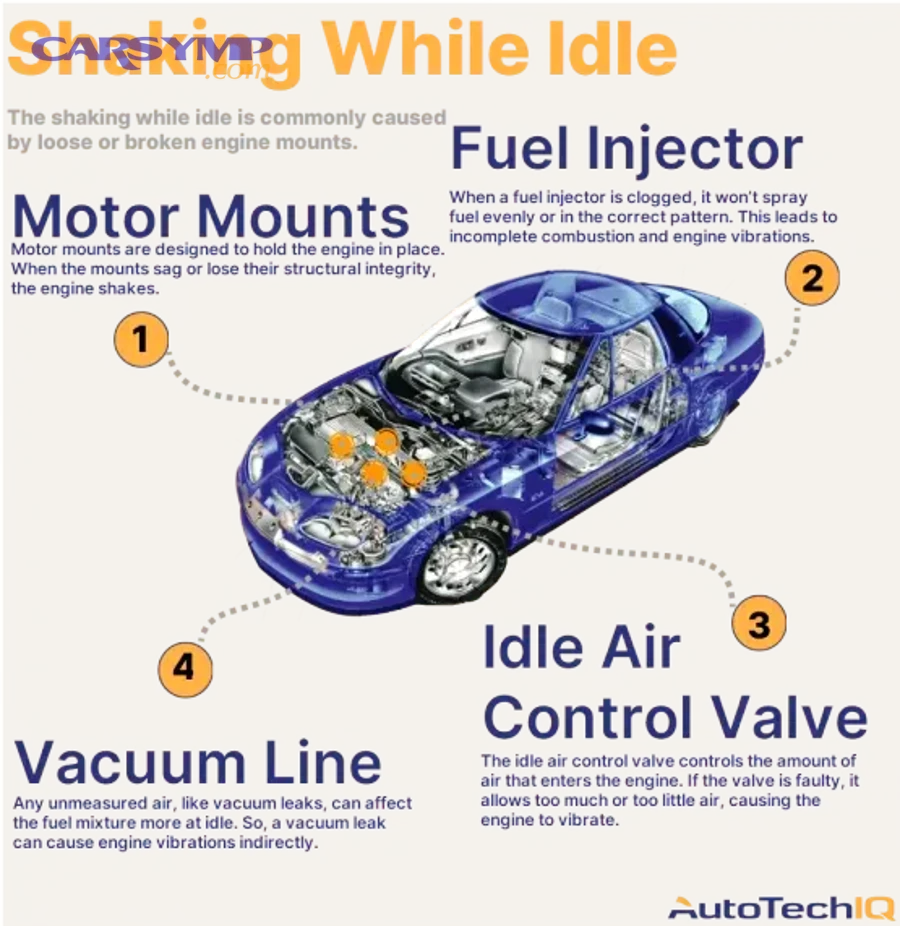
Next, matching your mount type to its common failure mode makes your inspection far more accurate.
Rubber (elastomeric) mounts
These are the most common and simplest: rubber bonded between metal brackets.
Typical failure pattern:
- Rubber hardens with age and heat cycles.
- Rubber cracks, tears, or separates from metal.
- Mount collapses and lowers engine position.
Idle vibration is common when rubber hardens because it loses its ability to absorb low-frequency vibration.
Hydraulic mounts
These contain fluid chambers to improve damping at certain frequencies.
Typical failure pattern:
- Fluid leaks (wet residue).
- Internal valves degrade (less damping).
- Mount becomes effectively “solid” or inconsistent.
Hydraulic mount failures often produce a noticeable idle shake that can worsen when you turn on A/C or shift into gear.
Active mounts
These use controlled hydraulics or actuators (varies by design) to counter vibration more effectively.
Typical failure pattern:
- Control/actuator issues or fluid-related degradation.
- System faults may create unusual NVH changes.
While less common in older vehicles, active mounts can fail in ways that feel “sudden,” because the mount goes from actively canceling vibration to behaving like a passive mount.
According to a thesis by Concordia University from the Department of Mechanical and Industrial Engineering, in 2005, mount systems were modeled using both elastomeric and hydraulic components to capture how different mount types alter transmitted vibration—supporting why hydraulic leaks and rubber degradation can both show up as idle shake. (spectrum.library.concordia.ca)
What are your repair options and when should you do engine mount replacement?
The best fix depends on severity: minor wear can be monitored, but torn rubber, collapsed mounts, or leaking hydraulic mounts usually require engine mount replacement because the mount can’t regain damping once its structure is compromised.
Then, once you decide to repair, the key is choosing “replace one vs replace the set” and doing the job safely.
When to replace one mount vs all mounts
Replace one mount when:
- Only one mount is clearly torn/collapsed/leaking.
- The other mounts inspect clean and hold position well.
- The vehicle’s mount set isn’t uniformly aged or stressed.
Replace multiple mounts when:
- You see cracking/hardening across several mounts.
- The failed mount likely overloaded the others.
- The vibration persists after one mount replacement.
Firestone notes that cars usually have between two and four motor mounts, and while you may be able to replace just one, it’s smart to check the others because they’re often the same age and may be close to failure. (firestonecompleteautocare.com)
What to expect during engine mount replacement
An engine mount replacement often requires supporting the engine safely, removing load from the mount, and swapping the mount without damaging hoses, wiring, or exhaust clearance.
Key realities:
- You usually must support the engine with a jack and a wood block (or an engine support bar).
- Some mounts are easy top-access; others require subframe access.
- Torque specs matter because incorrect torque can create new vibration or premature failure.
DIY mount replacement safety considerations (non-negotiables):
- Never rely on a jack alone—use stands.
- Keep hands clear when the engine is supported and shifting slightly.
- Lift the engine only as much as needed to unload the mount.
If you want a quick visual walk-through, this video shows common checks and replacement concepts:
Post-repair checks: alignment, exhaust clearance, test drive
After replacement:
- Confirm the engine sits centered and level.
- Check exhaust clearance at flex joints and heat shields.
- Test Drive → Neutral coast → gentle acceleration to confirm the shake/clunk is gone.
If vibration remains:
- Recheck torque struts and transmission mount.
- Recheck for misfire or idle control problems that were masked by mount failure.
When to stop DIY and call a shop
Stop DIY and call a professional if:
- The mount bolts are seized and near breaking.
- The engine must be lifted significantly to access the mount.
- The mount is integrated with a bracket assembly you can’t align.
- You see wiring, coolant hoses, or exhaust components under tension during lifting.
AutoZone’s FAQ notes a typical motor mount replacement cost range of $150 to $500 depending on vehicle and labor, reinforcing that professional service can be a practical option when access is complex. (autozone.com)
According to a study by Linköping University from the Department of Electrical Engineering (Division of Automatic Control), in 2003, mount behavior was validated across 0–300 Hz, showing that mount performance is highly frequency- and load-dependent—so a correct replacement (right type, right torque, right alignment) matters for eliminating idle vibration. (rt.isy.liu.se)
How can you prevent mount-related idle vibration in the future?
Preventing idle vibration is mainly about reducing heat/chemical damage to mounts, catching small cracks or leaks early, and avoiding repeated torque shock that overstresses the mount bushings.
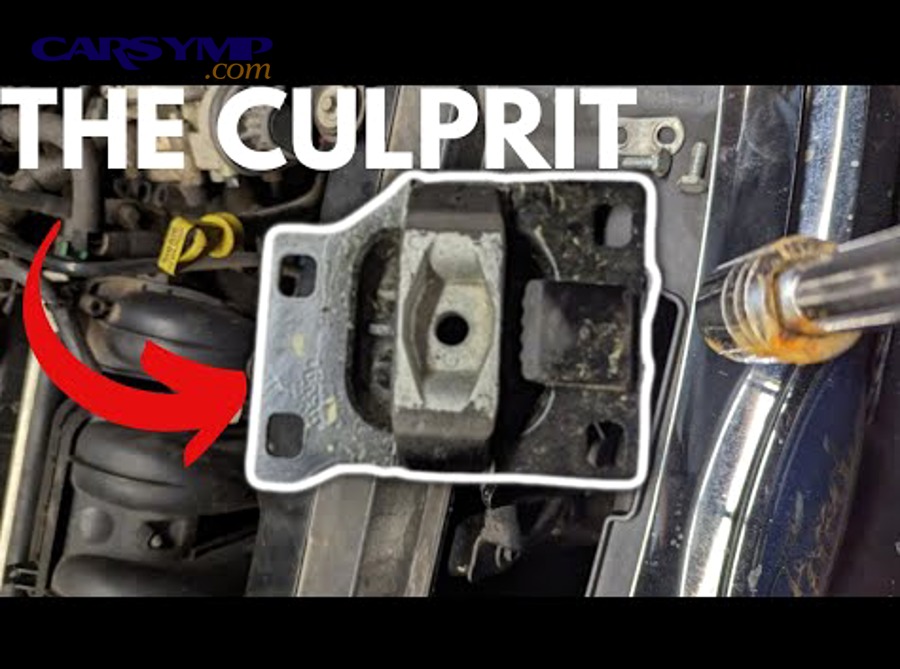
Next, you can treat mounts like “silent wear items”: they often fail slowly, but small habits keep them healthy longer.
Maintenance and inspections that extend mount life
AutoZone specifically recommends including motor mount inspection as part of routine maintenance and notes that catching cracks or damage early helps prevent additional issues. (autozone.com)
- Inspect mounts at least yearly during routine service (good light, quick checklist).
- Fix oil/coolant leaks quickly—rubber deteriorates faster when soaked.
- Confirm missing fasteners and bracket integrity after any engine service.
Driving habits that reduce mount stress
- Avoid harsh throttle blips in Park/Neutral.
- Smooth launches reduce torque shock.
- If you drive aggressively or tow often, inspect torque struts more frequently.
What to do after oil/coolant leaks
- Clean the mount area once the leak is repaired.
- Reinspect rubber after a few weeks; softened rubber may crack later.
- If a hydraulic mount was contaminated or shows wetness, monitor closely.
When vibration is normal at idle
Some mild vibration can be normal depending on:
- Engine type (e.g., higher compression, large displacement, certain cylinder counts).
- Idle speed calibration and accessory loads.
- Performance mounts designed with higher stiffness (less isolation, more control).
But if the vibration is new, worsening, or paired with clunks/engine movement, treat it as diagnostic—not “normal.”
According to a study by University of Lisbon’s Instituto Superior Técnico from the Department of Mechanical Engineering, idle-related excitation commonly includes harmonic components around 25 Hz and 50 Hz, which explains why mount condition and tuning strongly influence whether “normal engine pulses” feel acceptable or irritating in the cabin. (fenix.tecnico.ulisboa.pt)