


If your car suddenly feels rough, clunks when you shift, or shakes the cabin, you can diagnose whether the problem is the engine mount (motor mount) or the transmission mount by matching when the symptom happens with how the powertrain moves under load.
This guide breaks down the most reliable symptom patterns—what you feel at idle, during acceleration, and when selecting Drive/Reverse—so you can separate mount-related NVH from other problems and avoid replacing the wrong part first.
You’ll also get quick DIY confirmation tests that are realistic for a driveway: visual checks, safe movement observations, and “timing-based” clues that point to one mount type over the other.
Introduce a new idea: once you’ve identified the likely culprit, you’ll learn when replacement becomes urgent and what changes when the vehicle uses hydraulic mounts instead of solid rubber designs.
What are motor (engine) mounts and transmission mounts, and what do they do?
Motor (engine) mounts and transmission mounts are vibration-isolating supports that bolt the powertrain to the chassis, controlling torque movement while keeping engine and gearbox vibration from traveling into the cabin.
Next, because both mounts share the same job—support + isolation—your diagnosis improves when you first understand where each mount sits and what motion it controls.
What is the simplest way to tell which side a mount supports—engine or transmission?
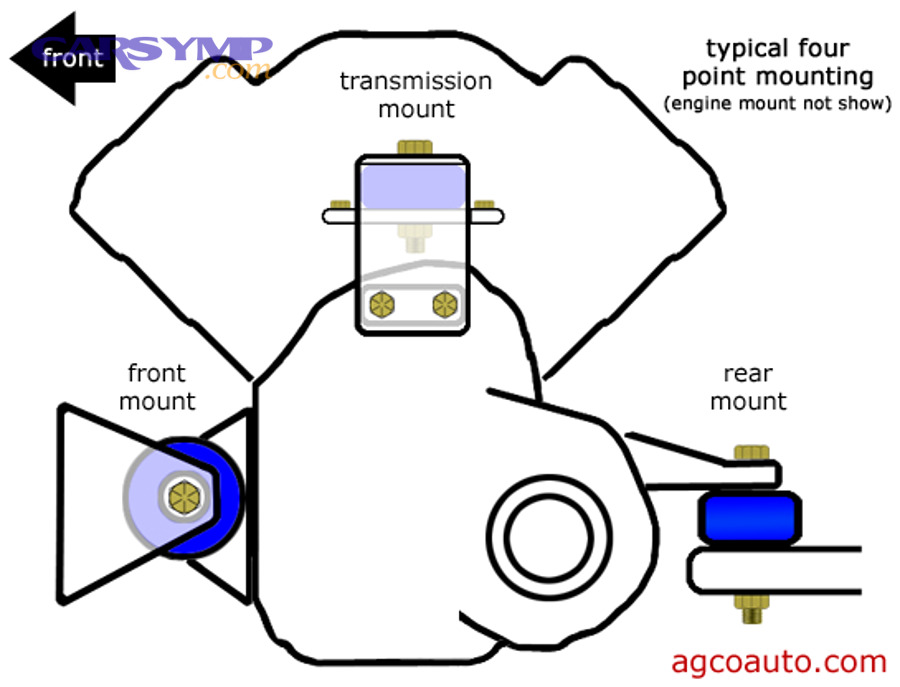
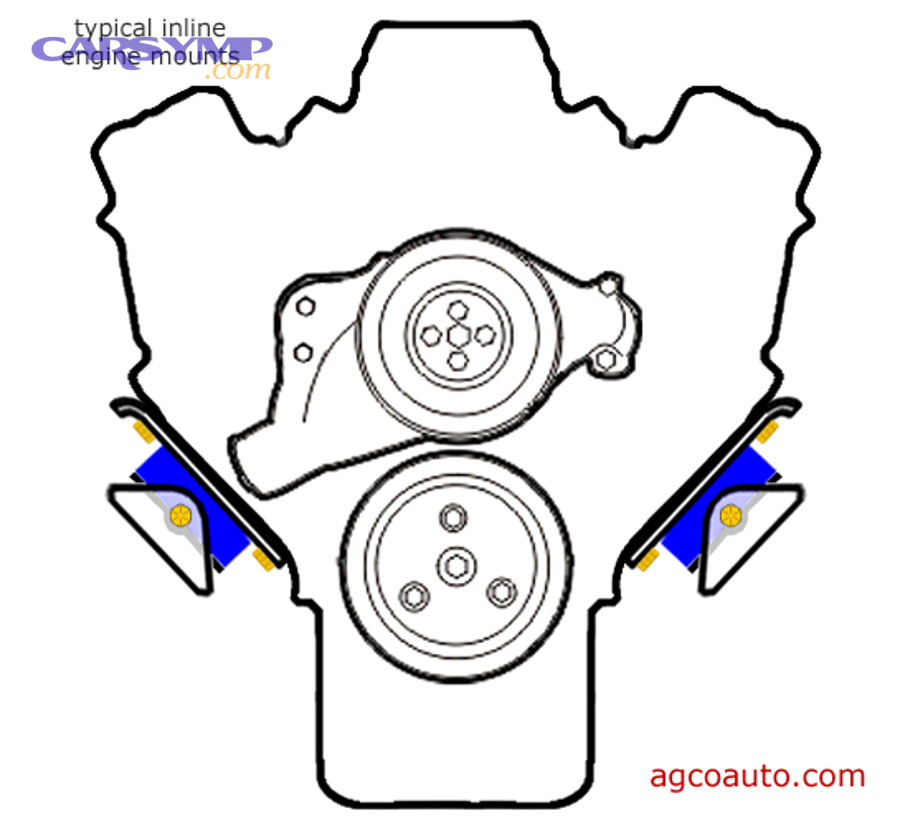
The simplest way is to follow the bolt path: an engine mount connects the engine block (or engine bracket) to the body/subframe, while a transmission mount connects the transmission case (or transmission bracket) to a crossmember/subframe.
Specifically, mounts are usually “paired” with brackets that make the attachment point obvious once you locate the casting: the engine block is thick and irregular, while the transmission case often has large flat ribs and a bellhousing shape near the engine.
A practical way to spot the difference quickly:
- Engine mount cues
- Bolts into a bracket that ties into the engine block or timing cover area
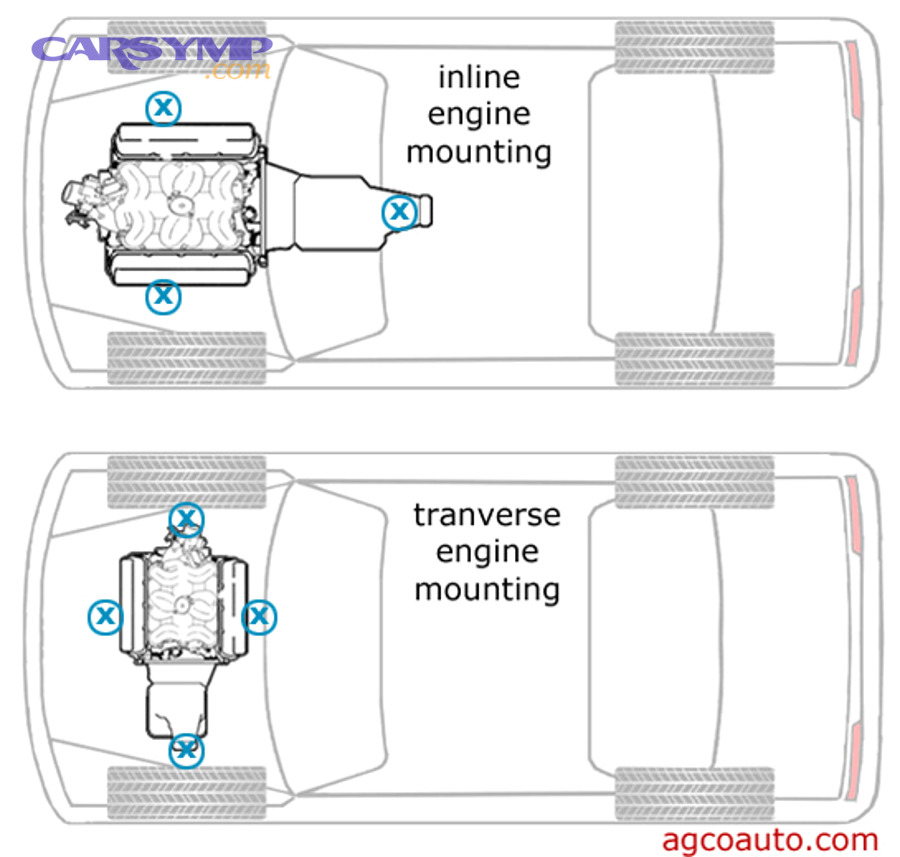
- Often higher in the bay on transverse layouts, near the upper engine side
- May sit near accessory drive components (belt side)
- Transmission mount cues
- Bolts into the transmission casing or a bracket attached to it
- Often lower and closer to the centerline, sometimes near a crossmember
- Commonly visible from underneath, especially on longitudinal layouts
If you’re working with a modern transverse setup, the powertrain typically uses multiple mounts (often including a torque-control mount front/rear). That’s why “engine mount vs transmission mount” is often shorthand for “the engine-side mount(s) vs the transmission-side mount.”
Why do bad mounts create vibration and clunks instead of a steady noise?
Bad mounts create vibration and clunks because mount failure changes the constraint on the powertrain: instead of holding the engine/transmission in a controlled elastic range, the mount allows sudden movement that causes contact, rebound, and torque “snap.”
However, the key diagnostic idea is that mount noise is usually event-driven—it appears when load changes—rather than constant.
Here’s what’s happening mechanically:
- Torque reaction loads the mount
- In Drive, the powertrain twists one way; in Reverse, it twists the other way.
- A worn mount allows extra travel
- Torn rubber, collapsed rubber, or failed internal hydraulic chambers reduce control.
- Extra travel creates impact points
- Brackets can “tap” their stops, exhaust can contact shields, and the drivetrain can tug axles or hoses.
- The cabin feels it as NVH
- You feel it in the steering wheel, seat, pedals, and floor—especially at low speed and idle.
This is also why the same vehicle can be quiet on a smooth cruise yet clunk the moment you shift into gear or lift off the throttle: those moments are high change-of-load events.
What symptoms suggest a bad mount in general?
There are 5 main types of bad mount symptoms—vibration, clunk/thud, excessive powertrain movement, harshness during gear engagement, and secondary rattles—based on how a failing mount transfers load and NVH into the chassis.
Then, once you can recognize “mount-like” symptoms in general, you’ll be ready to separate Bad engine mount symptoms from transmission-side clues.
The most common “global” symptoms include:
- Vibration at idle
- Cabin shake, steering wheel buzz, dash trembling
- Often worse in Drive/Reverse than in Park/Neutral
- Clunk or thud on load change
- Selecting Drive/Reverse
- Sharp throttle tip-in or lift-off
- Bump on acceleration then “slam” on decel
- Powertrain lifts under torque and drops when torque releases
- Visible engine rocking
- Noticeable movement when revving (carefully) or during gear engagement
- Secondary noises
- Heat shield rattle, exhaust contact, or a dull knock from the mount area
These symptoms usually grow gradually, which is why drivers sometimes “adapt” and only notice once the mount finally tears or collapses.
Which symptoms are “high confidence” for mount failure versus “maybe something else”?
High-confidence mount symptoms are those that happen exactly when torque changes and can be reproduced by controlled load events; “maybe something else” symptoms are those that occur steadily across speed or feel tied to wheel rotation.
More specifically, timing is your diagnostic amplifier.
High confidence (mount-leaning)
- Thud/clunk when shifting into Drive/Reverse (with brakes applied)
- Engine visibly rises and dips more than expected during engagement
- Vibration worsens when you load the drivetrain (Drive/Reverse) but improves in Neutral
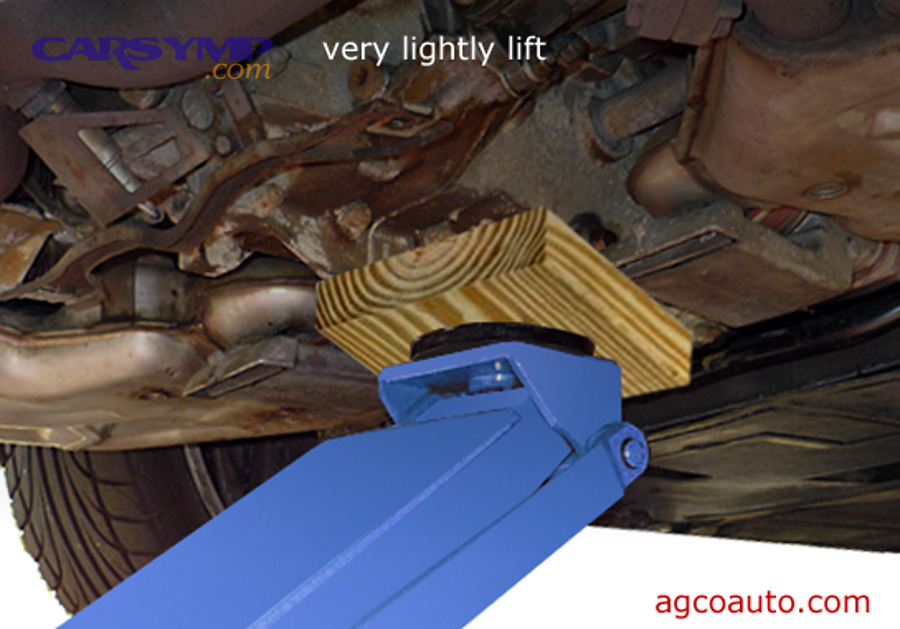
- You can reduce the vibration by slightly supporting the engine’s weight (carefully)
Maybe something else (needs ruling out)
- Vibration that scales with vehicle speed (often wheel/tire related)
- Vibration that only appears at one narrow speed band on highway (balance/alignment)
- Clicking in turns (often CV axle)
- Harshness only over bumps (suspension components)
The reason: mount issues track engine torque and powertrain load, while many other vibrations track road speed and wheel rotation.
Can a mount problem feel like an engine misfire or transmission slip?
Yes—an engine mount or transmission mount problem can mimic misfire or slip because excess movement changes how vibration and engagement shock are transmitted, but three quick checks usually separate them.
To begin, focus on whether the “roughness” changes with engine load or with engine smoothness.
Use these three reasons as a fast filter:
- A misfire changes engine smoothness
- The engine feels uneven even when you hold RPM steady.
- It often comes with a check engine light and diagnostic codes.
- A slipping transmission changes acceleration behavior
- RPM rises without a matching increase in vehicle speed.
- You may feel flare, delayed engagement, or abnormal shift patterns.
- A bad mount changes how vibration enters the cabin
- It often worsens in Drive/Reverse at idle and during torque transitions.
- The engine may look like it “jumps” during engagement.
If the engine is smooth in Neutral at the same RPM but shakes more the moment you load it in Drive, mounts move higher on the suspect list.
How do engine-mount symptoms differ from transmission-mount symptoms?
Engine mounts win as the likely culprit for idle-related vibration and engine-side rocking, while transmission mounts are more strongly linked to gear engagement thuds and driveline lash during shifts, based on where each mount controls motion.
However, because most cars use multiple mounts that share torque control, you’ll get the best results by comparing symptom timing across idle, engagement, and acceleration.
A clean way to think about this is:
- Engine mount bias = “I feel it while the engine is running smoothly but the cabin shakes.”
- Transmission mount bias = “I feel it when the drivetrain engages or unloads.”
Does vibration at idle point more to an engine mount than a transmission mount?
Engine mount issues are more likely when vibration is strongest at idle because the engine mount sits closer to the main vibration source and is often the primary path that isolates idle-frequency shake.
Meanwhile, idle vibration can still involve a transmission mount if the mount is collapsed or if loading the drivetrain in Drive changes the powertrain’s resting position.
Use this comparison checklist (idle-focused):
Leans engine mount (motor mount)
- Vibration at idle from mounts is strongest in the steering wheel and dash
- Vibration is present even before shifting into gear
- You see the engine rocking near the belt side or upper mount region
Leans transmission mount
- Vibration becomes noticeably worse only after selecting Drive/Reverse
- Vibration feels concentrated through the floor/tunnel area
- You hear a dull knock low in the bay near a crossmember region
A key nuance: some vehicles use hydraulic mounts specifically to reduce idle vibration, so when a hydraulic mount fails, idle shake often becomes more dramatic than with old-style solid rubber.
Does a clunk when shifting into Drive/Reverse point more to a transmission mount?
Transmission mount problems are more likely when you get a repeatable clunk on Drive/Reverse engagement because the transmission mount is a primary restraint point for engagement shock and driveline rotation.
On the other hand, a severely torn engine mount can create the same symptom, so the deciding factor is whether the clunk pairs with visible powertrain lift and drop.
Use this engagement-focused comparison:
Transmission mount-leaning
- Clunk happens exactly at engagement, then disappears
- Clunk intensity changes between Drive vs Reverse (different load direction)
- You feel a “bump” through the floor as the drivetrain takes up slack
Engine mount-leaning
- Clunk pairs with a visible jump or twist of the engine near the upper mount
- You also get clunks on throttle tip-in and lift-off (not just engagement)
- You see bracket movement that suggests the engine is contacting a stop
In many transverse layouts, the mounts on the front/rear control torque rotation heavily, which is why “shift clunk” often appears together with throttle transition clunks when mounts are worn.
What quick DIY tests can confirm which mount is bad?
There are 4 quick DIY tests—visual inspection, controlled load observation, light support test, and symptom timing mapping—based on whether the mount shows structural failure or allows abnormal powertrain movement under torque.
Next, you’ll use these tests in a low-risk order so you can confirm the culprit without turning diagnosis into guesswork.
Safety note: Never place any part of your body near a moving belt/fan, and never stand in front of a vehicle during an engagement test. If you’re unsure, stop and use a professional inspection.
Can you diagnose mounts with a visual inspection alone?
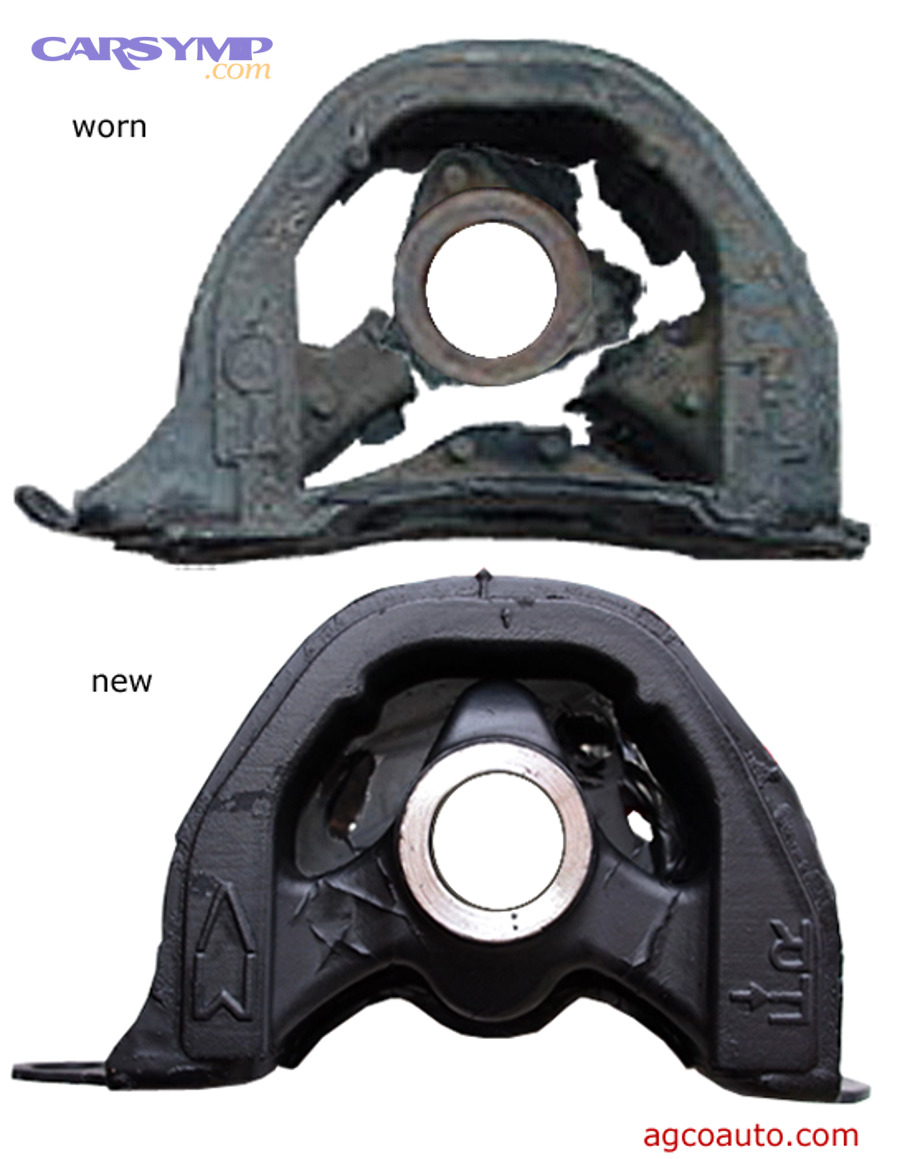
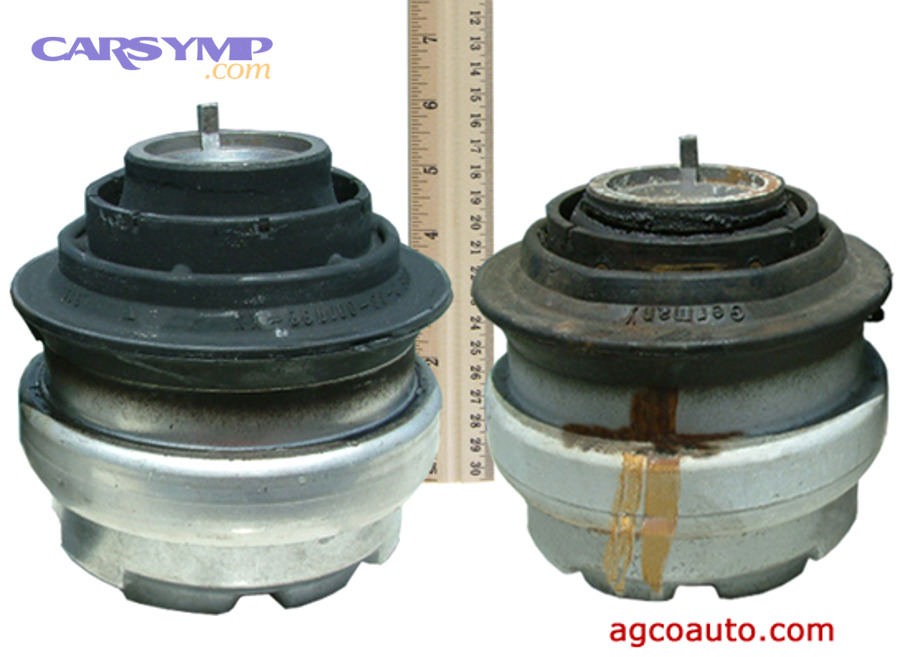
Yes, you can sometimes diagnose mounts visually because torn rubber, separated bonding, collapsed height, or hydraulic fluid leakage are direct failure signs, but many mounts fail internally without obvious cracks.
Specifically, visual inspection is most reliable when you know what “good vs bad” looks like for that mount style.
Look for these definitive signs:
- Torn rubber / separated rubber-to-metal bond
- Gaps where rubber should be bonded to metal
- Rubber pulled away, missing chunks, or clearly split
- Collapsed mount
- Mount sits lower than expected; bracket alignment looks “sagged”
- New vs old height difference is obvious (when compared)
- Hydraulic mount leakage
- Wet, oily-looking residue from a mount that should be dry
- Fluid trails around the mount body
If you find obvious tears or leakage, you’ve likely found the failing mount. If everything looks “okay,” move to movement tests—because internal collapse can hide visually.
What is the safest “engine rock” / load test to observe excessive movement?
The safest load test is a brake-loaded engagement observation done in a controlled environment with a helper, where you watch for abnormal lift, dip, or rotation when shifting between Drive and Reverse.
Then, you’ll compare what you see to normal small movement, not “zero movement.”
How to do it (basic method)
- Park on level ground, wheels chocked, hood open.
- Set parking brake fully; keep foot firmly on the brake.
- With a helper watching from a safe side angle (not in front), shift:
- Park → Drive → Neutral → Reverse → Neutral
- Watch for:
- Excessive rise/dip
- Sudden “jump”
- Contact noises at the moment of engagement
A rule-of-thumb used in traditional mount checks is that excessive rise can indicate mount problems. One widely cited diagnostic approach is to observe whether the powertrain movement looks extreme compared to normal mild motion during engagement.
To keep it safe:
- Do not rev aggressively.
- Stop immediately if the engine lurches violently or if you hear metal contact.
- Avoid the test if you suspect brake issues.
How do you use symptom timing (idle vs acceleration vs shifting) to narrow the culprit?
You narrow the culprit by mapping each symptom to one of three timing buckets—idle, engagement, or torque transitions—and then selecting the mount most responsible for control in that bucket.
More specifically, timing-based diagnosis reduces false replacements because it forces you to explain why the symptom appears at that moment.
Use this simple decision map:
Bucket A: Idle
- Symptom: cabin shake, steering wheel vibration
- Most likely: engine mount (motor mount), especially if it exists in a hydraulic design intended to smooth idle
Bucket B: Engagement (Drive/Reverse)
- Symptom: thud/clunk on gear selection
- Most likely: transmission mount or torque-control mount; verify with observation test
Bucket C: Torque transitions (tip-in / lift-off)
- Symptom: bump on acceleration, slam on decel
- Most likely: worn mount(s) allowing powertrain to rotate and rebound
If your symptoms hit all three buckets, don’t assume “it must be one mount.” It often means multiple mounts are tired, or one failed mount has overloaded the others.
What problems can mimic bad mounts, and how do you rule them out fast?
There are 6 common mount mimics—misfire/rough idle, wheel/tire imbalance, CV axle issues, exhaust contact, suspension bushings, and loose fasteners—based on whether the vibration tracks engine torque or vehicle speed.
In addition, ruling out these mimics protects your budget because mount replacement is easy to mis-prioritize when the symptom description is vague.
A helpful framing:
- Mount problems usually change with torque direction (Drive vs Reverse, tip-in vs lift-off).
- Road-speed problems usually change with mph regardless of gear selection.
Is the vibration from mounts or from the engine itself (misfire/rough idle)?
Mount vibration is more likely when the engine feels smooth but the cabin shakes, while misfire vibration is more likely when the engine itself runs unevenly—especially if the roughness changes with RPM and triggers a fault code.
To better understand, treat the engine as the source and the mount as the “filter”: a bad mount makes the filter weak, but a misfire makes the source dirty.
Fast checks to separate them:
- Neutral smoothness check
- If the engine runs rough at the same RPM in Neutral, suspect engine issues first.
- Load change check
- If vibration spikes mainly when shifting into Drive/Reverse, mounts move up the list.
- OBD/CEL check
- Misfires often trigger codes; mounts usually don’t.
This doesn’t mean mounts can’t coexist with misfires—just that you want to fix the source problem before blaming the isolation system.
Is the clunk from mounts or from driveline/suspension components?
Mount clunks are more likely when the noise coincides with torque application, while driveline or suspension clunks are more likely when the noise follows wheel movement, turning, or bumps.
Meanwhile, some problems—like CV axle play—can overlap with mount symptoms because a shifting drivetrain angle changes axle alignment.
Quick “rule-out” guidance:
- Clunk only on bumps
- Leans suspension (sway links, control arm bushings, strut mounts)
- Clunk while turning tightly
- Leans CV joint or axle issues
- Clunk exactly when shifting Drive/Reverse
- Leans mounts; verify with engagement observation
- Rattle that changes with engine movement
- Leans exhaust contact or heat shield issues, sometimes caused by mount sag
Mount failure can also pull axles out of their normal position and create bind-related sensations, which is why “mounts vs axles” is a common diagnostic fork.
When should you replace the mount, and which one first?
engine mount replacement or transmission mount replacement should happen when mount failure creates repeatable NVH, excessive movement, or risk of secondary damage, and the first mount to replace is the one with the clearest failure evidence or the strongest symptom match.
More importantly, replacing the “most failed” mount first restores baseline alignment and makes any remaining symptoms easier to interpret.
A practical prioritization framework:
- Replace the mount with visible failure
- torn rubber, separation, collapse, or hydraulic leakage
- Replace the mount that triggers the strongest symptom
- engagement thud = transmission-side suspect
- idle cabin shake = engine-side suspect
- Re-test after replacement
- don’t assume all symptoms share a single cause
Should you replace both engine and transmission mounts together?
Yes, replacing multiple mounts together can be the best choice when three conditions are true: mounts are the same age, symptoms span multiple timing buckets, and the remaining mounts will likely be overloaded by a single new mount.
However, if budget is tight, replacing only the clearly failed mount is a reasonable first step—provided you re-test and inspect the others.
Three reasons “replace together” often works:
- Load sharing
- New mounts carry more load when paired with old soft mounts, which can shorten new mount life.
- Diagnosis clarity
- Mixed stiffness can create new NVH patterns that feel like “a new problem.”
- Labor overlap
- Accessing one mount often provides access to adjacent mounts, saving labor.
That said, always prioritize the mount that is visibly torn or leaking, because that mount is no longer doing its job.
What symptoms mean you should stop driving and fix it now?
You should stop driving and fix it now when you have severe movement, metal contact, or engagement shocks that threaten drivetrain alignment, because those signs indicate the mount is no longer controlling the powertrain safely.
Thus, urgency is less about “annoying vibration” and more about “loss of restraint.”
High-urgency symptoms include:
- Violent engine lurch on Drive/Reverse engagement
- Metal-on-metal contact sounds near mount brackets
- Engine fan/exhaust contact caused by sagging or shifting
- Sudden new vibration that is dramatically worse in gear
- Visible mount separation where the rubber is no longer bonded
If you see extreme movement, avoid repeated load tests and schedule repair—because continued driving can compound damage to adjacent components.
What happens if you ignore bad mounts, and what should you know before buying parts?
Ignoring bad mounts can lead to worsening vibration, repeated clunks, drivetrain misalignment effects, and secondary component stress, and you’ll buy better parts when you match mount type (hydraulic vs solid) to your comfort goals and vehicle design.
Next, this is where micro-details—like mount construction and expected NVH—help you avoid surprises after replacement.
Can worn mounts cause secondary damage (exhaust flex joint, axles/CV, brackets)?
Yes, worn mounts can cause secondary damage because extra powertrain movement forces nearby systems—axles, exhaust, hoses, brackets—to operate outside their intended range.
Especially, repeated lift-and-drop motion can create a chain reaction: the mount fails → the drivetrain shifts → components contact or bind → new noises appear.
Common secondary issues include:
- Exhaust contact and flex-joint stress
- Axle/CV angle changes leading to vibration under load
- Bracket fatigue from repeated impacts
- Fastener loosening where repeated shock loads occur
This “secondary damage” pathway is also why a mount problem can masquerade as an axle problem in real-world diagnosis.
What is the typical cost range to replace engine mounts vs transmission mounts?
There are three cost tiers for mount replacement—budget rubber mounts, mid-range hydraulic mounts, and high-cost active mounts—based on mount design complexity and access difficulty.
For example, labor varies dramatically: an upper mount may be quick, while a buried mount near a subframe can be time-intensive.
A practical cost framing (not vehicle-specific):
- Solid rubber mounts: usually the least expensive parts
- Hydraulic mounts: often significantly more due to fluid chambers and valves
- Active mounts: can be the most expensive, sometimes dramatically so
Some repair-focused sources note that hydraulic mounts can cost substantially more than traditional rubber designs.
Are hydraulic/active mounts diagnosed differently than solid rubber mounts?
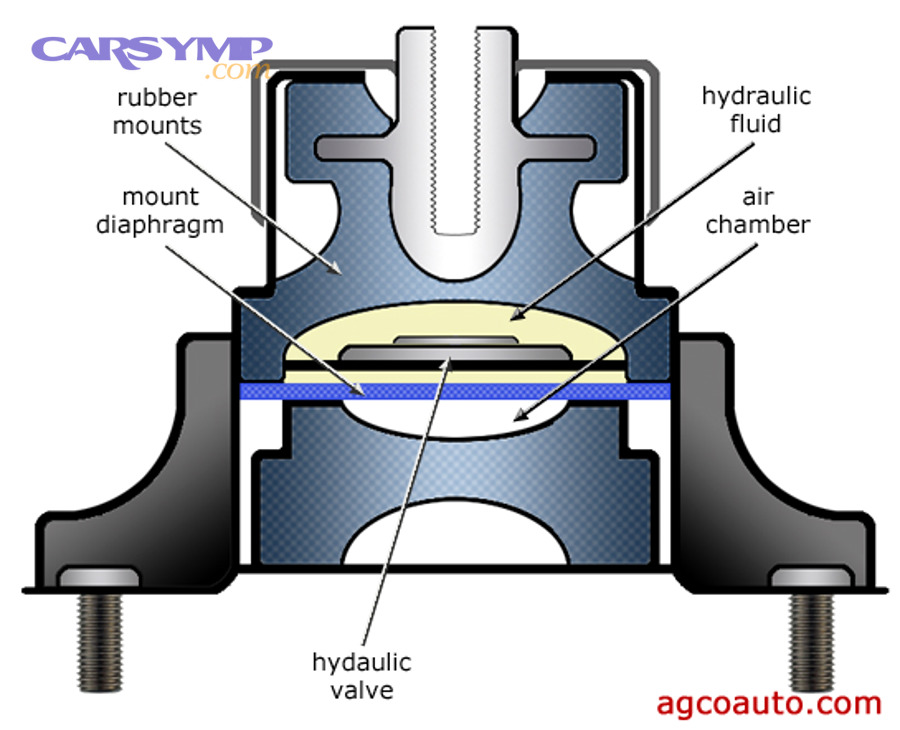
Yes—hydraulic and active mounts are diagnosed differently because you’re looking for fluid leakage, internal collapse, and control-valve behavior in addition to rubber tearing, which changes the failure signature.
To illustrate, Hydraulic vs solid mounts differences matter most at idle: hydraulic mounts are often tuned to calm idle shake, so failure can produce sudden, obvious idle harshness.
What changes in diagnosis:
- Solid rubber mounts
- Primary failure: cracks, tears, separation, collapse
- Best cues: visible damage + excessive movement
- Hydraulic mounts
- Primary failure: leakage, internal chamber failure, collapse without visible tearing
- Best cues: wet residue, sagging height, idle harshness increase
- Active mounts
- Primary failure: control malfunction (plus physical wear)
- Best cues: inconsistent vibration control, sometimes paired with electronic faults (vehicle-dependent)
According to a study by Concordia University from the Department of Mechanical and Industrial Engineering, in 2004, optimization of an engine mounting system reduced a combined transmitted force/moment target value by 91.1% across the frequency range, underscoring how mount behavior strongly affects vibration isolation.
OEM vs aftermarket vs polyurethane: which choice fits comfort-focused vs performance-focused drivers?
OEM-style mounts win for comfort, quality aftermarket rubber/hydraulic mounts are best for value, and polyurethane (or solid performance mounts) are optimal for sharper drivetrain control—based on the tradeoff between isolation and stiffness.
On the other hand, choosing the “stiffest” option often increases cabin vibration even if it improves response.
Use this buyer-oriented comparison:
This table compares common mount choices by comfort, feel, and tradeoffs so you can match the part to your driving goals.
| Mount choice | Best for | What you’ll feel | Common tradeoff |
|---|---|---|---|
| OEM-style rubber/hydraulic | Daily comfort | smoother idle, less cabin buzz | higher part cost on some models |
| Quality aftermarket equivalent | Value + normal driving | similar to OEM if well-made | quality varies by brand |
| Polyurethane / performance | Response + durability | more direct feel, more vibration | added NVH, especially at idle |
If your main complaint is Vibration at idle from mounts, avoid treating “stiffer” as “better.” For most DIY drivers, the goal is to restore factory-like isolation first, then adjust stiffness only if you intentionally want more drivetrain feel.