Estimate Engine Mount Replacement Cost & Labor Time (Motor Mount) — Practical Guide for Car Owners & DIYers
Engine mount replacement typically costs hundreds of dollars, not thousands, and the biggest swing factor is labor access—not the mount itself. In practical terms, you’re paying for the time it takes to safely support the engine, remove surrounding components, and torque everything back to spec. (repairpal.com)
Next, the fastest way to get a reliable Engine mount replacement cost estimate is to match your vehicle layout (FWD vs RWD), identify the mount type (rubber vs hydraulic vs active), and confirm whether you’re replacing one mount or a set—because those three details change parts pricing and labor hours immediately.
Then, “Engine mount replacement labor time” depends on where the mount sits and what must come off to reach it; some jobs are quick and others require subframe clearance or lifting the engine carefully, which adds time and risk if done as DIY.
Introduce a new idea: once you can estimate cost and time, the real decision becomes whether the symptoms you feel—like vibration or clunks—are truly mount-related, and whether you should replace an engine mount, a transmission mount, or diagnose something else first.
What does engine mount replacement mean, and what does it include?
Engine mount replacement is the process of removing a worn engine (motor) mount—a support-and-isolation component—and installing a new mount plus any required hardware so the engine is held securely while reducing vibration transfer into the chassis.
Next, because mounts sit at the boundary between the drivetrain and body, “replacement” includes safety steps that matter just as much as the part itself—especially during engine service where the engine must be supported before bolts come out.
What are engine mounts, and what do they do for vibration and engine movement?
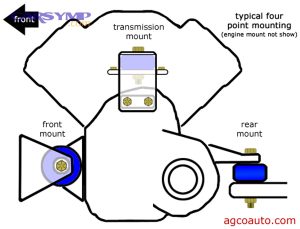
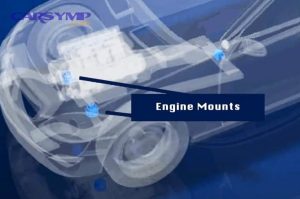
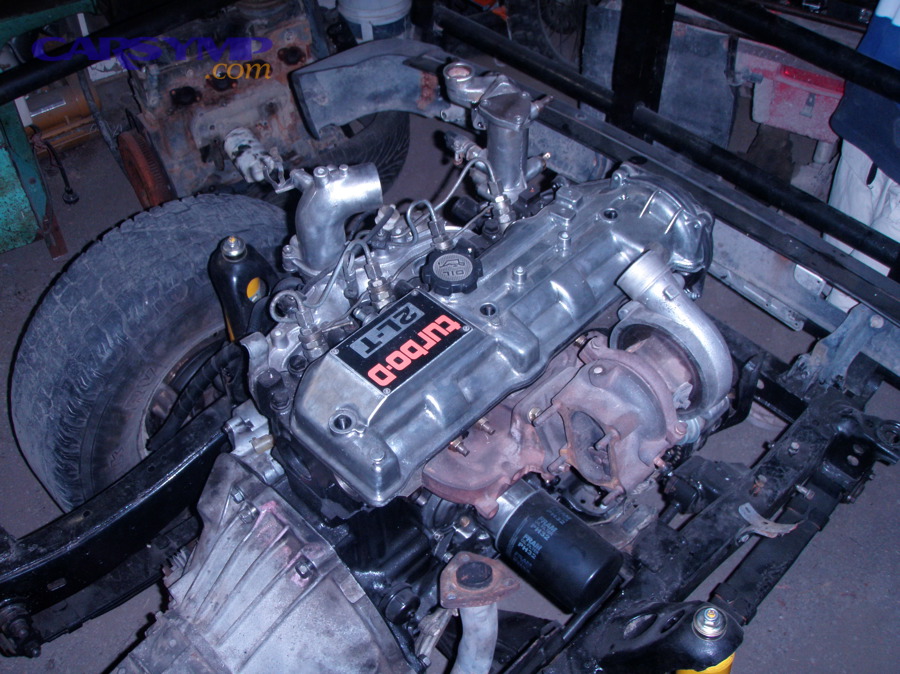
Engine mounts do two jobs at once: support the engine’s weight and isolate vibration so shaking doesn’t travel straight into the cabin.
Specifically, they also limit how far the engine rocks under throttle, braking, and gear changes—so hoses, exhaust flex sections, and driveline angles stay within safe limits.
To illustrate the “two jobs” idea, think of mounts as a controlled interface:
- Support function: carries static load (engine weight) and holds alignment.
- Isolation function: filters engine vibration frequencies so you feel less harshness at idle and under light acceleration—especially Vibration at idle from mounts when rubber degrades.
In real vehicles, those goals can conflict: stiffer mounts hold the drivetrain tighter but pass more vibration; softer mounts isolate better but allow more movement. That trade-off is why manufacturers tune mount design to the engine type, vehicle mass, and NVH targets.
According to a study by Linköping University from the Department of Electrical Engineering (Division of Automatic Control), in 2003, an engine mount’s primary roles include supporting the engine/transmission and providing vibration isolation to reduce vibrations transmitted to the frame. (rt.isy.liu.se)
What exactly gets replaced during engine mount replacement ?
Engine mount replacement usually means you’re swapping the mount assembly (rubber/hydraulic structure plus its metal bracket interface) and, in some cases, related fasteners that are designed to be replaced after removal (vehicle-specific). More specifically, the work can include:
- The failed mount (engine-side mount or torque strut/dogbone mount, depending on layout)
- Mount bracket bolts (some designs use stretch/torque-to-yield bolts)
- Alignment and torque checks (final torque at ride height in some platforms, or per service manual procedure)
- Inspection of neighboring supports (transmission mount, torque mount, subframe bushings)
A common point of confusion is vocabulary: “engine mount” and “motor mount” are synonyms in typical repair conversations. If your shop writes “motor mount,” you’re still dealing with engine mount replacement unless they explicitly list the transmission mount separately.
How much does engine mount replacement cost for most vehicles?
Engine mount replacement cost is typically $607–$747 on average for many mainstream vehicles, with the total split between labor and parts; the exact number varies by mount type, vehicle packaging, and how many mounts you replace. (repairpal.com)
Then, because pricing isn’t one-size-fits-all, you’ll get the best estimate by breaking the bill into “parts tier” and “labor access.”

What is the typical price range for parts vs labor, and what do shops charge for diagnostics?
Most invoices for engine mount replacement are built from three buckets:
- Parts
- Simple rubber/steel mounts can be relatively inexpensive, while specialized designs cost more.
- Labor
- Labor often dominates the total because the tech must safely support the engine and access bolts that can be buried behind shields, subframes, or tight engine bays. (repairpal.com)
- Diagnosis / inspection time (sometimes separate)
- If symptoms are ambiguous (vibration, clunk, harsh shifting), many shops include a short inspection in an estimate; others bill a diagnostic fee that may be credited if you authorize the repair.
A practical way to interpret an estimate is to ask, “How many labor hours are you quoting, and which mount is it?” Because one mount might be reachable from above, while another may require lifting the engine and working from underneath.
Here’s a cost breakdown table to help you read quotes; it shows what each line item represents rather than pretending one number fits every car:
| Line item | What it usually covers | Why it changes the total |
|---|---|---|
| Parts (mount) | The mount assembly (rubber/hydraulic/active) | Mount type and OEM vs aftermarket pricing |
| Labor | Support engine, remove/replace mount, torque checks | Access difficulty and surrounding components (mobil.com) |
| Hardware | Bolts/nuts if required by design | Some platforms recommend replacing certain fasteners |
| Shop supplies/taxes | Consumables, fees, regional taxes | Location and shop policy |
Which factors increase or decrease the total cost (vehicle layout, mount type, location)?
There are several predictable “cost multipliers.” Specifically, your final price climbs when:
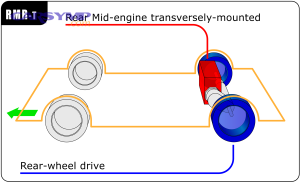
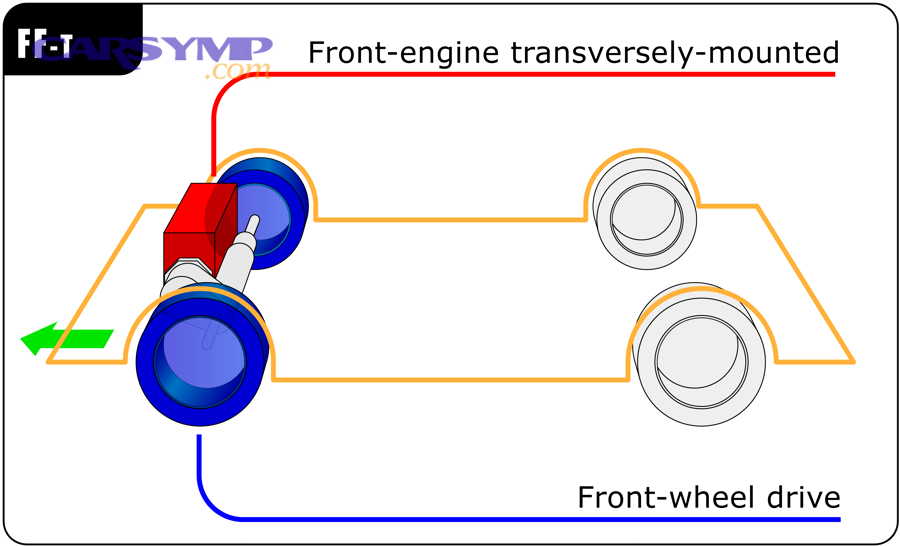
- Your vehicle layout is cramped (many transverse FWD bays have less access) (commons.wikimedia.org)
- The mount is hydraulic or active (more complex construction and higher part price)
- The job requires lifting the engine with careful clearance checks (adds time and risk) (mobil.com)
- Rust or seized bolts force slower removal
- Multiple mounts are recommended because others are cracked, oil-soaked, or sagged
On the other hand, costs drop when the failed mount is accessible from the top, uses common hardware, and the surrounding components don’t need removal.
Should you replace one engine mount or all mounts at once?
Yes—replace one engine mount at a time when only one is failed, because (1) many vehicles don’t require replacing all mounts, (2) cost rises quickly with each additional mount, and (3) targeted replacement can solve the symptom if diagnosis is correct.
However, the “one vs all” decision should be based on three reasons you can verify:
- Condition of the other mounts: cracked rubber, torn bonding, sagging height, or hydraulic fluid leaks suggest others are near end-of-life.
- Mileage/age and oil contamination: long-term heat plus oil exposure accelerates rubber deterioration.
- Symptom persistence: if the engine still rocks excessively after replacing the worst mount, a second mount may be contributing.
A balanced approach is common: replace the confirmed bad mount now, then reassess. That prevents overpaying while still controlling risk of repeat labor if multiple mounts are obviously degraded.
How long does engine mount replacement take at a shop or DIY?
Engine mount replacement labor time typically ranges from about 1–2 hours for simpler access jobs to several hours for difficult layouts, while DIY time is usually longer because setup, safety checks, and tool constraints slow the process.
Then, the true time driver is not the bolt count—it’s whether you must support and raise the engine safely without damaging hoses, lines, or the oil pan.
How many labor hours does engine mount replacement usually take by vehicle type?
There are three practical time “buckets” based on access and layout:
- Easy access (often 1–2 hours): one mount reachable from above, minimal disassembly.
- Moderate access (2–4 hours): shield removal, limited clearance, partial lifting and repositioning of the engine.
- Complex access (4+ hours): subframe clearance, exhaust interference, multiple mounts, or tight packaging.
These buckets aren’t guarantees, but they predict quotes well because labor time scales with access difficulty.
Is engine mount replacement a hard DIY job, and what tools are required?
Yes, engine mount replacement can be a safe DIY job for many cars, but only if (1) you can support the engine correctly, (2) you have the right tools for controlled lifting and torque, and (3) you follow DIY mount replacement safety considerations to prevent damage or injury. (mobil.com)
Next, here’s what “safe DIY” usually demands:
Required tools and setup (typical):
- Floor jack and jack stands (never rely on a jack alone)
- Wood block to spread load (never jack directly on the oil pan) (mobil.com)
- Torque wrench (mount bolts must be tightened properly)
- Long extensions/universal joint for difficult bolts (mobil.com)
- Protective equipment and good lighting
Core safety rules (non-negotiable):
- Support the engine before removing mount bolts.
- Raise the engine slowly and check clearance—radiator hoses, A/C lines, and wiring can be damaged if stretched. (mobil.com)
- Keep hands clear of pinch points between bracket surfaces.
If you can’t safely support the engine or you need to remove major structural pieces to reach the mount, DIY becomes less practical and professional service may be safer.
What’s the difference in time between replacing a front mount vs rear/transmission mount?
Front/side engine mounts are often faster when accessible from above, while rear mounts and transmission mounts tend to take longer because they can be hidden behind subframes, exhaust, or drivetrain components. More specifically, the “rear mount” challenge is usually visibility and tool access, not the mount itself.
This is also where Transmission mount vs engine mount diagnosis matters: you don’t want to spend time replacing a front mount when the real issue is a worn transmission mount producing movement under load.
Is it safe to drive with a bad engine mount, or should you replace it now?
No, it is not “safe” to ignore a bad engine mount, because (1) engine movement can stress exhaust, hoses, and wiring, (2) clunks can indicate shifting drivetrain loads that affect control, and (3) the longer it moves excessively, the more likely collateral damage becomes.
Then, your urgency depends on symptom severity—some mounts cause mild vibration; others allow dramatic rocking that can become a safety issue.
What symptoms confirm a failing mount versus normal vibration?
Bad engine mount symptoms are typically load-sensitive and movement-related, meaning the symptom changes when torque changes. Specifically, watch for:
- Clunking on acceleration diagnosis clue: a dull thud when shifting into gear or applying throttle can point to mount movement rather than a wheel imbalance.
- Vibration at idle from mounts: roughness that improves when revving slightly can suggest isolation has degraded.
- Visible engine rocking when blipping the throttle (in Park/Neutral, safely).
- A “shift thump” feeling on gear engagement.
To compare:
- A misfire often feels like a rhythmic stumble and may trigger a check engine light.
- A wheel/tire issue usually worsens with speed, not with gear changes.
- A mount issue often worsens during torque transitions: start/stop, shifting, accelerating.
A quick “Car Symp” checklist that points toward mounts: idle vibration + clunk on throttle + visible engine movement.
What are the red-flag signs that mean “don’t drive—tow it”?
There are several “stop now” indicators that go beyond comfort:
- Engine appears to lift or twist dramatically under light throttle
- Metal-on-metal contact sounds (mount bracket contacting frame)
- Torn mount with separated rubber or broken bracket
- Sudden new vibration paired with harsh banging when shifting into gear
- Any sign the engine is contacting the radiator shroud or pulling lines taut
If you see extreme movement, towing is often the safer option than “limping it,” because a failed mount can lead to secondary failures that cost far more than the original repair.
Will a new engine mount always remove vibration and clunks?
No, a new engine mount will not always remove vibration and clunks, because (1) you may have multiple worn mounts, (2) a transmission mount or torque strut may be the real culprit, and (3) other drivetrain issues can mimic mount symptoms. (ebay.com)
However, the benefit of replacing a confirmed failed mount is that it restores drivetrain control and reduces abnormal movement—often improving the symptoms even if another issue remains.
This is why good diagnosis matters before spending money: replacing the wrong mount can produce a “maybe slightly better” result that still leaves you chasing vibrations.
How do you get an accurate engine mount replacement estimate before paying?
You get an accurate engine mount replacement cost estimate by confirming the exact mount location and type, providing your VIN and symptoms, and comparing quotes using labor hours and warranty terms—not just the total number. (repairpal.com)
Next, this approach prevents the most common estimate mistakes: wrong part, wrong labor assumption, or misdiagnosis.

What details should you provide a shop (VIN, symptoms, mount type) to avoid a bad quote?
Bring structured info so the estimate reflects your real job:
- VIN + year/make/model/engine (prevents wrong mount design)
- Your specific symptoms with timing: idle, shifting, acceleration, braking
- Any visible issues: cracked rubber, sagging, fluid leak (hydraulic mount)
- Prior work done recently (engine service, subframe work, accidents)
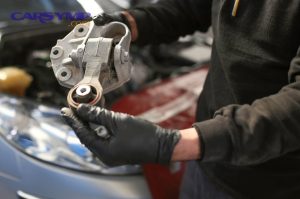
If you’re unsure, ask for a quick inspection that includes How to inspect mounts visually: a tech should be able to point out tears, separation, or abnormal movement.
How do OEM vs aftermarket mounts compare for cost, durability, and vibration (NVH)?
OEM vs aftermarket is mostly a trade-off between predictable NVH performance and lower upfront cost.
- OEM mounts often match factory vibration tuning and tend to preserve cabin comfort, especially on vehicles sensitive to mount stiffness.
- Aftermarket mounts vary widely: some are excellent; others are stiffer or softer than OEM and can change vibration feel.
- Complex mounts (hydraulic/active) can be expensive either way, but OEM fitment and tuning may reduce the risk of new vibration complaints.
If your main complaint is cabin vibration, prioritize correct tuning over the cheapest part—because a poorly matched mount can “fix the clunk” but introduce constant buzz.
What questions should car owners and DIYers ask before approving the repair?
Ask questions that force clarity on scope and accountability:
- Which mount(s) are you replacing and why?
- How many labor hours are you charging—and what access steps are included?
- Are any bolts/hardware required to be replaced?
- What warranty applies to parts and labor?
- After replacement, how will you verify success (test drive, movement check)?
Also ask if they inspected the transmission mount, because confusing the two is common and leads to repeat visits.
Which engine mount types change the driving feel (NVH) and long-term reliability?
Hydraulic mounts win in comfort, solid rubber mounts are best for simplicity and durability in many mainstream setups, and active/electronic mounts are optimal for premium NVH control—so the “best” choice depends on your priorities and your vehicle’s original design.
Then, understanding Hydraulic vs solid mounts differences helps you avoid unintended vibration changes after replacement.

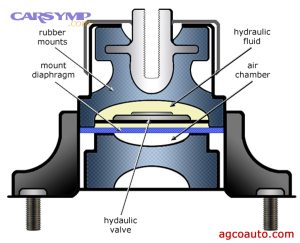
How do hydraulic motor mounts compare with solid rubber mounts for comfort and lifespan?
Hydraulic mounts are designed to damp vibration more effectively across certain frequency ranges, often improving idle comfort and reducing harshness, while solid rubber mounts are simpler and can be more predictable over time.
- Hydraulic mounts: better isolation feel, but they can fail via fluid leakage or internal degradation.
- Solid rubber mounts: fewer internal components, often lower cost, but may transmit more vibration depending on stiffness.
According to a study by Concordia University from the Department of Mechanical and Industrial Engineering, in 2005, a modeled engine mount system comparing elastomeric and hydraulic mounts shows mounts are engineered specifically to manage vibration isolation behavior under load. (spectrum.library.concordia.ca)
What are active/electronic engine mounts, and do they require calibration or special steps?
Active engine mounts are mounts that add a controllable element (often hydraulic with an actuator) to counteract vibration more effectively than passive mounts. More specifically, they can adapt their behavior across operating conditions to meet higher NVH targets.
According to a study by Linköping University from the Department of Electrical Engineering (Division of Automatic Control), in 2003, active hydraulic engine mounts are investigated as actuators for vibration isolation and modeled against experimental data to predict behavior. (rt.isy.liu.se)
From a repair perspective, active systems can raise cost and complexity, which is why the part price may be dramatically higher on some vehicles.
Are polyurethane/performance mounts a good idea for daily drivers (comfort vs control)?
No, polyurethane/performance mounts are not ideal for most daily drivers, because (1) they often increase vibration and cabin harshness, (2) they can make idle and low-speed driving less comfortable, and (3) they’re usually intended for performance control rather than comfort.
However, they can be a good idea if your priority is reduced drivetrain movement for spirited driving, track use, or high-torque setups where controlling engine rock matters.
A simple decision rule: if your primary complaint is vibration, performance mounts usually move you in the wrong direction; if your complaint is excessive engine movement under throttle, they may help.
What rare signs suggest the mount isn’t the only issue (brackets, subframe, drivetrain misalignment)?
Rare but important “don’t stop at the mount” clues include:
- Fresh mount fails quickly (alignment, hardware torque, or bracket issue)
- Cracked mount bracket or shifted subframe after impact
- Persistent clunk only under specific load angles (driveline joint, exhaust contact)
- Symptoms that match a transmission mount more than an engine mount—especially shifting thump and gear engagement clunks (ebay.com)
To sum up, good diagnosis plus correct part selection is how you avoid repeat labor and start Preventing premature mount wear—because the best repair isn’t just replacing the mount, it’s restoring the drivetrain to the conditions that let the mount live a normal life.