


timing chain repair takes a skilled mechanic between 5 and 14 hours depending on the scope of the job, the vehicle’s engine complexity, and whether additional components are replaced alongside the chain. For a basic single-chain replacement on a straightforward four-cylinder engine, most shops complete the job in 5 to 8 hours. A full timing chain service — one that includes tensioners, guides, cam phasers, the water pump, and front seals — can stretch to 10 or 14 hours of billed labor time. Because labor represents the largest share of the total bill, understanding how those hours are counted directly determines how much you will pay.
Labor costs for this repair typically fall between $425 and $2,170 for labor alone, based on shop rates ranging from $85 to $155 per hour. Add parts — the chain kit, tensioner, guides, gaskets, and seals — and the total repair cost lands between $2,000 and $4,000 or more for a complete job. That figure climbs even higher on European or high-displacement engines where access to the timing system is especially difficult. Knowing the expected cost range before you walk into a shop protects you from overpaying and helps you ask the right questions.
Beyond the hours and the dollar figure, the scope of what mechanics actually include in a timing chain service matters just as much. Chains rarely fail in isolation. By the time a timing chain shows symptoms of wear, the tensioner, guides, and sometimes the cam phasers are already stressed. A shop that replaces only the chain while leaving worn guides and a weak tensioner in place is setting the engine up for another failure within a fraction of the original service life.
Recognizing the warning signs of a failing timing chain early is what separates a $2,000 repair from a $6,000 engine replacement. A loose or stretched chain produces rattling noises on cold starts, triggers check engine codes related to incorrect timing, and causes engine misfires that progressively worsen. The following sections break down everything you need to know — from labor hours and real cost data to what mechanics include, what makes jobs run long, and how to evaluate whether the quote you received is fair.
What Is Timing Chain Repair and Why Does It Require So Much Labor?
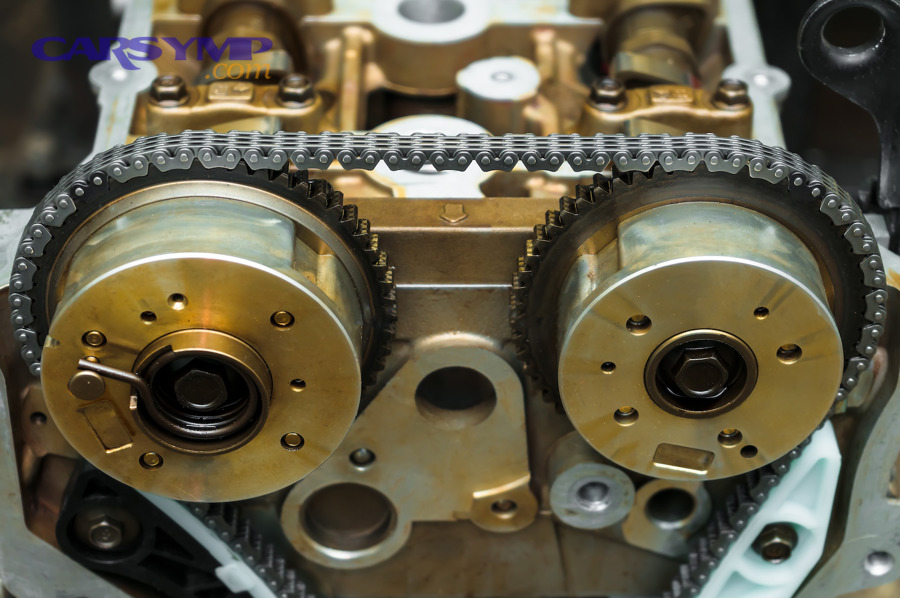
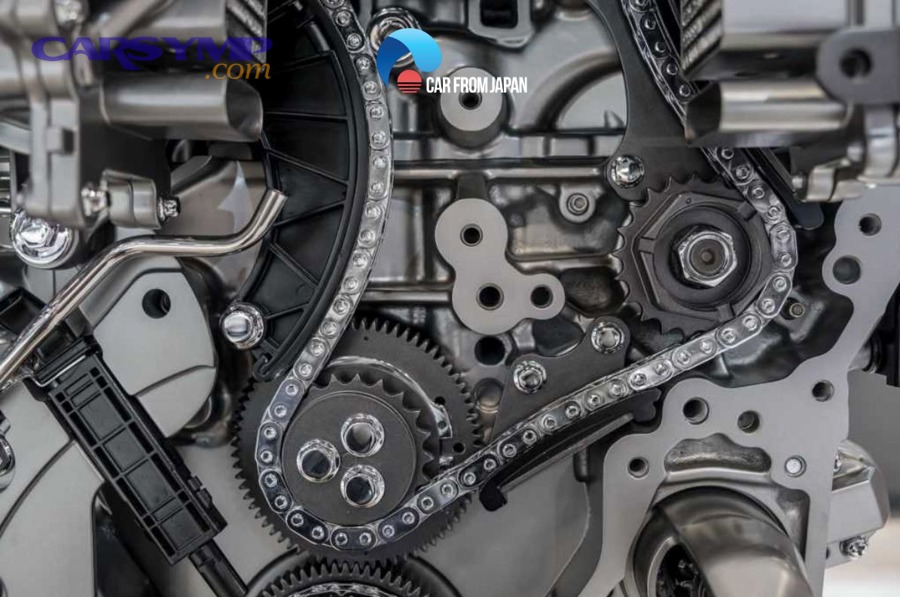
Timing chain repair is a major engine service category that involves accessing, inspecting, and replacing the metal link chain — and its associated components — that synchronizes the crankshaft and camshaft inside a combustion engine. To reach it, a mechanic must disassemble substantial portions of the front of the engine, which is why labor time and cost dominate the bill.

Specifically, the timing chain sits deep inside the engine, protected by a timing chain cover that cannot be removed without first stripping away the accessories, belts, engine mounts in some cases, the radiator or cooling fans, and multiple seals. That layered disassembly is the core reason this repair consistently ranks among the most labor-intensive services in automotive work — and why flat-rate shops typically bill it at no fewer than five hours even for simple configurations.
What Does a Mechanic Actually Do During a Timing Chain Repair?
A mechanic performing a timing chain repair follows a precise sequence that cannot be rushed without risking engine damage. The process begins long before the chain itself is touched.
- Drain fluids and disconnect accessories: Engine coolant, oil, and accessory components such as the power steering pump, alternator, and air conditioning compressor are removed or moved out of the way to clear access to the front of the engine.
- Remove the timing cover: A large aluminum or cast-iron cover bolts onto the front of the engine block. Removing it requires extracting many fasteners at varying torque specs and carefully breaking the gasket seal without damaging the mating surfaces.
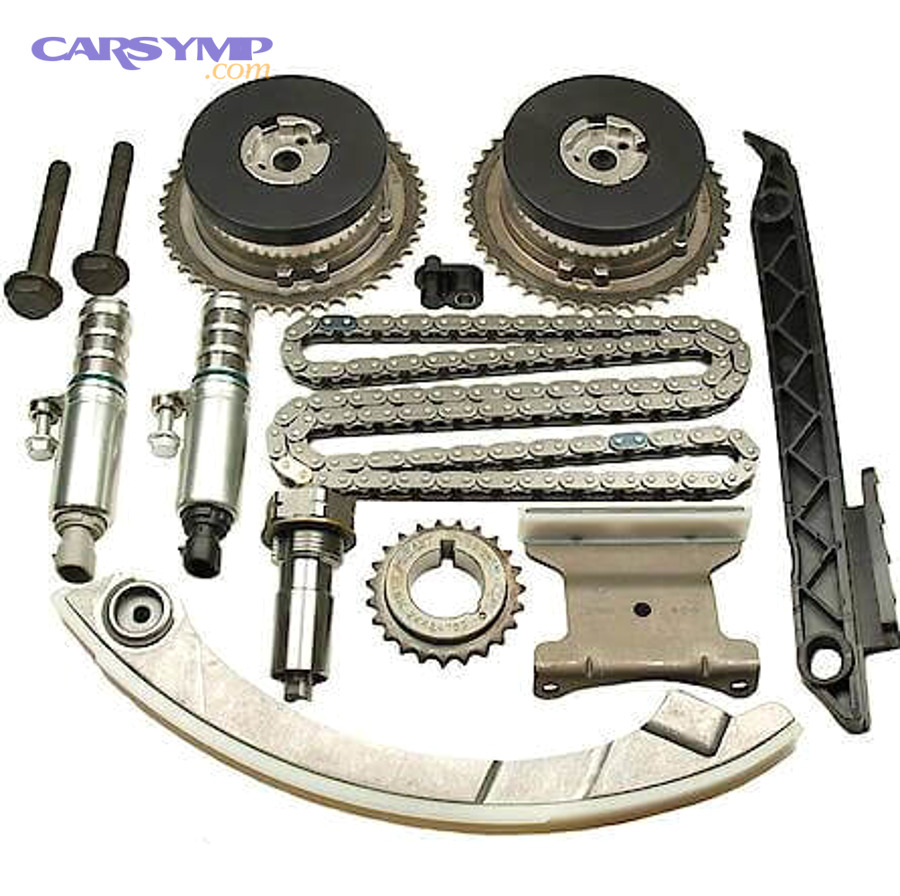
- Inspect and remove the tensioner and guides: The timing chain tensioner maintains correct chain tension using oil pressure or a spring mechanism. The chain guides are plastic or metal rails the chain rides against. Both are evaluated and almost always replaced during the service.
- Mark and remove the old chain: Before removal, the mechanic marks the cam and crank timing positions precisely. Any error here results in an engine that runs poorly or not at all after reassembly.
- Install new components and verify timing: The new chain, tensioner, and guides are installed with alignment marks matched to factory specifications. The engine is then rotated by hand to confirm timing accuracy before the cover is reinstalled.
- Reassemble and test: All removed components go back on in reverse order. The engine is started and tested for correct timing, oil pressure, and absence of noise before the vehicle is returned.
This sequence explains why the repair cannot be shortened significantly — each step builds on the last, and skipping any element risks catastrophic engine failure.
What Is the Difference Between Timing Chain Repair and Timing Chain Replacement?
Timing chain repair and timing chain replacement are terms used interchangeably in most search contexts, but they describe meaningfully different scopes of work.
Timing chain repair technically refers to correcting a timing-related problem without replacing the full chain assembly. This might include replacing a failed tensioner that caused chain slack, or swapping a cracked guide rail that was allowing the chain to wander. Because the tensioner and guides are accessible once the cover is off, this type of repair is faster — sometimes 3 to 5 hours — and less expensive.
Timing chain replacement is the full swap of the chain itself, along with the tensioner, guides, and any worn sprockets. This is what most people mean when they search for timing chain repair labor time, and it is the scope that drives the higher labor hour estimates of 5 to 14 hours.
The practical distinction matters because a shop quoting only tensioner replacement is giving you a different — and shorter — labor estimate than a shop quoting a full chain and guide replacement. Understanding which job your vehicle actually needs prevents both underservice and unnecessary expense.
How Many Labor Hours Does Timing Chain Repair Typically Take?
Timing chain repair typically takes between 5 and 14 labor hours, with the exact duration depending on the engine configuration, the scope of components being replaced, and the vehicle’s make and model. Most standard replacements on passenger cars fall in the 5 to 8 hour range.
To better understand this range, it helps to break it down by job scope and vehicle type. The table below summarizes the typical labor hour ranges across different job types.
| Job Type | Typical Labor Hours | Notes |
|---|---|---|
| Basic chain replacement only | 5–8 hours | Single chain, no additional components |
| Chain + tensioner + guides | 7–10 hours | Most common full-service scope |
| Full timing service (chain, guides, tensioner, water pump, cam phasers, seals) | 10–14 hours | Complex engines, V8s, European models |
| Tensioner or guide only (no chain) | 3–5 hours | Repair only, chain left in place |
This table reflects general industry ranges and will vary based on specific vehicle make, model, and shop.
How Long Does a Basic Timing Chain Replacement Take?
A basic timing chain replacement — covering the chain only, without bundled components — takes approximately 5 to 8 hours of labor on most standard passenger car engines. Most shops bill a minimum of 5 hours to account for the disassembly depth required and to leave room for unexpected complications.
The 5-hour minimum reflects the reality that even on simpler engines, removing the timing cover, properly marking cam and crank positions, installing the new chain with correct tension, and reassembling everything to factory specifications is an inherently time-consuming process. Shops that offer quotes below 4 hours for a full chain replacement on a modern engine should be questioned carefully, as cutting time on this repair increases the risk of timing errors that can destroy an engine on the first cold start.
How Long Does a Full Timing Chain Service Take (With Tensioners, Guides & Water Pump)?
A full timing chain service — which includes the chain, tensioners, guides, cam phasers, water pump, and front crankshaft and camshaft seals — typically takes 10 to 14 hours of labor, and sometimes longer on complex European or high-displacement American V8 engines.
The logic behind bundling all of these components into a single service is sound: since the mechanic must remove the timing cover to reach the chain, they already have access to the water pump, front seals, and cam phasers at minimal additional labor time. Replacing those components during the same visit costs far less in labor than returning for a separate service after 20,000 or 30,000 additional miles. According to data published by RepairPal, the typical total cost for a timing chain replacement ranges from $2,047 to $2,674, with the majority of that figure attributed to labor rather than parts.
How Does Vehicle Make and Model Affect Timing Chain Labor Time?
Vehicle make and model are among the single most influential factors in timing chain labor time. The same job on a Honda Accord four-cylinder and a BMW 5 Series inline-six can differ by four to six hours of labor, even though both are competent passenger cars.
Several engine design characteristics drive these differences:
- Single overhead cam (SOHC) engines have one camshaft per cylinder bank, meaning one timing chain to synchronize. These jobs run shorter — typically 5 to 7 hours.
- Dual overhead cam (DOHC) engines use two camshafts per bank, often requiring a primary and secondary chain, additional tensioners, and cam phasers. Labor time jumps to 8 to 12 hours on these configurations.
- V8 and V6 engines have two cylinder banks, doubling many of the timing components that need removal and reinstallation.
- European vehicles (BMW, Audi, Mercedes) are well known for complex engine packaging where accessing the timing system requires removing additional sub-assemblies, often pushing labor time to 12 to 16 hours for a complete service.
- Turbocharged engines add another layer of complication, as turbocharger plumbing and intercooler components may need removal for clear access.
Timing chain stretch symptoms such as rattling on cold starts and check engine codes related to cam-to-crank correlation often appear earlier on high-mileage complex engines, making vehicle type a key consideration both in diagnosing the problem and estimating how long the fix will take.
How Much Does Timing Chain Repair Labor Cost?
Timing chain repair labor costs between $425 and $2,170 for the labor portion alone, calculated from the standard industry range of $85 to $155 per hour multiplied by 5 to 14 hours of work. Total repair cost including parts typically falls between $2,000 and $4,000 for most vehicles.
The following table provides a practical breakdown of labor cost estimates by job scope and hourly rate, giving you a reference range to compare against any quote you receive.
| Job Scope | Hours | $85/hr (Budget Shop) | $125/hr (Mid-Range) | $155/hr (Dealer) |
|---|---|---|---|---|
| Basic chain only | 5–8 hrs | $425–$680 | $625–$1,000 | $775–$1,240 |
| Chain + tensioner + guides | 7–10 hrs | $595–$850 | $875–$1,250 | $1,085–$1,550 |
| Full timing service | 10–14 hrs | $850–$1,190 | $1,250–$1,750 | $1,550–$2,170 |
What Is the Average Labor Rate for Timing Chain Repair at a Dealership vs. Independent Shop?
Dealerships charge higher labor rates than independent shops for timing chain repair, but the gap in quality is narrower than many car owners assume. The more meaningful difference is in billing transparency and how shops account for job complexity.
Dealerships typically bill at $120 to $175 per hour, sometimes higher in major metropolitan areas like New York or Los Angeles. They use manufacturer-published labor time guides to set the flat-rate hours and employ factory-trained technicians who specialize in a limited number of vehicle brands. For complex engines — particularly European models — a dealer technician’s familiarity with the specific engine architecture can reduce actual job time even if the billed rate is higher.
Independent shops typically charge $85 to $125 per hour and often provide more flexibility in parts selection, allowing the use of quality aftermarket components that match OEM specifications at lower cost. On well-documented repair jobs like timing chains, an experienced independent mechanic using the same labor time guides as a dealer produces results of comparable quality.
Location also plays a significant role. A mid-range independent shop in a Midwestern city may charge $90 per hour, while the same shop in a coastal urban market charges $145. This regional variation alone can shift the total labor bill by $400 to $700 on a standard job.
What Parts Costs Are Added on Top of Labor?
Parts costs for a timing chain service vary widely depending on vehicle make, whether OEM or aftermarket components are used, and how many related components are included in the service.
Here is a realistic breakdown of parts pricing for a mid-range vehicle:
- Timing chain kit (chain, tensioner, guides): $127 to $800 depending on vehicle and brand
- Cam phasers (variable valve timing vehicles): $150 to $400 per unit, and many engines have two or four
- Water pump: $50 to $200 for the part; minimal additional labor since access is already open
- Front crankshaft seal and camshaft seals: $20 to $80 collectively
- Gaskets and hardware: $30 to $100
On a typical domestic V6 or V8, total parts for a complete timing service run $500 to $1,200. On a European turbocharged engine, the same scope can exceed $2,000 in parts alone before any labor is calculated.
What Factors Make Timing Chain Repair Labor Take Longer?
There are five primary factors that cause timing chain repair labor to take longer than the base estimate: engine complexity, the number of components included in the service, the condition of fasteners and gaskets on older vehicles, the need to remove engine mounts or cooling components for access, and unexpected failures discovered mid-repair.

Understanding these factors helps explain why a shop’s final bill may exceed the original estimate — and why reputable shops build a contingency buffer into their initial quote.
Does Engine Interference Type Affect How Long the Repair Takes?
Yes, interference engine type does affect timing chain repair labor time, primarily because the consequences of incorrect timing are more severe, requiring the mechanic to be more precise and deliberate during installation and verification.
In an interference engine, the valves and pistons occupy overlapping space in the cylinder at different points in the rotation cycle. If the timing chain is installed even slightly off, or if the chain jumps a tooth during the first startup, valves and pistons collide — causing bent valves, damaged pistons, and in severe cases a destroyed cylinder head. This risk means the mechanic must double and triple-check cam and crank alignment marks, rotate the engine by hand multiple times before starting it, and verify timing with a scan tool before clearing the vehicle.
In a non-interference engine, the pistons and valves do not share the same space, so a timing error at startup causes the engine to run poorly but does not cause immediate mechanical destruction. The reinstallation process is less stressful and marginally faster as a result.
For practical purposes, most modern engines — particularly from European and Japanese manufacturers — are interference designs. This characteristic alone adds 30 minutes to an hour of verification time to any timing chain repair on these platforms.
What Additional Repairs Can Extend Timing Chain Labor Time?
Several additional repairs performed during a timing chain service can meaningfully extend total labor time, and most are discovered once the timing cover is already removed.
- Oil pump replacement: On many engines, the oil pump shares the same access point as the timing chain. Replacing it adds approximately 2 to 3 hours to the job but is far more cost-effective than returning for a separate oil pump service later. On a 2003 Ford F-150 4.6L, for example, the labor time for oil pump replacement alongside the timing chain runs approximately 10.3 hours total — compared to 7.6 hours for the chain alone.
- VCT solenoids and cam phasers: Variable cam timing solenoids and phasers are often worn on higher-mileage engines and are best replaced during timing service since they are directly accessible. Each unit adds parts cost and 30 to 60 minutes of installation time.
- Engine mount removal: On transversely-mounted engines in front-wheel-drive vehicles, removing one or both engine mounts is sometimes required to tilt the engine slightly for timing cover clearance. This step adds an hour or more depending on mount configuration and condition.
- Corroded or stripped fasteners: On older, high-mileage vehicles, timing cover bolts can seize, strip, or break. Extracting a broken bolt and re-tapping a thread can add one to two unplanned hours and explains why experienced shops always quote a contingency range.
Is Timing Chain Repair a Job You Can Do Yourself to Save on Labor?
No, timing chain repair is not a job most vehicle owners should attempt themselves, for three critical reasons: it requires specialized engine timing tools, demands precise knowledge of cam and crank synchronization, and carries a risk of catastrophic engine failure if performed incorrectly.
The appeal of DIY timing chain repair is understandable — if labor accounts for $1,300 to $1,900 of a $2,500 bill, eliminating that cost seems attractive. However, the tools required to perform this job correctly — camshaft locking tools, crankshaft holding fixtures, timing pin sets, and torque angle gauges — are vehicle-specific and expensive to purchase for a single use. Renting them is not always practical, and using substitutes increases the margin for error.
More importantly, a mistake in cam-to-crank alignment on an interference engine does not produce a slightly rough idle — it produces bent valves and damaged pistons on the first startup. Engine repair following a mistimed installation can cost $3,000 to $6,000, turning a $200 parts-only saving into a five-figure mistake.
Even experienced DIY enthusiasts with strong mechanical backgrounds typically leave this repair to professionals. The correct approach is to use the labor rate knowledge from this article to negotiate a fair quote at an independent shop rather than attempt to eliminate labor entirely.
What Are the Warning Signs That You Need Timing Chain Repair Now?
There are six primary warning signs that indicate a timing chain requires immediate inspection and likely repair: a rattling noise on cold starts, an illuminated check engine light with timing-related codes, engine misfires, poor acceleration, metal shavings in the oil, and failure to start.

Acting on these symptoms quickly is the single most important factor in keeping repair costs manageable. A worn or stretched chain that is caught early — before it damages guides, jumps a tooth, or breaks entirely — is a $2,000 to $3,000 repair. A broken chain on an interference engine that bends valves and damages pistons is a $6,000 engine replacement or a trip to the salvage yard.
- Rattling noise on cold starts: The most common early symptom of timing chain stretch. When oil pressure is low at startup, a worn tensioner cannot fully take up the slack in a stretched chain, causing a distinctive rattle from the front of the engine that fades as oil pressure builds. This is often the earliest and most reliable indicator.
- Check engine light with P0008, P0009, P0016, P0017 codes: These codes indicate that the engine control unit has detected a cam-to-crank correlation error — meaning the chain has stretched enough to shift camshaft timing beyond the acceptable range. Timing chain stretch symptoms like these are diagnosable with a standard OBD-II scanner and should not be ignored.
- Engine misfires: A stretched chain can skip a tooth on the cam or crankshaft sprocket under load, causing the valves to open and close at the wrong time relative to piston position. The result is incomplete combustion, rough running, and poor acceleration.
- Metal shavings in the oil: During an oil change, the presence of fine metallic particles in the drained oil or on the drain plug magnet indicates internal wear — often from the chain scraping against a failing guide or tensioner.
- Engine won’t start: A chain that has snapped will leave the engine unable to establish any valve-to-piston timing relationship. The engine cranks but produces no combustion. On an interference engine, the damage is compounded immediately.
Timing chain vs tensioner vs guide failure diagnosis is an important distinction at this stage: a tensioner failure produces rattle with quick resolution after warmup; guide failure produces more persistent noise; chain stretch produces timing codes and progressive performance degradation. Knowing which component is the primary failure point helps your mechanic scope the repair correctly and avoid replacing components that are still serviceable.
How Do You Know If Your Mechanic’s Timing Chain Labor Quote Is Fair?
A mechanic’s timing chain labor quote is fair when it aligns with published flat-rate book time for your specific vehicle, reflects the actual scope of components being replaced, and is calculated at a reasonable hourly rate for your region and shop type.

Verifying this requires knowing three numbers before you arrive: the book time for your vehicle (available through labor time guides used by shops industry-wide), the shop’s stated hourly labor rate, and the scope of components included in the quote. Multiplying book time by the hourly rate gives you the expected labor charge. Any significant deviation above that figure deserves a clear explanation.
What Is “Book Time” and How Do Shops Use It to Calculate Labor Charges?
Book time is a standardized flat-rate labor time estimate published by vehicle manufacturers and third-party labor guides that tells a mechanic — and a customer — how many hours a specific repair should take on a specific vehicle under normal conditions. Shops use book time to calculate labor charges regardless of whether the actual job takes more or less time than the published figure.
This system works in the customer’s favor when a job runs long due to complications, since they pay for book time rather than actual hours. It works against the customer when book time is inflated above what the job realistically requires. Understanding that shops bill flat-rate — not time-and-materials — means you should always ask which labor time guide the quote is based on and what the specific book time is for your vehicle’s timing chain replacement.
Is Timing Chain Labor Covered Under Any Warranty?
Yes, timing chain labor can be covered under warranty in specific circumstances, and it is worth investigating this option before paying out of pocket.
Factory (OEM) warranty covers timing chain failures that occur due to manufacturing defects within the warranty period — typically the powertrain warranty, which on many vehicles runs 5 years or 60,000 miles. Premature timing chain failure, particularly on vehicles known for chain issues at lower mileages, may qualify for coverage even outside the standard period through a goodwill claim or manufacturer recall.
Extended warranties and powertrain protection plans typically include timing chain replacement as a covered powertrain component, since the chain is integral to engine operation. Review your policy’s specific language — some plans cover the chain but exclude guides and tensioners as separate “wear items,” which can create a gap in coverage for the components most likely to need replacement.
Before authorizing repairs on a vehicle with any remaining warranty coverage, contact your dealer and warranty provider to confirm coverage scope. A single conversation can save $1,500 to $2,500 in labor charges.
How Does Timing Chain Repair Labor Compare to Timing Belt Replacement Labor?
Timing chain repair requires significantly more labor than timing belt replacement — typically two to four times more hours — because chains are located deeper inside the engine and protected by a sealed cover, while belts are usually accessible from the outside with minimal disassembly.
| Factor | Timing Chain | Timing Belt |
|---|---|---|
| Material | Metal link chain | Rubber toothed belt |
| Location | Inside engine, behind cover | External, front of engine |
| Typical labor time | 5–14 hours | 2–4 hours |
| Typical total cost | $2,000–$4,000+ | $400–$900 |
| Replacement interval | No set interval; lasts 100K–250K+ miles | Every 60,000–100,000 miles |
| Failure consequence | High — often interference engine | High — often interference engine |
The tradeoff is longevity. A timing belt requires replacement every 60,000 to 100,000 miles and costs $400 to $900 each time. A timing chain, properly maintained with regular oil changes, can last the life of the vehicle — often 150,000 to 250,000 miles or more — but when it does need service, the cost is substantially higher. Over a vehicle’s full life, total timing system service costs are often comparable between belt and chain engines.
Can Delaying Timing Chain Repair Actually Increase Total Labor Time?
Yes, delaying timing chain repair increases total labor time because a worn chain causes cascading damage to guides, tensioners, cam phasers, and ultimately the valves and pistons — each of which adds additional repair scope and hours to the original job.
A timing chain that is serviced when the first rattle or timing code appears requires a chain replacement and likely new tensioners and guides — a 7 to 10 hour job. That same chain, left in service until it skips a tooth or breaks, may bend intake and exhaust valves, crack a guide rail into pieces that circulate through the oiling system, or score the timing chain sprockets beyond reuse. The repair scope at that point expands to include a cylinder head removal for valve work, new sprockets, and extensive cleaning of the oil passages — pushing total labor to 20 or more hours and total cost past $4,000 to $6,000.
In short, timing chain repair is one of the repairs where acting on early symptoms is not just advisable — it is financially decisive. The difference between a $2,500 service and a $6,000 engine overhaul often comes down to whether the owner responded to the first cold-start rattle or waited until the engine misfired under load. Addressing timing chain repair at the earliest warning sign is always the lowest-cost path forward.