


A gas cap issue is one of the fastest EVAP problems you can confirm—or rule out—because the cap is literally the “door” that seals fuel vapors inside the tank. If you want proper testing, the goal is simple: verify the cap’s seal, verify the filler neck surface it seals against, and confirm the EVAP system can hold pressure/vacuum without bleeding off.
Most drivers also want to know what the warning actually means, because “EVAP leak” sounds like a fuel leak (and it usually isn’t). In plain terms, the car is complaining about vapor containment—and a loose, cracked, or wrong cap is a common reason.
Next, people usually search for the “why” behind the Check Engine Light and which codes point at the cap versus deeper EVAP faults. That’s where a quick code-and-symptom cross-check prevents wasted parts, wasted drive cycles, and unnecessary shop visits.
Introduce a new idea: once you learn a repeatable testing routine, you can treat the gas cap like any other sealing component—inspect it, test it, interpret the result, then decide whether you’re done or you need to move further into the EVAP system.
What is a gas cap leak and why does it trigger EVAP warnings?
A gas cap leak is a vapor-seal failure at the fuel filler opening—usually from a loose cap, a damaged gasket/O-ring, or a compromised filler neck surface—so the EVAP system can’t maintain the pressure/vacuum the car expects during its self-test.
To better understand why the warning appears, start with what the EVAP system is actually measuring: it isn’t checking for dripping fuel; it’s checking whether fuel vapor stays contained when the system closes valves and “seals” itself for a leak test.
What does “EVAP leak” mean in plain English?
“EVAP leak” means fuel vapors are escaping somewhere they shouldn’t, so the system can’t hold the slight pressure/vacuum the computer creates during a self-check.
More specifically, the EVAP system is designed to trap gasoline vapors (which naturally form in the tank) and route them to a charcoal canister, then purge them into the engine to be burned. A gas cap leak is the most literal kind of EVAP leak because it sits at the tank’s main opening—if that “lid” doesn’t seal, the system can’t behave like a closed container during testing.
Here’s the practical takeaway: an EVAP “leak” is often a sealing problem, not a liquid leak. That’s why you might smell fuel near the filler area without seeing any wetness, and why the car can drive “normal” even with an EVAP code—until emissions testing or readiness monitors become the bigger headache.
According to a study by University of Michigan from the School of Public Health, in 2005, measured fuel-cap emissions averaged about 2.0 mg/h (median 0.5 mg/h) but were much higher for a small number of high-emitters, showing how a sealing weakness can disproportionately raise vapor losses.
Which symptoms strongly suggest the gas cap is the problem?
The gas cap is the prime suspect when you see EVAP leak-type codes plus “filler area” clues that line up with a seal failure.
More specifically, the strongest patterns look like this:
- The light came on soon after fueling (especially if you rushed the cap, cross-threaded it, or didn’t tighten fully).
- Intermittent fuel smell near the rear quarter (around the filler door), with no visible liquid leak.
- A “loose cap” message (some vehicles explicitly warn you).
- Codes that directly reference the cap being loose/off rather than generic “system leak detected.”
A simple but powerful clue is timing: if the warning appears within a day or two after refueling, your first move should be to test the cap seal and the filler neck lip before you assume you need bigger EVAP system repair.
Can a bad gas cap cause a check engine light?
Yes—a bad (or loose) gas cap can cause a Check Engine Light because it breaks the EVAP system’s ability to hold pressure/vacuum during self-tests, and the computer flags that failure as an emissions fault for at least three common reasons: leak detection fails, pressure behavior looks abnormal, and the system can’t confirm “closed” conditions.
However, the important nuance is that the light is often delayed: many vehicles require multiple trips or specific test conditions before they store a code and illuminate the MIL.
Does tightening the cap until it clicks actually work as a test?
Yes—tightening until it clicks is a useful first-pass test, but it’s not a complete diagnostic because a cap can “click” and still fail for three reasons: a cracked/hardened seal, damage on the filler neck sealing surface, or an internal cap valve/relief mechanism issue.
Specifically, the click is a torque-limiter feature meant to help you reach consistent tightness; it does not guarantee the gasket is healthy or the mating surface is clean and smooth.
A better way to use “clicking” is as a controlled step:
- Remove the cap and inspect the seal and filler neck.
- Reinstall and tighten until you feel/hear the click.
- Drive normally for a few trips and re-check codes—but don’t stop here if the cap looks compromised.
According to a study by University of Michigan from the School of Public Health, in 2005, the lowest emission rate occurred once the gasket was firmly seated, and it was not necessary to go beyond that point to reduce emissions further—meaning the “click” helps, but the seal condition is what matters.
Can you drive safely with a gas cap leak (and what should you avoid)?
Yes, you can usually drive safely with a gas cap leak because it typically doesn’t change fuel delivery or braking—but you should avoid three things: ignoring fuel odor, overfilling the tank, and repeatedly clearing codes to “hide” the problem.
In addition, remember the phrase “Can EVAP issues affect drivability” has a real answer: most EVAP leaks don’t, but some EVAP failures can—especially purge-valve problems that create rough idle, hard starts after fueling, or stalling. That’s why it’s smart to confirm the cap first (easy win) before chasing deeper components.
Practical do’s and don’ts:
- Do re-seat the cap and test it properly if you smell fuel.
- Do treat strong fuel odor as a safety signal—investigate immediately.
- Don’t top off after the pump clicks; repeated overfill can saturate the charcoal canister and create new EVAP problems.
- Don’t keep disconnecting the battery or clearing codes as your plan—this resets readiness monitors and can delay emissions testing readiness.
If your car runs rough right after filling, that’s your sign the issue might not be only the cap—hold that thought for the later section on purge and vent components.
How do you test a gas cap properly at home (step-by-step)?
Proper at-home gas cap testing is a four-layer process—inspect, verify the seal contact, perform a basic holding test, then confirm results with a vacuum/pressure tool if available—so you can predictably decide “replace cap” or “look deeper.”
Next, use the steps in order because each step narrows the problem without guessing; if you skip straight to parts replacement, you can miss filler-neck damage or a cap that “clicks” but still leaks.
What is the fastest visual-and-touch inspection checklist for the cap and filler neck?
The fastest checklist is a 2-minute seal-and-surface audit: you’re looking for anything that prevents a uniform gasket contact ring.
To illustrate, here’s the exact checklist you can run every time:
- Cap gasket/O-ring
- Is it cracked, flattened, swollen, or missing?
- Does it feel hard/glassy instead of rubbery?
- Is it coated in grit that could create micro-gaps?
- Cap housing and threads
- Any cracks in the plastic?
- Any cross-threading marks?
- Does it spin smoothly to the stop?
- Filler neck sealing lip
- Any rust scale, chips, dents, or paint flakes?
- Any sticky residue that could prevent sealing?
- Filler neck alignment
- Does the cap sit square, or does it “cock” sideways when tightened?
If you find obvious gasket damage, that’s already a valid “fail” for the cap—because EVAP leak symptoms and codes explained often come down to this simple mechanical reality: no seal, no closed system.
How do you do a basic seal test without special tools?
The basic no-tools test is a controlled “seat-and-resist” check: you confirm the cap tightens normally, resists backing off, and doesn’t show immediate signs of vapor escape around the sealing area.
Specifically, do this:
- Clean the sealing surfaces
Wipe the filler neck lip and cap gasket with a clean cloth. Remove grit. - Install the cap correctly
Turn until snug and continue until the torque limiter clicks (if equipped). - Perform a gentle back-off check
Lightly attempt to turn the cap counter-clockwise without pressing. A properly seated cap should resist and feel “locked” by thread friction/stop. - Smell check after a short drive
Drive 10–15 minutes, park, and sniff near the filler door. A strong vapor smell right at the cap area can indicate poor sealing.
This isn’t as definitive as a vacuum hold test, but it’s a meaningful filter. If the cap behaves oddly (won’t tighten, won’t click, binds, or wobbles), that’s actionable.
How do you test a gas cap with a hand vacuum pump / cap tester?
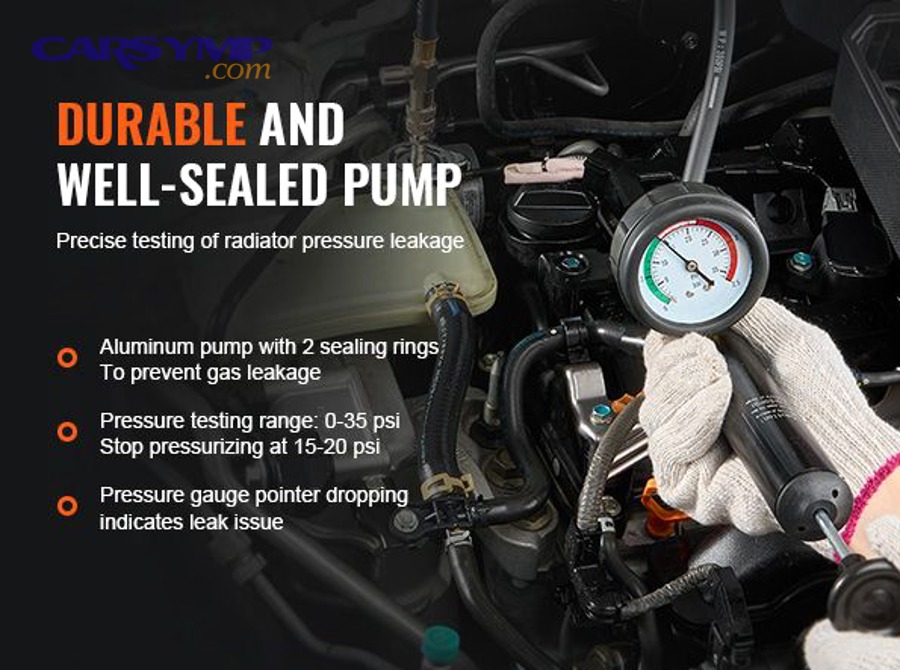
A hand vacuum pump test is the most practical “real” home test because it measures whether the cap can hold vacuum without leaking down—exactly what the EVAP self-test cares about.
More specifically, you’ll need an adapter that seals to the cap (some kits include cap-test cones). Then:
- Seal the cap to the tester
Ensure the gasket area is properly seated against the adapter. - Apply vacuum gradually
Pump to a moderate vacuum level per your tool’s instructions. - Watch the gauge for leak-down
A good cap holds steady; a leaking cap drops quickly. - Repeat after rotating/reseating
If it fails once, reseat and test again—false fails happen if the adapter isn’t sealing.
Interpreting results like a technician:
- Holds vacuum consistently → cap seal likely OK.
- Slow leak-down → minor seal degradation or imperfect seating; consider replacing if codes recur.
- Rapid leak-down → strong fail; replace cap and re-check filler neck surface.
If you’re doing this as part of broader EVAP system repair, this test is valuable because it removes the cap from the “unknowns” list early.
What results mean your cap ‘passes’ but you still have an EVAP leak?
A “passing” cap can still coincide with an EVAP code because the leak may be downstream in hoses, valves, the canister, or the tank pressure sensing logic—and EVAP monitors can be picky about conditions.
To better understand, treat a pass as “cap not guilty,” then move to the next most common patterns:
- Purge valve stuck open causing vacuum behavior that looks like a leak.
- Vent valve not sealing so the system can’t close for testing.
- Cracked EVAP hose near the canister or tank.
- Filler neck damage where the cap seals (cap passes on bench, but real-world seal fails).
- Cap type mismatch (wrong OEM design, wrong depth, incompatible seal profile).
According to a study by University of Michigan from the School of Public Health, in 2005, emissions increased substantially with hotter ambient temperatures and when caps were loose, reinforcing why intermittent, condition-dependent EVAP faults can be hard to catch without structured testing.
What are the most common gas cap-related causes of EVAP leak codes?
There are four main gas cap-related causes of EVAP leak codes—(1) improper installation, (2) worn gasket/O-ring, (3) filler neck sealing surface damage, and (4) wrong cap design—based on whether the failure is user-driven, seal-material-driven, surface-driven, or compatibility-driven.
Next, separate these causes cleanly because the fix is different: tightening technique fixes one; replacement fixes another; cleaning or filler neck repair fixes a third.
Which problems are “user error” vs actual part failure?
User error usually means the cap didn’t seat correctly, while part failure means it seated but couldn’t seal.
Specifically, this is the easy split:
User error (highly fixable immediately)
- Cap not tightened fully (stopped before the gasket seated).
- Cross-threaded installation.
- Dirt or grit on the gasket from refueling environment.
- Cap left off after fueling.
Actual part failure (replace or repair)
- Cracked/flattened/hardened gasket.
- Cap body cracked or torque-limiter stripped.
- Cap internal valve/relief issue (won’t hold pressure/vacuum).
- Filler neck lip rusted/pitted so a new cap still can’t seal.
If you want to reduce guesswork, treat “user error” as a one-time reset: reinstall correctly, clear the conditions, then see if it returns. Treat “part failure” as “repeatable”—it comes back until you change something physical.
Which EVAP leak codes are most often linked to the gas cap?
Codes most often linked to the gas cap are large-leak or cap-off style codes, plus generic small-leak codes in vehicles that interpret cap sealing as part of the leak test.
Below is a quick table that maps common EVAP codes to the “cap likelihood” and what to check first. (This table summarizes typical diagnostic triage—not a guarantee.)
| Code | Plain meaning (simplified) | How often it’s cap-related (rule of thumb) | First checks |
|---|---|---|---|
| P0457 | Leak detected; fuel cap loose/off (common description) | High | Cap seated, gasket condition, filler neck lip |
| P0455 | Large EVAP leak detected | Medium–High | Cap, then vent valve and large hose cracks |
| P0442 | Small EVAP leak detected | Medium | Cap seal, small hose cracks, canister/valves |
A practical reading of “EVAP leak symptoms and codes explained” is this: codes are not telling you “replace the cap,” they’re telling you “system didn’t behave like a sealed container.” The cap is simply the fastest sealing component to validate.
Should you replace the gas cap, and how do you choose the right one?
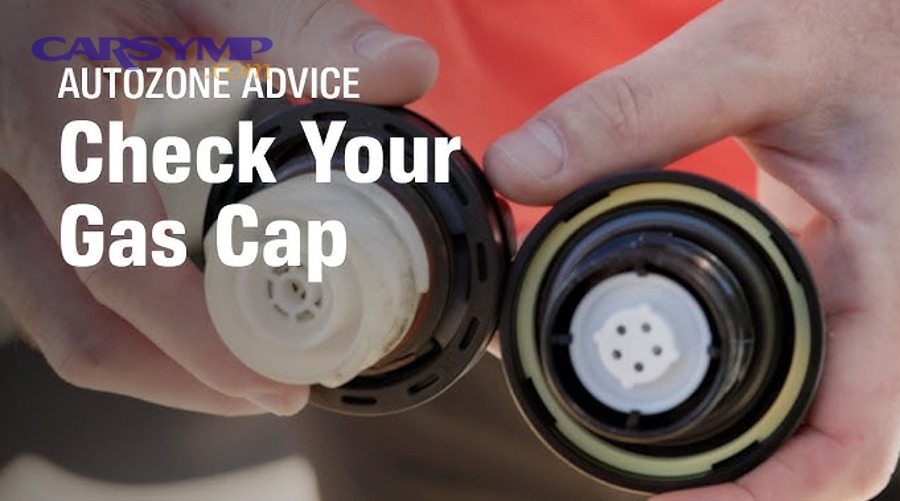
Yes—replace the gas cap when testing or inspection shows seal degradation, fitment mismatch, or repeat EVAP codes after correct installation, because a new cap is low-cost and resolves three common failure modes: bad gasket, damaged cap body, and incorrect pressure/vacuum behavior.
However, replacement should be intentional: choosing the right cap matters as much as replacing it, especially on vehicles with specific sealing profiles or capless designs.
Is OEM always better than aftermarket for fuel caps?
No—OEM is not always better, but OEM is usually the safest choice when you’re prioritizing exact seal geometry and correct pressure/vacuum relief behavior, while quality aftermarket can be fine if it matches the OE spec precisely.
Specifically, choose based on risk:
- Choose OEM when: you’ve had repeat EVAP codes, your car is picky about caps, or you want the highest “fit certainty.”
- Choose reputable aftermarket when: the brand explicitly lists OE-equivalent fitment and you can verify the part number match.
The “wrong cap” problem is real: a cap can thread on and click but still seal poorly due to gasket profile differences. If you’re trying to avoid a second round of diagnosis, OEM is often the cheapest path overall—even if the cap costs more up front.
Also, this is where an EVAP repair cost estimate mindset helps: a cap might be $10–$40, while one unnecessary smoke test or diagnostic hour can cost more than the OEM cap difference.
How do you confirm the replacement cap actually fixed the leak?
You confirm the fix by (1) ensuring the cap seats correctly, (2) clearing or monitoring codes appropriately, and (3) verifying EVAP monitor completion without the code returning.
More specifically, do it like this:
- Install the new cap and verify feel
- It should tighten smoothly, seat firmly, and click normally (if designed to).
- Scan for codes and freeze-frame
- Note the exact code(s) and fuel level when it triggered (useful if it returns).
- Don’t immediately assume “off = fixed”
- Many vehicles require a successful EVAP self-test to close the loop.
- Re-check after several normal trips
- If the code was cap-related, it often won’t come back after the EVAP test runs under the right conditions.
If you’re working through EVAP system repair, the cap replacement is only “done” when the system can complete its monitor and stay clean.
What do you do if the gas cap is fine but EVAP codes keep coming back?
If the gas cap is fine but EVAP codes keep returning, you move one layer deeper: verify purge/vent valve sealing, inspect EVAP lines and canister, and use a smoke test when visual checks can’t confirm the leak—then finish with After repair: clearing codes and monitor readiness.
Next, use a structured approach so you don’t bounce between random parts. A “cap passes” result is good news—it narrows the search.
What other EVAP parts commonly mimic a “bad gas cap” (purge valve, vent valve, hoses)?
The most common mimics are the purge valve, vent valve, and cracked EVAP hoses, because each can prevent the EVAP system from sealing during the self-test even when the cap is perfect.
More specifically:
- Purge valve (stuck open)
Can pull vacuum into the tank at the wrong time or fail to hold vacuum when commanded closed. This is one of the cases where Can EVAP issues affect drivability becomes “yes”—you may see rough idle, hard starts after refueling, or stumble. - Vent valve (won’t close/seal)
If the vent side can’t close, the system can’t form a sealed loop, so the leak test fails. - Hoses and connections
Small cracks near the canister, tank, or engine bay can act like tiny “vapor holes,” triggering small-leak codes.
When you’re deep in EVAP leak symptoms and codes explained territory, remember: the cap is the easiest seal; the valves are the next most common failure points.
When is a smoke test the best next step—and what can it reveal that cap tests miss?
A smoke test is the best next step when you have repeat leak codes, the cap passes, and visual inspection can’t find cracked hoses or loose fittings, because smoke can reveal tiny leaks at seams, fittings, and valves that don’t show wetness or obvious damage.
To illustrate, smoke testing can reveal:
- Hairline hose cracks that only open under slight pressure.
- Leaks at the charcoal canister housing seam.
- Vent valve leaks where the valve “looks fine” but doesn’t seal internally.
- Filler neck-to-tank connection seepage that is hard to see.
According to a service bulletin published via National Highway Traffic Safety Administration, a smoke leak detection machine may be used for EVAP leak detection, following the equipment manufacturer’s operating instructions.
After repair: how do clearing codes and monitor readiness work for emissions?
After repair, clearing codes resets diagnostic status, and monitor readiness must rerun before many emissions programs consider the fix “proven,” because the vehicle’s OBD system needs time and the right conditions to complete its self-tests again.
More importantly, treat this as part of EVAP system repair—not an afterthought:
- Clearing codes can turn off the light, but it also resets readiness information.
- The EVAP monitor may take longer than others to complete, depending on temperature, fuel level, and driving conditions.
- If the underlying fault remains, the monitor may not complete or the code may return.
According to the California Bureau of Automotive Repair, readiness monitors are self-tests and must be rerun after repair activities like disconnecting the battery or replacing an emissions component.
What rare edge cases cause repeat ‘gas cap’ issues (capless systems, filler neck damage, intermittent leaks)?
Repeat “gas cap” issues can come from rare—but very real—edge cases: capless filler systems, damaged filler neck geometry, and intermittent leaks that only occur under specific temperatures or fuel levels.
Specifically, watch for these:
- Capless systems (no traditional screw cap)
The sealing responsibility shifts to internal spring-loaded doors and seals that can stick or get contaminated. - Filler neck corrosion/pitting
A new cap won’t seal against a rough, chipped, or deformed lip. - Intermittent leaks
Some leaks show up only in hot weather, after refueling, or when the tank is near specific fill levels.
According to a study by University of Michigan from the School of Public Health, in 2005, emissions increased substantially with hotter ambient temperatures and when caps were loose, reinforcing why intermittent, condition-dependent EVAP faults can be hard to catch without structured testing.