


A bad EVAP purge valve or canister vent valve usually announces itself in a predictable way: rough running or hard starts (often after fueling), recurring EVAP codes, and fuel smells that come and go. The fastest path is to match failure mode (stuck open vs stuck closed) to what your car is actually doing.
Next, you’ll learn what each valve does and why “stuck-open vs stuck-closed” is the key comparison that separates purge problems from vent problems—especially when the Check Engine Light keeps returning after parts swaps.
Then, we’ll connect symptoms + OBD-II codes + freeze-frame clues so you can form a single diagnosis story instead of chasing random P04xx numbers. That story is what keeps an EVAP system repair from turning into a guessing game.
Introduce a new idea: once you understand the airflow path through the EVAP system, a simple DIY EVAP troubleshooting checklist—basic pinch tests, scan-tool commands, and a couple of vacuum checks—can usually tell you which valve is guilty and whether you should look for a leak elsewhere.
What do the EVAP purge valve and canister vent valve do, and why does “stuck-open vs stuck-closed” matter?
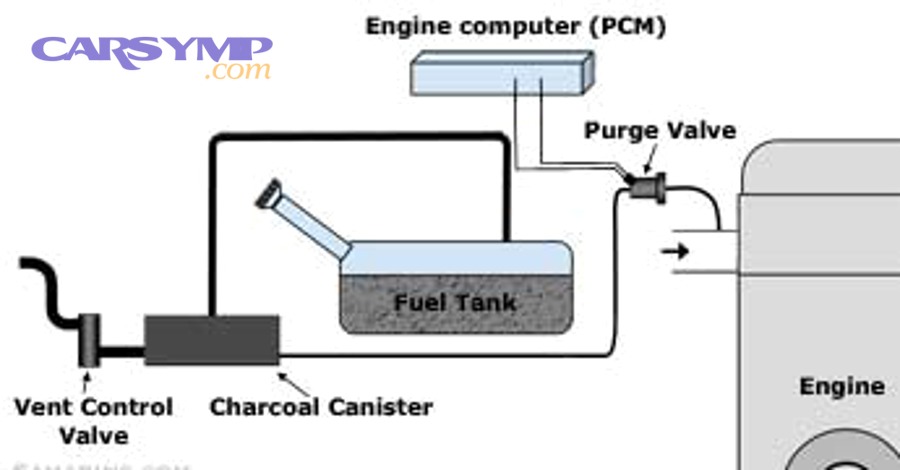
The EVAP purge valve meters vapor into the engine while the canister vent valve controls fresh-air entry to the charcoal canister; “stuck-open vs stuck-closed” matters because those opposite failure modes create opposite pressure, flow, and drivability behaviors.
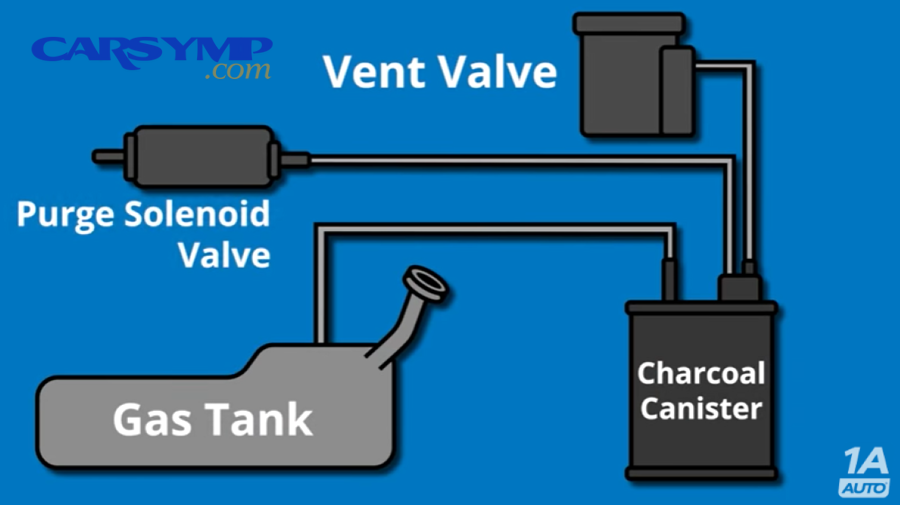
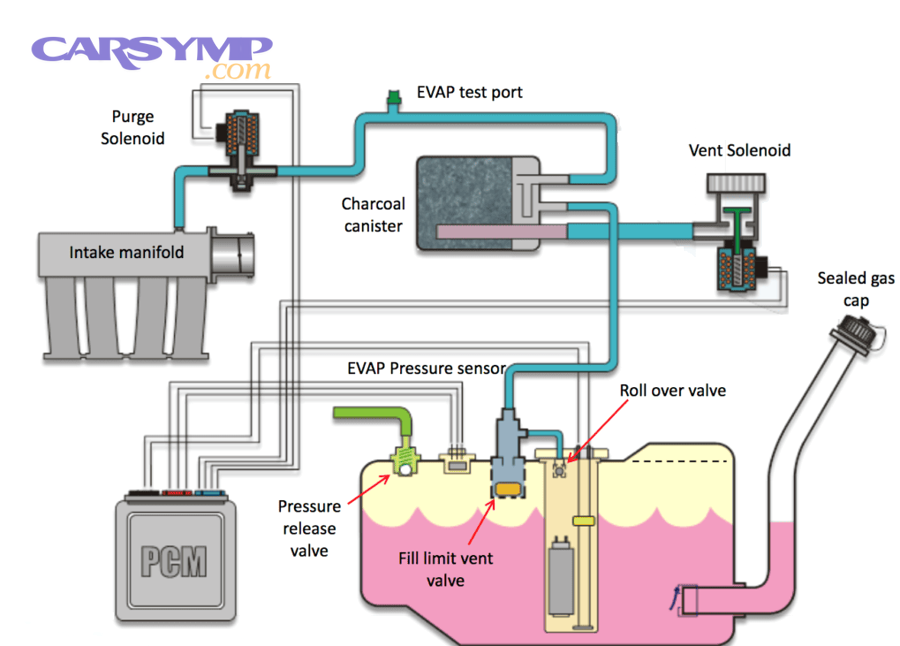
To better understand why the symptoms diverge so sharply, follow the vapor path and think in “doors”:
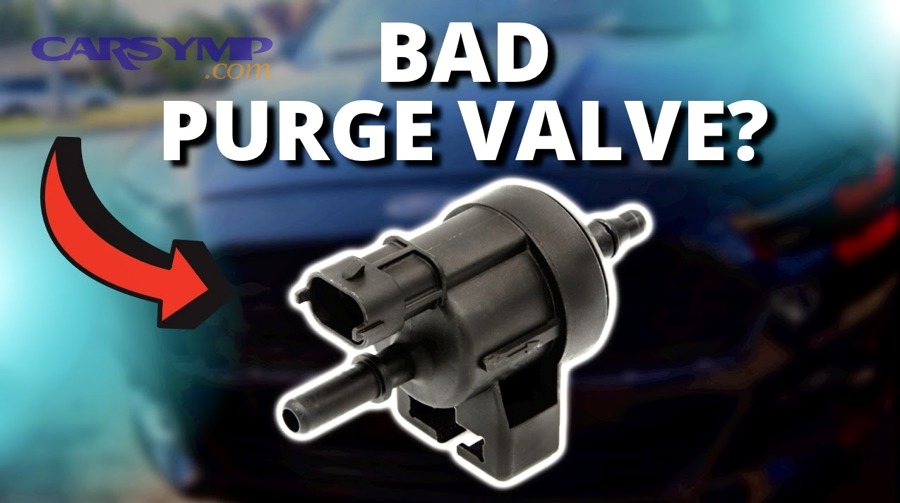
Purge valve basics: what it controls and what “stuck open” looks like
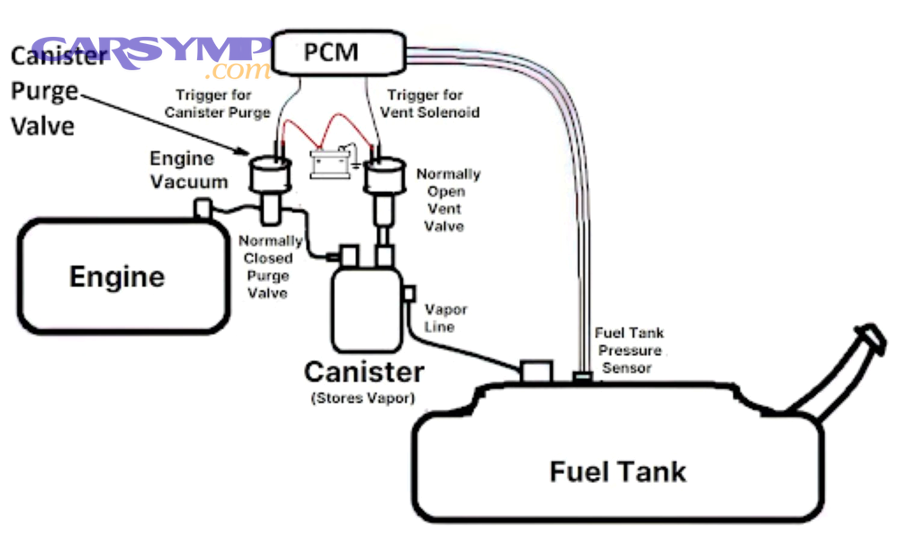
The purge valve (often called purge solenoid or canister purge valve) is the “engine-side door.” It sits between the charcoal canister and the intake manifold (or a port near it). The ECU opens it under specific conditions—typically warm engine, certain loads, and when the system is ready to burn stored vapors cleanly.
When the purge valve sticks open, vapors (and sometimes raw air through the canister path) can flow when they shouldn’t. That often creates:
- Hard starts, especially after refueling (extra vapor floods the intake like a rich condition).
- Rough idle or stumbling right after start.
- Sometimes a “whoosh” or strong vapor smell near the intake area.
Why it happens: a stuck-open purge valve is essentially a vacuum leak with fuel vapor involved. The engine sees unplanned flow into the intake, and the fuel trims can swing while the ECU tries to correct.
Vent valve basics: what it controls and what “stuck closed” looks like
The vent valve (often canister vent valve/solenoid) is the “atmosphere-side door.” It’s usually near the charcoal canister, often toward the rear of the vehicle. Its job is to let the canister breathe filtered fresh air during purge, and to seal the system when the car runs EVAP leak tests.
When the vent valve sticks closed (or the vent filter/line is clogged), the canister can’t breathe. That often creates:
- Slow or failed refueling (pump clicks off repeatedly) because the tank can’t vent vapor properly.
- EVAP system tests failing because the system can’t manage pressure/vacuum correctly.
- Typically less drivability impact than a purge valve stuck open, but it can still cause odd purge flow behavior and recurrent codes.
A clogged vent path is also common on vehicles driven on dusty roads, because the vent side is designed to see outside air.
Why “stuck-open vs stuck-closed” predicts real-world symptoms
The reason this lexical contrast matters is simple:
- Stuck open (purge) → engine gets vapor/air when it shouldn’t → drivability symptoms show up.
- Stuck closed (vent) → tank/canister can’t breathe → refueling and monitor test issues dominate.
A useful mental model:
- Purge valve failures often show up at the front of the car (intake/idle behavior).
- Vent valve failures often show up at the back of the car (refueling behavior, dust intrusion, vent restriction).
Which symptoms point to a bad purge valve vs a bad vent valve?
A bad purge valve is most strongly linked to hard starts/rough idle and “after-fuel” issues, while a bad vent valve is most strongly linked to refueling problems, vent restriction symptoms, and leak-test-related codes.
Next, use symptoms like “breadcrumbs”—each one points more strongly to one valve than the other.
Drivability symptoms: rough idle, hard starts, fuel smell, and MPG changes
If you’re asking Can EVAP issues affect drivability, the answer is yes—especially when the purge valve is leaking or stuck open. A stuck-open purge valve can dump vapor at idle/startup, which is why you see:
- Long crank or stumble after filling the tank
- Rough idle that improves after a minute
- Occasional misfire-like shake (usually not a true ignition misfire)
- Fuel smell near the engine bay
Fuel economy can drop too, but not always. The bigger giveaway is when it happens: purge problems often spike right after refueling or on cold start.
Vent valve problems can cause odor near the rear/canister area, but they’re less likely to cause an obvious idle stumble unless the purge strategy gets confused by pressure behavior.
Refueling behavior symptoms: click-off, slow fill, and tank pressure oddities
This is where vent issues shine. If the fuel nozzle clicks off repeatedly, or refueling becomes slow and annoying, the vent path is a prime suspect:
- Vent valve stuck closed
- Vent filter clogged
- Vent hose kinked or packed with debris
- Canister saturated/damaged (less common, but possible)
A purge valve can contribute indirectly, but refueling trouble is far more “vent-side flavored.”
Noise and pressure clues: hissing, whoosh, and vacuum/pressure imbalance
Pressure clues help separate the two:
- Whoosh at the gas cap can happen in several scenarios, but if it’s frequent and refueling is difficult, think vent restriction.
- Hissing near intake plus idle issues pushes you toward purge leak/stuck open.
Symptom-to-valve cheat sheet (with failure mode)
Here’s a quick map of the most common symptom patterns and what they usually mean.
| Symptom pattern (what you notice) | More likely valve | More likely failure mode | Why it points there |
|---|---|---|---|
| Hard start right after fueling + rough idle | Purge valve | Stuck open / leaking | Vapors enter intake when ECU doesn’t expect it |
| Nozzle keeps clicking off / slow refueling | Vent valve | Stuck closed / restricted | Tank can’t vent vapor to canister/atmosphere path |
| Mostly no drivability symptoms, but EVAP codes return | Vent valve (or leak) | Stuck closed or intermittent | EVAP monitor fails during self-tests |
| Fuel smell near engine bay + trims swing at idle | Purge valve | Leaking | Manifold vacuum pulls vapors/air through canister line |
| Dusty-road vehicle, frequent “vent performance” codes | Vent path | Restricted | Vent filter/line/canister gets contaminated |
Can you diagnose purge vs vent valve failure from OBD-II codes and freeze-frame clues?
You can often diagnose purge vs vent problems from OBD-II codes when you pair the code family with freeze-frame context (fuel level, temperature, speed, and when the test ran), because the EVAP monitor runs different checks under different conditions.
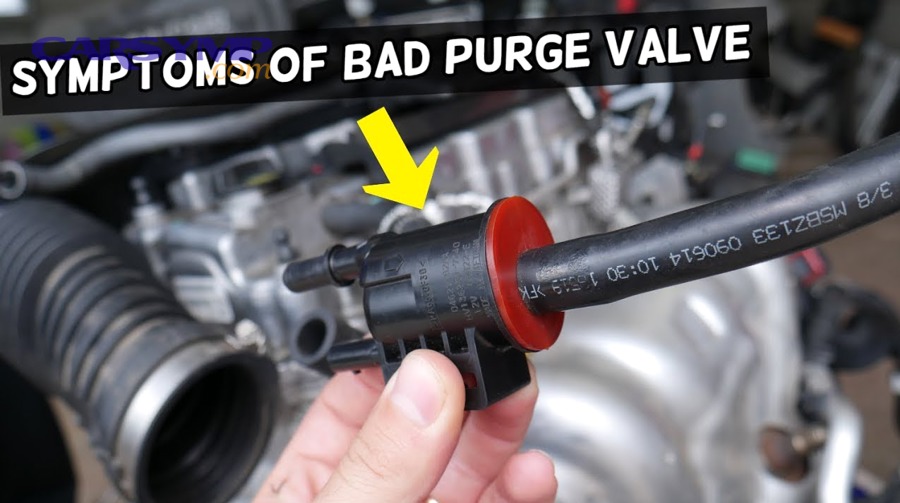
Then, treat codes as “hints,” not verdicts. EVAP codes can describe what the ECU observed (flow/pressure behavior), not always the exact failed part.
EVAP code families that lean purge vs vent (and what they actually mean)
Some code patterns tend to lean one direction:
- “Incorrect purge flow / purge performance” patterns often point to purge-valve issues (stuck open, stuck closed, restricted purge line, or control circuit).
- “Vent control / vent performance” patterns often point to vent-valve issues (stuck closed/open, restricted vent path, vent filter clogged).
- “Gross/small leak” patterns can be either valve or a leak elsewhere (gas cap, hoses, canister cracks, tank seal, etc.).
Because code definitions vary a bit by manufacturer, the smarter approach is to interpret:
- What the ECU tried to do (seal? purge? measure decay?)
- What the tank pressure sensor reported
- Under what conditions the test ran
Freeze-frame clues: fuel level, temperature, and when the monitor ran
Freeze-frame data can be surprisingly revealing:
- Fuel level: many EVAP tests run only between certain fuel levels (often mid-range). If the code sets consistently at a similar fuel level, it hints the monitor is running a repeatable test cycle.
- Ambient temperature: EVAP vapor generation increases with heat. EVAP issues can be more visible on warm days, and the ECU’s monitor behavior can change with temperature.
- Speed/load: some purge flow checks happen at cruise; some leak checks happen after shutdown or during specific steady states.
According to a U.S. Environmental Protection Agency report on evaporative emissions modeling, warmer temperatures and diurnal conditions materially affect evaporative emission behavior, which is one reason EVAP monitors are so condition-dependent.
Using scan tool bi-directional tests and data PIDs to confirm suspicion
If your scan tool supports it, focus on:
- Commanded purge (%) vs actual behavior (idle quality, fuel trims)
- Commanded vent (open/closed) vs tank pressure response
- Fuel Tank Pressure (FTP) sensor changes when you command purge/vent
A practical logic check:
- If you command purge open and FTP changes strongly (vacuum builds) but the system won’t vent down when you command vent open, suspect vent restriction/stuck closed.
- If FTP and trims behave oddly at idle with purge commanded closed, suspect purge leak/stuck open.
What quick DIY checks can confirm whether the purge or vent valve is the likely culprit?
A reliable DIY method is to run 3–5 targeted checks—pinch tests, vacuum tests, and simple command tests—to confirm whether purge or vent behavior matches the symptoms, without replacing parts blindly.
Next, use this DIY EVAP troubleshooting checklist to move from “maybe” to “most likely.”
Quick purge valve tests: pinch test, vacuum test, and idle response
1) Pinch test (engine idling):
- Locate the purge hose running from purge valve toward the intake.
- If you pinch/temporarily block that hose and the idle immediately smooths out (especially on a rough-idle/hard-start vehicle), the purge path may be leaking vapor/air.
2) Vacuum hold test (hand vacuum pump, if accessible):
- With the valve disconnected (where possible), test whether it holds vacuum when it’s supposed to be closed.
- A purge valve that won’t seal is a strong match for post-refuel hard starts.
3) Trim behavior clue:
- If short-term fuel trims jump around at idle and calm down when purge is blocked, purge leakage is likely contributing.
This is the “front-of-car” diagnostic flow that often makes EVAP system repair straightforward.
Quick vent valve tests: airflow check, filter inspection, and command test
1) Refueling symptom test:
If refueling is difficult, prioritize the vent path.
2) Vent filter/line inspection:
- Check vent filter housing (if equipped) for dirt/mud intrusion.
- Look for kinked hoses near the rear axle/canister.
3) Airflow check (safely):
- With the system in a safe state (engine off, no sparks), check whether air can pass through the vent path when the vent valve is commanded open (tool-dependent).
- If airflow is restricted, you may have a clogged filter/line or a stuck valve.
If you have a scan tool: command tests that separate purge vs vent fast
If your scanner supports output controls:
- Command purge in steps (0% → 20% → 50%) and watch FTP and idle behavior.
- Command vent open/close and watch whether FTP normalizes when vent opens.
If commanded changes do not produce expected sensor movement, confirm wiring and the FTP sensor’s sanity before concluding the valve is bad.
When a smoke test helps (and when it misleads)
A smoke test is excellent for finding leaks, but it can mislead if a vent is restricted or a valve is stuck closed—you might “not see smoke” simply because the system can’t vent properly.
If you suspect a leak elsewhere, smoke testing remains one of the most efficient professional methods; just remember it tells you about sealing more than flow control.
When should you replace the purge valve, replace the vent valve, or look for an EVAP leak elsewhere?
Purge valve replacement is the best move when drivability symptoms match a purge leak/stuck-open pattern, vent valve replacement is best when refueling and vent restriction patterns dominate, and leak-hunting is best when symptoms are minimal but leak codes persist despite valve behavior testing.
Then, make the decision the same way a good technician would: by matching proof (tests) to cost/effort (repair choice) so you don’t over-repair.
Replace purge valve: the strongest “yes” signals
Replace the purge valve when you see most of these together:
- Hard start/rough idle after refueling
- Purge valve fails a vacuum/seal test
- Blocking purge flow stabilizes idle
- Purge command behavior doesn’t match expected response
This is also where you can reasonably expect drivability improvement—purge failures are one of the EVAP faults most likely to feel like an engine problem.
Replace vent valve: the strongest “yes” signals
Replace the vent valve (or repair the vent path) when you see:
- Frequent refueling click-off / slow fill
- Vent filter/line restriction evidence
- FTP fails to normalize when vent is commanded open
- Recurrent “vent performance” patterns, especially on dusty-road vehicles
Sometimes the fix is not the valve itself but the vent filter/hose routing; treat the vent path like an intake snorkel—if it can ingest dirt, it can clog.
Look elsewhere: when it’s probably a leak, cap, hose, canister, or seal
If both valves respond correctly to commands/tests but leak codes remain, broaden the search:
- Gas cap seal (if applicable)
- Cracked EVAP hoses
- Canister damage/saturation
- Filler neck issues
- Top-of-tank connections (hard to see without a lift)
At that stage, a smoke test becomes the most time-efficient option.
EVAP repair cost estimate: what “typical” looks like and what changes it
Costs vary by vehicle packaging and labor access, but published estimates help set expectations. For example, RepairPal estimates a purge valve replacement average range around $201–$240 (labor + parts, excluding taxes/fees and location differences).
If the real problem is the canister itself, RepairPal’s published ranges for fuel evaporative canister replacement are often higher (commonly several hundred dollars, depending on vehicle).
What changes the bill most:
- Whether the vent valve is buried near the tank or easy to access
- Whether hoses/fittings break during disassembly
- Whether the diagnosis was done correctly the first time (parts swapping is expensive)
How do EVAP monitors, readiness, and advanced tests confirm a purge vs vent valve fix?
You confirm an EVAP fix by clearing codes, completing the EVAP monitor drive conditions, and verifying readiness, because EVAP problems often “seem fixed” until the monitor reruns and fails again.
Then, treat After repair: clearing codes and monitor readiness as part of the repair—not an optional extra—because an incomplete monitor means you don’t yet have proof.
After repair: clearing codes and monitor readiness—what to do in order
A clean confirmation sequence looks like this:
- Repair the confirmed fault (purge, vent, restriction, or leak).
- Clear codes and reset adaptations only if appropriate for the vehicle and tool.
- Drive under varied conditions (idle, steady cruise, decel) and allow adequate soak time if your vehicle needs it for EVAP tests.
- Re-scan for pending codes and monitor status.
If a code comes back as pending quickly, it usually means the ECU detected the fault early in its test logic—use that to guide you back to purge vs vent flow behavior.
Advanced confirmation: smoke testing, pressure decay, and FTP sensor sanity checks
If you want “shop-level certainty”:
- Smoke test confirms sealing integrity across hoses, cap area, canister, and connections.
- Pressure/vacuum decay tests confirm the system can hold pressure when sealed.
- FTP sensor sanity checks confirm the ECU is seeing real pressure change, not noisy or biased data.
Rare edge cases: intermittent valves, wiring faults, and canister saturation
Some cases only show up intermittently:
- Purge valve sticks only when hot
- Vent valve works electrically but the filter plugs under wet/muddy conditions
- Wiring faults cause the valve to “command” but not actuate consistently
- Canister becomes saturated (overfilling/“topping off” can contribute) and behaves unpredictably
According to a study by Middle East Technical University from the Graduate School of Natural and Applied Sciences (Chemical Engineering), in 2004, activated carbon materials used for adsorption applications showed internal surface areas on the order of ~1160–1170 m²/g, underscoring how canister performance depends heavily on carbon adsorption capacity and condition.
According to a study by the University of California, Berkeley from the Department of Civil and Environmental Engineering, in 1996, controlled and field-oriented measurements summarized in their work showed oxygenated fuel programs could reduce measured exhaust CO emissions on the order of the mid-teens percent, illustrating how emissions outcomes depend on real-world operating conditions and properly functioning control systems.
EVAP leak symptoms and codes explained (quick wrap-up for decision-making)
If you’re still torn, return to the core split:
- If the car drives badly (especially after refueling), suspect purge first.
- If the car refuels badly (click-off/slow fill) and codes keep returning, suspect vent/restriction first.
- If neither symptom pattern is strong, suspect a leak elsewhere and confirm with a smoke test.
That approach keeps EVAP system repair logical, minimizes repeat failures, and makes your next scan result feel predictable instead of random.