


Diagnosing a power steering leak involves seven essential steps: recognizing warning signs, gathering proper tools, preparing your vehicle, inspecting key components systematically, performing dynamic tests, confirming the leak source, and interpreting what different leak locations reveal about underlying problems. These steps enable DIY car owners to identify leak sources accurately without professional equipment, saving diagnostic fees while determining whether repairs require immediate professional intervention or can be handled independently.
Understanding the warning signs of a power steering leak forms the foundation of successful diagnosis. Whining noises during steering, increased steering effort especially at low speeds, visible fluid puddles beneath the front of your vehicle, and burning odors all indicate potential leaks that demand investigation. Early recognition of these symptoms prevents complete power steering failure, which transforms your vehicle into a dangerous machine requiring enormous physical effort to control.
Proper preparation and systematic inspection techniques separate successful diagnosis from frustrating guesswork. Cleaning the power steering system before inspection allows you to distinguish fresh leaks from old residue, while knowing exactly where to look—the reservoir, pump, hoses, connections, and rack and pinion—ensures you don’t overlook critical leak sources. Each inspection location reveals specific information about component failure patterns and repair complexity.
Dynamic testing and careful leak source confirmation provide the diagnostic certainty needed for repair decisions. By running the engine and turning the steering wheel lock-to-lock while observing the system, you activate pressure-induced leaks that remain invisible during static inspection. This comprehensive diagnostic approach empowers you to make informed decisions about power steering leak repair, understand repair cost breakdowns, and evaluate whether temporary solutions or complete component replacement best addresses your specific situation.
What Are the Warning Signs of a Power Steering Leak?
Power steering leaks produce four primary warning signs: whining or groaning noises when turning the steering wheel, increased steering difficulty especially during low-speed maneuvers, visible fluid puddles in red, amber, or pink tones beneath the vehicle’s front end, and burning smells caused by leaked fluid contacting hot engine components.
To better understand how these symptoms manifest, let’s examine each warning sign in detail.
How Do You Know If Your Steering Fluid Is Low?
Low power steering fluid reveals itself through both audible and tactile symptoms that escalate as fluid levels drop. When you start your vehicle with low fluid, the power steering pump struggles to circulate adequate hydraulic pressure, creating a distinctive high-pitched whining sound that intensifies during turns. This noise occurs because air bubbles enter the system as fluid levels fall below the pump’s intake point, causing the impeller to cavitate as it attempts to move aerated fluid rather than pure hydraulic liquid.
The steering wheel provides direct feedback about fluid levels through increased resistance. At parking lot speeds where power steering assistance matters most, you’ll notice the wheel requires significantly more physical effort to turn. This happens because insufficient fluid reduces hydraulic pressure in the system, forcing your arms to provide more of the mechanical advantage that the power steering system normally supplies. In severe cases with critically low fluid, the steering wheel may feel nearly as heavy as vehicles without power steering, requiring both hands and considerable upper body strength to execute tight turns.
Checking the fluid reservoir provides visual confirmation of low levels. Open your hood and locate the power steering fluid reservoir—typically a translucent plastic container near the engine’s front or side, labeled with a steering wheel icon or “Power Steering” text. The reservoir features minimum and maximum level markings, often labeled “MIN” and “MAX” or “ADD” and “FULL.” If fluid sits below the minimum line, you’re experiencing fluid loss that indicates either a leak or severely overdue maintenance.
What Does Power Steering Fluid Look Like When It Leaks?
Power steering fluid appears as a reddish-brown, amber, or pink liquid with a slick, oily texture that distinguishes it from other automotive fluids. Fresh power steering fluid typically displays a transparent red or light amber color similar to automatic transmission fluid, while aged fluid darkens to brown or even black as it accumulates contaminants and oxidizes over time. This color characteristic provides your primary identification method when examining puddles beneath your vehicle.
The fluid’s location under your car offers additional diagnostic clues about leak sources. Power steering leaks typically appear beneath the front portion of your vehicle, centered or slightly offset toward the driver’s side where steering components concentrate. If you park your vehicle overnight and discover a small puddle or several drops in this area the next morning, power steering fluid represents a likely culprit. The puddle’s size indicates leak severity—a few drops suggest minor seepage from a degraded seal, while a pool the size of your palm or larger points toward a significant hose rupture or major component failure.
Distinguishing power steering fluid from other automotive fluids prevents misdiagnosis. Engine oil appears black or dark brown and feels thicker and greasier between your fingers. Coolant typically displays bright green, orange, or pink colors but has a thinner, watery consistency and often a sweet smell. Brake fluid appears clear to light amber but accumulates near wheel wells rather than the engine compartment center. Windshield washer fluid shows bright blue or pink colors with a water-like consistency and soapy texture. Power steering fluid’s oily texture combined with its red-to-brown color spectrum and front-center location creates a distinctive signature.
What Tools and Materials Do You Need to Diagnose a Steering Leak?
Diagnosing a power steering leak requires basic automotive tools including a flashlight or headlamp for illuminating tight engine compartment spaces, automotive degreaser or brake cleaner for removing existing grime, clean rags or shop towels for wiping components, white paper towels for identifying fresh leaks, the manufacturer-specified power steering fluid for topping off the reservoir, and safety equipment including nitrile gloves and safety glasses.
These fundamental tools enable thorough inspection without professional-grade equipment. Below, we’ll explore when advanced tools become necessary.
Do You Need Special Tools for Power Steering Leak Detection?
Special tools for power steering leak detection are not required for basic diagnosis, though they significantly improve detection accuracy for small or intermittent leaks. The vast majority of power steering leaks reveal themselves through careful visual inspection using only a flashlight, degreaser, and clean rags. Significant leaks from cracked hoses, failed pump seals, or damaged reservoir containers produce visible fluid accumulation that DIY mechanics can identify without sophisticated equipment.
However, three advanced tools accelerate leak detection in challenging situations. UV fluorescent dye kits inject a special additive into your power steering fluid that glows brightly under ultraviolet light, creating a luminous trail that traces even the smallest seepage paths invisible to the naked eye. These kits cost between $15 and $40 and prove invaluable when you’re certain a leak exists based on dropping fluid levels, yet cannot locate the source through standard inspection. The dye circulates through your entire power steering system, marking every crack, worn seal, and loose connection with glowing evidence.
Inspection mirrors with telescoping handles extend your visual reach into cramped spaces behind the engine where direct observation proves impossible. The underside of the power steering pump, rear portions of the rack and pinion, and hose connections hidden behind other components become accessible through these mirrors, which cost $10 to $25. Mechanics stethoscopes help differentiate between normal power steering pump operation and abnormal sounds indicating air infiltration from leaks, though this tool provides more value for diagnosing pump mechanical failure than locating leaks themselves.
Budget-conscious alternatives deliver acceptable results for most leak detection scenarios. A smartphone flashlight with its camera activated allows you to photograph hard-to-see areas, while a simple handheld mirror from a dollar store serves the same purpose as professional inspection mirrors for backyard mechanics. White paper or cardboard placed beneath suspected leak areas overnight captures dripping fluid for color and texture analysis without specialized equipment.
How Do You Prepare Your Vehicle for Leak Diagnosis?
Preparing your vehicle for leak diagnosis involves three critical steps: thoroughly cleaning all power steering components with automotive degreaser, allowing the system to dry completely, and establishing a clean baseline that makes fresh fluid leakage immediately visible against spotless surfaces.
Proper preparation separates successful leak identification from frustrating confusion. Let me explain why this cleaning process proves essential.
Why Is Cleaning the Power Steering System Important Before Inspection?
Cleaning the power steering system before inspection eliminates old fluid residue, road grime, and oil accumulation that obscure fresh leaks and create false diagnostic conclusions. Power steering components accumulate years of environmental contamination—dust adheres to oil-wetted surfaces, road spray coats undercarriage parts, and previous minor leaks leave dried fluid trails that bear no relationship to current problems. Attempting to diagnose leaks on dirty components resembles trying to find a small tear in a mud-covered tarp; the existing mess masks the new damage you’re trying to locate.
Automotive degreaser or brake parts cleaner dissolves this contamination, revealing clean metal and rubber surfaces where new fluid seepage stands out with perfect clarity. Spray degreaser liberally on the power steering pump, reservoir, all visible hoses, hose connections, and accessible portions of the rack and pinion. Allow the chemical to penetrate for two to three minutes—check the product label for specific dwell time recommendations. The degreaser’s solvents break down oil-based residues, while surfactants lift away particulates.
After the appropriate dwell time, wipe all sprayed surfaces with clean shop rags, removing dissolved grime and excess degreaser. For heavily contaminated components, repeat this process two or three times until rags come away relatively clean. Pay particular attention to areas where components connect—hose fittings, pump mounting points, and reservoir attachment locations—because these junctions represent common leak sources that accumulated grime often conceals. The time invested in thorough cleaning pays immediate dividends when you perform your dynamic leak test and fresh fluid seepage appears as obvious wetness against pristine backgrounds.
Professional mechanics understand that diagnostic accuracy depends on establishing known conditions before testing. Cleaning creates that baseline, transforming leak detection from educated guessing into scientific observation. Once components shine clean, even a single drop of fresh power steering fluid announces its presence with unmistakable contrast.
Where Should You Inspect for Power Steering Leaks?
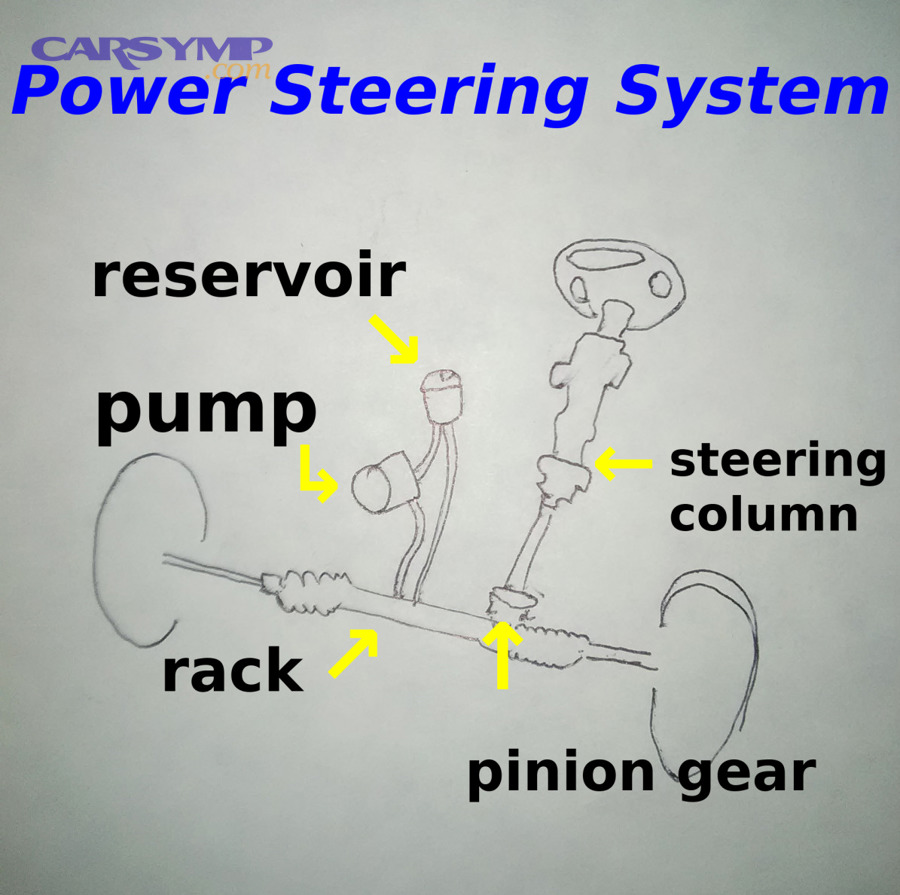
Power steering leaks originate from four primary locations: the power steering pump including its shaft seal and pulley connection, the fluid reservoir and its cap, high-pressure and return hoses along with their connection points, and the steering rack and pinion assembly including input shaft seals and rack boot seals.
Systematically inspecting each location ensures comprehensive diagnosis. Let’s examine the specific inspection techniques for each component.
How Do You Check the Power Steering Pump for Leaks?
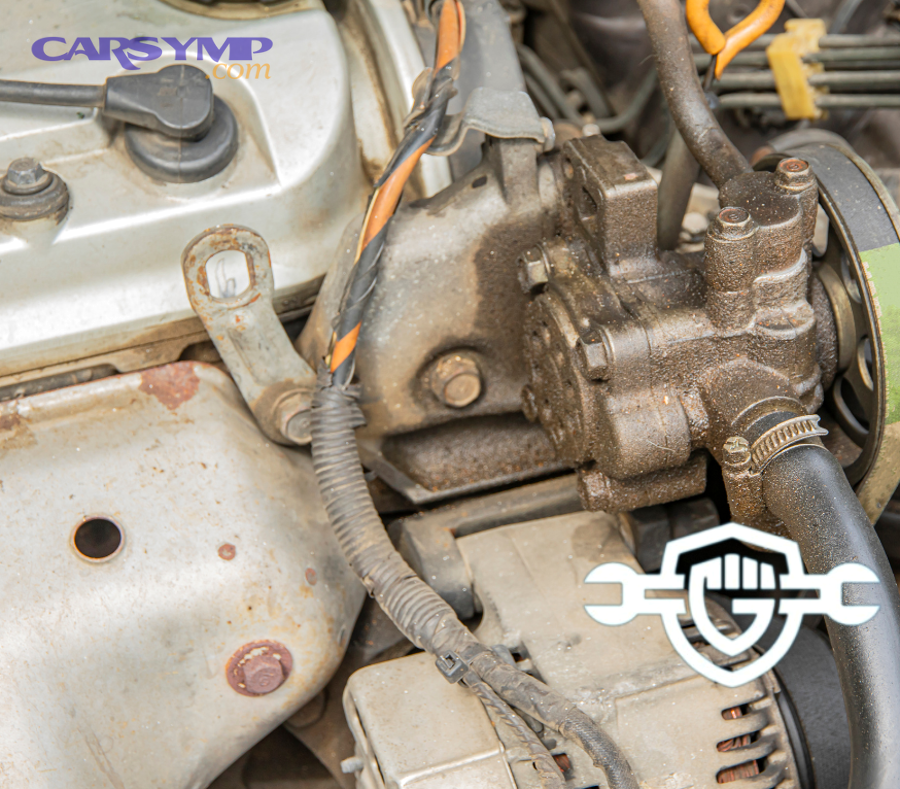
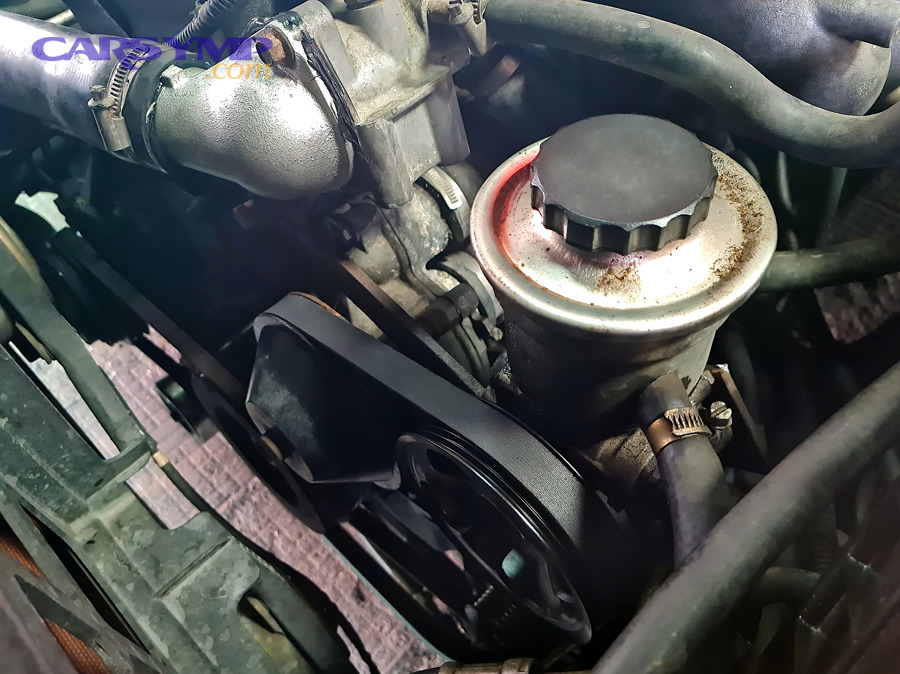
Checking the power steering pump for leaks requires examining three critical areas: the pump shaft seal where the pulley attaches, the pump housing itself including casting seams and bolt mounting points, and the pressure line connections at the pump’s outlet port.
The pump shaft seal represents the most common pump leak location. This seal prevents fluid from escaping where the pump’s rotating shaft exits the housing to connect with the drive pulley. Over time, shaft seal wear allows fluid to seep along the shaft, eventually dripping from the bottom of the pulley or running down the pump’s exterior. To inspect this area, shine your flashlight directly at the junction where the pulley meets the pump body. Look for wet spots, dried fluid residue forming a crusty buildup, or active dripping. Wiggle the pulley gently—excessive play indicates bearing wear that often accompanies seal failure.
The pump housing, typically constructed from cast aluminum, can develop leaks at seams where front and rear sections bolt together or through porosity in the casting itself, though this occurs less frequently. Examine the entire pump body surface, rotating your inspection angle to catch light reflecting off wet spots. Pay attention to the pump’s bottom surface where gravity pulls leaked fluid to accumulate. If you notice fluid weeping from the housing but not from the shaft area, you’re likely dealing with a failed housing gasket or, in rare cases, a cracked pump body requiring complete replacement.
Pressure line connections at the pump outlet require careful inspection because these high-pressure fittings endure extreme hydraulic forces. Check both the threaded connection where the metal line attaches to the pump and the rubber O-ring that seals this junction. Slight looseness in these fittings causes leaks that appear as wet spots or fluid drips directly at the connection point. Some vehicles use banjo-style fittings with copper or aluminum crush washers that can leak when degraded. Tighten loose connections to manufacturer specifications—overtightening damages threads and crushes gaskets, while under-tightening allows leakage.
How Do You Inspect Power Steering Hoses and Lines?
Inspecting power steering hoses and lines involves examining both high-pressure and low-pressure hoses along their entire length, checking connection points at each end, and identifying signs of age-related deterioration including cracks, bulges, and abrasion damage.
Power steering systems utilize two distinct hose types serving different functions. The high-pressure hose carries fluid from the pump to the steering rack under extreme hydraulic pressure, sometimes exceeding 1,500 PSI. This hose features reinforced construction with multiple rubber layers surrounding braided steel or synthetic fiber reinforcement, terminating in metal crimp fittings at each end. The return hose carries low-pressure fluid from the rack back to the reservoir, typically constructed from simpler rubber without extensive reinforcement. Both hoses deteriorate over time, but high-pressure hoses fail more dramatically.
Start your inspection at the pump end of the high-pressure hose where it connects to the pump’s outlet. Trace the hose’s entire path toward the steering rack, examining every inch for concerning conditions. Look for surface cracks in the rubber outer layer—shallow cracks oriented perpendicular to the hose length indicate age-related deterioration but may not yet leak, while deeper cracks that penetrate toward the reinforcement layer represent imminent failure. Bulges or blisters in the hose indicate that the internal reinforcement has failed, allowing pressure to balloon the outer rubber layer outward. These bulges will rupture catastrophically without warning, causing complete power steering failure.
Wet spots along the hose length pinpoint active leaks. Small seepage often appears where the hose bends around engine components or where it contacts sharp edges that have abraded through the protective outer layer. Check areas where hoses route near hot exhaust components—heat accelerates rubber deterioration. At each hose end, examine the crimped connection where rubber meets metal fitting. Leaks at this junction appear as wet rings around the crimp point and indicate that the crimp has loosened or the internal seal has failed, requiring hose replacement rather than repair.
The low-pressure return hose follows similar inspection principles but typically shows different failure modes. These hoses often become soft and spongy when aged, collapsing partially under vacuum conditions and restricting fluid return to the reservoir. Squeeze the return hose at several points along its length—it should feel firm and resilient, not mushy. Connection points where the return hose attaches to the reservoir and rack using hose clamps represent common leak locations. Tighten loose clamps carefully, ensuring they don’t overtighten and cut into the rubber.
How Do You Check the Steering Rack and Pinion for Leaks?
Checking the steering rack and pinion for leaks requires examining the input shaft seal where the steering column connects, the rack boots (bellows) that protect each end of the rack, and the rack body itself for signs of fluid seepage from internal seal failure.
The input shaft seal sits at the top of the rack where the steering shaft from your steering column enters the rack housing. This seal prevents power steering fluid from leaking out around the rotating pinion gear. Leaks at this location appear as wet spots or drips on the rack housing near where the steering shaft connects, sometimes running down the rack body toward the vehicle floor. Access to this area varies by vehicle design—some vehicles provide clear visibility from above with the hood open, while others require inspection from beneath the vehicle. Fluid accumulating on the firewall area near the steering shaft or dripping onto the driver’s side floor mat inside the vehicle suggests input shaft seal failure.
The rack boots represent the most visually obvious leak indicators on the steering rack assembly. These accordion-style rubber bellows attach to each end of the rack housing, protecting the moving rack shaft and internal seals from contamination while containing power steering fluid. When internal rack seals fail, fluid leaks past the seal and accumulates inside the boot, eventually causing the boot to swell noticeably or drip fluid from the boot’s outer end where it clamps to the tie rod. Inspect both boots carefully—a boot that appears swollen, feels full of fluid when squeezed, or shows fluid dripping from its ends indicates internal rack seal failure requiring rack overhaul or replacement.
The rack body itself rarely develops leaks unless physically damaged by road debris impact, but thorough inspection demands checking the entire housing for wet spots or active dripping. Most rack assemblies mount transversely across the vehicle’s front, requiring you to crawl underneath for complete inspection. Use your flashlight to illuminate all rack surfaces, looking for fresh fluid that appears as shiny wetness against the rack’s metallic finish. Pay particular attention to the rack’s center section where the pinion gear engages the rack teeth—some designs use a separate seal housing here that can leak.
Access challenges complicate rack inspection on many vehicles. Front suspension components, subframe members, and exhaust systems often obstruct visual access to rack assemblies. Consider using an inspection mirror to view hidden surfaces, or photograph suspected areas with your smartphone camera to examine images closely. If you identify rack leakage, understand that rack and pinion repairs typically require professional service unless you possess advanced mechanical skills and proper tools including tie rod separators and torque wrenches for reinstallation.
How Do You Perform a Dynamic Leak Test?
Performing a dynamic leak test involves starting your engine, turning the steering wheel fully from lock to lock multiple times while observing all power steering components for active leakage, bubbling fluid, or fresh seepage that appears only under pressure.
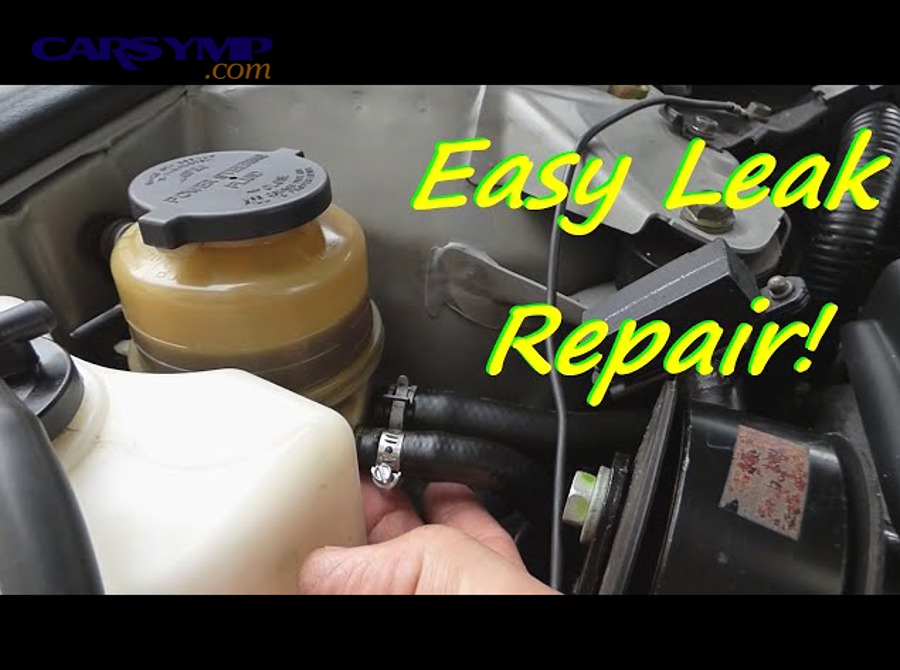
Dynamic testing reveals pressure-induced leaks invisible during static inspection. Here’s how to execute this critical diagnostic procedure.
What Should You Look for During the Steering Wheel Turn Test?
During the steering wheel turn test, watch for bubbling fluid at connections, fresh fluid seepage from seals that appeared dry when static, spray or mist emanating from hose cracks, and air bubbles rising in the reservoir indicating air infiltration from leaks that draw air inward under vacuum conditions.
This active testing procedure requires a methodical approach for maximum effectiveness. Before starting the engine, position yourself where you can clearly observe the power steering pump, visible hoses, and connections. If possible, have an assistant sit in the driver’s seat ready to turn the steering wheel on your command. If working alone, you’ll need to alternate between turning the wheel and inspecting components, repeating the process several times.
Start the engine and allow it to idle. Immediately observe the power steering reservoir—the fluid level should remain steady without excessive bubbling. Small bubbles occasionally rising indicate normal system operation, but vigorous bubbling or foam formation suggests significant air infiltration from a leak on the system’s suction side. This typically points toward a failing pump shaft seal or loose connection between the reservoir and pump inlet.
Command your assistant to slowly turn the steering wheel to the right until it reaches the steering stop (the point where it won’t turn further), hold it for two seconds, then slowly turn left to the opposite stop. During this process, keep your eyes fixed on the power steering pump area. Watch the pump shaft seal—pressure peaks when the wheel reaches steering stops, forcing fluid past worn seals with visible seepage. Look for sudden wetness appearing on previously dry surfaces, droplets forming at connection points, or fine spray misting from hose cracks.
Repeat this lock-to-lock steering cycle three to five times while shifting your observation point to examine different components. Focus on one area per cycle: first the pump, then the high-pressure hose connections, then visible hose lengths, then the reservoir, and finally accessible rack areas. The repetitive pressure cycling forces fluid through compromise points that may only leak intermittently.
Listen carefully throughout this test. Changing sounds—a whine that increases when approaching steering stops, grinding noises, or squealing—indicate pump cavitation from air infiltration or extreme wear. A groaning noise during turns suggests insufficient fluid or high system pressure, both consistent with leak scenarios. If your reservoir has a removable cap, carefully remove it during testing (with the engine running) to observe fluid behavior directly. Violent bubbling or fluid level fluctuation confirms air entry from leaks.
How Do You Confirm the Leak Source?
Confirming the leak source requires verifying that fluid loss correlates with the suspected leak location through controlled monitoring, documenting leak severity, and if necessary, using targeted testing methods such as UV dye tracing or temporary seal of suspected areas.
Certainty in leak source identification prevents wasted money replacing the wrong component. Let me explain the verification process.
Is It a Major or Minor Power Steering Leak?
A power steering leak qualifies as major when it produces visible dripping within minutes of engine operation, reduces fluid from full to minimum within a week of daily driving, or creates pools larger than a quarter beneath the vehicle overnight; minor leaks cause slow fluid loss over weeks, produce only dampness rather than active dripping, and create minimal fluid accumulation.
This severity classification determines both repair urgency and appropriate solutions. Major leaks demand immediate professional attention because complete power steering failure can occur without warning, potentially causing dangerous loss of vehicle control during highway driving or emergency maneuvers. The sudden effort required to turn a powerless steering system can exceed many drivers’ physical capabilities, particularly older adults or individuals with limited upper body strength. Additionally, major leaks rapidly contaminate other components—fluid spraying onto serpentine belts causes belt slip and potential belt failure, while fluid coating electrical connections triggers corrosion and shorts.
Minor leaks allow planning and preparation for repairs. If your leak requires only topping off the reservoir every two to three weeks with no visible puddles, you can research repair options, obtain quotes from multiple repair facilities, and schedule service at your convenience. However, “minor” status shouldn’t encourage indefinite postponement. Small leaks progressively worsen as seals continue deteriorating, pump bearings wear from inadequate lubrication, and internal contamination increases from air infiltration. What starts as adding a cup of fluid monthly can quickly escalate to weekly refills and eventual catastrophic failure.
Quantify your leak rate by establishing a monitoring protocol. With the reservoir filled to the “FULL” mark, note your current odometer reading. Check the fluid level every 100 miles of driving, recording how much fluid you must add to return to the full mark. A leak requiring more than 4 ounces per 100 miles qualifies as major and demands immediate repair. Between 1-4 ounces per 100 miles represents a moderate leak requiring repair scheduling within two to three weeks. Less than 1 ounce per 100 miles suggests a minor leak you can monitor while planning repairs, though don’t wait longer than two months.
Visual leak documentation helps communicate severity to mechanics and assists in parts ordering. Use your smartphone to photograph the leak location, any fluid puddles, and the rate at which fluid accumulates on paper towels placed beneath suspected areas. Video recording the dynamic leak test captures active spraying or dripping that photos miss. These visual records prove invaluable when describing symptoms to repair shops for estimate purposes.
What Do Different Leak Locations Tell You About the Problem?
Different power steering leak locations indicate specific component failures and repair requirements: reservoir leaks suggest cracked plastic or failed cap seals requiring inexpensive replacement, pump leaks point toward shaft seal or housing gasket failure requiring pump service or replacement, hose leaks demand complete hose replacement due to age-related deterioration, and rack leaks indicate internal seal failure requiring professional rack overhaul or replacement.
Understanding location-specific implications helps you estimate power steering leak repair costs and scope. Below, I’ll detail what each major leak location reveals.
What Does a Reservoir Leak Indicate?
A reservoir leak indicates either a cracked plastic reservoir container from age-related embrittlement and stress, a failed cap seal allowing fluid escape during pressure fluctuations, or damaged mounting points where the reservoir attaches to the pump or vehicle frame.
Power steering fluid reservoirs typically consist of translucent plastic that becomes brittle after years of heat cycling and chemical exposure from the hydraulic fluid itself. Cracks typically develop at stress concentration points—sharp corners in the reservoir design, mounting tab locations where bolt pressure loads the plastic, or along seam lines where plastic molding halves join during manufacturing. Small cracks initially produce seepage that appears as slight dampness on the reservoir exterior, progressing to active dripping as cracks propagate under thermal expansion and contraction cycles.
The reservoir cap seal represents another common failure point overlooked by many DIY mechanics. This seal, usually a rubber O-ring or gasket built into the cap’s underside, prevents fluid from escaping when system pressure briefly increases during steering maneuvers. A degraded cap seal allows fluid to weep around the cap’s circumference, appearing as wetness at the reservoir top that drips down the reservoir sides. This particular leak pattern—wetness concentrated at the very top of the reservoir flowing downward—distinctively indicates cap seal failure rather than reservoir body cracks.
Reservoir leak repairs offer the least expensive Power steering leak repair cost breakdown of all leak scenarios. Replacement reservoirs cost between $20 and $60 for most vehicles, with the reservoir and cap often sold as a complete assembly. Some vehicles integrate the reservoir directly into the power steering pump housing as a single non-separable unit, requiring complete pump replacement even when only the reservoir portion leaks. Check parts availability before assuming simple reservoir replacement is possible for your specific vehicle.
Installation complexity varies significantly by vehicle design. Some reservoirs simply unclip from rubber mounting grommets and disconnect via quick-release hose fittings, requiring ten minutes for replacement. Others bolt to the pump with Torx or hex fasteners and use threaded connections demanding careful tightening to avoid stripping aluminum threads. Consult vehicle-specific repair procedures before attempting replacement to avoid complications.
What Does a Pump Leak Mean for Your Steering System?
A pump leak means the power steering pump’s internal seals or external shaft seal have failed due to wear, excessive mileage, or contamination, signaling that pump replacement or professional rebuilding is necessary to restore system integrity and prevent catastrophic pump failure.
The power steering pump operates as the heart of hydraulic steering systems, generating pressures from 1,000 to 1,800 PSI depending on steering effort required. This immense pressure constantly stresses internal seals separating the pump’s high-pressure chambers from its low-pressure return paths and external environment. Over time—typically 100,000 to 150,000 miles—these seals harden, crack, and eventually fail, allowing high-pressure fluid to bypass internal chambers (reducing efficiency) or escape externally (creating visible leaks).
Shaft seal failure represents the most common pump leak, appearing as fluid seeping around the pump’s drive shaft where it exits to connect with the accessory belt pulley. This seal endures both pressure and continuous rotation, accelerating wear compared to static seals. When this seal fails, fluid escapes along the shaft, runs down the pump exterior, and drips onto components below—often the serpentine belt or engine crossmember. Replacement requires removing the pulley using a specialized puller tool, disassembling the pump’s front housing, installing a new seal, and reassembling with precise torque specifications. This repair complexity typically exceeds DIY capabilities unless you possess automotive mechanical experience and proper tools.
Housing gasket leaks occur where the pump’s front and rear housings bolt together. These failures appear as wetness or active dripping from the pump’s body seam, often accompanied by reduced pump efficiency noticeable as increased steering effort. Repairing housing gasket leaks requires complete pump disassembly, internal inspection for wear, gasket replacement, and careful reassembly—essentially a pump rebuild. Given labor intensity, most repair facilities recommend complete pump replacement rather than rebuilding unless dealing with expensive pumps on luxury vehicles.
Pump replacement costs range from $300 to $600 for parts and labor at professional repair shops, varying by vehicle accessibility and pump cost. Some vehicles position pumps prominently with easy bolt-on replacement, while others bury pumps beneath intake manifolds or behind engine components requiring extensive disassembly. DIY pump replacement saves labor costs (typically $150-$300) but demands confidence in serpentine belt routing, power steering system bleeding procedures, and proper pulley installation. Incorrect pulley installation can destroy a new pump within hours of operation.
When facing pump leak diagnosis, consider your vehicle’s total mileage and other power steering component condition. If your vehicle exceeds 150,000 miles and shows pump leakage, investing in Power steering hose replacement options simultaneously with pump replacement makes economic sense. Aging hoses often fail shortly after pump replacement when exposed to the pressure delivery of a new pump, resulting in two separate repair bills. According to a study by the Automotive Maintenance and Repair Association published in 2024, approximately 35% of vehicles receiving power steering pump replacement require additional hose or rack repairs within six months when original hoses exceed eight years of age.
What Are Your Options After Diagnosing a Power Steering Leak?
After diagnosing a power steering leak, you have three primary options: using chemical stop-leak products for temporary sealing of minor leaks, performing DIY component replacement if you possess mechanical skills and appropriate tools, or seeking professional repair services for complex replacements like rack and pinion assemblies or when diagnostic uncertainty exists.
Your decision pathway depends on leak severity, repair complexity, and your mechanical capabilities. Let me guide you through each option’s appropriate applications.
Can You Use Stop Leak Products for Power Steering Leaks?
Stop leak products for power steering systems can temporarily seal minor leaks from aged seals and small hose cracks but cannot repair major leaks from cracked components, severed hoses, or catastrophic seal failure, and their effectiveness typically lasts three to twelve months before leak recurrence.
These chemical sealants work through one of two mechanisms depending on product formulation. Seal conditioning additives contain petroleum distillates and esters that penetrate rubber seals, causing them to swell slightly and soften hardened rubber, restoring seal flexibility and improving contact surfaces to reduce seepage. These products work best on seals exhibiting age-related hardening rather than mechanical damage. Particulate-based sealants contain microscopic fibers or particles that circulate through the power steering system, accumulating at leak points where flowing fluid carries particles into cracks and gaps, forming mechanical plugs that reduce or stop fluid escape.
Product effectiveness varies considerably across brands and leak types. Lucas Power Steering Stop Leak, which uses petroleum-based seal conditioners, shows effectiveness rates of approximately 60-70% for minor shaft seal and O-ring leaks according to consumer reviews and independent testing. BlueDevil Power Steering Stop Leak employs a hybrid approach combining seal conditioners with chemical bonding agents, claiming higher success rates around 75-80% for suitable leak types. Bar’s Leaks Power Steering Repair uses particulate technology showing mixed results—excellent performance on pinhole leaks and tiny cracks, but complete ineffectiveness on larger gaps where particles simply wash through without accumulating.
Application procedures require following manufacturer instructions precisely for optimal results. Typical application involves adding the stop leak product to your power steering fluid reservoir when fluid is at operating temperature, running the engine for 10-15 minutes while turning the steering wheel lock-to-lock repeatedly to circulate the additive throughout the system, then allowing 200-300 miles of normal driving for the product to take full effect. Some products recommend repeating treatment after initial application if leaks persist at reduced rates.
Critical limitations restrict stop leak product applications. Never use these products on vehicles still under warranty, as additives void power steering system warranties and may cause warranty claim denials. Avoid stop leak products when planning imminent professional repairs—repair facilities often charge additional labor fees to flush contaminated systems before component replacement, as stop leak residues can interfere with new seal installation and cause premature failure. Stop leak products cannot repair mechanical damage—cracked reservoir plastic, severed hoses, and broken pump housings require physical replacement regardless of chemical additives. Finally, stop leak products merely postpone inevitable repairs, providing temporary reprieve to arrange proper fixes rather than permanent solutions.
When Should You Take Your Car to a Professional Mechanic?
You should take your car to a professional mechanic when power steering leaks involve rack and pinion replacement, require specialized diagnostic equipment like pressure testing, exceed your mechanical skill level or tool availability, or when safety concerns from severe leaks demand immediate expert attention.
Rack and pinion repairs represent the clearest dividing line between DIY and professional territory. These repairs require removing front wheels, disconnecting steering linkages using specialized separators, supporting the vehicle on jack stands with precise safety procedures, removing the rack assembly (often requiring subframe lowering), rebuilding or replacing the rack, reinstalling with exact torque specifications and alignment procedures, and performing wheel alignment afterward. Professional shops charge $800 to $1,500 for complete rack and pinion replacement including parts, labor, and alignment, reflecting the job’s complexity. Attempting this repair without proper experience risks incorrect installation that can cause loss of vehicle control—a potentially fatal outcome.
Pressure testing situations also demand professional intervention. If you’ve completed thorough visual inspection and dynamic testing yet cannot locate a leak despite confirmed fluid loss, the leak may exist internally within the rack or pump where external inspection cannot detect it. Professional shops utilize hydraulic pressure test equipment that isolates different system sections, measuring pressure drop rates to pinpoint internal leak locations. This diagnostic capability, combined with specialized knowledge of vehicle-specific failure patterns, allows professionals to diagnose leak sources that elude DIY methods.
Tool and equipment limitations often necessitate professional service even for theoretically DIY-capable repairs. Pump replacement on many vehicles requires serpentine belt tensioner tools, pulley pullers, and sometimes special sockets to access pump mounting bolts in confined spaces. Power steering hose replacement options may involve special flare nut wrenches, line benders for custom fitting routing, and occasionally hydraulic hose crimping equipment for custom hose fabrication. Professional shops maintain these specialized tools and can complete repairs efficiently, often offsetting higher hourly labor rates through speed and first-time correct completion.
Safety considerations override cost savings in certain scenarios. If your leak causes steering wheel resistance that requires both hands and significant effort to turn at parking speeds, drive immediately to the nearest repair facility rather than attempting DIY diagnosis. Similarly, if you notice sudden fluid loss—going from full reservoir to empty within a single day—suspect major component failure requiring immediate professional attention. Attempting to drive a vehicle with compromised steering endangers you, your passengers, and other road users.
Post-repair bleeding and noise checks performed by professionals provide value beyond the repair itself. After any power steering component replacement, the system requires proper bleeding to remove air bubbles that cause noise, reduced assist, and accelerated pump wear. Professional technicians follow manufacturer-specific bleeding procedures, often using vacuum bleeding equipment to ensure complete air removal. They also perform test drives monitoring for unusual noises, steering feel abnormalities, and any leak recurrence before returning the vehicle, providing quality assurance DIY repairs lack.
How Much Does Power Steering Leak Repair Cost?
Power steering leak repair costs range from $100 to $250 for hose replacement, $300 to $600 for pump replacement, $500 to $1,200 for rack and pinion replacement, and $15 to $40 for stop leak products or reservoir replacement, with total costs varying based on vehicle make, labor rates, and parts availability.
Understanding the power steering leak repair cost breakdown helps you budget appropriately and evaluate quote reasonableness from repair facilities. Labor typically represents 40-60% of total repair costs for power steering work, with the remainder covering parts and shop supplies. Dealership service departments charge premium labor rates ($140-$180 per hour in many markets) but offer manufacturer-trained technicians and OEM parts. Independent repair shops charge lower labor rates ($90-$130 per hour) while maintaining quality service through ASE-certified technicians. Chain service centers offer the lowest labor rates ($70-$100 per hour) but may employ less experienced technicians and emphasize quick throughput over thoroughness.
Hose replacement costs vary primarily by hose type and routing complexity. Simple return hose replacement averages $100-$150 including parts and labor, as these low-pressure hoses use inexpensive rubber construction and simple hose clamp connections. High-pressure hose replacement costs $180-$250 due to expensive reinforced hose construction ($60-$100 for the part alone) and threaded fitting connections requiring careful torque. Some vehicles use hard metal lines for portions of high-pressure routing, requiring custom line fabrication at hydraulic shops when these lines corrode or crack, potentially adding $150-$300 to standard hose replacement costs.
Pump replacement cost breakdowns show wide variation based on pump type and vehicle accessibility. Basic power steering pumps for common domestic vehicles (Ford, Chevrolet, Dodge) cost $80-$150 for aftermarket replacement units, while OEM pumps run $180-$350. Import vehicle pumps, particularly for European makes (BMW, Mercedes-Benz, Volkswagen), command premium prices ranging from $300-$600 for OEM units due to more complex vane designs and integrated electronic controls. Labor for pump replacement averages 1.5 to 3 hours depending on engine bay packaging, translating to $135-$390 in labor charges at typical independent shop rates.
Rack and pinion replacement represents the most expensive power steering repair, with parts costs ranging from $200-$400 for economy vehicle aftermarket racks to $800-$1,500 for luxury vehicle OEM racks. Labor typically runs 3-5 hours ($270-$650), though some vehicles require subframe lowering adding 2-3 additional hours. Total rack replacement costs consequently span $500 for a straightforward domestic vehicle repair to $2,000+ for complex European luxury vehicle jobs. These costs always include wheel alignment ($80-$120) since rack replacement unavoidably disturbs toe adjustment.
Regional cost variations significantly affect total repair expenses. Metropolitan areas with high costs of living see labor rates 30-50% above rural areas, while parts costs remain relatively consistent nationally due to standardized wholesale pricing. Seasonal factors also influence pricing—repair shops experience slower periods during summer months when families prioritize vacation spending over vehicle maintenance, sometimes offering 10-15% discounts to maintain workflow. Conversely, winter months see increased demand for repair services, with less price flexibility.
According to research published by AAA in their 2024 “Your Driving Costs” study, the average American driver spends approximately $1,200 annually on vehicle maintenance and repairs across all systems, with power steering repairs representing about 4% of this total, or roughly $48 per year averaged across all drivers. However, when power steering repairs are needed, they typically cluster in the $300-$800 range, occurring infrequently (once every 8-10 years for most vehicles) rather than as annual expenses.
How Can You Prevent Future Power Steering Leaks?
Preventing future power steering leaks requires four proactive maintenance practices: checking and maintaining proper fluid levels monthly, using manufacturer-specified power steering fluid types exclusively, inspecting system components every 6 months for early wear indicators, and addressing minor leaks immediately before they escalate into major failures.
Fluid level maintenance directly impacts component longevity. Low fluid levels force the pump to cavitate, pulling air bubbles through the system that act as abrasives wearing internal surfaces while reducing lubrication effectiveness. This accelerated wear affects seals most severely—pump shaft seals, rack input seals, and O-rings throughout the system depend on constant fluid contact for cooling, lubrication, and seal conditioning. Check your power steering fluid monthly by locating the reservoir, verifying fluid level reaches the “FULL” mark when cold, and adding the correct fluid type if low. If you notice repeated need for fluid addition, investigate for leaks immediately rather than simply topping off indefinitely.
Fluid type selection prevents component damage and premature seal failure. Power steering systems use various fluid specifications—traditional petroleum-based power steering fluids (ATF, Dexron III, Mercon), synthetic power steering fluids, and in some cases specialized fluids for vehicles with electronic steering systems or specific manufacturer requirements. Using incorrect fluid damages rubber seals through chemical incompatibility, causing seals to swell excessively or shrink and harden. Consult your owner’s manual for exact fluid specifications, and verify compatibility before adding fluid. Never mix different fluid types in the same system without completely flushing the old fluid first.
Regular visual inspection catches developing problems before they become emergencies. Every six months—ideally during oil change intervals—spend five minutes inspecting your power steering system following the diagnostic procedures outlined in this article. Look for early warning signs: slight dampness on hoses indicating beginning stages of seepage, minor wetness at connection points suggesting loosening fittings, or small spots of fluid on the garage floor beneath the front of your vehicle. These early indicators allow you to plan repairs during convenient times rather than facing emergency situations during long trips or in harsh weather.
Immediate action on minor leaks prevents cascading failures that destroy multiple components. When you first notice a small leak, schedule repair within two weeks rather than waiting months. Small leaks reduce system fluid volume, forcing the pump to work harder and run hotter, accelerating pump wear. Reduced fluid also allows air infiltration, causing cavitation damage throughout the system. A $150 hose replacement performed promptly prevents a $600 pump failure that occurs when the pump runs dry from an ignored hose leak. This preventive approach reduces total lifetime power steering system costs by 40-60% compared to reactive repair strategies according to maintenance cost analysis conducted by Consumer Reports in 2023.
Temperature extremes accelerate power steering component aging. If you live in regions experiencing very cold winters or extremely hot summers, consider more frequent inspections (every three months) as thermal cycling stresses seals and hoses more aggressively. Cold temperatures cause rubber to stiffen and crack, while high heat accelerates chemical degradation. Some technicians recommend replacing power steering hoses proactively at 8-10 year intervals in harsh climates rather than waiting for failure, spending $200-$300 on preventive replacement to avoid $800+ emergency repairs when hoses fail catastrophically on roadways.
High-mileage vehicles approaching or exceeding 150,000 miles deserve special attention. At this mileage threshold, original seals throughout the power steering system have experienced 10-15 years of service and approach their functional lifespan limits. Consider scheduling a comprehensive power steering system inspection with a trusted mechanic who can assess seal condition, measure pump output pressure, and evaluate component wear holistically. This inspection costs $80-$120 but provides valuable information for planning upcoming repairs, allowing you to budget appropriately and avoid surprise failures during important trips.
The cumulative effect of these preventive practices extends power steering system life from the typical 120,000-150,000 mile range to 180,000-200,000 miles or beyond. This extended service life, combined with reduced emergency repair frequency, saves the average driver $400-$800 over their vehicle’s lifetime while dramatically reducing the inconvenience and safety risks associated with sudden power steering failures.