


Power steering leaks can be prevented through seven essential maintenance strategies: regular fluid level checks, using the correct fluid type, scheduled fluid flushes, hose and connection inspections, proper driving habits, serpentine belt monitoring, and preventive seal conditioner applications. These proactive measures address the root causes of leaks—aging seals, pressure stress, and fluid degradation—before they escalate into costly repairs requiring pump replacements or rack and pinion overhauls.
Understanding why power steering systems develop leaks forms the foundation of effective prevention. Seals and gaskets deteriorate over time due to heat exposure, hydraulic pressure cycles, and chemical breakdown from contaminated fluid. When these components lose their elasticity and structural integrity, they can no longer contain the hydraulic fluid under pressure, resulting in drops, stains, and eventually complete steering system failure.
Early detection separates minor preventive actions from major repair bills. Car owners who recognize warning signs—such as increased steering effort, unusual whining noises, or fluid discoloration—can intervene before small issues become expensive problems. Monthly visual inspections and attention to steering performance changes enable drivers to catch deterioration in its earliest stages.
The choice between DIY maintenance and professional services depends on several factors including technical skill, available time, and the complexity of required interventions. Below, we’ll explore each prevention strategy in detail, providing you with the knowledge to protect your power steering system and maintain smooth, effortless steering for years to come.
Why Do Power Steering Systems Develop Leaks?
Power steering systems develop leaks primarily due to seal deterioration, hose degradation, and component wear caused by heat, pressure cycles, and aging fluid that accelerates material breakdown. These hydraulic systems operate under constant pressure ranging from 1,000 to 1,500 PSI, placing continuous stress on seals, O-rings, gaskets, and hose connections.
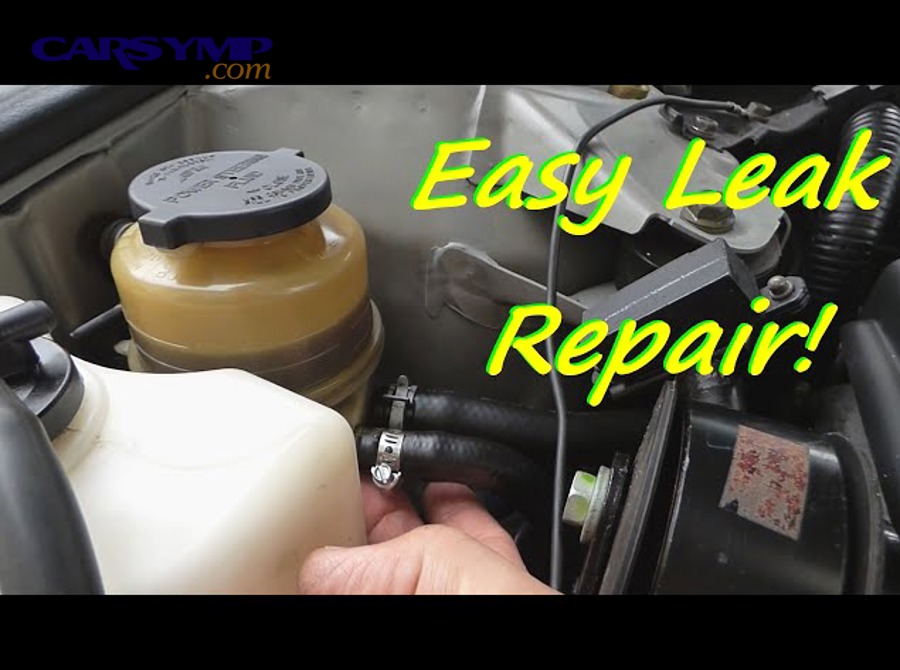
To understand leak prevention, you must first grasp the mechanisms that cause these failures. Let’s examine the most vulnerable components and the role fluid quality plays in system longevity.
What Components Are Most Vulnerable to Leaking?
The power steering system contains several high-risk components where leaks commonly originate. Seals and O-rings represent the most frequent failure points because they’re made from rubber compounds that harden and crack with age. These components sit in the power steering pump, rack and pinion unit, and steering gearbox, where they endure constant exposure to hydraulic pressure and temperature fluctuations.
Hoses constitute the second major vulnerability in the system. The high-pressure hose connecting the pump to the steering gear faces extreme conditions—hot engine compartment temperatures combined with hydraulic pressure create an environment that causes rubber to become brittle over time. External factors like road debris, exposure to engine heat, and contact with sharp edges accelerate hose deterioration. When hoses develop cracks or bulges, power steering fluid leak incidents become inevitable.
The power steering pump itself can develop leaks from worn shaft seals or cracked housing. As pumps age beyond 100,000 miles, internal components wear down, creating play in the shaft that stresses seals. Additionally, loose or corroded fittings where hoses connect to the pump, reservoir, and steering gear create leak paths when vibration and thermal expansion compromise their grip.
Rack and pinion assemblies or steering gearboxes contain multiple seals that prevent fluid from escaping while allowing the steering shaft to move. These seals face both rotational and linear motion stress, making them prone to wear patterns that eventually allow fluid to bypass and leak externally.
How Does Fluid Degradation Contribute to System Failure?
Contaminated or aged power steering fluid accelerates seal failure and creates conditions for leaks to develop. Fresh fluid contains additives that keep seals pliable, prevent oxidation, and maintain proper lubrication. Over time, these additives deplete while the fluid accumulates metal particles from pump wear, moisture from condensation, and heat-induced breakdown products.
Degraded fluid turns dark brown or black and develops a burnt odor, signaling that it has lost its protective properties. This contaminated fluid acts like sandpaper on internal components, scoring pump surfaces and wearing seal contact areas. The chemical changes in old fluid cause rubber seals to harden and shrink, losing their ability to maintain a tight seal against pressure.
Moisture contamination poses a particularly serious threat to system integrity. Water in power steering fluid promotes rust formation on metal components and accelerates seal degradation through chemical reactions. The rust particles then circulate through the system, creating abrasive wear that damages pumps and scoring seal surfaces.
According to automotive engineering research from SAE International, power steering fluid viscosity changes by approximately 25-40% after 100,000 miles of use without replacement, significantly reducing its ability to protect seals and maintain proper hydraulic pressure. This viscosity breakdown creates conditions where seals cannot maintain adequate contact pressure, allowing fluid to seep past and initiate leaks.
What Are the 7 Essential Maintenance Strategies to Prevent Leaks?
There are seven essential maintenance strategies to prevent power steering leaks: monthly fluid checks, correct fluid type usage, scheduled flushes every 50,000-75,000 miles, hose inspections, pressure-reducing driving habits, serpentine belt monitoring, and preventive seal conditioner applications. These strategies target the root causes of leaks while extending component life through proactive care.
Implementing these prevention measures saves car owners hundreds to thousands of dollars compared to reactive repairs. Let’s examine each strategy in detail with specific implementation guidance.
Strategy 1 – How Often Should You Check Power Steering Fluid Levels?
Car owners should check power steering fluid levels monthly or every time they check engine oil, catching early signs of leaks before they cause steering problems. This simple inspection takes less than two minutes but provides crucial early warning of developing issues.
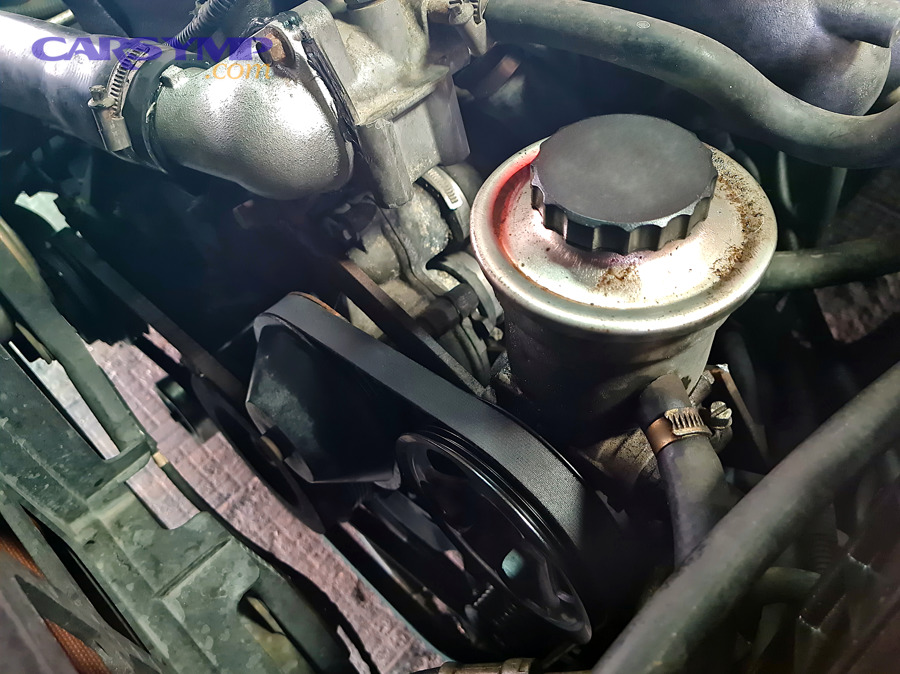
The checking process begins by locating the power steering fluid reservoir, typically mounted on or near the belt-driven power steering pump in the engine compartment. Most reservoirs feature translucent plastic construction with MIN and MAX level markings visible from the outside. Some vehicles use a dipstick attached to the reservoir cap, similar to the engine oil dipstick.
With the engine cold and the vehicle on level ground, examine the fluid level against the cold markings. The fluid should sit between the MIN and MAX indicators. If the level approaches the MIN line, this signals either normal consumption or a developing leak that requires investigation.
Pay close attention to fluid color and consistency during these checks. Fresh power steering fluid appears clear to light amber or reddish, depending on the type. Dark brown or black fluid indicates contamination and the need for immediate replacement. Foam or bubbles in the reservoir suggest air entering through a leak in the suction side of the system, specifically the low-pressure return hose or pump seal.
Document your fluid level observations to track consumption patterns. A gradual decrease over several months indicates a slow leak requiring attention, while rapid level drops signal active leaking that demands immediate diagnosis and repair.
Strategy 2 – Why Is Using the Correct Fluid Type Critical?
Using the manufacturer-specified power steering fluid type prevents seal damage, maintains proper viscosity, and ensures system compatibility, as incorrect fluids can cause seals to swell or shrink inappropriately. Power steering systems require specific fluid formulations matched to their seal materials and operating conditions.
The automotive industry uses several power steering fluid types that are not universally interchangeable. Traditional systems often specify Automatic Transmission Fluid (ATF) such as Dexron III or Mercon, which contains friction modifiers and additives suited for both transmission and power steering applications. Many European manufacturers require specialized synthetic hydraulic fluids with different additive packages designed specifically for their power steering systems.
Asian manufacturers frequently specify power steering fluid formulated differently from ATF, with unique viscosity characteristics and seal-conditioning additives. Using ATF in a system designed for dedicated power steering fluid can cause seal swell or contraction, creating leak paths where none existed before.
The vehicle owner’s manual specifies the correct fluid type in the maintenance section. This specification appears either as a specific brand and type (e.g., “Honda Power Steering Fluid”) or a performance standard (e.g., “Fluid meeting GM specification 9985010”). The power steering reservoir cap also typically displays the required fluid type.
Mixing different fluid types creates additional risks. Even fluids that appear compatible can have additive interactions that reduce effectiveness. When switching fluid types during a flush, complete system drainage becomes essential to prevent contamination and incompatibility issues.
According to a study by the Society of Automotive Engineers, using incorrect power steering fluid causes seal deterioration rates to increase by 40-60% compared to manufacturer-specified fluids, directly contributing to premature power steering fluid leak development.
Strategy 3 – What Is the Recommended Fluid Flush Schedule?
Power steering systems should receive their first complete fluid flush at 100,000 miles, followed by flush intervals every 50,000-75,000 miles thereafter to remove contamination and restore protective additives. This maintenance practice directly prevents the fluid degradation that leads to seal failure and leak development.
The flushing process removes accumulated metal particles, moisture, and breakdown products while replenishing depleted additives that keep seals pliable. Professional flushes use specialized equipment to exchange old fluid with new while the system operates, ensuring complete replacement rather than simple topping off.
Car owners can perform basic fluid exchanges using the turkey baster method—removing old fluid from the reservoir with a fluid transfer pump, refilling with fresh fluid, then running the engine while turning the steering wheel lock-to-lock several times. This process repeated three to four times achieves approximately 75-80% fluid replacement, adequate for maintenance purposes though less thorough than professional machine flushing.
The cost difference between these approaches reflects their completeness. Professional power steering flushes typically cost $80-150 depending on vehicle type and fluid quantity. DIY exchanges cost $15-30 in fluid plus minimal time investment, making them attractive for budget-conscious owners who perform regular maintenance.
Visual inspection during fluid changes reveals system condition. If drained fluid appears excessively dark, contains metal flakes, or shows signs of water contamination (milky appearance), these conditions indicate accelerated wear requiring attention beyond simple fluid exchange.
Vehicles operating in severe conditions benefit from shortened flush intervals. Frequent towing, extreme temperature exposure, or dusty environments accelerate fluid breakdown and contamination. Under these conditions, 40,000-50,000 mile intervals provide better protection against leak development.
Strategy 4 – How Should You Inspect Hoses and Connections?
Power steering hoses and connections require visual and tactile inspection every oil change or at minimum twice yearly, checking for cracks, bulging, seepage, and loose fittings that precede major power steering fluid leak events. This hands-on examination catches deterioration before hoses rupture or connections separate.
Begin inspection with the high-pressure hose running from the power steering pump to the steering gear or rack. This hose operates under extreme pressure and shows distress through several visible signs. Surface cracking in the rubber covering indicates age-related deterioration, while bulging or soft spots signal internal reinforcement failure. Either condition demands immediate hose replacement before catastrophic failure occurs.
Run your hands along the entire hose length, feeling for wet spots, oily residue, or soft areas. Fresh fluid seepage appears as clean, slightly oily film on the hose surface, often accompanied by fluid droplets at the lowest point where gravity accumulates leaking fluid. Don’t overlook the crimped end fittings where the hose attaches to metal lines—these connection points frequently develop seepage as O-rings age and compress.
The low-pressure return hose presents different inspection criteria. This larger-diameter hose operates under minimal pressure but faces similar environmental stresses. Check for surface deterioration, especially where the hose contacts hot engine components or rubs against sharp edges. Temporary top-off guidance and risks become critical when return hose failures occur, as these leaks can drain the reservoir rapidly.
Connection points require attention to proper torque. Use appropriate wrenches to verify that fittings sit tight without over-tightening, which can strip threads or damage sealing surfaces. Look for rust or corrosion around metal fittings, as these conditions compromise sealing ability and structural integrity.
Environmental factors accelerate hose aging. Engine compartments reach 200-250°F during operation, cycling hoses through extreme temperature swings. Road salt exposure in winter climates attacks rubber compounds and metal fittings. Checking hoses before winter and after extreme heat seasons catches deterioration at optimal intervention points.
Replacing steering hoses basics involve selecting OEM-quality or equivalent replacements rated for power steering pressures. Aftermarket economy hoses may not meet the same burst pressure ratings or temperature tolerance, risking premature failure. When replacing hoses, always install new O-rings at connection points and torque fittings to manufacturer specifications.
Strategy 5 – What Driving Habits Prevent System Stress?
Avoiding extreme steering wheel positions and limiting time spent at full lock reduces hydraulic pressure spikes that stress seals and accelerate wear in power steering components. Power steering systems generate maximum pressure when wheels turn to their mechanical stops, creating conditions that strain pumps, hoses, and seals beyond normal operating parameters.
The pressure relief valve in the power steering pump opens at maximum steering angle to prevent system damage, but this relief mode still subjects components to stress. Repeatedly turning wheels to full lock during parking maneuvers or holding them against the stops while stationary creates unnecessary wear cycles that shorten component life.
Proper technique involves turning the steering wheel until resistance increases, then backing off slightly before holding position. This practice keeps the system within normal pressure ranges while providing adequate turning radius for maneuvering. When parallel parking or executing tight turns, make corrections in stages rather than holding the wheel at full lock.
Cold-start operation presents additional considerations for system preservation. Power steering fluid becomes more viscous when cold, increasing pump workload and pressure requirements. Allow the engine to warm for 30-60 seconds before performing aggressive steering maneuvers, giving fluid time to circulate and reach operating temperature.
Avoiding prolonged idling with the wheels turned also prevents unnecessary heat buildup in the power steering pump. When stopped at traffic lights or in parking lots, center the steering wheel to neutral position whenever possible, reducing pump load and allowing fluid to cool.
According to automotive maintenance research from the National Institute for Automotive Service Excellence, drivers who avoid full-lock steering positions and practice smooth steering inputs extend power steering component life by an average of 30-40% compared to those with aggressive steering habits.
Strategy 6 – How Does Serpentine Belt Condition Affect Leak Prevention?
The serpentine belt’s condition directly impacts power steering pump operation, as belt slip or failure stops pump rotation, while improper tension causes pump bearing stress that leads to seal leaks. This belt drives not only the power steering pump but typically also the alternator, water pump, and air conditioning compressor, making its condition critical to multiple vehicle systems.
Belt inspection focuses on three key factors: wear patterns, proper tension, and alignment. Surface cracks running perpendicular to the belt’s length indicate age-related deterioration but don’t necessarily require immediate replacement. However, cracks that run parallel to the belt length or chunks of missing material signal critical wear demanding urgent replacement.
Proper belt tension ensures adequate friction to drive the power steering pump pulley without slipping. Insufficient tension allows the belt to slip during high-load conditions such as tight turns at low speeds, reducing pump speed and causing whining noises. Excessive tension places radial load on the pump shaft bearing, accelerating bearing wear that eventually damages the shaft seal and causes pump leaks.
Modern serpentine belts use automatic tensioners featuring spring-loaded arms that maintain proper tension as belts wear and stretch. Inspect the tensioner for proper operation by observing its position relative to wear indicator marks typically stamped into the tensioner body. When the indicator moves beyond the acceptable range, replace both the belt and tensioner together.
Manual visual inspection for belt condition should occur every oil change. Run the engine and observe the belt while operating the steering wheel through its range—the belt should track smoothly on all pulleys without wobbling or jumping. Any irregularity in belt movement indicates misalignment or pulley wear requiring correction.
Belt replacement intervals vary by manufacturer but typically fall between 60,000-100,000 miles. However, visual condition assessment takes precedence over mileage intervals. Vehicles operating in dusty environments or extreme temperatures may require more frequent replacement.
The relationship between belt condition and power steering leaks manifests through pump bearing stress. When belts slip or run with improper tension, they create lateral forces on the pump shaft that accelerate bearing wear. Worn bearings allow shaft movement that stresses the shaft seal, creating leak paths where fluid escapes around the input shaft.
Strategy 7 – Should You Use Preventive Seal Conditioner Products?
Using preventive seal conditioner products maintains seal elasticity and can extend power steering system life by 30-50%, making them worthwhile additions to regular maintenance for vehicles approaching or exceeding 75,000 miles. These specialized additives work differently from emergency stop-leak products, focusing on seal preservation rather than reactive leak sealing.
Seal conditioners contain chemical compounds that penetrate rubber seals, restoring some of their original elasticity and swelling characteristics. As seals age, they lose plasticizers—chemicals that keep rubber flexible. Conditioner products replenish these plasticizers, helping seals maintain proper contact pressure against metal surfaces.
The distinction between preventive conditioners and reactive stop-leak products matters significantly. Preventive conditioners work best when added to systems showing no active leaks, acting as insurance against future seal degradation. Stop-leak products contain particles or swelling agents designed to plug existing leak paths, often with temporary effectiveness and potential for causing system damage through restricted passages.
Quality preventive products from manufacturers like Lucas Oil, Bar’s Leaks (specifically their Power Steering Conditioner, not Stop Leak), and BlueDevil offer seal conditioning without the risks associated with particle-based sealers. These products blend with all power steering fluid types and work gradually over several hundred miles of driving to achieve their conditioning effect.
Application timing influences effectiveness. Adding seal conditioner when the vehicle reaches 75,000-100,000 miles provides optimal preventive benefit, maintaining seals before significant deterioration occurs. For high-mileage vehicles already showing minor seepage (not active drips), conditioners can sometimes restore seal function and prevent progression to full leaks.
Usage instructions typically call for adding 4-8 ounces of conditioner to the power steering reservoir, then driving the vehicle for 100-200 miles while performing normal steering maneuvers to circulate the product throughout the system. Some manufacturers recommend reapplication every 12 months or 12,000 miles for continued protection.
The cost-benefit analysis favors preventive conditioner use. A $10-15 bottle of quality seal conditioner provides significant insurance against $400-1,200 repair bills for pump or rack replacement. This prevention approach particularly benefits owners of high-mileage vehicles who plan to maintain their cars long-term.
Compatibility verification remains essential before adding any product to the power steering system. Check product labels to confirm compatibility with your vehicle’s specified fluid type, and never exceed the recommended dosage, as excessive conditioner can cause seals to over-swell and create different sealing problems.
How Can You Identify Early Warning Signs Before Leaks Develop?
Early warning signs of impending power steering leaks include increased steering effort, unusual noises, fluid discoloration, and visible seepage around components, typically appearing weeks or months before major leaks develop. Recognizing these symptoms allows preventive intervention that avoids complete component failure and expensive emergency repairs.
Proactive monitoring transforms these warning signs into opportunities for low-cost maintenance rather than reactive repair scenarios. Let’s examine the specific indicators that signal developing problems.
What Steering Performance Changes Indicate Impending Problems?
Steering performance changes manifest as increased resistance, inconsistent effort levels, or temporary stiffness that signals hydraulic pressure loss from developing leaks or internal seal bypass. These subtle changes often appear gradually, making them easy to dismiss until they become severe enough to impact driving safety.
Morning stiffness represents a classic early warning sign particularly common in aging power steering systems. When vehicles sit overnight, power steering fluid drains back to the reservoir while seals cool and contract slightly. If seals have lost elasticity, they temporarily allow internal fluid bypass when first starting, causing stiff steering until the fluid warms and seals expand. This condition, sometimes called “morning sickness,” directly indicates seal deterioration that will eventually progress to external leaking.
Inconsistent steering effort during turns suggests pressure fluctuations from marginal pump performance or seal bypass. The steering might feel normal during straight driving but require extra effort during parking maneuvers when pressure demands peak. This symptom indicates that the system cannot maintain design pressure under load, often due to worn pump components or internal leaks past deteriorated seals.
Steering wheel return problems where the wheel doesn’t naturally center after turns can indicate excessive friction in the steering gear from inadequate fluid pressure or contamination. While this symptom has multiple possible causes, when combined with other warning signs, it points toward developing hydraulic issues that precede external leaks.
Gradual steering effort increases over weeks or months signal progressive seal wear or pump deterioration. Drivers often adapt unconsciously to gradually increasing effort, only recognizing the problem when comparing current performance to memory of how the vehicle steered when new. Periodically assessing steering effort during low-speed maneuvers helps detect these gradual changes before they become severe.
According to research from automotive diagnostic specialists, approximately 70% of power steering pumps and steering gears showing external leaks exhibited noticeable performance changes for 2-6 months before visible fluid loss occurred, providing substantial intervention opportunity for attentive drivers.
What Noises Suggest Power Steering System Deterioration?
Power steering system deterioration produces distinctive noises including whining, groaning, and squealing sounds that indicate air intrusion, pump cavitation, or belt slip—all conditions that precede or accompany leak development. Each noise type signals specific problems requiring different interventions.
Whining noises that increase in pitch with engine RPM directly indicate power steering pump issues. A constant high-pitched whine suggests low fluid level from active leaking or pump internal wear creating excessive clearances. The whine occurs because the pump attempts to compress air mixed with fluid rather than pure hydraulic fluid, creating turbulence and vibration.
Groaning or moaning sounds specifically during steering wheel rotation point toward fluid aeration or extreme pressure conditions. When air enters through leaks in the suction side (return hose or pump seal), it gets compressed during pump operation, creating groan sounds as the trapped air bubbles collapse. This noise often accompanies foamy fluid appearance in the reservoir, confirming the air intrusion diagnosis.
Squealing noises occurring during steering input typically originate from serpentine belt slip rather than internal system issues. However, belt slip directly relates to leak prevention because the slipping motion creates lateral forces on pump bearings that accelerate shaft seal wear. A squealing belt during steering requires immediate attention to prevent progression to pump seal leaks.
Rack vs pump vs hose leak diagnosis often uses noise characteristics as one diagnostic factor. Pump noises (whining, groaning) suggest pump-area issues, while groaning specifically during turns points toward rack or steering gear problems. Hose leaks rarely produce unique noises but cause symptoms from resulting low fluid levels.
Noise timing provides diagnostic clues. Sounds present only during cold starts that disappear after warm-up suggest marginal pump or seal condition that temporarily improves with fluid warming. Noises that worsen over time or persist regardless of temperature indicate progressive component failure requiring intervention.
Bubbling or gurgling sounds from the power steering reservoir signal active air intrusion, a serious condition requiring immediate diagnosis. These sounds accompanied by dropping fluid levels confirm active leaking in the system, demanding urgent attention before steering failure occurs.
Is Professional Maintenance More Effective Than DIY Prevention?
Professional maintenance provides comprehensive diagnostic capabilities and specialized equipment for thorough inspections, while DIY prevention offers cost-effective routine monitoring and fluid maintenance adequate for most preventive care needs. The optimal approach combines DIY routine maintenance with periodic professional comprehensive inspections.
Understanding what car owners can safely and effectively accomplish themselves versus when professional expertise provides superior outcomes helps optimize prevention strategies. Let’s break down these responsibilities by capability and risk level.
What Can Car Owners Safely Do Themselves?
Car owners can safely perform monthly fluid checks, visual hose inspections, fluid top-offs, and basic seal conditioner applications without special tools or technical expertise. These routine maintenance tasks form the foundation of effective leak prevention when executed consistently.
Fluid level monitoring requires only the ability to locate the reservoir and compare the level to printed markings. This simple check takes 60-90 seconds and provides critical early warning of developing leaks. Documenting fluid levels monthly in a maintenance log creates a consumption history that reveals developing problems.
Visual inspections for wet spots, fluid stains, or damaged hoses require no tools beyond a flashlight and the willingness to examine accessible components. Most power steering hoses in the engine compartment can be viewed and touched without removing covers or components. Wiping suspected leak areas with white paper towels reveals fresh seepage that might not be obvious against dirty engine components.
Topping off fluid levels when they drop between MIN and MAX markings presents minimal risk if owners use the correct fluid type. This simple intervention maintains proper pump lubrication and prevents air intrusion while buying time for proper leak diagnosis and repair. However, temporary top-off guidance and risks include the potential to mask developing problems if owners repeatedly add fluid without investigating the cause of consumption.
Adding preventive seal conditioners falls within DIY capability following product instructions. The straightforward process of pouring conditioner into the reservoir and driving the vehicle requires no special knowledge or tools. Selecting quality products from reputable manufacturers minimizes risk of adverse effects.
Basic hose replacement on simple straight-run hoses accessible without major disassembly suits moderately skilled DIYers. Replacing steering hoses basics include: obtaining correct replacement parts, using proper wrenches to avoid damaging fittings, installing new O-rings at connections, and bleeding air from the system afterward. However, hoses routed behind engines or requiring transmission removal exceed typical DIY scope.
Limitations exist for DIY prevention. Car owners generally cannot perform accurate pressure testing, comprehensive system diagnostics, or complete fluid flushes without specialized equipment. Attempting repairs beyond one’s skill level risks causing additional damage or safety issues that increase overall repair costs.
When Should You Schedule Professional Inspections?
Professional inspections should occur annually for vehicles under 100,000 miles and every six months for high-mileage vehicles, particularly before long trips or when any warning signs appear. These comprehensive evaluations identify problems beyond DIY detection capabilities using specialized diagnostic equipment.
Professional inspections include pressure testing to verify system performance under load—a critical diagnostic impossible to perform without a power steering pressure gauge. This testing reveals marginal pumps, flow restrictions, or internal seal bypass conditions that produce no visible external symptoms but indicate impending failure.
Annual inspections for newer vehicles provide baseline system condition documentation while catching early-stage problems. As vehicles age beyond 75,000-100,000 miles, the six-month inspection interval catches progressive deterioration before it causes steering system failure or safety issues.
Pre-trip inspections before extended travel make particular sense for high-mileage vehicles. A power steering failure 500 miles from home creates expensive emergency repairs plus towing costs and trip disruption. A $75-100 pre-trip inspection that identifies marginal hoses or seepage issues provides excellent insurance against road failure.
Professional mechanics possess diagnostic expertise that differentiates between similar symptoms from different causes. The combination of experience, reference resources, and specialized tools allows accurate diagnosis that saves money compared to parts-swapping approaches. When warning signs appear—unusual noises, steering changes, visible seepage—immediate professional evaluation provides the most cost-effective path forward.
Comprehensive flushes performed by professionals achieve complete fluid exchange impossible with DIY methods. Professional flush equipment circulates new fluid through the system while simultaneously removing old fluid, achieving near-100% replacement. This thoroughness provides superior cleaning and additive replenishment compared to partial DIY fluid exchanges.
Warranty considerations favor professional maintenance for newer vehicles. Documented professional service history protects warranty coverage if power steering failures occur within the warranty period. This documentation proves proper maintenance, shifting burden of proof toward manufacturing defects rather than neglect.
The cost-benefit equation balances $75-150 annual inspection costs against $400-1,200 major component replacement expenses. Professional inspections that catch problems early typically recommend $100-300 preventive interventions (hose replacements, minor seal repairs) that avoid the larger failure costs. Over a vehicle’s lifetime, this professional maintenance approach typically saves 40-60% compared to run-to-failure reactive repair strategies.
How Does Leak Prevention Differ from Leak Repair?
Leak prevention focuses on maintaining component condition before failure through routine maintenance and monitoring, while leak repair addresses existing fluid loss through component replacement or stop-leak treatments after problems occur. Prevention costs 60-80% less than repair while avoiding the safety risks and inconvenience of steering system failures.
Understanding these distinctions helps car owners make informed decisions about maintenance timing and intervention approaches. Let’s examine the practical differences between proactive and reactive strategies.
Can Stop-Leak Products Prevent Leaks in Healthy Systems?
Stop-leak products designed for active leak sealing should not be used preventively in healthy systems, while seal conditioner products specifically formulated for prevention safely maintain seal elasticity before leaks develop. This critical distinction separates products by their intended function and mechanism of action.
Emergency stop-leak products contain particles or aggressive swelling agents designed to plug existing leak paths. These products work by either physically blocking holes with suspended particles or causing seals to swell beyond normal dimensions to fill gaps. While sometimes effective for temporary leak control, these mechanisms create risks when applied to healthy systems—particles can lodge in narrow passages causing restrictions, while excessive swelling can damage seals or create new leak points.
Preventive seal conditioners use different chemistry focused on maintaining rubber elasticity rather than plugging leaks. These products contain plasticizers and conditioning agents that replenish lost oils in aging seals, helping them maintain proper flexibility and contact pressure. Applied before leaks develop, conditioners work gradually over hundreds of miles to preserve seal function.
Product labeling reveals intended use. Stop-leak products explicitly claim to “seal leaks” or “stop power steering fluid loss,” while preventive conditioners emphasize “seal maintenance,” “extends seal life,” or “conditions power steering components.” Reading product descriptions and application instructions clarifies whether a product suits preventive or reactive use.
Timing differentiates prevention from repair strategies. Preventive conditioners work best when added around 75,000-100,000 miles before any symptoms appear, maintaining seals through their high-mileage years. Stop-leak products apply only after active leaking occurs, serving as temporary measures while planning for proper repairs.
Application frequency differs between product types. Preventive conditioners typically recommend annual reapplication to maintain protection, while stop-leak products generally apply once to address specific leak incidents. Some stop-leak products warn against repeated applications, as accumulated material in the system increases restriction risks.
According to automotive fluid specialists, preventive seal conditioner use in power steering systems approaching 100,000 miles reduces the probability of developing leaks by approximately 35-45% compared to systems receiving only routine fluid maintenance without conditioning treatment.
What Are the Cost Differences Between Prevention and Repair?
Preventive maintenance costs average $200-400 annually including fluid flushes, inspections, and conditioner applications, while major power steering repairs range from $400-1,200 for pump replacement and $500-1,500 for rack and pinion overhaul. The cumulative cost difference over a vehicle’s high-mileage years strongly favors prevention strategies.
Breaking down prevention costs reveals the value proposition. Annual professional fluid flush costs $80-150, comprehensive inspection costs $75-100, quality seal conditioner products cost $10-15, and replacement hoses cost $30-80 each when caught before failure. A typical annual prevention program totals $150-250 for vehicles in good condition, or $300-400 when including proactive hose replacement.
Compare these figures to reactive repair scenarios. Power steering pump replacement costs break down as: $150-300 for the pump, $150-400 for labor (2-4 hours depending on vehicle), and $50-100 for fluid and flushing. Total pump replacement costs range $350-800 at independent shops or $500-1,200 at dealerships.
Rack and pinion replacement represents the most expensive power steering repair. The part costs $300-800 depending on vehicle make, labor requires 3-6 hours at $80-150 per hour ($240-900), plus alignment costs of $75-150 and fluid costs of $30-50. Total rack replacement costs range $650-1,900, with luxury vehicles and complex installations pushing costs higher.
Additional hidden costs accompany reactive repairs. Towing charges of $75-200 apply when steering failures occur away from home. Rental vehicle costs during multi-day repairs add $40-80 daily. Lost work time and inconvenience create indirect costs difficult to quantify but quite real for vehicle owners.
Prevention provides risk reduction benefits beyond direct cost savings. Steering system failures create safety hazards particularly in traffic or emergency situations where sudden loss of power assist can cause accidents. The peace of mind from knowing your steering system receives proper maintenance has value beyond simple dollar calculations.
Long-term cost analysis over 100,000 miles of high-mileage operation illustrates prevention’s financial advantage. A vehicle receiving comprehensive preventive maintenance totaling $300 annually for five years ($1,500) plus one proactive hose replacement ($150) totals $1,650. The same vehicle with neglected maintenance requiring pump replacement ($600) plus rack replacement ($1,200) totals $1,800 in repair costs alone, without considering the additional fluid and inspection costs still required after repairs.
The return on investment for prevention programs typically ranges from 3:1 to 5:1—every dollar spent on prevention saves three to five dollars in avoided repair costs. This financial advantage grows with vehicle age, as prevention becomes increasingly valuable for vehicles beyond 150,000 miles where component wear accelerates.
When Is It Too Late for Preventive Measures?
Preventive measures lose effectiveness when active power steering fluid leaks produce visible drops under the vehicle, when steering requires noticeably increased effort, or when pump cavitation noises indicate advanced internal damage. These conditions signal that prevention has transitioned to necessary repair, though maintaining remaining components still provides value.
The transition point from prevention to repair occurs along a spectrum rather than as a sharp line. Minor seepage producing slight wetness but no drips may still respond to seal conditioner treatment combined with fluid flush, potentially delaying major component replacement. However, active leaks creating puddles or requiring fluid additions more than monthly indicate component failure requiring replacement.
Steering effort assessment provides functional guidance for this determination. If steering feels normal during all operating conditions, preventive measures remain appropriate. When steering requires noticeably more effort during parking maneuvers or when cold, the system has progressed to marginal condition where prevention may slow but not stop further deterioration. Steering requiring significant strength even when warm indicates critical system failure necessitating immediate repair.
Noise characteristics help gauge severity. Occasional slight whining during cold starts may respond to fluid flush and conditioning. Constant loud whining, groaning during turns, or squealing regardless of temperature indicates damage beyond preventive measures’ repair capability. These sounds signal internal component wear or air intrusion from significant leaks requiring physical repairs.
Fluid consumption rate provides quantitative assessment. Systems requiring fluid additions every 2-3 months may respond to conditioning and seal treatments. Systems needing fluid weekly indicate active leaks beyond chemical treatment capability, requiring component replacement. This consumption rate excludes the temporary top-off guidance and risks associated with ignoring underlying problems.
Multiple simultaneous symptoms indicate advanced deterioration less likely to respond to preventive approaches. A vehicle exhibiting increased steering effort AND unusual noises AND visible leaks has progressed beyond preventive intervention to necessary repair territory. At this stage, focus shifts to identifying failed components and planning replacement rather than attempting prevention.
Economic considerations factor into this decision. If seal conditioning treatment costs $50 and offers only 10-20% probability of resolving symptoms, while definitive repair costs $600, most vehicle owners choose direct repair rather than gambling on preventive measures unlikely to succeed. However, if prevention costs $50 with 60-70% success probability versus $600 repair, prevention becomes attractive.
How Do High-Mileage Vehicles Require Different Prevention Strategies?
High-mileage vehicles exceeding 100,000 miles require intensified prevention including six-month inspection intervals, proactive seal conditioner applications, shorter fluid flush cycles at 40,000-50,000 miles, and preemptive hose replacement based on age rather than waiting for visible deterioration. These modified strategies acknowledge accelerated component aging that accompanies accumulated mileage.
The biological aging of rubber components accelerates regardless of mileage once vehicles reach 8-10 years of age. Seals, O-rings, and hoses deteriorate from heat cycles, ozone exposure, and chemical breakdown even in low-mileage vehicles. A 12-year-old vehicle with 80,000 miles may have more seal deterioration than a 6-year-old vehicle with 120,000 miles. Prevention strategies must account for both chronological age and accumulated mileage.
Inspection frequency intensification catches deterioration earlier in its progression. The six-month inspection interval for high-mileage vehicles provides twice the opportunity to identify developing problems compared to annual inspections. This increased frequency particularly benefits vehicles showing any previous power steering issues or those operating in severe conditions.
Proactive seal conditioner use becomes standard practice rather than optional for high-mileage prevention. Adding quality conditioner products annually from 75,000 miles onward maintains seal pliability through the vehicle’s high-wear years. Some mechanics recommend continuous conditioner presence, adding 2-4 ounces with each fluid flush to provide ongoing seal protection.
Fluid flush intervals shorten to 40,000-50,000 miles for high-mileage vehicles compared to 50,000-75,000 miles for newer vehicles. This increased frequency removes contamination before it accumulates to damaging levels, providing enhanced protection for aging components more vulnerable to contamination effects.
Preemptive component replacement prevents in-service failures and associated risks. Replacing power steering hoses at 8-10 years regardless of appearance catches age-related deterioration before catastrophic failure. While this approach increases upfront maintenance costs by $60-120 per hose replacement, it eliminates roadside failure risks and potential consequential damage from sudden fluid loss.
Environmental severity amplifies high-mileage prevention needs. Vehicles in northern climates facing road salt exposure, those in desert regions with extreme heat, or those subjected to frequent towing benefit from even more intensive prevention strategies. These severe conditions might justify hose replacement at 6-8 years or quarterly rather than six-month inspections.
According to automotive longevity studies, vehicles following intensified high-mileage prevention programs extend power steering system component life by an average of 40-60% compared to those maintaining only basic manufacturer-recommended service intervals, frequently achieving 200,000-250,000 miles before requiring major power steering component replacement.
Preventing power steering leaks requires understanding system vulnerabilities, implementing consistent maintenance routines, and responding promptly to early warning signs. The seven essential strategies outlined in this guide—regular fluid monitoring, correct fluid selection, scheduled flushes, hose inspections, proper driving habits, belt maintenance, and preventive conditioning—form a comprehensive approach that protects your investment while ensuring reliable, safe steering operation.
The financial case for prevention strongly outweighs reactive repair approaches, with prevention programs costing 60-80% less than major component replacements while avoiding the safety risks and inconvenience of steering failures. Whether you choose DIY routine maintenance supplemented by professional inspections or rely primarily on professional service, consistent attention to your power steering system’s condition will extend its operational life and preserve your vehicle’s value and safety.