


Using the correct ATF type is one of the most consequential maintenance decisions a vehicle owner makes — yet it is one of the most frequently overlooked. Automatic Transmission Fluid is not a universal product. Each formulation is engineered to match the specific friction coefficients, viscosity requirements, and thermal tolerances of a particular transmission design. Using the wrong ATF does not simply reduce performance — it actively accelerates internal wear, degrades seals, and can lead to complete transmission failure, turning a routine fluid top-up into a repair bill exceeding $3,000.
Understanding what ATF actually does inside your gearbox is the foundation of making the right choice. ATF serves four simultaneous roles: it transfers hydraulic power to engage gears, lubricates metal-on-metal contact points, dissipates heat generated by friction, and protects internal seals from oxidation and swelling. Because these functions are chemically interdependent, the additive package in one ATF specification cannot simply be swapped for another without disrupting the balance the transmission was designed around.
The landscape of ATF types is broad — spanning OEM-specific specifications like Dexron VI, Mercon V, ATF+4, and Toyota WS, to fluid categories like CVT fluid and DCT fluid that serve fundamentally different mechanical systems. Each type is developed to a precise standard by the original equipment manufacturer, and selecting the correct one requires reading your vehicle’s owner’s manual rather than relying on shelf labels alone. CVT fluid service differences, in particular, are a frequent source of costly errors, as CVT fluid is chemically incompatible with standard ATF despite being used in what appears to be a similar automatic transmission.
What makes this topic especially important is that the consequences of a wrong choice are often delayed. A transmission filled with the incorrect fluid may shift normally for weeks before friction-modifier incompatibility begins destroying clutch packs. Next, this article will walk through everything you need to know — from the definition of ATF and its core functions, to a complete breakdown of ATF types, to a practical guide for selecting the right fluid and protecting your transmission for the long term.
What Is ATF (Automatic Transmission Fluid)?
ATF is a specialized hydraulic-lubricant fluid engineered for use in automatic transmissions, combining power transfer, lubrication, thermal management, and seal conditioning in a single formulation distinct from engine oil or gear oil.
To better understand why ATF is irreplaceable in its role, it helps to examine what it is actually doing at any given moment while the vehicle is in motion.
Inside a modern automatic transmission, the fluid is under constant pressure. It does not simply sit in a reservoir — it is actively pumped through a hydraulic circuit that controls every gear shift the transmission makes. This dual identity as both a lubricant and a hydraulic medium is what makes ATF’s formulation so precise. Engine oil is designed primarily to separate metal surfaces and carry combustion debris away from bearings. ATF must do that and simultaneously act as the medium through which mechanical commands are executed at the moment of every gear change.
How Does ATF Work Inside an Automatic Transmission?
ATF works by flowing under pressure through the transmission’s valve body, which acts as a hydraulic control center directing fluid to engage specific clutch packs and planetary gear sets during each gear change.
Specifically, when the transmission control module signals a gear shift, pressurized ATF is routed to the appropriate clutch pack. The fluid pressure clamps the clutch plates together, locking a specific gear ratio into place. This process happens in milliseconds, and it depends entirely on the ATF maintaining a consistent viscosity across a wide operating temperature range — typically from cold starts at -40°F to sustained highway operation above 200°F. When ATF degrades and loses viscosity stability, clutch engagement becomes inconsistent, producing the slipping or shuddering sensation drivers notice before a major transmission failure.
The torque converter also relies on ATF as its working fluid. Inside the torque converter, ATF transfers rotational energy from the engine to the transmission input shaft via fluid coupling, multiplying torque at low speeds. A worn or contaminated ATF with degraded viscosity reduces torque multiplication efficiency, resulting in sluggish acceleration even when the engine is performing normally.
What Makes ATF Different from Regular Engine Oil or Gear Oil?
ATF differs from engine oil and gear oil primarily in its friction modifier chemistry — ATF is formulated to control the rate at which clutch surfaces engage, whereas engine oil and gear oil are designed to minimize friction entirely.
However, this distinction goes deeper than additives alone. The following table summarizes the functional differences between the three fluid types:
| Property | ATF | Engine Oil | Gear Oil |
|---|---|---|---|
| Primary role | Hydraulic + lubrication | Lubrication + cleaning | Lubrication + extreme pressure |
| Friction modifiers | Yes (controlled slip) | No | No |
| Viscosity range | Low (for hydraulic response) | Medium | High (for gear tooth pressure) |
| Seal conditioning | Yes | Limited | Limited |
| Heat dissipation | Active | Active | Passive |
| Compatible with clutch packs | Yes | No — causes glazing | No — causes slippage |
This table makes clear why substituting engine oil or gear oil for ATF is immediately damaging. Engine oil’s detergent additives attack the friction surfaces of clutch packs, causing glazing that permanently reduces clutch clamping force. Gear oil’s extreme-pressure additives are corrosive to the brass and bronze components found in most automatic transmissions. According to the Automatic Transmission Rebuilders Association (ATRA), incorrect fluid type is identified as a contributing factor in a significant portion of preventable transmission failures presented at independent repair shops each year.
What Are the Main Types of ATF and What Are They Used For?
There are six primary ATF specification families used across modern vehicles: Dexron (GM), Mercon (Ford), ATF+4 (Chrysler/Stellantis), Toyota WS, CVT fluid, and DCT fluid — each developed by a specific OEM to meet the friction, viscosity, and additive requirements of its proprietary transmission design.

To better understand which fluid belongs in which vehicle, it is essential to recognize that OEM ATF specifications are not interchangeable despite performing similar general functions. Each specification is developed through extensive testing against a specific transmission’s internal geometry, clutch material, and shift programming.
What Is the Difference Between Dexron and Mercon ATF?
Dexron VI (GM) and Mercon V (Ford) are similar in viscosity class but differ meaningfully in friction modifier chemistry, making cross-application inappropriate even though both are used in conventional stepped-gear automatic transmissions.
More specifically, Dexron VI is a full-synthetic specification introduced by General Motors for its six-speed and newer automatic transmissions. It is backward compatible with all earlier Dexron designations — Dexron III, Dexron IIE, and earlier — meaning Dexron VI can be safely used in any GM vehicle that previously specified an older Dexron fluid. Mercon V, Ford’s most widely used specification in late-model vehicles, is similarly backward compatible with standard Mercon but critically is not backward compatible with Ford Type F. Type F transmissions — found in pre-1980s Ford vehicles — require a fluid with no friction modifiers. Adding Mercon V to a Type F transmission causes harsh, shuddering shifts because the friction modifiers prevent the sharp clutch engagement Type F transmissions are designed around.
Ford has also introduced Mercon LV (Low Viscosity) for six-speed automatic transmissions requiring lower-viscosity fluid for fuel efficiency optimization, and Mercon ULV (Ultra Low Viscosity) for the 10-speed transmissions found in F-150 and Raptor models. These low-viscosity specifications are not backward compatible with Mercon V.
What Is ATF+4 and Which Vehicles Require It?
ATF+4 is a synthetic-blend automatic transmission fluid developed by Chrysler (now Stellantis) specifically for its automatic transmissions, and it is required in virtually all Chrysler, Dodge, Jeep, and RAM vehicles with conventional automatic transmissions manufactured from 1998 onward.
ATF+4 was introduced in 1998 as a successor to ATF+3, incorporating improved lubrication characteristics, enhanced heat resistance, and superior anti-wear additives tailored to Chrysler’s transmission designs. It is backward compatible with ATF+3 and ATF+2. Critically, ATF+4 is chemically incompatible with Dexron and Mercon fluids — mixing them degrades the unique friction modifier balance that Chrysler transmissions rely on, causing shift quality degradation and premature clutch wear. Preventing leaks after transmission service in Chrysler vehicles also depends on using ATF+4, as its seal-conditioning additives are formulated specifically for the elastomer compounds used in Chrysler transmission gaskets and O-rings. Using a non-approved fluid can cause seals to contract or harden, producing leaks within weeks of a fluid change.
What Is CVT Fluid and Is It the Same as Standard ATF?
No — CVT fluid is not the same as standard ATF, and the two fluids are not interchangeable under any circumstances, because CVT transmissions use a belt-and-pulley system that requires a fundamentally different friction profile than a clutch-pack-based automatic transmission.
CVT fluid service differences reflect the mechanical reality that a continuously variable transmission does not shift between fixed gear ratios. Instead, it continuously adjusts the ratio by varying the diameter of two pulleys connected by a steel belt or chain. The fluid must provide enough friction between the belt and pulley surfaces to transfer torque without slipping, while simultaneously lubricating the pulley mechanisms and managing heat. Standard ATF friction modifiers are designed to allow controlled slip in clutch packs — the opposite of what a CVT requires. Using standard ATF in a CVT causes belt slippage, which generates heat, accelerates belt wear, and leads to CVT failure. Each manufacturer uses its own CVT fluid specification:
- Nissan/Infiniti: NS-2, NS-3 (Jatco CVTs)
- Honda/Acura: HCF-2 (Honda CVTs)
- Toyota/Lexus: CVTF TC, CVTF FE
- Subaru: Lineartronic CVTF, CV-30
Always use the OEM-specified CVT fluid — or a verified aftermarket fluid explicitly approved for that CVT specification.
When Should You Choose Synthetic ATF Over Conventional ATF?
Synthetic ATF outperforms conventional ATF in thermal stability, oxidation resistance, and service life, making it the superior choice for vehicles used in high-stress driving conditions, and it is now factory-required in most transmissions manufactured after 2005.
Specifically, synthetic ATF is formulated from chemically engineered base stocks rather than refined crude oil, giving it a more consistent molecular structure that resists viscosity breakdown at both temperature extremes. Conventional ATF begins to oxidize and lose viscosity stability above 250°F — a temperature routinely reached in transmissions during towing, stop-and-go traffic, or mountain driving. Synthetic ATF maintains its viscosity profile well above 300°F, providing consistent clutch engagement and hydraulic pressure under conditions that would degrade conventional fluid within 20,000 miles. A transmission fluid change using full-synthetic fluid in a vehicle previously running conventional ATF can noticeably improve shift smoothness, particularly in high-mileage transmissions where oxidized fluid has been silently degrading shift quality.
According to Valvoline’s technical documentation, synthetic ATF formulations can extend service life up to 100,000 miles in normal driving conditions compared to the 30,000–60,000-mile interval typical of conventional ATF — representing a significant reduction in lifetime maintenance cost.
Why Does Using the Correct ATF Type Matter for Your Transmission?
Using the correct ATF type matters because every automatic transmission is engineered around a specific fluid’s friction coefficient, viscosity grade, and additive chemistry — and deviating from that specification disrupts the hydraulic precision and clutch behavior the transmission depends on for reliable operation.
The transmission is the second most expensive mechanical component in a vehicle after the engine, with rebuilds typically costing between $1,500 and $5,000 and replacements ranging from $3,000 to $8,000 or more for modern multi-speed units. Protecting that investment begins with fluid selection.
What Happens If You Use the Wrong ATF in Your Transmission?
Yes, using the wrong ATF causes measurable transmission damage — including slipping gears, hard or delayed shifts, seal degradation, overheating, and accelerated clutch wear — all of which worsen progressively the longer the incorrect fluid remains in the system.
More specifically, the damage pathway depends on which aspect of the fluid specification is mismatched. The table below maps the most common mismatch scenarios to their consequences:
| Wrong Fluid Scenario | Immediate Effect | Long-Term Consequence |
|---|---|---|
| Wrong friction modifier (e.g., ATF+4 in a GM) | Altered clutch engagement feel | Clutch pack glazing or slippage |
| Standard ATF in a CVT | Belt slip under load | CVT belt/pulley destruction |
| Low-viscosity ATF in older transmission | Pressure loss in valve body | Erratic shifts, solenoid wear |
| High-viscosity ATF in new transmission | Sluggish cold-start shifts | Pump cavitation, seal stress |
| Mixed ATF types | Additive precipitation | Sludge formation, filter blockage |
Preventing leaks after transmission service also depends on fluid compatibility. Seal-conditioning additives in ATF are formulated for specific elastomer compounds. An incompatible fluid causes seals to shrink or harden rather than swell slightly to their service dimension, producing transmission fluid leaks at pan gaskets, input shaft seals, and cooler line fittings — often within the first few hundred miles after a fluid change.
Can Using the Wrong ATF Void Your Vehicle Warranty?
Yes — using ATF that does not meet the OEM-specified standard can void the powertrain warranty on a new vehicle, because manufacturers require the use of fluids meeting their published specification in order for warranty coverage to apply to transmission repairs.
However, this does not automatically mean you must purchase the OEM-branded fluid. In the United States, the Magnuson-Moss Warranty Act prohibits manufacturers from voiding a warranty solely because an aftermarket product was used — provided that aftermarket product meets the OEM’s published performance specification. The key requirement is specification compliance, not brand. An aftermarket fluid bearing a licensed approval mark — such as “GM Licensed Dexron VI” or “Ford Approved Mercon V” — satisfies the warranty requirement. A fluid that merely claims broad compatibility without carrying the licensed approval does not, and using it creates a warranty dispute risk that most vehicle owners are not equipped to win. While under warranty, the safest and simplest approach is to use the OEM-branded fluid available at a dealership or to select an independently licensed aftermarket fluid from a reputable manufacturer such as Valvoline, Mobil 1, or AMSOIL.
How Do You Choose the Correct ATF Type for Your Vehicle?
Choosing the correct ATF type involves three steps: consulting your owner’s manual for the OEM specification, verifying that any fluid purchased carries the licensed approval for that specification, and confirming whether your vehicle requires conventional or synthetic base stock.

This process takes less than five minutes and eliminates the risk of a costly mistake. Let’s explore each step in detail.
How Do You Read Your Owner’s Manual to Find the Right ATF Spec?
The owner’s manual identifies the correct ATF specification in the “Fluids and Capacities” or “Maintenance” section, typically listing both the OEM specification code and the approved fluid volume — the only two numbers you need for a correct transmission fluid change.
Specifically, the specification will appear as an alphanumeric code such as “DEXRON-VI,” “MERCON LV,” “ATF+4,” or “Toyota Genuine ATF WS.” This code is the performance standard your fluid must meet — not necessarily a brand name, though manufacturers print these codes in large type on labels to help consumers identify compliant products. Some transmissions also have the required ATF specification stamped on the transmission dipstick handle or printed on a sticker affixed to the transmission itself — a useful secondary reference if the manual is unavailable. For newer vehicles without a dipstick (sealed transmissions), the owner’s manual is the only reference, and the fluid level check requires a lift and a calibrated fill plug — a procedure best left to a qualified shop.
Is It Safe to Use a Multi-Vehicle ATF Instead of OEM-Specified Fluid?
Yes — it is safe to use a multi-vehicle ATF instead of OEM-specified fluid, provided the fluid is manufactured by a reputable brand, explicitly lists your vehicle’s OEM specification as an approved application, and is used in a vehicle no longer under powertrain warranty.
Multi-vehicle ATFs are formulated with a broader additive package designed to satisfy multiple OEM specifications simultaneously. Products like Valvoline MaxLife Multi-Vehicle ATF and AMSOIL Signature Series Multi-Vehicle Synthetic ATF undergo testing against a wide range of OEM specifications and can legitimately replace OEM-specified fluids in out-of-warranty vehicles. The important caveat is distinguishing between a genuine multi-vehicle ATF from a reputable manufacturer and a budget “universal” fluid sold without documented specification approvals. A genuine multi-vehicle ATF will list specific OEM specifications it meets on the label. A budget universal fluid typically uses vague language like “suitable for most automatic transmissions” — which provides no actual compatibility assurance. For high-mileage vehicles in severe service (towing, mountain driving, ride-share use), a premium multi-vehicle synthetic ATF from a named brand is often a better long-term choice than OEM-branded conventional fluid.
How Often Should You Check and Change Your ATF?
ATF should be checked every 15,000 miles and changed according to the OEM interval — typically every 30,000–60,000 miles for conventional ATF and every 60,000–100,000 miles for full-synthetic ATF — with more frequent changes required under severe driving conditions.
To check ATF level and condition on a vehicle equipped with a dipstick, follow this procedure:
- Park on a level surface and apply the parking brake
- Warm the transmission by driving for at least 5–10 minutes
- With the engine running and the transmission in Park, locate and remove the ATF dipstick
- Wipe the dipstick clean, reinsert fully, and withdraw again to read the level
- Check the fluid against the “Hot Full” and “Hot Add” marks
- Inspect the fluid color and smell: healthy ATF is translucent pink or red; dark brown or black ATF with a burnt odor indicates overdue replacement
The following warning signs indicate ATF should be changed immediately regardless of mileage interval:
- Dark brown or black color — oxidation and thermal degradation
- Burnt or acrid smell — clutch material contamination
- Milky or foamy appearance — coolant intrusion from a failed transmission cooler
- Metallic particles on the dipstick — internal component wear
According to a long-term vehicle reliability study published by Consumer Reports, transmission-related failures are among the top five most expensive unplanned repairs reported by vehicle owners, with deferred fluid maintenance identified as the most common and preventable contributing factor.
Are There Special ATF Requirements for Non-Standard Transmission Types?
Yes — dual-clutch transmissions, hybrid eCVT systems, and vintage transmissions each require specialized fluids with properties that differ substantially from standard ATF, and using conventional ATF in these systems causes rapid mechanical failure.
In addition to the mainstream ATF types covered in the main content, a growing share of modern and specialty vehicles use transmission designs that fall outside the standard automatic transmission category. Understanding their fluid requirements is critical for owners of performance vehicles, hybrids, and classic cars alike.
What ATF Does a Dual-Clutch Transmission (DCT) Require?
A dual-clutch transmission requires a dedicated DCT fluid engineered for high clutch-engagement pressure and rapid thermal cycling — standard ATF is not compatible and will cause wet-clutch failure within a relatively short period of use.
Specifically, DCT transmissions use two separate clutch packs — one for odd gears and one for even gears — that engage and disengage in overlapping sequences at high speed. The fluid must handle extreme pressure spikes during each clutch engagement while maintaining a friction coefficient precisely calibrated for the DCT’s clutch material. OEM DCT fluid specifications include Volkswagen/Audi G-052-182 (DSG fluid), Ford MERCON LV (PowerShift), and BMW MTF LT-5. Each of these fluids is incompatible with general-purpose ATF. A transmission fluid change in a DCT vehicle using incorrect fluid typically produces shuddering under light throttle within weeks — a symptom often misdiagnosed as a clutch wear issue rather than a fluid incompatibility problem.
Do Hybrid and Electric Vehicles Require a Different Type of ATF?
Yes — hybrid and electric vehicles equipped with eCVT or e-axle systems require specialized transmission fluids that are electrically non-conductive, a property not required in — and not present in — conventional ATF.
Toyota’s hybrid eCVT system, used in the Prius and Camry Hybrid, requires Toyota Genuine ATF WS fluid, which is formulated for both the unique friction requirements of the eCVT’s planetary gear set and the electrical safety requirement of operating in close proximity to high-voltage motor windings. Using a standard CVT fluid or conventional ATF in a hybrid eCVT introduces a fluid with unknown electrical conductivity — which, in a worst-case scenario, can create current leakage paths between the motor and the gearbox casing. It is equally important to distinguish hybrid eCVT fluid from standard CVT fluid, as hybrid eCVT systems use a planetary gear arrangement — not a belt-and-pulley design — meaning standard CVT fluid’s friction profile is also incorrect for eCVT application.
What ATF Was Used in Vintage and Classic Car Transmissions?
Vintage and classic car transmissions from the 1940s through early 1970s used Type A, Type A Suffix A, and Ford Type F fluids — none of which are still manufactured in their original formulations, requiring owners to use modern substitute fluids approved by the OEM for vintage applications.
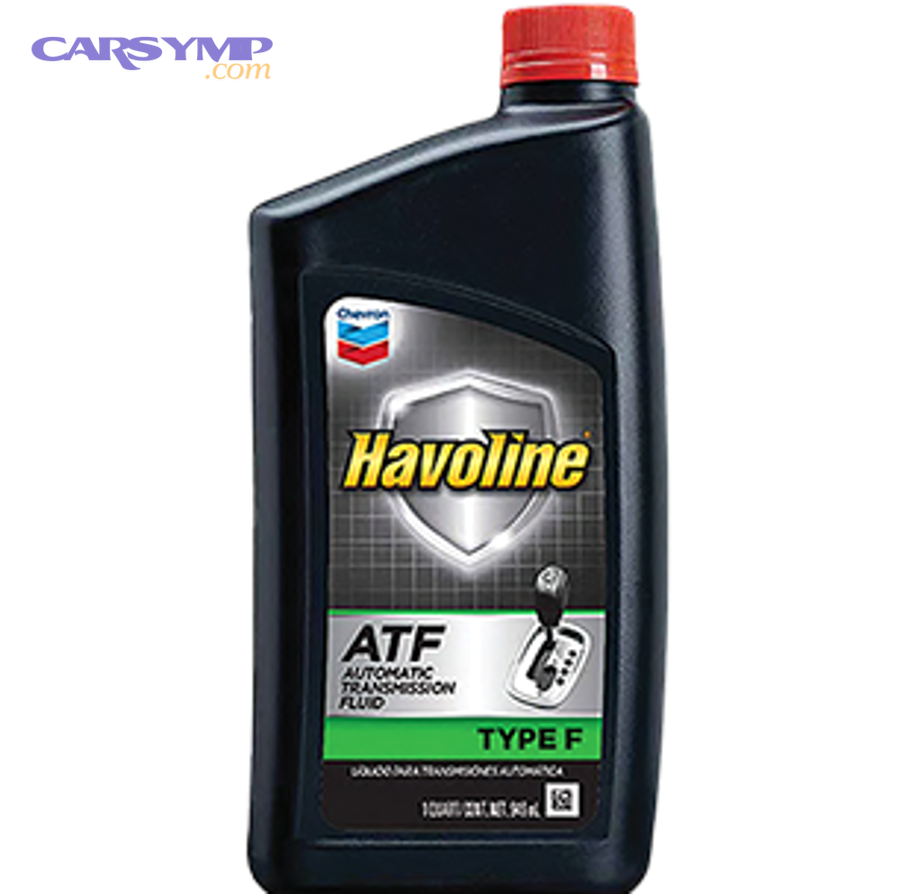
The original Type A and Type A Suffix A fluids used in GM, Ford, and Chrysler vehicles from the 1940s through the mid-1960s contained whale oil as a rust and corrosion inhibitor. Following the whale oil moratorium in the early 1970s, these original formulations could no longer be produced. For vintage GM transmissions, GM now recommends Dexron VI as the service replacement. For vintage Ford transmissions that originally specified Type F, Valvoline manufactures a licensed Type F ATF using modern synthetic base stocks that replicates the original non-friction-modifier chemistry. Ford Type F is also used in non-automotive applications including air compressors and hydraulic systems specified for Type F fluid — a legacy of the fluid’s excellent extreme-pressure and oxidation-resistance properties.
Can ATF Be Used in Power Steering Systems or Hydraulic Equipment?
Yes — in specific older vehicle applications and certain hydraulic equipment, ATF is an approved fluid for power steering systems and general hydraulic use, though modern dedicated fluids have largely replaced ATF in these roles.
General Motors power steering systems manufactured through the late 1990s officially approved the use of Dexron ATF as a power steering fluid — a practice that was common in GM dealerships for decades. Ford’s older power steering systems similarly accepted ATF as a compatible fluid. However, modern power steering systems and electrically assisted steering units use dedicated power steering fluids or specialized hydraulic fluids that are not interchangeable with ATF. Ford Type F ATF retains an approved application in general-purpose hydraulics and certain air compressor systems, as documented in Valvoline’s Type F product specifications. For any vehicle or equipment application, the safest practice is to verify the OEM’s current fluid recommendation rather than assuming historical compatibility still applies — fluid specifications are periodically revised as manufacturers update their recommendations.
Selecting the correct ATF type is not a complex task once you understand what ATF actually does, why each specification exists, and how to read the information your vehicle’s manufacturer has already provided. The owner’s manual contains the answer. The consequences of ignoring it — slipping gears, seal failures, overheating, and ultimately a destroyed gearbox — are both preventable and expensive. Whether you drive a late-model automatic, a CVT-equipped commuter car, a performance vehicle with a dual-clutch transmission, or a classic car with a vintage torque-converter unit, the principle is the same: match the fluid to the transmission it was designed for, and your gearbox will reward you with years of reliable service.