


Post-repair pressure test and recharge is the fastest way to prove your A/C repair is truly sealed, dry, and correctly charged—before you waste refrigerant, risk compressor damage, or chase the same leak twice.
Beyond confirming “no leaks,” the right method helps you find tiny seepage at O-rings, crimps, and service ports, where pressure behavior tells a clearer story than vent temperature alone.
It also protects performance: a clean evacuation and charge-by-weight restores stable pressures, consistent cooling at idle, and reliable cycling without overworking the compressor.
To connect everything into a repeatable workflow, here’s a step-by-step, tool-smart sequence that starts with a safer pressure test and ends with a measured recharge that matches factory intent. After this, you’ll know exactly what “good” looks like.
What does a post-repair pressure test and recharge actually prove?
A post-repair pressure test and recharge proves three things in order: the system is sealed (no leak), the system is dry (no moisture/air left), and the system is charged correctly (right mass of refrigerant). Next, you’ll see why that sequence matters more than “cold air.”
To begin, treat the job like a verification chain: pressure integrity → deep vacuum stability → charge accuracy. That order prevents false confidence from a temporarily cold vent.
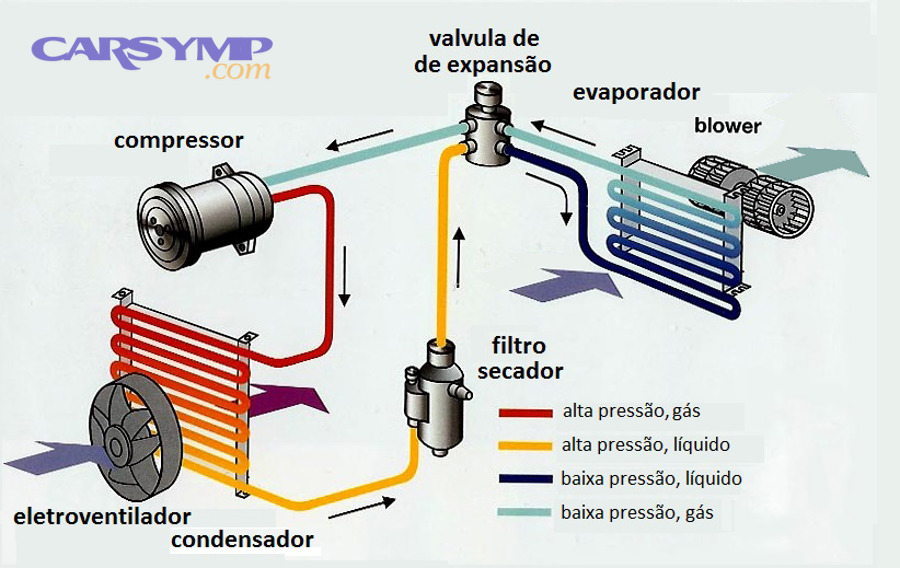
Seal integrity: pressure makes small leaks show themselves
A sealed A/C system holds stable pressure because gas molecules have nowhere to escape. Next, you’ll learn how “stable” changes with temperature so you don’t misread a normal pressure drift as a leak.
In practice, you’re looking for:
- Pressure drop that exceeds temperature-related change (a true loss of mass).
- Soap-bubble growth at fittings, joints, and crimps.
- Repeatable leak indicator response at the same point after wiping and re-checking.
According to guidance published in the U.S. Federal Register in November 2007, updated MVAC equipment standards emphasize high recovery efficiency and charge accuracy, reinforcing why verification after service is central—not optional.
Dryness: vacuum stability indicates moisture and microleaks
Dryness is confirmed when a deep vacuum holds, because moisture boils off under vacuum and microleaks reveal themselves as rising pressure. Next, you’ll see how to place a micron gauge so your “hold test” reflects the system—not the pump.
Moisture left in the system can:
- Create acid with refrigerant/oil byproducts, accelerating corrosion.
- Freeze at the expansion device, causing intermittent cooling.
- Increase head pressure under load, stressing the compressor.
According to Fieldpiece guidance in 2020, best practice is measuring vacuum at the system side (not near the pump) because that’s where reaching a target like 500 microns is hardest and most meaningful.
Charge correctness: weight-based charging stabilizes performance
Correct charging means the refrigerant mass matches the vehicle specification, which stabilizes pressures, vent temperature, and compressor cycling. Next, you’ll learn why “charging by pressure” alone often overcharges modern systems.
Charge-by-weight matters because ambient temperature, condenser airflow, and engine speed all influence pressure. Two cars can show similar gauge readings while being undercharged or overcharged by ounces.
Do you really need a pressure test before you vacuum and recharge?
Yes—doing a pressure test first is the safest way to confirm you didn’t leave a leak behind, and it avoids pulling air through a leak during vacuum, which can waste time and contaminate oil. Next, you’ll see the three biggest reasons this step prevents repeat failures.
After a repair, the temptation is to jump straight to vacuum and charging, but that often hides problems until the refrigerant is already in the system.
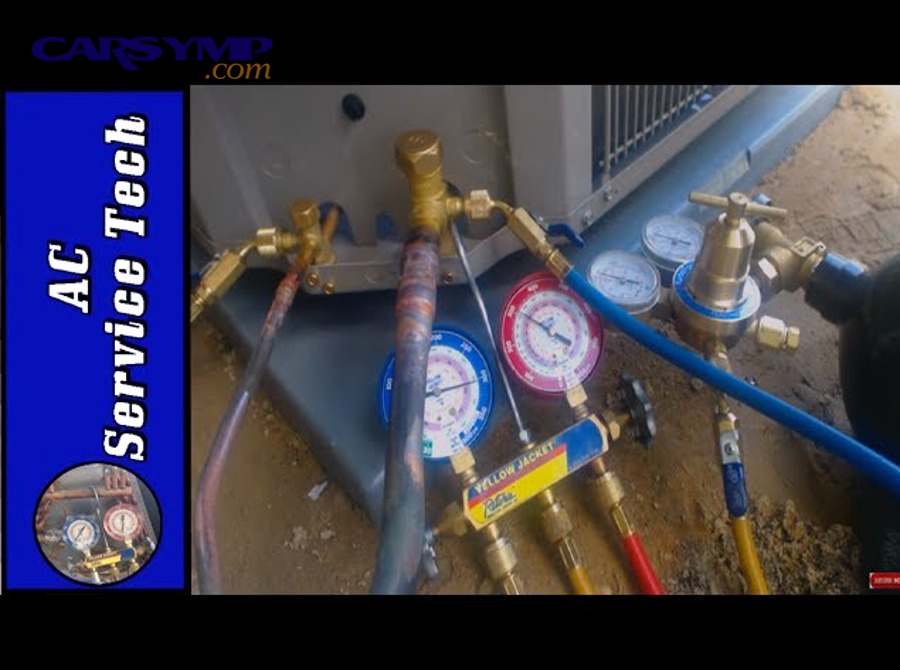
Reason 1: a pressure test is a “controlled stress” that reveals weak points
A controlled pressure test makes O-rings, crimps, and threads prove themselves without risking refrigerant loss. Next, you’ll learn how to choose a test pressure that’s strong enough to expose leaks but not so high it harms components.
Common weak points after repair include:
- Service port cores and caps (caps are seals, not decorations).
- Compressor manifold O-rings.
- Condenser inlet/outlet connections and hard-line transitions.
Reason 2: vacuum is not a substitute for a positive-pressure leak check
Vacuum can pull some leaks “closed” while positive pressure pushes them open, so vacuum-only testing can miss seepage. Next, you’ll see a combined strategy: pressure test, then vacuum hold, for a higher-confidence pass.
Some sealing surfaces behave differently under vacuum than under pressure. A tiny nicked O-ring may appear fine under vacuum yet seep under positive pressure and heat.
Reason 3: it saves refrigerant and prevents “false cold” success
Skipping the pressure test can lead to charging a leaking system, which may blow cold briefly before the charge drops. Next, you’ll learn how to verify charge level and performance without guessing or topping off repeatedly.
According to U.S. EPA Section 609 materials (published and updated across multiple editions), technicians must use approved recovery equipment and avoid venting—practices that align with minimizing unnecessary refrigerant handling by confirming tightness first.
Which pressure test method should you use after A/C repair?
There are three practical post-repair pressure test methods—dry nitrogen (best), trace gas with detector (common in shops), and soap-bubble targeted checks (supporting method). Next, you’ll learn which one fits your tools, risk tolerance, and leak size.
After a repair, choose a method based on accuracy and safety, not convenience alone.
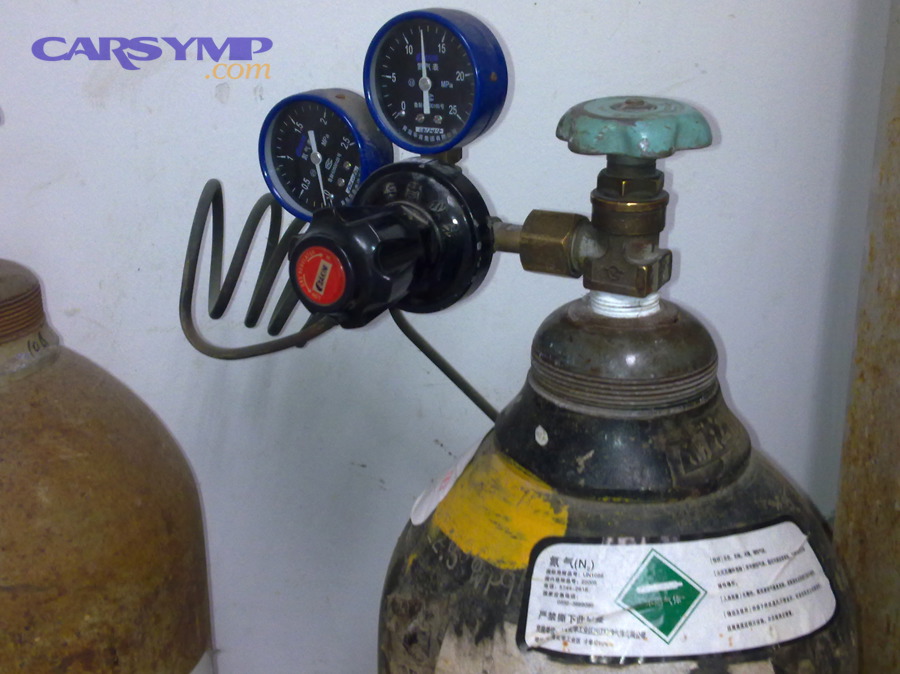
Method A: dry nitrogen pressure test (best practice for DIY + pro)
Dry nitrogen is ideal because it’s inert, dry, and non-flammable, so it can be used to stress-test without introducing moisture or refrigerant. Next, you’ll learn a step-by-step setup that prevents regulator mistakes and hose blow-offs.
Why nitrogen wins:
- No moisture: helps keep the system dry instead of adding water vapor.
- Stable behavior: easier to interpret pressure changes over time.
- Safe leak finding: soap bubbles work extremely well with nitrogen.
Method B: trace refrigerant + electronic detector (use with discipline)
A trace gas method can locate very small leaks quickly, but it requires careful handling and correct detection technique. Next, you’ll learn how to avoid false positives from residue, wind, and contaminated engine bays.
If you use a detector, improve accuracy by:
- Cleaning suspected areas first and letting them dry.
- Moving the probe slowly and consistently.
- Re-checking after wiping to confirm repeatable detection.
Method C: soap bubbles and visual checks (supporting, not standalone)
Soap bubbles are excellent for confirming suspected points, especially after you see a pressure drop or detector response. Next, you’ll learn where to bubble first so you don’t waste time chasing random locations.
Start bubbling at:
- Any joint you opened during the repair.
- Service ports (core and cap area).
- Condenser connections and compressor head/manifold.
The table below summarizes which test method helps most depending on your goal (finding a leak fast, confirming tightness, or minimizing risk), so you can choose a workflow that matches your situation.
| Method | Best for | Strengths | Limitations |
|---|---|---|---|
| Dry nitrogen + soap | Confirming tightness after repair | Dry, inert, clear pressure behavior | Requires nitrogen tank + regulator |
| Trace gas + leak detector | Finding very small leaks quickly | Fast pinpointing when done correctly | False positives if area is contaminated |
| Soap bubble targeted | Confirming a suspected point | Visual proof, inexpensive | Can miss tiny evaporator leaks or hidden paths |
According to the U.S. Federal Register in November 2007, SAE J2788-related updates highlight charge accuracy targets (commonly referenced as ±0.5 oz) and high recovery efficiency (often cited as 95%), which is why precise verification and controlled processes matter.
How do you set up a safe nitrogen pressure test without damaging components?
Use a nitrogen regulator, introduce pressure gradually, and never exceed a conservative test pressure appropriate for the vehicle and ambient temperature; then isolate and watch for drop. Next, you’ll follow a setup that protects hoses, seals, and your eyes.
A safe setup is about control: stable regulator output, secure connections, and a clear “isolate and observe” step.
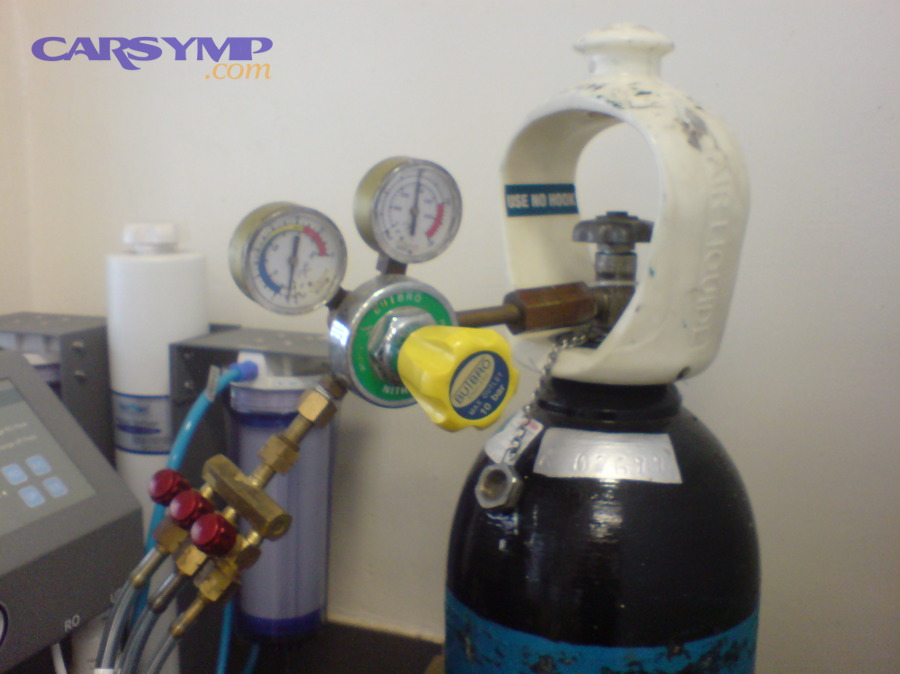
Step 1: confirm the system is empty and isolated correctly
Confirm the system is properly recovered/empty before introducing test gas, and verify you’re connected to the correct service ports. Next, you’ll learn the common mistake—leaving a valve cracked open—that makes pressure readings meaningless.
- Ensure manifold valves are closed before pressurizing.
- Use correct couplers for the vehicle’s refrigerant type.
- Check that service port cores are intact and caps are present.
Step 2: pressurize slowly and stabilize before deciding
Bring pressure up in stages, pause, and let temperature stabilize so you don’t confuse heat rise with leak loss. Next, you’ll see how to log pressure versus time in a simple way that makes leak trends obvious.
- Increase pressure gradually (small increments).
- Wait 5–10 minutes for stabilization after reaching target.
- Record ambient temperature at the start and end of the hold.
Step 3: isolate and perform targeted leak checks
Isolate the system from the tank/regulator, then check every opened joint with bubbles and repeat any questionable spot. Next, you’ll learn how to prioritize checks so you find the leak in minutes, not hours.
- Bubble all repaired joints first.
- Then check service ports and compressor manifold.
- Finally, inspect condenser areas exposed to road debris.
According to U.S. EPA MVAC servicing requirements and Section 609 guidance (published in EPA materials and regulations), approved equipment and proper handling are required, reinforcing that leak-check discipline is part of responsible service.
How do you perform a vacuum hold (micron) test before charging?
Pull a deep vacuum with a good pump, measure vacuum at the system (not the pump), then isolate and verify that micron rise stays within an acceptable range over time. Next, you’ll learn a practical “micron-decay” approach that distinguishes moisture from leaks.
This is where many recharges fail quietly: a gauge shows “vacuum,” but moisture or a tiny leak remains.
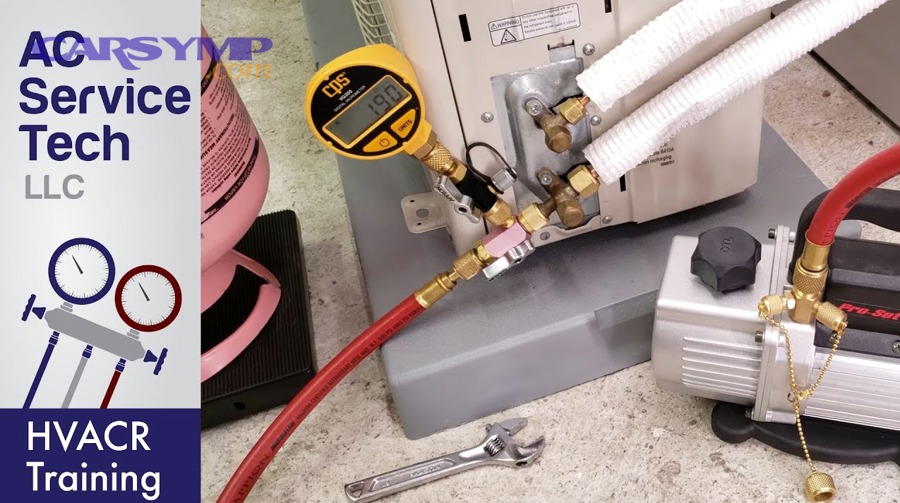
Step 1: use proper vacuum plumbing (short, large, and clean)
Use short, large-diameter vacuum lines and remove restrictions (like cores) when possible to evacuate faster and deeper. Next, you’ll see why long thin hoses can make you think you’re done when the system is not.
- Minimize hose length and avoid unnecessary adapters.
- Keep seals clean; oil and debris can create microleaks at fittings.
- If you have core tools, remove cores during evacuation, then reinstall before charging.
Step 2: place the micron gauge at the system, not near the pump
Place the micron gauge on the system side because that’s the last place to reach your target and the first place to show leak-back. Next, you’ll learn how to interpret “fast rise” versus “slow drift.”
- Fast rise after isolation often indicates a leak or trapped volume releasing.
- Slow drift can indicate moisture boiling off or minor outgassing.
- Stabilized low reading with minimal rise suggests a dry, tight system.
According to Fieldpiece guidance published in 2020, best practice is to measure where you want to achieve the target vacuum (often referenced around 500 microns)—on the system—because restrictions and bends slow evacuation at the far end.
Step 3: isolate and run a timed standing test you can repeat
After reaching a deep vacuum, isolate the system and time the rise to reveal leaks or moisture; repeat if uncertain. Next, you’ll learn a repeatable pattern: evacuate → isolate → observe → evacuate again.
- Pull vacuum to a deep level (lower is better).
- Isolate and observe for 15–30 minutes.
- If rise is excessive, re-check fittings, cores, and repair points.
According to HVAC evacuation training guidance published by tool and training providers, a common rule-of-thumb is confirming the system does not rise above a threshold (often referenced as 500 microns) during a standing test after isolation.
How do you recharge correctly after repair without overcharging or undercharging?
Recharge correctly by charging by weight to the factory specification, balancing oil if parts were replaced, and verifying pressures and vent temperature under known conditions. Next, you’ll learn a workflow that prevents the two most common failures: undercharge at idle and overcharge at speed.
Charging is not just “add refrigerant until cold.” It’s a measured fill that must match how the system was engineered.
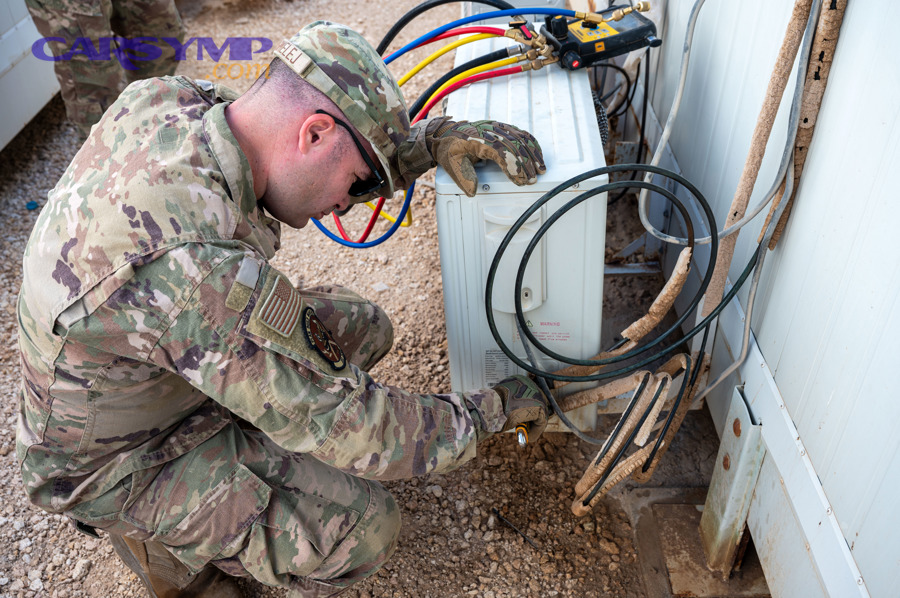
Step 1: charge by weight first, then use gauges for confirmation
Weight is the primary truth because it reflects refrigerant mass; gauges are confirmation tools influenced by airflow and temperature. Next, you’ll learn when pressures are useful—and when they mislead you.
- Locate the factory charge specification (label or service data).
- Use a scale or an RRR machine with verified accuracy.
- Add refrigerant with the engine off initially (when appropriate), then finish with the system running per procedure.
According to SAE-standard discussions referenced in regulatory and technical materials, modern MVAC service equipment commonly targets ±0.5 oz charge accuracy, which highlights why weight-based charging is central to correct service.
Step 2: ensure oil balance matches what you replaced
Oil balance matters because too little oil accelerates wear and too much oil reduces cooling capacity by displacing refrigerant. Next, you’ll learn a practical “measure and replace” approach that avoids guessing.
- If you replaced a component that contains oil (compressor, condenser, drier/accumulator), follow the service procedure for oil amount.
- Measure drained oil when possible and add equivalent amount per manufacturer guidance.
- Use the correct oil type for the refrigerant and compressor design.
Step 3: verify operation under consistent conditions (idle + raised RPM)
Verify at idle and at a steady raised RPM because airflow and compressor speed change system behavior. Next, you’ll learn what patterns suggest undercharge, overcharge, or airflow problems.
- Set blower to a consistent speed and recirculation mode as directed.
- Confirm condenser fan(s) operate correctly.
- Record ambient temperature and humidity if possible.
Watch a practical walkthrough of evacuation and recharge
A visual demonstration helps connect the steps—gauges, vacuum pump, isolation, and charge-by-weight—into one flow you can replicate. Next, you’ll return to performance verification so you can judge results like a pro.
How do you verify performance after the recharge is complete?
Verify performance by checking stable pressures, consistent vent temperature, correct compressor cycling, and condenser airflow under real conditions; then confirm no leak indicators return over time. Next, you’ll learn a simple “four-signal check” that catches most post-repair issues fast.
Performance is the final proof that the pressure test and recharge didn’t just “pass,” but actually restored system function.
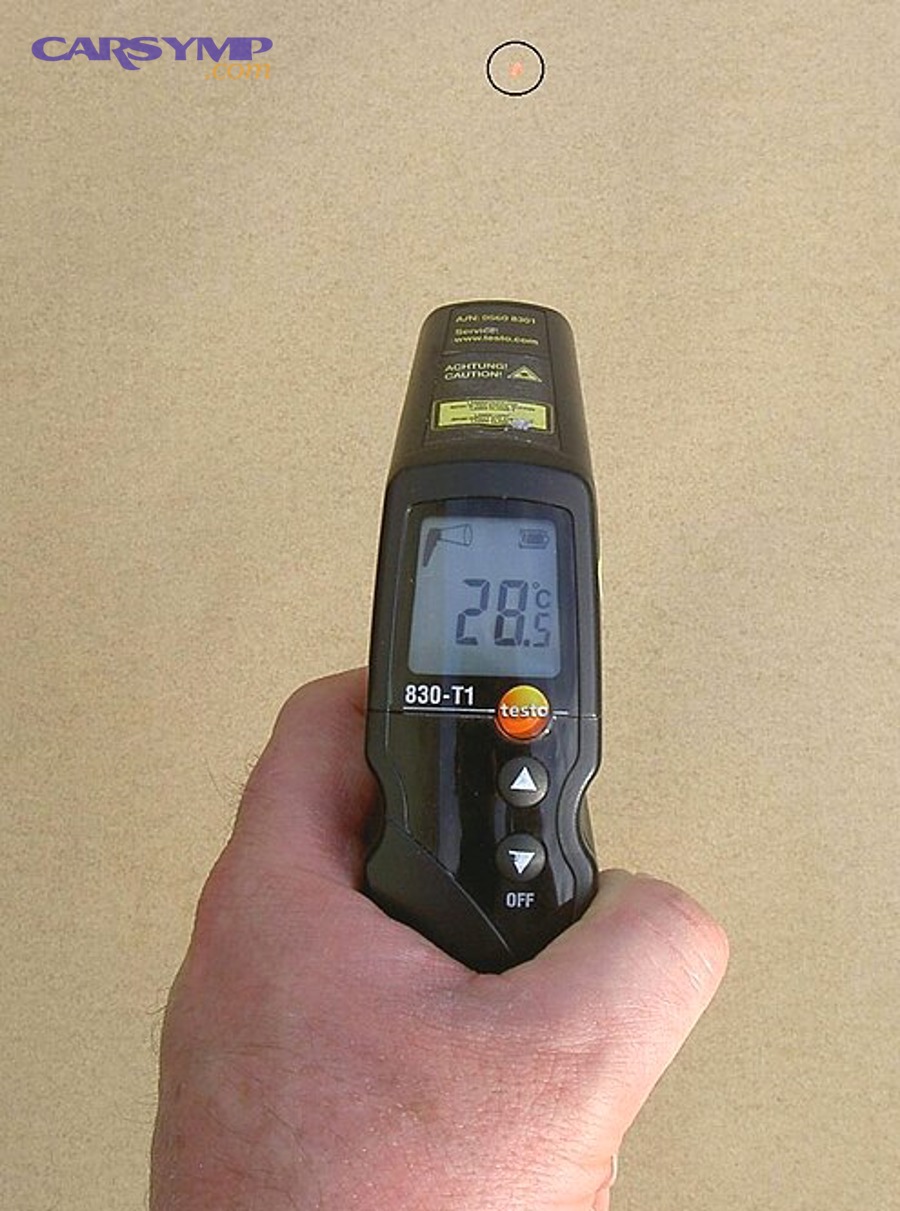
Signal 1: vent temperature trend (not a single reading)
Vent temperature should drop steadily and stabilize, and it should recover after heat soak without dramatic swings. Next, you’ll learn why a cold initial blast can still hide an undercharge.
- Measure at the center vent after a few minutes of steady operation.
- Compare behavior at idle and at a steady cruise RPM.
- Watch for “cycling warm” that suggests low charge or icing.
Signal 2: high-side behavior under airflow changes
High-side pressure should respond predictably to condenser airflow: better airflow lowers high-side pressure and improves cooling. Next, you’ll learn how to spot the difference between charge issues and airflow/fan issues.
- If high-side pressure stays high at idle, confirm fan operation and condenser cleanliness.
- If pressure spikes with little cooling improvement, suspect overcharge or non-condensables.
- If pressure is low with weak cooling, suspect undercharge or compressor inefficiency.
Signal 3: compressor engagement and cycling logic
Compressor cycling should match load and conditions; rapid short-cycling often indicates low charge, sensor issues, or restriction. Next, you’ll learn the quick checks that separate electrical control from refrigerant-side problems.
- Verify clutch engagement or variable compressor control behavior as designed.
- Confirm pressure switches/sensors are connected and functional.
- Check for icing or restriction symptoms if cycling looks abnormal.
Signal 4: stability over time (the “next-day check”)
The best real-world proof is stability after sitting: if pressures and cooling remain consistent the next day, your repair likely holds. Next, you’ll learn the mistakes that cause repeat leaks even after a “good day-one” recharge.
According to U.S. EPA Section 609 documentation and related MVAC servicing guidance, proper procedures and equipment use are designed to reduce emissions and ensure reliable servicing, which aligns with verifying stability rather than repeatedly topping off.
What common mistakes cause repeat leaks or compressor damage after repair?
Repeat failures usually come from skipped verification, contaminated oil/debris, incorrect O-ring handling, or charging errors that push pressures outside safe ranges. Next, you’ll see a checklist of the most frequent mistakes and the “one fix” that prevents each.
The goal is to stop rework cycles—where the system cools briefly, then fails again.
Mistake 1: reusing old seals or skipping lubrication on O-rings
Old or dry O-rings can seal temporarily, then seep under heat and vibration. Next, you’ll learn how to match O-ring material and size so you don’t create a “new leak” at the repair point.
- Use correct O-ring size and compatible material for the refrigerant/oil.
- Lightly lubricate O-rings with the correct oil before assembly.
- Torque fittings to spec—over-tightening can distort seals.
Mistake 2: ignoring service port cores and caps
Service ports are frequent leak sources, and the cap is part of the seal strategy. Next, you’ll learn a fast test: bubble the core area after pressurization and recheck after wiping.
- Replace questionable Schrader cores.
- Use sealing caps designed for the system.
- Recheck ports after the system has stabilized.
Mistake 3: charging by “pressure target” instead of refrigerant mass
Charging by pressure alone often results in overcharge or undercharge because pressure depends on airflow and temperature. Next, you’ll learn how to use gauges as validation rather than as the fill target.
- Charge by weight to the factory number first.
- Use pressure readings to confirm the system behaves normally.
- Correct airflow problems before blaming refrigerant amount.
Mistake 4: failing to remove moisture and non-condensables
Moisture and trapped air raise head pressure and reduce cooling, and they can create intermittent issues that look like “mystery failures.” Next, you’ll learn why a proper vacuum hold test is your best prevention.
- Use a micron gauge and verify stability, not just “needle at vacuum.”
- Keep the system sealed during evacuation; fix leaks before charging.
- Avoid contaminated hoses and fittings that leak under vacuum.
Mistake 5: skipping debris control after a compressor failure
Debris can destroy a new compressor quickly by clogging the expansion device and scoring internals. Next, you’ll learn how to handle components that trap debris so you don’t “reinstall the failure.”
- Replace the receiver-drier/accumulator when required by procedure.
- Inspect the orifice tube or expansion valve for debris.
- Flush lines and serviceable components only when appropriate and allowed.
Contextual border: You now have the main verification workflow for post-repair pressure test and recharge. Next, we’ll expand into edge cases—component design limits, compliance realities, and cost decisions that change what “best practice” looks like in the real world.
Edge cases, compliance, and decisions that change the recharge outcome
Some situations demand extra rules—legal handling, component designs that trap debris, damage types that mimic leaks, and cost choices that determine whether the fix lasts. Next, you’ll use four focused scenarios to prevent “hidden” failures that survive a normal recharge.
FAQ 1: What compliance rules matter when you service and recharge MVAC systems?
Compliance matters because venting refrigerant is prohibited and approved recovery practices reduce emissions and protect the environment. Next, you’ll learn how to align your workflow with responsible handling without making the job harder.
In many regions, the practical takeaway is simple: recover properly, verify tightness before charging, and avoid repeated top-offs. U.S. EPA Section 609 resources explain that MVAC servicing requires approved recovery equipment and trained/certified technicians in professional settings, and regulations emphasize proper extraction before service where discharge is expected.
FAQ 2: When do special condenser designs change flushing and recheck strategy?
Some condenser designs have tiny internal passages that trap debris, so “flushing” can be unreliable and may lead to repeat compressor failure. Next, you’ll learn how to decide between cleaning versus replacement without gambling on a comeback.
In real-world terms, Parallel-flow condenser flushing rules are stricter because microchannels can retain contaminants even after aggressive cleaning. Industry technical guidance from manufacturers and aftermarket training documents often recommends replacing these condensers after major debris events (especially compressor failures) and flushing only the components that can be reliably cleaned.
FAQ 3: How do you avoid misdiagnosis between physical damage and a true leak?
External fin damage can reduce airflow and cooling without a refrigerant loss, while internal damage can leak without obvious external clues. Next, you’ll learn a fast decision path that tells you where to focus inspection time.
Use a simple separation: if pressures behave like an airflow problem (high-side elevated at idle, improves with strong airflow) and charge remains stable, suspect airflow restriction from damage. If charge falls or pressure drops over time, suspect an actual leak. This is especially useful when applying How to spot bent fins vs internal leak in condenser diagnosis: bent fins usually show airflow symptoms; internal leaks show mass-loss symptoms.
FAQ 4: When is replacement the smarter move than repeated testing and topping off?
Replacement is smarter when the part is a known trap for debris, has high labor overlap, or has repeated seepage that wastes time and refrigerant. Next, you’ll learn how to connect cost logic to reliability so you stop paying twice.
In many repairs, AC condenser replacement becomes the reliability play when the condenser is damaged by impact, heavily corroded, or contaminated after a compressor failure. To plan the job realistically, a Condenser replacement cost estimate should include labor overlap (front-end disassembly), drier/accumulator changes, evacuation time, and a final verification chain—pressure test, vacuum hold, and charge-by-weight—so the new part isn’t installed into a risky system.