


Parallel-flow condenser flushing rules are simple in theory: clean what can be cleaned, replace what cannot, and never let “almost clean” debris circulate back into a fresh system. In practice, the details decide whether your repair lasts one summer or one week.
Because a condenser flush is often performed right after a compressor event, the biggest risk is assuming the condenser behaves like an older, larger-passaged design. That assumption silently turns micro-passages into a debris trap.
Beyond the yes/no question of flushing, you also need a repeatable method for isolating components, choosing the right drying strategy, and validating the system before recharge. Otherwise, you’re guessing—under pressure.
To set the stage, Giới thiệu ý mới: the rules below explain what parallel-flow condensers are, why the flush path behaves differently, and how to build a contamination-safe workflow that protects the next compressor.
What are parallel-flow condensers, and why do their microchannels change condenser flush rules?
A parallel-flow condenser is a compact, multi-pass heat exchanger with many tiny channels that run in parallel, so even small debris can block flow and reduce effective rows. To begin, that geometry is exactly what changes the flushing rules.
In a traditional “one path” condenser, a cleaning fluid is forced through the same route refrigerant must take, so the wash tends to sweep the whole path. In a parallel-flow design, refrigerant (and any flush solvent) can split across many paths. If some paths are partially blocked, flow chooses the easiest routes and leaves the worst sections dirty.
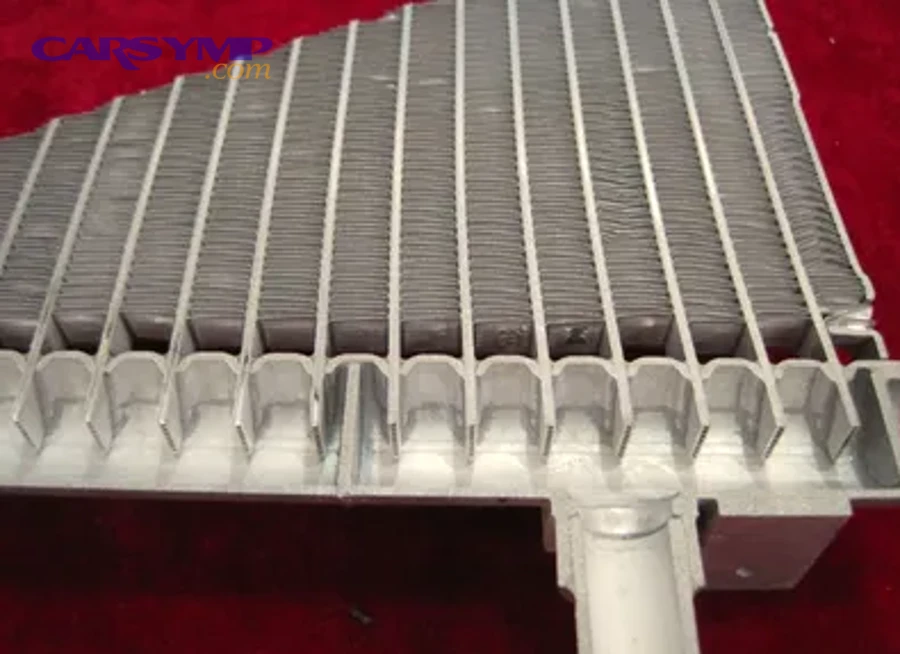
Concretely, a parallel-flow condenser behaves like a screening filter for anything solid: aluminum fines, steel particles, desiccant dust, and rubber fragments. The smaller the channel, the easier it is for particles to lodge, cake, or “bridge” at transitions—especially at the headers where flow redistributes.
That’s why “clean-looking” discharge solvent is not the same as “clean internal distribution.” You can flush a portion of the network while other passages stay restricted. Next, that partial restriction matters because it changes pressures: restriction increases high-side pressure, raises compressor load, and accelerates thermal stress.
The risk pattern is familiar: a vehicle comes in with weak cooling, high head pressure, or intermittent vent temperatures. A quick line flush seems to help, but the system returns with the same symptoms after a few weeks because the restricted microchannels never truly cleared.
The underlying principle is fluid dynamics, not brand preference. “Theo nghiên cứu của Heat Exchanger Fouling and Cleaning Conference từ nhóm nghiên cứu Bell et al., vào 2009, họ ghi nhận increases in air-side pressure drop up to 200% under particulate fouling—cho thấy fouling/đóng bẩn có thể làm tăng tổn thất áp suất rất mạnh khi đường dòng bị hạn chế.”
So the rule-of-thumb becomes: the more micro the channel, the more binary the decision—either it’s clean, or it’s functionally compromised.
Can a condenser flush clean a contaminated parallel-flow condenser after compressor failure?
No—a condenser flush is unlikely to reliably clean a contaminated parallel-flow condenser after compressor failure, because the solvent follows the path of least resistance, debris packs into side rails/headers, and micro-passages trap particles like a sieve. After that, the “almost clean” condenser can destroy the next compressor.
Reason 1: Path-of-least-resistance. A parallel-flow layout has multiple parallel tubes. When some are restricted, flush solvent tends to run through the least blocked paths. The dirty tubes remain dirty, and you get a false sense of success because something did flow. This is why many experienced techs call flushing a dirty parallel-flow condenser “wasted effort.”
Reason 2: Debris migration and redeposit. When you push solvent through a network of small passages, debris can move, then lodge deeper where the geometry changes—especially near plugs, baffles, and end tanks. That can reduce the number of effective rows and create chronically high head pressure.
Reason 3: Microchannels trap “soft” contamination. It’s not only hard metal. Sludge from oil breakdown, sticky varnish from overheated lubricant, and fine desiccant dust can coat walls and narrow the hydraulic diameter. Even if solvent mobilizes some, it can reattach downstream as the flow slows.
However, the question isn’t whether any liquid can pass through; it’s whether the condenser is clean enough to be safe for a new compressor at all operating conditions—hot ambient, high RPM, and high load. That standard is hard to meet with a multi-path microchannel network.
“Theo nghiên cứu của NAPA Auto Parts từ NAPA Know How Blog, vào 04/2023, họ nhấn mạnh rằng nhiều condenser hiện đại có đường dẫn rất nhỏ và kết luận thực tế là you don’t flush them.”
And when you are dealing with compressor failure contamination, many technical tips emphasize replacement because the condenser becomes the first place debris collects and the hardest place to prove clean.
Which A/C parts should be flushed, and which should be replaced when contamination is suspected?
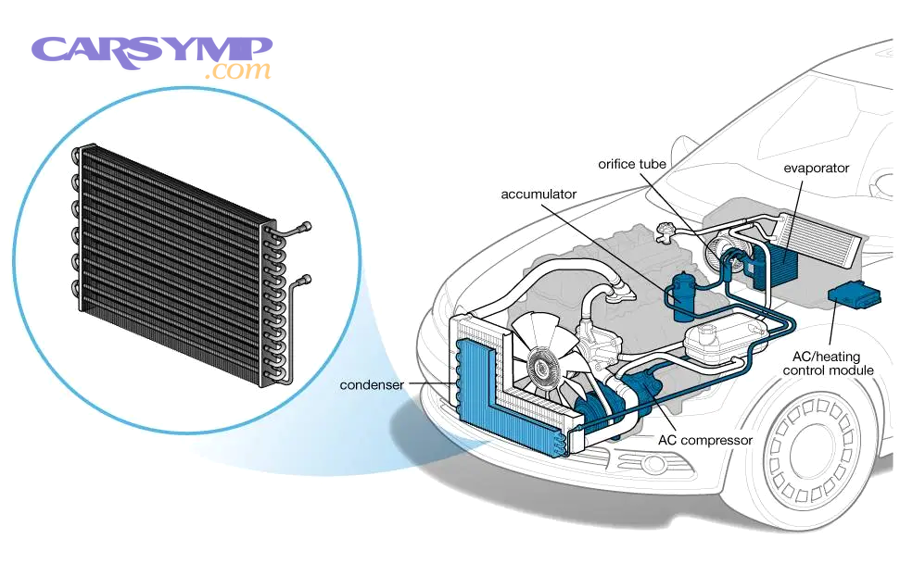
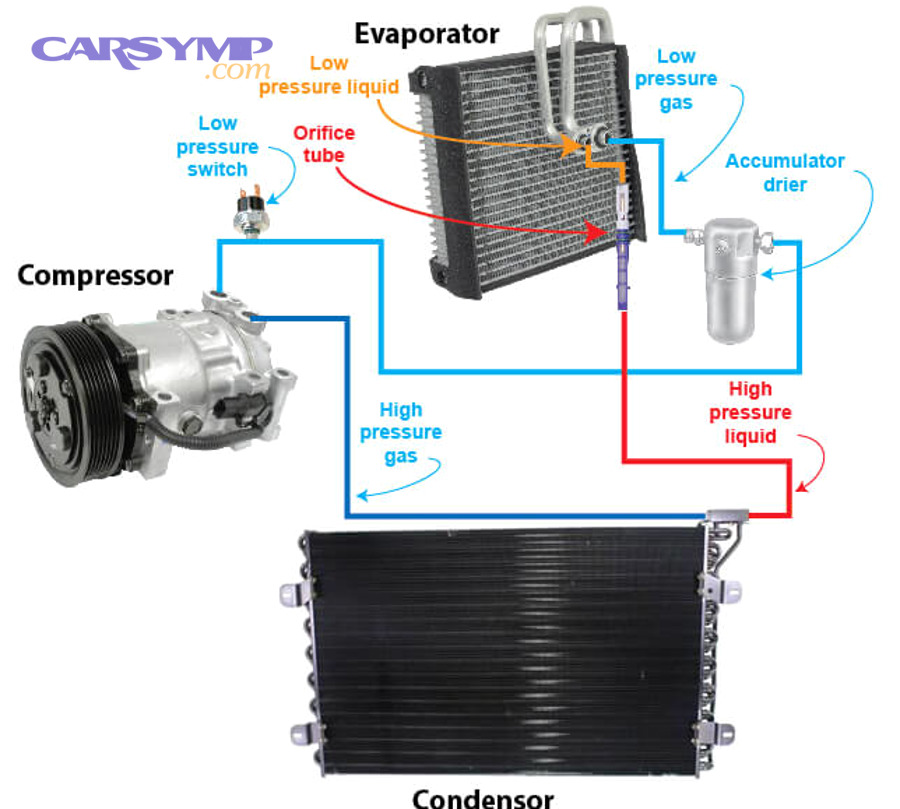
There are two groups of parts in contamination work: components you can flush because they are open, straight, and dryable, and components you replace because they contain filters, desiccant, tiny metering, or fragile micro-passages. Next, use a checklist so you don’t improvise.
This table helps you decide quickly what belongs in each group and why the rule exists.
This table contains typical flush/replace decisions by component and the failure mode each decision prevents.
| Component | Flushable? | Why | Typical action |
|---|---|---|---|
| Hard lines (metal) | Usually yes | Open path, tolerates solvent, can be dried thoroughly | Flush both directions, dry with clean, dry air/nitrogen |
| Flexible hoses | Sometimes | Some hoses contain mufflers/filters that trap debris | Replace if muffler/filter present; otherwise flush + dry |
| Evaporator core | Often yes | Generally flushable if not internally restricted; must be fully dried | Flush, then extended dry purge; replace if restriction suspected |
| Receiver-drier / accumulator | No | Contains desiccant and filtration; traps debris and moisture | Replace whenever system is open or contaminated |
| Expansion device (TXV/orifice) | No | Metering ports/screens clog easily; cheap compared to comeback | Replace and inspect old part for debris evidence |
| Parallel-flow condenser | Not reliably | Microchannels + multiple paths = hard to prove clean | Replace if contamination is suspected |
| Compressor | No | Internal wear surfaces; debris recirculates and scores the unit | Replace/repair per manufacturer; always address system cleanliness |
To illustrate, the receiver-drier/accumulator is the “moisture sponge” and often includes filtration—once exposed or contaminated, it becomes a liability. That’s why technicians ask variations of: Should you replace receiver drier with condenser when the system is open or has debris. In contamination scenarios, replacement is the safer default because the drier is designed to capture what you’re trying to remove, and it cannot be cleaned back to new condition.
Parallel-flow condensers are the other big decision point. Even if you perform a vigorous flush, you still can’t easily verify that every parallel path and every row is free of embedded fines. Next, that uncertainty is what turns “maybe clean” into “risk.”
“Theo nghiên cứu của gpd techtips từ bộ phận technical tips, vào thời điểm đăng tải của họ, họ cảnh báo rằng flushing có thể đẩy contaminates sâu hơn vào parallel-flow condenser và làm giảm số hàng làm mát, dẫn đến high head pressures.”
Finally, this decision framework scales well: if a component contains desiccant, a screen, a metering port, or microchannels, assume replacement is cheaper than repeat labor.
How do you isolate the condenser and perform a safe system flush without spreading debris?
The safest flush method is a component-isolated workflow: recover refrigerant, remove/replace the debris-trapping parts, cap what you won’t flush, then flush only the lines and (when appropriate) the evaporator, followed by an extended dry purge. Next, you validate before recharge.
Below is a practical, shop-friendly sequence that matches how contamination actually behaves in the circuit.
- Recover refrigerant legally and completely. Treat the system as contaminated: keep oil and discharged solvent contained.
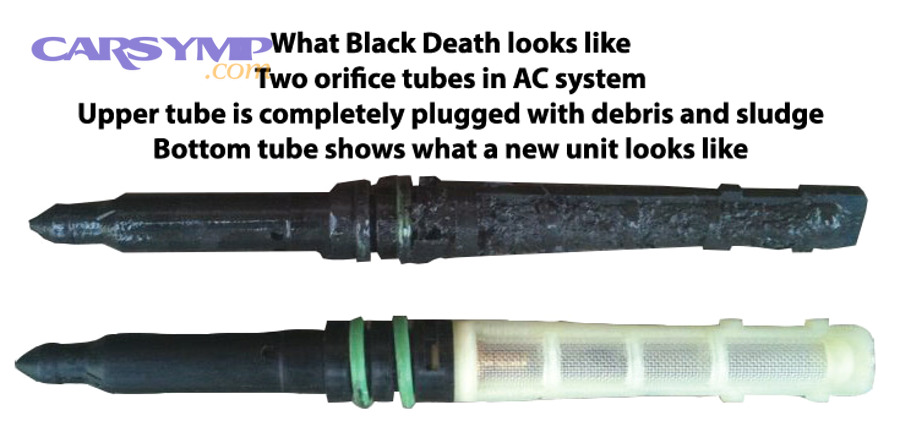
- Remove the compressor and the metering device. Pull the orifice tube/TXV early so you can inspect it; it’s your first “truth” about debris level.
- Remove the receiver-drier/accumulator. Do this before you flush so you are not pushing solvent into desiccant and filters.
- Isolate the condenser you will not flush. Cap or plug the condenser ports to prevent solvent migration, and disconnect lines so the flush path is controlled.
- Flush the liquid line and suction line sections. Use a dedicated A/C flush solvent and a tool designed for the job; flush both directions when possible to dislodge trapped particles.
- Flush the evaporator only if it is judged flushable. Flush in the opposite direction of normal refrigerant flow where practical to push debris out rather than deeper in.
- Dry purge until absolutely dry. Continue purging with clean, dry air or nitrogen long enough that no solvent mist or odor remains.
- Replace seals and O-rings as needed. Debris events and solvent exposure increase leak risk on old elastomers.
- Install the new parts and add the correct oil amount. Oil quantity and type must match the compressor/system spec.
After that, the “dry purge” step is where many flush jobs fail. Any solvent left behind becomes a chemical contaminant, and any moisture left behind becomes the seed for acids. “Theo nghiên cứu của NAPA Auto Parts từ NAPA Know How Blog, vào 04/2023, họ nhắc rằng sau khi xả rửa cần tiếp tục thổi khô kéo dài để loại hết hóa chất còn sót—vì flush chemicals có thể gây hại cho các bộ phận khác.”
If you prefer visual learning, this installation-style walkthrough is a useful reference for the flushing concept and why isolation matters:
Important note: the steps above focus on flushing what can be proven clean and dry. If the condenser is a parallel-flow design and contamination is suspected, the practical rule is replacement, not flushing, because the validation problem is the real enemy.
How do you confirm the system is clean before recharging and returning the vehicle?
You confirm cleanliness by combining evidence (what you see at the metering device), process proof (clear discharge and complete drying), and functional validation (stable pressures and vent performance). Next, you document results so the job is defensible.
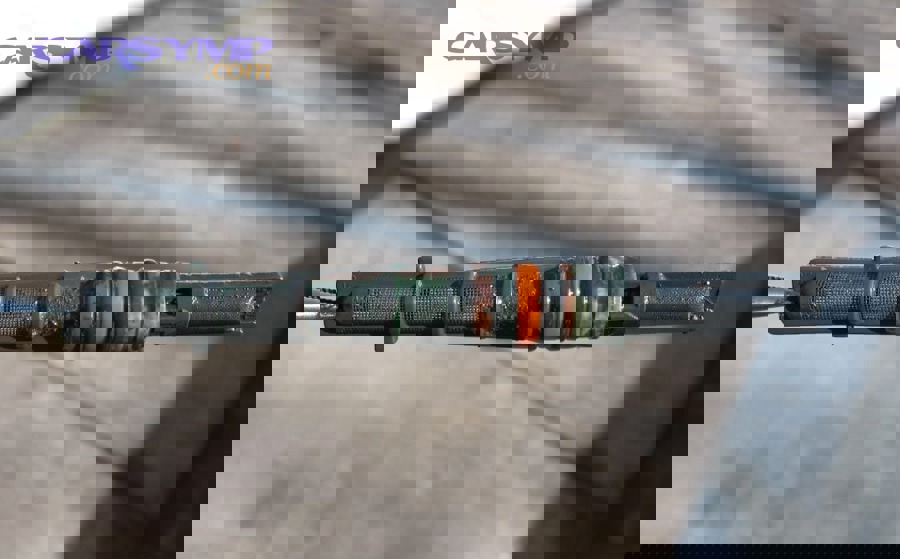
Start with the metering device evidence. If you removed an orifice tube and found glitter, black sludge, or a clogged screen, treat that as “contamination confirmed.” A clean-looking tube doesn’t automatically mean “no contamination,” but a dirty tube is a strong indicator that debris has circulated.
To begin, use these validation checks:
- Discharge clarity check: flush discharge should be visually clear and free of particulate. If you can capture it through a fine mesh, do so to reveal micro-particles.
- Odor/volatility check: after dry purge, there should be no solvent smell at the outlet and no visible mist when purging.
- Vacuum hold check: pull a proper vacuum and confirm it holds (within equipment limits). A system that won’t hold vacuum won’t hold refrigerant.
- Oil discipline: measure oil removed from old components when feasible and add back the correct oil type/amount for the new compressor and replaced components.
- First-run pressure sanity: once charged to spec, confirm pressures are within expected ranges for ambient temperature and airflow.
“Theo nghiên cứu của AA1Car.com từ thư viện kỹ thuật, vào 2003, họ nhấn mạnh nguyên lý path-of-least-resistance khi xả rửa parallel-flow—nghĩa là bạn không thể chỉ dựa vào việc ‘có dòng chảy’ để kết luận sạch.”
After the system proves stable, validate performance under load. This is where many jobs pass at idle and fail on the road. Check vent temperature stability, compressor cycling behavior, and high-side pressure at higher RPM. If head pressure climbs quickly, suspect restriction, airflow issues, overcharge, or external condenser blockage.
When the condenser was replaced as part of the contamination strategy, you should specifically evaluate AC performance after condenser replacement by checking for: steady subcooling behavior, stable high-side pressure under stop-and-go airflow, and consistent vent temperature after heat soak.
What mistakes make parallel-flow condenser flushing “look successful” but fail weeks later?
The most common failures come from hidden residue, missed debris traps, and weak verification: solvent left behind, a reused drier/accumulator, a clogged metering device, or a hose with an internal muffler that was never replaced. Next, each mistake has a predictable comeback pattern.
- Skipping the drier/accumulator replacement: moisture and debris remain trapped; acids form; repeat compressor wear follows.
- Reusing the old orifice tube/TXV: even minor debris on a screen can become a restriction once oil circulates and picks it up.
- Not isolating the condenser during flushing: solvent and debris migrate into microchannels, then return later as the system cycles.
- Insufficient dry purge time: leftover solvent dilutes oil, attacks elastomers, and may damage new components.
- Using shop air without moisture control: water vapor enters and later becomes acid in the presence of refrigerant and oil.
- “Topping off” charge without weighing: the system may cool briefly but run high head pressure and fail in traffic.
- Not correcting airflow issues: a dirty radiator stack, weak fan, or missing shrouds can mimic restriction symptoms.
However, the most expensive mistake is believing a partial flush equals a clean system. Parallel-flow condensers are unforgiving because the “safe” cleanliness threshold is high and hard to prove. When in doubt, the contamination rule is to remove uncertainty, not to debate it.
If you’re documenting the job for the customer, this is also where you can explain why certain parts were replaced rather than flushed—especially when the customer asks why a flush alone isn’t enough.
In many real-world repairs, the clean/replace decision directly leads into AC condenser replacement planning: you aren’t replacing for convenience, you’re replacing to prevent a repeat compressor failure caused by unverified microchannel cleanliness.
How do debris and road damage causes create symptoms that feel like internal contamination?
External condenser damage can mimic contamination because it reduces heat rejection or causes leaks, leading to weak cooling, high pressures, and oily residue—symptoms that look like internal trouble. Next, you separate “blocked flow” from “lost refrigerant” with inspection and pressure behavior.
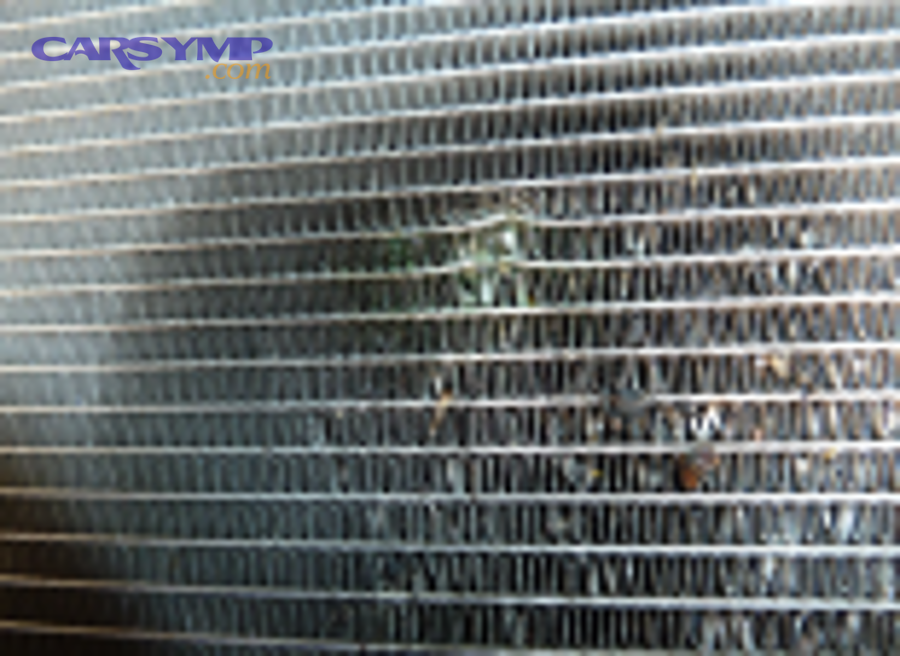
When people mention Debris and road damage causes, they usually mean one of three external scenarios:
- Puncture leak: a small rock strike opens a pinhole. Cooling fades over days/weeks, oil staining appears, and the system eventually short-cycles or won’t engage.
- Bent fins / blocked face: airflow is restricted by bent fins, debris, or a stacked radiator/condenser that’s packed with bugs/dirt. High-side pressure rises especially at idle.
- Corrosion at joints: fittings or header areas corrode and seep oil/refrigerant, often visible under UV dye.
To illustrate, a punctured condenser often leaves an oil stain at the impact point. That’s a strong visual cue that the problem is leakage, not internal restriction. On the other hand, contamination restrictions show up more as abnormal pressure relationships and evidence at the orifice tube/TXV screen.
“Theo nghiên cứu của NAPA Auto Parts từ NAPA Know How Blog, vào 04/2023, họ nhấn mạnh quy tắc thực hành: các đường dẫn bên trong condenser hiện đại rất phức tạp, nên nếu hệ thống bị nhiễm bẩn nặng, việc cố xả rửa condenser vừa khó hiệu quả vừa khó xác minh.”
So your diagnostic split becomes:
- If refrigerant is low and you see oil/dye at the condenser face: treat it as a leak and repair accordingly.
- If refrigerant is correct but head pressure spikes and vent temps swing: suspect airflow restriction, overcharge, metering restriction, or internal contamination.
- If compressor failed catastrophically: assume contamination until proven otherwise, and follow the replace/flush isolation rules.
In shops, this is also where you explain labor logic to the customer. A “simple leak” repair and a contamination rebuild are different categories of work, and the parts strategy should match the risk.
Contextual Border: Up to this point, the focus has been the mainstream, high-success workflow for passenger vehicles with parallel-flow condensers: isolate, flush only what can be proven clean and dry, and replace debris-trapping components to protect the compressor. Next, we zoom into edge cases where technicians debate exceptions.
Supplementary: When technicians debate limited condenser flushing, what decision rules keep you safe?
Limited condenser flushing debates usually happen in edge cases—low-debris failures, older condenser designs, or cost pressure—so the safest rule is to decide by failure severity, design type, and proof of cleanliness. Next, keep the decision criteria explicit.
If the compressor didn’t grenade, is replacement still the best choice?
If there was no catastrophic failure (no glitter, no sludge, no clogged screen), risk is lower—but the decision still hinges on what you can prove. For example, if you pull the metering device and it’s clean, and the system failure was a clutch/electrical event rather than internal wear, you may prioritize line/evaporator hygiene and still avoid aggressive condenser flushing.
The key is that “no debris evidence” must be established, not assumed. If you cannot inspect the metering device (or if the system uses a hard-to-access TXV), the uncertainty remains.
How do older condenser designs compare to parallel-flow in flushability?
Older serpentine or tube-and-fin condensers have larger passages and a single (or simpler) flow path, which makes flushing more plausible. However, parallel-flow/microchannel condensers have many small, parallel passages that make “uniform cleaning” much harder to guarantee, especially after contamination events.
This is why the same flush routine that worked on older vehicles can fail quietly on newer systems—even when the tech is careful.
What solvent, pressure, and air-quality rules prevent chemical and moisture damage?
Solvent choice matters less than the drying discipline. Use a flush designed for A/C systems and avoid improvising with chemicals that may leave residue or attack elastomers. More importantly, purge with clean, dry air or nitrogen long enough that the component is truly dry, because leftover solvent and moisture are repeat-failure fuel.
“Theo nghiên cứu của Bell et al. từ Heat Exchanger Fouling and Cleaning Conference, vào 2009, họ cho thấy đóng bẩn làm tăng tổn thất áp suất đáng kể; trong A/C, điều này nhắc bạn rằng bất kỳ residue nào làm hẹp đường dòng đều có thể khuếch đại áp suất và tải máy nén.”
What shop-policy and warranty constraints override your diagnostic judgment?
Many compressor suppliers and rebuilders require documented replacement of key contamination traps (especially the condenser and drier/accumulator) for warranty coverage. In practice, that policy exists because they’ve seen the same repeat-failure pattern: a “mostly cleaned” system kills a new compressor.
That’s also why, when customers ask about cost, you can explain that replacing uncertainty is often cheaper than paying labor twice—especially when a comeback forces another tear-down and recharge.
FAQ
Is it ever safe to flush “through” the condenser on a newer vehicle?
It’s rarely a safe default on a parallel-flow design because you can’t easily prove every microchannel path is clean. Instead, isolate the condenser and flush what you can verify, then replace the condenser if contamination is suspected.
What’s the fastest way to confirm contamination after a failure?
Inspect the metering device (orifice tube screen or TXV inlet screen) as early as possible. Next, use what you find there—clean vs. glitter/sludge—as a decision trigger for the rest of the system.
Why does head pressure often run high after a “successful” flush?
High head pressure after a flush often points to restriction (residual debris), airflow problems at the condenser face, or incorrect charge amount. To troubleshoot, verify airflow and charge first, then consider internal restriction evidence.
How long should the dry purge take?
Long enough that there is no solvent odor, no mist, and no sign of liquid discharge—because “almost dry” is not dry. Next, pair that with a vacuum hold test to support your confidence before recharge.
What should you tell a customer who wants only a quick clean-out?
Explain that a quick clean-out can’t reliably verify microchannel cleanliness and may risk repeat compressor failure, which is more expensive than doing the contamination-safe workflow once. Tóm lại, the goal is not “some cleaning,” but a system that stays clean under real driving conditions.